Article

Enhancing Analytical Performance of Ammonium Potentiometric Sensors with Carbon Nanocomposites

1
Department of Analytical Chemistry, Faculty of Chemistry, Institute of Chemical Sciences, University of Maria Curie-Skłodowska, Maria Curie-Sklodowska Sq. 3, 20-031 Lublin, Poland
2
Department of Building Materials Engineering and Geoengineering, Faculty of Civil Engineering and Architecture, Lublin University of Technology, Nadbystrzycka St. 40, 20-618 Lublin, Poland
*
Author to whom correspondence should be addressed.
Molecules 2026, 31(5), 759; https://doi.org/10.3390/molecules31050759

Submission received: 28 January 2026 / Revised: 16 February 2026 / Accepted: 20 February 2026 / Published: 24 February 2026
(This article belongs to the Special Issue Recent Advances in the Design of Electrochemical Sensors)

Abstract

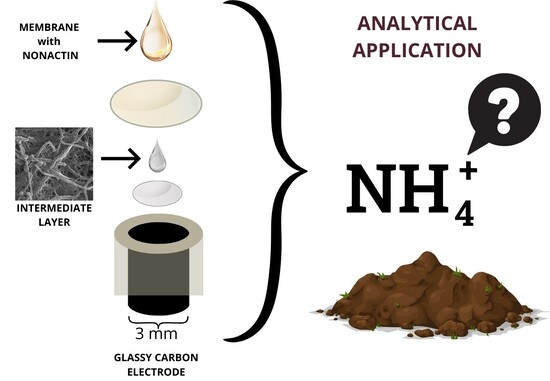
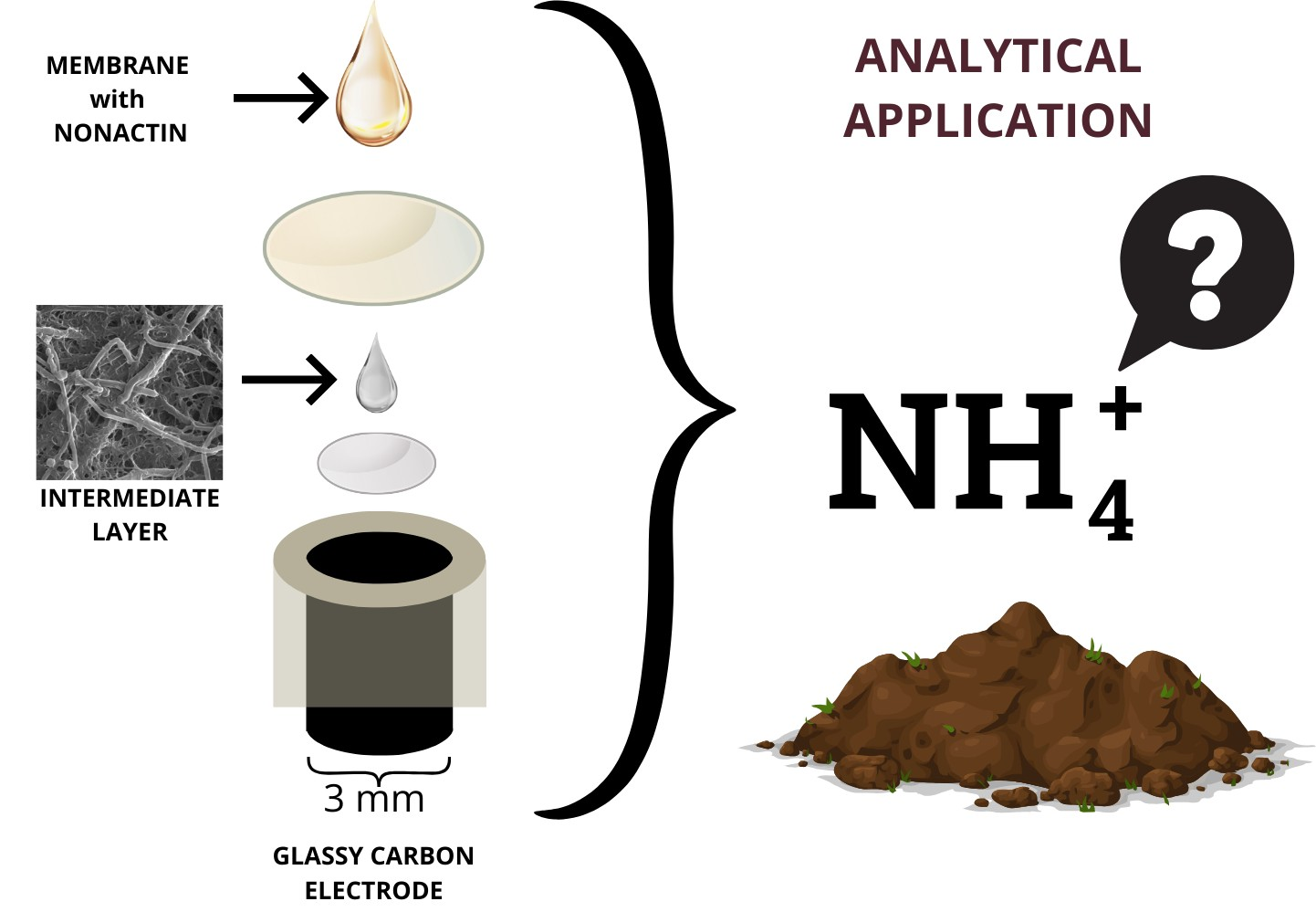
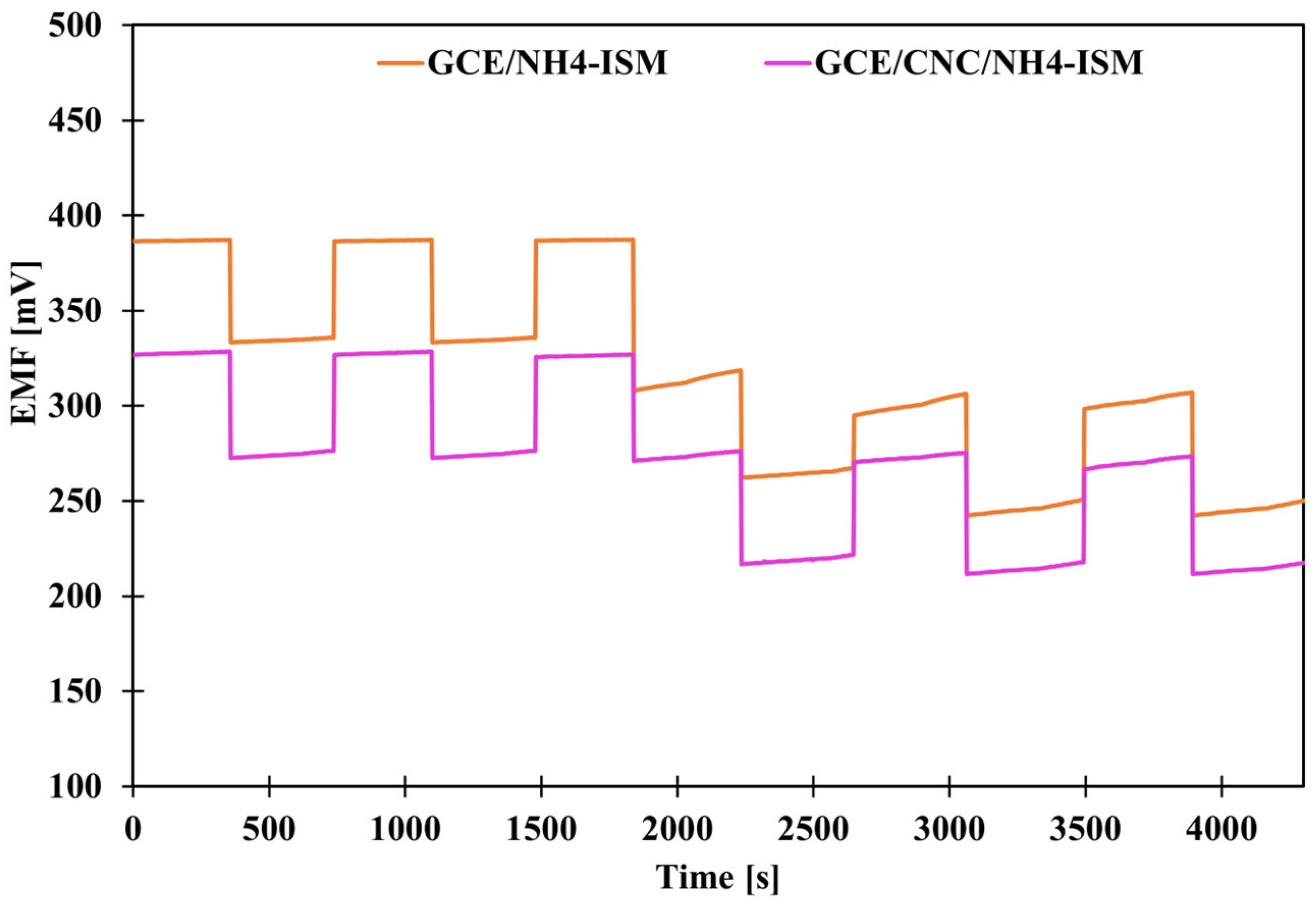
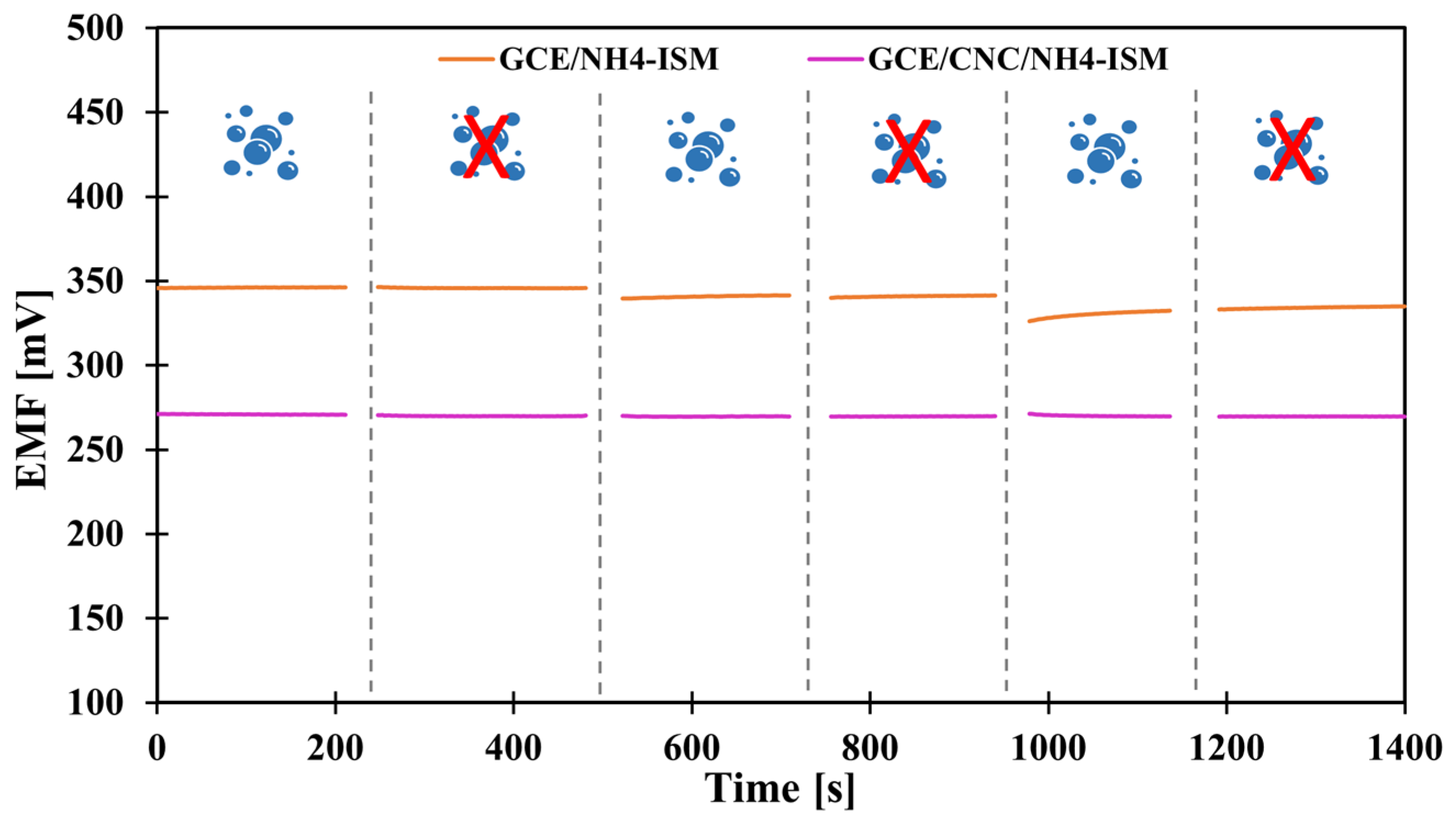
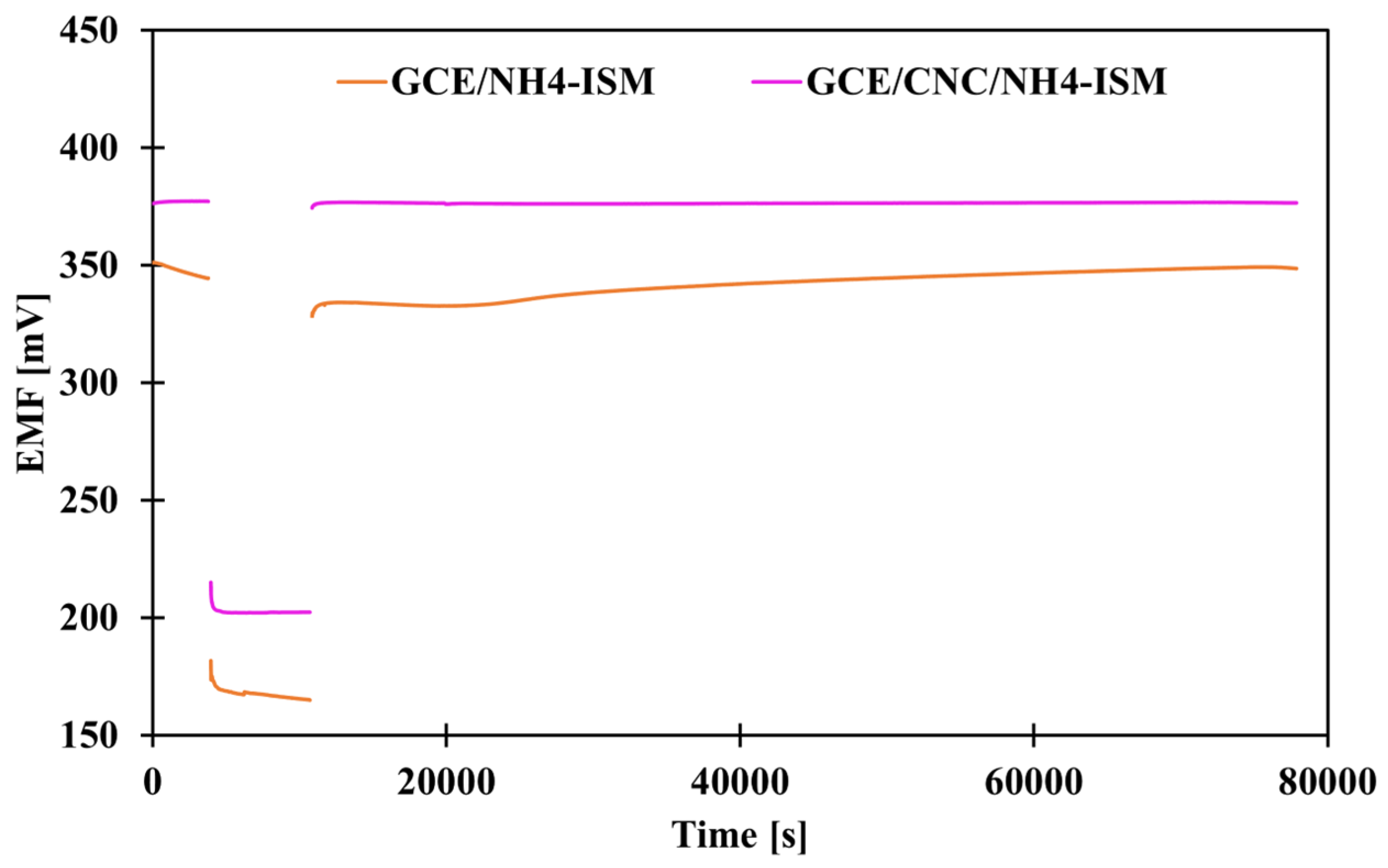
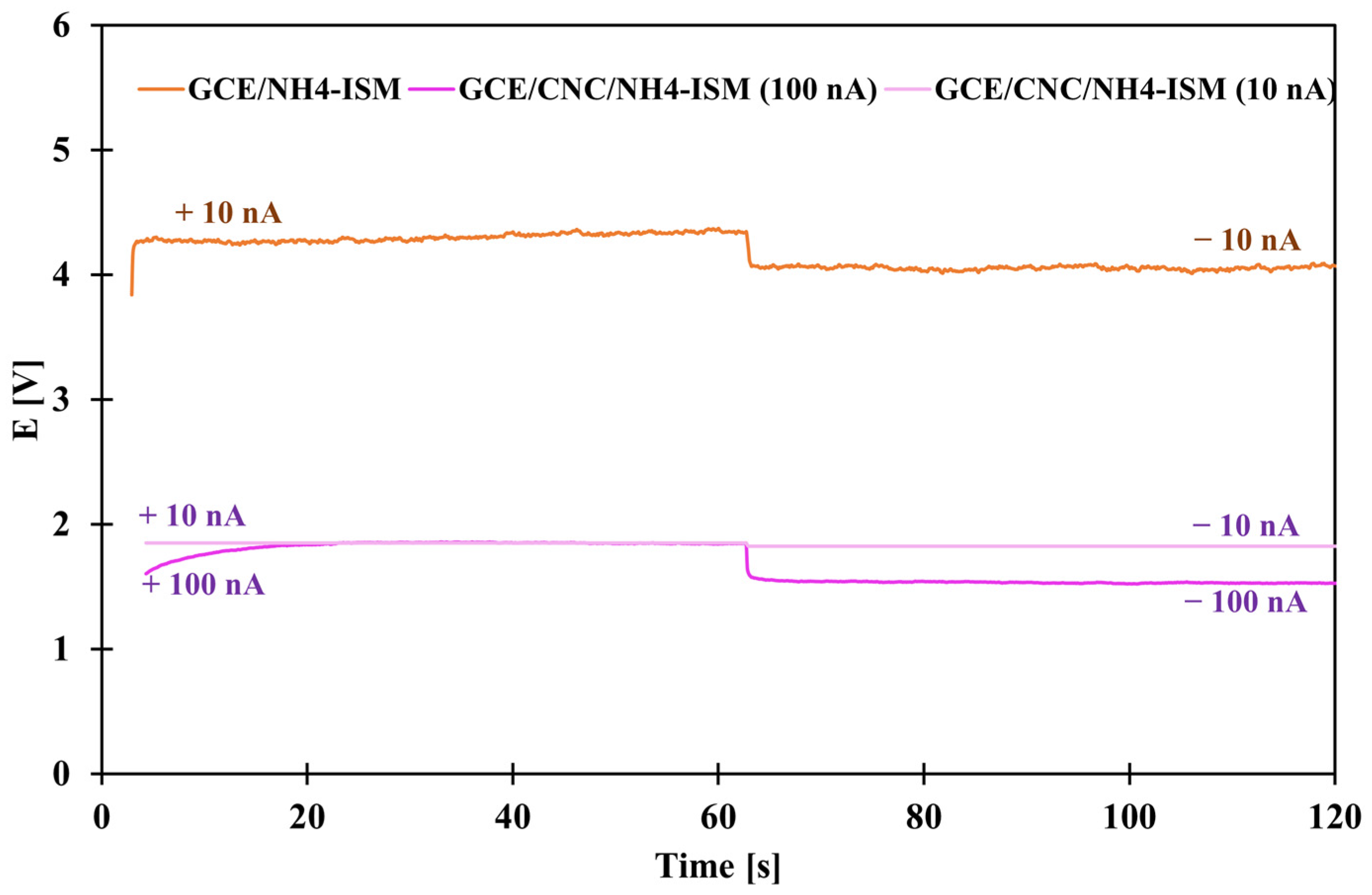
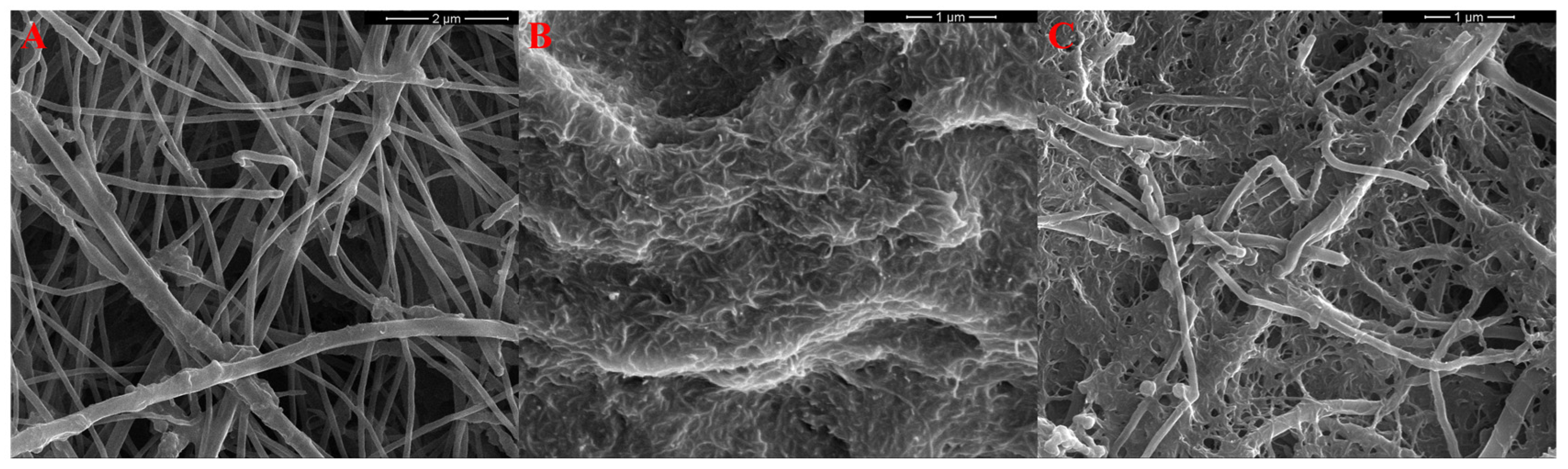
This paper presents a new type of ammonium electrode that shows a significant improvement in analytical performance compared to unmodified electrodes. The aim of the study was to develop electrodes with better electrochemical parameters, achieved by applying a modification in the form of a solid contact layer based on a carbon nanocomposite consisting of carbon nanofibers and multi-walled carbon nanotubes. Measurements were made to evaluate the basic analytical parameters of both unmodified electrodes and those enriched with an intermediate layer in the form of a carbon nanocomposite. The composite-modified electrodes showed an almost ideal theoretical slope value (58.4 mV·dec−1), a lower detection limit, and linearity that remained constant over time. Stability tests showed that electrodes with nanocomposites achieved a potential drift that was almost 50 times lower. An improvement in potential reversibility was also achieved. Another important advantage of the modified electrodes is their resistance to external conditions such as light and the presence of O2 and CO2. In addition, they exhibit selectivity typical for ammonium electrodes. Based on the results obtained, it was found that the multiwalled carbon nanotubes and carbon nanofibers nanocomposite effectively acts as a solid contact layer, which may form the basis for the development of modern, durable, and precise sensors for the determination of ammonium ions in various environments. The determination of NH4+ ions in soil was conducted with success.
Keywords: ion-selective electrodes; ammonium; carbon nanocomposite; solid contact; polymeric membrane ion-selective electrodes; ammonium; carbon nanocomposite; solid contact; polymeric membrane
Graphical Abstract