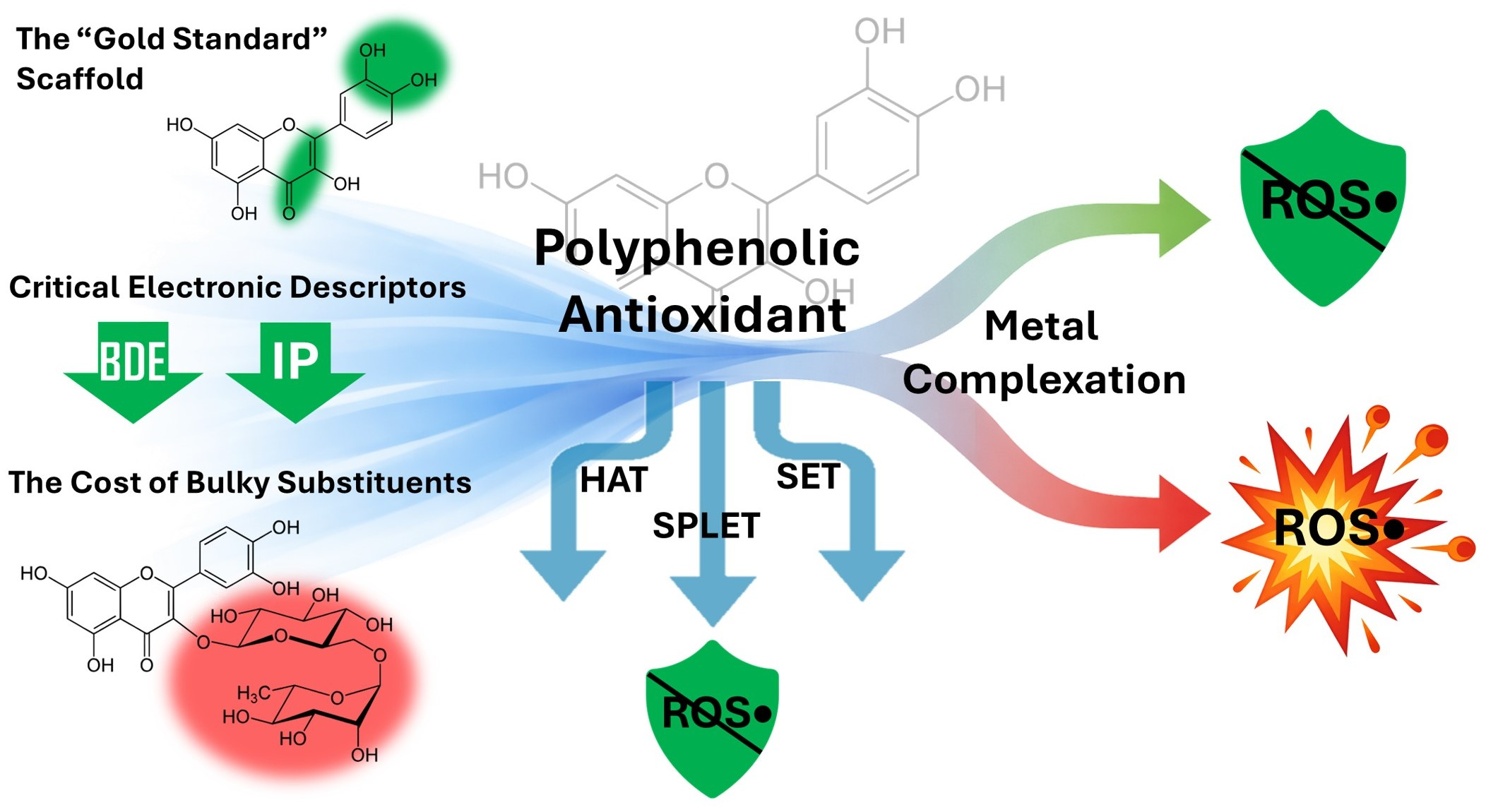
Towards the Development of Effective Antioxidants—The Molecular Structure and Properties—Part 2

 ,
,  , , and
Abstract
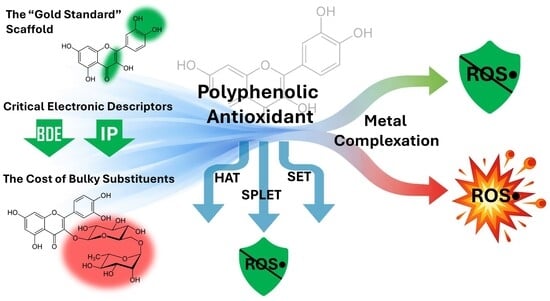
1. Introduction
2. The Structure and Properties of Effective Antioxidants
2.1. Classes of Natural Antioxidants and Their Skeletons
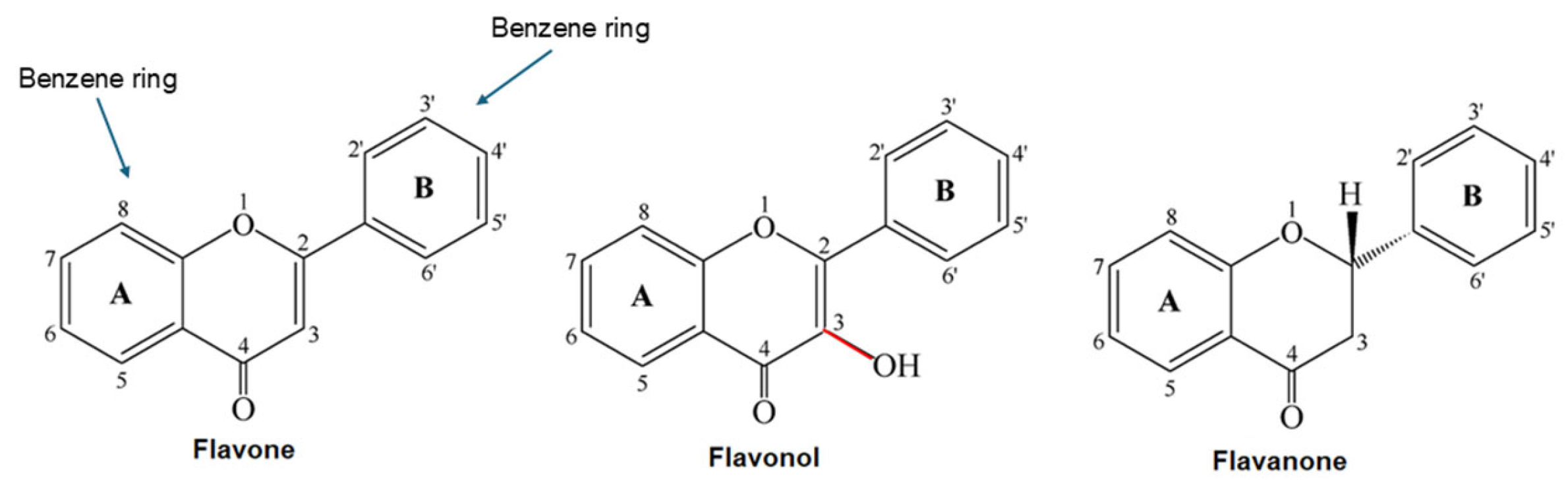
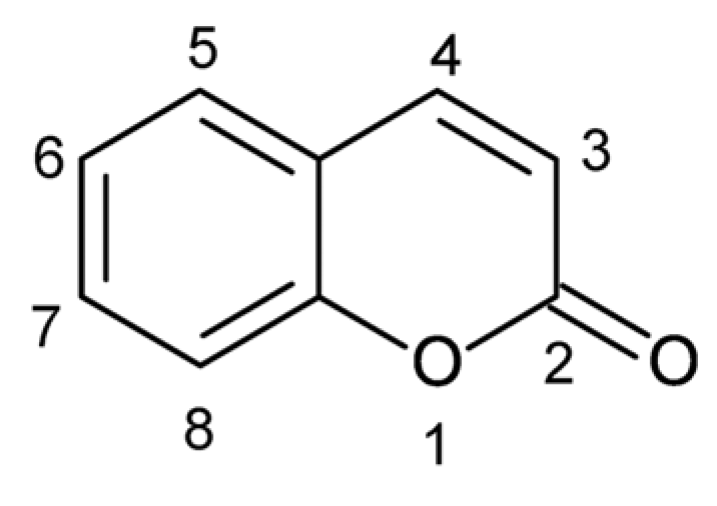
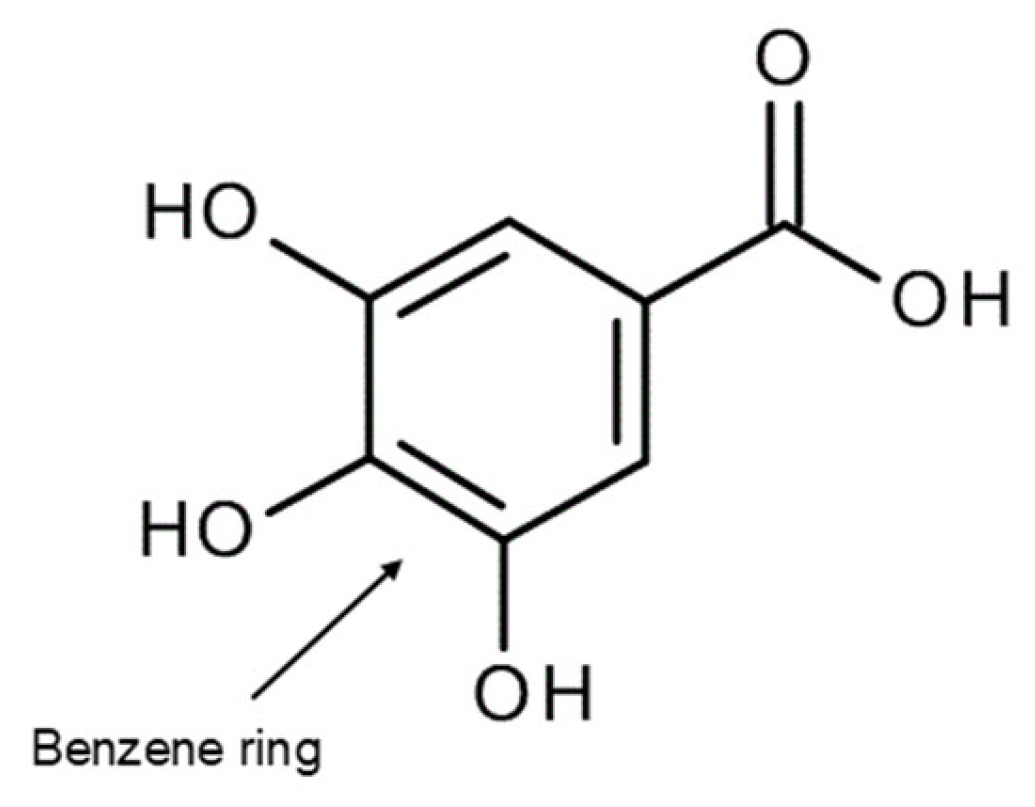
2.1.1. Polyphenols—C6–C3–C6 and C6–C3 Frameworks
2.1.2. Non-Polyphenolic Antioxidants with Phenol-Related Mechanisms
2.2. Relevance of Structural Features of Polyphenols for Their Activity
3. Antioxidant Activity of Ligands—The Determining Factors
3.1. Electronic Structure and Charge Distribution
3.2. Factors Modulating Electronic Structure
3.2.1. Metal Complexation
3.2.2. Solvent Polarity and pH
3.3. Consequences for Antioxidant Mechanisms
3.3.1. HAT and SET
3.3.2. SPLET
- (a)
- Proton dissociation deprotonation: ArOH → ArO− + H+.
- (b)
- Electron transfer (from the deprotonated anion to the radical): ArO− → ArO• + e−.

4. The Synthesis of Effective Antioxidants and Their Parametric Evaluation
4.1. Examples of Synthesized Antioxidant Compounds
4.2. Formation of Complex Compounds with Metals
4.3. Chemical Synthesis Strategies
5. Synchrotron Techniques as a New Approach in a Structure and Antioxidant Properties Analysis
6. Conclusions
Author Contributions
Funding
Institutional Review Board Statement
Informed Consent Statement
Data Availability Statement
Conflicts of Interest
Abbreviations
| BDE | Bond dissociation enthalpy |
| BHT | Butylated hydroxytoluene |
| DPPH | 2,2-Diphenyl-1-picrylhydrazyl |
| ABTS | 2,2′-Azino-bis(3-ethylbenzothiazoline-6-sulfonic acid) |
| FRAP | Ferric-reducing antioxidant power |
| ORAC | Oxygen radical absorbance capacity |
| QSAR | Quantitative structure–activity relationship |
| TEMPO | 2,2,6,6-Tetramethylpiperidine-1-oxylderivatives |
| HAT | Hydrogen atom transfer |
| IP | Ionization potential |
| SET | Single electron transfer |
| RSE | Radical stabilization energy |
| DFT | Density functional theory |
| ADME | Absorption, distribution, metabolism, and excretion |
| SPLET | Sequential proton loss electron transfer |
| TEAC | Trolox-equivalent antioxidant capacity |
| LDL | Low-density lipoprotein |
| ROS | Reactive oxygen species |
| HOMO | Highest occupied molecular orbital |
| LUMO | Lowest unoccupied molecular orbital |
| BIPT | Benzylideneiminophenylthiazoles |
| SOD | Superoxide dismutase |
| XAS | X-ray absorption spectroscopy |
| EDA | Energy decomposition analysis |
| ETS-NOCV | Extended transition state method with natural orbitals for chemical valence |
| NBO | Natural bond orbital |
| XANES | X-ray absorption near edge structure |
| EXAFS | Extended X-ray absorption fine structure |
| XFM | X-ray fluorescence microscopy |
| STXM | Scanning transmission X-ray microscopy |
| SR-FTIR | Synchrotron radiation-based Fourier transform infrared |
| GSH | Glutathione |
| Phen | 1,10-Phenanthroline |
| PLC | Polyphenols |
| DMG-PEG | 1,2-Dimyristoyl-rac-glycero-3-methoxypolyethylene glycol-2000 |
| TA | Tannic acid |
| MPN | Metal–phenolic network |
| LNPs | Lipid nanoparticles |
| LMCT | Ligand-to-metal charge transfer |
References
- Parcheta, M.; Świsłocka, R.; Orzechowska, S.; Akimowicz, M.; Choińska, R.; Lewandowski, W. Recent Developments in Effective Antioxidants: The Structure and Antioxidant Properties. Materials 2021, 14, 1984. [Google Scholar] [CrossRef]
- Birsa, M.L.; Sarbu, L.G. A Structure-Activity Relationship Study on the Antioxidant Properties of Dithiocarbamic Flavanones. Antioxidants 2024, 13, 963. [Google Scholar] [CrossRef]
- Ran, Y.; Li, F.; Xu, Z.; Zeng, K.; Ming, J. Recent advances in dietary polyphenols: Structure-activity and interactions with nutrients—Review on dietary polyphenols, structure-activity relationships and delivery strategies. Food Funct. 2024, 15, 10213–10232. [Google Scholar] [CrossRef] [PubMed]
- Bešlo, D.; Golubi, N.; Rastija, V.; Agić, D.; Karnaš, M.; Šubarić, D.; Lučić, B. Antioxidant Activity, Metabolism, and Bioavailability of Polyphenols in the Diet of Animals. Antioxidants 2023, 12, 1141. [Google Scholar] [CrossRef] [PubMed]
- Tauchen, J.; Hum, L.; Jurášek, M.; Regenstein, J.M.; Ozogul, F. Synthetic and semisynthetic antioxidants in medicine and food industry: A review. Front. Pharmacol. 2025, 16, 1599816. [Google Scholar] [CrossRef] [PubMed]
- Xiao, Z.; Yang, B.; Feng, X.; Liao, Z.; Shi, H.; Jiang, W.; Wang, C.; Ren, N. Density Functional Theory and Machine Learning-Based Quantitative Structure-Activity Relationship Models Enabling Prediction of Contaminant Degradation Performance with Heterogeneous Peroxymonosulfate Treatments. Environ. Sci. Technol. 2023, 57, 3951–3961. [Google Scholar] [CrossRef]
- Pateiro, M.; Gómez, B.; Munekata, P.E.S.; Barba, F.J.; Putnik, P.; Kovačević, D.B.; Lorenzo, J.M. Nanoencapsulation of Promising Bioactive Compounds to Improve Their Absorption, Stability, Functionality and the Appearance of the Final Food Products. Molecules 2021, 26, 1547. [Google Scholar] [CrossRef]
- Andrés, C.; Pérez de la Lastra, J.; Juan, C.; Plou, F.; Pérez-Lebeña, E. Polyphenols as Antioxidant/Pro-Oxidant Compounds and Donors of Reducing Species: Relationship with Human Antioxidant Metabolism. Processes 2023, 11, 2771. [Google Scholar] [CrossRef]
- Li, J.; Zhang, Y.; Peng, J.; Yang, W.; Pan, Y.; Xu, Y.; Yao, J.; Lin, S.; Li, Y.; Gu, X.; et al. A regulator of amino acid sensing links lipid peroxidation and lipid droplet-dependent antioxidant response. Mol. Cell 2025, 85, 3225–3240.e10. [Google Scholar] [CrossRef]
- Valgimigli, L. Lipid Peroxidation and Antioxidant Protection. Biomolecules 2023, 13, 1291. [Google Scholar] [CrossRef]
- Snezhkina, A.V.; Kudryavtseva, A.V.; Kardymon, O.L.; Savvateeva, M.V.; Melnikova, N.V.; Krasnov, G.S.; Dmitriev, A.A. ROS Generation and Antioxidant Defense Systems in Normal and Malignant Cells. Oxid. Med. Cell. Longev. 2019, 5, 6175804. [Google Scholar] [CrossRef] [PubMed]
- Raju, M.V.; Chandrasekaran, M.K.; Loganathan, L.; Ahalliya, R.M.; Mironescu, M.; Mironescu, I.D.; Palanisamy, C.P.; Kanniappan, G.V. Lipid remodeling and ferroptosis in phosphatidylcholine-mediated tumor–stroma crosstalk. Front. Mol. Biosci. 2026, 13, 1742305. [Google Scholar] [CrossRef]
- Sun, Y.; Lu, Y.; Saredy, J.; Wang, X.; Drummer, C.; Shao, Y.; Saaoud, F.; Xu, K.; Liu, M.; Yang, W.Y.; et al. ROS systems are a new integrated network for sensing homeostasis and alarming stresses in organelle metabolic processes. Redox Biol. 2020, 37, 101696. [Google Scholar] [CrossRef] [PubMed]
- Zhang, H.Y.; Sun, Y.M.; Chen, D.Z. O-H Bond Dissociation Energies of Phenolic Compounds are Determined by Field/Inductive Effect or Resonance Effect? A DFT Study and Its Implication. Mol. Inform. 2001, 20, 148–152. [Google Scholar] [CrossRef]
- Fraga, C.; Croft, K.D.; Kennedy, D.O.; Tomas-Barberan, F.A. The effects of polyphenols and other bioactives on human health. Food Funct. 2019, 10, 514–528. [Google Scholar] [CrossRef]
- Kumar, S.; Pandey, A. Chemistry and Biological Activities of Flavonoids: An Overview. Sci. World J. 2013, 29, 162750. [Google Scholar] [CrossRef]
- Neelam, A.; Khatkar, A.; Sharma, K.K. Phenylpropanoids and its derivatives: Biological activities and its role in food, pharmaceutical and cosmetic industries. Crit. Rev. Food Sci. Nutr. 2019, 60, 2655–2675. [Google Scholar] [CrossRef]
- Reinisalo, M.; Kårlund, A.; Koskela, A.; Kaarniranta, K.; Karjalainen, R. Polyphenol Stilbenes: Molecular Mechanisms of Defence against Oxidative Stress and Aging-Related Diseases. Oxid. Med. Cell. Longev. 2015, 2015, 340520. [Google Scholar] [CrossRef]
- Smeriglio, A.; Barreca, D.; Bellocco, E.; Trombetta, D. Proanthocyanidins and hydrolysable tannins: Occurrence, dietary intake and pharmacological effects. Br. J. Pharmacol. 2017, 174, 1244–1262. [Google Scholar] [CrossRef]
- Gęgotek, A.; Skrzydlewska, E. Antioxidative and Anti-Inflammatory Activity of Ascorbic Acid. Antioxidants 2022, 11, 1993. [Google Scholar] [CrossRef]
- Wallert, M.; Kluge, S.; Schubert, M.; Koeberle, A.; Werz, O.; Birringer, M.; Lorkowski, S. Diversity of Chromanol and Chromenol Structures and Functions: An Emerging Class of Anti-Inflammatory and Anti-Carcinogenic Agents. Front. Pharmacol. 2020, 11, 2020. [Google Scholar] [CrossRef]
- Burton, G.; Joyce, A.; Ingold, K. Is vitamin E the only lipid-soluble, chain-breaking antioxidant in human blood plasma and erythrocyte membranes? Archiv. Biochem. Biophys. 1983, 221, 281–290. [Google Scholar] [CrossRef] [PubMed]
- Caruso, F.; Pedersen, J.Z.; Incerpi, S.; Belli, S.; Sakib, R.; Rossi, M. Interaction between Vitamins C and E When Scavenging the Superoxide Radical Shown by Hydrodynamic Voltammetry and DFT. Biophysica 2024, 4, 310–326. [Google Scholar] [CrossRef]
- de Sousa, D.P.; Damasceno, R.O.S.; Amorati, R.; Elshabrawy, H.A.; de Castro, R.D.; Bezerra, D.P.; Nunes, V.R.V.; Gomes, R.C.; Lima, T.C. Essential Oils: Chemistry and Pharmacological Activities. Biomolecules 2023, 13, 1144. [Google Scholar] [CrossRef] [PubMed]
- Todorov, L.; Saso, L.; Kostova, I. Antioxidant Activity of Coumarins and Their Metal Complexes. Pharmaceuticals 2023, 16, 651. [Google Scholar] [CrossRef]
- Milani, A.; Basirnejad, M.; Shahbazi, S.; Bolhassani, A. Carotenoids: Biochemistry, pharmacology and treatment. Br. J. Pharmacol. 2017, 174, 1290–1324. [Google Scholar] [CrossRef]
- Borges dos Santos, R.; Martinho Simões, J. Energetics of the O-H Bond in Phenol and Substituted Phenols: A Critical Evaluation of Literature Data. J. Phys. Chem. 1998, 27, 707–739. [Google Scholar] [CrossRef]
- Chandra, A.K.; Uchimaru, T. The O-H Bond Dissociation Energies of Substituted Phenols and Proton Affinities of Substituted Phenoxide Ions: A DFT Study. Int. J. Mol. Sci. 2002, 3, 407–422. [Google Scholar] [CrossRef]
- Szymusiak, H.; Zieliński, R. Bond dissociation enthalpy of phenolic antioxidants. Pol. J. Food Nutr. Sci. 2003, 12, 129–135. [Google Scholar]
- Fu, Y.H.; Zhang, Y.; Wang, F.; Zhao, L.; Shen, G.B.; Zhu, X.Q. Quantitative evaluation of the actual hydrogen atom donating activities of O-H bonds in phenols: Structure-activity relationship. RSC Adv. 2023, 13, 3295–3305. [Google Scholar] [CrossRef]
- Apak, R.; Güçlü, K.; Demirata, B.; Özyürek, M.; Çelik, S.E.; Bektaşoğlu, B.; Berker, K.I.; Özyurt, D. Comparative Evaluation of Various Total Antioxidant Capacity Assays Applied to Phenolic Compounds with the CUPRAC Assay. Molecules 2007, 12, 1496–1547. [Google Scholar] [CrossRef] [PubMed]
- Medvidović-Kosanović, M.; Šeruga, M.; Jakobek, L.; Novak, I. Electrochemical and Antioxidant Properties of (+)-Catechin, Quercetin and Rutin. Croat. Chem. Acta 2010, 83, 197–207. [Google Scholar]
- Chobot, V.; Hadacek, F. Exploration of pro-oxidant and antioxidant activities of the flavonoid myricetin. Redox Rep. 2011, 16, 242–247. [Google Scholar] [CrossRef] [PubMed]
- Rice-Evans, C.; Miller, N.; Paganga, G. Structure-antioxidant activity relationships of flavonoids and phenolic acids. Free Radical Biol. Med. 1996, 20, 933–956. [Google Scholar] [CrossRef]
- Brown, J.; Khord, H.; Hider, R.; Rice-Evans, C. Structural dependence of flavonoid interactions with Cu2+ ions: Implications for their antioxidant properties. Biochem. J. 1998, 330, 1173–1178. [Google Scholar] [CrossRef]
- Trouillas, P.; Marsal, P.; Siri, D.; Lazzaroni, R.; Duroux, J.L. A DFT study of the reactivity of OH groups in quercetin and taxifolin antioxidants: The specificity of the 3-OH site. Food Chem. 2006, 97, 679–688. [Google Scholar] [CrossRef]
- Antonczak, S. Electronic description of four flavonoids revisited by DFT method. J. Mol. Struct. Theochem. 2008, 856, 38–45. [Google Scholar] [CrossRef]
- Veiko, A.G.; Lapshina, E.A.; Zavodnik, I.B. Comparative analysis of molecular properties and reactions with oxidants for quercetin, catechin, and naringenin. Mol. Cell. Biochem. 2021, 476, 4287–4299. [Google Scholar] [CrossRef]
- Baldim, J.L.; de Alcântara, B.; da Silva Domingos, O.; Soares, M.G.; Caldas, I.S.; Novaes, R.D.; Oliveira, T.B.; Ghilardi Lago, J.H.; Chagas-Paula, D.A. The Correlation between Chemical Structures and Antioxidant, Prooxidant, and Antitrypanosomatid Properties of Flavonoids. Oxid. Med. Cell. Longev. 2017, 2017, 3789856. [Google Scholar] [CrossRef]
- Mendes, A.; Borges, R.; Neto, A.; de Macedo, L.G.; da Silva, A.B. The basic antioxidant structure for flavonoid derivatives. J. Mol. Model. 2012, 18, 4073–4080. [Google Scholar] [CrossRef]
- Heim, K.; Tagliaferro, A.; Bobilya, D. Flavonoid antioxidants: Chemistry, metabolism and structure-activity relationships. J. Nutr. Biochem. 2002, 13, 572–584. [Google Scholar] [CrossRef] [PubMed]
- Zhang, Q.; Yang, W.; Liu, J.; Liu, H.; Lv, Z.; Zhang, C.; Chen, D.; Jiao, Z. Identification of Six Flavonoids as Novel Cellular Antioxidants and Their Structure-Activity Relationship. Oxid. Med. Cell. Longev. 2020, 19, 415897. [Google Scholar] [CrossRef]
- Thompson, E.; Williams, C.; Elliot, G. Stability of flavonoid complexes of copper(II) and flavonoid antioxidant activity. Anal. Chim. Acta. 1976, 85, 375–381. [Google Scholar] [CrossRef] [PubMed]
- Chen, J.; Yang, J.; Ma, L.; Li, J.; Shazad, N.; Kim, C.K. Structure-antioxidant activity relationship of methoxy, phenolic hydroxyl, and carboxylic acid groups of phenolic acids. Sci. Rep. 2020, 10, 2611. [Google Scholar] [CrossRef]
- Zhou, H.C.; Fung-yee Tam, N.; Lin, Y.M.; Ding, Z.H.; Chai, W.M.; Wei, S.D. Relationships between Degree of Polymerization and Antioxidant Activities: A Study on Proanthocyanidins from the Leaves of a Medicinal Mangrove Plant Ceriops tagal. PLoS ONE 2014, 9, 107606. [Google Scholar] [CrossRef]
- Cosme, F.; Aires, A.; Pinto, T.; Oliveira, I.; Vilela, A.; Gonçalves, B. A Comprehensive Review of Bioactive Tannins in Foods and Beverages: Functional Properties, Health Benefits, and Sensory Qualities. Molecules 2025, 30, 800. [Google Scholar] [CrossRef]
- Spiegel, M. Current Trends in Computational Quantum Chemistry Studies on Antioxidant Radical Scavenging Activity. J. Chem. Inf. Model. 2022, 62, 2639–2658. [Google Scholar] [CrossRef]
- Pan, Y.; Qin, R.; Hou, M.; Xue, J.; Zhou, M.; Xu, L.; Zhang, Y. The interactions of polyphenols with Fe and their application in Fenton/Fenton-like reactions. Sep. Purif. Technol. 2022, 300, 121831. [Google Scholar] [CrossRef]
- Liu, X.; Wang, L.; He, B.; Liu, Q.; Zhu, H.; Carrier, A.; Oakes, K.; Zhang, X. Mechanistic Insights into Myofibrillar Protein Oxidation by Fenton Chemistry Regulated by Gallic Acid. J. Agric. Food Chem. 2023, 71, 12587–12596. [Google Scholar] [CrossRef]
- Lima, J.P.P.; Tabelini, C.H.B.; Aguiar, A. A Review of Gallic Acid-Mediated Fenton Processes for Degrading Emerging Pollutants and Dyes. Molecules 2023, 28, 1166. [Google Scholar] [CrossRef]
- Scarano, A.; Laddomada, B.; Blando, F.; De Santis, S.; Verna, G.; Chieppa, M.; Santino, A. The Chelating Ability of Plant Polyphenols Can Affect Iron Homeostasis and Gut Microbiota. Antioxidants 2023, 12, 630. [Google Scholar] [CrossRef] [PubMed]
- Mazzone, G. On the Inhibition of Hydroxyl Radical Formation by Hydroxycinnamic Acids: The Case of Caffeic Acid as a Promising Chelating Ligand of a Ferrous Ion. J. Phys. Chem. A 2019, 123, 9560–9566. [Google Scholar] [CrossRef] [PubMed]
- Espina, A.; Cañamares, M.V.; Jurašeková, Z.; Sanchez-Cortes, S. Analysis of Iron Complexes of Tannic Acid and Other Related Polyphenols as Revealed by Spectroscopic Techniques: Implications in the Identification and Characterization of Iron Gall Inks in Historical Manuscripts. ACS Omega 2022, 7, 27937–27949. [Google Scholar] [CrossRef] [PubMed]
- Puentes-Díaz, N.; Chaparro, D.; Morales-Morales, D.; Flores-Gaspar, A.; Alí-Torres, J. Role of Metal Cations of Copper, Iron, and Aluminum and Multifunctional Ligands in Alzheimer’s Disease: Experimental and Computational Insights. ACS Omega 2023, 8, 4508–4526. [Google Scholar] [CrossRef]
- Ghironi, S.; Viganò, E.L.; Selvestrel, G.; Benfenati, E. QSAR Models for Predicting the Antioxidant Potential of Chemical Substances. J. Xenobiot. 2025, 15, 80. [Google Scholar] [CrossRef]
- Mateus, C.; Abreu, R.M.V. Python-based QSAR modeling protocol for antioxidant activity: A case-study using a library of di(hetero)cyclic amines or amides. Discov. Chem. 2025, 2, 208. [Google Scholar] [CrossRef]
- Halabi, A.; Hernández, M.; Lenes, H. Accurate, Fast and Easy-To-Understand Density Functional Tight Binding and Machine Learning QSAR for the DPPH and ABTS Antioxidant Activity of Phenolic Compounds Based on No-Code Freeware. J. Drug Metab. Toxicol. 2023, 14, 1000286. [Google Scholar]
- Chen, Z.; Świsłocka, R.; Choińska, R.; Marszałek, K.; Dąbrowska, A.; Lewandowski, W.; Lewandowska, H. Exploring the Correlation Between the Molecular Structure and Biological Activities of Metal-Phenolic Compound Complexes: Research and Description of the Role of Metal Ions in Improving the Antioxidant Activities of Phenolic Compounds. Int. J. Mol. Sci. 2024, 25, 11775. [Google Scholar] [CrossRef]
- Lewandowska, H.; Chen, Z.; Marszałek, K.; Lewandowski, W.; Świsłocka, R. Effective Antioxidants as Plausible Ligands in Chromium(III) Supplementation: How Complexation Modulates Catechol-Based Polyphenols. Molecules 2025, 30, 4467. [Google Scholar] [CrossRef]
- Kalinowska, M.; Świsłocka, R.; Wołejko, E.; Jabłońska-Trypuć, A.; Wydro, U.; Kozłowski, M.; Koronkiewicz, K.; Piekut, J.; Lewandowski, W. Structural characterization and evaluation of antimicrobial and cytotoxic activity of six plant phenolic acids. PLoS ONE 2024, 19, e0299372. [Google Scholar] [CrossRef]
- El-Lateef, H.M.A.; El-Dabea, T.; Khalaf, M.M.; Abu-Dief, A.M. Recent Overview of Potent Antioxidant Activity of Coordination Compounds. Antioxidants 2023, 12, 213. [Google Scholar] [CrossRef]
- Sharma, B.; Srivastava, H.; Gayatri, G.; Sastry, G. Energy decomposition analysis of cation-π, metal ion-lone pair, hydrogen bonded, charge-assisted hydrogen bonded, and π-π interactions. J. Comput. Chem. 2015, 36, 529–538. [Google Scholar] [CrossRef] [PubMed]
- Hocking, R.; George, S.; Raymond, K.; Hodgson, K.; Hedman, B.; Solomon, E. Fe L-Edge X-ray Absorption Spectroscopy Determination of Differential Orbital Covalency of Siderophore Model Compounds: Electronic Structure Contributions to High Stability Constants. J. Am. Chem. Soc. 2010, 132, 4006–4015. [Google Scholar] [CrossRef] [PubMed]
- Brinck, T.; Sagan, F.; Mitoraj, M. ETS-NOCV Analysis of σ-Donation and π-Backdonation in Complexes of Boron Based Lewis Acids with N2, CO and NH3. Eur. J. Inorg. Chem. 2025, 28, e202400845. [Google Scholar] [CrossRef]
- Park, S.J.; Choi, Y.K.; Han, S.S.; Lee, K.W. Sharp-line Electronic Spectroscopy and Ligand Field Analysis of Cr(III) Complexes with Amino Acid Ligands. Bull. Korean Chem. Soc. 1999, 20, 1475–1478. [Google Scholar]
- Van der Lubbe, S.; Vermeeren, P.; Guerra, C.; Bickelhaupt, M. The Nature of Nonclassical Carbonyl Ligands Explained by Kohn-Sham Molecular Orbital Theory. Chem. Eur. J. 2020, 26, 15690–15699. [Google Scholar] [CrossRef]
- Matin, M.; Islam, M.; Bredow, T.; Aziz, M. The Effects of Oxidation States, Spin States and Solvents on Molecular Structure, Stability and Spectroscopic Properties of Fe-Catechol Complexes: A Theoretical Study. Adv. Chem. Eng. Sci. 2017, 7, 137–153. [Google Scholar] [CrossRef]
- Gorelsky, S.; Basumallick, L.; Vura-Weis, J.; Sarangi, R.; Hodgson, K.; Britt Hedman, B.; Fujisawa, K.; Solomon, E.I. Spectroscopic and DFT Investigation of [M{HB(3,5-iPr2pz)3}(SC6F5)] (M = Mn, Fe, Co, Ni, Cu, and Zn) Model Complexes: Periodic Trends in Metal−Thiolate Bonding. Inorg. Chem. 2005, 44, 4947–4960. [Google Scholar] [CrossRef]
- Baira, K.; Ounissi, A.; Merouani, H.; Alam, M.; Ouddai, N.; Erto, A.; Yadav, K.K.; Islam, S.; Cheon, J.-K.; Jeon, B.-H.; et al. Multitask Quantum Study of the Curcumin-Based Complex Physicochemical and Biological Properties. Int. J. Mol. Sci. 2022, 23, 2832. [Google Scholar] [CrossRef]
- Brown, S. Metrical Oxidation States of 2-Amidophenoxide and Catecholate Ligands: Structural Signatures of Metal-Ligand π Bonding in Potentially Noninnocent Ligands. Inorg. Chem. 2012, 51, 1251–1260. [Google Scholar] [CrossRef]
- Ward, M.; McCleverty, J. Non-innocent behaviour in mononuclear and polynuclear complexes: Consequences for redox and electronic spectroscopic properties. J. Chem. Soc. Dalton Trans. 2002, 275–288. [Google Scholar] [CrossRef]
- Zou, M.; Waldie, K. Redox-active ligand promoted multielectron reactivity at earth-abundant transition metal complexes. Inorg. Chem. Front. 2024, 11, 5795–5809. [Google Scholar] [CrossRef]
- León, F.; García-Rodeja, Y.; Mallet-Ladeira, S.; Miqueu, K.; Szalóki, G.; Bourissou, D. Catechol/o-benzoquinone exchange at gold(III). Chem. Sci. 2024, 15, 16651–16659. [Google Scholar] [CrossRef] [PubMed]
- Lopes, G.K.; Schulman, H.M.; Hermes-Lima, M. Polyphenol tannic acid inhibits hydroxyl radical formation from Fenton reaction by complexing ferrous ions. Biochim. Biophys. Acta 1999, 18, 142–152. [Google Scholar] [CrossRef]
- Cherrak, S.A.; Mokhtari-Soulimane, N.; Berroukeche, F.; Bensenane, B.; Cherbonnel, A.; Merzouk, H.; Elhabiri, M. In Vitro Antioxidant versus Metal Ion Chelating Properties of Flavonoids: A Structure-Activity Investigation. PLoS ONE 2016, 11, e0165575. [Google Scholar] [CrossRef]
- Liu, Y.; Guo, M. Studies on Transition Metal-Quercetin Complexes Using Electrospray Ionization Tandem Mass Spectrometry. Molecules 2015, 20, 8583–8594. [Google Scholar] [CrossRef]
- Ahmed, M.; Sudhanshu Malhotra, S.S.; Alsubaie, A.S.; El-Bahy, S.M.; Mohapatra, R.K.; Ansari, A. Structures, bonding aspects and spectroscopic parameters of morin, myricetin, and quercetin with copper/zinc complexes: DFT and TDDFT exploration. J. Mol. Model. 2025, 31, 75. [Google Scholar] [CrossRef]
- Corrente, G.; Malacaria, L.; Beneduci, A.; Furia, E.; Marino, T.; Mazzone, G. Experimental and theoretical study on the coordination properties of quercetin towards aluminum(III), iron(III) and copper(II) in aqueous solution. J. Mol. Liq. 2021, 325, 115171. [Google Scholar] [CrossRef]
- Liebhäuser, P.; Keisers, K.; Hoffmann, A.; Schnappinger, T.; Sommer, I.; Thoma, A.; Wilfer, C.; Schoch, R.; Stührenberg, K.; Bauer, M.; et al. Record Broken: A Copper Peroxide Complex with Enhanced Stability and Faster Hydroxylation Catalysis. Chem. Eur. J. 2017, 23, 12171–12183. [Google Scholar] [CrossRef]
- Liua, A.; Tanakab, N.; Sunb, L.u.; Guo, B.; Kim, J.H.; Krausz, K.W.; Fang, Z.; Jiang, C.; Yang, J.; Gonzalez, F.J. Saikosaponin d protects against acetaminophen-induced hepatotoxicity by inhibiting NF-jB and STAT3 signaling. Chem.-Biol. Interact. 2014, 223, 80–86. [Google Scholar] [CrossRef]
- Finkelstein-Shapiro, D.; Davidowski, S.; Lee, P.; Guo, C.h.; Holland, G.; Rajh, T.; Gray, K.A.; Yarger, J.L.; Calatayud, M. Direct Evidence of Chelated Geometry of Catechol on TiO2 by a Combined Solid-State NMR and DFT Study. J. Phys. Chem. C 2016, 120, 23625–23630. [Google Scholar] [CrossRef]
- Pękal, A.; Pyrzynska, K. Effect of pH and metal ions on DPPH radical scavenging activity of tea. Int. J. Food Sci. Nutr. 2015, 66, 58–62. [Google Scholar] [CrossRef] [PubMed]
- Ghosh, N.; Chakraborty, T.; Mallick, S.; Mana, S.; Singha, D.; Ghosh, B.; Roy, S. Synthesis, characterization and study of antioxidant activity of quercetin-magnesium complex. Spectrochim. Acta A Mol. Biomol. Spectrosc. 2015, 151, 807–813. [Google Scholar] [CrossRef] [PubMed]
- Shaikh, Z.; Ashiq, U.; Jamal, R.A.; Mahroof-Tahir, M.; Shamshad, B.; Sultan, S. Chemistry and antioxidant properties of titanium(IV) complexes. Transit. Met. Chem. 2015, 40, 665–671. [Google Scholar] [CrossRef]
- Shpilt, Z.; Melamed-Book, N.; Tshuva, E.Y. An anticancer Ti(IV) complex increases mitochondrial reactive oxygen species levels in relation with hypoxia and endoplasmic-reticulum stress: A distinct non DNA-related mechanism. J. Inorg. Biochem. 2023, 243, 112197. [Google Scholar] [CrossRef]
- Galano, A. Antioxidant activity at the molecular level: Exploring ways of action and computational tools to investigate them. Chem. Sci. 2025, 16, 19570–19593. [Google Scholar] [CrossRef]
- Lemańska, K.; Szymusiak, H.; Tyrakowska, B.; Ryszard Zieliński, R.; Ans, E.M.F.; Soffers, A.; Rietjens, I.M. The influence of pH on antioxidant properties and the mechanism of antioxidant action of hydroxyflavones. Free Radical Biol. Med. 2001, 31, 869–881. [Google Scholar] [CrossRef]
- Baranska, N.; Parkin, A.; Duhme-Klair, A.K. Electrochemical and Solution Structural Characterization of Fe(III) Azotochelin Complexes: Examining the Coordination Behavior of a Tetradentate Siderophore. Inorg. Chem. 2022, 61, 19172–19182. [Google Scholar] [CrossRef]
- Boukhalfa, H.; Crumbliss, A.L. Chemical aspects of siderophore mediated iron transport. Biometals 2022, 15, 325–339. [Google Scholar] [CrossRef]
- Kell, D.B. Iron behaving badly: Inappropriate iron chelation as a major contributor to the aetiology of vascular and other progressive inflammatory and degenerative diseases. BMC Med. Genom. 2009, 2, 2. [Google Scholar] [CrossRef]
- Castañeda-Arriaga, R.; Pérez-González, A.; Reina, M.; Alvarez-Idaboy, J.R.; Galano, A. Comprehensive Investigation of the Antioxidant and Pro-oxidant Effects of Phenolic Compounds: A Double-Edged Sword in the Context of Oxidative Stress? J. Phys. Chem. B 2018, 122, 6198–6214. [Google Scholar] [CrossRef] [PubMed]
- Burton, G.; Ingold, K. Vitamin E: Applications of the Principles of Physical Organic Chemistry to the Exploration of Its Structure and Function. Acc. Chem. Res. 1986, 19, 194–201. [Google Scholar] [CrossRef]
- Leopoldini, M.; Marino, T.; Russo, N.; Toscano, M. Antioxidant Properties of Phenolic Compounds: H-Atom versus Electron Transfer Mechanism. J. Phys. Chem. A 2004, 108, 4916–4922. [Google Scholar] [CrossRef]
- Litwinienko, G.; Ingold, K. Solvent Effects on the Rates and Mechanisms of Reaction of Phenols with Free Radicals. Acc. Chem. Res. 2007, 40, 222–230. [Google Scholar] [CrossRef]
- Niki, E. Role of vitamin E as a lipid-soluble peroxyl radical scavenger: In vitro and in vivo evidence. Free Radic. Biol. Med. 2014, 66, 3–12. [Google Scholar] [CrossRef]
- Parker, A. Protic-dipolar aprotic solvent effects on rates of bimolecular reactions. Chem. Rev. 1969, 69, 1–32. [Google Scholar] [CrossRef]
- Galano, A.; Francisco-Márquez, M.; Alvarez-Idaboy, J.R. Mechanism and kinetics studies on the antioxidant activity of sinapinic acid. Phys. Chem. Chem. Phys. 2011, 13, 11199–11205. [Google Scholar] [CrossRef]
- Litwinienko, G.; Ingold, K.U. Abnormal solvent effects on hydrogen atom abstractions. 1. The reactions of phenols with 2,2-diphenyl-1-picrylhydrazyl (dpph*) in alcohols. J. Org. Chem. 2003, 68, 3433–3438. [Google Scholar] [CrossRef]
- Przybylski, P.; Konopko, A.; Łętowski, P.; Jodko-Piórecka, K.; Litwinienko, G. Concentration-dependent HAT/ET mechanism of the reaction of phenols with 2,2-diphenyl-1-picrylhydrazyl (dpph˙) in methanol. RSC Adv. 2022, 12, 8131–8136. [Google Scholar] [CrossRef]
- Charlton, N.C.; Mastyugin, M.; Török, B.; Török, M. Structural Features of Small Molecule Antioxidants and Strategic Modifications to Improve Potential Bioactivity. Molecules 2023, 28, 1057. [Google Scholar] [CrossRef]
- Bakheit, A.; Wani, T.A.; Al-Majed, A.A.; Alkahtani, H.M.; Alanazi, M.M.; Alqahtani, F.R.; Zargar, S. Theoretical study of the antioxidant mechanism and structure-activity relationships of 1,3,4-oxadiazol-2-ylthieno [2,3-d]pyrimidin-4-amine derivatives: A computational approach. Front. Chem. 2024, 12, 1–16. [Google Scholar] [CrossRef] [PubMed]
- Gulcin, I. Antioxidants: A comprehensive review. Arch. Toxicol. 2025, 99, 1893–1997. [Google Scholar] [CrossRef] [PubMed]
- Chen, Y.; Xiao, H.; Zheng, J.; Liang, G. Structure-Thermodynamics-Antioxidant Activity Relationships of Selected Natural Phenolic Acids and Derivatives: An Experimental and Theoretical Evaluation. PLoS ONE 2015, 10, e0121276. [Google Scholar] [CrossRef] [PubMed]
- Fragou, F.; Theofanous, A.; Deligiannakis, Y.; Louloudi, M. Nanoantioxidant Materials: Nanoengineering Inspired by Nature. Micromachines 2023, 14, 383. [Google Scholar] [CrossRef]
- Costa, M.; Losada-Barreiro, S.; Paiva-Martins, F.; Bravo-Díaz, C. Polyphenolic Antioxidants in Lipid Emulsions: Partitioning Effects and Interfacial Phenomena. Foods 2021, 10, 539. [Google Scholar] [CrossRef]
- Losada-Barreiro, S.; Sezgin-Bayindir, Z.; Paiva-Martins, F.; Bravo-Díaz, C. Biochemistry of Antioxidants: Mechanisms and Pharmaceutical Applications. Biomedicines 2022, 10, 3051. [Google Scholar] [CrossRef]
- Khoshbakht, A.; Shiran, J.A.; Miran, M.; Sepehri, S. Synthesis and evaluation of in vitro antioxidant, anticancer, and antibacterial properties of new benzylideneiminophenylthiazole analogues. BMC Chem. 2024, 18, 173. [Google Scholar] [CrossRef]
- Pele, R.; Marc, G.; Stana, A.; Ionuț, I.; Nastasă, C.; Tiperciuc, B.; Oniga, I.; Pîrnău, A.; Vlase, L.; Oniga, O. Synthesis of New Phenolic Derivatives of Quinazolin-4(3H)-One as Potential Antioxidant Agents—In Vitro Evaluation and Quantum Studies. Molecules 2022, 27, 2599. [Google Scholar] [CrossRef]
- Sun, Y.; Ji, X.; Cui, J.; Mi, Y.; Zhang, J.; Guo, Z. Synthesis, Characterization, and the Antioxidant Activity of Phenolic Acid Chitooligosaccharide Derivatives. Mar. Drugs 2022, 20, 489. [Google Scholar] [CrossRef]
- Medigue, N.; Bouakouk-Chitti, Z.; Bechohra, L.; Kellou-Tairi, S. Theoretical study of the impact of metal complexation on the reactivity properties of Curcumin and its diacetylated derivative as antioxidant agents. J. Mol. Model. 2021, 27, 192. [Google Scholar] [CrossRef]
- Barik, A.; Mishra, B.; Shen, L.; Mohan, H.; Kadam, R.M.; Dutta, S.; Zhang, H.Y.; Priyadarsini, K.I. Evaluation of a new copper(II)-curcumin complex as superoxide dismutase mimic and its free radical reactions. Free Rad. Biol. Med. 2005, 39, 811–822. [Google Scholar] [CrossRef] [PubMed]
- Ramanan, M.; Sinha, S.; Sudarshan, K.; Aidhen, I.S.; Doble, M. Inhibition of the enzymes in the leukotriene and prostaglandin pathways in inflammation by 3-aryl isocoumarins. Eur. J. Med. Chem. 2016, 124, 428–434. [Google Scholar] [CrossRef] [PubMed]
- Ko, S.; Lim, H.M.; Song, Y.; Hwang, H.; Lee, J.T. Design, Synthesis, Theoretical Study, and Antioxidant Activity of Aromaticity-Extended Resveratrol Derivatives Incorporating Chalcogen. Int. J. Mol. Sci. 2025, 26, 5872. [Google Scholar] [CrossRef] [PubMed]
- Gari, M.S.; Narasaiah, B.; Pandurengan, A.; Mandal, B.K.; Natarajan, M. Synthesis and Antioxidant Activity of some novel 4HChromene Derivatives Catalysed by Biogenic Tin Oxide Nanoparticles. Biointer. Res. Appl. Chem. 2023, 13, 521. [Google Scholar] [CrossRef]
- Lovett, J.; Harris, H. Application of X-ray absorption and X-ray fluorescence techniques to the study of metallodrug action. Curr. Opin. Chem. Biol. 2021, 61, 135–142. [Google Scholar] [CrossRef]
- Chantler, C.; Bunker, G.; D’Angelo, P.; Diaz-Moreno, S. X-ray absorption spectroscopy. Nat. Rev. Meth. Primers 2024, 4, 89. [Google Scholar] [CrossRef]
- Falcone, E.; Vigna, V.; Schueffl, H.; Stellato, F.; Vileno, B.; Bouraguba, M.; Mazzone, G.; Proux, O.; Morante, S.; Heffeter, P.; et al. When Metal Complexes Evolve, and a Minor Species is the Most Active: The Case of Bis(Phenanthroline)Copper in the Catalysis of Glutathione Oxidation and Hydroxyl Radical Generation. Angew. Chem. Int. Ed. Engl. 2025, 64, e202414652. [Google Scholar] [CrossRef]
- Schiell, C.; Rivard, C.; Portanguen, S.; Scislowski, V.; Mirade, P.S.; Astruc, T. Iron distribution and speciation in a 3D-printed hybrid food using synchrotron X-ray fluorescence and X-ray absorption spectroscopies. Food Chem. 2025, 463, 141058. [Google Scholar] [CrossRef]
- Naim, F.; Khambatta, K.; Sanglard, L.M.V.P.; Sauzier, G.; Reinhardt, J.; Paterson, D.J.; Zerihun, A.; Hackett, M.J.; Gibberd, M.R. Synchrotron X-ray fluorescence microscopy-enabled elemental mapping illuminates the ‘battle for nutrients’ between plant and pathogen. J. Exp. Bot. 2021, 72, 2757–2768. [Google Scholar] [CrossRef]
- Stańczyk, W.; Czapla-Masztafiak, J. The use of the X-ray absorption spectroscopy laboratory setup in the examination of copper(II) compounds for biomedical applications. Nucl. Instr. Meth. Phys. Res. 2021, 497, 65–69. [Google Scholar] [CrossRef]
- Ingino, P.; Eray, H.; Zhang, C.; Hitchock, A.P.; Obst, M. Soft X-ray spectromicroscopic proof of a reversible oxidation/reduction of microbial biofilm structures using a novel microfluidic in situ electrochemical device. Sci. Rep. 2024, 14, 24009. [Google Scholar] [CrossRef]
- Marcus, M. Data analysis in spectroscopic STXM. J. Electron Spectrosc. Relat. Phenom. 2023, 264, 147310. [Google Scholar] [CrossRef]
- Kreuzer, M.; Dučić, T.; Hawlina, M.; Andjelic, S. Synchrotron-based FTIR microspectroscopy of protein aggregation and lipids peroxidation changes in human cataractous lens epithelial cells. Sci. Rep. 2020, 10, 15489. [Google Scholar] [CrossRef] [PubMed]
- Dučić, T.; Rodriguez-Yañez, F.; Gonzalez-Muñoz, E. Synchrotron radiation FTIR microspectroscopy enables measuring dynamic cell identity patterning during human 3D differentiation. Front. Cell. Dev. Biol. 2025, 13, 1569187. [Google Scholar] [CrossRef] [PubMed]
- Li, S.; Charchar, P.; Yu, H.; Lin, Z.; Brown, H.; Xu, W.; Kim, C.; Yorovsky, I.; Ju, Y.; Caruso, F. Polyphenol-mediated engineering of lipid nanoparticles with crystalline mesophases. Adv. Mater. 2025, 38, e05830. [Google Scholar] [CrossRef] [PubMed]
- Bonanni, V.; Gianoncelli, A. Soft X-ray Fluorescence and Near-Edge Absorption Microscopy for Investigating Metabolic Features in Biological Systems: A Review. Int. J. Mol. Sci. 2023, 24, 3220. [Google Scholar] [CrossRef]
- Watkins, M. Sample Preparation for SAXS; CHESS HP Bio Workshop: Ithaca, NY, USA, 2021. [Google Scholar]





| Scaffold | Structural Modification | Descriptor(s) Affected | Consequence | Dominant Pathway Favored | Net Activity Trend |
|---|---|---|---|---|---|
| BIPT | Nitro substitution | ↑ BDE, ↓ RSE | Reduced H donation, poorer radical delocalization | HAT disfavored | ↓ Activity |
| Methoxy substitution | ↓ BDE, ↓ IP, ↑ RSE | Enhanced resonance stabilization of phenoxyl radical | HAT + SET enhanced | ↑ Activity | |
| Fluorine substitution | Moderate IP tuning | Redox potential fine-tuning | Context-dependent | Moderate ↑ | |
| Extended aromatic system | ↑ Lipophilicity, ↑ conjugation | Improved membrane partitioning | HAT in lipid phase | ↑ In lipid media | |
| Quinazolinone | 2,3-Catechol motif | ↓ BDE, ↑ RSE | Semiquinone stabilization via intramolecular H bonding | HAT enhanced | ↑ Activity |
| Bulky N3 substituents | ↑ Lipophilicity, ↑ chelate rigidity | Stabilized metal–ligand complex; suppressed Fenton cycling | Chelation + HAT | ↑ Activity | |
| Phenolic acids | Direct O-glycosylation | ↓ RSE, ↑ effective BDE | Loss of coplanarity and conjugation | HAT weakened | ↓ Activity |
| Esterification via carboxyl | Preserved BDE/RSE | Improved solubility and interfacial localization | Microenvironment-dependent | ↑ Apparent Activity |
| Conceptual Assessment Cascade for Robust Antioxidant Design |
|---|
| 1. Computational prioritization Core question: Is the molecule intrinsically capable of efficient radical neutralization? Evaluation of BDE, IP, RSE, and pKa provides an initial thermodynamic filter and predicts whether the HAT, SET, or SPLET mechanisms are favored under defined conditions. |
| 2. Chemical radical scavenging validation Core question: Does the compound demonstrate kinetic competence under controlled chemical conditions? Assays such as DPPH, ABTS, FRAP, and ORAC verify reactivity and reveal solvent- and pH-dependent pathway shifts. Activity trends must be interpreted in relation to the relevant medium polarity and dominant regime. |
| 3. Metal coordination and pro-oxidant risk evaluation Core question: Does the compound suppress or promote redox cycling? Assessment of metal-binding mode, redox potential shifts, and potential LMCT effects determines whether the antioxidant safely sequesters redox-active metals or introduces pro-oxidant liability. Where possible, synchrotron-based speciation techniques (e.g., XAS/XANES) can provide element-specific verification of oxidation state changes and real-time monitoring of potential “pro-oxidant switches”. |
| 4. Cellular and complex matrix validation Core question: Does activity translate under biologically relevant conditions? Cellular antioxidant activity, lipid peroxidation models, and evaluation of logP assess bioavailability, membrane partitioning, and potential interference with physiological ROS signaling. In complex matrices, spatially resolved methods such as SR-FTIR may further detect early oxidative markers and confirm the absence of redox-driven structural transformations. Candidates must retain efficacy without disrupting redox homeostasis. |
Disclaimer/Publisher’s Note: The statements, opinions and data contained in all publications are solely those of the individual author(s) and contributor(s) and not of MDPI and/or the editor(s). MDPI and/or the editor(s) disclaim responsibility for any injury to people or property resulting from any ideas, methods, instructions or products referred to in the content. |
© 2026 by the authors. Licensee MDPI, Basel, Switzerland. This article is an open access article distributed under the terms and conditions of the Creative Commons Attribution (CC BY) license.
Share and Cite
Lewandowska, H.; Świsłocka, R.; Priebe, W.; Lewandowski, W.; Orzechowska, S. Towards the Development of Effective Antioxidants—The Molecular Structure and Properties—Part 2. Molecules 2026, 31, 720. https://doi.org/10.3390/molecules31040720
Lewandowska H, Świsłocka R, Priebe W, Lewandowski W, Orzechowska S. Towards the Development of Effective Antioxidants—The Molecular Structure and Properties—Part 2. Molecules. 2026; 31(4):720. https://doi.org/10.3390/molecules31040720
Chicago/Turabian StyleLewandowska, Hanna, Renata Świsłocka, Waldemar Priebe, Włodzimierz Lewandowski, and Sylwia Orzechowska. 2026. "Towards the Development of Effective Antioxidants—The Molecular Structure and Properties—Part 2" Molecules 31, no. 4: 720. https://doi.org/10.3390/molecules31040720
APA StyleLewandowska, H., Świsłocka, R., Priebe, W., Lewandowski, W., & Orzechowska, S. (2026). Towards the Development of Effective Antioxidants—The Molecular Structure and Properties—Part 2. Molecules, 31(4), 720. https://doi.org/10.3390/molecules31040720