Review

Strategies for Metabolic Engineering of Escherichia coli for β-Carotene Biosynthesis
1
National Key Laboratory of Chinese Medicine Modernization, State Key Laboratory of Component-Based Chinese Medicine, Tianjin University of Traditional Chinese Medicine, 10 Poyanghu Road, Tianjin 301617, China
2
Haihe Laboratory of Modern Chinese Medicine, 10 Poyanghu Road, Tianjin 301617, China
3
School of Chinese Materia Medica, Tianjin University of Traditional Chinese Medicine, 10 Poyanghu Road, Tianjin 301617, China
*
Authors to whom correspondence should be addressed.
Molecules 2026, 31(4), 611; https://doi.org/10.3390/molecules31040611

Submission received: 8 January 2026 / Revised: 6 February 2026 / Accepted: 9 February 2026 / Published: 10 February 2026
(This article belongs to the Special Issue 30th Anniversary of Molecules—Recent Advances in Food Chemistry)

Abstract

β-Carotene has extensive applications in the food, pharmaceutical, and cosmetics industries. Traditional chemical synthesis methods face challenges such as byproduct residues and high costs, whereas natural extraction is constrained by low yields and complex processes. Recent advancements in synthetic biology and metabolic engineering have paved the way for the heterologous biosynthesis of β-carotene in microorganisms. Owing to its rapid growth, convenience of genetic manipulation, and suitability for producing apocarotenoids, Escherichia coli is an ideal host for the production of β-carotene and its derivatives, as exemplified by the record production of multiple apocarotenoids in engineered E. coli strains. Here, we summarize the metabolic engineering strategies employed to produce β-carotene in E. coli, including manipulation of the endogenous MEP pathway, introduction of the hybrid MVA pathway, modulation of central carbon metabolism, modification of the cell membrane, and fermentation process optimization. As β-carotene acts as a biosynthetic hub for many carotenoids and apocarotenoids, we also highlighted the importance of efficient β-carotene production for the sustainable preparation of these compounds. This review aims to provide theoretical insights for designing talented β-carotene producers and laying the foundation for the sustainable manufacturing of valuable carotenoids and apocarotenoids.

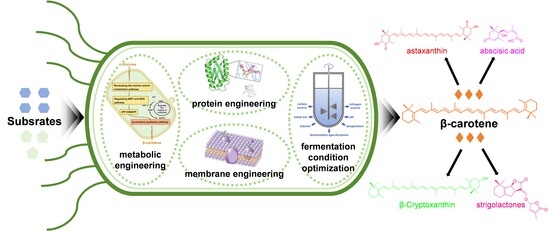
Graphical Abstract

1. Introduction

Carotenoids are a class of C40 tetraterpenoids produced by plants, fungi, algae, and cyanobacteria [1]. They are responsible for the characteristic yellowish, reddish, and orange colors of fruits, vegetables, fish, birds, reptiles, and butterflies. Approximately 600 carotenoids are characterized in nature, of which approximately 40 are routinely consumed in human diets. Carotenoids typically feature an extended conjugated double-bond system flanked by cyclic end groups. Carotenoids are typically categorized into two main groups: hydrocarbon carotenoids (compounds without oxygen in their chemical formula), including lycopene, β-carotene, α-carotene, and xanthophylls (oxygen-containing carotenoids), such as lutein, β-cryptoxanthin, zeaxanthin, antheraxanthin, capsanthin, violaxanthin, and neoxanthin.
β-carotene is present in abundance in the human diet, found in foods such as apricots, cantaloupe, carrots, pumpkin, and sweet potatoes. It acts as a precursor to vitamin A, an essential nutrient involved in growth, vision, and cellular functions. β-Carotene exhibits numerous properties in the treatment of cancer, eye diseases, heart disorders, Alzheimer’s disease, neurodegenerative diseases, inflammation, osteoporosis [2,3]. Humans cannot synthesize β-carotene; therefore, they must consume β-carotene-containing vegetables and fruits to maintain normal physiological processes in the body. In addition to its pharmacological activities, β-carotene is used as a coloring agent in the food, beverage, pharmaceutical, and cosmetic industries [4,5]. Owing to the high demand for nutritional supplements and health products, the β-carotene market is rapidly expanding. According to a report from Global Market Insights Inc., the global β-carotene market is projected to be worth 610.5 million USD in 2024 and is estimated to reach 952.5 million USD in 2034, with a compound annual growth rate (CAGR) of 4.7% during this period. In nature, the degradation products of β-carotene, such as abscisic acid, β-ionone, and strigolactones (SLs), are important plant hormones involved in the regulation of plant physiology [6,7].
β-carotene on the market is majorly obtained by chemical synthesis. However, this method is now challenged by growing concerns regarding the use of chemically synthesized β-carotene as a food additive or cosmetic agent. This issue has reignited the enthusiasm for producing β-carotene via large-scale fermentation, which is regarded as a cost-effective and sustainable source for β-carotene production because the scaling-up process is less cumbersome than plant extraction and chemical synthesis. Natural carotenoid producers, such as algae (Haematococcus pluvialis [8], Chlorella vulgaris [9], and Dunaliella algae [10]), fungi (Blakeslea trispora [11], Rhodotorula mucilaginosa [12], Phaffia rhodozyma [13,14,15], and Kluyveromyces marxianus [16]), and bacteria (Rhodococcus opacus, Rhodococcus erythropolis [17,18]), are potential hosts for β-carotene fermentation (Table 1).
With advances in synthetic biology, the design and construction of β-carotene biosynthetic pathways in suitable chassis organisms, such as Escherichia coli, Saccharomyces cerevisiae, Komagataella phaffii (formerly Pichia pastoris), Yarrowia lipolytica, and Vibrio natrigenes, offer a green and sustainable solution for the large-scale production of β-carotene and its derivatives (Table 1) [19,20,21,22]. Y. lipolytica exhibits remarkable advantages in the accumulation of fat-soluble β-carotene due to its excellent lipid storage capacity. Currently, the maximum yield of β-carotene in engineered Y. lipolytica strains has reached 39.5 g/L, demonstrating great potential for further exploitation [23,24,25,26]. K. phaffii can achieve biomass of >100 g/L (dry cell weight) in optimized fed-batch fermentation, which is significantly higher than that of E. coli. Recent metabolic engineering of K. phaffii has produced 10.2 g/L of lycopene [27,28].
Although current efforts for β-carotene production prefer yeast hosts, E. coli remains a superior chassis for the efficient production of β-carotene and its derivatives, including ketocarotenoids, apocarotenoids, and oxygenated carotenoids. On one hand, E. coli can produce up to 3.93 g/L of β-carotene by continuous fermentation, which is comparable to the β-carotene titers in yeasts [29]. E. coli has also been employed to produce other carotenoids. More importantly, E. coli can efficiently express carotene-modifying enzymes, exemplified by the [2Fe-2S]-containing β-carotene isomerase DWARF27 (D27) and carotenoid cleavage dioxygenases (CCDs). It is well recognized that the functional expression of these enzymes in yeast is challenging. Compared to yeast, E. coli exhibits greater tolerance to oxygenated carotenoid intermediates and apocarotenoids, which often impose oxidative or membrane stress in eukaryotic hosts. The advantages of using E. coli as a chassis for the microbial fermentation of valuable apocarotenoids have been previously demonstrated [19]. To achieve high-yield β-carotene production in E. coli, researchers have employed diverse strategies, including metabolic, enzyme, and membrane engineering, and fermentation optimization. This paper systematically reviews heterologous β-carotene biosynthesis methods in E. coli, focusing on metabolic engineering strategies for yield improvement, and aims to provide theoretical and technical references for the efficient production of β-carotene and carotenoid derivatives in recombinant E. coli strains.
Table 1. Natural hosts and common chassis for carotenoid production.
Producer TypeStrainCompoundsRef.
Natural producersHaematococcus pluvialisAstaxanthin[8]
Chlorella vulgarisAstaxanthin[9]
Dunaliella salinaβ-carotene[10]
Blakeslea trisporalycopene, β-carotene[11]
Rhodotorula mucilaginosaβ-carotene, astaxanthin[12]
Phaffia rhodozymaβ-carotene, astaxanthin[13,14,15]
Kluyveromyces marxianusAstaxanthin[16]
Rhodococcus sp.lycopene, γ-carotene[17,18]
Heterologous producersSaccharomyces cerevisiaelycopene, β-carotene, astaxanthin[20,21,22]
Yarrowia lipolyticalycopene, β-carotene, astaxanthin[23,24,25,26]
Komagataella phaffiilycopene, β-carotene[27,28]
Escherichia colilycopene, β-carotene, astaxanthin[29,30,31,32]

2. Metabolic Engineering Strategies for β-Carotene Production in E. coli

2.1. The β-Carotene Biosynthetic Pathway

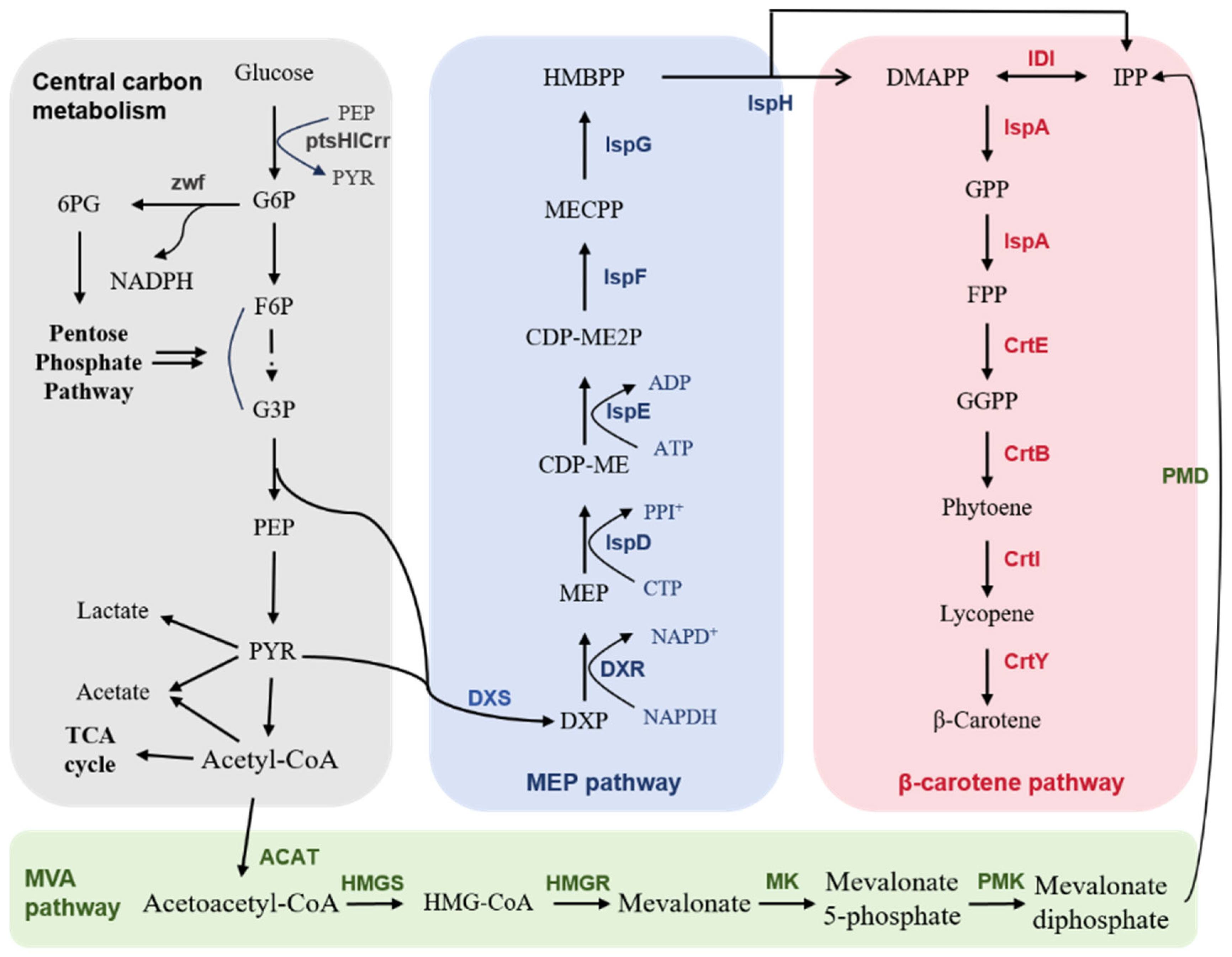
The biosynthetic pathway of β-carotene and its associated genes have been extensively studied in various species [33]. Similar to other terpenoids, β-carotene is biosynthesized from isopentenyl pyrophosphate (IPP) and dimethylallyl pyrophosphate (DMAPP). In eukaryotic cells, including plant cytoplasm and mitochondria, these two precursors are synthesized via the mevalonate (MVA) pathway. In bacteria and plant plastids, IPP/DMAPP are biosynthesized via the methylerythritol phosphate (MEP) pathway (Figure 1). The MEP pathway begins with the formation of 1-deoxy-D-xylulose-5-phosphate (DXP), catalyzed by DXP synthase (DXS) from pyruvate (PYR) and glyceraldehyde-3-phosphate (G3P). DXP is converted to IPP and DMAPP in six sequential steps. IPP and DMAPP are interconverted by IPP isomerase (IDI). DXS and IDI are speed-limiting enzymes in the MEP pathway. The MVA pathway begins with the formation of acetoacetyl-CoA from two acetyl-CoA molecules by acetoacetyl-CoA acyltransferase (ACAT). Acetoacetyl-CoA is then converted by 3-hydroxy-3-methylglutaryl-CoA synthetase (HMGS) to generate 3-hydroxy-3-methylglutaryl-CoA (HMG-CoA), and then by HMG-CoA reductase (HMGR) to afford MVA. MVA is converted to IPP in three sequential steps catalyzed by MVA kinase (MK), phosphomevalonate kinase (PMK), and MVA pyrophosphate decarboxylase (PMD). The condensation of IPP and DMAPP leads to the formation of geranyl pyrophosphate (GPP). GPP is then condensed with IPP to form farnesyl pyrophosphate (FPP) via FPP synthase (IspA). Geranylgeranyl pyrophosphate (GGPP) is formed by the condensation of one molecule each of FPP and one molecule of IPP by GGPP synthase (CrtE). Two molecules of GGPP are coupled by phytoene synthase (CrtB) to form phytoene, which is converted to lycopene by phytoene desaturase (CrtI). Lycopene has 11 conjugated double bonds and 2 non-conjugated double bonds. Finally, lycopene is cyclized by lycopene cyclase (CrtY) to form β-carotene [34].
The overall cofactor consumption and mass yield for synthesizing IPP from glucose via the MVA (Equation (1)) and MEP pathways (Equation (2)) have been compared in detail [35]. The synthesis of one molecule of IPP/DMAPP via the MVA pathway consumes 1.5 molecules of glucose and four molecules of NAD(P)H. In contrast, the MEP pathway requires one molecule of glucose, two molecules of NADPH, and three molecules of ATP to generate one molecule of IPP or DMAPP. When the synthesis of NAD(P)H and ATP via the central carbon pathway is included, the MEP pathway is predicted to have a theoretical mass yield of 30.2% from glucose, whereas that of the MVA pathway is 25.2%. In summary, the MVA pathway has a lower cofactor requirement, whereas the MEP pathway has a higher theoretical mass yield.
1.5   G l u c o s e + 2 N A D P H + 6 N A D = I P P + 4 C O 2 + 6 N A D H + 2 N A D P
G l u c o s e + 3 N A D P H + N A D + 3 A T P = I P P + C O 2 + 3 A D P + N A D H + 3 N A D P

2.2. Introduction of β-Carotene Biosynthetic Genes

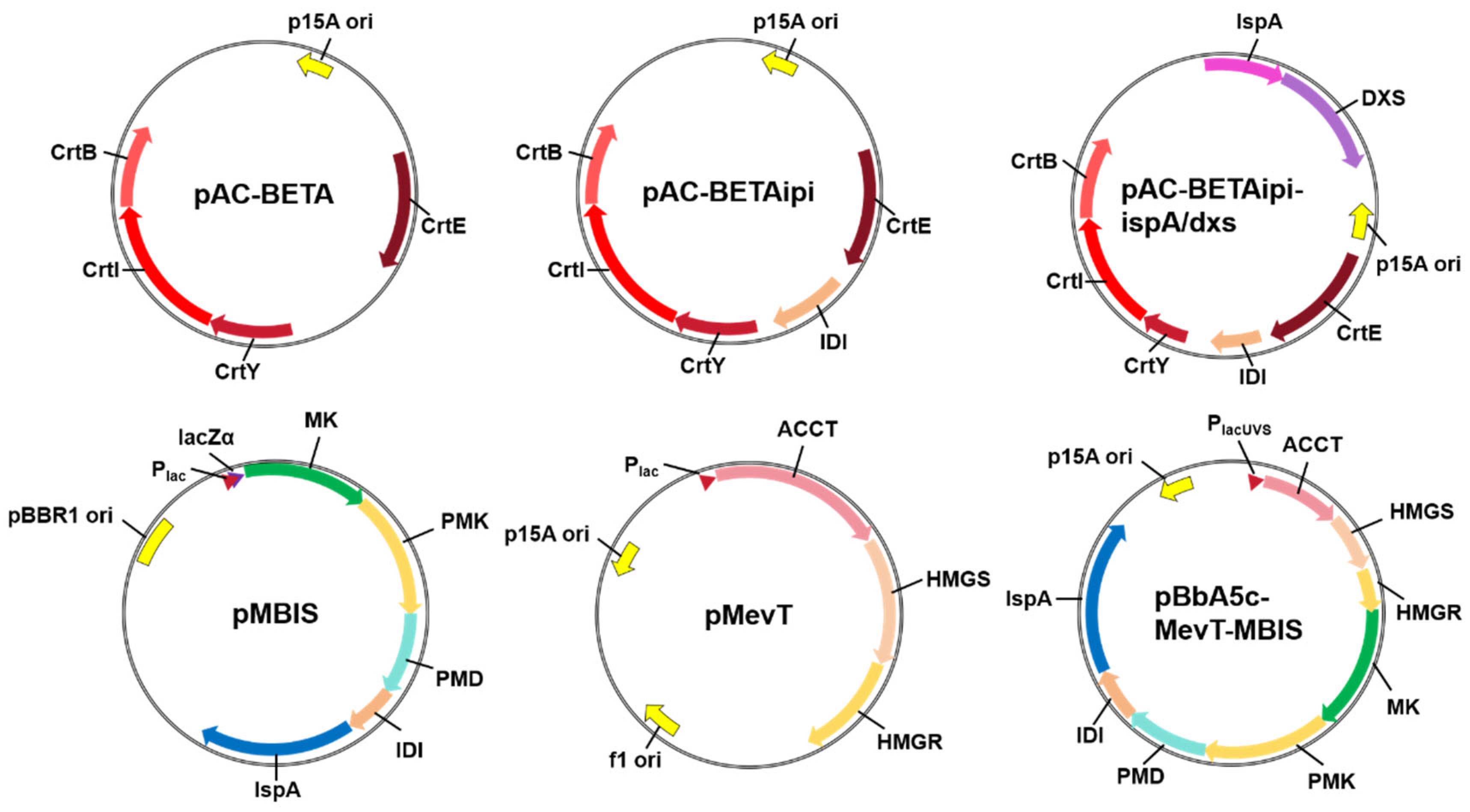
The crt gene clusters responsible for β-carotene biosynthesis have been extensively studied in bacteria of the Actinomycetota, Bacillota, Bacteroidota, Chlorobiota, and Pseudomonadota phyla [33]. E. coli does not naturally possess β-carotene biosynthetic genes; therefore, introducing a crt gene cluster into the host is the primary step in achieving de novo synthesis of β-carotene. crt gene clusters from Erwinia uredovora, Erwinia herbicola, Agrobacterium aurantiacum, Pantoea ananatis, and Deinococcus radiodurans have been cloned and validated in E. coli [36,37,38,39]. The plasmid pAC-BETA, harboring crtE, crtB, and crtI from E. herbicola and crtY from Arabidopsis, was constructed and used for the de novo biosynthesis of β-carotene in E. coli (Figure 2) [36,40,41]. Insertion of the E. coli-derived ipi and ispA/dxs genes into pAC-BETA resulted in the formation of plasmids pAC-BETAipi and pAC-BETAipi-ispA/dxs. These two plasmids enhanced the expression of rate-limiting enzymes and balanced the IPP/DMAPP ratio, thus significantly increasing the β-carotene titer in E. coli [42,43]. Plasmid pT-DHB, which contains crtE, crtB, and crtI from Pantoea agglomerans and crtY from Pantoea ananatis, was constructed for synthesizing carotenoids in E. coli [44,45]. Plasmids pTB-EIBY (high-copy) and pTB-EIBYrop (low-copy), containing the crt gene cluster from E. uredovora, were constructed for the overproduction of β-carotene in E. coli [46]. In addition to plasmid-borne carotenogenic genes, the crtEXYIB gene operon from P. agglomerans was integrated into the E. coli chromosome. After combined engineering of the MEP and central metabolic pathways, the optimized E. coli strain produced 2.1 g/L β-carotene [31].
In addition to crt genes from bacteria, eukaryotic carotenogenic genes have been introduced into E. coli for β-carotene production. The expression of seven genes (DsGGPS, DsPSY, DsPDS, DsZISO, DsZDS, DsCRTISO, and DsLYCB) from the microalgae Dunaliella salina in E. coli enabled the production of a series of carotenoids [47]. CrtYB from Xanthophyllomyces dendrorhous catalyzes the synthesis of phytoene from GGPP and the cyclization of lycopene into β-carotene. Co-expression of the XdcrtYB gene operon with other carotenogenic genes in E. coli led to β-carotene production of [48].
During β-carotene production in engineered E. coli, a clear trade-off exists between biomass formation and product synthesis, as both processes compete for the same intracellular resource. Multiple key precursors, such as G3P, PYR, and acetyl-CoA, which are required for amino acid, nucleotide, and lipid biosynthesis, are redirected towards carotenoid production. Consequently, the supply of building blocks for cell growth is limited. β-Carotene synthesis also imposes a high energetic and redox cost, consuming substantial amounts of ATP and NADPH, which further constrains growth-associated metabolism. The overexpression of heterologous enzymes reallocates ribosomal and transcriptional capacity and creates an additional proteomic burden on the host. Moreover, the accumulation of hydrophobic carotenoids in the membrane perturbs the membrane structure and respiration, induces oxidative stress, and reduces cellular fitness. These combined effects typically lead to slower growth rates, lower biomass formation, and diminished culture robustness as production increases. Therefore, high titers are rarely achieved simultaneously with rapid cell growth. Effective industrial strategies aim to decouple these phases by first maximizing biomass and then activating carotenoid synthesis through dynamic regulation, balanced precursor and cofactor supply, and tolerance or membrane engineering to alleviate toxicity.

2.3. Manipulation of the Endogenous MEP Pathway

An efficient supply of IPP and DMAPP precursors is crucial for β-carotene production in E. coli. Two strategies are often adopted to increase the metabolic flux via the MEP pathway in E. coli: (1) increasing the production of endogenous enzymes and (2) introducing exogenous enzymes with higher catalytic activity. The concomitant overexpression of dxs/idi or dxr/idi in E. coli increased carotenoid production by 3.5-fold [49]. Replacement of the native promoters of the chromosomal genes of the MEP pathway with the strong T5 promoter increased β-carotene production 24.5-fold, with a titer of 6 mg/g dry cell weight (CDW) [50]. Although dxs and dxr are the two rate-limiting enzymes of the MEP pathway in E. coli, their overexpression with a strong inducible promoter or high-copy plasmid could lead to decreased cell growth and lower β-carotene production [51]. In the second strategy, critical genes of the MEP pathway from other bacteria are often introduced into E. coli. By introducing dxs genes from Bacillus subtilis or Synechocystis sp. 6803 into E. coli, the lycopene titer in the resultant strains was doubled compared to that of the control strain [52]. The incorporation of an engineered E. coli strain harboring B. subtilis-derived DXS and IPI and Abies grandis-derived GPPS2 achieved a β-carotene yield of 15.2 mg/L, representing a 14-fold enhancement compared to the control strain [37]. Heterologous expression of dxs and ispA from Vibrio sp. Dhg in E. coli resulted in a 1.88-fold increase in lycopene production [53].

2.4. Introduction of Exogenous MVA Pathway

In addition to manipulating the endogenous MEP pathway, the introduction of the MVA pathway from eukaryotic organisms into E. coli represents a more efficient method for increasing carotenoid production [54]. The S. cerevisiae MVA pathway was reconstituted in two plasmids: pMevT (harboring genes encoding AACT, HMGS, and tHMGR) and pMBIS (harboring genes encoding MK, PMK, PMD, IDI, and IspA) (Table 2). E. coli strains containing these two plasmids demonstrated broad applicability as a universal host for terpenoid biosynthesis upon the introduction of terpene synthase genes [54]. Subsequently, the plasmid pBbA5c-MevT-MBIS, which harbors genes from pMevT and pMBIS, was constructed to enhance the MVA pathway. For example, an engineered E. coli strain harboring similar plasmids produced β-farnesene at a titer of 8.74 g/L [54]. The mvaK1, mvaK2, mvaD, and idi genes from Streptococcus pneumoniae were cloned into a lycopene-producing E. coli strain (pT-LYCm4) to obtain E. coli (pT-LYCm4/pSSN12Didi). Under optimized conditions with MVA supplementation, the resulting strain produced 102 mg/L (22 mg/g DCW) of lycopene [55]. A more efficient MVA pathway was constructed in E. coli through the modular assembly of the Enterococcus faecalis upper pathway and the S. pneumoniae lower pathway. This integrated system enabled robust β-carotene production (465 mg/L) in the optimized strain without MVA supplementation [42]. Similarly, the top MVA pathway module from E. faecalis and the bottom module from S. cerevisiae were reconstituted in E. coli. By further introducing the HMGSA110G mutant, an isoprene yield of 6.3 g/L was achieved via fed-batch fermentation [56]. Integration of this hybrid MVA pathway into an MEP-optimized E. coli strain resulted in β-carotene production of 122.4 ± 6.2 mg/L in shake flasks [37]. The incorporation of genes encoding MK, PMK, and PMD from Enterococcus faecium VTCC-B-935 into E. coli enhanced β-carotene production by 3-fold (17.7 mg/L) [57].
To ensure stable expression of exogenous MVA genes and circumvent the metabolic burden imposed by the plasmid, MVA pathway genes are often integrated into the chromosome of E. coli. By Integrating the MVA pathway from S. cerevisiae into the E. coli chromosome and modulating the MVA pathway with various promoters and ribosomal binding sites (RBSs), β-carotene production was increased by 51% [58]. It has been demonstrated that integrating MVA modules at multiple chromosomal loci of E. coli is more efficient than using a plasmid carrying the MVA pathway for lycopene production [59].

2.5. Modification of the Central Metabolic Module

G3P and PYR are key intermediates of glycolysis and precursors of the MEP pathway. Efficient synthesis of β-carotene also requires a sufficient supply of NADPH and ATP cofactors. Therefore, the central metabolism of E. coli is often modified to increase the supply of key intermediates and cofactors to enhance β-carotene production (Figure 1). Deletion of genes encoding enzymes utilizing these intermediates or cofactors, such as ZWF, GdhA, YjgB, and Pgi, can increase the precursor or cofactor supply, thus ensuring more β-carotene formation [60,61,62,63]. In contrast, overexpression of enzymes enhancing precursor and cofactor supply, such as NadK, POS5, PntAB, SthA, Mdh, GalP, Glk, has been conducted to boost β-carotene production [61]. Overexpression of genes in the central metabolic modules, including sucAB, sdhABCD, and talB, increased the lycopene yield by 76% and achieved a lycopene titer of 3.52 g/L in fed-batch fermentation [64]. The combined deletions of gdhA, zwf, yjgB, and ptsHIcrr and overexpression of nadK in E. coli ZF43 strain enabled the production of 266.4 mg/L β-carotene in shake flasks and 2.6 g/L in a 5-L bioreactor [61].

2.6. Balancing the Gene Expression Levels

An efficient cell factory requires a delicate balance between cellular growth and product accumulation. It is expected that metabolic flux, energy, and cofactors will be optimally distributed to sustain biomass formation and maximize target compound biosynthesis. Excessive resources for cell growth can limit product yield, whereas premature or excessive product formation can impose a metabolic burden, inhibit cell viability, and eventually reduce product yield. Therefore, the dynamic regulation of metabolic pathways, coordinated control of gene expression, and rational allocation of carbon and cofactor fluxes are essential for achieving a robust trade-off that enhances overall productivity, titer, and process stability in industrial biomanufacturing systems. Multiple biosynthetic intermediates of the MEP pathway (HMBPP, DXP, MEP, CDP-ME, and MECPP) [61,65,66], MVA pathway (HMG-CoA, MVA, and Mevalonate 5-phosphate) [61,67], and downstream pathway (IPP, DMAPP, and FPP) [66] are toxic to E. coli cells or exert inhibitory effects on enzymes. As demonstrated by the balanced expression of ispG and ispH [68] and idi and ispA [69], the balanced expression of these enzymes prevented the accumulation of toxic intermediates, allowed sufficient E. coli growth, and maximized the flux towards β-carotene. Several novel techniques have been adopted to balance gene expression in E. coli, such as assembling the last enzyme of the MVA pathway with the first enzyme of the carotenoid pathway with RIAD and RIDD short peptide tags [70], employing RBS library screening to balance the expression levels of crtW and crtZ [71], designing diverse 5′-UTR sequences [72], and constructing a plasmid library with various regulatory elements to modulate the expression of MVA pathway genes (AACT, HMGS, MK, PMK, and PMD) [73].

2.7. Engineering the Membrane Architecture

As a hydrophobic compound, β-carotene tends to accumulate within the cell membranes, reducing membrane fluidity, inducing cytotoxicity, and limiting productivity. Various strategies, such as adjusting membrane lipid composition and permeability, engineering membrane proteins, optimizing membrane morphology, and modifying inner-membrane vesicles (IMVs) and outer-membrane vesicles (OMVs), have been applied to increase the production of hydrophobic metabolites [74]. Overexpression of AlMGS, the monoglycosyldiacylglycerol synthase from Acholeplasma laidlawii in E. coli, significantly increased the intracellular membrane vehicles and enhanced β-carotene production by 39% [75]. The co-expression of AlMGS with enzymes responsible for diglyceride-3-phosphate synthesis (PlsB and PlsC) in E. coli promoted cell membrane synthesis and increased lycopene production by 32% [76]. Wu et al. established an artificial membrane vesicle transport system (AMVTS) in E. coli by knocking out tolR and nlpI and overexpressing AccABCD and PlsBC genes. AMVTS significantly facilitated β-carotene secretion and led to a 3.2-fold increase in productivity. The introduction of AVMTS into the β-carotene hyperproducing strain CAR025 increased the production from 27.7 to 44.8 mg/g in shake flasks [77]. Membrane expansion strategies have also been adopted for the efficient production of β-carotene [72]. Co-expression of cav1 (encoding human caveolin-1) and plsBC promoted IMVs formation, whereas knocking down rffD and rfaD enhanced OMV secretion. The concerted expansion of the cell membrane enabled the production of 343 mg/L of β-carotene in E. coli [72].

2.8. Other Factors Affecting β-Carotene Production

Fermentation conditions, including medium composition, pH, temperature, and cultivation mode, critically influence β-carotene production. Numerous studies have shown that glycerol is a superior carbon source for β-carotene production [54,55,57,62,78,79]. For instance, Guo et al. introduced aldehyde reductase (alrD) and aldehyde dehydrogenase (aldH) genes from Ralstonia eutropha H16 into E. coli to establish a glycerol-utilization pathway and improved β-carotene titer by 50% [79]. Liu et al. introduced a fatty acid transport system to facilitate the use of hydrophobic substrates for lycopene synthesis. The introduction of fatty acid transport and metabolic systems into E. coli facilitated lycopene production from waste cooking oil. The engineered strain produced 2.7 g/L lycopene using glucose and hydrolyzed waste cooking oil as carbon sources [9]. It was also showed that β-carotene synthesis occurred exclusively at neutral pH, whereas alkaline conditions inhibited the conversion of lycopene to β-carotene [43].
Compared to fermentation in shake flasks, high-density fermentation in bioreactors enables real-time monitoring and control of critical fermentation parameters, such as pH, temperature, dissolved oxygen (DO), and substrate concentrations, thus ensuring optimal cellular growth, minimizing metabolic stress, and improving carbon flux toward β-carotene biosynthesis. As a result, the β-carotene titer can be significantly increased by fed-batch fermentation in fermenters [31,61,72]. The host strain also has a substantial effect on β-carotene production [77]. Different E. coli strains (DH5α, XL1-Blue, and JM101) exhibited significantly different lycopene production, with the XL1-Blue strain demonstrating the highest titer [51]. In another study, β-carotene production in various E. coli strains (MG1655, DH5α, S17-1, XL1-Blue, and BL21) was compared, and DH5α was identified as the optimal producer [45].
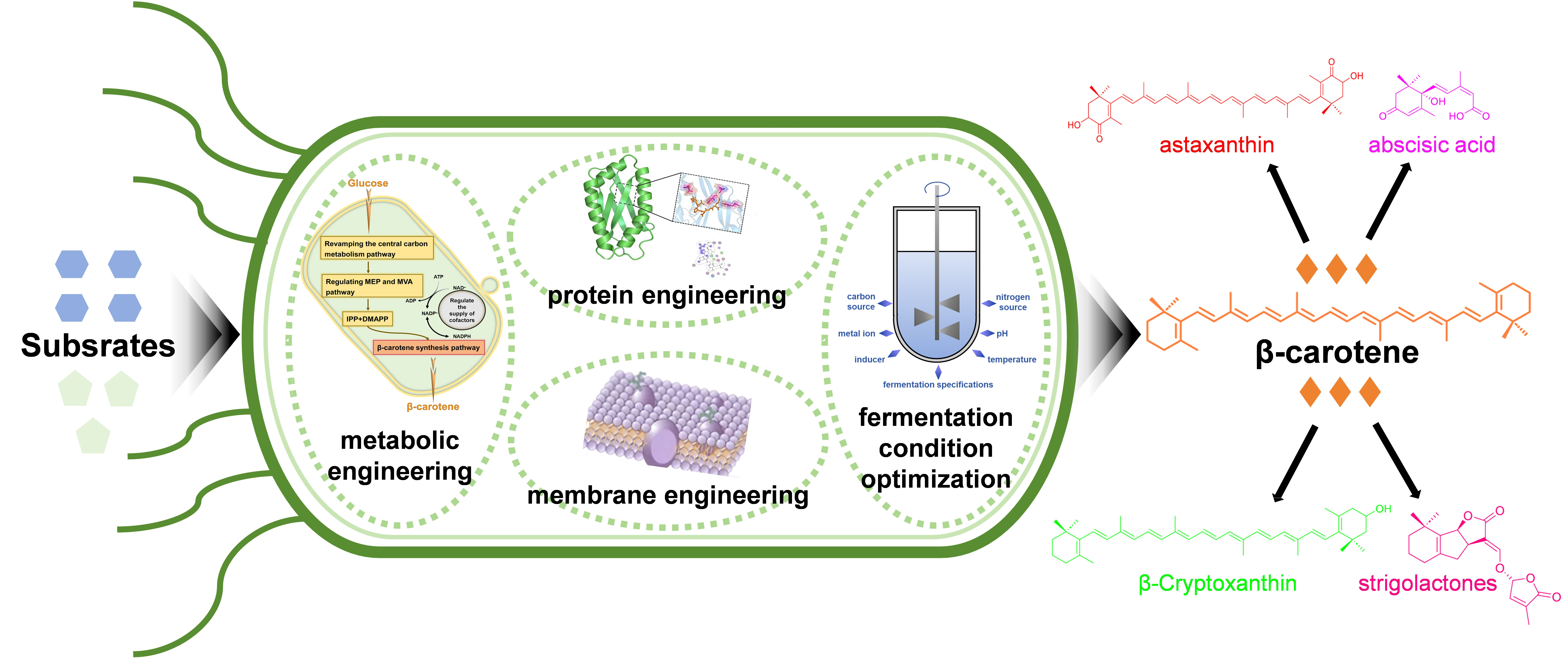
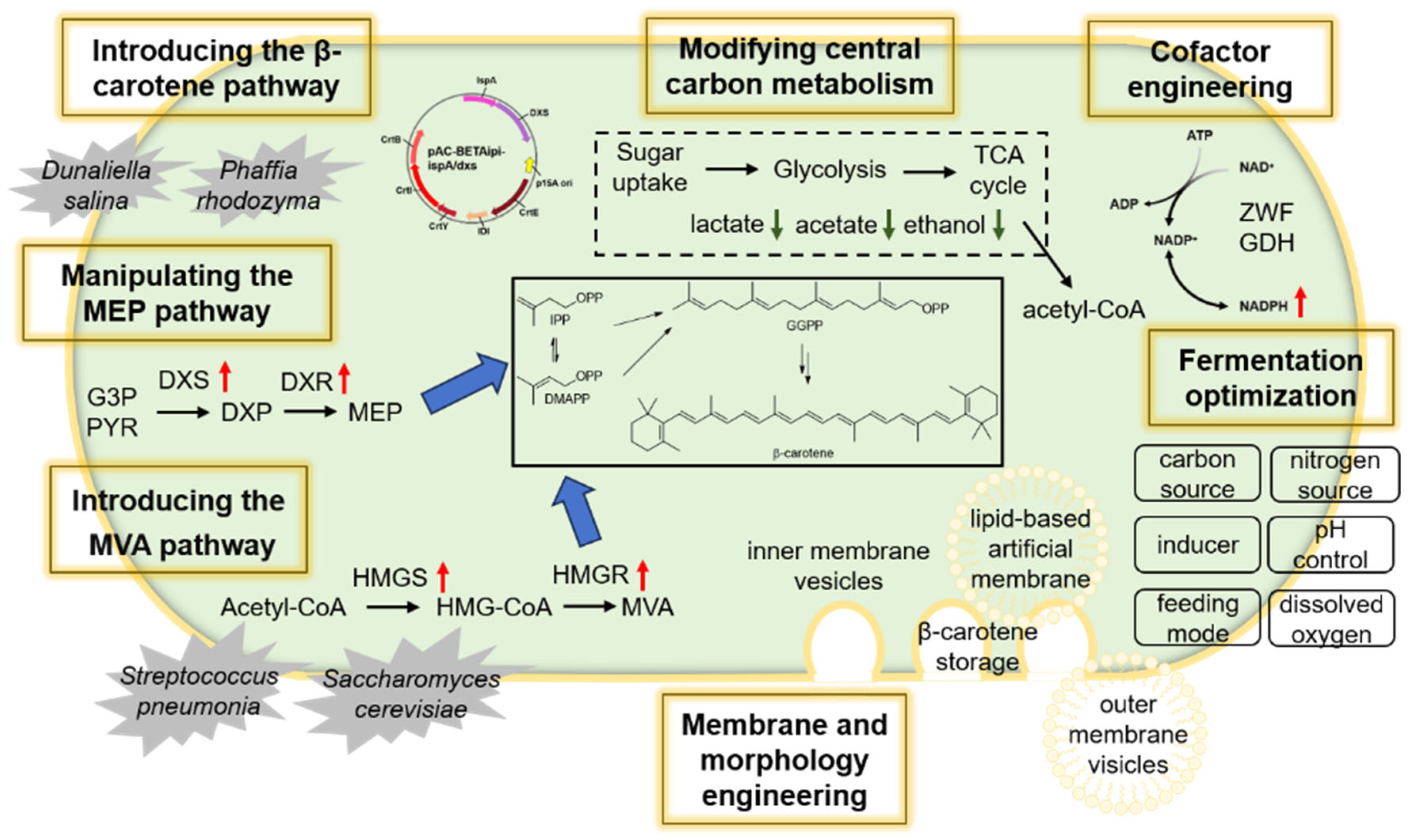
In Figure 3 and Table 2, we summarize representative studies reporting high β-carotene titers in engineered E. coli strains, highlighting the key metabolic engineering strategies and specific fermentation conditions that enabled efficient production. To the best of our knowledge, the current record titer for β-carotene production in E. coli is 3.93 g/L, as recently achieved by Ji et al. [29] They combined multiple strategies, including membrane engineering (overexpression of fatty acid biosynthetic genes, deletion of regulatory genes involved in outer membrane channels and cell division), stepwise engineering of the MVA pathway and central metabolism, and fine-tuning of gene expression levels. The fermentation operation was divided into a three-stage semi-continuous process. Using this transitional-state fermentation method, the final β-carotene titer achieved was 3.93 g/L, which was 23.2% higher than that with single-stage fermentation. The key message of this study is that cellular robustness is essential for efficient β-carotene production in E. coli.
Table 2. Representative β-carotene titers in engineered E. coli strains.
ChassisBioreactorTiter (g/L)Primary Metabolic Engineering StrategiesSpecific Fermentation ConditionsRef.
MG16553-L fermenter3.93MVA pathway, membrane engineering, dynamic regulation of mvaE expressionThree-stage semi-continuous fermentation[29]
BL21(DE3)5-L fermenter3.20Optimized MEP pathway with exogenous dxs and gpps2 genes, hybrid MVA pathway.Glycerol feeding[41]
MG16555-L fermenter2.58Deletion of gdhA, zwf, phtHIcrr, and yjgB, overexpression of nadK on a low-copy number plasmid.Fed-batch fermentation, modified minimal medium with trace metal solution[61]
DH5α7-L fermenter2.47Co-expression of pT-DHB (contains downstream genes for β-carotene biosynthesis) and pS-NA (contains the exogenous MVA pathway)Chemically defined medium with amino acid supplementation, glycerol feeding[80]
ATCC 87397-L fermenter2.1Combined engineering of the MEP, β-carotene biosynthesis, and central metabolic modules.Feeding of glycerol, peptone, yeast extract, and MgSO4·7H2O[31]
BW251135-L fermenter1.9Optimizing CrtY expression using an oligo-linker mediated DNA assembly (OLMA) libraryFed-batch fermentation[81]
DH5α3.4-L fermenter0.66Co-expression of pT-DHB and pS-NAFeeding glycerol, yeast extract, MgSO4·7H2O, and thiamine[82]
DH5αshake flask0.50Co-expression of pT-DHB and pSSN12Didi (contains downstream genes of the MVA pathway)Fermentation at 29 °C in 2YT medium for 144 h, addition of 16.5 mM mevalonate and glycerol[44]

3. Significance of β-Carotene Production in E. coli

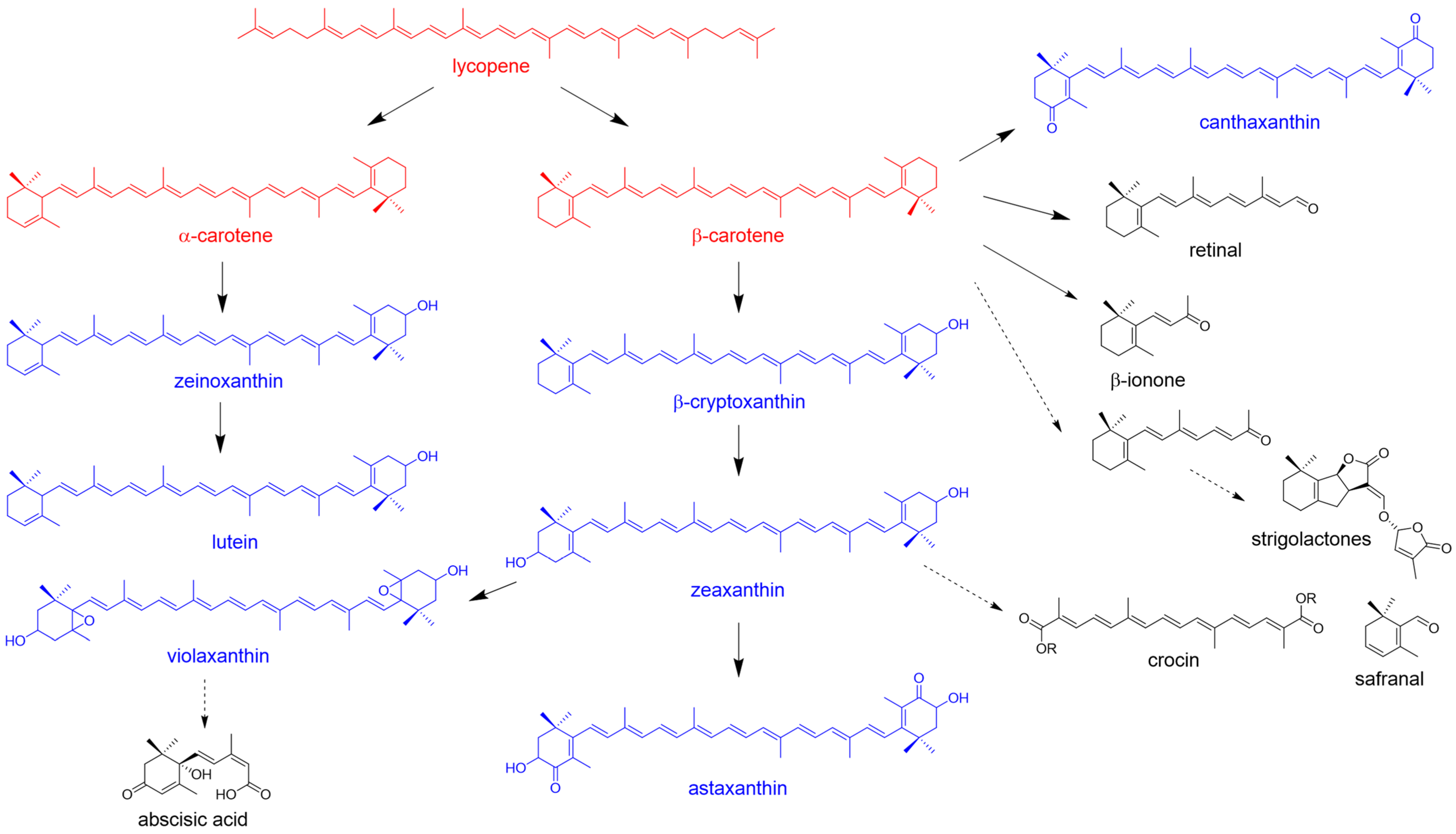
Studies on β-carotene production in E. coli have facilitated the fermentation of other carotenoids and apocarotenoids (Figure 4). Apocarotenoids constitute a diverse family of hormones, pigments, nutraceuticals, fragrances, and pharmaceuticals with exceptionally high value. Many of these compounds are produced in trace amounts in plants (e.g., saffron, rose, and tobacco), making their extraction inefficient and environmentally burdensome. Therefore, the reconstitution of the biosynthetic pathways of apocarotenoids in an efficient β-carotene-producing E. coli strain is a promising method for the sustainable production of these valuable compounds.
In nature, β-carotene mainly exists in the all-trans- and 9-cis-forms. The all-trans isomer is the most prevalent form, whereas 9-cis-β-carotene is predominantly found in certain plants and algae. all-trans-Carotene is the precursor of several valuable natural products, such as Vitamin A and β-ionone. 9-cis-β-Carotene is the precursor for all SLs [83]. The biosynthetic pathways of most SLs have been elucidated [84]. All-trans-β-carotene is isomerized by β-carotene isomerase D27 to generate 9-cis-β-carotene, which is subsequently cleaved by CCD7 and CCD8 to yield carlactone (CL). CL is further oxidized by CYP450 oxygenases to produce various SLs. Recently, the biosynthesis of SLs, including CL, carlactonoic acid (CLA), 5-deoxystrigol (5DS), and 4-deoxyorobanchol (4DO), was accomplished using E. coli and S. cerevisiae consortia [43]. This study lays the foundation for sustainable SL production.
Astaxanthin exhibits exceptional antioxidant capacity and is one of the most potent, naturally occurring antioxidants. It has broad applications in the pharmaceutical, cosmetic, food additive, and aquaculture industries. Astaxanthin can be converted from β-carotene by β-carotene hydroxylase (CrtZ) and ketolase (CrtW) [85,86]. The co-expression of CrtW from Brevundimonas sp. SD212 and CrtZ from Pantoea ananatis, or both enzymes from Adonis aestivalis in β-carotene-producing E. coli strains can produce astaxanthin [87,88]. Zeaxanthin plays a critical role in human nutrition and metabolism due to its antioxidant properties. Efficient zeaxanthin production (19.5 mg/g DCW) in E. coli was achieved using a combined approach, including gene fusion, coordinated gene expression, promoter optimization, chromosomal integration, and comparative analysis of key enzyme genes from different species [89]. In plants, the conversion of zeaxanthin into abscisic acid (ABA) is catalyzed by 9-cis-epoxy-carotenoid dioxygenase (NCED); however, ABA production in E. coli has not yet been achieved [90].
Retinoids are essential for vision and dermatological therapies. A retinal titer of 345.7 mg/L was achieved in an engineered E. coli BL21(DE3) strain using a combination of directed evolution, RBS optimization, and membrane engineering [91]. Crocins and crocetin are valuable natural colorants and antioxidants with neuroprotective properties. The microbial production of crocetin in E. coli (34.77 mg/L) was achieved by batch fermentation in a 5-L bioreactor [92]. Volatile compounds, such as β-ionone, damascenone, and safranal, dominate the global flavor and fragrance market because of their ultra-low odor thresholds and premium sensory qualities. A recent review systematically summarized the production of these volatile compounds in microbial cell factories [93]. Notably, a record titer of α-ionone (~700 mg/L) was achieved in an engineered E. coli strain by optimizing the metabolic pathway and reducing oxidative stress from H2O2 [94]. These successful examples strongly support the feasibility of using engineered E. coli for the sustainable and economical production of valuable apocarotenoids.

4. Conclusions and Prospect

Compared to yeast hosts, engineered E. coli offers several advantages for carotenoid and apocarotenoid production. Carbon flux can be routed directly to IPP/DMAPP through the cytosolic MEP or heterologous MVA pathways without organelle transport barriers or obligatory lipid storage, enabling higher precursor efficiency. Its metabolism has been quantitatively characterized and supported by highly predictive genome-scale models, allowing rational flux balancing and reducing empirical optimization. Moreover, many plant carotenoid-cleaving dioxygenases and glycosyltransferases function readily in bacterial cytosol, facilitating apocarotenoid pathway reconstruction with fewer folding and compartmentalization constraints than in yeast. Chromosomal integration of hybrid MVA modules, CRISPR-Cas9–assisted genome editing [95], and systematic fermentation optimization have improved strain stability and productivity [96,97]. In addition, protein engineering and spatial organization of pathway enzymes increase catalytic efficiency and reduce intermediate losses [98,99]. Together, these features make E. coli a versatile platform for scalable carotenoid biosynthesis. Efficient β-carotene fermentation in E. coli has laid the foundation for the production of valuable carotenoids and apocarotenoids, such as lutein, astaxanthin, zeaxanthin, canthaxanthin, ABA, and SLs [100].
Despite these advantages, a persistent trade-off between cell growth and carotenoid overproduction remains a central challenge. β-Carotene synthesis competes directly with biomass formation for carbon, ATP, and NADPH, thus reducing the availability of precursors required for cell growth. The high expression of heterologous enzymes also imposes a significant proteomic burden. Carotenoids are hydrophobic molecules that accumulate in cell membrane. High β-carotene concentration disrupts membrane integrity and respiration. These stresses reduce cellular fitness and limit the cell density. Consequently, strains that produce high titers often display impaired growth and poor fermentation robustness, which constrain industrial productivity.
Emerging technologies in metabolic engineering provide new opportunities to overcome the growth–production conflict. Dynamic regulatory systems based on genetically encoded biosensors and CRISPRi/CRISPRa modules can adjust pathway expression in response to intracellular states, allowing biomass accumulation before activating carotenoid synthesis [101,102,103]. Genome-scale metabolic models and flux balance analysis can identify optimal gene targets and predict flux redistribution strategies, thereby guiding rational pathway design [104,105]. Computational and machine-learning-assisted optimization further accelerates strain development by prioritizing beneficial enzyme combinations and expression levels [106]. Moreover, tolerance engineering through membrane remodeling and antioxidant defense can mitigate carotenoid-induced toxicity. Advanced bioprocess strategies, including in situ product removal and semi-continuous fermentation, can enhance cellular robustness and productivity. The combination of dynamic control, genome-scale metabolic modeling, robustness engineering, and process innovation will enable next-generation E. coli cell factories with higher titers, improved stability, and scalable production to meet commercial demands for carotenoids and apocarotenoids.

Author Contributions

Conceptualization, Y.Z. and X.Y.; writing—original draft preparation, J.L., Y.S., D.Z. and M.L.; writing—review and editing, P.W. and Y.Z.; visualization, J.L., Y.S. and D.Z.; funding acquisition, X.Y. All authors have read and agreed to the published version of the manuscript.

Funding

This work was supported by the National Key R&D Program of China (2020YFA0907900) and the Science and Technology Project of Haihe Laboratory of Modern Chinese Medicine (25HHZYSS00024).

Data Availability Statement

No new data were created or analyzed in this study.

Conflicts of Interest

The authors declare no conflicts of interest.

References

  1. Giani, M.; Montoyo-Pujol, Y.G.; Peiró, G.; Martínez-Espinosa, R.M. Halophilic carotenoids and breast cancer: From salt marshes to biomedicine. Mar. Drugs 2021, 19, 564. [Google Scholar] [CrossRef]
  2. Dawson, M.I. The importance of vitamin A in nutrition. Curr. Pharm. Des. 2000, 6, 311–325. [Google Scholar] [CrossRef]
  3. Trisconi, M.J.; Campos-Gimenez, E.; Jaudzems, G.; Dowell, D. Determination of vitamin A in infant formula and adult nutritionals by UPLC-UV: First action 2011.07. J. AOAC Int. 2012, 95, 301–306. [Google Scholar] [CrossRef][Green Version]
  4. Martín, J.F.; Gudiña, E.; Barredo, J.L. Conversion of beta-carotene into astaxanthin: Two separate enzymes or a bifunctional hydroxylase-ketolase protein? Microb. Cell Fact. 2008, 7, 3. [Google Scholar] [CrossRef]
  5. Ruther, A.; Misawa, N.; Böger, P.; Sandmann, G. Production of zeaxanthin in Escherichia coli transformed with different carotenogenic plasmids. Appl. Microbiol. Biotechnol. 1997, 48, 162–167. [Google Scholar] [CrossRef]
  6. Zhou, A.; Kane, A.; Wu, S.; Wang, K.; Santiago, M.; Ishiguro, Y.; Yoneyama, K.; Palayam, M.; Shabek, N.; Xie, X.; et al. Evolution of interorganismal strigolactone biosynthesis in seed plants. Science 2025, 387, eadp0779. [Google Scholar] [CrossRef] [PubMed]
  7. Wang, J.Y.; Chen, G.-T.E.; Braguy, J.; Al-Babili, S. Distinguishing the functions of canonical strigolactones as rhizospheric signals. Trends Plant Sci. 2024, 29, 925–936. [Google Scholar] [CrossRef]
  8. Mularczyk, M.; Michalak, I.; Marycz, K. Astaxanthin and other nutrients from Haematococcus pluvialis—Multifunctional applications. Mar. Drugs 2020, 18, 459. [Google Scholar] [CrossRef] [PubMed]
  9. Seyfabadi, J.; Ramezanpour, Z.; Amini Khoeyi, Z. Protein, fatty acid, and pigment content of Chlorella vulgaris under different light regimes. J. Appl. Phycol. 2011, 23, 721–726. [Google Scholar] [CrossRef]
  10. Hejazi, M.A.; Holwerda, E.; Wijffels, R.H. Milking microalga Dunaliella salina for β-carotene production in two-phase bioreactors. Biotechnol. Bioeng. 2004, 85, 475–481. [Google Scholar] [CrossRef]
  11. Mantzouridou, F.; Naziri, E.; Tsimidou, M.Z. Industrial glycerol as a supplementary carbon source in the production of β-carotene by Blakeslea trispora. J. Agric. Food. Chem. 2008, 56, 2668–2675. [Google Scholar] [CrossRef] [PubMed]
  12. Rodrigues, T.V.D.; Contessa, C.R.; Burkert, C.A.V.; de Medeiros Burkert, J.F. Evaluation of light-emitting diodes applied to Rhodotorula mucilaginosa to produce carotenoids and lipids. Food Bioprocess Technol. 2024, 17, 3267–3280. [Google Scholar] [CrossRef]
  13. Zheng, Y.G.; Hu, Z.C.; Wang, Z.; Shen, Y.C. Large-scale production of astaxanthin by Xanthophyllomyces dendrorhous. Food Bioprod. Process 2006, 84, 164–166. [Google Scholar] [CrossRef]
  14. Gupta, I.; Adin, S.N.; Panda, B.P.; Mujeeb, M. Β-carotene-production methods, biosynthesis from Phaffia rhodozyma, factors affecting its production during fermentation, pharmacological properties: A review. Biotechnol. Appl. Biochem. 2022, 69, 2517–2529. [Google Scholar] [CrossRef]
  15. Mussagy, C.U.; Farias, F.O.; Bila, N.M.; Giannini, M.J.S.M.; Pereira, J.F.B.; Santos-Ebinuma, V.C.; Pessoa, A., Jr. Recovery of β-carotene and astaxanthin from Phaffia rhodozyma biomass using aqueous solutions of cholinium-based ionic liquids. Sep. Purif. Technol. 2022, 290, 120852. [Google Scholar] [CrossRef]
  16. Lin, Y.-J.; Chang, J.-J.; Lin, H.-Y.; Thia, C.; Kao, Y.-Y.; Huang, C.-C.; Li, W.-H. Metabolic engineering a yeast to produce astaxanthin. Bioresour. Technol. 2017, 245, 899–905. [Google Scholar] [CrossRef]
  17. Ichiyama, S.; Shimokata, K.; Tsukamura, M. Carotenoid pigments of genus Rhodococcus. Microbiol. Immunol. 1989, 33, 503–508. [Google Scholar] [CrossRef] [PubMed]
  18. Tao, L.; Cheng, Q. Novel β-carotene ketolases from non-photosynthetic bacteria for canthaxanthin synthesis. Mol. Genet. Genom. 2004, 272, 530–537. [Google Scholar] [CrossRef]
  19. Zhou, T.; Park, Y.-K.; Ledesma-Amaro, R. Advances in the biosynthesis of β-carotene and its derivatives in yeast. Bioresour. Technol. 2025, 435, 132936. [Google Scholar] [CrossRef] [PubMed]
  20. Lin, P.; Zhang, L.; Du, G.; Chen, J.; Zhang, J.; Peng, Z. Construction of Saccharomyces cerevisiae platform strain for the biosynthesis of carotenoids and apocarotenoids. J. Agric. Food. Chem. 2025, 73, 9187–9196. [Google Scholar] [CrossRef]
  21. Shi, B.; Ma, T.; Ye, Z.; Li, X.; Huang, Y.; Zhou, Z.; Ding, Y.; Deng, Z.; Liu, T. Systematic metabolic engineering of Saccharomyces cerevisiae for lycopene overproduction. J. Agric. Food. Chem. 2019, 67, 11148–11157. [Google Scholar] [CrossRef]
  22. López, J.; Cataldo, V.F.; Peña, M.; Saa, P.A.; Saitua, F.; Ibaceta, M.; Agosin, E. Build your bioprocess on a solid strain—β-carotene production in recombinant Saccharomyces cerevisiae. Front. Bioeng. Biotechnol. 2019, 7, 171. [Google Scholar] [CrossRef]
  23. Ma, Y.; Liu, N.; Greisen, P.; Li, J.; Qiao, K.; Huang, S.; Stephanopoulos, G. Removal of lycopene substrate inhibition enables high carotenoid productivity in Yarrowia lipolytica. Nat. Commun. 2022, 13, 572. [Google Scholar] [CrossRef] [PubMed]
  24. Zhao, C.; Gao, Q.; Chen, J.; Wei, L.; Imanaka, T.; Hua, Q. Metabolomic changes and metabolic responses to expression of heterologous biosynthetic genes for lycopene production in Yarrowia lipolytica. J. Biotechnol. 2017, 251, 174–185. [Google Scholar] [CrossRef]
  25. Xu, S.; Zhang, X.; Zhang, Y.; Li, Q.; Ji, L.; Cheng, H. Concomitant production of erythritol and β-carotene by engineered Yarrowia lipolytica. J. Agric. Food. Chem. 2023, 71, 11567–11578. [Google Scholar] [CrossRef] [PubMed]
  26. Kildegaard, K.R.; Adiego-Pérez, B.; Doménech Belda, D.; Khangura, J.K.; Holkenbrink, C.; Borodina, I. Engineering of Yarrowia lipolytica for production of astaxanthin. Synth. Syst. Biotechnol. 2017, 2, 287–294. [Google Scholar] [CrossRef] [PubMed]
  27. Zhow, W.; Ling, R.-J.; Yang, Y.-C.; Hou, S.-T.; Wang, F.-Q.; Gao, B.; Wei, D.-Z. Engineering Komarataella phaffii to produce lycopepe sustainably from glucose or methanol. Metab. Eng. 2025, 90, 141–153. [Google Scholar] [CrossRef]
  28. Zhang, X.; Wang, D.; Duan, Y.; Zheng, X.; Lin, Y.; Liang, S. Production of lycopene by metabolically engineered Pichia pastoris. Biosci. Biotechnol. Biochem. 2020, 84, 463–470. [Google Scholar] [CrossRef]
  29. Ji, Y.; Yue, J.; Huang, Y.; Li, R.; Zhong, S.; Jiang, X.; Zhang, S.; Zou, Y.; Deng, A.; Qiao, S. A combinatorial stress-alleviation strategy for efficient β-carotene production in Escherichia coli. Bioresour. Technol. 2026, 439, 133336. [Google Scholar] [CrossRef]
  30. Kim, Y.-S.; Lee, J.-H.; Kim, N.-H.; Yeom, S.-J.; Kim, S.-W.; Oh, D.-K. Increase of lycopene production by supplementing auxiliary carbon sources in metabolically engineered Escherichia coli. Appl. Microbiol. Biotechnol. 2011, 90, 489–497. [Google Scholar] [CrossRef]
  31. Zhao, J.; Li, Q.Y.; Sun, T.; Zhu, X.N.; Xu, H.T.; Tang, J.L.; Zhang, X.L.; Ma, Y.H. Engineering central metabolic modules of Escherichia coli for improving β-carotene production. Metab. Eng. 2013, 17, 42–50. [Google Scholar] [CrossRef]
  32. Gong, Z.; Wang, H.; Tang, J.; Bi, C.; Li, Q.; Zhang, X. Coordinated expression of astaxanthin biosynthesis genes for improved astaxanthin production in Escherichia coli. J. Agric. Food. Chem. 2020, 68, 14917–14927. [Google Scholar] [CrossRef]
  33. Ridder, E.D.; Vandamme, P.; Willems, A. Carotenoid biosynthesis in bacteria: The crt gene products and their functional roles in the carotenogenic pathways. Crit. Rev. Microbiol. 2026, 52, 64–83. [Google Scholar] [CrossRef]
  34. Stra, A.; Almarwaey, L.O.; Alagoz, Y.; Moreno, J.C.; Al-Babili, S. Carotenoid metabolism: New insights and synthetic approaches. Front. Plant Sci. 2023, 13, 1072061. [Google Scholar] [CrossRef]
  35. Li, M.; Hou, F.; Wu, T.; Jiang, X.; Li, F.; Liu, H.; Xian, M.; Zhang, H. Recent advances of metabolic engineering strategies in natural isoprenoid production using cell factories. Nat. Prod. Rep. 2020, 37, 80–99. [Google Scholar] [CrossRef]
  36. Misawa, N.; Shimada, H. Metabolic engineering for the production of carotenoids in non-carotenogenic bacteria and yeasts. J. Biotechnol. 1998, 59, 169–181. [Google Scholar] [CrossRef] [PubMed]
  37. Misawa, N.; Satomi, Y.; Kondo, K.; Yokoyama, A.; Kajiwara, S.; Saito, T.; Ohtani, T.; Miki, W. Structure and functional analysis of a marine bacterial carotenoid biosynthesis gene cluster and astaxanthin biosynthetic pathway proposed at the gene level. J. Bacteriol. 1995, 177, 6575–6584. [Google Scholar] [CrossRef] [PubMed]
  38. Nishizaki, T.; Tsuge, K.; Itaya, M.; Dio, N.; Yanagawa, H. Metabolic engineering of carotenoid biosynthesis in Escherichia coli by ordered gene assembly in Bacillus subtilis. Appl. Environ. Microbiol. 2006, 73, 1355–1361. [Google Scholar] [CrossRef]
  39. Xu, X.; Tian, L.; Xu, J.; Xie, C.; Jiang, L.; Huang, H. Analysis and expression of the carotenoid biosynthesis genes from Deinococcus wulumuqiensis R12 in engineered Escherichia coli. AMB Expr. 2018, 8, 94. [Google Scholar] [CrossRef] [PubMed]
  40. Cunningham, F.X., Jr.; Pogson, B.; Sun, Z.; McDonald, K.A.; DellaPenna, D.; Gantt, E. Functional analysis of the beta and epsilon lycopene cyclase enzymes of arabidopsis reveals a mechanism for control of cyclic carotenoid formation. Plant Cell 1996, 8, 1613–1626. [Google Scholar] [CrossRef]
  41. Yang, J.M.; Guo, L.Z. Biosynthesis of β-carotene in engineered E. coli using the MEP and MVA pathways. Microb. Cell Fact. 2014, 13, 160. [Google Scholar] [CrossRef] [PubMed]
  42. Cunningham, F.X., Jr.; Gantt, E. A study in scarlet: Enzymes of ketocarotenoid biosynthesis in the flowers of Adonis aestivalis. Plant J. 2005, 41, 478–492. [Google Scholar] [CrossRef]
  43. Wu, S.; Ma, X.; Zhou, A.; Valenzuela, A.; Zhou, K.; Li, Y. Establishment of strigolactone-producing bacterium-yeast consortium. Sci. Adv. 2021, 7, eabh4048. [Google Scholar] [CrossRef]
  44. Yoon, S.H.; Park, H.M.; Kim, J.E.; Lee, S.H.; Choi, M.S.; Kim, J.Y.; Oh, D.K.; Keasling, J.D.; Kim, S.W. Increased β-carotene production in recombinant Escherichia coli harboring an engineered isoprenoid precursor pathway with mevalonate addition. Biotechnol. Prog. 2007, 23, 599–605. [Google Scholar] [CrossRef]
  45. Yoon, S.H.; Lee, S.H.; Das, A.; Ryu, H.K.; Jang, H.J.; Kim, J.Y.; Oh, D.K.; Keasling, J.D.; Kim, S.W. Combinatorial expression of bacterial whole mevalonate pathway for the production of β-carotene in E. coli. J. Biotechnol. 2009, 140, 218–226. [Google Scholar] [CrossRef]
  46. Kim, S.W.; Kim, J.B.; Jung, W.H.; Kim, J.H.; Jung, J.K. Over-production of β-carotene from metabolically engineered Escherichia coli. Biotechnol. Lett. 2006, 28, 897–904. [Google Scholar] [CrossRef]
  47. Chen, H.-H.; Liang, M.-H.; Ye, Z.-W.; Zhu, Y.-H.; Jiang, J.-G. Engineering the β-carotene metabolic pathway of microalgae Dunaliella to confirm its carotenoid synthesis pattern in comparison to bacteria and plants. Microbiol. Spectr. 2023, 11, e04361-22. [Google Scholar] [CrossRef] [PubMed]
  48. Verdoes, J.C.; Krubasik, P.; Sandmann, G.; van Ooyen, A.J.J. Isolation and functional characterisation of a novel type of carotenoid biosynthetic gene from Xanthophyllomyces dendrorhous. Mol. Gen. Genet. 1999, 262, 453–461. [Google Scholar] [CrossRef] [PubMed]
  49. Albrecht, M.; Misawa, N.; Sandmann, G. Metabolic engineering of the terpenoid biosynthetic pathway of Escherichia coli for production of the carotenoids β-carotene and zeaxanthin. Biotechnol. Lett. 1999, 21, 791–795. [Google Scholar] [CrossRef]
  50. Yuan, L.Z.; Rouvière, P.E.; LaRossa, R.A.; Suh, W. Chromosomal promoter replacement of the isoprenoid pathway for enhancing carotenoid production in E. coli. Metab. Eng. 2006, 8, 79–90. [Google Scholar] [CrossRef]
  51. Kim, S.W.; Keasling, J.D. Metabolic engineering of the nonmevalonate isopentenyl diphosphate synthesis pathway in Escherichia coli enhances lycopene production. Biotechnol. Bioeng. 2001, 72, 408–415. [Google Scholar] [CrossRef] [PubMed]
  52. Harker, M.; Bramley, P.M. Expression of prokaryotic 1-deoxy-d-xylulose-5-phosphatases in Escherichia coli increases carotenoid and ubiquinone biosynthesis. FEBS Lett. 1999, 448, 115–119. [Google Scholar] [CrossRef] [PubMed]
  53. Kim, M.J.; Noh, M.H.; Woo, S.; Lim, H.G.; Jung, G.Y. Enhanced lycopene production in Escherichia coli by expression of two mep pathway enzymes from Vibrio sp. Dhg. Catalysts 2019, 9, 1003. [Google Scholar] [CrossRef]
  54. Martin, V.J.J.; Pitera, D.J.; Withers, S.T.; Newman, J.D.; Keasling, J.D. Engineering a mevalonate pathway in Escherichia coli for production of terpenoids. Nat. Biotechnol. 2003, 21, 796–802. [Google Scholar] [CrossRef]
  55. Yoon, S.H.; Lee, Y.M.; Kim, J.E.; Lee, S.H.; Lee, J.H.; Kim, J.Y.; Jung, K.H.; Shin, Y.C.; Keasling, J.D.; Kim, S.W. Enhanced lycopene production in Escherichia coli engineered to synthesize isopentenyl diphosphate and dimethylallyl diphosphate from mevalonate. Biotechnol. Bioeng. 2006, 94, 1025–1032. [Google Scholar] [CrossRef]
  56. Yang, J.M.; Xian, M.; Su, S.Z.; Zhao, G.; Nie, Q.J.; Jiang, X.L.; Zheng, Y.N.; Liu, W. Enhancing production of bio-isoprene using hybrid MVA pathway and isoprene synthase in E. coli. PLoS ONE 2012, 7, e33509. [Google Scholar] [CrossRef] [PubMed]
  57. Duong, C. Enhanced β-carotene biosynthesis in recombinant Escherichia coli harboring the bottom portion of mevalonate pathway of Enterococcus faecium VTCC-B-935 isolated in Vietnam. J. Appl. Biotechnol. Bioeng. 2017, 3, 374–379. [Google Scholar]
  58. Ye, L.J.; Zhang, C.Z.; Bi, C.G.; Li, Q.Y.; Zhang, X.L. Combinatory optimization of chromosomal integrated mevalonate pathway for β-carotene production in Escherichia coli. Microb. Cell Fact. 2016, 15, 202. [Google Scholar] [CrossRef]
  59. Wei, Y.L.; Mohsin, A.; Hong, Q.; Guo, M.J.; Fang, H.Q. Enhanced production of biosynthesized lycopene via heterogenous mva pathway based on chromosomal multiple position integration strategy plus plasmid systems in Escherichia coli. Bioresour. Technol. 2018, 250, 382–389. [Google Scholar] [CrossRef]
  60. Zhou, Y.; Nambou, K.; Wei, L.J.; Cao, J.J.; Imanaka, T.; Hua, Q. Lycopene production in recombinant strains of Escherichia coli is improved by knockout of the central carbon metabolism gene coding for glucose-6-phosphate dehydrogenase. Biotechnol. Lett. 2013, 35, 2137–2145. [Google Scholar] [CrossRef]
  61. Wu, Y.; Yan, P.; Li, Y.; Liu, X.; Wang, Z.; Chen, T.; Zhao, X. Enhancing β-carotene production in Escherichia coli by perturbing central carbon metabolism and improving the NADPH supply. Front. Bioeng. Biotechnol. 2020, 8, 585. [Google Scholar] [CrossRef] [PubMed]
  62. Li, Y.; Lin, Z.; Huang, C.; Zhang, Y.; Wang, Z.; Tang, Y.; Chen, T.; Zhao, X. Metabolic engineering of Escherichia coli using CRISPR-Cas9 mediated genome editing. Metab. Eng. 2015, 31, 13–21. [Google Scholar] [CrossRef]
  63. Toya, Y.; Ishii, N.; Nakahigashi, K.; Hirasawa, T.; Soga, T.; Tomita, M.; Shimizu, K. 13C-metabolic flux analysis for batch culture of Escherichia coli and its pyk and pgi gene knockout mutants based on mass isotopomer distribution of intracellular metabolites. Biotechnol. Prog. 2010, 26, 975–992. [Google Scholar] [CrossRef]
  64. Sun, T.; Miao, L.T.; Li, Q.Y.; Dai, G.P.; Lu, F.P.; Liu, T.; Zhang, X.L.; Ma, Y.H. Production of lycopene by metabolically-engineered Escherichia coli. Biotechnol. Lett. 2014, 36, 1515–1522. [Google Scholar] [CrossRef]
  65. Raghavan, I.; Juman, R.; Wang, Z.Q. The non-mevalonate pathway requires a delicate balance of intermediates to maximize terpene production. Appl. Microbiol. Biotechnol. 2024, 108, 245. [Google Scholar] [CrossRef] [PubMed]
  66. Bongers, M.; Chrysanthopoulos, P.K.; Behrendorff, J.B.Y.H.; Hodson, M.P.; Vickers, C.E.; Nielsen, L.K. Systems analysis of methylerythritol-phosphate pathway flux in E. coli: Insights into the role of oxidative stress and the validity of lycopene as an isoprenoid reporter metabolite. Microb. Cell Fact. 2015, 14, 193. [Google Scholar] [CrossRef] [PubMed]
  67. Rinaldi, M.A.; Ferraz, C.A.; Scrutton, N.S. Alternative metabolic pathways and strategies to high-titre terpenoid production in Escherichia coli. Nat. Prod. Rep. 2022, 39, 90–118. [Google Scholar] [CrossRef]
  68. Li, Q.Y.; Fan, F.Y.; Gao, X.; Yang, C.; Bi, C.H.; Tang, J.L.; Liu, T.; Zhang, X.L. Balanced activation of IspG and IspH to eliminate MEP intermediate accumulation and improve isoprenoids production in Escherichia coli. Metab. Eng. 2017, 44, 13–21. [Google Scholar] [CrossRef]
  69. You, S.P.; Yin, Q.D.A.; Zhang, J.Y.; Zhang, C.Y.; Qi, W.; Gao, L.; Tao, Z.P.; Su, R.X.; He, Z.M. Utilization of biodiesel by-product as substrate for high-production of β-farnesene via relatively balanced mevalonate pathway in Escherichia coli. Bioresour. Technol. 2017, 243, 228–236. [Google Scholar] [CrossRef] [PubMed]
  70. Kang, W.; Ma, T.; Liu, M.; Qu, J.L.; Liu, Z.J.; Zhang, H.W.; Shi, B.; Fu, S.; Ma, J.C.; Lai, L.T.F.; et al. Modular enzyme assembly for enhanced cascade biocatalysis and metabolic flux. Nat. Commun. 2019, 10, 4248. [Google Scholar] [CrossRef]
  71. Li, D.; Li, Y.; Xu, J.Y.; Li, Q.Y.; Tang, J.L.; Jia, S.R.; Bi, C.H.; Dai, Z.B.; Zhu, X.N.; Zhang, X.L. Engineering Crtw and Crtz for improving biosynthesis of astaxanthin in Escherichia coli. Chin. J. Nat. Med. 2020, 18, 666–676. [Google Scholar] [CrossRef]
  72. Yang, D.; Park, S.Y.; Lee, S.Y. Production of rainbow colorants by metabolically engineered Escherichia coli. Adv. Sci. 2021, 8, e2100743. [Google Scholar] [CrossRef]
  73. Ye, L.J.; He, P.; Li, Q.Y.; Zhang, X.L.; Bi, C.H. Type IIs restriction based combinatory modulation technique for metabolic pathway optimization. Microb. Cell Fact. 2017, 16, 47. [Google Scholar] [CrossRef]
  74. Wu, T.; Jiang, J.; Zhang, H.; Liu, J.; Ruan, H. Transcending membrane barriers: Advances in membrane engineering to enhance the production capacity of microbial cell factories. Microb. Cell Fact. 2024, 23, 154. [Google Scholar] [CrossRef]
  75. Wu, T.; Ye, L.J.; Zhao, D.D.; Li, S.W.; Li, Q.Y.; Zhang, B.L.; Bi, C.H.; Zhang, X.L. Membrane engineering—A novel strategy to enhance the production and accumulation of β-carotene in Escherichia coli. Metab. Eng. 2017, 43, 85–91. [Google Scholar] [CrossRef] [PubMed]
  76. Wu, T.; Ye, L.; Zhao, D.; Li, S.; Li, Q.; Zhang, B.; Bi, C. Engineering membrane morphology and manipulating synthesis for increased lycopene accumulation in Escherichia coli cell factories. 3 Biotech 2018, 8, 269. [Google Scholar] [CrossRef] [PubMed]
  77. Wu, T.; Li, S.W.; Ye, L.J.; Zhao, D.D.; Fan, F.Y.; Li, Q.Y.; Zhang, B.L.; Bi, C.H.; Zhang, X.L. Engineering an artificial membrane vesicle trafficking system (AMVTS) for the excretion of β-carotene in Escherichia coli. ACS Synth. Biol. 2019, 8, 1037–1046. [Google Scholar] [CrossRef]
  78. Kim, J.; Kong, M.K.; Lee, S.Y.; Lee, P.C. Carbon sources-dependent carotenoid production in metabolically engineered Escherichia coli. World J. Microbiol. Biotechnol. 2010, 26, 2231–2239. [Google Scholar] [CrossRef]
  79. Liu, N.; Liu, B.; Wang, G.Y.; Soong, Y.H.V.; Tao, Y.; Liu, W.F.; Xie, D.M. Lycopene production from glucose, fatty acid and waste cooking oil by metabolically engineered Escherichia coli. Biochem. Eng. J. 2020, 155, 107488. [Google Scholar] [CrossRef]
  80. Nam, H.-K.; Choi, J.-G.; Lee, J.H.; Kim, S.-W.; Oh, D.-K. Increase in the production of β-carotene in recombinant Escherichia coli cultured in a chemically defined medium supplemented with amino acids. Biotechnol. Lett. 2013, 35, 265–271. [Google Scholar] [CrossRef]
  81. Jin, Y.; Han, L.; Zhang, S.; Li, S.; Liu, W.; Tao, Y. Construction of high-yield strain by optimizing lycopene cyclase for β-carotene production. Chin. J. Biotechnol. 2017, 33, 1814–1826. [Google Scholar]
  82. Kim, J.H.; Kim, S.W.; Nguyen, D.Q.A.; Li, H.; Kim, S.B.; Seo, Y.G.; Yang, J.K.; Chung, I.Y.; Kim, D.H.; Kim, C.J. Production of β-carotene by recombinant Escherichia coli with engineered whole mevalonate pathway in batch and fed-batch cultures. Biotechnol. Bioprocess Eng. 2009, 14, 559–564. [Google Scholar] [CrossRef]
  83. Ben-Amotz, A.; Avron, M. The wavelength dependence of massive carotene synthesis in Dunaliella bardawil (chlorophyceae). J. Phycol. 1989, 25, 175–178. [Google Scholar] [CrossRef]
  84. Bruno, M.; Al-Babili, S. On the substrate specificity of the rice strigolactone biosynthesis enzyme DWARF27. Planta 2016, 243, 1429–1440. [Google Scholar] [CrossRef]
  85. Zhang, M.; Gong, Z.K.; Tang, J.L.; Lu, F.P.; Li, Q.Y.; Zhang, X.L. Improving astaxanthin production in Escherichia coli by co-utilizing Crtz enzymes with different substrate preference. Microb. Cell Fact. 2022, 21, 71. [Google Scholar] [CrossRef]
  86. Tao, L.; Wilczek, J.; Odom, J.M.; Cheng, Q. Engineering a beta-carotene ketolase for astaxanthin production. Metab. Eng. 2006, 8, 526–531. [Google Scholar] [CrossRef]
  87. Hussain, M.H.; Hong, Q.; Zaman, W.Q.; Mohsin, A.; Wei, Y.; Zhang, N.; Fang, H.; Wang, Z.; Hang, H.; Zhuang, Y.; et al. Rationally optimized generation of integrated Escherichia coli with stable and high yield lycopene biosynthesis from heterologous mevalonate (MVA) and lycopene expression pathways. Synth. Syst. Biotechnol. 2021, 6, 85–94. [Google Scholar] [CrossRef]
  88. Roth, J.H.; Ward, V.C.A. Production of astaxanthin using CBFD1/HFBD1 from Adonis aestivalis and the isopentenol utilization pathway in Escherichia coli. Bioengineering 2023, 10, 1033. [Google Scholar] [CrossRef] [PubMed]
  89. Li, X.-R.; Tian, G.-Q.; Shen, H.-J.; Liu, J.-Z. Metabolic engineering of Escherichia coli to produce zeaxanthin. J. Ind. Microbiol. Biotechnol. 2015, 42, 627–636. [Google Scholar] [CrossRef]
  90. Neuman, H.; Galpaz, N.; Cunningham, F.X.; Zamir, D.; Hirschberg, J. The tomato mutation nxd1 reveals a gene necessary forneoxanthin biosynthesis and demonstrates that violaxanthinis a sufficient precursor for abscisic acid biosynthesis. Plant J. 2014, 78, 80–93. [Google Scholar] [CrossRef] [PubMed]
  91. Liu, C.-L.; Xu, G.; Fordjour, E.; Zhao, L.; Yang, Y.; Liu, X.; Bai, Z. Efficient biosynthesis of retinal from Escherichia coli by metabolic engineering. Bioresour. Technol. 2026, 440, 133501. [Google Scholar] [CrossRef]
  92. Lee, J.H.; Lee, S.R.; Lee, S.Y.; Lee, P.Y. Complete microbial synthesis of crocetin and crocins from glycerol in Escherichia coli. Microb. Cell Fact. 2024, 23, 10. [Google Scholar] [CrossRef] [PubMed]
  93. Qi, Z.; Tong, X.; Zhang, Y.; Jia, S.; Fang, X.; Zhao, L. Carotenoid cleavage dioxygenase 1 and its application for the production of C13-apocarotenoids in microbial cell factories: A review. J. Agric. Food Chem. 2023, 71, 19240–19254. [Google Scholar] [CrossRef]
  94. Huang, C.-N.; Lim, X.; Ong, L.; Lim, C.; Chen, X.; Zhang, C. Mediating oxidative stress enhances α-ionone biosynthesis and strain robustness during process scaling up. Microb. Cell Fact. 2022, 21, 246. [Google Scholar] [CrossRef]
  95. Tong, Y.; Jørgensen, T.S.; Whitford, C.M.; Weber, T.; Lee, S.Y. A versatile genetic engineering toolkit for E. coli based on CRISPR-prime editing. Nat. Commun. 2021, 12, 5206. [Google Scholar] [CrossRef]
  96. Mao, J.; Zhang, H.; Chen, Y.; Wei, L.; Liu, J.; Nielsen, J.; Chen, Y.; Xu, N. Relieving metabolic burden to improve robustness and bioproduction by industrial microorganisms. Biotechnol. Adv. 2024, 74, 108401. [Google Scholar] [CrossRef]
  97. da Silva, G.P.; Mack, M.; Contiero, J. Glycerol: A promising and abundant carbon source for industrial microbiology. Biotechnol. Adv. 2009, 27, 30–39. [Google Scholar] [CrossRef] [PubMed]
  98. Hibbert, E.G.; Dalby, P.A. Directed evolution strategies for improved enzymatic performance. Microb. Cell Fact. 2005, 4, 29. [Google Scholar] [CrossRef] [PubMed]
  99. Meng, J.; Ke, J.; Zhu, Y.; Zhang, T.; Wan, L.; Mu, W. Spatial organization of the metabolic pathway for enhancing L-fucose biosynthesis in engineered Escherichia coli. J. Agric. Food Chem. 2025, 73, 22626–22632. [Google Scholar] [CrossRef]
  100. Lin, P.; Du, G.; Chen, J.; Zhang, J.; Peng, Z. Engineered microbial production of carotenoids and their cleavage products: Recent advances and prospects. Biotechnol. Adv. 2025, 85, 108708. [Google Scholar] [CrossRef]
  101. Seok, J.; Styczynski, M.P. Whole-cell and cell-free biosensor-driven metabolic engineering. Curr. Opin. Biotechnol. 2025, 96, 103385. [Google Scholar] [CrossRef] [PubMed]
  102. Kim, J.; Lee, T.S. Enhancing isoprenol production by systematically tuning metabolic pathways using CRISPR interference in E. coli. Front. Bioeng. Biotechnol. 2023, 11, 1296132. [Google Scholar] [CrossRef]
  103. Stohr, A.M.; Hansen, H.; Richards, B.; Park, H.; Goncalves, A.G.; Agrawal, A.; Blenner, M.; Chen, W. Metabolite-responsive scaffold RNAs for dynamic CRISPR transcriptional regulation. Nucleic Acids Res. 2025, 53, gkaf1290. [Google Scholar] [CrossRef]
  104. Elizondo, B.R.; Saa, P.A. Complex kinetic models predict β-carotene production and reveal flux limitations in recombinant Saccharomyces cerevisiae strains. ACS Synth. Biol. 2025, 14, 3457–3472. [Google Scholar] [CrossRef]
  105. Merzbacher, C.; Aodha, O.M.; Oyarzún, D.A. Modeling host-pathway dynamics at the genome scale with machine learning. Metab. Eng. 2025, 91, 480–491. [Google Scholar] [CrossRef] [PubMed]
  106. Tu, W.; Xu, J.; Ma, Y.; Katsimpouras, C.; Stephanopoulos, G.S. Machine learning-driven optimization of metabolic balance for β-carotene production. Metab. Eng. 2026, 94, 192–201. [Google Scholar] [CrossRef] [PubMed]
Figure 1. Biosynthetic pathways of β-carotene. Abbreviation: F6P, fructose-6-phosphate; G3P, glyceraldehyde-3-phosphate; G6P, glucose-6-phosphate; PEP, phosphoenolpyruvate; PYR, pyruvate; HMG-CoA, 3-hydroxy-3-methyl-glutaryl-CoA; DXP, 1-deoxy-D-xylulose-5-phosphate; MEP, 2-methyl-D-erythritol-4-phosphate; CDP-ME, 4-diphosphocytidyl-2-C-methyl-D-erythritol; CDP-ME2P, 4-diphosphocytidyl-2-C-methyl-D-erythritol-2-phosphate; MECPP, 2-C-methyl-D-erythritol 2,4-cyclodiphosphate; HMBPP, 1-hydroxy-2-methyl-2-E-butenyl-4-diphosphate; DMAPP, dimethylallyl pyrophosphate; IPP, isopentenyl pyrophosphate; GPP, geranyl pyrophosphate; FPP, farnesyl pyrophosphate; GGPP, geranylgeranyl pyrophosphate; CTP, cytidine triphosphate; PPI+, pyrophosphate; ATP, adenosine triphosphate; ADP, adenosine diphosphate; NAD+, nicotinamide adenine dinucleotide; NADP+, nicotinamide adenine dinucleotide phosphate; NADPH, nicotinamide adenine dinucleotide phosphate reduced; Zwf, G6P dehydrogenase; Dxs, DXP synthase; Dxr, DXP reductoisomerase; IspD, MEP cytidylyltransferase; IspE, CDP-ME kinase; IspF, MECPP synthase; IspG, HMBPP synthase; ACAT, acetoacetyl-CoA acyltransferase; HMGS, HMG-CoA synthase; HMGR, HMG-CoA reductase; MK, mevalonate kinase; PMK, phosphomevalonate kinase; PMD, mevalonate-PP decarboxylase; IDI, Isopentenyl-diphosphate isomerase; ISPA, FPP synthase; CrtE, GGPP synthase; CrtB, phytoene synthase; CrtI, phytoene dehydrogenase; CrtY, lycopene β-cyclase.
Molecules 31 00611 g001
Figure 2. Plasmids harboring genes of the β-carotene biosynthetic (top) and MVA (bottom) pathways.
Molecules 31 00611 g002
Figure 3. Strategies used to enhance β-carotene production in E. coli.
Molecules 31 00611 g003
Figure 4. Metabolic pathways of carotenoids (red), xanthophylls (blue), and apocarotenoids (black).
Molecules 31 00611 g004
Disclaimer/Publisher’s Note: The statements, opinions and data contained in all publications are solely those of the individual author(s) and contributor(s) and not of MDPI and/or the editor(s). MDPI and/or the editor(s) disclaim responsibility for any injury to people or property resulting from any ideas, methods, instructions or products referred to in the content.