Purification of Synthetic Gypsum: Techniques and Mechanisms

 ,
,  , ,
, ,
Abstract
1. Introduction
2. Impurities and Their Hazards
3. Impurity Removal Methods
3.1. Physical Methods
3.1.1. Washing
3.1.2. Sieving and Classification
3.1.3. Magnetic Separation
3.2. Chemical Methods
3.2.1. Acid Leaching
3.2.2. Precipitation and Solidification
3.3. Flotation
3.4. Phase Transformation
3.5. Heat Treatment
3.6. Microbial Method
3.6.1. Microbial Dissolution
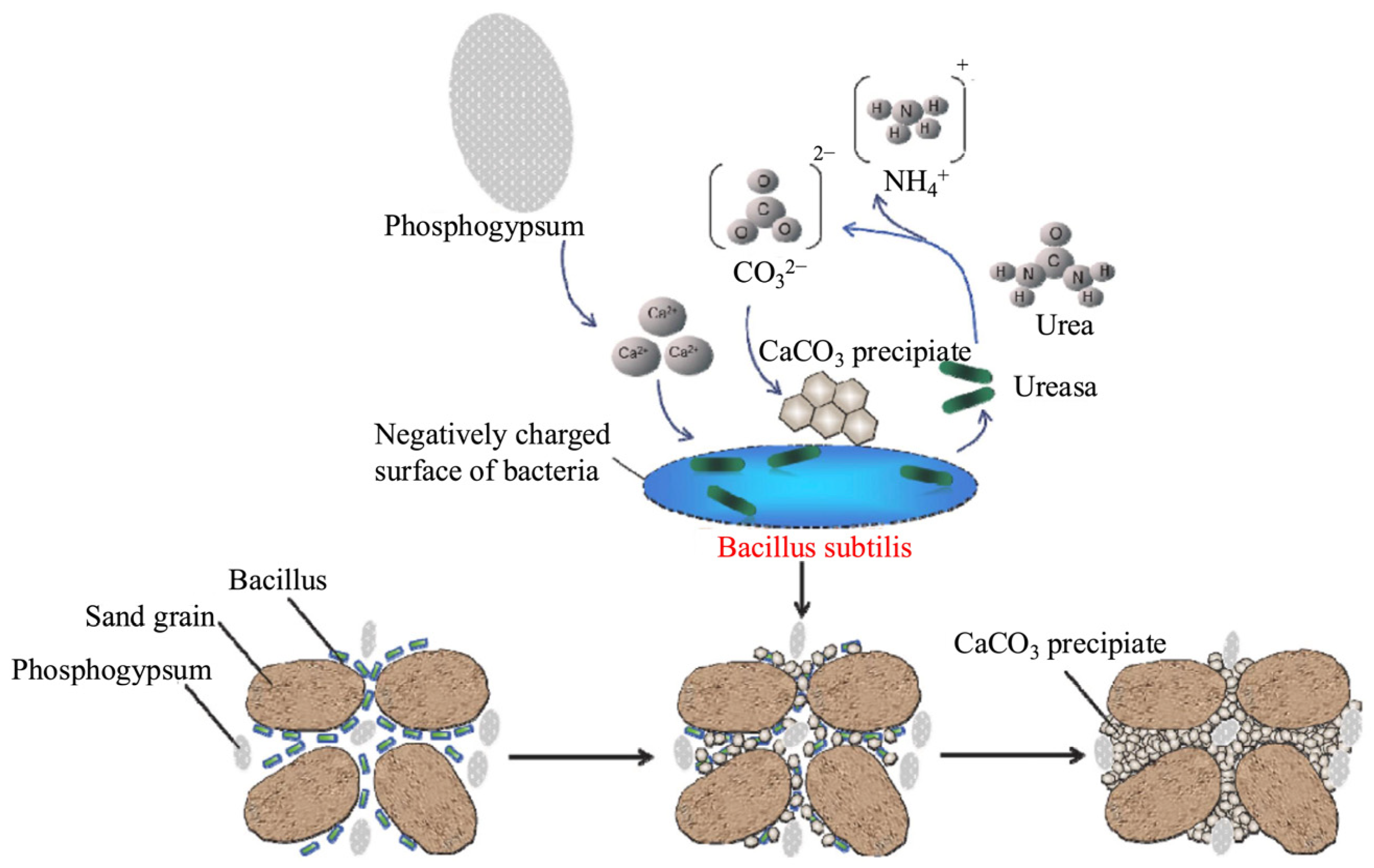
3.6.2. Microbial Solidification
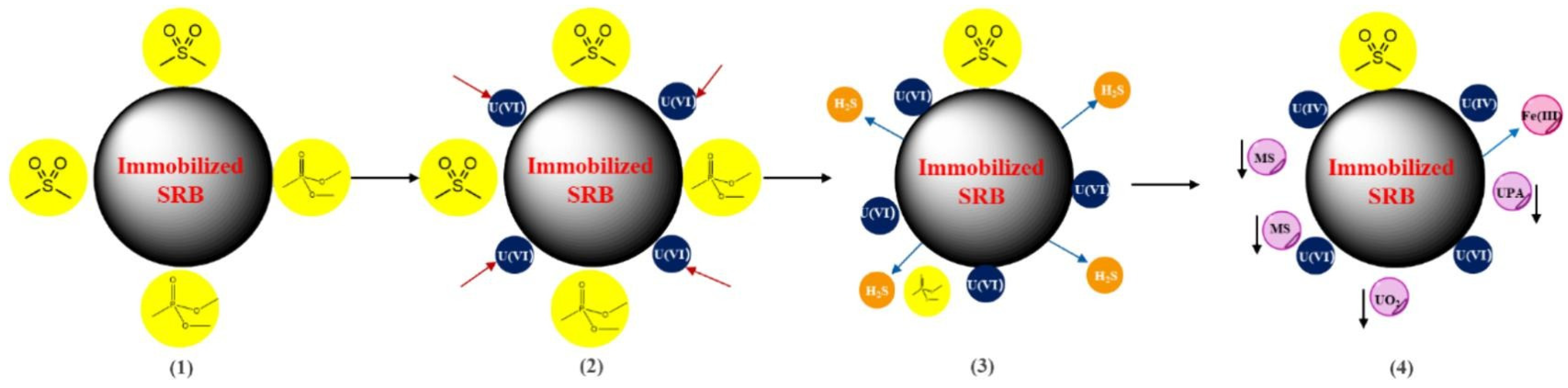
3.6.3. Microbial Reduction
4. Comparative Evaluation
5. Conclusions
Author Contributions
Funding
Data Availability Statement
Conflicts of Interest
References
- Ahmad, N.; Usman, M.; Ahmad, H.R.; Sabir, M.; Farooqi, Z.U.R.; Shehzad, M.T. Environmental Implications of Phosphate-based Fertilizer Industrial Waste and Its Management Practices. Environ. Monit. Assess. 2023, 195, 1326. [Google Scholar] [CrossRef]
- Guan, Q.; Hu, Y.; Tang, H.; Sun, W.; Gao, Z. Preparation of α-CaSO4·½H2O with Tunable Morphology from Flue Gas Desulphurization Gypsum Using Malic Acid as Modifier: A Theoretical and Experimental Study. J. Colloid Interface Sci. 2018, 530, 292–301. [Google Scholar] [CrossRef]
- Xing, G.; Wang, W.; Zhao, S.; Qi, L. Application of Ca-based Adsorbents in Fixed-bed Dry Flue Gas Desulfurization (FGD): A Critical Review. Environ. Sci. Pollut. Res. 2023, 30, 76471–76490. [Google Scholar] [CrossRef] [PubMed]
- Liu, S.; Liu, W.; Jiao, F.; Qin, W.; Yang, C. Production and Resource Utilization of Flue Gas Desulfurized Gypsum in China—A Review. Environ. Pollut. 2021, 288, 117799. [Google Scholar] [CrossRef]
- Alfimova, N.; Pirieva, S.; Levickaya, K.; Kozhukhova, N.; Elistratkin, M. The production of gypsum materials with recycled citrogypsum using semi-dry pressing technology. Recycling 2023, 8, 34. [Google Scholar] [CrossRef]
- Li, Y.; Jia, Z.; Li, S.; Li, P.; Jiang, X.; Zhang, Z.; Yu, B. Effect of Impurity Components in Titanium Gypsum on the Setting Time and Mechanical Properties of Gypsum-Slag Cementitious Materials. Rev. Adv. Mater. Sci. 2024, 63, 20240005. [Google Scholar] [CrossRef]
- Shi, F.; Wang, Q.; Wu, L.; Yang, C.; Yang, L. Durability Analysis of Industrial Waste Stabilized Sludge Subjected to Dry–Wet Cycles and Sulfate Erosion. Arab. J. Sci. Eng. 2025, 50, 1615–1631. [Google Scholar] [CrossRef]
- Zheng, Z.; Weng, C.; Kang, Z.; Zhong, M.; Yu, C.; Lin, Z.; Liu, W. Recycling Industrial Byproduct Gypsum for Use as Plastering Materials by the Tandem Pyro-Hydro Process: Impurities Removal, Whiteness Improvement, and Regularity of Phase Evolution. J. Mater. Cycles Waste Manag. 2024, 26, 3384–3396. [Google Scholar] [CrossRef]
- Lv, Y.; Wang, Y.; Zhang, D.; Wu, C.; Zhang, J.; Zhao, Z.; Nabi, M.; Luo, X.; Xiao, K. A Mini-Review on Safe Treatment and Valorization of Salt Waste in Chemical Production Processes in China. Water 2024, 16, 1620. [Google Scholar] [CrossRef]
- Liu, X.; He, X.; Dang, Y.; Li, X.; Yang, J.; Shi, W. Solidification and Removal of Impurities from Phosphogypsum for Road Applications: A Review. Environ. Chem. Lett. 2025, 23, 1111–1143. [Google Scholar] [CrossRef]
- Guan, Q.; Wang, Z.; Zhou, F.; Yu, W.; Yin, Z.; Zhang, Z.; Chi, R.; Zhou, J. The Impurity Removal and Comprehensive Utilization of Phosphogypsum: A Review. Materials 2024, 17, 2067. [Google Scholar] [CrossRef]
- Shi, X.; Zeng, A.; Duan, H.; Zhang, H.; Yang, J. Status and Development Trends of Phosphogypsum Utilization in China. Circ. Econ. 2024, 3, 100116. [Google Scholar] [CrossRef]
- Koralegedara, N.; Pinto, P.; Dionysiou, D.; Al-Abed, S. Recent advances in flue gas desulfurization gypsum processes and applications—A review. J. Environ. Manag. 2019, 251, 109572. [Google Scholar] [CrossRef] [PubMed]
- Xu, X.; Zhang, J.; Zhang, D.; Tu, H.; Wang, Y.; Zhao, Z.; Yu, Q. Leaching Risks and Regulatory Variation in Titanium Gypsum Use Along the Yangtze River. Sustainability 2025, 17, 6090. [Google Scholar] [CrossRef]
- Zhang, C.; Li, J.; Ma, Q.; Yu, M.; Li, S.; Xia, R.; Wang, S. Method for Producing α High-Strength Gypsum Using Citric Acid Waste Residue. China Patent CN201210029468.4, 18 July 2012. [Google Scholar]
- Mores, S.; Vandenberghe, L.P.D.S.; Magalhães Júnior, A.I.; De Carvalho, J.C.; De Mello, A.F.M.; Pandey, A.; Soccol, C.R. Citric Acid Bioproduction and Downstream Processing: Status, Opportunities, and Challenges. Bioresour. Technol. 2021, 320, 124426. [Google Scholar] [CrossRef] [PubMed]
- Jha, S.K.; Mishra, V.K.; Damodaran, T.; Singh, Y.P.; Sharma, P.C. Utilization of Marine Gypsum as an Alternative to Mineral Gypsum in the Reclamation of Degraded Sodic Soil and as a Means of Enhancing Crop Productivity. Land Degrad. Dev. 2022, 33, 2276–2288. [Google Scholar] [CrossRef]
- Xie, Z.; Liu, X.; Zhang, Z.; Wei, C.; Gu, J. Application of the Industrial Byproduct Gypsum in Building Materials: A Review. Materials 2024, 17, 1837. [Google Scholar] [CrossRef]
- Bouargane, B.; Laaboubi, K.; Biyoune, M.G.; Bakiz, B.; Atbir, A. Effective and Innovative Procedures to Use Phosphogypsum Waste in Different Application Domains: Review of the Environmental, Economic Challenges and Life Cycle Assessment. J. Mater. Cycles Waste Manag. 2023, 25, 1288–1308. [Google Scholar] [CrossRef]
- Qu, F.; Zhang, Y.; Li, M.; Dong, W.; Li, W.; Tsang, D.C.W. Resource Recycling of Industrial Waste Phosphogypsum in Cementitious Materials: Pretreatment, Properties, and Applications. J. Environ. Manag. 2025, 376, 124291. [Google Scholar] [CrossRef]
- Du, X.; Li, X.; Feng, Q.; Meng, L.; Sun, Y. Environmental Risk Assessment of Industrial Byproduct Gypsum Utilized for Filling Abandoned Mines. Int. J. Coal Sci. Technol. 2022, 9, 56. [Google Scholar] [CrossRef]
- Wu, F.; Chen, D.; Niu, Q.; Zhu, X. Conversion, Separation, and Application of Highly Active Sulfur Calcium Components in Waste Gypsum. Sustain. Chem. Pharm. 2025, 46, 102107. [Google Scholar] [CrossRef]
- Ennaciri, Y.; Bettach, M. The Chemical Behavior of the Different Impurities Present in Phosphogypsum: A Review. Phosphorus Sulfur Silicon Relat. Elem. 2024, 199, 129–148. [Google Scholar] [CrossRef]
- Wu, P.; Liu, X.; Liu, X.; Zhang, Z.; Wei, C. Effect of Industrial Byproduct Gypsum on the Mechanical Properties and Stabilization of Hazardous Elements of Cementitious Materials: A Review. Materials 2024, 17, 4183. [Google Scholar] [CrossRef]
- Mi, Y.; Chen, D.; He, Y.; Wang, S. Morphology-controlled Preparation of A-calcium Sulfate Hemihydrate from Phosphogypsum by Semi-liquid Method. Cryst. Res. Technol. 2018, 53, 1700162. [Google Scholar] [CrossRef]
- Orabi, A.S.; Ismail, A.H.; Abou El-Nour, K.M.; Atia, B.M.; Gado, M.A.; Cheira, M.F.; Goda, A.E.S. The employing of pure calcium sulfate extracted from phosphogypsum for composing highly pure ammonium sulfate and calcium carbonate. Can. Metall. Q. 2024, 1554–1571. [Google Scholar] [CrossRef]
- Lin, Y.; Sun, H.; Peng, T.; Zhao, D.; Zhang, X. The Leaching Kinetics of Iron from Titanium Gypsum in a Citric Acid Medium and Obtain Materials by Leaching Liquid. Molecules 2023, 28, 952. [Google Scholar] [CrossRef]
- Jin, J.; Liu, S.; Chen, H.; Wen, Z.; Xiao, M.; Rao, R.; Zheng, J. Evaluation of Compatibility in Bio-Oil and Zinc Oxide Modified Asphalt to Facilitate Waste Recycling. J. Clean. Prod. 2024, 476, 143710. [Google Scholar] [CrossRef]
- Gao, Y.; Jin, J.; Liu, S.; Chen, H.; Chen, B.; Qian, G. Evaluation of the Interaction and Aging Behavior for Asphalt Binders with Epoxy Resin and Phase Change Materials. J. Mater. Civ. Eng. 2023, 35, 04023130. [Google Scholar] [CrossRef]
- Guan, Q.; Zhou, F.; Zhou, Y.; Yu, W.; Yin, Z. New Insight into the Salt Role during Preparing A-hemihydrate Gypsum in Atmospheric Salt Solution: Particle Size Control. Int. J. Appl. Ceram. Technol. 2025, 22, e15063. [Google Scholar] [CrossRef]
- Lv, X.; Xiang, L. The Generation Process, Impurity Removal and High-Value Utilization of Phosphogypsum Material. Nanomaterials 2022, 12, 3021. [Google Scholar] [CrossRef] [PubMed]
- Ajam, L.; Ben Ouezdou, M.; Felfoul, H.S.; Mensi, R.E. Characterization of the Tunisian Phosphogypsum and Its Valorization in Clay Bricks. Constr. Build. Mater. 2009, 23, 3240–3247. [Google Scholar] [CrossRef]
- Zou, C.; Shi, Z.; Yang, Y.; Zhang, J.; Hou, Y.; Zhang, N. The Characteristics, Enrichment, and Migration Mechanism of Cadmium in Phosphate Rock and Phosphogypsum of the Qingping Phosphate Deposit, Southwest China. Minerals 2023, 13, 107. [Google Scholar] [CrossRef]
- Sithole, T.; Mashifana, T.; Mahlangu, D.; Tchadjie, L. Physical, Chemical and Geotechnical Characterization of Wet Flue Gas Desulfurization Gypsum and Its Potential Application as Building Materials. Buildings 2021, 11, 500. [Google Scholar] [CrossRef]
- Hao, J.; Cheng, G.; Hu, T.; Guo, B.; Li, X. Preparation of High-Performance Building Gypsum by Calcining FGD Gypsum Adding CaO as Crystal Modifier. Constr. Build. Mater. 2021, 306, 124910. [Google Scholar] [CrossRef]
- Lin, Q.; Zhen, X.; Rong, Y.; Li, Y.; Zhang, H.; Zhang, Q.; Yao, Z.; Yao, K. Investigation on Mechanical and Microstructure Properties of Silt Improved by Titanium Gypsum-Based Stabilizer. Materials 2022, 16, 271. [Google Scholar] [CrossRef] [PubMed]
- Kostić-Pulek, A.; Marinković, S.; Logar, V.; Tomanec, R.; Popov, S. Production of Calcium Sulphate Alpha-Hemihydrate from Citrogypsum in Unheated Sulphuric Acid Solution. Ceram.-Silikáty 2000, 44, 104–108. [Google Scholar]
- Nikulicheva, T.B.; Nikulin, I.S.; Pilyuk, E.A.; Voropaev, V.S.; Alfimova, N.I.; Nikulichev, V.B.; Saenko, M.Y. Recycling and Disposal of Gypsum-Containing Waste Generated in the Production of Citric Acid. IOP Conf. Ser. Earth Environ. Sci. 2021, 845, 12152. [Google Scholar] [CrossRef]
- Kozhuhova, N.; Shurakov, I.; Titenko, A.; Alfimova, N.; Zhernovskaya, I.; Bukovcova, A. Effect of the Curing Conditions on the Characteristics of Citrogypsum-Containing Alkali-Activated Binders. Constr. Mater. Prod. 2021, 4, 24–34. [Google Scholar] [CrossRef]
- Da Costa, M.V.; De Medeiros, J.F.; Da Silva, E.F.; Da Costa Ferreira, A.K.; De Morais Cavalcante Neitzke, P.R.; Da Paz Rodrigues, K.K.R.; Da Silva Sá, F.V.; De Almeida Ferreira, E.; De Freitas, D.F.; Dos Santos, L.A.V.; et al. Comparative Analysis of Marine and Agricultural Gypsum as Nutrient Sources: Feasibility of Marine Gypsum as a Substitute for Acid Sandy Soils and Sodic Soil Recovery. Environ. Sci. Pollut. Res. 2025, 32, 5800–5822. [Google Scholar] [CrossRef]
- Yuan, H. Exploration on Harmless Treatment Method of Mineral Salt Salt Gypsum. J. Salt Sci. Chem. Ind. 2022, 51, 36–37+41. [Google Scholar] [CrossRef]
- Gao, L.; Li, R.; Yang, D.; Bao, L.; Zhang, N. Phosphogypsum Improves Soil and Benefits Crop Growth: An Effective Measure for Utilizing Solid Waste Resources. Sci. Rep. 2025, 15, 11827. [Google Scholar] [CrossRef] [PubMed]
- Alotaibi, A.M.; Aljabbab, A.A.; Alajmi, M.S.; Qadrouh, A.N.; Farahat, M.; Abdel Khalek, M.A.; Baioumy, H.; Alhumimidi, M.S.; Almutairi, R.S.; Alkhammali, S.A. Eco-Friendly Utilization of Phosphogypsum via Mechanical Activation for Sustainable Heavy Metal Removal from Wastewater. Sustainability 2025, 17, 2817. [Google Scholar] [CrossRef]
- Dong, W.; Sun, N.; Deng, X.; Chen, Z.; Zhang, Y.; Chi, R.; Hu, L. Study on the Occurrence State of Main Components of Phosphogypsum Dihydrate and Its Impurity Distribution. RSC Adv. 2024, 14, 22280–22291. [Google Scholar] [CrossRef]
- Hou, Y.; Yang, T. Review on improvement methods of desulfurization gypsum strength and water resistance. J. Archit. Civ. Eng. 2024, 41, 95–106. [Google Scholar] [CrossRef]
- Xia, X.; Zhang, L.; Yuan, X.; Ma, C.; Song, Z.; Zhao, X. Integrated Assessment of the Environmental and Economic Effects of Resource Utilization Process for Lime/Gypsum Flue Gas Desulfurization Collaborative Desulfurized Gypsum. Environ. Eng. Sci. 2021, 38, 886–898. [Google Scholar] [CrossRef]
- Feng, S.; Zhang, G.; Ren, Y. Properties and Microstructure of Soil Solidified by Titanium Slag-Flue Gas Desulfurized Gypsum-Portland Cement Composites as Solidifiers. Constr. Build. Mater. 2024, 438, 137061. [Google Scholar] [CrossRef]
- Zhai, W.; Dai, Y.; Zhao, W.; Yuan, H.; Qiu, D.; Chen, J.; Gustave, W.; Maguffin, S.C.; Chen, Z.; Liu, X.; et al. Simultaneous Immobilization of the Cadmium, Lead and Arsenic in Paddy Soils Amended with Titanium Gypsum. Environ. Pollut. 2020, 258, 113790. [Google Scholar] [CrossRef] [PubMed]
- Guo, Z.; Zhang, C.; Jiang, H. Phosphogypsum/Titanium Gypsum Coupling for Enhanced Biochar Immobilization of Lead: Mineralization Reaction Behavior and Electron Transfer Effect. J. Environ. Manag. 2023, 345, 118781. [Google Scholar] [CrossRef]
- Wei, G.; Shui, X. The Factory Practice of β Gypsum Production with Advance and Pre—Treatment for Gypsum Citrate. Shandong Chem. Ind. 2024, 53, 174–178. [Google Scholar] [CrossRef]
- Fan, K.; Yu, H. Comprehensive utilization of citric acid gypsum. Chem. Eng. 2020, 34, 69–70+9. [Google Scholar] [CrossRef]
- Jiang, L.; Li, C.; Yang, S.; Li, C.; Jia, S. Influence of salt gypsum on rheological property of Portland cement slurry. New Build. Mater. 2019, 46, 45–48+59. [Google Scholar] [CrossRef]
- Cánovas, C.R.; Chapron, S.; Arrachart, G.; Pellet-Rostaing, S. Leaching of Rare Earth Elements (REEs) and Impurities from Phosphogypsum: A Preliminary Insight for Further Recovery of Critical Raw Materials. J. Clean. Prod. 2019, 219, 225–235. [Google Scholar] [CrossRef]
- Wang, H.; Guo, Y.; Gui, M. Study on Particle Size Control of Salt-Gypsum and Salt Washing Process. China Well Rock Salt 2020, 51, 6–10. [Google Scholar] [CrossRef]
- Jin, H.; Wang, Y.; An, X.; Wang, S.; Wang, Y.; Yang, G.; Shi, L.; Sun, Y. A Review of Fluoride Removal from Phosphorous Gypsum: A Quantitative Analysis via a Machine Learning Approach. Materials 2024, 17, 3606. [Google Scholar] [CrossRef] [PubMed]
- Zhou, Y.; Li, X.; Shi, Y.; Zhu, Q.; Du, J. Reuse of Phosphogypsum Pretreated with Water Washing as Aggregate for Cemented Backfill. Sci. Rep. 2022, 12, 16091. [Google Scholar] [CrossRef]
- Singh, M.; Garg, M.; Verma, C.L.; Handa, S.K.; Kumar, R. An Improved Process for the Purification of Phosphogypsum. Constr. Build. Mater. 1996, 10, 597–600. [Google Scholar] [CrossRef]
- Li, J.; Guo, Y.; Fan, P.; Li, H.; Chen, C.; Xu, S.; Du, L. A Flotation Combined Extraction Process for Improving the Whiteness of Phosphogypsum. Physicochem. Probl. Miner. Process. 2023, 59, 170043. [Google Scholar] [CrossRef]
- Rutherford, P.M.; Dudas, M.J.; Arocena, J.M. Heterogeneous Distribution of Radionuclides, Barium and Strontium in Phosphogypsum by-Product. Sci. Total Environ. 1996, 180, 201–209. [Google Scholar] [CrossRef]
- Xiang, L.; Zhang, Y.; Zhang, Q.; Wu, B. A Method for Preparing High-Purity Gypsum by Selective Solid-Solid Separation of Industrial By-Product Gypsum. China Patent CN201910164382.4, 11 December 2020. [Google Scholar]
- Ding, M.; Huang, J.; Wang, L.; Zhuang, L. A Process for Separating and Removing Iron from Titanium Gypsum. China Patent CN201510939265.2, 26 September 2017. [Google Scholar]
- Ma, B.; Zhang, H.; Jiao, S. A Method for Efficiently Removing Iron from Gypsum Produced as a By-Product of Titanium Dioxide Produced by the Sulfuric Acid Process. China Patent CN201910736957.5, 28 December 2021. [Google Scholar]
- Guan, Q.; Sui, Y.; Liu, C.; Wang, Y.; Zeng, C.; Yu, W.; Gao, Z.; Zang, Z.; Chi, R. Characterization and Leaching Kinetics of Rare Earth Elements from Phosphogypsum in Hydrochloric Acid. Minerals 2022, 12, 703. [Google Scholar] [CrossRef]
- Zeng, C.; Guan, Q.; Sui, Y.; Yu, W.; Bu, Y.; Liu, C.; Zhang, Z. Kinetics of Nitric Acid Leaching of Low-Grade Rare Earth Elements from Phosphogypsum. J. Cent. South Univ. 2022, 29, 1869–1880. [Google Scholar] [CrossRef]
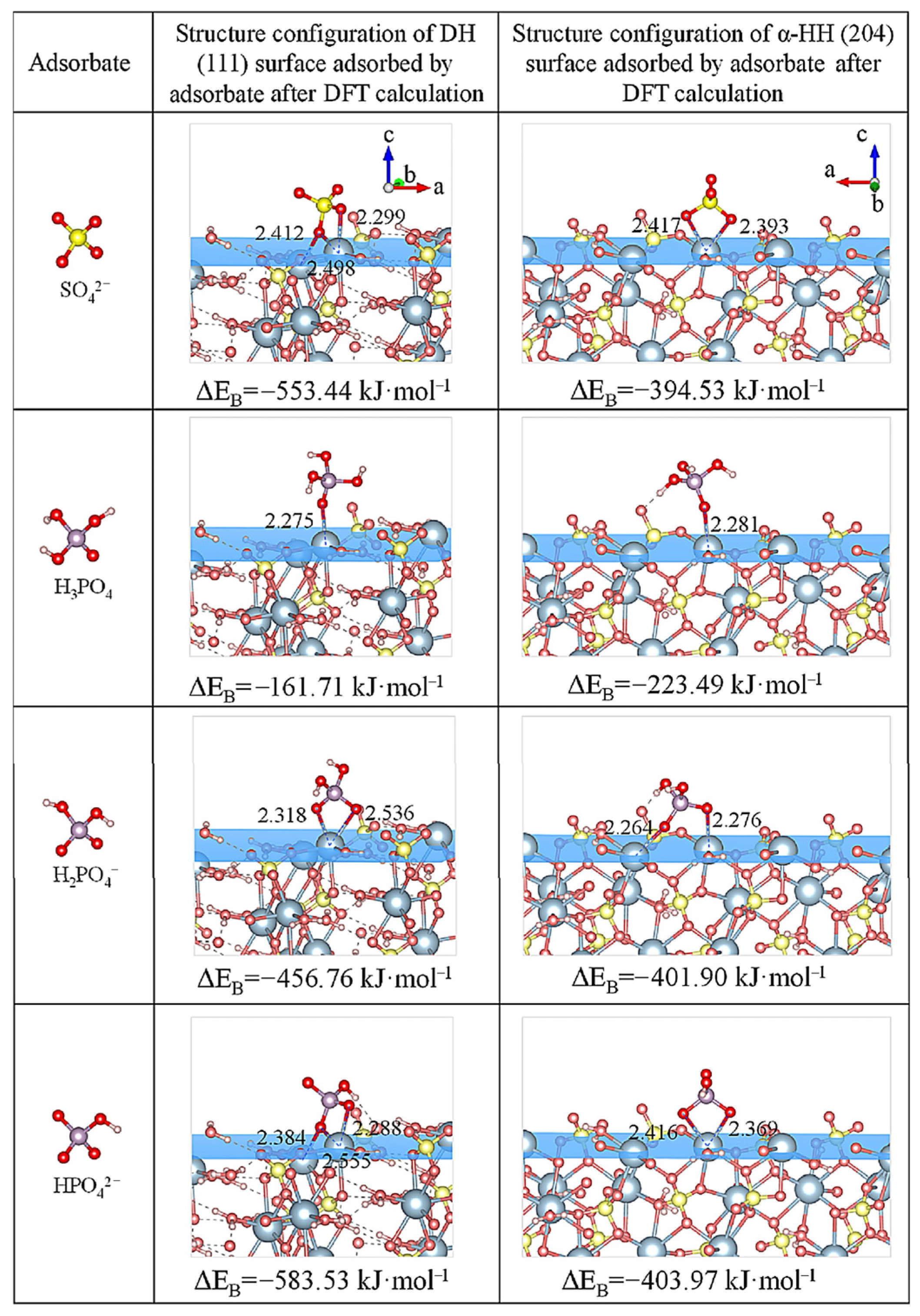
- Du, J.; Tian, L.; Qi, M.; Zhang, C.; Di, H.; Zhi, X.; Zhu, J. Revealing Maleic Acid Role in the Preparation of α-Hemihydrate Gypsum from Titanium Gypsum through Experiments and DFT Calculations. Sci. Total Environ. 2023, 897, 166405. [Google Scholar] [CrossRef]
- Li, C.; Wang, S.; Wang, Y.; An, X.; Yang, G.; Sun, Y. Study on Synergistic Leaching of Potassium and Phosphorus from Potassium Feldspar and Solid Waste Phosphogypsum via Coupling Reactions. Chin. J. Chem. Eng. 2024, 65, 117–129. [Google Scholar] [CrossRef]
- Cai, Q.; Jiang, J.; Ma, B.; Shao, Z.; Hu, Y.; Qian, B.; Wang, L. Efficient Removal of Phosphate Impurities in Waste Phosphogypsum for the Production of Cement. Sci. Total Environ. 2021, 780, 146600. [Google Scholar] [CrossRef]
- Wang, Y.; Xiang, M.; Yi, J.; Wang, Y.; Tang, W.; Zhong, Y.; Meng, H.; Ma, X.; Chen, Z. Sustainable Treatment of Solid Titanium-Gypsum-Waste Using Acidic Titanium-White-Wastewater to Produce High-Value α-Hemihydrate Gypsum. Hydrometallurgy 2025, 235, 106489. [Google Scholar] [CrossRef]
- Li, X.; Zhu, R.; Hu, S.; Lei, Y.; Zhang, H.; Yao, J.; Xu, C.; Li, S. Leaching of Arsenic from Flue Gas Desulphurisation Gypsum Using Ultrasound-Enhanced Sulfuric Acid. J. Clean. Prod. 2022, 381, 135163. [Google Scholar] [CrossRef]
- Chen, G.; Mao, T.; Guan, Q.; Fan, R.; Xu, W.; Yu, W.; Gao, Z. Deep Removal of Arsenic from Arsenic-Bearing Gypsum Using a Seed-Induced Crystal Control Technique and Its Mechanisms. Sep. Purif. Technol. 2025, 352, 128178. [Google Scholar] [CrossRef]
- Singh, M. Treating Waste Phosphogypsum for Cement and Plaster Manufacture. Cem. Concr. Res. 2002, 32, 1033–1038. [Google Scholar] [CrossRef]
- Kim, T.; Tae, S.; Chae, C.; Choi, W. The Environmental Impact and Cost Analysis of Concrete Mixing Blast Furnace Slag Containing Titanium Gypsum and Sludge in South Korea. Sustainability 2016, 8, 502. [Google Scholar] [CrossRef]
- Xiao, X.; Li, J.; Meng, Q.; Hou, X.; Liu, Y.; Wang, X.; Wang, W.; Lu, S.; Li, Y.; Mao, Y.; et al. Reuse of By-Product Gypsum with Solid Wastes-Derived Sulfoaluminate Cement Modification for the Preparation of Self-Leveling Mortar and Influence Mechanism of H3PO4. Constr. Build. Mater. 2024, 411, 134298. [Google Scholar] [CrossRef]
- Ren, Z.; Wang, L.; Wang, H.; Gao, F.; Liu, S.; Ren, J. Synergistic Solidification/Stabilization Mechanism of Cadmium in Phosphogypsum Slag-Based Cementitious Material. Constr. Build. Mater. 2023, 400, 132802. [Google Scholar] [CrossRef]
- Han, Y.; Liu, L.; Ruan, S.; Zhu, M.; Yu, B.; Qu, H.; Shao, C.; Li, T. Study on Processability, Hydration Characteristics and Solidification Mechanism of Hazardous Elements of High-Phosphorus Solid Waste Paste Backfill Materials. J. Environ. Chem. Eng. 2025, 13, 117816. [Google Scholar] [CrossRef]
- Zhang, W.; Zhao, L.; Xue, M.; Duan, X.; Feng, C.; Zhu, J. Efficient Precipitation of Soluble Phosphorus Impurities in the Recycling of Phosphogypsum to Produce Hemihydrate Gypsum. J. Clean. Prod. 2023, 396, 136455. [Google Scholar] [CrossRef]
- Wu, F.; Liu, S.; Qu, G.; Chen, B.; Zhao, C.; Liu, L.; Li, J.; Ren, Y. Highly Targeted Solidification Behavior of Hazardous Components in Phosphogypsum. Chem. Eng. J. Adv. 2022, 9, 100227. [Google Scholar] [CrossRef]
- Wang, L.; Wang, J.; Li, K.; Feng, C.; Zhang, W.; Zhu, J. Study on leaching treatment of titanium gypsum with oxalic acid. Inorg. Salts Ind. 2024, 56, 108–114. [Google Scholar] [CrossRef]
- Zhang, W.; Zhao, L.; Xue, M.; Duan, X.; Feng, C.; Zhu, J. Effect of Oxalic Acid Pretreatment on the Mechanical Properties and Microstructure of Phosphogypsum. Constr. Build. Mater. 2023, 362, 129631. [Google Scholar] [CrossRef]
- Li, J.; Wang, W.; Xu, D.; Wang, X.; Mao, Y. Preparation of Sulfoaluminate Cementitious Material Using Harmful Titanium Gypsum: Material Properties and Heavy Metal Immobilization Characteristics. Waste Dispos. Sustain. Energy 2020, 2, 127–137. [Google Scholar] [CrossRef]
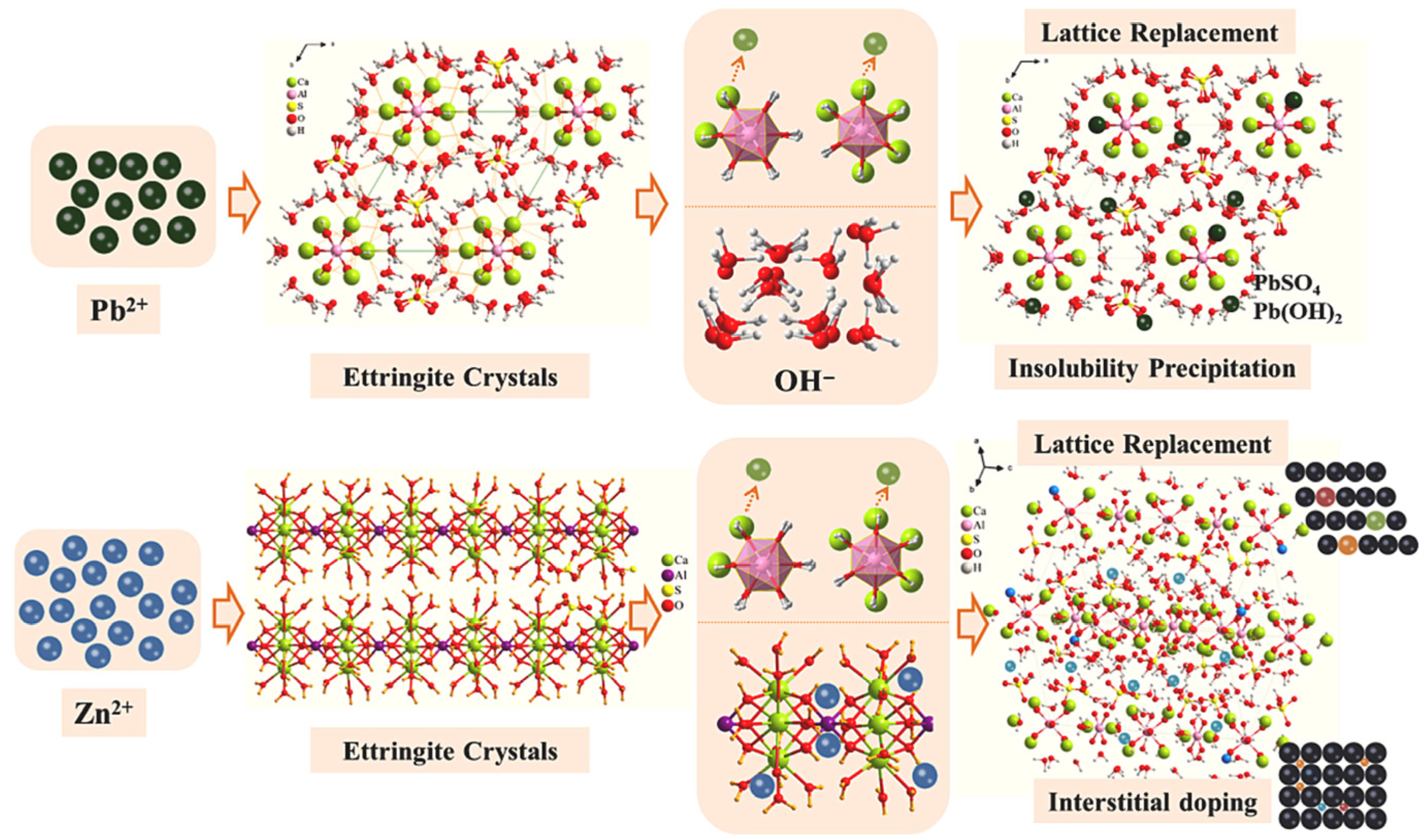
- Fan, C.; Wang, B.; Xu, Y. Solidification/Stabilization and Immobilization Mechanism of Pb(II) and Zn(II) in Ettringite. Cem. Concr. Res. 2023, 174, 107350. [Google Scholar] [CrossRef]
- Wang, J.; Dong, F.; Wang, Z.; Yang, F.; Du, M.; Fu, K.; Wang, Z. A Novel Method for Purification of Phosphogypsum. Physicochem. Probl. Miner. Process. 2020, 56, 975–983. [Google Scholar] [CrossRef]
- Wang, M.; Yuan, X.; Dong, W.; Fu, Q.; Ao, X.; Chen, Q. Gradient Removal of Si and P Impurities from Phosphogypsum and Preparation of Anhydrous Calcium Sulfate. J. Environ. Chem. Eng. 2023, 11, 110312. [Google Scholar] [CrossRef]
- Li, K.; Shi, C.; Zeng, Y.; Huang, L.; Chen, B.; Liu, C.; Bao, S.; Yang, S. A High-Efficiency Purification Method of Waste Phosphogypsum via Hydrodynamic Cavitation Pretreatment and Froth Flotation. J. Clean. Prod. 2025, 512, 145685. [Google Scholar] [CrossRef]
- Fang, J.; Ge, Y.; Chen, Z.; Xing, B.; Bao, S.; Yong, Q.; Chi, R.; Yang, S.; Ni, B.-J. Flotation Purification of Waste High-Silica Phosphogypsum. J. Environ. Manag. 2022, 320, 115824. [Google Scholar] [CrossRef]
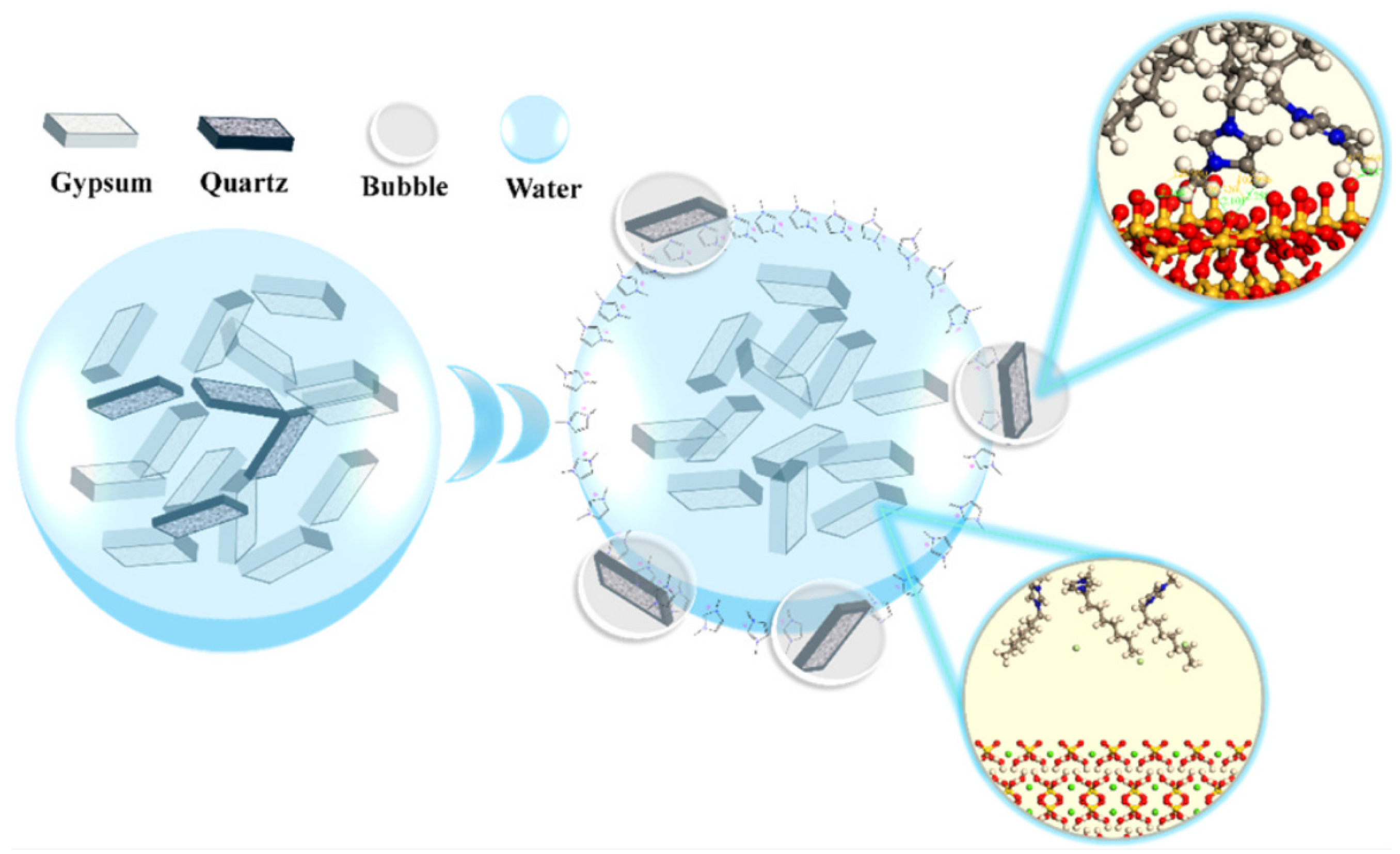
- Yang, W.; Li, X.; Du, Y.; Li, L.; Li, X. Selective Flotation Separation of Quartz from Gypsum Using 1-Methyl-3-Octylimidazolium Chloride Ionic Liquid. Colloids Surf. A Physicochem. Eng. Asp. 2025, 727, 138208. [Google Scholar] [CrossRef]
- Shi, H.; Ren, L.; Bao, S.; Zhang, Y.; Nguyen, A.V.; Chen, B.; Li, W.; Huang, R.; Zeng, Y.; Lou, S. Mechanism of Quartz Flotation Separation from Gypsum Using Tetradecyl Trimethyl Ammonium Chloride: Guiding the Improvement of Phosphogypsum Quality. Miner. Eng. 2025, 225, 109218. [Google Scholar] [CrossRef]
- Huang, H.; Li, X.; Du, Y.; Yang, W. Deep Purification of Phosphogypsum Waste by Reverse Flotation. Constr. Build. Mater. 2025, 472, 140854. [Google Scholar] [CrossRef]
- Li, H.; Wei, N.; He, D.; Chen, Y.; Kasomo, R.M.; Chen, Q.; Weng, X.; Song, S. Utilization of Cetylpyridine Bromide as an Efficient Collector for Flotation Separation of Quartz from Gypsum. Appl. Surf. Sci. 2025, 702, 163354. [Google Scholar] [CrossRef]
- Chen, X.; Yu, Y.; Liu, Y.; Zhu, M.; Ye, H.; Chen, S. Utilization Ethylbenzyl Quaternary Ammonium Salt as a Selective Collector for Co-Reverse Flotation Removal of Silica, Organic Matter, and Fluoride from Phosphogypsum. Miner. Eng. 2025, 228, 109354. [Google Scholar] [CrossRef]
- Liu, W.; Zheng, J.; Ou, X.; Liu, X.; Song, Y.; Tian, C.; Rong, W.; Shi, Z.; Dang, Z.; Lin, Z. Effective Extraction of Cr(VI) from Hazardous Gypsum Sludge via Controlling the Phase Transformation and Chromium Species. Environ. Sci. Technol. 2018, 52, 13336–13342. [Google Scholar] [CrossRef] [PubMed]
- Guan, Q.; Sun, W.; Hu, Y.; Yin, Z.; Guan, C. Synthesis of α-CaSO4·0.5H2O from Flue Gas Desulfurization Gypsum Regulated by C4H4O4Na2·6H2O and NaCl in Glycerol-Water Solution. RSC Adv. 2017, 7, 27807–27815. [Google Scholar] [CrossRef]
- Guan, Q.; Sun, W.; Hu, Y.; Guan, C.; Yin, Z.; Zhang, C. Removal and Utilization of Calcite Existed in Scheelite by Preparation of Calcium Sulfate Whiskers. Int. J. Min. Sci. Technol. 2017, 27, 1005–1010. [Google Scholar] [CrossRef]
- Guan, Q.; Tang, H.; Sun, W.; Hu, Y.; Yin, Z. Insight into Influence of Glycerol on Preparing α-CaSO4·1/2H2O from Flue Gas Desulfurization Gypsum in Glycerol–Water Solutions with Succinic Acid and NaCl. Ind. Eng. Chem. Res. 2017, 56, 9831–9838. [Google Scholar] [CrossRef]
- Guan, Q.; Sun, W.; Hu, Y.; Yin, Z.; Guan, C. A Facile Method of Transforming FGD Gypsum to α-CaSO4·0.5H2O Whiskers with Cetyltrimethylammonium Bromide (CTAB) and KCl in Glycerol-Water Solution. Sci. Rep. 2017, 7, 7085. [Google Scholar] [CrossRef] [PubMed]
- Xia, B.; Shi, R.; Wang, W.; Peng, W.; Cao, Y.; Huang, Y.; Fan, G. Preparation of α-hemihydrate gypsum whiskers from phosphogypsum using atmospheric pressure nitrate solution. Constr. Build. Mater. 2024, 412, 134888. [Google Scholar] [CrossRef]
- Guan, Q.; Sui, Y.; Yu, W.; Bu, Y.; Zeng, C.; Liu, C.; Zhang, Z.; Gao, Z.; Chi, R. Deep Removal of Phosphorus and Synchronous Preparation of High-Strength Gypsum from Phosphogypsum by Crystal Modification in NaCl-HCl Solutions. Sep. Purif. Technol. 2022, 298, 121592. [Google Scholar] [CrossRef]
- He, S.; Yang, L.; Hu, G.; Cao, J. Deep Removal of Phosphate Impurities in Phosphogypsum by Two-Step Crystal Transformation for Use as Portland Cement Retarder. J. Build. Eng. 2023, 79, 107831. [Google Scholar] [CrossRef]
- Guan, Q.; Sun, N.; Bu, Y. Efficient extraction of impurities from phosphogypsum during crystal regulation of α-hemihydrate gypsum. J. Am. Ceram. Soc. 2023, 106, 7360–7374. [Google Scholar] [CrossRef]
- Guan, Q.; Zhou, Y.; Yu, W.; Fan, R.; Sui, Y.; Bu, Y.; Yin, Z.; Chi, R.; Gao, Z. Efficient Removal of Impurities from Phosphogypsum during Preparation of α-Hemihydrate Gypsum. Miner. Eng. 2023, 201, 108203. [Google Scholar] [CrossRef]
- Cai, J.; Su, C.; Ma, Y.; Yu, X.; Peng, R.; Li, J.; Zhang, X.; Fang, J.; Shen, P.; Liu, D. Role of ammonium sulfate in sulfurization flotation of azurite: Inhibiting the formation of copper sulfide colloid and its mechanism. Int. J. Min. Sci. Technol. 2022, 32, 575–584. [Google Scholar] [CrossRef]
- Li, X.; Zhang, Q. Dehydration Behaviour and Impurity Change of Phosphogypsum during Calcination. Constr. Build. Mater. 2021, 311, 125328. [Google Scholar] [CrossRef]
- Cao, W.; Yi, W.; Peng, J.; Li, J.; Yin, S. Recycling of phosphogypsum to prepare gypsum plaster: Effect of calcination temperature. J. Build. Eng. 2022, 45, 103511. [Google Scholar] [CrossRef]
- Zhang, J.; Zhang, X.; Su, X.; Du, H.; Lu, Y.; Zhang, Q. Rare Earth Extraction from Phosphogypsum by Aspergillus Niger Culture Broth. Molecules 2024, 29, 1266. [Google Scholar] [CrossRef]
- Zhao, Y.; Zhu, B.; Cheng, M.; Xie, X.; Huang, J.; Tian, S.; Ning, P. Interaction between Dissolved Organic Matter Structure Diversity and Phosphorus Forms in Phosphogypsum Tailings under the Influence of Fungal Microorganisms. J. Environ. Sci. 2026, 160, 308–318. [Google Scholar] [CrossRef]
- Meng, L.; Ding, K.; Qiu, Y.; Chen, Y.; Huo, H.; Yu, D.; Tian, D.; Li, Z. Application of Phosphogypsum and Phosphate-Solubilizing Fungi to Pb Remediation: From Simulation to in Vivo Incubation. Sci. Total Environ. 2024, 933, 173171. [Google Scholar] [CrossRef]
- Hong, C.; Tang, Q.; Liu, S.; Kim, H.; Liu, D. A Two-Step Bioleaching Process Enhanced the Recovery of Rare Earth Elements from Phosphogypsum. Hydrometallurgy 2023, 221, 106140. [Google Scholar] [CrossRef]
- Wang, L.; Liang, X.; Ren, Z.; Gao, F.; Liu, S.; Zhang, M. The Evolution Characteristics of Water Absorption, Hydration Products and Microstructure of Supersulfated Cement Containing Phosphogypsum by Microbial Induced Carbonate Precipitation. Constr. Build. Mater. 2023, 409, 134013. [Google Scholar] [CrossRef]
- Chen, H.; Lu, Y.; Zhang, C.; Min, F.; Huo, Z. Red Yeast Improves the Potential Safe Utilization of Solid Waste (Phosphogypsum and Titanogypsum) through Bioleaching. Front. Bioeng. Biotechnol. 2021, 9, 777957. [Google Scholar] [CrossRef]
- Bao, H.; Zheng, Z.; Xu, G.; Li, R.; Wang, Q.; Saafi, M.; Ye, J. Performance and Mechanism of Sand Stabilization via Microbial-Induced CaCO3 Precipitation Using Phosphogypsum. J. Clean. Prod. 2024, 468, 142999. [Google Scholar] [CrossRef]
- Xiang, J.; Qiu, J.; Song, Y.; Miao, Y.; Gu, X. Synergistic Removal of Phosphorus and Fluorine Impurities in Phosphogypsum by Enzyme-Induced Modified Microbially Induced Carbonate Precipitation Method. J. Environ. Manag. 2022, 324, 116300. [Google Scholar] [CrossRef] [PubMed]
- Jalali, J.; Magdich, S.; Jarboui, R.; Loungou, M.; Ammar, E. Phosphogypsum Biotransformation by Aerobic Bacterial Flora and Isolated Trichoderma Asperellum from Tunisian Storage Piles. J. Hazard. Mater. 2016, 308, 362–373. [Google Scholar] [CrossRef]
- Zhang, H.; Xiao, M.; Wu, L.; Xue, J.; Yu, Y.; Yang, L. Exploiting Phosphogypsum Washing Wastewater as a Novel Resource to Simultaneously Enhance the Phosphorus Recovery and Total Lipids Production of Microalgae. Chem. Eng. J. 2025, 518, 164525. [Google Scholar] [CrossRef]
- Xiao, L.; Zhang, J.; Luo, Y.; Qi, X.; Hussain, J.; Jiang, G. Innovative Approach to Enhancing Phosphogypsum Mechanical Properties and Stabilizing/Solidifying Contaminants. Sustain. Chem. Pharm. 2024, 41, 101712. [Google Scholar] [CrossRef]
- Chen, H.; Guo, G.; Li, H.; Chen, G.; Ma, J. Phosphorus Recovery from Wastewater Using Waste Gypsum via Sulfur-Metabolizing Bacteria: Influence of Gypsum Type on Performance and Mechanisms. Water Res. 2026, 289, 124872. [Google Scholar] [CrossRef] [PubMed]
- Bounaga, A.; Danouche, M.; Zeroual, Y.; Boulif, R.; Benhida, R.; Lyamlouli, K. Anaerobic Bioremediation of Acid Phosphogypsum Stacks Leachates: Assessment of Leachate’s Biochemical Changes and Microbial Community Dynamics. Environ. Technol. Innov. 2024, 33, 103535. [Google Scholar] [CrossRef]
- Graves, D.; Smith, J.J.; Chen, L.; Kreinberg, A.; Wallace, B.; White, R. Biogeochemical Oxidation of Calcium Sulfite Hemihydrate to Gypsum in Flue Gas Desulfurization Byproduct Using Sulfur-Oxidizing Bacteria. J. Environ. Manag. 2017, 201, 357–365. [Google Scholar] [CrossRef] [PubMed]
- Salo, M.; Knauf, O.; Mäkinen, J.; Yang, X.; Koukkari, P. Integrated Acid Leaching and Biological Sulfate Reduction of Phosphogypsum for REE Recovery. Miner. Eng. 2020, 155, 106408. [Google Scholar] [CrossRef]
- Azabou, S.; Mechichi, T.; Sayadi, S. Zinc Precipitation by Heavy-Metal Tolerant Sulfate-Reducing Bacteria Enriched on Phosphogypsum as a Sulfate Source. Miner. Eng. 2007, 20, 173–178. [Google Scholar] [CrossRef]
- Jiang, X. A Method for Biochemical Impurity Removal of Titanium Gypsum. China Patent CN202010380594.9, 9 November 2021. [Google Scholar]
- Xi, X.; Wang, Z.; Zhou, L.; Song, H.; Han, Y.; Dong, F.; Zhou, L. Rapid Removal of Uranium (VI) by Phosphogypsum Immobilized Sulfate-Reducing Bacteria Microspheres. Chem. Eng. J. 2024, 493, 152676. [Google Scholar] [CrossRef]



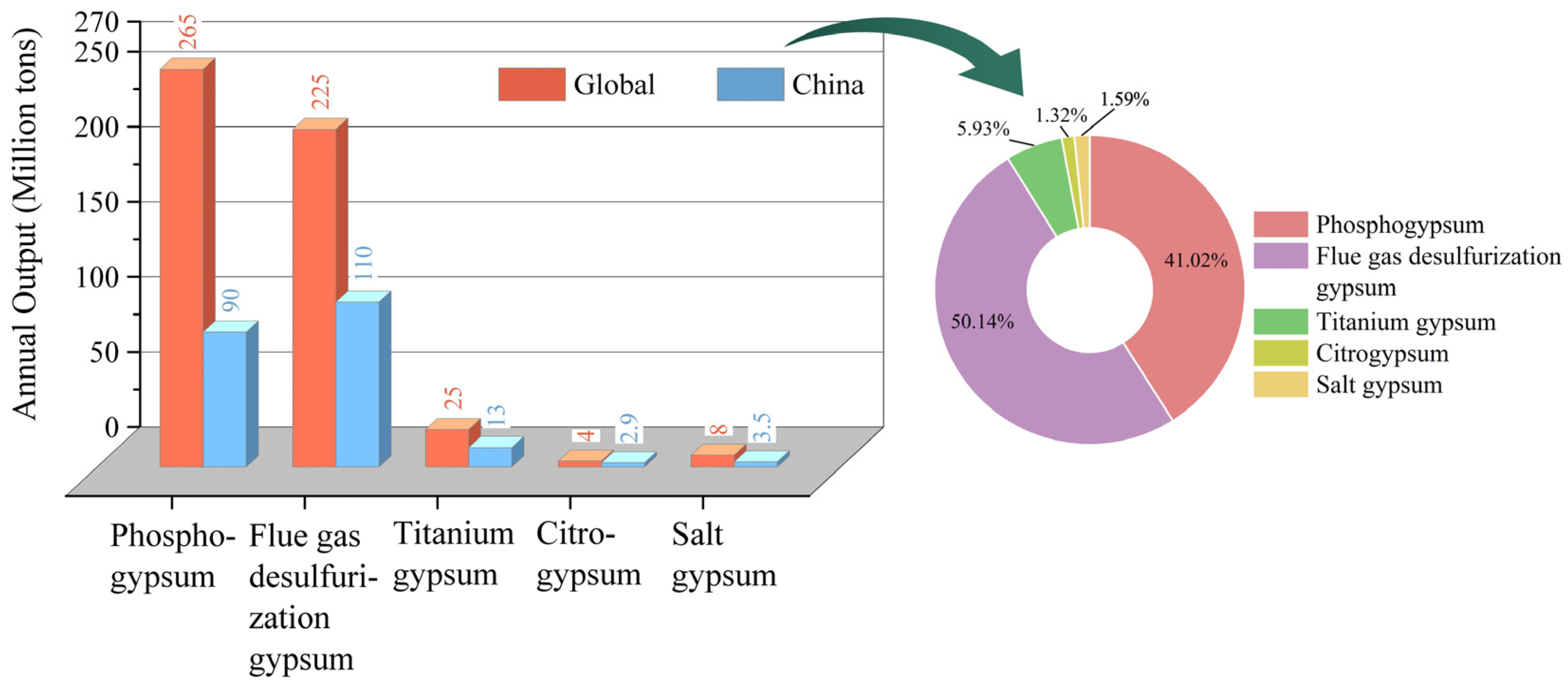
| SG Types | SG Outputs per Ton of Product (t) | Utilization Rate (%) | References |
|---|---|---|---|
| PG | 4~5 | 30~50 | [10,11,12] |
| FGD gypsum | 1~2.7 | 60~70 | [13] |
| TG | 6~12 | 10~30 | [14] |
| CG | 1.3~2.4 | 30~40 | [15,16] |
| SAG | 0.016~0.05 | <10 | [17,18] |
| SG Types | pH | Moisture Content/% | Component Content/% | Ref. | |||||||||
|---|---|---|---|---|---|---|---|---|---|---|---|---|---|
| CaO | SO3 | SiO2 | P2O5 | Fࢤ | Al2O3 | Fe2O3 | MgO | TiO2 | MnO | ||||
| PG | 1~4.5 | 20~30 | 32.80 | 44.40 | 1.37 | 1.69 | 0.55 | 0.11 | 0.03 | 0.01 | - | - | [32] |
| 26.77 | 36.96 | 13.94 | 1.58 | 0.52 | 0.68 | 0.12 | 0.69 | - | - | [25] | |||
| 33.65 | 34.00 | 4.74 | 1.82 | 0.30 | 2.30 | 1.38 | 0.08 | - | - | [33] | |||
| FGD gypsum | 6~8 | 15~20 | 50.80 | 42.70 | 2.00 | 0.02 | 0.42 | 1.10 | 0.64 | 1.06 | 0.10 | 0.60 | [34] |
| 32.40 | 42.60 | 2.70 | - | - | 0.80 | 0.60 | 1.00 | - | - | [35] | |||
| TG | 3~6.5 | 20~30 | 33.90 | 36.70 | 4.10 | - | - | 1.20 | 13.00 | 0.90 | 8.50 | - | [36] |
| 38.48 | 39.13 | 4.05 | - | - | 1.16 | 11.18 | 2.08 | 2.52 | 0.33 | [27] | |||
| CG | 2~3 | 20~40 | 39.28 | 55.88 | 0.83 | - | - | 0.15 | 0.24 | 0.5 | - | - | [37] |
| 31.70 | 45.69 | - | - | - | 0.12 | 0.04 | 0.04 | - | - | [38] | |||
| 43.36 | 55.47 | 0.54 | 0.08 | - | 0.13 | - | 0.06 | - | - | [39] | |||
| SAG | 7~8.5 | 15~30 | 22.2~36.6 | 40.7~44.7 | - | - | - | - | - | - | - | - | [40] |
| 33.90 | 48.60 | 0.20 | - | - | 0.02 | 0.03 | 0.40 | - | - | [41] | |||
| SG Types | Impurity Types | Content/% | Primary Form | Hazards and Application Limitations | Ref. | |||
|---|---|---|---|---|---|---|---|---|
| Building Materials | Chemical Materials | Water Treatment | Agriculture | |||||
| PG | Phosphoric acid | 0.5~3.5 | H3PO4, H2PO4−, HPO42−, PO43− | ① When phosphorus and fluorine exceed 0.3%, hydration products form coarser crystals, prolonging setting time and reducing strength; ② Organic materials coat gypsum crystals, increasing PG’s water demand when used as a building material; ③ High Chloride ions (Cl−) contents make gypsum boards absorb moisture, leading to mold and slow drying; ④ Iron impurities give gypsum a reddish-yellow color and can cause excessive hydration in cement-based materials; ⑤ Salt efflorescence leads to moisture absorption, surface crystallization, and corrosion of gypsum products. | ① Impurities clog gypsum crystals, harming advanced materials like nanofibers; ② Excessive toxic metals, radioactive elements and others make products unsafe; ③ Although gypsum may exhibit corrosivity due to its relatively low pH, Cl− can further accelerate corrosion, particularly in steel-containing systems; ④ High iron and impurity levels reduce the corrosion resistance of chemical products; ⑤ Residual organics may cause secondary pollution or catalyst poisoning; ⑥ High salinity hampers chemical reactions and lowers efficiency. | ① Soluble phosphorus causes eutrophication in water bodies; ② Fine silica particles complicate water filtration; ③ Heavy metals migrate and pollute water bodies; ④ Organic matter increases the chemical oxygen demand (COD) of water, causing microbial growth; ⑤ Introducing large amounts of ions like Na+, Cl−, Mg2+, etc., increases TDS and salinity in water. | ① Harmful impurities such as fluorine are toxic to bones, growth, and development in plants and animals; ② Insufficiently decomposed organic residues may lead to soil microbial contamination; ③ Elevated soil salinity can cause or worsen soil salinization, hindering crop growth. | [42,43,44] |
| Phosphate | CaHPO4·2H2O, phosphate complex, apatite | |||||||
| Fluoride | 0.06~1.66 | F−, CaF2, CaSiF6, Na3AlF6 | ||||||
| Organic matter | 0.3~0.8 | rotting plant/organism | ||||||
| Aluminosilicate | 2~14 | SiO2, Al2O3 | ||||||
| Heavy metals | 0.05~0.2 | As, Cd, Cr, Hg, Pb, Fe | ||||||
| Radionuclides | 0.05~0.2 | UO,226Ra,232Th,40K | ||||||
| FGD gypsum | Aluminosilicate | 5~10 | SiO2, Al2O3 | [45,46,47] | ||||
| Heavy metals | 0.01~0.05 | As, Cd, Cr, Hg, Pb, Fe | ||||||
| Chlorine | 0.01~0.35 | Cl- | ||||||
| Fluoride | 0.01~0.05 | F−, CaF2 | ||||||
| TG | Titanium | 2.5~8.5 | TiO2 | [48,49] | ||||
| Aluminosilicate | 5~10 | SiO2, Al2O3 | ||||||
| Fluoride | 0.01~0.05 | H2SiF6, CaF2 | ||||||
| Heavy metals | 11~23 | As, Cd, Cr, Hg, Pb, Fe | ||||||
| CG | Organic matter | 0.1–0.3 | Na3C6H5O7, C6H8O7, Organophosphate | [50,51] | ||||
| Inorganic compounds | 3.0~8.0 | CaC2O4, P2O5 | ||||||
| SAG | Salts | 3.0~6.0 | NaCl, CaCO3, MgCO3, K2SO4, MgCl2 | [52] | ||||
| Methods | Mechanisms | Target Impurities | Impurity Removal Efficiency | Cost and Resource Consumption | Environmental Risks | Process Adaptability | Secondary Waste and Treatment | |
|---|---|---|---|---|---|---|---|---|
| Physical methods | Water washing | Dissolving water-soluble salt impurities in water for solid–liquid separation. | Soluble phosphorus, fluoride, chlorides, sulfates, phosphates, etc. | F−, PO43−, Cl− ≈ 60~70% | High water consumption, low cost. | Medium | Widely applicable, can be industrialized. | Wastewater needs to be treated, Cl− may exceed the standard. |
| Screening/ classification | Separating impurities by size or density. | Unreacted minerals in coarse particles; fluorine- or silicon-bearing compounds; fine clays; radioactive particulates, etc. | SiO2, 226Ra, Enriched particles ≈ 20~40% | Low energy consumption, low cost. | Low | Widely applicable, impurity particle size enrichment is required, simple equipment, can be industrialized. | Dust needs to be controlled. | |
| Magnetic separation | Separates iron impurities based on the magnetic differences between substances. | Iron oxides and other Fe-bearing impurities (mainly in TG). | Fe2O3 ≥ 85% | Medium energy consumption, requires reducing agent, medium cost. | Low | Suitable for TG with high Fe impurities, simple equipment, can be industrialized. | Almost no waste liquid, waste gas, or secondary waste. | |
| Chemical methods | Acid leaching | Using acid to dissolve impurities into the soluble phase or precipitable compounds. | Sparingly soluble impurities, such as alkaline oxides, phosphates, and some heavy metals. | P, F−, heavy metal ≈ 60~99% | Large acid consumption, medium to high cost. | Low | Widely applicable, industrialization requires corrosion prevention, simple equipment, can be industrialized. | It generates waste liquid containing phosphorus, phosphorus, heavy metals, etc., which is difficult to treat. |
| Precipitation/ solidification | Using alkaline substances to precipitate impurities into cementitious or stable matrices. | Phosphorus and fluorine impurities, iron and aluminum compounds, heavy metals, etc. | Low resource consumption, low cost. | Medium | Widely applicable, can be industrialized. | The resulting sludge contains CaF2, phosphates, and other substances, which require landfill disposal. | ||
| Flotation | Using mineral surface hydrophobicity differences to separate impurities from gypsum via froth flotation. | Insoluble independent phase or heterogeneous particles, such as quartz, carbonaceous residues, and organic matter. | SiO2, C, organic matter > 90%; F− ≈ 20~40% | Medium chemical consumption, low energy consumption, medium cost | Medium | Widely applicable, simple equipment, can be industrialized. | The flotation wastewater produces tailings containing reagents and circulating water, making it difficult to treat. | |
| Phase transformation | Converting dihydrate gypsum to hemihydrate or anhydrite to release lattice-bound impurities | Lattice-incorporated impurities (co-crystallized phosphorus, heavy metals, rare earth elements, etc.). | Co-crystallized P, F, REEs > 95% | Salt-acid consumption is medium, heating is required, medium to high cost. | High | Widely applicable, industrialization prospects depend on cost control. | The waste liquid contains high concentrations of phosphates, sulfates, and large amounts of heavy metals, requiring special treatment. | |
| Heat treatment | Controlling temperature and atmosphere to facilitate crystal reconstruction and impurity changes, leading to impurity decomposition, migration, or immobilization. | Organic impurities, organic carbon, volatile phosphorus–fluorine precursors, etc. | Organic impurities ≈ 100%, P, F ≈ 40~60% | Needs to be heated to high temperature, high energy consumption, high cost. | Medium | Widely applicable, but high costs limit large-scale promotion. | Toxic substances are reduced to gaseous pollutants and require treatment. | |
| Microbiological methods | Microbial dissolution | Microorganisms release organic acids and enzymes that facilitate the decomposition of insoluble impurities. | Phosphates, rare earths, etc. | P, F, heavy metal 50~80% | No chemical reagents are consumed, but microorganisms need to be cultured, medium cost. | Low | Low applicability, limited applicability to extremely acidic gypsum, microbial control is difficult, industrialization is difficult. | Almost no waste liquid or waste gas, and the small amount of biological residue is easy to treat. |
| Microbial solidification | Microorganisms produce urease and promote mineralization and precipitation | Phosphate, fluoride ions and some heavy metals. | ||||||
| Microbial reduction | Reducing bacteria convert impurities into low-valence state, easily separated forms. | Heavy metals, uranium, iron. | ||||||
Disclaimer/Publisher’s Note: The statements, opinions and data contained in all publications are solely those of the individual author(s) and contributor(s) and not of MDPI and/or the editor(s). MDPI and/or the editor(s) disclaim responsibility for any injury to people or property resulting from any ideas, methods, instructions or products referred to in the content. |
© 2026 by the authors. Licensee MDPI, Basel, Switzerland. This article is an open access article distributed under the terms and conditions of the Creative Commons Attribution (CC BY) license.
Share and Cite
Wu, C.; Xu, W.; Song, Z.; Ma, Q.; Guan, Q.; Qi, X.; Li, X.; Yang, C.; Tang, H. Purification of Synthetic Gypsum: Techniques and Mechanisms. Molecules 2026, 31, 484. https://doi.org/10.3390/molecules31030484
Wu C, Xu W, Song Z, Ma Q, Guan Q, Qi X, Li X, Yang C, Tang H. Purification of Synthetic Gypsum: Techniques and Mechanisms. Molecules. 2026; 31(3):484. https://doi.org/10.3390/molecules31030484
Chicago/Turabian StyleWu, Can, Wenting Xu, Zhizhao Song, Qingyun Ma, Qingjun Guan, Xuhui Qi, Xiaoya Li, Chengpeng Yang, and Honghu Tang. 2026. "Purification of Synthetic Gypsum: Techniques and Mechanisms" Molecules 31, no. 3: 484. https://doi.org/10.3390/molecules31030484
APA StyleWu, C., Xu, W., Song, Z., Ma, Q., Guan, Q., Qi, X., Li, X., Yang, C., & Tang, H. (2026). Purification of Synthetic Gypsum: Techniques and Mechanisms. Molecules, 31(3), 484. https://doi.org/10.3390/molecules31030484