

Radiation-Induced Synthesis of a Minocycline-Derived Polycyclic Scaffold with Anti-Inflammatory and Antibacterial Effects

 ,
,
Abstract
1. Introduction
2. Results and Discussion
2.1. Isolation and Characterization of the Newly Generated Product, Minocyclinosin A
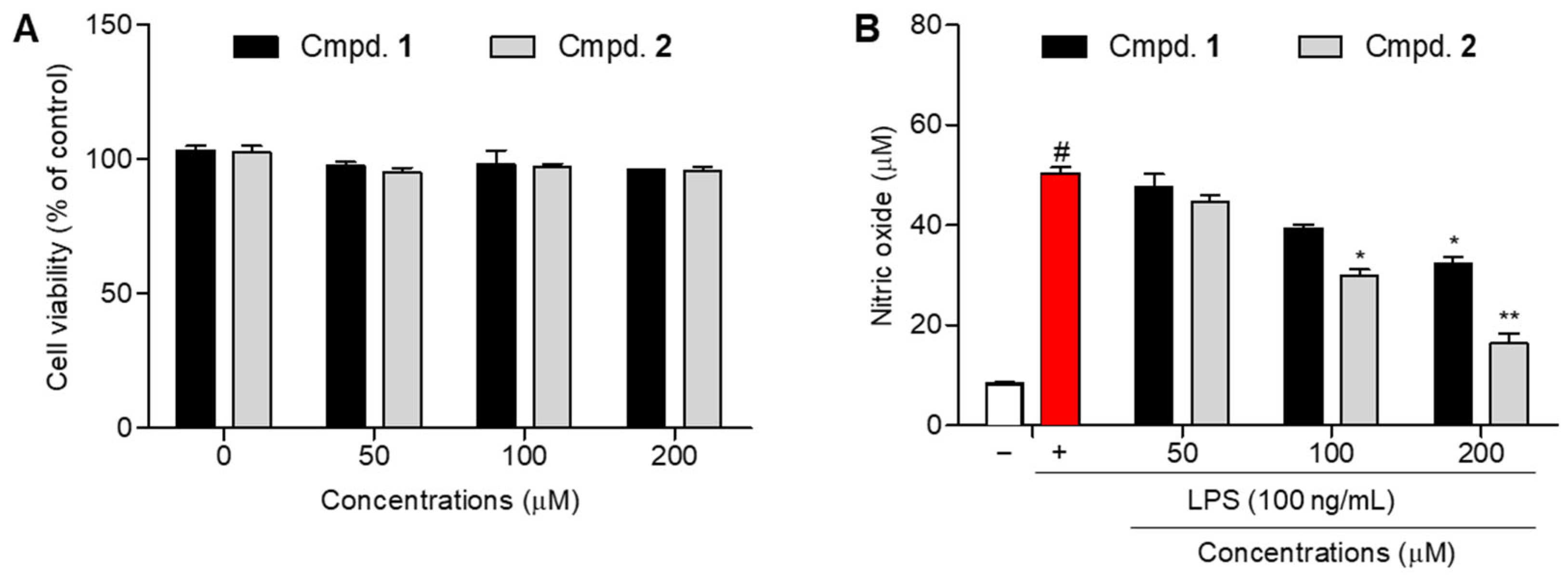
2.2. Anti-Inflammatory Effects of Minocyclinosin A
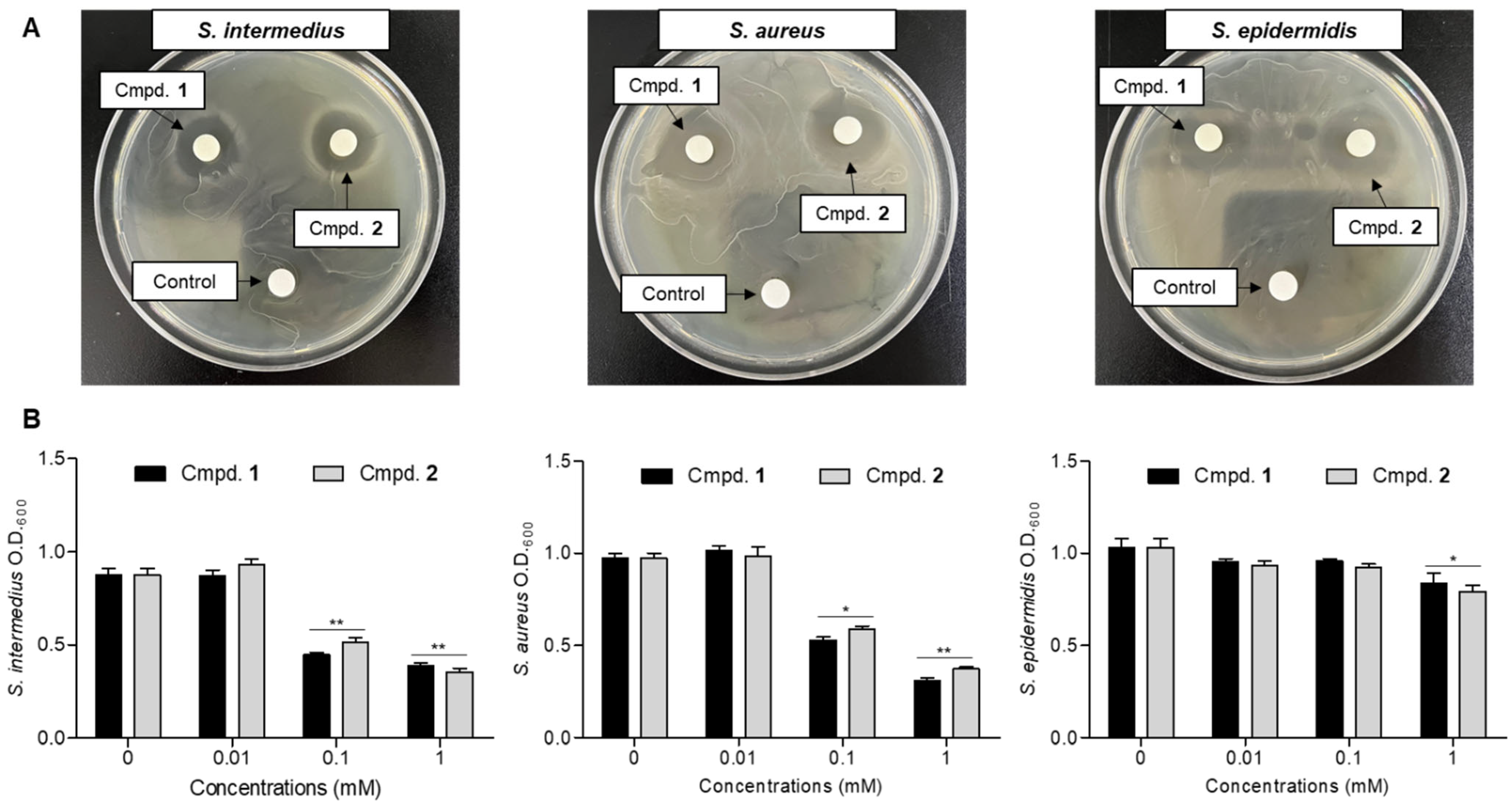
2.3. Antibacterial Effects of Minocyclinosin A
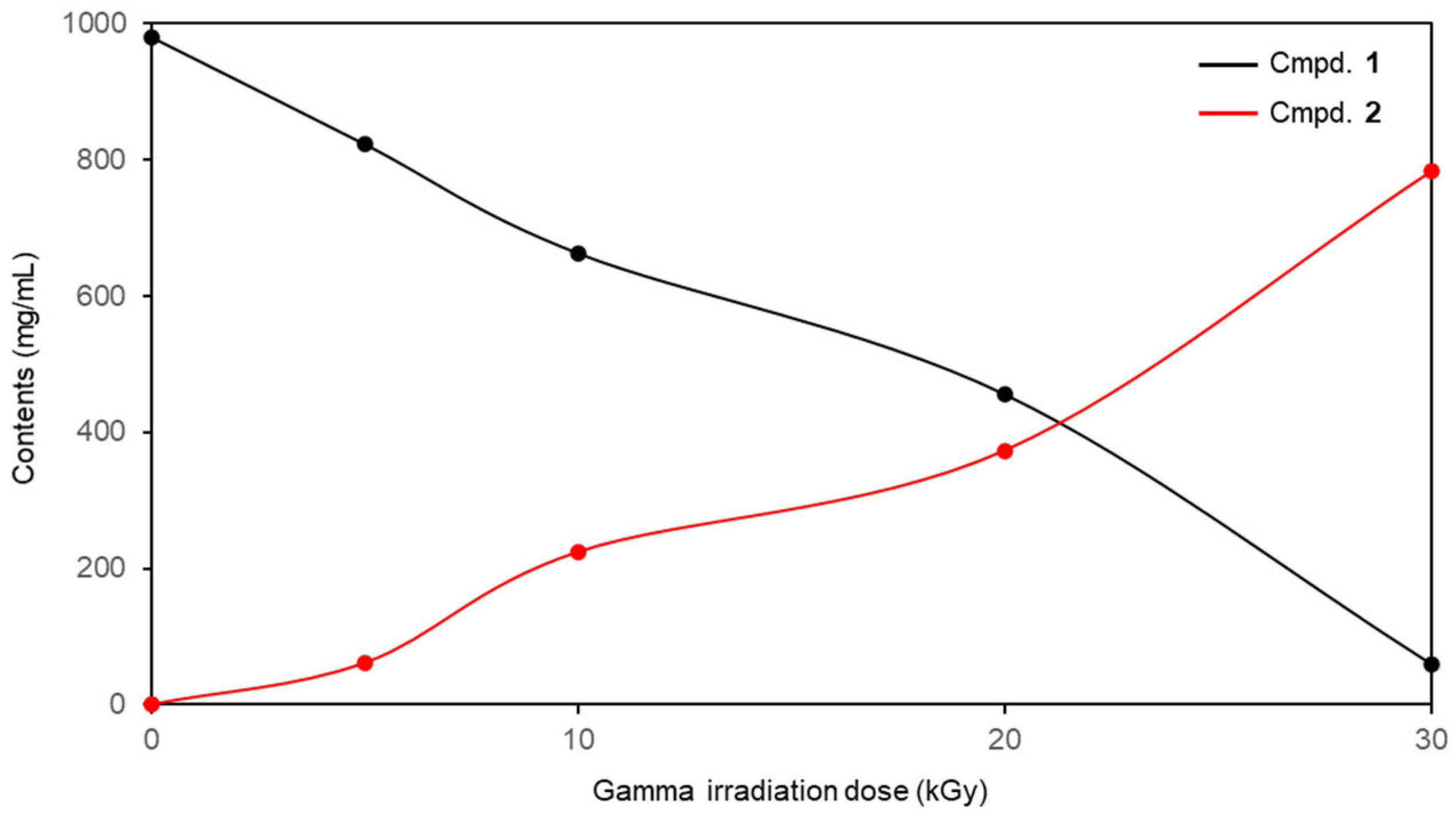
2.4. Comparative HPLC Analysis of Minocyclinosin A
3. Materials and Methods
3.1. Chemicals and Instruments
3.2. Gamma Irradiation Procedure
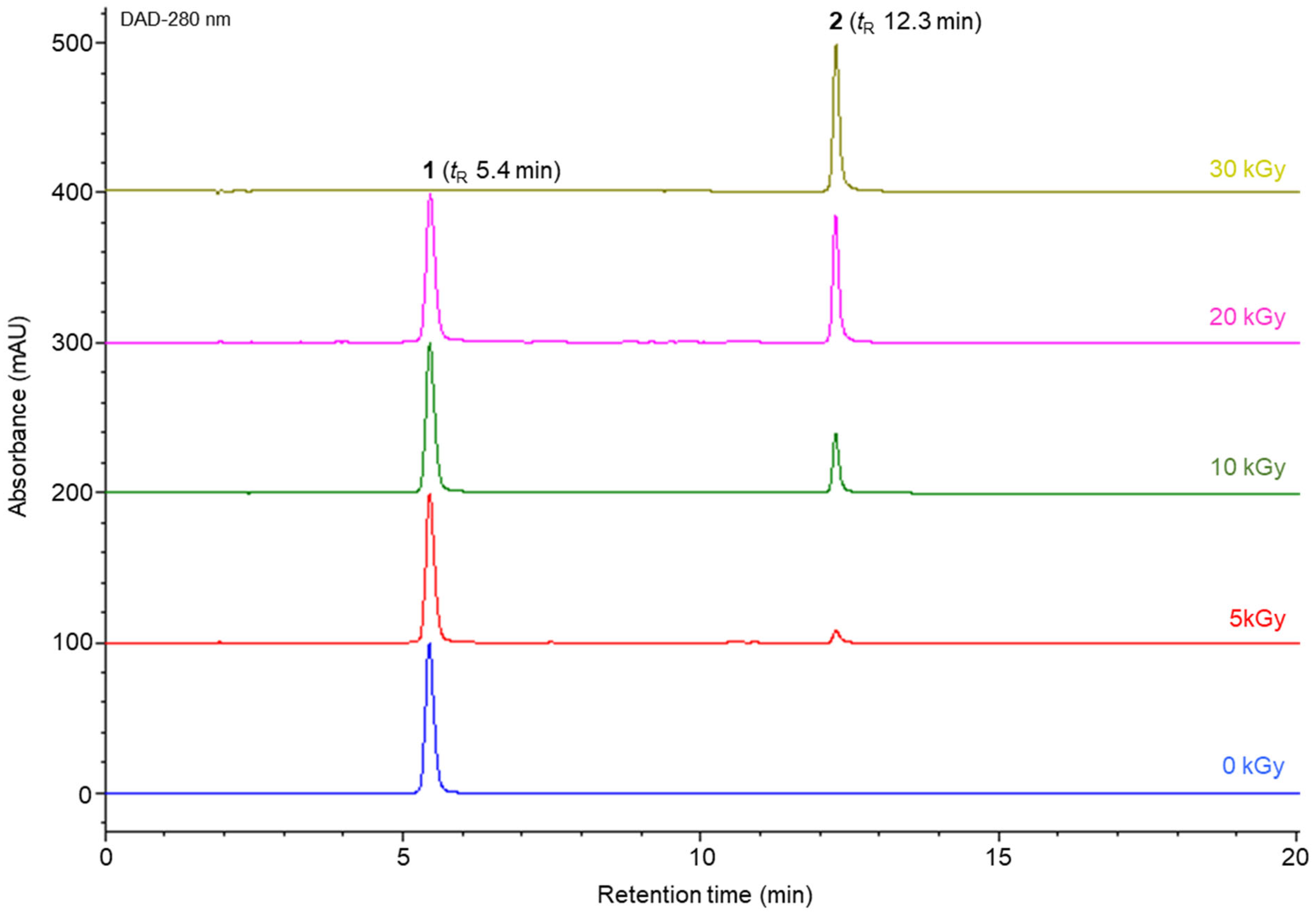
3.3. Determination of the Newly Generated Products
3.4. Isolation and Structural Elucidation of the Generated Products
3.5. Cell Culture
3.6. Cell Viability Assay
3.7. Nitric Oxide (NO) Assay
3.8. Antibacterial Effects
3.9. Quantitation of Minocyclinosin A
3.10. Statistical Analysis
4. Conclusions
Supplementary Materials
Author Contributions
Funding
Institutional Review Board Statement
Informed Consent Statement
Data Availability Statement
Conflicts of Interest
References
- Daghrir, R.; Drogui, P. Tetracycline antibiotics in the environment: A review. Environ. Chem. Lett. 2013, 11, 209–227. [Google Scholar] [CrossRef]
- Sun, C.; Hunt, D.K.; Clark, R.B.; Lofland, D.; O’Brien, W.J.; Plamondon, L.; Xiao, X.Y. Synthesis and antibacterial activity of pentacyclines: A novel class of tetracycline analogs. J. Med. Chem. 2011, 54, 3704–3731. [Google Scholar] [CrossRef] [PubMed]
- Zakeri, B.; Wright, G.D. Chemical biology of tetracycline antibiotics. Biochem. Cell Biol. 2008, 86, 124–136. [Google Scholar] [CrossRef] [PubMed]
- Castro, M.M.; Kandasamy, A.D.; Youssef, N.; Schulz, R. Matrix metalloproteinase inhibitor properties of tetracyclines: Therapeutic potential in cardiovascular diseases. Pharmacol. Res. 2011, 64, 551–560. [Google Scholar] [CrossRef]
- Garrido-Mesa, N.; Zarzuelo, A.; Gálvez, J. Minocycline: Far beyond an antibiotic. Br. J. Pharmacol. 2013, 169, 337–352. [Google Scholar] [CrossRef]
- Garwood, C.J.; Cooper, J.D.; Hanger, D.P.; Noble, W. Anti-inflammatory impact of minocycline in a mouse model of tauopathy. Front. Psychiatry 2010, 1, 136. [Google Scholar] [CrossRef]
- Leite, L.M.; Carvalho, A.G.G.; Ferreira, P.L.F.T.; Pessoa, I.X.; Gonçalves, D.O.; Lopes, A.; Góes, J.G.S.; Alves, V.C.C.; Leal, L.K.A.M.; Brito, G.A.; et al. Anti-inflammatory properties of doxycycline and minocycline in experimental models: An in vivo and in vitro comparative study. Inflammopharmacology 2011, 19, 99–110. [Google Scholar] [CrossRef]
- Haj-Mirzaian, A.; Ramezanzadeh, K.; Tafazolimoghadam, A.; Kazemi, K.; Nikbakhsh, R.; Nikbakhsh, R.; Amini-Khoei, H.; Afshari, K.; Haddadi, N.S.; Shakiba, S.; et al. Protective effect of minocycline on LPS-induced mitochondrial dysfunction and decreased seizure threshold through nitric oxide pathway. Eur. J. Pharmacol. 2019, 858, 172446. [Google Scholar] [CrossRef]
- Kim, S.S.; Kong, P.J.; Kim, B.S.; Sheen, D.H.; Nam, S.Y.; Chun, W. Inhibitory action of minocycline on lipopolysaccharide-induced release of nitric oxide and prostaglandin E2 in BV2 microglial cells. Arch. Pharm. Res. 2004, 27, 314–318. [Google Scholar] [CrossRef]
- Severn, M.M.; Horswill, A.R. Staphylococcus epidermidis and its dual lifestyle in skin health and infection. Nat. Rev. Microbiol. 2023, 21, 97–111. [Google Scholar] [CrossRef]
- Gehrke, A.E.; Giai, C.; Gómez, M.I. Staphylococcus aureus adaptation to the skin in health and persistent/recurrent infections. Antibiotics 2023, 12, 1520. [Google Scholar] [CrossRef] [PubMed]
- Kelesidis, T.; Tsiodras, S. Staphylococcus intermedius is not only a zoonotic pathogen but may also cause skin abscesses in humans after exposure to saliva. Int. J. Infect. Dis. 2010, 14, e838–e841. [Google Scholar] [CrossRef] [PubMed]
- Wróbel, J.; Tomczak, H.; Jenerowicz, D.; Czarnecka-Operacz, M. Skin and nasal vestibule colonisation by Staphylococcus aureus and its susceptibility to drugs in atopic dermatitis patients. Ann. Agric. Environ. Med. 2018, 25, 334–337. [Google Scholar] [CrossRef] [PubMed]
- Brown, M.M.; Horswill, A.R. Staphylococcus epidermidis—Skin friend or foe? PLoS Pathog. 2020, 16, e1009026. [Google Scholar] [CrossRef]
- Gil, E.; Hatcher, J.; Saram, S.D.; Guy, R.L.; Lamagni, T.; Brown, J.S. Streptococcus intermedius: An underestimated pathogen in brain infection? Future Microbiol. 2025, 20, 163–177. [Google Scholar] [CrossRef]
- Song, H.Y.; Kim, K.I.; Han, J.M.; Park, W.Y.; Seo, H.S.; Lim, S.; Byun, E.B. Ionizing radiation technology to improve the physicochemical and biological properties of natural compounds by molecular modification: A review. Radiat. Phys. Chem. 2022, 194, 110013. [Google Scholar] [CrossRef]
- Jeong, G.H.; Cho, J.H.; Jo, C.; Lee, S.; Sik Lee, S.; Bai, H.W.; Chung, B.Y.; Hoon Kim, T. Gamma irradiation-assisted degradation of rosmarinic acid and evaluation of structures and anti-adipogenic properties. Food Chem. 2018, 258, 181–188. [Google Scholar] [CrossRef]
- Jeong, G.H.; Lee, H.; Lee, K.B.; Chung, B.Y.; Bai, H.W. Molecular modification of chlorogenic acid via radiolysis with inhibitory effects on NO production. Biosci. Biotechnol. Biochem. 2024, 88, 1261–1269. [Google Scholar] [CrossRef]
- Song, H.Y.; Lee, Y.; Han, A.R.; Kim, K.I.; Yoo, B.G.; Kang, B.S.; Byun, E.B. Novel hydroxyethyl derivative of Biochanin A induced by gamma irradiation increases water solubility and antioxidant activities in UVB-exposed HaCaT cells. Radiat. Phys. Chem. 2025, 237, 112980. [Google Scholar]
- Supharoek, S.A.; Ponhong, K.; Weerasuk, B.; Siriangkhawut, W.; Grudpan, K. A new spectrophotometric method based on peroxidase enzymatic reaction to determine tetracycline in pharmaceutical and water samples. J. Iran. Chem. Soc. 2020, 17, 2385–2395. [Google Scholar] [CrossRef]
- Nilges, M.J.; Enochs, W.S.; Swartz, H.M. Identification and characterization of a tetracycline semiquinone formed during the oxidation of minocycline. J. Org. Chem. 1991, 56, 5623–5630. [Google Scholar] [CrossRef]
- Casy, A.F.; Yasin, A. Application of 13C nuclear magnetic resonance spectroscopy to the analysis and structural investigation of tetracycline antibiotics and their common impurities. J. Pharm. Biomed. Anal. 1984, 2, 19–36. [Google Scholar] [CrossRef] [PubMed]
- Li, H.; Cheng, Z.; Wu, D.; Hu, Q. Nitric oxide and mitochondrial function in cardiovascular diseases. Nitric Oxide 2025, 154, 42–50. [Google Scholar] [PubMed]
- Abu-Soud, H.M.; Camp, O.G.; Ramadoss, J.; Chatzicharalampous, C.; Kofinas, G.; Kofinas, J.D. Regulation of nitric oxide generation and consumption. Int. J. Biol. Sci. 2025, 21, 1097. [Google Scholar] [CrossRef]
- Pal, P.P.; Begum, S.A.; Basha, A.S.; Araya, H.; Fujimoto, Y. A new lignan (polonilignan) and inhibitors of nitric oxide production from Penicillium polonicum, an endophytic fungi of Piper nigrum. Chem. Biodivers. 2023, 20, e202200840. [Google Scholar] [CrossRef]
- Jeong, G.H.; Lee, H.; Chung, B.Y.; Bai, H.W. A new class of hybrid anti-inflammatory agents of silibinin A modified using gamma irradiation. Chem. Pharm. Bull. 2025, 73, 401–411. [Google Scholar] [CrossRef]
- Kumar, P.; Nagarajan, A.; Uchil, P.D. Analysis of cell viability by the MTT assay. Cold Spring Harb. Protoc. 2018, 2018, pdb.prot095505. [Google Scholar] [CrossRef]
- Shaaban, F.; Salem Sokhn, E.; Khalil, C.; Saleh, F.A. Antimicrobial activity of adipose-derived mesenchymal stromal cell secretome against methicillin-resistant Staphylococcus aureus. Stem Cell Res. Ther. 2025, 16, 21. [Google Scholar] [CrossRef]
- Hernández-Méndez, J.M.E.; Peña-Hernández, I.; Tapia-Nazario, M.; Leyva-Padrón, G.; Cruz-Salomón, A.; Domínguez-Espinosa, M.E.; Esquinca-Avilés, H.A.; Hernández-Cruz, M.C.; Sánchez-Albores, R.M.; Cruz-Salomón, K.C.; et al. Antibacterial activity of traditional medicinal plants used for the treatment of acute diarrheal diseases in Chiapas, Mexico. Microbiol. Res. 2025, 16, 10. [Google Scholar] [CrossRef]



| Positions | δH (J in Hz) 2 | δC, Type 3 |
|---|---|---|
| 1 | - | 206.6, C |
| 2 | 2.70 (d, 1.2) | 45.4, CH |
| 3 | 3.10 (q, 1.2) | 53.5, CH |
| 3a | 3.71 (dd, 2.4,1.2) | 53.4, CH |
| 4 | 2.50 (dt, 14.4, 2.4), 1.76 (dt, 14.4, 2.4) | 29.6, CH2 |
| 4a | - | 67.8, C |
| 5 | 3.65 (d, 11.4), 2.72 (d, 11.4) | 29.4, CH2 |
| 5a | - | 144.9, C |
| 6 | - | 138.7, C |
| 7 | 7.50 (d, 9.0) | 131.8, CH |
| 8 | 6.83 (d, 9.0) | 117.2, CH |
| 9 | - | 160.7, C |
| 9a | - | 119.0, C |
| 10 | - | 200.1, C |
| 10a | - | 102.0, C |
| 11 | - | 173.8, C |
| 11a | - | 89.1, C |
| 6-N(CH3)2 | 2.63 (s) | 42.8, CH3 |
Disclaimer/Publisher’s Note: The statements, opinions and data contained in all publications are solely those of the individual author(s) and contributor(s) and not of MDPI and/or the editor(s). MDPI and/or the editor(s) disclaim responsibility for any injury to people or property resulting from any ideas, methods, instructions or products referred to in the content. |
© 2026 by the authors. Licensee MDPI, Basel, Switzerland. This article is an open access article distributed under the terms and conditions of the Creative Commons Attribution (CC BY) license.
Share and Cite
Jeong, G.H.; Lee, H.; Kim, T.H.; Chung, B.Y.; Lee, S.S.; Bai, H.-W. Radiation-Induced Synthesis of a Minocycline-Derived Polycyclic Scaffold with Anti-Inflammatory and Antibacterial Effects. Molecules 2026, 31, 435. https://doi.org/10.3390/molecules31030435
Jeong GH, Lee H, Kim TH, Chung BY, Lee SS, Bai H-W. Radiation-Induced Synthesis of a Minocycline-Derived Polycyclic Scaffold with Anti-Inflammatory and Antibacterial Effects. Molecules. 2026; 31(3):435. https://doi.org/10.3390/molecules31030435
Chicago/Turabian StyleJeong, Gyeong Han, Hanui Lee, Tae Hoon Kim, Byung Yeoup Chung, Seung Sik Lee, and Hyoung-Woo Bai. 2026. "Radiation-Induced Synthesis of a Minocycline-Derived Polycyclic Scaffold with Anti-Inflammatory and Antibacterial Effects" Molecules 31, no. 3: 435. https://doi.org/10.3390/molecules31030435
APA StyleJeong, G. H., Lee, H., Kim, T. H., Chung, B. Y., Lee, S. S., & Bai, H.-W. (2026). Radiation-Induced Synthesis of a Minocycline-Derived Polycyclic Scaffold with Anti-Inflammatory and Antibacterial Effects. Molecules, 31(3), 435. https://doi.org/10.3390/molecules31030435