Article

Non-Targeted Analysis of Carbofuran and Related Compounds in Commercial Formulations and Animal Tissue


1
Department of Pure and Applied Sciences, University of Urbino Carlo Bo, 61029 Urbino, Italy
2
Institute of Environmental Studies, Faculty of Sciences, Charles University, 12801 Prague, Czech Republic
3
Department of Chemistry, Vancouver Island University, Nanaimo, BC V9R 5S5, Canada
*
Author to whom correspondence should be addressed.
Molecules 2026, 31(2), 259; https://doi.org/10.3390/molecules31020259
Submission received: 20 November 2025 / Revised: 23 December 2025 / Accepted: 5 January 2026 / Published: 12 January 2026

Abstract

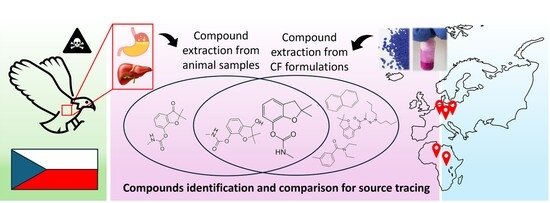
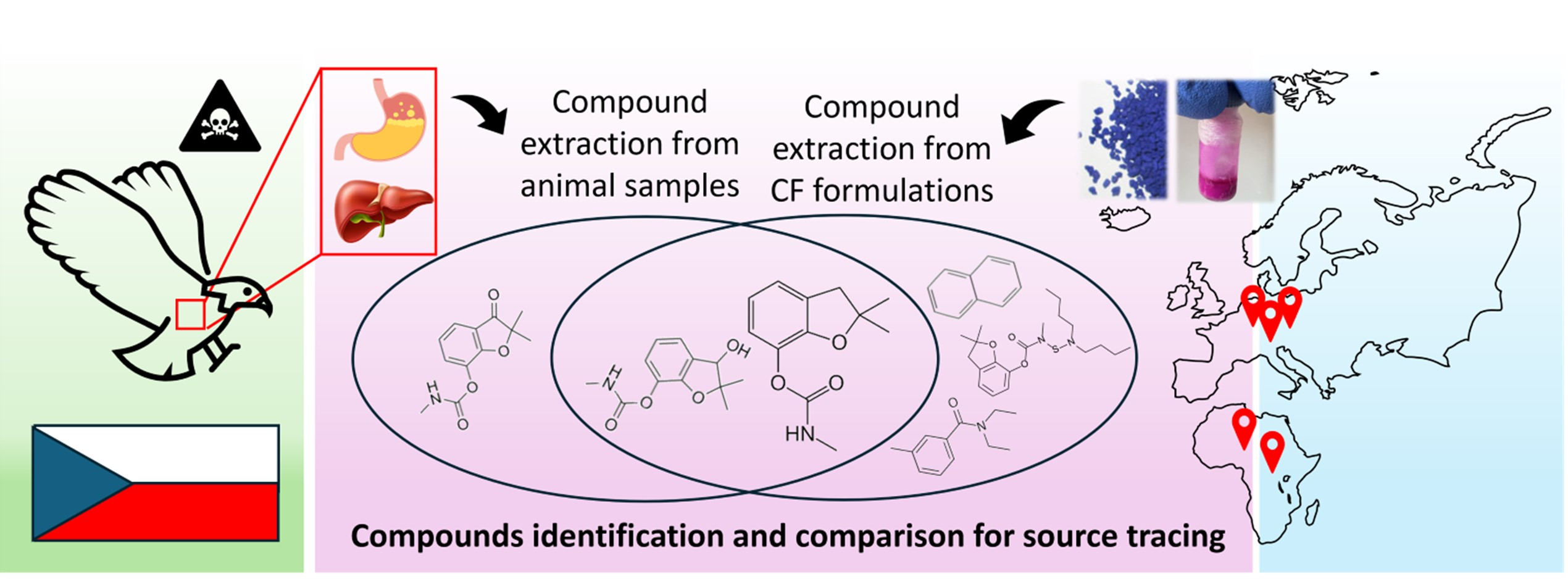
Recently, some cases of intentional animal poisoning using Carbofuran (CF) occurred in the Czech Republic, although CF is no longer available in the EU market. The present study describes a novel non-targeted analysis (NTA) workflow developed to possibly characterize 13 CF formulations from various sources to be certainly identified in real samples. Furthermore, a detection and quantification method for CF was developed for analyzing three animal samples, obtained from dead animals. The analyses were conducted using the liquid electron ionization (LEI) interface coupled with a quadrupole time-of-flight (QTOF) mass spectrometer, allowing the simultaneous characterization of the formulation’s volatile and low-volatile fractions. Almost all compounds detected in the different formulations were identified by comparing the experimental spectra with the NIST library at high probability values (95–99.38%). Determination of molecular ions, followed by MS/MS analysis, was performed to confirm compound identities at a high level of confidence. The quantification method for CF was successfully validated, showing negligible matrix effects (107%). CF was detected in two out of the three real samples. Only 3-keto-carbofuran was detected in one of the real samples; without any other marker, it was not possible to identify the specific formulation used in the three poisoning cases.

Graphical Abstract

1. Introduction

Pesticides play a crucial role in agricultural management, improving crop yield, quality, and safety by acting against pests [1]. Despite these benefits, pesticides often exhibit toxicity toward non-target organisms [2]. Among pesticides, the carbamate class is largely used in agriculture, gardening, forestry, and therapeutic pharmaceuticals. Carbamates are replacing other pesticide classes, such as organophosphate pesticides, because of their shorter half-life and lower persistence and bioaccumulation in the environment [3]. Despite their positive effects, carbamate pesticides show high toxicity for non-target organisms. They bind to the active site of the acetylcholinesterase, inhibiting the enzyme, causing an accumulation of acetylcholine at the nerve synapse. The inhibition of acetylcholine hydrolysis leads to increased cholinergic stimulation culminating in poisoning symptoms [4]. In addition, they are suspected carcinogens and mutagens [5].
Carbofuran (CF) is a carbamate systemic insecticide, nematicide, and acaricide largely used for its broad spectrum of activity. Because of its high mobility in different soils and high solubility in water, CF has been detected in high concentrations in rivers, food, and soils worldwide [3]. The European Union banned carbofuran in 2008 due to its toxicity [6], yet it remains available in various countries [7]. Different accidental and intentional animal poisonings have been documented over the years in different countries, such as Spain [8], Romania [7], South Korea [9], and so on. In addition, CF has been used to commit human suicide [10].
Cases of intoxication and fatalities caused by carbamate pesticides were mainly investigated by gas chromatography (GC) and liquid chromatography (LC) coupled with mass spectrometry (MS) [11,12,13,14,15]. In forensics, LC-MS is commonly used for targeted analysis. Soft ionization techniques coupled with LC, particularly electrospray ionization (ESI), offer high sensitivity, allowing the ionization of thermolabile, high-molecular-weight, and non-volatile compounds. In addition, derivatization is not required, thus reducing sample preparation time. However, ESI produces mainly molecular ions, providing less structural information compared to electron ionization (EI), hence making it more difficult to determine unknown structures [16]. To enhance specificity, analyses are usually conducted in MS/MS mode [16]. Despite their widespread use, no universal spectral library has been created for unknown compound identifications in LC-MS due to the variability of ionization conditions, which are influenced by different instrument types, polarity modes, and mobile phases composition [17,18]. High-resolution mass spectrometry (HRMS), combined with different chemical databases, is now the best technique for unknown compounds identification. Instruments such as Orbitrap and Quadrupole Time-of-Flight (QTOF) enable HRMS in both LC and GC applications [4,10,19,20,21]. Both instruments achieve the required mass accuracy (below 5 ppm) and absolute isotope ratio deviation (within 5%) for accurate structure elucidation. However, factors like ion count levels, complex sample matrices, and compound coelution in LC can sometimes compromise accuracy [22,23,24]. Considering the high identification power, HRMS is the most used technique in non-targeted analysis (NTA) [25]. A generic NTA workflow includes different steps that have to be optimized; these are sampling, analysis, data pre-processing, prioritization, and identification [25]. Sampling and analyses should be planned based on the chemical/physical properties of substances; in this case, the sample preparation and chromatographic separation techniques used can strongly affect the attendance of the results [25]. The data pre-processing step is fundamental in cases of high data complexity, including peak detection, annotation, and background subtraction. It includes several procedures, such as establishing an S/N threshold of 10 [26], and deconvolution [27]; different commercialized softwares are currently available to make these procedures easier [24,28]. In the case of a complex study, such as when samples have to be grouped along a time or space gradient, the alignment of components is performed by statistical methods, allowing the prioritization of the most relevant components. Depending on the type of study, algorithms can help in this process [29]. In the end, prioritized compounds are identified using all the tools dispensed by the instruments and software. In order to evaluate the attendance of the identification, different levels of confidence were proposed by Schymanski et al. [30]. Levels range from 1 to 5, where level 1 is reached when the proposed structure is also confirmed with RT matching injecting the standard, while level 5 corresponds to the assignment of only extract mass. Since level 1 is hardly reached due to the standard not always being available, level 2a can be easily reached using EI due to the possibility of comparing spectra with libraries. Different studies were published using these levels of confidence as guidance. A work presented by Wurzler and co-workers, aimed at the investigation of poisoning by pesticides in criminal cases, reported the identification of three unknown compounds using ESI-HRMS and DART-HRMS with a level of confidence of 2, obtaining unambiguous matches among MS and MS/MS HR spectra and MS/MS HR library, low mass error, and the detection of diagnostic fragment ions [20]. Another study based on LC-ESI-HRMS for identifying unknown contaminants in recycled textiles also used this confidence level system. In this case, several compounds were identified with confidence levels between 3 and 2b; among them, six substances were matched with persistent, mobile, and toxic (PTM) chemicals established by the European Union (EU) [31]. Liu et al. identified 59 substances in 50 teether toys using GC–GC-Orbitrap MS in EI full-scan mode, with levels of confidence between 2 and 1 [32]. In this case, the analyses were conducted in chemical ionization (CI) as well, proving to be useful for structure determination in case the compounds were not present in the EI library. Another study based on GC-HRMS, presented by Zhang and co-workers, identified 5344 organic compounds with confidence levels between 1 and 2 [33]. Despite the fact that recently the number of LC-MS libraries are rapidly increasing [34], as already mentioned, the use of EI is beneficial due to the possibility of comparing the highly reproducible experimental spectra with library spectra, allowing for the identification of structures with higher levels of confidence.
In 2017, a new interface, called Liquid Electron Ionization (LEI), was developed to combine the advantages of EI with those of LC [35]. LEI interface extends the EI searchable library spectra to compounds not amenable to GC [36,37,38]. Compared to typical LC ionization techniques like ESI [39], the LEI interface demonstrates reduced matrix effects [16,29,40]. Recent studies have shown that LEI is compatible with QTOF, making it a versatile tool [36]. While EI spectra commonly lack measurable molecular ions [25], the QTOF’s low-energy EI capabilities allow the acquisition of high-informative spectra under standard EI conditions and softer fragmentation at lower energies (15 and 9 eV), which yields molecular ions for most compounds. Switching between high and low energies is straightforward, enabling qualitative analyses of unknowns in complex matrices using EI-HRMS.
Recently, some cases of animal poisoning occurred in the Czech Republic, where poisoned food was used to kill multiple animals. The National Veterinary Institute of Prague performed autopsies, finding morphological signs consistent with carbamate pesticide poisoning. The Faculty of Sciences at Charles University in Prague suspected the use of certain CF formulations. Given that CF is banned in the Czech Republic, CF formulations from various countries were provided for analysis using LC-LEI-QTOF-MS/MS. This approach aimed to characterize volatile and low-volatile fractions to identify the specific CF formulation used in the poisonings.
A novel targeted and non-targeted analysis (NTA) method was developed to characterize formulations and detect and quantify CF in three poisoned animal samples. By combining EI with HRMS in LC-LEI-QTOF-MS/MS, several compounds were identified in the formulations, establishing a reliable identification method; this represents the novelty of the work, which allowed the compound identification with high confidence levels due to the triple confirmation of their identities using the same instrument and ion source. The identities were confirmed by NIST comparison, determination of their molecular ions and accuracies, and correlating the structures by comparing the HR-MS/MS spectra with PubChem and ChemSpider. The characterized formulations were compared to real biological samples to trace the source of the CF used in the poisonings, considering the detection even of CF metabolites and unexpected compounds present in the real samples. Due to EI-reduced susceptibility to matrix effects (ME), deconvolution allowed the identification of coeluted compounds. In the analysis of the three biological samples, CF poisoning was confirmed in two cases. The method demonstrated satisfactory repeatability, linearity, and negligible ME without using an internal standard.

2. Results and Discussion

The LC-LEI-QTOF-MS/MS system represents a powerful tool for unknown structure elucidation and identification, as already demonstrated in a previous work [38]. Its ability to generate EI spectra comparable to the NIST library enables rapid and straightforward compound identification. However, when unknown concentrations are too low or coeluting compounds are present, the NIST match can become less reliable. The fast scan speed of the QTOF, combined with the possibility of acquiring HR-MS and HR-MS/MS spectra, enhances the deconvolution of coeluted compound spectra. This process improves background subtraction, permitting a more accurate identification using the NIST library [41].

2.1. Characterization of Carbofuran Formulations

In 7 of the 13 formulations (Table 1), different compounds, in addition to CF, were putatively identified using Agilent MassHunter unknown analysis.
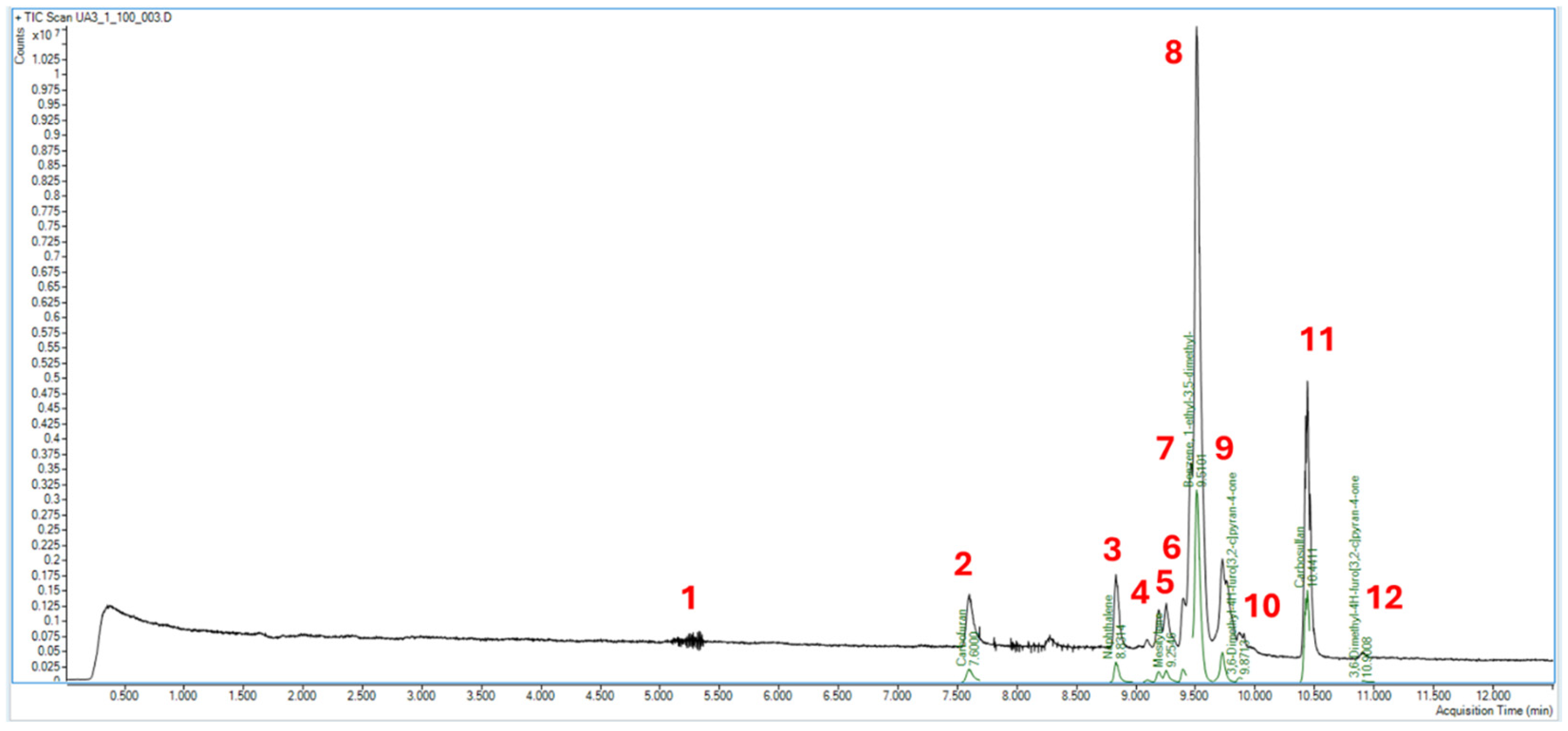
UA_3 Formulation. In the UA_3 formulation, 12 peaks were detected after deconvolution, as shown in Figure 1 and summarized in Table 2. Eight were readily annotated by matching their spectra with the NIST library (peaks 1, 2, 3, 4, 6, 7, 8, 11). Two compounds were identified with a probability of 57.21% (peak 1) and 76.74% (peak 11). Two compounds gave incorrect matches (peaks 5 and 9), while no matches were proposed for the remaining two (peaks 10 and 12).
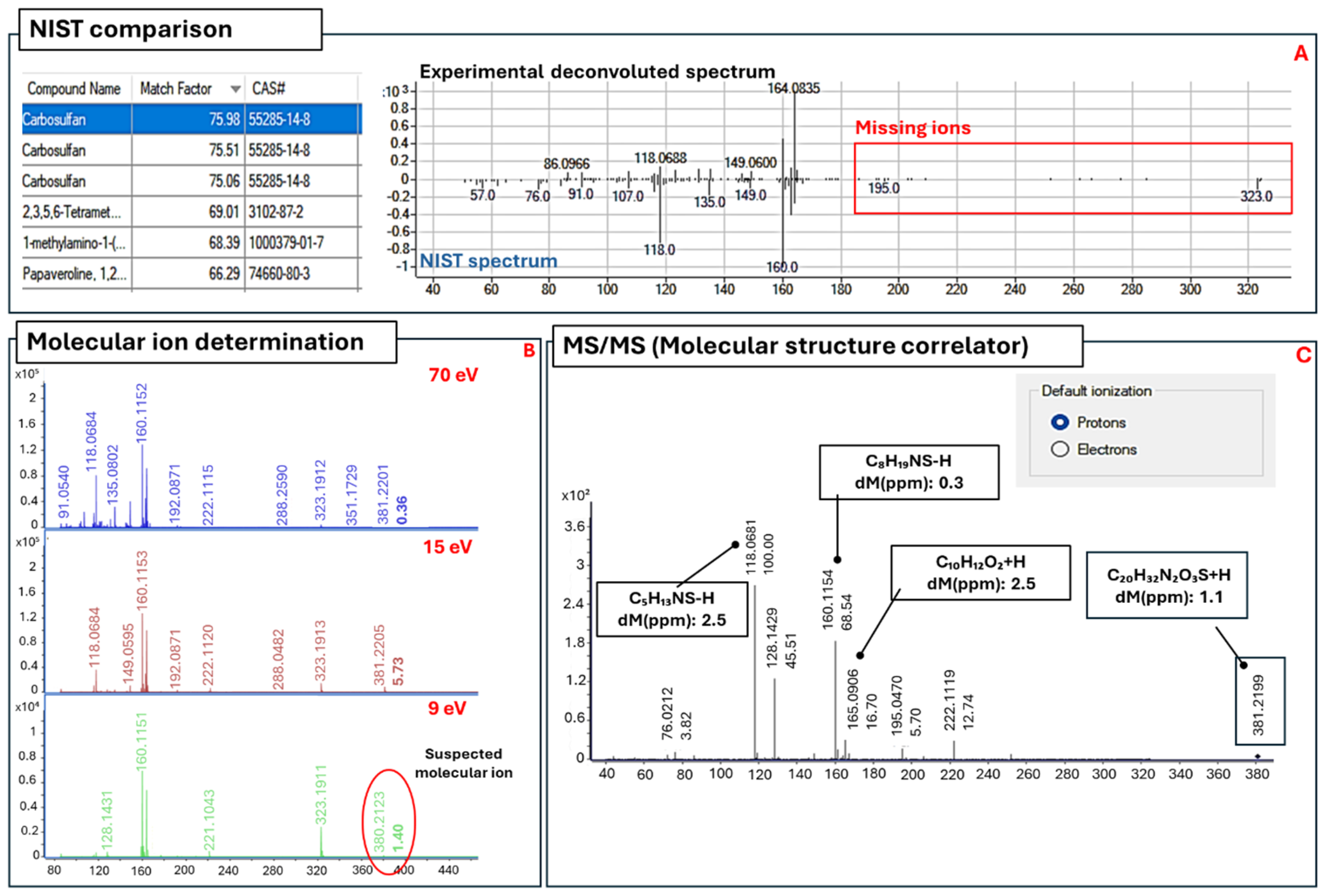
For the compounds identified by NIST library, CF (Figure S1A–C), Naphthalene (Figure S2A–C), Indane (Figure S3A–C), Mesitylene (Figure S4A–C), Indane-1-Methyl (Figure S5A–C), and Cymene (Figure S6A–C), were identified with probabilities ranging between 90.11 and 99.38% and confidence levels between 1 and 2a (Table 2). Dibutylamine and Carbosulfan were identified with a probability below 80%, hence considered not recognized by NIST. To confirm the identity of Carbosulfan, and to assign structures to the unknown compounds 5, 10, and 12, low-energy analyses were conducted at 15 and 9 eV to establish suspected molecular ions. For Carbosulfan, as shown in Figure 2B, the ion at m/z 381.2266 showed an increment in relative abundance from 0.19% at 70 eV to 5.73% at 15 eV, indicating it as suspected molecular ion. The same ion was selected as the precursor ion for MS/MS analysis, and its high-resolution fragmentation pattern was compared with the ChemSpider database. Using protonation as the default ionization, the compound was confirmed as Carbosulfan, confirming the previous identification by NIST.
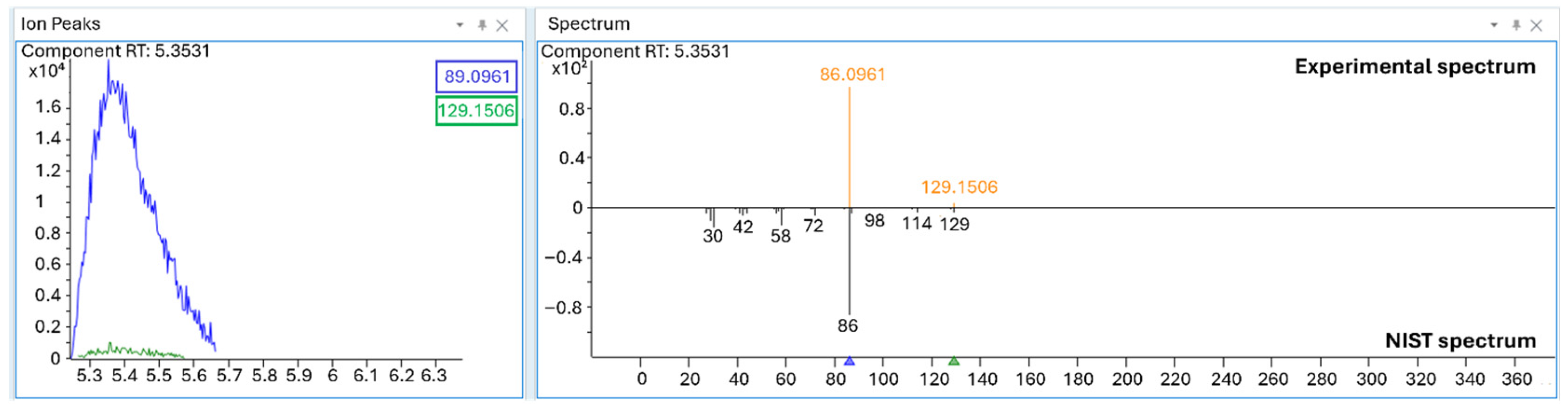
The ion at m/z 381.2166 corresponds to the (M+H)+ ion of Carbosulfan, as the compound readily gains a proton from the mobile phase, forming the protonated ion under chemical ionization (CI) conditions. In fact, for certain compounds, CI can occur even in an EI source, showing the appearance of the (M+H)+ ion [35,38,40]. Comparing the experimental mass with the accurate mass of C20H32N2S+H+, the accuracy results in −1.15 ppm, confirming this assumption (Figure 2C). The formation of the (M+H)+ is not a reproducible process, hence the relative/absolute abundance of (M+H)+ (m/z 381.2166) and M+ (380.2133) results are unstable, producing a decrease in the relative abundance of (M+H)+ at 9 eV, differently from what we expected, as shown in Figure 2B. This can be explained because at 9 eV the ionization efficiency is lower, reducing the ionization of the mobile phase and resulting in a reduction in (M+H)+ formation compared to M+. The presence of Carbosulfan is particularly significant because it was banned by the EU as well [33]. The injection of a less diluted UA_3 formulation (1:10 v/v instead of 1:100 v/v) also enabled the detection of Dibutylamine (m/z 129.1507), peak 1, at RT 5.35, a well-known Carbosulfan degradation product and highly toxic compound [42,43]. The low probability of the match proposed by the NIST library can be ascribed to the compound’s low concentration and because most of the ions fall outside the acquisition range; however, the exact mass of the molecular ion confirms its identity (Figure 3).
Because of the unknown provenience of those formulations, it can be assumed that the active ingredient of the UA_3 formulation was carbosulfan instead of CF. Hence, the presence of CF can be considered a carbosulfan impurity, given that it is considered a photolytic and hydrolysis product of carbosulfan [42,43]. The same procedure adopted for Carbosulfan was applied to peaks 5 and 9, which were not identified by NIST at all. Using low-energy analysis, the suspected molecular ions were determined. The Agilent MassHunter Molecular Structure Correlator software (Version 8.2) (MSC) proposed 2-Methylnaphthalene for peak 5 (Figure S7A,B), and 2,3,6-Trimethylnaphtalene for peak 9 (Figure S8A,B), with a confidence level of 2b.
The same procedure was applied for the identification of peak 10. Also in this case, the comparison with NIST gave an unreliable match. Low-energy analysis showed the ion at m/z 504.1400 as a suspected molecular ion (Figure S9A,B). In this case, the proposed formula was C24H28N2O6S2 with an accuracy of 3.3 ppm. Unfortunately, MS/MS analysis could not be performed due to the ion’s low abundance; in this case, the confidence level assigned was 4. The structure of the base peak m/z 192.0867, present in the C24H28N2O6S2 spectrum, was also established as C8H18NS2 with good accuracy (−4.26 ppm), confirming once again the proposed formula. Due to its low concentration, it was impossible to identify the molecular ion for peak 12.
BV_PF_B Formulation. The second formulation containing another compound besides carbofuran was BV_PF_B (Table 3). In this case, the additional compound was identified as N,N-diethyl-m-toluamide (DEET), a common mosquito repellent, with a NIST library match probability of 91.84% (Figure S10A). The compound was also confirmed according to the RT by injecting a pure DEET standard, allowing us to reach a confidence level of 1 (Figure S10B).
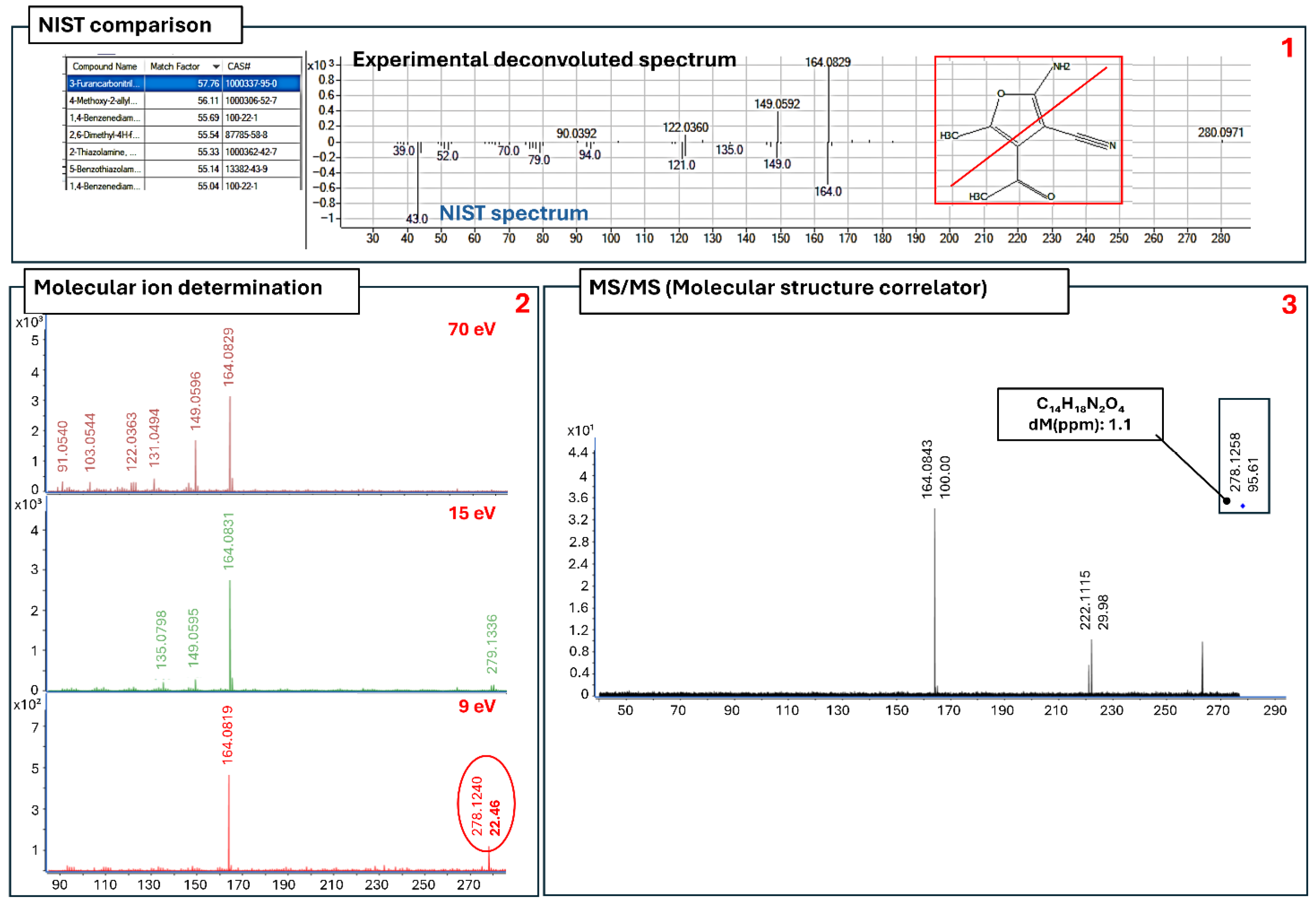
CG_23_B Formulation. The third formulation containing a compound other than carbofuran was CG_23_B (Table 4). In this case, the comparison with the NIST library gave a low recognition (probability 57%). In addition, the suspected molecular ion (m/z 278.1258) (Figure 4), established by performing the low-energy analysis, differed from the compound suggested by the NIST library. Therefore, MS/MS analysis using the m/z 278.1258 ion as a precursor ion was performed. The MSC software identified the formula C14H18N2O4, with an accuracy of −1.1 ppm (confidence level 4).
F0 Formulation. In the F0 formulation, a well-known carbofuran metabolite, 3-keto-carbofuran, was detected (Table 5). The detected signal showed very low intensity, which explains the low match value proposed by NIST (Figure S11A–C). Due to the low concentration, it was impossible to determine the molecular ion or perform MS/MS analysis. The metabolite results from the neutral loss of carbamic acid and water [44,45]. In the nine remaining formulations, only carbofuran was found.

2.2. Method Validation Parameters

The method for CF was validated by assessing limits of detection (LOD) and quantification (LOQ), intraday and interday repeatability, and linearity range in both solvent and CF-free gastric content of an eagle, used as a matrix. ME was evaluated by comparing the slope of the two calibration curves.
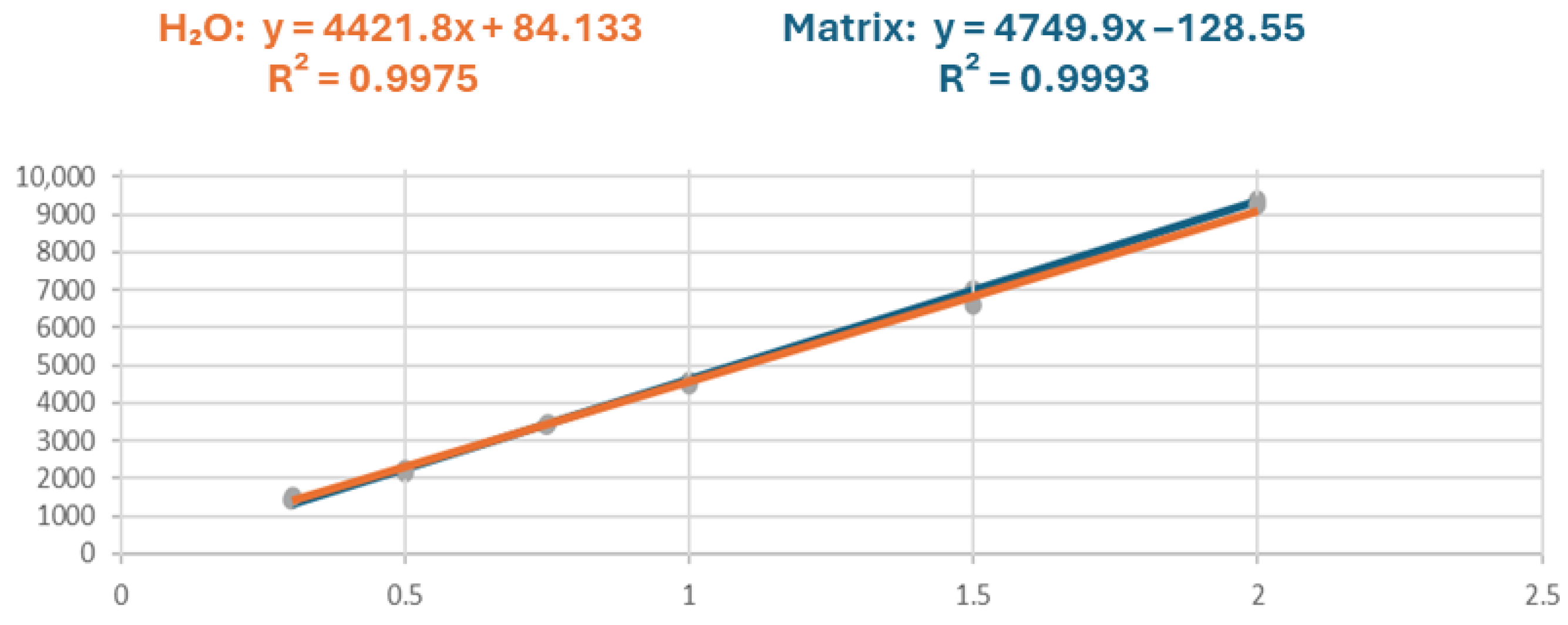
The LOD and LOQ for CF were 0.09 and 0.30 µg/mL, respectively. Regarding the linearity, R2 values of calibration curves in solvent and matrix were 0.9975 and 0.9993, respectively (Figure 5). The RSD% intraday and interday calculated at 0.75 µg/mL were 3% and 10%, and at 1.50 µg/mL were 1% and 9%, respectively.
While previous studies have shown that the LEI interface exhibits negligible ME, even with compound coelutions [37,46,47], this work involved analyzing complex real-world samples, necessitating ME evaluation. ME value was 107%, hence it can be considered negligible, demonstrating the reliability of the method [16].

2.3. Real Samples Analyses

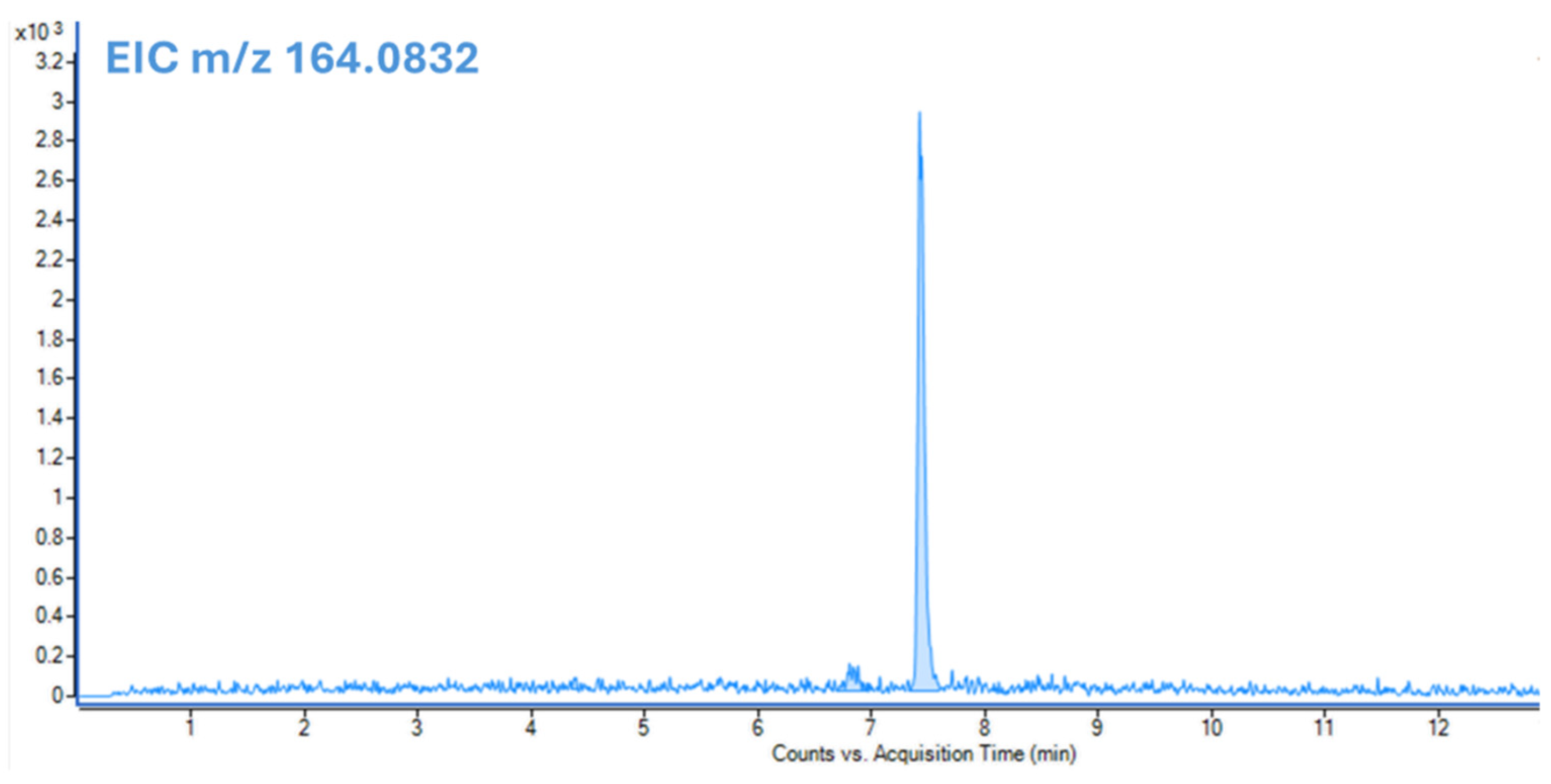
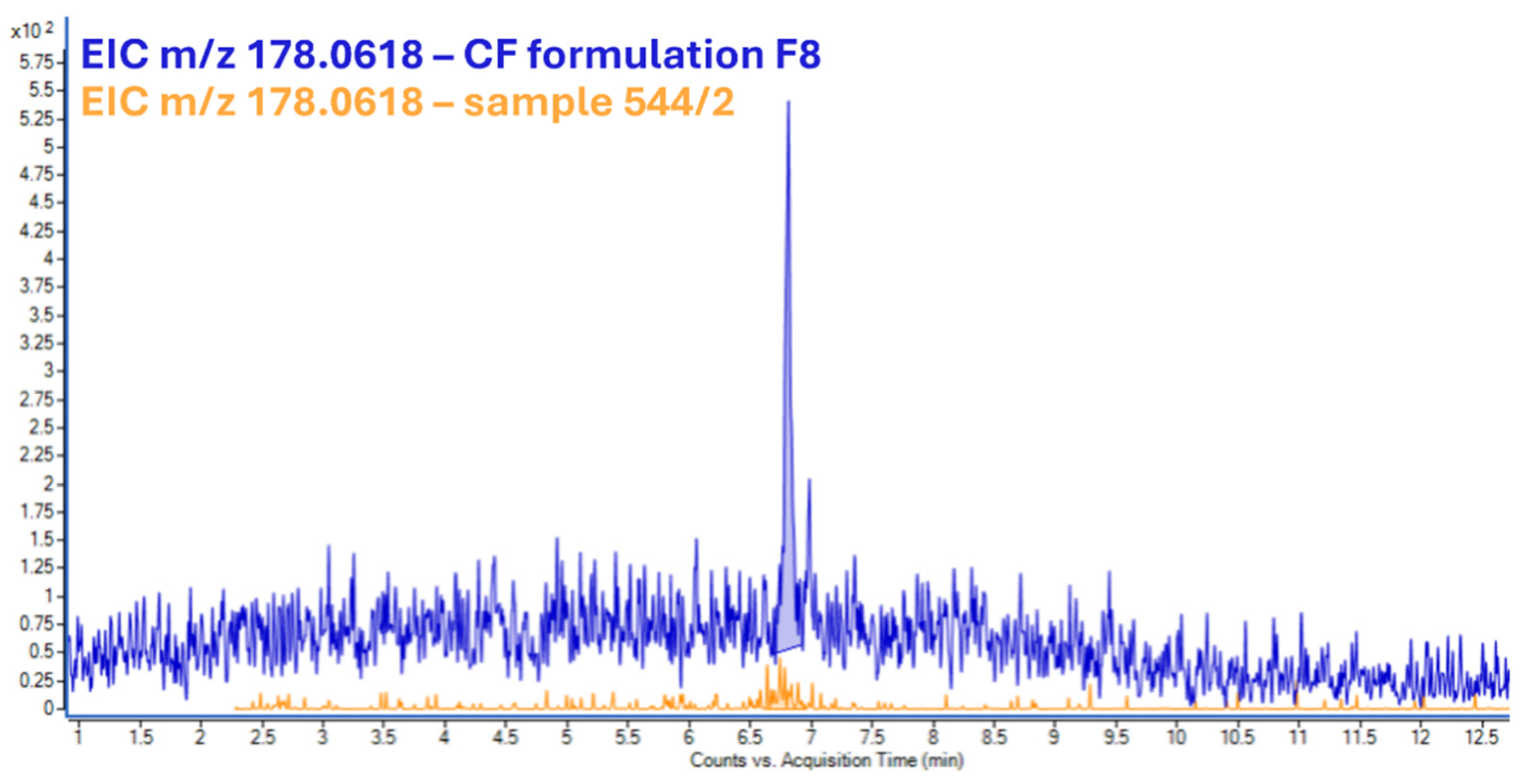
LC-LEI-QTOF-MS/MS analysis confirmed the presence of CF in two out of the three real samples. In Figure 6, EIC chromatogram of m/z 164.0832 of the CF is reported. The analyses of the three samples were performed by diluting them with water 1:5 (v/v). The concentrations of CF found in the extract were 5.5 mg/kg in sample 544/2 (fox liver), 4.2 mg/kg in sample 18894 (red kite gastric content), and below the limit of detection in sample 237 (eagle gastric content). To determine if one of the 13 characterized formulations was used in the poisoning cases, the peak spectra of real samples were compared with our HR laboratory-created library by using Agilent MassHunter Unknown software (Version 10.0). The results showed that 3-keto-carbofuran, a compound found in formulation F0, was also detected in the real sample (554/2), in addition to CF. However, the compound is a degradation product of CF; hence, it cannot be used as a discriminatory marker to trace the specific formulation used (Figure 7).

3. Materials and Methods

3.1. Chemicals

LC-MS grade acetonitrile (ACN) and methanol were purchased from VWR International, part of Avantor (Milan, Italy). Ultrapure water was obtained from a Direct-Q3 UV water purification system from Merck Millipore Co. (Milan, Italy). Formic acid (FA) (purity 98–100%) was purchased from Honeywell Riedel-de Haën (Seelze, Germany). VWR International (Milan, Italy) provided 1.5 mL vials. PEEK-coated fused silica capillaries were purchased from IDEX (Oak Harbor, WA, USA); fused silica capillaries were from Molex Polymicro (Lisle, IL, USA); flexible stainless-steel tubing was from Agilent Technologies, Inc. (Santa Clara, CA, USA).
CF standard (purity ≥ 98.0%) was obtained from Honeywell Riedel-de Haën. Naphthalene (purity ≥ 99.7%) analytical standards were purchased from Merck (Milan, Italy).
CF formulations and the real samples, one liver from a fox, and the gastric content of an eagle and a red kite, were provided by the Faculty of Science of Charles University, Prague.

3.2. Standard Solutions, Formulations, and Real Samples Preparation

CF and naphthalene stock solution were prepared at a concentration of 500 mg/L in MeOH/H2O 80:20 (v/v) and methanol, respectively. The working solutions were prepared daily by diluting the stock solution with ultrapure H2O. A total of 13 formulations of CF were provided in granular and liquid forms. The 10 granular formulations were extracted by adding 600 μL of two different solvents, ultrapure H2O and MeOH, to about 0.06 g of formulation granules. MeOH did not extract additional compounds compared to ultrapure H2O. Therefore, ultrapure H2O was preferred, as it also allows for higher injection volumes. Granules were sonicated for 10 min and filtered using 4 mm syringe filters PTFE 0.2 μm (Thermo Fisher Scientific, Waltham, MA, USA). For the three liquid formulations, the samples were diluted 1:100 v/v using both MeOH and ultrapure H2O and filtered using a 4 mm syringe with PTFE 0.2 μm filters. In this case, MeOH was preferred because of the presence of hydrophobic compounds, especially in UA_3 formulation. Regarding the real samples, the biological specimens were freeze-dried, homogenized, and extracted using pressurized liquid extraction (PLE) before the analysis. An already validated PLE procedure, used for the extraction of pesticides from animal foods, was performed using the Dionex ASE system (Thermo Fisher Scientific, Waltham, MA, USA) [48]. The focus of this work was the detection of characteristic compounds to use as markers of each formulation in real samples. Therefore, the extraction procedure was designed to be as non-selective as possible. MeOH was used as the extraction solvent. The samples were mixed with 10 g of sea sand, used as in-cell adsorbent to minimize interference, and put in stainless steel cells. Extractions were performed using MeOH at 80 °C and 1500 psi for three cycles, with 5 min static periods. The program also included 5 min of preheat, 5 min of heating, and a 60 s purge. Methanolic extracts were collected under a nitrogen stream. To remove lipids, a two-step sample clean-up was applied to each extract. The purification was performed using Captiva EMR lipid columns (Agilent Technologies, Santa Clara, CA, USA). Before lipid cartridge loading, 2 mL of each sample were transferred to Eppendorf tubes and centrifuged for 10 min at 14,000 rpm. Supernatants were then transferred to the cartridges; 10 min after loading, 800 µL of MeOH:H2O 80:20 solution were added to elute the extracts [49]. For qualitative and quantitative analysis, real samples were injected both undiluted and diluted with H2O [49]. The water content in the real samples and standard solution was carefully evaluated as it significantly influenced peak width. Higher water content yielded better chromatographic peak shapes, even with larger injection volumes (up to 20 μL), enabling higher S/N compared to undiluted samples. The best results were obtained by injecting samples with more than 74% of water content.

3.3. Method Validation

The calibration curves were constructed by analyzing standard solutions prepared in ultrapure H2O and in the sample matrix at six concentrations: 0.3, 0.5, 0.75, 1, 1.5, and 2 mg/L. For the calibration curve in water, a standard solution at a concentration of 5 mg/L was diluted with ultrapure H2O. For the calibration curve in the sample matrix, the CF-free gastric content of an eagle was used as matrix, and 20 μL of the matrix was spiked with 80 μL of the standard solutions. Also, for calibration curves in both solvent and sample matrix, the solutions were prepared keeping the water content higher than 74%. Each concentration was injected four times. The two calibration curves were compared for ME evaluation; the ME was calculated using the following formula:
M E ( % ) = ( S l o p e   m a t r i x ) ( S l o p e   s o l v e n t ) × 100
The limit of detection (LOD) and limit of quantification (LOQ) were determined by injecting five replicates at concentrations corresponding to signal-to-noise ratios (S/N) of 3 and 10, respectively. Intraday repeatability was assessed by performing 10 injections on the same day, while interday repeatability was determined with five injections for five consecutive days. Both repeatability assessments were performed at two concentrations: 0.75 and 1.5 mg/L.

3.4. LC-LEI-QTOF-MS/MS Analysis

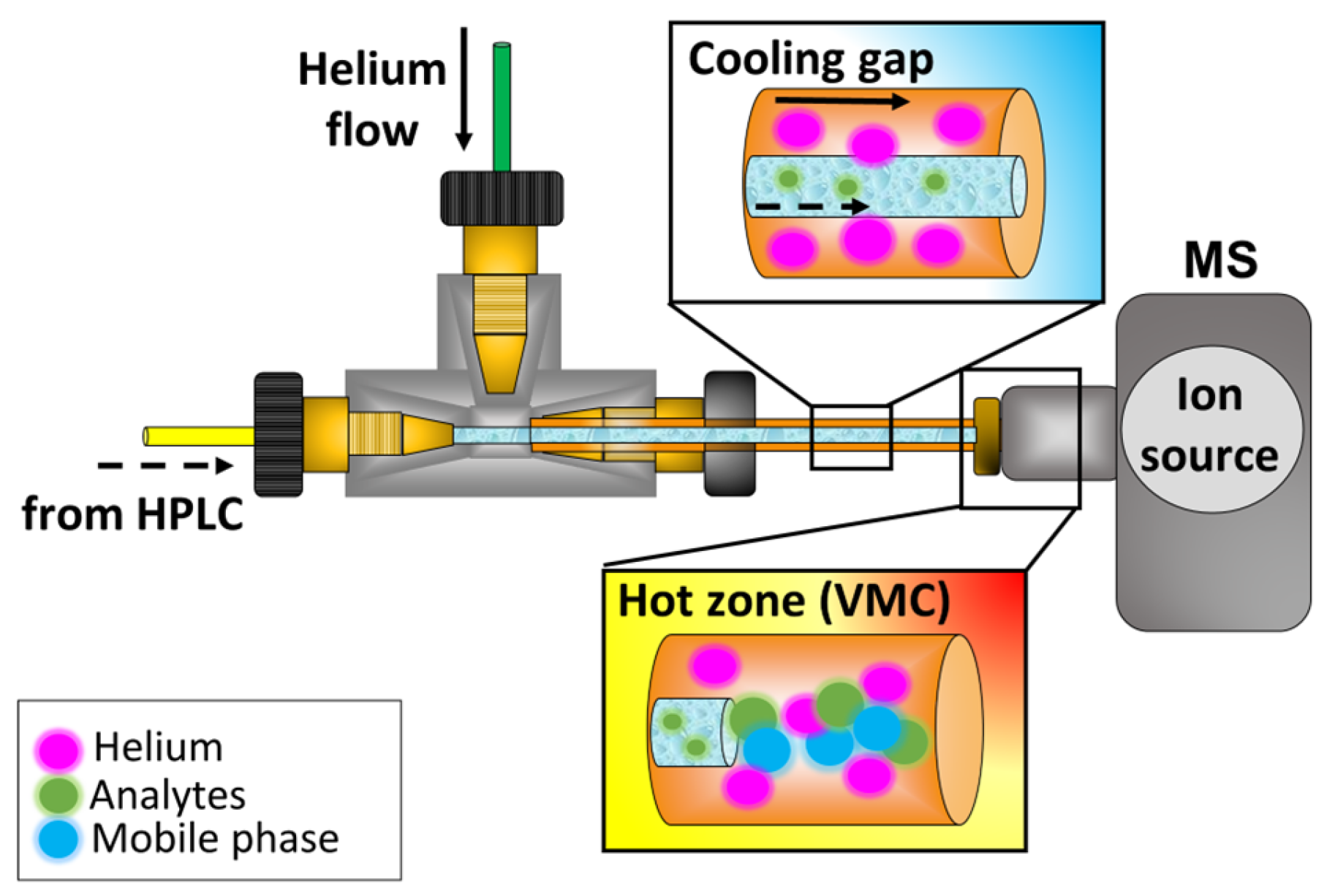
The analyses were conducted using the LEI interface coupled to a conventional QTOF Agilent 7250 MS (Agilent Technologies Inc., Santa Clara, CA, USA), equipped with an EI ion source (Figure 8). More details regarding the interface description are reported elsewhere [40]. Briefly, the Agilent 1290 Infinity II binary pump (Agilent Technologies Inc., Santa Clara, CA, USA) was used for the LC separations, performed in reversed-phase liquid chromatography (RPLC) using a Kinetex 1.7 μm XB-C18 150 × 2.1 mm column. The following elution gradient was applied (mobile phase A: H2O + 0.1% FA; mobile phase B: ACN + 0.1% FA): 5% B for 1 min; from 5% B to 100% B in 6 min, 100% B for 7 min. The flow rate was set at 200 µL/min and the injection volume at 20 μL. A Passive Flow Splitter (PFS) reduced the flow rate after chromatographic separation, making it compatible with the LEI interface (500 nL/min). More detailed information on the splitting device is reported elsewhere [49,50]. The split ratio was set at 1:400. Mass spectrometry conditions were as follows: vaporization microchannel (VMC) 350 °C; ion source temperature 260 °C; quadrupole temperature 150 °C; LEI helium flow 1.2 mL/min; quenching flow (helium) 4 mL/min; collision flow (nitrogen) 1 mL/min. TOF calibration was performed before each analysis. Agilent Mass Hunter GC/MS acquisition software (Version 10.1.49.0) was employed to acquire all data. Mass spectra were acquired in full-scan mode using 70 eV, 15 eV, and 9 eV electron energies, and in targeted MS/MS, using the molecular ion as precursor ion. Regarding full-scan analysis, the mass range was set from 85 to 700 m/z to eliminate low-mass background noise given by the mobile phases. The emission current was set at 4.4 µA for 70 eV, and at 0.6 µA for 15 eV and 9 eV. The acquisition rate was set at 8.00 spectra/s for all analyses.

3.5. Software and Database

Agilent MassHunter Qualitative Analysis software (Version 10.0) was employed for data processing using a 5 mg/L extraction window (Figure 2). Using the “Find Compounds by Integration” algorithm, the software identified compounds through MS/MS peak integration, after which the software generated possible formulas for each compound. The resulting .csv files, generated by Agilent Mass Hunter Qualitative Analysis software, containing MS/MS fragmentation data obtained at different collision energies and the corresponding molecular formula information, were exported to Agilent MassHunter Molecular Structure Correlator software (Version 8.2) for formula confirmation and possible structures determination. The software compares the compound formulas with the ChemSpider database, giving a score for each possible structure. The scores are assigned considering each MS/MS fragment ion possible structures; three factors contribute to the definitive score: the “systematic bond-breaking” approach, the mass accuracy of each fragment, and the match of the ion intensities with the candidate structures [49].
Agilent MassHunter Unknown software (Version 10.0) was used to create HR-lab made library.
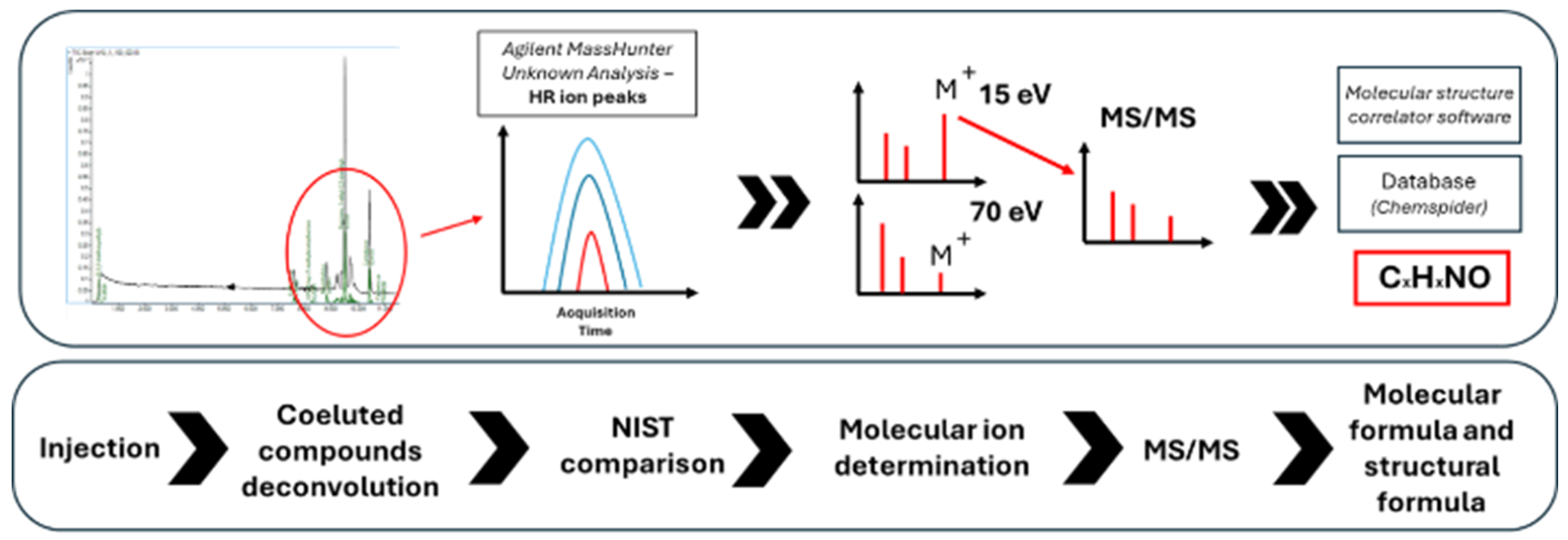
The experimental workflow is reported in Figure 9.

3.6. Non-Targeted Workflow Quality Control

All the analyses were conducted in triplicate and blank analyses were performed after each one by injecting ultrapure water. Regarding the characterization of formulations, only the peaks showing S/N higher than 3 were considered as compounds. S/N was calculated on the extracted ion chromatograms (EIC) of the base peaks. The comparison with the NIST library was performed after the deconvolution using Agilent MassHunter unknown software. The deconvolution ensures obtaining “clean” spectra from background noise as well. Only spectra that show match factors with the library spectra higher than 75% were considered recognized by the library.
For compound structure determination after MS/MS analysis, only results provided by the MSC software showing correlation scores higher than 70 were considered reliable. Regarding the structures proposed with lower scores, only the molecular formula with an accuracy up to 5 ppm was considered reliable. For CF and naphthalene, the compound identification was confirmed by injecting the standards. In this case, both the match between the two spectra and between the retention time of the standard and the compound present in the sample were evaluated.

4. Conclusions

The use of EI as ionization technique makes the identification process easier with respect to the conventional ionization techniques used with LC-MS/MS. However, being that EI is usually coupled with GC, the chemical coverage is limited to volatile compounds. Coupling LC with EI allows to extend this ionization technique to a wider variety of compounds. In this work, a novel identification method was developed using an LC-LEI-QTOF-MS/MS system, adding the high-resolution mass spectrometry (HRMS) capabilities to EI identification power. This approach facilitated the characterization of volatile, low volatile, and thermolabile fractions of 13 CF formulations with high levels of confidence due to the comparison with the NIST library. Seven compounds were easily identified with high confidence levels, 1 or 2a. In addition to the NIST comparison, low energy analysis confirmed compound identities, determining molecular ions. Differently from other published studies performed using EI, where the molecular ion was established using the CI ion source [32], in this work the molecular ions were determined without the need for other instruments or ion sources by varying the electron energy. The identities were also confirmed by the accurate masses and HR molecular ion fragmentations. The library did not recognize four compounds, but their structures were proposed with high scores by the MSC software, and the satisfactory accurate masses allow their identification with a confidence level of 2b. For three compounds, the molecular formulas were proposed with good accuracy, and for only one compound it was not possible to establish the possible formula, perhaps due to its low concentration. In the UA_3 formulation, various contaminants were identified, including unexpected ones such as the banned pesticide Carbosulfan, its toxic metabolite Dibutylamine, and its impurity C24H28N2O6S2. Other notable findings across formulations included DEET, a common mosquito repellent; C14H18N2O4; and 3-keto-carbofuran, a primary metabolite of carbofuran. A custom high-resolution spectral library simplified the detection of these compounds in real samples, even in cases of low concentrations or matrix coelution. 3-keto-carbofuran, present in one formulation (F0), was detected alongside CF in the fox liver sample (544/2). However, as a metabolite of carbofuran, 3-keto-carbofuran cannot serve as a marker for a specific carbofuran formulation.
Regarding the quantitative analysis, the method demonstrated excellent performance. As expected, negligible ME were confirmed also without the use of an internal standard, confirming that the LC-LEI-QTOF-MS/MS system is a good alternative for qualitative and quantitative analysis of volatile and low-volatile fractions of complex samples.
Although the recovery experiments were not performed, and the concentrations found in CF-positive samples could be underestimated, their real values were well above the LD50 values in rats (5 mg/kg) and birds (0.7–8.0 mg/kg), and comparable with values reported in human suicide cases, confirming the suspected intentional poisoning.

Supplementary Materials

The following supporting information can be downloaded at: https://www.mdpi.com/article/10.3390/molecules31020259/s1, Figure S1. (A–C): Comparison with NIST library; Figure S2. (A–C): Comparison with NIST library; Figure S3. (A–C): Comparison with NIST library; Figure S4. (A–C): Comparison with NIST library; Figure S5. (A–C): Comparison with NIST library; Figure S6. (A–C): Comparison with NIST library; Figure S7. (A,B): Structure identification using molecular structure correlator software; Figure S8. (A,B): Structure identification using molecular structure correlator software; Figure S9. (A,B): Molecular formula determination using the molecular ion accurate mass; Figure S10. (A,B): Comparison with NIST library; Figure S11. (A–C): Comparison with NIST library.

Author Contributions

Investigation, G.G. and Z.S.; Data curation, G.G. and Z.S.; Writing—original draft, G.G.; Writing—review and editing, A.A., G.F., Z.S. and A.S.; Founding acquisition, A.C. and T.C.; Project administration, A.C. and T.C. All authors have read and agreed to the published version of the manuscript.

Funding

This study was conducted as a part of project no. VJ01010026 “Effective use of forensic evidence methods to combat wildlife crime”, financially supported by the Ministry of the Interior of the Czech Republic within the program Strategic Support for the Development of Security Research 2019–2025 (IMPAKT 1).

Institutional Review Board Statement

Not applicable.

Informed Consent Statement

Not applicable.

Data Availability Statement

The original contributions presented in this study are included in the article and Supplementary Materials. Further inquiries can be directed to the corresponding author.

Acknowledgments

The authors would like to thank Agilent Technologies for providing analytical instrumentations, and the Institute of Environmental Studies, Faculty of Sciences, Charles University, Prague for providing formulations, real samples, and instrumentations.

Conflicts of Interest

The authors declare no conflicts of interest.

Abbreviations

The following abbreviations are used in this manuscript:
CFCarbofuran
GCGas Chromatography
LCLiquid Chromatography
MSMass Spectrometry
EIElectron Ionization
ESIElectrospray Ionization
HRMSHigh Resolution Mass Spectrometry
LEILiquid Electron Ionization
NTANon-Targeted Analysis
MEMatrix Effects
Q-TOFQuadrupole Time-Of-Flight
PLEPressurized Liquid Extraction
PFSPassive Flow Splitter
VMCVaporization Microchannel
MSCMolecular Structure Correlator Software

References

  1. Damalas, C.A.; Eleftherohorinos, I.G. Pesticide exposure, safety issues, and risk assessment indicators. Int. J. Environ. Res. Public Health 2011, 8, 1402–1419. [Google Scholar] [CrossRef] [PubMed]
  2. Oliveira, G.R.; Gallas-Lopes, M.; Chitolina, R.; Bastos, L.M.; Portela, S.M.; Stahlhofer-Buss, T.; Gusso, D.; Gomez, R.; Wyse, A.T.S.; Herrmann, A.P.; et al. Evaluation of behavioral and neurochemical changes induced by carbofuran in zebrafish (Danio rerio). Comp. Biochem. Physiol. Part C Toxicol. Pharmacol. 2024, 283, 109969. [Google Scholar] [CrossRef] [PubMed]
  3. Mishra, S.; Zhang, W.; Lin, Z.; Pang, S.; Huang, Y.; Bhatt, P.; Chen, S. Carbofuran toxicity and its microbial degradation in contaminated environments. Chemosphere 2020, 259, 127419. [Google Scholar] [CrossRef] [PubMed]
  4. Kernalléguen, A.; Le Daré, B.; Pelletier, R.; Ferron, P.J.; Maamar, A.; Bouvet, R.; Baert, A.; Morel, I.; Gicquel, T. Carbofuran self-poisoning: Forensic and analytic investigations in twins and literature review. Int. J. Legal Med. 2022, 136, 1585–1596. [Google Scholar] [CrossRef] [PubMed]
  5. Mdeni, N.L.; Adeniji, A.O.; Okoh, A.I.; Okoh, O.O. Analytical Evaluation of Carbamate and Organophosphate Pesticides in Human and Environmental Matrices: A Review. Molecules 2022, 27, 618. [Google Scholar] [CrossRef] [PubMed]
  6. UNEP; FAO; Rotterdam Convention. Carbofuran Notifications of Final Regulatory Action Submitted by the European Union; UNEP/FAO/RC/CRC/11/6. CRC-11/3. 2015. Available online: https://www.pic.int/ (accessed on 1 January 2025).
  7. Pivariu, D.; Oros, A.; Tabaran, F.; Gal, A.; Martonos, C.; Nagy, A. Intentional Carbofuran poisoning in 7 dogs. BMC Vet. Res. 2020, 16, 318. [Google Scholar] [CrossRef]
  8. Ruiz-suárez, N.; Boada, L.D.; Henríquez-hernández, L.A.; González-moreo, F.; Suárez-pérez, A.; Camacho, M.; Zumbado, M.; Almeida-gonzález, M.; Travieso-aja, M.; Luzardo, O.P. Science of the Total Environment Continued implication of the banned pesticides carbofuran and aldicarb in the poisoning of domestic and wild animals of the Canary Islands (Spain). Sci. Total Environ. 2015, 505, 1093–1099. [Google Scholar] [CrossRef] [PubMed]
  9. Kwon, J.T.; Park, J.E.; Son, K.; Kim, J.; Lee, D.H.; Kim, Y.K.; Kim, Y.; Jeong, H.; Kil, J.; Jheong, W.H.; et al. Characterization Analysis of Wild Bird Poisoning Cases Through Spraying Seeds Artificially. Appl. Ecol. Environ. Res. 2023, 22, 1467–1477. [Google Scholar] [CrossRef]
  10. Kumar, S.; Baggi, T.R.; Al-Zughaibi, T. Forensic toxicological and analytical aspects of carbamate poisoning–A review. J. Forensic Leg. Med. 2022, 92, 102450. [Google Scholar] [CrossRef]
  11. Hardy, E.M.; Dereumeaux, C.; Guldner, L.; Briand, O.; Vandentorren, S.; Oleko, A.; Zaros, C.; Appenzeller, B.M.R. Hair versus urine for the biomonitoring of pesticide exposure: Results from a pilot cohort study on pregnant women. Environ. Int. 2021, 152, 106481. [Google Scholar] [CrossRef]
  12. Petropoulou, S.S.E.; Tsarbopoulos, A.; Siskos, P.A. Determination of carbofuran, carbaryl and their main metabolites in plasma samples of agricultural populations using gas chromatography-tandem mass spectrometry. Anal. Bioanal. Chem. 2006, 385, 1444–1456. [Google Scholar] [CrossRef] [PubMed]
  13. Tennakoon, D.A.S.S.; Karunarathna, W.D.V.; Udugampala, U.S.S. Carbofuran concentrations in blood, bile and tissues in fatal cases of homicide and suicide. Forensic Sci. Int. 2013, 227, 106–110. [Google Scholar] [CrossRef] [PubMed]
  14. Oenning, A.L.; Merib, J.; Carasek, E. An effective and high-throughput analytical methodology for pesticide screening in human urine by disposable pipette extraction and gas chromatography–Mass spectrometry. J. Chromatogr. B 2018, 1092, 459–465. [Google Scholar] [CrossRef] [PubMed]
  15. Tracqui, A.; Flesch, F.; Sauder, P.; Raul, J.S.; Geraut, A.; Ludes, B.; Jaeger, A. Repeated measurements of aldicarb in blood and urine in a case of nonfatal poisoning. Hum. Exp. Toxicol. 2001, 20, 657–660. [Google Scholar] [CrossRef]
  16. Famiglini, G.; Palma, P.; Termopoli, V.; Cappiello, A. The history of electron ionization in LC-MS, from the early days to modern technologies: A review. Anal. Chim. Acta 2021, 1167, 338350. [Google Scholar] [CrossRef]
  17. Lee, S.; Hwang, S.; Seo, M.; Shin, K.B.; Kim, K.H.; Park, G.W.; Kim, J.Y.; Yoo, J.S.; No, K.T. BMDMS-NP: A comprehensive ESI-MS/MS spectral library of natural compounds. Phytochemistry 2020, 177, 112427. [Google Scholar] [CrossRef]
  18. Volna, K.; Holcapek, M.; Kolarova, L.; Lemr, K.; Caslavsky, J.; Kacer, P.; Poustka, J.; Hubalek, M. Comparison of negative ion electrospray mass spectra measured by seven tandem mass analyzers towards library formation. Rapid Commun. Mass Spectrom. 2008, 22, 101–108. [Google Scholar] [CrossRef] [PubMed]
  19. Milman, B.L.; Zhurkovich, I.K. The chemical space for non-target analysis. TrAC Trends Anal. Chem. 2017, 97, 179–187. [Google Scholar] [CrossRef]
  20. Tozzi Wurzler, G.; da Silva Antonio, A.; de Andrade Bhering, C.; Machado Pereira Ajuz, A.; Rissi Carvalhosa, D.; Celso Jardim, A.; Yves Chalom, M.; de Aquino Neto, F.R.; Vanini, G. Fast high-resolution mass spectrometry in the triage investigation of poisonings by pesticides in unusual samples-A case study. Forensic Chem. 2024, 37, 100555. [Google Scholar] [CrossRef]
  21. Vitoria Galindo, M.; Vargas Perez, M.; Lopez-Ruiz, R.; da Silva Oliveira, W.; Teixeira Godoy, H.; Garrido Frenich, A.; Romero-Gonzalez, R. Comprehensive analysis of contaminants in Brazilian infant formulas: Application of QuEChERS coupled with UHPLC-QqQ-MS/MS and suspect screening-unknown analysis by UHPLC-Q-Orbitrap-MS. J. Chromatogr. A 2024, 1726, 464967. [Google Scholar] [CrossRef]
  22. Knolhoff, A.M.; Callahan, J.H.; Croley, T.R. Mass accuracy and isotopic abundance measurements for HR-MS instrumentation: Capabilities for non-targeted analyses. J. Am. Soc. Mass Spectrom. 2014, 25, 1285–1294. [Google Scholar] [CrossRef] [PubMed]
  23. Portolés, T.; Mol, J.G.J.; Sancho, J.V.; Hernández, F. Use of electron ionization and atmospheric pressure chemical ionization in gas chromatography coupled to time-of-flight mass spectrometry for screening and identification of organic pollutants in waters. J. Chromatogr. A 2014, 1339, 145–153. [Google Scholar] [CrossRef] [PubMed]
  24. Schymanski, E.L.; Singer, H.P.; Longrée, P.; Loos, M.; Ruff, M.; Stravs, M.A.; Ripollés Vidal, C.; Hollender, J. Strategies to characterize polar organic contamination in wastewater: Exploring the capability of high resolution mass spectrometry. Environ. Sci. Technol. 2014, 48, 1811–1818. [Google Scholar] [CrossRef] [PubMed]
  25. Hollender, J.; Schymanski, E.L.; Singer, H.P.; Ferguson, P.L. Nontarget Screening with High Resolution Mass Spectrometry in the Environment: Ready to Go? Environ. Sci. Technol. 2017, 51, 11505–11512. [Google Scholar] [CrossRef]
  26. Titaley, I.A.; Lam, M.M.; Bülow, R.; Enell, A.; Wiberg, K.; Larsson, M. Characterization of polycyclic aromatic compounds in historically contaminated soil by targeted and non-targeted chemical analysis combined with in vitro bioassay. Environ. Pollut. 2021, 289, 117910. [Google Scholar] [CrossRef]
  27. Ogunbiyi, O.D.; Cappelini, L.T.D.; Monem, M.; Mejias, E.; George, F.; Gardinali, P.; Bagner, D.M.; Quinete, N. Innovative non-targeted screening approach using High-resolution mass spectrometry for the screening of organic chemicals and identification of specific tracers of soil and dust exposure in children. J. Hazard. Mater. 2024, 469, 134025. [Google Scholar] [CrossRef]
  28. Ng, B.; Quinete, N.; Gardinali, P.R. Assessing accuracy, precision and selectivity using quality controls for non-targeted analysis. Sci. Total Environ. 2020, 713, 136568. [Google Scholar] [CrossRef]
  29. Sobus, J.R.; Wambaugh, J.F.; Isaacs, K.K.; Williams, A.J.; McEachran, A.D.; Richard, A.M.; Grulke, C.M.; Ulrich, E.M.; Rager, J.E.; Strynar, M.J.; et al. Integrating tools for non-targeted analysis research and chemical safety evaluations at the US EPA. J. Expo. Sci. Environ. Epidemiol. 2018, 28, 411–426. [Google Scholar] [CrossRef]
  30. Schymanski, E.L.; Jeon, J.; Gulde, R.; Fenner, K.; Ruff, M.; Singer, H.P.; Hollender, J. Identifying small molecules via high resolution mass spectrometry: Communicating confidence. Environ. Sci. Technol. 2014, 48, 2097–2098. [Google Scholar] [CrossRef]
  31. Szabo, D.; Fischer, S.; Mathew, A.P.; Kruve, A. Prioritization, Identification, and Quantification of Emerging Contaminants in Recycled Textiles Using Non-Targeted and Suspect Screening Workflows by LC-ESI-HRMS. Anal. Chem. 2024, 96, 14150–14159. [Google Scholar] [CrossRef] [PubMed]
  32. Liu, Y.; Li, H.; Wang, Z.; Zhang, Q.; Bai, H.; Lv, Q. Nontargeted analysis and comparison strategies for volatile and semivolatile substances in toys made of different materials. Chemosphere 2023, 342, 140170. [Google Scholar] [CrossRef] [PubMed]
  33. Zhang, Q.; Song, N.; Xu, H. Analysis strategy of contamination source using chemical fingerprint information based on GC-HRMS: A case study of landfill leachate. Water Res. 2025, 273, 123067. [Google Scholar] [CrossRef] [PubMed]
  34. Guo, Z.; Huang, S.; Wang, J.; Feng, Y.L. Recent advances in non-targeted screening analysis using liquid chromatography-High resolution mass spectrometry to explore new biomarkers for human exposure. Talanta 2020, 219, 121339. [Google Scholar] [CrossRef] [PubMed]
  35. Termopoli, V.; Famiglini, G.; Palma, P.; Piergiovanni, M.; Cappiello, A. Atmospheric pressure vaporization mechanism for coupling a liquid phase with electron ionization mass spectrometry. Anal. Chem. 2017, 89, 2049–2056. [Google Scholar] [CrossRef] [PubMed]
  36. Marittimo, N.; Grasselli, G.; Arigò, A.; Famiglini, G.; Palma, P.; Saeed, M.; Perry, S.; Navarro, P.; Clarke, P.; Brittin, M.; et al. Sustainable and Rapid Determination of Two Halogenated Pesticides in a Commercial Formulation by Solid Phase Microextraction and Liquid Phase Chemical Ionization Mass Spectrometry. Separations 2023, 10, 325. [Google Scholar] [CrossRef]
  37. Cappiello, A.; Termopoli, V.; Palma, P.; Famiglini, G.; Saeed, M.; Perry, S.; Navarro, P. Liquid Chromatography–Electron Capture Negative Ionization–Tandem Mass Spectrometry Detection of Pesticides in a Commercial Formulation. J. Am. Soc. Mass Spectrom. 2022, 33, 141–148. [Google Scholar] [CrossRef]
  38. Grasselli, G.; Arigò, A.; Palma, P.; Famiglini, G.; Cappiello, A. Latest Developments in Direct and Non-Direct LC-MS Methods Based on Liquid Electron Ionization (LEI). Crit. Rev. Anal. Chem. 2024, 56, 37–54. [Google Scholar] [CrossRef]
  39. Rentsch, K.M. Trends in Analytical Chemistry Knowing the unknown–State of the art of LCMS in toxicology. Trends Anal. Chem. 2016, 84, 88–93. [Google Scholar] [CrossRef]
  40. Termopoli, V.; Famiglini, G.; Palma, P.; Piergiovanni, M.; Rocio-Bautista, P.; Ottaviani, M.F.; Cappiello, A.; Saeed, M.; Perry, S. Evaluation of a liquid electron ionization liquid chromatography–mass spectrometry interface. J. Chromatogr. A 2019, 1591, 120–130. [Google Scholar] [CrossRef]
  41. Agilent Technologies. 7200 Accurate-Mass Time-of-Flight GC/MS System. Concepts Guide. November 2024. Available online: https://www.agilent.com/Library/usermanuals/Public/G3850-90003.pdf (accessed on 1 March 2025).
  42. Kyprianou, M. Concerning the non-inclusion of carbosulfan in Annex I to Council Directive 91/414/EEC and the withdrawal of authorisations for plant protection products containing that substance. Eur. Union 2007, 4, 267–268. [Google Scholar]
  43. Soler, C.; Mañes, J.; Picó, Y. Determination of carbosulfan and its metabolites in oranges by liquid chromatography ion-trap triple-stage mass spectrometry. J. Chromatogr. A 2006, 1109, 228–241. [Google Scholar] [CrossRef]
  44. European Food Safety Authority. Conclusion on the peer review of the pesticide risk assessment of the active substance carbosulfan. EFSA J. 2009, 310, 7–132. [Google Scholar]
  45. Soler, C.; Hamilton, B.; Furey, A.; James, K.J.; Mañes, J.; Picó, Y. Liquid chromatography quadrupole time-of-flight mass spectrometry analysis of carbosulfan, carbofuran, 3-hydroxycarbofuran, and other metabolites in food. Anal. Chem. 2007, 79, 1492–1501. [Google Scholar] [CrossRef]
  46. Rocío-Bautista, P.; Famiglini, G.; Termopoli, V.; Palma, P.; Nazdrajić, E.; Pawliszyn, J.; Cappiello, A. Direct Coupling of Bio-SPME to Liquid Electron Ionization-MS/MS via a Modified Microfluidic Open Interface. J. Am. Soc. Mass Spectrom. 2021, 32, 262–269. [Google Scholar] [CrossRef]
  47. Termopoli, V.; Piergiovanni, M.; Cappiello, A.; Palma, P.; Famiglini, G. Tyrosol and hydroxytyrosol determination in extra virgin olive oil with direct liquid electron ionization–tandem mass spectrometry. Separations 2021, 8, 173. [Google Scholar] [CrossRef]
  48. Wu, G.; Bao, X.; Zhao, S.; Wu, J.; Han, A.; Ye, Q. Analysis of multi-pesticide residues in the foods of animal origin by GC–MS coupled with accelerated solvent extraction and gel permeation chromatography cleanup. Food Chem. 2011, 126, 646–654. [Google Scholar] [CrossRef]
  49. Grasselli, G. Establish a Robust Technology for Complex Matrices and Challenging Agrochemical Compounds. Ph.D. Thesis, University of Urbino Carlo Bo, Urbino, Italy, 2025. [Google Scholar]
  50. Marittimo, N.; Famiglini, G.; Palma, P.; Arigò, A.; Cappiello, A. Enhanced microfluidic open interface for the direct coupling of solid phase microextraction with liquid electron ionization-tandem mass spectrometry. J. Chromatogr. A 2022, 1681, 463479. [Google Scholar] [CrossRef] [PubMed]
Figure 1. Deconvoluted chromatogram of UA_3 formulation.
Molecules 31 00259 g001
Figure 2. (AC). (A) Comparison between the deconvoluted spectrum and NIST spectrum of Carbosulfan (peak 11). (B) Molecular ion determination comparing the spectra obtained at 70, 15 and 9 eV. (C) MS/MS analysis of suspected (M+H)+ (m/z 381.2166) and determination of fragment structures with their corresponding accuracy.
Molecules 31 00259 g002
Figure 3. Comparison between experimental deconvoluted spectrum and NIST library spectrum of Dibutylamine (Peak 1).
Molecules 31 00259 g003
Figure 4. (13). (1) Peak 2 molecular formula determination of the CG_23_B formulation. (2) Molecular ion determination comparing the spectra obtained at 70, 15, and 9 eV. (3) MS/MS of the suspected molecular ion, and its structure and accuracy.
Molecules 31 00259 g004
Figure 5. CF Calibration curve in water (orange) and in CF-free gastric content of an eagle, used as matrix (blue).
Molecules 31 00259 g005
Figure 6. EIC of m/z 164.0832 Sample 544/2 chromatogram.
Molecules 31 00259 g006
Figure 7. EIC of m/z 178.0618 (3-Keto-Carbofuran) of F8 formulation (blue) and sample 544/2 (orange).
Molecules 31 00259 g007
Figure 8. Scheme of LEI interface.
Molecules 31 00259 g008
Figure 9. The workflow developed for compound identifications used for the characterization of formulations.
Molecules 31 00259 g009
Table 1. List of CF formulations analyzed with the number of identified compounds.
Formulation NameStatusNumber of Putatively
Identified Compounds
UA_3liquid12
BV_PF_Bsolid2
CG_23_Bsolid2
F_0solid2
F_2solid1
F_8solid1
F_9solid1
CG_23_Asolid1
UA_1liquid1
F_8solid1
F_9solid1
CG_23_Asolid1
UA_1liquid1
UA_2liquid1
BV_PF_Asolid1
Cdsolid1
SLsolid1
Table 2. Peaks list of UA_3 formulation.
Peak RTMolecular
Ion (m/z)
Suspected CompounddM (PPM)NIST
Match (%)
Confidence Level
15.35129.1507Dibutylamine−3.857.212b
27.69221.1043Carbofuran−1.696.371
38.83128.0623Naphtalene−1.999.381
49.09118.0772Indane−4.292.912a
59.19142.07722-Methylnaphthalene−2.8/2b
69.25120.0935Mesitylene1.296.482a
79.39132.0935Indan-1-Methyl1.194.662a
89.51134.1093Cymene2.290.112a
99.72170.10822,3,6-Trimethylnaphtalene4.7/2b
109.87504.1400C24H28N2O6S23.3/4
1110.46381.2206 (M+H)+Carbosulfan−1.1576.742b
1211.18/////
Table 3. Peaks list of BV_PF_B formulation.
Peak RTMolecularSuspected CompounddM (PPM)NISTConfidence
Ion (m/z)Match (%)Level
17.49221.1043Carbofuran−1.695.681
27.69191.1291DEET−7.1491.841
Table 4. Peaks list of CG_23_B formulation.
Peak RTMolecularSuspected dM NISTConfidence
Ion (m/z)Compound(PPM)Match (%)Level
17.52221.1043Carbofuran−1.695.681
27.76278.1258C14H18N2O4−1.1/4
Table 5. Peak list of F0.
Peak RTMolecular
Ion (m/z)
Suspected
Compound
dM (PPM)NIST
Match (%)
Confidence
Level
16.80235.09523-keto-carbofuran−0.962.854
27.69221.1043Carbofuran−1.695.681
Disclaimer/Publisher’s Note: The statements, opinions and data contained in all publications are solely those of the individual author(s) and contributor(s) and not of MDPI and/or the editor(s). MDPI and/or the editor(s) disclaim responsibility for any injury to people or property resulting from any ideas, methods, instructions or products referred to in the content.