Oxindole Compounds Induce NRF2-ARE Antioxidant Pathway in MCF7 Cells and Reduce Inflammatory Response in RAW264.7 Cells

 , , and
Abstract
1. Introduction
2. Results and Discussion
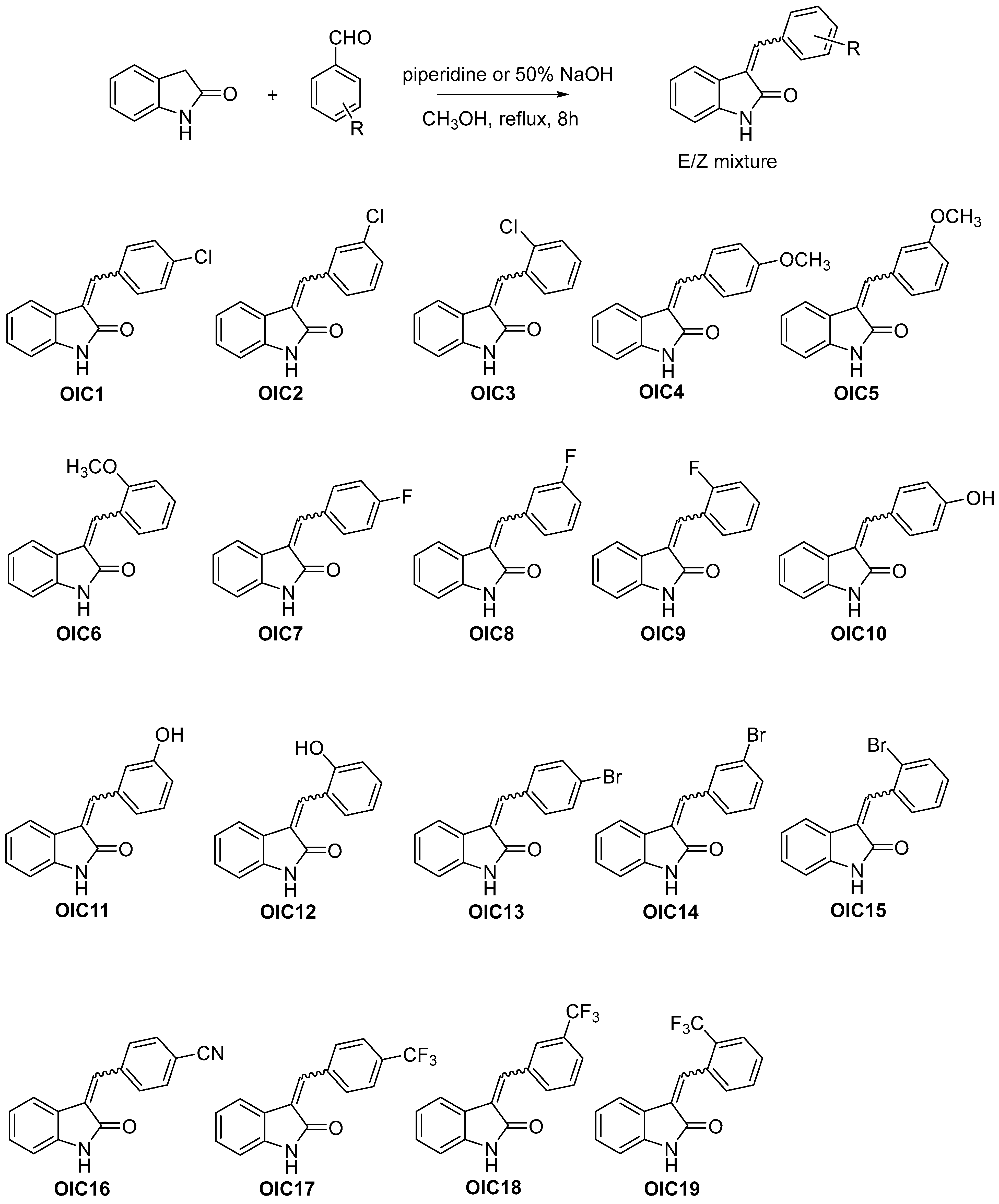
2.1. Synthesis of Oxindole Derivatives

2.2. NRF2-ARE Activation of Oxindole Compounds and Hit Selection
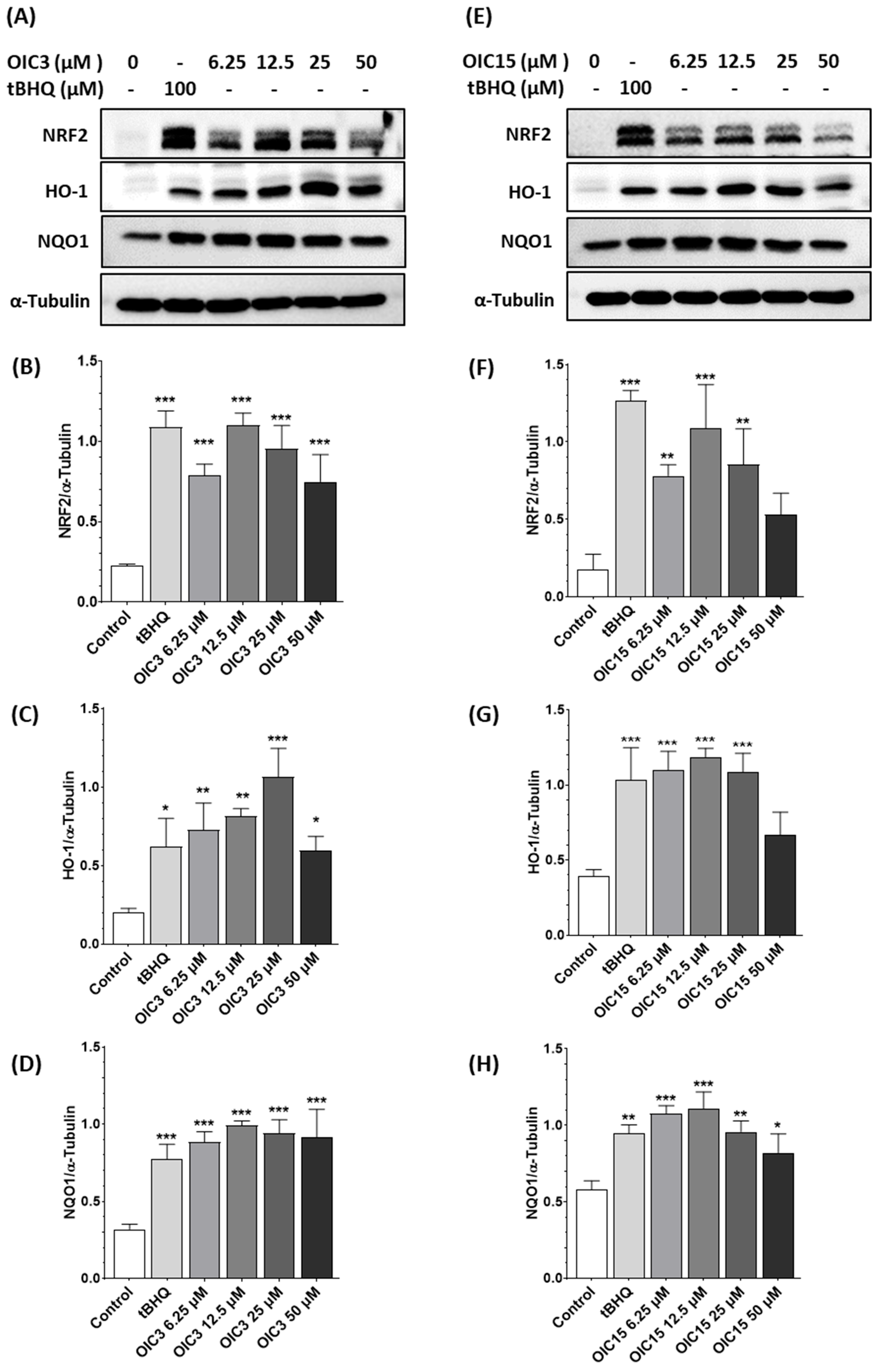
2.3. OIC3 and OIC15 Dose-Dependently Induce the NRF2-ARE Signaling Pathway
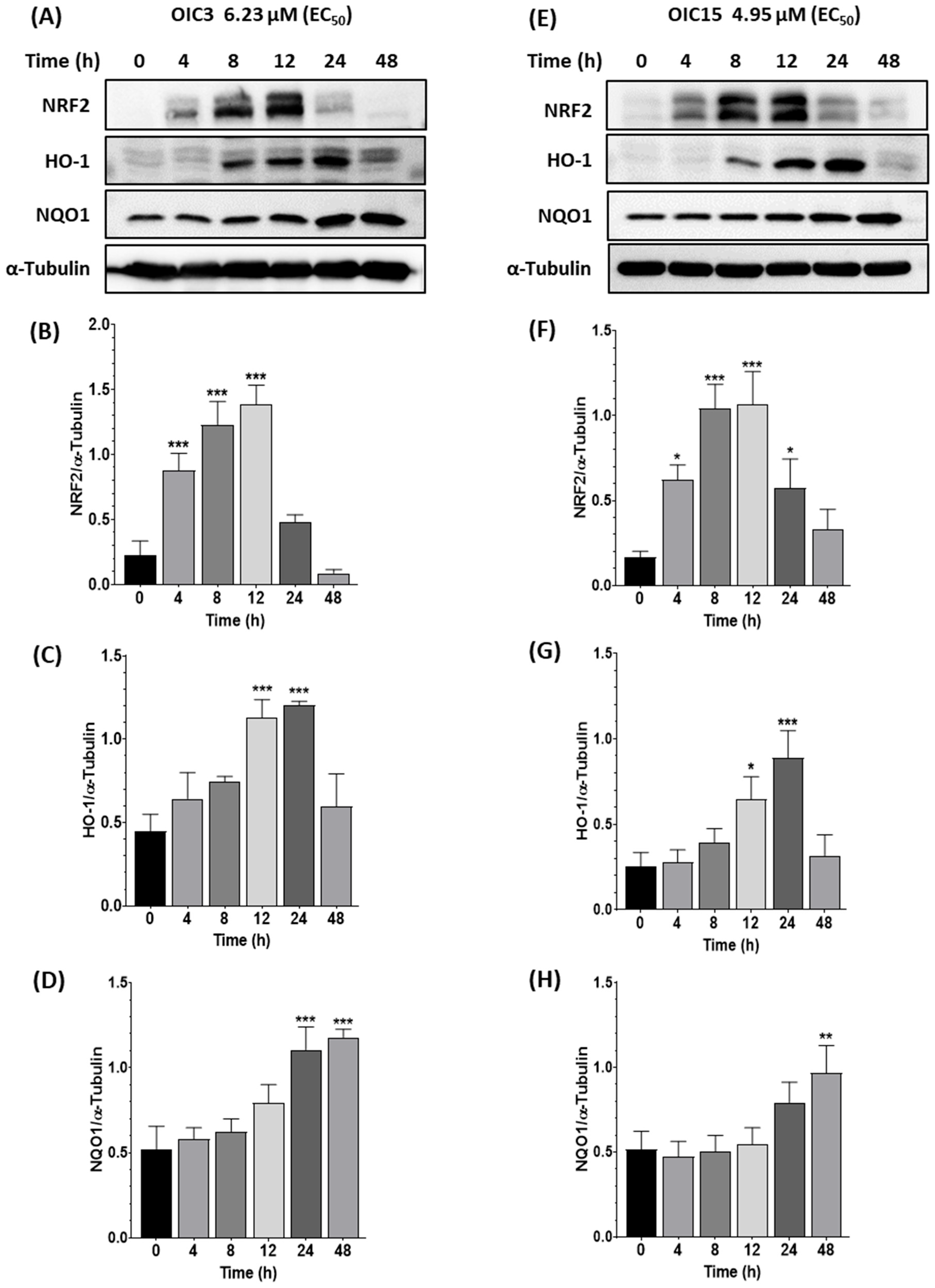
2.4. Time-Course Analysis of NRF2-ARE Signaling Activation by OIC3 and OIC15
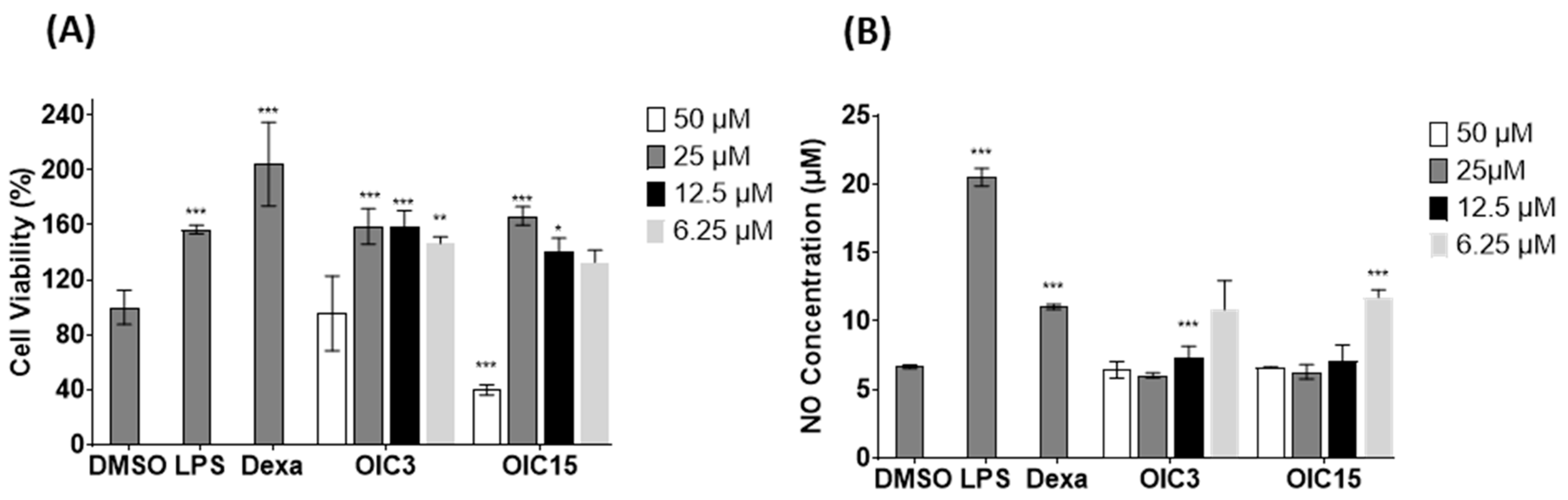
2.5. Anti-Inflammatory Effects of OIC3 and OIC15 in RAW264.7 Cells
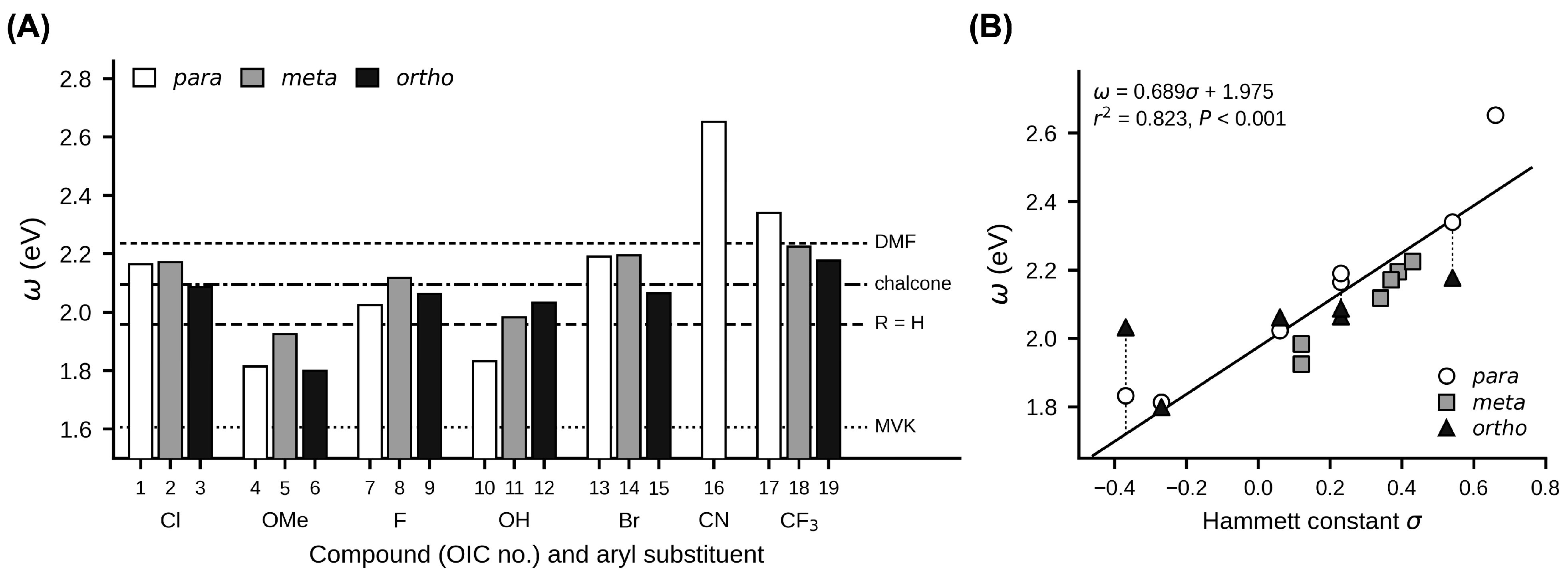
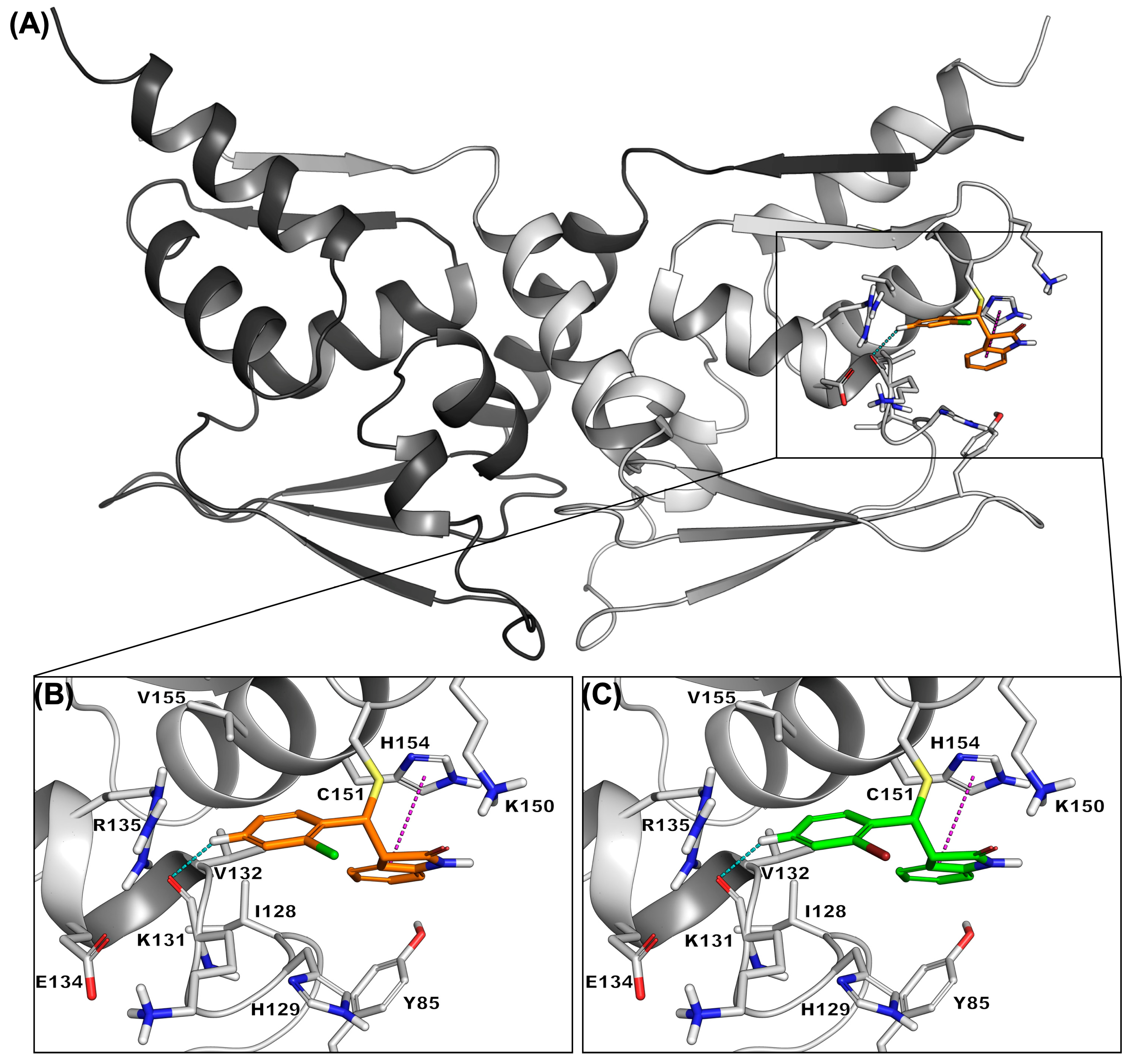
2.6. In Silico Evaluation of the Michael Acceptor Properties of the Oxindole Scaffold
3. Materials and Methods
3.1. Chemicals and Reagents
3.2. Synthesis of the Oxindole Derivatives
3.3. Quantum Chemical Calculations and Covalent Docking
3.4. Cell Culture Condition
3.5. NRF2-ARE Activation Screening by ONE-Glo Assay
3.6. Cell Viability Assay
3.7. Western Blot
3.8. Statistical Analysis
4. Conclusions
Supplementary Materials
Author Contributions
Funding
Institutional Review Board Statement
Informed Consent Statement
Data Availability Statement
Conflicts of Interest
References
- Nguyen, T.; Nioi, P.; Pickett, C.B. The Nrf2-antioxidant response element signaling pathway and its activation by oxidative stress. J. Biol. Chem. 2009, 284, 13291–13295. [Google Scholar] [CrossRef] [Scilit] [PubMed]
- Krajka-Kuźniak, V.; Paluszczak, J.; Baer-Dubowska, W. The Nrf2-ARE signaling pathway: An update on its regulation and possible role in cancer prevention and treatment. Pharmacol. Rep. 2017, 69, 393–402. [Google Scholar] [CrossRef] [Scilit] [PubMed]
- Adinolfi, S.; Patinen, T.; Deen, A.J.; Pitkänen, S.; Härkönen, J.; Kansanen, E.; Küblbeck, J.; Levonen, A.L. The KEAP1-NRF2 pathway: Targets for therapy and role in cancer. Redox Biol. 2023, 63, 102726. [Google Scholar] [CrossRef] [Scilit] [PubMed]
- Oskomić, M.; Tomić, A.; Barbarić, L.; Matić, A.; Kindl, D.C.; Matovina, M. KEAP1-NRF2 Interaction in Cancer: Competitive Interactors and Their Role in Carcinogenesis. Cancers 2025, 17, 447. [Google Scholar] [CrossRef] [Scilit] [PubMed]
- Yang, X.; Liu, Y.; Cao, J.; Wu, C.; Tang, L.; Bian, W.; Chen, Y.; Yu, L.; Wu, Y.; Li, S.; et al. Targeting epigenetic and post-translational modifications of NRF2: Key regulatory factors in disease treatment. Cell Death Discov. 2025, 11, 189. [Google Scholar] [CrossRef] [Scilit] [PubMed]
- Sato, M.; Yaguchi, N.; Iijima, T.; Muramatsu, A.; Baird, L.; Suzuki, T.; Yamamoto, M. Sensor systems of KEAP1 uniquely detecting oxidative and electrophilic stresses separately in vivo. Redox Biol. 2024, 77, 103355. [Google Scholar] [CrossRef] [Scilit] [PubMed]
- Dinkova-Kostova, A.T.; Holtzclaw, W.D.; Cole, R.N.; Itoh, K.; Wakabayashi, N.; Katoh, Y.; Yamamoto, M.; Talalay, P. Direct evidence that sulfhydryl groups of Keap1 are the sensors regulating induction of phase 2 enzymes that protect against carcinogens and oxidants. Proc. Natl. Acad. Sci. USA 2002, 99, 11908–11913. [Google Scholar] [CrossRef] [Scilit] [PubMed]
- Chen, W.T.; McKee, N.W.; Kuhnell, D.; Dodson, M. NRF2: Master regulator of cellular homeostasis and therapeutic vulnerability in cancer. Redox Biol. 2026, 90, 104050. [Google Scholar] [CrossRef] [Scilit] [PubMed]
- Itoh, K.; Chiba, T.; Takahashi, S.; Ishii, T.; Igarashi, K.; Katoh, Y.; Oyake, T.; Hayashi, N.; Satoh, K.; Hatayama, I.; et al. An Nrf2/small Maf heterodimer mediates the induction of phase II detoxifying enzyme genes through antioxidant response elements. Biochem. Biophys. Res. Commun. 1997, 236, 313–322. [Google Scholar] [CrossRef] [Scilit] [PubMed]
- Dinkova-Kostova, A.T.; Copple, I.M. Advances and challenges in therapeutic targeting of NRF2. Trends Pharmacol. Sci. 2023, 44, 137–149. [Google Scholar] [CrossRef] [Scilit] [PubMed]
- Zhao, Z.; Dong, R.; You, Q.; Jiang, Z. Medicinal Chemistry Insights into the Development of Small-Molecule Kelch-Like ECH-Associated Protein 1-Nuclear Factor Erythroid 2-Related Factor 2 (Keap1–Nrf2) Protein–Protein Interaction Inhibitors. J. Med. Chem. 2023, 66, 9325–9344. [Google Scholar] [CrossRef] [Scilit] [PubMed]
- Zingkou, E.; Medoro, A.; Davinelli, S.; Saso, L.; Sotiropoulou, G.; Pampalakis, G. Dimethyl fumarate as a versatile therapeutic agent: Molecular mechanisms and potential clinical applications. Mol. Biol. Rep. 2026, 53, 344. [Google Scholar] [CrossRef] [Scilit] [PubMed]
- Bayindir, Z.S.; Sova, M.; Yuksel, N.; Saso, L. Delivery strategies to improve the pharmacological efficacy of NRF2 modulators: A review. RSC Med. Chem. 2025, 16, 4599–4616. [Google Scholar] [CrossRef] [Scilit] [PubMed]
- Naghipour, S.; Corben, L.A.; Hulme, A.J.; Dottori, M.; Delatycki, M.B.; Lees, J.G.; Lim, S.Y. Omaveloxolone for the Treatment of Friedreich Ataxia: Efficacy, Safety, and Future Perspectives. Mov. Disord. 2025, 40, 226–230. [Google Scholar] [CrossRef] [Scilit] [PubMed]
- de Zeeuw, D.; Akizawa, T.; Audhya, P.; Bakris, G.L.; Chin, M.; Christ-Schmidt, H.; Goldsberry, A.; Houser, M.; Krauth, M.; Lambers Heerspink, H.J.; et al. Bardoxolone methyl in type 2 diabetes and stage 4 chronic kidney disease. N. Engl. J. Med. 2013, 369, 2492–2503. [Google Scholar] [CrossRef] [Scilit] [PubMed]
- Onuma, K.; Watanabe, K.; Isayama, K.; Ogi, S.; Tokunaga, Y.; Mizukami, Y. Bardoxolone methyl prevents metabolic dysfunction-associated steatohepatitis by inhibiting macrophage infiltration. Br. J. Pharmacol. 2024, 181, 2545–2565. [Google Scholar] [CrossRef] [Scilit] [PubMed]
- Zhang, D.D. Thirty years of NRF2: Advances and therapeutic challenges. Nat. Rev. Drug Discov. 2025, 24, 421–444. [Google Scholar] [CrossRef] [Scilit] [PubMed]
- Bai, B.; Tu, P.; Weng, J.; Zhang, Y.; Lin, Q.; Muskat, M.N.; Wang, J.; Tang, X.; Cheng, X. Identification of Food-Derived Electrophilic Chalcones as Nrf2 Activators Using Comprehensive Virtual Screening Techniques. Antioxidants 2025, 14, 546. [Google Scholar] [CrossRef] [Scilit] [PubMed]
- Liao, W.; Lim, A.Y.H.; Tan, W.S.D.; Abisheganaden, J.; Wong, W.S.F. Restoration of HDAC2 and Nrf2 by andrographolide overcomes corticosteroid resistance in chronic obstructive pulmonary disease. Br. J. Pharmacol. 2020, 177, 3662–3673. [Google Scholar] [CrossRef] [Scilit] [PubMed]
- Hu, H.; Li, F.; Zhu, F.; Li, J.; Wang, S.; He, Z.; Chen, J.; Cheng, L.; Zhong, F. Indole-3-carbinol ameliorates ovarian damage in female old mice through Nrf2/HO-1 pathway activation. Biochem. Pharmacol. 2024, 3, 116193. [Google Scholar] [CrossRef] [Scilit] [PubMed]
- Cosimelli, B.; Greco, G.; Laneri, S.; Novellino, E.; Sacchi, A.; Amendola, G.; Cosconati, S.; Bortolozzi, R.; Viola, G. Identification of novel indole derivatives acting as inhibitors of the Keap1–Nrf2 interaction. J. Enzyme Inhib. Med. Chem. 2019, 34, 1152–1157. [Google Scholar] [CrossRef] [Scilit] [PubMed]
- Lu, Y.; Yang, W.; Qi, Z.; Gao, R.; Tong, J.; Gao, T.; Zhang, Y.; Sun, A.; Zhang, S.; Ge, J. Gut microbe-derived metabolite indole-3-carboxaldehyde alleviates atherosclerosis. Signal Transduct. Target. Ther. 2023, 8, 378. [Google Scholar] [CrossRef] [Scilit] [PubMed]
- Huang, Y.X.; Deng, Z.C.; Cao, K.X.; Yang, J.C.; Liu, M.; Zhao, L.; Zheng, J.S.; Sun, L.H. Gut microbiome-derived indole-3-carboxaldehyde promotes intestinal development via AHR-NRF2 signaling in the early-life of chicks. Microbiome 2025, 13, 265. [Google Scholar] [CrossRef] [Scilit] [PubMed]
- Roager, H.M.; Licht, T.R. Microbial tryptophan catabolites in health and disease. Nat. Commun. 2018, 9, 3294. [Google Scholar] [CrossRef] [Scilit] [PubMed]
- Zhou, H.-S.; Hu, L.-V.; Zhang, H.; Shan, W.-X.; Wang, Y.; Li, X.; Liu, T.; Zhao, J.; You, Q.-D.; Jiang, Z.-Y. Design, Synthesis, and Structure–Activity Relationships of Indoline-Based Keap1-Nrf2 Protein–Protein Interaction Inhibitors. J. Med. Chem. 2021, 64, 2465–2480. [Google Scholar] [CrossRef] [Scilit] [PubMed]
- Xiao, X.; Tong, Z.; Zhang, Y.; Zhou, H.; Luo, M.; Hu, T.; Hu, P.; Kong, L.; Liu, Z.; Yu, C.; et al. Novel Prenylated Indole Alkaloids with Neuroprotection on SH-SY5Y Cells against Oxidative Stress Targeting Keap1–Nrf2. Mar. Drugs 2022, 20, 191. [Google Scholar] [CrossRef] [Scilit] [PubMed]
- Ji, Y.; Yin, W.; Liang, Y.; Sun, L.; Yin, Y.; Zhang, W. Anti-Inflammatory and Anti-Oxidative Activity of Indole-3-Acetic Acid Involves Induction of HO-1 and Neutralization of Free Radicals in RAW264.7 Cells. Int. J. Mol. Sci. 2020, 21, 1579. [Google Scholar] [CrossRef] [Scilit] [PubMed]
- Munakarmi, S.; Chand, L.; Shin, H.B.; Jang, K.Y.; Jeong, Y.J. Indole-3-Carbinol Derivative DIM Mitigates Carbon Tetrachloride-Induced Acute Liver Injury in Mice by Inhibiting Inflammatory Response, Apoptosis and Regulating Oxidative Stress. Int. J. Mol. Sci. 2020, 21, 2048. [Google Scholar] [CrossRef] [Scilit] [PubMed]
- Abd El-wahab, H.A.A.; Mansour, H.S.; Ali, A.M.; Awady, R.-E.; Aboul-Fadl, T. New cell cycle checkpoint pathways regulators with 2-Oxo-indoline scaffold as potential anticancer agents: Design, synthesis, biological activities and in silico studies. Bioorg. Chem. 2022, 120, 105622. [Google Scholar] [CrossRef] [Scilit] [PubMed]
- Lozinskaya, N.A.; Bezsonova, E.N.; Dubar, M.; Melekhina, D.D.; Bazanov, D.R.; Bunev, A.S.; Grigor’eva, O.B.; Klochkov, V.G.; Sokolova, E.V.; Babkov, D.A.; et al. 3-Arylidene-2-oxindoles as Potent NRH:Quinone Oxidoreductase 2 Inhibitors. Molecules 2023, 28, 1174. [Google Scholar] [CrossRef] [Scilit] [PubMed]
- Egbujor, M.C.; Buttari, B.; Profumo, E.; Telkoparan-Akillilar, P.; Saso, L. An Overview of NRF2-Activating Compounds Bearing α,β-Unsaturated Moiety and Their Antioxidant Effects. Int. J. Mol. Sci. 2022, 23, 8466. [Google Scholar] [CrossRef] [Scilit] [PubMed]
- Bucker, H.; Al-Rifai, N.; Rascle, A.; Gottfried, E.; Brodziak-Jarosz, L.; Gerhauser, C.; Dick, T.P.; Amslinger, S. Enhancing the anti-inflammatory activity of chalcones by tuning the Michael acceptor site. Org. Biomol. Chem. 2015, 10, 3040–3047. [Google Scholar] [CrossRef] [Scilit] [PubMed]
- Ma, Y.; Zhang, X.; Dang, G.; Xia, M.; Sun, Z.; Ma, S.; Zhang, W. Diastereoselective Stereo-Divergent Synthesis of Spiroindolines via Ligand-Controlled Silver(I)-Catalyzed Asymmetric [3 + 2] cycloadditions. Tetrahedron 2024, 167, 134291. [Google Scholar] [CrossRef] [Scilit]
- Lubkoll, J.; Millemaggi, A.; Perry, A.; Taylor, R.J.K. Tandem Horner–Wadsworth–Emmons/Heck procedures for the preparation of 3-alkenyl-oxindoles: The synthesis of Semaxanib and GW441756. Tetrahedron 2010, 66, 6606–6612. [Google Scholar] [CrossRef] [Scilit]
- Zhang, W.; Go, M.-L. Functionalized 3-benzylidene-indolin-2-ones: Inducers of NAD(P)H-quinone oxidoreductase 1 (NQO1) with antiproliferative activity. Bioorg. Med. Chem. 2009, 17, 2077–2090. [Google Scholar] [CrossRef] [Scilit] [PubMed]
- Doellerer, D.; Pooler, D.R.S.; Guinart, A.; Crespi, S.; Feringa, B. Highly Efficient Oxindole-Based Molecular Photoswitches. Chem. Eur. J. 2023, 29, e202301634. [Google Scholar] [CrossRef] [Scilit] [PubMed]
- Zhang, L.; Ren, W.; Wang, X.; Zhang, J.; Liu, J.; Zhao, L.; Zhang, X. Discovery of novel polycyclic spiro-fused carbocyclicoxindole-based anticancer agents. Eur. J. Med. Chem. 2017, 126, 1071–1082. [Google Scholar] [CrossRef] [Scilit] [PubMed]
- Wang, D.; Wang, L.; Wu, Y.; Song, S.; Feng, J.; Zhang, X. Natural α-methylenelactam analogues: Design, synthesis and evaluation of α-alkenyl-γ and δ-lactams as potential antifungal agents against Colletotrichum orbiculare. Eur. J. Med. Chem. 2017, 130, 286–307. [Google Scholar] [CrossRef] [Scilit] [PubMed]
- Patel, C.; Kumar, A.; Patil, P.; Sharma, A. Efficient Synthesis of Medicinally Important Benzylidene-indolin-2-one Derivatives Catalyzed by Biodegradable Amino Sugar “Meglumine”. Lett. Org. Chem. 2019, 16, 600–605. [Google Scholar] [CrossRef] [Scilit]
- Kobayashi, E.H.; Suzuki, T.; Funayama, R.; Nagashima, T.; Hayashi, M.; Sekine, H.; Tanaka, N.; Moriguchi, T.; Motohashi, H.; Nakayama, K.; et al. Nrf2 suppresses macrophage inflammatory response by blocking proinflammatory cytokine transcription. Nat. Commun. 2016, 7, 11624. [Google Scholar] [CrossRef] [Scilit] [PubMed]
- Parr, R.G.; Yang, W.T. Density Functional-Approach to the Frontier-Electron Theory of Chemical-Reactivity. J. Am. Chem. Soc. 1984, 106, 4049–4050. [Google Scholar] [CrossRef] [Scilit]
- Parr, R.G.; Von Szentpály, L.; Liu, S.B. Electrophilicity index. J. Am. Chem. Soc. 1999, 121, 1922–1924. [Google Scholar] [CrossRef] [Scilit]
- Domingo, L.R.; Aurell, M.J.; Pérez, P.; Contreras, R. Quantitative characterization of the global electrophilicity power of common diene/dienophile pairs in Diels-Alder reactions. Tetrahedron 2002, 58, 4417–4423. [Google Scholar] [CrossRef] [Scilit]
- Domingo, L.R.; Ríos-Gutiérrez, M.; Pérez, P. Applications of the Conceptual Density Functional Theory Indices to Organic Chemistry Reactivity. Molecules 2016, 21, 748. [Google Scholar] [CrossRef] [Scilit] [PubMed]
- Roseli, R.B.; Keto, A.B.; Krenske, E.H. Mechanistic aspects of thiol additions to Michael acceptors: Insights from computations. WIREs Comput. Mol. Sci. 2023, 13, e1636. [Google Scholar] [CrossRef] [Scilit]
- Lee, C.T.; Yang, W.T.; Parr, R.G. Development of the Colle-Salvetti Correlation-Energy Formula into a Functional of the Electron-Density. Phys. Rev. B 1988, 37, 785–789. [Google Scholar] [CrossRef] [Scilit] [PubMed]
- Hansch, C.; Leo, A.; Taft, R.W. A Survey of Hammett Substituent Constants and Resonance and Field Parameters. Chem. Rev. 1991, 91, 165–195. [Google Scholar] [CrossRef] [Scilit]
- Cleasby, A.; Yon, J.; Day, P.J.; Richardson, C.; Tickle, I.J.; Williams, P.A.; Callahan, J.F.; Carr, R.; Concha, N.; Kerns, J.K.; et al. Structure of the BTB Domain of Keap1 and Its Interaction with the Triterpenoid Antagonist CDDO. PLoS ONE 2014, 9, e98896. [Google Scholar] [CrossRef] [Scilit] [PubMed]
- Zhu, K.; Bonelli, K.W.; Greenwood, J.R.; Day, T.; Abel, R.; Farid, R.S.; Harder, E. Docking Covalent Inhibitors: A Parameter Free Approach To Pose Prediction and Scoring. J. Chem. Inf. Model. 2014, 54, 1932–1940. [Google Scholar] [CrossRef] [Scilit] [PubMed]
- Novikova, D.; Grigoreva, T.; Gurzhiy, V.; Tribulovich, V. Is It Possible to Obtain a Product of the Desired Configuration from a Single Knoevenagel Condensation? Isomerization vs. Stereodefined Synthesis. Int. J. Mol. Sci. 2023, 24, 11339. [Google Scholar] [CrossRef] [Scilit] [PubMed]
- Bochevarov, A.D.; Harder, E.; Hughes, T.F.; Greenwood, J.R.; Braden, D.A.; Philipp, D.M.; Rinaldo, D.; Halls, M.D.; Zhang, J.; Friesner, R.A. Jaguar: A high-performance quantum chemistry software program with strengths in life and materials sciences. Int. J. Quantum Chem. 2013, 113, 2110–2142. [Google Scholar] [CrossRef] [Scilit]
- Lu, C.; Wu, C.J.; Ghoreishi, D.; Chen, W.; Wang, L.L.; Damm, W.; Ross, G.A.; Dahlgren, M.K.; Russell, E.; Von Bargen, C.D.; et al. OPLS4: Improving Force Field Accuracy on Challenging Regimes of Chemical Space. J. Chem. Theory Comput. 2021, 17, 4291–4300. [Google Scholar] [CrossRef] [Scilit] [PubMed]
- Becke, A.D. Density-functional thermochemistry. III. The role of exact exchange. J. Chem. Phys. 1993, 98, 5648–5652. [Google Scholar] [CrossRef] [Scilit]
- Hariharan, P.C.; Pople, J.A. Influence of Polarization Functions on Molecular-Orbital Hydrogenation Energies. Theor. Chim. Acta 1973, 28, 213–222. [Google Scholar] [CrossRef] [Scilit]
- Parr, R.G.; Pearson, R.G. Absolute Hardness—Companion Parameter to Absolute Electronegativity. J. Am. Chem. Soc. 1983, 105, 7512–7516. [Google Scholar] [CrossRef] [Scilit]
- Sastry, G.M.; Adzhigirey, M.; Day, T.; Annabhimoju, R.; Sherman, W. Protein and ligand preparation: Parameters, protocols, and influence on virtual screening enrichments. J. Comput. Aided Mol. Des. 2013, 27, 221–234. [Google Scholar] [CrossRef] [Scilit] [PubMed]




| S.No | OIC | Aldehyde | Yield (%) | EC50 (µM) | Max ARE-LUC (Fold) | Viability at 50 µM (% Live) |
|---|---|---|---|---|---|---|
| 1 | OIC1 |  | 27.7 | 58.2 | 33 | 116% |
| 2 | OIC2 |  | 30.5 | 11.6 | 73 | 89% |
| 3 | OIC3 |  | 30.7 | 6.2 | 71 | 105% |
| 4 | OIC4 |  | 26.7 | ND | 6.8 | 101% |
| 5 | OIC5 |  | 22.7 | 41 | 46 | 119% |
| 6 | OIC6 |  | 29 | 6.8 | 14 | 126% |
| 7 | OIC7 |  | 30.1 | ND | 18 | 125% |
| 8 | OIC8 |  | 36.7 | ND | 28 | 110% |
| 9 | OIC9 |  | 26.7 | 20 | 50 | 133% |
| 10 | OIC10 |  | 33.3 | ND | 4.3 | 105% |
| 11 | OIC11 |  | 33.3 | 37.4 | 6.3 | 88% |
| 12 | OIC12 |  | 36.7 | ND | 6.6 | 90% |
| 13 | OIC13 |  | 28.7 | 27.3 | 3.8 | 102% |
| 14 | OIC14 |  | 23.7 | 9.3 | 42 | 94% |
| 15 | OIC15 |  | 31.3 | 5 | 39 | 115% |
| 16 | OIC16 |  | 31.7 | ND | 6.2 | 91% |
| 17 | OIC17 |  | 27.7 | 26 | 8.2 | 107% |
| 18 | OIC18 |  | 31 | 3.6 | 53 | 55% |
| 19 | OIC19 |  | 29 | 16.7 | 2 | 96% |
Disclaimer/Publisher’s Note: The statements, opinions and data contained in all publications are solely those of the individual author(s) and contributor(s) and not of MDPI and/or the editor(s). MDPI and/or the editor(s) disclaim responsibility for any injury to people or property resulting from any ideas, methods, instructions or products referred to in the content. |
© 2026 by the authors. Licensee MDPI, Basel, Switzerland. This article is an open access article distributed under the terms and conditions of the Creative Commons Attribution (CC BY) license.
Share and Cite
Selvaraj, B.; Nguyen, Q.N.S.; Ko, S.-H.; Yoo, K.-Y.; Kang, S.W.; Lee, J.W. Oxindole Compounds Induce NRF2-ARE Antioxidant Pathway in MCF7 Cells and Reduce Inflammatory Response in RAW264.7 Cells. Molecules 2026, 31, 3314. https://doi.org/10.3390/molecules31183314
Selvaraj B, Nguyen QNS, Ko S-H, Yoo K-Y, Kang SW, Lee JW. Oxindole Compounds Induce NRF2-ARE Antioxidant Pathway in MCF7 Cells and Reduce Inflammatory Response in RAW264.7 Cells. Molecules. 2026; 31(18):3314. https://doi.org/10.3390/molecules31183314
Chicago/Turabian StyleSelvaraj, Baskar, Qui Ngoc Sang Nguyen, Seong-Hee Ko, Ki-Yeon Yoo, Suk Woo Kang, and Jae Wook Lee. 2026. "Oxindole Compounds Induce NRF2-ARE Antioxidant Pathway in MCF7 Cells and Reduce Inflammatory Response in RAW264.7 Cells" Molecules 31, no. 18: 3314. https://doi.org/10.3390/molecules31183314
APA StyleSelvaraj, B., Nguyen, Q. N. S., Ko, S.-H., Yoo, K.-Y., Kang, S. W., & Lee, J. W. (2026). Oxindole Compounds Induce NRF2-ARE Antioxidant Pathway in MCF7 Cells and Reduce Inflammatory Response in RAW264.7 Cells. Molecules, 31(18), 3314. https://doi.org/10.3390/molecules31183314