

Leptospermum scoparium Essential Oil: Antibacterial Properties, Cyto/Genotoxic Effects, Antioxidant Activity, and Wound-Healing Potential In Vitro
 , ,
, ,  , and
, and
Abstract
1. Introduction
2. Results
2.1. Antimicrobial Susceptibility Testing to Antibiotics
2.2. Antibacterial Activity of LSEO

| Bacteria | LSEO | CXM |
|---|---|---|
| P. aeruginosa KLI 696/2 | 25 ± 0.054 | 5 ± 0.02 |
| P. vulgaris KLI 696/12 | 38 ± 0.052 | 7 ± 0.03 |
| E. coli KLI 743 | 35 ± 0.068 | 7 ± 0.02 |
| E. cloacae RES 667 | 28 ± 0.044 | 5 ± 0.04 |
| S. aureus KLI 434/2216 | 44 ± 0.064 | 5 ± 0.08 |
| Bacterial Strains | LSEO | |
|---|---|---|
| MIC | MBC | |
| P. aeruginosa KLI 696/2 | 0.50 | 0.75 |
| P. vulgaris KLI 696/12 | 0.25 | 0.25 |
| E. coli KLI 743 | 0.25 | 0.50 |
| E. cloacae RES 667 | 0.50 | 0.75 |
| S. aureus KLI 434/2216 | 0.10 | 0.25 |
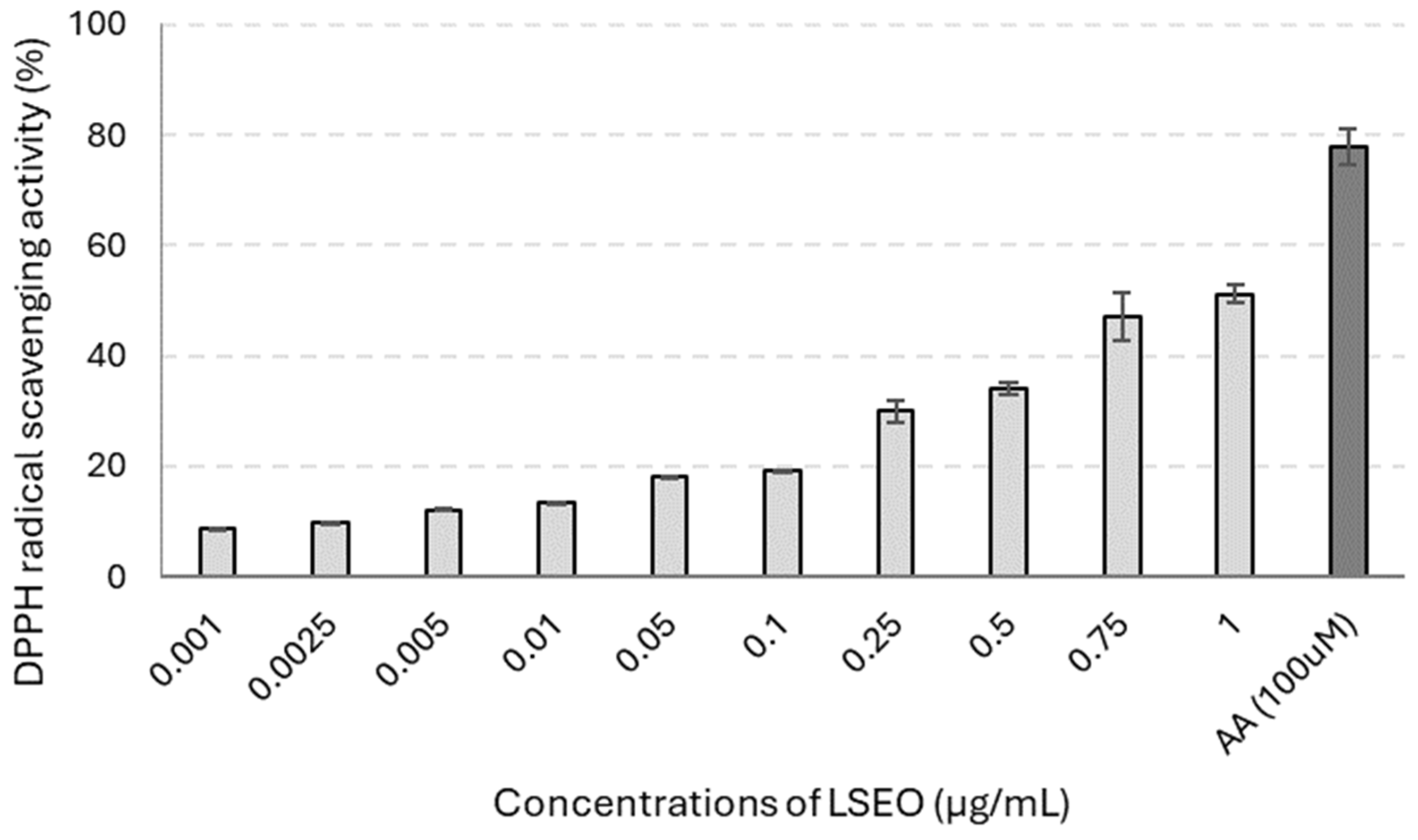
2.3. The Antioxidant Activity of LSEO
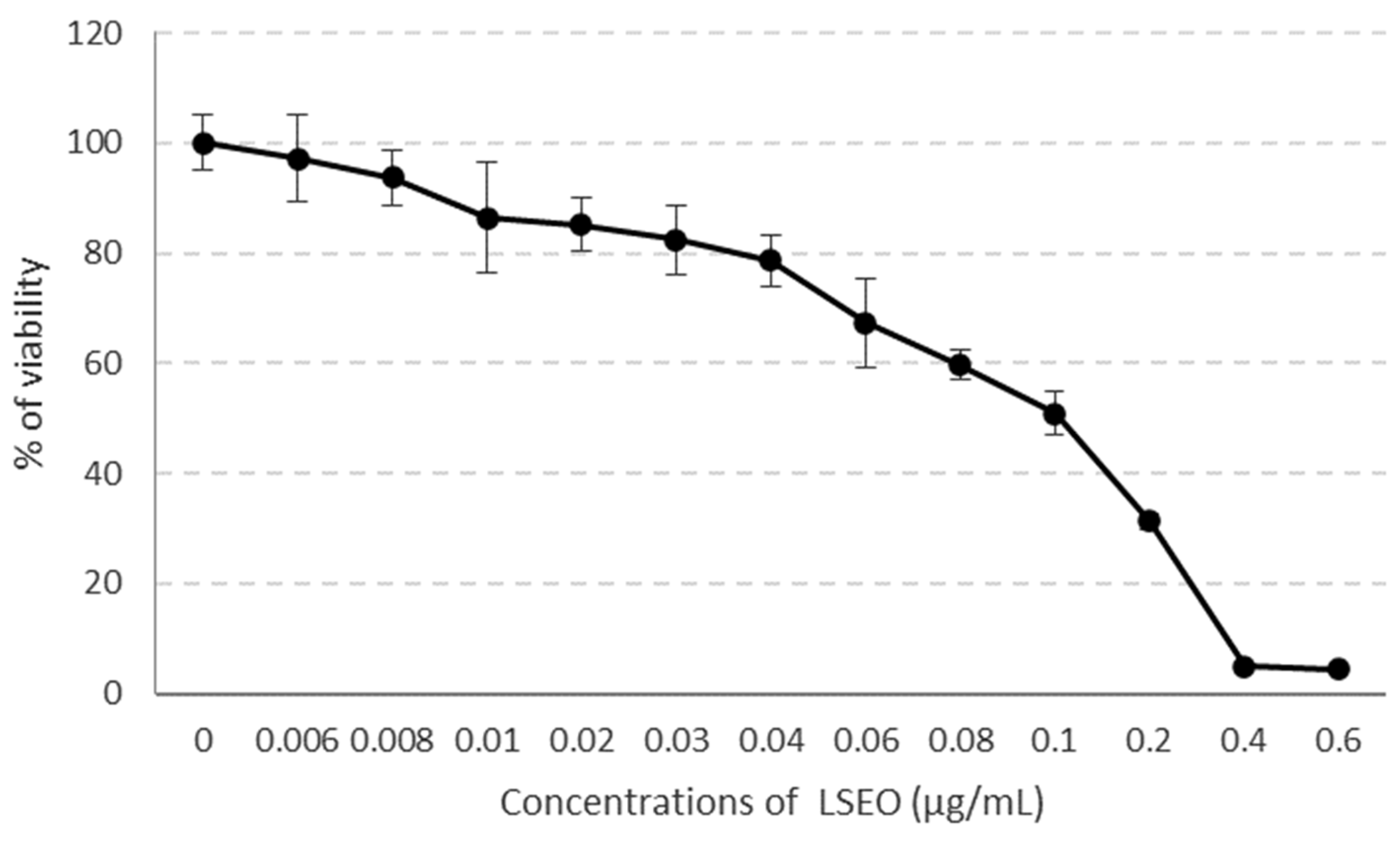
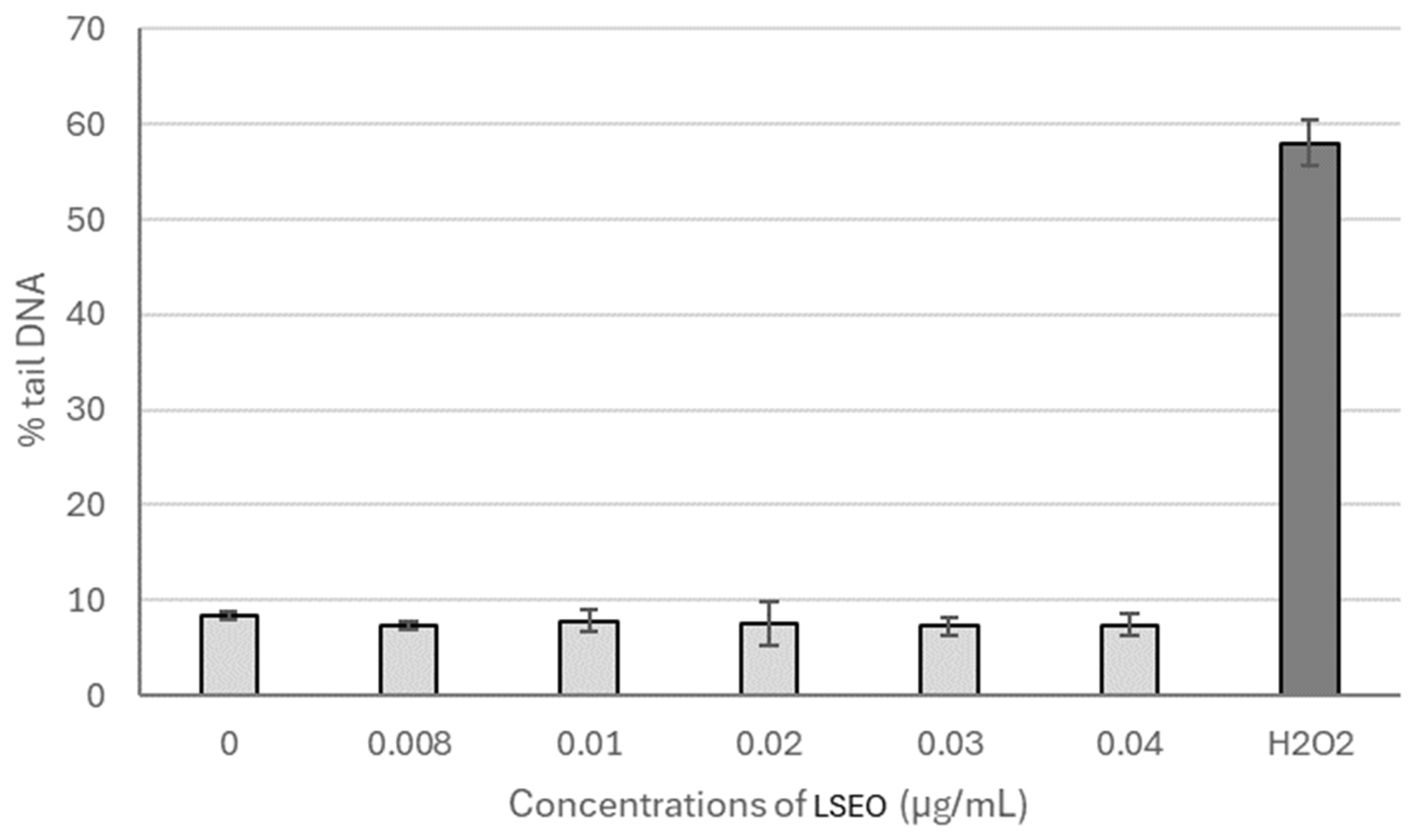
2.4. Cytotoxic and DNA-Damaging Effects of LSEO
2.5. Total Antioxidant Status Level of LSEO
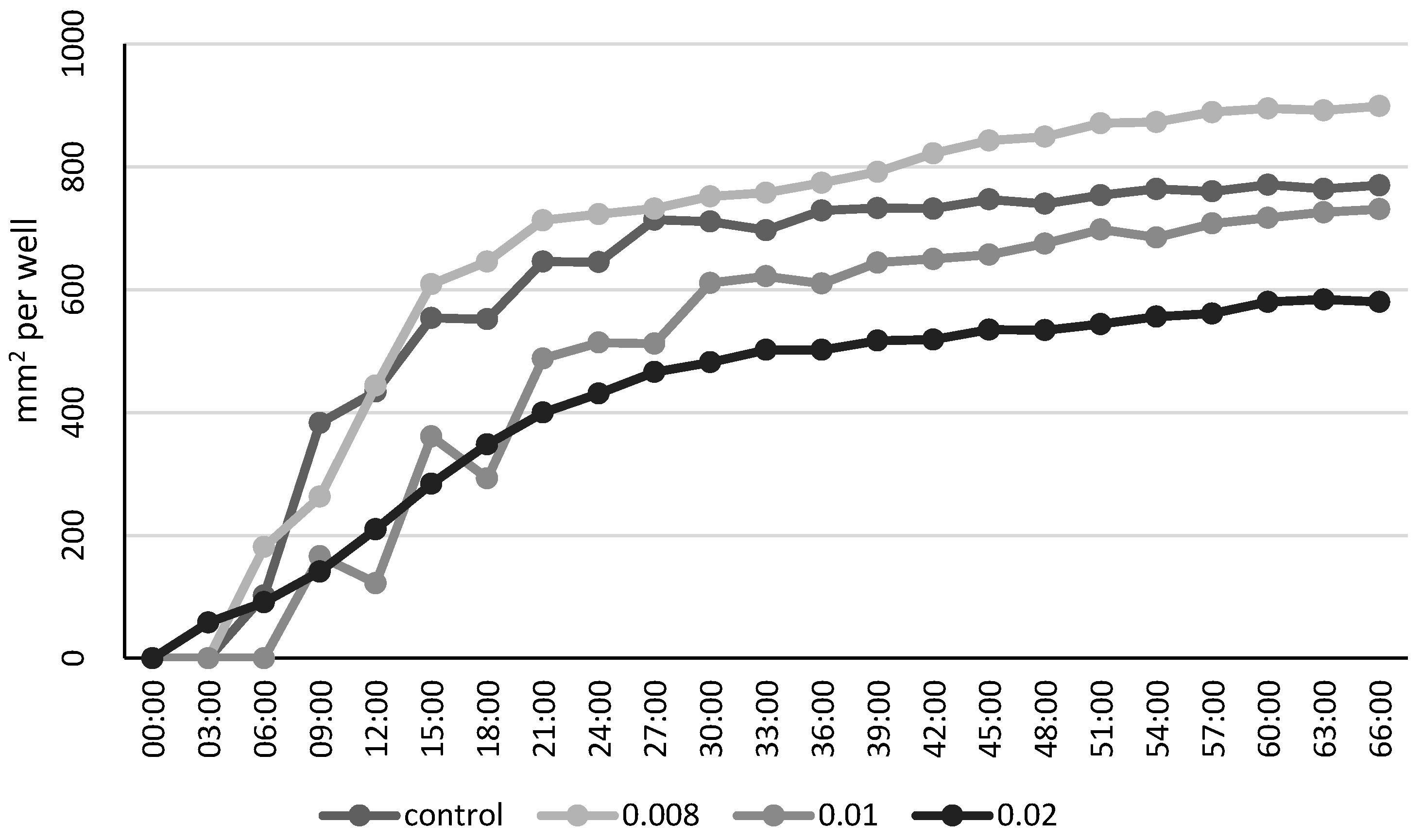
2.6. Wound-Healing Potential of LSEO
3. Discussion
4. Materials and Methods
4.1. Bacterial Strains and Growth Conditions
4.2. Screening for Antibacterial Activity
4.3. Determination of MIC and MBC of LSEO
4.4. Radical-Scavenging Activity
4.5. Determination of Cytotoxicity
4.6. Determination of Genotoxicity
4.7. Determination of Total Antioxidant Status
4.8. Scratch Assay
4.9. Statistical Analysis
5. Conclusions
Supplementary Materials
Author Contributions
Funding
Institutional Review Board Statement
Informed Consent Statement
Data Availability Statement
Acknowledgments
Conflicts of Interest
References
- Adeli, H.; Khorasani, M.T.; Parvazinia, M. Wound Dressing Based on Electrospun PVA/Chitosan/Starch Nanofibrous Mats: Fabrication, Antibacterial and Cytocompatibility Evaluation and in Vitro Healing Assay. Int. J. Biol. Macromol. 2019, 122, 238–254. [Google Scholar] [CrossRef] [Scilit] [PubMed]
- Oli, A.N.; Emeka Eze, D.; Gugu, T.H.; Ezeobi, I.; Maduagwu, U.N.; Ihekwereme, C.P. Multi-Antibiotic Resistant Extended-Spectrum Beta-Lactamase Producing Bacteria Pose a Challenge to the Effective Treatment of Wound and Skin Infections. Pan Afr. Med. J. 2017, 27, 66. [Google Scholar] [CrossRef] [Scilit] [PubMed]
- Kozics, K.; Bučková, M.; Puškárová, A.; Kalászová, V.; Cabicarová, T.; Pangallo, D. The Effect of Ten Essential Oils on Several Cutaneous Drug-Resistant Microorganisms and Their Cyto/Genotoxic and Antioxidant Properties. Molecules 2019, 24, 4570. [Google Scholar] [CrossRef] [Scilit] [PubMed]
- Kim, H.J.; Na, S.W.; Alodaini, H.A.; Al-Dosary, M.A.; Nandhakumari, P.; Dyona, L. Prevalence of Multidrug-Resistant Bacteria Associated with Polymicrobial Infections. J. Infect. Public Health 2021, 14, 1864–1869. [Google Scholar] [CrossRef] [Scilit] [PubMed]
- Terreni, M.; Taccani, M.; Pregnolato, M. Molecules New Antibiotics for Multidrug-Resistant Bacterial Strains: Latest Research Developments and Future Perspectives. Molecules 2021, 26, 2671. [Google Scholar] [CrossRef] [Scilit] [PubMed]
- Parmanik, A.; Das, S.; Kar, B.; Bose, A.; Dwivedi, G.R.; Pandey, M.M. Current Treatment Strategies Against Multidrug-Resistant Bacteria: A Review. Curr. Microbiol. 2022, 79, 388. [Google Scholar] [CrossRef] [Scilit] [PubMed]
- Jin, G.; Prabhakaran, M.P.; Kai, D.; Annamalai, S.K.; Arunachalam, K.D.; Ramakrishna, S. Tissue Engineered Plant Extracts as Nanofibrous Wound Dressing. Biomaterials 2013, 34, 724–734. [Google Scholar] [CrossRef] [Scilit] [PubMed]
- Medina, E.; Pieper, D.H.; Medina, E.; Pieper, D.H. Tackling Threats and Future Problems of Multidrug-Resistant Bacteria. Curr. Top. Microbiol. Immunol. 2016, 398, 3–33. [Google Scholar] [CrossRef] [Scilit] [PubMed]
- Salam, M.A.; Al-Amin, M.Y.; Salam, M.T.; Singh Pawar, J.; Akhter, N.; Rabaan, A.A.; Alqumber, M.A.A. Antimicrobial Resistance: A Growing Serious Threat for Global Public Health. Healthcare 2023, 11, 1946. [Google Scholar] [CrossRef] [Scilit] [PubMed]
- Shaw, T.J.; Martin, P. Wound Repair: A Showcase for Cell Plasticity and Migration. Curr. Opin. Cell Biol. 2016, 42, 29–37. [Google Scholar] [CrossRef] [Scilit] [PubMed]
- Margadant, C.; Raymond, K.; Kreft, M.; Sachs, N.; Janssen, H.; Sonnenberg, A. Integrin A3β1 Inhibits Directional Migration and Wound Re-Epithelialization in the Skin. J. Cell Sci. 2009, 122, 278–288. [Google Scholar] [CrossRef] [Scilit] [PubMed]
- Heck, D.E.; Laskin, D.L.; Gardner, C.R.; Laskin, J.D. Epidermal Growth Factor Suppresses Nitric Oxide and Hydrogen Peroxide Production by Keratinocytes. Potential Role for Nitric Oxide in the Regulation of Wound Healing. J. Biol. Chem. 1992, 267, 21277–21280. [Google Scholar] [CrossRef] [Scilit]
- Avola, R.; Granata, G.; Geraci, C.; Napoli, E.; Graziano, A.C.E.; Cardile, V. Oregano (Origanum vulgare L.) Essential Oil Provides Anti-Inflammatory Activity and Facilitates Wound Healing in a Human Keratinocytes Cell Model. Food Chem. Toxicol. 2020, 144, 111586. [Google Scholar] [CrossRef] [Scilit] [PubMed]
- Bakkali, F.; Averbeck, S.; Averbeck, D.; Idaomar, M. Biological Effects of Essential Oils—A Review. Food Chem. Toxicol. 2008, 46, 446–475. [Google Scholar] [CrossRef] [Scilit] [PubMed]
- Song, C.-Y.; Nam, E.-H.; Park, S.-H.; Hwang, C.-Y. In Vitro Efficacy of the Essential Oil from Leptospermum Scoparium (Manuka) on Antimicrobial Susceptibility and Biofilm Formation in Staphylococcus Pseudintermedius Isolates from Dogs. Vet. Dermatol. 2013, 24, 404–487. [Google Scholar] [CrossRef] [Scilit] [PubMed]
- Mathew, C.; Tesfaye, W.; Rasmussen, P.; Peterson, G.M.; Bartholomaeus, A.; Sharma, M.; Thomas, J. Mānuka Oil—A Review of Antimicrobial and Other Medicinal Properties. Pharmaceuticals 2020, 13, 343. [Google Scholar] [CrossRef] [Scilit] [PubMed]
- Bussolati, O.; Kim, S.-Y.; Kim, Y.-K.; Jang, Y.-S.; Lee, M.-H. Enhancement of Biofunctionalization by Loading Manuka Oil on TiO2 Nanotubes. Nanomaterilas 2022, 12, 569. [Google Scholar] [CrossRef] [Scilit] [PubMed]
- Fratini, F.; Mancini, S.; Turchi, B.; Friscia, E.; Pistelli, L.; Giusti, G.; Cerri, D. A Novel Interpretation of the Fractional Inhibitory Concentration Index: The Case Origanum vulgare L. and Leptospermum Scoparium J. R. et G. Forst Essential Oils against Staphylococcus aureus Strains. Microbiol. Res. 2017, 195, 11–17. [Google Scholar] [CrossRef] [Scilit] [PubMed]
- Fratini, F.; Mancini, S.; Turchi, B.; Sparagni, D.; Al-Gwad, A.A.; Najar, B.; Pistelli, L.; Cerri, D.; Pedonese, F. Antimicrobial Activity of Three Essential Oils (Cinnamon, Manuka, and Winter Savory), and Their Synergic Interaction, against Listeria Monocytogenes. Flavour Fragr. J. 2019, 34, 339–348. [Google Scholar] [CrossRef] [Scilit]
- Lis-Balchin, M.; Hart, S.L.; Deans, S.G. Pharmacological and Antimicrobial Studies on Different Tea-Tree Oils (Melaleuca Alternifolia, Leptospermum Scoparium or Manuka and Kunzea Ericoides or Kanuka), Originating in Australia and New Zealand. Phytother. Res. 2000, 14, 623–629. [Google Scholar]
- Schnitzler, P.; Wiesenhofer, K.; Reichling, J. Comparative Study on the Cytotoxicity of Different Myrtaceae Essential Oils on Cultured Vero and RC-37 Cells. Pharmazie 2008, 63, 830–835. [Google Scholar] [CrossRef]
- Chen, C.C.; Yan, S.H.; Yen, M.Y.; Wu, P.F.; Liao, W.T.; Huang, T.S.; Wen, Z.H.; David Wang, H.M. Investigations of Kanuka and Manuka Essential Oils for in Vitro Treatment of Disease and Cellular Inflammation Caused by Infectious Microorganisms. J. Microbiol. Immunol. Infect. 2016, 49, 104–111. [Google Scholar] [CrossRef] [Scilit] [PubMed]
- George, D.R.; Sparagano, O.A.E.; Port, G.; Okello, E.; Shiel, R.S.; Guy, J.H. Environmental Interactions with the Toxicity of Plant Essential Oils to the Poultry Red Mite Dermanyssus Gallinae. Med. Vet. Entomol. 2010, 24, 1–8. [Google Scholar] [CrossRef] [Scilit] [PubMed]
- Schnitzler, P. Essential Oils for the Treatment of Herpes Simplex Virus Infections. Chemotherapy 2019, 64, 1–7. [Google Scholar] [CrossRef] [Scilit] [PubMed]
- Kwon, O.S.; Jung, S.H.; Yang, B.S. Topical Administration of Manuka Oil Prevents UV-B Irradiation-Induced Cutaneous Photoaging in Mice. Evid. Based Complement. Alternat. Med. 2013, 2013, 930857. [Google Scholar] [CrossRef] [Scilit] [PubMed]
- Orchard, A.; Van Vuuren, S. Commercial Essential Oils as Potential Antimicrobials to Treat Skin Diseases. Evid. Based Complement. Alternat. Med. 2017, 2017, 4517971. [Google Scholar] [CrossRef] [Scilit] [PubMed]
- Li, B.; Webster, T.J. Bacteria Antibiotic Resistance: New Challenges and Opportunities for Implant-associated Orthopedic Infections. J. Orthop. Res. 2018, 36, 22–32. [Google Scholar] [CrossRef] [Scilit] [PubMed]
- Choi, J.E.; Jang, T.-S.; Kim, J.-K. Antibacterial Effect of Essential Oil on Staphylococcus Aureus-Resistant Strain (MRSA), the Causative Agent of Dermatitis. J. Korean Soc. Cosmetol. 2022, 28, 956–961. [Google Scholar] [CrossRef] [Scilit]
- Song, S.-Y.; Hyun, J.-E.; Kang, J.-H.; Hwang, C.-Y. In Vitro Antibacterial Activity of the Manuka Essential Oil from Leptospermum Scoparium Combined with Tris-EDTA against Gram-Negative Bacterial Isolates from Dogs with Otitis Externa. Vet. Dermatol. 2019, 31, 81–86. [Google Scholar] [CrossRef] [Scilit] [PubMed]
- Van Klink, J.W.; Larsen, L.; Perry, N.B.; Weavers, R.T.; Cook, G.M.; Bremer, P.J.; MacKenzie, A.D.; Kirikae, T. Triketones Active against Antibiotic-Resistant Bacteria: Synthesis, Structure–Activity Relationships, and Mode of Action. Bioorg. Med. Chem. 2005, 13, 6651–6662. [Google Scholar] [CrossRef] [Scilit] [PubMed]
- Rogers, S.W.; Gilleland, H.E.; Eagon, R.G. Characterization of a Protein-Lipopolysaccharide Complex Released from Cell Walls of Pseudomonas Aeruginosa by Ethylenediaminetetraacetic. Acid. Can. J. Microbiol. 1969, 15, 743–748. [Google Scholar] [CrossRef] [Scilit] [PubMed]
- Mann, C.M.; Cox, S.D.; Markham, J.L. The Outer Membrane of Pseudomonas Aeruginosa NCTC 6749 Contributes to Its Tolerance to the Essential Oil of Melaleuca Alternifolia (Tea Tree Oil). Lett. Appl. Microbiol. 2000, 30, 294–297. [Google Scholar] [CrossRef] [Scilit] [PubMed]
- Kaur, R.; Kaur, L.; Gupta, T.B.; Bronlund, J. Effectiveness of Mānuka and Rosemary Oils as Natural and Green Antioxidants in Wagyu and Normal Beef. Int. J. Food Sci. Technol. 2023, 58, 4066–4073. [Google Scholar] [CrossRef] [Scilit]
- Bass, N.I.; Parekh, M.Y.; Satyal, P.; Soni, S.; Jacob, J.A.; Mack, J.P.; Lobo, D.E. Manuka Essential Oil Triggers Apoptosis and Activation of C-Jun N-Terminal Kinase in Fibroblasts and Fibrosarcoma Cells. Molecules 2024, 29, 5168. [Google Scholar] [CrossRef] [Scilit] [PubMed]
- Puškárová, A.; Bučková, M.; Kraková, L.; Pangallo, D.; Kozics, K. The Antibacterial and Antifungal Activity of Six Essential Oils and Their Cyto/Genotoxicity to Human HEL 12469 Cells. Sci. Rep. 2017, 7, 8211. [Google Scholar] [CrossRef] [Scilit] [PubMed]
- Kapustová, M.; Puškárová, A.; Bučková, M.; Granata, G.; Napoli, E.; Annušová, A.; Mesárošová, M.; Kozics, K.; Pangallo, D.; Geraci, C. Biofilm Inhibition by Biocompatible Poly(ε-Caprolactone) Nanocapsules Loaded with Essential Oils and Their Cyto/Genotoxicity to Human Keratinocyte Cell Line. Int. J. Pharm. 2021, 606, 120846. [Google Scholar] [CrossRef] [Scilit] [PubMed]
- Kozics, K.; Mesárošová, M.; Šramková, M.; Bučková, M.; Puškárová, A.; Galová, D.; Pangallo, D. Evaluation of Bioactivity of Essential Oils: Cytotoxic/Genotoxic Effects on Colorectal Cancer Cell Lines, Antibacterial Activity, and Survival of Lactic Acid Bacteria. Molecules 2025, 30, 890. [Google Scholar] [CrossRef] [Scilit] [PubMed]
- Gasparrini, M.; Afrin, S.; Forbes-Hernández, T.Y.; Cianciosi, D.; Reboredo-Rodriguez, P.; Amici, A.; Battino, M.; Giampieri, F. Protective Effects of Manuka Honey on LPS-Treated RAW 264.7 Macrophages. Part 2: Control of Oxidative Stress Induced Damage, Increase of Antioxidant Enzyme Activities and Attenuation of Inflammation. Food Chem. Toxicol. 2018, 120, 578–587. [Google Scholar] [CrossRef] [Scilit] [PubMed]
- Morar, I.I.; Pop, R.M.; Peitzner, E.; Ranga, F.; Orăsan, M.S.; Cecan, A.D.; Chera, E.I.; Bonci, T.I.; Usatiuc, L.O.; Țicolea, M.; et al. Phytochemical Composition and Antioxidant Activity of Manuka Honey and Ohia Lehua Honey. Nutrients 2025, 17, 276. [Google Scholar] [CrossRef] [Scilit] [PubMed]
- Iftikhar, A.; Nausheen, R.; Khurshid, M.; Iqbal, R.K.; Muzaffar, H.; Malik, A.; Ali Khan, A.; Batool, F.; Akhtar, S.; Yasin, A.; et al. Pancreatic Regenerative Potential of Manuka Honey Evidenced through Pancreatic Histology and Levels of Transcription Factors in Diabetic Rat Model. Heliyon 2023, 9, e20017. [Google Scholar] [CrossRef] [Scilit] [PubMed]
- Harper, D.; Young, A.; McNaught, C.E. The Physiology of Wound Healing. Surgery 2014, 32, 445–450. [Google Scholar] [CrossRef] [Scilit]
- Jorgensen, J.H.; Pfaller, M.A. (Eds.) Manual of Clinical Microbiology; ASM Press: Washington, DC, USA, 2015. [Google Scholar]
- Magiorakos, A.P.; Srinivasan, A.; Carey, R.B.; Carmeli, Y.; Falagas, M.E.; Giske, C.G.; Harbarth, S.; Hindler, J.F.; Kahlmeter, G.; Olsson-Liljequist, B.; et al. Multidrug-Resistant, Extensively Drug-Resistant and Pandrug-Resistant Bacteria: An International Expert Proposal for Interim Standard Definitions for Acquired Resistance. Clin. Microbiol. Infect. 2012, 18, 268–281. [Google Scholar] [CrossRef] [Scilit] [PubMed]
- Ponce, A.G.; Fritz, R.; Del Valle, C.; Roura, S.I. Antimicrobial Activity of Essential Oils on the Native Microflora of Organic Swiss Chard. Food Sci. Technol. 2003, 36, 679–684. [Google Scholar] [CrossRef] [Scilit]
- Poaty, B.; Lahlah, J.; Porqueres, F.; Bouafif, H. Composition, antimicrobial and antioxidant activities of seven essential oils from the North American boreal forest. World J. Microbiol. Biotechnol. 2015, 31, 907–919. [Google Scholar] [CrossRef] [Scilit] [PubMed]
- Gupta, D. Methods for Determination of Antioxidant Capacity: A Review. Int. J. Pharm. Sci. Res. 2015, 6, 546. [Google Scholar] [CrossRef]
- Kumar, P.; Nagarajan, A.; Uchil, P.D. Analysis of Cell Viability by the MTT Assay. Cold Spring Harb. Protoc. 2018, 6, pdb-rot095505. [Google Scholar] [CrossRef] [Scilit] [PubMed]
- Collins, A.R. The Comet Assay for DNA Damage and Repair: Principles, Applications, and Limitations. Mol. Biotechnol. 2004, 26, 249–261. [Google Scholar] [CrossRef] [Scilit] [PubMed]
- Bradford, M.M. A Rapid and Sensitive Method for the Quantitation of Microgram Quantities of Protein Utilizing the Principle of Protein-Dye Binding. Anal. Biochem. 1976, 72, 248–254. [Google Scholar] [CrossRef] [PubMed]


| Bacteria | PEN | AMP | AMS | AMX | CXM | CTX | CAZ | CIP | TMS | TET |
|---|---|---|---|---|---|---|---|---|---|---|
| P. aeruginosa KLI 696/2 | ND | ND | R | ND | R | R | I | I | R | R |
| P. vulgaris KLI 696/12 | ND | R | R | ND | R | S | S | S | S | R |
| E. coli KLI 743 | ND | R | R | ND | R | S | R | R | R | R |
| E. cloacae RES 667 | ND | R | R | ND | R | R | S | S | S | S |
| S. aureus KLI 434/2216 | R | R | R | R | R | R | ND | R | S | S |
| Sample | Dose (µg/mL) | TAS (mmol/prot) |
|---|---|---|
| Control (−) | - | 0.61 ± 0.02 |
| Control (+) | - | 4.54 ± 0.23 |
| LSEO | 0.008 | 0.76 ± 0.04 ** |
| 0.01 | 0.85 ± 0.03 *** | |
| 0.02 | 1.03 ± 0.08 ** | |
| 0.04 | 1.13 ± 0.04 *** |
| Differences of Least Squares Means | ||||||
|---|---|---|---|---|---|---|
| Concentrations | Estimate | Standard Error | DF | t-Value | Pr > |t| | |
| 0 | 0.008 | −6.6652 | 1.3033 | 16.9 | −5.11 | <0.0001 |
| 0 | 0.01 | 11.0052 | 1.5500 | 26.8 | 7.10 | <0.0001 |
| 0 | 0.02 | 18.7722 | 1.8012 | 22.0 | 10.42 | <0.0001 |
| 0.008 | 0.01 | 17.6704 | 1.7198 | 22.8 | 10.27 | <0.0001 |
| 0.008 | 0.02 | 25.4374 | 1.9492 | 32.2 | 13.05 | <0.0001 |
| 0.01 | 0.02 | 7.7670 | 2.1221 | 25.3 | 3.66 | <0.0012 |
Disclaimer/Publisher’s Note: The statements, opinions and data contained in all publications are solely those of the individual author(s) and contributor(s) and not of MDPI and/or the editor(s). MDPI and/or the editor(s) disclaim responsibility for any injury to people or property resulting from any ideas, methods, instructions or products referred to in the content. |
© 2026 by the authors. Licensee MDPI, Basel, Switzerland. This article is an open access article distributed under the terms and conditions of the Creative Commons Attribution (CC BY) license.
Share and Cite
Bučková, M.; Puškárová, A.; Galová, D.; Straka, M.; Suchánková, M.; Pangallo, D.; Šramková, M.; Kozics, K. Leptospermum scoparium Essential Oil: Antibacterial Properties, Cyto/Genotoxic Effects, Antioxidant Activity, and Wound-Healing Potential In Vitro. Molecules 2026, 31, 3304. https://doi.org/10.3390/molecules31183304
Bučková M, Puškárová A, Galová D, Straka M, Suchánková M, Pangallo D, Šramková M, Kozics K. Leptospermum scoparium Essential Oil: Antibacterial Properties, Cyto/Genotoxic Effects, Antioxidant Activity, and Wound-Healing Potential In Vitro. Molecules. 2026; 31(18):3304. https://doi.org/10.3390/molecules31183304
Chicago/Turabian StyleBučková, Mária, Andrea Puškárová, Dominika Galová, Marek Straka, Magda Suchánková, Domenico Pangallo, Monika Šramková, and Katarína Kozics. 2026. "Leptospermum scoparium Essential Oil: Antibacterial Properties, Cyto/Genotoxic Effects, Antioxidant Activity, and Wound-Healing Potential In Vitro" Molecules 31, no. 18: 3304. https://doi.org/10.3390/molecules31183304
APA StyleBučková, M., Puškárová, A., Galová, D., Straka, M., Suchánková, M., Pangallo, D., Šramková, M., & Kozics, K. (2026). Leptospermum scoparium Essential Oil: Antibacterial Properties, Cyto/Genotoxic Effects, Antioxidant Activity, and Wound-Healing Potential In Vitro. Molecules, 31(18), 3304. https://doi.org/10.3390/molecules31183304