Alantolactone Activates the Extracellular Signal-Regulated Kinase Signaling Pathway to Promote Tumor Necrosis Factor Receptor 1 Ectodomain Shedding


Abstract
1. Introduction
2. Results
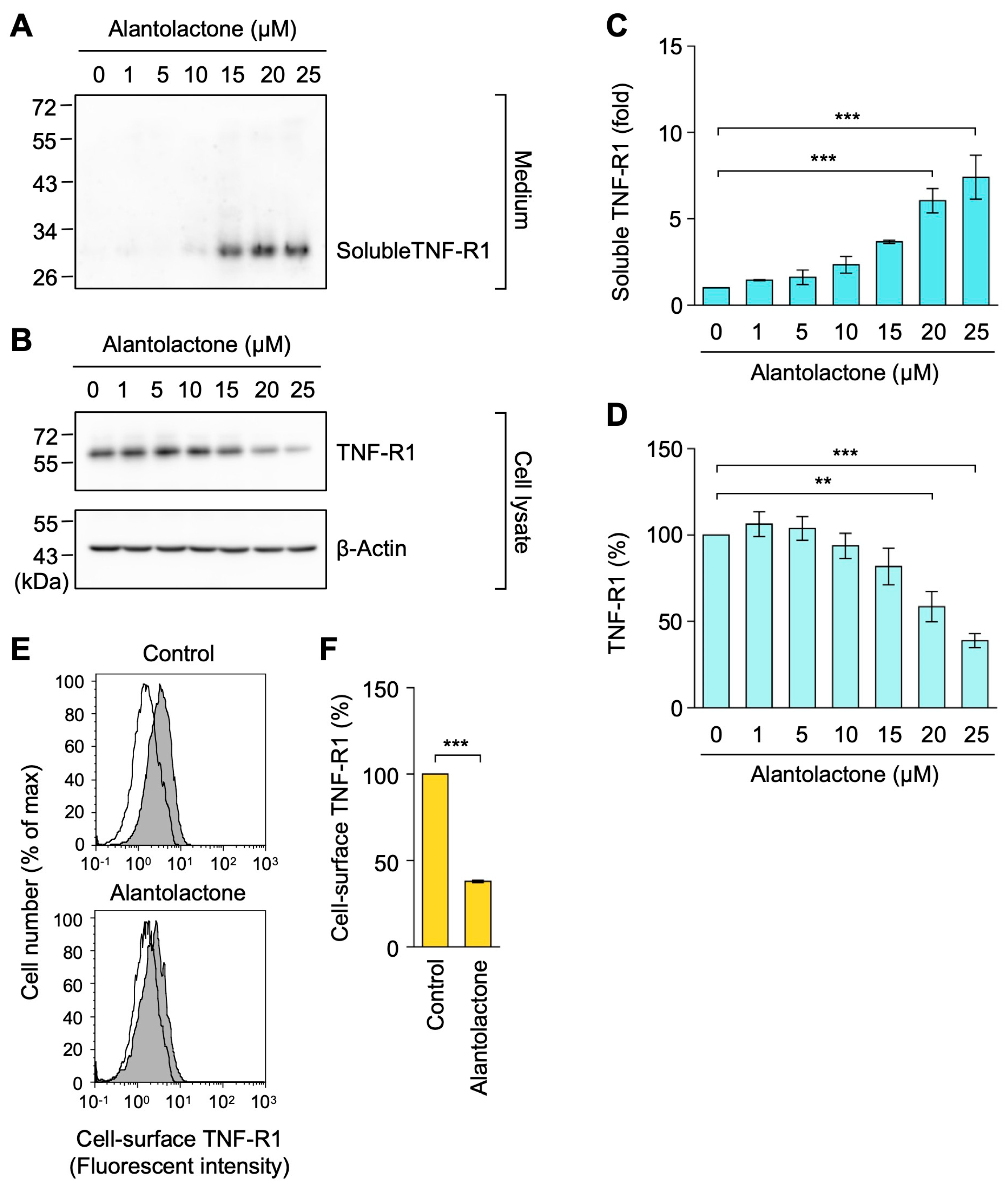
2.1. Alantolactone Reduced Cell-Surface TNF-R1 Expression in A549 Cells
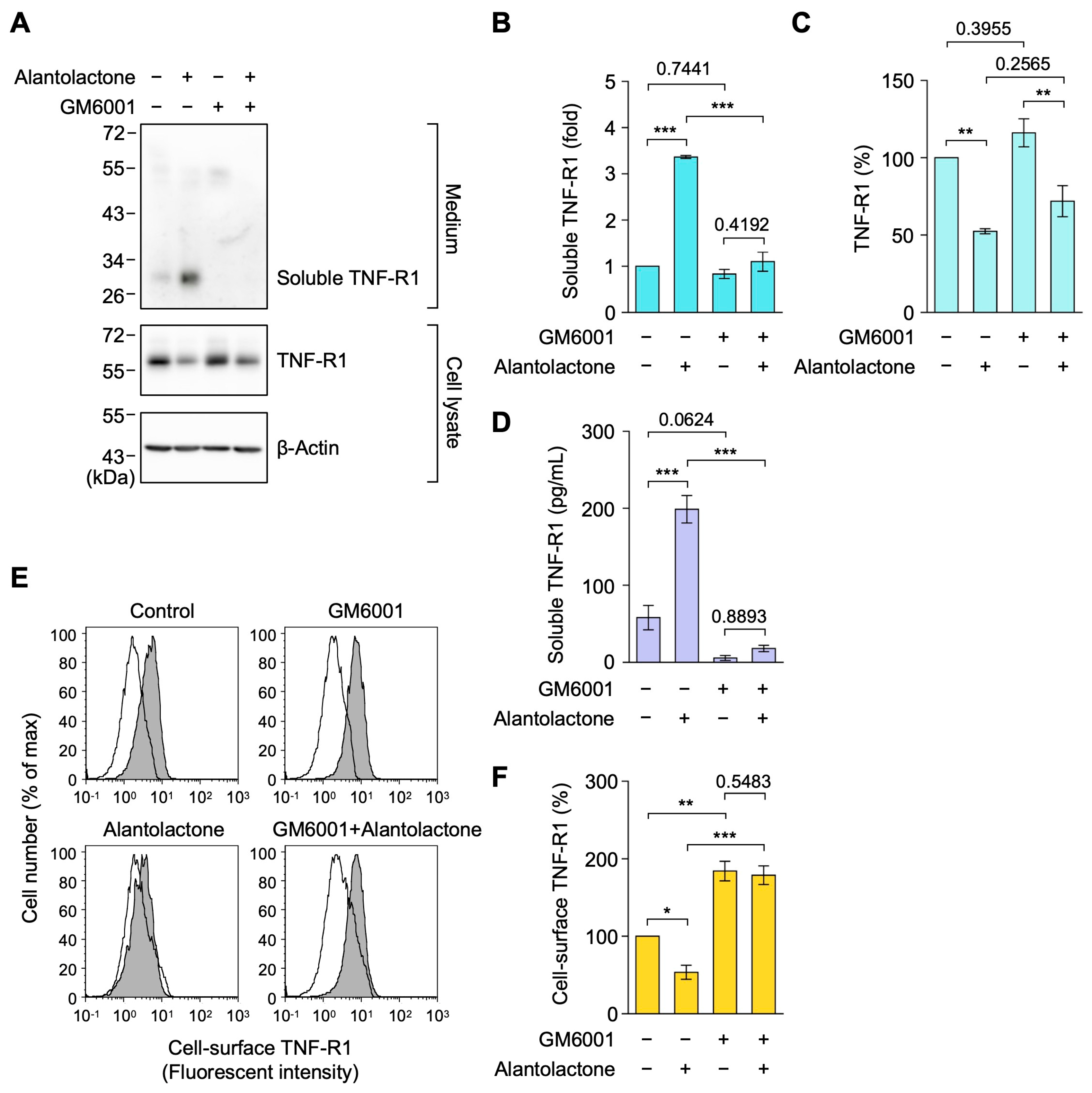
2.2. A Broad-Spectrum Metalloproteinase Inhibitor Decreased Soluble TNF-R1 Levels in Alantolactone-Treated A549 Cells
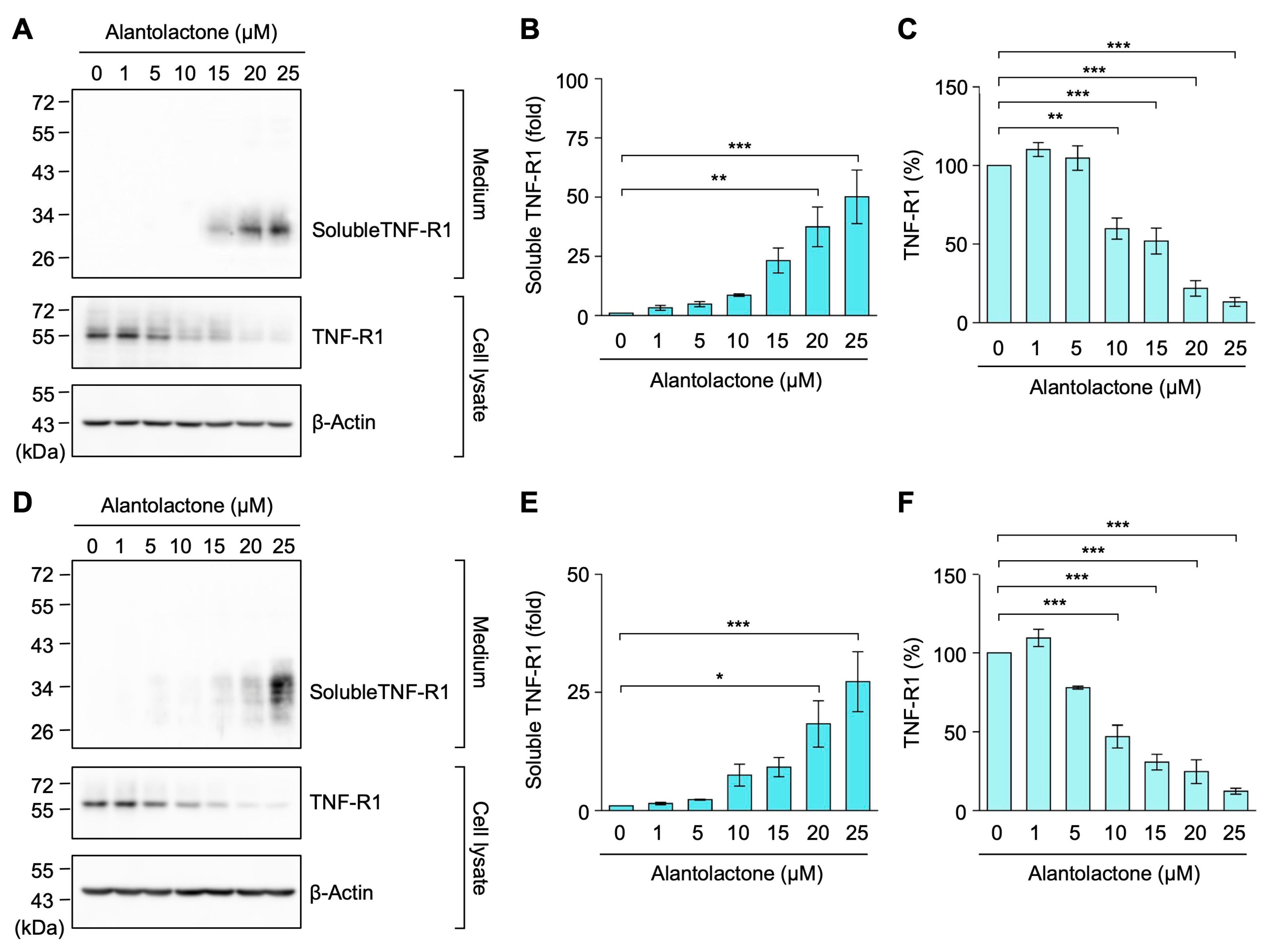
2.3. Alantolactone Promoted TNF-R1 Ectodomain Shedding in 293T Cells and HT-1080 Cells
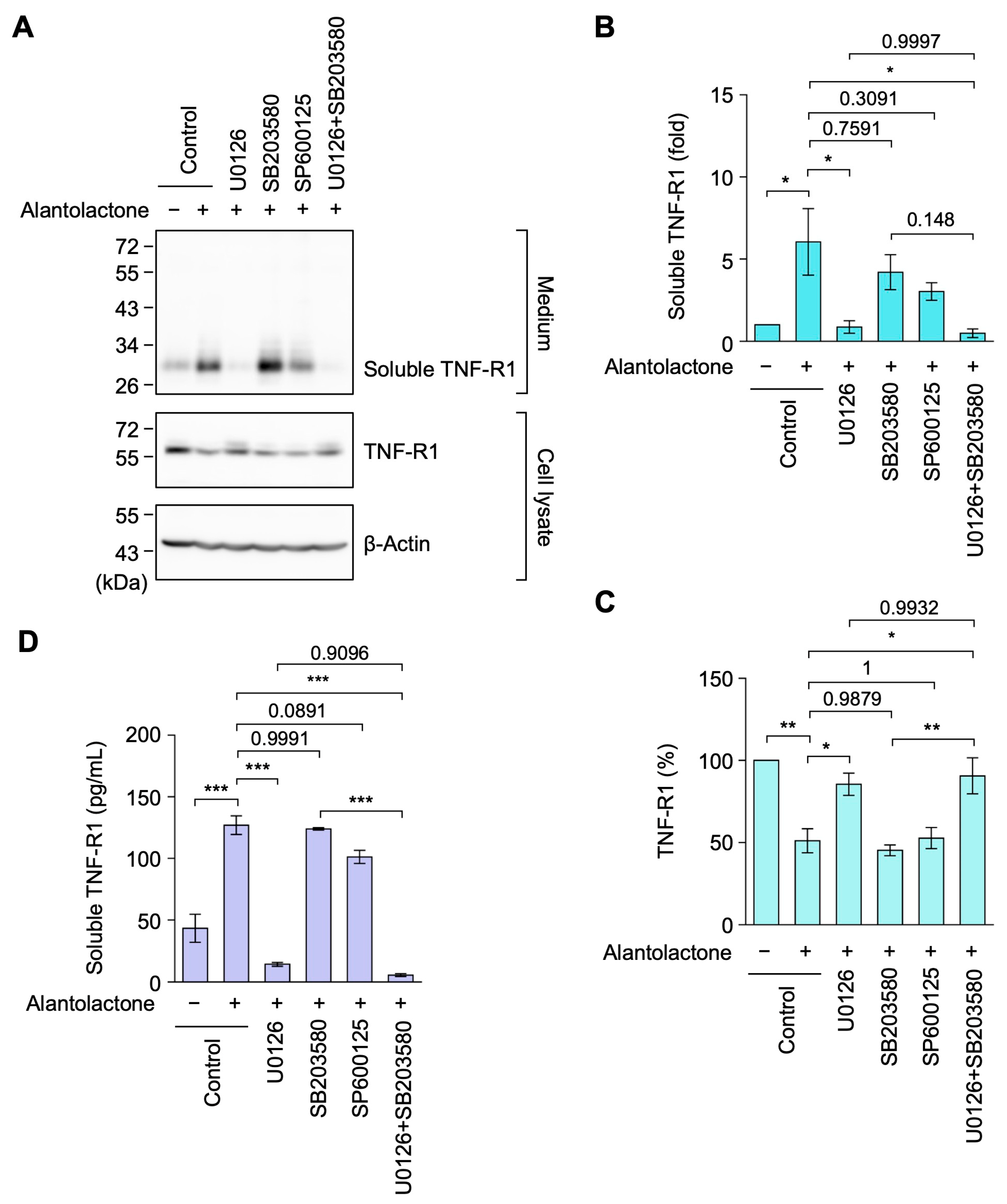
2.4. A MEK Inhibitor Suppressed Alantolactone-Induced TNF-R1 Ectodomain Shedding in A549 Cells
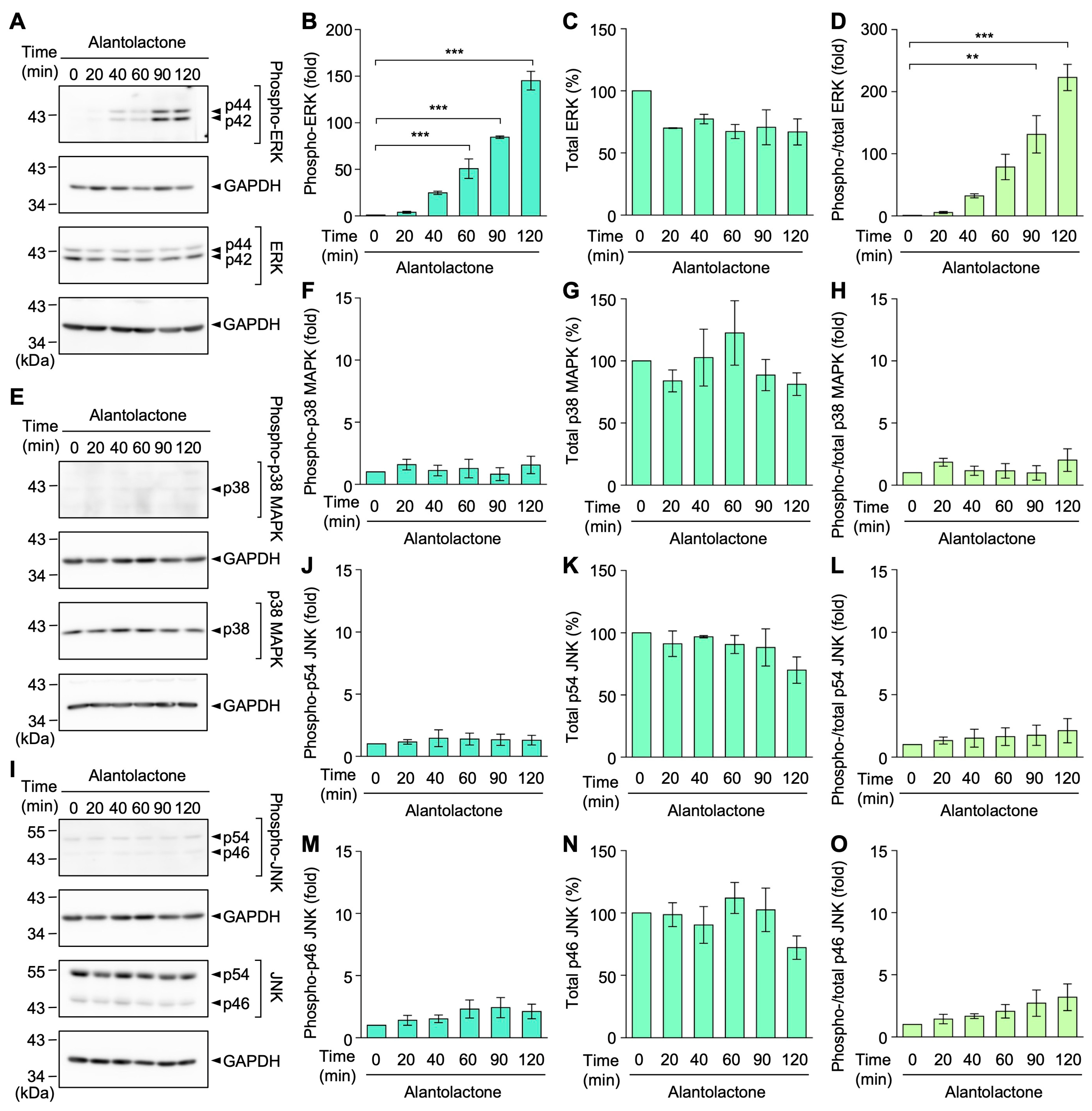
2.5. Alantolactone Induced the Phosphorylation of ERK, but Exerted Minimal Effects on the Phosphorylation of p38 MAPK or JNK in A549 Cells
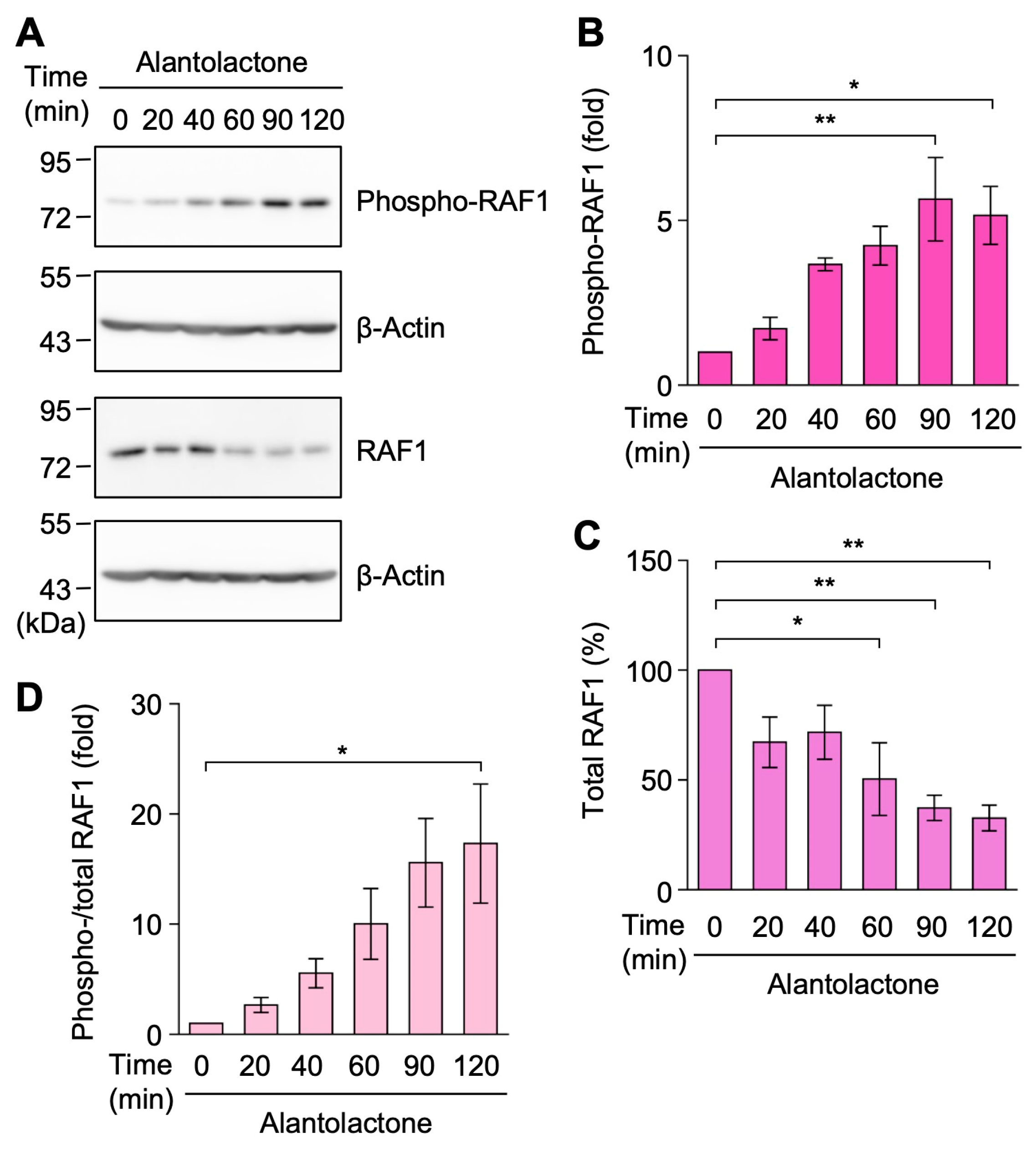
2.6. Alantolactone Induced RAF1 Phosphorylation in A549 Cells
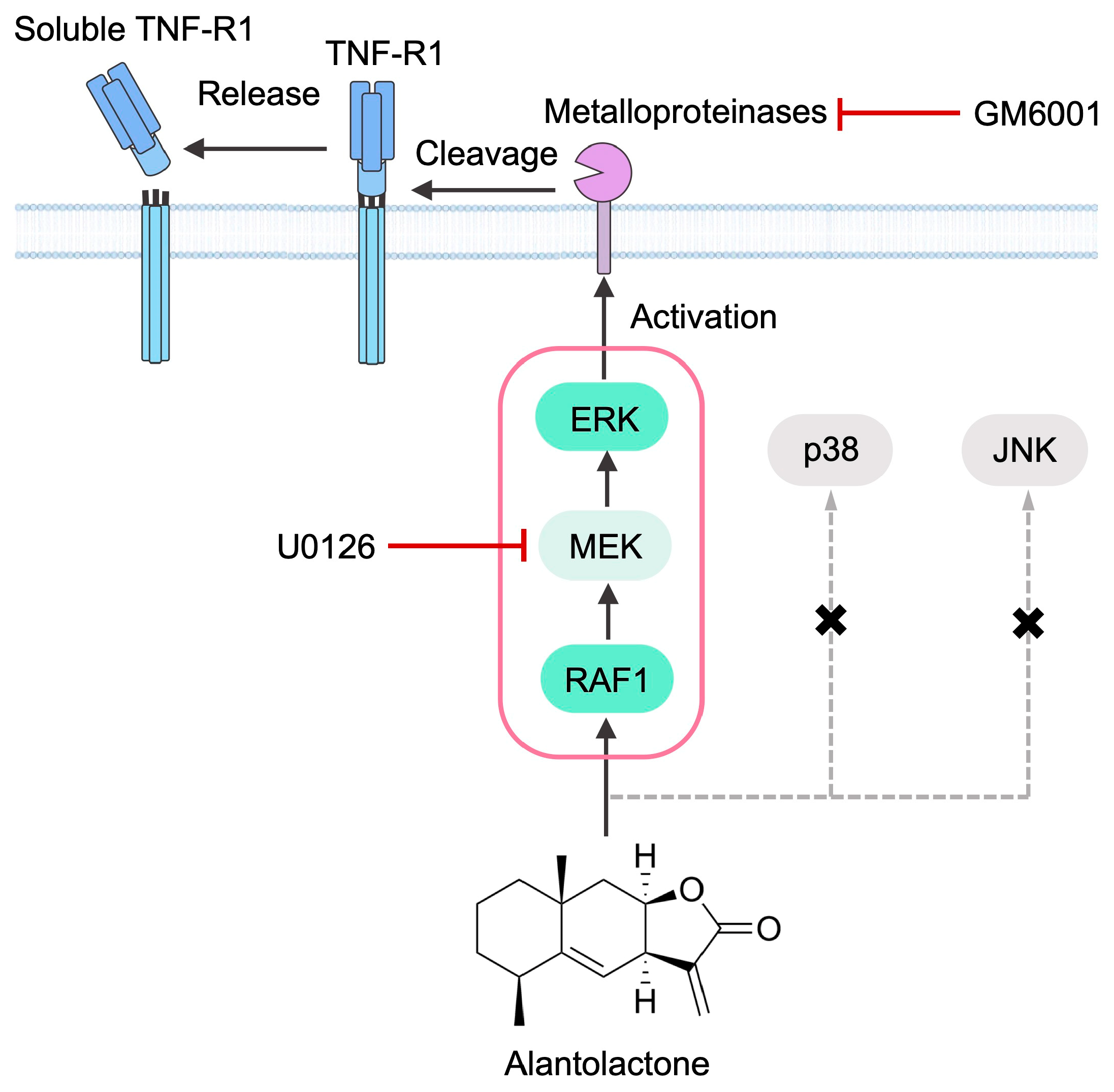
3. Discussion
4. Materials and Methods
4.1. Cell Culture
4.2. Reagents
4.3. Antibodies
4.4. Preparation of Cell Lysates and Medium Fractions
4.5. Western Blotting
4.6. ELISA
4.7. Flow Cytometry
4.8. Statistical Analysis
5. Conclusions
Supplementary Materials
Author Contributions
Funding
Institutional Review Board Statement
Informed Consent Statement
Data Availability Statement
Conflicts of Interest
Abbreviations
| ADAM | A disintegrin and metalloproteinase |
| AP-1 | Activator protein-1 |
| EGFR | Epidermal growth factor receptor |
| ELISA | Enzyme-linked immunosorbent assay |
| ERK | Extracellular signal-regulated kinase |
| FBS | Fetal bovine serum |
| GAPDH | Glyceraldehyde-3-phosphate dehydrogenase |
| IC50 | 50% inhibitory concentration |
| JNK | c-Jun N-terminal kinase |
| MAPK | Mitogen-activated protein kinase |
| MEK | Mitogen-activated protein kinase/extracellular signal-regulated kinase kinase |
| NF-κB | Nuclear factor κB |
| RAF | Rapidly accelerated fibrosarcoma |
| SEM | Standard error of the mean |
| TNF-α | Tumor necrosis factor α |
| TNF-R1 | Tumor necrosis factor receptor 1 |
References
- Chen, L.; Deng, H.; Cui, H.; Fang, J.; Zuo, Z.; Deng, J.; Li, Y.; Wang, X.; Zhao, L. Inflammatory responses and inflammation-associated diseases in organs. Oncotarget 2018, 9, 7204–7218. [Google Scholar] [CrossRef] [Scilit] [PubMed]
- Chavda, V.P.; Feehan, J.; Apostolopoulos, V. Inflammation: The cause of all diseases. Cells 2024, 13, 1906. [Google Scholar] [CrossRef] [Scilit] [PubMed]
- Soliman, A.M.; Barreda, D.R. Acute inflammation in tissue healing. Int. J. Mol. Sci. 2023, 24, 641. [Google Scholar] [CrossRef] [Scilit] [PubMed]
- Bender, E.C.; Tareq, H.S.; Suggs, L.J. Inflammation: A matter of immune cell life and death. npj Biomed. Innov. 2025, 2, 7. [Google Scholar] [CrossRef] [Scilit] [PubMed]
- Yuk, J.M.; Kim, J.K.; Kim, I.S.; Jo, E.K. TNF in human tuberculosis: A double-edged sword. Immune Netw. 2024, 24, e4. [Google Scholar] [CrossRef] [Scilit] [PubMed]
- García-Domínguez, M. The role of TNF-α in neuropathic pain: An immunotherapeutic perspective. Life 2025, 15, 785. [Google Scholar] [CrossRef] [Scilit] [PubMed]
- Valenzuela Cardenas, M.; Nowicki, T.S. TNF-alpha: Roles in pathogenesis and therapeutics in cancer. J. Biol. Chem. 2026, 302, 111251. [Google Scholar] [CrossRef] [Scilit] [PubMed]
- Holbrook, J.; Lara-Reyna, S.; Jarosz-Griffiths, H.; McDermott, M.F. Tumour necrosis factor signalling in health and disease. F1000Research 2019, 8, 111. [Google Scholar] [CrossRef] [Scilit] [PubMed]
- Wajant, H.; Siegmund, D. TNFR1 and TNFR2 in the control of the life and death balance of macrophages. Front. Cell Dev. Biol. 2019, 7, 91. [Google Scholar] [CrossRef] [Scilit] [PubMed]
- Atretkhany, K.N.; Gogoleva, V.S.; Drutskaya, M.S.; Nedospasov, S.A. Distinct modes of TNF signaling through its two receptors in health and disease. J. Leukoc. Biol. 2020, 107, 893–905. [Google Scholar] [CrossRef] [Scilit] [PubMed]
- Fischer, R.; Kontermann, R.E.; Pfizenmaier, K. Selective targeting of TNF receptors as a novel therapeutic approach. Front. Cell Dev. Biol. 2020, 8, 401. [Google Scholar] [CrossRef] [Scilit] [PubMed]
- van Loo, G.; Bertrand, M.J.M. Death by TNF: A road to inflammation. Nat. Rev. Immunol. 2023, 23, 289–303. [Google Scholar] [CrossRef] [Scilit] [PubMed]
- Preedy, M.K.; White, M.R.H.; Tergaonkar, V. Cellular heterogeneity in TNF/TNFR1 signalling: Live cell imaging of cell fate decisions in single cells. Cell Death Dis. 2024, 15, 202. [Google Scholar] [CrossRef] [Scilit] [PubMed]
- Diao, Y.F.; Wang, J.Y.; Tan, X.Y.; Yuan, J.S. MAPK signaling pathways in host immune regulation during Mycobacterium tuberculosis infection. Front. Immunol. 2026, 17, 1781320. [Google Scholar] [CrossRef] [Scilit] [PubMed]
- Tripp, R.A.; Jones, L.P.; Martin, D.E. Intersection of inflammation and viral replication: The central role of MAPK signaling in viral respiratory infections. Front. Microbiol. 2026, 16, 1735254. [Google Scholar] [CrossRef] [Scilit] [PubMed]
- Arthur, J.S.; Ley, S.C. Mitogen-activated protein kinases in innate immunity. Nat. Rev. Immunol. 2013, 13, 679–692. [Google Scholar] [CrossRef] [Scilit] [PubMed]
- Vervaeke, A.; Lamkanfi, M. MAP kinase signaling at the crossroads of inflammasome activation. Immunol. Rev. 2025, 329, e13436. [Google Scholar] [CrossRef] [Scilit] [PubMed]
- Lavoie, H.; Gagnon, J.; Therrien, M. ERK signalling: A master regulator of cell behaviour, life and fate. Nat. Rev. Mol. Cell Biol. 2020, 21, 607–632. [Google Scholar] [CrossRef] [Scilit] [PubMed]
- Bahar, M.E.; Kim, H.J.; Kim, D.R. Targeting the RAS/RAF/MAPK pathway for cancer therapy: From mechanism to clinical studies. Signal Transduct. Target Ther. 2023, 8, 455. [Google Scholar] [CrossRef] [Scilit] [PubMed]
- Spencer-Smith, R.; Morrison, D.K. Regulation of RAF family kinases: New insights from recent structural and biochemical studies. Biochem. Soc. Trans. 2024, 52, 1061–1069. [Google Scholar] [CrossRef] [Scilit] [PubMed]
- Zunke, F.; Rose-John, S. The shedding protease ADAM17: Physiology and pathophysiology. Biochim. Biophys. Acta Mol. Cell Res. 2017, 1864, 2059–2070. [Google Scholar] [CrossRef] [Scilit] [PubMed]
- Lambrecht, B.N.; Vanderkerken, M.; Hammad, H. The emerging role of ADAM metalloproteinases in immunity. Nat. Rev. Immunol. 2018, 18, 745–758. [Google Scholar] [CrossRef] [Scilit] [PubMed]
- Arora, S.; Scott, A.M.; Janes, P.W. ADAM proteases in cancer: Biological roles, therapeutic challenges, and emerging opportunities. Cancers 2025, 17, 1703. [Google Scholar] [CrossRef] [Scilit] [PubMed]
- Díaz-Rodríguez, E.; Montero, J.C.; Esparís-Ogando, A.; Yuste, L.; Pandiella, A. Extracellular signal-regulated kinase phosphorylates tumor necrosis factor α-converting enzyme at threonine 735: A potential role in regulated shedding. Mol. Biol. Cell 2002, 13, 2031–2044. [Google Scholar] [CrossRef] [Scilit] [PubMed]
- Soond, S.M.; Everson, B.; Riches, D.W.H.; Murphy, G. ERK-mediated phosphorylation of Thr735 in TNFα-converting enzyme and its potential role in TACE protein trafficking. J. Cell Sci. 2005, 118, 2371–2380. [Google Scholar] [CrossRef] [Scilit] [PubMed]
- Liu, C.; Xu, P.; Lamouille, S.; Xu, J.; Derynck, R. TACE-mediated ectodomain shedding of the type I TGF-β receptor downregulates TGF-β signaling. Mol. Cell 2009, 35, 26–36. [Google Scholar] [CrossRef] [Scilit] [PubMed]
- Xu, P.; Derynck, R. Direct activation of TACE-mediated ectodomain shedding by p38 MAP kinase regulates EGF receptor-dependent cell proliferation. Mol. Cell 2010, 37, 551–566. [Google Scholar] [CrossRef] [Scilit] [PubMed]
- Lichtenthaler, S.F.; Lemberg, M.K.; Fluhrer, R. Proteolytic ectodomain shedding of membrane proteins in mammals—Hardware, concepts, and recent developments. EMBO J. 2018, 37, e99456. [Google Scholar] [CrossRef] [Scilit] [PubMed]
- Ruiz, A.; Palacios, Y.; Garcia, I.; Chavez-Galan, L. Transmembrane TNF and its receptors TNFR1 and TNFR2 in mycobacterial infections. Int. J. Mol. Sci. 2021, 22, 5461. [Google Scholar] [CrossRef] [Scilit] [PubMed]
- Scheller, J.; Chalaris, A.; Garbers, C.; Rose-John, S. ADAM17: A molecular switch to control inflammation and tissue regeneration. Trends Immunol. 2011, 32, 380–387. [Google Scholar] [CrossRef] [Scilit] [PubMed]
- Saad, M.I.; Jenkins, B.J. The protease ADAM17 at the crossroads of disease: Revisiting its significance in inflammation, cancer, and beyond. FEBS J. 2024, 291, 10–24. [Google Scholar] [CrossRef] [Scilit] [PubMed]
- Ogura, H.; Tsukumo, Y.; Sugimoto, H.; Igarashi, M.; Nagai, K.; Kataoka, T. Ectodomain shedding of TNF receptor 1 induced by protein synthesis inhibitors regulates TNF-α-mediated activation of NF-κB and caspase-8. Exp. Cell Res. 2008, 314, 1406–1414. [Google Scholar] [CrossRef] [Scilit] [PubMed]
- Ogura, H.; Tsukumo, Y.; Sugimoto, H.; Igarashi, M.; Nagai, K.; Kataoka, T. ERK and p38 MAP kinase are involved in downregulation of cell surface TNF receptor 1 induced by acetoxycycloheximide. Int. Immunopharmacol. 2008, 8, 922–926. [Google Scholar] [CrossRef] [Scilit] [PubMed]
- Yamada, Y.; Taketani, S.; Osada, H.; Kataoka, T. Cytotrienin A, a translation inhibitor that induces ectodomain shedding of TNF receptor 1 via activation of ERK and p38 MAP kinase. Eur. J. Pharmacol. 2011, 667, 113–119. [Google Scholar] [CrossRef] [Scilit] [PubMed]
- Hirano, S.; Kataoka, T. Deoxynivalenol induces ectodomain shedding of TNF receptor 1 and thereby inhibits the TNF-α-induced NF-κB signaling pathway. Eur. J. Pharmacol. 2013, 701, 144–151. [Google Scholar] [CrossRef] [Scilit] [PubMed]
- Hirano, S.; Quach, H.T.; Watanabe, T.; Kanoh, N.; Iwabuchi, Y.; Usui, T.; Kataoka, T. Irciniastatin A, a pederin-type translation inhibitor, promotes ectodomain shedding of cell-surface tumor necrosis factor receptor 1. J. Antibiot. 2015, 68, 417–420. [Google Scholar] [CrossRef] [Scilit] [PubMed]
- Quach, H.T.; Hirano, S.; Fukuhara, S.; Watanabe, T.; Kanoh, N.; Iwabuchi, Y.; Usui, T.; Kataoka, T. Irciniastatin A induces potent and sustained activation of extracellular signal-regulated kinase and thereby promotes ectodomain shedding of tumor necrosis factor receptor 1 in human lung carcinoma A549 cells. Biol. Pharm. Bull. 2015, 38, 941–946. [Google Scholar] [CrossRef] [Scilit] [PubMed]
- Zhao, Y.M.; Zhang, M.L.; Shi, Q.W.; Kiyota, H. Chemical constituents of plants from the genus Inula. Chem. Biodivers. 2006, 3, 371–384. [Google Scholar] [CrossRef] [Scilit] [PubMed]
- Mafe, A.N.; Bappa, L.D.; Sharifi-Rad, J.; Setzer, W.N.; Calina, D. Alantolactone as a bioactive sesquiterpene lactone: Molecular mechanisms and anticancer potential for pharmaceutical development. Arch. Pharm. 2025, 358, e70170. [Google Scholar] [CrossRef] [Scilit]
- Chacón-Morales, P.A.; Dugarte, C.S.; Amaro-Luis, J.M. Helenin from Stevia lucida. The first report of this natural eudesmanolide mixture in Eupatorieae tribe. Nat. Prod. Res. 2021, 35, 4139–4142. [Google Scholar] [CrossRef] [Scilit] [PubMed]
- Babaei, G.; Gholizadeh-Ghaleh Aziz, S.; Rajabi Bazl, M.; Khadem Ansari, M.H. A comprehensive review of anticancer mechanisms of action of Alantolactone. Biomed. Pharmacother. 2021, 136, 111231. [Google Scholar] [CrossRef] [Scilit] [PubMed]
- Cai, Y.; Gao, K.; Peng, B.; Xu, Z.; Peng, J.; Li, J.; Chen, X.; Zeng, S.; Hu, K.; Yan, Y. Alantolactone: A natural plant extract as a potential therapeutic agent for cancer. Front. Pharmacol. 2021, 12, 781033. [Google Scholar] [CrossRef] [Scilit] [PubMed]
- Liu, X.; Bian, L.; Duan, X.; Zhuang, X.; Sui, Y.; Yang, L. Alantolactone: A sesquiterpene lactone with diverse pharmacological effects. Chem. Biol. Drug Des. 2021, 98, 1131–1145. [Google Scholar] [CrossRef] [Scilit] [PubMed]
- Wei, W.; Huang, H.; Zhao, S.; Liu, W.; Liu, C.X.; Chen, L.; Li, J.M.; Wu, Y.L.; Yan, H. Alantolactone induces apoptosis in chronic myelogenous leukemia sensitive or resistant to imatinib through NF-κB inhibition and Bcr/Abl protein deletion. Apoptosis 2013, 18, 1060–1070. [Google Scholar] [CrossRef] [Scilit] [PubMed]
- Wang, X.; Yu, Z.; Wang, C.; Cheng, W.; Tian, X.; Huo, X.; Wang, Y.; Sun, C.; Feng, L.; Xing, J.; et al. Alantolactone, a natural sesquiterpene lactone, has potent antitumor activity against glioblastoma by targeting IKKβ kinase activity and interrupting NF-κB/COX-2-mediated signaling cascades. J. Exp. Clin. Cancer Res. 2017, 36, 93. [Google Scholar] [CrossRef] [Scilit] [PubMed]
- Vu, Q.V.; Baba, K.; Sasaki, S.; Kawaguchi, K.; Hirano, H.; Osada, H.; Kataoka, T. Alantolactone derivatives inhibit the tumor necrosis factor α-induced nuclear factor κB pathway by a different mechanism from alantolactone. Eur. J. Pharmacol. 2024, 969, 176458. [Google Scholar] [CrossRef] [Scilit] [PubMed]
- Vu, Q.V.; Sayama, S.; Ando, M.; Kataoka, T. Sesquiterpene lactones containing an α-methylene-γ-lactone moiety selectively down-regulate the expression of tumor necrosis factor receptor 1 by promoting its ectodomain shedding in human lung adenocarcinoma A549 cells. Molecules 2024, 29, 1866. [Google Scholar] [CrossRef] [Scilit] [PubMed]
- Mezyk-Kopeć, R.; Bzowska, M.; Stalińska, K.; Chełmicki, T.; Podkalicki, M.; Jucha, J.; Kowalczyk, K.; Mak, P.; Bereta, J. Identification of ADAM10 as a major TNF sheddase in ADAM17-deficient fibroblasts. Cytokine 2009, 46, 309–315. [Google Scholar] [CrossRef] [Scilit] [PubMed]
- Bartsch, J.W.; Wildeboer, D.; Koller, G.; Naus, S.; Rittger, A.; Moss, M.L.; Minai, Y.; Jockusch, H. Tumor necrosis factor-α (TNF-α) regulates shedding of TNF-α receptor 1 by the metalloprotease-disintegrin ADAM8: Evidence for a protease-regulated feedback loop in neuroprotection. J. Neurosci. 2010, 30, 12210–12218. [Google Scholar] [CrossRef] [Scilit] [PubMed]
- Yang, W.S.; Kim, H.W.; Lee, J.M.; Han, N.J.; Lee, M.J.; Park, S.K. 1,25-dihydroxyvitamin D3 causes ADAM10-dependent ectodomain shedding of tumor necrosis factor receptor 1 in vascular smooth muscle cells. Mol. Pharmacol. 2015, 87, 533–542. [Google Scholar] [CrossRef] [Scilit] [PubMed]
- Yang, W.S.; Yu, H.; Kim, J.J.; Lee, M.J.; Park, S.K. Vitamin D-induced ectodomain shedding of TNF receptor 1 as a nongenomic action: D3 vs D2 derivatives. J. Steroid Biochem. Mol. Biol. 2016, 155, 18–25. [Google Scholar] [CrossRef] [Scilit] [PubMed]
- Das, S.; Amin, S.A.; Jha, T. Inhibitors of gelatinases (MMP-2 and MMP-9) for the management of hematological malignancies. Eur. J. Med. Chem. 2021, 223, 113623. [Google Scholar] [CrossRef] [Scilit] [PubMed]
- Moss, M.L.; Rasmussen, F.H. Fluorescent substrates for the proteinases ADAM17, ADAM10, ADAM8, and ADAM12 useful for high-throughput inhibitor screening. Anal. Biochem. 2007, 366, 144–148. [Google Scholar] [CrossRef] [Scilit] [PubMed]
- Tian, H.; Yin, L.; Ding, K.; Xia, Y.Y.; Wang, X.H.; Wu, J.Z.; He, X. Raf1 is a prognostic factor for progression in patients with non-small cell lung cancer after radiotherapy. Oncol. Rep. 2018, 39, 1966–1974. [Google Scholar] [CrossRef] [Scilit] [PubMed]
- Shi, H.; Jiang, Y.; Mu, H.; Liu, G.; Cheng, X.; Kong, W.; Zhou, X.; Wen, X.; Wang, X.; Lin, Y.; et al. PRDM14 promoted NSCLC cell proliferation, migration and invasion via modulating H3K27me3-mediated PEBP1/Raf-1/MEK/ERK MAPK signaling. Genes Genom. 2025, 47, 1027–1038. [Google Scholar] [CrossRef] [Scilit] [PubMed]
- Peng, M.; Guo, S.; Yin, N.; Xue, J.; Shen, L.; Zhao, Q.; Zhang, W. Ectodomain shedding of Fcα receptor is mediated by ADAM10 and ADAM17. Immunology 2010, 130, 83–91. [Google Scholar] [CrossRef] [Scilit] [PubMed]
- Tsukamoto, S.; Takeuchi, M.; Kawaguchi, T.; Togasaki, E.; Yamazaki, A.; Sugita, Y.; Muto, T.; Sakai, S.; Takeda, Y.; Ohwada, C.; et al. Tetraspanin CD9 modulates ADAM17-mediated shedding of LR11 in leukocytes. Exp. Mol. Med. 2014, 46, e89. [Google Scholar] [CrossRef] [Scilit] [PubMed]
- Choi, C.; Lee, J.; Park, G.; Namgoong, S.; Lee, Y.H. Obesity-induced pyroptotic adipocyte death leads to TREM2-dependent macrophage dysfunction and adipose tissue inflammation. iScience 2025, 29, 114358. [Google Scholar] [CrossRef] [Scilit] [PubMed]
- Yarangsee, P.; Fukai, I.; Phol, S.; Kinugawa, K.; Kusagawa, E.; Miyake, Y.; Kataoka, T. Cucurbitacin B promotes tumor necrosis factor receptor 1 ectodomain shedding by selectively activating the extracellular signal-regulated kinase signaling pathway. Int. J. Mol. Sci. 2026, 27, 5011. [Google Scholar] [CrossRef] [Scilit] [PubMed]
- Grabellus, F.; Podleska, L.E.; Bjerlestam, S.; Sheu, S.Y.; Lendemans, S.; Schmid, K.W.; Taeger, G. Increased shedding of soluble TNF-receptor 1 during hyperthermic TNF-α-based isolated limb perfusion. Int. J. Hyperth. 2011, 27, 33–41. [Google Scholar] [CrossRef] [Scilit] [PubMed]
- Wang, H.; Liu, J.; Yang, Y.; Cao, Q.; Huo, X.; Ma, S.; Hu, J.; Pavalko, F.M.; Liu, Q. Hydroxy-safflower yellow A inhibits the TNFR1-mediated classical NF-κB pathway by inducing shedding of TNFR1. Phytother. Res. 2016, 30, 790–796. [Google Scholar] [CrossRef] [Scilit] [PubMed]
- Sommer, A.; Düppe, M.; Baumecker, L.; Kordowski, F.; Büch, J.; Chico, J.F.; Fritsch, J.; Schütze, S.; Adam, D.; Sperrhacke, M.; et al. Extracellular sphingomyelinase activity impairs TNF-α-induced endothelial cell death via ADAM17 activation and TNF receptor 1 shedding. Oncotarget 2017, 8, 72584–72596. [Google Scholar] [CrossRef] [Scilit] [PubMed]
- Tosetti, F.; Alessio, M.; Poggi, A.; Zocchi, M.R. ADAM10 site-dependent biology: Keeping control of a pervasive protease. Int. J. Mol. Sci. 2021, 22, 4969. [Google Scholar] [CrossRef] [Scilit] [PubMed]
- Wang, K.; Xuan, Z.; Liu, X.; Zheng, M.; Yang, C.; Wang, H. Immunomodulatory role of metalloproteinase ADAM17 in tumor development. Front. Immunol. 2022, 13, 1059376. [Google Scholar] [CrossRef] [Scilit] [PubMed]
- Alabi, R.O.; Farber, G.; Blobel, C.P. Intriguing roles for endothelial ADAM10/Notch signaling in the development of organ-specific vascular beds. Physiol. Rev. 2018, 98, 2025–2061. [Google Scholar] [CrossRef] [Scilit] [PubMed]
- Typiak, M.; Piwkowska, A. Various effects of ADAM10 and ADAM17 metalloproteases on kidney (dys)function. Biochim. Biophys. Acta Mol. Basis Dis. 2026, 1872, 168380. [Google Scholar] [CrossRef] [Scilit] [PubMed]
- Jin, H.; Zhang, C.; Zwahlen, M.; von Feilitzen, K.; Karlsson, M.; Shi, M.; Yuan, M.; Song, X.; Li, X.; Yang, H.; et al. Systematic transcriptional analysis of human cell lines for gene expression landscape and tumor representation. Nat. Commun. 2023, 14, 5417. [Google Scholar] [CrossRef] [Scilit] [PubMed]
- Chang, M. Matrix metalloproteinase profiling and their roles in disease. RSC Adv. 2023, 13, 6304–6316. [Google Scholar] [CrossRef] [Scilit] [PubMed]
- Hirata, S.; Murata, T.; Suzuki, D.; Nakamura, S.; Jono-Ohnishi, R.; Hirose, H.; Sawaguchi, A.; Nishimura, S.; Sugimoto, N.; Eto, K. Selective inhibition of ADAM17 efficiently mediates glycoprotein Ibα retention during ex vivo generation of human induced pluripotent stem cell-derived platelets. Stem Cells Transl. Med. 2017, 6, 720–730. [Google Scholar] [CrossRef] [Scilit] [PubMed]
- Bell, H.L.; Gööz, M. ADAM-17 is activated by the mitogenic protein kinase ERK in a model of kidney fibrosis. Am. J. Med. Sci. 2010, 339, 105–107. [Google Scholar] [CrossRef] [Scilit] [PubMed]
- Li, R.; Wang, T.; Walia, K.; Gao, B.; Krepinsky, J.C. Regulation of profibrotic responses by ADAM17 activation in high glucose requires its C-terminus and FAK. J. Cell Sci. 2018, 131, jcs208629. [Google Scholar] [CrossRef] [Scilit] [PubMed]
- Fateh, S.T.; Fateh, S.T.; Shekari, F.; Mahdavi, M.; Aref, A.R.; Salehi-Najafabadi, A. The effects of sesquiterpene lactones on the differentiation of human or animal cells cultured in-vitro: A critical systematic review. Front. Pharmacol. 2022, 13, 862446. [Google Scholar] [CrossRef] [Scilit] [PubMed]
- Teng, C.; Chen, J.W.; Shen, L.S.; Chen, S.; Chen, G.Q. Research advances in natural sesquiterpene lactones: Overcoming cancer drug resistance through modulation of key signaling pathways. Cancer Drug Resist. 2025, 8, 13. [Google Scholar] [CrossRef] [Scilit] [PubMed]
- Thakur, S.; Bhatia, A.; Kohal, R.; Gupta, G.D.; Verma, S.K. Insights to phytochemistry, analytical methods, pharmacological activities, stability, and specifications of alantolactone. Fitoterapia 2025, 185, 106716. [Google Scholar] [CrossRef] [Scilit] [PubMed]
- Cui, L.; Bu, W.; Song, J.; Feng, L.; Xu, T.; Liu, D.; Ding, W.; Wang, J.; Li, C.; Ma, B.; et al. Apoptosis induction by alantolactone in breast cancer MDA-MB-231 cells through reactive oxygen species-mediated mitochondrion-dependent pathway. Arch. Pharm. Res. 2018, 41, 299–313. [Google Scholar] [CrossRef] [Scilit] [PubMed]
- Ren, Y.; Lv, C.; Zhang, J.; Zhang, B.; Yue, B.; Luo, X.; Yu, Z.; Wang, H.; Ren, J.; Wang, Z.; et al. Alantolactone exhibits antiproliferative and apoptosis-promoting properties in colon cancer model via activation of the MAPK-JNK/c-Jun signaling pathway. Mol. Cell. Biochem. 2021, 476, 4387–4403. [Google Scholar] [CrossRef] [Scilit] [PubMed]
- Yang, C.; Zhang, L.; Huang, H.; Yuan, X.; Zhang, P.; Ye, C.; Wei, M.; Huang, Y.; Luo, X.; Luo, J. Alantolactone inhibits proliferation, metastasis and promotes apoptosis of human osteosarcoma cells by suppressing Wnt/β-catenin and MAPKs signaling pathways. Genes Dis. 2020, 9, 466–478. [Google Scholar] [CrossRef] [Scilit] [PubMed]
- Li, X.; Pang, N.; Chen, Y.; Pan, T.; Sun, W.; Chen, B.; Xie, F.; Mu, Y.; Li, N. Alantolactone inhibits T-cell lymphoma progression by suppressing CD47 expression via the PI3K/AKT and ERK signaling pathways. Apoptosis 2026, 31, 213. [Google Scholar] [CrossRef] [Scilit] [PubMed]
- Mercer, K.E.; Pritchard, C.A. Raf proteins and cancer: B-Raf is identified as a mutational target. Biochim. Biophys. Acta 2003, 1653, 25–40. [Google Scholar] [CrossRef] [Scilit] [PubMed]
- Vu, N.T.; Vu, Q.V.; Vo, N.T.; Tanigaki, R.; Quach, H.T.; Miyake, Y.; Shiba, T.; Kataoka, T. Cardamonin inhibits the nuclear translocation and DNA binding of RelA in the tumor necrosis factor-α-induced NF-κB signaling pathway in human lung adenocarcinoma A549 cells. Molecules 2025, 30, 4324. [Google Scholar] [CrossRef] [Scilit] [PubMed]


Disclaimer/Publisher’s Note: The statements, opinions and data contained in all publications are solely those of the individual author(s) and contributor(s) and not of MDPI and/or the editor(s). MDPI and/or the editor(s) disclaim responsibility for any injury to people or property resulting from any ideas, methods, instructions or products referred to in the content. |
© 2026 by the authors. Licensee MDPI, Basel, Switzerland. This article is an open access article distributed under the terms and conditions of the Creative Commons Attribution (CC BY) license.
Share and Cite
Yarangsee, P.; Vu, Q.V.; Miyake, Y.; Kataoka, T. Alantolactone Activates the Extracellular Signal-Regulated Kinase Signaling Pathway to Promote Tumor Necrosis Factor Receptor 1 Ectodomain Shedding. Molecules 2026, 31, 3296. https://doi.org/10.3390/molecules31183296
Yarangsee P, Vu QV, Miyake Y, Kataoka T. Alantolactone Activates the Extracellular Signal-Regulated Kinase Signaling Pathway to Promote Tumor Necrosis Factor Receptor 1 Ectodomain Shedding. Molecules. 2026; 31(18):3296. https://doi.org/10.3390/molecules31183296
Chicago/Turabian StyleYarangsee, Piimwara, Quy Van Vu, Yasunobu Miyake, and Takao Kataoka. 2026. "Alantolactone Activates the Extracellular Signal-Regulated Kinase Signaling Pathway to Promote Tumor Necrosis Factor Receptor 1 Ectodomain Shedding" Molecules 31, no. 18: 3296. https://doi.org/10.3390/molecules31183296
APA StyleYarangsee, P., Vu, Q. V., Miyake, Y., & Kataoka, T. (2026). Alantolactone Activates the Extracellular Signal-Regulated Kinase Signaling Pathway to Promote Tumor Necrosis Factor Receptor 1 Ectodomain Shedding. Molecules, 31(18), 3296. https://doi.org/10.3390/molecules31183296