


Abstract
Glucose and lipid metabolism disorders are closely associated with type 2 diabetes mellitus (T2DM), obesity, hyperlipidemia, and metabolic dysfunction-associated steatotic liver disease (MASLD). Gynura divaricata (L.) DC., traditionally consumed as both a food and folk medicine, has attracted increasing attention for its potential regulatory effects on glucose and lipid metabolism. Existing in vitro and in vivo studies suggest that G. divaricata extracts and candidate bioactive constituents, including flavonoids, polysaccharides, phenolic acids, and peptides, may improve metabolic phenotypes such as hyperglycemia, dyslipidemia, and insulin resistance. These effects may involve the regulation of intestinal carbohydrate hydrolysis, insulin signaling, gut microbial homeostasis, pancreatic β-cell function, lipid metabolism, oxidative stress, and chronic inflammation. However, human evidence remains limited, and most studies have investigated compound formulations or combined interventions, which are insufficient to establish the clinical efficacy of G. divaricata as a standalone preparation. This review summarizes the major bioactive constituents of G. divaricata, reviews the current evidence for its glucose-lowering and lipid-regulating effects and related antioxidant and anti-inflammatory mechanisms, and discusses the limitations of existing research. This study aimed to provide a reference for elucidating the mechanisms by which G. divaricata regulates glucose and lipid metabolism and for its future clinical translation.
1. Introduction
Disruption of glucose and lipid metabolic homeostasis is commonly accompanied by insulin resistance, chronic low-grade inflammation, oxidative stress, adipose tissue dysfunction and hepatic lipid accumulation. These abnormalities contribute substantially to the development and progression of type 2 diabetes mellitus (T2DM), obesity, hyperlipidemia, and metabolic dysfunction-associated steatotic liver disease (MASLD). Insulin resistance impairs glucose utilization in peripheral tissues and promotes hepatic glucose production. Excessive lipid accumulation and associated inflammatory responses disrupt insulin signaling, reinforcing the reciprocal interaction between impaired glucose metabolism and lipid metabolic dysfunction [1,2,3]. As disorders of glucose and lipid metabolism involve multiple interconnected pathological processes, interventions targeting a single pathway may not adequately address the complexity of these metabolic abnormalities. Consequently, increasing attention has been given to plant-derived natural products that contain diverse chemical constituents and may act on multiple metabolic processes [4,5,6].
Gynura divaricata (L.) DC. is a perennial herb belonging to the genus Gynura in the family Asteraceae. It is mainly distributed in southern and southwestern China, and has a long history of both dietary use and folk medicinal applications. Traditionally, the plant has been consumed fresh or prepared as herbal tea or soup as part of daily dietary practices. In recent years, increasing attention has been paid to its chemical composition and biological activity. Studies have identified a range of constituents, including flavonoids, polysaccharides, phenolic acids, and bioactive peptides, and reported their potential effects on glucose and lipid metabolism, inflammation, and oxidative stress. Owing to its chemical diversity, G. divaricata may influence several pathological processes involved in metabolic dysregulation. However, most available studies have focused on individual constituents or isolated mechanisms, and the chemical basis, principal biological processes, and translational challenges associated with its effects on glucose and lipid metabolism disorders have not yet been systematically evaluated [7]. In addition, pyrrolizidine alkaloids (PAs) and their N-oxides (PANOs) were detected in some G. divaricata samples [8,9], indicating that both efficacy and safety should be considered in the development of this plant as a functional food ingredient.
This narrative review summarizes and critically evaluates current research on the potential role of G. divaricata in the regulation of glucose and lipid metabolism. Relevant literature was retrieved from PubMed, Web of Science, Scopus, and the China National Knowledge Infrastructure (CNKI), and the search was updated through June 2026. Studies specifically investigating G. divaricata were prioritized, whereas studies on other Gynura species or related natural products were included only for contextual comparisons. This review focuses on the chemical basis, proposed mechanisms, and translational challenges associated with the metabolic effects of G. divaricata. Existing evidence was further assessed in relation to the major pathological processes underlying disorders of glucose and lipid metabolism, with the aim of informing future studies on active constituent identification, mechanistic validation, and safety evaluation.
2. Chemical Basis Underlying the Potential Effects of Gynura divaricata on Glucose and Lipid Metabolism
The major classes of constituents reported to be associated with the regulation of glucose and lipid metabolism in Gynura divaricata include flavonoids, polysaccharides, phenolic acids, and peptides. It should be emphasized that the identification of a chemical constituent does not necessarily establish its role as a glucose-lowering or lipid-regulating active component. Current direct evidence is derived primarily from studies using different types of intervention materials, including G. divaricata extracts, total flavonoid fractions, polysaccharide fractions, and selected caffeoylquinic acids and oligopeptides, evaluated in vitro or in animal models. At present, other identified constituents should only be regarded as potential contributors to the chemical basis of the observed effects, as direct functional evidence remains limited. The following sections summarize the principal representative constituents within each chemical class and the available evidence linking them to glucose and lipid metabolism.
2.1. Flavonoids
Flavonoids are among the most extensively studied classes of constituents in Gynura divaricata, with flavonols and their glycosides representing the predominant compounds reported to date. These compounds share a characteristic C6–C3–C6 skeleton and commonly contain multiple phenolic hydroxyl groups, while some occur naturally in glycosylated forms. To date, 15 flavonoid compounds have been isolated and identified from G. divaricata [10,11,12] (Table 1). Representative constituents include quercetin, kaempferol, rutin, isoquercitrin, and astragalin. In animal studies, certain flavonoid preparations or flavonoid-enriched fractions have shown glucose-lowering, lipid-regulating, and antioxidant effects. However, the contribution of individual flavonoids to the biological effects of G. divaricata remains unclear.
Table 1.
Flavonoids isolated from Gynura divaricata.
Flavonoid glycosides derived from other plant species, such as cynaroside, have shown metabolic regulatory activity [13] and may provide a useful reference for studies of flavonoids in Gynura divaricata. However, such evidence cannot be used to identify these compounds as the principal bioactive constituents responsible for the beneficial effects of G. divaricata. Future studies should integrate quantitative compositional analysis, in vivo exposure assessment, and pharmacological evaluation of individual compounds to clarify the relationship between G. divaricata-derived flavonoids and improved glucose and lipid metabolism.
The composition and abundance of flavonoids in G. divaricata are influenced by geographical origin, harvest time, processing conditions, and extraction methods. Previous studies have indicated that high-altitude cultivation, specific harvesting periods, and appropriate drying procedures may favor flavonoid accumulation [11,14,15,16]. Alcohol-based extraction is commonly used because it can provide a reasonable balance between extraction efficiency and purity [17]. Within a certain temperature range, increasing the extraction temperature has also been associated with higher flavonoid yields and antioxidant activity [18]. However, most existing studies have relied primarily on the total flavonoid content as the main evaluation index and have not adequately addressed the differences in the stability of individual flavonoids during processing and extraction. Therefore, reporting the total flavonoid content alone is insufficient to explain variations in biological activity among different samples. Notably, current evidence only indicates that geographical origin and harvest time may influence the flavonoid composition and content. Nevertheless, direct evidence linking compositional variation among samples from distinct regions to differences in pharmacological effects is still lacking. A more informative quality control strategy should incorporate the measurement of key individual compounds, their processing stability, and chemical markers that are consistently associated with biological effects.
2.2. Polysaccharides
Gynura divaricata polysaccharides (GDPs) constitute another important class of bioactive constituents that are widely distributed in the roots, stems, and leaves of the plant. Several neutral polysaccharides, including GDPs-1 and GDPs-2, and an acidic polysaccharide designated as GDPs-3, have been isolated from crude G. divaricata polysaccharide preparations. Their monosaccharide composition includes glucose, galactose, arabinose, xylose, rhamnose, mannose, glucuronic acid, and galacturonic acid [19,20,21,22] (Table 2). Because extraction, isolation, purification, and nomenclature vary across studies, similarly named fractions, such as GDPs-1, GDPs-2, and GDPs-3, should not be assumed to represent structurally identical polysaccharides.
Table 2.
Structural characteristics of polysaccharide fractions isolated from Gynura divaricata.
Structural characterization studies have shown that the repeating unit in the backbone of GDPs-1 is predominantly composed of α-(1→2)-linked galactose residues, whereas that of GDPs-2 mainly contains α-(1→3)-linked mannose residues. Congo red assays further suggested that these polysaccharides may adopt a triple-helical conformation [23]. In another study, a distinct fraction also designated GDPs-1 had a molecular weight of 55.1 kDa and consisted mainly of glucose, galactose, and arabinose, with a backbone formed predominantly by linked glucose and galactose residues [24]. In addition, the acidic polysaccharide GDPs-3 contains uronic acid residues, including glucuronic acid and galacturonic acid, exhibits a chain-like structure and relatively high water solubility, and has been proposed as one of the candidate constituents contributing to the glucose-lowering effects of Gynura divaricata [25].
Structural features, such as molecular weight, monosaccharide composition, and glycosidic linkage patterns, may influence the biological activities of polysaccharides. Some studies have reported stronger glucose-lowering activity in polysaccharide fractions with higher glucuronic acid content [21], while lower-molecular-weight fractions have shown greater antioxidant capacity [26]. However, extraction, isolation, nomenclature, and structural characterization methods differ across studies, and the fine structures of GDPs remain incompletely resolved. Future studies should adopt more standardized structural characterization approaches and further investigate the intestinal fermentation products of GDPs and their subsequent effects on the host.
2.3. Phenolic Acids
Phenolic acids represent another important class of constituents in Gynura divaricata and have been suggested to contribute to the regulation of glucose and lipid metabolism [27]. The phenolic acid profile of G. divaricata is dominated by caffeoylquinic acids, particularly chlorogenic acid and dicaffeoylquinic acid isomers 3,4-, 3,5-, and 4,5-dicaffeoylquinic acid. Structurally, these compounds are characterized by a quinic acid core substituted with one or more caffeoyl groups and contain multiple phenolic hydroxyl moieties. In addition, several benzoic acid-type phenolic acids, hydroxycinnamic acid derivatives, and coumarin-related phenolic compounds have been identified [28,29,30,31,32] (Table 3).
Table 3.
Phenolic acids and related phenolic constituents identified in Gynura divaricata.
Previous studies have suggested that caffeoylquinic acids possess metabolism-related biological activities and may be associated with the regulation of glucose-metabolizing enzymes, pancreatic β-cell function, and oxidative stress [33]. The antioxidant activities reported for benzoic acid and hydroxycinnamic acid derivatives also suggest that these compounds may contribute to the maintenance of metabolic homeostasis [31]. However, little is currently known about the in vivo exposure to phenolic acids derived from Gynura divaricata or the relationship between their systemic levels and glucose-lowering outcomes. Much of the available evidence has been obtained using crude extracts. Phenolic acids may act alongside flavonoids and polysaccharides at different stages of metabolic regulation, making it difficult to determine their independent pharmacological contributions. Therefore, direct evidence defining the specific role of phenolic acids in the overall effects of G. divaricata on glucose and lipid metabolism remains limited.
2.4. Bioactive Peptides
In addition to flavonoids, polysaccharides, phenolic acids, oligopeptides, and other low-molecular-weight peptides derived from Gynura divaricata have attracted increasing attention in recent years. One study reported that G. divaricata-derived oligopeptides improved glycemic control by suppressing gluconeogenesis and modulating the gut–brain axis [34], whereas several tripeptides exhibited inhibitory activity against dipeptidyl peptidase IV (DPP-IV) [35]. These findings suggest that the peptide constituents may provide additional mechanistic clues regarding the metabolic effects of G. divaricata. However, the available evidence is mainly derived from in vitro activity screening and animal experiments. The relationship between peptide structure and the regulation of glucose and lipid metabolism remains poorly defined, and the actual contribution of these peptides to the overall biological effects of G. divaricata is yet to be established directly. Before DPP-IV inhibition or gut–brain axis modulation can be considered plausible mechanisms in vivo, several more fundamental questions need to be addressed, including whether these peptides remain intact during gastrointestinal digestion, in what forms they are absorbed, and whether their systemic exposure reaches concentrations comparable to those required for activity in vitro or in animal models.
3. Potential Mechanisms Underlying the Effects of Gynura divaricata on Disorders of Glucose and Lipid Metabolism
The metabolic effects reported for Gynura divaricata are primarily reflected in improvements in glycemic and lipid-related parameters, often accompanied by altered markers of oxidative stress and inflammation. Evidence from enzyme assays, cell models, and animal studies suggests that these beneficial effects may involve several metabolic processes and different classes of constituents, rather than a single compound acting through one specific target. Current evidence indicates that intestinal carbohydrate digestion and absorption, insulin-associated signaling and glucose utilization, gut microbiota and metabolite regulation, and hepatic lipid and cholesterol metabolism are more directly associated with glucose and lipid homeostasis, whereas modulation of oxidative stress and chronic inflammation may play a supportive role. Nevertheless, the causal hierarchy and temporal relationships among these mechanisms remain unclear. Most evidence is still preclinical, and the links between key bioactive constituents, their direct molecular targets, and clinical efficacy have yet to be fully established.
3.1. Glucose-Lowering Effects and Potential Mechanisms
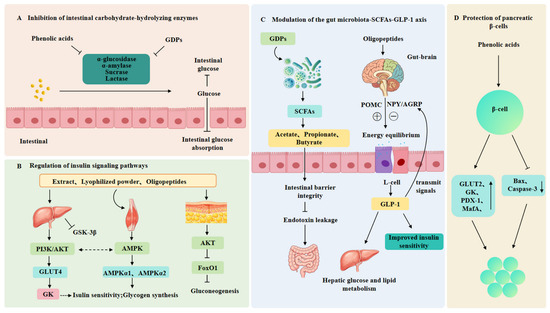
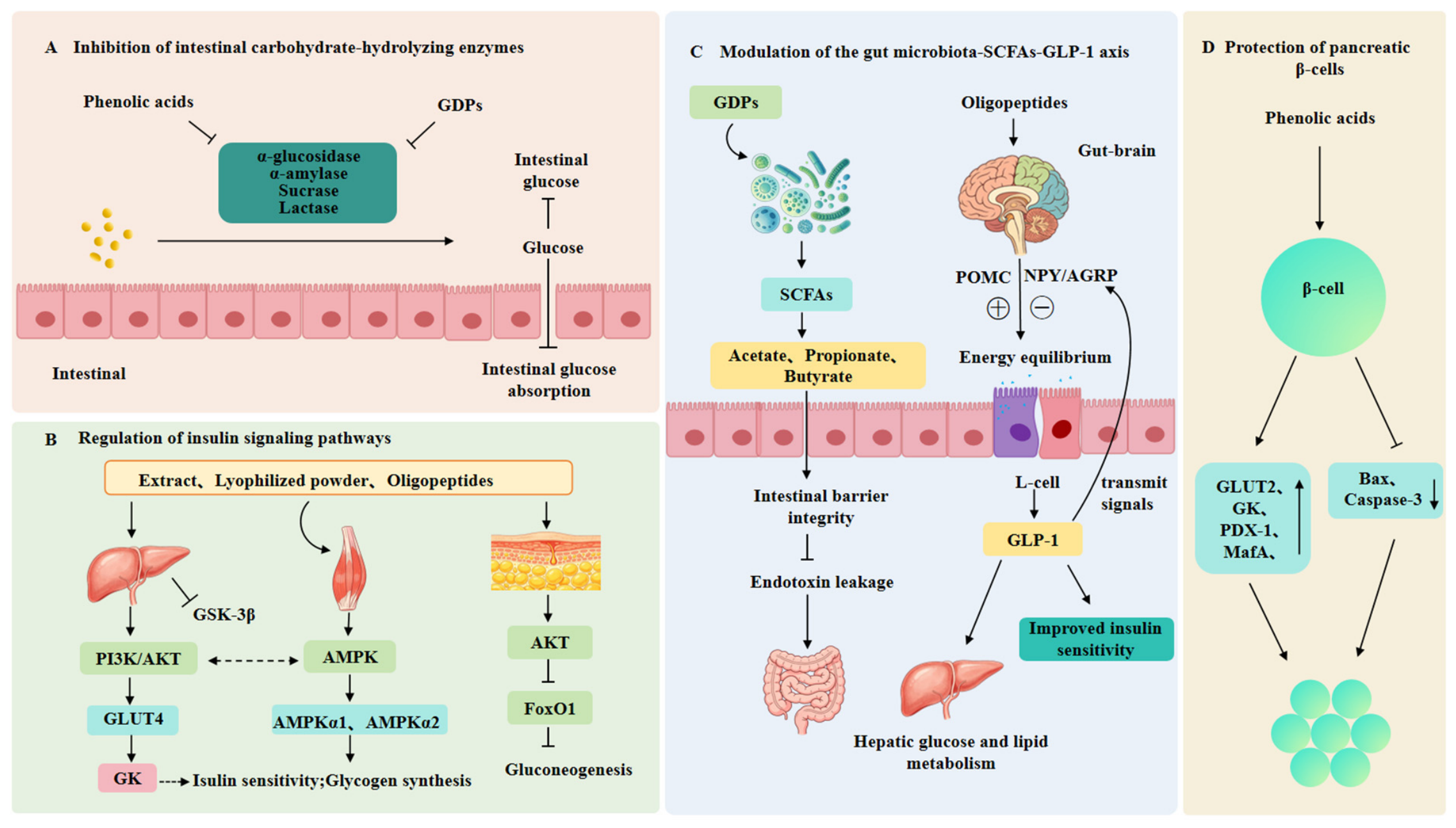
Impaired glucose metabolism is a major feature of metabolic disorders involving glucose and lipids. It is associated with several interrelated processes, including intestinal carbohydrate digestion, postprandial glucose absorption, defective insulin signaling, gut microbiota dysbiosis, and impaired pancreatic β-cell function. Glucose-lowering effects of various Gynura divaricata extracts, bioactive fractions, and selected constituents have been reported. The proposed mechanisms include delaying intestinal carbohydrate hydrolysis and glucose absorption, improving insulin signaling and glucose utilization, modulating gut microbiota, and preserving pancreatic β-cell function, as summarized in Table 4 and illustrated in Figure 1.
Table 4.
Hypoglycemic effects and putative mechanisms of Gynura divaricata.
Figure 1.
Putative hypoglycemic pathways of Gynura divaricata constituents. Current evidence mainly supports effects on intestinal carbohydrate digestion, insulin-related signaling, gut microbiota-derived SCFAs and pancreatic β-cell injury in preclinical models.
In terms of evidence strength, the most consistent support for the glucose-lowering effects of Gynura divaricata currently comes from improvements in the glycemic phenotypes observed in animal models, whereas causal evidence at the level of specific molecular targets remains comparatively limited. In vitro enzyme inhibition studies suggest a potential role in attenuating postprandial increases in blood glucose, while findings from cell-based and animal models support possible improvements in insulin resistance and pancreatic β-cell injury. Clinical evidence remains scarce and is largely derived from studies of compound formulations or combined interventions. Therefore, these findings are insufficient to establish an independent glucose-lowering effect of G. divaricata when used as a standalone intervention.
3.1.1. Delayed Intestinal Carbohydrate Hydrolysis and Glucose Absorption
Gynura divaricata extracts and certain phenolic acid- and polysaccharide-containing fractions have been reported to inhibit enzymes involved in carbohydrate hydrolysis in vitro and in animal models [28,30,36,37,53]. Among these, G. divaricata polysaccharides (GDPs) have been shown not only to directly inhibit α-glucosidase activity but also to modulate the abnormally elevated activities of intestinal disaccharidases, including sucrase, maltase, and lactase, under diabetic conditions. These effects may reduce the conversion of oligosaccharides and disaccharides into absorbable glucose, thereby delaying intestinal glucose absorption [38,39]. Collectively, these findings suggest that G. divaricata may attenuate postprandial increases in blood glucose levels by interfering with intestinal carbohydrate digestion. However, the enzyme sources, substrates, and extract compositions varied across studies, and in vitro IC50 values cannot be directly extrapolated to glucose-lowering efficacy after oral administration. Moreover, in vitro enzyme inhibition assays do not fully reproduce the complexity of in vivo gastrointestinal digestion and nutrient absorption. Therefore, the current enzyme inhibition data are more appropriately regarded as supportive evidence for a possible mechanism of action rather than as direct evidence of in vivo glucose-lowering efficacy.
3.1.2. Improvement of Insulin Signaling and Glucose Utilization
Cell-based studies have shown that aqueous extracts of Gynura divaricata increase glucose consumption and intracellular glycogen content in both HepG2 and insulin-resistant HepG2 cells [40,41]. However, increased glucose consumption and glycogen accumulation in HepG2 cells should only be regarded as preliminary evidence of hepatocyte-like metabolic responses, and cannot substitute for findings obtained from primary hepatocytes or direct assessments of hepatic insulin sensitivity in vivo. Available cellular and animal studies suggest that the glucose-lowering effects of G. divaricata extracts and lyophilized preparations of the aerial parts may be associated with the modulation of PI3K/AKT signaling, enhanced GLUT4-mediated glucose uptake, and improved hepatic glucose metabolism. These preparations may promote glycolysis and glycogen synthesis by increasing hepatic glucokinase (GK) expression while suppressing the expression of enzymes involved in gluconeogenesis [41,42,54]. Changes in insulin receptor (InsR)-, AKT-, and glycogen synthase kinase-3β (GSK-3β)-related signaling have also been reported, suggesting a possible involvement in the regulation of glycogen synthesis and insulin sensitivity [55,56,57]. In addition to plant extracts, G. divaricata-derived oligopeptides and low-molecular-weight peptides have shown potential glucose-lowering activity. In particular, oligopeptides have been reported to influence FoxO1-mediated transcription of gluconeogenic genes through the AKT/FoxO1 signaling axis [34,35].
In diabetic animal models induced by streptozotocin (STZ), alloxan, or a high-fat/high-sugar diet combined with STZ, G. divaricata intervention reduced fasting blood glucose (FBG), glycated hemoglobin (HbA1c), and homeostasis model assessment of insulin resistance (HOMA-IR) while improving glucose tolerance [42,48,49]. STZ- and alloxan-induced models primarily reflect pancreatic β-cell injury, whereas models combining a high-fat/high-sugar diet with STZ reproduce, to some extent, the coexistence of insulin resistance and β-cell dysfunction, which is a hallmark of T2DM. Findings obtained from these different models should therefore not be considered directly equivalent. Lyophilized G. divaricata preparations, polysaccharides, total flavonoids, chlorogenic acid, and dicaffeoylquinic acid-related constituents have also been reported to improve glycemic phenotypes in T2DM mouse models [30,38,39,42,43,50]. Several studies have observed changes in proteins associated with AMPK, AKT, and GLUT4 signaling [45,46,47]. At present, however, these alterations are more appropriately regarded as candidate pathways involved in the observed effects than as established causal mechanisms. Most studies on the glucose-lowering effects of Gynura divaricata have used extracts or crude fractions, making it difficult to distinguish the contributions of individual bioactive constituents, including polysaccharides, flavonoids, phenolic acids, and peptides. To date, there is insufficient evidence to demonstrate that any specific compound from G. divaricata directly activates the PI3K/AKT or AMPK pathway. Whether different bioactive fractions act synergistically, additively, or antagonistically also remains to be experimentally established.
3.1.3. Modulation of the Gut Microbiota
Gynura divaricata polysaccharides (GDPs) may act as potential prebiotics and can be utilized by the gut microbiota through fermentation, resulting in the production of short-chain fatty acids (SCFAs), including acetate, propionate, and butyrate. These metabolites may contribute to the regulation of hepatic glucose metabolism and insulin sensitivity [22]. In T2DM models, GDPs have been reported to alter the gut microbial composition, increase SCFA levels, and promote glucagon-like peptide-1 (GLP-1) secretion. These findings suggest that improvements in insulin resistance may involve a regulatory process centered on the polysaccharide–gut microbiota–SCFA–GLP-1 axis [38,44,58].
In addition to polysaccharides, G. divaricata-derived oligopeptides have been reported to improve intestinal barrier-related functions, enrich SCFA-producing bacteria, and enhance GLP-1 secretion. These changes may influence the hypothalamic expression of pro-opiomelanocortin (POMC) and neuropeptide Y/agouti-related peptide (NPY/AgRP) through the gut–brain axis, thereby contributing to the regulation of energy homeostasis [34]. However, existing studies have largely focused on associations between gut microbial composition and metabolic phenotypes, with multiple endpoints measured concurrently at the end of the intervention. Causal evidence from approaches such as fecal microbiota transplantation, receptor-specific blockade, or metabolite rescue experiments remains lacking. Direct evidence establishing the causal sequence of polysaccharide exposure to microbial alterations, metabolite production, and subsequent host responses remains limited.
3.1.4. Protection of Pancreatic β-Cells
Available animal studies suggest that certain phenolic constituents of Gynura divaricata may exert protective effects against pancreatic β-cell injury. Following intervention with chlorogenic acid- and dicaffeoylquinic acid-related constituents, the expression of genes associated with islet function, including GLUT2, glucokinase (GK), PDX-1, and MafA, increased, whereas the expression of pro-apoptotic proteins such as Bax and caspase-3 decreased. These changes are accompanied by decreased β-cell apoptosis and attenuation of islet structural damage [30]. In addition, aqueous extracts and total flavonoid preparations of G. divaricata have been reported to enhance endogenous antioxidant defenses in pancreatic islet cells and alleviate oxidative stress-associated decline in β-cell function [43,51]. However, evidence of the β-cell-protective effects of G. divaricata is mainly derived from histopathological observations and protein expression analyses in animal models. Current findings therefore support a potential role in attenuating β-cell injury, but do not establish that G. divaricata directly promotes β-cell proliferation or restores β-cell function.
3.2. Lipid-Regulating Effects and Potential Mechanisms
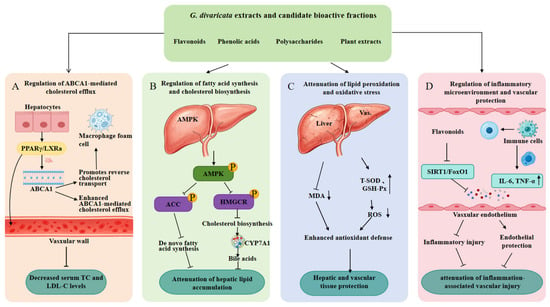
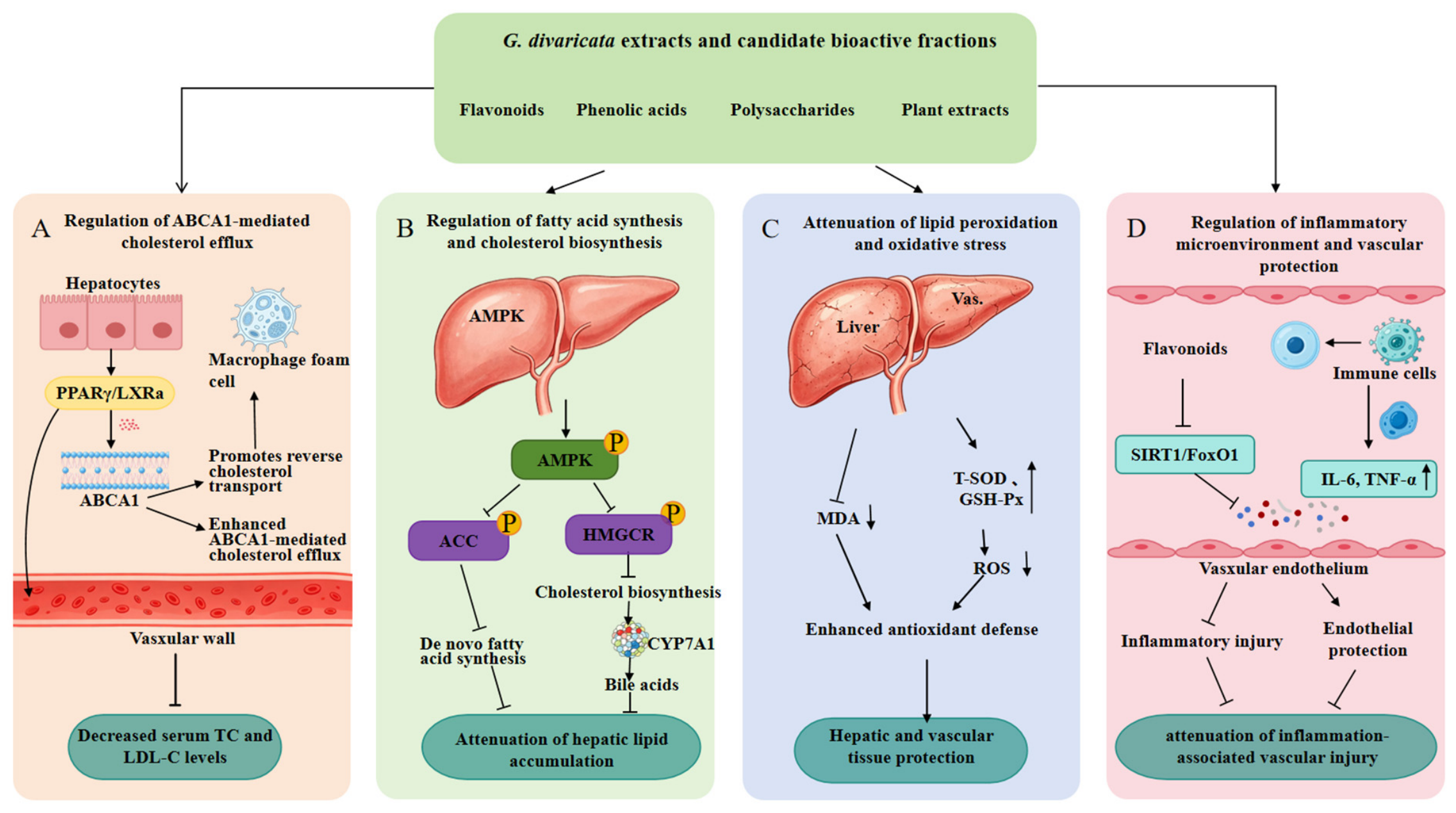
Lipid metabolic dysfunction is a major pathological feature of disorders involving glucose and lipid metabolism. Available studies suggest that Gynura divaricata has potential lipid-regulating effects in several experimental models of metabolic dysfunction, with most evidence derived from interventions using extracts, total flavonoid preparations, or plant powders. Reported effects include improvements in serum lipid profiles, reduced hepatic lipid accumulation, and attenuation of histopathological tissue damage. These changes may involve the regulation of cholesterol homeostasis, fatty acid synthesis, inflammation, and oxidative stress, as summarized in Table 5 and illustrated in Figure 2. Compared to research on its glucose-lowering effects, evidence concerning the lipid-regulating activity of G. divaricata remains relatively limited and is predominantly based on animal studies. Human studies using standardized extracts are lacking, and clear dose–response relationships have yet to be established.
Table 5.
Lipid-lowering effects and putative mechanisms of Gynura divaricata.
Figure 2.
Proposed mechanisms underlying the lipid-regulatory effects of Gynura divaricata. Bioactive constituents may promote cholesterol efflux and bile acid synthesis through PPARγ/LXRα/ABCA1 and CYP7A1, inhibit fatty acid and cholesterol biosynthesis through AMPK-mediated regulation of ACC and HMGCR, alleviate lipid peroxidation by strengthening antioxidant defenses, and reduce inflammatory microenvironment-related vascular injury through SIRT1/FoxO1-associated signaling.
3.2.1. Improvement of Serum Lipid Profiles and Hepatic Lipid Accumulation
In mouse models of obesity-associated T2DM and rat models characterized by insulin resistance and T2DM, Gynura divaricata intervention was associated with reduced serum levels of total cholesterol (TC), triglycerides (TG), and low-density lipoprotein cholesterol (LDL-C), together with increased high-density lipoprotein cholesterol (HDL-C) levels. These changes are accompanied by reduced hepatic lipid accumulation and attenuation of hepatocellular steatosis [47,59,60,61,62]. Some studies have also reported less severe aortic lesions in diabetic rats following treatment with aqueous extracts of G. divaricata [63]. However, this finding requires confirmation through more direct assessments of vascular function and further mechanistic investigations. It should also be noted that the intervention materials, extraction procedures, administered doses, treatment durations, and animal models differed across studies, limiting the direct comparison of the reported lipid-regulating effects.
3.2.2. Regulation of Cholesterol Homeostasis and Fatty Acid Metabolism
The effects of Gynura divaricata on lipid metabolism may involve several processes, including cholesterol transport, bile acid metabolism, fatty acid synthesis and oxidation, and cellular energy sensing. With respect to cholesterol transport, the lipid-regulating effects of G. divaricata extracts may be associated with PPARγ/LXRα signaling and ATP-binding cassette transporter A1 (ABCA1)-mediated cholesterol efflux, with possible implications for reverse cholesterol transport. Changes in factors involved in bile acid synthesis, including cholesterol 7α-hydroxylase (CYP7A1), further suggest that G. divaricata may influence the conversion of cholesterol into bile acids, thereby contributing to reduced tissue cholesterol accumulation [59].
At the energy sensing level, G. divaricata intervention has been associated with alterations in AMPK-related signaling and phosphorylation of acetyl-CoA carboxylase (ACC) and 3-hydroxy-3-methylglutaryl-CoA reductase (HMGCR). These findings suggest that AMPK-related pathways may participate in the regulation of de novo fatty acid synthesis and cholesterol biosynthesis [47]. In addition, total flavonoid preparations from G. divaricata have been reported to affect PPAR-related signaling, which may contribute to the regulation of lipid metabolism and inflammatory responses, and may be associated with improvements in lipid metabolic abnormalities and inflammation-related tissue injury [47,59]. However, much evidence supporting these pathways is derived from network pharmacology, molecular docking, and changes in protein expression. These findings are therefore better regarded as mechanistic hypotheses or candidate pathways, rather than definitive evidence that these molecules are key targets mediating the lipid-regulating effects of G. divaricata.
3.3. Roles of Oxidative Stress and Inflammation in the Metabolic Effects of Gynura divaricata
Oxidative stress and chronic inflammation are closely associated with several pathological processes, including insulin resistance, dysregulated lipid metabolism, and β-cell dysfunction, and may contribute to the development and progression of glucose and lipid metabolic disorders. Accordingly, modulation of oxidative stress and inflammatory responses may represent one of the mechanisms through which Gynura divaricata improves glucose and lipid metabolic disturbances. In vitro studies and model organism experiments have shown that G. divaricata polysaccharides and their purified fractions possess free radical-scavenging activity. In Caenorhabditis elegans, GDPs improve oxidative stress-related phenotypes and enhance tolerance to heat stress [64]. These findings provide preliminary evidence of the antioxidant potential of G. divaricata, but should not be directly interpreted as evidence of therapeutic efficacy in mammalian metabolic disease.
Animal studies have reported changes in the expression of Nrf2 and its downstream antioxidant proteins, including HO-1 and NQO-1, following G. divaricata treatment. These changes were accompanied by increased activities of antioxidant enzymes, such as superoxide dismutase (SOD) and glutathione peroxidase (GSH-Px), as well as reduced levels of lipid peroxidation products, such as malondialdehyde (MDA) [60,61,63,65]. With respect to inflammation, G. divaricata has also been reported to modulate NF-κB pathway activation and reduce the expression of pro-inflammatory mediators, including TNF-α, IL-6, and IL-1β. These molecular changes occur alongside improvements in inflammatory status, insulin resistance, or inflammation-related tissue injury [66]. In addition, total flavonoid preparations from G. divaricata may participate in the regulation of oxidative stress, inflammatory responses, and energy metabolism via SIRT1/FoxO1-related signaling [67].
Current evidence on antioxidant and anti-inflammatory effects mainly shows that changes in these parameters occur alongside improvements in metabolic outcomes, but is insufficient to establish the direction of causality. Existing studies lack pathway-specific inhibition and time-course experiments, which hinders efforts to distinguish upstream from downstream regulatory events or to determine the temporal order and necessity of oxidative stress and inflammatory modulation in glucose and lipid metabolism. Therefore, modulation of oxidative stress and inflammation is better regarded as a complementary explanation for the metabolic effects of Gynura divaricata rather than an established core mediating mechanism.
4. Translational Challenges and Future Perspectives
The major translational barrier facing Gynura divaricata is not the lack of positive efficacy findings, but rather the limited comparability of studies using different raw materials, preparations, and experimental models. Moreover, given that the potential risks associated with PAs and PANOs have not yet been adequately quantified, an immediate priority should not be to propose additional candidate mechanisms. Instead, efforts should focus on establishing reproducible and traceable study materials that allow evaluation of efficacy and safety within the same standardized framework.
4.1. Evaluation of Current Evidence and Research Limitations
Taken together, current studies on the glucose-lowering and lipid-regulating effects of Gynura divaricata suggest that its metabolic activity may involve multiple classes of constituents and several metabolic processes. Research on phenolic acids has focused mainly on the inhibition of intestinal carbohydrate-hydrolyzing enzymes and the protection of pancreatic islet function. The reported effects of polysaccharides have largely been associated with modulation of the gut microbiota, whereas flavonoids may be linked to changes in insulin signaling, energy metabolism, and inflammatory markers. Oligopeptides have shown potential for DPP-IV inhibition and gut–brain axis modulation. However, these findings were obtained using different preparations, experimental models, and study conditions, and various classes of candidate active constituents have generally been evaluated separately. Therefore, their relative contributions to the overall metabolic effects of G. divaricata remain unclear, and direct evidence supporting synergistic interactions among these constituents is lacking.
Network pharmacology and molecular docking analyses identified AKT1, AMPK-related signaling, and TNF-α as potential regulatory nodes [68]. These computational findings are useful primarily for generating mechanistic hypotheses and require further validation through functional experiments in cellular and animal models. Therefore, it is more appropriate to conclude that G. divaricata contains multiple classes of constituents with the potential to influence glucose and lipid metabolism through several biological processes, rather than to characterize its effects prematurely as an established multi-target synergistic mechanism.
4.2. Insufficient Standardization of Raw Materials and Extracts
Considerable heterogeneity exists in the Gynura divaricata materials used across the studies. These materials include fresh or dried samples derived from the leaves, aerial parts, or whole plant as well as water extracts, ethanol extracts, total flavonoid fractions, polysaccharide fractions, and freeze-dried powders. Differences in geographical origin, harvest time, post-harvest processing, and extraction conditions may substantially affect the composition and abundance of flavonoids, polysaccharides, and other bioactive constituents [11,14,15,16,17,18]. Consequently, preparations evaluated in different studies may differ markedly in both chemical composition and biological exposure, making direct comparison and independent replication of pharmacological findings difficult.
Therefore, the lack of adequate standardization of G. divaricata materials and extracts remains an important limitation of the current evidence base. This problem largely arises from variations in plant sources, the absence of harmonized extraction procedures, and the widespread use of crude extracts in pharmacological studies. Essential information, including botanical authentication, voucher specimen deposition, harvest period, processing conditions, and extraction procedures, is often incompletely reported. Characterization of G. divaricata polysaccharides (GDPs) is inconsistent with respect to molecular weight distribution, monosaccharide composition, uronic acid content, and residual protein levels, further limiting comparisons across studies.
Future investigations should, at a minimum, provide traceable information on sample origin, botanical authentication, preparation procedures, and the major chemical characteristics of the tested material. Pharmacological effects and mechanistic findings can be meaningfully compared across studies only when the identity and composition of the investigated samples are sufficiently defined.
4.3. The Bioactive Constituents and Key Molecular Targets Remain Unclear
Although a range of flavonoids, polysaccharides, phenolic acids, and peptides have been identified in Gynura divaricata, only a limited number of candidate bioactive entities currently meet the basic requirements of a clearly defined source, quantifiable abundance, demonstrable in vivo exposure, and reproducible association with pharmacological effects. Most available studies have used total flavonoids, crude polysaccharides, or complex extracts as test materials. Therefore, the biological effects observed in these studies may reflect the combined actions of multiple constituents and cannot be reliably ascribed to a single compound. Evidence derived from network pharmacology, molecular docking, and changes in pathway-related protein expression is useful for generating mechanistic hypotheses; however, it does not establish a direct or indispensable target relationship.
Systematic studies capable of distinguishing the independent effects and interactions of different bioactive constituents remain limited, and the major active contributors and their key sites of action have yet to be clearly identified. Pharmacokinetic and tissue-exposure data for the bioactive constituents of Gynura divaricata remain limited, making it difficult to accurately assess the actual contributions of parent compounds and their metabolites to the overall pharmacological effects. In particular, direct experimental evidence regarding the in vivo absorption, tissue distribution, and target-organ exposure of G. divaricata-derived flavonoids and phenolic acids is currently lacking. Most reported antioxidant, anti-inflammatory, and metabolic regulatory activities have been observed at concentrations used in vitro, and there is no clear evidence that the corresponding parent compounds or their metabolites reach biologically effective concentrations in target tissues in vivo. This limits the direct extrapolation of in vitro findings to mechanisms underlying in vivo efficacy. For polysaccharides and peptides, systematic evidence is also lacking regarding the bioactive forms that arise following gastrointestinal digestion, absorption, and transformation by the gut microbiota; therefore, inferring their in vivo effects solely from in vitro activity measured without prior digestion has inherent limitations.
It also remains uncertain whether the constituents present in the complex extracts act additively, synergistically, or antagonistically, as direct experimental evidence is lacking. Therefore, future mechanistic research should move beyond the continued accumulation of putative pathways and address several more fundamental questions: which constituents are systemically available, which parent compounds or metabolites are consistently associated with efficacy, and which molecular targets are directly involved in the glucose-lowering or lipid-regulating effects of G. divaricata.
4.4. High-Quality Clinical Evidence Remains Limited
Compared with the relatively extensive in vitro and animal evidence, clinical evidence supporting the glucose-lowering effects of Gynura divaricata remains very limited. One small-scale intervention study reported that after 12 weeks of treatment with a compound preparation containing G. divaricata, several indicators related to glycemic control improved in patients with type 2 diabetes mellitus (T2DM), accompanied by reductions in some lipid metabolism parameters [52]. Another study found that the combined use of G. divaricata extract powder and a quadruple viable bacterial preparation was associated with a decrease in certain inflammation-related markers in patients with T2DM [69].
However, both studies involved either compound formulations or combined interventions, and several methodological limitations remained, including small sample size, insufficient control design, unclear intervention dosage, and inadequate quality control of the tested preparations. These issues not only weaken the reliability of the available clinical evidence but also make comparison across studies and evidence synthesis more difficult. Therefore, the current evidence is insufficient to determine the independent therapeutic effect of G. divaricata or to define its effective intake dose, safe intake range, and target population.
In addition, clinical studies have yet to adopt standardized outcome measures, follow-up periods, or frameworks for safety assessment, and adverse events have been reported to a limited extent. These shortcomings further hinder the objective evaluation of the clinical utility of Gynura divaricata. Given the current evidence, well-designed randomized controlled trials using standardized preparations are essential to determine the independent effects of G. divaricata, establish an appropriate dose range, and adequately assess its safety.
4.5. Potentially Harmful Constituents and the Safety of Long-Term Use
The translational development of Gynura divaricata should not focus solely on potentially beneficial constituents; potentially harmful compounds must also be evaluated to ensure that evidence of efficacy is not used as a substitute for a systematic safety assessment. PAs and PANOs have been detected in some G. divaricata samples, and their levels may vary with geographical origin, plant part, harvest time, and processing method [8,9]. Although these findings do not demonstrate a clinical risk under customary dietary conditions, a history of traditional consumption cannot replace formal exposure assessment or long-term safety studies. Current research on PAs and PANOs has been largely limited to their detection and quantification, and the relationship between different exposure levels and long-term health risks remains poorly defined. This uncertainty represents an important barrier to the standardized development and wider use of G. divaricata. In addition to PAs and PANOs, cerebroside-type secondary metabolites have also been isolated from Gynura divaricata, some of which exhibit cytotoxic activity in vitro. However, their in vivo effects remain unclear, and in vitro cytotoxicity should not be directly equated with adverse effects in vivo [70,71]. Nevertheless, the potential health risks associated with these compounds warrant attention when G. divaricata is developed for use in functional foods.
Accordingly, the development of standardized G. divaricata products should be supported by quality specifications that allow potentially harmful constituents to be measured, raw materials to be traced, and exposure levels to be controlled. For preparations intended for prolonged use, PA and PANO contents should be quantified according to the characteristics of the starting material, and the estimated daily intake should be reported. Liver function, adverse events, and reasons for withdrawal or discontinuation should also be systematically monitored [72,73]. In addition, the effects of different processing, extraction, and purification procedures on PAs/PANOs levels require further investigation. Both bioactive constituents and potentially hazardous compounds should be incorporated into a comprehensive quality-control framework, while appropriate intervention doses and long-term safety also need to be established to support the standardized development of Gynura divaricata as a functional food or nutritional adjunct.
5. Conclusions
Gynura divaricata has a long history of both dietary and traditional medicinal use and has attracted increasing attention for its potential role in the management of glucose and lipid metabolic disorders. Current preclinical evidence suggests that G. divaricata and its flavonoids, polysaccharides, caffeoylquinic acids, and peptide constituents may improve metabolic abnormalities, such as hyperglycemia, dyslipidemia, insulin resistance, and fatty liver. These effects appear to involve several interconnected processes, including intestinal carbohydrate hydrolysis, glucose absorption, maintenance of gut microbial homeostasis, insulin sensitivity, pancreatic β-cell function, hepatic lipid metabolism, oxidative stress, and chronic inflammation. However, substantial heterogeneity exists across studies in terms of plant material, formulation, experimental models, and outcome measures. The principal active constituents and their in vivo exposure profiles have not yet been clearly defined, and most proposed mechanisms lack direct causal validation.
Taken together, the available evidence supports G. divaricata as a potentially useful adjunctive resource for the management of glucose and lipid metabolism; however, it is not yet sufficient to justify its use as a standalone clinical treatment. Compared with flavonoids, phenolic acids, and peptides, GDPs are supported by more substantial in vitro and in vivo evidence for their regulatory effects on glucose and lipid metabolism and may therefore be regarded as one group of candidate bioactive constituents warranting particular attention. However, in the absence of parallel comparative studies of different fractions, the relative contribution of GDPs to the overall pharmacological effects and the potential synergistic interactions among different constituents remain unclear. Further translation is limited by the lack of standardized preparations, clearly identified bioactive constituents, established effective doses in humans, long-term safety data, and high-quality clinical evidence. Future studies should strengthen the quality control of both raw materials and finished preparations, characterize the in vivo exposure of active constituents and potentially harmful compounds, such as PAs/PANOs, and assess efficacy, safety, and dose–response relationships in rigorously designed human intervention studies. Such work will be essential to provide a more reliable scientific basis for the standardized development of G. divaricata as a functional food ingredient or adjunctive nutritional intervention.
Author Contributions
D.W.: Investigation, Software, Visualization, Writing—original draft, Writing—review & editing. L.C.: Conceptualization, Formal analysis, Investigation, Validation, Writing—original draft, Writing—review & editing. F.X.: Investigation, Conceptualization, Supervision, Validation. J.L.: Investigation, Visualization, Writing—original draft. X.Y.: Investigation, Writing—original draft. C.Z.: Investigation, Writing—original draft. Z.M.: Software, Visualization. M.Z.: Formal analysis, Project administration, Supervision, Validation, Writing—review & editing. L.X.: Conceptualization, Supervision, Validation, Writing—original draft, Writing—review & editing. H.Z.: Funding acquisition, Project administration, Resources, Supervision. All authors have read and agreed to the published version of the manuscript.
Funding
This work was supported by Guangxi Key Laboratory of Zhuang and Yao Ethnic Medicine (Guike LT2600640036); University Engineering Research Center of Development and Industrialization of Zhuang and Yao Ethnic Medicinal Materials, Guangxi ([2024] No.10); Research Center of Guangxi Zhuang Autonomous Region Medicine Resources and application engineering ([2020] No. 2605); Collaborative Innovation Center of Zhuang and Yao Ethnic Medicine ([2013] No. 20); Guangxi Key Discipline of Traditional Chinese Medicine (Zhuang Ethnic Pharmacy) (GZXK-Z-20-64), Guangxi First-Class Discipline: Chinese Medicine (Ethnic Pharmacy) ([2018] No.12).
Institutional Review Board Statement
Not applicable.
Informed Consent Statement
Not applicable.
Data Availability Statement
No new data were created or analyzed in this study. Data sharing is not applicable to this article.
Conflicts of Interest
The authors declare no conflicts of interest.
References
- Wat, W.L.; Svensson, J.K. Novel secreted regulators of glucose and lipid metabolism in the development of metabolic diseases. Diabetologia 2024, 67, 2626–2636. [Google Scholar] [CrossRef] [Scilit] [PubMed]
- Lu, X.; Xie, Q.; Pan, X.; Zhang, R.; Zhang, X.; Peng, G.; Zhang, Y.; Shen, S.; Tong, N. Type 2 diabetes mellitus in adults: Pathogenesis, prevention and therapy. Signal Transduct. Target. Ther. 2024, 9, 262. [Google Scholar] [CrossRef] [Scilit] [PubMed]
- Neeland, I.J.; Lim, S.M.; Tchernof, A.; Gastaldelli, A.; Rangaswami, J.; Ndumele, C.E.; Powell-Wiley, T.M.; Després, J.-P. Metabolic syndrome. Nat. Rev. Dis. Primers 2024, 10, 77. [Google Scholar] [CrossRef] [Scilit] [PubMed]
- Ullah, H.; Dacrema, M.; Buccato, D.G.; Fayed, M.A.A.; De Lellis, L.F.; Morone, M.V.; Di Minno, A.; Baldi, A.; Daglia, M. A narrative review on plant extracts for metabolic syndrome: Efficacy, safety, and technological advances. Nutrients 2025, 17, 877. [Google Scholar] [CrossRef] [Scilit] [PubMed]
- Abdulghani, M.F.; Al-Fayyadh, S.A. Natural products for managing metabolic syndrome: A scoping review. Front. Pharmacol. 2024, 15, 1366946. [Google Scholar] [CrossRef] [Scilit] [PubMed]
- Li, J.; Zhao, J.; Tian, C.; Dong, L.; Kang, Z.; Wang, J.; Zhao, S.; Li, M.; Tong, X. Mechanisms of regulation of glycolipid metabolism by natural compounds in plants: Effects on short-chain fatty acids. Nutr. Metab. 2024, 21, 49. [Google Scholar] [CrossRef] [Scilit] [PubMed]
- Yao, L.L.; Yang, L.; Wan, C.P.; He, J.W. Research progress on chemical constituents and pharmacological activities of plants of the genus Gynura. North. Hortic. 2016, 24, 195–200. (In Chinese) [Google Scholar]
- Chen, J.; Lü, H.; Fang, L.X.; Li, W.L.; Verschaeve, L.; Wang, Z.T.; De Kimpe, N.; Mangelinckx, S. Detection and toxicity evaluation of pyrrolizidine alkaloids in medicinal plants Gynura bicolor and Gynura divaricata collected from different Chinese locations. Chem. Biodivers. 2017, 14, e1600221. [Google Scholar] [CrossRef] [Scilit] [PubMed]
- Li, L.; Luo, Y.; Li, L.L.; Jiang, X.; Huang, Y.H. Content analysis and risk assessment of pyrrolizidine alkaloids in Gynura divaricata. Northwest Pharm. J. 2023, 38, 31–36. (In Chinese) [Google Scholar]
- Ye, X.Y.; Wu, J.M.; Yang, J.; Kantawong, F.; Kumsaiyai, W.; Zeng, J. Research progress on chemical constituents of Gynura divaricata and mass spectrometric fragmentation characteristics of representative constituents. Chin. Tradit. Herb. Drugs 2021, 52, 6687–6700. (In Chinese) [Google Scholar]
- Wu, Y.R.; Li, Y.Y.; Li, N.; Guo, D.D.; Guo, F.G.; Lan, Z.J.; Zhao, L.R.; Ni, Y. Drying methods and harvest time of Gynura divaricata leaves based on major active constituents. China Pharm. 2022, 33, 1442–1447. (In Chinese) [Google Scholar]
- Wan, C.P.; Yu, Y.Y.; Zhou, S.R.; Tian, S.G.; Cao, S.W. Isolation and identification of phenolic compounds from Gynura divaricata leaves. Pharmacogn. Mag. 2011, 7, 101–108. [Google Scholar] [CrossRef] [Scilit] [PubMed]
- Cen, C.; Li, J.; Zhou, P.; Fisher, D.; Hien, N.T.T.; Musabaev, E.; Pronyuk, K.; Zhao, L. The effects of cynaroside on lipid metabolism and lipid-related diseases: A mechanistic overview. Front. Pharmacol. 2025, 16, 1648614. [Google Scholar] [CrossRef] [Scilit] [PubMed]
- Ren, P.; Wang, Y.Z.; Fu, B.; Hong, B.; Liu, C.; Li, Y.M. Analysis of the main active constituents of Gynura divaricata from different introduction sites and their responses to ecological factors. Acta Bot. Boreal.-Occid. Sin. 2018, 38, 1727–1732. (In Chinese) [Google Scholar]
- Chen, J.; Xian, X.; Lü, H.; Liu, Y.; Ren, B.R.; Li, W.L. Changes in phenolic constituents in Gynura divaricata leaves collected in different months. J. Plant Resour. Environ. 2021, 30, 75–77. (In Chinese) [Google Scholar]
- Qin, L.Q.; Chen, L.; Zhou, X.; Pang, J.; Song, H.T. Seasonal variation in total flavonoids of Gynura divaricata. China Pharm. 2011, 14, 157–159. (In Chinese) [Google Scholar]
- Zhang, H.X.; Zheng, Y.; Yin, L.; Dong, Z.J. Extraction of flavonoids from Gynura divaricata and evaluation of antioxidant activity. Jiangsu J. Agric. Sci. 2019, 35, 933–939. (In Chinese) [Google Scholar]
- Wan, C.P.; Yu, Y.Y.; Zhou, S.R.; Liu, W.; Tian, S.G.; Cao, S.W. Antioxidant activity and free radical-scavenging capacity of Gynura divaricata leaf extracts at different temperatures. Pharmacogn. Mag. 2011, 7, 40–45. [Google Scholar] [CrossRef] [Scilit] [PubMed]
- Liu, W.W.; Liu, X.; Cao, X.L. Isolation and purification of polysaccharides from Gynura divaricata. Food Sci. 2011, 32, 58–63. (In Chinese) [Google Scholar]
- Shang, X.; Wang, J.; Zhang, H.; Hu, G.; Han, Y.; Sun, Y.; Zhou, X.; Kong, X.; Shao, T.; Wang, G.; et al. Optimised Gynura divaricata polysaccharide extract ameliorated type 2 diabetes in mice by activating the PI3K/Akt/GLUT-4 signalling pathway. Nat. Prod. Res. 2026, 1–7. [Google Scholar] [CrossRef] [Scilit] [PubMed]
- Wang, Z.Z.; Zhang, Q.Q.; Hao, X.; Lin, B.; Liu, Z.H.; Song, H.T.; Chen, L. Isolation, purification and preliminary analysis of polysaccharides from Gynura divaricata. China J. Chin. Mater. Medica 2015, 40, 1497–1502. (In Chinese) [Google Scholar] [CrossRef] [Scilit]
- Yu, S.J.; Liao, H.B.; Chen, L.; Wei, X.Y.; Zhou, T. Preparation and physicochemical properties of Gynura divaricata (L.) DC polysaccharides and their regulating activities on human gut microbiota. Chem. Biodivers. 2026, 23, e02939. [Google Scholar] [CrossRef] [Scilit] [PubMed]
- Liu, W.W.; Liu, X.; Cao, X.L.; Luo, J.J. Structural characterization and α-glucosidase inhibitory activity of polysaccharides from Gynura divaricata. Food Sci. 2013, 34, 115–120. (In Chinese) [Google Scholar]
- Chen, P.; Tan, X.; Xiao, L.Y.; Gong, Z.; Qin, X.X.; Nie, J.; Zhu, H.; Zhong, S.A. Isolation, purification, structural characterization, and antitumor activity of Gynura divaricata polysaccharides. Int. J. Biol. Macromol. 2025, 290, 138928. [Google Scholar] [CrossRef] [Scilit] [PubMed]
- Hao, X.; Zhang, Q.Q.; Wang, Z.Z.; Lin, B.; Song, H.T.; Zhang, Y.; Chen, L. Hypoglycemic effects of acidic polysaccharides from Gynura divaricata leaves and their effects on related indices. J. Plant Resour. Environ. 2015, 24, 115–117. (In Chinese) [Google Scholar]
- Wu, H.; Lao, B.J.; Zhang, M.; Chen, L.; Liang, R.T.; Wu, W.Y.; Huang, S.P.; Zhu, H. Extraction, isolation and antioxidant activity of ethanol-fractionated polysaccharides from Gynura divaricata. Mod. Chin. Med. Res. Pract. 2025, 39, 66–71. (In Chinese) [Google Scholar]
- Sun, M.; Zhang, Z.; Xie, J.; Yu, J.; Xiong, S.; Xiang, F.; Ma, X.; Yang, C.; Lin, L. Research progress on the mechanism for improving glucose and lipid metabolism disorders using phenolic acid components from medicinal and edible homologous plants. Molecules 2024, 29, 4790. [Google Scholar] [CrossRef] [Scilit] [PubMed]
- Shen, Z.; Xu, J.; Wen, L.; Yin, L.; Cao, X.; Pei, H.; Zhao, X. Bioassay-Guide Preparative Separation of Hypoglycemic Components from Gynura divaricata (L.) DC by Conventional and pH-Zone Refining Countercurrent Chromatography. Foods 2025, 14, 578. [Google Scholar] [CrossRef] [Scilit] [PubMed]
- Chen, J.; Mangelinckx, S.; Lü, H.; Li, W.L.; De Kimpe, N.; Wang, Z.T. Chemical constituents of the ethyl acetate fraction of Gynura divaricata. Chin. Tradit. Herb. Drugs 2013, 44, 524–527. (In Chinese) [Google Scholar]
- Yin, X.L.; Xu, B.Q.; Zhang, Y.Q. Gynura divaricata rich in 3,5-/4,5-dicaffeoylquinic acid and chlorogenic acid reduces islet cell apoptosis and improves pancreatic function in type 2 diabetic mice. Nutr. Metab. 2018, 15, 73. [Google Scholar] [CrossRef] [Scilit] [PubMed]
- Chen, J.; Mangelinckx, S.; Lü, H.; Wang, Z.T.; Li, W.L.; De Kimpe, N. Profiling and elucidation of the phenolic compounds in the aerial parts of Gynura bicolor and G. divaricata collected from different Chinese origins. Chem. Biodivers. 2015, 12, 96–115. [Google Scholar] [CrossRef] [Scilit] [PubMed]
- Chen, J.; Mangelinckx, S.; Adams, A.; Li, W.L.; Wang, Z.T.; De Kimpe, N. Isolation and characterization of the chemical constituents from Gynura bicolor and G. divaricata. Planta Med. 2012, 78, PF6. [Google Scholar] [CrossRef] [Scilit]
- Chen, J.; Mangelinckx, S.; Ma, L.; Wang, Z.T.; Li, W.L.; De Kimpe, N. Caffeoylquinic acid derivatives isolated from the aerial parts of Gynura divaricata and their yeast α-glucosidase and PTP1B inhibitory activity. Fitoterapia 2014, 99, 1–6. [Google Scholar] [CrossRef] [Scilit] [PubMed]
- Zhang, F.; Xu, H.; Zuo, Y.; Che, K.; Cui, Y.; Niu, Z.; Cao, W.; Sun, T.; Che, Y.; Yu, H.; et al. Oligopeptides from Gynura divaricata improve glycemic control via inhibition of gluconeogenesis and gut–brain axis regulation. Phytomedicine 2026, 153, 157876. [Google Scholar] [CrossRef] [Scilit] [PubMed]
- Ye, X.Y.; Xiong, L.; Fu, Q.F.; Wang, B.Y.; Wang, Y.W.; Zhang, K.L.; Yang, J.; Kantawong, F.; Kumsaiyai, W.; Zhou, J.; et al. Chemical characterization and DPP-IV inhibitory activity evaluation of tripeptides from Gynura divaricata (L.) DC. J. Ethnopharmacol. 2022, 292, 115203. [Google Scholar] [CrossRef] [Scilit] [PubMed]
- Xu, X.M.; Li, J.A.; Tian, C.Y.; Zhou, X.M.; Zhang, B.W.; Jiao, Z.S.; La, X.J. Experimental study on inhibition of DPP-4 and α-glucosidase activity by aqueous extract of Mingyuecao. Hunan J. Tradit. Chin. Med. 2017, 33, 149–150. (In Chinese) [Google Scholar]
- Liu, X.; Liu, W.W.; Cao, X.L. Ultrasonic extraction process and α-glucosidase inhibitory activity of total flavonoids from Gynura divaricata. Food Sci. 2012, 33, 134–139. (In Chinese) [Google Scholar]
- Zhu, Y.; Wang, D.; Zhou, S.; Zhou, T. Hypoglycemic effects of Gynura divaricata (L.) DC. polysaccharide and action mechanisms via modulation of gut microbiota in diabetic mice. J. Agric. Food Chem. 2024, 72, 9893–9905. [Google Scholar] [CrossRef] [Scilit] [PubMed]
- Deng, Y.X.; Chen, Y.S.; Zhang, W.R.; Chen, B.; Qiu, X.M.; He, L.H.; Mu, L.L.; Yang, C.H.; Chen, R. Polysaccharide from Gynura divaricata modulates the activities of intestinal disaccharidases in streptozotocin-induced diabetic rats. Br. J. Nutr. 2011, 106, 1323–1329. [Google Scholar] [CrossRef] [Scilit] [PubMed]
- Wei, N.Q.; Yang, K.; Xian, H.M.; Hao, Y.J.; Liu, J.H.; Huang, X. Effects of aqueous extract of Gynura divaricata on key enzyme activities in insulin-resistant HepG2 cells. Her. Med. 2013, 32, 281–284. (In Chinese) [Google Scholar]
- Wei, N.Q.; Xian, H.M.; Yang, K.; Hao, Y.J. Experimental study on the ameliorative effect of Gynura divaricata on insulin resistance in HepG2 cells. Lishizhen Med. Mater. Medica Res. 2011, 22, 1395–1396. (In Chinese) [Google Scholar]
- Xu, B.Q.; Yang, P.; Zhang, Y.Q. Hypoglycemic activities of lyophilized powder of Gynura divaricata by improving antioxidant potential and insulin signaling in type 2 diabetic mice. Food Nutr. Res. 2015, 59, 29652. [Google Scholar] [CrossRef] [Scilit] [PubMed][Green Version]
- Jiang, M.H.; Hu, J.Z.; Qiu, W.G.; Qian, Q.; Tan, M.; Wu, K.; Qiu, X.M. Hypoglycemic and antihypoxic effects of polysaccharides and flavonoids from Gynura divaricata. Chin. J. Hosp. Pharm. 2009, 29, 1074–1076. (In Chinese) [Google Scholar]
- Li, J. Mechanism of Gynura divaricata Polysaccharides in the Treatment of Type 2 Diabetes Based on Gut Microbiota-GLP-1. Master’s Thesis, Hunan Normal University, Changsha, China, 2022. (In Chinese) [Google Scholar]
- Wei, N.Q.; Hao, E.W.; Qin, L.L.; Hu, X.Q.; Li, Q. Effects of Gynura divaricata on the AMPK/Akt signaling pathway in insulin-resistant rats. J. Chin. Med. Mater. 2019, 42, 418–421. (In Chinese) [Google Scholar]
- Li, J.; Feng, J.; Wei, H.; Liu, Q.; Yang, T.; Hou, S.; Zhao, Y.; Zhang, B.; Yang, C. The aqueous extract of Gynura divaricata (L.) DC. improves glucose and lipid metabolism and ameliorates type 2 diabetes mellitus. Evid.-Based Complement. Altern. Med. 2018, 2018, 8686297. [Google Scholar] [CrossRef] [Scilit] [PubMed]
- Xu, W.; Lu, Z.; Wang, X.; Cheung, M.H.; Lin, M.; Li, C.; Dong, Y.; Liang, C.; Chen, Y. Gynura divaricata exerts hypoglycemic effects by regulating the PI3K/AKT signaling pathway and fatty acid metabolism signaling pathway. Nutr. Diabetes 2020, 10, 31. [Google Scholar] [CrossRef] [Scilit] [PubMed]
- Sovia, E.; Anggraeny, D.; Kristiana, R.; Maulida, F.H.; Susparini, M. Gynura divaricata effect on blood glucose levels in alloxan-induced diabetes mice. Proc. Singap. Natl. Acad. Sci. 2019, 13, 27–33. [Google Scholar] [CrossRef] [Scilit]
- Wei, N.Q.; Liu, J.H.; Wei, M.M.; Li, Q.; Sun, J.; Xue, Z.F.; Li, L. Comparative study of fresh and dried Gynura divaricata on improving glucose and lipid metabolism, oxidative stress and inflammation in diabetic mice. J. Chin. Med. Mater. 2020, 43, 3040–3044. (In Chinese) [Google Scholar]
- Yu, H.; Mao, B.B.; Zhou, G.L.; Fang, Y.X. Hypoglycemic effects of total flavonoids from Gynura divaricata in diabetic rats. Food Sci. 2013, 34, 295–298. (In Chinese) [Google Scholar]
- Ma, Z.D.; Chen, L.; Song, H.T.; Wei, W.S. Hypoglycemic effect and mechanism of aqueous extract of Gynura divaricata in type 2 diabetic rats. Chin. Tradit. Herb. Drugs 2010, 41, 623–626. (In Chinese) [Google Scholar]
- Dai, W.H.; Fan, M.; Yao, J.Y. Clinical intervention study of a Gynura divaricata compound preparation in type 2 diabetes mellitus. Food Nutr. China 2019, 25, 49–52. (In Chinese) [Google Scholar]
- Wu, T.; Zhou, X.; Deng, Y.; Jing, Q.; Li, M.; Yuan, L. In vitro studies of Gynura divaricata (L.) DC. extracts as inhibitors of key enzymes relevant for type 2 diabetes and hypertension. J. Ethnopharmacol. 2011, 136, 305–308. [Google Scholar] [CrossRef] [Scilit] [PubMed]
- Dong, X.; Zhao, S.X.; Xu, B.Q.; Zhang, Y.Q. Gynura divaricata ameliorates hepatic insulin resistance by modulating insulin signalling, maintaining glycolipid homeostasis and reducing inflammation in type 2 diabetic mice. Toxicol. Res. 2019, 8, 928–938. [Google Scholar] [CrossRef] [Scilit] [PubMed]
- Han, H.F.; Zhang, X.Y.; Shen, H.L.; Yu, S.Z. Effect of Gynura divaricata on hepatic insulin receptor expression in insulin-resistant rats. Pharmacol. Clin. Chin. Mater. Medica 2014, 30, 102–105. (In Chinese) [Google Scholar]
- Wei, N.Q.; Hao, E.W.; Xian, H.M.; Qin, W.H.; Qin, L.L.; Li, Q.; Liu, J.H. Molecular mechanism of Gynura divaricata against insulin resistance in HepG2 cells. Chin. J. Exp. Tradit. Med. Formulae 2018, 24, 110–115. (In Chinese) [Google Scholar]
- He, K.; Liu, J.; Liu, L.H.; Li, C.X. Effect of total flavonoids from Gynura divaricata on insulin resistance in type 2 diabetic rats. Chin. Tradit. Pat. Med. 2015, 37, 2501–2504. (In Chinese) [Google Scholar]
- Zhu, Y.Z. Extraction, Purification, Physicochemical Properties and Hypoglycemic Activity of Gynura divaricata Polysaccharides. Master’s Thesis, Zhejiang Gongshang University, Hangzhou, China, 2023. (In Chinese) [Google Scholar]
- Wei, N.Q.; Yang, H.C.; Zhou, L.M.; Liang, Y.; Lai, Y.Y. Mechanism of Gynura divaricata in the treatment of hyperlipidemia based on network pharmacology, molecular docking and animal experiments. Mod. Chin. Med. Res. Pract. 2025, 39, 23–30+36. (In Chinese) [Google Scholar]
- Yuan, L.L.; Yang, X.; Zhang, G.B.; Ruan, J.L. Effects of Gynura divaricata extract on lipid metabolism and liver protection in diabetic mice. Chin. J. Hosp. Pharm. 2014, 34, 1572–1576. (In Chinese) [Google Scholar]
- Tong, J.; Li, D.X.; Li, X.J. Lipid-lowering effect of Gynura divaricata extract in hyperlipidemic rats. J. Jiangxi Univ. Tradit. Chin. Med. 2012, 24, 70–72. (In Chinese) [Google Scholar]
- Weng, L.D.; Chen, Y.Y.; Zhang, L.; Chen, H.J.; Liu, Q. Effects of total flavonoids from Gynura divaricata on blood lipids and liver in experimental hyperlipidemic rats. Cap. J. Public Health 2016, 10, 226–229. (In Chinese) [Google Scholar]
- Yue, T.; Mou, H.M.; Li, J.; Wang, L.; Sang, J.; Shu, C.L. Effects of aqueous extract of Gynura divaricata on oxidative stress and aortic atherosclerosis in type 2 diabetic rats. Chongqing Med. 2018, 47, 3257–3260+3265. (In Chinese) [Google Scholar]
- Liao, H.B.; Yu, S.J.; Munipalle, K.; Wei, X.Y.; Zhou, T. Antioxidant and antiaging effects and mechanism of action of Gynura divaricata (L.) DC. polysaccharides in Caenorhabditis elegans. Chem. Biodivers. 2026, 23, e03721. [Google Scholar] [CrossRef] [Scilit] [PubMed]
- Xu, C.; Hu, L.; Zeng, J.; Wu, A.; Deng, S.; Zhao, Z.; Geng, K.; Luo, J.; Wang, L.; Zhou, X.; et al. Gynura divaricata (L.) DC. promotes diabetic wound healing by activating Nrf2 signaling in diabetic rats. J. Ethnopharmacol. 2024, 323, 117638. [Google Scholar] [CrossRef] [Scilit] [PubMed]
- Wei, M.M.; Liu, J.H.; Li, Y.H.; Lu, C.S.; Yan, L.J.; Tang, D.W.; Liang, F.L.; Lei, M.Y.; Wei, N.Q. Protective effects of Gynura divaricata in mice with type 2 diabetes complicated by acute kidney injury. Asia-Pac. Tradit. Med. 2022, 18, 30–35. (In Chinese) [Google Scholar]
- Jin, T.F. Protective effect of total flavonoids from Gynura divaricata on diabetic liver injury in rats based on the SIRT1/FoxO1 pathway. Zhejiang J. Tradit. Chin. Med. 2019, 54, 368–369. (In Chinese) [Google Scholar]
- Sun, Y.; Gao, C.; Liu, H.; Liu, X.; Yue, T. Exploring the mechanism by which aqueous Gynura divaricata inhibits diabetic foot based on network pharmacology, molecular docking and experimental verification. Mol. Med. 2023, 29, 11. [Google Scholar] [CrossRef] [Scilit] [PubMed]
- Tao, Y.W.; Yao, J.Y.; Fan, M. Clinical intervention study of Gynura divaricata extract powder combined with a quadruple viable bacteria preparation in patients with type 2 diabetes mellitus. Chin. J. Microecol. 2018, 30, 647–650. (In Chinese) [Google Scholar]
- Chen, L.; Wang, J.; Song, H.; Zhang, G.; Qin, L. New cytotoxic cerebroside from Gynura divaricata. Chin. Chem. Lett. 2009, 20, 1091–1093. [Google Scholar] [CrossRef] [Scilit]
- Chen, L.; Li, H.; Song, H.; Zhang, G. A new cerebroside from Gynura divaricata. Fitoterapia 2009, 80, 517–520. [Google Scholar] [CrossRef] [Scilit] [PubMed]
- Meng, X.; Li, J.; Li, M.; Wang, H.; Ren, B.; Chen, J.; Li, W. Traditional uses, phytochemistry, pharmacology and toxicology of the genus Gynura (Compositae): A comprehensive review. J. Ethnopharmacol. 2021, 276, 114145. [Google Scholar] [CrossRef] [Scilit] [PubMed]
- Knutsen, H.K.; Alexander, J.; Barregård, L.; Bignami, M.; Brüschweiler, B.; Ceccatelli, S.; Cottrill, B.; Dinovi, M.; Edler, L.; Grasl-Kraupp, B.; et al. Risks for human health related to the presence of pyrrolizidine alkaloids in honey, tea, herbal infusions and food supplements. EFSA J. 2017, 15, e04908. [Google Scholar] [CrossRef] [Scilit] [PubMed]

Disclaimer/Publisher’s Note: The statements, opinions and data contained in all publications are solely those of the individual author(s) and contributor(s) and not of MDPI and/or the editor(s). MDPI and/or the editor(s) disclaim responsibility for any injury to people or property resulting from any ideas, methods, instructions or products referred to in the content. |
© 2026 by the authors. Licensee MDPI, Basel, Switzerland. This article is an open access article distributed under the terms and conditions of the Creative Commons Attribution (CC BY) license.