Optimization of Cadmium Adsorption onto a Cellulose Acetate–Clay Composite Membrane Using Box–Behnken Design

 , ,
, ,  , and
, and 
Abstract
1. Introduction
2. Results and Discussion
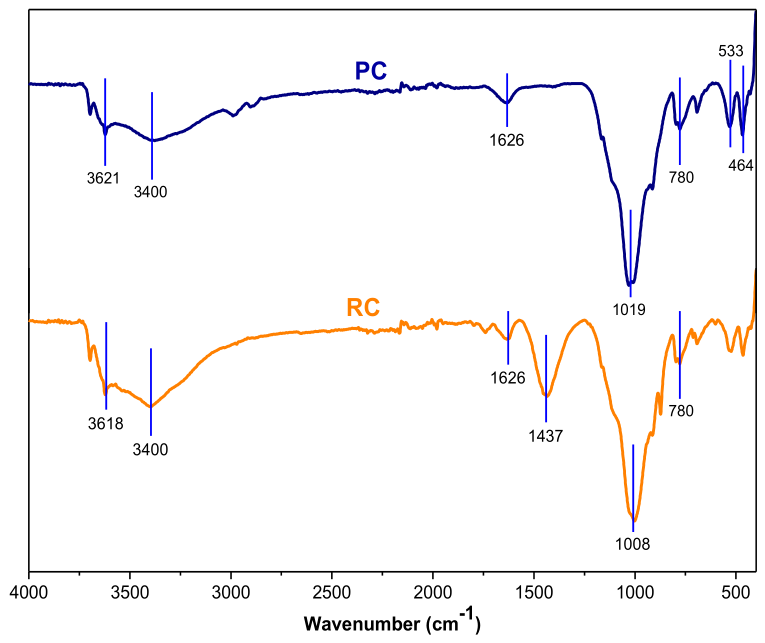
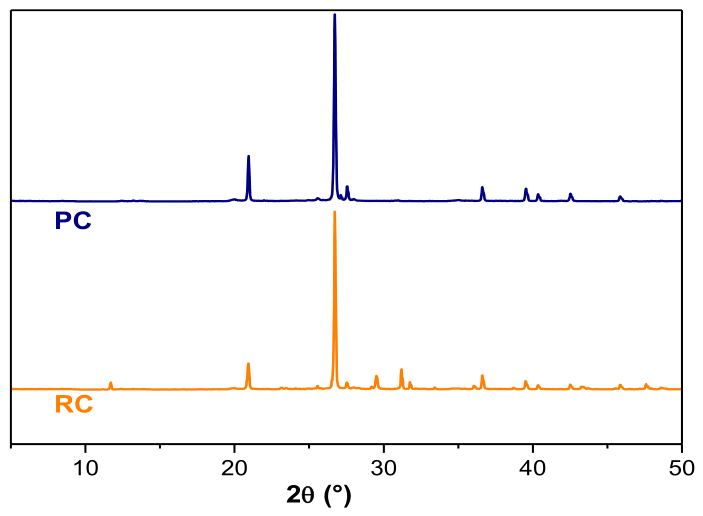
2.1. Clay Characterization
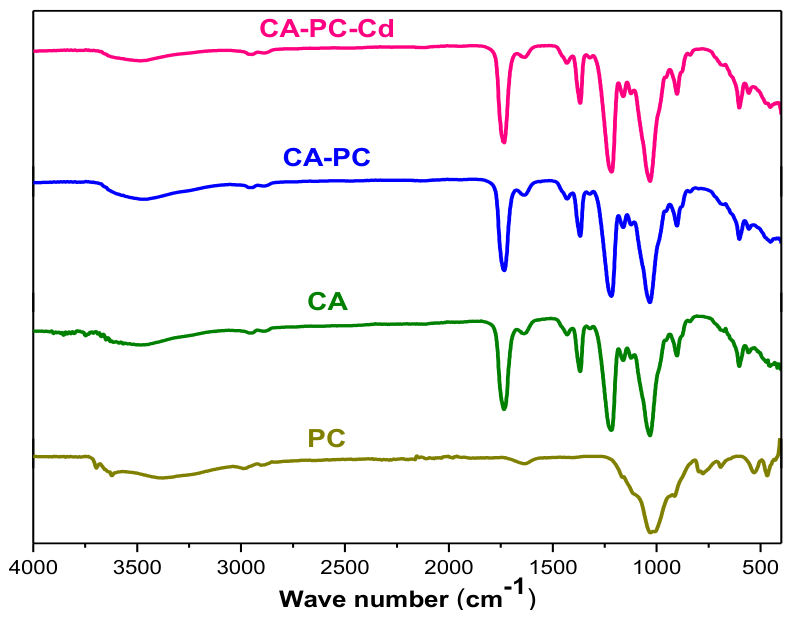
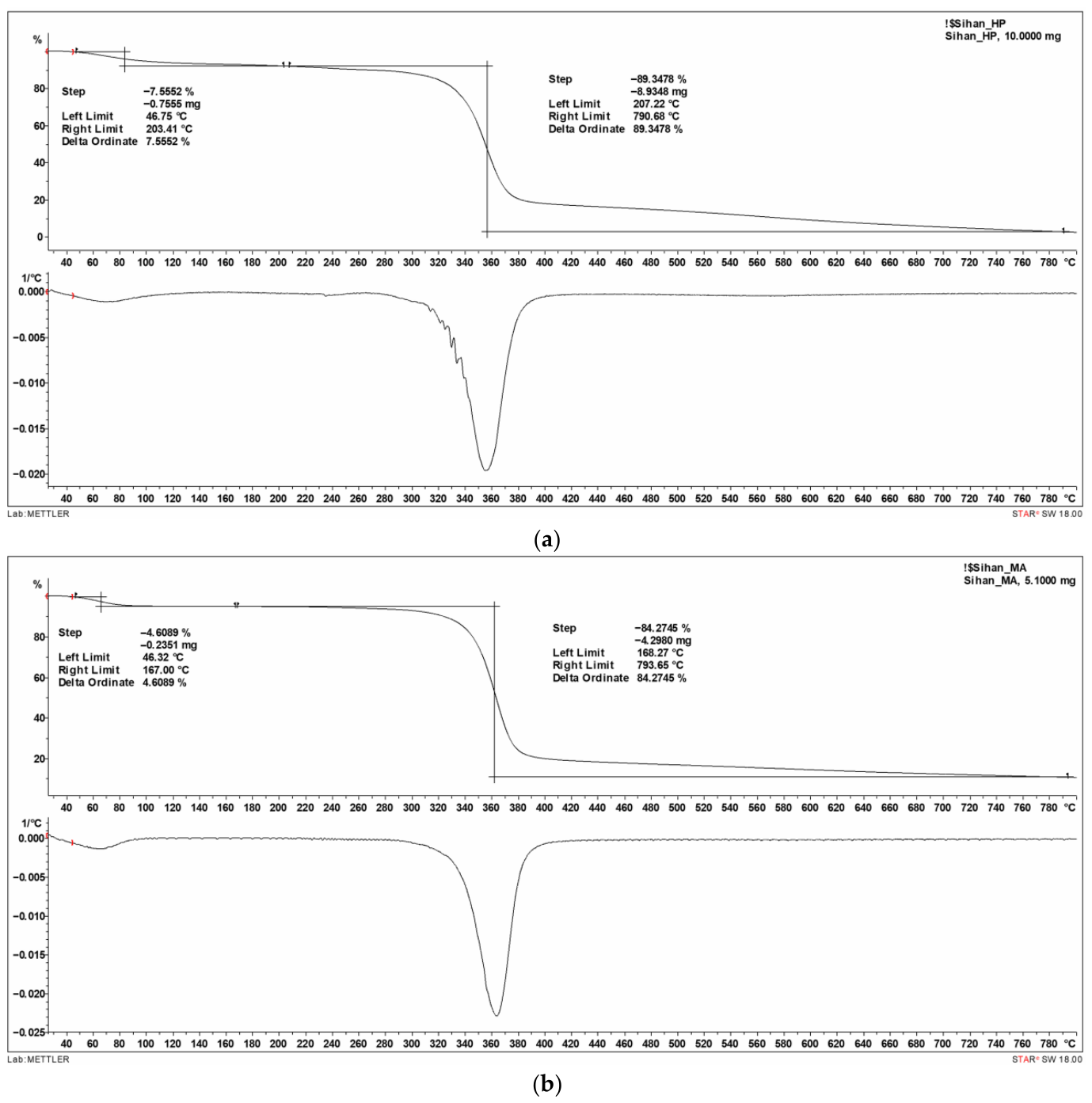
2.2. Membrane Characterization Before and After Adsorption
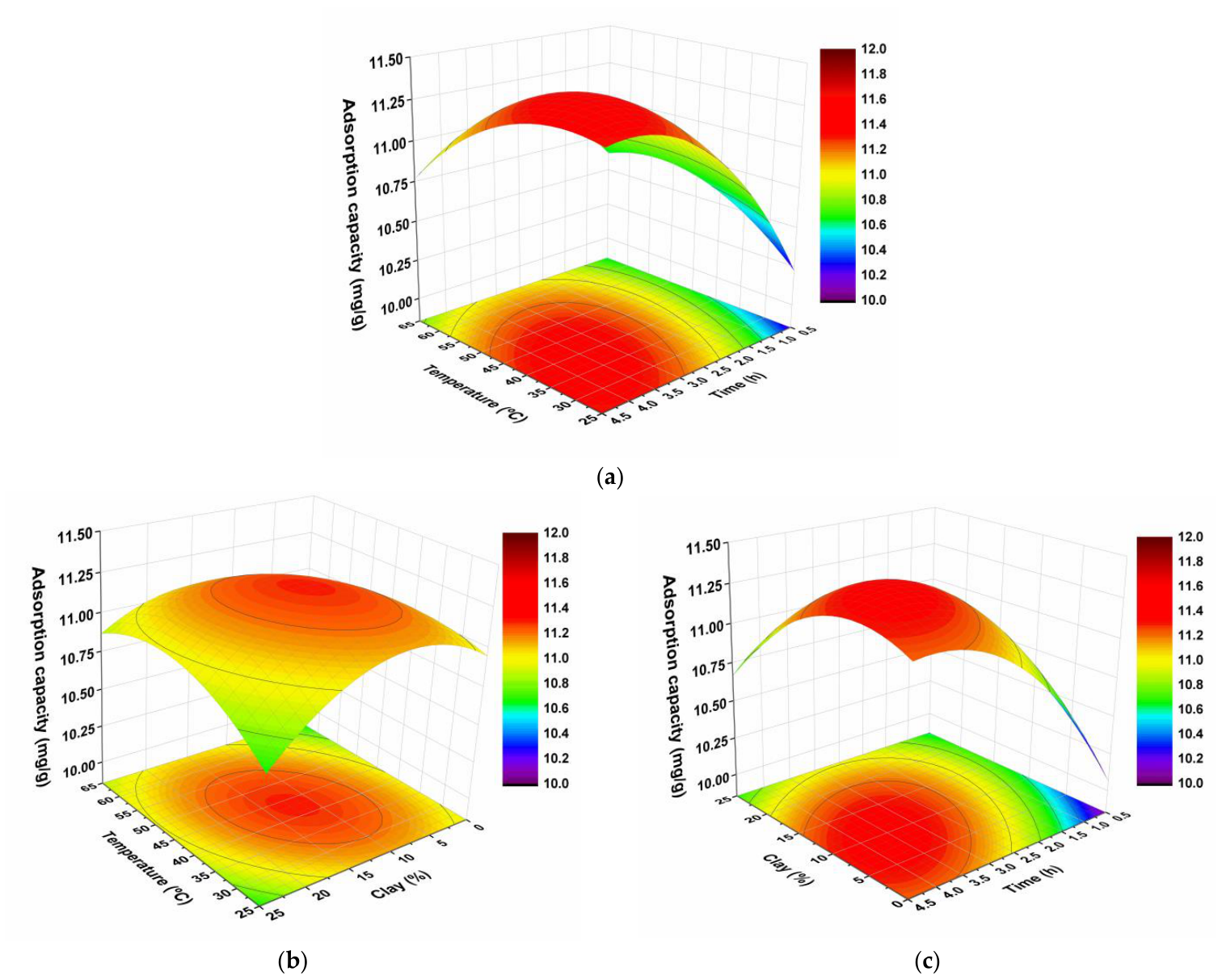
2.3. Experimental Design Results
2.4. Comparative Study
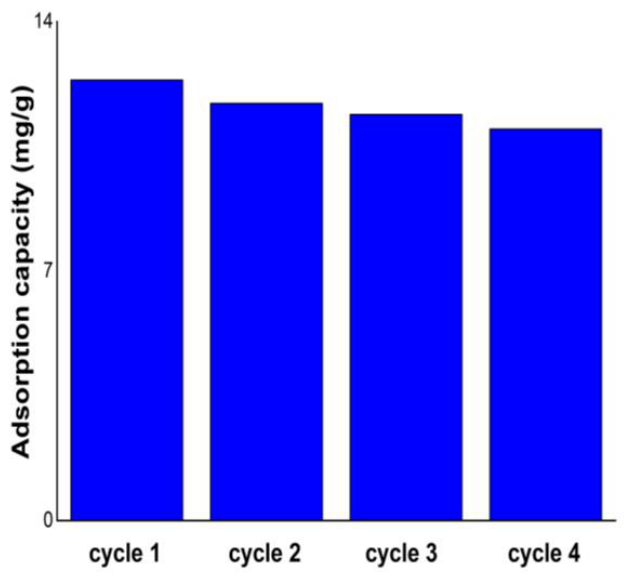
2.5. Desorption
3. Materials and Methods
3.1. Materials and Reagents
3.2. Clay Purification
3.3. Preparation of Membrane
3.4. Characterization Methods
3.5. Batch Adsorption Studies
3.6. Box–Behnken Design
4. Conclusions
Author Contributions
Funding
Institutional Review Board Statement
Informed Consent Statement
Data Availability Statement
Acknowledgments
Conflicts of Interest
References
- Cescon, M.; Chiefa, F.; Chenet, T.; Mancinelli, M.; Stevanin, C.; Martucci, A.; Pasti, L. Hydroxyapatite-Based Adsorbent Materials from Aquaculture Waste for Remediation of Metal-Contaminated Waters: Investigation of Cadmium Removal. Clean Technol. 2025, 7, 34. [Google Scholar] [CrossRef] [Scilit]
- Sun, J.; Yin, L.; Huang, K.; Li, X.; Ai, X.; Huang, Y.; Yin, Y.; Liu, J. Removal of cadmium from a citrate-bearing solution by floatable microsized garlic peel. RSC Adv. 2018, 8, 28284–28292. [Google Scholar] [CrossRef] [Scilit]
- Pyrzynska, K. Removal of cadmium from wastewaters with low-cost adsorbents. J. Environ. Chem. Eng. 2019, 7, 102795. [Google Scholar] [CrossRef] [Scilit]
- Rani, L.; Kaushal, J.; Srivastav, A.L.; Abdulla, S.; Prabha, C.; Joshi, H. Cadmium toxicity, health risk and its remediation using low-cost biochar adsorbents. Open Life Sci. 2025, 20, 20251131. [Google Scholar] [CrossRef] [Scilit]
- Sattar, S.; Yahya, M.; Aslam, S.; Hussain, R.; Shah, S.M.M.; Rauf, Z.; Zamir, A.; Ullah, R.; Shahzad, A. Environmental occurrence, hazards, and remediation strategies for the removal of cadmium from the polluted environment. Results Eng. 2025, 25, 104322. [Google Scholar] [CrossRef] [Scilit]
- Yang, Y.; Hassan, M.F.; Ali, W.; Zou, H.; Liu, Z.; Ma, Y. Effects of cadmium pollution on Human Health: A Narrative review. Atmosphere 2025, 16, 225. [Google Scholar] [CrossRef] [Scilit]
- Šrut, M.; Menke, S.; Höckner, M.; Sommer, S. Earthworms and cadmium—Heavy metal resistant gut bacteria as indicators for heavy metal pollution in soils? Ecotoxicol. Environ. Saf. 2019, 171, 843–853. [Google Scholar] [CrossRef] [Scilit]
- Bouida, L.; Rafatullah, M.; Kerrouche, A.; Qutob, M.; Alosaimi, A.M.; Alorfi, H.S.; Hussein, M.A. A review on cadmium and lead contamination: Sources, fate, mechanism, health effects and remediation methods. Water 2022, 14, 3432. [Google Scholar] [CrossRef] [Scilit]
- Mahmood, Q.; Asif, M.; Shaheen, S.; Hayat, M.T.; Ali, S. Cadmium contamination in water and soil. In Cadmium Toxicity and Tolerance in Plants; Academic Press: Cambridge, MA, USA, 2019; pp. 141–161. [Google Scholar]
- Ma, Y.; Ran, D.; Shi, X.; Zhao, H.; Liu, Z. Cadmium toxicity: A role in bone cell function and teeth development. Sci. Total Environ. 2021, 769, 144646. [Google Scholar] [CrossRef] [Scilit]
- Rasin, P.; Ashwathi, A.V.; Basheer, S.M.; Haribabu, J.; Santibanez, J.F.; Garrote, C.A.; Arulraj, A.; Mangalaraja, R.V. Exposure to cadmium and its impacts on human health: A short review. J. Hazard. Mater. Adv. 2025, 17, 100608. [Google Scholar] [CrossRef] [Scilit]
- Xu, W.; Wang, S.; Ruan, W.; Hao, M.; Jiang, K.; Guo, H.; Geng, A.; Man, M.; Hu, Z.; Liu, Y.; et al. Cadmium exposure and health outcomes: An umbrella review of meta-analyses. Environ. Res. 2025, 276, 121547. [Google Scholar] [CrossRef] [Scilit]
- Yang, G.; Sun, T.; Han, Y.-Y.; Rosser, F.; Forno, E.; Chen, W.; Celedón, J.C. Serum cadmium and lead, current wheeze, and lung function in a nationwide study of adults in the United States. J. Allergy Clin. Immunol. Pract. 2019, 7, 2653–2660.e3. [Google Scholar] [CrossRef] [Scilit]
- Simón, D.; Palet, C.; Cristóbal, A. Cadmium Removal by Adsorption on Biochars Derived from Wood Industry and Craft Beer Production Wastes. Water 2024, 16, 1905. [Google Scholar] [CrossRef] [Scilit]
- Lee, Y.; Lee, C.; Min, K.J.; Park, S. Efficient cadmium removal from industrial wastewater generated from smelter using chemical precipitation and oxidation assistance. Water Environ. Res. 2024, 96, e11059. [Google Scholar] [CrossRef] [Scilit]
- Du, J.; Zhang, B.; Li, J.; Lai, B. Decontamination of heavy metal complexes by advanced oxidation processes: A review. Chin. Chem. Lett. 2020, 31, 2575–2582. [Google Scholar] [CrossRef] [Scilit]
- Khulbe, K.C.; Matsuura, T. Removal of heavy metals and pollutants by membrane adsorption techniques. Appl. Water Sci. 2018, 8, 19. [Google Scholar] [CrossRef] [Scilit]
- Bessbousse, H.; Rhlalou, T.; Verchère, J.-F.; Lebrun, L. Removal of heavy metal ions from aqueous solutions by filtration with a novel complexing membrane containing poly(ethyleneimine) in a poly(vinyl alcohol) matrix. J. Membr. Sci. 2008, 307, 249–259. [Google Scholar] [CrossRef] [Scilit]
- Al-Rashdi, B.A.M.; Johnson, D.J.; Hilal, N. Removal of heavy metal ions by nanofiltration. Desalination 2013, 315, 2–17. [Google Scholar] [CrossRef] [Scilit]
- Yimer, M.; Ansari, S.N.; Berehe, B.A.; Gudimella, K.K.; Gedda, G.; Girma, W.M.; Hasan, N.; Tasneem, S. Adsorptive removal of heavy metals from wastewater using Cobalt-diphenylamine (Co-DPA) complex. BMC Chem. 2024, 18, 23. [Google Scholar] [CrossRef] [Scilit]
- Hegazi, H.A. Removal of heavy metals from wastewater using agricultural and industrial wastes as adsorbents. HBRC J. 2013, 9, 276–282. [Google Scholar] [CrossRef] [Scilit]
- Kumar, V.; Kumar, M.; Jha, M.K.; Jeong, J.; Lee, J.-C. Solvent extraction of cadmium from sulfate solution with di-(2-ethylhexyl) phosphoric acid diluted in kerosene. Hydrometallurgy 2009, 96, 230–234. [Google Scholar] [CrossRef] [Scilit]
- Szilassy, I.; Sumeghy, L.; Vadasdi, K. Solvent Extraction Separation and Recovery of Components from Scraps Containing Nickel and Cadmium. Miner. Process. Extr. Metall. Rev. 1997, 17, 227–238. [Google Scholar] [CrossRef] [Scilit]
- Jajuli, M.N.; Mohamed, N.; Suah, F.B.M. Electrochemical removal of cadmium from a sulphate solution using a three-dimensional electrode. Alex. Eng. J. 2020, 59, 4237–4245. [Google Scholar] [CrossRef] [Scilit]
- Kim, Y.; Kim, K.; Eom, H.H.; Su, X.; Lee, J.W. Electrochemically-assisted removal of cadmium ions by redox active Cu-based metal-organic framework. Chem. Eng. J. 2021, 421, 129765. [Google Scholar] [CrossRef] [Scilit]
- Pyrzynska, K.; Kilian, K. Porphyrin-Based sorbents for the enrichment and removal of metal ions. Molecules 2025, 30, 2238. [Google Scholar] [CrossRef] [Scilit]
- Tang, X.; Zheng, H.; Teng, H.; Sun, Y.; Guo, J.; Xie, W.; Yang, Q.; Chen, W. Chemical coagulation process for the removal of heavy metals from water: A review. Desalin. Water Treat. 2014, 57, 1733–1748. [Google Scholar] [CrossRef] [Scilit]
- Johnson, P.D.; Girinathannair, P.; Ohlinger, K.N.; Ritchie, S.; Teuber, L.; Kirby, J. Enhanced removal of heavy metals in primary treatment using coagulation and flocculation. Water Environ. Res. 2008, 80, 472–479. [Google Scholar] [CrossRef] [Scilit]
- Nikolić, N.M.; Kljajević, L.; Nenadović, S.S.; Potočnik, J.; Knežević, S.; Dolenec, S.; Trivunac, K. Adsorption efficiency of Cadmium (II) by different Alkali-Activated materials. Gels 2024, 10, 317. [Google Scholar] [CrossRef] [Scilit]
- Raji, Z.; Karim, A.; Karam, A.; Khalloufi, S. Adsorption of Heavy Metals: Mechanisms, kinetics, and Applications of Various Adsorbents in Wastewater Remediation—A review. Waste 2023, 1, 775–805. [Google Scholar] [CrossRef] [Scilit]
- Babel, S. Low-cost adsorbents for heavy metals uptake from contaminated water: A review. J. Hazard. Mater. 2003, 97, 219–243. [Google Scholar] [CrossRef] [Scilit]
- Foo, K.Y.; Hameed, B.H. Insights into the modeling of adsorption isotherm systems. Chem. Eng. J. 2010, 156, 2–10. [Google Scholar] [CrossRef] [Scilit]
- Wang, S.; Song, X.; Duan, J.; Li, S.; Gao, D.; Liu, J.; Meng, F.; Yang, W.; Yu, S.; Wang, F.; et al. Automated Machine Learning-Based prediction of the effects of physicochemical properties and external experimental conditions on cadmium adsorption by biochar. Water 2025, 17, 2266. [Google Scholar] [CrossRef] [Scilit]
- Li, T.; Wang, Y.; Niu, Y.; Zhang, Z.; Liu, J.; Wang, X.; Wang, J.; Li, J.; Wang, L. Enhanced Cadmium Adsorption Mechanisms Utilizing Biochar Derived from Different Parts of Wetland Emergent Plants Iris sibirica L. Processes 2025, 13, 1520. [Google Scholar] [CrossRef] [Scilit]
- Buema, G.; Lupu, N.; Chiriac, H.; Ciobanu, G.; Bucur, R.-D.; Bucur, D.; Favier, L.; Harja, M. Performance assessment of five adsorbents based on fly ash for removal of cadmium ions. J. Mol. Liq. 2021, 333, 115932. [Google Scholar] [CrossRef] [Scilit]
- Li, X.; Tang, Y.; Cao, X.; Lu, D.; Luo, F.; Shao, W. Preparation and evaluation of orange peel cellulose adsorbents for effective removal of cadmium, zinc, cobalt and nickel. Colloids Surf. A 2008, 317, 512–521. [Google Scholar] [CrossRef] [Scilit]
- Dhahri, R.; Yılmaz, M.; Mechi, L.; Alsukaibi, A.K.D.; Alimi, F.; Salem, R.B.; Moussaoui, Y. Optimization of the Preparation of Activated Carbon from Prickly Pear Seed Cake for the Removal of Lead and Cadmium Ions from Aqueous Solution. Sustainability 2022, 14, 3245. [Google Scholar] [CrossRef] [Scilit]
- Yusop, M.F.M.; Jaya, E.M.J.; Din, A.T.M.; Bello, O.S.; Ahmad, M.A. Single-Stage Optimized Microwave-Induced Activated Carbon from Coconut Shell for Cadmium Adsorption. Chem. Eng. Technol. 2022, 45, 1943–1951. [Google Scholar] [CrossRef] [Scilit]
- Zhang, Z.; Wang, T.; Zhang, H.; Liu, Y.; Xing, B. Adsorption of Pb(II) and Cd(II) by magnetic activated carbon and its mechanism. Sci. Total Environ. 2021, 757, 143910. [Google Scholar] [CrossRef] [Scilit]
- Es-Sahbany, H.; Hachimi, M.L.E.; Hsissou, R.; Belfaquir, M.; Es-Sahbany, K.; Nkhili, S.; Loutfi, M.; Elyoubi, M.S. Adsorption of heavy metal (Cadmium) in synthetic wastewater by the natural clay as a potential adsorbent (Tangier-Tetouan-Al Hoceima—Morocco region). Mater. Today Proc. 2021, 45, 7299–7305. [Google Scholar] [CrossRef] [Scilit]
- Ghasemi, H.; Afshang, M.; Gilvari, T.; Aghabarari, B.; Mozaffari, S. Rapid and effective removal of heavy metal ions from aqueous solution using nanostructured clay particles. Results Surf. Interfaces 2023, 10, 100097. [Google Scholar] [CrossRef] [Scilit]
- Aloui, L.; Mezghich, S.; Mansour, L.; Hraiech, S.; Ayari, F. Swift Removal of the Heavy Metals Cadmium and Lead from an Aqueous Solution by a CAN-Zeolite Synthesized from Natural Clay. ChemEngineering 2023, 7, 113. [Google Scholar] [CrossRef] [Scilit]
- Oprea, M.; Voicu, S.I. Cellulose Acetate-Based Materials for water Treatment in the context of Circular Economy. Water 2023, 15, 1860. [Google Scholar] [CrossRef] [Scilit]
- Buonomenna, M.G.; Mousavi, S.M.; Hashemi, S.A.; Lai, C.W. Water cleaning adsorptive membranes for efficient removal of heavy metals and metalloids. Water 2022, 14, 2718. [Google Scholar] [CrossRef] [Scilit]
- Zhang, Z.; Lu, Y.; Gao, S.; Wu, S. Sustainable and Efficient wastewater treatment using Cellulose-Based Hydrogels: A review of heavy metal, dye, and micropollutant removal applications. Separations 2025, 12, 72. [Google Scholar] [CrossRef] [Scilit]
- Idress, H.; Zaidi, S.Z.J.; Sabir, A.; Shafiq, M.; Khan, R.U.; Harito, C.; Hassan, S.; Walsh, F.C. Cellulose acetate based Complexation-NF membranes for the removal of Pb(II) from waste water. Sci. Rep. 2021, 11, 1806. [Google Scholar] [CrossRef] [Scilit]
- Gu, S.; Kang, X.; Wang, L.; Lichtfouse, E.; Wang, C. Clay mineral adsorbents for heavy metal removal from wastewater: A review. Environ. Chem. Lett. 2018, 17, 629–654. [Google Scholar] [CrossRef] [Scilit]
- Otunola, B.O.; Ololade, O.O. A review on the application of clay minerals as heavy metal adsorbents for remediation purposes. Environ. Technol. Innov. 2020, 18, 100692. [Google Scholar] [CrossRef] [Scilit]
- Uddin, M.K. A review on the adsorption of heavy metals by clay minerals, with special focus on the past decade. Chem. Eng. J. 2017, 308, 438–462. [Google Scholar] [CrossRef] [Scilit]
- Shahzadi, F.; Sun, X.-F.; Sheraz, M. Sustainable Cellulose–Bentonite composites for wastewater treatment. Materials 2025, 18, 4284. [Google Scholar] [CrossRef] [Scilit]
- Veza, I.; Spraggon, M.; Fattah, I.M.R.; Idris, M. Response surface methodology (RSM) for optimizing engine performance and emissions fueled with biofuel: Review of RSM for sustainability energy transition. Results Eng. 2023, 18, 101213. [Google Scholar] [CrossRef] [Scilit]
- de Oliveira, L.G.; de Paiva, A.P.; Balestrassi, P.P.; Ferreira, J.R.; da Costa, S.C.; da Silva Campos, P.H. Response surface methodology for advanced manufacturing technology optimization: Theoretical fundamentals, practical guidelines, and survey literature review. Int. J. Adv. Manuf. Technol. 2019, 104, 1785–1837. [Google Scholar] [CrossRef] [Scilit]
- Bouchelkia, N.; Tahraoui, H.; Amrane, A.; Belkacemi, H.; Bollinger, J.-C.; Bouzaza, A.; Zoukel, A.; Zhang, J.; Mouni, L. Jujube stones based highly efficient activated carbon for methylene blue adsorption: Kinetics and isotherms modeling, thermodynamics and mechanism study, optimization via response surface methodology and machine learning approaches. Process Saf. Environ. Prot. 2023, 170, 513–535. [Google Scholar] [CrossRef] [Scilit]
- Parmar, P.; Shukla, A.; Goswami, D.; Patel, B.; Saraf, M. Optimization of cadmium and lead biosorption onto marine Vibrio alginolyticus PBR1 employing a Box-Behnken design. Chem. Eng. J. Adv. 2020, 4, 100043. [Google Scholar] [CrossRef] [Scilit]
- Babahoum, N.; Hamou, M.O. Characterization and purification of Algerian natural bentonite for pharmaceutical and cosmetic applications. BMC Chem. 2021, 15, 50. [Google Scholar] [CrossRef] [Scilit]
- Gutiérrez-Sánchez, P.; Hrichi, A.; Garrido-Zoido, J.M.; Álvarez-Torrellas, S.; Larriba, M.; Gil, M.V.; Amor, H.B.; García, J. Natural clays as adsorbents for the efficient removal of antibiotic ciprofloxacin from wastewaters: Experimental and theoretical studies using DFT method. J. Ind. Eng. Chem. 2024, 134, 137–151. [Google Scholar] [CrossRef] [Scilit]
- Abbou, B.; Lebkïrï, İ.; Ouaddari, H.; Elkhattabï, O.; Habsaoui, A.; Lebkiri, A.; Rifi, E.H. Kinetic and thermodynamic study on adsorption of cadmium from aqueous solutions using natural clay. J. Turk. Chem. Soc. Sect. A Chem. 2021, 8, 677–692. [Google Scholar] [CrossRef] [Scilit]
- Atawa, O.; Escudero-Curiel, S.; Amor, H.B.; Ouakouak, A.; Hamdi, N.; Pazos, M.; Sanromán, Á. Efficient fluoxetine removal from water using Tunisian clay as adsorbent and its regeneration through NaOH-activated peroxymonosulfate. Chem. Eng. Sci. 2025, 304, 120998. [Google Scholar] [CrossRef] [Scilit]
- Abdelnaby, A.; Abdelaleem, N.M.; Elshewy, E.; Mansour, A.H.; Ibrahim, S.S. Application of Bentonite Clay, Date Pit, and Chitosan Nanoparticles as Promising Adsorbents to Sequester Toxic Lead and Cadmium from Milk. Biol. Trace Elem. Res. 2022, 201, 2650–2664. [Google Scholar] [CrossRef] [Scilit]
- Tanykova, N.; Petrova, Y.; Kostina, J.; Kozlova, E.; Leushina, E.; Spasennykh, M. Study of organic matter of unconventional reservoirs by IR spectroscopy and IR microscopy. Geosciences 2021, 11, 277. [Google Scholar] [CrossRef] [Scilit]
- Gamoudi, S.; Frini-Srasra, N.; Srasra, E. Kinetic and equilibrium studies of fluoride sorption onto surfactant-modified smectites. Clay Miner. 2012, 47, 429–440. [Google Scholar] [CrossRef] [Scilit]
- Ardebili, P.N.; Jozanikohan, G.; Moradzadeh, A. The characterization of clay minerals in the Kashafrud Formation in a gas field in northeast Iran. Sci. Rep. 2025, 15, 9000. [Google Scholar] [CrossRef] [Scilit]
- Bennour, A.; Mahmoudi, S.; Srasra, E.; Hatira, N.; Boussen, S.; Ouaja, M.; Zargouni, F. Identification and traditional ceramic application of clays from the Chouamekh region in south-eastern Tunisia. Appl. Clay Sci. 2015, 118, 212–220. [Google Scholar] [CrossRef] [Scilit]
- Szpisják-Gulyás, N.; Al-Tayawi, A.N.; Horváth, Z.H.; László, Z.; Kertész, S.; Hodúr, C. Methods for experimental design, central composite design and the Box–Behnken design, to optimise operational parameters: A review. Acta Aliment. 2023, 52, 521–537. [Google Scholar] [CrossRef] [Scilit]
- Mbacke, K.; Ndoye, M.; Diop, E.H.M.; Sene, M. Nanofiltration membranes based on cellulose triacetate from millet husk. RSC Sustain. 2026, 4, 1464–1484. [Google Scholar] [CrossRef] [Scilit]
- Acarer-Arat, S.; Pir, İ.; Tüfekci, M.; Güneş-Durak, S.; Akman, A.; Tüfekci, N. Heavy Metal Rejection Performance and Mechanical Performance of Cellulose-Nanofibril-Reinforced Cellulose Acetate Membranes. ACS Omega 2024, 9, 42159–42171. [Google Scholar] [CrossRef] [Scilit]
- González-Cuello, R.; Hernández-Fernández, J.; Ortega-Toro, R. Optimization of the Viability of Microencapsulated Lactobacillus reuteri in Gellan Gum-Based Composites Using a Box–Behnken Design. J. Compos. Sci. 2025, 9, 419. [Google Scholar] [CrossRef] [Scilit]
- Sadrnia, A.; Orooji, Y.; Behmaneshfar, A.; Darabi, R.; Kamali, D.M.; Karimi-Maleh, H.; Opoku, F.; Govender, P.P. Developing a simple box–behnken experimental design on the removal of doxorubicin anticancer drug using Fe3O4/graphene nanoribbons adsorbent. Environ. Res. 2021, 200, 111522. [Google Scholar] [CrossRef] [Scilit]
- Jozanikohan, G.; Abarghooei, M.N. The Fourier transform infrared spectroscopy (FTIR) analysis for the clay mineralogy studies in a clastic reservoir. J. Pet. Explor. Prod. Technol. 2022, 12, 2093–2106. [Google Scholar] [CrossRef] [Scilit]
- Bassam, R.; El Hallaoui, A.; El Alouani, M.; Jabrane, M.; El Khattabi, E.H.; Tridane, M.; Belaaouad, S. Studies on the Removal of Cadmium Toxic Metal Ions by Natural Clays from Aqueous Solution by Adsorption Process. J. Chem. 2021, 2021, 7873488. [Google Scholar] [CrossRef] [Scilit]
- Al-Kadhi, N.S.; Basha, M.T. Enhanced Removal of Cd(II) Ions from Aqueous Media via Adsorption on Facilely Synthesized Copper Ferrite Nanoparticles. Molecules 2024, 29, 3711. [Google Scholar] [CrossRef] [Scilit]
- Volkov, D.; Rogova, O.; Proskurnin, M. Organic matter and mineral composition of silicate soils: FTIR comparison Study by photoacoustic, diffuse reflectance, and Attenuated total Reflection modalities. Agronomy 2021, 11, 1879. [Google Scholar] [CrossRef] [Scilit]
- Es-Said, A.; Nafai, H.; Lamzougui, G.; Bouhaouss, A.; Bchitou, R. Comparative adsorption studies of cadmium ions on phosphogypsum and natural clay. Sci. Afr. 2021, 13, e00960. [Google Scholar] [CrossRef] [Scilit]
- Yuan, W.; Cheng, J.; Huang, H.; Xiong, S.; Gao, J.; Zhang, J.; Feng, S. Optimization of cadmium biosorption by Shewanella putrefaciens using a Box-Behnken design. Ecotoxicol. Environ. Saf. 2019, 175, 138–147. [Google Scholar] [CrossRef] [Scilit]
- Sternik, D.; Majdan, M.; Deryło-Marczewska, A.; Żukociński, G.; Gładysz-Płaska, A.; Gun’ko, V.M.; Mikhalovsky, S.V. Influence of Basic Red 1 dye adsorption on thermal stability of Na-clinoptilolite and Na-bentonite. J. Therm. Anal. Calorim. 2010, 103, 607–615. [Google Scholar] [CrossRef] [Scilit]
- Chaudhry, Z.U.A.; Arshad, N.; Qureshi, M.A.U.R. Chitosan-based hydrogels: Bentonite supported architectures explored for removal of cadmium(II) from aqueous solution. RSC Adv. 2026, 16, 14216–14232. [Google Scholar] [CrossRef] [Scilit]
- Chen, Y.-G.; Ye, W.-M.; Yang, X.-M.; Deng, F.-Y.; He, Y. Effect of contact time, pH, and ionic strength on Cd(II) adsorption from aqueous solution onto bentonite from Gaomiaozi, China. Environ. Earth Sci. 2011, 64, 329–336. [Google Scholar] [CrossRef] [Scilit]
- Huang, R.; Wang, B.; Yang, B.; Zheng, D.; Zhang, Z. Equilibrium, kinetic and thermodynamic studies of adsorption of Cd(II) from aqueous solution onto HACC–bentonite. Desalination 2011, 280, 297–304. [Google Scholar] [CrossRef] [Scilit]
- Rahim, H.U.; Akbar, W.A.; Alatalo, J.M. A Comprenhsive Literature Review on Cadmium (Cd) Status in the Soil Environment and Its Immobilization by Biochar-Based Materials. Agronomy 2022, 12, 877. [Google Scholar] [CrossRef] [Scilit]
- Li, W.; Zhang, L.; Su, T.; Luo, X.; Xie, X.; Qin, Z. Carboxymethyl cellulose sodium/bentonite composite adsorbent for Cd(II) adsorption from wastewater. Adv. Compos. Hybrid Mater. 2025, 8, 119. [Google Scholar] [CrossRef] [Scilit]
- Hokkanen, S.; Bhatnagar, A.; Srivastava, V.; Suorsa, V.; Sillanpää, M. Removal of Cd2+, Ni2+ and PO43− from aqueous solution by hydroxyapatite-bentonite clay-nanocellulose composite. Int. J. Biol. Macromol. 2018, 118, 903–912. [Google Scholar] [CrossRef] [Scilit]
- Li, C.; Duan, H.; Wang, X.; Meng, X.; Qin, D. Fabrication of porous resins via solubility differences for adsorption of cadmium (II). Chem. Eng. J. 2015, 262, 250–259. [Google Scholar] [CrossRef] [Scilit]
- Ahrouch, M.; Gatica, J.M.; Draoui, K.; Bellido, D.; Vidal, H. Honeycomb filters as an alternative to powders in the use of clays to remove cadmium from water. Chemosphere 2020, 259, 127526. [Google Scholar] [CrossRef] [Scilit]
- Bandara, T.; Xu, J.; Potter, I.D.; Franks, A.; Chathurika, J.B.A.J.; Tang, C. Mechanisms for the removal of Cd(II) and Cu(II) from aqueous solution and mine water by biochars derived from agricultural wastes. Chemosphere 2020, 254, 126745. [Google Scholar] [CrossRef] [Scilit]
- Sarada, B.; Krishna Prasad, M.; Kishore Kumar, K.; Murthy, C.V.R. Biosorption of Cd(II) by green plant biomass, Araucaria heterophylla: Characterization, kinetic, isotherm and thermodynamic studies. Appl. Water Sci. 2017, 7, 3483–3496. [Google Scholar] [CrossRef] [Scilit]
- Jahangir, A.; Atique, U.A.K.M.; Mohammad Nasir, U. Isotherm and kinetic modeling of Cd(II) uptake from aqueous solutions using an agri-waste biosorbent jute stick powder. Braz. J. Anal. Chem. 2020, 7, 28. [Google Scholar] [CrossRef] [Scilit]
- Wahab, N.; Saeed, M.; Ibrahim, M.; Munir, A.; Saleem, M.; Zahra, M.; Waseem, A. Synthesis, characterization, and applications of silk/bentonite clay composite for heavy metal removal from aqueous solution. Front. Chem. 2019, 7, 654. [Google Scholar] [CrossRef] [Scilit]
- Bhran, A.A.; Tadepalli, S.; Murthy, K.S.R.; AlGhamdi, A.A. Biosorption and Regeneration Studies for Cu (II) and Cd (II) Removal from Industrial Effluents Using Orange Peel and Composite Adsorbents. Processes 2025, 13, 1972. [Google Scholar] [CrossRef] [Scilit]
- Wang, X.; Wang, A. Removal of Cd(II) from aqueous solution by a composite hydrogel based on attapulgite. Environ. Technol. 2010, 31, 745–753. [Google Scholar] [CrossRef] [Scilit]
- Nefzi, H.; Abderrabba, M.; Ayadi, S.; Labidi, J. Formation of Palygorskite Clay from Treated Diatomite and its Application for the Removal of Heavy Metals from Aqueous Solution. Water 2018, 10, 1257. [Google Scholar] [CrossRef] [Scilit]
- Labidi, A.; Salaberria, A.M.; Labidi, J.; Abderrabba, M. Preparation of novel carboxymethylchitosan-graft-poly(methylmethacrylate) under microwave irradiation as a chitosan-based material for Hg2+ removal. Microchem. J. 2019, 148, 531–540. [Google Scholar] [CrossRef] [Scilit]
- Box, G.E.P.; Behnken, D.W. Some new three level designs for the study of quantitative variables. Technometrics 1960, 2, 455–475. [Google Scholar] [CrossRef]
- Park, G.; Kim, M.K.; Go, S.H.; Choi, M.; Jang, Y.P. Analytical Quality by Design (AQBD) approach to the development of analytical procedures for medicinal plants. Plants 2022, 11, 2960. [Google Scholar] [CrossRef] [Scilit]
- Bezerra, M.A.; Santelli, R.E.; Oliveira, E.P.; Villar, L.S.; Escaleira, L.A. Response surface methodology (RSM) as a tool for optimization in analytical chemistry. Talanta 2008, 76, 965–977. [Google Scholar] [CrossRef] [Scilit]



| Run | Temperature (X1) | Clay-Percentage (X2) | Time (X3) | Temperature (°C) | Clay Percentage (%) | Time (h) | Adsorption Capacity (mg/g) |
|---|---|---|---|---|---|---|---|
| 1 | 0 | 0 | 0 | 45 | 12.5 | 2.5 | 11.19 |
| 2 | 0 | 1 | −1 | 45 | 25 | 0.5 | 10.37 |
| 3 | 1 | 0 | −1 | 65 | 12.5 | 0.5 | 10.72 |
| 4 | 0 | 0 | 0 | 45 | 12.5 | 2.5 | 11.34 |
| 5 | −1 | 1 | 0 | 25 | 25 | 2.5 | 10.98 |
| 6 | 1 | 1 | 0 | 65 | 25 | 2.5 | 10.98 |
| 7 | −1 | 0 | 1 | 25 | 12.5 | 4.5 | 11.19 |
| 8 | 1 | −1 | 0 | 65 | 0 | 2.5 | 10.27 |
| 9 | −1 | 0 | −1 | 25 | 12.5 | 0.5 | 10.12 |
| 10 | 0 | 0 | 0 | 45 | 12.5 | 2.5 | 10.32 |
| 11 | 0 | −1 | −1 | 45 | 0 | 0.5 | 10.29 |
| 12 | 1 | 0 | 1 | 65 | 12.5 | 4.5 | 10.87 |
| 13 | 0 | 1 | 1 | 45 | 25 | 4.5 | 10.44 |
| 14 | −1 | −1 | 0 | 25 | 0 | 2.5 | 10.83 |
| 15 | 0 | −1 | 1 | 45 | 0 | 4.5 | 11.43 |
| Sources | Degree of Freedom | Sum of Squares | Mean Square | F | p-Value |
|---|---|---|---|---|---|
| Regression | 9 | 2.1817 | 0.2424 | 2.458 | 0.167 |
| Residuals | 5 | 0.4929 | 0.0986 | - | - |
| Total | 14 | 2.6746 | - | - | - |
| Adsorption Capacity (mg/g) | |||
|---|---|---|---|
| Variables | Optimum Values | Predicted | Experimental |
| Temperature | 30 °C | 11.44 | 12.35 |
| Contact time | 4 h | ||
| Clay percentage | 5% | ||
| Adsorbent | Adsorption Capacity (mg/g) | References |
|---|---|---|
| Porous resins | 3.33 | [82] |
| Clays | 4 | [83] |
| Natural Clays | 5.65 | [73] |
| Natural clays | 5.85 | [70] |
| Biochars derived from agricultural | 6.28 | [84] |
| Auraucaria heteropylla | 9.25 | [85] |
| Agriwaste-Biosorbent | 10 | [86] |
| Silk/Betonite Clay Composite | 11.35 | [87] |
| Composite cellulose acetate clay | 12.35 | This work |
| Variable | Coding | Levels | ||
|---|---|---|---|---|
| −1 | 0 | +1 | ||
| Temperature (°C) | X1 | 25 | 45 | 65 |
| Clay percentage (%) | X2 | 0 | 12.5 | 25 |
| Contact time (h) | X3 | 0.5 | 2.5 | 4.5 |
Disclaimer/Publisher’s Note: The statements, opinions and data contained in all publications are solely those of the individual author(s) and contributor(s) and not of MDPI and/or the editor(s). MDPI and/or the editor(s) disclaim responsibility for any injury to people or property resulting from any ideas, methods, instructions or products referred to in the content. |
© 2026 by the authors. Licensee MDPI, Basel, Switzerland. This article is an open access article distributed under the terms and conditions of the Creative Commons Attribution (CC BY) license.
Share and Cite
Dhieb, S.; Gamoudi, S.; Baraka, F.; Erdocia, X.; Labidi, J.; Salem, R.B.; Moussaoui, Y. Optimization of Cadmium Adsorption onto a Cellulose Acetate–Clay Composite Membrane Using Box–Behnken Design. Molecules 2026, 31, 2976. https://doi.org/10.3390/molecules31172976
Dhieb S, Gamoudi S, Baraka F, Erdocia X, Labidi J, Salem RB, Moussaoui Y. Optimization of Cadmium Adsorption onto a Cellulose Acetate–Clay Composite Membrane Using Box–Behnken Design. Molecules. 2026; 31(17):2976. https://doi.org/10.3390/molecules31172976
Chicago/Turabian StyleDhieb, Sihem, Safa Gamoudi, Farida Baraka, Xabier Erdocia, Jalel Labidi, Ridha Ben Salem, and Younes Moussaoui. 2026. "Optimization of Cadmium Adsorption onto a Cellulose Acetate–Clay Composite Membrane Using Box–Behnken Design" Molecules 31, no. 17: 2976. https://doi.org/10.3390/molecules31172976
APA StyleDhieb, S., Gamoudi, S., Baraka, F., Erdocia, X., Labidi, J., Salem, R. B., & Moussaoui, Y. (2026). Optimization of Cadmium Adsorption onto a Cellulose Acetate–Clay Composite Membrane Using Box–Behnken Design. Molecules, 31(17), 2976. https://doi.org/10.3390/molecules31172976