Article

Study on the Process of Intermolecular Forces and Electrostatic Force Between Cations and Nano-SiO2 Based on Molecular Simulation


1
Research Institute of Shaanxi Yanchang Petroleum (Group) Co., Ltd., Xi’an 710065, China
2
No. 11 Oil Production Plant, PetroChina Changqing Oilfield Company, Qingyang 745000, China
3
School of Earth Resources, China University of Geosciences (Wuhan), Wuhan 430074, China
*
Author to whom correspondence should be addressed.
Molecules 2026, 31(14), 2457; https://doi.org/10.3390/molecules31142457
Submission received: 5 May 2026 / Revised: 6 July 2026 / Accepted: 8 July 2026 / Published: 14 July 2026
(This article belongs to the Topic Petroleum and Gas Engineering, 2nd edition)

Abstract

Although low-permeability oil reservoirs boast abundant resources, oil recovery remains relatively low due to the limitations of current water flooding development technology in oilfields. To address the current challenges of low-permeability oil reservoirs, nano-SiO2 particle aqueous solutions, instead of conventional water injection, have been applied to these reservoirs, which can achieve promising results. Nevertheless, due to the simple surface structure of nano-SiO2 particles, the unsaturated hydroxyl groups on their surfaces tend to undergo electrostatic attraction with cations in formation water, leading to particle aggregation and flocculation, ultimately compromising their stability. Therefore, studying the interaction between nano-SiO2 particles and cations in saline solutions is of great significance for providing guidance on the application of nano-SiO2 particles in low-permeability oilfields. In light of this, this paper employs molecular dynamics simulations and quantum chemical methods to investigate the processes of interactions between nano-SiO2 particles and cations from a microscopic perspective. The results indicate that the interaction zone between monovalent cations and nanoparticles lies approximately 0.2 nm to 0.3 nm away from the particle surface. In comparison, the interaction zone between divalent cations and nanoparticles extends roughly from 0.3 nm to 0.4 nm from the particle surface. The range and depth of influence of divalent cations are more pronounced. No covalent or ionic bonds are formed between monovalent cations and nanoparticles. However, divalent cations can form ionic bonds with nanoparticles, thereby altering their structural configuration. Among these interactions, electrostatic forces represent the dominant interaction force responsible for changing the configuration of nano-SiO2 particles, whereas van der Waals forces and hydrogen bonding forces are merely weak interactions. Moreover, as the valence state of the cation increases from monovalent to divalent, the cation forms new ionic bonds with the nano-SiO2 particles, significantly modifying their structural configuration and further undermining their stability. The findings of this study can improve our understanding of the existing state of nano-SiO2 particles in formation water, which can help to improve the application effect of nano-SiO2 particles in low-permeability oil fields.

1. Introduction

Currently, low-permeability oil and gas resources comprise a significant portion of global oil and gas reserves [1]. However, the development and utilization of these low-permeability resources face enormous difficulties and challenges [2]. Low-permeability reservoirs are characterized by poor petrophysical properties, low permeability, poor particle sorting, and high cementation content [3], all of which result in low recovery rates [4]. Therefore, developing cost-effective enhanced oil recovery (EOR) technologies specifically tailored for low-permeability reservoirs has become a critical issue that urgently needs to be addressed in the current exploitation of low-permeability oilfields [5]. To effectively improve the recovery rate of low-permeability reservoirs, nanotechnology-based EOR techniques have gradually come into focus [6]. In recent years, research and application of nanoparticles for enhancing oil and gas recovery have made considerable progress. The research shows that when nanomaterials are used as oil displacement agents [7], they can effectively reduce oil–water interfacial tension, and they can also be displaced into micropores to improve sweep efficiency due to their small size [8]. At the same time, they can also be adsorbed on the rock surface to reduce the water phase flow resistance, preventing the expansion of the rock after hydration, reducing the displacement pressure, and improving the water phase flow speed [9]. Therefore, nanomaterials can be applied to oil reservoirs in a variety of production methods to improve oil displacement efficiency, highlighting the huge development potential of nanomaterials in oilfield development.
At present, researchers have developed a variety of nanomaterials and technologies to improve crude oil recovery. There have been many pilot tests and field experiments on the application of nanomaterials in low-permeability oilfields [10]. Among the nanomaterials commonly used in trials are SiO2, NiO, Fe3O4, and MoS2. The experimental results consistently demonstrate that nano-SiO2 particles exhibit superior performance compared to other nanoparticles when applied to low-permeability reservoirs, primarily due to their more vigorous surface activity [11], lower cost, wider availability [12], and better dispersion properties [13]. Moreover, nano-SiO2 particles possess non-toxic and non-polluting characteristics, which not only ensure the safety of construction personnel but also contribute to environmental protection to some extent [14]. Therefore, using nano-SiO2 particles for enhanced oil recovery represents a relatively advanced and highly effective method for improving recovery rates [15]. Nano-SiO2 particles currently show promising application prospects in oilfield exploitation.
However, given the simple surface structure and high surface activity of nano-SiO2 particles, their excessive surface activity implies high chemical reaction energy, making them prone to agglomeration under complex reservoir conditions such as low permeability, high temperature, and high salinity, thereby causing pore blockage. Consequently, to achieve effective displacement and sustainable production of oil from reservoirs, it is crucial to develop efficient, low-impact, and cost-effective nano-SiO2 particle-based oil displacement agents for different reservoir conditions. This poses significant importance for the development of water flooding in low-permeability oil fields [16].
In recent years, with the rapid advancement of computer technology and the continuous refinement of related theories, molecular simulation has become a widely used and effective tool for researchers to study microscopic phenomena [17]. At the same time, molecular simulation enables experiments that are difficult or even impossible to conduct through macroscopic methods, providing microscopic data on intermolecular interactions and allowing us to elucidate, from a molecular perspective, the underlying mechanisms behind changes in the physicochemical properties of materials [18]. Therefore, by employing molecular simulation, we can investigate the interaction processes between nano-SiO2 particles and substances such as cations and hydrated ions present in oil reservoirs, analyze the physicochemical properties of nano-SiO2 particles, and examine how metal ions influence their structural configurations. This study can lay the foundation for future applications of nano-SiO2 particles in oilfield development [19]. Molecular simulation techniques encompass a variety of molecular simulation methods, but the two most commonly used are molecular dynamics simulations and quantum chemistry.
Using molecular dynamics simulation methods to study the migration and diffusion of molecules at solid–liquid, liquid–liquid, and gas–liquid interfaces has been a key area of early research in molecular dynamics simulations. During the process of investigating the interactions between nano-SiO2 particles and cations, as well as water molecules, molecular dynamics simulations allow us to explore the aggregation and diffusion states among molecules from a microscopic perspective [20]. From a molecular standpoint, this approach further elucidates how the aggregation of cations and anions on the surface of nano-SiO2 particles affects their physicochemical properties [21], thereby providing a theoretical foundation for the macroscopic application of nano-SiO2 particles in oil fields [22]. When studying interfacial properties at liquid–liquid interfaces, a method for constructing symmetric models was proposed, which is of great significance for calculating such properties and provides an important theoretical basis for constructing a model of nano-SiO2 particle interactions with salt solutions [23]. The transport properties of nanoparticles and the impact of charged nanoparticles on migration and aggregation were investigated by using molecular dynamics simulations [24]. The relationship between the charge of nanoparticles and stability at the two-phase interface was analyzed, demonstrating that when the charge of nanoparticles in solution reaches a certain threshold, it can enhance their stability in solution. After modification of nano-SiO2 particles, the particles exhibited an improved ability to reduce interfacial tension and an increased affinity between oil and water [25]. As previous studies have shown, molecular dynamics simulation is a method that explains intermolecular interactions at the molecular level, enabling quantitative analysis of molecular migration mechanisms and interaction processes. Therefore, from the perspective of molecular motion, molecular dynamics simulations can be employed to dissect the interaction processes between nano-SiO2 particles and cations, perform kinetic analyses, and explore changes in the interfacial properties of nano-SiO2 particles [26].
Molecular dynamics simulations can analyze the influence of molecular migration and aggregation behavior on interface properties through changes in momentum between molecules [25,27,28], while quantum chemistry can analyze the influence of molecules on the configuration of matter through changes in electron distribution [29]. The properties of rock surfaces, the molecular structures of oil substances, and pyrolysis mechanisms are studied using quantum chemical approaches, thereby revealing the relationship between changes in oil molecule structures and rock surface characteristics. The pore structure characteristics of the molecular model of the oil parent material are calculated by using quantum chemistry, and the transport model of oil and gas components in the oil parent material is also constructed by using quantum chemistry [30]. The interaction energy between hydrate cages and porous silica surfaces can be determined by employing quantum chemical calculations and examining the forces exerted by hydrate cages on silica at various facets and sites, as well as the types of these interactions. This explains how the formation and decomposition of various complexes affect the stability of the media surface [31]. Although research on the application of quantum chemistry to nano-SiO2 particles remains relatively scarce, previous studies have shown that quantum chemistry can be used to perform calculations on electronic structures and, based on electron distribution patterns, account for electrostatic interactions between materials [32]. Therefore, quantum chemical calculations can be used to analyze, from an electronic perspective, both the type and magnitude of interaction energies between nano-SiO2 particles and cations and to examine these interactions in light of the bonding states among molecules [33].
This paper employs molecular dynamics simulations and quantum chemical methods to explore the interactions between cations and nano-sized SiO2 particles. It quantitatively elucidates the effects of different force fields on their structural configurations [34,35,36]. In this study, we first construct an interfacial model of amorphous nano-sized SiO2 particles in salt solutions by using molecular dynamics simulations and investigate the interactions between various types of salt solutions (containing Na+, K+, Ca2+, and Mg2+) and nano-sized SiO2 particles. Subsequently, we use quantum chemical simulations to extract a portion of the surface from the molecular dynamics model and build models of approximately 1 nm diameter nano-SiO2 clusters interacting with individual cations (Na+, K+, Ca2+, and Mg2+), thereby examining the interactions at an even smaller scale [37,38,39]. The results of the research can be used to explain how different cations alter the physicochemical properties of nano-sized SiO2 particles, providing evidence for a change in the existing state of nano-sized SiO2 particles in formation water.

2. Molecule Simulation Experiment

2.1. Construction of the Model of Nano-SiO2 Particles and Cations

The conformational search and construction of nano-SiO2 cluster molecules were performed by using the two software packages: ABcluster software 2.0 and Gaussian View 6.0. Subsequently, quantum chemistry software, including Gaussian16, Multiwfn 3.5, and VMD 1.9.4, was used to calculate the parameters of the model of nano-SiO2 particles and cations [40,41,42]. The difference between quantum chemistry and molecular dynamics simulation is that the influence of the electron correlation effect on the system needs to be considered in the construction and calculation of the model. Through the method of quantum chemistry, part of the nano-SiO2 particle clusters in the molecular dynamics model were intercepted, and single cations (Na+, K+, Ca2+, Mg2+) were added to analyze the influence of cations and water molecules on the structure and properties of nano-SiO2 particles during the process of movement [43,44,45].
The construction and calculation of the nano-SiO2 particle–cation model involve the following four steps. First, by using Abcluster software, we search for cluster configurations of amorphous nano-SiO2 particles and visualize them in Gaussian View 6.0. Due to the limitations of the current technology of molecular simulation software, the modeling of nano-SiO2 clusters is achieved under relatively ideal conditions, which are smaller than actual nanoparticle clusters. However, the integrity of their structure is consistent with that of actual nano-SiO2 particles, and the constructed nano-SiO2 clusters are large enough compared to individual cations. Thus, this does not affect the trend of the simulation results. The radius of the nano-SiO2 clusters is approximately 0.5 nm, with a total of 69 atoms. These configurations include deprotonated siloxyl groups and hydroxylated siloxyl groups, reflecting the high surface activity and negative charge characteristics of amorphous nano-SiO2 particles under complex conditions [46]. Second, we perform geometric optimization of the nano-SiO2 cluster models by using Gaussian16 software to identify stable energy configurations. Third, we place individual ions and individual water molecules into the nano-SiO2 cluster models, with cations and water molecules positioned about 0.6 nm away from the surface of the nano-SiO2 clusters, thereby forming various types of nano-SiO2 particle–cation models, as shown in Figure 1. Finally, by using Gaussian16 software, we perform geometric optimization and frequency calculations for a total of 73 atoms across four different nano-SiO2 particle–cation models [47] (Na+, K+, Ca2+, and Mg2+), as illustrated in Figure 1.
When calculating the intermolecular forces in the nano-SiO2 particle–salt solution system, the analysis of the results will not take into account the influence of Cl ions for the following reason. Cl ions only diffuse at a distance far from nano-SiO2 particles, interacting weakly with nano-SiO2 particles. Existing studies have shown that when nano-SiO2 surfaces interact with solutions containing Na+, K+, Ca2+, and Mg2+, the silanol groups on the nano-SiO2 surface become negatively charged due to deprotonation, thereby exhibiting a more substantial adsorption effect on the cations in the solution. The nature of the involved cations primarily determines the magnitude of the interaction energy [48].

2.2. Parameters for Calculation

Based on the constructed nano-SiO2 particle–cation molecular model, quantum chemical calculations are performed, and the results are analyzed [49]. The parameters calculated are as follows. (1) The intermolecular forces between molecules are analyzed by using the simplified density gradient (RDG) function, and the strength and type of these intermolecular forces are interpreted. (2) The electrostatic force between molecules is analyzed by using the localized orbital localization (LOL) and independent gradient density (IGM) functions, which can interpret the strength of the electrostatic force and determine whether a bond is formed between the nano-SiO2 particles and the cations. The simulated temperature for the experiment was set at 300 K, and the pressure was set to normal pressure. The simulation time for molecular simulation was within the range of 0 to 1000 ps.

3. Results and Discussion

3.1. Analysis of Intermolecular Forces Between Nano-SiO2 Particles and Cations

During the process of the interaction between molecules, how do bonds form between them? And if bonds do form, how do the resulting intermolecular forces affect the structural stability of nano-SiO2 particles? To further elucidate the interaction forces between cations and nano-SiO2 particles, this section examines the weak interactions—specifically, intermolecular interactions between cations and the surface of nano-SiO2 particles—and explores the possibility of cations forming complexes with nano-SiO2 particles. In this section, the intermolecular interaction relationships among molecules are analyzed by utilizing Multiwfn software, and VMD software is used to generate spatial maps illustrating the regions of interaction between cations and nano-SiO2 particles [50].
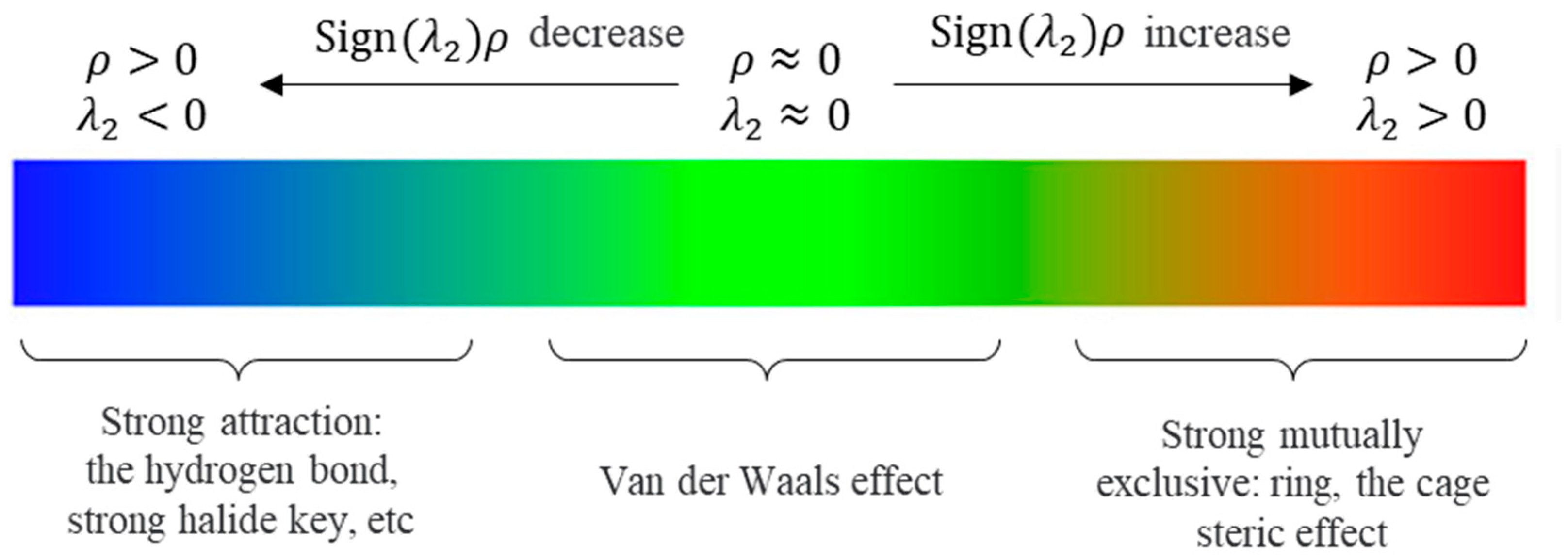
In the study, an intermolecular interaction approach was employed. By using the simplified density gradient (RDG) function, RDG isosurface maps of regions with low electron density were generated to highlight areas associated with various noncovalent interactions visually [51]. The simplified density gradient (RDG) is a dimensionless form of the electron density gradient, serving as an indicator of the strength of weak interactions. Furthermore, the type of weak interaction is represented by the functional relationship between ρ ( r ) and S i g n ( λ 2 ) . The corresponding interaction types are illustrated in Figure 2.
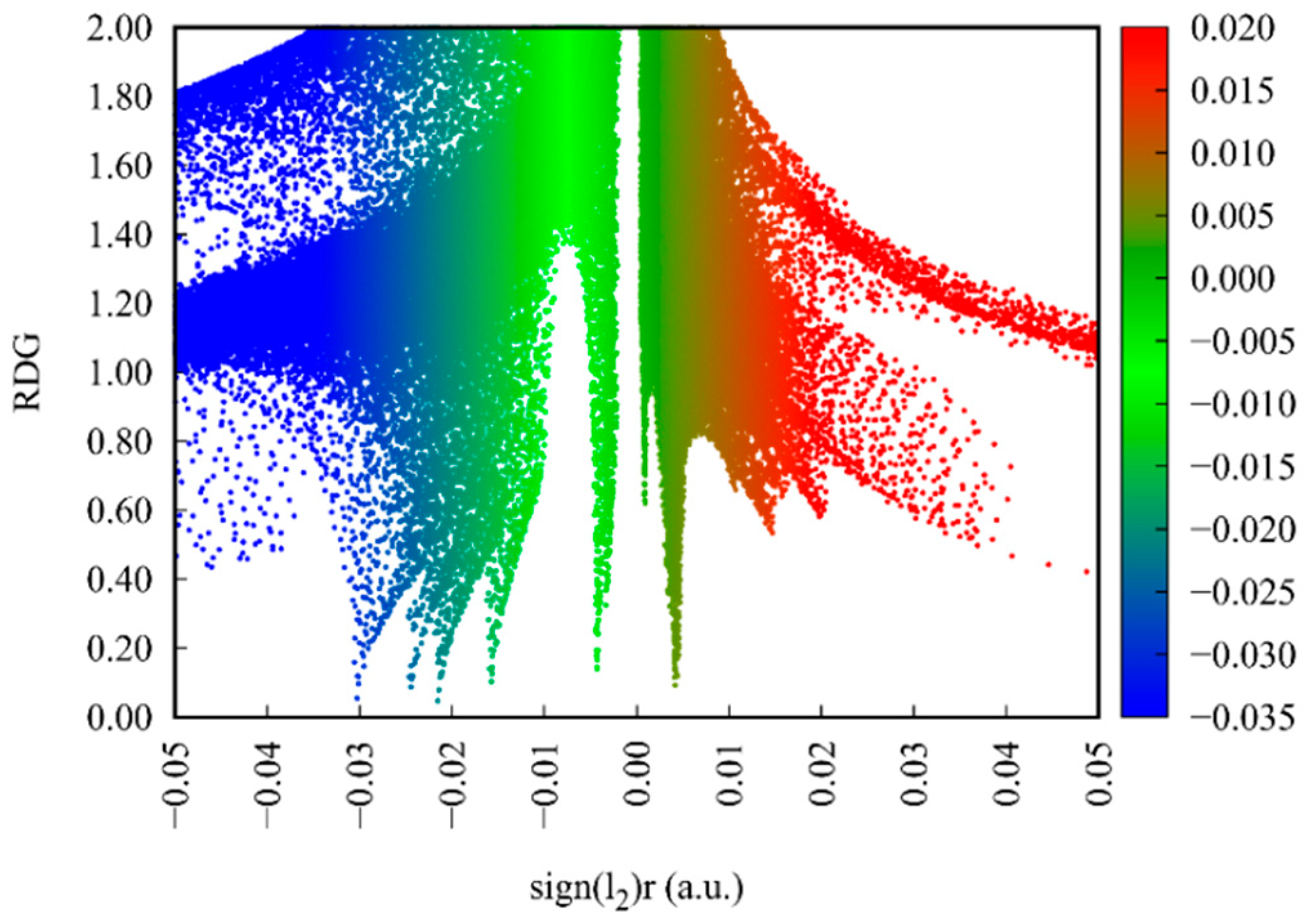
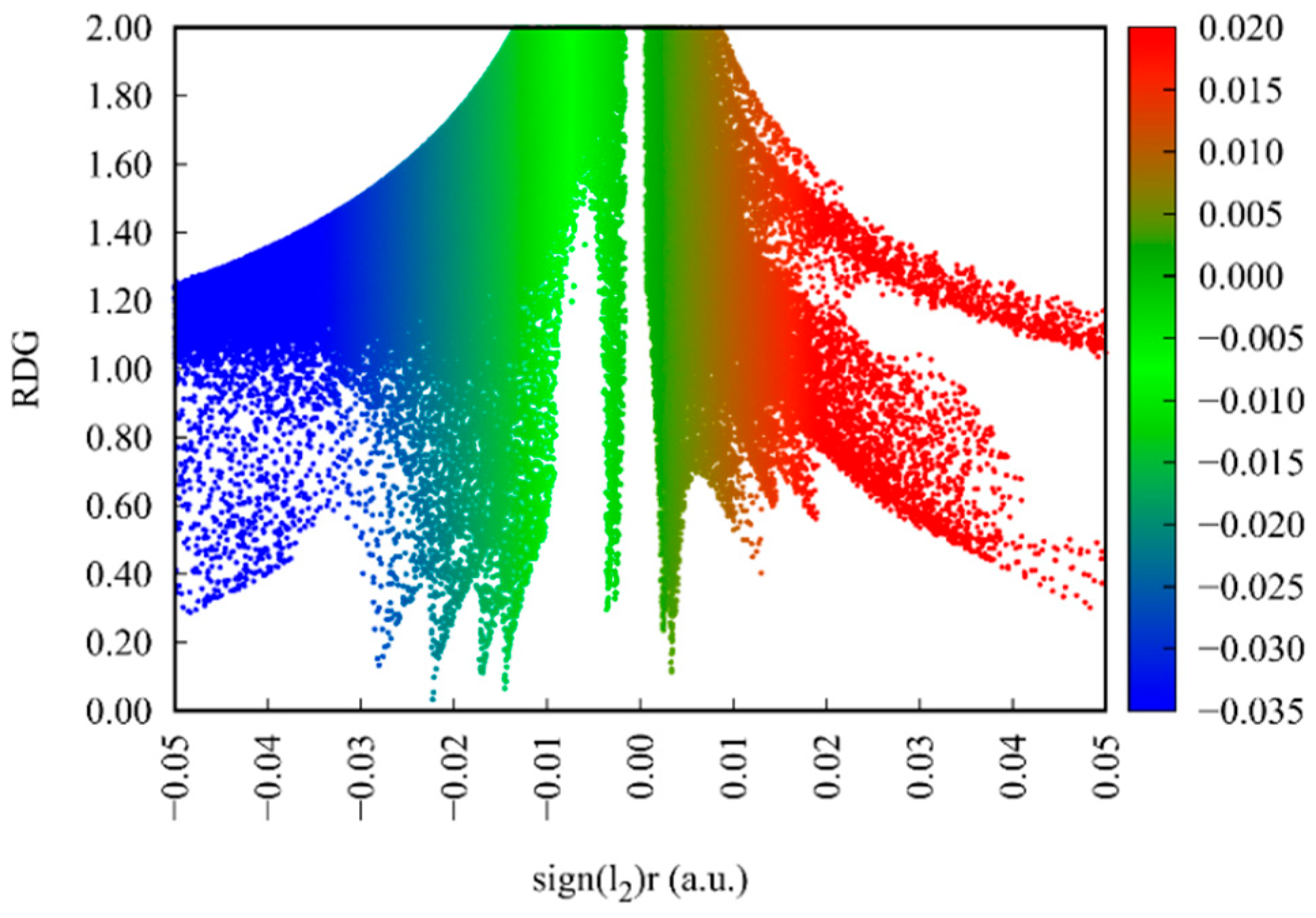
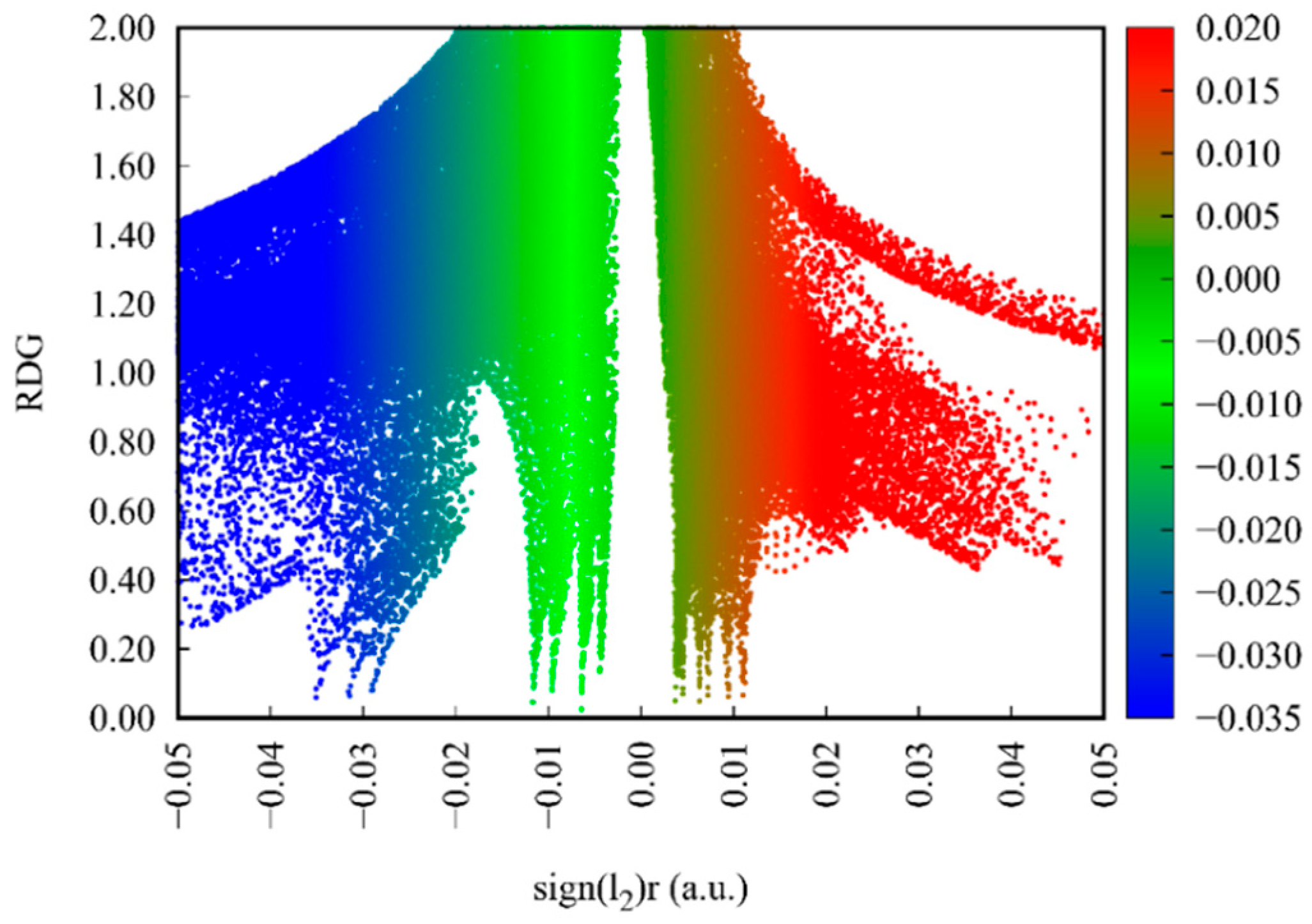
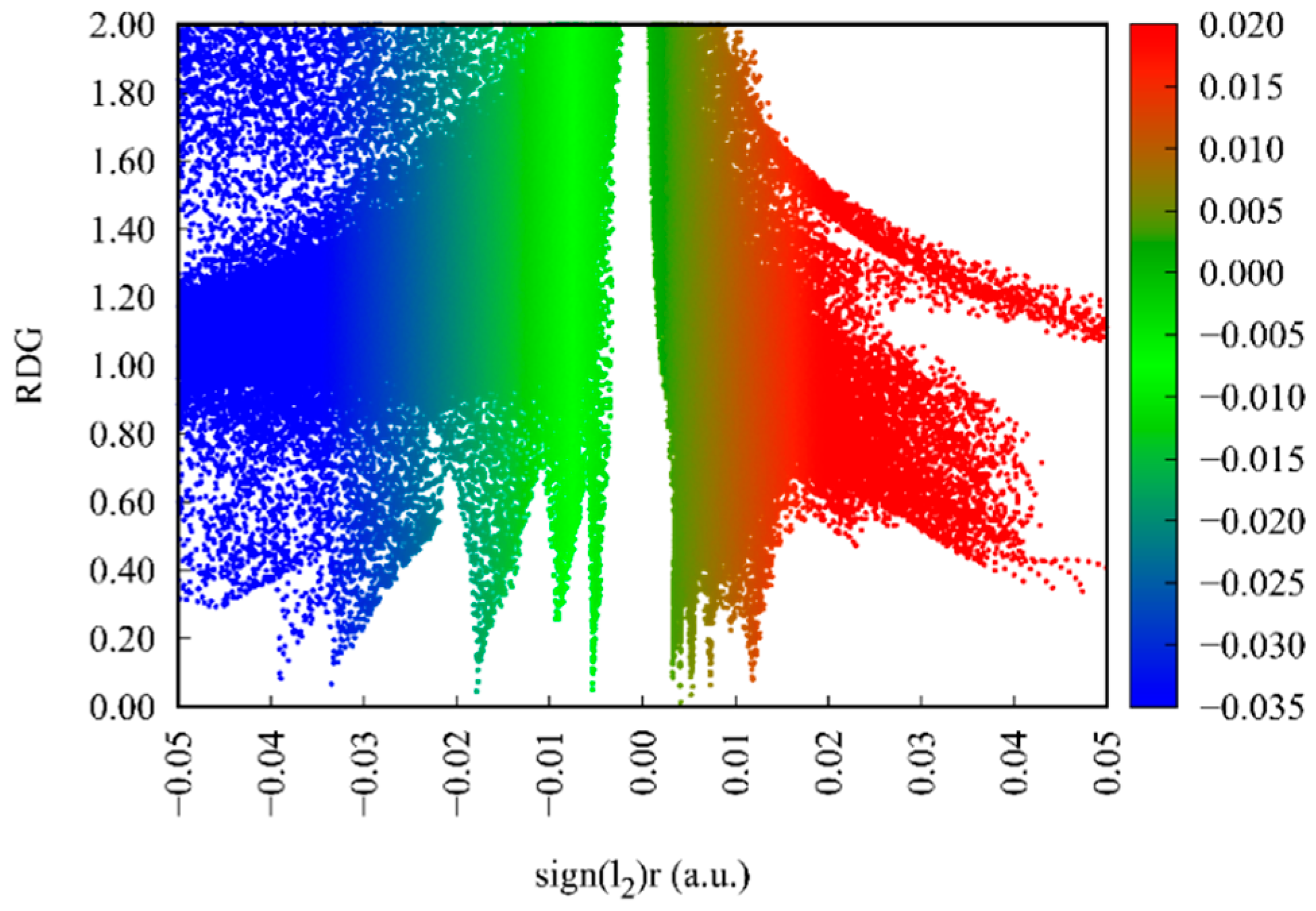
In order to highlight the intermolecular interactions among cations, nano-SiO2 particles and water molecules, the interactions within nano-SiO2 particles were ignored when using RDG diagrams. The computational results are shown in Figure 3, Figure 4, Figure 5 and Figure 6. The figures show RDG scatter plots colored according to the concentrations of Na+, K+, Ca2+, and Mg2+ ions. On the left, the y-values represent the magnitude of the RDG(r) function values. On the right, the y-values indicate the type and magnitude of molecular interactions, with colors corresponding to these values. The x-values represent the magnitude of the product of the S i g n ( λ 2 ) function and the ρ value.
Figure 3 and Figure 4 show RDG scatter plots colored by density for Na+ and K+. As can be seen from the horizontal axis of the RDG scatter plots, when x is in the range of (−0.02, 0), this region corresponds to the area of weak intermolecular interactions, primarily governed by van der Waals forces. In the Na+ RDG scatter plot, the range of van der Waals interactions is slightly larger than that for K+. When x is in the range of (−0.05, −0.02), this region corresponds to the vicinity of the atomic nuclei, where hydrogen bonding plays the dominant role. In the Na+ RDG scatter plot, the range of hydrogen bonding is greater than that for K+. When x is in the range of (0, 0.05), both Na+ and K+ exhibit relatively weak steric effects with respect to the nanoparticles. By examining the isosurfaces of molecular configurations, it can be observed that van der Waals interactions occur between monovalent cations, water molecules, and nanoparticles. Additionally, hydrogen bonding occurs between cations and water molecules, as well as between nanoparticles and water molecules. Among these interactions, the interaction between monovalent cations and water molecules is stronger than that between nanoparticles and water molecules. From the extent of these interactions, as shown by the isosurfaces of molecular configurations, it is evident that the interactions among monovalent cations, water molecules, and nanoparticles are confined to a tiny region—approximately 0.2 nm to 0.3 nm—indicating that the intermolecular interactions between monovalent cations and water have minimal influence on nanoparticles. Consequently, it is unlikely that monovalent cations can form stable complexes with nanoparticles.
Figure 5 and Figure 6 show RDG scatter plots colored by density for Ca2+ and Mg2+. As can be seen from the horizontal coordinates of the RDG scatter plots, when x = (−0.02, 0), the van der Waals interaction range in the Ca2+ RDG scatter plot is slightly smaller than that in the Mg2+ plot. When x = (−0.05, −0.02), the hydrogen bonding interaction range in the Ca2+ RDG scatter plot is significantly smaller than that in the Mg2+ plot. When x = (0, 0.05), there is no significant difference between Ca2+ and Mg2+ in terms of steric effects with the nanoparticles. However, both ions form a common equipotential surface with van der Waals interactions, indicating a relatively pronounced steric effect. By examining the molecular configuration of equipotential surfaces, it can be observed that both van der Waals interactions and steric effects exist between the divalent cations, water molecules, and nanoparticles, while hydrogen bonding occurs between the cations and water molecules as well as between the nanoparticles and water molecules. Notably, the van der Waals interaction range and the hydrogen bonding interaction range of Mg2+ are both larger than those of Ca2+. From the perspective of interaction ranges, Mg2+ exhibits a broader interaction range with the nano-SiO2 particles, to some extent reflecting a stronger interaction force. Analysis reveals that the primary types of intermolecular interactions between molecules are van der Waals forces and hydrogen bonds. Compared to monovalent cations, divalent cations exhibit a more substantial steric hindrance effect when interacting with nano-SiO2 particles, leading to more pronounced local energy changes in nano-SiO2 particles. Furthermore, judging from the number of scatter points, Mg2+ ions have a broader range of action than Ca2+ ions, yet both ranges are wider than those of monovalent cations, indicating that divalent cations are more likely to form covalent or ionic bonds with nano-SiO2 particles.

3.2. Analysis of Electrostatic Force Between Nano-SiO2 Particles and Cations

The electrostatic interaction among cations and nano-SiO2 particles is examined by using the Localized Orbital Locator (LOL) and the Independent Gradient Model (IGM). The bonding mechanism between cations and nano-SiO2 particles has been analyzed [52]. In the studies by Schmider and Becke [53,54], a functional relationship was established between the local kinetic energy density t σ and the finite variable v σ , and the Localized Orbital Locator (LOL) was proposed to assess the strength of intermolecular interactions and determine whether bonds are formed [53]. In the study by Lefebvre et al. [55], a function was defined based on the gradient of regional atomic density, which calculates the density difference between two atoms and constructs an isosurface model. Finally, the degree of mutual interference between atoms was analyzed according to the magnitude of this density difference. Compared with the Localized Orbital Locator, the Independent Gradient Model has the advantage of better representing the interactions between atoms in two-dimensional systems. Based on this, the process of electron exchange kinetic energy between molecules can be identified by mapping the color variations of the v σ function in an electron localized orbital diagram and then determining whether covalent bonds have formed between molecules by plotting isosurfaces of the Independent Gradient Model.
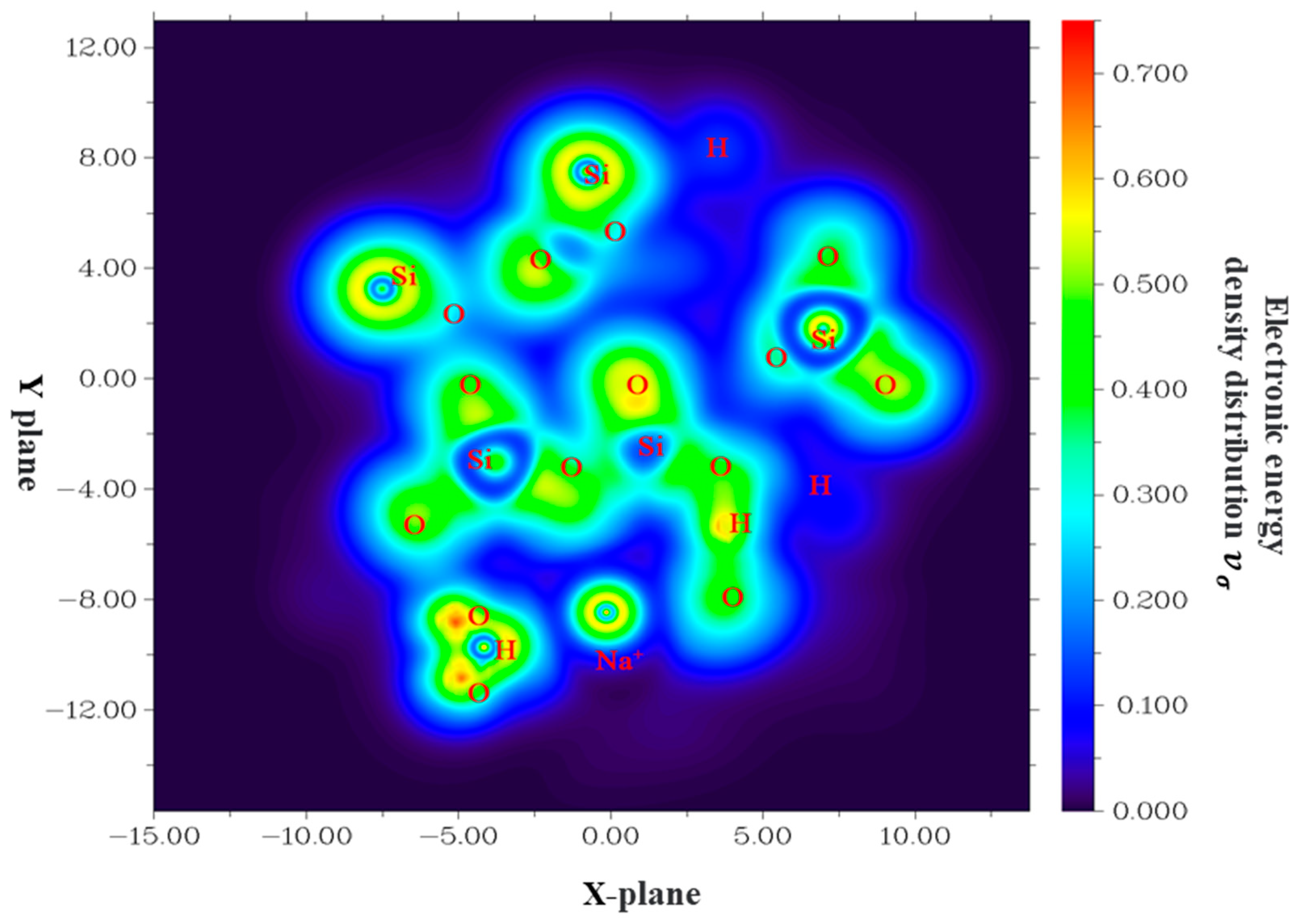
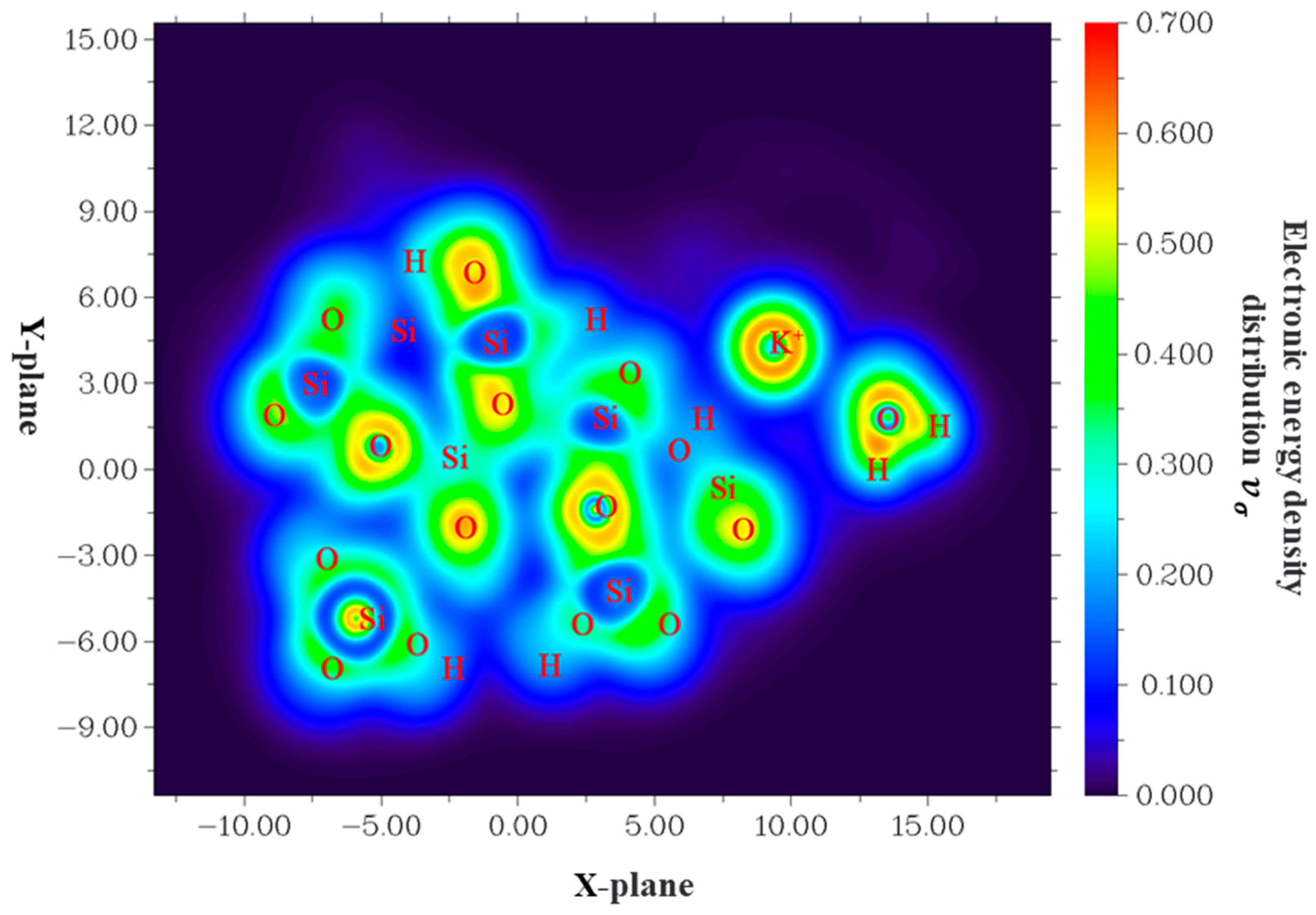
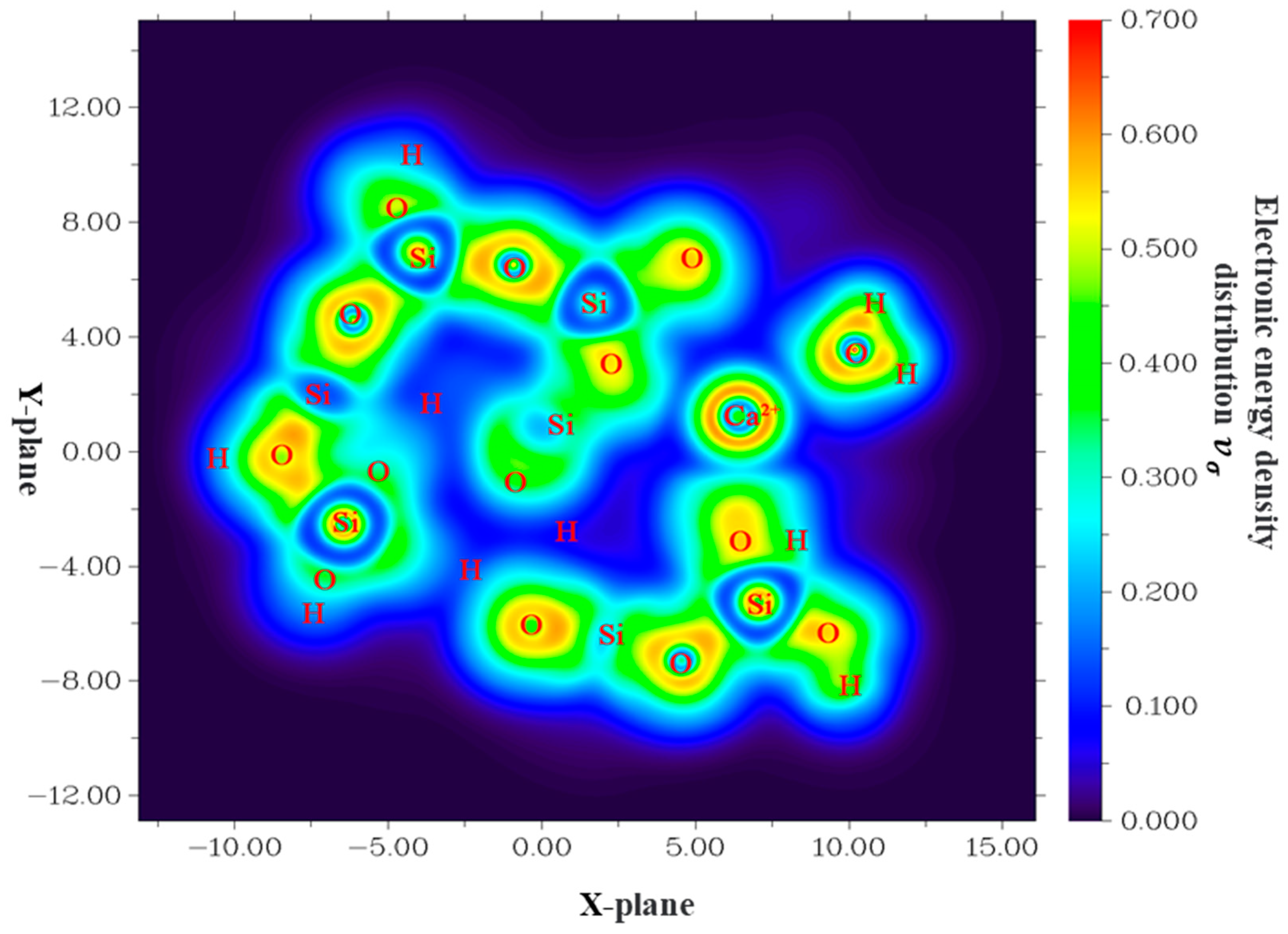
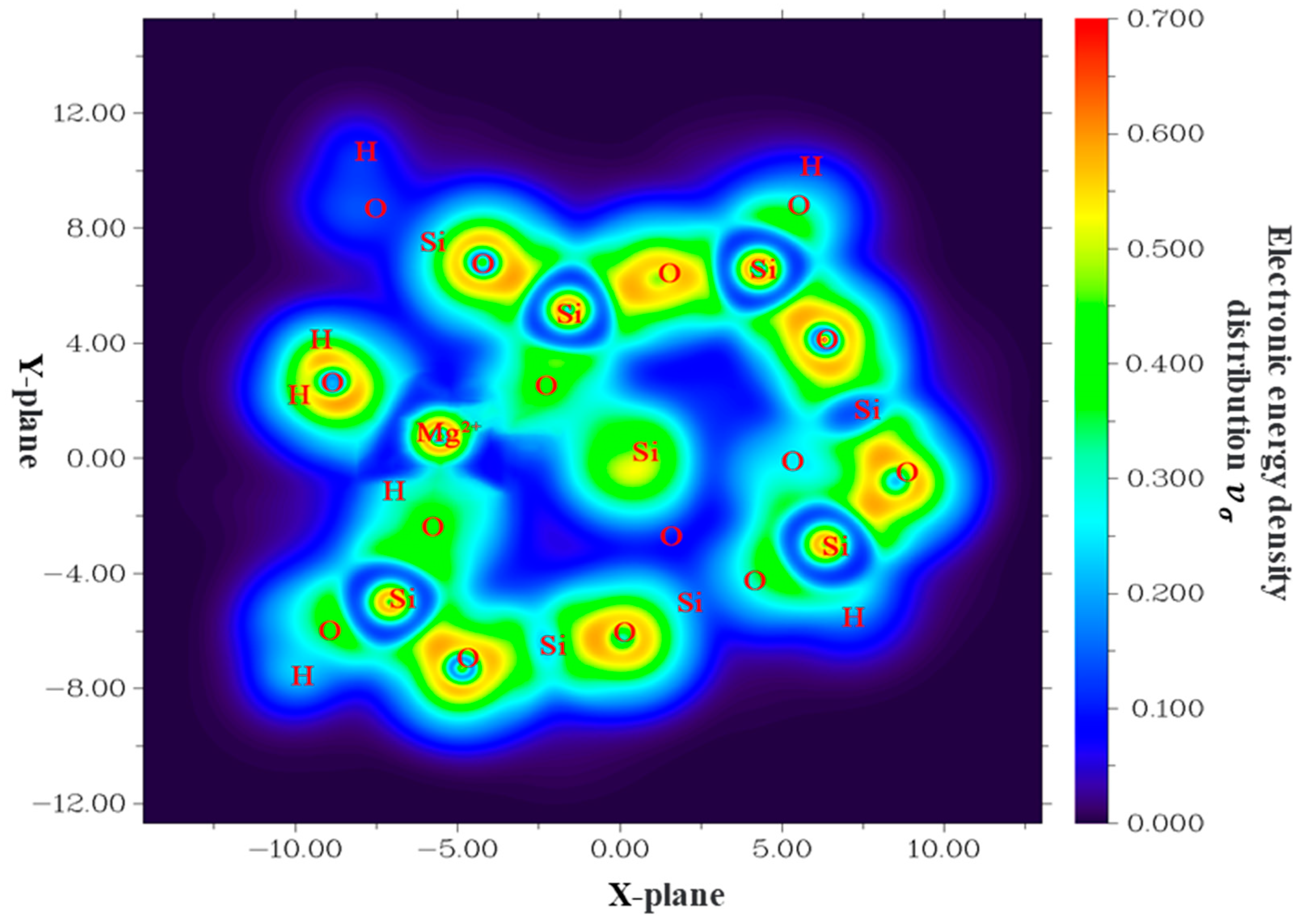
Figure 7, Figure 8, Figure 9 and Figure 10 show planar representations of molecular localized orbitals. It can be observed that the planar configurations of the nano-SiO2 particles are inconsistent. This inconsistency arises from the varying relative positions of the cations. Accordingly, the molecular plane is defined with the Z-axis in the range (−2, 2) and the XY-axis serving as the horizontal and vertical coordinates. Such a setup enables a more accurate representation of the covalent interactions between the cations and the nano-SiO2 particles. In the figures, the x-axis represents the coordinates of the X-plane, while the left y-axis indicates the coordinates of the Y-plane. Thus, the three-dimensional molecular system is plotted on the XY-plane to generate a planar representation of molecular localized orbitals. The right y-axis shows the values of the finite variable v σ , with different values corresponding to other colors. The color sequence, from blue to green to red, corresponds to increasing values from small to large. When v σ = 0, it signifies that no electron exchange occurs in this region, implying no change in energy. When v σ = (0, 0.7), it indicates that as the value of c increases, the electron kinetic density rises, leading to more frequent electron exchanges among molecules and stronger covalent interactions.
First, by comparing the localized orbital plots of Na+ and K+ ions (Figure 7 and Figure 8), it can be observed that the electron density regions between Na+ and K+ ions and the nano-SiO2 particles range from 0 to 0.2, with colors transitioning from blue to cyan–green, indicating a weak electron exchange interaction in both cases. However, from the perspective of cation integrity, there are no apparent gaps in the nuclear regions, and the electrons are strongly localized, with slight variation in local electron energy density. This suggests that neither Na+ nor K+ ions form covalent or ionic bonds with nano-SiO2 particles. From the perspective of the electron density region between water molecules and nano-SiO2 particles, the v σ value between water molecules and nano-SiO2 particles in the Na+ ion localized orbit is 0.2~0.3, and the v σ value between water molecules and nano-SiO2 particles in the K+ ion localized orbit is 0~0.2. This indicates that water molecules in the Na+ and K+ ion localized orbits may form weak hydrogen bonds with nano-SiO2 particles, but the strength of the hydrogen bonds is different. From the perspective of the electron density region between Na+ ions, K+ ions, and water molecules, the value of v σ is 0~0.1, indicating that the electron exchange density between Na+ ions, K+ ions, and water molecules is weak. Therefore, apart from the possibility that water molecules may form weak hydrogen bonds with nano-SiO2 particles, thereby exerting some interaction energy on these particles, the local electron kinetic density changes between Na+ ions, K+ ions, nano-SiO2 particles, and water molecules are minimal. Moreover, the ring-shaped regions around the cations show no obvious gaps, and no covalent or ionic bonds have formed between Na+ ions, K+ ions, and nano-SiO2 particles.
Next, by comparing the localized orbital plots of Ca2+ and Mg2+ ions (Figure 9 and Figure 10), it can be found that the electron density regions between Ca2+ and Mg2+ ions and the nano-SiO2 particles have a v σ value ranging from 0.3 to 0.45, with colors transitioning between cyan and green, indicating significant electron exchange interactions in both cases. From the perspective of cation integrity, the ring-shaped regions associated with each cation exhibit small gaps, suggesting strong electron delocalization and substantial local variations in electron density. This could imply the formation of either covalent or ionic bonds between the cations and unsaturated siloxyl groups within the nano-SiO2 particles. Compared to Ca2+ ions, Mg2+ ions show a greater degree of overlap with the electron density regions of the nano-SiO2 particles, indicating that Mg2+ ions undergo more frequent electron exchanges with the nano-SiO2 particles and experience larger local energy fluctuations than Ca2+ ions. Looking at the electron density regions between water molecules and the nano-SiO2 particles, it can be observed that the v σ values for water molecules in the localized orbitals of both Ca2+ and Mg2+ ions range from 0 to 0.2, showing little difference between the two. This suggests that water molecules in the localized orbitals of both Ca2+ and Mg2+ ions can potentially form relatively weak hydrogen bonds with nano-SiO2 particles, with no significant difference in the strength of these hydrogen bonding interactions. Furthermore, examining the electron density regions between Ca2+ and Mg2+ ions and water molecules, it can be found that the v σ values range from 0 to 0.1, with a fairly distinct boundary, indicating weaker electron exchange densities between Ca2+ and Mg2+ ions and water molecules. Therefore, it is plausible that both Ca2+ and Mg2+ ions may form covalent or ionic bonds with the unsaturated siloxyl groups within nano-SiO2 particles, while water molecules also exert a certain degree of weak hydrogen bonding interaction with nano-SiO2 particles.
When comparing monovalent cations (Na+ and K+) with divalent cations (Ca2+ and Mg2+), the electron exchange interactions between monovalent cations and nano-SiO2 particles are infrequent, and no covalent or ionic bonds are formed. In contrast, the electron exchange interactions between divalent cations and nano-SiO2 particles are much more frequent, potentially leading to the formation of covalent or ionic bonds. This indicates that the covalent interaction between divalent cations and nano-SiO2 particles is stronger. As the number of divalent cations increases, there is a high likelihood that the molecular configuration of nano-SiO2 particles will be altered. From the degree of electron exchange between the four types of cations and the nano-SiO2 particles, it is evident that the covalent interaction between divalent cations (Ca2+ and Mg2+) and nano-SiO2 particles is stronger than that between monovalent cations (Na+ and K+).

4. Conclusions

The intermolecular forces between cations and nano-SiO2 particles mainly include van der Waals forces, hydrogen bonding, and steric effects. They primarily manifest as van der Waals forces and hydrogen bonding. As the valence of the cation increases, the intermolecular forces between the cation and nano-SiO2 particles are slightly enhanced. Specifically, divalent cations exhibit a wider interaction range and deeper influence than monovalent cations, forming a strong steric hindrance effect. Consequently, divalent cations are more likely to form complexes with nano-SiO2 particles. For electrostatic interactions, the electron exchange between monovalent cations and nano-SiO2 particles is infrequent, resulting in the absence of covalent or ionic bonds. However, ionic bonds are formed between divalent cations and nano-SiO2 particles, altering the configuration of nano-SiO2 particles to some extent. Based on the aforementioned study, the key to the destabilization of nano-SiO2 particles in salt solutions lies in electrostatic interactions. Identifying methods to reduce electrostatic interactions between nano-SiO2 particles and salt solutions is crucial for mitigating flocculation and agglomeration of nano-SiO2 particles and enhancing their efficient application in the field of oil development.

Author Contributions

Conceptualization, H.T., Z.Z., J.Z., G.L. and L.Z.; methodology, H.T., Q.W., Z.Z., J.Z., G.L. and L.Z.; validation, Q.W. and L.Z.; formal analysis, H.T., Q.W., F.C. and L.Z.; investigation, H.T., Q.W., Z.Z., J.Z., M.Y., Meng Bao, W.L. and L.Z.; resources, H.T., Q.W., Y.S., M.Y. and L.Z.; data curation, H.T. and L.Z.; writing—original draft, F.C. and L.Z.; writing—review and editing, L.Z.; visualization, H.T., Y.S., M.Y., M.B., W.L. and L.Z.; supervision, H.T., Y.S., F.C. and L.Z.; project administration, H.T., F.C. and L.Z.; funding acquisition, L.Z. All authors have read and agreed to the published version of the manuscript.

Funding

This research received no external funding. The APC was funded by the Research Institute of Shaanxi Yanchang Petroleum (Group) Co., Ltd.

Institutional Review Board Statement

Not applicable.

Informed Consent Statement

Not applicable.

Data Availability Statement

The data will be made available upon request.

Conflicts of Interest

Houjun Tang, Qiang Wang, Zheng Zhu, Yuxiang Sun, Feixiang Che, Meijuan Yuan, Meng Bao, Gang Liu and Weidong Li have received research grants from Shaanxi Yanchang Petroleum (Group) Co., Ltd. Jianhua Zhao is an employee of PetroChina Changqing Oilfield Company. The companies had no roles in the design of the study; in the collection, analyses, or interpretation of data; in the writing of the manuscript; or in the decision to publish the results.

References

  1. Liao, H.X.; Tang, L.; Yang, F.; Huang, Y.O.J.; Xiao, X.L.; Zhu, Y.Q. Study on surface charge regulation of nano-SiO2 and its oil displacement characteristics in low permeability reservoirs. Colloids Surf. A-Physicochem. Eng. Asp. 2026, 734, 139443. [Google Scholar] [CrossRef] [Scilit]
  2. Sun, L.; Zou, C.; Jia, A.; Wei, Y.; Zhu, R.; Wu, S.; Guo, Z. Development characteristics and orientation of tight oil and gas in China. Pet. Explor. Dev. 2019, 46, 1073–1087. [Google Scholar] [CrossRef] [Scilit]
  3. Huang, S.M.; Jiang, G.C.; Chang, Z.L.; Guo, C.P.; Wang, Q.D.; Dong, T.F.; He, Y.B.; Yang, L.L.; Jin, Z.H. Investigation of Novel Modified Nanoparticle-Enhanced Viscoelastic Surfactant Clean Fracturing Fluid System for Improving Oil Recovery in Low-Permeability Reservoirs. SPE J. 2025, 30, 7177–7191. [Google Scholar] [CrossRef] [Scilit]
  4. Zhang, Q.; Liu, J.F.; Gao, Z.H.; Chen, S.Y.; Liu, B.Y. Review on the challenges and strategies in oil and gas industry’s transition towards carbon neutrality in China. Pet. Sci. 2023, 20, 3931–3944. [Google Scholar] [CrossRef] [Scilit]
  5. Guo, S.; Zhu, D.Y. Mini-Review of Black Nanosheets for Enhanced Oil Recovery Used in Low-Permeability/Ultra-Low-Permeability Reservoirs. Energy Fuels 2025, 39, 16768–16793. [Google Scholar] [CrossRef] [Scilit]
  6. Zhang, Q.; Xiong, W.F.; Chen, Z.L.; Li, L.; Zhang, Z.P.; Zhou, H.F.; Ma, L.M.; Hu, S.Z.R.; Cheng, X.F.; Chang, C.; et al. Mechanistic research of a novel composite nano-oil-displacing agent to enhance low-permeability heavy oil reservoir recovery: Taking the Ha-34 fault block as an example. Pet. Geosci. 2025, 31, petgeo2024-102. [Google Scholar] [CrossRef] [Scilit]
  7. Liang, T.; Hou, J.R.; Qu, M.; Xi, J.X.; Raj, I. Application of nanomaterial for enhanced oil recovery. Pet. Sci. 2022, 19, 882–899. [Google Scholar] [CrossRef] [Scilit]
  8. Kazemzadeh, Y.; Sourani, S.; Doryani, H.; Reyhani, M.; Fallah, H. Recovery of Asphaltenic Oil During Nano Fluid Injection. Pet. Sci. Technol. 2015, 33, 139–146. [Google Scholar]
  9. He, M.M.; Pu, W.F.; He, Z.W.; Zheng, L.J.; Yang, X.R. Experimental study on the emulsification and interfacial properties of modified nano-silica fluids: Effects of fatty acids, dicarboxylic acids, fatty amines, and aromatic acids. Colloids Surf. A-Physicochem. Eng. Asp. 2026, 734, 139428. [Google Scholar] [CrossRef] [Scilit]
  10. Cheng, T.T.; Yang, Z.Q.; Yan, W.D.; Huang, B.; Wu, J.C.; Yang, E.R.; Liu, H.Z.; Zhao, K.N. Impact of the Nano-SiO2 Particle Size on Oil Recovery Dynamics: Stability, Interfacial Tension, and Viscosity Reduction. Energy Fuels 2024, 38, 15160–15171. [Google Scholar] [CrossRef] [Scilit]
  11. Tong, Q.; Fan, Z.; Liu, Q.; Qiao, S.; Cai, L.; Fu, Y.; Zhang, X.; Sun, A. Research progress in nanofluid-enhanced oil recovery technology and mechanism. Molecules 2023, 28, 7478. [Google Scholar] [CrossRef] [Scilit] [PubMed]
  12. Sircar, A.; Rayavarapu, K.; Bist, N.; Yadav, K.; Singh, S. Applications of nanoparticles in enhanced oil recovery. Pet. Res. 2022, 7, 77–90. [Google Scholar] [CrossRef] [Scilit]
  13. He, M.M.; Pu, W.F.; He, Z.W.; Zheng, L.J.; Yang, X.R.; Du, G. Research on Enhanced Oil Recovery Potential in High Water Cut Reservoirs Using Amphiphilic SiO2 Nanofluids. Langmuir 2026, 42, 5459–5472. [Google Scholar] [CrossRef] [Scilit] [PubMed]
  14. Chen, C.; Zhuo, S.Q.; Li, S.Z.; Yin, N.X.; Luo, C.; Ren, H.; Jia, M.; Wang, X.Y.; Cheng, Q. Wettability modification of a nano-silica/fluoro surfactant composite system for reducing the damage of water blocking in tight sandstone reservoirs. RSC Adv. 2025, 15, 5264–5276. [Google Scholar] [CrossRef] [Scilit] [PubMed]
  15. Cheng, T.T.; Wang, J.Y.; Liu, H.Z.; Ding, J.; Ren, Y.T.; Gong, X.H. Study on Enhanced Oil Recovery and Microscopic Mechanisms in Low-Permeability Reservoirs Using Nano-SiO2/CTAB System. Processes 2025, 13, 3862. [Google Scholar] [CrossRef] [Scilit]
  16. Son, H.A.; Yoon, K.Y.; Lee, G.J.; Cho, J.W.; Choi, S.K.; Kim, J.W.; Im, K.C.; Kim, H.T.; Lee, K.S.; Sung, W.M. The Potential Applications in Oil Recovery with Silica Nanoparticle and Polyvinyl Alcohol Stabilized Emulsion. J. Pet. Sci. Eng. 2015, 126, 152–161. [Google Scholar] [CrossRef] [Scilit]
  17. Yang, Z.; Li, Q.; Chou, K.C. Structures of Water Molecules at the Interfaces of Aqueous Salt Solutions and Silica: Cation Effects. J. Phys. Chem. C Nanomater. Interfaces 2009, 113, 8201–8205. [Google Scholar] [CrossRef] [Scilit]
  18. Dove, P.M.; Craven, C.M. Surface Charge Density on Silica in Alkali and Alkaline Earth Chloride Electrolyte Solutions. Geochim. Cosmochim. Acta 2005, 69, 4963–4970. [Google Scholar] [CrossRef] [Scilit]
  19. Wang, X.M.; Zhang, F.F.; Zhang, J.; Wang, G.; Zhang, J.; Lin, M.Q.; Dong, Z.X.; Yang, Z.H. Enhanced Oil Recovery in Low-Permeability Reservoirs Utilizing Dispersions of Monodisperse Crumpled SiO2 Nanoparticle. ACS Appl. Nano Mater. 2024, 7, 19014–19023. [Google Scholar] [CrossRef] [Scilit]
  20. Xin, M.K.; Zhang, D.X.; Zhang, Y.; Chen, J.; Yan, L.S.; Qin, Y.W.; Zhang, Q.R. Optimization of flooding parameters and enhanced-efficiency development for surface-modified nano-SiO2 emulsion in low-permeability sandstone reservoirs. PLoS ONE 2025, 20, e0326805. [Google Scholar] [CrossRef] [Scilit] [PubMed]
  21. Kawaguchi, M. Dispersion stability and rheological properties of silica suspensions in aqueous solutions. Adv. Colloid Interface Sci. 2020, 284, 102248. [Google Scholar] [CrossRef] [Scilit] [PubMed]
  22. Shapovalov, V.L.; Brezesinski, G. Breakdown of the Gouy-Chapman Model for Highly Charged Langmuir Monolayers: Counterion Size Effect. J. Phys. Chem. B 2006, 110, 10032–10040. [Google Scholar] [CrossRef] [Scilit] [PubMed]
  23. Zhao, T.; Xu, G.; Yuan, S.; Chen, Y.; Yan, H. Molecular Dynamics Study of Alkyl Benzene Sulfonate at Air/Water Interface: Effect of Inorganic Salts. J. Phys. Chem. B 2010, 114, 5025–5033. [Google Scholar] [CrossRef] [Scilit] [PubMed]
  24. López-García, J.J.; Horno, J.; Grosse, C. Poisson-Boltzmann Description of the Electrical Double Layer Including Ion Size Effects. Langmuir ACS J. Surf. Colloids 2011, 27, 13970–14000. [Google Scholar] [CrossRef] [Scilit]
  25. Bouhadja, M.; Skelton, A.A. Dynamical Properties of Water and Ions at the Quartz (101)-Water Interface at a Range of Solution Conditions: A Classical Molecular Dynamics Study. J. Phys. Chem. C 2018, 122, 1535–1546. [Google Scholar] [CrossRef] [Scilit]
  26. Brown, M.A.; Bossa, G.V.; May, S. Emergence of a Stern Layer from the Incorporation of Hydration Interactions into the Gouy-Chapman Model of the Electrical Double Layer. Langmuir ACS J. Surf. Colloids 2015, 31, 11477–11483. [Google Scholar] [CrossRef] [Scilit]
  27. Bushehri, M.K.; Mohebbi, A.; Rafsanjani, H.H. Prediction of Thermal Conductivity and Viscosity of Nanofluids by Molecular Dynamics Simulation. J. Eng. Thermophys. 2016, 25, 389–400. [Google Scholar] [CrossRef] [Scilit]
  28. Dove, P.M.; Nix, C.J. The Influence of the Alkaline Earth Cations, Magnesium, Calcium, and Barium on the Dissolution Kinetics of Quartz. Geochim. Cosmochim. Acta 1997, 61, 3329–3340. [Google Scholar] [CrossRef] [Scilit]
  29. Dellostritto, M.J.; Kubicki, J.D.; Sofo, J.O. Effect of Ions on H-Bond Structure and Dynamics at the Quartz(101)-Water Interface. Langmuir ACS J. Surf. Colloids 2016, 32, 11353–11365. [Google Scholar] [CrossRef] [Scilit]
  30. Du, Q.; Freysz, E.; Shen, Y.R. Vibrational Spectra of Water Molecules at Quartz/Water Interfaces. Phys. Rev. Lett. 1994, 72, 238–241. [Google Scholar] [CrossRef] [Scilit] [PubMed]
  31. Marcus, Y. Effect of Ions on the Structure of Water: Structure Making and Breaking. Chem. Rev. 2009, 109, 1346–1370. [Google Scholar] [CrossRef] [Scilit] [PubMed]
  32. Yu, B.; Yang, J.; Shi, J.; Chen, J. Molecular Simulation on the Interaction Between Polypropylene Glycol Dimethyl Ether and trans-1233zd. Int. J. Refrig. 2020, 115, 48–55. [Google Scholar] [CrossRef] [Scilit]
  33. Zhu, L.; Tang, Y.; Wang, Y. Constructing Surfactant Systems with the Characteristics of Gemini and Oligomeric Surfactants Through Noncovalent Interaction. J. Surfactants Deterg. 2016, 19, 237–247. [Google Scholar] [CrossRef] [Scilit]
  34. Cao, Y.D.; Romero, J.; Olson, J.P.; Degroote, M.; Johnson, P.D.; Kieferová, M.; Kivlichan, I.D.; Menke, T.; Peropadre, B.; Sawaya, N.P.D.; et al. Quantum Chemistry in the Age of Quantum Computing. Chem. Rev. 2019, 119, 10856–10915. [Google Scholar] [CrossRef] [Scilit] [PubMed]
  35. Li, J.; Cramer, C.J.; Truhlar, D.G. Application of a Universal Solvation Model to Nucleic Acid Bases: Comparison of Semiempirical Molecular Orbital Theory, Ab Initio Hartree-Fock Theory, and Density Functional Theory. Biophys. Chem. 1999, 78, 147–155. [Google Scholar] [CrossRef] [Scilit] [PubMed]
  36. Icenhower, J.P.; Dove, P.M. The dissolution kinetics of amorphous silica into sodium chloride solutions: Effects of temperature and ionic strength. Geochim. Cosmochim. Acta 2000, 64, 4193–4203. [Google Scholar] [CrossRef] [Scilit]
  37. Schrödinger, E. Quantisierung als Eigenwertproblem. Ann. Phys. 1926, 385, 361–376. [Google Scholar] [CrossRef] [Scilit]
  38. Schrödinger, E. An Undulatory Theory of the Mechanics of Atoms and Molecules. Phys. Rev. 1926, 28, 1049–1070. [Google Scholar] [CrossRef] [Scilit]
  39. Born, M.; Heisenberg, W. Zur Quantentheorie der Moleküle. Ann. Phys. 1927, 389, 457–484. [Google Scholar] [CrossRef] [Scilit]
  40. Zheng, Y.S.; Zhuo, Z.H.; Mo, Q.; Li, J.S. Molecular Simulation and Quantum Chemistry Calculation of Ionic Liquids. Prog. Chem. 2011, 23, 1862–1870. [Google Scholar]
  41. Davande, H.; Borodin, O.; Smith, G.D.; Sewell, T.D. Quantum chemistry-based force field for simulations of energetic dinitro compounds. J. Energ. Mater. 2005, 23, 205–237. [Google Scholar] [CrossRef] [Scilit]
  42. Boisdenghien, Z.; Fias, S.; Da Pieve, F.; De Proft, F.; Geerlings, P. The polarisability of atoms and molecules: A comparison between a conceptual density functional theory approach and time-dependent density functional theory. Mol. Phys. 2015, 113, 1890–1898. [Google Scholar] [CrossRef] [Scilit]
  43. Costa, L.T.; Borges, I., Jr. Quantum Mechanics in Chemistry: Foundations of Quantum Chemistry Today and Tomorrow. Rev. Virtual Quim. 2025, 17, 917–934. [Google Scholar]
  44. Garza, A.J.; Scuseria, G.E.; Ruzsinszky, A.; Sun, J.W.; Perdew, J.P. The two pillars: Density and spin-density functional theories. Mol. Phys. 2016, 114, 928–931. [Google Scholar]
  45. Tognetti, V.; Joubert, L. Density functional theory and Bader’s atoms-in-molecules theory: Towards a vivid dialogue. Phys. Chem. Chem. Phys. 2014, 16, 14539–14550. [Google Scholar] [CrossRef] [Scilit] [PubMed]
  46. Tognetti, V.; Joubert, L.; Adamo, C. Communications: Making density functional theory and the quantum theory of atoms in molecules converse: A local approach. J. Chem. Phys. 2010, 132, 211101. [Google Scholar] [CrossRef] [Scilit] [PubMed]
  47. Galvão, B.; Viegas, L.P. What Electronic Structure Method Can Be Used in the Global Optimization of Nanoclusters? J. Phys. Chem. Lett. 2019, 123, 10454–10462. [Google Scholar] [CrossRef] [Scilit]
  48. Tian, L.; Chen, F. Multiwfn: A Multifunctional Wavefunction Analyzer. J. Comput. Chem. 2012, 33, 580–592. [Google Scholar]
  49. Kravchenko, A.A.; Demianenko, E.M.; Grebenyuk, A.G.; Lobanov, V.V. A Quantum Chemistry Study on the Interaction Between Silica Surface and Aqueous Alkaline Solutions. Phys. Chem. Solids 2018, 19, 74–78. [Google Scholar] [CrossRef] [Scilit]
  50. Van Faassen, M. Time-dependent current-density-functional theory applied to atoms and molecules. Int. J. Mod. Phys. B 2006, 20, 3419–3463. [Google Scholar] [CrossRef] [Scilit]
  51. Yang, J.; Waller, M.P. Revealing Noncovalent Interactions in Quantum Crystallography: Taurine Revisited. J. Comput. Chem. 2013, 34, 466–470. [Google Scholar] [PubMed]
  52. Dumitrache, L.; Nistor, I.; Suditu, S.; Badea, A.M. Simulating Salt Precipitation in Dry Gas Reservoirs Using ECLIPSE Thermal CO2STORE. Rev. Chim. 2018, 69, 251–254. [Google Scholar] [CrossRef] [Scilit]
  53. Schmider, H.L.; Becke, A.D. Chemical Content of the Kinetic Energy Density. J. Mol. Struct. THEOCHEM 2000, 527, 51–61. [Google Scholar] [CrossRef] [Scilit]
  54. Becke, A.D. Simulation of Delocalized Exchange by Local Density Functionals. J. Chem. Phys. 2000, 112, 4020–4026. [Google Scholar] [CrossRef] [Scilit]
  55. Lefebvre, C.; Rubez, G.; Khartabil, H.; Boisson, J.C.; Contreras-García, J.; Hénon, E. Accurately Extracting the Signature of Intermolecular Interactions Present in the NCI Plot of the Reduced Density Gradient versus Electron Density. Phys. Chem. Chem. Phys. 2017, 19, 17928–17936. [Google Scholar] [CrossRef] [Scilit] [PubMed]
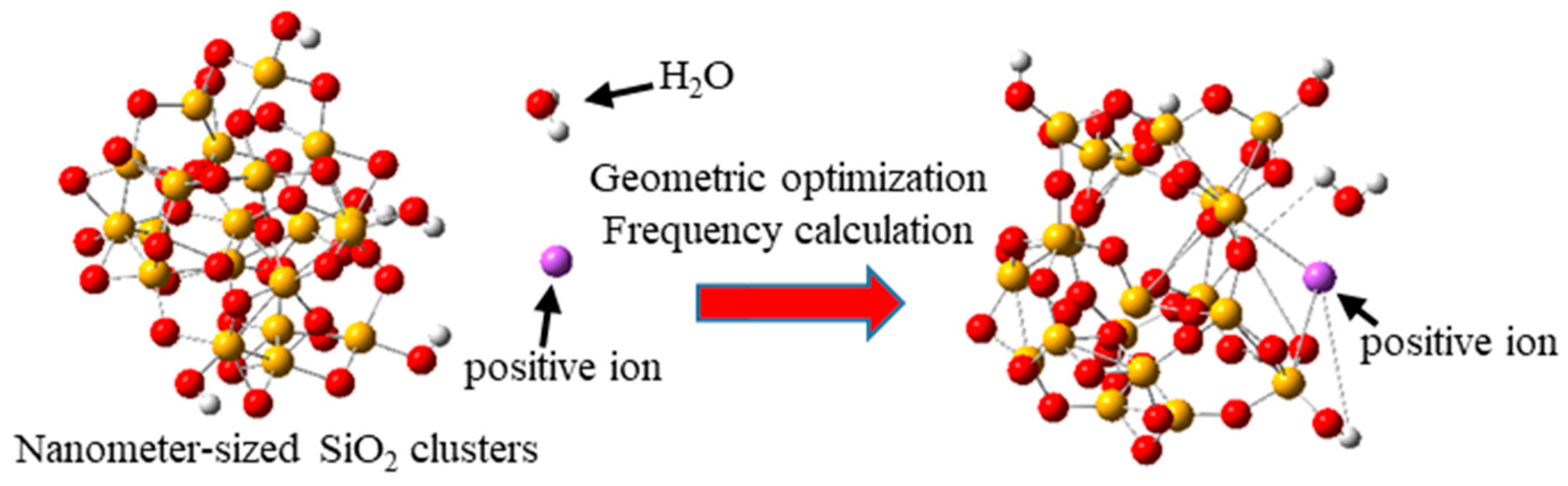
Figure 1. Molecular model of nano-SiO2 particles and a salt solution.
Molecules 31 02457 g001
Figure 2. Relationship between S i g n ( λ 2 ) and ρ ( r ) functions and the types of molecular interactions.
Molecules 31 02457 g002
Figure 3. Color-filled scatter plot of Na+ ion RDG.
Molecules 31 02457 g003
Figure 4. Color-filled scatter plot of K+ ion RDG.
Molecules 31 02457 g004
Figure 5. Color-filled scatter plot of Ca2+ ion RDG.
Molecules 31 02457 g005
Figure 6. Color-filled scatter plot of Mg2+ ion RDG.
Molecules 31 02457 g006
Figure 7. Regional orbital diagram of Na+ ions.
Molecules 31 02457 g007
Figure 8. Localized orbital diagram of K+ ions.
Molecules 31 02457 g008
Figure 9. The regional orbitals of Ca2+ ions.
Molecules 31 02457 g009
Figure 10. Regional orbital diagram of Mg2+ ions.
Molecules 31 02457 g010
Disclaimer/Publisher’s Note: The statements, opinions and data contained in all publications are solely those of the individual author(s) and contributor(s) and not of MDPI and/or the editor(s). MDPI and/or the editor(s) disclaim responsibility for any injury to people or property resulting from any ideas, methods, instructions or products referred to in the content.