Flavonoids as Potential Therapeutic Agents Against Gastrointestinal Pathogen Growth and Their Mechanisms of Action: A Comprehensive Review



Abstract
1. Introduction
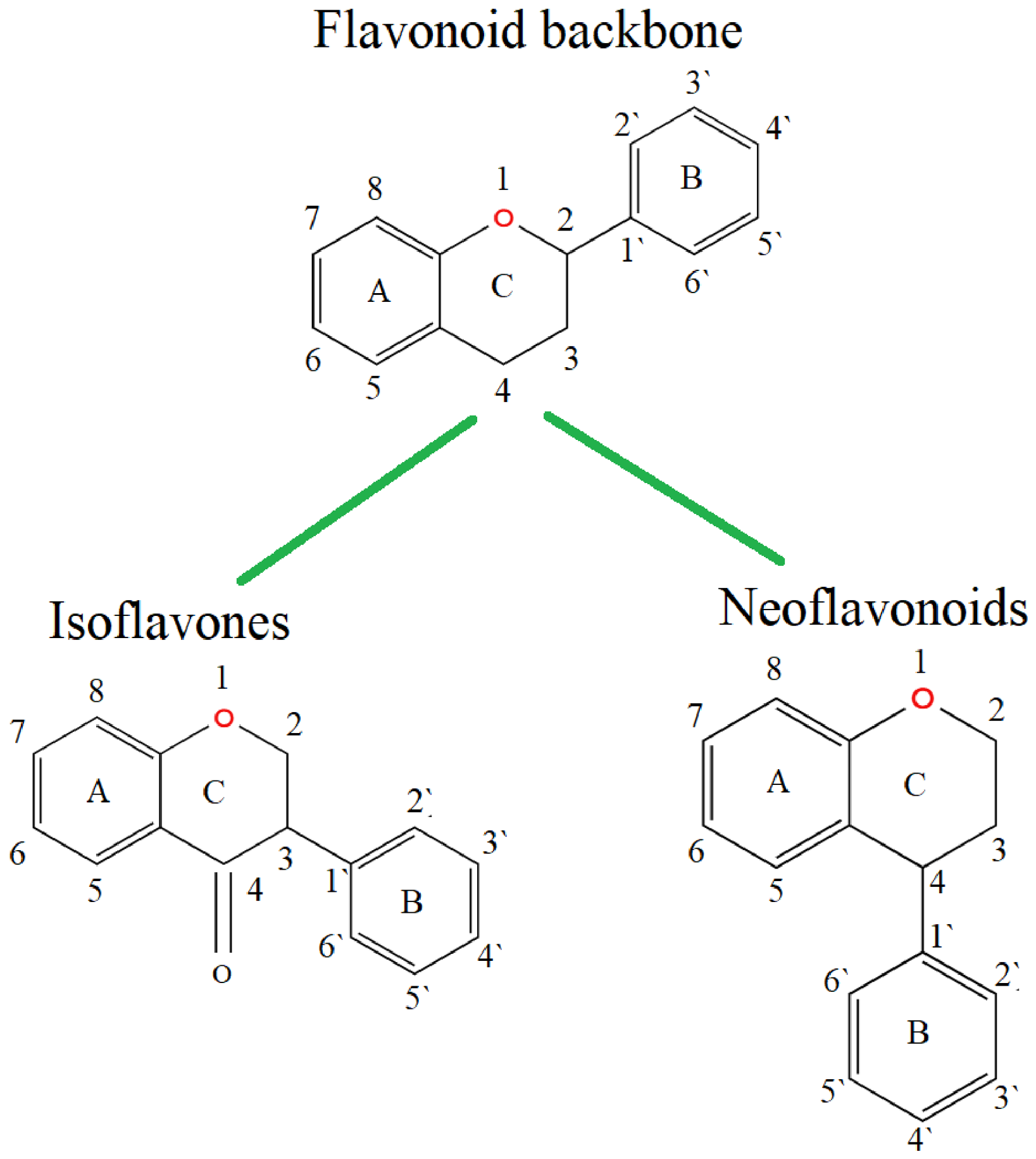
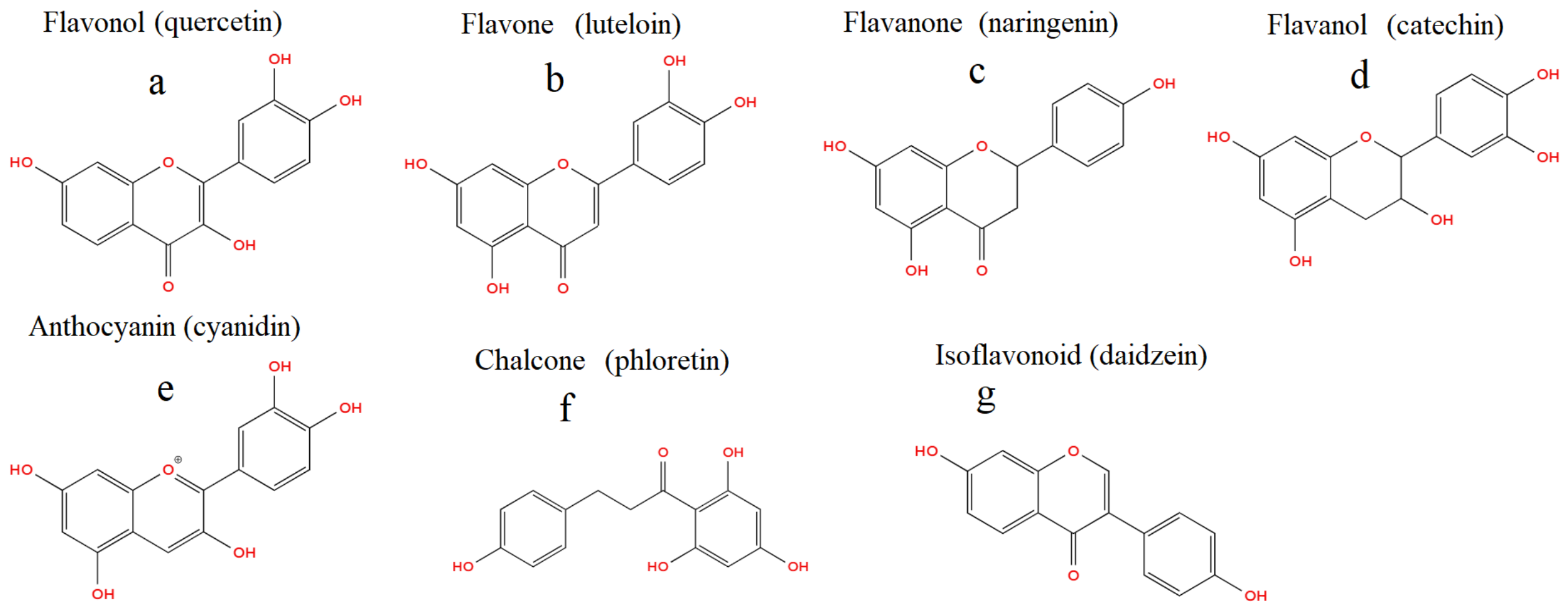
2. Classes of Flavonoids
2.1. Flavonols
2.2. Flavones
2.3. Flavanones
2.4. Flavanols
2.5. Anthocyanins
2.6. Chalcones
2.7. Isoflavonoids
3. Antimicrobial Activity of Flavonoids Against Gastrointestinal Pathogens
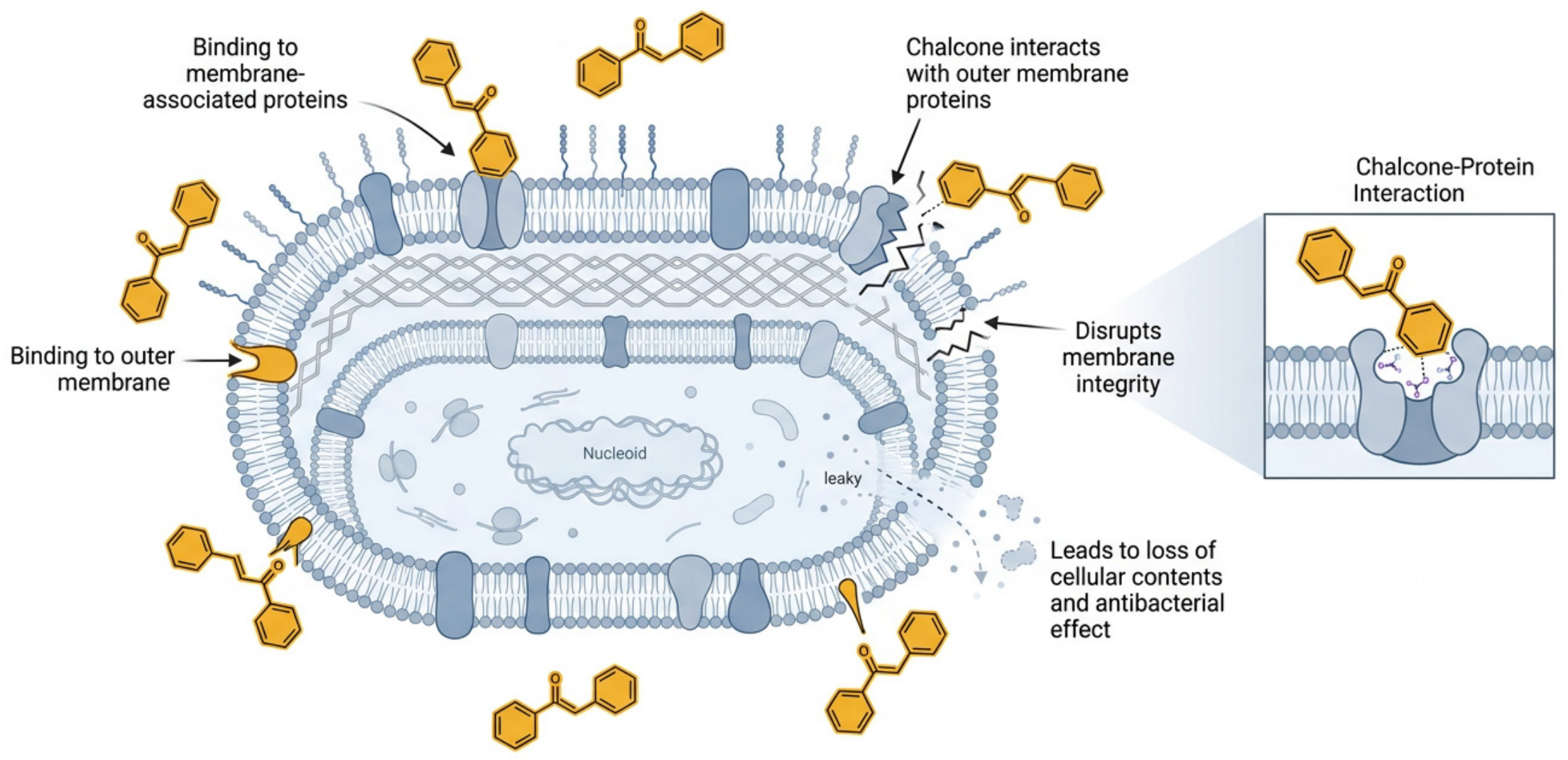
3.1. Chalcones Antimicrobial Activity Against Gastrointestinal Pathogens
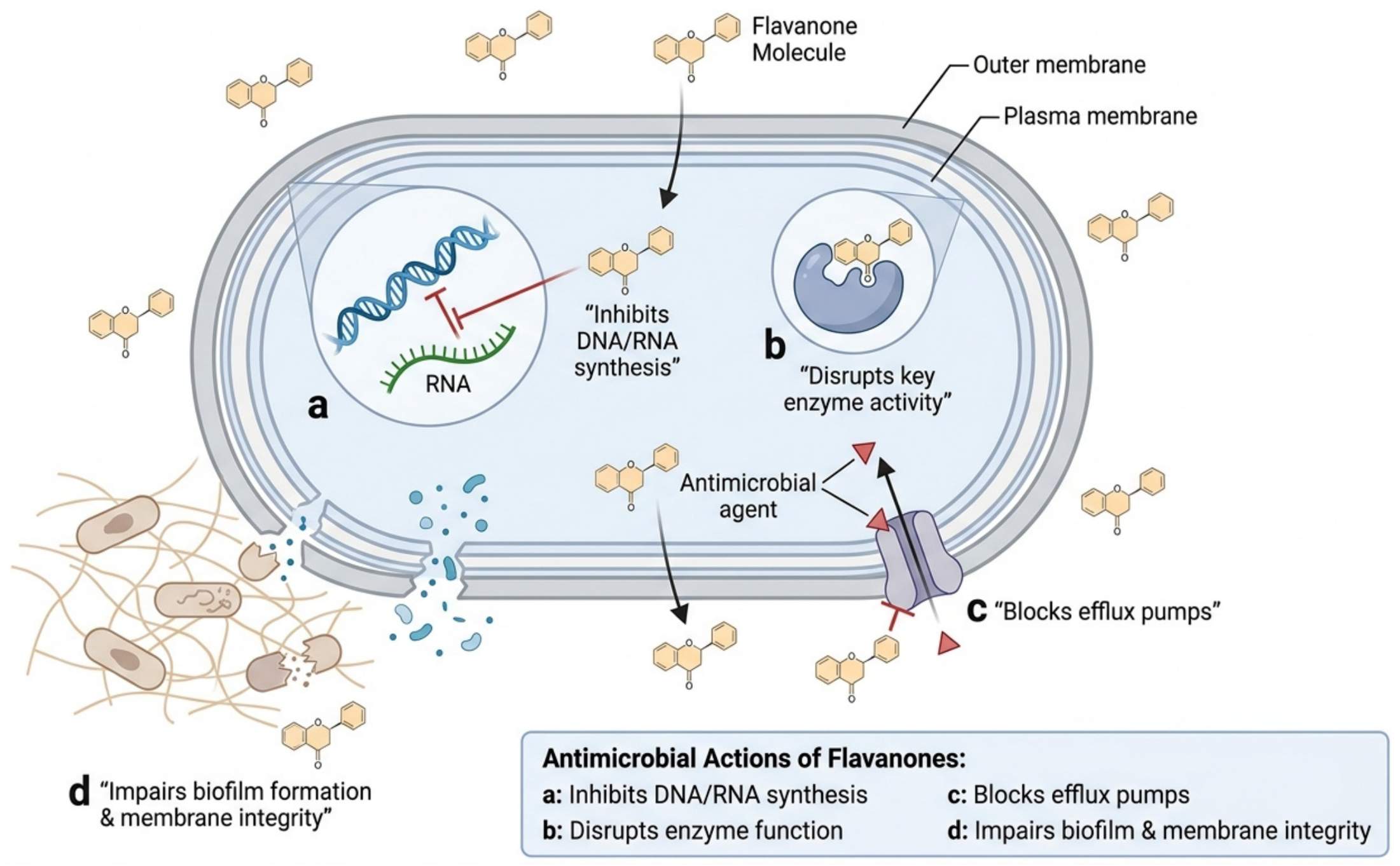
3.2. Flavanones Antimicrobial Activity Against Gastrointestinal Pathogens
3.3. Antimicrobial Activity of Flavones Against Gastrointestinal Pathogens
3.4. Flavonols Antimicrobial Activity Against Gastrointestinal Pathogens
3.5. Isoflavonoids Antimicrobial Activity Against Gastrointestinal Pathogens
3.6. Flavanols Antimicrobial Activity Against Gastrointestinal Pathogens
3.7. Flavanonol Antimicrobial Activity Against Gastrointestinal Pathogens
3.8. Anthocyanins Antimicrobial Activity Against Gastrointestinal Pathogens
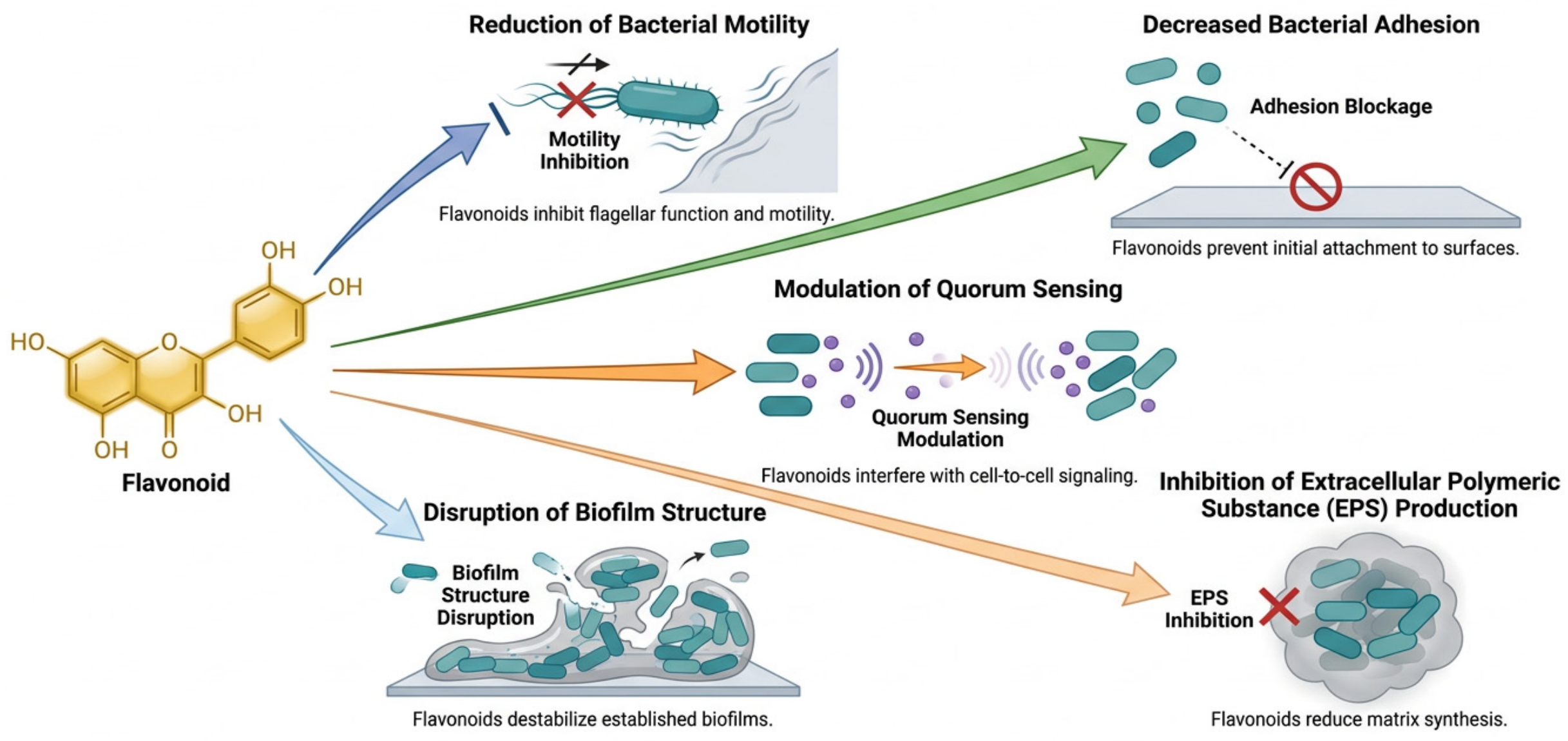
4. Flavonoids Antimicrobial Mechanisms
5. Flavonoids and Antibiotic Synergistic Interactions Against Gastrointestinal Pathogens
6. Challenges and Future Direction
7. Conclusions
Author Contributions
Funding
Institutional Review Board Statement
Informed Consent Statement
Data Availability Statement
Conflicts of Interest
References
- Flint, J.A.; Van Duynhoven, Y.T.; Angulo, F.J.; DeLong, S.M.; Braun, P.; Kirk, M.; Scallan, E.; Fitzgerald, M.; Adak, G.K.; Sockett, P.; et al. Estimating the burden of acute gastroenteritis, foodborne disease, and pathogens commonly transmitted by food: An international review. Clin. Infect. Dis. 2005, 41, 698–704. [Google Scholar] [CrossRef] [PubMed]
- Hu, P.; Liu, C.; Ruan, J.; Yuan, M.; Ju, C.; Ma, Y.; Yuan, Y.; Chen, H.; Yu, M.; Duan, Y. FilmArray GI-panel performance for the rapid and multiple detection of gastrointestinal microorganisms in foodborne illness outbreaks in Shenzhen during 2018–2019. Infect. Genet. Evol. 2020, 86, 104607. [Google Scholar] [CrossRef] [PubMed]
- Melliez, H.; Boelle, P.Y.; Baron, S.; Mouton, Y.; Yazdanpanah, Y. Morbidity and cost of rotavirus infections in France. Med. Mal. Infect. 2005, 35, 492–499. [Google Scholar] [CrossRef] [PubMed]
- Van den Brandhof, W.E.; De Wit, G.A.; de Wit, M.A.; van Duynhoven, Y.T. Costs of gastroenteritis in the Netherlands. Epidemiol. Infect. 2004, 132, 211–221. [Google Scholar] [CrossRef] [PubMed]
- GBD 2016 DALYs and HALE Collaborators. Global, regional, and national disability-adjusted life-years (DALYs) for 333 diseases and injuries and healthy life expectancy (HALE) for 195 countries and territories, 1990–2016: A systematic analysis for the Global Burden of Disease Study 2016. Lancet 2017, 390, 1260–1344. [Google Scholar] [CrossRef] [PubMed]
- Scallan, E.; Griffin, P.M.; Angulo, F.J.; Tauxe, R.V.; Hoekstra, R.M. Foodborne illness acquired in the United States—Unspecified agents. Emerg. Infect. Dis. 2011, 17, 16–22. [Google Scholar] [CrossRef]
- Zhou, Y.J.; Dai, Y.; Yuan, B.J.; Zhen, S.Q.; Tang, Z.; Wu, G.L.; Wang, Y.; Zhou, M.H.; Chen, Y. Population-based estimate of the burden of acute gastrointestinal illness in Jiangsu province, China, 2010–2011. Epidemiol. Infect. 2013, 141, 944–952. [Google Scholar] [CrossRef] [PubMed]
- Zhao, G.H.; Sun, C.W. Analysis of food safety problems caused by foodborne diseases. Trans. Innov. Sci. Technol. 2013, 35, 35. [Google Scholar]
- Havelaar, A.H.; Haagsma, J.A.; Mangen, M.J.; Kemmeren, J.M.; Verhoef, L.P.; Vijgen, S.M.; Wilson, M.; Friesema, I.H.; Kortbeek, L.M.; van Duynhoven, Y.T.; et al. Disease burden of foodborne pathogens in the Netherlands, 2009. Int. J. Food Microbiol. 2012, 156, 231–238. [Google Scholar] [CrossRef] [PubMed]
- Mangen, M.J.; Plass, D.; Havelaar, A.H.; Gibbons, C.L.; Cassini, A.; Muhlberger, N.; van Lier, A.; Haagsma, J.A.; Brooke, R.J.; Lai, T.; et al. The pathogen- and incidence-based DALY approach: An appropriate methodology for estimating the burden of infectious diseases. PLoS ONE 2013, 8, e79740. [Google Scholar] [CrossRef] [PubMed]
- Marchesi, J.R.; Ravel, J. The vocabulary of microbiome research: A proposal. Microbiome 2015, 3, 31. [Google Scholar] [CrossRef] [PubMed]
- Ducarmon, Q.R.; Zwittink, R.D.; Hornung, B.V.H.; van Schaik, W.; Young, V.B.; Kuijper, E.J. Gut microbiota and colonization resistance against bacterial enteric infection. Microbiol. Mol. Biol. Rev. 2019, 83, e00007-19. [Google Scholar] [CrossRef] [PubMed]
- Wyres, K.L.; Hawkey, J.; Mirceta, M.; Judd, L.M.; Wick, R.R.; Gorrie, C.L.; Pratt, N.F.; Garlick, J.S.; Watson, K.M.; Pilcher, D.V.; et al. Genomic surveillance of antimicrobial resistant bacterial colonisation and infection in intensive care patients. BMC Infect. Dis. 2021, 21, 683. [Google Scholar] [CrossRef] [PubMed]
- Anthony, W.E.; Burnham, C.D.; Dantas, G.; Kwon, J.H. The gut microbiome as a reservoir for antimicrobial resistance. J. Infect. Dis. 2021, 223, S209–S213. [Google Scholar] [CrossRef] [PubMed]
- Contreras-Omana, R.; Escorcia-Saucedo, A.E.; Velarde-Ruiz Velasco, J.A. Prevalence and impact of antimicrobial resistance in gastrointestinal infections: A review. Rev. Gastroenterol. Mex. 2021, 86, 265–275. [Google Scholar] [CrossRef] [PubMed]
- Darby, E.M.; Trampari, E.; Siasat, P.; Gaya, M.S.; Alav, I.; Webber, M.A.; Blair, J.M.A. Molecular mechanisms of antibiotic resistance revisited. Nat. Rev. Microbiol. 2023, 21, 280–295. [Google Scholar] [CrossRef] [PubMed]
- Stan, D.; Enciu, A.M.; Mateescu, A.L.; Ion, A.C.; Brezeanu, A.C.; Stan, D.; Tanase, C. Natural compounds with antimicrobial and antiviral effect and nanocarriers used for their transportation. Front. Pharmacol. 2021, 12, 723233. [Google Scholar] [CrossRef] [PubMed]
- De Moraes Mello Boccolini, P.; Siqueira Boccolini, C. Prevalence of complementary and alternative medicine (CAM) use in Brazil. BMC Complement. Med. Ther. 2020, 20, 51. [Google Scholar] [CrossRef] [PubMed]
- Patra, J.K.; Das, G.; Fraceto, L.F.; Campos, E.V.R.; Rodriguez-Torres, M.D.P.; Acosta-Torres, L.S.; Diaz-Torres, L.A.; Grillo, R.; Swamy, M.K.; Sharma, S.; et al. Nano based drug delivery systems: Recent developments and future prospects. J. Nanobiotechnol. 2018, 16, 71. [Google Scholar] [CrossRef] [PubMed]
- Gupta, T.; Kataria, R.; Sardana, S. A comprehensive review on current perspectives of flavonoids as antimicrobial agent. Curr. Top. Med. Chem. 2022, 22, 425–434. [Google Scholar] [CrossRef] [PubMed]
- Mahizan, N.A.; Yang, S.K.; Moo, C.L.; Song, A.A.; Chong, C.M.; Chong, C.W.; Abushelaibi, A.; Lim, S.E.; Lai, K.S. Terpene derivatives as a potential agent against antimicrobial Resistance (AMR) pathogens. Molecules 2019, 24, 2631. [Google Scholar] [CrossRef] [PubMed]
- Iwashina, T. Flavonoid properties of five families newly incorporated into the order Caryophyllales. Bull. Natl. Mus. Nat. Sci. Ser. B Bot. 2013, 39, 25–51. [Google Scholar]
- Fang, J. Classification of fruits based on anthocyanin types and relevance to their health effects. Nutrition 2015, 31, 1301–1306. [Google Scholar] [CrossRef] [PubMed]
- Khoo, H.E.; Azlan, A.; Tang, S.T.; Lim, S.M. Anthocyanidins and anthocyanins: Colored pigments as food, pharmaceutical ingredients, and the potential health benefits. Food Nutr. Res. 2017, 61, 1361779. [Google Scholar] [CrossRef] [PubMed]
- Chaves-Silva, S.; Dos Santos, A.L.; Chalfun-Júnior, A.; Zhao, J.; Peres, L.E.; Benedito, V.A. Understanding the genetic regulation of anthocyanin biosynthesis in plants–tools for breeding purple varieties of fruits and vegetables. Phytochemistry 2018, 153, 11–27. [Google Scholar] [CrossRef] [PubMed]
- Jasim, H.A.; Nahar, L.; Jasim, M.A.; Moore, S.A.; Ritchie, K.J.; Sarker, S.D. Chalcones: Synthetic chemistry follows where nature leads. Biomolecules 2021, 11, 1203. [Google Scholar] [CrossRef] [PubMed]
- Chen, S.; Wang, X.; Cheng, Y.; Gao, H.; Chen, X. A review of classification, biosynthesis, biological activities and potential applications of flavonoids. Molecules 2023, 28, 4982. [Google Scholar] [CrossRef] [PubMed]
- Meng, N.; Yu, B.J.; Guo, J.S. Ameliorative effects of inoculation with Bradyrhizobium japonicum on Glycine max and Glycine soja seedlings under salt stress. Plant Growth Regul. 2016, 80, 137–147. [Google Scholar] [CrossRef]
- Kuete, V.; Metuno, R.; Ngameni, B.; Tsafack, A.M.; Ngandeu, F.; Fotso, G.W.; Bezabih, M.; Etoa, F.X.; Ngadjui, B.T.; Abegaz, B.M.; et al. Antimicrobial activity of the methanolic extracts and compounds from Treculia obovoidea (Moraceae). J. Ethnopharmacol. 2007, 112, 531–536. [Google Scholar] [CrossRef] [PubMed]
- Mbaveng, A.T.; Ngameni, B.; Kuete, V.; Simo, I.K.; Ambassa, P.; Roy, R.; Bezabih, M.; Etoa, F.X.; Ngadjui, B.T.; Abegaz, B.M.; et al. Antimicrobial activity of the crude extracts and five flavonoids from the twigs of Dorstenia barteri (Moraceae). J. Ethnopharmacol. 2008, 116, 483–489. [Google Scholar] [CrossRef] [PubMed]
- Inamullah, F.; Fatima, I.; Khan, S.; Kazmi, M.H.; Malik, A.; Tareen, R.B.; Abbas, T. New antimicrobial flavonoids and chalcone from Colutea armata. Arch. Pharm. Res. 2017, 40, 915–920. [Google Scholar] [CrossRef] [PubMed]
- Jamil, S.; Lathiff, S.M.A.; Abdullah, S.A.; Jemaon, N.; Sirat, H.M. Antimicrobial flavonoids from Artocarpus anisophyllus Miq. and Artocarpus lowii King. J. Teknol. Sci. Eng. 2014, 71, 95–99. [Google Scholar] [CrossRef]
- Thongnest, S.; Lhinhatrakool, T.; Wetprasit, N.; Sutthivaiyakit, P.; Sutthivaiyakit, S. Eriosema chinense: A rich source of antimicrobial and antioxidant flavonoids. Phytochemistry 2013, 96, 353–359. [Google Scholar] [CrossRef] [PubMed]
- Joray, M.B.; Trucco, L.D.; Gonzalez, M.L.; Napal, G.N.; Palacios, S.M.; Bocco, J.L.; Carpinella, M.C. Antibacterial and cytotoxic activity of compounds isolated from Flourensia oolepis. Evid.-Based Complement. Altern. Med. 2015, 2015, 912484. [Google Scholar] [CrossRef] [PubMed]
- do Nascimento, J.B.; da Costa, J.G.M. Flavonoids: A review of antibacterial activity against Gram-negative bacteria. Int. J. Microbiol. 2025, 2025, 9961121. [Google Scholar] [CrossRef] [PubMed]
- Hussen, N.H.; Hussein, L.B.; Hasan, A.H.; Hamid, S.J.; Abdl, C.O.; Sarkar, B.; Muhammed, K.; Muhamad, D. Chalcone-related small molecules as potent antibacterial and antifungal agents: Design, synthesis, in vitro, and computational approaches. Asp. Mol. Med. 2025, 5, 100066. [Google Scholar] [CrossRef]
- Echeverria, J.; Opazo, J.; Mendoza, L.; Urzua, A.; Wilkens, M. Structure-activity and lipophilicity relationships of selected antibacterial natural flavones and flavanones of Chilean flora. Molecules 2017, 22, 608. [Google Scholar] [CrossRef] [PubMed]
- Mbaveng, A.T.; Kuete, V.; Ngameni, B.; Beng, V.P.; Ngadjui, B.T.; Meyer, J.J.; Lall, N. Antimicrobial activities of the methanol extract and compounds from the twigs of Dorstenia mannii (Moraceae). BMC Complement. Altern. Med. 2012, 12, 83. [Google Scholar] [CrossRef] [PubMed]
- Madan, S.; Singh, G.N.; Kumar, Y.; Kohli, K.; Singh, R.M.; Mir, S.R.; Ahmad, S.R. A new flavanone from Flemingia strobilifera (Linn) R. Br. and its antimicrobial activity. Trop. J. Pharm. Res. 2008, 7, 921–927. [Google Scholar] [CrossRef]
- Dzoyem, J.P.; Tchamgoue, J.; Tchouankeu, J.C.; Kouam, S.F.; Choudhary, M.I.; Bakowsky, U. Antibacterial activity and cytotoxicity of flavonoids compounds isolated from Pseudarthria hookeri Wight & Arn. (Fabaceae). S. Afr. J. Bot. 2018, 114, 100–103. [Google Scholar] [CrossRef]
- Labed, F.; Masullo, M.; Mirra, V.; Nazzaro, F.; Benayache, F.; Benayache, S.; Piacente, S. Amino acid-sesquiterpene lactone conjugates from the aerial parts of Centaurea pungens and evaluation of their antimicrobial activity. Fitoterapia 2019, 133, 51–55. [Google Scholar] [CrossRef] [PubMed]
- Tagousop, C.N.; Tamokou, J.D.; Ekom, S.E.; Ngnokam, D.; Voutquenne-Nazabadioko, L. Antimicrobial activities of flavonoid glycosides from Graptophyllum grandulosum and their mechanism of antibacterial action. BMC Complement. Altern. Med. 2018, 18, 252. [Google Scholar] [CrossRef] [PubMed]
- Rammohan, A.; Bhaskar, B.V.; Venkateswarlu, N.; Rao, V.L.; Gunasekar, D.; Zyryanov, G.V. Isolation of flavonoids from the flowers of Rhynchosia beddomei Baker as prominent antimicrobial agents and molecular docking. Microb. Pathog. 2019, 136, 103667. [Google Scholar] [CrossRef] [PubMed]
- Collins Njonte Wouamba, S.; Mouthe Happi, G.; Nguiam Pouofo, M.; Tchamgoue, J.; Jouda, J.B.; Longo, F.; Ndjakou Lenta, B.; Sewald, N.; Fogue Kouam, S. Antibacterial flavonoids and other compounds from the aerial parts of Vernonia guineensis Benth. (Asteraceae). Chem. Biodivers. 2020, 17, e2000296. [Google Scholar] [CrossRef] [PubMed]
- Ao Filho, A.; Fernandes, H.M.; Sousa, J.P.; Barbosa-Filho, J.M.; Oliveira, T.L. Antibacterial activity of flavonoid 5.7. 4′-trimethoxyflavone isolated from Praxelis clematides RM King & Robinson. Boletín Latinoam. Caribe Plantas Med. Aromáticas 2013, 12, 400–404. [Google Scholar] [CrossRef]
- Kim, J.-S.; Kwon, Y.-S.; Chun, W.-J.; Kim, T.-Y.; Sun, J.; Yu, C.-Y.; Kim, M.-J. Rhus verniciflua Stokes flavonoid extracts have anti-oxidant, anti-microbial and α-glucosidase inhibitory effect. Food Chem. 2010, 120, 539–543. [Google Scholar] [CrossRef]
- Promchai, T.; Janhom, P.; Maneerat, W.; Rattanajak, R.; Kamchonwongpaisan, S.; Pyne, S.G.; Limtharakul, T. Antibacterial and cytotoxic activities of phenolic constituents from the stem extracts of Spatholobus parviflorus. Nat. Prod. Res. 2020, 34, 1394–1398. [Google Scholar] [CrossRef] [PubMed]
- Omosa, L.K.; Amugune, B.; Ndunda, B.; Milugo, T.K.; Heydenreich, M.; Yenesew, A.; Midiwo, J.O. Antimicrobial flavonoids and diterpenoids from Dodonaea angustifolia. S. Afr. J. Bot. 2014, 91, 58–62. [Google Scholar] [CrossRef]
- Mahamat, A.; Gbaweng, A.J.Y.; Tagatsing Fotsing, M.; Talla, E.; Fekam, F.B.; Henoumont, C.; Sophie, L.; Mbafor, J.T. Two new flavones glycosides with antimicrobial activities from Clerodendrum formicarum Gurke (Lamiaceae). Nat. Prod. Res. 2021, 35, 951–959. [Google Scholar] [CrossRef] [PubMed]
- Ali, H.S.M.; Anwar, Y.; Rauf, A. Isolation, characterization, and in vitro antibacterial, antifungal, cytotoxicity studies of flavonoids isolated from galls of Pistacia integerrima stewart. S. Afr. J. Bot. 2022, 148, 666–671. [Google Scholar] [CrossRef]
- Zou, Z.; Xu, P.; Wu, C.; Zhu, W.; Zhu, G.; He, X.; Zhang, G.; Hu, J.; Liu, S.; Zeng, W.; et al. Carboxymethyl flavonoids and a chromone with antimicrobial activity from Selaginella moellendorffii Hieron. Fitoterapia 2016, 111, 124–129. [Google Scholar] [CrossRef] [PubMed]
- Talib, W.H.; Zarga, M.H.; Mahasneh, A.M. Antiproliferative, antimicrobial and apoptosis inducing effects of compounds isolated from Inula viscosa. Molecules 2012, 17, 3291–3303. [Google Scholar] [CrossRef] [PubMed]
- Ghaly, N.S.; Melek, F.; Abdelwahed, N.A. Flavonoids from Albizia chinensis of Egypt. Rev. Latinoam. Química 2010, 38, 153–158. [Google Scholar]
- Sajid, A.; Sajid, A.; Ahmed, E.; Sharif, A.; Manzoor, Q.; Al-Mijalli, S.H.; Iqbal, M. In-vitro and molecular docking studies of plant secondary metabolites isolated from Hypericum oblongifolium as antibacterial agents and lipoxygenase (5-LOX) inhibitors. J. Mol. Struct. 2024, 1312, 138549. [Google Scholar] [CrossRef]
- Manivannan, R.; Prabakaran, K.; Ilayaraja, S. Isolation, identification and antibacterial and wound healing studies of quercetin-3-O-α-L-rhamnopyranoside-2″-gallate. Int. J. Appl. Sci. Eng. 2014, 12, 99–106. [Google Scholar] [CrossRef]
- Dzoyem, J.P.; Melong, R.; Tsamo, A.T.; Tchinda, A.T.; Kapche, D.G.; Ngadjui, B.T.; McGaw, L.J.; Eloff, J.N. Cytotoxicity, antimicrobial and antioxidant activity of eight compounds isolated from Entada abyssinica (Fabaceae). BMC Res. Notes 2017, 10, 118. [Google Scholar] [CrossRef] [PubMed]
- Salvador, M.J.; Zucchi, O.L.A.D.; Candido, R.C.; Ito, I.Y.; Dias, D.A. In vitro antimicrobial activity of crude extracts and isolated constituents of Alternanthera maritima. Pharm. Biol. 2004, 42, 138–148. [Google Scholar] [CrossRef]
- Martini, N.D.; Katerere, D.R.; Eloff, J.N. Biological activity of five antibacterial flavonoids from Combretum erythrophyllum (Combretaceae). J. Ethnopharmacol. 2004, 93, 207–212. [Google Scholar] [CrossRef] [PubMed]
- Zaher, A.M.; Sultan, R.; Ramadan, T.; Amro, A. New antimicrobial and cytotoxic benzofuran glucoside from Senecio glaucus L. Nat. Prod. Res. 2022, 36, 136–141. [Google Scholar] [CrossRef] [PubMed]
- Christopoulou, C.; Graikou, K.; Chinou, I. Chemosystematic value of chemical constituents from Scabiosa hymettia (Dipsacaceae). Chem. Biodivers. 2008, 5, 318–323. [Google Scholar] [CrossRef] [PubMed]
- Nenaah, G. Antimicrobial activity of Calotropis procera Ait. (Asclepiadaceae) and isolation of four flavonoid glycosides as the active constituents. World J. Microbiol. Biotechnol. 2013, 29, 1255–1262. [Google Scholar] [CrossRef] [PubMed]
- Tebou, P.L.F.; Tamokou, J.D.D.; Ngnokam, D.; Voutquenne-Nazabadioko, L.; Kuiate, J.R.; Bag, P.K. Flavonoids from Maytenus buchananii as potential cholera chemotherapeutic agents. S. Afr. J. Bot. 2017, 109, 58–65. [Google Scholar] [CrossRef]
- Smadi, A.; Bitam, F.; Ciavatta, M.L.; Carbone, M.; Bertella, A.; Gavagnin, M. Chemical constituents of the aerial parts of Algerian Galium brunneum: Isolation of new hydroperoxy sterol glucosyl derivatives. Phytochem. Lett. 2020, 38, 39–45. [Google Scholar] [CrossRef]
- Bitchagno, G.T.; Tankeo, S.B.; Tsopmo, A.; Simo Mpetga, J.D.; Tchinda, A.T.; Fobofou, S.A.; Nkuete, A.H.; Wessjohann, L.A.; Kuete, V.; Tane, P. Ericoside, a new antibacterial biflavonoid from Erica mannii (Ericaceae). Fitoterapia 2016, 109, 206–211. [Google Scholar] [CrossRef] [PubMed]
- Chukwujekwu, J.C.; Van Heerden, F.R.; Van Staden, J. Antibacterial activity of flavonoids from the stem bark of Erythrina caffra thunb. Phytother. Res. 2011, 25, 46–48. [Google Scholar] [CrossRef] [PubMed]
- Raksat, A.; Maneerat, W.; Andersen, R.J.; Pyne, S.G.; Laphookhieo, S. Antibacterial prenylated isoflavonoids from the stems of Millettia extensa. J. Nat. Prod. 2018, 81, 1835–1840. [Google Scholar] [CrossRef] [PubMed]
- Edziri, H.; Mastouri, M.; Mahjoub, M.A.; Mighri, Z.; Mahjoub, A.; Verschaeve, L. Antibacterial, antifungal and cytotoxic activities of two flavonoids from Retama raetam flowers. Molecules 2012, 17, 7284–7293. [Google Scholar] [CrossRef] [PubMed]
- Awouafack, M.D.; Spiteller, P.; Lamshoft, M.; Kusari, S.; Ivanova, B.; Tane, P.; Spiteller, M. Antimicrobial isopropenyl-dihydrofuranoisoflavones from Crotalaria lachnophora. J. Nat. Prod. 2011, 74, 272–278. [Google Scholar] [CrossRef] [PubMed]
- Kuete, V.; Ngameni, B.; Simo, C.C.; Tankeu, R.K.; Ngadjui, B.T.; Meyer, J.J.; Lall, N.; Kuiate, J.R. Antimicrobial activity of the crude extracts and compounds from Ficus chlamydocarpa and Ficus cordata (Moraceae). J. Ethnopharmacol. 2008, 120, 17–24. [Google Scholar] [CrossRef] [PubMed]
- Masika, P.J.; Sultana, N.; Afolayan, A.J. Antibacterial activity of two flavonoids isolated from Schotia latifolia. Pharm. Biol. 2004, 42, 105–108. [Google Scholar] [CrossRef]
- Guyasa, B.; Melaku, Y.; Endale, M. Antibacterial activity of two flavans from the stem bark of Embelia schimperi. Adv. Pharmacol. Sci. 2018, 2018, 5870161. [Google Scholar] [CrossRef] [PubMed]
- Mambe, F.T.; Na-Iya, J.; Fotso, G.W.; Ashu, F.; Ngameni, B.; Ngadjui, B.T.; Beng, V.P.; Kuete, V. Antibacterial and antibiotic modifying potential of crude extracts, fractions, and compounds from Acacia polyacantha Willd. against MDR Gram-negative bacteria. Evid.-Based Complement. Altern. Med. 2019, 2019, 7507549. [Google Scholar] [CrossRef] [PubMed]
- Baky, M.H.; Kamal, A.M.; Haggag, E.G.; Elgindi, M.R. Flavonoids from Manilkara hexandra and antimicrobial and antioxidant activities. Biochem. Syst. Ecol. 2022, 100, 104375. [Google Scholar] [CrossRef]
- Abdel Karim, M.; Amani, H.; Alraih, E.H.M.; Kalid, M. Isolation, characterization and biological activity of a dihydroflavonol from Tamarix nilotica (Tamaricaceae) Leaves. Int. J. Adv. Res. 2016, 4, 2048–2056. [Google Scholar] [CrossRef] [PubMed]
- Bitchagno, G.T.M.; Tankeo, S.B.; Tsopmo, A.; Mpetga, J.D.S.; Tchinda, A.T.; Fobofou, S.A.T.; Wessjohann, L.A.; Kuete, V.; Tane, P. Lemairones A and B: Two new antibacterial tetraflavonoids from the leaves of Zanthoxylum lemairei (Rutaceae). Phytochem. Lett. 2015, 14, 1–7. [Google Scholar] [CrossRef]
- Pagliarulo, C.; De Vito, V.; Picariello, G.; Colicchio, R.; Pastore, G.; Salvatore, P.; Volpe, M.G. Inhibitory effect of pomegranate (Punica granatum L.) polyphenol extracts on the bacterial growth and survival of clinical isolates of pathogenic Staphylococcus aureus and Escherichia coli. Food Chem. 2016, 190, 824–831. [Google Scholar] [CrossRef] [PubMed]
- Jung, E.; Kim, Y.; Joo, N. Physicochemical properties and antimicrobial activity of Roselle (Hibiscus sabdariffa L.). J. Sci. Food Agric. 2013, 93, 3769–3776. [Google Scholar] [CrossRef] [PubMed]
- Yayintas, O.T.; Alpaslan, D.; Karagul Yuceer, Y.; Yilmaz, S.; Sahiner, N. Chemical composition, antimicrobial, antioxidant and anthocyanin activities of mosses (Cinclidotus fontinaloides (Hedw.) P. Beauv and Palustriella commutata (Hedw.) Ochyra) gathered from Turkey. Nat. Prod. Res. 2017, 31, 2169–2173. [Google Scholar] [CrossRef] [PubMed]
- Alam, N.; Hossain, M.; Mottalib, M.A.; Sulaiman, S.A.; Gan, S.H.; Khalil, M.I. Methanolic extracts of Withania somnifera leaves, fruits and roots possess antioxidant properties and antibacterial activities. BMC Complement. Altern. Med. 2012, 12, 175. [Google Scholar] [CrossRef] [PubMed]
- Wafa, B.A.; Makni, M.; Ammar, S.; Khannous, L.; Hassana, A.B.; Bouaziz, M.; Es-Safi, N.E.; Gdoura, R. Antimicrobial effect of the Tunisian Nana variety Punica granatum L. extracts against Salmonella enterica (serovars Kentucky and Enteritidis) isolated from chicken meat and phenolic composition of its peel extract. Int. J. Food Microbiol. 2017, 241, 123–131. [Google Scholar] [CrossRef] [PubMed]
- Lacombe, A.; Wu, V.C.; White, J.; Tadepalli, S.; Andre, E.E. The antimicrobial properties of the lowbush blueberry (Vaccinium angustifolium) fractional components against foodborne pathogens and the conservation of probiotic Lactobacillus rhamnosus. Food Microbiol. 2012, 30, 124–131. [Google Scholar] [CrossRef] [PubMed]
- Cesoniene, L.; Jasutiene, I.; Sarkinas, A. Phenolics and anthocyanins in berries of European cranberry and their antimicrobial activity. Medicina 2009, 45, 992. [Google Scholar] [CrossRef] [PubMed]
- Cesoniene, L.; Daubaras, R.; Viskelis, P.; Sarkinas, A. Determination of the total phenolic and anthocyanin contents and antimicrobial activity of Viburnum opulus fruit juice. Plant Foods Hum. Nutr. 2012, 67, 256–261. [Google Scholar] [CrossRef] [PubMed]
- Llivisaca, S.; Manzano, P.; Ruales, J.; Flores, J.; Mendoza, J.; Peralta, E.; Cevallos-Cevallos, J.M. Chemical, antimicrobial, and molecular characterization of mortino (Vaccinium floribundum Kunth) fruits and leaves. Food Sci. Nutr. 2018, 6, 934–942. [Google Scholar] [CrossRef] [PubMed]
- Hafidh, R.R.; Abdulamir, A.S.; Vern, L.S.; Abu Bakar, F.; Abas, F.; Jahanshiri, F.; Sekawi, Z. Inhibition of growth of highly resistant bacterial and fungal pathogens by a natural product. Open Microbiol. J. 2011, 5, 96–106. [Google Scholar] [CrossRef] [PubMed]
- Yan, Y.; Xia, X.; Fatima, A.; Zhang, L.; Yuan, G.; Lian, F.; Wang, Y. Antibacterial activity and mechanisms of plant flavonoids against Gram-negative bacteria based on the antibacterial statistical model. Pharmaceuticals 2024, 17, 292. [Google Scholar] [CrossRef] [PubMed]
- Niu, W.; Vu, T.; Du, G.; Bogdanov, M.; Zheng, L. Lysophospholipid remodeling mediated by the LplT and Aas protein complex in the bacterial envelope. J. Biol. Chem. 2024, 300, 107704. [Google Scholar] [CrossRef] [PubMed]
- Li, J.; Ahn, J.; Liu, D.; Chen, S.; Ye, X.; Ding, T. Evaluation of ultrasound-induced damage to Escherichia coli and Staphylococcus aureus by flow cytometry and transmission electron microscopy. Appl. Environ. Microbiol. 2016, 82, 1828–1837. [Google Scholar] [CrossRef] [PubMed]
- Rani, L.; Arora, A.; Majhi, S.; Mishra, A.; Mallajosyula, S.S. Experimental and simulation studies reveal mechanism of action of human defensin derivatives. Biochim. Biophys. Acta Biomembr. 2022, 1864, 183824. [Google Scholar] [CrossRef] [PubMed]
- Farhadi, F.; Khameneh, B.; Iranshahi, M.; Iranshahy, M. Antibacterial activity of flavonoids and their structure-activity relationship: An update review. Phytother. Res. 2019, 33, 13–40. [Google Scholar] [CrossRef] [PubMed]
- Renzetti, A.; Betts, J.W.; Fukumoto, K.; Rutherford, R.N. Antibacterial green tea catechins from a molecular perspective: Mechanisms of action and structure-activity relationships. Food Funct. 2020, 11, 9370–9396. [Google Scholar] [CrossRef] [PubMed]
- Manner, S.; Skogman, M.; Goeres, D.; Vuorela, P.; Fallarero, A. Systematic exploration of natural and synthetic flavonoids for the inhibition of Staphylococcus aureus biofilms. Int. J. Mol. Sci. 2013, 14, 19434–19451. [Google Scholar] [CrossRef] [PubMed]
- Gallique, M.; Wei, K.; Maisuria, V.B.; Okshevsky, M.; McKay, G.; Nguyen, D.; Tufenkji, N. Cranberry-derived proanthocyanidins potentiate β-Lactam antibiotics against resistant bacteria. Appl. Environ. Microbiol. 2021, 87, e00127-21. [Google Scholar] [CrossRef] [PubMed]
- van Vuuren, S.; Viljoen, A. Plant-based antimicrobial studies--methods and approaches to study the interaction between natural products. Planta Med. 2011, 77, 1168–1182. [Google Scholar] [CrossRef] [PubMed]
- WHO. Global Tuberculosis Report 2016; World Health Organization: Geneva, Switzerland, 2016; Available online: http://www.who.int/tb/publications/global_report/en/ (accessed on 10 May 2026).
- Morel, C.; Stermitz, F.R.; Tegos, G.; Lewis, K. Isoflavones as potentiators of antibacterial activity. J. Agric. Food Chem. 2003, 51, 5677–5679. [Google Scholar] [CrossRef] [PubMed]
- Zai, M.J.; Cheesman, M.J.; Cock, I.E. Flavonoids identified in Terminalia spp. inhibit gastrointestinal pathogens and potentiate conventional antibiotics via efflux pump inhibition. Molecules 2025, 30, 2300. [Google Scholar] [CrossRef] [PubMed]
- Hanci, H.; Igan, H. Antimicrobial synergistic effects of apigenin, (-)-epigallocatechin-3-gallate, myricetin and luteolin in combination with some antibiotics. Ann. Agric. Environ. Med. 2023, 30, 61–64. [Google Scholar] [CrossRef] [PubMed]
- Yi, L.; Cao, M.; Chen, X.; Bai, Y.; Wang, W.; Wei, X.; Shi, Y.; Zhang, Y.; Ma, T.; Zhu, Z.; et al. In Vitro Antimicrobial synergistic activity and the mechanism of the combination of naringenin and amikacin against antibiotic-resistant Escherichia coli. Microorganisms 2024, 12, 1871. [Google Scholar] [CrossRef] [PubMed]
- Cheng, P.; Sun, Y.; Wang, B.; Liang, S.; Yang, Y.; Gui, S.; Zhang, K.; Qu, S.; Li, L. Mechanism of synergistic action of colistin with resveratrol and baicalin against mcr-1-positive Escherichia coli. Biomed. Pharmacother. 2024, 180, 117487. [Google Scholar] [CrossRef] [PubMed]
- Joung, D.K.; Kang, O.H.; Seo, Y.S.; Zhou, T.; Lee, Y.S.; Han, S.H.; Mun, S.H.; Kong, R.; Song, H.J.; Shin, D.W.; et al. Luteolin potentiates the effects of aminoglycoside and β-lactam antibiotics against methicillin-resistant Staphylococcus aureus In Vitro. Exp. Ther. Med. 2016, 11, 2597–2601. [Google Scholar] [CrossRef] [PubMed]
- Parvez, M.A.K.; Saha, K.; Rahman, J.; Munmun, R.A.; Rahman, M.A.; Dey, S.K.; Rahman, M.S.; Islam, S.; Shariare, M.H. Antibacterial activities of green tea crude extracts and synergistic effects of epigallocatechingallate (EGCG) with gentamicin against MDR pathogens. Heliyon 2019, 5, e02126. [Google Scholar] [CrossRef] [PubMed]
- Cui, Y.; Kim, S.H.; Kim, H.; Yeom, J.; Ko, K.; Park, W.; Park, S. AFM probing the mechanism of synergistic effects of the green tea polyphenol (−)-epigallocatechin-3-gallate (EGCG) with cefotaxime against extended-spectrum beta-lactamase (ESBL)-producing Escherichia coli. PLoS ONE 2012, 7, e48880. [Google Scholar] [CrossRef] [PubMed]
- Eumkeb, G.; Siriwong, S.; Phitaktim, S.; Rojtinnakorn, N.; Sakdarat, S. Synergistic activity and mode of action of flavonoids isolated from smaller galangal and amoxicillin combinations against amoxicillin-resistant Escherichia coli. J. Appl. Microbiol. 2012, 112, 55–64. [Google Scholar] [CrossRef] [PubMed]
- Vipin, C.; Saptami, K.; Fida, F.; Mujeeburahiman, M.; Rao, S.S.; Athmika; Arun, A.B.; Rekha, P.D. Potential synergistic activity of quercetin with antibiotics against multidrug-resistant clinical strains of Pseudomonas aeruginosa. PLoS ONE 2020, 15, e0241304. [Google Scholar] [CrossRef] [PubMed]
- Zhou, H.; Xu, M.; Guo, W.; Yao, Z.; Du, X.; Chen, L.; Sun, Y.; Shi, S.; Cao, J.; Zhou, T. The Antibacterial activity of kaempferol combined with colistin against colistin-resistant Gram-negative bacteria. Microbiol. Spectr. 2022, 10, e0226522. [Google Scholar] [CrossRef] [PubMed]
- Siriphap, A.; Kiddee, A.; Duangjai, A.; Yosboonruang, A.; Pook-In, G.; Saokaew, S.; Sutheinkul, O.; Rawangkan, A. Antimicrobial activity of the green tea polyphenol (−)-epigallocatechin-3-gallate (EGCG) against clinical isolates of multidrug-resistant Vibrio cholerae. Antibiotics 2022, 11, 518. [Google Scholar] [CrossRef] [PubMed]
- Xiong, H.-H.; Lin, S.-Y.; Chen, L.-L.; Ouyang, K.-H.; Wang, W.-J. The Interaction between Flavonoids and Intestinal Microbes: A Review. Foods 2023, 12, 320. [Google Scholar] [CrossRef] [PubMed]



| Synergistic Combination | Against Bacteria | ∑FIC Values | Reference |
|---|---|---|---|
| Gentamicin and epigallocatechin-3-gallate | E. coli | 0.5 | [98] |
| Gentamicin and luteolin | E. coli | 0.31 | [98] |
| Levofloxacin and epigallocatechin-3-gallate | E. coli | 0.28 | [98] |
| Levofloxacin and luteolin | E. coli | 0.37 | [98] |
| Ampicillin and epigallocatechin-3-gallate | E. coli | 0.25 | [98] |
| Ampicillin and luteolin | E. coli | 0.5 | [98] |
| Trimethoprim and luteolin | E. coli | 0.31 | [98] |
| Amikacin and naringenin | E. coli | 0.31 | [99] |
| Colistin and baicalin | E. coli | 0.25 | [100] |
| Amoxicillin and luteolin | E. coli | 0.12 | [101] |
| Epigallocatechin gallate and gentamicin | MDR E. coli | 0.32 | [102] |
| Epigallocatechin gallate and cefotaxime | ESBL E. coli | Not reported | [103] |
| Galangin and amoxicillin | Amoxicillin-resistant E. coli | <0.09 | [103] |
| Kaempferide and amoxicillin | Amoxicillin-resistant E. coli | <0.09 | [104] |
| Kaempferide-3-O-β-D-glucoside and amoxicillin | Amoxicillin-resistant E. coli | <0.09 | [104] |
| Gentamicin and apigenin | P. aeruginosa | 0.37 | [98] |
| Gentamicin and luteolin | P. aeruginosa | 0.37 | [98] |
| Levofloxacin and apigenin | P. aeruginosa | 0.37 | [98] |
| Levofloxacin and epigallocatechin-3-gallate | P. aeruginosa | 0.5 | [98] |
| Levofloxacin and myricetin | P. aeruginosa | 0.12 | [98] |
| Tobramycin and quercetin | P. aeruginosa | 0.25 | [105] |
| Amikacin and quercetin | P. aeruginosa | 0.50 | [105] |
| Ceftriaxone and quercetin | P. aeruginosa | 0.37 | [105] |
| Gentamicin and quercetin | P. aeruginosa | 0.50 | [105] |
| Levofloxacin and quercetin | P. aeruginosa | 0.50 | [105] |
| Colistin and kaempferol | P. aeruginosa | 0.07 | [106] |
| Epigallocatechin gallate and tetracycline | Vibrio cholerae | 0.009 | [107] |
| Orientin and gentamicin | S. sonnei | 0.50 | [97] |
| Orientin and erythromycin | S. sonnei | 0.25 | [97] |
Disclaimer/Publisher’s Note: The statements, opinions and data contained in all publications are solely those of the individual author(s) and contributor(s) and not of MDPI and/or the editor(s). MDPI and/or the editor(s) disclaim responsibility for any injury to people or property resulting from any ideas, methods, instructions or products referred to in the content. |
© 2026 by the authors. Licensee MDPI, Basel, Switzerland. This article is an open access article distributed under the terms and conditions of the Creative Commons Attribution (CC BY) license.
Share and Cite
Zai, M.J.Y.; Cock, I.E. Flavonoids as Potential Therapeutic Agents Against Gastrointestinal Pathogen Growth and Their Mechanisms of Action: A Comprehensive Review. Molecules 2026, 31, 2265. https://doi.org/10.3390/molecules31132265
Zai MJY, Cock IE. Flavonoids as Potential Therapeutic Agents Against Gastrointestinal Pathogen Growth and Their Mechanisms of Action: A Comprehensive Review. Molecules. 2026; 31(13):2265. https://doi.org/10.3390/molecules31132265
Chicago/Turabian StyleZai, Muhammad Jawad Yousaf, and Ian Edwin Cock. 2026. "Flavonoids as Potential Therapeutic Agents Against Gastrointestinal Pathogen Growth and Their Mechanisms of Action: A Comprehensive Review" Molecules 31, no. 13: 2265. https://doi.org/10.3390/molecules31132265
APA StyleZai, M. J. Y., & Cock, I. E. (2026). Flavonoids as Potential Therapeutic Agents Against Gastrointestinal Pathogen Growth and Their Mechanisms of Action: A Comprehensive Review. Molecules, 31(13), 2265. https://doi.org/10.3390/molecules31132265