TRPV1 Activation Is Associated with Improved Mitochondrial Function and Cardioprotection in Experimental Hypertension

 , , , , ,
  , , and
Abstract
1. Introduction
2. Results
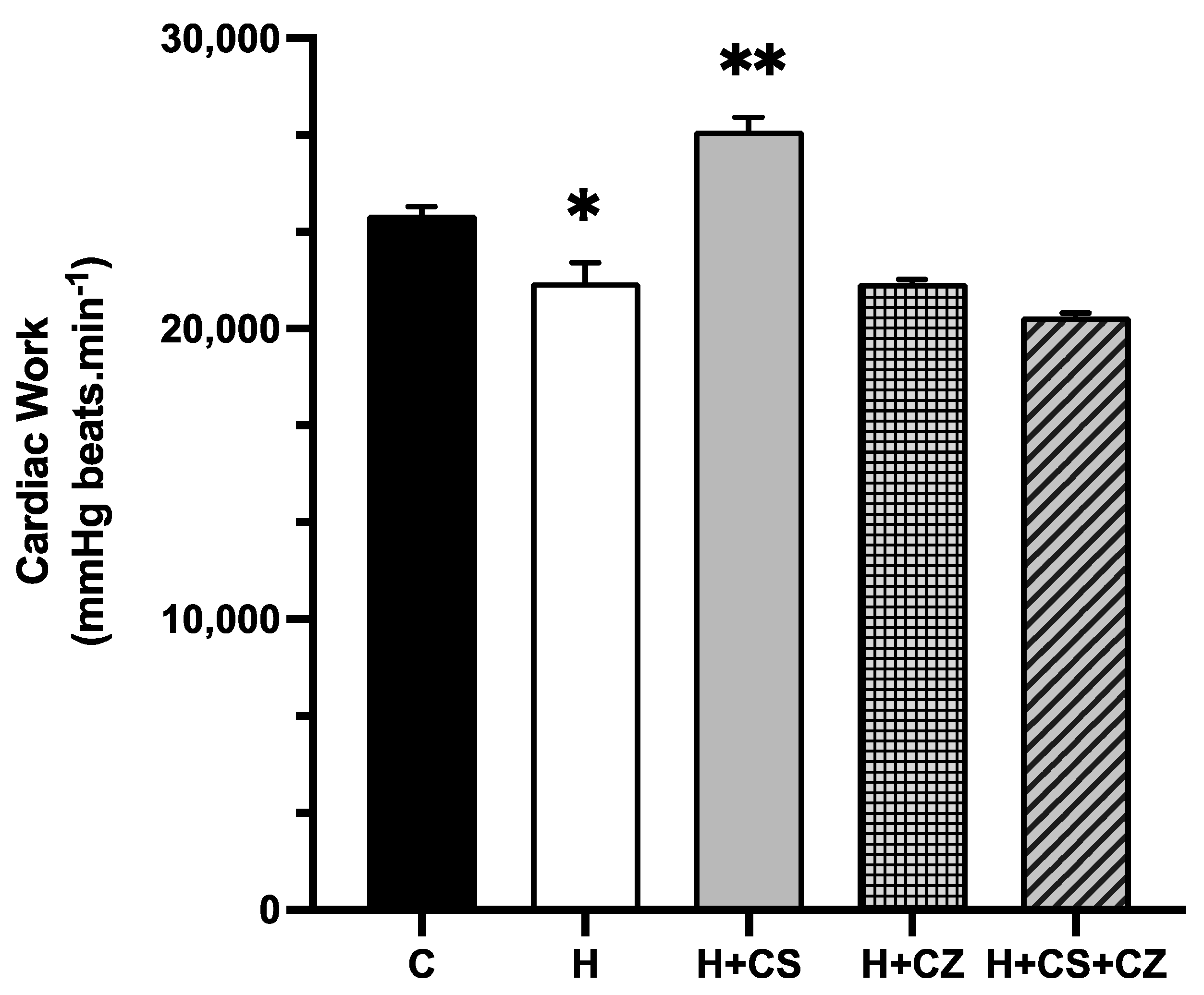
2.1. Cardiac Work
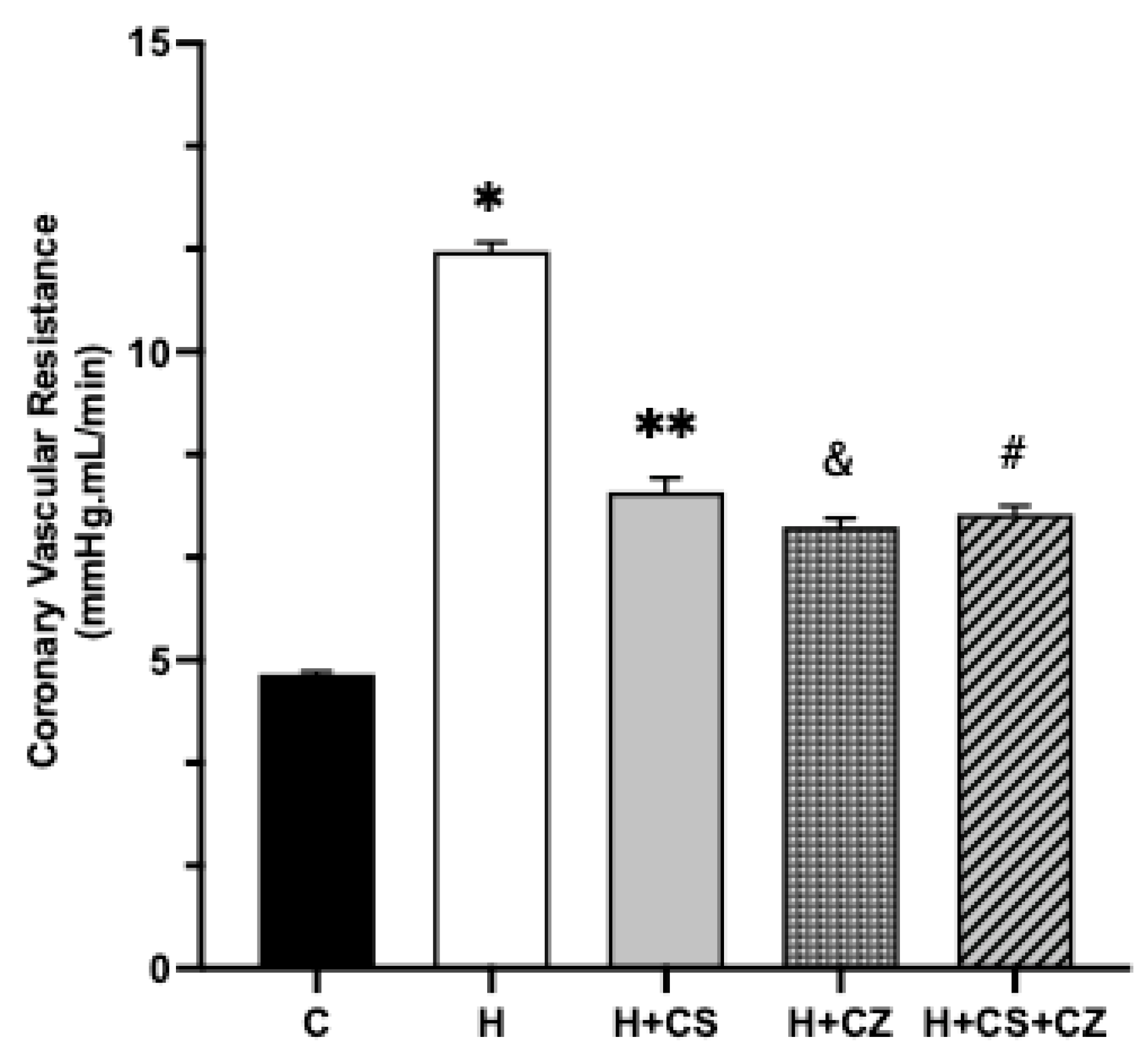
2.2. Coronary Vascular Resistance
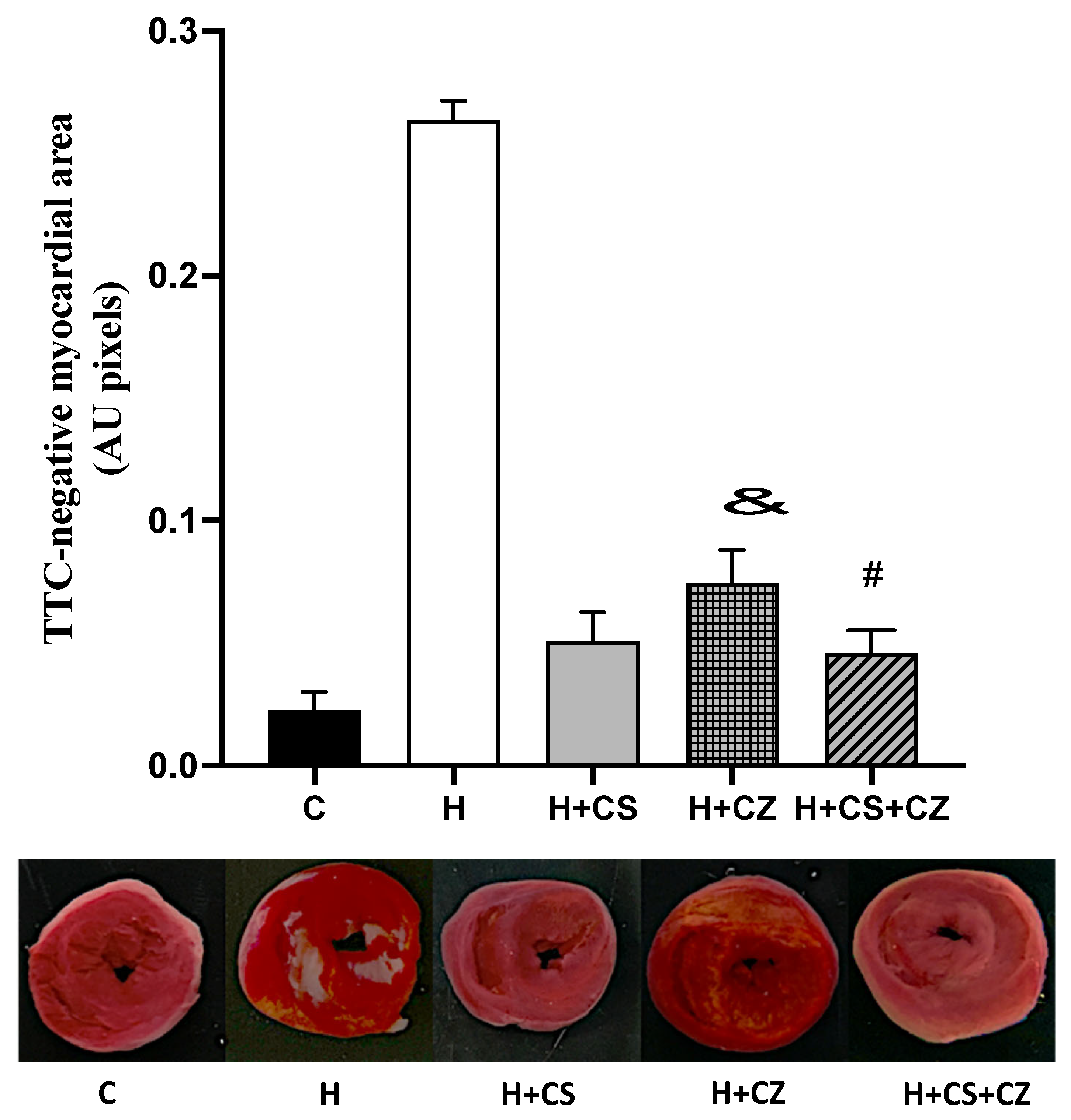
2.3. TTC-Negative Myocardial Area
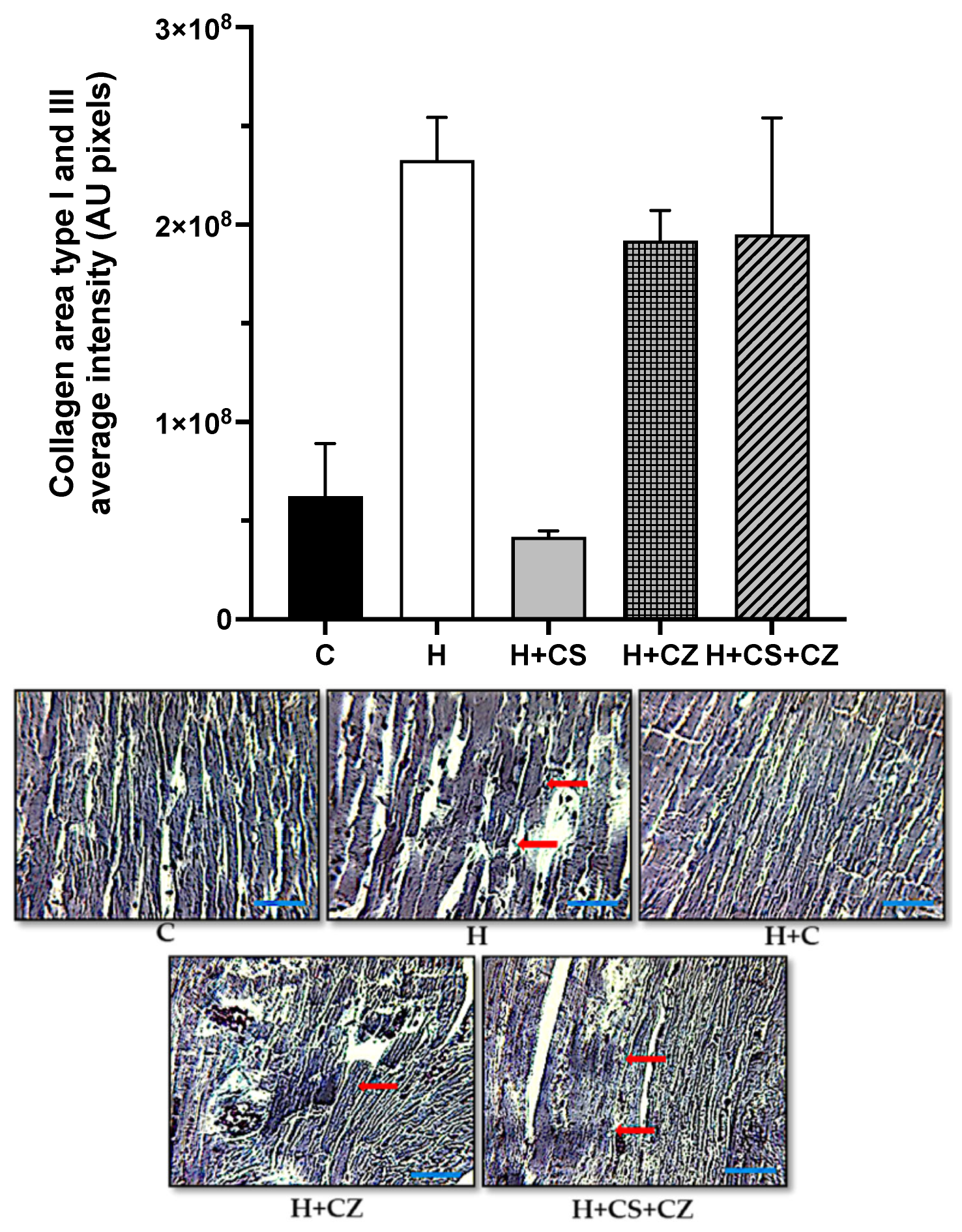
2.4. Histological Analysis of Myocardial Damage
2.5. Cardiac Mitochondrial Function
2.6. Apoptotic Protein Expression
2.7. Antioxidant Enzyme Activity
3. Discussion
4. Materials and Methods
4.1. Reagents
4.2. Animals
4.3. Experimental Design and Treatments
4.4. Isolated and Perfused Heart (Langendorff Preparation)
4.5. Histological Analysis
4.6. TTC-Negative Myocardial Area
4.7. Isolation of Cardiac Mitochondria
4.8. Assessment of Mitochondrial Function
4.8.1. Mitochondrial Respiration
4.8.2. Apoptotic Protein Analysis
4.9. Catalase Activity
4.10. Statistical Analysis
5. Conclusions
6. Limitations
Supplementary Materials
Author Contributions
Funding
Institutional Review Board Statement
Informed Consent Statement
Data Availability Statement
Acknowledgments
Conflicts of Interest
Abbreviations
References
- Vital, J.E.C.; de Morais Nunes, A.; de Albuquerque Cacique New York, B.S.; de Sousa, B.D.A.; Nascimento, M.F.; Formiga, M.F.; Fernandes, A.T.N.S.F. Biofeedback therapeutic effects on blood pressure levels in hypertensive individuals: A systematic review and meta-analysis. Complement. Ther. Clin. Pract. 2021, 44, 101420. [Google Scholar] [CrossRef] [Scilit]
- Cain, A.E.; Khalil, R.A. Pathophysiology of essential hypertension: Role of the pump, the vessel, and the kidney. Sem. Nephrol. 2002, 22, 3–16. [Google Scholar] [CrossRef] [Scilit]
- Silva, B.V.; Sousa, C.; Caldeira, D.; Abreu, A.; Pinto, F.J. Management of arterial hypertension: Challenges and opportunities. Clin. Cardiol. 2022, 45, 1094–1099. [Google Scholar] [CrossRef] [Scilit] [PubMed]
- European Society of Hypertension-European Society of Cardiology Guidelines Committee. 2003 European Society of Hypertension-European Society of Cardiology guidelines for the management of arterial hypertension. J. Hypertens. 2003, 21, 1011–1053. [Google Scholar] [CrossRef] [Scilit] [PubMed]
- Saleem, K.; Iahtisham-Ul-Haq; Abdi, G.; Rabail, R.; Aadil, R.M. Dietary and lifestyle modifications for effective management of hypertension: A comprehensive review. J. Agric. Food Res. 2025, 20, 101750. [Google Scholar] [CrossRef] [Scilit]
- Harrison David, G.; Coffman Thomas, M.; Wilcox Christopher, S. Pathophysiology of Hypertension. The Mosaic Theory and Beyond. Circ. Res. 2021, 128, 847–863. [Google Scholar] [PubMed]
- Edwards, J.M.; McCarthy, C.G.; Wenceslau, C.F. The Obligatory Role of Acetylcholine-Induced Endothelium-Dependent Contraction in Hypertension: Can Arachidonic Acid Resolve This Inflammation? Curr. Pharm. Des. 2020, 26, 3723–3732. [Google Scholar] [PubMed]
- Genovesi, S.; Giussani, M.; Orlando, A.; Lieti, G.; Viazzi, F.; Parati, G. Relationship between endothelin and nitric oxide pathways in the onset and maintenance of hypertension in children and adolescents. Pediatr. Nephrol. 2022, 37, 537–545. [Google Scholar] [PubMed]
- Janaszak-Jasiecka, A.; Agata, P.; Wierońska Joanna, M.; Dobrucki Lawrence, W.; Leszek, K. Endothelial dysfunction due to eNOS uncoupling: Molecular mechanisms as potential therapeutic targets. Cell. Mol. Biol. Lett. 2023, 28, 21. [Google Scholar] [CrossRef] [Scilit] [PubMed]
- Wu, Y.; Ding, Y.; Ramprasath, T.; Zou, M. Oxidative Stress, GTPCH1, and Endothelial Nitric Oxide Synthase Uncoupling in Hypertension. Antioxid. Redox Signal 2021, 34, 750–764. [Google Scholar] [CrossRef] [Scilit] [PubMed]
- Prado, A.F.; Batista, R.I.M.; Tanus-Santos, J.E.; Gerlach, R.F. Matrix Metalloproteinases and Arterial Hypertension: Role of Oxidative Stress and Nitric Oxide in Vascular Functional and Structural Alterations. Biomolecules 2021, 11, 585. [Google Scholar] [CrossRef] [Scilit] [PubMed]
- Chen, J.-X.; Xue, K.-Y.; Xin, J.-J.; Yan, X.; Li, R.-L.; Wang, X.-X.; Wang, X.-L.; Tong, M.-M.; Gan, L.; Li, H.; et al. 5-Lipoxygenase Deficiency Attenuates L-NAME-Induced Hyper-tension and Vascular Remodeling. BBA-Mol. Basis Dis. 2019, 1865, 2379–2392. [Google Scholar]
- Tessier, N.; Ducrozet, M.; Dia, M.; Badawi, S.; Chouabe, C.; Da Silva, C.C.; Ovize, M.; Bidaux, G.; Van Coppenolle, F.; Du-creux, S. TRPV1 Channels Are New Players in the Reticulum Mitochondria Ca2+ Coupling in a Rat Cardiomyoblast Cell Line. Cells 2023, 12, 2322. [Google Scholar] [CrossRef] [Scilit] [PubMed]
- Li, L.; Ma, L.; Luo, Z.; Wei, X.; Zhao, Y.; Zhou, C.; Mou, A.; Lu, Z.; You, M.; He, C.; et al. Lack of TRPV1 Aggravates Obesity-Associated Hypertension through the Disturbance of Mitochondrial Ca2+ Homeostasis in Brown Adipose Tissue. Hyp. Res. 2022, 45, 789–801. [Google Scholar] [CrossRef] [Scilit]
- Meza Rodrigo, C.; Ancatén-González, C.; Chiu Chiayu, Q.; Chávez Andrés, E. Transient Receptor Potential Vanilloid 1 Function at Central Synapses in Health and Disease. Front Cell Neurosci. 2022, 16, 864828. [Google Scholar] [CrossRef] [Scilit] [PubMed]
- Zhang, M.; Ma, Y.; Ye, X.; Zhang, N.; Pan, L.; Wang, B. TRP (transient receptor potential) ion channel family: Structures, biological functions and therapeutic interventions for diseases. Signal Transduct. Target Ther. 2023, 8, 261. [Google Scholar] [CrossRef] [Scilit] [PubMed]
- Juárez-Contreras, R.; Méndez-Reséndiz, K.A.; Rosenbaum, T.; González-Ramírez, R.; Morales-Lázaro, S.L. TRPV1 Channel: A Noxious Signal Transducer That Affects Mitochondrial Function. Int. J. Mol. Sci. 2020, 21, 8882. [Google Scholar] [CrossRef] [Scilit] [PubMed]
- Szabo, I.; Zoratti, M.; Biasutto, L. Targeting mitochondrial ion channels for cancer therapy. Redox Biol. 2021, 42, 101846. [Google Scholar] [CrossRef] [Scilit] [PubMed]
- Nesci, S.; Rubattu, M. Mitochondrial Permeability Transition Pore: The Cardiovascular Disease’s Molecular Achilles Heel. Biomedicines 2025, 13, 3014. [Google Scholar] [CrossRef] [Scilit] [PubMed]
- Wu Tina, L.; Peters Amelia, A.; Tan Ping, T.; Roberts-Thomson Sara, J.; Monteith, G. Consequences of activating the calcium-permeable ion channel TRPV1 in breast cancer cells with regulated TRPV1 expression. Cell Calcium 2014, 56, 59–67. [Google Scholar] [CrossRef] [Scilit] [PubMed]
- Shuba Yaroslava, M. Beyond Neuronal Heat Sensing: Diversity of TRPV1 Heat-Capsaicin Receptor-Channel Functions. Front. Cell. Neurosci. 2021, 14, 612480. [Google Scholar] [CrossRef] [Scilit] [PubMed]
- Yang, H.M.; Jung, S.H.; Sethi, G.; Ahn, K.S. Pleiotropic Pharmacological Actions of Capsazepine, a Synthetic Analogue of Capsaicin, Against Various Cancers and Inflammatory Diseases. Molecules 2019, 24, 995. [Google Scholar] [CrossRef] [Scilit] [PubMed]
- Abdel-Salam, O.M.E.; Mózsik, G. Capsaicin, The Vanilloid Receptor TRPV1 Agonist in Neuroprotection: Mechanisms Involved and Significance. Neurochem. Res. 2023, 48, 3296–3315. [Google Scholar] [CrossRef] [Scilit] [PubMed]
- Lou, M.; Anderson, M.E. Mechanisms of Altered Ca2+ Handling in Heart Failure. Circ. Res. 2013, 113, 690–708. [Google Scholar]
- Castrejón-Téllez, V.; Del Valle-Mondragón, L.; Pérez-Torres, I.; Guarner-Lans, V.; Pastelín-Hernández, G.; Ruiz-Ramírez, A.; Díaz-Juárez, J.A.; Varela-López, E.; Oidor-Chan, V.H.; Vargas-González, A.; et al. TRPV1 Contributes to Modulate the Nitric Oxide Pathway and Oxidative Stress in the Isolated and Perfused Rat Heart during Ischemia and Reperfusion. Molecules 2022, 27, 1031. [Google Scholar] [CrossRef] [Scilit] [PubMed]
- Welch, W.J. Angiotensin II-dependent superoxide: Effects on hypertension and vascular dysfunction. Hypertension 2008, 52, 51–56. [Google Scholar] [PubMed]
- Negri, S.; Faris, P.; Moccia, F. Reactive Oxygen Species and Endothelial Ca2+ Signaling: Brothers in Arms or Partners in Crime? Int. J. Mol. Sci. 2021, 22, 9821. [Google Scholar] [CrossRef] [Scilit] [PubMed]
- Chang, D.; Khalil Raouf, A. Calcium Signaling Dynamics in Vascular Cells and Their Dysregulation in Vascular Disease. Biomolecules 2025, 15, 892. [Google Scholar] [CrossRef] [Scilit] [PubMed]
- Zhai, K.; Liskova, A.; Kubatka, P.; Büsselberg, D. Calcium Entry through TRPV1: A Potential Target for the Regulation of Proliferation and Apoptosis in Cancerous and Healthy Cells. Int. J. Mol. Sci. 2020, 21, 4177. [Google Scholar] [CrossRef] [Scilit] [PubMed]
- Hurt, M.C.; Lu, Y.; Stary, M.C.; Piplani, H.; Small, A.B.; Urban, J.T.; Qvit, N.; Gross, J.G.; Mochly-Rosen, D.; Gross, R.E. Transient Receptor Potential Vanilloid 1 Regulates Mitochondrial Membrane Potential and Myocardial Reperfusion Injury. J. Am. Heart Assoc. 2016, 5, e003774. [Google Scholar] [CrossRef] [Scilit] [PubMed]
- Gorbunov, A.S.; Maslov, L.N.; Jaggi, A.S.; Singh, N.; Petrocellis, L.D.; Boshchenko, A.A.; Roohbakhsh, A.; Bezuglov, V.V.; Vladimir, V.; Oeltgen, R.P. Physiological and Pathological Role of TRPV1, TRPV2, and TRPV4 Channels in the Heart. Curr. Cardiol. Rev. 2019, 15, 244–251. [Google Scholar] [PubMed]
- Zhao, R.; Tsang, Y.S. Versatile Roles of Intracellularly Located TRPV1 Channel. J. Cell Physiol. 2017, 232, 1957–1965. [Google Scholar] [CrossRef] [Scilit] [PubMed]
- Szabados, T.; Gömöri, K.; Pálvölgyi, L.; Görbe, A.; Baczkó, I.; Helyes, Z.; Jancsó, G.; Ferdinandy, P.; Bencsik, P. Capsaicin-Sensitive Sensory Nerves and the TRPV1 Ion Channel in Cardiac Physiology and Pathologies. Int. J. Mol. Sci. 2020, 21, 4472. [Google Scholar] [CrossRef] [Scilit] [PubMed]
- Lozano, C.; Córdova, C.; Marchant, I.; Zúñiga, R.; Ochova, P.; Ramírez-Barrantes, R.; González-Arriagada, W.A.; Rodríguez, B.; Olivero, P. Intracellular Aggregated TRPV1 is Associated with Lower Survival in Breast Cancer Patients. Breast Cancer-Targets Ther. 2018, 10, 161–168. [Google Scholar] [CrossRef] [Scilit]
- Zhang, M.-J.; Yin, Y.-W.; Li, B.-H.; Liu, Y.; Liao, S.-Q.; Gao, C.-Y.; Li, J.-C.; Zhang, L.-L. The role of TRPV1 in improving VSMC function and attenuating hypertension. Prog. Biophys. Mol. Biol. 2015, 117, 212–216. [Google Scholar] [CrossRef] [Scilit] [PubMed]
- Majdi, J.S. Role of TRPV1 in Health and Disease. J. Explor. Res. Pharmacol. 2023, 8, 348–361. [Google Scholar]
- Bencsik, P.; Kupai, K.; Giricz, Z.; Görbe, A.; Huliák, I.; Fürst, S.; Dux, L.; Csont, T.; Jancsó, G.; Ferdi-nandy, P. Cardiac capsaicin-sensitive sensory nerves regulate myocardial relaxation via S-nitrosylation of SERCA: Role of peroxynitrite. Br. J. Pharmacol. 2008, 153, 488–496. [Google Scholar] [CrossRef] [Scilit] [PubMed]
- Fernandes, E.S.; Brito, C.X.L.; Teixeira, S.A.; Barboza, R.; Reis, A.S.D.; Azevedo-Santos, A.P.S.; Muscará, M.; Costa, S.K.P.; Marinho, C.R.F.; Brain, S.D.; et al. TRPV1 antagonism by capsazepine modulates innate immune response in mice infected with Plasmodium berghei ANKA. Mediat. Inflamm. 2014, 2014, 506450. [Google Scholar] [CrossRef] [Scilit]
- Zhang, M.; Zhang, T.; Zou, R.; He, K.; Huang, R.; Feng, J.; Hu, J.; Ge, T.; Fan, X.; Zhou, H.; et al. Mitochondrial quality control as a therapeutic target in cardiovascular disease: Mechanistic insights and future directions. J. Transl. Int. Med. 2025, 13, 211–240. [Google Scholar] [CrossRef] [Scilit] [PubMed]
- Nunnari, J.; Suomalainen, A. Mitochondria: In Sickness and in Health. Cell 2012, 148, 1145–1159. [Google Scholar] [CrossRef] [Scilit] [PubMed]
- Bonora, M.; Wieckowski, M.R.; Sinclair, D.A.; Kroemer, G.; Pinton, P.; Galluzzi, L. Targeting Mitochondria for Cardiovascular Disorders: Therapeutic Potential and Obstacles. Nat. Rev. Cardiol. 2019, 16, 33–55. [Google Scholar] [PubMed]
- Mweene, B.C.; Hatwiko, H.; Povia, J.P.; Masenga, S.K. The Role of Mitochondrial Dysfunction and Dynamics in Hypertensive Heart Disease: Mechanisms and Recent Advances. Biology 2025, 14, 1212. [Google Scholar] [CrossRef] [Scilit] [PubMed]
- Sun, Z.; Han, J.; Zhao, W.; Zhang, Y.; Wang, S.; Ye, L.; Liu, T.; Zheng, L. TRPV1 Activation Exacerbates Hypoxia/Reoxygenation-Induced Apoptosis in H9C2 Cells via Calcium Overload and Mitochondrial Dysfunction. Int. J. Mol. Sci. 2014, 15, 18362–18380. [Google Scholar] [PubMed]
- Jiang, X.; Liu, G.; Lei, H.; Li, Z.; Feng, Q.; Huang, W. Activation of transient receptor potential vanilloid 1 protects the heart against apoptosis in ischemia/reperfusion injury through upregulating the PI3K/Akt signaling pathway. Int. J. Mol. Med. 2018, 4, 1724–1730. [Google Scholar]
- Lang, H.; Li, Q.; Yu, H.; Li, P.; Lu, Z.; Xiong, S.; Yang, T.; Zhao, Y.; Huang, X.; Gao, P.; et al. Activation of TRPV1 attenuates high salt-induced cardiac hypertrophy through improvement of mitochondrial function. Br. J. Pharmacol. 2015, 172, 5548–5558. [Google Scholar] [PubMed]
- Gogvadze, V.; Orrenius, S.; Zhivotovsky, B. Multiple pathways of cytochrome c release from mitochondria in apoptosis. Biochim. Biophys. Acta 2006, 1757, 639–647. [Google Scholar] [CrossRef] [Scilit]
- Zhang, M.; Zheng, J.; Nussinov, R.; Ma, B. Release of Cytochrome C from Bax Pores at the Mitochondrial Membrane. Sci. Rep. 2017, 7, 2635. [Google Scholar] [CrossRef] [Scilit] [PubMed]
- Hamet, P.; Richard, L.; Dam, T.V.; Teiger, E.; Orlov, S.N.; Gaboury, L.; Gossard, F.; Tremblay, J. Apoptosis in target organs of hypertension. Hypertension 1995, 26, 642–648. [Google Scholar] [CrossRef] [Scilit] [PubMed]
- Garrido, C.; Galluzzi, L.; Brunet, M.; Puig, P.E.; Didelot, C.; Kroemer, G. Mechanisms of cytochrome c release from mitochondria. Cell Death Differ. 2006, 13, 1423–1433. [Google Scholar] [CrossRef] [Scilit] [PubMed]
- Hevler, J.F.; Zenezeni Chiozzi, R.; Cabrera-Orefice, A.; Brandt, U.; Arnold, S.; Heck, A.J.R. Molecular characterization of a complex of apoptosis-inducing factor 1 with cytochrome c oxidase of the mitochondrial respiratory chain. Proc. Natl. Acad. Sci. USA 2021, 118, e2106950118. [Google Scholar] [CrossRef] [Scilit] [PubMed]
- Tian, X.Y.; Ma, S.; Tse, G.; Wong, W.T.; Huang, Y. Uncoupling Protein 2 in Cardiovascular Health and Disease. Front. Physiol. 2018, 9, 1060. [Google Scholar] [CrossRef] [Scilit] [PubMed]
- Liu, L.; Liu, J.; Tian, X.Y.; Wong, W.T.; Lau, C.W.; Xu, A.; Xu, G.; Ng, C.F.; Yao, X.; Gao, Y.; et al. Uncoupling Protein-2 Mediates DPP-4 Inhibitor-Induced Restoration of Endothelial Function in Hypertension Through Reducing Oxidative Stress. Antioxid. Redox Signal 2014, 21, 1571–1581. [Google Scholar] [CrossRef] [Scilit] [PubMed]
- Trenker, M.; Malli, R.; Fertschai, I.; Levak-Frank, S.; Graier, W.F. Uncoupling proteins 2 and 3 are fundamental for mitochondrial Ca2+ uniport. Nat. Cell Biol. 2007, 9, 445–452. [Google Scholar] [CrossRef] [Scilit] [PubMed]
- Sundaram, A.; Keah, L.; Sirajudeen, K.; Singh, H. Upregulation of catalase and downregulation of glutathione peroxidase activity in the kidney precede the development of hypertension in pre-hypertensive SHR. Hypertens. Res. 2013, 36, 213–218. [Google Scholar] [PubMed]
- Bley, K.; Boorman, G.; Mohammad, B.; McKenzie, D.; Babbar, S. A comprehensive review of the carcinogenic and anticarcinogenic potential of capsaicin. Toxicol. Pathol. 2012, 40, 847–873. [Google Scholar] [CrossRef] [Scilit] [PubMed]
- Lu, Q.; Ding, X.; Gao, B. TRPV1 in Cardiovascular Disease: A Molecular Nexus of Treatment. Biomolecules 2026, 16, 344. [Google Scholar] [CrossRef] [Scilit] [PubMed]
- Wang, Y.; Tian, T.; Yi, C.; Wang, X.; Mou, Y.; Wang, P.; Wang, W.; Deng, Y.; Sun, X.; Huang, Y.; et al. Transient receptor potential channels in chondrocyte homeostasis and pathophysiology: From molecular mechanisms to translational therapeutics. Int. J. Biol. Macromol. 2025, 334, 149035. [Google Scholar] [CrossRef] [Scilit] [PubMed]
- Moran, M.M. TRP channels as potential drug targets. Annu. Rev. Pharmacol. Toxicol. 2018, 58, 309–330. [Google Scholar] [CrossRef] [Scilit] [PubMed]
- Dikalova, E.A.; Pandey, A.; Xiao, L.; Arslanbaeva, L.; Sidorova, T.; Lopez, M.G.; Billings, F.T., IV; Verdin, E.; Auwer, J.; Har-rison, D.G.; et al. Mitochondrial Deacetylase Sirt3 Reduces Vascular Dysfunction and Hypertension While Sirt3 Deple-tion in Essential Hypertension Is Linked to Vascular Inflammation and Oxidative Stress. Circ. Res. 2020, 126, 439–452. [Google Scholar] [PubMed]
- Henrion, D.; Dowell, F.J.; Levy, B.I.; Michel, J.B. In Vitro Alteration of Aortic Vascular Reactivity in Hypertension Induced by Chronic NG-Nitro-L-Arginine Methyl Ester. Hypertension 1996, 28, 361–366. [Google Scholar] [PubMed]
- Kopincová, J.; Púzserová, A.; Bernátová, I. L-NAME in the Cardiovascular System—Nitric Oxide Synthase Activator? Pharmacol. Rep. 2012, 64, 511–520. [Google Scholar] [PubMed]
- Török, J. Participation of Nitric Oxide in Different Models of Experimental Hypertension. Physiol. Res. 2008, 57, 813–825. [Google Scholar] [CrossRef] [Scilit] [PubMed]
- Correa, F.; Buelna-Chontal, M.; Hernández-Reséndiz, S.; García-Niño, W.R.; Roldán, F.J.; Soto, V.; Silva-Palacios, A.; Amador, A.; Pedraza-Chaverrí, J.; Tapia, E.; et al. Curcumin maintains cardiac and mitochondrial function in chronic kidney disease. Free Radic. Biol. Med. 2013, 61, 119–129. [Google Scholar] [CrossRef] [Scilit] [PubMed]
- Arreguín, F.; García, N.; Hernández-Reséndiz, S.; Buelna-Chontal, M.; Correa, F.; Olín-Sandoval, V.; Medina-Campos, O.N.; Pedraza-Chaverrí, J.; Zazueta, C. Attenuation of oxidant damage in the postconditioned heart involves non-enzymatic response and partial catalytic protection. Exp. Physiol. 2012, 97, 1119–1130. [Google Scholar] [PubMed]
- Ruiz-Ramírez, A.; Chávez-Salgado, M.; Peñeda-Flores, J.A.; Zapata, E.; Masso, F.; El-Hafidi, M. High-sucrose diet increases ROS generation, FFA accumulation, UCP2 level, and proton leak in liver mitochondria. Am. J. Physiol. Endocrinol. Metab. 2011, 301, E1198–E1207. [Google Scholar] [CrossRef] [Scilit] [PubMed]
- Ruiz-Ramírez, A.; Barrios-Maya, M.; Quezada-Pablo, H.; López-Acosta, O.; El-Hafidi, M. Kidney dysfunction induced by a sucrose-rich diet in rat involves mitochondria ROS generation, cardiolipin changes, and the decline of autophagy protein markers. Am. J. Physiol. Renal. Physiol. 2020, 318, F53–F66. [Google Scholar] [CrossRef] [Scilit] [PubMed]



| C | H | H + CS | H + CZ | H + CS + CZ | |
|---|---|---|---|---|---|
| State III | 277.0 ± 4.9 | 296.6 ± 47.7 | 522.6 ± 35.8 ** | 355.0 ± 12.9 | 199.4 ± 29.9 |
| State IV | 55.9 ± 1.4 | 137.3 ± 26.6 * | 117.6 ± 16.4 | 111.9 ± 9.3 | 37.5 ± 10.3 # |
| RC | 4.96 ± 0.1 | 2.24 ± 0.21 * | 3.90 ± 0.21 ** | 3.22 ± 0.2 & | 5.8 ± 0.82 # |
| ADP/O | 2.1 ± 0.01 | 1.5 ± 0.2 * | 2.2 ± 0.1 ** | 1.9 ± 0.3 & | 2.5 ± 0.1 # |
Disclaimer/Publisher’s Note: The statements, opinions and data contained in all publications are solely those of the individual author(s) and contributor(s) and not of MDPI and/or the editor(s). MDPI and/or the editor(s) disclaim responsibility for any injury to people or property resulting from any ideas, methods, instructions or products referred to in the content. |
© 2026 by the authors. Licensee MDPI, Basel, Switzerland. This article is an open access article distributed under the terms and conditions of the Creative Commons Attribution (CC BY) license.
Share and Cite
Ruiz-Ramírez, A.; Correa-Segura, F.; Valle-Mondragón, L.D.; Márquez-Ramírez, A.M.; Pérez-Torres, I.; Rodríguez, O.M.; Velázquez-Espejel, R.; Vargas-González, A.; Ibarra-Lara, L.; Oidor-Chan, V.H.; et al. TRPV1 Activation Is Associated with Improved Mitochondrial Function and Cardioprotection in Experimental Hypertension. Molecules 2026, 31, 2212. https://doi.org/10.3390/molecules31132212
Ruiz-Ramírez A, Correa-Segura F, Valle-Mondragón LD, Márquez-Ramírez AM, Pérez-Torres I, Rodríguez OM, Velázquez-Espejel R, Vargas-González A, Ibarra-Lara L, Oidor-Chan VH, et al. TRPV1 Activation Is Associated with Improved Mitochondrial Function and Cardioprotection in Experimental Hypertension. Molecules. 2026; 31(13):2212. https://doi.org/10.3390/molecules31132212
Chicago/Turabian StyleRuiz-Ramírez, Angélica, Francisco Correa-Segura, Leonardo Del Valle-Mondragón, Arantxa Marianne Márquez-Ramírez, Israel Pérez-Torres, Oralia Medina Rodríguez, Rodrigo Velázquez-Espejel, Alvaro Vargas-González, Luz Ibarra-Lara, Victor Hugo Oidor-Chan, and et al. 2026. "TRPV1 Activation Is Associated with Improved Mitochondrial Function and Cardioprotection in Experimental Hypertension" Molecules 31, no. 13: 2212. https://doi.org/10.3390/molecules31132212
APA StyleRuiz-Ramírez, A., Correa-Segura, F., Valle-Mondragón, L. D., Márquez-Ramírez, A. M., Pérez-Torres, I., Rodríguez, O. M., Velázquez-Espejel, R., Vargas-González, A., Ibarra-Lara, L., Oidor-Chan, V. H., Díaz-Juárez, J. A., Martínez-Memíje, R., Castrejón-Téllez, V., & Torres-Narváez, J. C. (2026). TRPV1 Activation Is Associated with Improved Mitochondrial Function and Cardioprotection in Experimental Hypertension. Molecules, 31(13), 2212. https://doi.org/10.3390/molecules31132212