A Plant-Derived Flavonoid, Isobavachin, Promotes Osteogenesis and Alleviates Glucocorticoid-Induced Osteoporosis via Modulation of the ESR1-PI3K/Akt Signaling Pathway
Abstract
1. Introduction
2. Results
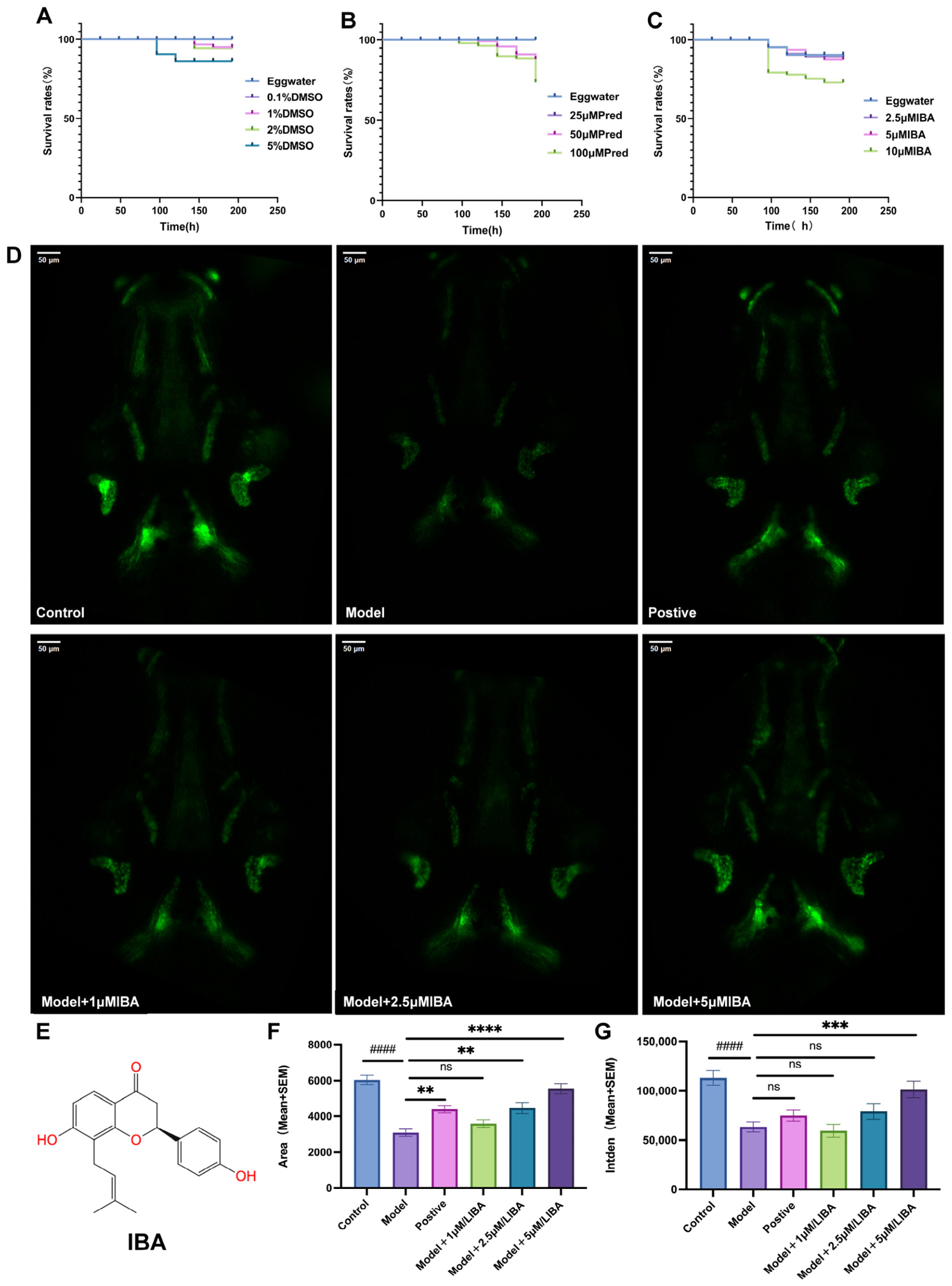
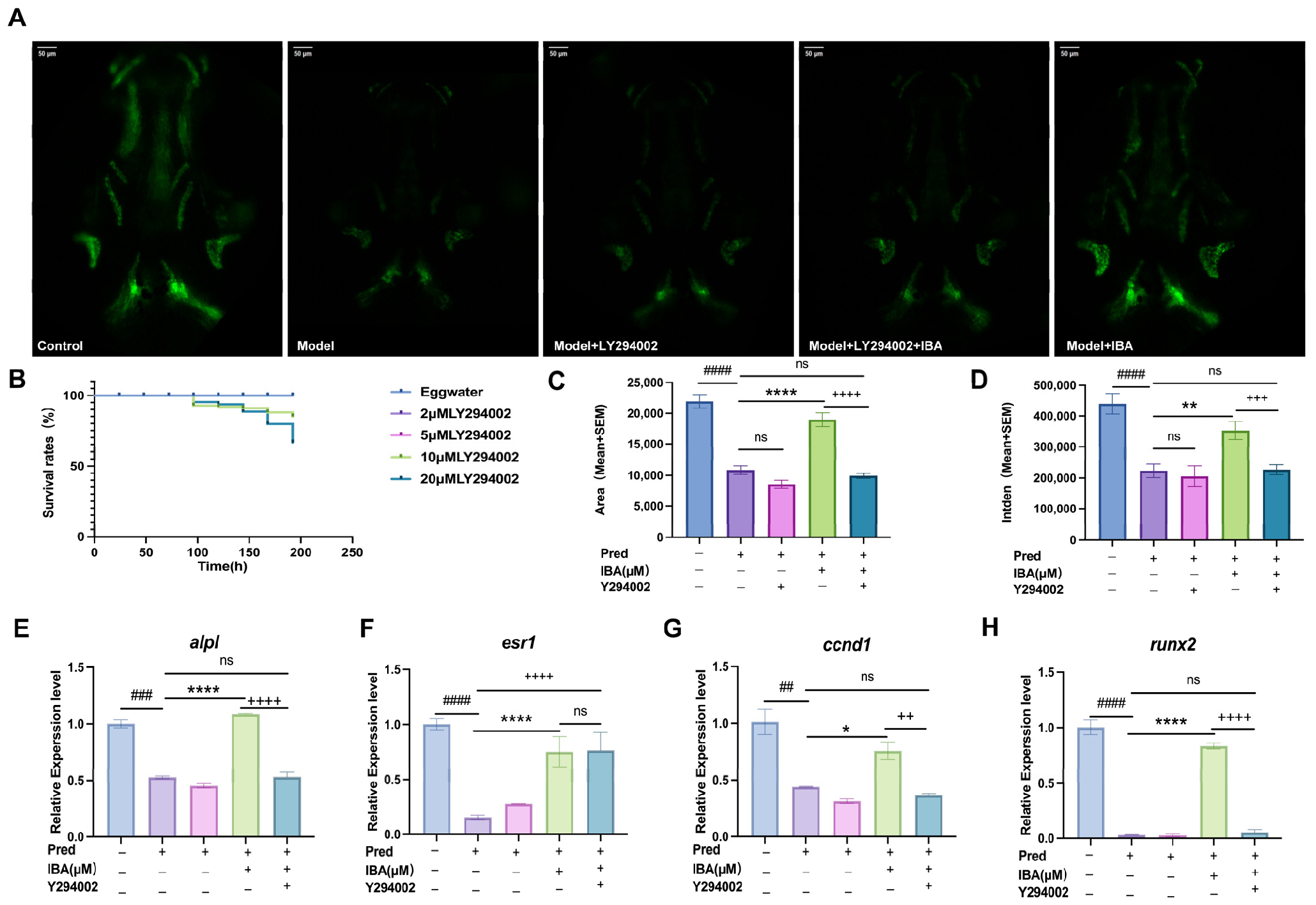
2.1. Evaluation of the Biosafety of IBA and Its Osteoprotective Effect on the GIOP Zebrafish Model
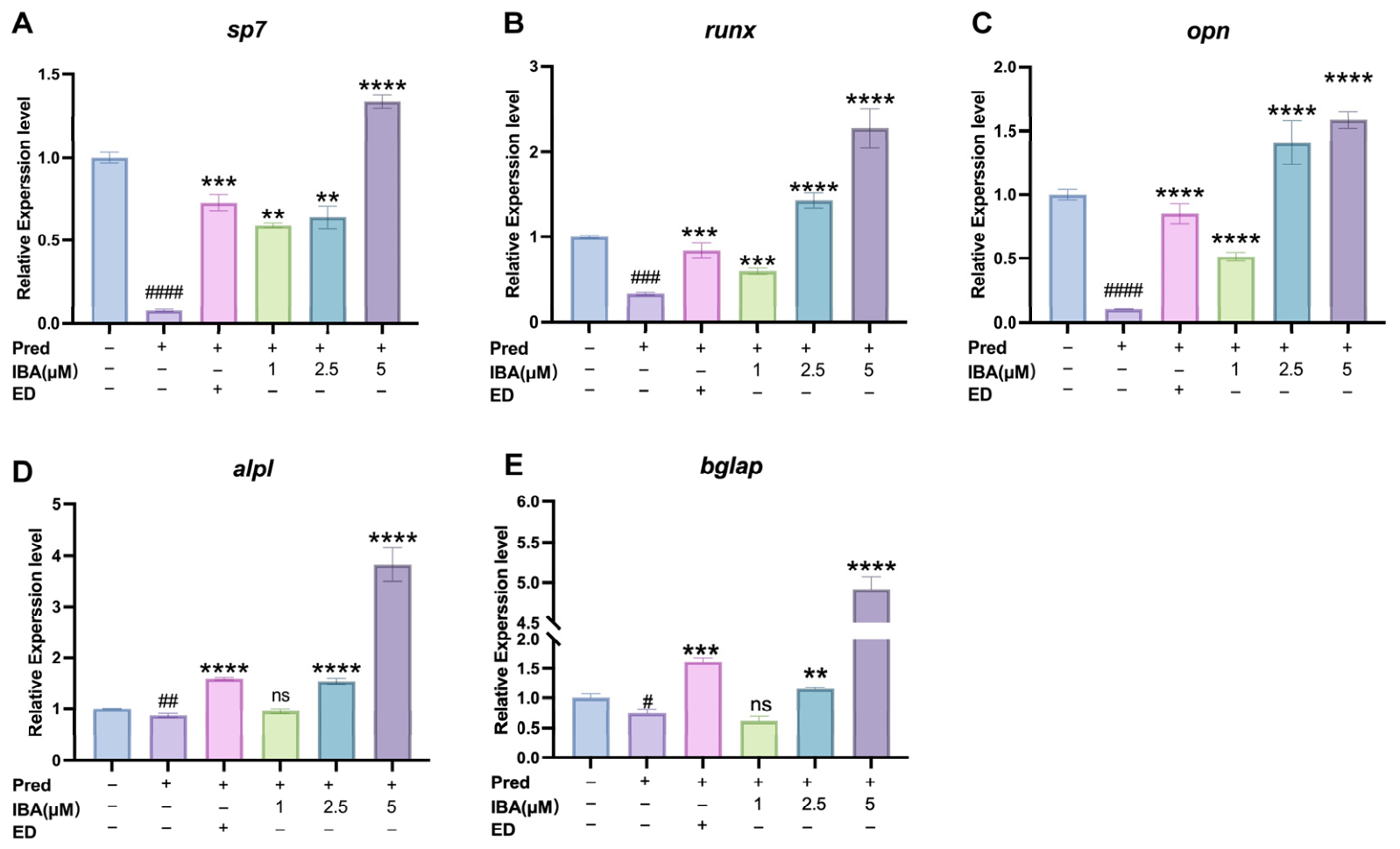
2.2. The Effect of IBA on the Transcription Level of Zebrafish Bone-Related Genes
2.3. Target Screening and Prediction of IBA Anti-Osteoporosis Based on Network Pharmacology
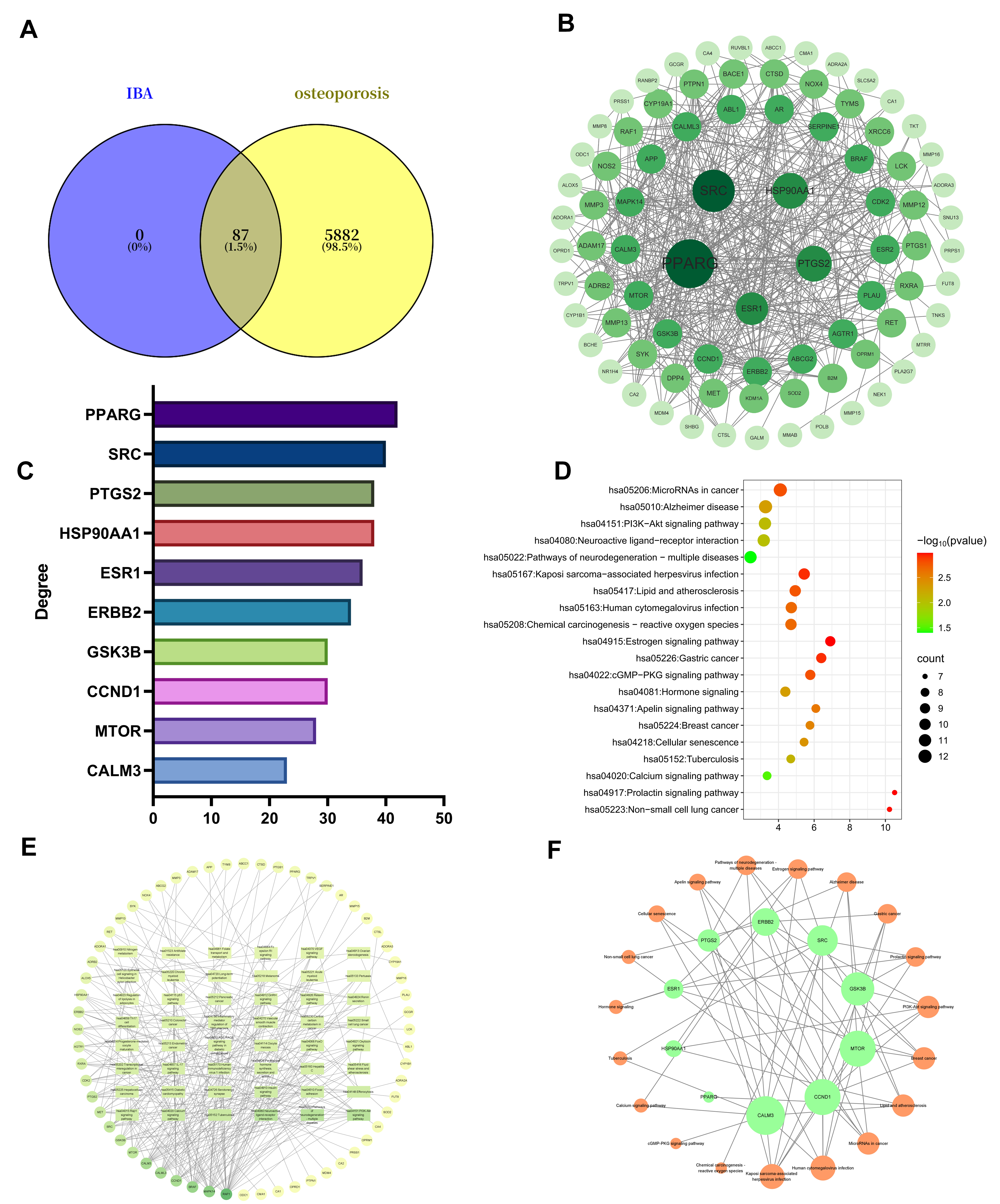
2.3.1. Interaction (PPI) Network Construction and KEGG Pathway Enrichment Analysis of Potential Targets
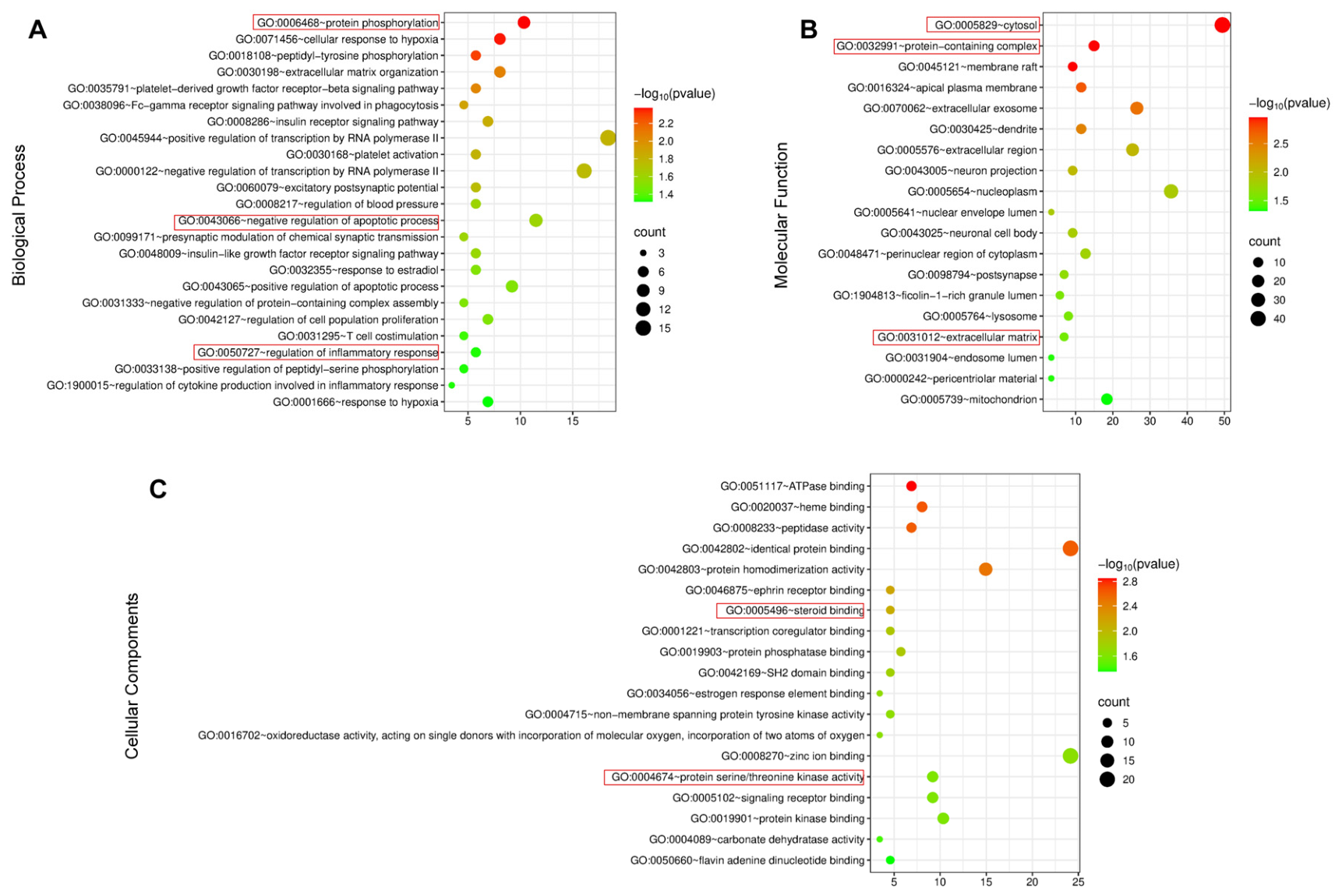
2.3.2. GO Functional Enrichment Analysis
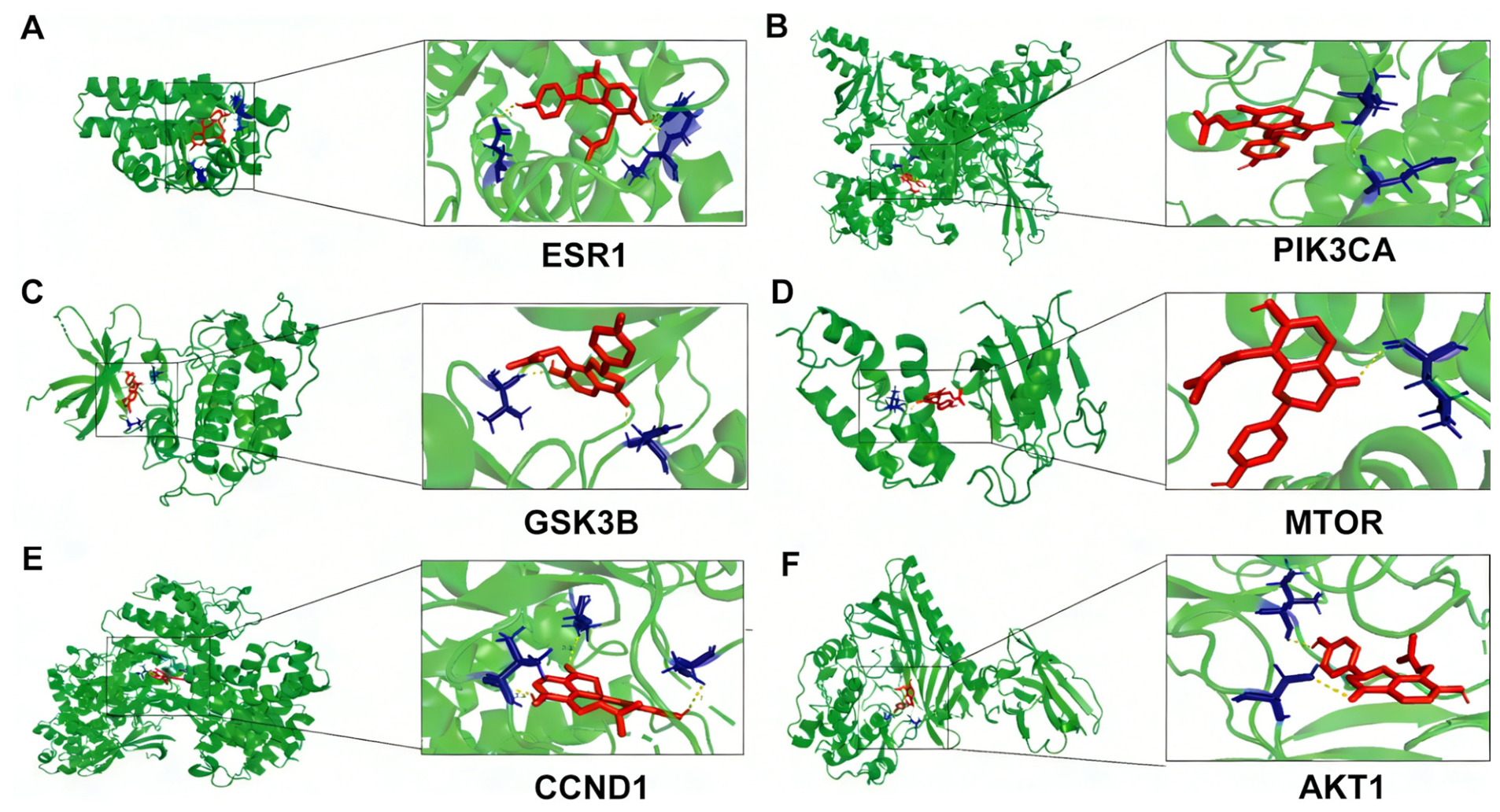
2.4. Molecular Docking and Visual Analysis of IBA and Core Targets
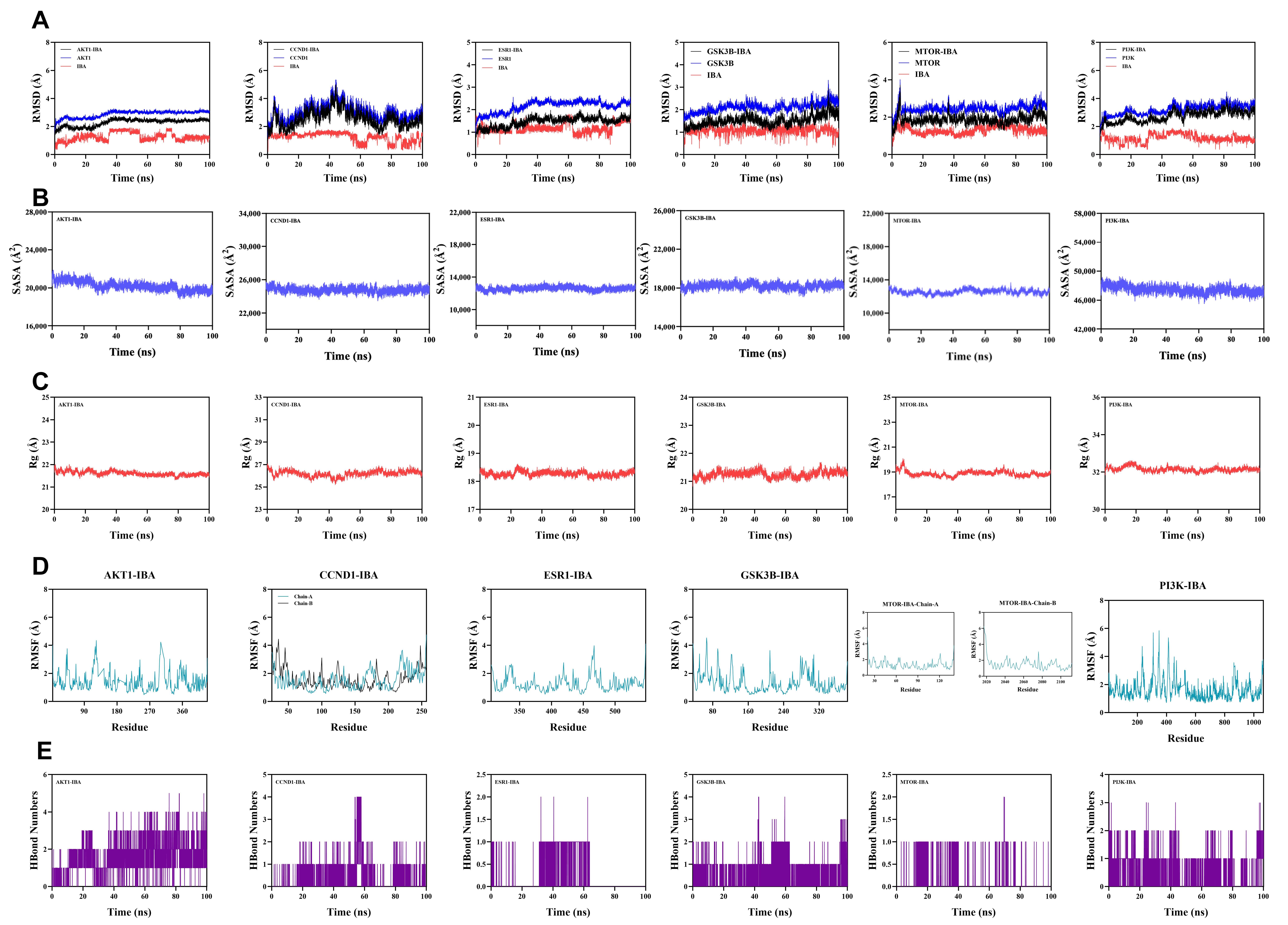
2.5. MD Simulation Analysis of the Binding Stability of IBA and Core Target Complex
2.6. IBA Based on PI3K Inhibitor Promotes Bone Action and Verification of Its Signal Transduction Mechanism
3. Discussion
3.1. IBA Promotes Osteogenic Differentiation by Activating Bone Formation-Related Genes
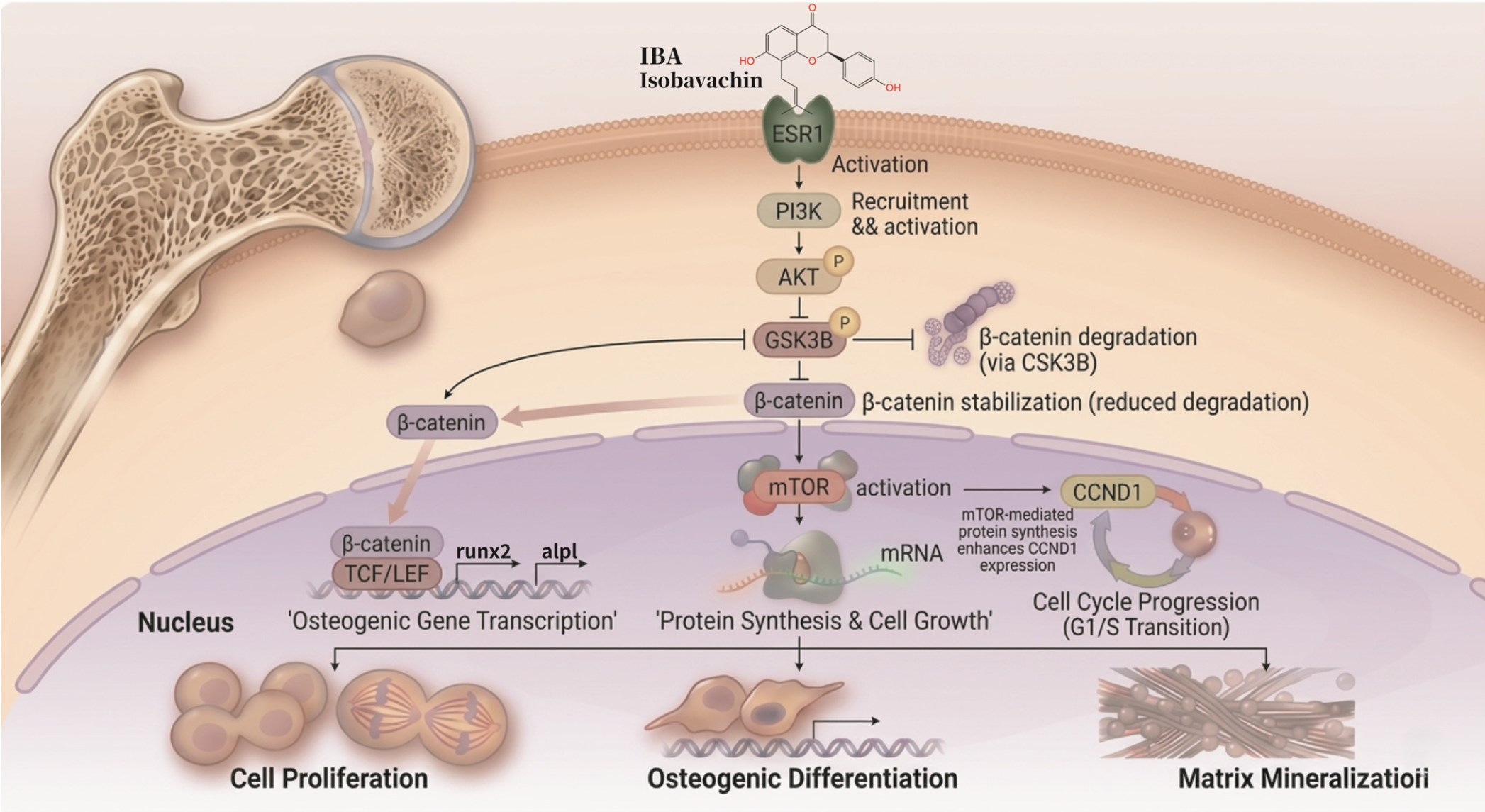
3.2. Network Pharmacology and Molecular Interaction Analyses Suggest the Involvement of the ESR1-PI3K/Akt Axis in the Osteogenic Effects of IBA
3.3. PI3K Inhibitor Validation Supports the Involvement of the PI3K/Akt Pathway in the Osteogenic Effects of IBA
3.4. The Advantages and Prospects of IBA as a Natural Multi-Target Bone Protector
4. Materials and Methods
4.1. Chemicals and Reagents
4.2. Experimental Animals
4.3. Safety Evaluation of Solvent DMSO, Modeling Chemical (Pred), Natural Product IBA, and PI3K-Specific Inhibitor LY294002
4.4. Establishment of a Model of Osteoporosis of Zebrafish Induced by Glucocorticoids
4.5. IBA’s Intervention in Osteoporosis Model
4.6. LY294002 Intervention Experiment
4.7. Network Pharmacological Analysis
4.7.1. Potential Target Screening
4.7.2. Overlap Target Screening, PPI Network Construction, GO/KEGG Enrichment Analysis, and Target–Pathway Network Visualization
4.8. Molecular Docking
4.9. MD Simulation
4.10. RT-qPCR Verification
5. Conclusions
Author Contributions
Funding
Institutional Review Board Statement
Informed Consent Statement
Data Availability Statement
Acknowledgments
Conflicts of Interest
References
- Buckley, L.; Humphrey, M.B. Glucocorticoid-induced osteoporosis. N. Engl. J. Med. 2018, 379, 2547–2556. [Google Scholar] [CrossRef] [PubMed]
- Compston, J.E.; McClung, M.R.; Leslie, W.D. Osteoporosis. Lancet 2019, 393, 364–376. [Google Scholar] [CrossRef] [PubMed]
- Yunusoğlu, O.; Koyuncu, E. Alpha-lipoic acid in pharmaceutical development: A comprehensive review of its therapeutic potential and molecular mechanisms. Prospect. Pharm. Sci. 2025, 23, 67–86. [Google Scholar]
- Mohammed, F.S.; Sevindik, M.; Uysal, İ.; Sabik, A.E. Quercetin: Derivatives, biosynthesis, biological activity, pharmacological and therapeutic effects. Prospect. Pharm. Sci. 2023, 21, 49–56. [Google Scholar] [CrossRef]
- Dharani, B.; Suba, A. A novel targeted formulation for osteoarthritis: Exploring synergistic benefits of Cissus quadrangularis, Boswellia serrata, propolis and palmitoylethanolamide. Prospect. Pharm. Sci. 2026, 24, 17–30. [Google Scholar]
- Xin, C.; Zhang, G.; Shen, Z.; Han, W.; Fan, R.; Ren, J.; Zhang, J.; Hao, Y.; Xin, J. Pharmacological mechanism of natural products to treat osteoporosis: A focus on the autophagy. Front. Pharmacol. 2025, 16, 1623990. [Google Scholar] [CrossRef] [PubMed]
- Guo, A.J.; Choi, R.C.; Zheng, K.Y.; Chen, V.P.; Dong, T.T.; Wang, Z.-T.; Vollmer, G.; Lau, D.T.; Tsim, K.W.-k. Kaempferol as a flavonoid induces osteoblastic differentiation via estrogen receptor signaling. Chin. Med. 2012, 7, 10. [Google Scholar] [CrossRef] [PubMed]
- Li, T.; Du, Y.; Yao, H.; Zhao, B.; Wang, Z.; Chen, R.; Ji, Y.; Du, M. Isobavachin attenuates osteoclastogenesis and periodontitis-induced bone loss by inhibiting cellular iron accumulation and mitochondrial biogenesis. Biochem. Pharmacol. 2024, 224, 116202. [Google Scholar] [CrossRef] [PubMed]
- Noor, F.; Tahir Ul Qamar, M.; Ashfaq, U.A.; Albutti, A.; Alwashmi, A.S.S.; Aljasir, M.A. Network Pharmacology Approach for Medicinal Plants: Review and Assessment. Pharmaceuticals 2022, 15, 572. [Google Scholar] [CrossRef] [PubMed]
- Chao, P.; Zhang, X.; Zhang, L.; Yang, A.; Wang, Y.; Chen, X. Integration of molecular docking and molecular dynamics simulations with subtractive proteomics approach to identify the novel drug targets and their inhibitors in Streptococcus gallolyticus. Sci. Rep. 2024, 14, 14755. [Google Scholar] [CrossRef] [PubMed]
- Tonelli, F.; Bek, J.W.; Besio, R.; De Clercq, A.; Leoni, L.; Salmon, P.; Coucke, P.J.; Willaert, A.; Forlino, A. Zebrafish: A resourceful vertebrate model to investigate skeletal disorders. Front. Endocrinol. 2020, 11, 489. [Google Scholar] [CrossRef] [PubMed]
- DeLaurier, A.; Eames, B.F.; Blanco-Sánchez, B.; Peng, G.; He, X.; Swartz, M.E.; Ullmann, B.; Westerfield, M.; Kimmel, C.B. Zebrafish sp7: EGFP: A transgenic for studying otic vesicle formation, skeletogenesis, and bone regeneration. Genesis 2010, 48, 505–511. [Google Scholar] [PubMed]
- Liu, Q.; Li, M.; Wang, S.; Xiao, Z.; Xiong, Y.; Wang, G. Recent advances of osterix transcription factor in osteoblast differentiation and bone formation. Front. Cell Dev. Biol. 2020, 8, 601224. [Google Scholar] [CrossRef] [PubMed]
- Du, J.; Wang, Y.; Wu, C.; Zhang, X.; Zhang, X.; Xu, X. Targeting bone homeostasis regulation: Potential of traditional Chinese medicine flavonoids in the treatment of osteoporosis. Front. Pharmacol. 2024, 15, 1361864. [Google Scholar] [CrossRef] [PubMed]
- Koromila, T.; Baniwal, S.K.; Song, Y.S.; Martin, A.; Xiong, J.; Frenkel, B. Glucocorticoids antagonize RUNX2 during osteoblast differentiation in cultures of ST2 pluripotent mesenchymal cells. J. Cell. Biochem. 2014, 115, 27–33. [Google Scholar] [PubMed]
- Feng, X. Chemical and biochemical basis of cell-bone matrix interaction in health and disease. Curr. Chem. Biol. 2009, 3, 189–196. [Google Scholar] [CrossRef]
- Long, F. Building strong bones: Molecular regulation of the osteoblast lineage. Nat. Rev. Mol. Cell Biol. 2012, 13, 27–38. [Google Scholar]
- Mckee, M.D.; Nanci, A. Osteopontin: An interfacial extracellular matrix protein in mineralized tissues. Connect. Tissue Res. 1996, 35, 197–205. [Google Scholar] [CrossRef] [PubMed]
- Almeida, M.; Iyer, S.; Martin-Millan, M.; Bartell, S.M.; Han, L.; Ambrogini, E.; Onal, M.; Xiong, J.; Weinstein, R.S.; Jilka, R.L.; et al. Estrogen receptor-α signaling in osteoblast progenitors stimulates cortical bone accrual. J. Clin. Investig. 2013, 123, 394–404. [Google Scholar] [CrossRef] [PubMed]
- So, M.C.; Hwang, H.P.; Lee, C.H.; Youn, H.J.; Jung, S.H.; Kim, J.C. Up-regulation of Pi3k/Akt Signaling by 17β-estradiol through Activation Of Estrogen Receptor-α in Breast Cancer Cells. J. Breast Cancer 2006, 9, 91–97. [Google Scholar][Green Version]
- Saczko, J.; Michel, O.; Chwiłkowska, A.; Sawicka, E.; Mączyńska, J.; Kulbacka, J. Estrogen receptors in cell membranes: Regulation and signaling. Adv. Anat. Embryol. Cell Biol. 2017, 227, 93–105. [Google Scholar] [CrossRef] [PubMed]
- Dong, J.; Xu, X.; Zhang, Q.; Yuan, Z.; Tan, B. The PI3K/AKT pathway promotes fracture healing through its crosstalk with Wnt/β-catenin. Exp. Cell Res. 2020, 394, 112137. [Google Scholar] [PubMed]
- Liu, C.; Zhang, J.; Ye, Z.; Luo, J.; Peng, B.; Wang, Z. Research on the role and mechanism of the PI3K/Akt/mTOR signalling pathway in osteoporosis. Front. Endocrinol. 2025, 16, 1541714. [Google Scholar]
- Shaikh, A.; Wesner, A.A.; Abuhattab, M.; Kutty, R.G.; Premnath, P. Cell cycle regulators and bone: Development and regeneration. Cell Biosci. 2023, 13, 35. [Google Scholar] [CrossRef] [PubMed]
- Jin, X.; Sun, J.; Yu, B.; Wang, Y.; Sun, W.J.; Yang, J.; Huang, S.H.; Xie, W.L. Daidzein stimulates osteogenesis facilitating proliferation, differentiation, and antiapoptosis in human osteoblast-like MG-63 cells via estrogen receptor–dependent MEK/ERK and PI3K/Akt activation. Nutr. Res. 2017, 42, 20–30. [Google Scholar] [PubMed]
- Zhao, B.; Chen, L.; Wang, W.; Xu, W.; Xu, B. Anti-Osteoporosis Activity of Lycopene Through ESR1: Network Pharmacology, Molecular Docking, Imaging Technology, and Experimental Validation. Chem. Biol. Drug Des. 2025, 105, e70135. [Google Scholar] [CrossRef] [PubMed]
- Hu, H.-Y.; Zhang, Z.-Z.; Jiang, X.-Y.; Duan, T.-H.; Feng, W.; Wang, X.-G. Hesperidin anti-osteoporosis by regulating estrogen signaling pathways. Molecules 2023, 28, 6987. [Google Scholar] [CrossRef] [PubMed]
- Chung, Y.C.; Song, S.J.; Lee, A.; Jang, C.H.; Kim, C.-S.; Hwang, Y.-H. Isobavachin, a main bioavailable compound in Psoralea corylifolia, alleviates lipopolysaccharide-induced inflammatory responses in macrophages and zebrafish by suppressing the MAPK and NF-κB signaling pathways. J. Ethnopharmacol. 2024, 321, 117501. [Google Scholar] [PubMed]
- Wang, Y.; Li, B.; Zhang, W.; Liu, Y.; Xue, P.; Ma, J.; Li, Y. Impaired PI3 K Akt expression in liver and skeletal muscle of ovariectomized rats. Endocrine 2013, 44, 659–665. [Google Scholar] [CrossRef] [PubMed]
- Ghosh, R.; Colon-Negron, K.; Papa, F.R. Endoplasmic reticulum stress, degeneration of pancreatic islet β-cells, and therapeutic modulation of the unfolded protein response in diabetes. Mol. Metab. 2019, 27, S60–S68. [Google Scholar] [CrossRef] [PubMed]
- Ribas, V.; Drew, B.G.; Zhou, Z.; Phun, J.; Kalajian, N.Y.; Soleymani, T.; Daraei, P.; Widjaja, K.; Wanagat, J.; de Aguiar Vallim, T.Q.; et al. Skeletal muscle action of estrogen receptor α is critical for the maintenance of mitochondrial function and metabolic homeostasis in females. Sci. Transl. Med. 2016, 8, 334ra354. [Google Scholar] [CrossRef] [PubMed]





| Term ID | Description | Count | p Value | Genes |
|---|---|---|---|---|
| hsa05206 | MicroRNAs in cancer | 12 | 0.00012812372183936 | ABCC1, CCND1, MMP16, PLAU, ERBB2, ABL1, CYP1B1, MDM4, RAF1, PTGS2, MET, MTOR |
| hsa05010 | Alzheimer disease | 12 | 0.000883117386169321 | BACE1, GSK3B, APP, ADAM17, NOS2, NOX4, BRAF, CALM3, CALML3, RAF1, PTGS2, MTOR |
| hsa04151 | PI3K-Akt signaling pathway | 11 | 0.001761574158878574 | RET, GSK3B, HSP90AA1, RXRA, SYK, CCND1, ERBB2, CDK2, RAF1, MET, MTOR |
| hsa04080 | Neuroactive ligand-receptor interaction | 11 | 0.0020706265242342774 | OPRD1, PRSS1, GLRB, GCGR, ADORA3, ADORA1, AGTR1, TRPV1, ADRB2, OPRM1, ADRA2A |
| hsa05022 | Pathways of neurodegeneration—multiple diseases | 11 | 0.013183235695435625 | GSK3B, APP, NOS2, NOX4, BRAF, CALM3, CALML3, RAF1, MAPK14, PTGS2, MTOR |
| hsa05167 | Kaposi sarcoma-associated herpesvirus infection | 10 | 0.000075949588239302 | GSK3B, SYK, CCND1, SRC, CALM3, CALML3, RAF1, MAPK14, PTGS2, MTOR |
| hsa05417 | Lipid and atherosclerosis | 10 | 0.000159670041632707 | GSK3B, HSP90AA1, RXRA, SRC, MMP3, CALM3, CALML3, PPARG, MAPK14, SOD2 |
| hsa05163 | Human cytomegalovirus infection | 10 | 0.000224420137771673 | GSK3B, CCND1, SRC, CALM3, CALML3, RAF1, MAPK14, PTGS2, B2M, MTOR |
| hsa05208 | Chemical carcinogenesis—reactive oxygen species | 10 | 0.00023195140446227 | PTPN1, SRC, ABL1, CYP1B1, NOX4, BRAF, RAF1, MAPK14, SOD2, MET |
| hsa04915 | Estrogen signaling pathway | 9 | 0.0000398860428061955 | HSP90AA1, SRC, CALM3, CALML3, OPRM1, RAF1, ESR1, CTSD, ESR2 |
| hsa05226 | Gastric cancer | 9 | 0.0000686400105856275 | GSK3B, RXRA, CCND1, ERBB2, CDK2, BRAF, RAF1, MET, MTOR |
| hsa04022 | cGMP-PKG signaling pathway | 9 | 0.000139685482828282 | OPRD1, ADORA3, ADORA1, AGTR1, CALM3, CALML3, ADRB2, RAF1, ADRA2A |
| hsa04081 | Hormone signaling | 9 | 0.000901817324218368 | OPRD1, SRC, GCGR, AGTR1, ADRB2, OPRM1, ESR1, ESR2, ADRA2A |
| hsa04371 | Apelin signaling pathway | 8 | 0.000298020786930806 | CCND1, NOS2, SERPINE1, AGTR1, CALM3, CALML3, RAF1, MTOR |
| hsa05224 | Breast cancer | 8 | 0.000417973799301794 | GSK3B, CCND1, ERBB2, BRAF, RAF1, ESR1, ESR2, MTOR |
| hsa04218 | Cellular senescence | 8 | 0.000596197027254038 | CCND1, CDK2, SERPINE1, CALM3, CALML3, RAF1, MAPK14, MTOR |
| hsa05152 | Tuberculosis | 8 | 0.0014212822988480985 | SYK, NOS2, SRC, CALM3, CALML3, RAF1, MAPK14, CTSD |
| hsa04020 | Calcium signaling pathway | 8 | 0.008922515546162545 | RET, NOS2, ERBB2, AGTR1, CALM3, CALML3, ADRB2, MET |
| hsa04917 | Prolactin signaling pathway | 7 | 0.000046096183355707 | GSK3B, CCND1, SRC, RAF1, MAPK14, ESR1, ESR2 |
| hsa05223 | Non-small cell lung cancer | 7 | 0.0000539921503905596 | RET, RXRA, CCND1, ERBB2, BRAF, RAF1, MET |
| Target Name | Binding Energy (kcal·mol−1) | Binding-Site Residues and Hydrogen Bond Lengths (Å) |
|---|---|---|
| AKT1 | −9.1 | THR211 (2.93, 3.9); ILE290 (2.21, 2.86) |
| CCND1 | −9.3 | VAL96 (2.73, 3.66); VAL96 (2.28, 2.87); ASP158 (2.51, 3.41) |
| ESR1 | −9.5 | GLU75 (3.81, 4.55); GLU2058 (3.75, 2.87) |
| GSK3B | −9.5 | VAL135 (2.26, 3.19); ASP200 (2.08, 2.91) |
| mTOR | −10.4 | GLU85 (2.91, 3.85); GLU2032 (3.2, 3.99); SER2035 (3.2, 3.73) |
| PIK3CA | −8.1 | GLU353 (2.79, 3.22); ARG394 (2.79, 3.64); HIS524 (2.52, 3.27) LEU525 (2.63, 2.94) |
| Gene | Forward Sequence (5′→3′) | Reverse Sequence (5′→3′) |
|---|---|---|
| esr1 | CCAGCCTGTAATGGGACTCA | TCTCTCTCAGGAATCGGGCT |
| ccnd1 | ACTTCCTTGCCAAACTGCCT | TGAAGTTGACGTCTGTCGCA |
| alpl | GGCAAATCAGTGGGAATCGTC | CATTGGGCATGTCTGCATCAG |
| opn | AAACTGCACTACCCCTGAGC | CAGCATTGTACGTCGGTGGA |
| sp7 | CCAGACCTCCAGTGTTTCCC | GCTTGTAAGGCAATCCGCAG |
| runx2 | ACTCCTAACCTAAAAGGCGTCA | GCTGACATGGGGTCACAGAA |
| bglap | ACCTGACTCCATTTCAGCTCG | CGATGATTCCAGACGTGTCCA |
| β-actin | GCCAACAGAGAGAAGATGACACAG | CAGGAAGGAAGGCTGGAAGAG |
Disclaimer/Publisher’s Note: The statements, opinions and data contained in all publications are solely those of the individual author(s) and contributor(s) and not of MDPI and/or the editor(s). MDPI and/or the editor(s) disclaim responsibility for any injury to people or property resulting from any ideas, methods, instructions or products referred to in the content. |
© 2026 by the authors. Licensee MDPI, Basel, Switzerland. This article is an open access article distributed under the terms and conditions of the Creative Commons Attribution (CC BY) license.
Share and Cite
Cui, J.; Song, X.; Liu, H.; Cui, Z.; Sun, M.; He, M.; Jin, M. A Plant-Derived Flavonoid, Isobavachin, Promotes Osteogenesis and Alleviates Glucocorticoid-Induced Osteoporosis via Modulation of the ESR1-PI3K/Akt Signaling Pathway. Molecules 2026, 31, 2158. https://doi.org/10.3390/molecules31122158
Cui J, Song X, Liu H, Cui Z, Sun M, He M, Jin M. A Plant-Derived Flavonoid, Isobavachin, Promotes Osteogenesis and Alleviates Glucocorticoid-Induced Osteoporosis via Modulation of the ESR1-PI3K/Akt Signaling Pathway. Molecules. 2026; 31(12):2158. https://doi.org/10.3390/molecules31122158
Chicago/Turabian StyleCui, Jingran, Xuting Song, Heran Liu, Zhenhai Cui, Mengmeng Sun, Min He, and Meiying Jin. 2026. "A Plant-Derived Flavonoid, Isobavachin, Promotes Osteogenesis and Alleviates Glucocorticoid-Induced Osteoporosis via Modulation of the ESR1-PI3K/Akt Signaling Pathway" Molecules 31, no. 12: 2158. https://doi.org/10.3390/molecules31122158
APA StyleCui, J., Song, X., Liu, H., Cui, Z., Sun, M., He, M., & Jin, M. (2026). A Plant-Derived Flavonoid, Isobavachin, Promotes Osteogenesis and Alleviates Glucocorticoid-Induced Osteoporosis via Modulation of the ESR1-PI3K/Akt Signaling Pathway. Molecules, 31(12), 2158. https://doi.org/10.3390/molecules31122158