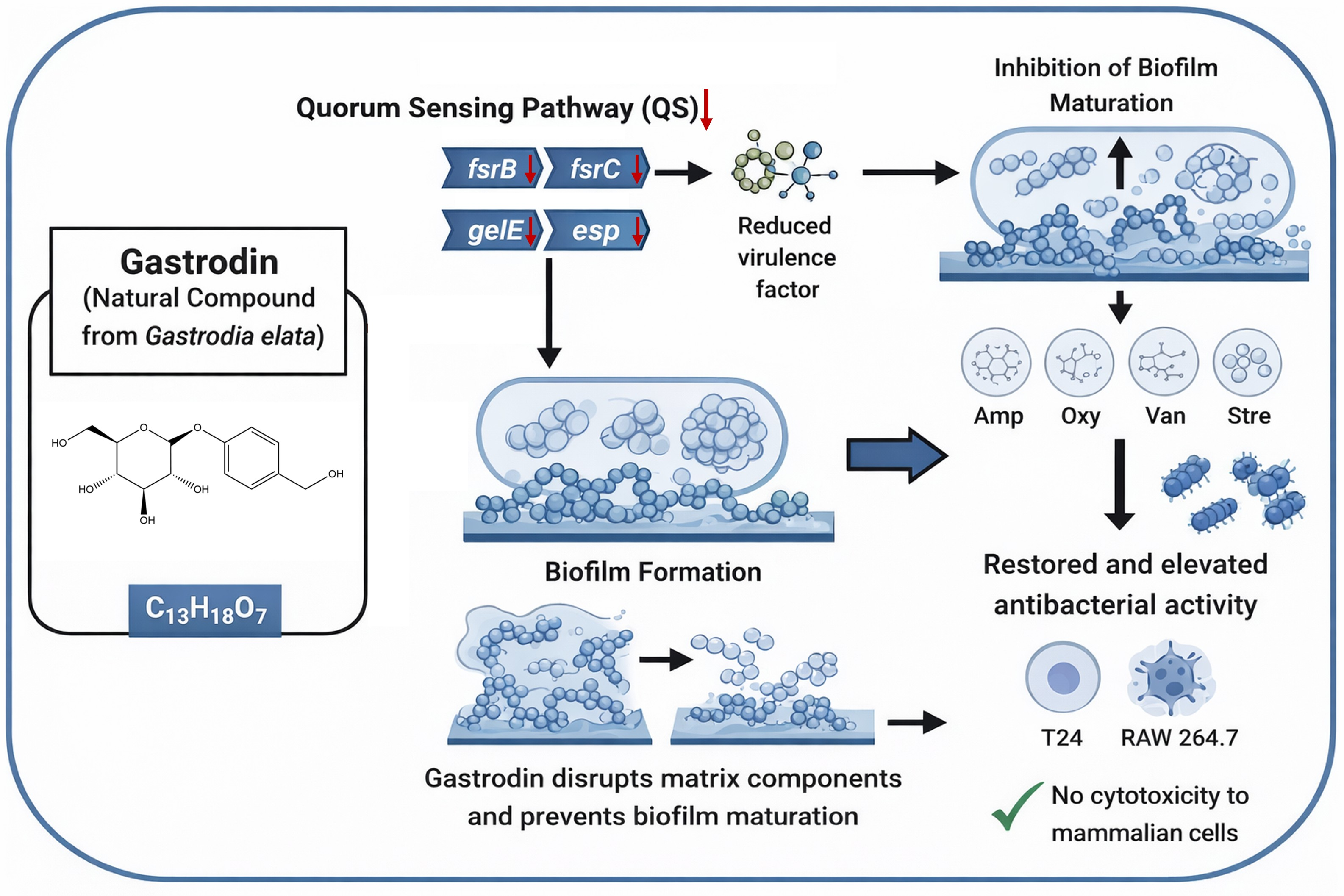
Gastrodin Inhibits Bacterial Biofilm Formation, Thereby Activating the Antibacterial Activity of Antibiotics


Abstract
1. Introduction
2. Results
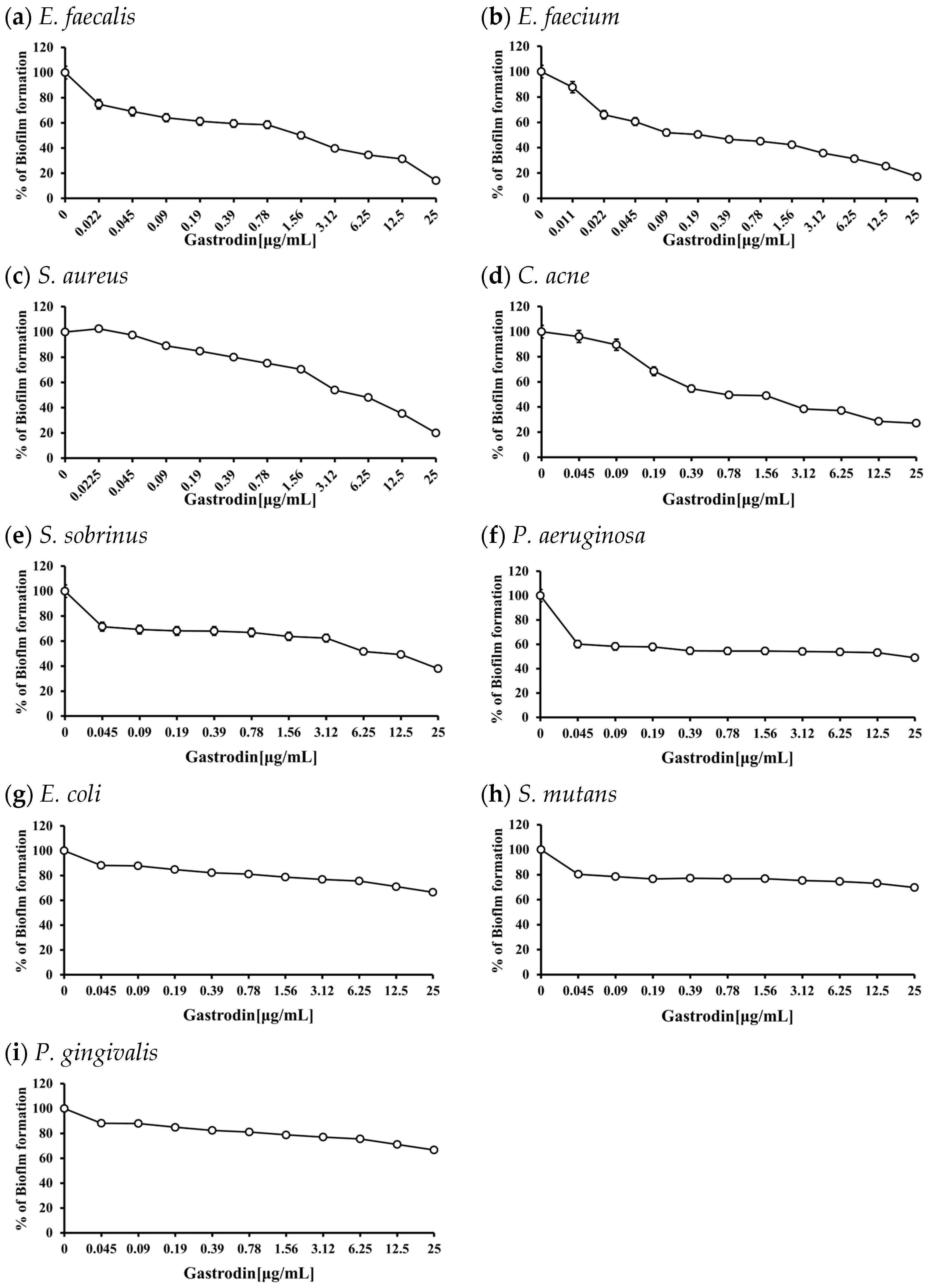
2.1. Gastrodin Inhibited Bacterial Biofilm Formation
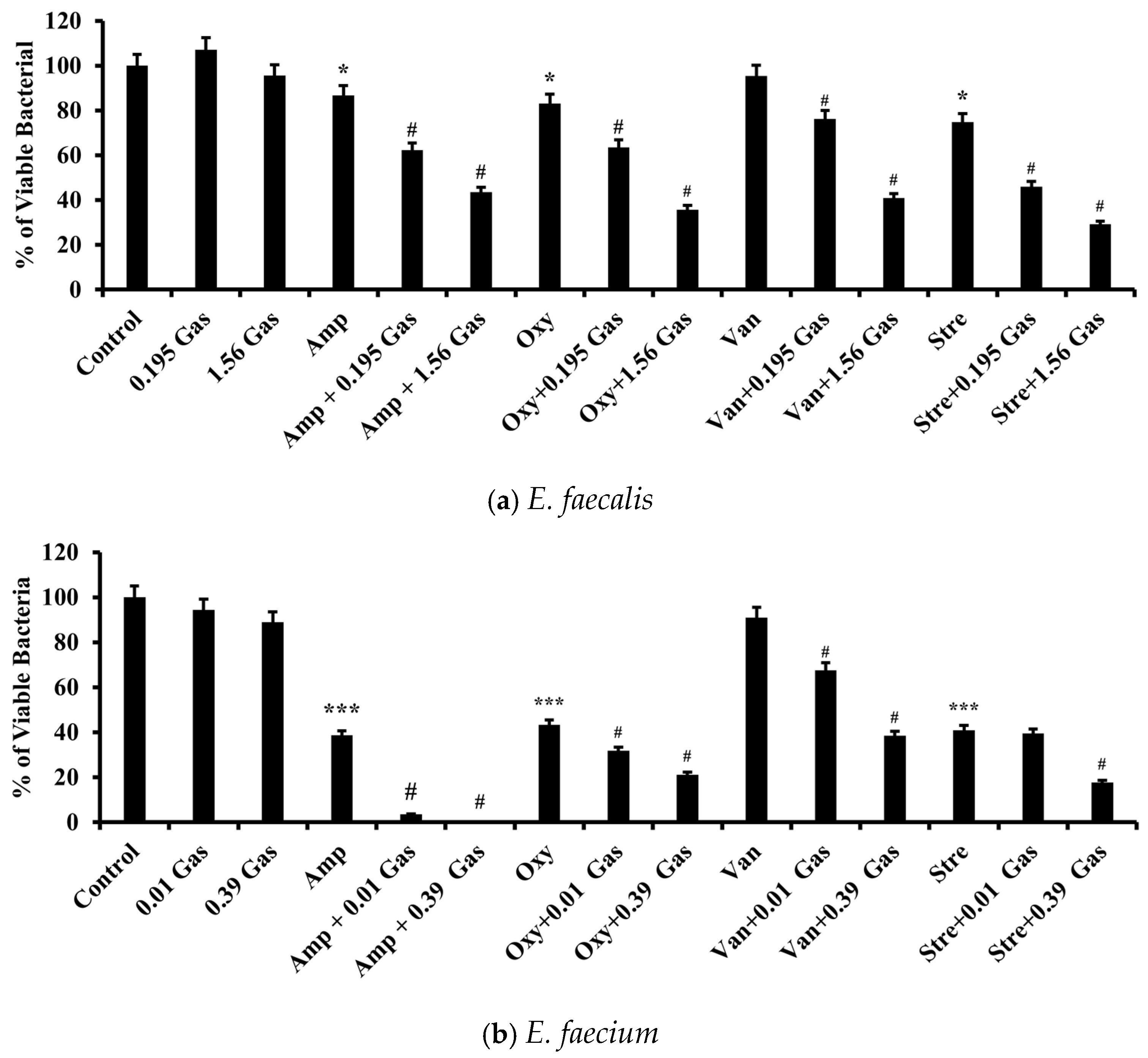
2.2. Gastrodin Synergistically Activated Antibacterial Activity with Commercialized Antibiotics
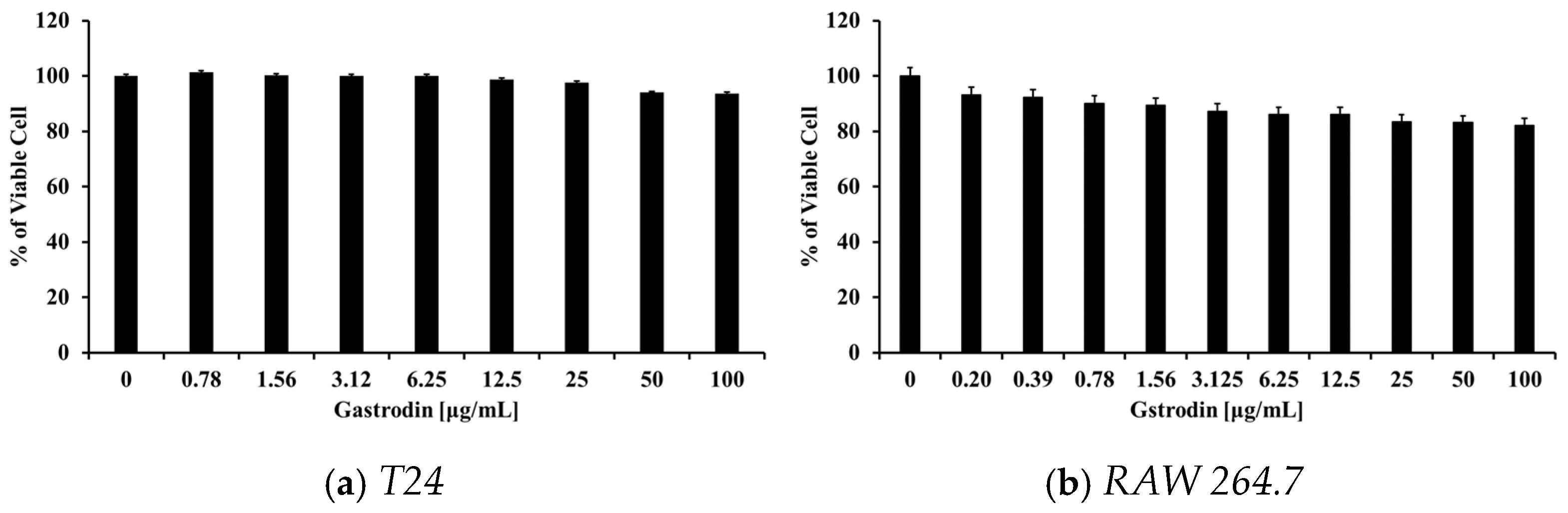
2.3. Gastrodin Did Not Influence the Viability of the Mammalian Originated Cell Line
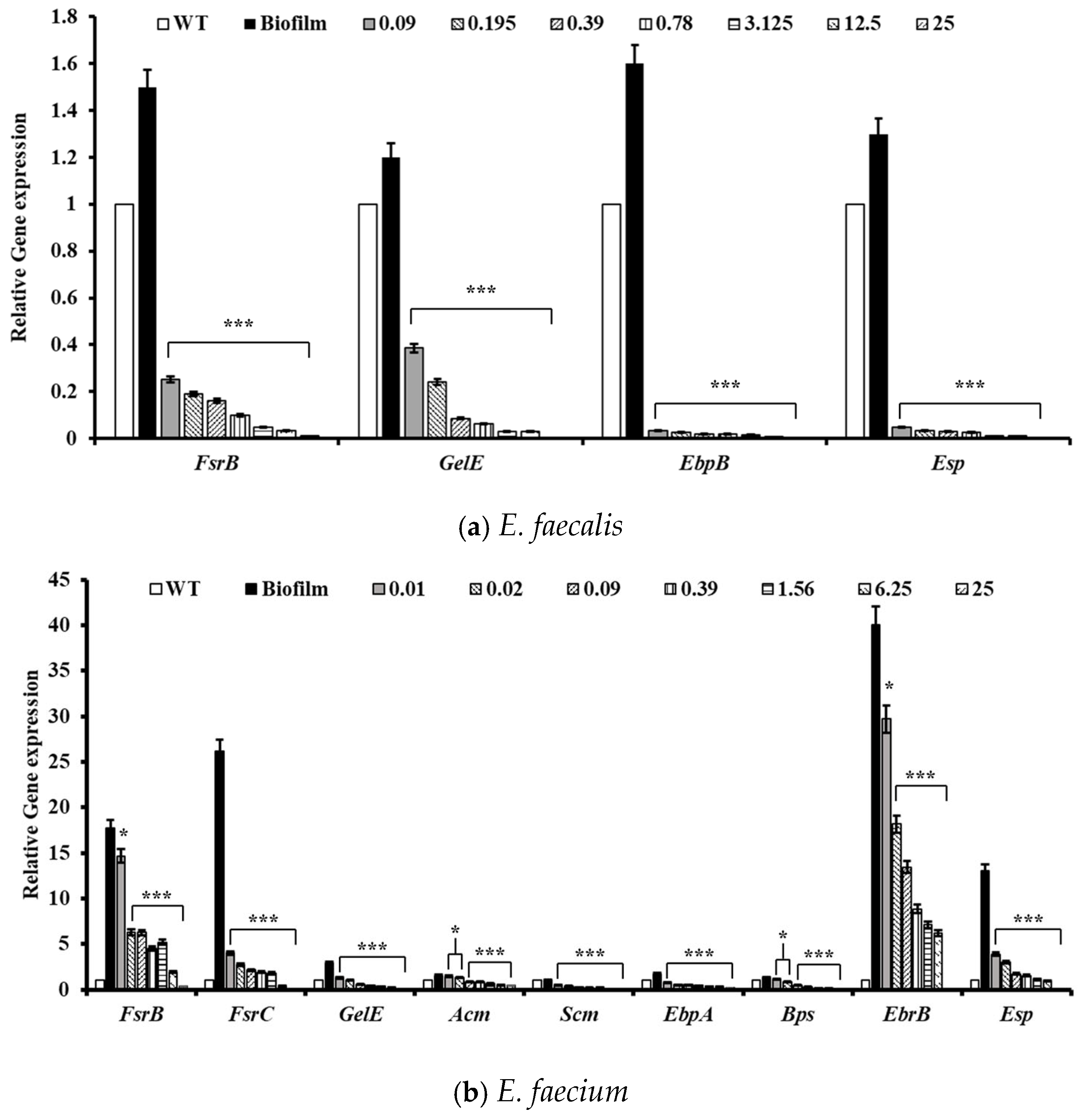
2.4. Gastrodin Suppressed the Expression of Biofilm Formation and Quorum Sensing-Related Genes in E. faecalis and E. faecium
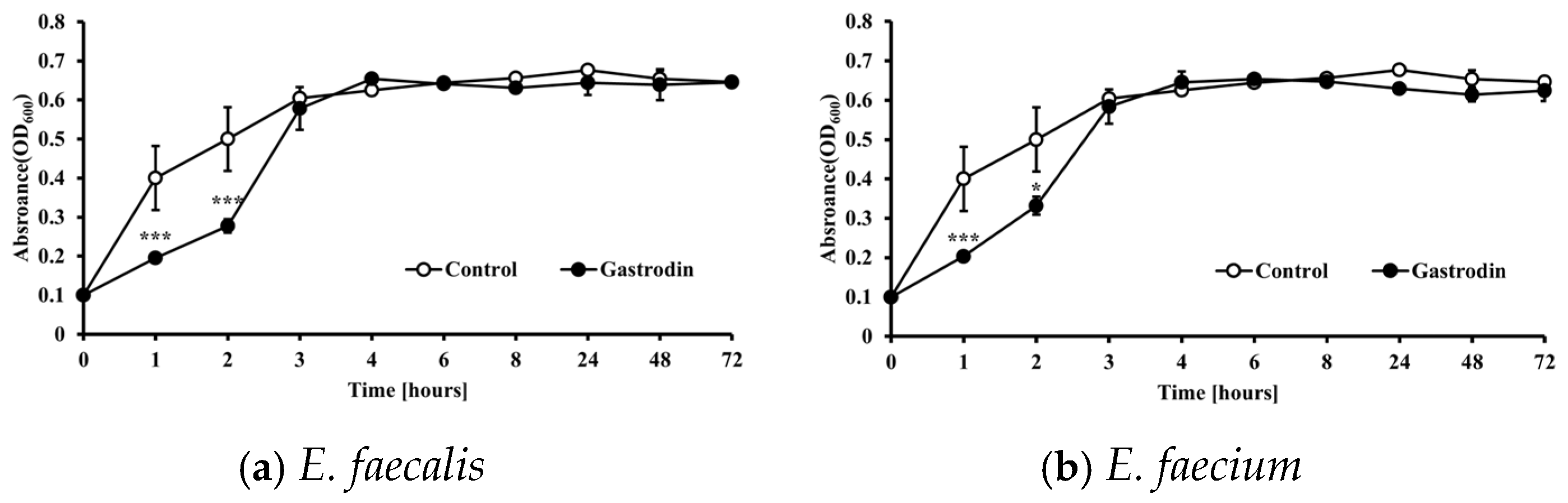
2.5. Gastrodin Did Not Inhibit Bacterial Growth
3. Discussion
4. Materials and Methods
4.1. Materials and Bacteria Used in This Study
4.2. Biofilm Formation Assay
4.3. Synergic Antibacterial Effect
4.4. MTT Assay for Human Cell Viability
4.5. Gene Expression Analysis
4.6. Bacterial Growth Assay
4.7. Statistical Analysis
5. Conclusions
Author Contributions
Funding
Data Availability Statement
Acknowledgments
Conflicts of Interest
Abbreviations
| qRT-PCR | Quantitative Reverse Transcription Polymerase Chain Reaction |
| IC50 | Half Maximal Inhibitory Concentration |
| Amp | Ampicillin |
| Oxy | Oxytetracycline |
| Van | Vancomycin |
| Stre | Streptomycin |
| Gas | Gastrodin |
| QS system | Quorum Sensing system |
| KACC | Korean Agricultural Culture Collection |
| CCARM | Culture Collection of Antimicrobial Resistant Microbes |
| KCTC | Korean Collection for Type Cultures |
| TSB | Tryptic soy broth |
| LB | Luria–Bertani Medium |
| BHI | Brain heart infusion |
References
- Ho, C.S.; Wong, C.T.H.; Aung, T.T.; Lakshminarayanan, R.; Mehta, J.S.; Rauz, S.; McNally, A.; Kintses, B.; Peacock, S.J.; de la Fuente-Nunez, C.; et al. Antimicrobial resistance: A concise update. Lancet Microbe 2025, 6, 100947. [Google Scholar] [CrossRef] [PubMed]
- Halawa, E.M.; Fadel, M.; Al-Rabia, M.W.; Behairy, A.; Nouh, N.A.; Abdo, M.; Olga, R.; Fericean, L.; Atwa, A.M.; El-Nablaway, M.; et al. Antibiotic action and resistance: Updated review of mechanisms, spread, influencing factors, and alternative approaches for combating resistance. Front. Pharmacol. 2023, 14, 1305294. [Google Scholar] [CrossRef] [PubMed]
- Urban-Chmiel, R.; Marek, A.; Stępień-Pyśniak, D.; Wieczorek, K.; Dec, M.; Nowaczek, A.; Osek, J. Antibiotic resistance in bacteria—A review. Antibiotics 2022, 11, 1079. [Google Scholar] [CrossRef] [PubMed]
- Rezzoagli, C.; Archetti, M.; Mignot, I.; Baumgartner, M.; Kümmerli, R. Combining antibiotics with antivirulence compounds can have synergistic effects and reverse selection for antibiotic resistance in Pseudomonas aeruginosa. PLoS Biol. 2020, 18, e3000805. [Google Scholar] [CrossRef] [PubMed]
- Dehbanipour, R.; Ghalavand, Z. Anti-virulence therapeutic strategies against bacterial infections: Recent advances. Germs 2022, 12, 262–275. [Google Scholar] [CrossRef] [PubMed]
- El-Halfawy, O.M.; Czarny, T.L.; Flannagan, R.S.; Day, J.; Bozelli, J.C., Jr.; Kuiack, R.C.; Salim, A.; Eckert, P.; Epand, R.M.; McGavin, M.J.; et al. Discovery of an antivirulence compound that reverses β-lactam resistance in MRSA. Nat. Chem. Biol. 2020, 16, 143–149. [Google Scholar] [CrossRef]
- Maurice, P.A. Microbial Biofilms. In Encyclopedia of Water; John Wiley & Sons, Inc.: Hoboken, NJ, USA, 2019; pp. 1–5. [Google Scholar] [CrossRef]
- Liu, H.Y.; Prentice, E.L.; Webber, M.A. Mechanisms of antimicrobial resistance in biofilms. npj Antimicrob. Resist. 2024, 2, 27. [Google Scholar] [CrossRef] [PubMed]
- Donlan, R.M. Biofilms and device-associated infections. Emerg. Infect. Dis. 2001, 7, 277–281. [Google Scholar] [CrossRef] [PubMed]
- Yuen, G.J.; Ausubel, F.M. Enterococcus infection biology: Lessons from invertebrate host models. J. Microbiol. 2014, 52, 200–210. [Google Scholar] [CrossRef] [PubMed]
- Vila, J.; Martínez, J.A. Opportunistic Infections in the Intensive Care Unit: A Microbiologic Overview. In Infectious Diseases in Critical Care; Springer: Berlin/Heidelberg, Germany, 2007; pp. 29–34. [Google Scholar] [CrossRef]
- Krawczyk, B.; Wityk, P.; Gałęcka, M.; Michalik, M. The many faces of Enterococcus spp.—Commensal, probiotic and opportunistic pathogen. Microorganisms 2021, 9, 1900. [Google Scholar] [CrossRef] [PubMed]
- Macià, M.D.; Oliver, A. Antibiotic Resistance Development in Bacterial Biofilms. In Antibiofilm Strategies; Springer: Berlin/Heidelberg, Germany, 2022; pp. 37–58. [Google Scholar] [CrossRef]
- Hamza Abbas, S.; Sehrish Kiani, H.; Gohar, F.; Zahra, S.; Javed, A.; Khan, S.; Khan, D. Understanding the Role of Bacterial Biofilm in Antibiotic Resistance: Defensive Strategies and Clinical Challenges. In Exploring Bacterial Biofilms; Intechopen: London, UK, 2025. [Google Scholar] [CrossRef]
- Bridier, A.; Piard, J.-C.; Pandin, C.; Labarthe, S.; Dubois-Brissonnet, F.; Briandet, R. Spatial Organization Plasticity as an Adaptive Driver of Surface Microbial Communities. Front. Microbiol. 2017, 8, 1364. [Google Scholar] [CrossRef] [PubMed]
- Stewart, P.S. Mechanisms of antibiotic resistance in bacterial biofilms. Int. J. Med. Microbiol. 2002, 292, 107–113. [Google Scholar] [CrossRef] [PubMed]
- Hall, C.W.; Mah, T.-F. Molecular mechanisms of biofilm-based antibiotic resistance and tolerance in pathogenic bacteria. FEMS Microbiol. Rev. 2017, 41, 276–301. [Google Scholar] [CrossRef] [PubMed]
- Rumbaugh, K.P.; Armstrong, A. The Role of Quorum Sensing in Biofilm Development. In Antibiofilm Agents; Springer: Berlin/Heidelberg, Germany, 2014; pp. 97–113. [Google Scholar] [CrossRef]
- Miller, M.B.; Bassler, B.L. Quorum sensing in bacteria. Annu. Rev. Microbiol. 2001, 55, 165–199. [Google Scholar] [CrossRef] [PubMed]
- Martínez, L.C.; Vadyvaloo, V. Mechanisms of post-transcriptional gene regulation in bacterial biofilms. Front. Cell. Infect. Microbiol. 2014, 4, 38. [Google Scholar] [CrossRef] [PubMed]
- Crabbé, A.; Jensen, P.Ø.; Bjarnsholt, T.; Coenye, T. Antimicrobial tolerance and metabolic adaptations in microbial biofilms. Trends Microbiol. 2019, 27, 850–863. [Google Scholar] [CrossRef] [PubMed]
- Xu, C.-B.; Guo, Q.-L.; Wang, Y.-N.; Lin, S.; Zhu, C.-G.; Shi, J.-G. Gastrodin derivatives from Gastrodia elata. Nat. Prod. Bioprospect. 2019, 9, 393–404. [Google Scholar] [CrossRef] [PubMed]
- Dai, Y.; Ban, W.; Yang, Z. Gastrodin, a promising natural small molecule for the treatment of central nervous system disorders, and its recent progress in synthesis, pharmacology and pharmacokinetics. Int. J. Mol. Sci. 2024, 25, 9540. [Google Scholar] [CrossRef] [PubMed]
- Xiao, G.; Tang, R.; Yang, N.; Chen, Y. Review on pharmacological effects of gastrodin. Arch. Pharm. Res. 2023, 46, 744–770. [Google Scholar] [CrossRef] [PubMed]
- Xin, C.; Cheng, Z.; Liu, W.; Li, W.; Zhu, H. The antibacterial and hemostatic activity of Gastrodia elata polysaccharide-based hydrogel embedded with drug-carrying microspheres accelerates diabetic wound healing. Chem. Eng. J. 2024, 492, 152403. [Google Scholar] [CrossRef]
- González-Cortazar, M.; López-Gayou, V.; Tortoriello, J.; Domínguez-Mendoza, B.E.; Ríos-Cortes, A.M.; Delgado-Macuil, R.; Hernández-Beteta, E.E.; Blé-González, E.A.; Zamilpa, A. Antimicrobial gastrodin derivatives isolated from Bacopa procumbens. Phytochem. Lett. 2019, 31, 33–38. [Google Scholar] [CrossRef]
- Tendolkar, P.M.; Baghdayan, A.S.; Gilmore, M.S.; Shankar, N. Enterococcal surface protein, Esp, enhances biofilm formation by Enterococcus faecalis. Infect. Immun. 2004, 72, 6032–6039. [Google Scholar] [CrossRef] [PubMed]
- Mohamad, F.; Alzahrani, R.R.; Alsaadi, A.; Alrfaei, B.M.; Yassin, A.E.B.; Alkhulaifi, M.M.; Halwani, M. An explorative review on advanced approaches to overcome bacterial resistance by curbing bacterial biofilm formation. Infect. Drug Resist. 2023, 16, 19–49. [Google Scholar] [CrossRef] [PubMed]
- Roy, R.; Tiwari, M.; Donelli, G.; Tiwari, V. Strategies for combating bacterial biofilms: A focus on anti-biofilm agents and their mechanisms of action. Virulence 2018, 9, 522–554. [Google Scholar] [CrossRef]
- Chen, Y.; Liu, T.; Wang, K.; Hou, C.; Cai, S.; Huang, Y.; Du, Z.; Huang, H.; Kong, J.; Chen, Y. Baicalein inhibits Staphylococcus aureus biofilm formation and the quorum sensing system in vitro. PLoS ONE 2016, 11, e0153469. [Google Scholar] [CrossRef] [PubMed]
- Arai, K.-I.; Yoshioka, K.; Mochimaru, Y.; Takahashi, Y.; Ota, T.; Sameshima, S. Inhibitory effects of myricetin derivatives on curli-dependent biofilm formation in Escherichia coli. Sci. Rep. 2018, 8, 8452. [Google Scholar] [CrossRef]
- Xu, J.; Jackson, S. Current considerations for the effective safety evaluation of drugs in vitro. Mini-Rev. Med. Chem. 2009, 9, 861–868. [Google Scholar] [CrossRef] [PubMed]
- Ong, T.H.; Chitra, E.; Ramamurthy, S.; Siddalingam, R.P.; Yuen, K.H.; Ambu, S.P.; Davamani, F. Chitosan-propolis nanoparticle formulation demonstrates anti-bacterial activity against Enterococcus faecalis biofilms. PLoS ONE 2017, 12, e0174888. [Google Scholar] [CrossRef] [PubMed]
- Lee, H.; Nguyen, A.-T.; Choi, H.; Kim, K.-Y.; Kim, H. Anti-cancer effects of 1,4-dialkoxynaphthalene-imidazolium salt derivatives through ERK5 kinase activity inhibition. Sci. Rep. 2025, 15, 13648. [Google Scholar] [CrossRef] [PubMed]
- Kim, M.; Kim, K.-Y. Wound healing effects of Asparagus lucidus extract through phosphorylation of ERK1/2. BMC Complement. Med. Ther. 2023, 23, 238. [Google Scholar] [CrossRef] [PubMed]
- Hashem, Y.A.; Amin, H.M.; Essam, T.M.; Yassin, A.S.; Aziz, R.K. Biofilm formation in Enterococci: Genotype-phenotype correlations and inhibition by vancomycin. Sci. Rep. 2017, 7, 5733. [Google Scholar] [CrossRef] [PubMed]
- Sillanpää, J.; Nallapareddy, S.R.; Singh, K.V.; Prakash, V.P.; Fothergill, T.; Ton-That, H.; Murray, B.E. Characterization of the ebpfm pilus-encoding operon of Enterococcus faecium and its role in biofilm formation and virulence in a murine model of urinary tract infection. Virulence 2010, 1, 236–246. [Google Scholar] [CrossRef] [PubMed]
- Shepard, B.D.; Gilmore, M.S. Differential expression of virulence-related genes in Enterococcus faecalis in response to biological cues in serum and urine. Infect. Immun. 2002, 70, 4344–4352. [Google Scholar] [CrossRef] [PubMed]
- Top, J.; Paganelli, F.L.; Zhang, X.; van Schaik, W.; Leavis, H.L.; van Luit-Asbroek, M.; van der Poll, T.; Leendertse, M.; Bonten, M.J.M.; Willems, R.J.L. The Enterococcus faecium enterococcal biofilm regulator, EbrB, regulates the esp operon and is implicated in biofilm formation and intestinal colonization. PLoS ONE 2013, 8, e65224. [Google Scholar] [CrossRef] [PubMed]
- Kim, D.; Kim, K.-Y. Pectolinarin inhibits the bacterial biofilm formation and thereby reduces bacterial pathogenicity. Antibiotics 2022, 11, 598. [Google Scholar] [CrossRef] [PubMed]

| Strain | Strain Number | Medium Used in This Study | Source |
|---|---|---|---|
| Enterococcus faecalis | CCARM5511 | TSB | Purchased from KACC (Korean Agricultural Culture Collection), CCARM (Culture Collection of Antimicrobial Resistant Microbes), or KCTC (Korean Collection for Type Cultures) |
| Enterococcus faecium | KACC11954 | TSB | |
| Escherichia coli | KACC11598 | LB | |
| Streptococcus mutans | KACC16833 | TSB | |
| Streptococcus sobrinus | CCARM3506 | BHI | |
| Staphylococcus aureus | KCTC5809 | TSB | |
| Pseudomonas aeruginosa | KACC14021 | LB | |
| Cutibacterium acnes | CCARM9009 | BHI | |
| Porphyromonas gingivalis | KCTC5352 | TSB |
| Genes | Primer Sequence: 5′ to 3′ | Function | Reference |
|---|---|---|---|
| For E. faecium | |||
| esp | F: CCACGAGTTAGAGGGAACAG R: TTGGAGCCCCATCTTTTTCA | Biofilm formation | [39] |
| bps | F: TATCAGCAACAAGCGGTCAA R: AATCCTGCCCTTTTTCGATT | Biofilm formation | [37] |
| fsrC | F: GCTTATTTGGAAGAACAACGTATCAA R: CGAAACATCGCTAGCTCTTCGT | Efae regulator | [38] |
| gelE | F: CGGAACATACTGCCGGTTTAGA R: TGGATTAGATGCCACCCGAAAT | Gelatinase | [38] |
| fsrB | F: TGCTCAAAAAGCAAAGCCTTATAA R: GATGACGAGACCGTAGAGTATTACTGAA | Efae regulator | [38] |
| ebpA | F: ACCAAGCCAGACGAAATAGAAGAAG R: ATTGTTTTGGTCAGGTGCATCATAGA | Biofilm-associated pili | [37] |
| acm | F: TCAGCAGTAATGTCACTTCGTTG R: GAATAGGCTGTTCATCTGCTCG | Gelatinase | [36] |
| scm | F: CTAACTGGTAACTATGGCTTGT R: GTCCGTGCTGTCACTTGT | Gelatinase | [36] |
| tufA | F: TACACGCCACTACGCTCAC R: AGCTCCGTCCATTTGAGCAG | Housekeeping gene | [39] |
| For E. faecalis | |||
| gelE | F: CGFAACATACTCAACGTTTGAC R: TGGATTAGATGCADDDGAAAT | Gelatinase | [33] |
| esp | F: GCATCAGTATTAGTTGGT R: TTCCTTGTAACACATCAC | Biofilm formation | [33] |
| fsrB | F: TGCYCAAAAAGCAAAGCCTTATAA R: GATGACGAGACCGTAGAGTATTACTGAA | Efae regulator | [33] |
| ebpB | F: CGTACAGGAGGCAAGTCTTT R: AGGTATTCCCCGCTTGATTT | Biofilm-associated pili | [33] |
| cylLS | F: CTGTTGCGGCGACAGCT R: CCACCAACCCAGCCACAA | Cytolysin toxin | [33] |
| cylR2 | F: TTTATTTTTATTGGATATCATTCTGTAGTC R: TTCGCTCATCTTTTTTGAATACAG | Cytolysin regulatory | [33] |
| cylM | F: TCGGACACGGTATATATAGCTATGT R: TTCTACTAGTGTACTTTGATTACCATAATAATT | Cytolysin toxin | [33] |
| 23s RNA gene | F: CCTATCGGCCTCGGCTTAG R: AGCGAAAGACAGGTGAGAATCC | Housekeeping gene | [33] |
Disclaimer/Publisher’s Note: The statements, opinions and data contained in all publications are solely those of the individual author(s) and contributor(s) and not of MDPI and/or the editor(s). MDPI and/or the editor(s) disclaim responsibility for any injury to people or property resulting from any ideas, methods, instructions or products referred to in the content. |
© 2026 by the authors. Licensee MDPI, Basel, Switzerland. This article is an open access article distributed under the terms and conditions of the Creative Commons Attribution (CC BY) license.
Share and Cite
Yoon, J.-H.; Kim, Y.-J.; Kim, K.-Y. Gastrodin Inhibits Bacterial Biofilm Formation, Thereby Activating the Antibacterial Activity of Antibiotics. Molecules 2026, 31, 2123. https://doi.org/10.3390/molecules31122123
Yoon J-H, Kim Y-J, Kim K-Y. Gastrodin Inhibits Bacterial Biofilm Formation, Thereby Activating the Antibacterial Activity of Antibiotics. Molecules. 2026; 31(12):2123. https://doi.org/10.3390/molecules31122123
Chicago/Turabian StyleYoon, Ji-Hyun, Yeo-Jin Kim, and Ki-Young Kim. 2026. "Gastrodin Inhibits Bacterial Biofilm Formation, Thereby Activating the Antibacterial Activity of Antibiotics" Molecules 31, no. 12: 2123. https://doi.org/10.3390/molecules31122123
APA StyleYoon, J.-H., Kim, Y.-J., & Kim, K.-Y. (2026). Gastrodin Inhibits Bacterial Biofilm Formation, Thereby Activating the Antibacterial Activity of Antibiotics. Molecules, 31(12), 2123. https://doi.org/10.3390/molecules31122123