Review

Nano-CaO2-Modified Biochar for Enhancing Thermophilic Anaerobic Digestion of Tofu Wastewater: A Review of Risk Mitigation and Resource Recovery Strategies


by
Xingzhong Zheng
1,
Ndungutse Jean Maurice
2,*,
Halima Niyilolawa Giwa
3 and
Abdulmoseen Segun Giwa
4,*
1
School of Economics and Management, China University of Geosciences, Wuhan 430074, China
2
College of Resources and Environment, Southwest University, Chongqing 400716, China
3
Department of Biochemistry, College of Natural and Applied Sciences, Oduduwa University Ipetumodu, Ile Ife P.M.B. 5533, Nigeria
4
School of Civil and Environmental Engineering, Nanchang Institute of Science and Technology, Nanchang 330108, China
*
Authors to whom correspondence should be addressed.
Molecules 2026, 31(11), 1882; https://doi.org/10.3390/molecules31111882
Submission received: 14 March 2026 / Revised: 25 May 2026 / Accepted: 26 May 2026 / Published: 31 May 2026

Abstract

Tofu wastewater (TWW), characterized as a high-strength organic effluent with elevated chemical oxygen demand (COD) and low pH, presents significant environmental challenges, including eutrophication, soil degradation, and greenhouse gas emissions. Conventional disposal methods have proven inadequate in mitigating these risks; however, thermophilic anaerobic digestion (TAD) has emerged as a viable technology for bioenergy recovery. Nonetheless, TAD is impeded by rapid acidification, ammonia and hydrogen sulfide inhibition, and the accumulation of volatile fatty acids (VFAs). This review introduces nano-calcium-peroxide-modified biochar (nano-CaO2/BC) as a multifunctional additive designed to establish an integrated framework for intervention, risk mitigation, and resource recovery. The proposed amendment synergistically combines the adsorptive and microbial-supportive properties of biochar with the controlled oxidative and alkaline characteristics of nano-CaO2. Under thermophilic conditions, the slow hydrolysis of nano-CaO2 generates transient microaerobic zones that enhance polymer hydrolysis, suppress ammonia (NH3) and hydrogen sulfide (H2S) formation, and facilitate the oxidation of inhibitory VFAs, concurrently releasing calcium hydroxide (Ca(OH)2) for sustained pH buffering. Utilizing failure mode and effects analysis (FMEA) as a semi-quantitative assessment tool, the results indicate that the composite significantly reduces risk priority numbers associated with acidification, ammonia toxicity, and sulfide inhibition when compared with conventional TAD methods. The resultant digestates, which are enriched in nutrients and recalcitrant carbon, possess the potential to serve as valuable soil amendments, thereby contributing to a circular bioeconomy. A techno-economic assessment grounded in unit cost analysis suggests that positive net benefits may be realized through enhanced biogas recovery and the mitigation of environmental penalties. However, empirical validation at the pilot scale is essential to substantiate the projected performance. This review underscores critical knowledge gaps and proposes a systematic experimental framework aimed at translating the conceptual risk mitigation strategy into practical applications.

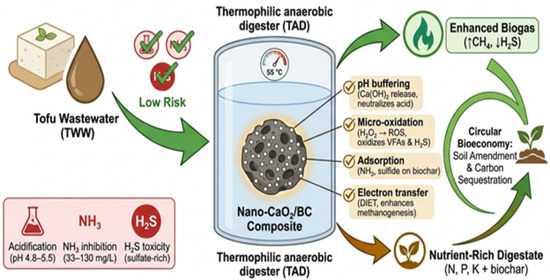
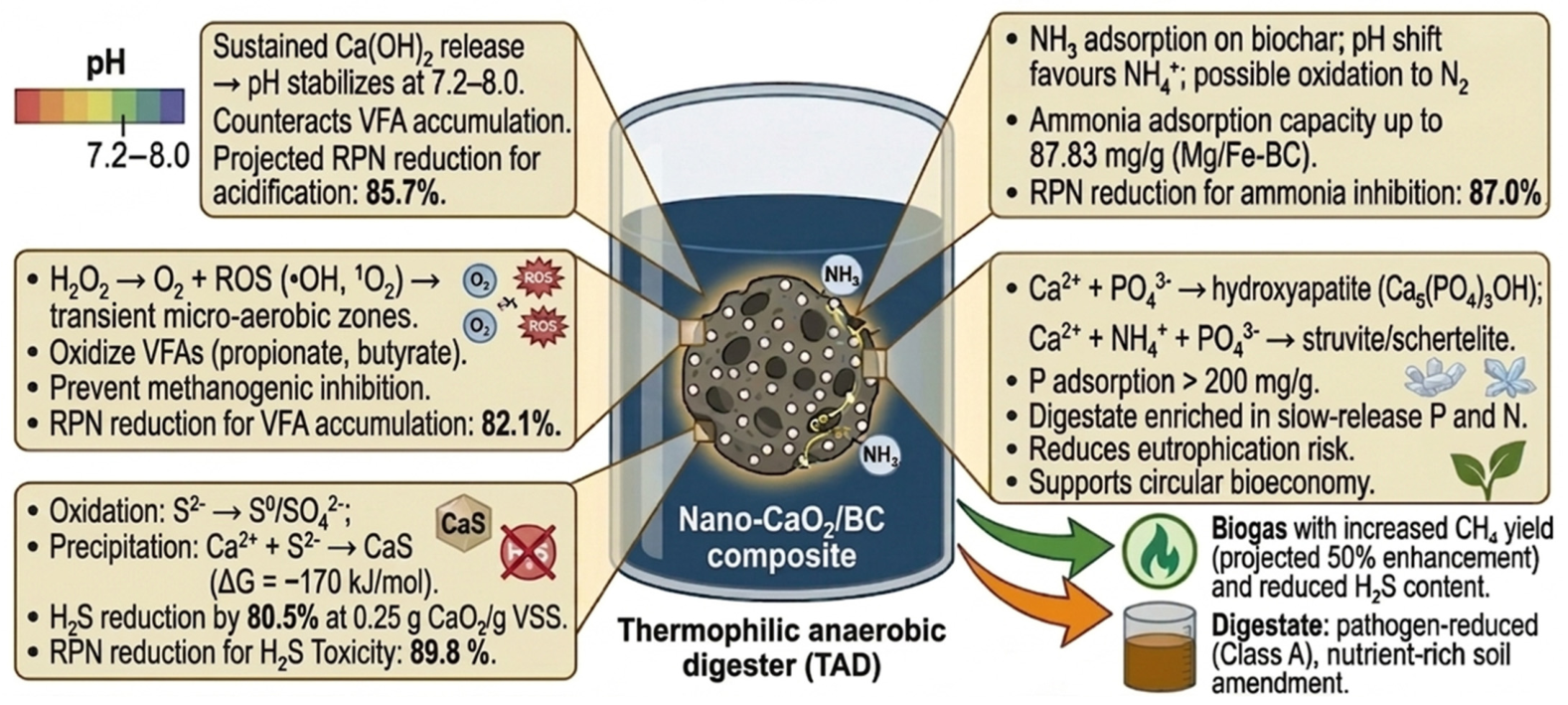
Graphical Abstract

1. Introduction

The global tofu industry, particularly in East and Southeast Asia, generates substantial environmental burdens through tofu wastewater (TWW). TWW is characterized by elevated biochemical oxygen demand (BOD) and chemical oxygen demand (COD), acidic pH, high suspended solids, significant nitrogen and phosphorus loads, and soluble carbohydrates leached during coagulation [1,2,3,4]. From a risk-governance perspective, TWW embodies multiple overlapping hazards: pollution-diffusion risks (water and soil contamination from high COD and acidity), process-failure risks (biological treatment collapse due to acidification, sNH3, and H2S inhibition), and resource-waste risks (foregone energy recovery from labile organics) [5]. Market projections indicate that the global tofu industry will grow from USD 3.94 billion in 2025 to USD 7.07 billion in 2032, with China dominating both consumption and production [6]. Wastewater generation approximates 7–10 L per kg of tofu produced; Indonesian data show that 84,000 factories processing 2.56 million tons of soybeans annually collectively generate approximately 2.0 × 10⁷ m3 of TWW [3]. Extrapolating to China’s 972 tofu enterprises yields an estimated annual TWW generation of 1.944 × 10¹⁰ m3. According to Feng et al. [1] conventional disposal methods such as landfilling, composting, and direct discharge remain fundamentally inadequate, causing rapid dissolved oxygen depletion, eutrophication, soil acidification, and uncontrolled greenhouse gas emissions—all unmanaged pollution-diffusion pathways [7].
Thermophilic anaerobic digestion (TAD, 50–60 °C) offers enhanced kinetics, pathogen destruction, and volumetric biogas productivity [8]. However, TAD of TWW exhibits heightened sensitivity to environmental perturbations; accelerated acidogenesis combined with high organic loads induces rapid VFA accumulation and pH depression, thereby severely inhibiting methanogenic archaea [9]. This constitutes a high-probability, high-impact process-failure risk. It must be emphasized that no direct experimental studies on TAD of TWW currently exist in the literature; therefore, performance insights are extrapolated from analogous high-strength substrates (e.g., blackwater, food waste, sewage sludge). Elevated nitrogen content further generates free ammonia nitrogen (NH3-N) at concentrations toxic to methanogens, compounding instability [4,10]. Quantitative evidence from comparative anaerobic digestion (AD) studies shows that tofu liquid waste yields 93.00 mL biogas/g COD versus 143.99 mL/g COD for tapioca-flour liquid waste, a 35.41% reduction attributable to TWW’s inherent inhibitory characteristics [11]. Process intensification through catalytic additives represents a strategic approach to overcoming thermodynamic and kinetic limitations. Biochar, produced via biomass pyrolysis, enhances AD through a high specific surface area, porosity, and adsorption capacity [12]. However, pristine biochar exhibits limited efficacy under thermophilic conditions, where enhanced mass transfer and intensified inhibition necessitate robust intervention. Nano-CaO2/BC substantially improves physicochemical properties, yielding increased surface area, porosity, alkaline functional groups, and buffering capacity that are advantageous under elevated-temperature operation [13,14].
Nano-CaO2/BC enables an integrated management framework of technical intervention, risk control, and resource recycling through multiple mechanisms: (i) controlled hydrolysis generating Ca(OH)2 and H2O2, with subsequent H2O2 decomposition providing sustained micro-aeration that maintains thermophilic kinetics while oxidizing recalcitrant compounds [15,16]; (ii) robust pH buffering from Ca(OH)2 counteracting accelerated acidogenesis [17]; (iii) adsorption of inhibitory NH3-N, H2S, and VFAs within the porous carbon matrix, reducing bioavailable concentrations below toxicity thresholds [18,19]; and (iv) biofilm-carrier functionality supporting syntrophic bacteria and methanogenic consortia adapted to elevated temperatures [20]. These synergistic mechanisms collectively address identified risk dimensions, achieving enhanced process stability, organic removal efficiency, and biogas yield while establishing a circular bioeconomy model wherein waste is valorized to renewable energy and nutrient-rich agricultural digestate [21,22]. This review systematically examines nano-CaO2/BC synthesis, physicochemical characterization, and its multifunctional role in revolutionizing TWW management through risk control and resource recovery optimization.

Literature Search Approach

Data were collected from the relevant literature using major scientific databases, including Scopus, Web of Science, and Google Scholar. The keywords included combinations of “tofu wastewater,” “anaerobic digestion,” “biochar,” “calcium peroxide,” “nanomaterials in wastewater treatment,” and “risk assessment in anaerobic digestion,” using Boolean operators (AND, OR). Articles were screened for relevance regarding anaerobic digestion performance, inhibition control, risk mitigation strategies, and resource recovery mechanisms. The search prioritized recent peer-reviewed articles that are pertinent to the multidisciplinary scope of the work. This review does not claim to be a PRISMA-compliant systematic review; rather, it is a targeted, hypothesis-driven critical review that synthesizes fragmented literature to propose a novel risk-management framework for an understudied wastewater stream. The non-systematic approach aligns with the PRISMA 2020 statement [23], which provides guidelines for systematic reviews but is not applicable here given the exploratory and hypothesis-generating nature of the work.

2. Interdisciplinary Theories of Risk Management and Environmental Engineering

2.1. Core Theory Integration for TWW Treatment

The application of nano-CaO2/BC for TAD of TWW requires an interdisciplinary framework integrating risk-management science with environmental engineering principles. Three complementary theories establish the foundation: Risk Matrix Theory for hazard prioritization, whole-process Risk Management Theory for systematic control, and Risk–Benefit Synergy Theory under circular economy principles for value optimization [24,25,26]. In this review, risk is formally defined as the product of the probability of an undesirable event and the magnitude of its consequences on environmental, operational, and economic outcomes. Risk assessment integrates four components: (i) hazard identification through physicochemical characterization of TWW, (ii) probability assessment using kinetic and thermodynamic analysis, (iii) consequence assessment via performance metrics such as methane yield reduction and environmental impact, and (iv) risk characterization through semi-quantitative failure mode and effects analysis (FMEA). Risk Matrix Theory classifies TWW treatment hazards along probability and impact dimensions [24]. Under thermophilic conditions, process failure via acidification constitutes a high-probability, high-impact risk: accelerated hydrolysis of TWW’s soluble carbohydrates can overwhelm methanogenic capacity within hours, causing VFA accumulation, catastrophic pH depression, and irreversible archaeal inhibition [5,11]. Equipment corrosion from biogenic H2S represents a medium-probability, high-impact risk; thermophilic operation increases sulfate-reduction rates and H2S volatility, potentially reducing metallic infrastructure lifespan by 30–50% [19]. Ammonia inhibition represents a medium-probability, medium-impact risk: TWW total nitrogen combined with elevated temperature shifts the NH3/NH4+ equilibrium toward toxic unionized ammonia, reducing methane yields without complete process failure [10]. Pathogen survival in digestate constitutes a low-probability, medium-impact risk; thermophilic retention >10 days typically achieves Class A biosolids standards, though temperature fluctuations warrant monitoring [8].
Whole-process Risk Management Theory segments TWW treatment into discrete control nodes with corresponding objectives [25]. The generation node addresses wastewater variability [2,4], requiring characterization and homogenization. The preprocessing node targets feed conditioning (solids management, pH adjustment, and temperature equilibration) to prevent cold shock and hydrodynamic perturbations. The TAD reaction node represents the critical control point: maintaining pH 7.2–8.0, VFA < 2000 mg/L (acetic acid equivalents), free NH3 < 100 mg/L, and H2S mitigation to prevent microbial inhibition and infrastructure corrosion [8]. The digestate utilization node balances pathogen control, nutrient runoff prevention, and soil improvement value [27]. Risk–Benefit Synergy Theory under circular economy principles posits synchronous optimization of risk control and resource recovery, transforming mitigation expenditures into value-generating investments [26]. Enhanced carbonaceous COD removal and effluent stabilization directly correlate with biogas generation (0.98 L CH4/g C removed), where risk reduction yields energy revenue [5]. Process stabilization via pH buffering and inhibitor removal maximizes productivity, while nutrient-rich digestate suitable for agricultural application replaces synthetic fertilizers and improves soil health [19,28]. This coupling fundamentally repositions TWW treatment from a cost-center to a profit-generating activity.

2.2. Risk Identification Framework for TWW Treatment

A systematic risk-identification framework for TAD of TWW must catalog three overlapping hazard categories: pollution-diffusion risks, process-failure risks, and resource-waste risks. This framework establishes the foundation for targeted intervention design. Pollution-diffusion risks encompass environmental receptor damage from uncontrolled TWW discharge. Water-pollution risk scales directly with COD concentration; TWW exhibiting 4017–8500 mg COD/L [2,4], represents an oxygen demand equivalent to 3–4 kg O2/m3, sufficient to deoxygenate 300–400 m3 of receiving water per m3 discharged under typical stream reaeration. Nutrient loads (total N 591.8 ± 238.2 mg/L; P 2.56–95.50 mg/L) trigger eutrophication and cyanotoxin production [1,4,7]. Soil-pollution risk manifests through progressive acidification from raw TWW pH (4.82–5.50) [4] and mobilizes phytotoxic Al and Mn while reducing P and base cation availability [7]. Sodium accumulation degrades soil structure, reducing infiltration and promoting surface crusting [29]. Excessive organic loading induces anaerobic soil conditions, promoting denitrification and greenhouse gas emissions. Process-failure risks represent operational hazards specific to TAD of TWW. Rapid acidification risk arises from kinetic mismatch between acidogenic and methanogenic consortia under thermophilic conditions [5]. Soluble carbohydrates (stachyose, raffinose, sucrose) undergo fermentation by acidogens with generation times of hours, producing VFAs that accumulate faster than methanogenic archaea (generation times of days) can consume them [11]. This creates a positive feedback loop: VFA accumulation depresses pH, inhibiting methanogens more severely than acidogens [30]. Thermophilic operation intensifies this risk because hydrolysis and acidification rates increase more sharply with temperature than methanogenic rates, widening the kinetic gap [31].
The NH3 inhibition risk derives from protein deamination. At thermophilic temperatures, the NH3/NH4+ equilibrium shifts toward unionized NH3, which diffuses across cell membranes, disrupting proton gradients and intracellular pH [10]. Acetoclastic methanogens exhibit inhibition thresholds of 50–100 mg NH3-N/L under thermophilic conditions versus 150–300 mg/L mesophilically [32]. Hydrogen sulfide toxicity risk manifests through sulfate oxidases, denatures proteins, and partitions into the gas phase, corroding metallic infrastructure while reducing biogas CH 4 content [19]. Thermophilic conditions increase both sulfate-reduction rates and H2S toxicity. Resource-waste risks represent foregone circular-economy opportunities. Energy-recovery waste: TWW COD represents a potential methane production of 0.35–0.50 m3 CH4/kg COD degraded [11,33]. For a typical facility processing 30 metric tons soybeans annually generating 2.0 × 10⁷ m3 TWW, foregone energy equals approximately 7.0 × 10⁶ m3 CH4 annually, sufficient for 10,000–15,000 households [5]. Nutrient-recovery waste: total N (591.8 mg/L) and P (2.56–95.50 mg/L) [1,4] discharge represents phosphorus losses of 0.5–2.0 kg P per ton TWW, which is significant given global phosphate-rock depletion [28]. Water-recovery waste accompanies these losses, as treatable volumes suitable for reuse are discharged without recovery in water-stressed regions where many facilities operate [3,6]. This framework establishes TAD of TWW as a multi-risk management problem requiring integrated solutions.

3. Thermophilic Anaerobic Digestion of Tofu Wastewater: Process Fundamentals and Risk Characterization

3.1. Physicochemical Properties of Tofu Wastewater as Risk Determinants

TWW exhibits a variable yet consistently high organic load, dictating both energy-recovery potential and process-failure risks in thermophilic TAD [2,4,10]. Its composition—predominantly soluble carbohydrates (stachyose, raffinose, sucrose), proteins, and minor lipids, coupled with a BOD:COD ratio >0.5—confirms exceptional biodegradability but inherent acidification susceptibility [2,5,11]. Thermophilic anaerobic digestion conditions accelerate the hydrolysis of readily biodegradable substrates, driving rapid VFA production [31]. This intensifies a critical kinetic imbalance between fast acidogenesis and slow methanogenesis in which VFA accumulation exceeds consumption, depressing pH, and inhibiting acetoclastic archaea [5]. Sintawardani et al. [9] noted that soluble fermentable oligosaccharides are the primary acidification drivers, rendering TWW mono-digestion intrinsically high-risk without engineered pH buffering and microbial stabilization. Table 1 presents physicochemical characteristics of TWW from different soybeans.
The compositional variability of TWW, quantified across soybean varieties by Hardyanti et al. [2], establishes feedstock-driven parameters that critically influence process stability in TAD. TSS ranges from 218 to 444 mg/L, a twofold variation affecting solids loading and reactor hydrodynamics. COD ranges from 4017 to 4583 mg/L (14% variation), cumulatively impacting organic loading rate stability in continuous systems [5]. BOD exhibited a more pronounced range of 2255–3481 mg/L (54% variation), reflecting differences in the biodegradable fraction that directly govern methane potential [11]. NH3-N demonstrates the most substantial variability: 8.61–13.86 mg/L (61% range). Notably, samples from Wonogiri soybeans show elevated nitrogen content, increasing ammonia inhibition risk under TAD via the temperature-dependent NH3/NH4+ equilibrium shift toward toxic unionized ammonia [10,17]. The Wonogiri variety simultaneously exhibited maximal TSS, COD, BOD, and NH3-N concentrations [2], confirming soybean selection as a primary determinant of wastewater risk profiles. This aligns with Feng et al. [1], who characterized concentrated TWW at a mean COD of 21,894 ± 11,485 mg/L, total nitrogen of 591.8 ± 238.2 mg/L, and a C/N ratio of 36.9 ± 7.4. While this elevated C/N ratio, combined with readily biodegradable sugars and proteins, provides a favorable methanogenic substrate, it simultaneously creates kinetic imbalance risks as previously identified [34]. Such feedstock-driven variability establishes a risk-management imperative: systems designed for mean feed characteristics must incorporate robust buffering capacity and inhibitor management to accommodate compositional extremes and prevent cumulative destabilization. Different properties of TWW from tofu processing facilities are shown in Table 2.
Table 2 presents data from Faisal et al. [4], quantifying facilities-level TWW variability, revealing processing-driven compositional extremes that amplify TAD risks. pH ranges from 4.82 to 5.50, consistently acidic, favoring acidogenic bacteria over methanogens from the outset and necessitating active buffering intervention [4,9]. MLSS varied dramatically (1050–3130 mg/L; 198% range), reflecting differential solids retention during processing. COD exhibited 5000–8500 mg/L (70% variation), directly impacting organic loading rate calculations and biogas potential [5]. NH3-N demonstrates extreme variation: 33.50–129.30 mg/L (286% range), with the Tahu Sumedang facility concentrations approaching inhibitory thresholds prior to thermophilic concentration effects [10]. Phosphate (PO4-P) varies from 0.97 to 95.50 mg/L (98-fold range), reflecting coagulant use and phosphorus management practices that affect both nutrient recovery potential and struvite precipitation risk in reactor infrastructure [28]. Turbidity ranged between 387 and 921 NTU, indicating substantial suspended solids content affecting reactor hydrodynamics and mass transfer [4]. Thus, TWW is thermodynamically predisposed toward TAD, while simultaneously presenting intensified process risks that require robust intervention strategies.

3.2. Thermophilic Anaerobic Digestion Process: Mechanisms and Risk Amplification

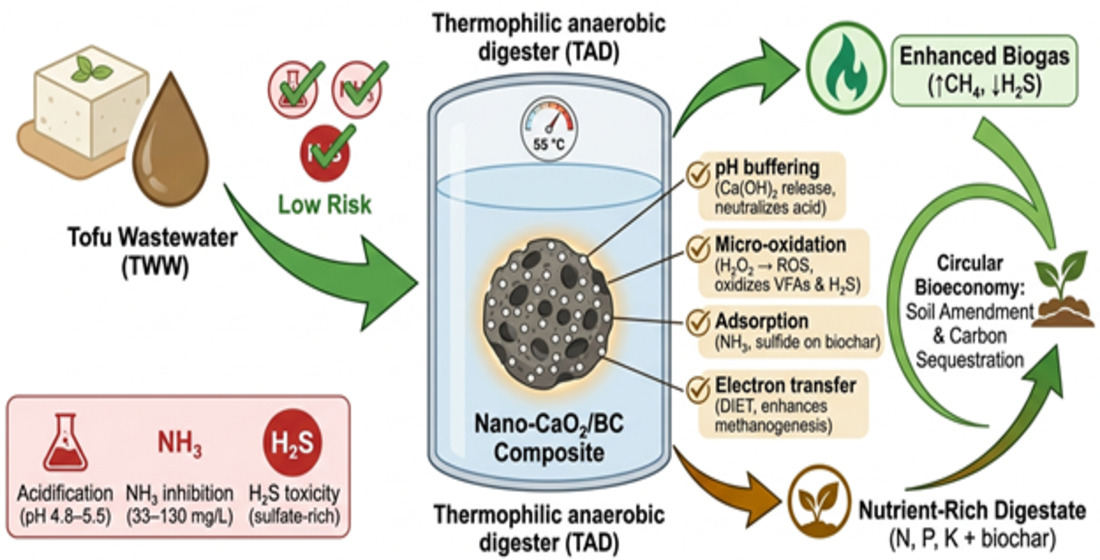
TAD is thermodynamically aligned with TWW treatment, transforming high-strength organic pollutants into biogas and nutrient-rich digestate [8,31]. Moerland et al. [27] reported that TAD offers higher maximum specific growth rates for hydrolytic and acidogenic bacteria than for hyper-thermophilic or mesophilic conditions, accelerating hydrolysis of particulate organics and enabling shorter hydraulic retention times with reduced reactor volumes [8]. Superior pathogen destruction produces digestate meeting high biosolids standards, expanding agricultural utilization pathways [35]. Given the absence of direct studies on the TAD of TWW, this analysis extrapolates treatment efficacy by examining TAD performance on substrates with analogous physicochemical characteristics: high-strength blackwater (COD > 15,000 mg/L, high protein content, C/N ratio 30–40) and sewage sludge (high organic solids, complex microbial communities) [27,36]. Although these substrates differ from TWW in certain details, their similar challenges with ammonia inhibition, VFA accumulation, and the need for efficient syntrophic metabolism make them the most relevant available comparators. Zhang et al. [36] demonstrated that in a thermophilic upflow anaerobic sludge blanket reactor treating blackwater, the cessation of effluent recirculation significantly enhanced performance. Without recirculation, methanogenesis efficiency increased from 45.0 ± 2.9% to 56.7 ± 5.5%, while COD accumulation within the reactor dropped sharply from 17.2% to 3.8%. This improvement was linked to reduced VFA in the effluent (from 0.64 ± 0.18 to 0.15 ± 0.10 g/L) and a pronounced microbial community shift, in which Methanosarcina became dominant over Methanothermobacter. This transition facilitated syntrophic acetate oxidation and hydrogenotrophic methanogenesis, suggesting that minimizing hydraulic mixing fosters closer syntrophic cooperation essential for processing protein- and lipid-rich waste [36]. Figure 1 shows TAD of TWW.
Further supporting the applicability of TAD to high-strength waste, Moerland et al. [27] achieved 70% COD removal and 62% methanization during TAD of concentrated blackwater at a high organic loading rate (OLR) of >3 kg COD/m3/day with an 8.7-day retention time. Notably, the process exhibited a rapid 12-day start-up and a metabolic shift toward syntrophic acetate oxidation, a pathway often prevalent under TAD when acetoclastic methanogenesis is inhibited by ammonia or VFA, which are common in proteinaceous waste like tofu effluent [11]. In addition to organic conversion, TAD offers a critical advantage in pathogen inactivation, which is a key consideration for safe resource recovery. Al-Sulaimi et al. [37] reported a 51.43% inactivation efficiency of viable helminth ova (predominantly Ascaris) in sewage sludge over 60 days of TAD, alongside 34% COD removal. Seruga et al. [35] further demonstrated the rapid elimination of pathogens during TAD, with Salmonella Senftenberg W775 inactivated within 6.06 h and Ascaris suum eggs within approximately 10 h. Their full-scale validation in a Kompogas® reactor confirmed process stability, maintaining a pH of 8.5 and total solids of 35%, which contributed to the consistent hygienization of the digestate. Collectively, these findings indicate that TAD not only achieves robust COD reduction and methane production from high-solid wastes but also ensures substantial pathogen destruction. This dual functionality makes TAD a technically viable and promising strategy for treating challenging agro-industrial effluents like TWW, meriting direct investigation.
In contrast, the TAD of TWW is intensified by the decomposition of acetoclastic methanogens at thresholds of 50–100 mg NH3 [10,17]. Rapid acidogenesis of soluble sugars under TAD accelerates VFA overproduction, thereby widening the kinetic imbalance between acidogenesis and methanogenesis [5,9]. VFA accumulation depresses pH below methanogenic optima, creating positive feedback inhibition [36,38]. Sulfate-reducing bacteria outcompete methanogens for electrons, generating H2S that inhibits cytochrome oxidases, denatures proteins, corrodes infrastructure, and reduces biogas methane content [19,39]. Raw TWW acidity (pH 4.82–5.50) favors acidogens over methanogens from the start of the process [4]. Syaichurrozi et al. [11] quantified the process-failure risk via comparative anaerobic digestion: optimal co-digestion of tofu liquid waste (TLW) and tapioca-flour liquid waste (50:50 v/v, pH 7) yielded 341.13 mL biogas/g COD added, 48.1% methane, and 55% COD removal. TLW mono-digestion produced only 93.00 mL/g COD, a 35.41% reduction versus tapioca-flour liquid waste mono-digestion (143.99 mL/g COD), attributed to rapid acidification and NH3 accumulation inherent to TWW composition [11]. Under thermophilic conditions, differential temperature sensitivities and kinetic parameters create rate imbalances: accelerated acidogenesis of soluble carbohydrates overwhelms slower acetogenesis and methanogenesis, thereby inducing VFA accumulation, pH depression, and methanogenic inhibition. This high-probability, high-impact acidification failure mode characterizes TAD of TWW.

4. Assessment of Biochar as a Risk-Control Substrate

4.1. Physicochemical Properties of Biochar: Foundations for Risk Mitigation

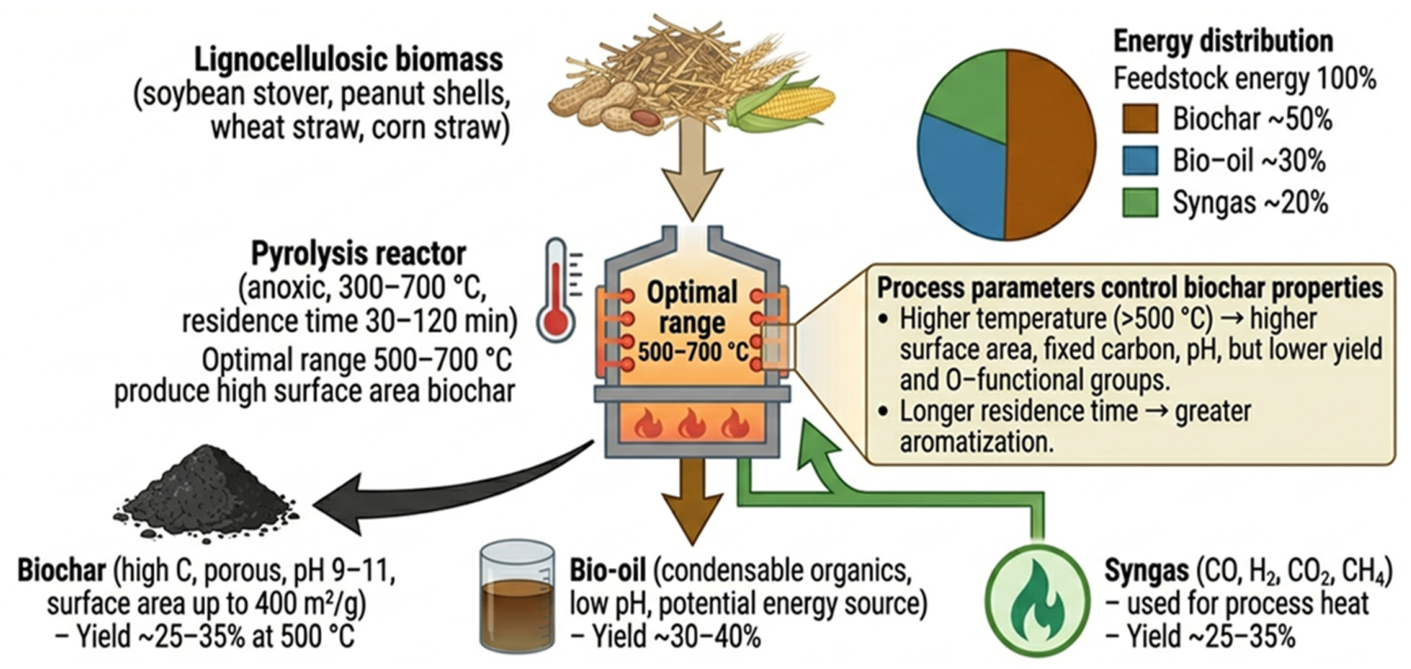
Biochar is a porous, carbon-rich solid produced through pyrolysis, which is the thermal decomposition of organic and inorganic materials in the absence of oxygen at temperatures between 300 and 700 °C [18,40]. This process differs from torrefaction, which occurs at lower temperatures (200–300 °C) and mainly improves fuel properties [41]. Pyrolysis drives the depolymerization, dehydration, and aromatization of biopolymers, yielding solid biochar, condensable bio-oil, and non-condensable syngas [42]. Biochar’s physicochemical properties are governed by pyrolysis parameters, enabling optimization for specific TAD risk-control applications [18]. Feedstock selection is foundational: lignocellulosic biomass yields high-porosity structures supporting microbial colonization and adsorption, while manure-based feedstocks produce ash-rich biochars with elevated pH and nutrient content advantageous for acid buffering [43]. In addition, the pyrolysis temperature exerts dominant control over material properties. Higher temperatures (>500 °C) drive heteroatom volatilization, enriching fixed carbon and developing condensed polycyclic aromatic structures with enhanced biological stability and persistence in anaerobic digesters [40]. Thermal restructuring creates extensive microporous networks, increasing the specific surface area, which often exceeds 400 m2/g, thereby enhancing the adsorption capacity for inhibitory compounds and mitigating toxicity risks [18]. Lower temperatures (<400 °C) preserve aliphatic compounds and oxygen-containing functional groups, yielding higher cation exchange capacity (CEC) but reduced structural stability [40]. For TAD applications, the trade-off between surface functionality (optimal at intermediate temperatures) and structural stability (optimal at high temperatures) requires calibration to dominant risk profiles. Residence time governs carbonization completeness; extended durations facilitate aromatic cluster growth and pore-structure development, optimizing surface area and pore volume [42]. Gai et al. [18], identified 500 °C as optimal for maximizing CEC across tested biochars, with values declining at higher temperatures. Feedstock, peak temperature, and residence time thus synergistically tailor biochar surface functionality, CEC, pH, and adsorption affinity for process-failure risks in TAD. The application of biochar in AD has been comprehensively reviewed, highlighting its role in DIET, adsorption, and microbial support [44]. The production of biochar via the pyrolysis of biomass is illustrated in Figure 2.
Table 3 presents the physicochemical properties of biochar from different feedstocks and pyrolysis temperatures, revealing systematic relationships critical for TAD applications. At 700 °C, peanut-shell biochar achieves the highest surface area (448.20 m2/g) and pore volume (0.20 cm3/g), while soybean-stover biochar at the same temperature achieves 420.30 m2/g with a slightly lower pore volume (0.19 cm3/g). These high-surface-area biochars produced at elevated temperatures demonstrate pH values exceeding 10.5, providing substantial alkaline buffering capacity [40]. In contrast, biochars produced at 300–400 °C exhibited surface areas of only 3–10 m2/g but retained higher oxygen content (21–26%) and CEC, which is advantageous for nutrient retention. The elemental composition trends revealed decreasing O/C and H/C ratios with increasing pyrolysis temperature, indicating progressive aromatization and the formation of condensed carbon structures resistant to microbial degradation in the digester environment [18]. For thermophilic TAD applications, biochars produced at 600–700 °C from lignocellulosic feedstocks (peanut shells, soybean stover) appeared most suitable because of their combination of high surface area for inhibitor adsorption, elevated pH for acid buffering, and structural stability under elevated temperatures and mechanical stress conditions [40,42]. Wheat-straw biochar at 700 °C (107 m2/g, pH 9.20) and corn-straw biochar at 600 °C (7 m2/g, pH 10.40) demonstrate that feedstock selection significantly influences the trade-off between surface-area development and alkaline functional group retention [18]. Table 3 shows the physicochemical characteristics of biochar from different feedstocks.
Furthermore, strategic modification of biochar is critical for addressing the multifactorial risk profile of TAD of TWW. Engineered biochars modified through chemical, physical, or biological methods enhance inherent properties and introduce targeted functionalities that are absent in pristine materials [45,46,47]. For TAD risk control, modifications that enhance ammonia adsorption, provide alkaline buffering, or introduce oxidative capacity are particularly relevant. Li et al. [45] reported that magnesium–iron co-modified biochar (Mg/Fe-BC) achieved an NH3-N adsorption capacity of 87.83 mg/g, substantially exceeding Mg-BC (26.77 mg/g) and Fe-BC (14.57 mg/g). Addition of 5% Mg/Fe-BC to biogas slurry removed 38.57% of NH4+-N, directly mitigating ammonia inhibition risk. In chicken-manure anaerobic digestion, 2–5% Mg/Fe-BC doses increased cumulative methane production by 116–229%, stabilizing system parameters and enriching key methanogens [45]. Chiang et al. [46] reported calcium-oxide-modified biochar-enhanced alkalinity, nutrient retention, and adsorption capacity in vacuum-blackwater anaerobic digestion, fostering favorable microbial environments and improving biogas production while addressing multiple process-failure risks simultaneously. Zhang et al. [47] found that Fe3O4-BC (3.0 g/L) in erythromycin-wastewater anaerobic digestion achieved a maximum methane yield of 327.7 mL/g COD—a 55.7% increase versus controls. Strategic modification thus enables targeted risk control for thermophilic TWW treatment, where intensified acidification, ammonia inhibition, and sulfide generation demand multifunctional intervention.

4.2. Modification of Biochar with Calcium Peroxide: Engineering for Multi-Risk Control

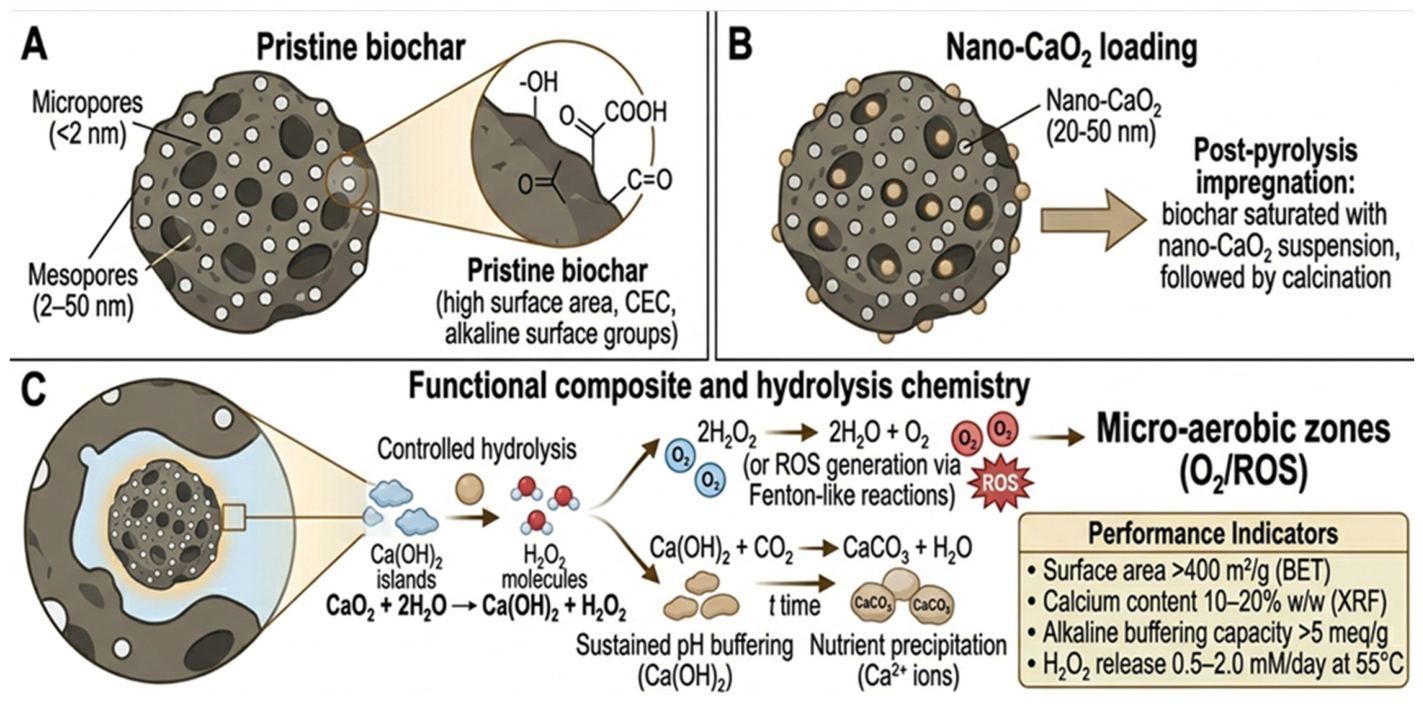
Nano-CaO2/BC overcomes the inherent limitations of pristine biochar for TAD of TWW, where finite adsorption capacity and lack of targeted reactivity for acidification, sulfide toxicity, and ammonia inhibition constrain performance [13,19]. Nano-CaO2/BC synthesis introduces a dual mechanism, including sustained chemical oxidation and pH modulation, that directly targets the amplified risks of thermophilic operation [14]. Upon introduction to aqueous TAD environments, nano-CaO2 undergoes controlled hydrolysis. The generated H2O2 decomposes to reactive oxygen species (ROS) via Fenton-like reactions, creating transient micro-aerobic zones within the bulk anaerobic matrix [19]. These ROS oxidize inhibitory compounds, providing alternative consumption pathways that supplement methanogenic activity and prevent accumulation, particularly under thermophilic conditions, where accelerated acidogenesis rapidly overwhelms methanogenic capacity [14]. Calcium peroxide has been extensively studied as a pretreatment agent to improve the AD of waste [48].
Concurrently, hydrolysis-derived Ca(OH)2 elevates localized pH, counteracting acidification from VFA accumulation and shifting the NH3/NH4+ equilibrium toward less toxic NH4+ via Le Chatelier’s principle [17,49]. This buffering effect is essential under thermophilic conditions where temperature-dependent equilibrium shifts would otherwise increase toxic unionized ammonia fractions. Liberated calcium ions further immobilize phosphorus and nitrogen through precipitation as hydroxyapatite and ammonium calcium phosphate minerals, sequestering nutrients in digestate for agricultural valorization while removing them from the liquid phase where they contribute to inhibition or eutrophication risk [21,22,28]. This synergistic action transforms biochar from a passive adsorbent to an active system-stabilizing catalyst for advanced TAD, systematically addressing the multiple risk dimensions of TWW treatment via TAD. Figure 3 shows the modification of biochar with nano-CaO2.
Nano-CaO2/BC synthesis proceeds via two strategic pathways—post-pyrolysis impregnation and in situ co-pyrolysis—each offering distinct advantages for tailoring composite properties to TAD risk-control applications. In post-pyrolysis impregnation, pre-synthesized biochar is saturated with a nano-CaO2 suspension followed by calcination, integrating peroxide species into the carbon matrix [13]. This yields a uniform CaO2 nanoparticle distribution on the biochar surfaces and within pore structures, enhancing ROS generation and alkaline buffering capacity while maintaining the high surface area and porosity of the parent biochar [50]. For TAD applications, this configuration provides rapid access to reactive CaO2 surfaces for inhibitor oxidation while the underlying carbon matrix continues adsorption and microbial habitat functions, creating synergistic risk control [17]. In co-pyrolysis, raw biomass homogenized with nano-CaO2 undergoes direct thermal treatment, with nano-CaO2 serving as a catalytic agent during pyrolysis [51]. This in situ approach promotes dehydration, enhances devolatilization, and facilitates CO2 capture via carbonation reactions, reducing tar formation while increasing biochar yield [46]. According to Wang et al. [51], nano-CaO2 undergoes tar reforming and water–gas shift reactions during co-pyrolysis, yielding calcium species that are chemically bonded throughout the carbon matrix rather than merely surface-coated. This structural integration produces superior properties: a stable porous network supporting microbial colonization and contaminant adsorption, combined with oxidative and alkaline reactivity distributed throughout the material for sustained inhibitor mitigation [13,14,20,51]. For TAD applications, the integrated structure offers enhanced durability against thermophilic physicochemical stresses, with calcium species being less susceptible to leaching than surface coatings [14]. Table 4 presents key reactions during nano-CaO2-catalyzed biomass pyrolysis with thermodynamic data and their relevance to risk mitigation.
During pyrolysis, nano-CaO2 decomposes endothermically, releasing oxygen that cracks heavy tar molecules while providing thermal energy for reforming reactions. Zhang et al. [52] demonstrated that perovskite oxygen carriers achieved 88.7% tar removal efficiency in biomass gasification, maintaining >88.0% efficiency after 10 redox cycles. The resulting quicklime performs dual functions: catalyzing steam–carbon reactions to produce hydrogen-rich syngas and capturing CO2 via carbonation to CaCO3 [51]. This self-enhancing cycle purifies syngas, increases hydrogen yield, and generates a nano-CaO2/BC composite with regenerable properties (via CaCO3 calcination) suitable for catalysis and risk-controlled TAD enhancement.

4.3. Physicochemical Properties of Nano-CaO2/BC: Engineered for Comprehensive Risk Mitigation

The functionalization of biochar with nano-CaO2 yields an engineered composite with superior physicochemical properties, tailored to address the operational risks and environmental hazards associated with tofu TWW treatment. This composite enhances process stability, improves nutrient retention, and mitigates risks related to process failure, pollutant diffusion, and resource inefficiency. The system generates two primary valorization streams: biogas, a renewable energy source suitable for heat and power generation or upgrading to biomethane, and a nutrient-enriched digestate that serves as a high-performance soil amendment. By returning this digestate to agricultural systems, the approach supports a closed-loop circular economy, reduces reliance on synthetic fertilizers, and strengthens agricultural resilience. The key characteristics of the nano-CaO2/BC composite are examined in detail in the following sections.

4.4. pH and Functional Groups: Acidification Risk Control

Nano-CaO2/BC introduces multi-mechanistic enhancement to TAD of TWW, systematically addressing process-failure risks intensified under elevated-temperature operation. Slow hydrolysis of nano-CaO2 provides continuous alkalinity release, stabilizing pH within methanogenic optima against VFA accumulation [14,17,49]. Unlike single-dose amendments, sustained release maintains protection throughout digestion cycles, counteracting the widened kinetic mismatch between acidogenesis and methanogenesis under thermophilic conditions [50]. Concurrent H2O2 decomposition generates ROS and transient micro-aerobic zones, facilitating partial oxidation of accumulated VFAs before methanogenic inhibition occurs, directly addressing the acidification root cause [15,53,54]. This provides alternative electron sinks under TAD, where accelerated acidogenesis rapidly overwhelms methanogenic capacity. The biochar matrix serves as a conductive scaffold promoting direct interspecies electron transfer (DIET) between syntrophic bacteria and methanogens, enhancing the thermodynamic efficiency of syntrophic VFA oxidation (propionate, butyrate conversion to acetate) [14]. This directly addresses propionate accumulation, a common thermophilic process-failure precursor, by accelerating rate-limiting acetogenesis.
Nano-CaO2 modification induces surface oxidation, generating oxygen-containing functional groups (carboxyl, hydroxyl, carbonyl) that increase surface polarity and negative charge density [13,51]. Enhanced cation exchange capacity retains NH4+ and cationic nutrients, reducing free NH3 inhibition risk while increasing bioavailability for methanogenic consortia [20]. Augmented adsorptive affinity mitigates inhibitory compounds, while providing a colonizable surface for robust biofilm development, stabilizing the microbial community under TAD [19,54]. Synergistic effects combining sustained buffering, oxidative VFA consumption, DIET enhancement, nutrient retention, and inhibitor adsorption accelerate organic matter breakdown, stabilize the TAD process, and increase biogas yields while systematically reducing process-failure probability.

4.5. Porosity and Surface Area: Adsorption and Habitat Enhancement

Nano-CaO2 functions as a structural porogen during biochar synthesis, fundamentally enhancing textural properties critical for TAD risk control [14]. Thermal decomposition generates gaseous oxygen micro-bubbles within the carbon matrix, preventing pore collapse and adjacent structure fusion during pyrolysis [15,16]. This creates a hierarchical pore network substantially increasing specific surface area and total pore volume [21]. The resulting architecture, rich in micropores and mesopores, provides an extensive accessible surface for the adsorption of inhibitory compounds from digested sludge, directly mitigating inhibitor-accumulation risks that destabilize TAD performance [55]. For TAD applications, enhanced porosity serves multiple risk-control functions simultaneously. Expanded surface area provides abundant sites for VFA adsorption, reducing liquid-phase concentrations and mitigating acidification risk before methanogenic consumption occurs. Micropores selectively retain ammonia through size exclusion and surface interactions, reducing bioavailable NH3-N and mitigating ammonia inhibition risk intensified under thermophilic conditions [19]. Mesopores provide accessible pathways for microbial colonization, enabling biofilm development within protected niches where microorganisms are shielded from shear stress and toxic compounds while maintaining substrate access [14]. This protected colonization is particularly valuable under TAD, where reduced microbial diversity increases the importance of maintaining active populations of key functional groups.
The nanoporous structure serves as an ideal micro-habitat for anaerobic consortia, facilitating substrate–enzyme interactions that enhance metabolic rates and accelerate organic matter conversion to methane [20]. Enhanced porosity directly correlates with improved catalytic activity by exposing more active sites and promoting mass transfer, reducing the hydraulic retention time required for complete stabilization [51]. In thermophilic systems, where elevated temperatures accelerate both desirable metabolic reactions and potentially damaging stress responses, protected microenvironments help maintain microbial activity during transient perturbations [46]. Upon land application as digestate, this engineered porosity remains functionally relevant, improving soil water-holding capacity, aeration, and providing a high-surface-area substrate for nutrient retention and microbial habitat [56]. The calcium-rich pore structure contributes to soil aggregation through cation bridging between organic matter and mineral particles, forming stable macroaggregates that resist erosion and improve root penetration [22,28]. This translates initial material enhancement into sustained agronomic benefits, addressing soil degradation risks while closing the nutrient loop and transforming digestate from waste product into a valuable soil amendment for agricultural sustainability.

5. Roles of Nano-CaO2/BC in Enhancing Thermophilic Anaerobic Digestion of Tofu Wastewater: A Quantitative Risk-Mitigation Analysis

The TAD in TWW is fundamentally constrained by amplified process risks: rapid acidification from accelerated carbohydrate hydrolysis and NH3 inhibition intensified by temperature dependent NH3/NH4+ equilibrium shifts, H2S toxicity from enhanced sulfate reduction, and recalcitrant compound accumulation—each exacerbated under elevated-temperature operation [5,11]. Nano-CaO2/BC constitutes a rationally designed multifunctional amendment that orchestrates a self-regulating mechanism to synergistically address these metabolic imbalances through integrated risk control [13,14,19]. The mechanism synergistically integrates BC’s adsorptive properties and microbial-habitat provision with nano-CaO2’s controlled oxidative and alkaline potential to orchestrate dynamic microenvironments within thermophilic digesters [18,20,57]. This integration achieves: (i) sustained pH buffering via slow Ca(OH)2 release, counteracting VFA accumulation [17,58]; (ii) controlled micro-aeration through H2O2 decomposition, generating ROS that oxidize accumulated VFAs [15], H2S [19], and recalcitrant compounds while providing alternative electron sinks [20]; (iii) adsorptive mitigation of inhibitory NH3-N and sulfide via the porous carbon matrix, reducing bioavailable concentrations below toxicity thresholds [54,55]; and (iv) enhanced direct interspecies electron transfer through conductive biochar scaffolding, accelerating syntrophic VFA oxidation [14]. This coordinated action systematically addresses the kinetic imbalances in conventional TAD of TWW, mitigating risks within a unified risk-management framework. It transforms process-stabilized organic conversion into improved bioenergy recovery and nutrient-rich digestate valorization.

5.1. Failure Mode and Effects Analysis: Semi-Quantitative Projection of Risk Reduction

To evaluate the potential risk-mitigation efficacy of nano-CaO2/BC in TAD of TWW, failure mode and effects analysis is employed as a semi-quantitative theoretical projection tool [26]. It should be emphasized that the FMEA scores presented herein are not derived from a specific TWW-TAD case study with nano-CaO2/BC, as no such experimental data currently exist. Rather, the scores represent systematic extrapolations based on mechanistic understanding from analogous systems (activated sludge, food waste, and manure digestion with CaO2, Ca(OH)2, and modified biochars) as documented in the reviewed literature. The analysis serves to illustrate the conceptual risk-reduction potential and guide future experimental design, not to claim validated operational performance. FMEA evaluates each potential failure mode according to three dimensions: Severity (S), representing the impact of failure on system performance (scale 1–10, with 10 representing catastrophic failure); Occurrence (O), representing the probability of failure under normal operating conditions (scale 1–10, with 10 representing near-certain occurrence); and Detection (D), representing the likelihood that failure would be detected before causing significant damage (scale 1–10, with 10 representing near-impossible detection) [59]. The risk priority number (RPN) is calculated as the product of these three factors (RPN = S × O × D), providing a quantitative basis for prioritizing risk-mitigation efforts [26,59].
The scoring criteria adopted are as follows: Severity is based on methane yield reduction (S = 9: >80% reduction, complete failure; S = 8: 60–80% reduction; S = 7: 40–60% reduction; S = 6: 20–40% reduction; S = 5: 10–20% reduction; S = 4: 5–10% reduction). Occurrence is based on probability estimation from comparable substrates (O = 8: >70% probability within one hydraulic retention time; O = 7: 50–70%; O = 6: 30–50%; O = 5: 10–30%; O = 3: 1–10%; O = 2: <1%). Detection is based on monitoring capability (D = 9: detectable only through off-line analysis with >24 h delay; D = 8: detectable through off-line analysis within 12–24 h; D = 7: detectable through on-line sensors with >4 h delay; D = 5: detectable through on-line sensors within 1–4 h; D = 4: detectable through real-time on-line sensors). These criteria were developed based on standard FMEA practice in wastewater-treatment applications and adapted to TAD-specific failure modes using mechanistic knowledge from the reviewed literature [5,11,26,59]. The scoring was performed by the authors through iterative consensus building based on the evidence synthesis presented in Section 3 and Section 4. It is acknowledged that formal expert elicitation would improve the reliability of the scores; this is identified as a priority for future research.
Table 5 and Table 6 present the FMEA analyses for conventional and nano-enhanced TAD of TWW, respectively. For conventional TAD (Table 5), acidification failure emerges as the dominant risk with an RPN of 504, reflecting high severity (complete process failure requiring reactor restart), high occurrence probability (given TWW’s high carbohydrate content and thermophilic kinetics), and moderate detection difficulty (pH monitoring provides an early warning, but intervention windows are short) [11]. Ammonia inhibition yields an RPN of 384, with high severity (significant reduction in CH4 yield), moderate occurrence probability (dependent on protein content and temperature), and poor detection (early-stage ammonia stress is difficult to distinguish from other inhibitors) [5]. H2S toxicity (RPN of 315) and VFA accumulation (RPN 336) represent additional significant risks that require active management [30,39]. With nano-CaO2/BC intervention (Table 6), all risk dimensions are projected to show substantial improvement based on mechanistic evidence from analogous systems [13,14,17,19]. For acidification failure, the severity score is maintained at 9 because a catastrophic pH collapse, should it occur, would still cause complete process failure regardless of the additive’s presence [59]. The risk reduction is therefore driven exclusively by a drastic decrease in occurrence probability owing to sustained alkaline buffering, micro-aerobic VFA oxidation, and enhanced DIET, coupled with improved detection through more stable pH profiles [20,54,60]. This yields a projected RPN of 72, corresponding to an 85.7% reduction.
The NH3 inhibition RPN is projected to decrease by 87.0% to 50, reflecting the combined effects of ammonium adsorption on biochar surfaces (87.83 mg/g for Mg/Fe-BC) [20,45], the equilibrium shift toward ionized NH4+ at elevated pH [17], and the potential oxidation of ammonia by ROS as demonstrated in aquaculture wastewater [54]. The H2S toxicity RPN is projected to decrease by 89.8% to 32, driven by direct oxidation of sulfide by ROS (80.5% H2S reduction at 0.25 g CaO2/g VSS) [19], precipitation as calcium sulfide (thermodynamically spontaneous, ΔG = −170 kJ/mol) [53], and suppression of sulfate-reducing bacteria activity through micro-aeration [15]. The VFA accumulation RPN is projected to decrease by 82.1% to 60, reflecting the combined effects of enhanced syntrophic consumption through DIET [14], micro-aerobic oxidation [16], and adsorption on BC surfaces [13]. In addition to these in situ mitigation pathways, VFA recovery from fermentation broth for downstream valorization represents a complementary circular economy strategy; recent advances in extraction technologies could be integrated with nano-CaO2/BC-enhanced TAD for comprehensive resource recovery [61]. Pathogen survival and heavy metal mobilization risks are projected to decrease by 73.3% and 71.4%, respectively, reflecting the enhanced sanitation of thermophilic operations combined with the adsorptive capture of metals by the biochar matrix [35,37,56].
It should be reiterated that these RPN reductions are theoretical projections based on a mechanistic understanding from analogous systems and not on empirically validated results for TWW-TAD with nano-CaO2/BC. The FMEA methodology employed expert independent scoring based on a synthesis of evidence from the literature rather than a formal expert elicitation process with calibrated scales, representing a methodological limitation. Future research should validate these projections through (i) formal expert panel assessments using the Delphi methodology, (ii) pilot-scale experimental determination of failure-mode frequencies, and (iii) sensitivity analysis of RPN to scoring assumptions. Nevertheless, the consistent trends across all failure modes, grounded in established mechanistic principles, provide a reasonable qualitative indication of the comprehensive risk mitigation achievable through the nano-CaO2/BC intervention.

5.2. Mechanistic Analysis of Risk-Mitigation Pathways

At the core of this risk control strategy lies the controlled hydrolysis of nano-CaO2, which under thermophilic conditions facilitates sustained ROS release rather than instantaneous decomposition. This temporal regulation aligns ROS generation with the accelerated kinetics characteristic of elevated-temperature anaerobic digestion [14]. The generated H2O2 subsequently decomposes (either catalytically on the biochar surface or through microbial pathways) to produce molecular oxygen [13,50]. This slow-release oxygenation establishes transient micro-aerobic niches within the predominantly anaerobic bulk matrix, creating localized oxygen gradients that support spatially organized microbial consortia [15]. Under thermophilic regimes, reduced oxygen solubility paradoxically enhances this micro-aeration effect by limiting oxygen penetration depth and maintaining steep concentration gradients that avert complete system aeration [16]. These micro-aerobic zones fulfill a dual risk mitigation function. Primarily, they selectively stimulate facultative hydrolytic and acidogenic bacteria, accelerating the depolymerization of complex macromolecules in TWW into readily biodegradable monomers. This addresses the hydrolysis limitation that otherwise prolongs retention times and increases volumetric reactor demands. Rashvanlou et al. [15] demonstrated that micro-aerobic pretreatment significantly enhances anaerobic digestion: a 40 h pretreatment at optimized airflow achieved a 30.6% reduction in volatile suspended solids alongside a 65.1% increase in soluble COD. Microbial activity surged by 597% and 170% after 20 and 30 h, respectively, with flow cytometry confirming 67.9% cell viability at 40 h (approximately 40% higher than controls), culminating in a 221% increase in cumulative methane production relative to conventional anaerobic digestion. This enhancement represents concurrent process acceleration (mitigating retention time risk) and yield improvement (addressing resource waste risk) [16].
Concurrently, H2O2 and its derivative ROS (particularly hydroxyl radicals (•OH) generated via Fenton-like reactions catalyzed by iron impurities in biochar or thermophilic sludge) initiate mild advanced oxidation within the sludge matrix [62]. This micro-oxidative pretreatment transforms recalcitrant organic matter and, critically, oxidizes accumulated VFAs, thereby directly alleviating the primary driver of acidification and reactor destabilization [11]. Batch optimization identified 10 g/L CaO2 as optimal for VFA degradation, while long-term reactor operation confirmed that calcium carbonate precipitation substantially reduced VFA concentrations in sludge granules, illustrating the synergistic chemical–biological VFA control mechanism [63]. Liu et al. [62] reported that activated carbon combined with calcium peroxide (AC/CaO2) achieved the highest specific methane yield from food waste (434.4 mL/g VS), outperforming Fe3O4/CaO2 and individual additives, attributable to enhanced ROS generation, improved hydrolytic acidification, and the formation of robust microbial aggregates with elevated enzymatic defense and damage repair capacity. Under TAD conditions (where oxidative stress imposes greater physiological demands), the BC matrix exerts critical control by adsorbing excess radicals and confining oxidative activity to defined zones [13]. Calcium peroxide pretreatment has been shown to enhance AD via radical-mediated oxidation [48].
The co-generated Ca(OH)2 from CaO2 hydrolysis provides robust, sustained alkaline buffering that directly counteracts acidification risk [17]. This neutralizes acidic fermentation intermediates, mitigates product inhibition, and maintains pH optima for thermophilic methanogenic archaea. Junoh et al. [49] optimized Ca(OH)2 pretreatment for food waste using response surface methodology (166.98 mEq/L, 6.1 g/L, 1 h), achieving 864.19 mL CH4/g VS destroyed (a 20.0% increase over untreated controls). Ji et al. [64] further demonstrated that combined 1.0% Ca(OH)2 and steam explosion (1.5 MPa) pretreatment of corn stover increased cumulative CH4 yield by 61.5% and enhanced biodegradability from 43.0% to 69.5%, confirming that alkaline treatment synergizes with physical disruption to improve substrate accessibility, a principle directly applicable to the particulate organic fraction of TWW.
Khor et al. [58] identified optimal Ca(OH)2 pretreatment for grass at 7.5% lime loading, increasing methane yield by 37.3%; post-extrusion Ca(OH)2 treatment yielded additional increases of 15.2% (grass), 11.2% (maize straw), and 8.2% (sprout stem), with corresponding COD conversion improvements of 10.3%, 9.0%, and 6.8%, respectively. These findings confirm that calcium-based alkaline treatment enhances both the rate and extent of organic conversion, addressing process efficiency dimensions of resource waste risk. Yang et al. [55] co-digested Ca(OH)2-pretreated levulinic acid wastewater with corn stalk (0.31 g/L sulfate loading, 32.3 g/L substrate), achieving 249.93 mL CH4/g VS (substantially exceeding mono-digestion (182.53 mL/g VS)) with 98.1% sulfate removal, demonstrating simultaneous enhancement of methanogenesis and suppression of sulfate reduction, thereby addressing both energy recovery and H2S toxicity risks. Yang et al. [56] further reported that Ca(OH)2 addition increased biogas yield to 372.2 mL/g VS (61.7% over control), with high-concentration Ca(OH)2 achieving 422.8 mL/g VS (83.7% increase). Critically, the high-Ca(OH)2 digestate increased ryegrass biomass by 19.7% while reducing plant Zn and Cu concentrations by 31.1% and 39.3%, respectively, confirming that risk control benefits extend beyond the digester to agricultural end-use [56,64]. The coordinated integration of micro-aerobic pretreatment, in situ advanced oxidation, and alkaline stabilization fundamentally rectifies carbon metabolic pathways, preventing intermediate accumulation that compromises conventional TAD of TWW. As projected in the FMEA, this approach could reduce RPN for carbon-flow-related failures by 80–90% (pending experimental validation).

5.3. Sulfur, Nitrogen, and Phosphorus Risk-Control Pathways

Beyond carbon metabolism, nano-CaO2/BC fundamentally governs the fate of sulfur, nitrogen, and phosphorus—elements central to the multidimensional risks inherent in TWW treatment [17,55]. Mitigation of H2S, a corrosive and toxic gas posing both process inhibition and infrastructure degradation risks, occurs through complementary thermodynamically driven pathways under thermophilic conditions [17]. The oxidative potential of nano-CaO2, mediated by H2O2 decomposition and ROS generation, directly oxidizes sulfide species (S2−/HS) to elemental sulfur or sulfate, thereby depleting the bioavailable toxicant pool [14,19,20]. Simultaneously, the alkaline environment imparted by Ca(OH)2 shifts the aqueous sulfide equilibrium toward the less volatile HS ion, reducing H2S partial pressure in biogas and minimizing downstream corrosion [55]. According to Guo et al. [53], released Ca2+ precipitates sulfide as insoluble calcium sulfide (CaS). In the strongly reducing thermophilic digester milieu (Eh < −200 mV), thermodynamics favor sulfide (S2−) over sulfate as the dominant species. Ca2+ precipitation with abundant S2− to form CaS is spontaneous (ΔG = −170 kJ/mol), ensuring rapid and quantitative sulfide removal. Conversely, oxidation of S2− to SO42− (a prerequisite for CaSO4 formation) is non-spontaneous (positive ΔG) under these reducing conditions [53]. Thus, thermodynamics selectively drive CaS precipitation, precluding acidification from CaSO4 hydrolysis and sequestering sulfur as a stable mineral phase that reports to the digestate rather than partitioning to biogas.
Xu et al. [19] demonstrated that CaO2 fundamentally reconfigures anaerobic sulfur distribution. At 0.25 g/g VSS, H2S production declined from 314.6 to 61.3 (×10−4 mg/g VSS), an 80.5% reduction, while short-chain fatty acids increased to 266.5 mg COD/g VSS and hydrogen yield rose to 10.2 mL/g VSS. The mechanism involves the radical-mediated (•OH and •O2) degradation of extracellular polymeric substances, reducing α-helix, β-sheet, and carbonyl contents by 23.2%, 19.7%, and 24%, respectively. This disintegration released metal ions that precipitated dissolved sulfides as metal sulfides, further suppressing H2S. Subsequent radical attack induced cell lysis (viable cells reduced from 90.7% to 81.4%) and inhibited sulfate-reducing microorganisms, decreasing activities of key enzymes (adenosine-5′-phosphosulfate reductase and methionine lyase by 64.8% and 41.3%, respectively) [19]. This comprehensive suppression of sulfate reduction disrupts competitive hydrogen and acetate consumption, directly enhancing methane yield while controlling H2S toxicity. Under TAD, where sulfate reduction kinetics are accelerated, this inhibition is critical for preserving methanogenic dominance. The schematic representation of nano Ca2O2/BC as an additive in TAD of TWW is presented in Figure 4.
The enhanced phosphorus adsorption capacity of nano-CaO2/BC derives from its engineered mineral composition, which mitigates pollution diffusion risks (particularly eutrophication) while addressing resource waste through nutrient recovery [13,22,28]. Calcination during BC production and subsequent nano-CaO2 hydrolysis enrich the composite with Ca(OH)2 and CaCO3 [46,51]. In the thermophilic digester aqueous environment, these compounds dissociate, elevating free Ca2+ concentrations [17]. These ions rapidly interact with orthophosphate (PO43−) to form stable hydroxyapatite (Ca5(PO4)3(OH)) precipitates [21,28]. This reaction removes phosphorus from the liquid phase, reducing discharge concentrations and eutrophication potential, while sequestering phosphorus in the digestate as a slow-release fertilizer, transforming a waste risk into an agricultural resource [28].
Li et al. [13] synthesized a nano-CaO2/BC composite achieving phosphorus adsorption following pseudo-second-order kinetics and Langmuir–Freundlich isotherm behavior, with a maximum capacity of 213.22 ± 13.57 mg g−1. Precipitation dominated the mechanism, and the phosphorus-laden product promoted seedling growth, confirming soil amendment potential. This capacity (21–23% phosphorus by weight) substantially addresses the 0.97–95.50 mg/L phosphorus concentrations typical of TWW [4]. Xu et al. [22] reported calcium-modified BC achieved 168.2 mg/g adsorption (27.6-fold greater than unmodified precursor) across pH 4–12. Tang et al. [21] demonstrated that CaO addition during sewage sludge pyrolysis promoted phosphorus transformation to hydroxyapatite, reaching 25 wt% of total phosphorus in BC, suggesting that nano-CaO2/BC not only captures phosphorus during digestion but stabilizes it in plant-available forms for soil application. Lee et al. [28] showed that calcined mussel shells transformed to CaO and Ca(OH)2, achieving 66.70 mg/g Langmuir capacity via Ca5(PO4)3(OH) precipitation, with phosphorus-laden material (43.07% calcium-bound phosphorus, 55.64% residual phosphorus) promoting plant growth at 0.73 g/kg soil, confirming that calcium-mediated phosphorus capture yields digestate with genuine agronomic value.
Concurrently, nano-CaO2/BC optimizes nitrogen balance, addressing both ammonia inhibition and nitrogen loss risks. The sustained alkaline environment from Ca(OH)2 shifts the NH4+-NH3 equilibrium toward NH3 [17,18], facilitating stripping and recovery—transformable to ammonium sulfate fertilizer via acid scrubbing. Fixed nitrogen retained in digestate, combined with precipitated phosphorus, converts organic residue into nutrient-enriched soil amendment [28]. Nano-CaO2/BC promotes nitrogen fixation through chemisorption and precipitation: Ca2+ reacts with phosphate and NH4+ to form minerals such as schertelite ((NH4)2Ca(HPO4)2·2H2O) or co-precipitates within magnesium phosphate complexes as struvite (MgNH4PO4·6H2O), immobilizing nitrogen in slow-release form [13,17]. Under TAD, Ca5(PO4)3(OH) precipitation is thermodynamically favored over ammonium calcium phosphates [22]; however, aqueous ammonium influences hydroxyapatite crystallization kinetics and morphology, with some ammonium incorporated via surface adsorption or co-precipitation, contributing to solid-phase nitrogen retention. Struvite formation, critically dependent on magnesium availability, is optimized by the alkaline environment (pH 8.5–9.0) that favors PO43− speciation [13].
Nevertheless, high calcium concentrations favor Ca5(PO4)3(OH) over MgNH4PO4·6H2O, creating competitive dynamics requiring management through dosing strategies to achieve desired nutrient recovery outcomes [60]. Zhao et al. [20] engineered a CaO2-based composite achieving >70% NH4+-N removal from aquaculture wastewater via slow H2O2 release, generating singlet oxygen (1O2) as the dominant ROS to selectively convert NH4+ to N2. Continuous operation maintained 80–99% NH4+-N and 70–99% antibiotic removal. Koyama et al. [17] demonstrated that Ca(OH)2 enhanced ammonia recovery by 50–69% over controls. The UV/persulfate-CaO system completely oxidized 30 mg N/L NH3-N within 15 min with 95.0% N2 selectivity, via CaO-mediated NH4+-to-NH3 conversion followed by hydroxyl radical oxidation [54]. Thus, nano-CaO2/BC functions not as a passive additive but as an integrated, self-regulating micro-ecosystem within TAD, simultaneously controlling phosphorus discharge, recovering nutrients as value-added fertilizer components, and mitigating nitrogen inhibition through coupled physicochemical and biological mechanisms. The substantial enhancement conferred by calcium modification is evident when comparing nano-CaO2/BC (213 mg PO43−/g) [13] with unmodified biochars: for instance, biochar derived from cyanobacterial biomass achieved a maximum phosphate adsorption capacity of only 5.51 mg/g through monolayer chemisorption [65], underscoring the critical role of calcium-mediated precipitation in achieving high-capacity phosphorus capture.

5.4. Comparison with Alternative Enhancement Strategies

To contextualize the proposed technology, a comparative table (Table 7) has been added, evaluating nano-CaO2/BC [13,14,17,19,20,54,62] alongside conventional Ca(OH)2 pretreatment [22,49,58,64], trace element supplementation [66], pristine biochar [12,67], Fe3O4-modified biochar [47], Mg/Fe-modified biochar [45], KOH-activated biochar [68], FeCl3-impregnated biochar [69], metal-engineered biochar [70], nZVI/biochar, and MnO2-modified biochar [69,71]. The table summarizes key mechanisms, reported methane enhancement, and the capacities for ammonia, H2S, pH buffering, and nutrient recovery. The comprehensive and technical comparison of TAD enhancement strategies for high-strength organic waste is shown in Table 7.
The data in Table 7 reveal distinct functional profiles. Conventional Ca(OH)2 pretreatment enhances methane yield by 15–84% through alkaline hydrolysis and partial solubilization of organic matter, yet it provides no inherent ammonia or sulfide control and offers only transient pH buffering [22,49,58,64]. Trace element supplementation (Co, Ni, Se, Mo, W) achieves 30–65% improvement in methane production by supplying essential metallo-cofactors that accelerate VFA metabolism, but it lacks direct inhibitor adsorption, pH stabilization, or nutrient recovery capacity [66]. Pristine BC increases methane yield by 18–37% via physical adsorption of inhibitors, DIET, and mild pH buffering through surface functional groups; however, its NH3 adsorption capacity is limited and it offers no specific H2S oxidation pathway [12,67]. Iron-based modifications address some of these limitations. Fe3O4-modified biochar enhances DIET (25–56% methane increase) but does not directly mitigate H2S or provide pH buffering [47]. Mg/Fe-modified biochar stands out for its high NH4+-N adsorption capacity and potential for struvite precipitation, yielding a remarkable 116–229% methane increases in chicken manure digestion, though its H2S control remains low [45]. Similarly, KOH-activated biochar accelerates methane production rate by 52% through ultra-high surface area and enhanced electron transfer, but it does not address sulfur toxicity or nutrient recovery [68]. FeCl3-impregnated biochar promotes diverse methanogenic pathways (22.5% methane increase) but lacks quantitative data on NH3 and H2S control [69].
Metal-engineered biochar loaded with Fe, Ni, Co, and Mn reduces the lag phase from 22.3 to 3.7 days and achieves 224.7 NmL CH4/g VS by creating spatial niches for DIET, yet its performance against NH3 and H2S inhibition is not reported [70]. Nano-zero-valent iron/biochar (nZVI/BC) provides the best H2S control among single additives, reducing H2S from 8.32 to 0.22 mL through FeS precipitation, and improves methane by 29.2–46.7% [69]. MnO2-modified biochar offers moderate improvement under high NH3 stress (12.7% methane increase) but lacks direct H2S mitigation [71]. In contrast, nano-CaO2/BC is projected to combine sustained pH buffering (slow Ca(OH)2 release), oxidative H2S and VFA control (ROS generation), high NH4+ adsorption and oxidation, and exceptional phosphorus recovery (>200 mg PO43−/g) through calcium phosphate precipitation [13,14,17,19,20,60,62]. While several individual strategies excel in one or two risk dimensions, none provide the integrated multi-risk mitigation that is essential for stabilizing the thermophilic digestion of TWW, where acidification, NH3 toxicity, and H2S inhibition co-occur [2,4,5,11]. Direct comparative studies under identical TAD-TWW conditions are entirely lacking, and the projected superior performance of nano-CaO2/BC must be validated experimentally.

6. Economic Feasibility Considerations

Integrating nano-CaO2/BC into TAD of TWW can enhance methanogenic yield and process stability, but economic viability must be assessed by balancing the value of extra biogas and improved digestate against the incremental cost of the composite material and dosing equipment [46]. A realistic break-even analysis can be performed on a per-cubic-meter basis using documented market prices and stoichiometric methane yields, avoiding unreliable national-scale extrapolations. The additive cost is governed by the required dosage. Based on the optimized dosage of 6.67 kg/m3 reported for BC-enhanced AD [67] and assuming a commercial BC price of 0.08–0.12 USD/kg [72], the material cost of the BC matrix alone amounts to 0.53–0.80 USD per m3 of TWW. Loading with nano-CaO2 (10–20 wt%) is estimated to add roughly 0.20–0.50 USD per m3, bringing the total additive cost to approximately 0.73–1.30 USD/m3. These figures may decrease with process optimization and economies of scale.
On the revenue side, the energy value of the additional methane must offset this cost. A typical TWW with a COD of 6000 mg/L (6 kg COD/m3) can theoretically yield 0.35 m3 CH4 per kg COD removed, giving a maximum of 2.1 m3 CH4/m3 [5]. At a gas price of 0.3686 USD/m3 (based on electricity generation) [12], the gross energy revenue from full COD conversion is 0.77 USD/m3. Thus, even complete conversion of all COD cannot cover the high end of the additive cost (1.30 USD/m3) if the additive merely serves as a catalyst without drastically increasing the fraction of COD converted. However, if nano-CaO2/BC improves the conversion efficiency from, say, 50% to 80%, the incremental methane would be (0.80 − 0.50) × 2.1 = 0.63 m3 CH4/m3, worth about 0.23 USD/m3—which is still insufficient. This simple calculation demonstrates that the direct energy revenue alone is unlikely to produce a net profit unless the additive cost is substantially lowered and/or substantial co-benefits are monetized.
The primary economic drivers are therefore the risk avoidance benefits (reduced reactor downtime, avoided environmental penalties, lower maintenance costs) and the fertilizer value of the digestate. When these are included conservatively estimated at 0.10–0.30 USD/m3 for risk avoidance and 0.05–0.15 USD/m3 for nutrient value, the total benefit per m3 can reach approximately 0.38–0.68 USD. At the lower additive cost (0.73 USD/m3) and under optimistic performance, a small positive margin becomes possible, but negative net returns remain likely under current cost structures. Therefore, economic feasibility hinges on achieving sufficient process intensification to drastically reduce additive dosage, exploring cheaper local feedstocks, and developing revenue mechanisms for digestate and avoided emissions. The analysis underlines the need for pilot-scale data to refine the key parameters (actual methane enhancement, additive lifetime, and operational savings) before any large-scale investment can be justified. Ultimately, a rigorous life-cycle costing that internalizes environmental externalities is required to fully capture the value of the risk-controlled circular bioeconomy model.

7. Challenges, Future Perspectives, and Risk-Management Optimization

Notwithstanding the projected efficacy of nano-CaO2/BC in enhancing TAD and mitigating multidimensional risks associated with TWW treatment, industrial translation remains contingent upon resolving critical research and development challenges. The principal obstacle is the absence of standardized synthesis protocols; interplay among feedstock selection, pyrolysis conditions [18,51], and nano-CaO2 loading dictates hierarchical pore architecture and calcium–carbon interface stability, producing variable risk control performance [13]. To address this, we propose the following preliminary optimal synthesis matrix based on the physicochemical data in Table 3 and mechanistic requirements:
  • Feedstock: Soybean stover or peanut shells, selected for (i) high surface-area development at 700 °C (420–448 m2/g), (ii) alignment with circular economy by valorizing tofu production residues, and (iii) favorable ash composition supporting alkaline functionality.
  • Pyrolysis temperature: 700 °C, to maximize surface area (>400 m2/g target), ensure structural stability under thermophilic conditions, and develop alkaline pH (>10.5).
  • Nano-CaO2 loading: 10–20% w/w via post-pyrolysis impregnation, providing sufficient reactive capacity for pH buffering and ROS generation while preserving BC pore structure.
  • Key performance indicators (KPIs): Specific surface area >400 m2/g (BET), calcium content 10–20% w/w, alkaline buffering capacity >5 meq/g, and H2O2 release rate 0.5–2.0 mM/day at 55 °C.
Industry standards specifying these KPIs would address synthesis uncertainty and facilitate technology adoption. The long-term fate of the composite within continuous TAD systems remains ambiguous. Surface passivation, active-phase dissolution, and pore occlusion from CaCO3 precipitation may progressively diminish catalytic and buffering capacity [14]. Under thermophilic conditions, elevated temperatures accelerate both beneficial reactions and deleterious processes: mineral dissolution, carbon oxidation, and biofilm overgrowth that masks active sites [19]. Specific mechanisms requiring investigation include CaO2 consumption kinetics (half-life ~15–30 days at 55 °C) [50], biochar surface oxidation and potential loss of DIET conductivity, and competitive CaCO3 formation consuming active Ca(OH)2 [17]. Longitudinal studies tracking performance over multiple retention times are required to establish replacement schedules and life-cycle material requirements.
Operational temperature presents a complex optimization challenge: maintaining metabolic integrity of thermophilic methanogens (optimal 55–60 °C) [27] while regulating kinetic release of alkalinity and micro-oxygen from CaO2. Wang et al.’s [73] CaO2 hydrolysis and H2O2 decomposition follow Arrhenius kinetics, with rates approximately doubling per 10 °C increase. At 55 °C, reaction rates are 3–4-fold higher than at 35 °C, accelerating active material consumption and reducing effective residence time [73]. Balancing accelerated consumption against enhanced risk control requirements necessitates optimized initial loading and potentially encapsulated formulations providing sustained release at elevated temperatures [17]. Pathogen inactivation (mediated through elevated pH, ROS generation, and enhanced adsorption) requires explicit validation via metagenomic analysis to ensure biosolid safety [8,20]. Although FMEA indicates substantial pathogen reduction, direct confirmation through culture-based and molecular detection methods is necessary to satisfy regulatory requirements for land application [26,35,37]. Concurrently, the potential for nano-CaO2/BC to mobilize or immobilize heavy metals in TWW must be characterized to ensure digestate complies with agricultural quality standards [56]. Regarding large-scale production costs, current commercial BC prices (0.08–0.12 USD/kg) reflect moderate production scale [72]; nano-CaO2 synthesis adds roughly 200–500 USD/ton for the nano-CaO2 component, but costs are expected to decline with optimization [13,14,17,19,20,54,62]. The sensitivity analysis in Section 6 shows that a 30% cost reduction through synthesis optimization and economies of scale could improve the economic balance. Integration of nano-CaO2/BC production with existing biochar facilities at tofu processing plants could further reduce costs through waste heat utilization and feedstock availability.
Concerning nanoparticle fate and ecotoxicological considerations, nano-CaO2 undergoes rapid hydrolysis to bulk Ca(OH)2 (complete conversion within hours at 55 °C) [50,73], which subsequently carbonates to CaCO3. The resulting calcium species are non-nanoparticulate and pose negligible nano-specific toxicological risk to soil microbiomes [22]. Residual ROS from CaO2 hydrolysis is short-lived in the strongly reducing thermophilic digester matrix (ORP < −300 mV), with hydroxyl radical half-lives on the order of nanoseconds [73]. However, potential ecotoxicological effects during digestate land application warrant investigation, particularly (i) chronic effects of elevated Ca2+ concentrations on soil microbial community structure, (ii) potential accumulation of BC-borne polycyclic aromatic hydrocarbons (PAHs) formed during pyrolysis [74], and (iii) interactions between calcium-rich digestate and soil organic matter dynamics. Regulatory frameworks including the EU Fertilizing Products Regulation (2019/1009) [75] and U.S. EPA Part 503 [76] biosolids standards establish contaminant limits and pathogen-reduction requirements that would govern nano-CaO2/BC-enhanced digestate land application, though nano-specific provisions remain under development.
Within a risk governance framework, systematic identification and management of derived risks is essential. Key residual risks include long-term pedospheric accumulation following repeated digestate application, which may elevate soil calcium and pH beyond agronomic optima [28]. Although nano-CaO2 rapidly converts to bulk Ca(OH)2 and CaCO3, the BC fraction’s environmental persistence necessitates long-term field trials to assess cumulative impact [22]. Economic viability faces risks from volatile material costs and supply chain disruptions. A robust management framework should incorporate dynamic risk monitoring, integrating real-time sensor networks with supervisory control and data acquisition for early warning and proactive intervention [46]. Risk thresholds (pH < 6.8, VFAs > 2000 mg/L) can be calibrated to the system’s enhanced buffering capacity. Establishing cross-sector collaborative governance linking producers, TAD operators, regulators, and agricultural end-users is critical for managing land application risks [38]. Such frameworks codify digestate quality standards, implement transparent certification, and optimize application protocols, transforming digestate into a marketable product while ensuring residual environmental and food safety risks are systematically controlled.
To bridge the critical gap between theoretical projection and empirical validation, we propose a three-phase experimental validation framework:
  • Phase 1: Biochemical Methane Potential (BMP) Assays. Batch assays at 55 °C using synthetic TWW (formulated based on Table 1 and Table 2) with nano-CaO2/BC dosages of 0, 2.5, 5.0, 7.5, 10.0, and 15.0 g/L. Primary endpoints: cumulative methane yield (mL CH4/g COD), VFA profiles, pH stability, NH3-N and H2S concentrations. Duration: 30 days, triplicate reactors.
  • Phase 2: Continuous Stirred Tank Reactor (CSTR) Operation. Pilot-scale CSTR (100–500 L working volume) operated at 55 °C, HRT 10–15 days, organic loading rate 2–5 kg COD/m3/day, with nano-CaO2/BC at optimized dosage from Phase 1. Primary endpoints: steady-state methane productivity (m3 CH4/m3 reactor/day), COD removal efficiency, process stability indicators (pH, VFA/alkalinity ratio), and microbial community analysis via 16S rRNA sequencing. Duration: minimum 3 HRT cycles after steady-state achievement.
  • Phase 3: Digestate Quality Assessment. Comprehensive characterization of digestate from Phase 2 including nutrient speciation (N, P, K), heavy metal content, pathogen indicators (fecal coliforms, Salmonella, helminth ova), and phytotoxicity (seed germination index). Soil incubation studies to assess nitrogen mineralization rates and phosphorus availability.
This framework, if implemented, would provide the empirical foundation necessary to transform the theoretical projections presented in this review into validated process-engineering parameters.

8. Conclusions

The application of nano-CaO2/BC in the TAD of TWW represents a conceptual advancement from conventional treatment methods to a precision-engineered, multifunctional remediation strategy. The composite operates through a synergistic mechanism: the controlled release of CaO2 provides sustained micro-aeration that hydrolyzes recalcitrant organics and suppresses sulfide formation, while simultaneously generating Ca(OH)2 for robust pH buffering against VFA accumulation. The high surface area of the biochar matrix immobilizes inhibitory NH3 and H2S, supports syntrophic metabolism, and creates a conductive framework for direct interspecies electron transfer. These integrated actions are projected to enhance the metabolic efficiency and resilience of thermophilic methanogenic consortia, leading to improved methane yields compared to conventional systems. A semi-quantitative FMEA within a comprehensive risk framework suggests that the nano-CaO2/BC intervention could markedly reduce the RPN for critical failure modes such as acidogenic imbalance, ammonia toxicity, and H2S inhibition, potentially transforming TAD into a more stable process. For acidification, the severity remains at 9, but the drastic reduction in occurrence and improved detection lower the RPN by 85.7%. Furthermore, the technology enables closed-loop resource recovery: the resulting digestates, enriched with recalcitrant carbon and essential nutrients, hold promise as a high-value soil amendment that enhances fertility and promotes carbon sequestration. A technical break-even analysis indicates that positive net benefits are achievable through increased biogas recovery and avoided environmental penalties, provided that additive costs are lowered and co-benefits are fully monetized. Crucially, all quantitative claims in this review are theoretical projections derived from analogous systems; empirical validation through the proposed three-phase experimental framework is essential to confirm the synergistic mechanisms and performance projections. Ultimately, nano-CaO2/BC-enhanced TAD operationalizes a circular bioeconomy model, harmonizing renewable biogas generation with sustainable agriculture and establishing a transferable blueprint for managing high-strength organic waste streams.

Author Contributions

N.J.M., writing—original draft, conceptualization, investigation, and data analysis; H.N.G., conceptualization, writing—review and editing; A.S.G., supervision and writing—review and editing; Z.X., resources, funding, review and editing. All authors have read and agreed to the published version of the manuscript.

Funding

This work was supported by the Start-Up Funding for Research of Nanchang Institute of Science and Technology (NGRCZX 22–03), School of Civil and Environmental Engineering, Nanchang, Jiangxi, China.

Data Availability Statement

All data generated or analyzed during this study are included in this manuscript.

Acknowledgments

The authors acknowledge the institutional support from their respective affiliations.

Conflicts of Interest

The authors declare that they have no known competing financial interests or personal relationships that could have appeared to influence the work reported in this paper.

References

  1. Feng, H.; Jin, L.; Chen, Y.; Ji, J.; Gong, Z.; Hu, W.; Ying, C.; Liang, Y.; Li, J. Tofu wastewater as a carbon source flowing into municipal wastewater treatment plants for reductions of costs and greenhouse gas emissions. J. Environ. Manag. 2024, 370, 122550. [Google Scholar] [CrossRef] [Scilit]
  2. Hardyanti, N.; Susanto, H.; Budihardjo, M.A.; Saputra, A.T. Characteristics of Tofu Wastewater From Different Soybeans and Wastewater at Each Stage of Tofu Production. Ecol. Eng. Environ. Technol. 2023, 24, 54–63. [Google Scholar] [CrossRef] [Scilit]
  3. Faisal, M.; Gani, A.; Mulana, F.; Daimon, H. Treatment and utilization of industrial tofu waste in Indonesia. Asian J. Chem. 2016, 28, 501–507. [Google Scholar] [CrossRef] [Scilit]
  4. Mulana, F.; Alam, P.N.; Daimon, H. Wastewater Characteristics from Tofu Processing Facilities in Banda Aceh; Syiah Kuala University Press: Banda Aceh, Indonesia, 2014; pp. 22–25. [Google Scholar]
  5. Nilawati, D.; Matsuura, N.; Honda, R.; Hara, H.; Neni, Y. Methane recovery from acidic tofu wastewater using an anaerobic fixed—bed reactor with bamboo as the biofilm carrier. J. Mater. Cycles Waste Manag. 2021, 23, 537–547. [Google Scholar] [CrossRef] [Scilit]
  6. Overview, M.; Tan, S.; Lee, M.; Wong, K.; Lim, B.; Goh, R.; Ng, J.; Tan, L.; Koh, S.; Chan, K.; et al. Global Tofu Competitive Landscape Professional Research Report 2025; DIResearch: Dallas, TX, USA, 2025. [Google Scholar]
  7. Widyaningrum, W.; Widyastuti, M. Effects of Liquid Wastes from Tofu Industries on Water Quality in Parangan River, Magelang District, Central Java-Indonesia. E3S Web Conf. 2021, 325, 03003. [Google Scholar] [CrossRef] [Scilit]
  8. Bi, S.; Wang, C.; Wang, H.; Du, Y.; Yu, X.; Wang, Y. Comparison of mesophilic and thermophilic anaerobic digestion of food waste: Focusing on methanogenic performance and pathogens removal. Renew. Energy 2024, 233, 121184. [Google Scholar] [CrossRef] [Scilit]
  9. Sintawardani, N.; Muchlis; Hamidah, U.; Nilawati, D.; Wulan, D.R.; Janetasari, S.A.; Putra, H.E. Performance analysis and stability of tofu whey treatment in a 120 m3 Six-Stage up-flow anaerobic Fixed-Bed reactor during Start-Up. Sustain. Energy Technol. Assess. 2025, 78, 104346. [Google Scholar] [CrossRef] [Scilit]
  10. Jiang, Y.; McAdam, E.; Zhang, Y.; Heaven, S.; Banks, C.; Longhurst, P. Ammonia inhibition and toxicity in anaerobic digestion: A critical review. J. Water Process Eng. 2019, 32, 100899. [Google Scholar] [CrossRef] [Scilit]
  11. Syaichurrozi, I.; Nurulshani, S.; Pramudita, A.A. Biogas generation from anaerobic co-digestion of tofu liquid waste and tapioca flour liquid waste at various initial pHs. J. Ecol. Eng. 2025, 26, 11–23. [Google Scholar] [CrossRef] [Scilit]
  12. Zhang, L.; Lim, E.Y.; Loh, K.C.; Ok, Y.S.; Lee, J.T.E.; Shen, Y.; Wang, C.H.; Dai, Y.; Tong, Y.W. Biochar enhanced thermophilic anaerobic digestion of food waste: Focusing on biochar particle size, microbial community analysis and pilot-scale application. Energy Convers. Manag. 2020, 209, 112654. [Google Scholar] [CrossRef] [Scilit]
  13. Li, X.; Xie, Y.; Jiang, F.; Wang, B.; Hu, Q.; Tang, Y.; Luo, T.; Wu, T. Enhanced phosphate removal from aqueous solution using resourceable nano-CaO2/BC composite: Behaviors and mechanisms. Sci. Total Environ. 2020, 709, 136123. [Google Scholar] [CrossRef] [Scilit]
  14. Cai, D.; Li, D.; Chen, X.; Wang, L.; Ping, Q.; Li, Y. Innovative application of CaO2 in two-phase anaerobic digestion to enhance methane production from waste activated sludge: Condition optimization and mechanistic insights. Chem. Eng. J. 2025, 504, 158911. [Google Scholar] [CrossRef] [Scilit]
  15. Barati Rashvanlou, R.; Rezaee, A.; Farzadkia, M.; Gholami, M.; Kermani, M. Effect of micro-aerobic process on improvement of anaerobic digestion sewage sludge treatment: Flow cytometry and ATP assessment. RSC Adv. 2020, 10, 35718–35728. [Google Scholar] [CrossRef] [Scilit]
  16. Nguyen, D.; Khanal, S.K. A little breath of fresh air into an anaerobic system: How microaeration facilitates anaerobic digestion process. Biotechnol. Adv. 2018, 36, 1971–1983. [Google Scholar] [CrossRef] [Scilit]
  17. Koyama, M.; Nagao, N.; Syukri, F.; Yusoff, F.M.; Toda, T.; Quyen, T.N.M.; Nakasaki, K. Effect of Ca(OH)(2) dosing on thermophilic composting of anaerobic sludge to improve the NH(3) recovery. Sci. Total Environ. 2019, 670, 1133–1139. [Google Scholar] [CrossRef] [Scilit]
  18. Gai, X.; Wang, H.; Liu, J.; Zhai, L.; Liu, S.; Ren, T.; Liu, H. Effects of feedstock and pyrolysis temperature on biochar adsorption of ammonium and nitrate. PLoS ONE 2014, 9, e113888. [Google Scholar] [CrossRef] [Scilit]
  19. Xu, Y.; Fu, Q.; Wang, W.; Yang, F.; Li, X.; Song, F.; Qing, Y.; Lin, Z.; Long, W.; Wang, D. Performance and mechanism of calcium peroxide reducing H2S production from sludge anaerobic fermentation. Chem. Eng. J. 2023, 472, 144816. [Google Scholar] [CrossRef] [Scilit]
  20. Zhao, J.; Lu, C.; Liu, J.; Han, Y.; Li, X.; Li, J.; Li, W.; Xu, H.; Gao, J.; Li, A.; et al. Mechanistic insights and application of SS/MS/C/CaO2 composite for the simultaneous removal of ammonia nitrogen and multiple antibiotics. Water Res. 2026, 289, 124797. [Google Scholar] [CrossRef] [Scilit] [PubMed]
  21. Tang, S.; Yan, F.; Zheng, C.; Zhang, Z. Novel Calcium Oxide-Enhancement Phosphorus Recycling Technique through Sewage Sludge Pyrolysis. ACS Sustain. Chem. Eng. 2018, 6, 9167–9177. [Google Scholar] [CrossRef] [Scilit]
  22. Xu, Y.; Liao, H.; Zhang, J.; Lu, H.; He, X.; Zhang, Y.; Wu, Z.; Wang, H.; Lu, M. A Novel Ca-Modified Biochar for Efficient Recovery of Phosphorus from Aqueous Solution and Its Application as a Phosphorus Biofertilizer. Nanomaterials 2022, 12, 2755. [Google Scholar] [CrossRef] [Scilit] [PubMed]
  23. Page, M.J.; McKenzie, J.E.; Bossuyt, P.M.; Boutron, I.; Hoffmann, T.C.; Mulrow, C.D.; Shamseer, L.; Tetzlaff, J.M.; Akl, E.A.; Brennan, S.E.; et al. The PRISMA 2020 statement: An updated guideline for reporting systematic reviews. Syst. Rev. 2021, 10, 1–11. [Google Scholar] [CrossRef] [Scilit]
  24. Tušer, I.; Oulehlová, A. Risk assessment and sustainability of wastewater treatment plant operation. Sustainability 2021, 13, 5120. [Google Scholar] [CrossRef] [Scilit]
  25. Trubetskaya, A.; Horan, W.; Conheady, P.; Stockil, K.; Merritt, S.; Moore, S. A methodology for assessing and monitoring risk in the industrial wastewater sector. Water Resour. Ind. 2021, 25, 100146. [Google Scholar] [CrossRef] [Scilit]
  26. Adar, E.; Ince, M.; Karatop, B.; Bilgili, M.S. The risk analysis by failure mode and effect analysis (FMEA) and fuzzy-FMEA of supercritical water gasification system used in the sewage sludge treatment. J. Environ. Chem. Eng. 2017, 5, 1261–1268. [Google Scholar] [CrossRef] [Scilit]
  27. Moerland, M.J.; Castañares Pérez, L.; Ruiz Velasco Sobrino, M.E.; Chatzopoulos, P.; Meulman, B.; de Wilde, V.; Zeeman, G.; Buisman, C.J.N.; van Eekert, M.H.A. Thermophilic (55 °C) and hyper-thermophilic (70 °C) anaerobic digestion as novel treatment technologies for concentrated black water. Bioresour. Technol. 2021, 340, 125705. [Google Scholar] [CrossRef] [Scilit] [PubMed]
  28. Lee, J.I.; Oh, J.S.; Yoo, S.C.; Jho, E.H.; Lee, C.G.; Park, S.J. Removal of phosphorus from water using calcium-rich organic waste and its potential as a fertilizer for rice growth. J. Environ. Chem. Eng. 2022, 10, 107367. [Google Scholar] [CrossRef] [Scilit]
  29. Paz, A.M.; Amezketa, E.; Canfora, L.; Castanheira, N.; Falsone, G.; Gonçalves, M.C.; Gould, I.; Hristov, B.; Mastrorilli, M.; Ramos, T.; et al. Salt-affected soils: Field-scale strategies for prevention, mitigation, and adaptation to salt accumulation. Ital. J. Agron. 2023, 18, 2166. [Google Scholar] [CrossRef] [Scilit]
  30. Wang, S.; Li, D.; Zhang, K.; Ma, Y.; Liu, F.; Li, Z.; Gao, X.; Gao, W.; Du, L. Effects of initial volatile fatty acid concentrations on process characteristics, microbial communities, and metabolic pathways on solid-state anaerobic digestion. Bioresour. Technol. 2023, 369, 128461. [Google Scholar] [CrossRef] [Scilit]
  31. Hu, Y.; Shen, C. Thermophilic-mesophilic temperature phase anaerobic co-digestion compared with single phase co-digestion of sewage sludge and food waste. Sci. Rep. 2024, 14, 11967. [Google Scholar] [CrossRef] [Scilit]
  32. McGenity, T.J.; Sorokin, D.Y. Methanogens and Methanogenesis in Hypersaline Environments; Springer: Berlin/Heidelberg, Germany, 2019. [Google Scholar] [CrossRef] [Scilit]
  33. Bandung, P.N.; Engineering, B. Evaluation and Kinetics of Tofu Wastewater Bioreactor with Addition of Water Hyacinth. IIUM Eng. J. 2024, 25, 57–68. [Google Scholar] [CrossRef] [Scilit]
  34. You, A.; Be, M.; In, I. The Evaluation of Seeding Process of Tofu Wastewater Treatment in Anaerobic Sequencing Batch Reactor; AIP Publishing LLC: Melville, NY, USA, 2024; p. 030002. [Google Scholar] [CrossRef] [Scilit]
  35. Seruga, P.; Krzywonos, M.; Paluszak, Z.; Urbanowska, A.; Pawlak-Kruczek, H.; Niedźwiecki, Ł.; Pińkowska, H. Pathogen reduction potential in anaerobic digestion of organic fraction of municipal solid waste and food waste. Molecules 2020, 25, 275. [Google Scholar] [CrossRef] [Scilit] [PubMed]
  36. Zhang, L.; Guo, B.; Mou, A.; Li, R.; Liu, Y. Blackwater biomethane recovery using a thermophilic upflow anaerobic sludge blanket reactor: Impacts of effluent recirculation on reactor performance. J. Environ. Manag. 2020, 274, 111157. [Google Scholar] [CrossRef] [Scilit] [PubMed]
  37. Al-Sulaimi, I.; Nayak, J.K.; Al-Mamun, A.; Sana, A. Effective removal of Helminths Ova from wastewater and its inactivation from sewage sludge using thermophilic anaerobic digestion. Environ. Nanotechnol. Monit. Manag. 2023, 20, 100793. [Google Scholar] [CrossRef] [Scilit]
  38. Fan, Y.; Zhang, Z.; Yang, X.; Yang, H.; Deng, P.; Zhao, Z. Alleviation of volatile fatty acids inhibition in anaerobic digestion of swine manure with nano-bubble water supplementation. Bioresour. Technol. 2024, 411, 131304. [Google Scholar] [CrossRef] [Scilit]
  39. Mutegoa, E.; Sahini, M.G. Approaches to mitigation of hydrogen sulfide during anaerobic digestion process—A review. Heliyon 2023, 9, e19768. [Google Scholar] [CrossRef] [Scilit]
  40. Ahmad, M.; Lee, S.S.; Dou, X.; Mohan, D.; Sung, J.K.; Yang, J.E.; Ok, Y.S. Effects of pyrolysis temperature on soybean stover- and peanut shell-derived biochar properties and TCE adsorption in water. Bioresour. Technol. 2012, 118, 536–544. [Google Scholar] [CrossRef] [Scilit]
  41. Giwa, A.S. Effectiveness of Torrefaction By-Products as Additive in Vacuum Blackwater under Anaerobic Digestion and Economic Significance. Processes 2023, 11, 3330. [Google Scholar] [CrossRef] [Scilit]
  42. Hu, X.; Gholizadeh, M. Biomass pyrolysis: A review of the process development and challenges from initial researches up to the commercialisation stage. J. Energy Chem. 2019, 39, 109–143. [Google Scholar] [CrossRef] [Scilit]
  43. Jayakumar, M.; Siraj, A.; Deso, L.; Jifara, B.; Venkatesa, S.; Rangaraju, M.; Jabesa, A.; Periyasamy, S.; Suresh, S.; Baskar, G. Comprehensive review on lignocellulosic biomass derived biochar production, characterization, utilization and applications. Chemosphere 2023, 345, 140515. [Google Scholar] [CrossRef] [Scilit]
  44. Chiappero, M.; Norouzi, O.; Hu, M.; Demichelis, F.; Berruti, F.; Di Maria, F.; Mašek, O.; Fiore, S. Review of biochar role as additive in anaerobic digestion processes. Renew. Sustain. Energy Rev. 2020, 131, 110037. [Google Scholar] [CrossRef] [Scilit]
  45. Li, T.; Li, J.; Li, T.; Cheng, X. Characterization of Magnesium-Iron Modified Biochar to Alleviate Ammonia Inhibition and Enhance Anaerobic Digestion of Chicken Manure. Waste Biomass Valorization 2025, 16, 4333–4351. [Google Scholar] [CrossRef] [Scilit]
  46. Chiang, P.F.; Zhang, T.L.; Giwa, A.S.; Maurice, N.J.; Claire, M.J.; Ali, N.; Shafique, E.; Vakili, M. Effects of Calcium-Oxide-Modified Biochar on the Anaerobic Digestion of Vacuum Blackwater. Molecules 2025, 30, 215. [Google Scholar] [CrossRef] [Scilit] [PubMed]
  47. Zhang, Z.; Li, C.; Wang, G.; Yang, X.; Zhang, Y.; Wang, R.; Angelidaki, I.; Miao, H. Mechanistic insights into Fe3O4-modified biochar relieving inhibition from erythromycin on anaerobic digestion. J. Environ. Manag. 2023, 344, 118459. [Google Scholar] [CrossRef] [Scilit] [PubMed]
  48. Wei, W.; Shi, X.; Wu, L.; Liu, X.; Ni, B.J. Calcium peroxide pre-treatment improved the anaerobic digestion of primary sludge and its co-digestion with waste activated sludge. Sci. Total Environ. 2022, 828, 154404. [Google Scholar] [CrossRef] [Scilit] [PubMed]
  49. Junoh, H.; Yip, C.H.; Kumaran, P. Effect on Ca(OH)2 pretreatment to enhance biogas production of organic food waste. IOP Conf. Ser. Earth Environ. Sci. 2016, 32, 12013. [Google Scholar] [CrossRef] [Scilit]
  50. Rastinfard, A.; Nazarpak, M.H.; Moztarzadeh, F. Controlled chemical synthesis of CaO2 particles coated with polyethylene glycol: Characterization of crystallite size and oxygen release kinetics. RSC Adv. 2018, 8, 91–101. [Google Scholar] [CrossRef] [Scilit]
  51. Wang, Q.; Zhang, X.; Sun, S.; Wang, Z.; Cui, D. Effect of CaO on Pyrolysis Products and Reaction Mechanisms of a Corn Stover. ACS Omega 2020, 5, 10276–10287. [Google Scholar] [CrossRef] [Scilit]
  52. Zhang, J.; Zou, H.; Gao, X.; Wu, J.; Wang, Z.; Wu, J. In Situ Tar Removal in Biomass Gasification Using Ni-Perovskite-Based Oxygen Carriers. Energy Fuels 2025, 39, 12569–12580. [Google Scholar] [CrossRef] [Scilit]
  53. Guo, J.; Cheng, S.; Cheng, Z.; Xin, L. Thermodynamics for precipitation of CaS bearing inclusion and their deformation during rolling process for Al-killed Ca-treated steel. Steel Res. Int. 2013, 84, 545–553. [Google Scholar] [CrossRef] [Scilit]
  54. Jiang, H.; Wang, J.; Zhou, A.; Liu, Y. Rapid Oxidation of Ammonia Nitrogen to Nitrogen Gas by UV-Activated Persulfate with Calcium Oxide. ACS ES T Eng. 2024, 4, 1092–1101. [Google Scholar] [CrossRef] [Scilit]
  55. Yang, F.; Bai, L.; Li, P.; Li, Q.; Luo, L.; Li, W. Improved methane production and sulfate removal by anaerobic co-digestion corn stalk and levulinic acid wastewater pretreated by calcium hydroxide. Sci. Total Environ. 2019, 691, 499–505. [Google Scholar] [CrossRef] [Scilit]
  56. Yang, G.; Jin, K.; Eraky, M.; Peng, J.; Li, Q.; Meng, L.; Zhang, H.; Ai, P. Positive effect of Ca addition on the risk of Cu and Zn in digestate as biofertilizer. J. Environ. Chem. Eng. 2023, 11, 109633. [Google Scholar] [CrossRef] [Scilit]
  57. Tang, S.; Wang, Z.; Liu, Z.; Zhang, Y.; Si, B. The Role of Biochar to Enhance Anaerobic Digestion: A Review. J. Renew. Mater. 2020, 8, 1033–1052. [Google Scholar] [CrossRef] [Scilit]
  58. Khor, W.C.; Rabaey, K.; Vervaeren, H. Low temperature calcium hydroxide treatment enhances anaerobic methane production from (extruded) biomass. Bioresour. Technol. 2015, 176, 181–188. [Google Scholar] [CrossRef] [Scilit] [PubMed]
  59. Liu, H.C.; Liu, L.; Liu, N. Risk evaluation approaches in failure mode and effects analysis: A literature review. Expert Syst. Appl. 2013, 40, 828–838. [Google Scholar] [CrossRef] [Scilit]
  60. Perwitasari, D.S.; Muryanto, S.; Jamari, J.; Bayuseno, A.P. Crystallization of struvite in the presence of calcium ions: Change in reaction rate, morphology and chemical composition. Cogent Eng. 2022, 9, 2049962. [Google Scholar] [CrossRef] [Scilit]
  61. Singh, R.; Kumar, N.; Parameswaran, P.; Simmons, B.A.; Sale, K.; Sun, N. Volatile fatty acid extraction from fermentation broth using a hydrophobic ionic liquid and in situ enzymatic esterification. RSC Sustain. 2024, 3, 311–322. [Google Scholar] [CrossRef] [Scilit]
  62. Liu, Y.; He, L.; Liu, M.; Wang, Y.; Li, L.; Gu, L.; Li, J.; Liu, S.; He, Q. Different regulation strategies of anaerobic digestion by AC/CaO2 and Fe3O4/CaO2: Reactive oxygen species induction, methanogenic performance, and microbial response. Bioresour. Technol. 2024, 406, 130977. [Google Scholar] [CrossRef] [Scilit] [PubMed]
  63. Ahmad, A.; Ghufran, R.; Wahid, Z.A. Role of calcium oxide in sludge granulation and methanogenesis for the treatment of palm oil mill effluent using UASB reactor. J. Hazard. Mater. 2011, 198, 40–48. [Google Scholar] [CrossRef] [Scilit]
  64. Ji, J.; Zhang, J.; Yang, L.; He, Y.; Zhang, R.; Liu, G.; Chen, C. Impact of co-pretreatment of calcium hydroxide and steam explosion on anaerobic digestion efficiency with corn stover. Environ. Technol. 2017, 38, 1465–1473. [Google Scholar] [CrossRef] [Scilit] [PubMed]
  65. Diaz-Uribe, C.; Monterrosa, F.; Simons, V.; Duran, F.; Florian, V.; Vallejo, W.; Castellanos, K.; Diosa, J.E.; Mosquera-Vargas, E. Phosphorus Removal from Aqueous Solutions Using Biochar Derived from Cyanobacterial Biomass. Water 2025, 17, 1287. [Google Scholar] [CrossRef] [Scilit]
  66. Facchin, V.; Cavinato, C.; Pavan, P.; Bolzonella, D. Batch and continuous mesophilic anaerobic digestion of food waste: Effect of trace elements supplementation. Chem. Eng. Trans. 2013, 32, 457–462. [Google Scholar] [CrossRef] [Scilit]
  67. Ramírez, J.; Deago, E.; James Rivas, A.M.C. Effect of Biochar on Anaerobic Co-Digestion of Untreated Sewage Sludge with Municipal Organic Waste under Mesophilic Conditions. Energies 2024, 17, 2393. [Google Scholar] [CrossRef] [Scilit]
  68. Liu, Q.H.; Sun, H.Y.; Yang, Z.M. Role of KOH-activated biochar on promoting anaerobic digestion of biomass from Pennisetum gianteum. J. Environ. Manag. 2024, 353, 120165. [Google Scholar] [CrossRef] [Scilit]
  69. Lim, E.Y.; Lee, J.T.E.; Zhang, L.; Tian, H.; Ong, K.C.; Tio, Z.K.; Zhang, J.; Tong, Y.W. Potential of biogas residue biochar modified by ferric chloride for the enhancement of anaerobic digestion of food waste. Sci. Total Environ. 2022, 817, 152968. [Google Scholar] [CrossRef] [Scilit] [PubMed]
  70. Deng, Y.; Yang, X.; Shi, D.; Liu, X.; Xia, J.; Xu, J. Multimetallic biochar as an ecosystem engineer: Orchestrating synergistic IHT-DIET pathways via spatial niche partitioning for enhanced anaerobic digestion. J. Biotechnol. 2026, 416, 012013. [Google Scholar] [CrossRef] [Scilit]
  71. Li, Y.; Zhang, J.; Wen, X.; Mazarji, M.; Chen, S.; Liu, Q.; Zhao, S.; Feng, L.; Li, G.; Zhou, H.; et al. Advancing anaerobic digestion with MnO2-modified biochar: Insights into performance and mechanisms. Sci. Total Environ. 2024, 954, 176303. [Google Scholar] [CrossRef] [Scilit]
  72. Ahmed, M.B.; Zhou, J.L.; Ngo, H.H.; Guo, W. Insight into biochar properties and its cost analysis. Biomass Bioenergy 2016, 84, 76–86. [Google Scholar] [CrossRef] [Scilit]
  73. Wang, H.; Zhao, Y.; Li, T.; Chen, Z.; Wang, Y.; Qin, C. Properties of calcium peroxide for release of hydrogen peroxide and oxygen: A kinetics study. Chem. Eng. J. 2016, 303, 450–457. [Google Scholar] [CrossRef] [Scilit]
  74. Sia, C.J.; Kooh, M.R.R.; Lim, L.H. Polycyclic aromatic hydrocarbons in biochar: Influence of thermochemical parameters and analytical considerations. J. Anal. Appl. Pyrolysis 2025, 192, 107296. [Google Scholar] [CrossRef] [Scilit]
  75. European Union. Regulation (Eu) 2019/1009 of the European Parliament and of the Council of 5 June 2019 laying down rules on the making available on the market of EU fertilising products and amending Regulations (EC) No 1069/2009 and (EC) No 1107/2009 and repealing Regula. Off. J. Eur. Union 2019, 170, 114. Available online: https://eur-lex.europa.eu/legal-content/PT/TXT/PDF/?uri=CELEX:32019R1009 (accessed on 14 March 2026).
  76. USEPA. A Plain English Guide to the EPA Part 503 Biosolids Rule. Epa-832/R-93/003. 1994; p. 175. Available online: https://www.epa.gov/sites/default/files/2018-12/documents/plain-english-guide-part503-biosolids-rule.pdf (accessed on 25 April 2026).
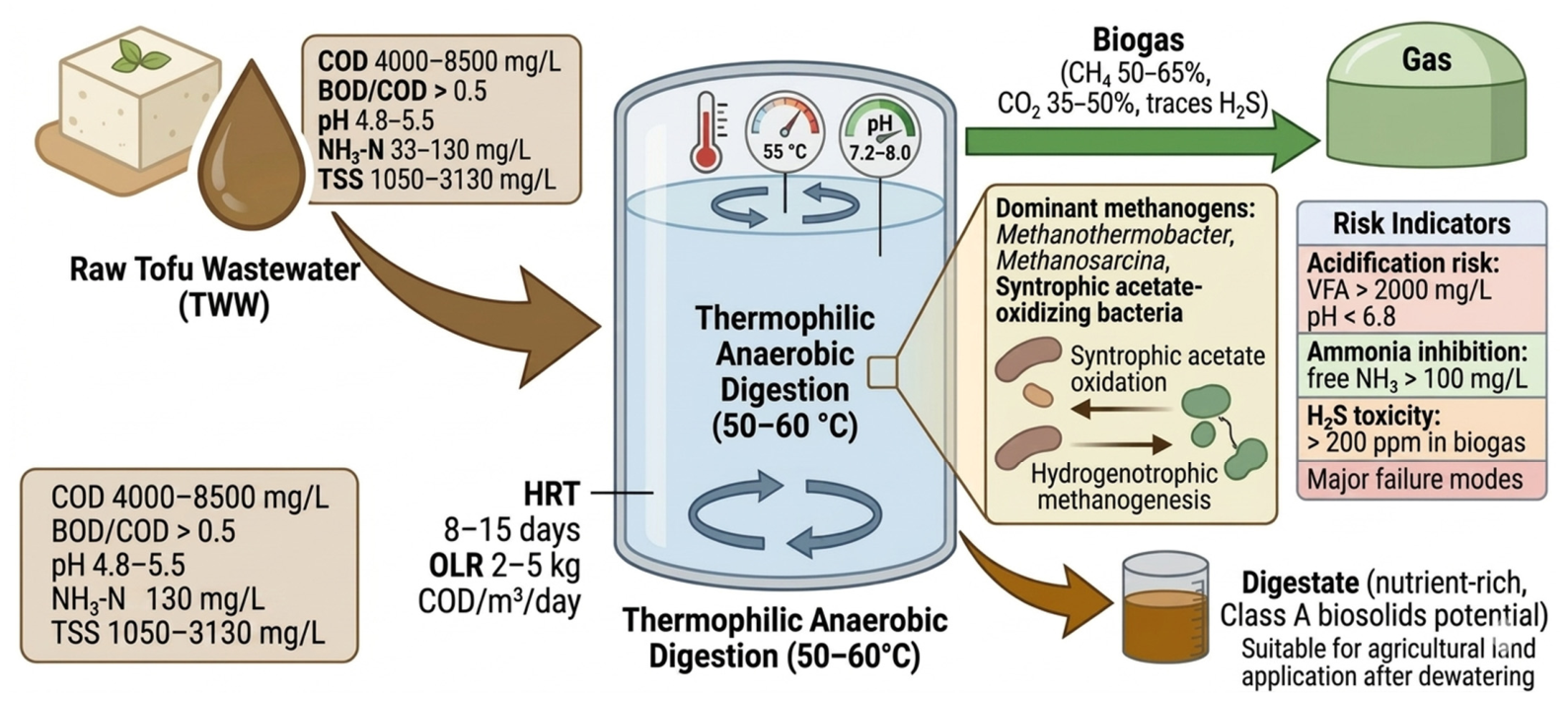
Figure 1. Thermophilic anaerobic digestion of Tofu wastewater.
Molecules 31 01882 g001
Figure 2. Production of biochar via pyrolysis of biomass.
Molecules 31 01882 g002
Figure 3. The modification of biochar with nano-calcium peroxide: (A) pristine biochar with functional groups, (B) nano-CaO2, deposition via post-pyrolysis impregnation, (C) hydrolysis and carbonation reactions that generate alkaline buffering, reactive oxygen species, and calcium-rich mineral phases for comprehensive risk control in thermophilic anaerobic digestion.
Molecules 31 01882 g003
Figure 4. Schematic representation of nano-calcium-peroxide-modified biochar as an additive in thermophilic anaerobic digestion of tofu wastewater.
Molecules 31 01882 g004
Table 1. Characteristics of tofu wastewater from different soybeans [2].
SubstrateTSS (mg/L)COD (mg/L)BOD (mg/L)NH3-N (mg/L)
Red seed3924516.672375.638.79
Pati seed2184016.672254.748.61
Wonogiri seed4444583.333481.0013.86
Green seed3444500.002976.068.73
(TSS: Total Suspended Solids; COD: Chemical Oxygen Demand; BOD: Biochemical Oxygen Demand; NH3-N: Ammonia Nitrogen).
Table 2. Wastewater characteristics from tofu processing facilities [4].
Processing FacilitypHMLSS (mg/L)BOD (mg/L)COD (mg/L)NH3-N (mg/L)PO4-P (mg/L)Turbidity (NTU)
Meurah Jaya5.0816004520.50640064.002.56921
Tahu Sumedang5.5031303810.205000129.3095.50730
Tahu MKS4.8210504390.50730039.901.57902
Tahu Lampaseh Aceh4.9011773575.50650036.101.81387
Tahu Solo4.8511504415.50850033.500.97841
(MLSS: Mixed Liquor Suspended Solids; PO4-P: Orthophosphate; NTU: Nephelometric Turbidity Unit).
Table 3. Physicochemical properties of biochar from different feedstocks [18,40].
FeedstockTemperature (°C)Yield (%)pHPore Volume (cm3/g)Surface Area (m2/g)C (%)N (%)O (%)H (%)
Wheat straw70022.809.200.058107.0073.901.2014.601.30
Soybean stover30037.037.275.6168.811.8824.994.29
Corn straw50029.3010.400.0126.0058.002.3021.502.70
Peanut shells60028.509.600.110185.0071.901.6015.002.00
Soybean stover70021.5911.320.19420.3081.981.3015.451.27
Corn straw40035.5010.200.0084.0056.102.4022.004.30
Peanut shells70021.8910.570.20448.2083.761.1413.341.75
Wheat straw50027.608.300.090111.0070.301.4017.702.90
Peanut shells40036.809.300.0075.0058.401.8021.003.50
Corn straw60026.7010.400.0127.0058.602.0018.702.00
Peanut shells30036.917.763.1468.271.9125.893.85
Wheat straw40032.408.200.01210.0057.801.5021.603.20
Table 4. Important reactions occurring during CaO2 catalytic biomass pyrolysis with thermodynamic data and risk-mitigation functions.
Reaction NameChemical EquationΔG at 700 °C (kJ/mol)Risk-Mitigation Function
CaO2 decomposition2CaO2 + Heat → 2CaO + O2−296.8Oxygen release for tar cracking and pore formation
Biomass volatiles + O2CxHᵧO2 + O2 → CO + CO2 + H2O + hydrocarbons−450 to −550Tar reduction, syngas quality improvement
Primary water gasC (from biochar) + H2O + Heat → CO + H2+135.0Hydrogen-rich syngas generation
Secondary water gas shiftCO + H2O ⇌ CO2 + H2−28.6H2/CO ratio adjustment
Steam Reforming of TarTar (e.g., C6H6) + 6H2O → 6CO + 9H2+356.2 (endothermic)Tar elimination, enhanced biochar purity
Oxidative crackingTar + O2 → CO + CO2 + H2O−550 (exothermic)Complementary tar removal pathway
CarbonationCaO + CO2 → CaCO3 + Heat−130.4CO2 sequestration, CaCO3 formation for sustained alkalinity
Table 5. Failure mode and effects analysis for conventional TAD of TWW.
Failure ModeSeverity (S)Occurrence (O)Detection (D)RPNRisk Classification
Acidification failure987504High probability, high impact
Ammonia inhibition868384Medium probability, high impact
H2S toxicity759315Medium probability, high impact
VFA accumulation876336High probability, medium impact
Pathogen survival62560Low probability, medium impact
Heavy metal mobilization537105Low probability, medium impact
Table 6. Projected failure mode and effects analysis for Nano-CaO2/BC-enhanced TAD of TWW.
Failure ModeSeverity (S)Occurrence (O)Detection (D)RPNProjected RPN Reduction (%)
Acidification failure9 → 98 → 27 → 4504 → 7285.7
NH3 inhibition8 → 56 → 28 → 5384 → 5087.0
H2S toxicity7 → 45 → 29 → 4315 → 3289.8
VFA accumulation8 → 57 → 36 → 4336 → 6082.1
Pathogen survival6 → 42 → 15 → 460 → 1673.3
Heavy metal mobilization5 → 33 → 27 → 5105 → 3071.4
Table 7. Comprehensive and technical comparison of TAD enhancement strategies for high-strength organic waste.
StrategyKey Mechanism(s)Reported Methane EnhancementAmmonia Nitrogen (NH4+-N) ControlHydrogen Sulfide (H2S) ControlpH BufferingNutrient RecoveryReferences
Ca(OH)2 pretreatment- Alkaline hydrolysis of lignocellulosic matrix
- Partial solubilization of organic matter
15–25% (or up to 31% for food waste)NoneNoneLimited to transient alkalinity consumptionNone[49,64]
Conventional alkaline (Ca(OH)2)- Alkaline disruption of lignocellulosic biomass
- Accelerated VFA conversion
- Partial NH4+-N stripping via pH elevation to >10 (transient)
20–84% (range depending on substrate and duration)Not quantified; possible stripping effect at high pHNot reportedConsumption of alkalinity during VFA accumulationCa2+/PO43− precipitation as Ca5(PO4)3(OH)[22,58]
Trace element supplementation- Provision of essential enzyme cofactors (metallocofactors)
- Enhances F420, MCR, hydrogenase activity
- Critical for VFA metabolism (Co, Ni, Mo, Se, W)
30–40% (Mo, Se); 45–65% (mixed Co, Mo, Ni, Se, W) for low-background inoculaNone directly (NH3 toxicity may be indirectly alleviated by improved metabolism)None directlyIndirect via lower VFA accumulationNot reported[66]
Pristine biochar- Physical adsorption of inhibitors (phenols, NH4+)
- Conductive support matrix enabling DIET via electron tunneling
- pH buffering via surface functional groups (-COOH, -OH)
18–37%Moderate (via physical adsorption of NH4+; limited capacity ~10 mg/g)Moderate (physical trapping; H2S oxidation by redox-active groups)Mild (carboxyl/phenolic groups accept H+)Low (surface groups bind K+, Ca2+, Mg2+)[12,67]
Fe3O4-modified biochar- Enhanced DIET due to Fe2+/Fe3+ redox cycling
- Magnetic biochar facilitates conductivity without chemical or osmotic stress
- Ferric iron (Fe3+) serves as an alternate electron acceptor
25–56% (or 62.6% under high-NH4+ stress for nano-Fe3O4)Moderate (surface Fe3+ can bind NH4+)No direct effectNo (Fe3O4 neutral); but mild effect if Fe3+ consumedNone reported[47]
Mg/Fe-modified biochar - Highly porous Mg-Fe oxide layer (lamellar double hydroxide, LDH) on biochar surface
- Strong chemisorption of NH4+ via Mg2+ sites and interlayer exchange
- High Fe3+/Fe2+ conductivity for DIET
116–229% (chicken manure at 2–5% additive)High (87.83 mg NH4+-N/g)
via LDH ion-exchange capacity
LowNo (neutral to slightly basic)High (Mg2+ and PO43- struvite precipitation potential)[45]
KOH-activated biochar - Alkaline activation creates ultra-high surface area, micropore volume, and graphitic degree
- Boosted electron transfer (low resistance; high specific capacitance)
- Promotes DIET between fermenters (Smithella) and methanogens (Methanosaeta)
52% increase in methane production rate [rate, not final yield] (Pennisetum giganteum)Indirect: higher microbial activity improves NH4+ consumptionNot reportedNo (process stability via reduced VFA lag)Not assessed[68]
FeCl3-impregnated biochar - Fe3+ loading onto biochar surface enhances DIET via Fe2+/Fe3+ cycling
- Promotes more diverse methanogenic pathways (methanol, dimethylamine, methylamine)
- Enhances direct interspecies electron transfer
22.5% and 12.8% cumulative methane yield relative to controlNot quantifiedNot quantifiedNo (Fe3+ slightly acidic)No (Fe3+/Fe2+ redox)[69]
Metal-engineered biochar - Multi-metal (Fe, Ni, Co, Mn)-loaded via mechanochemistry:
• Metal-carbon redox-active interfaces
• Mesoporous structure enhances cell colonization
- Spatial niche partitioning: BC phase drives DIET via Methanosarcina; sludge phase retains IHT (hydrogenotrophic pathway)
- Fe-Ni cofactor activates key metalloenzymes (e.g., MCR)
cCH4 224.7 NmL/g.VS
Lag phase shortened from 22.3 days → 3.7 days
Not reportedNot reportedNot reportedNot reported[70]
Nano zero-valent iron/biochar (nZVI/BC)- nZVI undergoes corrosion (Fe0 → Fe2+ → Fe3+) generating reactive oxygen species + H2 (micro-aeration)
- H2 promotes hydrogenotrophic methanogenesis
- Fe2+/Fe3+ for direct DIET
- Biochar support prevents nZVI agglomeration and toxicity
29.2–46.7% (vs. nZVI alone: 24–30%)Not quantifiedVery high: H2S concentration reduced from 8.32 mL to 0.22 mL (J) via precipitation of FeS (insoluble)Not quantifiedNo (Fe2+/Fe3+ cycles)[69]
MnO2-modified biochar - MnO2 (Mn4+/Mn2+) redox capability enhances biochar capacitance → facilitates extracellular electron transfer
- Promotes syntrophic fatty acid oxidation (Syntrophomonas) and methanogenesis (Methanosaetaceae)
24.3% (food waste); 12.7% (high NH4+-N, 2 g/L); 9.4% (high organic load, 30 g/L)Moderate: 12.7% improvement under high NH4+ stressNot quantifiedNot directly (MnO2 neutral)Not reported[71]
Nano-CaO2/BC (projected)- CaO2 → slow hydrolysis (H2O2) → oxidative stress and partial hydrolysis of recalcitrant polymers
- OH released during CaO2 decomposition provides sustained pH buffering
- Ca2+ precipitates excess PO43− → Ca5(PO4)3(OH) and possibly MgNH4PO4·6H2O
- Biochar matrix facilitates adsorption, microbial colonization, and electron transfer
Estimated 30–50% (based on synergistic effects)High (adsorption + oxidation + pH shift) not yet quantifiedHigh (oxidation + precipitation of metal sulfides) projectedSustained (slow hydrolysis of CaO2 over 2–4 weeks)High-PO43− recovered as Ca5(PO4)3(OH) and possibly Mg-NH4-PO4 from additional MgProjected based on [13,14,17,19,20,54,60,62]; this review
Disclaimer/Publisher’s Note: The statements, opinions and data contained in all publications are solely those of the individual author(s) and contributor(s) and not of MDPI and/or the editor(s). MDPI and/or the editor(s) disclaim responsibility for any injury to people or property resulting from any ideas, methods, instructions or products referred to in the content.