Article

A Theoretical Prediction of the Antioxidant and Electronic Properties of Epicatechin, Procyanidin B2, Procyanidin, C1 and Cinnamtannin A2


by
Boleslaw T. Karwowski
Nucleic Acids Damage Laboratory, Food Science Department, Faculty of Pharmacy, Medical University of Lodz, ul. Muszynskiego 1, 90-151 Lodz, Poland
Molecules 2026, 31(11), 1876; https://doi.org/10.3390/molecules31111876

Submission received: 21 April 2026 / Revised: 23 May 2026 / Accepted: 28 May 2026 / Published: 29 May 2026
(This article belongs to the Special Issue Functional Molecules Design for Nutrition Health)

Abstract

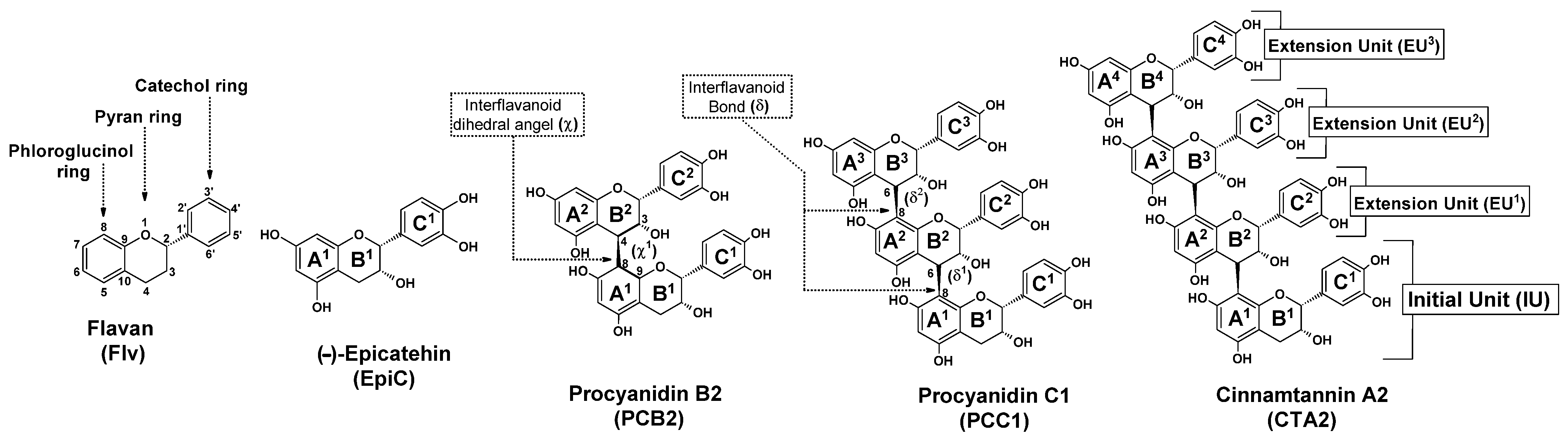
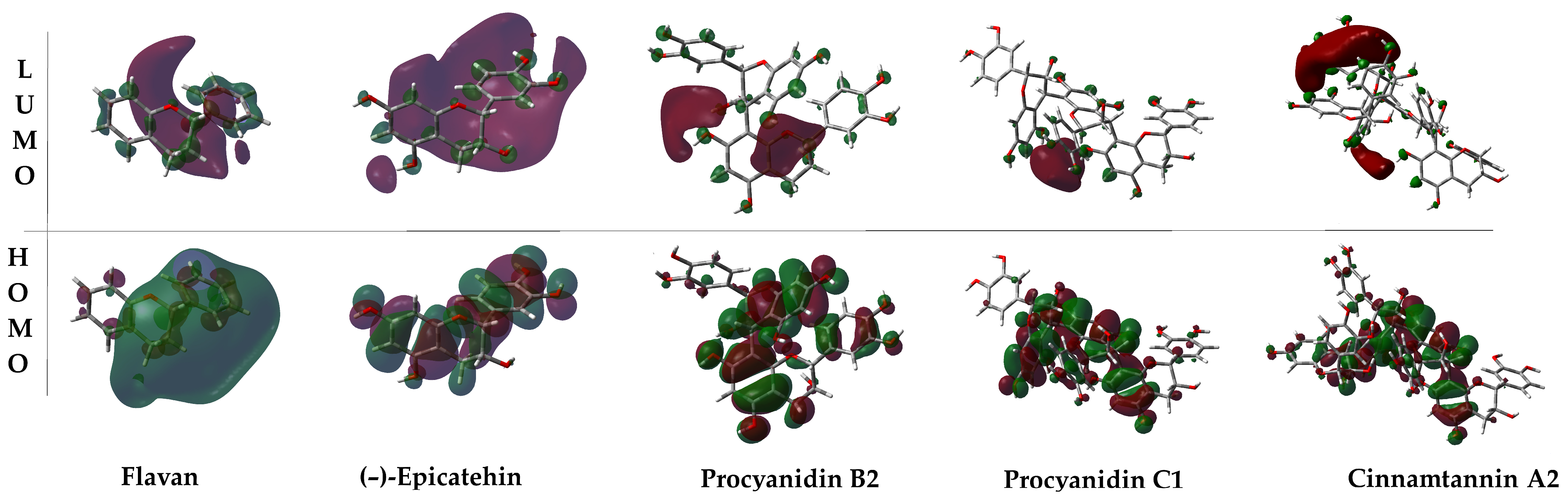
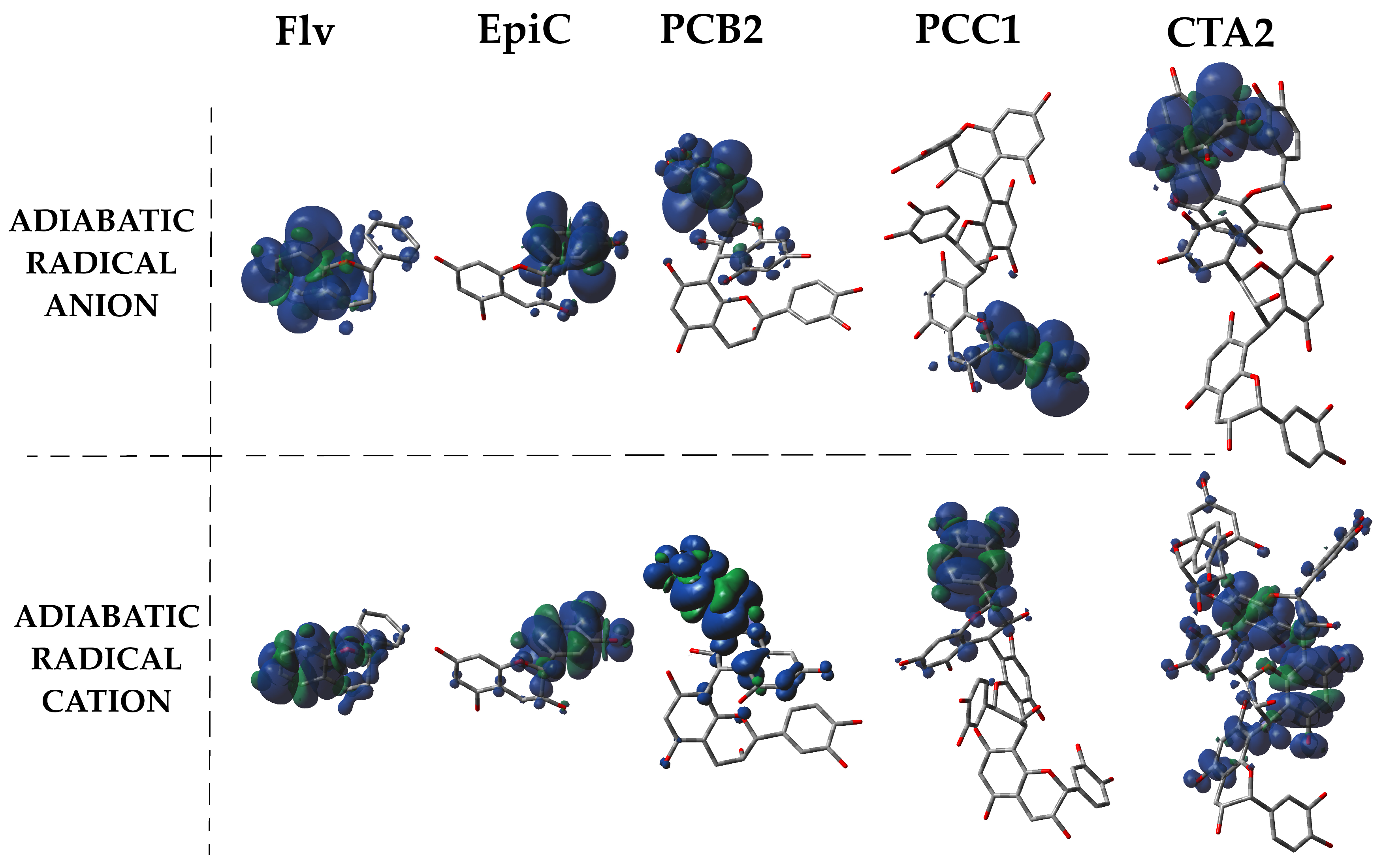
During food intake, small amounts of antioxidants are absorbed and distributed to the extracellular matrix, from which they are made available to all types of cells. They protect against various free radicals generated in the extracellular and intracellular environments. They also protect against ionising radiation or UV directly. Some of the most abundant antioxidants in food are the proanthocyanidins, a form of condensed tannin found in tea, cocoa, and grape seeds. They also bestow various other health benefits as apoptosis inducers. The present study examines the vertical and adiabatic ionisation potentials and electron affinities of flavan, (−)-epicatechin, procyanidin B2, procyanidin C1, and cinnamtannin A2, and discusses the influence of non-equilibrated solvent–solute interactions on their electronic properties. The analysis employs the M06-2x/aug-cc-pVTZ//M06-2x/6-31++G** level of theory in the aqueous phase. Procyanidin C1 was found to have the lowest ionisation potential (6.08 eV) and the highest adiabatic electron affinity (1.15 eV); also, all (−)-epicatechin derivatives demonstrated a lower IP than guanine (6.42 eV), suggesting a potential genome-protective effect. These findings were confirmed by the global reactivity descriptor, the Fukui reactivity index, and the spin density distribution. The theoretical results presented here support the experimental results which predict that nutrients can help maintain a delicate redox balance which is crucial for the extra- and intracellular matrix.
Keywords: (−)-epicatechin; procyanidin B2; procyanidin C1; cinnamtannin A2; ionisation potential; electron affinity; global reactivity descriptors; Fukui reactivity index; density functional theory (−)-epicatechin; procyanidin B2; procyanidin C1; cinnamtannin A2; ionisation potential; electron affinity; global reactivity descriptors; Fukui reactivity index; density functional theory