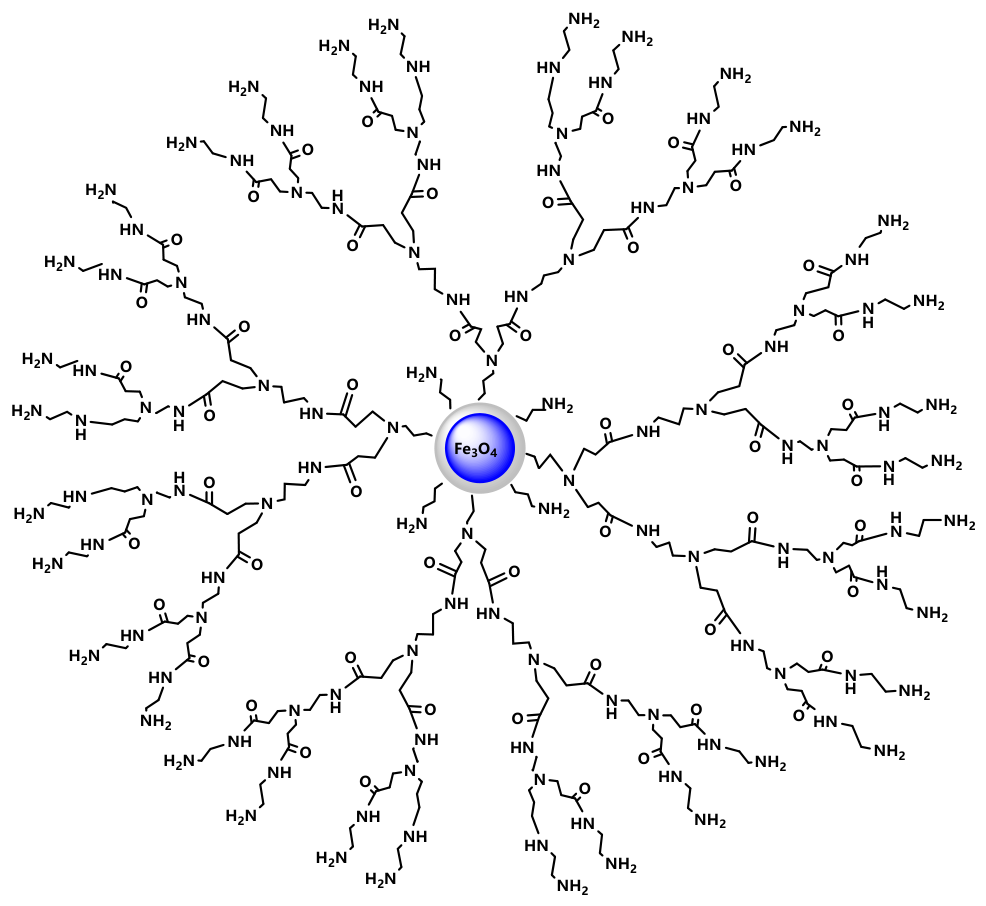
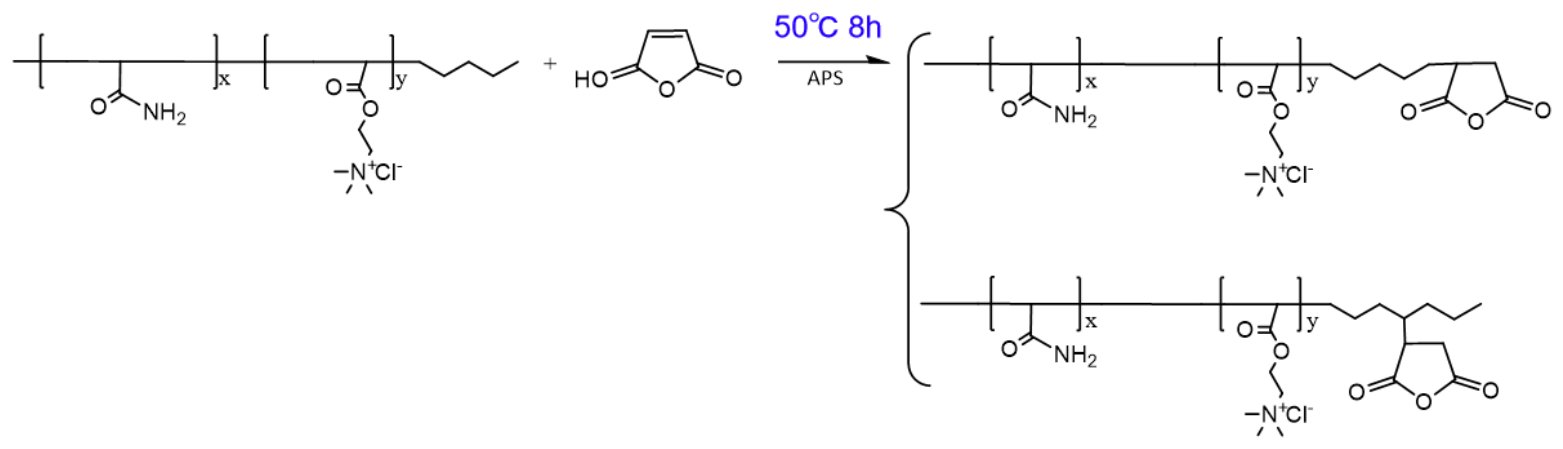
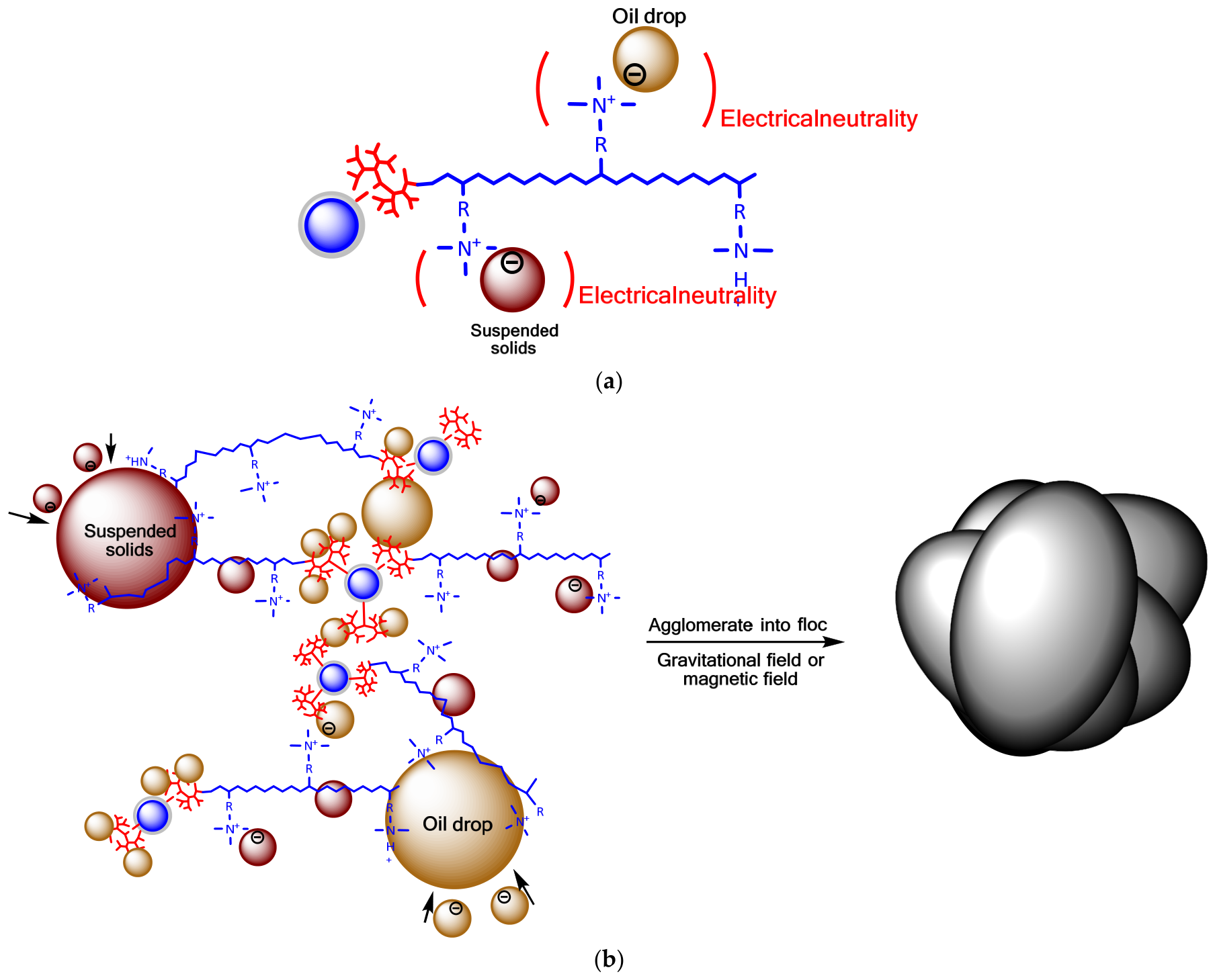
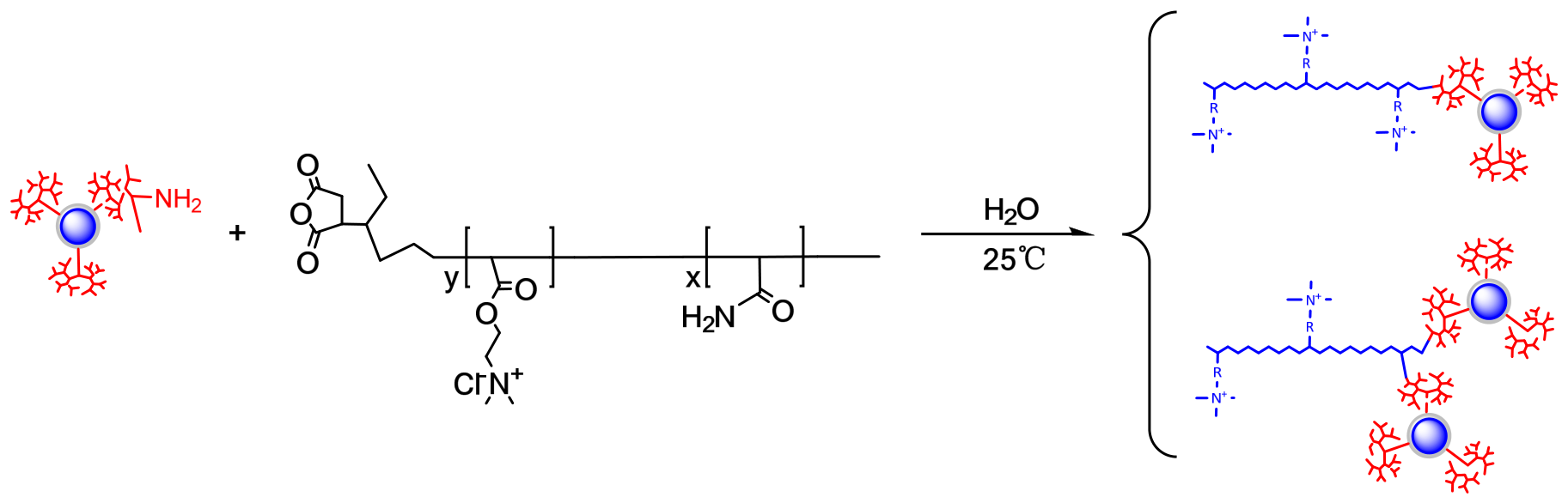
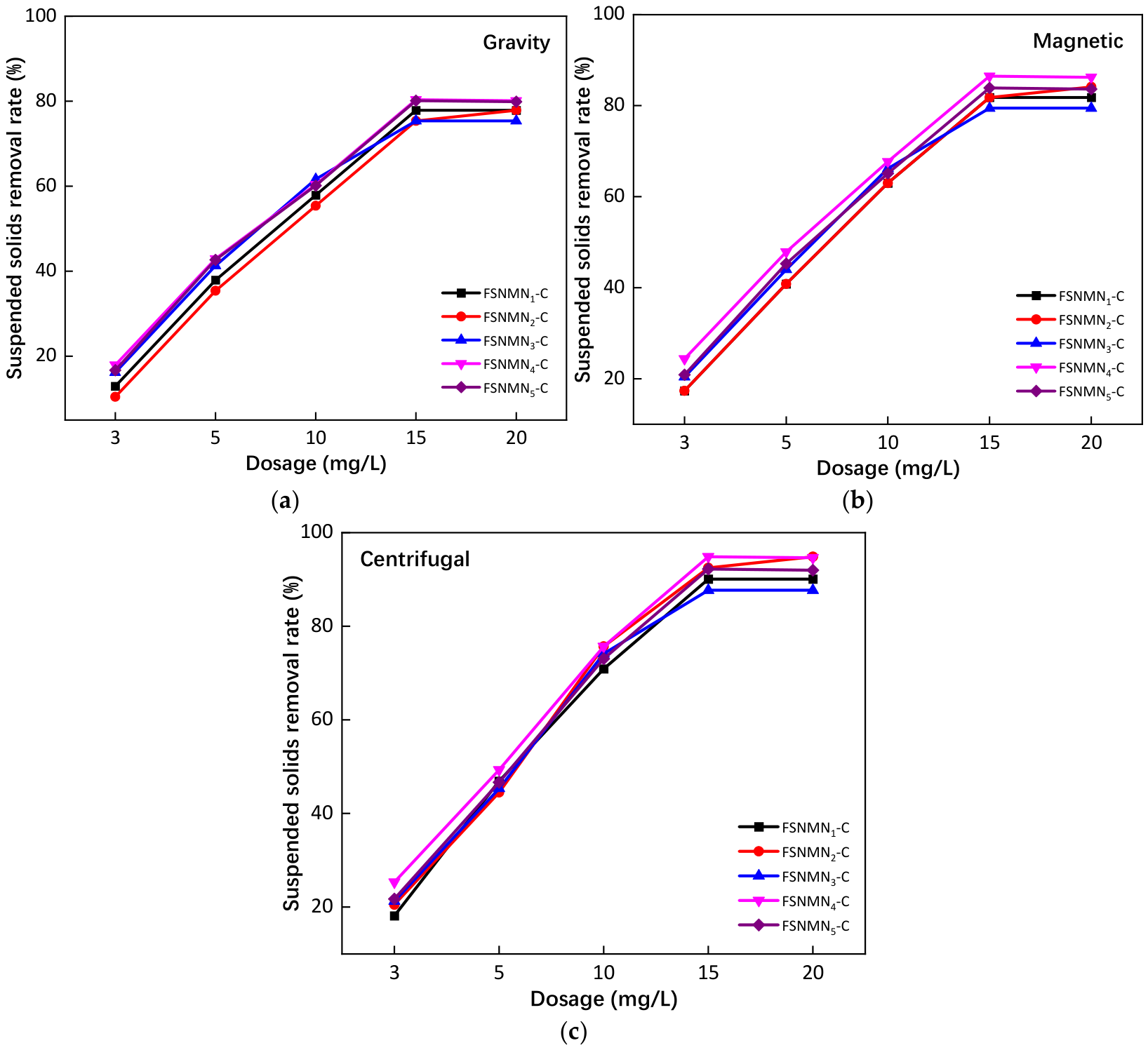
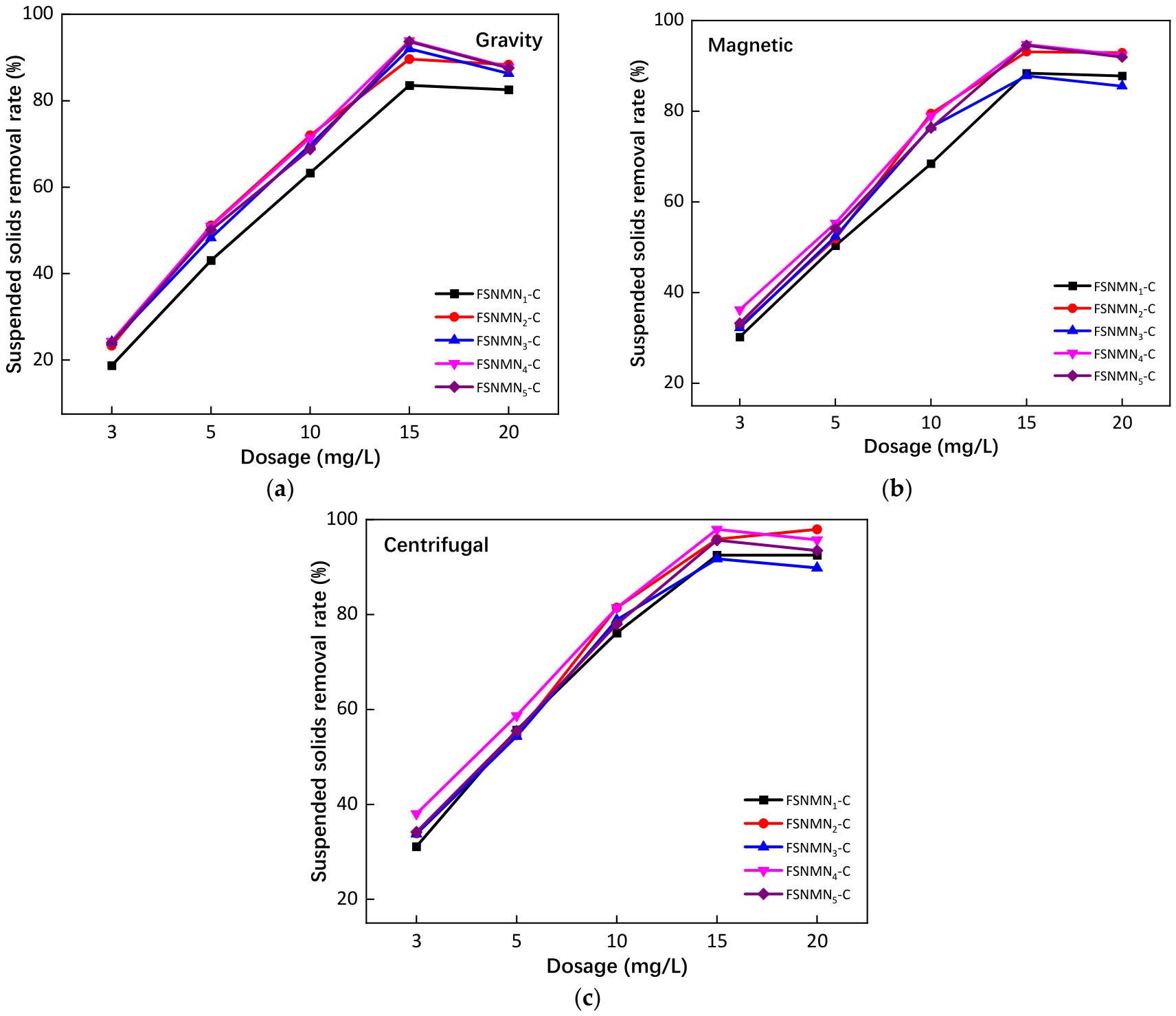
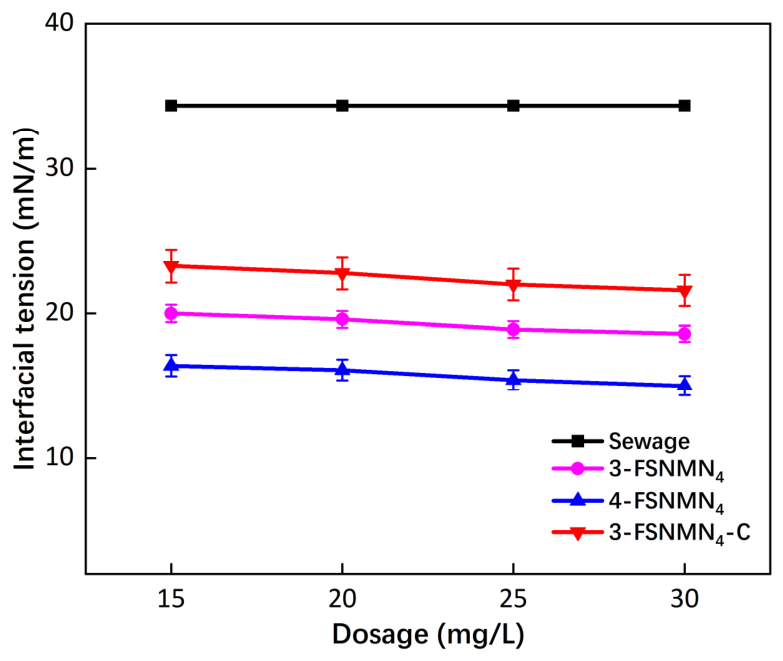
The results showed that the optimal group was reaction time 4 h, reaction temperature 40 °C and reactant molar ratio 1:1, and the reactant FSNMN could be appropriately excessive. At this time, the removal rates of the five hyperbranched molecular grafted suspensions were 84.5%, 90.5%, 92.9%, 94.8% and 94.5%, respectively.
3.1. Structural and Morphological Characterization
The optimal products FSNM,3-FSNMN
4, CAMHA and 3-FSNMN
4-C were used as infrared samples, and the samples were processed by KBr compression. The FT-IR spectra are shown in
Figure 6.
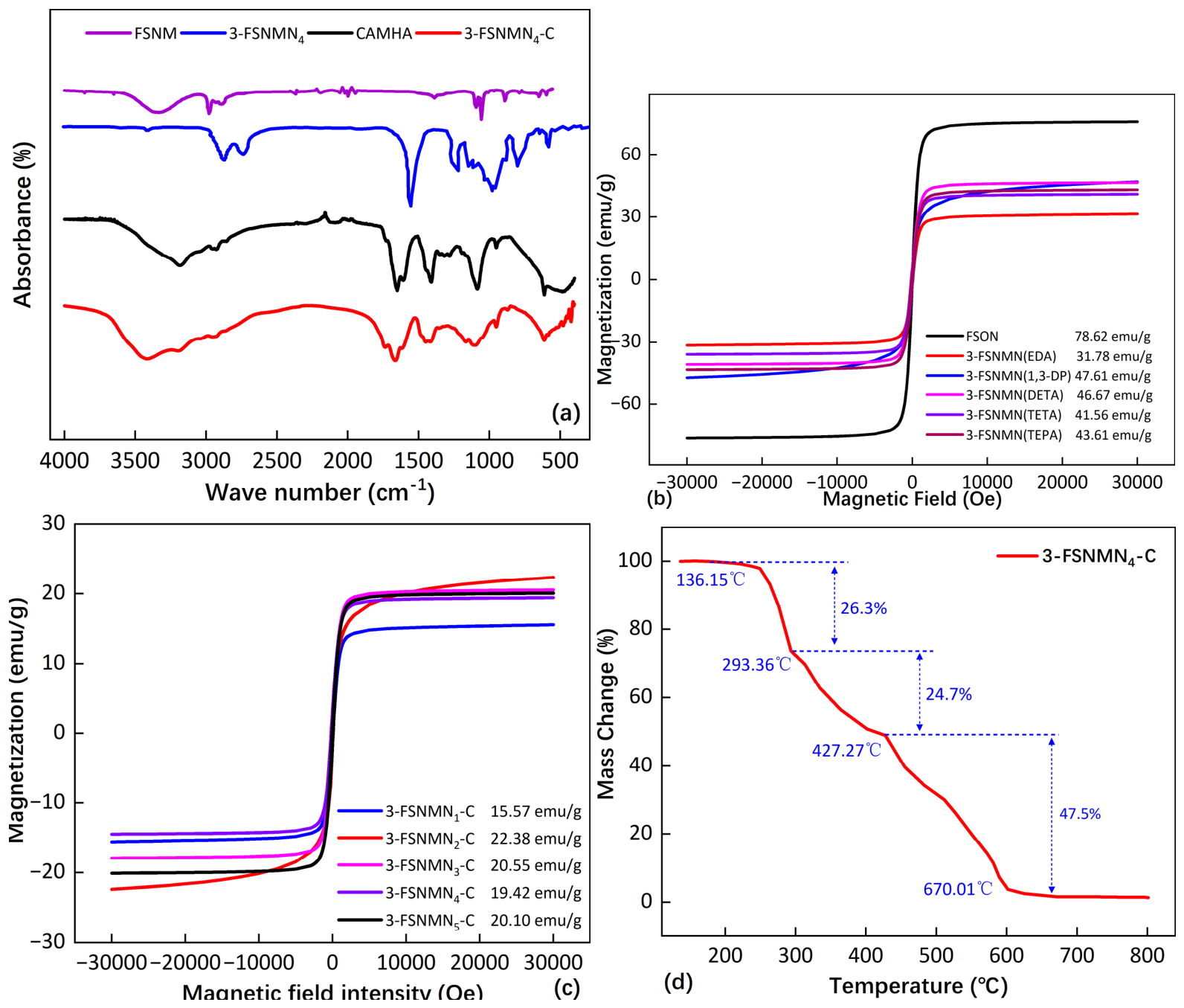
Figure 6a shows that 3-FSNMN-C, 3-FSNMN and FSNM have similar characteristic structures. Compared with a FSNM molecule, 3-FSNMN-C has a significant amide absorption peak and branched structure. Compared with the characteristic line of 3-FSNMN, the characteristic peak is consistent with 3-FSNMN. There are strong and wide absorption peaks at 3346 cm
−1, corresponding to the stretching vibration of N-H, amide absorption peak of secondary amide and -NH
2 symmetric stretching vibration absorption peak. There were several methyl/methylene saturated carbon chain peaks in the range of 2973–2892 cm
−1, of which the CH
3 antisymmetric stretching vibration absorption peak appeared at 2973 cm
−1 and the -CH
2 antisymmetric stretching vibration absorption peak appeared at 2922 cm
−1. There are multiple stretching vibration absorption peaks with C=O between 1934 and 2042 cm
−1; 1378 cm
−1 is the weak symmetrical vibrational absorption peak of -COO- [
22]. It can be found that 3-FSNMN-C has a large number of amide structures compared with CAMHA spectral lines. After observing the contrast of other characteristic peaks, there are multiple overlapping spectral bands and absorption peaks in the range of wave numbers from 3500 cm
−1 to 3000 cm
−1. The moderate intensity symmetric stretching and antisymmetric stretching vibration peaks of amide-NH
2 exist at the wave number of 3425 cm
−1, which are superimposed with the dispersion absorption bands of ammonium salts, so -NH
2 and NH
4+structures may exist at the same time. The strong and sharp symmetric stretching vibration peaks of amide-HN
2 appear at the wave number of 3182 cm
−1, and the dispersion strong absorption band of ammonium salt NH
4+is superimposed at the lower part of the band, while the moderate intensity and wide band of vibration appear at the wave number of 3037 cm
−1, which conforms to the antisymmetric stretching band of NH
4+. It is determined that there are amide structures and ammonium salt NH
4+structures in the polymer molecules. Multiple stretching vibration peaks of -CH
2-, -CH
3 appeared near 2924 cm
−1, which was also the antisymmetric stretching vibration characteristic peak of long-chain -CH
2-. At 2850 cm
−1, there was a symmetric stretching vibration peak of long-chain-CH
2-. It was determined that the product was a saturated long carbon chain polymer. At 1732 cm
−1, there was a low intensity absorption peak, a weak characteristic five-membered ring C=O stretching vibration absorption peak at this position, and a very strong carbonyl stretching vibration peak at 1651 cm
−1, while carbonyl existed in both amide and -COO- structures, with a strong antisymmetric stretching vibration peak of carboxyl -COO- at 1608 cm
−1, a carboxyl -COO- symmetric stretching vibration peak at 1408 cm
−1, and a stretching vibration absorption peak of aliphatic anhydride at 1083 cm
−1. It was determined that there was an anhydride structure, which was weaker than CAMHA, indicating that the grafting process consumed part of the anhydride structure.
By comparing and analyzing the infrared spectra, it can be seen that the infrared characteristics of 3-FSNMN-C include all the characteristic groups of hyperbranched and cationic chains, indicating that there are hyperbranched molecules and cationic polymer structures in the 3-FSNMN-C molecule at the same time.
The saturation magnetization curve is measured by vibrating sample magnetometer (VSM), which is used to test the magnetic properties of magnetic materials. The magnetization curve is tested and drawn with a Lake Shore 7410 vibrating sample magnetometer, as shown in
Figure 6.
Figure 6b shows the saturation magnetization of FSNMN before grafting. The initial magnetic core is 78.62 emu/g. When branched to the third-generation hyperbranched molecule, the 3-FSNMN
1 hyperbranched ethylenediamine is 31.78 emu/g, the 3-FSNMN
2 hyperbranched of 1,3-propanediamine is 47.61 emu/g, the 3-FSNMN
3 hyperbranched of diethylenetriamine is 33.56 emu/g, the 3-FSNMN
4 hyperbranched of triethylenetetramine is 41.56 emu/g, and the 3-FSNMN
5 hyperbranched of tetraethylenetriamine is 41.56 emu/g.43.61 emu/g. The magnetic responsiveness of the products are lower than 90 emu/g of nano-Fe
3O
4 particles and much higher than 21 emu/g of natural ferrite particles. The hysteresis loop curve passes through the origin without a hysteresis phenomenon, and can quickly respond to the magnetic force of the magnetic field to produce displacement, and has sufficient magnetic responsiveness.
Figure 6c shows that the magnetic response ability of the grafted FSNMN-C is attenuated to a certain extent, and the saturated magnetization of the grafted FSNMN-C is reduced to varying degrees, possibly due to the shielding effect of the thicker polymer chain on the magnetic field. The hyperbranched 3-FSNMN
1-C of ethylenediamine was 15.57 emu/g, the hyperbranched 3-FSNMN
2-C of 1,3-propanediamine was 22.38 emu/g, the hyperbranched 3-FSNMN
3-C of diethylenetriamine was 20.55 emu/g, the hyperbranched 3-FSNMN
4-C of triethylenetetramine was 19.42 emu/g, and the hyperbranched 3-FSNMN
5-C of tetraethylenetriamine was 20.10 emu/g. Although the magnetic response ability is weakened, it is similar to the 21 emu/g of natural ferrite particles. The hysteresis loop curve passes through the origin without a hysteresis phenomenon, and can quickly respond to the magnetic force of the magnetic field and shift.
The instrument uses a DSC-Q2000 differential scanning calorimeter of TA company in the United States. The experimental sample is 3-FSNMN
4-C hyperbranched grafted with triethylenetetramine. The thermal decomposition curve is shown in
Figure 6d.
After vacuum drying, the water of the sample was completely lost at 136.15 °C, indicating that there was bound water in its molecules. The thermogravimetry curve after moisture removal generally presents a three-stage pattern. Due to the hyperbranched structure with long chains and multiple branches, the ladder of the curve is not obvious. 3-FSNMN4-C began to decompose at a high speed at 249.13 °C, and the slope of the mass change curve with temperature was the largest, and it could maintain thermal stability at 136.15–249.13 °C.
In the first stage, from 249.13 °C to 293.36 °C, the mass loss was mainly caused by thermal imidization of the amide structure and thermal decomposition of the quaternary ammonium structure, with a total mass loss of 26.3%. In the second stage, from 296.1 °C to 409.1 °C, the whole polymer chain began to decompose, the main chain was broken by heat, and the slope of the curve was high. The maleic anhydride group also began to decompose at 330 °C, with a loss of 24.7% of the total mass. The third stage is from 427.27 °C to 670.01 °C, which is the final stage of decomposition of the products and the remaining heat-resistant groups. With the continuous trend of decomposition slowing down, the thermal decomposition is completed after 670.01 °C, with a total loss of 47.5% of the total mass. Up to 800 °C, a certain quality of magnetic core remains and does not decompose. The thermogravimetric curve is similar to the decomposition curve of CAMHA, and has unique decomposition characteristics. The thermogravimetric thermal property is consistent with the structure of FSNMN-C hyperbranched cationic polymer.
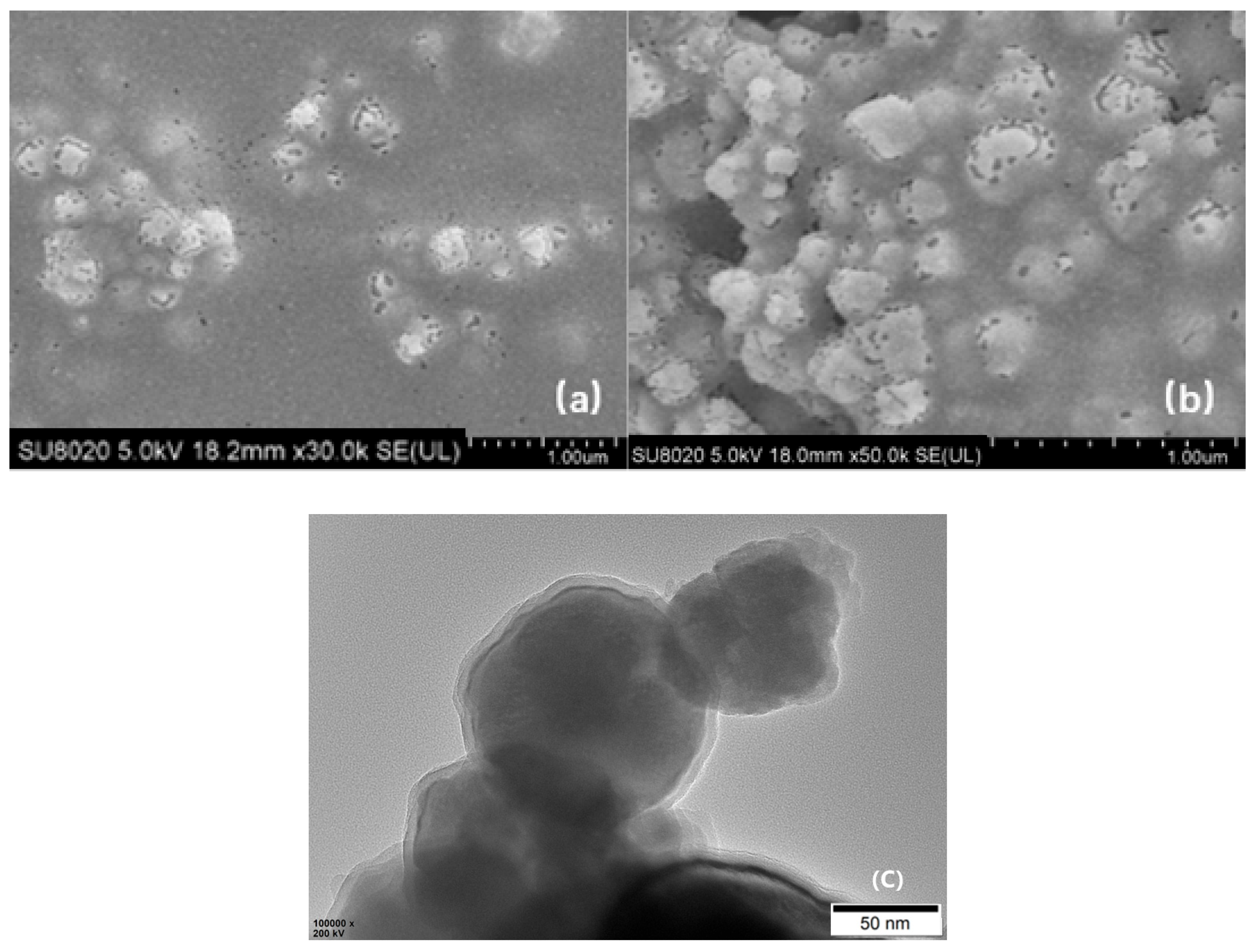
The scanning electron microscope (SEM) uses the Hitachi su8020 (EMAXevolution X-Max80/EX-270) magnetic material scanning electron microscope, manufactured by Hitachi High-Technologies Corporation, Tokyo, Japan. The electron microscope sample is the third-generation triethylenetetramine hyperbranched and grafted 3-FSNMN
4-C. The sample is dissolved and dried into thin sheets for SEM scanning electron microscope imaging. The sample is a non-conductive organic matter with poor electron beam imaging effect, so it needs to be sprayed with gold. The SEM and TEM images are shown in
Figure 7.
Figure 7a shows that the material after drying and shrinkage of 3-FSNMN
4-C has an obvious hyperbranched molecular core, and the shape and size of the core match that in
Section 2. The sphere is a complete hyperbranched molecule, and the surface of the material is obviously covered with organic matter. Hyperbranched molecules are evenly distributed in a large range in the 3-FSNMN
4-C dry material. It is found in
Figure 7b that they are clustered and distributed in a small range after magnification, thus maintaining their magnetic response performance. The TEM image in
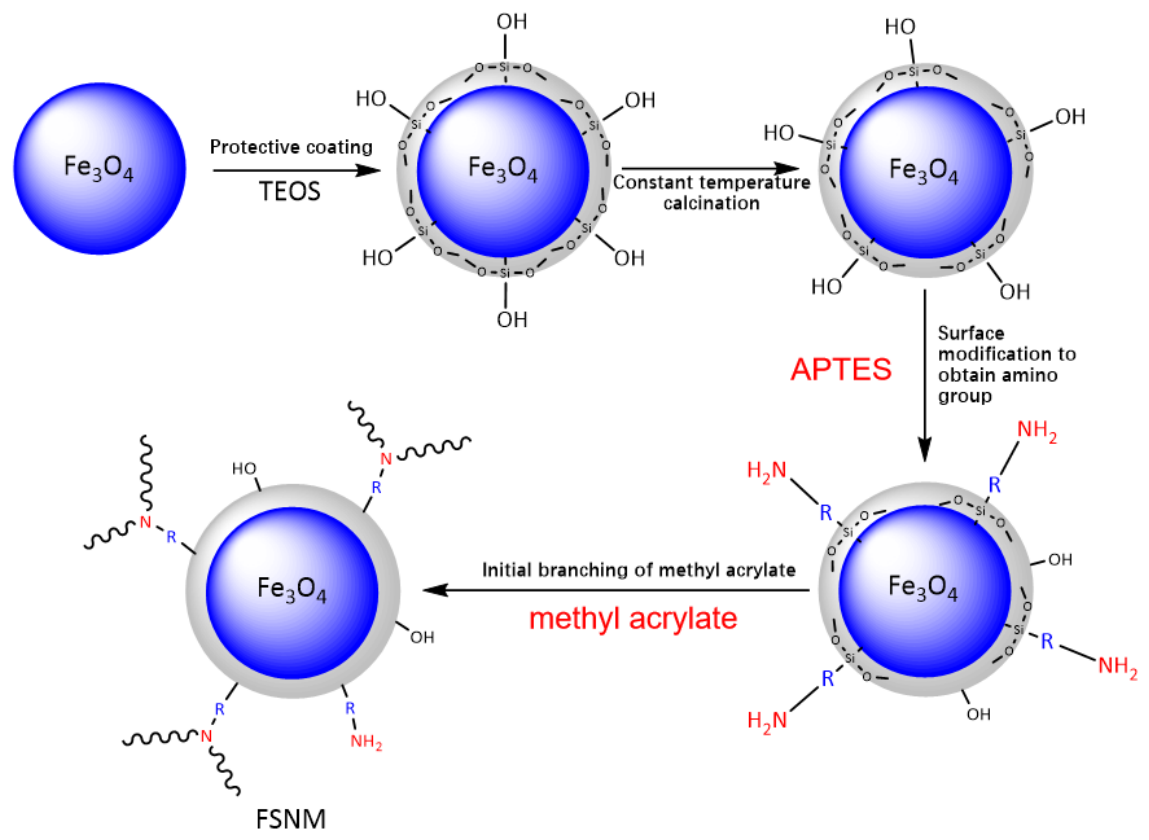
Figure 7c shows that the surface of the iron core was successfully coated with a silica shell. The multi-stage maleic anhydride groups generated in the second stage of CAMHA synthesis polymerization can be grafted with multiple hyperbranched molecules, which also conforms to the reaction mode of CAMHA dropping into FSNMN.
3.3. Demulsification Performance of FSNMN-C
The simulated emulsion has stable properties, which can control variables and comparative analysis. The demulsification performance of different hyperbranched molecules is evaluated by using the simulated emulsion, and data is accumulated for mechanism analysis. Using standard kerosene, sodium dodecylbenzene sulfonate, and sodium petroleum sulfonate as the solvent, hydrolyze anionic polyacrylamide HPAM, an emulsion with oil content of 1000 mg/L and zeta potential of −35 mV was prepared, which is recorded as negative emulsion a-; using standard kerosene, Tween span and non-ionic polyacrylamide non-PAM, an emulsion with oil content of 1000 mg/L and an electric neutral kerosene emulsion were prepared, which is recorded as electric neutral emulsion a; using standard kerosene, bentonite, superfine water-borne calcium carbonate, sodium dodecylbenzene sulfonate, sodium petroleum sulfonate, polyanionic cellulose sodium and hydrolyzed anionic polyacrylamide HPAM to prepare an emulsion with oil content of 1000 mg/L, the kerosene emulsion of negatively charged suspended matter with oil content of 1000 mg/L, suspended matter of 150 mg/L and zeta potential of −35 MV was prepared.
The demulsification properties of two kinds of simulated emulsions, negatively charged emulsion a- and electrically neutral emulsion a, were evaluated. Adjust the dosage of the treatment agent, set the experimental temperature as 25 °C, shake well with a plug, during which the plug can be opened multiple times to exhaust, shake well and then stand for 30 min. The centrifugal force field uses a centrifuge with a rotating speed of 3000 r/min, add the agent and mix well, centrifuge for 10 min and then stand for 20 min. Take the middle clear liquid to determine the oil content and calculate the oil removal rate. The effect of FSNMN-C on demulsification of the simulated liquid under the conditions of gravity field and magnetic field was compared and evaluated, and the centrifugal force field was the best control group.
3.3.1. Demulsification of Electrically Neutral Emulsion by FSNMN-C
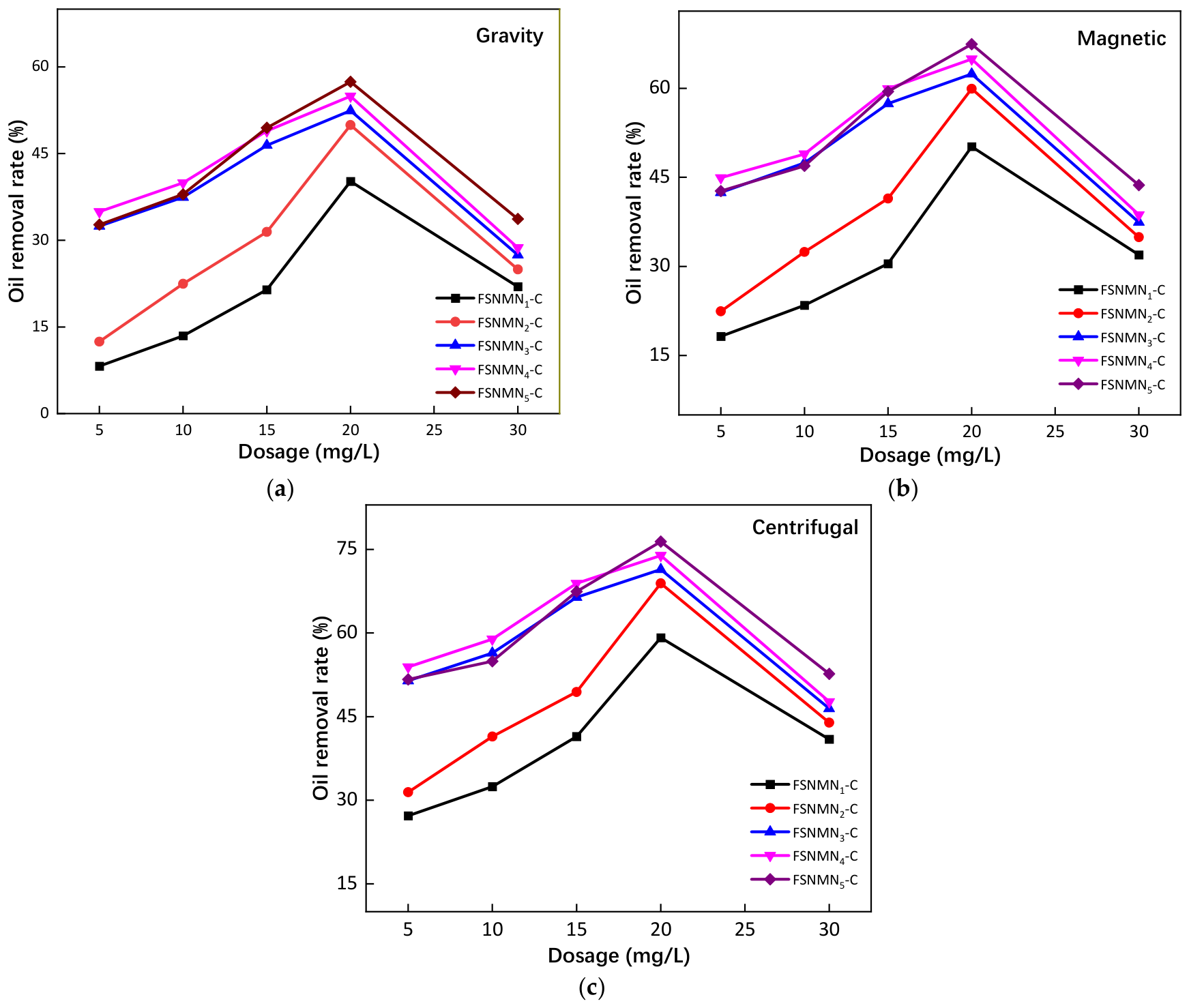
The experimental results are shown in
Figure 8.
It can be seen from
Figure 8 that comparing the treatment effect of 3-FSNMN-C on electroneutral emulsion under different conditions, the optimal dosage is 20 mg/L, and the treatment effect under magnetic field is stronger than that of natural precipitation under gravity field, with 3-FSNMN
5-C at 67.41% and 3-FSNMN
4-C at 64.93%. In the same 30 min separation time, the demulsification effect is higher than that of natural precipitation under gravity field, with 3-FSNMN
5-C at 57.42% and 3-FSNMN
4-C at 54.93%. The treatment ability of the control group under centrifugal force field was the strongest: 3-FSNMN
5-C was 76.31% and 3-FSNMN
4-C was 73.89%.
It can be seen that 3-FSNMN-C has the treatment ability for electroneutral emulsion, but the treatment effect will not exceed 76%.
3.3.2. Demulsification of Negatively Charged Emulsion by FSNMN-C
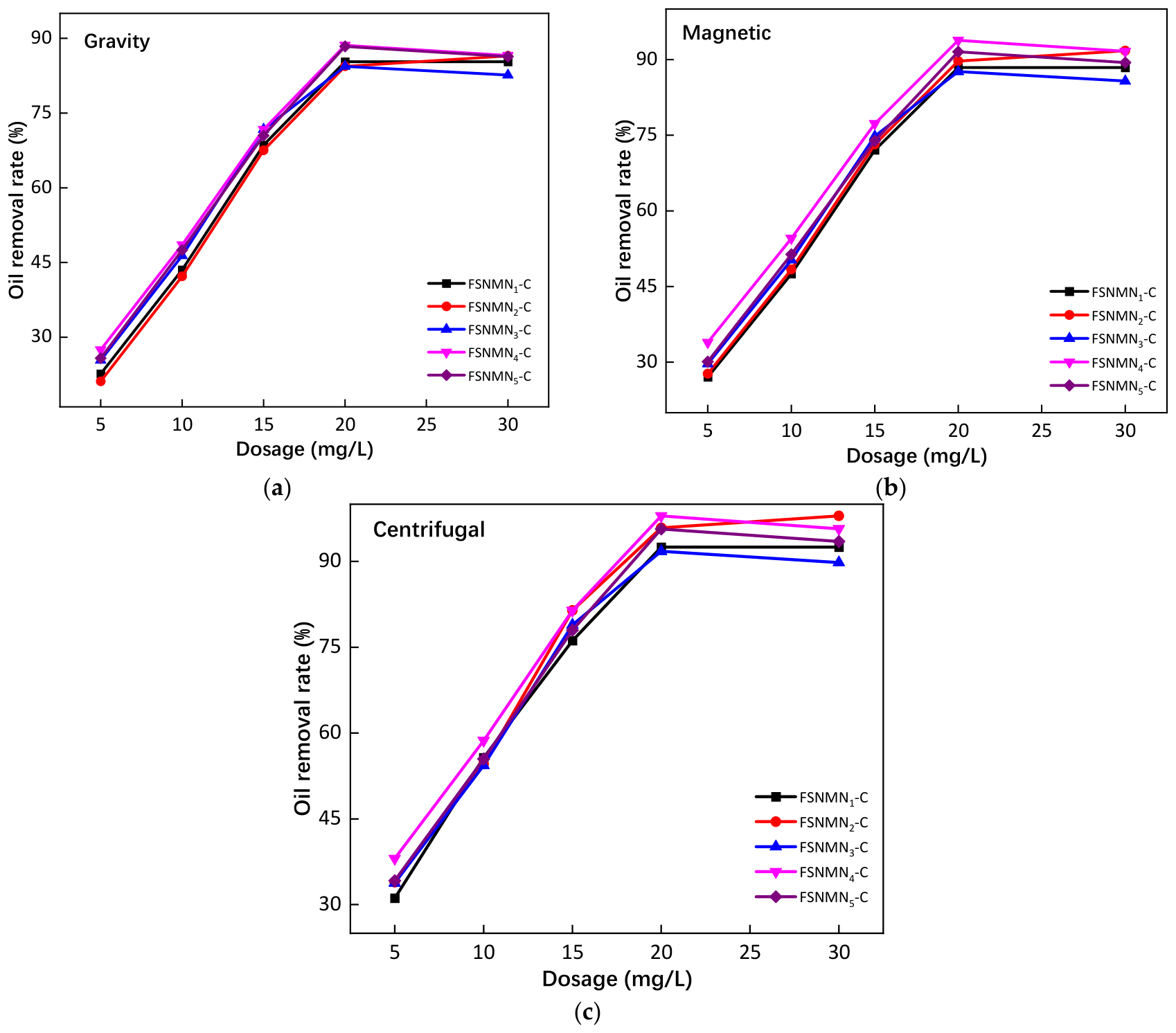
The experimental data are shown in
Figure 9.
It can be seen from
Figure 9 that the effect of 3-FSNMN-C on the treatment of negatively charged emulsion is stronger. Comparing the treatment effect of 3-FSNMN-C on negatively charged emulsion under different conditions, the optimal dosage is 20 mg/L. The treatment effect under magnetic field is stronger than that under gravity field. The treatment effect of 3-FSNMN
4-C is 93.82%, and that of 3-FSNMN
5-C is 91.55%. In the same 30 min separation time, it is higher than that under gravity field. The treatment effect of 3-FSNMN
5-C and 3-FSNMN
4-C is the same at 88.39%. The demulsification ability of the control group under centrifugal force field was the strongest, and the oil removal rate of 3-FSNMN
5-C was the highest, 97.95%, followed by that of 3-FSNMN
4-C, 95.68%.
It can be seen that the magnetic treatment effect of 3-FSNMN-C for the negatively charged emulsion is close to that of centrifugal treatment, and the oil removal rate is more than 94% under the condition of appropriate dosage. 3-FSNMN4-C and 3-FSNMN5-C have the same emulsion treatment ability and the strongest demulsification ability.
3.5. Performance of FSNMN in Treating ASP Flooding Wastewater
ASP flooding sewage sample: The separated sewage sample from a three-phase separation combined station in Daqing Oilfield has the following physical properties: suspended solids 143 mg/L, oil 921.09 mg/L, zeta potential −37 mV, pH 11. The magnetic field uses a self-made test tube rack group. The direction of the magnetic field is adjusted by the position of the permanent magnet. An N35 NdFeB permanent magnet is used. The maximum magnetic energy product is 35 MGOe, i.e., 270 Ka/m3; the magnetic field strength in the central area of the experimental setup, as measured by a teslameter, is 120 mT, with a magnetic field gradient of 15 T/m. The ferromagnetic core coated with a thin silica layer has a strong magnetic response and structural stability, which is more conducive to magnetic separation and recycling. The treatment efficiency of 88% can still be maintained after five times of reuse.
Taking ASP flooding wastewater as the treatment object, the treatment performance of the material was evaluated. Adjust the dosage of the treatment agent, set the experimental temperature at 25 °C, shake well with a plug, during which the plug can be opened multiple times to exhaust, shake well and then stand for 30 min, take the middle clear liquid to determine the oil content, and calculate the oil removal rate. Under the optimal conditions, the yield of 3-FSNMN-C is better than that of 4-FSNMN-C, but the performance is similar. In this section, these two types of hyperbranched cationic polymers are used for comparative experiments. Compare and evaluate the effect of FSNMN-C on the demulsification effect of ASP flooding wastewater under the conditions of gravity field and magnetic field, sort out the experimental data, and get
Figure 12.
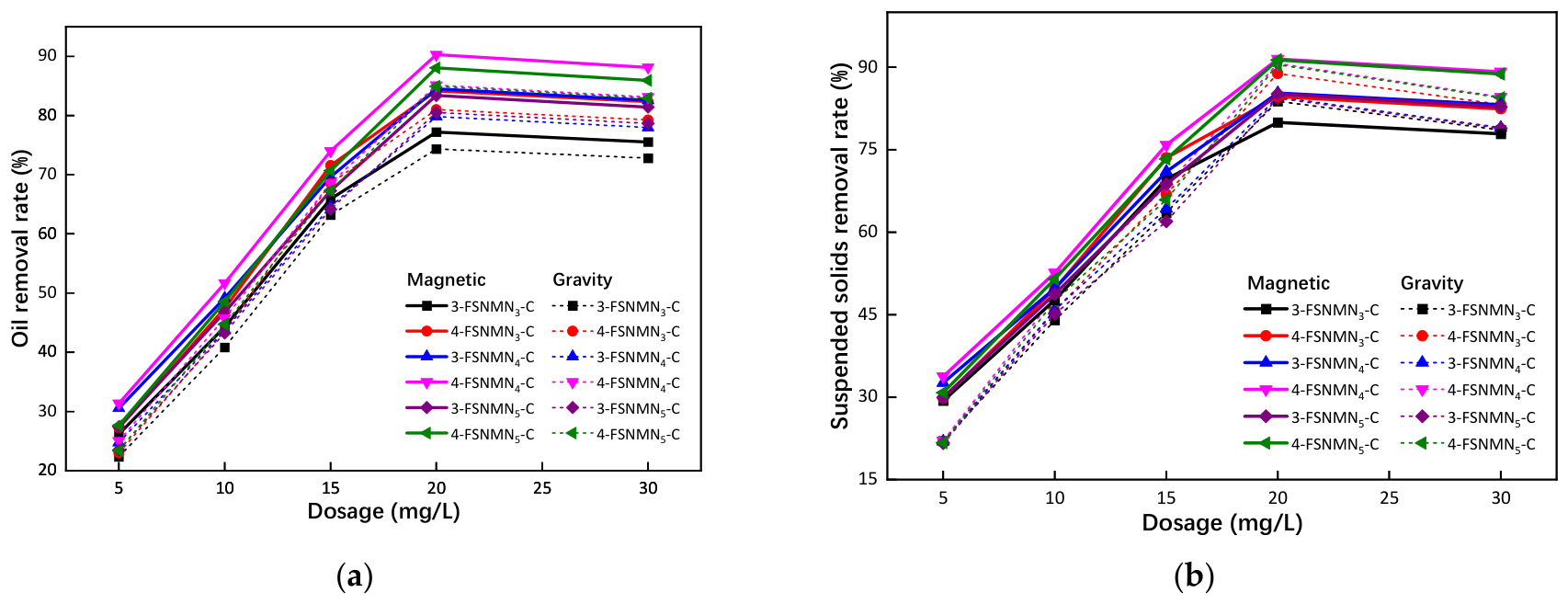
Figure 12 shows that when the dosage is 20 mg/L, the demulsification effect of 4-FSNMN
4-C and 4-FSNMN
5-C under the condition of gravity field is the best, and the demulsification effect is almost the same, up to 85.13%, while the demulsification effect under the condition of magnetic field increases to 90.27% and 88.03%. The demulsification effect of the comprehensive optimization group 3-FSNMN
4-C on ASP flooding wastewater under the condition of gravity field can reach 79.82%, while the demulsification effect under the condition of magnetic field can increase to 84.52%. When the dosage exceeds 20 mg/L, the demulsification effect decreases.
When the dosage was 20 mg/L, the flocculation effect of 4-FSNMN4-C and 4-FSNMN5-C under gravity field was the best, and the effect was almost the same; the removal rate of suspended solids reached 90.68%, while the flocculation effect under magnetic field was also the same, slightly increased to 91.32%. The flocculation effect of comprehensive optimization group 3-FSNMN4-C on ASP flooding wastewater under the condition of gravity field can reach 84.57%, while the flocculation effect under the condition of magnetic field can increase to 85.34%. When the dosage exceeds 20 mg/L, the flocculation effect decreases.
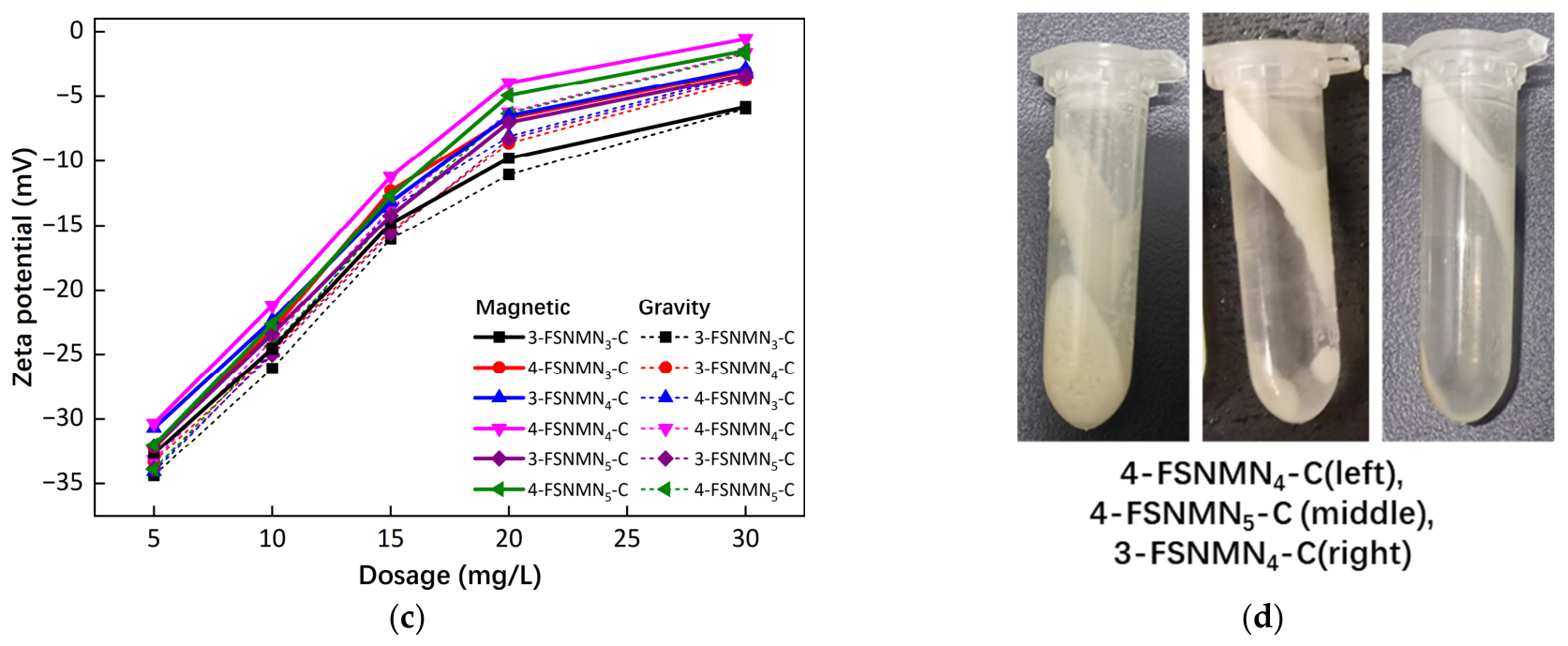
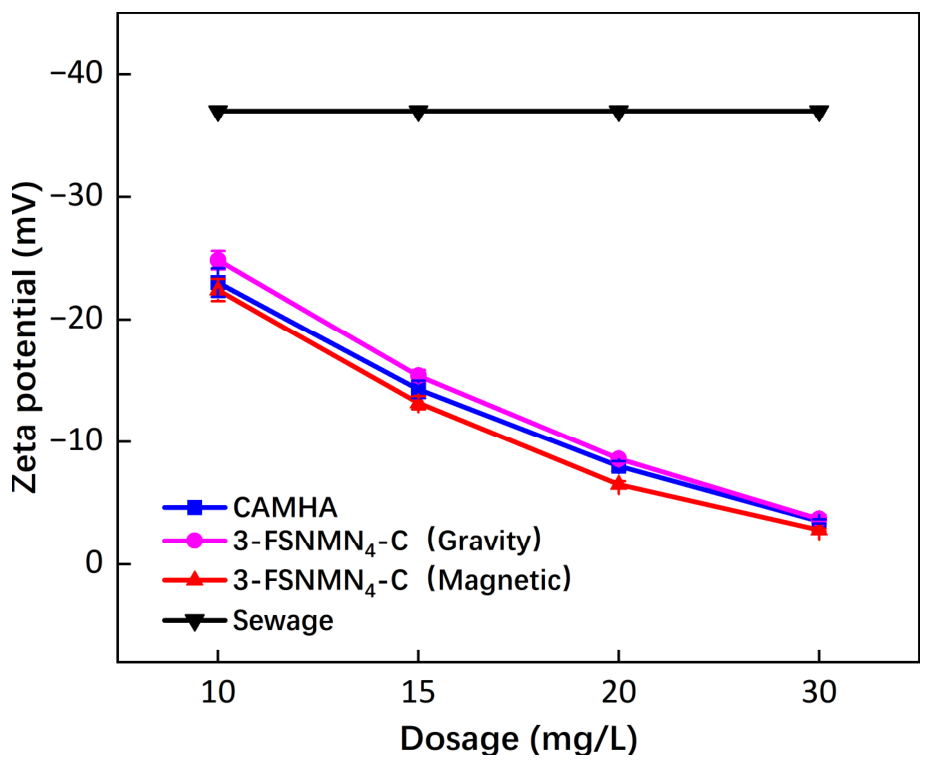
The zeta potential of ASP flooding wastewater used in the experiment is about −37 mV, and the particles are in a very stable state. When the dosage reached 20 mg/L, the zeta potential of the treated ASP flooding sewage particles basically decreased to −10 mV, and the stability of particle dispersion was poor, reaching the level of easy separation. The zeta potential of the particles treated with two kinds of 4-FSNMN-C decreased to −5 mV. It can be seen from the figure that with the increase in the dosage of magnetic hyperbranched FSNMN-c molecules, the absolute value of zeta potential decreased, and there was no electrical reversal within the dosage range of this experiment.
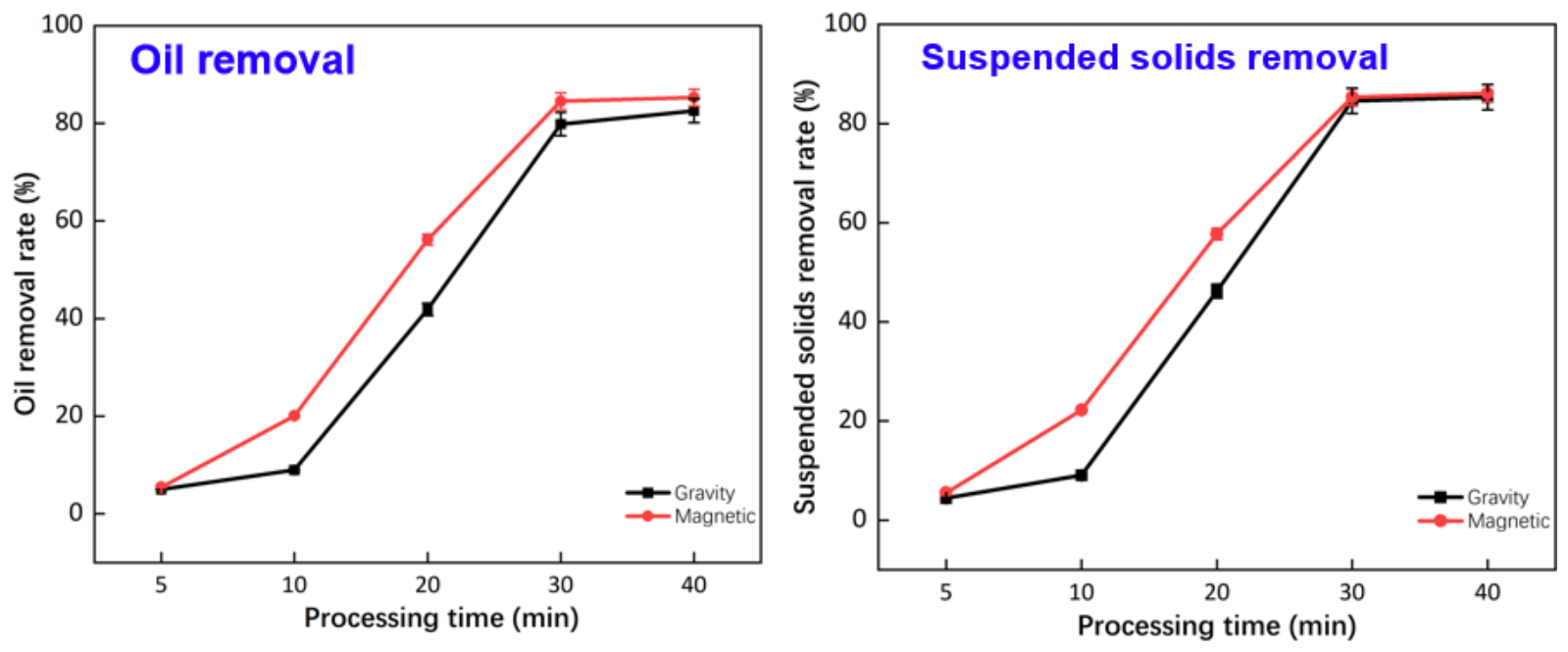
Through the FSNMN-c treatment of combined flooding wastewater experiment, it can be found that the treatment effect of the magnetic field experimental group is slightly stronger than that of the gravity field experimental group within 30 min. The additional external force of the magnetic field accelerates the migration of flocs, so experiments are carried out to verify the relationship between treatment time and treatment effect. The treatment agent is 3-FSNMN4-C, and the dosage is 20 mg/L. The treatment time groups without mutual interference are set respectively. The measured data are sampled according to the respective treatment time, and
Figure 13 is obtained.
It can be seen from
Figure 13 that when 3-FSNMN
4-C was just added for 5 min, both groups did not complete demulsification and flocculation. After 10 min, the effect was improved, and the magnetic group was stronger than the gravity group, with a large gap. After 30 min, the increase in efficiency slowed down with time. After 30–40 min, the demulsification efficiency of the two groups was close. The demulsification efficiency of the magnetic group was higher than that of the gravity group, but the gap was narrowed.
Magnetic fields can significantly shorten sedimentation time, especially in high-viscosity wastewater systems where the advantage is even more pronounced. Furthermore, the magnetic force acting on the interior of flocs can promote further aggregation of oil droplets and solid particles, forming denser flocs and reducing their water content. To sum up, under the condition of magnetic field, FSNMN-C can treat ASP flooding wastewater faster, and its demulsification and flocculation effects are stronger than those of gravity natural settlement. It takes less time to achieve the same treatment efficiency, and it can achieve higher treatment efficiency in the same time.