(E)-4-(4-Acrylamidophenoxy)-N-Methylpicolinamides as b-Raf/VEGFR-2 Inhibitors with Antiangiogenic Activity in HUVEC and Zebrafish Model

 ,
,  , , , ,
  , , ,
, , ,  and
and
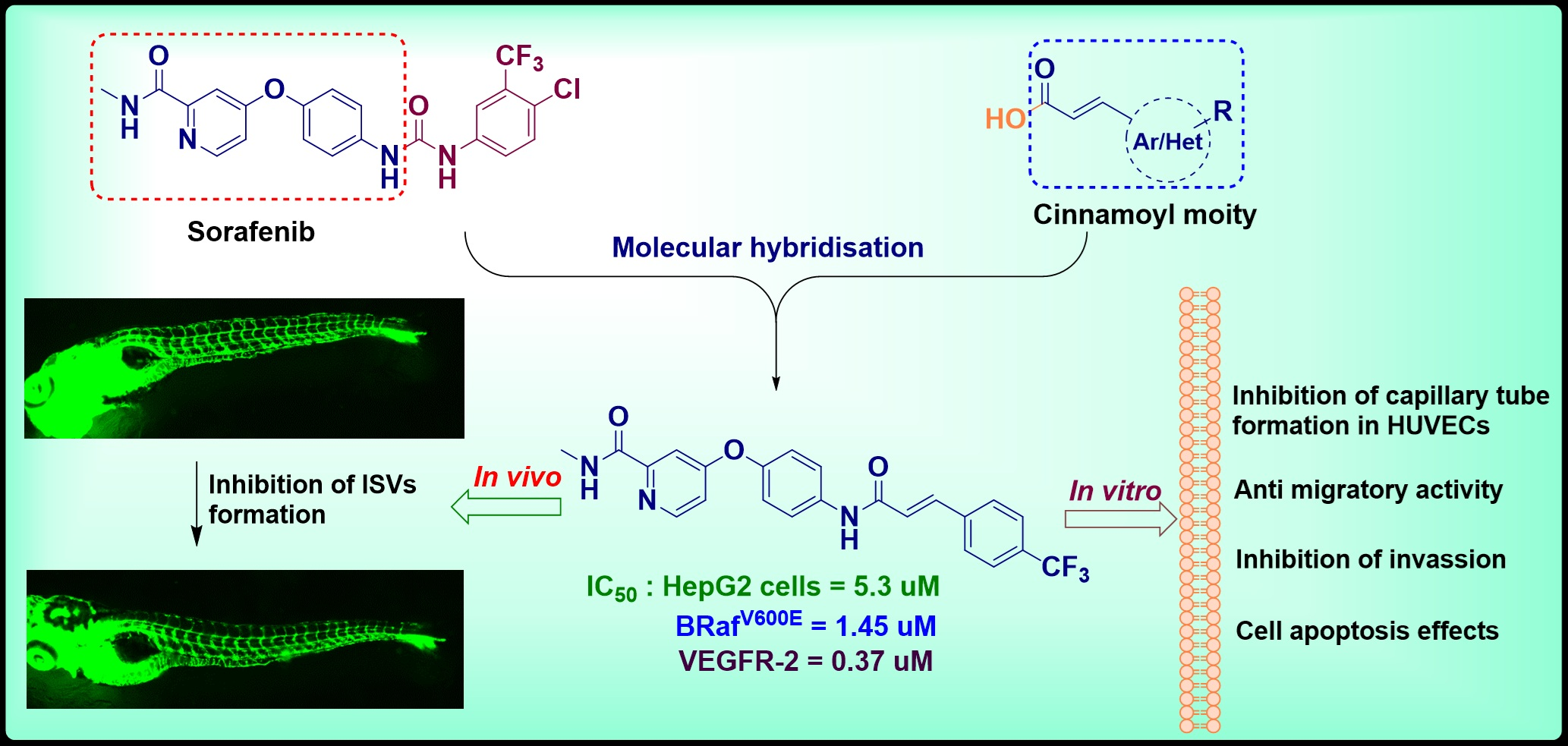
Abstract
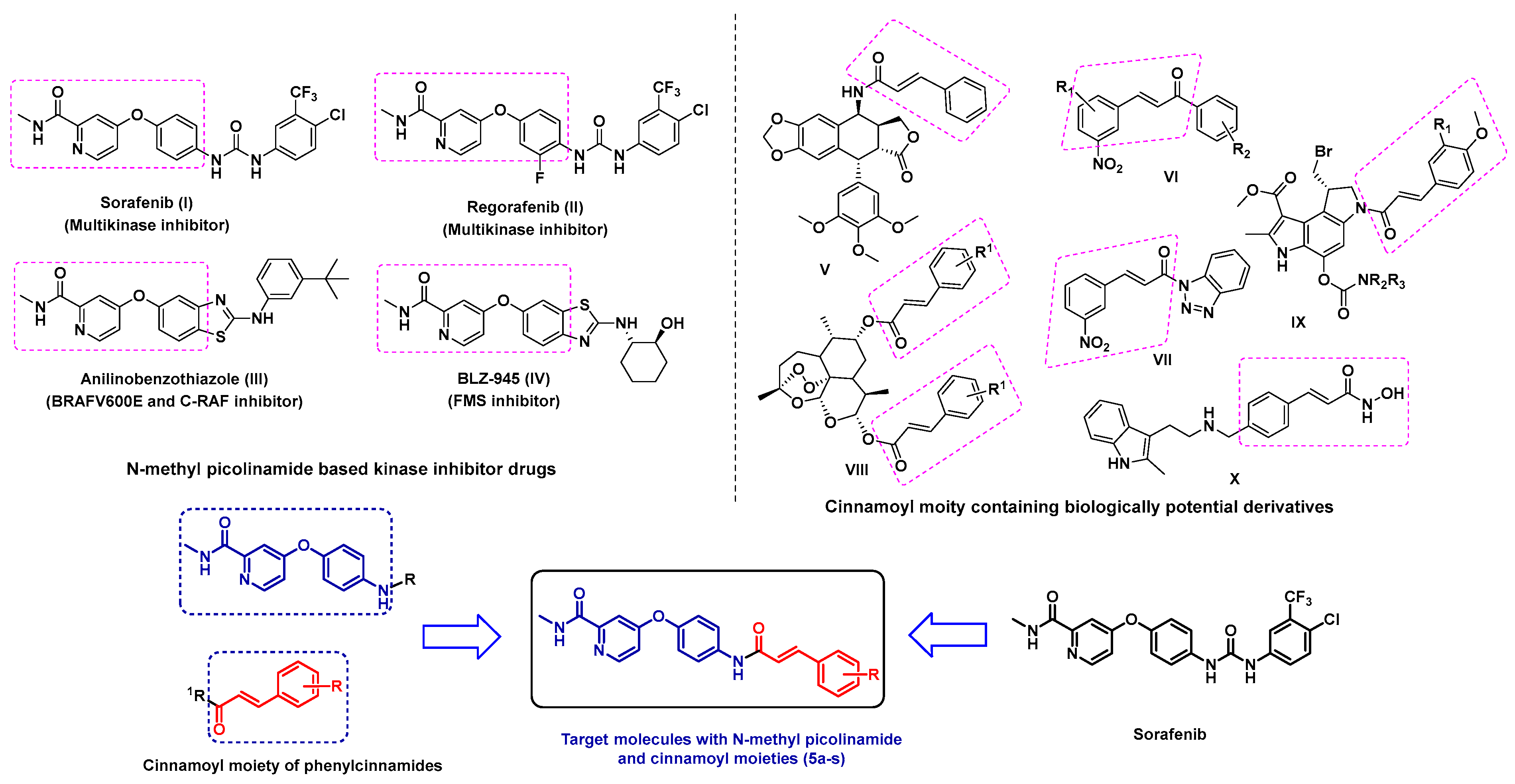
1. Introduction
2. Results and Discussions
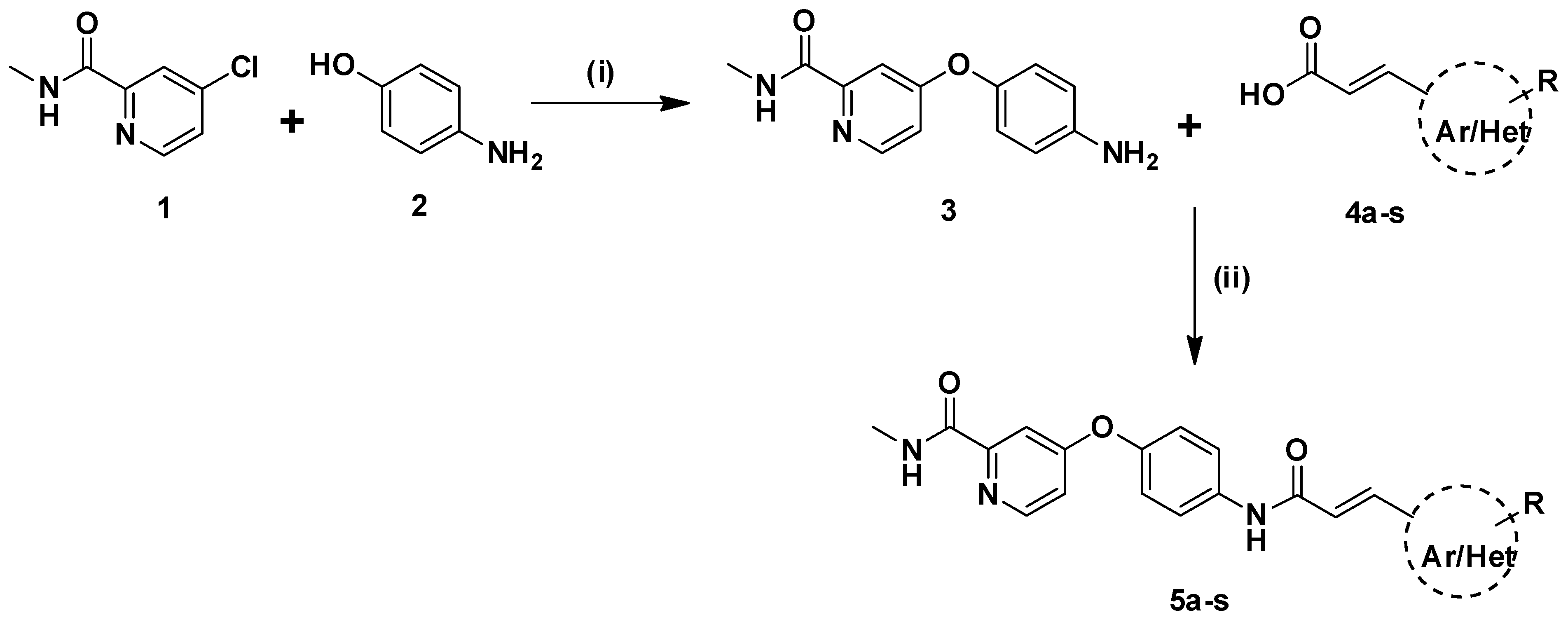
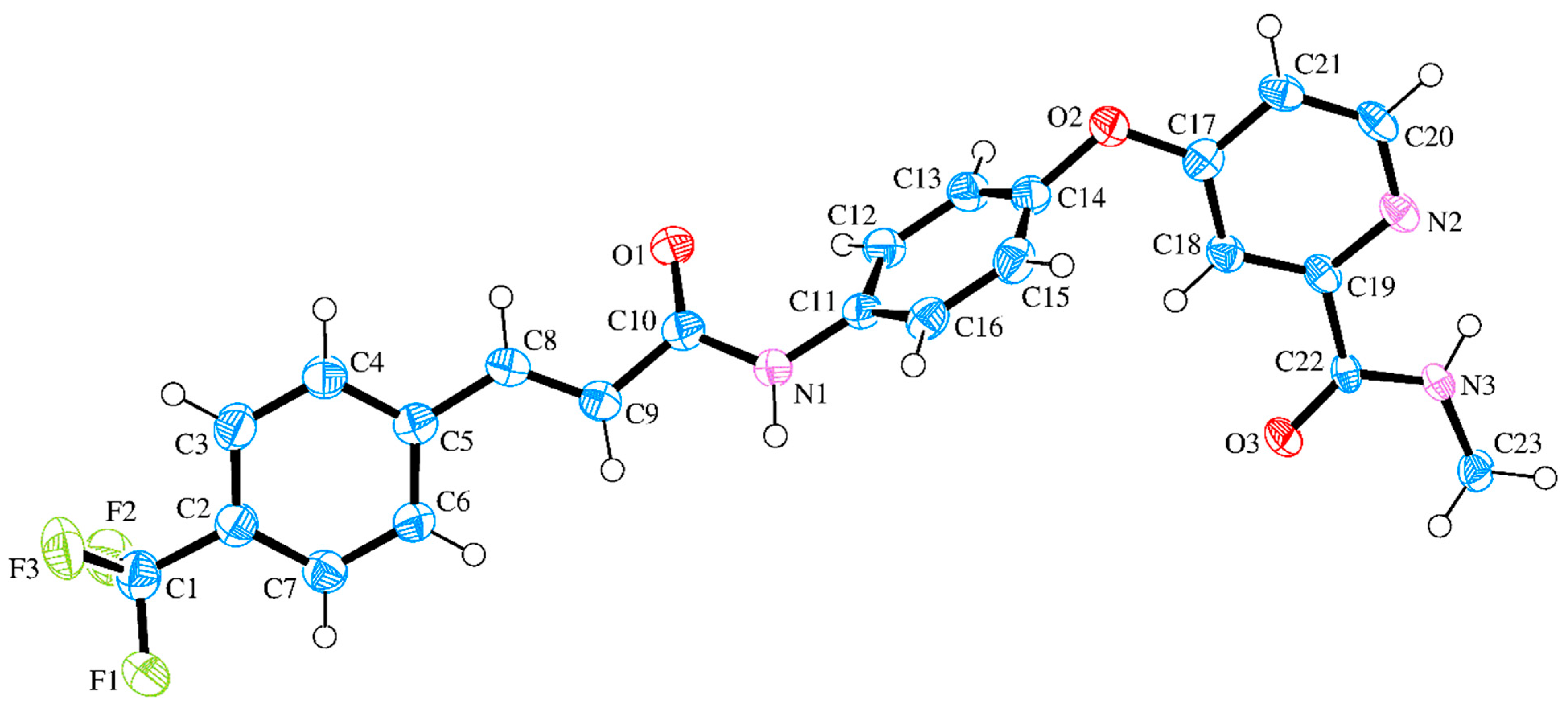
2.1. Chemistry
2.2. In Vitro Cytotoxic Studies
2.3. B-RafV600E and VEGFR-2 Kinase Inhibition
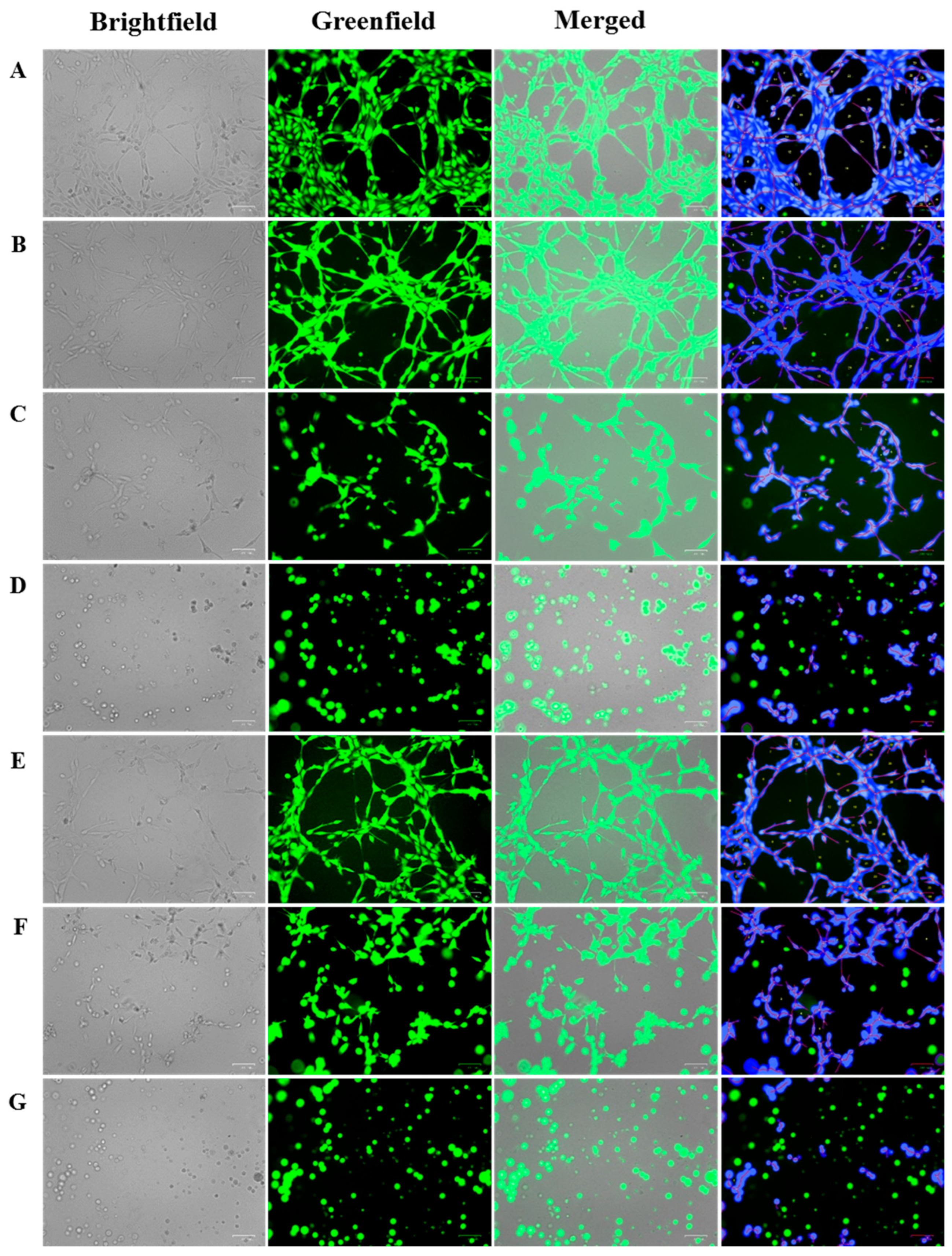
2.4. In Vitro Capillary Tube Formation in HUVEC Cells
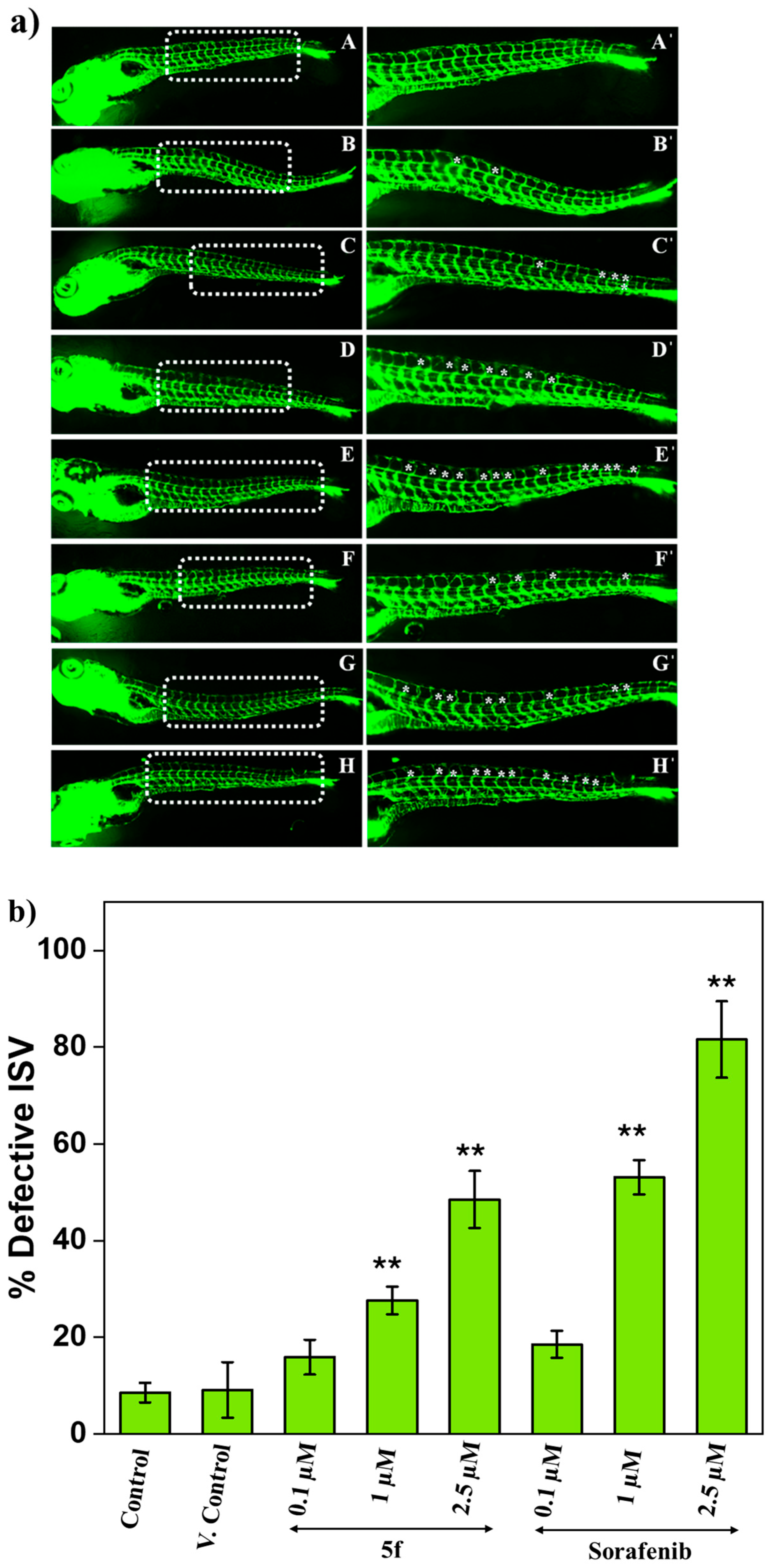
2.5. Angiogenesis Inhibition in Transgenic Zebrafish Model
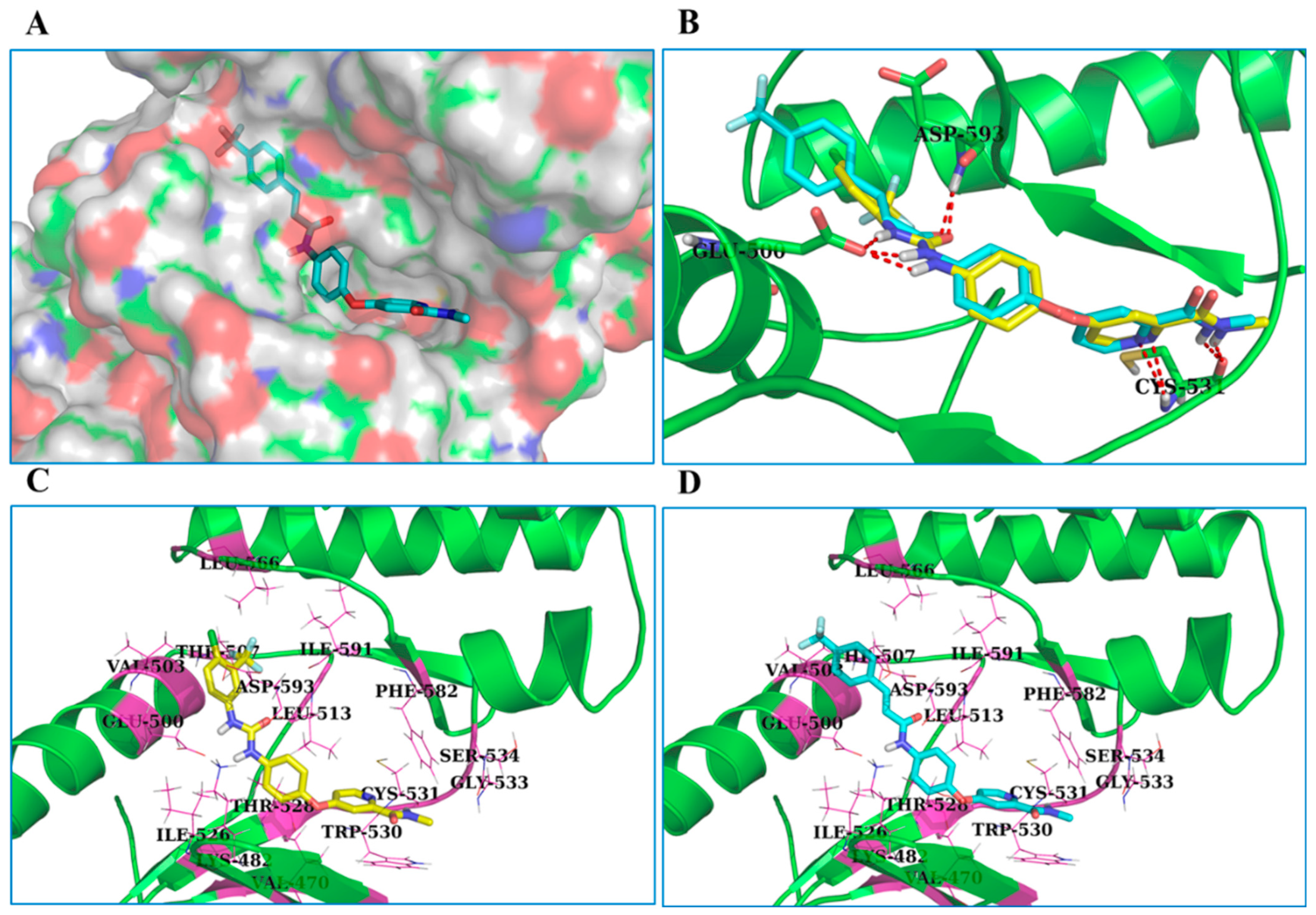
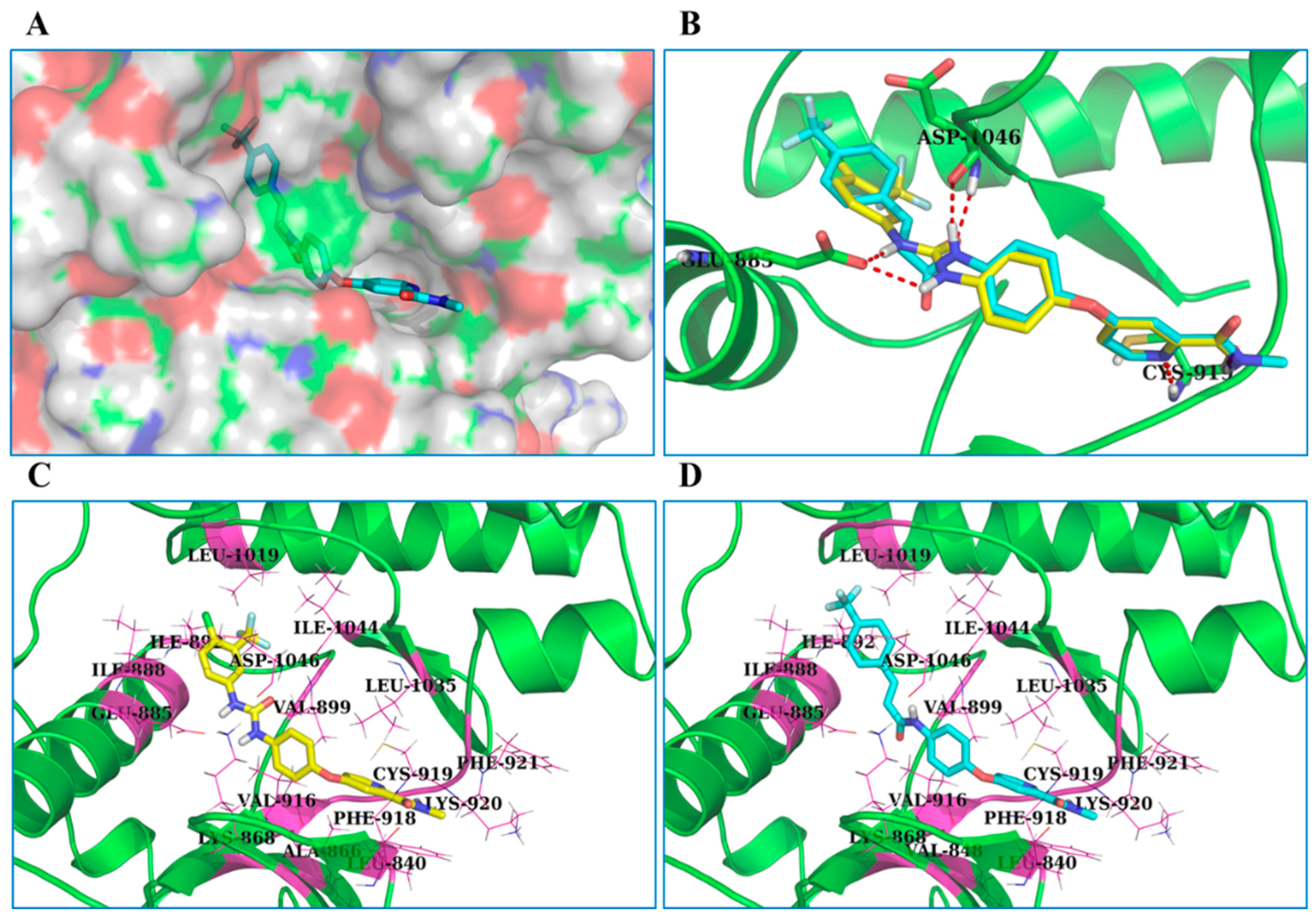
2.6. Molecular Docking Studies
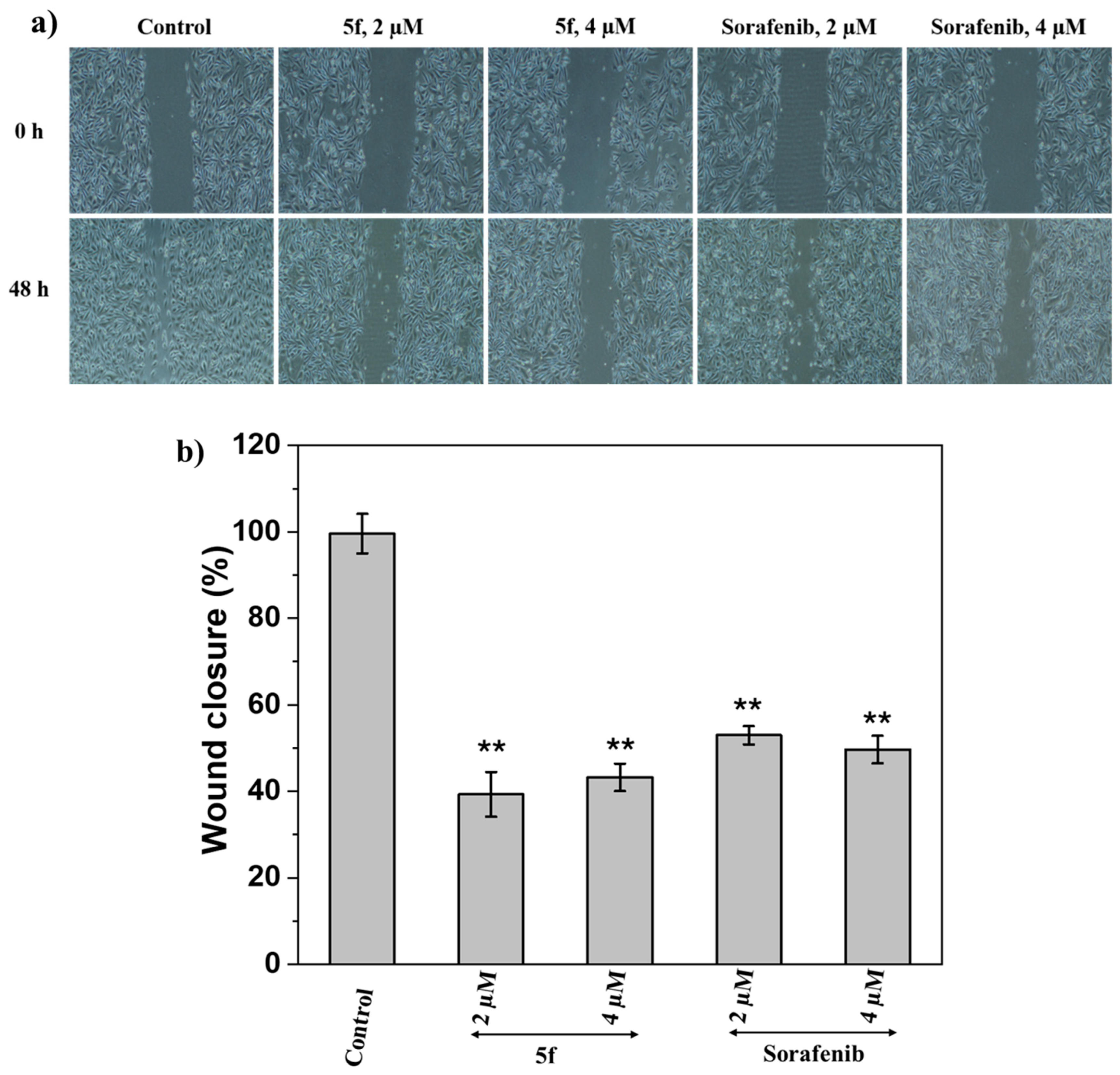
2.7. Wound Healing Assay (Cell Migration Assay)
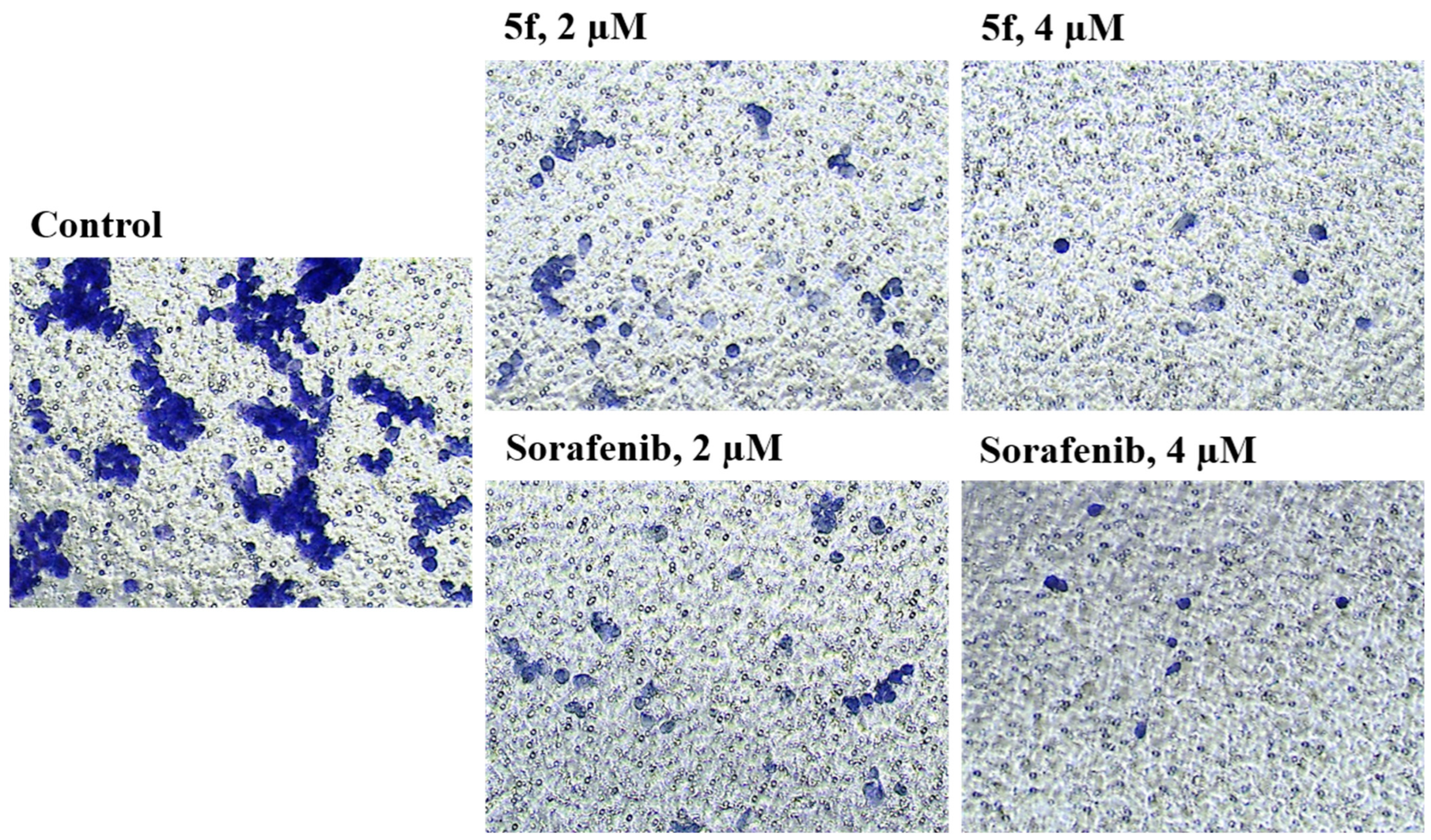
2.8. Transwell Migration (Invasion) Assay
2.9. Apoptosis Studies
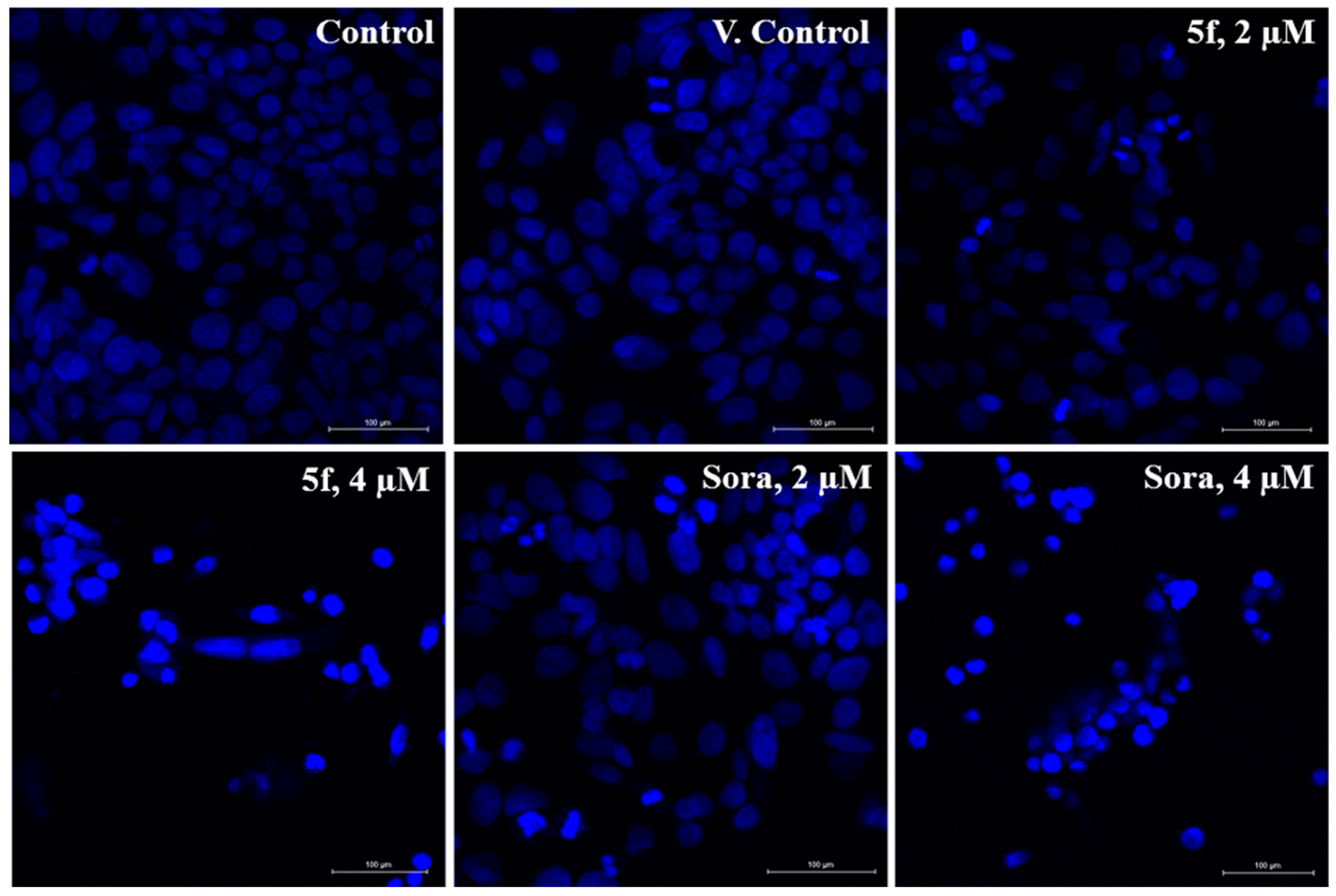
2.9.1. Hoechst 33242
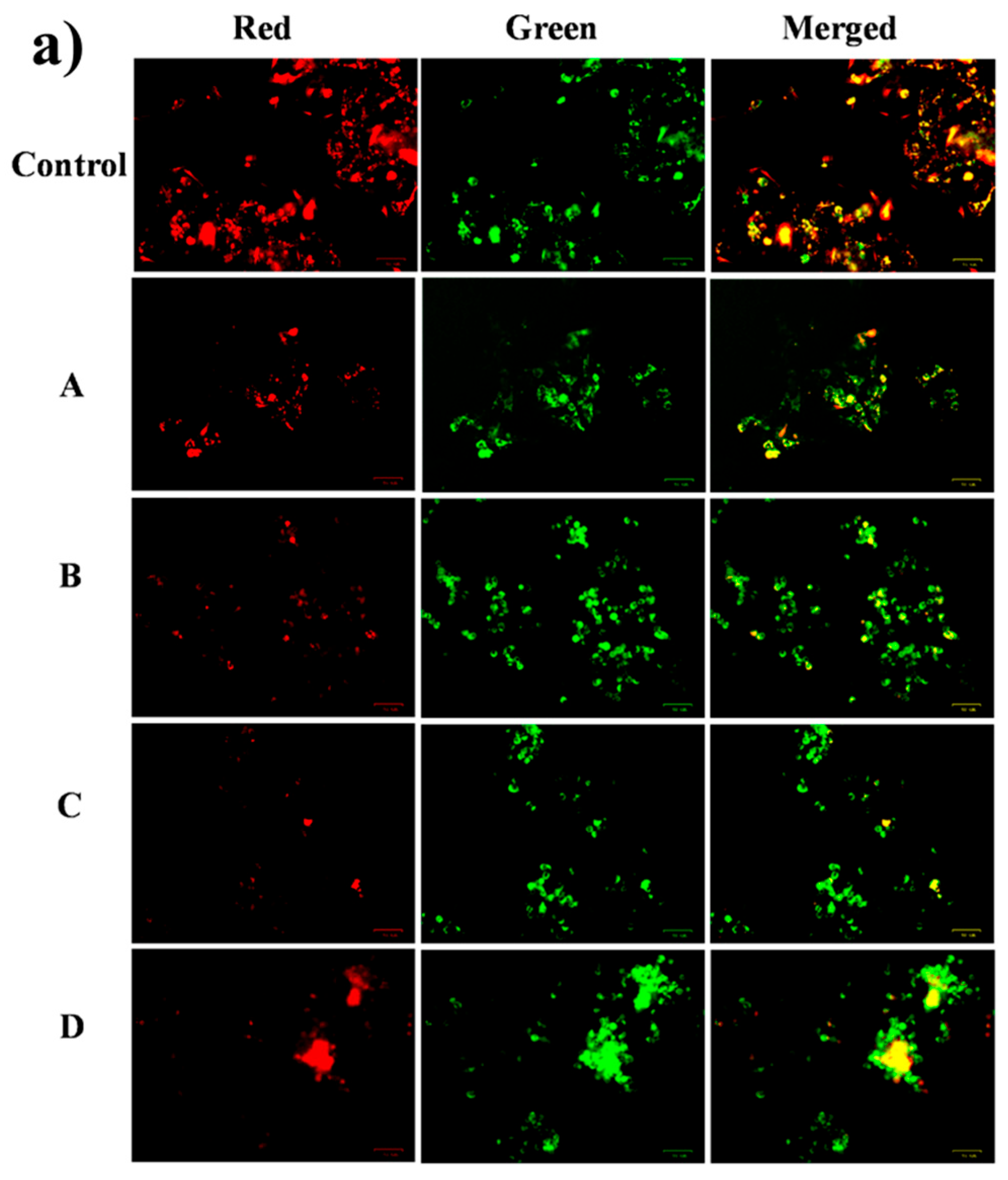
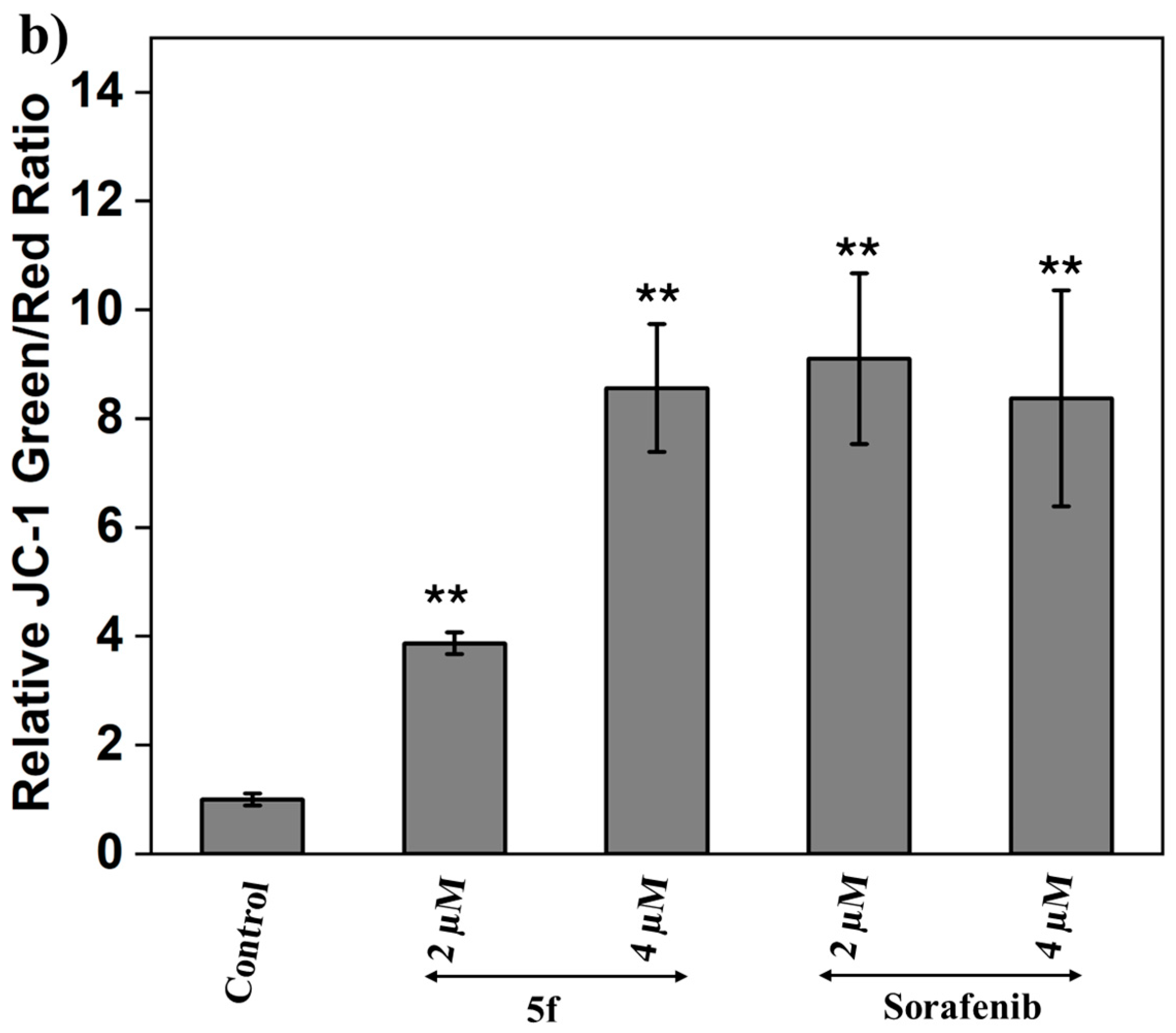
2.9.2. Measurement of Mitochondrial Membrane Potential (∆Ψm)
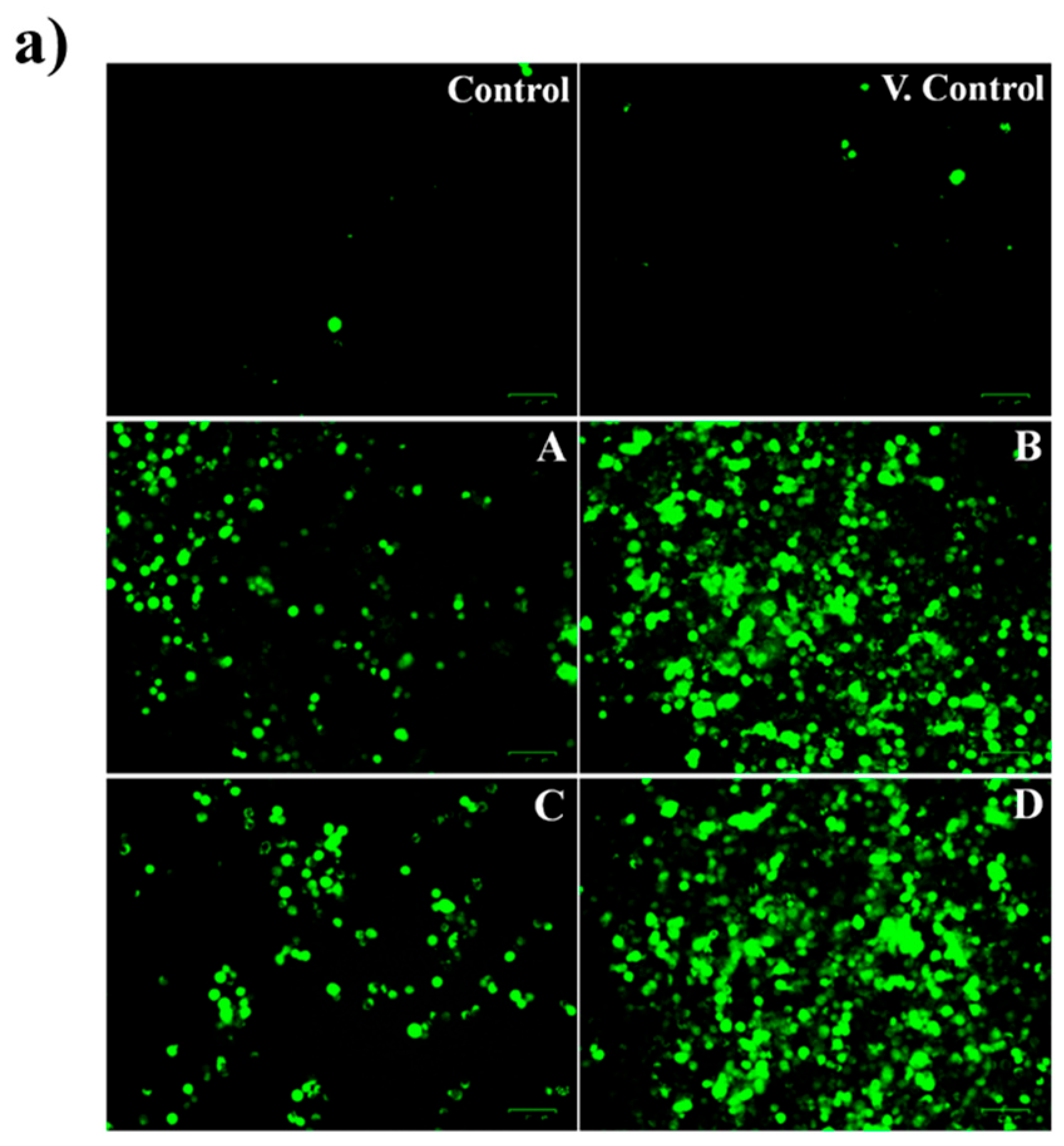
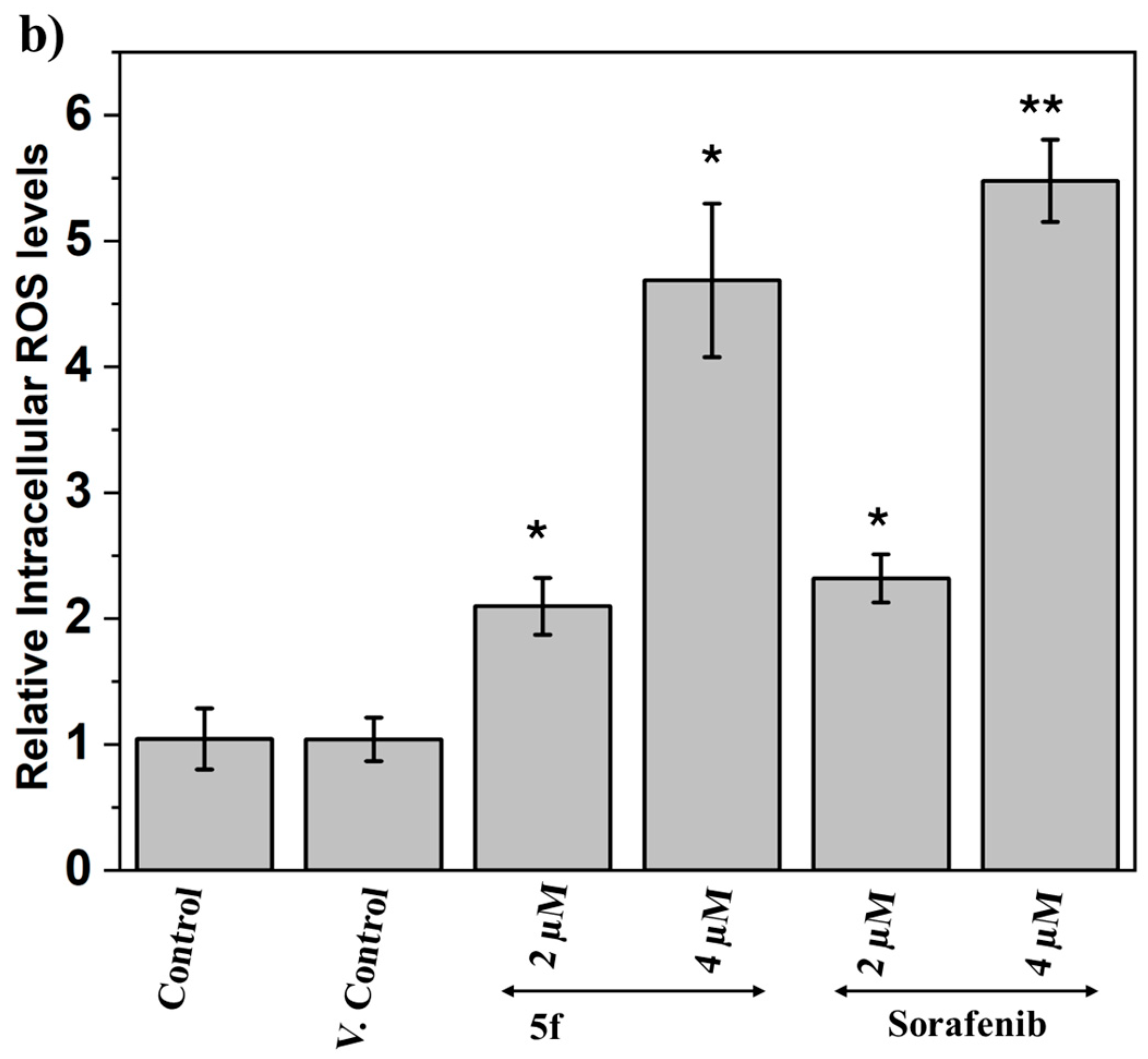
2.9.3. Measurement of Reactive Oxygen Species (ROS)
3. Conclusions
4. Experimental Section
4.1. General Procedure for the Synthesis of (E)-4-(4-cinnamamidophenoxy)-N-Methylpicolinamide Derivatives (5a–s)
4.1.1. (E)-4-(4-(3-(3-fluorophenyl)acrylamido)phenoxy)-N-Methylpicolinamide (5a)
4.1.2. (E)-4-(4-(3-(4-chlorophenyl)acrylamido)phenoxy)-N-Methylpicolinamide (5c)
4.1.3. (E)-4-(4-(3-(furan-2-yl)acrylamido)phenoxy)-N-Methylpicolinamide (5d)
4.1.4. (E)-4-(4-(3-(4-methoxyphenyl)acrylamido)phenoxy)-N-Methylpicolinamide (5e)
4.1.5. (E)-N-methyl-4-(4-(3-(4-(trifluoromethyl)phenyl)acrylamido)phenoxy)picolinamide (5f)
4.1.6. (E)-N-methyl-4-(4-(3-(3,4,5-trimethoxyphenyl)acrylamido)phenoxy)picolinamide (5g)
4.1.7. (E)-4-(4-(3-(2,3-dimethoxyphenyl)acrylamido)phenoxy)-N-Methylpicolinamide (5h)
4.1.8. (E)-4-(4-(3-(3-hydroxyphenyl)acrylamido)phenoxy)-N-Methylpicolinamide (5i)
4.1.9. (E)-4-(4-(3-(3,4-difluorophenyl)acrylamido)phenoxy)-N-Methylpicolinamide (5j)
4.1.10. (E)-4-(4-(3-(2,5-dimethoxyphenyl)acrylamido)phenoxy)-N-Methylpicolinamide (5k)
4.1.11. (E)-N-methyl-4-(4-(3-(4-(trifluoromethoxy)phenyl)acrylamido)phenoxy)picolinamide (5m)
4.1.12. (E)-4-(4-(3-(3,4-dimethoxyphenyl)acrylamido)phenoxy)-N-Methylpicolinamide (5n)
4.1.13. (E)-N-methyl-4-(4-(3-(thiophen-2-yl)acrylamido)phenoxy)picolinamide (5o)
4.1.14. (E)-4-(4-(3-(4-fluorophenyl)acrylamido)phenoxy)-N-Methylpicolinamide (5p)
4.1.15. 4-(4-(3-(3,4-dichlorophenyl)ureido)phenoxy)-N-Methylpicolinamide (5q)
4.1.16. 4-(4-(3-(2,4-difluorophenyl)ureido)phenoxy)-N-Methylpicolinamide (5r)
4.1.17. N-methyl-4-(4-(3-(4-nitrophenyl)ureido)phenoxy)picolinamide (5s)
5. Biology
5.1. Cell Culture
5.2. MTT Assay
5.3. b-Raf Kinase Inhibition Assay
5.4. VEGFR-2 Inhibition Assay
5.5. In Vivo Zebrafish Angiogenesis Assay
5.6. Wound Healing Assay (Migration Assay)
5.7. Transwell Cell Invasion Assay
5.8. Nuclear Morphological Analysis
5.9. Assessment of Mitochondrial Membrane Potential
5.10. Intracellular Reactive Oxygen Species
5.11. Molecular Docking
Supplementary Materials
Author Contributions
Funding
Data Availability Statement
Acknowledgments
Conflicts of Interest
References
- Hunter, T. Protein kinases and phosphatases: The yin and yang of protein phosphorylation and signaling. Cell 1995, 80, 225–236. [Google Scholar] [CrossRef]
- Zhong, L.; Li, Y.; Xiong, L.; Wang, W.; Wu, M.; Yuan, T.; Yang, W.; Tian, C.; Miao, Z.; Wang, T.; et al. Small molecules in targeted cancer therapy: Advances, challenges, and future perspectives. Signal Transduct. Target. Ther. 2021, 6, 201. [Google Scholar] [CrossRef]
- Blume-Jensen, M.; Hunter, T. Oncogenic kinase signalling. Nature 2001, 411, 355–365. [Google Scholar] [CrossRef]
- You, M.; Xie, Z.; Zhang, N.; Zhang, Y.; Xiao, D.; Liu, S.; Zhuang, W.; Li, L.; Tao, Y. Signaling pathways in cancer metabolism: Mechanisms and therapeutic targets. Signal Transduct. Target. Ther. 2023, 8, 196. [Google Scholar] [CrossRef]
- Ghosh, S.; Marrocco, I.; Yarden, Y. Roles for receptor tyrosine kinases in tumor progression and implications for cancer treatment. Adv. Cancer Res. 2020, 147, 1–57. [Google Scholar]
- Escudier, B.; Eisen, T.; Stadler, W.M.; Szczylik, C.; Oudard, S.; Siebels, M.; Negrier, S.; Chevreau, C.; Solska, E.; Desai, A.A.; et al. Sorafenib in advanced clear-cell renal-cell carcinoma. N. Engl. J. Med. 2007, 356, 125–134. [Google Scholar] [CrossRef] [PubMed]
- Roskoski, R., Jr. Classification of small molecule protein kinase inhibitors based upon the structures of their drug-enzyme complexes. Pharmacol. Res. 2016, 103, 26–48. [Google Scholar] [CrossRef] [PubMed]
- Wilhelm, S.M.; Adnane, L.; Newell, P.; Villanueva, A.; Llovet, J.M.; Lynch, M. Preclinical overview of sorafenib, a bi-aryl urea multikinase inhibitor targeting Raf, VEGFR, and PDGFR signaling pathways. Mol. Cancer Ther. 2008, 7, 3129–3140. [Google Scholar] [CrossRef]
- Llovet, J.M.; Ricci, S.; Mazzaferro, V.; Hilgard, P.; Gane, E.; Blanc, J.-F.; de Oliveira, A.C.; Santoro, A.; Raoul, J.-L.; Forner, A.; et al. Sorafenib in advanced hepatocellular carcinoma. N. Engl. J. Med. 2008, 359, 378–390. [Google Scholar] [CrossRef] [PubMed]
- Wellbrock, C.; Karasarides, M.; Marais, R. The RAF proteins take centre stage. Nat. Rev. Mol. Cell Biol. 2004, 5, 875–885. [Google Scholar] [CrossRef]
- Llovet, J.M.; Kelley, R.K.; Villanueva, A.; Singal, A.G.; Pikarsky, J.; Roayaie, S.; Lencioni, R.; Koike, K.; Zucman-Rossi, V.; Finn, R.S. Hepatocellular carcinoma. Nat. Rev. Dis. Prim. 2021, 7, 6. [Google Scholar] [CrossRef] [PubMed]
- Zhai, B.; Sun, X.-Y. Mechanisms of resistance to sorafenib and the corresponding strategies in hepatocellular carcinoma. World J. Hepatol. 2013, 5, 345–359. [Google Scholar] [CrossRef] [PubMed]
- Germano, D.; Daniele, B. Systemic therapy of hepatocellular carcinoma: Current status and future perspectives. World J. Gastroenterol. 2014, 20, 3087–3099. [Google Scholar] [CrossRef]
- Gotink, A.; Verheul, H.M.W. Anti-angiogenic tyrosine kinase inhibitors: What is their mechanism of action? Angiogenesis 2010, 13, 1–14. [Google Scholar] [CrossRef] [PubMed]
- Haibe, Y.; Kreidieh, M.; El Hajj, M.; Khalifeh, R.; Mukherji, T.; Temraz, S.; Shamseddine, A. Resistance mechanisms to anti-angiogenic therapies in cancer. Front. Oncol. 2020, 10, 221. [Google Scholar] [CrossRef]
- Liu, Z.-L.; Chen, H.-H.; Zheng, L.-L.; Sun, L.-P.; Shi, L. Angiogenic signaling pathways and anti-angiogenic therapy for cancer. Signal Transduct. Target. Ther. 2023, 8, 198. [Google Scholar] [CrossRef]
- Niculescu-Duvaz, I.; Roman, E.; Whittaker, S.R.; Friedlos, F.; Kirk, R.; Scanlon, I.; Davies, L.C.; Niculescu-Duvaz, D.; Marais, R.; Springer, C.J. Novel Inhibitors of B-RAF Based on a Disubstituted Pyrazine Scaffold. Generation of a Nanomolar Lead. J. Med. Chem. 2006, 49, 407–416. [Google Scholar] [CrossRef]
- Ryu, J.H.; Kim, S.; Han, H.Y.; Son, H.J.; Lee, H.J.; Shin, Y.A.; Kim, J.-S.; Park, H.-G. Synthesis and biological evaluation of picolinamides as potent inhibitors of 11β-hydroxysteroid dehydrogenase type 1 (11β-HSD1). Bioorg. Med. Chem. Lett. 2015, 25, 695–700. [Google Scholar] [CrossRef] [PubMed]
- Dong, Y.; Li, B.; Yin, M.-X.; Liu, Z.; Niu, Y.; Wu, Q.-Y.; Zhu, X.-L.; Yang, G.-F. The interaction mechanism of picolinamide fungicide targeting the cytochrome bc1 complex and its structural modification. J. Agric. Food Chem. 2024, 72, 3755–3762. [Google Scholar] [CrossRef]
- Kamal, A.; Mallareddy, A.; Suresh, P.; Nayak, V.L.; Shetti, R.V.C.R.N.C.; Rao, N.S.; Tamboli, J.R.; Shaik, T.B.; Vishnuvardhan, M.V.P.S.; Ramakrishna, S. Synthesis and anticancer activity of 4β-alkylamidochalcone and 4β-cinnamido linked podophyllotoxins as apoptotic inducing agents. Eur. J. Med. Chem. 2012, 47, 530–545. [Google Scholar] [CrossRef]
- Leslie, B.J.; Holaday, C.R.; Nguyen, T.; Hergenrother, P.J. Phenylcinnamides as novel antimitotic agents. J. Med. Chem. 2010, 53, 3964–3972. [Google Scholar] [CrossRef]
- Pardin, C.; Pelletier, J.N.; Lubell, W.D.; Keillor, J.W. Cinnamoyl inhibitors of tissue transglutaminase. J. Org. Chem. 2008, 73, 5766–5775. [Google Scholar] [CrossRef] [PubMed]
- Xu, C.-C.; Deng, T.; Fan, M.-L.; Lv, W.-B.; Liu, J.-H.; Yu, B.-Y. Synthesis and in vitro antitumor evaluation of dihydroartemisinin-cinnamic acid ester derivatives. Eur. J. Med. Chem. 2016, 107, 192–203. [Google Scholar] [CrossRef]
- Nagamura, S.; Asai, A.; Amishiro, N.; Kobayashi, E.; Gomi, K.; Saito, H. Synthesis and antitumor activity of duocarmycin derivatives: A-ring pyrrole compounds bearing cinnamoyl groups. J. Med. Chem. 1997, 40, 972–979. [Google Scholar] [CrossRef]
- Huang, W.-J.; Wang, Y.-C.; Chao, S.-W.; Yang, C.-Y.; Chen, L.-C.; Lin, M.-H.; Hou, W.-C.; Chen, M.-Y.; Lee, T.-L.; Yang, P.; et al. Synthesis and biological evaluation of ortho-aryl N-hydroxycinnamides as potent histone deacetylase (HDAC) 8 isoform-selective inhibitors. ChemMedChem 2012, 7, 1815–1824. [Google Scholar] [CrossRef]
- Tian, Y.; Jiang, X.; Guo, J.; Lu, H.; Xie, J.; Zhang, F.; Yao, C.; Hao, E. Pharmacological potential of cinnamic acid and derivatives: A comprehensive review. Pharmaceutics 2025, 18, 1141. [Google Scholar] [CrossRef]
- Adisakwattana, Y. Cinnamic acid and its derivatives: Mechanisms for prevention and management of diabetes and its complications. Nutrients 2017, 9, 163. [Google Scholar] [CrossRef]
- Teixeira, C.; Ventura, C.; Gomes, J.R.B.; Gomes, P.; Martins, F. Cinnamic Derivatives as Antitubercular Agents: Characterization by Quantitative Structure–Activity Relationship Studies. Molecules 2020, 25, 456. [Google Scholar] [CrossRef] [PubMed]
- Gunia-Krzyżak, A.; Pańczyk-Straszak, K.; Waszkielewicz, A.M.; Marona, H. Cinnamamide derivatives for central and peripheral nervous system disorders-a review of structure-activity relationships. ChemMedChem 2015, 10, 1302–1325. [Google Scholar] [CrossRef]
- Freitas, M.; Sousa, M.; Neves, F.; Silva, A.; Ferreira, P. Plant-derived and dietary phenolic cinnamic acid derivatives: Anti-inflammatory properties. Food Chem. 2024, 459, 140080. [Google Scholar] [CrossRef] [PubMed]
- Liu, H.; Cai, C.; Zhang, X.; Li, W.; Ma, Z.; Feng, J.; Liu, X.; Lei, P. Discovery of novel cinnamic acid derivatives as fungicide candidates. J. Agric. Food Chem. 2024, 72, 2492–2500. [Google Scholar] [CrossRef]
- Gunia-Krzyżak, A.; Słoczyńska, K.; Popiół, J.; Koczurkiewicz, P.; Marona, H.; Pękala, E. Cinnamic acid derivatives in cosmetics: Current use and future prospects. Int. J. Cosmet. Sci. 2018, 40, 356–366. [Google Scholar] [CrossRef] [PubMed]
- De, P.; Baltas, M.; Bedos-Belval, F. Cinnamic Acid Derivatives as Anticancer Agents-A Review. Curr. Med. Chem. 2011, 18, 1672–1703. [Google Scholar] [CrossRef]
- Feng, L.-S.; Cheng, J.-B.; Su, W.-Q.; Li, H.-Z.; Xiao, T.; Chen, D.-A.; Zhang, Z.-L. Cinnamic acid hybrids as anticancer agents: A mini-review. Arch. Pharm. 2022, 355, e2200052. [Google Scholar] [CrossRef]
- Li, G.B.; Ji, S.; Yang, L.L.; Zhang, R.-J.; Chen, K.; Zhong, L.; Ma, S.; Yang, S.-Y. LEADOPT: An automatic tool for structure-based lead optimization, and its application in structural optimizations of VEGFR2 and SYK inhibitors. Eur. J. Med. Chem. 2015, 93, 523–538. [Google Scholar] [CrossRef] [PubMed]
- Kamal, A.; Reddy, V.G.; Syed, R.; Korrapati, S.B.; Yedla, P.; Chityal, G.K. (E)-4-(4-acrylamidophenoxy)-N-methylpicolinamide conjugates as potential anticancer agents. U.S. Patent US11174230B2, 16 November 2021. [Google Scholar]
- Sana, S.; Reddy, V.G.; Bhandari, S.; Reddy, T.S.; Tokala, R.; Sakla, A.P.; Bhargava, S.K.; Shankaraiah, N. Exploration of carbamide derived pyrimidine-thioindole conjugates as potential VEGFR-2 inhibitors with anti-angiogenesis effect. Eur. J. Med. Chem. 2020, 200, 112457. [Google Scholar] [CrossRef] [PubMed]
- Reddy, V.G.; Reddy, T.S.; Jadala, C.; Reddy, M.S.; Sultana, F.; Akunuri, R.; Bhargava, S.K.; Wlodkowic, D.; Srihari, P.; Kamal, A. Pyrazolo-benzothiazole hybrids: Synthesis, anticancer properties and evaluation of antiangiogenic activity using in vitro VEGFR-2 kinase and in vivo transgenic zebrafish model. Eur. J. Med. Chem. 2019, 182, 111609. [Google Scholar] [CrossRef]
- Teleanu, R.I.; Chircov, C.; Grumezescu, A.M.; Teleanu, D.M. Tumor angiogenesis and anti-angiogenic strategies for cancer treatment. J. Clin. Med. 2020, 9, 84. [Google Scholar] [CrossRef]
- Reddy, T.S.; Privér, S.H.; Mirzadeh, N.; Luwor, R.B.; Reddy, V.G.; Ramesan, S.; Bhargava, S.K. Antitumor and antiangiogenic properties of gold (III) complexes containing cycloaurated triphenylphosphine sulfide ligands. Inorg. Chem. 2020, 59, 5662–5673. [Google Scholar] [CrossRef]
- Ferrara, N.; Kerbel, R.S. Angiogenesis as a therapeutic target. Nature 2005, 438, 967–974. [Google Scholar] [CrossRef]
- Reddy, V.G.; Reddy, T.S.; Privér, S.H.; Bai, Y.; Mishra, S.; Wlodkowic, D.; Mirzadeh, N.; Bhargava, S. Synthesis of Gold(I) Complexes Containing Cinnamide: In Vitro Evaluation of Anticancer Activity in 2D and 3D Spheroidal Models of Melanoma and In Vivo Angiogenesis. Inorg. Chem. 2019, 58, 5988–5999. [Google Scholar] [CrossRef]
- Wan, P.T.C.; Garnett, M.J.; Roe, S.M.; Lee, S.; Niculescu-Duvaz, D.; Good, V.M.; Jones, C.M.; Marshall, C.J.; Springer, C.J.; Barford, D.; et al. Mechanism of activation of the RAF-ERK signaling pathway by oncogenic mutations of B-RAF. Cell 2004, 116, 855–867. [Google Scholar] [CrossRef]
- McTigue, M.; Murray, B.W.; Chen, J.H.; Deng, Y.-L.; Solowiej, J.; Kania, R.S. Molecular conformations, interactions, and properties associated with drug efficiency and clinical performance among VEGFR tyrosine kinase inhibitors. Proc. Natl. Acad. Sci. USA 2012, 109, 18281–18289. [Google Scholar] [CrossRef] [PubMed]
- Sana, S.; Reddy, V.G.; Reddy, T.S.; Tokala, R.; Kumar, R.; Bhargava, S.K.; Shankaraiah, N. Cinnamide derived pyrimidine-benzimidazole hybrids as tubulin inhibitors: Synthesis, in silico and cell growth inhibition studies. Bioorg. Chem. 2021, 110, 104765. [Google Scholar] [CrossRef]
- Senger, D.R.; Perruzzi, C.A.; Streit, M.; Koteliansky, V.E.; de Fougerolles, A.R.; Detmar, M. The alpha(1)beta(1) and alpha(2)beta(1) integrins provide critical support for vascular endothelial growth factor signaling, endothelial cell migration, and tumor angiogenesis. Am. J. Pathol. 2002, 160, 195–204. [Google Scholar] [CrossRef] [PubMed]
- Hu, W.; Kavanagh, J.J. Anticancer therapy targeting the apoptotic pathway. Lancet Oncol. 2003, 4, 721–729. [Google Scholar] [CrossRef]
- Mirzadeh, N.; Telukutla, S.R.; Luwor, R.; Privér, S.; Velma, G.R.; Jakku, R.K.; Andrew, N.S.; Plebanski, M.; Hartinger, C.; Bhargava, S. Dinuclear orthometallated gold(I)–gold(III) anticancer complexes with potent in vivo activity through a ROS-dependent mechanism. Metallomics 2021, 13, 1028–1039. [Google Scholar] [CrossRef] [PubMed]
- Delano, W.L. The PyMOL Molecular Graphics System; DeLano Scientific: San Carlos, CA, USA, 2002. [Google Scholar]

| Comp. | R | IC50 Values (μM) a | ||||
|---|---|---|---|---|---|---|
| A549 b | DU145 c | SKOV3 d | HepG2 e | Hek293T f | ||
| 5a | 3-F | >25 | >25 | 16.15 ± 2.21 | 9.63 ± 1.81 | >50 |
| 5b | 3-OH, 4-OMe | 8.92 ± 1.41 | >25 | >25 | 24.18 ± 3.14 | >50 |
| 5c | 4-Cl | >25 | 12.42 ± 2.64 | 9.23 ± 1.56 | 6.23 ± 0.34 | 28.21 ± 3.64 |
| 5d | 2-furyl | >25 | >25 | >25 | 7.31 ± 0.61 | >50 |
| 5e | 4-OMe | >25 | >25 | 6.4 ± 0.55 | 7.18 ± 0.42 | 45.32 ± 5.71 |
| 5f | 4-CF3 | 15.81 ± 1.12 | >25 | >25 | 5.3 ± 0.41 | 39.14 ± 2.83 |
| 5g | 3,4,5-OMe | >25 | 11.9 ± 0.98 | >25 | 8.21 ± 0.72 | >50 |
| 5h | 2,3-OMe | >25 | >25 | >25 | 9.11 ± 1.12 | >50 |
| 5i | 3-OH | >25 | >25 | 8.27 ± 1.21 | 7.56 ± 0.61 | >50 |
| 5j | 3,4-F | >25 | >25 | 7.34 ± 0.96 | 8.21 ± 1.14 | >50 |
| 5k | 2,5-OMe | >25 | 19.72 ± 1.42 | >25 | 7.54 ± 0.46 | >50 |
| 5l | 3-indolyl | >25 | 11.45 ± 0.91 | >25 | 14.71 ± 1.81 | >50 |
| 5m | 4-OCF3 | 23.2 ± 3.11 | >25 | 17.61 ± 1.48 | 12.43 ± 2.52 | >50 |
| 5n | 3,4-OMe | >25 | 8.17 ± 1.72 | 6.12 ± 1.17 | 14.6 ± 2.1 | >50 |
| 5o | 2-thiophenyl | 15.87 ± 2.35 | 7.32 ± 1.41 | >25 | 8.63 ± 1.21 | >50 |
| 5p | 4-F | >25 | >25 | >25 | 7.61 ± 0.48 | >50 |
| 5q | 3,4-Cl | 7.21 ± 1.12 | 16.73 ± 1.26 | >25 | 6.85 ± 0.34 | 32.84 ± 2.42 |
| 5r | 2,4-F | >25 | >25 | >25 | 8.21 ± 0.66 | >50 |
| 5s | 4-NO2 | 21.43 ± 2.94 | 19.4 ± 3.12 | >25 | 9.16 ± 1.21 | >50 |
| 3 | - | 18.5 ± 2.51 | >25 | >25 | 21.6 ± 3.41 | >50 |
| Sorafenib | 7.43 ± 0.81 | 6.02 ± 0.31 | 7.22 ± 1.11 | 8.74 ± 0.31 | 34.61 ± 2.14 | |
| Compound | BRAFV600E | VEGFR-2 |
|---|---|---|
| 5a | 4.50 ± 0.26 | 0.86 ± 0.12 |
| 5b | 8.6 ± 0.19 | 1.31 ± 0.09 |
| 5c | 5.2 ± 0.24 | 2.11 ± 0.11 |
| 5d | 5.50 ± 0.31 | 1.19 ± 0.14 |
| 5e | 3.35 ± 0.18 | 0.77 ± 0.07 |
| 5f | 1.45 ± 0.22 | 0.37 ± 0.04 |
| 5g | 6.15 ± 0.42 | 1.46 ± 0.12 |
| 5h | 9.3 ± 0.15 | 1.23 ± 0.09 |
| 5i | 2.6 ± 0.32 | 0.98 ± 0.11 |
| 5j | 4.45 ± 0.24 | 1.25 ± 0.13 |
| 5k | 5.75 ± 0.18 | 1.78 ± 0.21 |
| 5l | 9.3 ± 0.16 | 2.32 ± 0.18 |
| 5m | 7.95 ± 0.24 | 1.48 ± 0.09 |
| 5n | 1.7 ± 0.12 | 0.74 ± 0.06 |
| 5o | 9.9 ± 0.34 | 1.89 ± 0.16 |
| 5p | 9.4 ± 0.44 | 1.15 ± 0.12 |
| 5q | 8.8 ± 0.52 | 2.13 ± 0.19 |
| 5r | 10.2 ± 0.18 | 4.08 ± 0.22 |
| 5s | 6.65 ± 0.26 | 1.85 ± 0.16 |
| Sorafenib | 0.43 ± 0.09 | 0.16 ± 0.02 |
| Sorafenib | Compound 5f | |
|---|---|---|
| B-RAFV600E | Diaryl urea motif Lys482, Glu500, Val503, Leu504, Thr507, Ile512, Leu513, Ile526, Thr528, Leu566, Ile571, His573, Ile591, Gly592, Asp593, Phe594 and Lys600. N-methylpicolinamide motif Ile462, Val470, Ala480, Gln529, Thr530, Cys531, Glu532, Gly533, Ser534 and Phe582. | N-aryl cinnamamide motif Lys482, Asn499, Glu500, Val503, Leu504, Leu513, Ile526, Ile571, Ile572, His573, Arg574, Gly592, Asp593, Phe594 and Lys600. N-methylpicolinamide motif Ile462, Val470, Ala480, Thr528, Gln529, Trp530, Cys531, Glu532, Gly533, Ser534 and Phe582. |
| VGEFR-2 | Diaryl urea motif Val848, Lys868, Glue885, Ile888, Leu889, Ile892, Val898, Val899, Val916, Leu1019, His1026, Ile1044, Cys1045, Asp1046 and Phe1047. N-methylpicolinamide motif Leu840, Ala866, Glu917, Phe918, Cys919, Lys920, Phe921, Gly922 and Leu1035. | N-aryl cinnamamide motif Lys868, Glu885, Ile888, Leu889, Ile892, Val899, Val916, Leu1019, Cyc1024, Ile1025, His1026, Arg1027, Ile1044, Cys1045, Asp1046 and Phe1047. N-methylpicolinamide motif Leu840, Val848, Ala866, Glu917, Phe918, Cys919, Lys920, Phe921, Gly922 and Leu1035. |
Disclaimer/Publisher’s Note: The statements, opinions and data contained in all publications are solely those of the individual author(s) and contributor(s) and not of MDPI and/or the editor(s). MDPI and/or the editor(s) disclaim responsibility for any injury to people or property resulting from any ideas, methods, instructions or products referred to in the content. |
© 2026 by the authors. Licensee MDPI, Basel, Switzerland. This article is an open access article distributed under the terms and conditions of the Creative Commons Attribution (CC BY) license.
Share and Cite
Velma, G.R.; Telukutla, S.R.; Vankudoth, J.; Grewal, A.S.; Privér, S.; Yedla, P.; Akunuri, R.; Wlodkowic, D.; Pabbaraja, S.; Bhargava, S.K.; et al. (E)-4-(4-Acrylamidophenoxy)-N-Methylpicolinamides as b-Raf/VEGFR-2 Inhibitors with Antiangiogenic Activity in HUVEC and Zebrafish Model. Molecules 2026, 31, 1757. https://doi.org/10.3390/molecules31101757
Velma GR, Telukutla SR, Vankudoth J, Grewal AS, Privér S, Yedla P, Akunuri R, Wlodkowic D, Pabbaraja S, Bhargava SK, et al. (E)-4-(4-Acrylamidophenoxy)-N-Methylpicolinamides as b-Raf/VEGFR-2 Inhibitors with Antiangiogenic Activity in HUVEC and Zebrafish Model. Molecules. 2026; 31(10):1757. https://doi.org/10.3390/molecules31101757
Chicago/Turabian StyleVelma, Ganga Reddy, Srinivasa Reddy Telukutla, Jayaram Vankudoth, Ajmer Singh Grewal, Steven Privér, Poornachandra Yedla, Ravikumar Akunuri, Donald Wlodkowic, Srihari Pabbaraja, Suresh K. Bhargava, and et al. 2026. "(E)-4-(4-Acrylamidophenoxy)-N-Methylpicolinamides as b-Raf/VEGFR-2 Inhibitors with Antiangiogenic Activity in HUVEC and Zebrafish Model" Molecules 31, no. 10: 1757. https://doi.org/10.3390/molecules31101757
APA StyleVelma, G. R., Telukutla, S. R., Vankudoth, J., Grewal, A. S., Privér, S., Yedla, P., Akunuri, R., Wlodkowic, D., Pabbaraja, S., Bhargava, S. K., Plebanski, M., & Kamal, A. (2026). (E)-4-(4-Acrylamidophenoxy)-N-Methylpicolinamides as b-Raf/VEGFR-2 Inhibitors with Antiangiogenic Activity in HUVEC and Zebrafish Model. Molecules, 31(10), 1757. https://doi.org/10.3390/molecules31101757