Article

Spatially Oriented S-Scheme and Schottky Junction in In2S3/Ti3C2/TiO2 Ternary Heterojunction for Efficient Photocatalytic H2 Production


1
Key Laboratory of Fine Chemicals in Universities of Shandong, Jinan Engineering Laboratory for Multi-Scale Functional Materials, School of Chemistry and Chemical Engineering, Qilu University of Technology (Shandong Academy of Sciences), Jinan 250353, China
2
Shandong Institute of Mechanical Design and Research, School of Mechanical Engineering, Qilu University of Technology (Shandong Academy of Sciences), Jinan 250353, China
3
College of Chemistry and Chemical Engineering, Jishou University, Jishou 416000, China
*
Authors to whom correspondence should be addressed.
Molecules 2026, 31(10), 1751; https://doi.org/10.3390/molecules31101751
Submission received: 16 April 2026 / Revised: 15 May 2026 / Accepted: 18 May 2026 / Published: 20 May 2026

Abstract

The reasonable structural design and interfacial modification of heterojunction photocatalysts for accelerated charge separation and boosting photocatalytic activity remains a crucial challenge in solar-driven water splitting for H2 production. Herein, a hierarchical structured In2S3/Ti3C2/TiO2 ternary heterojunction was effectively constructed through a facile hydrothermal method integrated with a self-assembly strategy, in which Ti3C2 and TiO2 were loaded on the surface of hierarchical In2S3 microspheres assembled from nanosheets. In the photocatalytic system, the in situ electron paramagnetic resonance verifies that the photogenerated charge transfer between In2S3 and TiO2 obeys a typical S-scheme mechanism. Meanwhile, the introduction of Ti3C2 MXene as a conductive cocatalyst further promotes the separation and transfer of photogenerated charge through the formation of a Schottky junction, thus remarkably boosting the photocatalytic performance. Under simulated sunlight irradiation, the In2S3/Ti3C2/TiO2 ternary heterojunction exhibits a superior H2 production rate compared to pure TiO2 and In2S3. Moreover, the ternary heterojunction also displays outstanding stability after five consecutive cycling tests. This work highlights the synergistic integration of an S-scheme and Schottky junction in a ternary heterostructure for efficient charge separation, providing a feasible strategy for designing high-performance photocatalysts toward solar-driven H2 production.

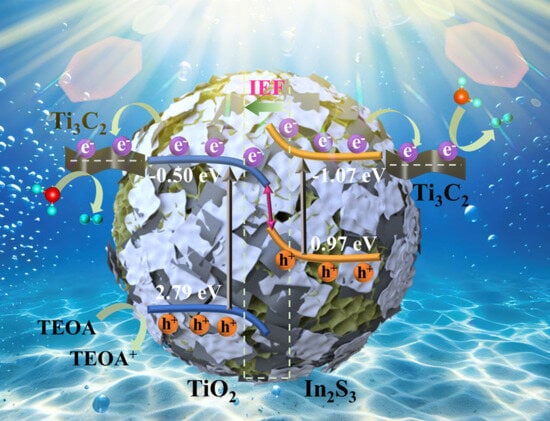
Graphical Abstract

1. Introduction

With the development of society, the energy shortage caused by the rapid consumption of fossil fuels has become an unavoidable issue [1,2]. In order to solve the issue, researchers have developed some alternative energy sources [3]. Hydrogen energy is expected to become a major energy source in the future due to its high energy density, green environmental protection, and high efficiency [4,5]. Converting solar energy into hydrogen energy by water splitting is one of the most sustainable solutions for producing H2, helping to meet the ever-increasing global energy demand [6,7]. Nowadays, metal sulfides have been widely employed in photocatalysis owing to their visible-light response, facile synthesis, unique photoelectric properties, and low cost [8,9]. Among them, In2S3 stands out as a promising photocatalytic candidate, featuring a broad light absorption range, low cost, excellent carrier mobility, and a suitable band gap [10,11]. Nevertheless, the rapid recombination of photogenerated charge, low quantum efficiency, and inevitable photocorrosion significantly impede photocatalytic activity. Thus, designing a high-performance photocatalyst is crucial for promoting the development of photocatalytic technology.
To solve these bottlenecks, extensive efforts have been devoted to modifying photocatalysts, including doping, loading cocatalysts, vacancy engineering, heterojunction construction, etc. [12,13,14,15]. Particularly, the construction of S-scheme heterojunctions has received widespread interest [16,17]. Based on the S-scheme heterojunction formation mechanism, it has been found that In2S3 possesses a suitable energy band structure and can act as a reduction photocatalyst to couple with TiO2 for the construction of an S-scheme heterojunction, which contributes to accelerating the separation of photogenerated charge and significantly enhances photocatalytic activity. Furthermore, the 2D TiO2 nanomaterial has excellent photocatalytic activity [18,19]. Therefore, the construction of an S-scheme heterojunction with a 2D structure can also effectively shorten the charge migration distance, provide a larger specific surface area, and expose abundant active sites [20,21].
To further boost photocatalytic performance, the loading cocatalysts on the photocatalyst surface have also been extensively investigated [22,23]. As novel 2D materials, MXenes have been demonstrated as efficient cocatalysts in the photocatalytic field because of their excellent metallic conductivity, high hydrophilicity, and high charge mobility [24,25,26]. In particular, the surface functional groups of Ti3C2 offer abundant active sites for interfacial coupling with photocatalysts, thereby facilitating the construction of Schottky junctions with intimate interfacial contact [27,28]. Currently, researchers are coupling MXene with photocatalysts to overcome the problems of the low photogenerated charge separation efficiency and narrow light absorption range of single photocatalysts [29,30]. For example, Li et al. fabricated a ZnIn2S4/Ti3C2 composite aiming toward enhancing the photocatalytic performance. In this composite system, Ti3C2 and ZnIn2S4 were in close contact to form a Schottky junction, which greatly facilitated the separation of the photogenerated charge of ZnIn2S4, thereby improving the photocatalytic activity [31]. Liu et al. also fabricated a 2D/2D Ti3C2 MXene/CdIn2S4 composite with abundant sulfur vacancies via a solvothermal approach. The composite displayed outstanding photocatalytic activity, which can be ascribed to the formation of a Schottky junction and sulfur vacancies [32]. Therefore, constructing a hierarchical structured In2S3/Ti3C2/TiO2 ternary heterojunction with an S-scheme and Schottky junction is a promising strategy to overcome the inherent drawbacks of single-component and binary heterojunction photocatalysts, further boosting the photocatalytic activity of water splitting for H2 production. The ternary heterostructure establishes dual spatially oriented charge transfer channels, which not only retain the strong redox ability of the photogenerated carrier via the S-scheme mechanism, but also further accelerate interfacial photogenerated carrier separation through the Schottky junction induced by metallic Ti3C2 MXene. Furthermore, the hierarchical structure assembled from nanosheets provides a shortened charge migration pathway, enlarged specific surface area, and sufficient active sites. To the best of our knowledge, the synergistic design combining an S-scheme and Schottky junction in a In2S3/Ti3C2/TiO2 ternary heterojunction for enhanced H2 production has been rarely reported previously.
In the present study, we rationally fabricated a hierarchical structured In2S3/Ti3C2/TiO2 ternary heterojunction with an S-scheme and Schottky junction. With the introduction of Ti3C2 and TiO2, the ternary heterojunction exhibits remarkable photocatalytic activity, achieving a H2 production rate of 446.65 μmol g−1 h−1, approximately 20 and 22 times that obtained on pure In2S3 and TiO2, respectively. The significant enhancement in photocatalytic H2 production activity can be attributed to the dual heterojunction structure of the S-scheme and Schottky junction, which constructs a dual photogenerated charge transfer channel to effectively promote the separation and transfer of photogenerated electron–hole pairs, ultimately boosting the overall photocatalytic H2 production efficiency.

2. Results and Discussion

2.1. Morphology and Structure Analysis

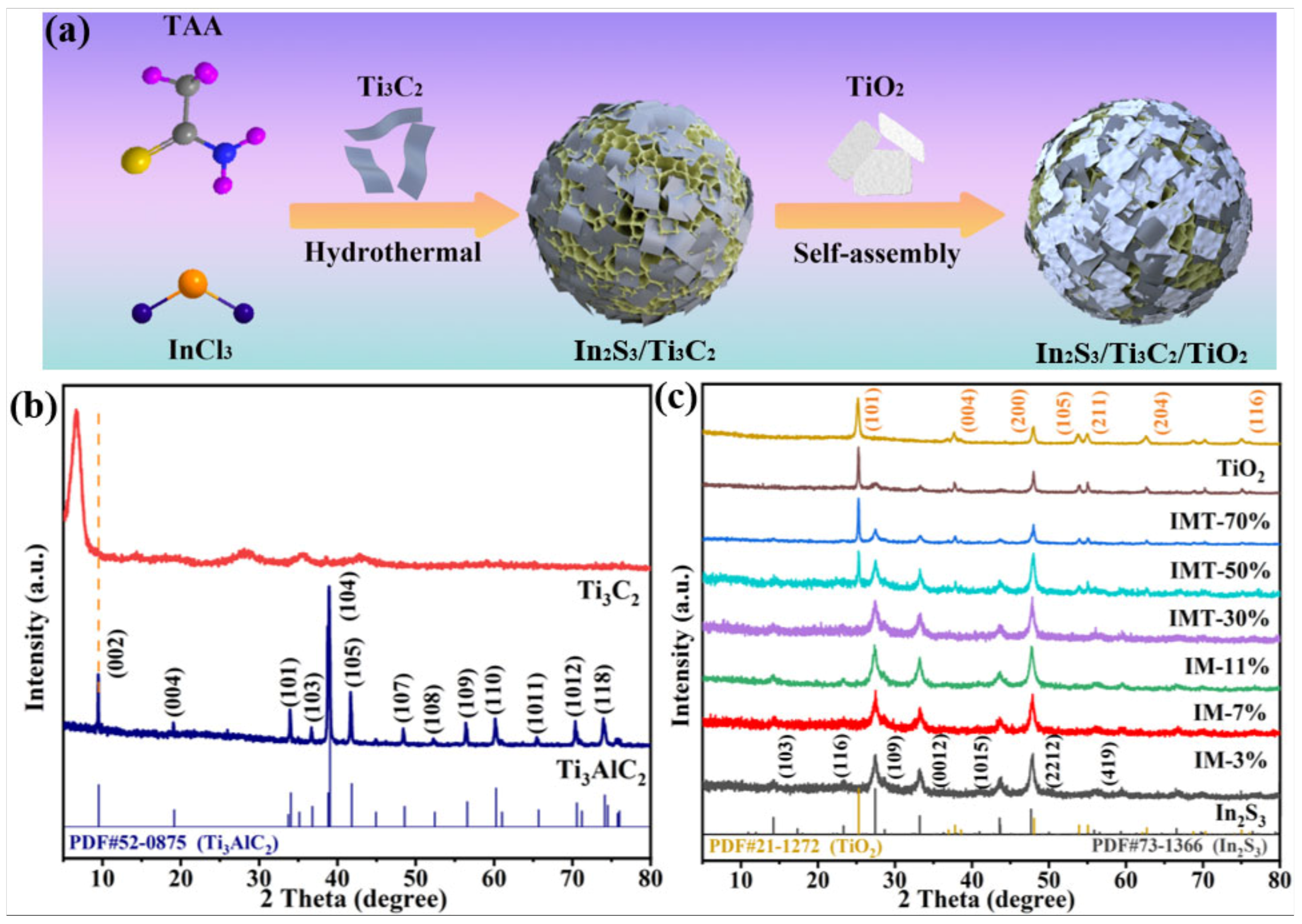
The hierarchical structured In2S3/Ti3C2/TiO2 ternary heterojunction was designed and synthesized via a hydrothermal route combined with a self-assembly strategy, as shown in Figure 1a. Firstly, the Al layers in Ti3AlC2 can be etched by LiF and HCl to form few-layer Ti3C2 nanosheets [22,23,33]. Then, the In2S3/Ti3C2 heterojunction was prepared by the hydrothermal method using InCl3 4H2O as the indium source and thioacetamide (TAA) as the sulfur source in the presence of Ti3C2 nanosheets. Furthermore, TiO2 nanosheets can be prepared via the solvothermal method with HF serving as a structure-regulating agent. Finally, the as-obtained In2S3/Ti3C2 and TiO2 nanosheets can be coupled through a self-assembly strategy, thus forming a hierarchical structured In2S3/Ti3C2/TiO2 ternary heterojunction.
The physical phase and crystal structure of the as-prepared samples were determined using an X-ray powder diffractometer (XRD). From Figure 1b, the diffraction peaks at 9.4°, 19.0°, 33.9°, 36.6°, 39.0°, 41.7°, 48.4°, 52.3°, 56.4°, 60.1°, 65.4°, 70.3°, and 73.9° correspond to the (002), (004), (101), (103), (104), (105), (107), (108), (109), (110), (1011), (1012), and (118) crystal planes of Ti3AlC2, respectively [22]. After the selective etching of Al layers in Ti3AlC2, the most intense diffraction peaks of Ti3C2 disappear, especially the (104) peak located at 39°. This result proves that the Al layers of Ti3AlC2 are etched. Meanwhile, the (002) peak of Ti3C2 shows broadening and a shift to a lower angle, indicating that the Ti3AlC2 has transformed into the 2D layered structure of Ti3C2 [22,23]. Figure 1c shows that the diffraction peaks at 14.2°, 23.3°, 27.5°, 33.2°, 43.7°, 47.9°, and 56.1° can been indexed in the (103), (116), (109), (0012), (1015), (2212), and (419) crystal planes of In2S3 (JCPDS NO. 25-0390), respectively [10,11]. For pure TiO2, the diffraction peaks at 25.2°, 37.6°, 47.9°, 53.8°, 55.0°, 62.7°, and 74.9° belong to the (101), (004), (200), (105), (211), (204), and (204) crystal planes of anatase TiO2 (JCPDS No. 21-1272), respectively [34]. With the introduction of Ti3C2, the diffraction peaks of In2S3 are clearly present in the In2S3/Ti3C2 heterojunction. Nevertheless, no distinct diffraction peak of Ti3C2 is detected, which is caused by the relatively homogeneous dispersion of Ti3C2 and the weak diffraction peaks of the few-layer Ti3C2 being shielded by the diffraction peaks of In2S3 [22,23]. Notably, the diffraction peaks of In2S3 and TiO2 are simultaneously detected in the In2S3/Ti3C2/TiO2 ternary heterojunction. Furthermore, the diffraction peaks of TiO2 are gradually enhanced as the TiO2 content increases, while the diffraction peaks of In2S3 are gradually weakened. These results confirm that the ternary heterojunction has been successfully constructed.
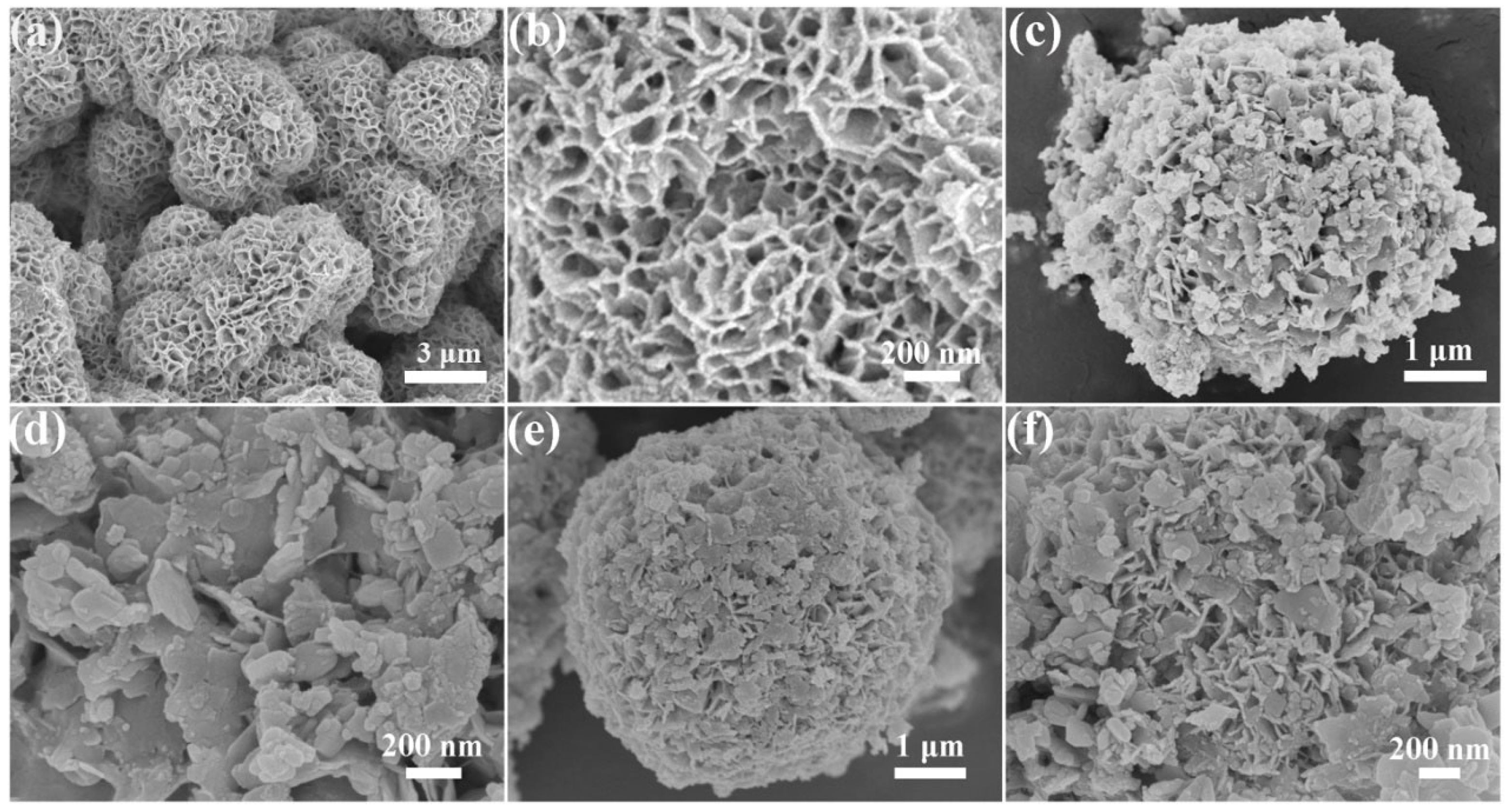
The morphology of the as-obtained samples was acquired by field emission scanning electron microscopy (FESEM). From Figure 2a,b, hierarchical In2S3 microspheres can be clearly observed with the self-assembly of nanosheets. Pure TiO2 shows irregular 2D nanosheets with sizes ranging from 100 to 200 nm (Figure S1a). As shown in Figure S1b, Ti3C2 possesses a 2D layered structure composed of few-layer nanosheets, suggesting that Al layers have been successfully etched. With the introduction of Ti3C2 in the In2S3/Ti3C2 heterojunction (IM-7%), it can be seen that the Ti3C2 is successfully anchored on the surface of In2S3 (Figure 2c,d). By coupling TiO2 nanosheets with the In2S3/Ti3C2 heterojunction via the self-assembly strategy (IMT-50%), the surface of the In2S3/Ti3C2/TiO2 ternary heterojunction obviously become much denser compared to the In2S3/Ti3C2 heterojunction (Figure 2e,f). Simultaneously, the In2S3/Ti3C2/TiO2 ternary heterojunction still maintains a hierarchical structure similar to the In2S3 and In2S3/Ti3C2 heterojunction. The results indicate that the In2S3/Ti3C2/TiO2 ternary heterojunction is successfully prepared.
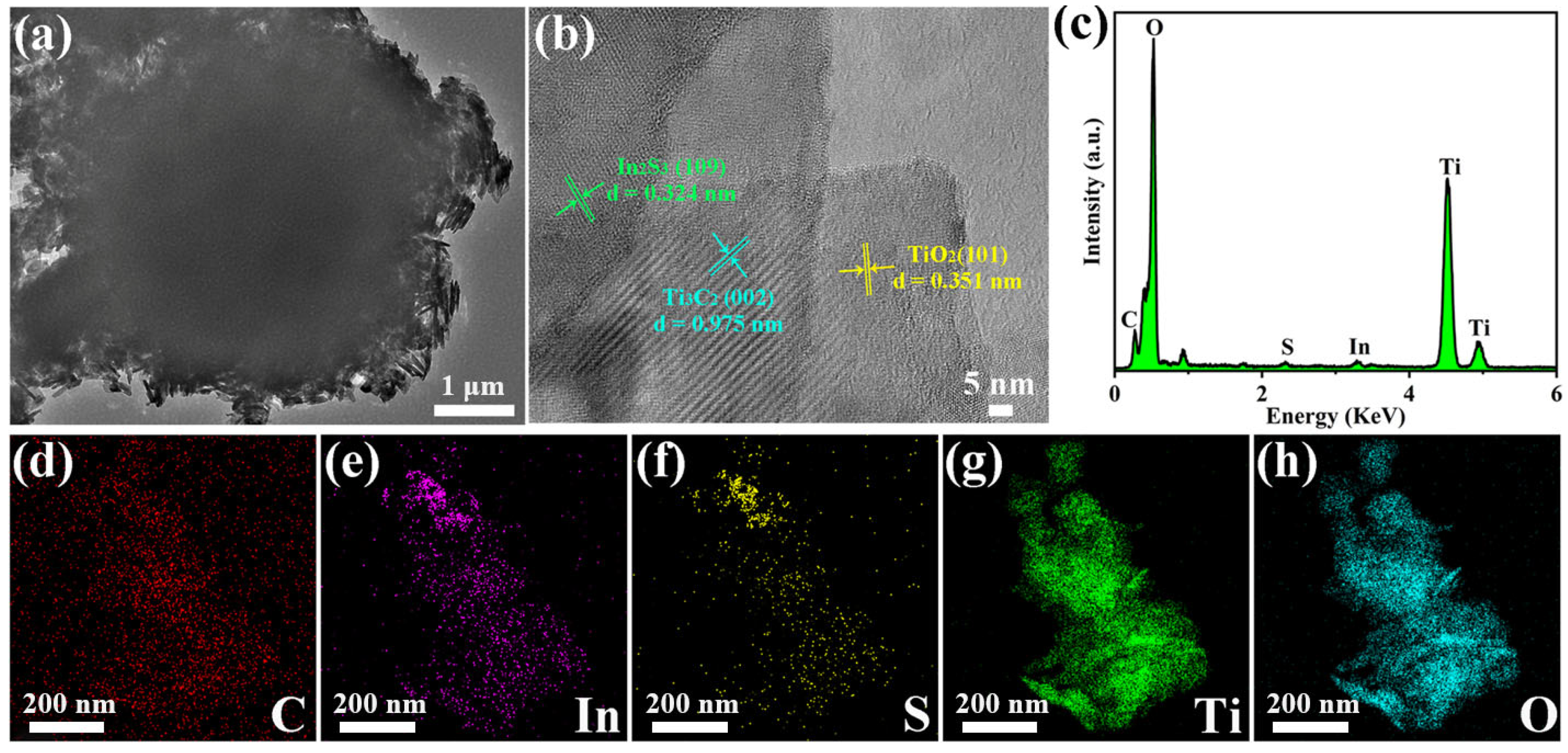
In order to further characterize the microstructure and elemental distribution of the as-prepared samples, TEM was performed, as exhibited in Figure 3. From Figure 3a, a tightly packed microsphere can be observed in the In2S3/Ti3C2/TiO2 ternary heterojunction. Additionally, the high-resolution TEM (HRTEM) in Figure 3b displays clear lattice spacing at 0.351, 0.975, and 0.324 nm, which correspond to the (101), (002), and (109) crystal planes of TiO2, Ti3C2, and In2S3, respectively [11,22,34], indicating the presence of In2S3, TiO2, and Ti3C2 in the ternary heterojunction. Meanwhile, the result also suggests that a close interfacial contact is formed among In2S3, TiO2, and Ti3C2. Furthermore, energy dispersive spectrometry (EDS) and elemental mapping were carried out to further investigate the elemental composition and distribution. From Figure 3c–h, the coexistence and uniform distribution of C, In, O, S, and Ti can be clearly observed in the In2S3/Ti3C2/TiO2 ternary heterojunction, which further confirm the successful preparation of the ternary heterojunction.
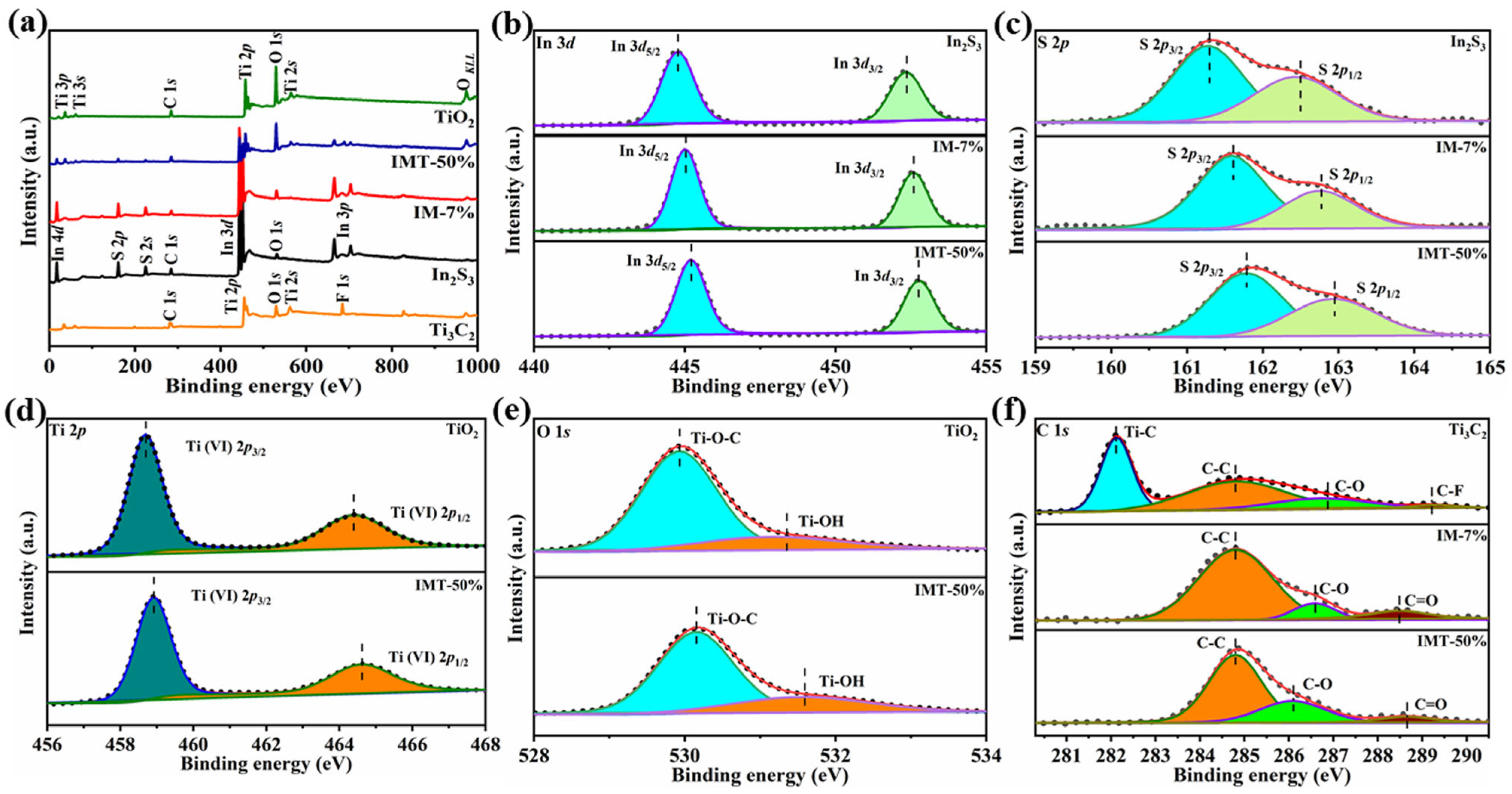
The chemical composition, elemental valence states, and interfacial interactions of the as-prepared samples were characterized by X-ray photoelectron spectroscopy (XPS). From Figure 4a, IMT-50% shows the presence of In, S, Ti, C, and O compared to Ti3C2, In2S3, TiO2, and IM-7%, consisting with EDS and elemental mappings (Figure 3c–h). Pure In2S3 shows the two characteristic peaks at 444.8 and 452.4 eV, attributed to the In 3d5/2 and In 3d3/2, respectively (Figure 4b). Furthermore, the two characteristic peaks at 161.3 and 162.5 eV belong to S 2p3/2 and S 2p1/2, respectively (Figure 4c) [11]. After modification with the Ti3C2 nanosheet, the characteristic peaks of In 3d and S 2p in the In2S3/Ti3C2 heterojunction are positively shifted. The upward shift in binding energy signifies interfacial electron transfer among atoms and a reduced electron cloud density around the metal ions, thereby strengthening the Coulombic attraction between the indium nucleus and the emitted electrons [35]. For the In2S3/Ti3C2/TiO2 ternary heterojunction, the binding energies of In 3d and S 2p are also positively shifted. This result suggests a reduced surface electron density of In2S3 in the In2S3/Ti3C2/TiO2, indicating a heterojunction formation between In2S3 and TiO2, which effectively facilitates the transfer of photogenerated electrons [36]. The Ti 2p spectrum of TiO2 in Figure 4d fits two characteristic peaks at 458.7 and 464.4 eV, corresponding to Ti (VI)2p3/2 and Ti (VI)2p1/2, respectively [22,23]. It is noteworthy that the characteristic peak of Ti 2p for IMT-50% shifts towards a higher binding energy compared to TiO2, indicating that TiO2 is losing electrons in the heterojunction, which suggests that more electrons are transferred to Ti3C2 [22]. Similarly, Figure 4e shows that the characteristic peaks of O 1s over IMT-50% are shifted towards higher binding energies compared to pristine TiO2, which is in agreement with the Ti 2p. For Figure 4f, the high-resolution C 1s spectrum of Ti3C2 is fitted with four characteristic peaks at 282.1, 284.8, 286.9, and 289.2 eV, corresponding to Ti-C, C-C, C-O, and C-F bonds, respectively [22]. Notably, the C-O bonds of IM-7% and IMT-50% are negatively shifted, indicating an elevated electron density on the Ti3C2 surface. The variation in binding energy is ascribed to the equilibrium state of charge redistribution achieved after heterojunction formation, where an increase in binding energy implies a reduction in electron density. Therefore, it can be inferred that the formation of a built-in electric field reduces the Coulomb repulsion and enhances the photogenerated charge transfer across the interface.

2.2. Photoelectrochemical Performance Analysis

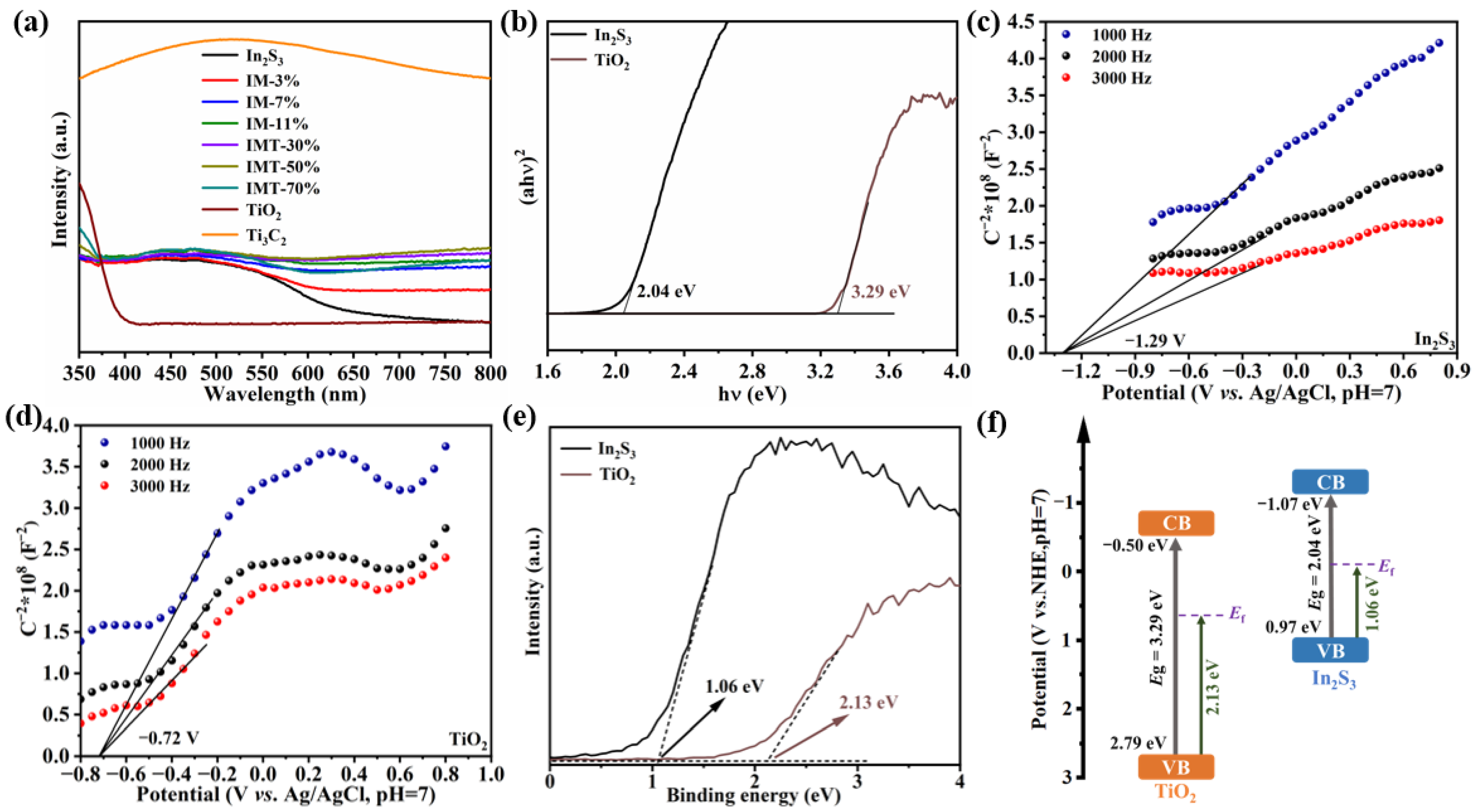
The light absorption performances of samples were explored via UV–vis diffuse reflectance spectra and are demonstrated in Figure 5a. Pure In2S3 demonstrates a visible light absorption ability. Compared with In2S3, the light absorption abilities of In2S3/Ti3C2 heterojunctions are greatly enhanced via the incorporation of Ti3C2 [22]. As the Ti3C2 content increases, the light absorption abilities of In2S3/Ti3C2 heterojunctions are gradually enhanced. As expected, the introduction of TiO2 in the In2S3/Ti3C2/TiO2 ternary heterojunction can further improve the light absorption ability, implying the formation of a strong interaction between In2S3, TiO2, and Ti3C2. By the Kubelka–Munk function, the band gaps of In2S3 and TiO2 are calculated to be 2.04 and 3.29 eV, respectively (Figure 5b). Furthermore, the energy band structures of In2S3 and TiO2 are analyzed using Mott–Schottky tests (Figure 5c,d). It is observed that the tangent slopes of In2S3 and TiO2 are positive, indicating that In2S3 and TiO2 belong to n-type semiconductors. The flat-band potentials of In2S3 and TiO2 are about −1.29 and −0.72 V vs. Ag/AgCl, respectively. For n-type semiconductors, the flat-band potential coincides with the CB potential [23]. Based on the formula for converting the standard hydrogen electrode potential (NHE) to the Ag/AgCl electrode potential [34], the CB potentials of In2S3 and TiO2 are determined as −1.07 and −0.50 eV. Meanwhile, the valence band (VB) potentials of In2S3 and TiO2 are also calculated to be 0.97 and 2.79 eV via the equation (Eg = EVBECB) [34]. Additionally, the VB-XPS spectra was employed to identify the energy difference between EVB and the Fermi level (Ef) [37]. As shown in Figure 5e, the energy differences of In2S3 and TiO2 are 1.06 and 2.13 eV. With the EVB of In2S3 and TiO2 determined as 0.97 and 2.79 eV, the Ef values of In2S3 and TiO2 correspond to −0.09 and 0.66 eV, respectively. Combined with the above analytical results of the UV–vis diffuse reflectance spectra, Mott–Schottky tests, and VB-XPS spectra, the band structure diagram of In2S3 and TiO2 is illustrated in Figure 5f.
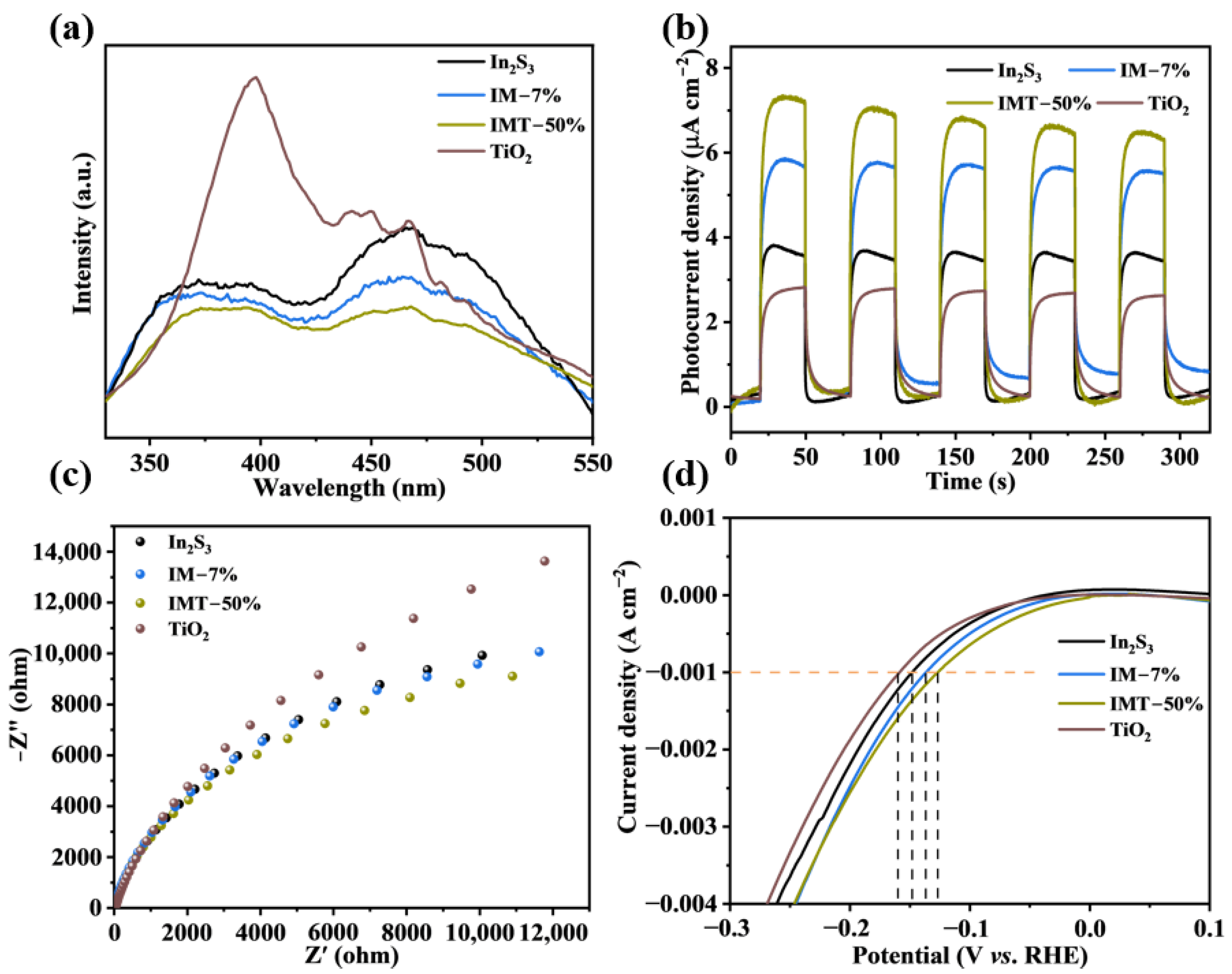
The photogenerated charge separation and transfer efficiencies of the as-prepared samples were assessed through the photoluminescence (PL) spectra. In general, a higher intensity of PL spectra shows a higher recombination efficiency of the photogenerated charge, thus leading to lower photocatalytic activity [34]. As presented in Figure 6a, pure In2S3 and TiO2 show a higher PL intensity, implying the rapid recombination of photogenerated charge. With the introduction of Ti3C2 in the In2S3/Ti3C2 heterojunction, the PL intensity is significantly lower than that of pure In2S3, thus hindering the photogenerated electron–hole pairs’ recombination [36]. Interestingly, the PL intensity of the In2S3/Ti3C2/TiO2 ternary heterojunction can be further reduced compared to In2S3, TiO2, and the In2S3/Ti3C2 heterojunction. These results show that the In2S3/Ti3C2/TiO2 ternary heterojunction exhibits the highest separation efficiency of photogenerated charge, which endows it with outstanding photocatalytic performance. Figure 6b shows the transient photocurrent responses of In2S3, TiO2, IM-7%, and IMT-50%. The photocurrent intensity of IM-7% is significantly higher than that of pure In2S3, while IMT-50% exhibits an even higher photocurrent density, indicating that the introduction of Ti3C2 and TiO2 can enhance the charge separation efficiency in the In2S3/Ti3C2/TiO2 ternary heterojunction. Simultaneously, IMT-50% also exhibits a smaller EIS semicircle radius compared to pure In2S3, TiO2, and IM-7%, suggesting lower interfacial resistance and more efficient charge transfer across the interface (Figure 6c). Thus, the formation of the ternary heterojunction can promote more photogenerated charge to participate in the photocatalytic reaction.
Generally, the photocatalytic H2 production activity is highly dependent on the overpotential of the photocatalyst. An overpotential close to zero is more favorable for driving photocatalytic H2 production [34]. From linear sweep voltammetry (LSV) tests (Figure 6d), it is evident that IMT-50% shows the lowest overpotential, which suggests that the In2S3/Ti3C2/TiO2 ternary heterojunction possesses a stronger reduction capability and is more favorable for the photocatalytic H2 production reaction.

2.3. Photocatalytic H2 Production Performance Analysis

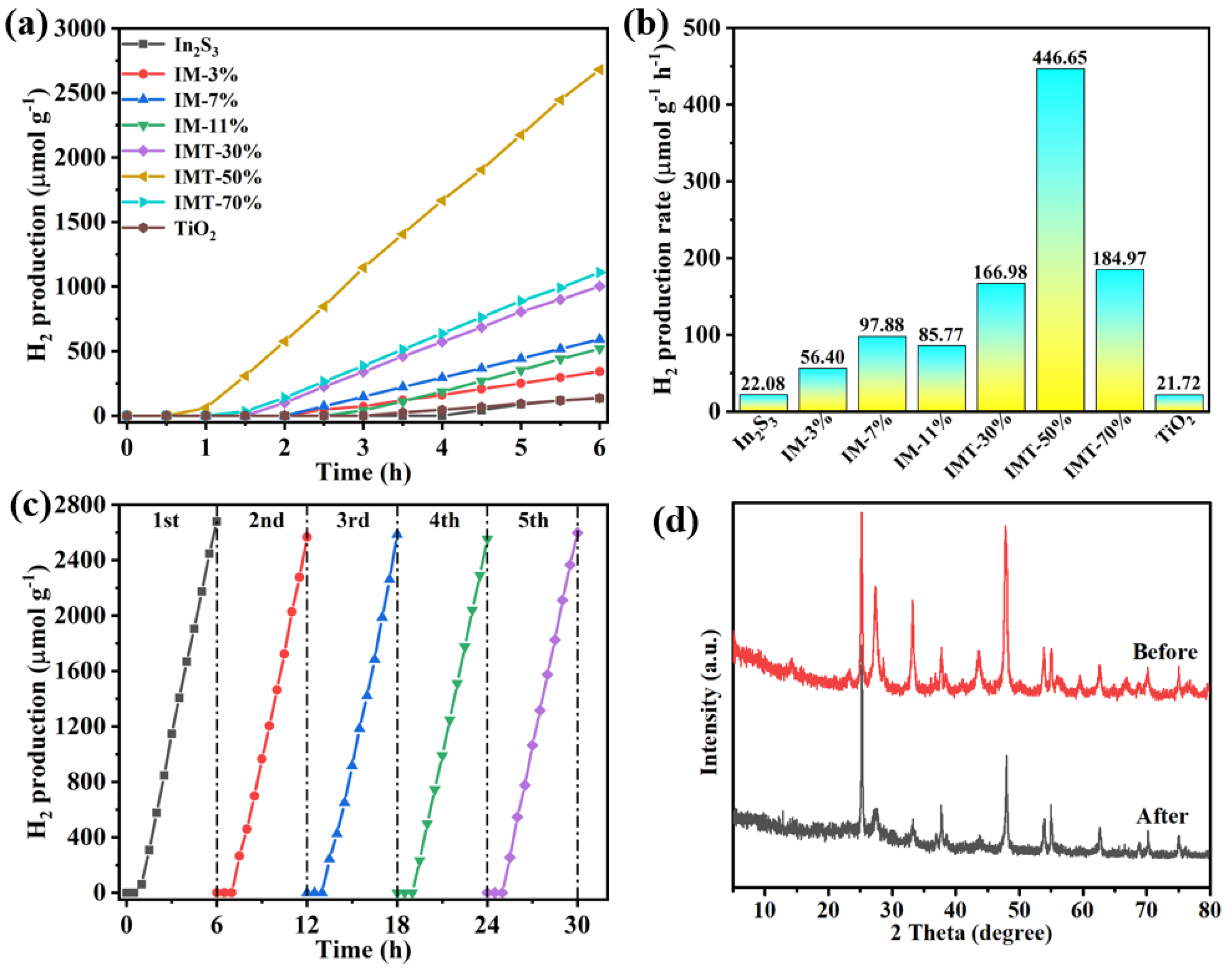
The photocatalytic H2 production activities of the samples were assessed under simulated sunlight irradiation. From Figure 7a,b, the lower photocatalytic H2 production rates of 21.72 and 22.08 μmol g−1 h−1 are observed over pure TiO2 and In2S3, respectively, which is due to the fast photogenerated charge recombination of the single photocatalyst [38]. When Ti3C2 is introduced into In2S3 to form the In2S3/Ti3C2 heterojunction, the photocatalytic H2 production activity is obviously improved. Particularly, IM-7% demonstrates a photocatalytic H2 production rate of 97.88 μmol g−1 h−1. This is mainly due to the role of Ti3C2 as an electron acceptor to form the Schottky junction between In2S3 and Ti3C2, which effectively traps electrons and improves the separation and transfer of photogenerated charge [27,28]. After TiO2 is introduced into the In2S3/Ti3C2 heterojunction, the photocatalytic H2 production activity of the In2S3/Ti3C2/TiO2 ternary heterojunction is further enhanced, reaching up to 446.65 μmol g−1 h−1, which is 20 and 22 times that of pure In2S3 and TiO2. This result is also significantly superior to those of other reported photocatalysts, as shown in Table S1. Owing to the broad light absorption feature of the In2S3/Ti3C2/TiO2 ternary heterojunction (Figure 5a), the photocatalytic H2 production activities of the ternary heterojunctions have also been conducted under visible light irradiation (λ > 420 nm) and are presented in Figure S2. It can be clearly observed that IMT-50% also exhibits an excellent photocatalytic H2 production activity of 383.22 μmol g−1 h−1. The improvement of photocatalytic activity of the In2S3/Ti3C2/TiO2 ternary heterojunction is attributed to the introduction of TiO2 to further promote the separation of photogenerated charge, thus achieving efficient photocatalytic H2 production activity. Additionally, the photocatalytic stability and reusability of the In2S3/Ti3C2/TiO2 ternary heterojunction (IMT-50%) are evaluated through recycling experiments. As shown in Figure 7c, the photocatalytic performance shows no significant decrease after five cycles. Meanwhile, no obvious structural and morphological alterations are detected via the XRD pattern and FESEM image (Figure 7d and Figure S3). The results confirm the photocatalytic stability and reusability of the In2S3/Ti3C2/TiO2 ternary heterojunction.

2.4. Mechanism of Photocatalytic H2 Production Activity Enhancement

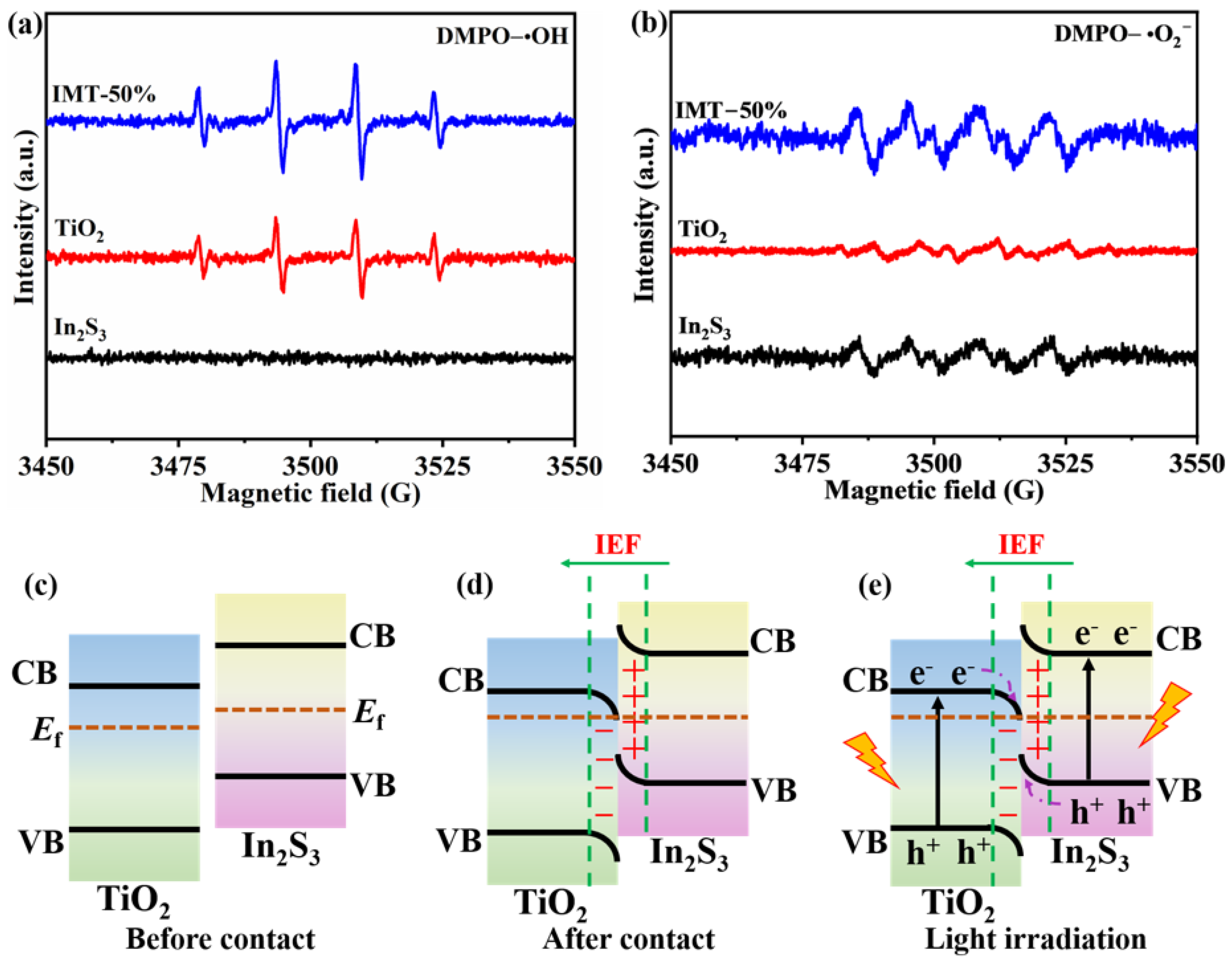
To further explore the charge transfer mechanism, the in situ electron paramagnetic resonance (EPR) spectra were detected using 5,5-dimethyl-1-pyrrolin-n-oxide (DMPO) as the spin trapping reagent [34,39]. From Figure 8a,b, the DMPO-•OH and DMPO-•O2 signals in pure TiO2 are detectable, while pure In2S3 only exhibits DMPO-•O2 signals without DMPO-•OH signals. This may be due to the fact that the VB potential (2.79 eV) and CB potential (−0.50 eV) of TiO2 can simultaneously meet the potential requirements of H2O/•OH (2.37 eV) and O2/•O2 (−0.33 eV) [34,40]. The VB potential of In2S3 (0.97 eV) is lower compared to the H2O/•OH potential [41]. In comparison to pure TiO2 and In2S3, the IMT-50% displays remarkably stronger intensities of DMPO-•OH and DMPO-•O2 signals. If the IMT-50% exhibits a type-II charge transfer behavior, the DMPO-•OH and DMPO-•O2 signals in IMT-50% would be weaker because of its lower oxidation and reduction potentials [34], as shown in Figure S4. However, this phenomenon is contrary to the type-II heterojunction. Therefore, the charge transfer path of the In2S3/TiO2 heterojunction follows the S-scheme mechanism rather than the type-II heterojunction.
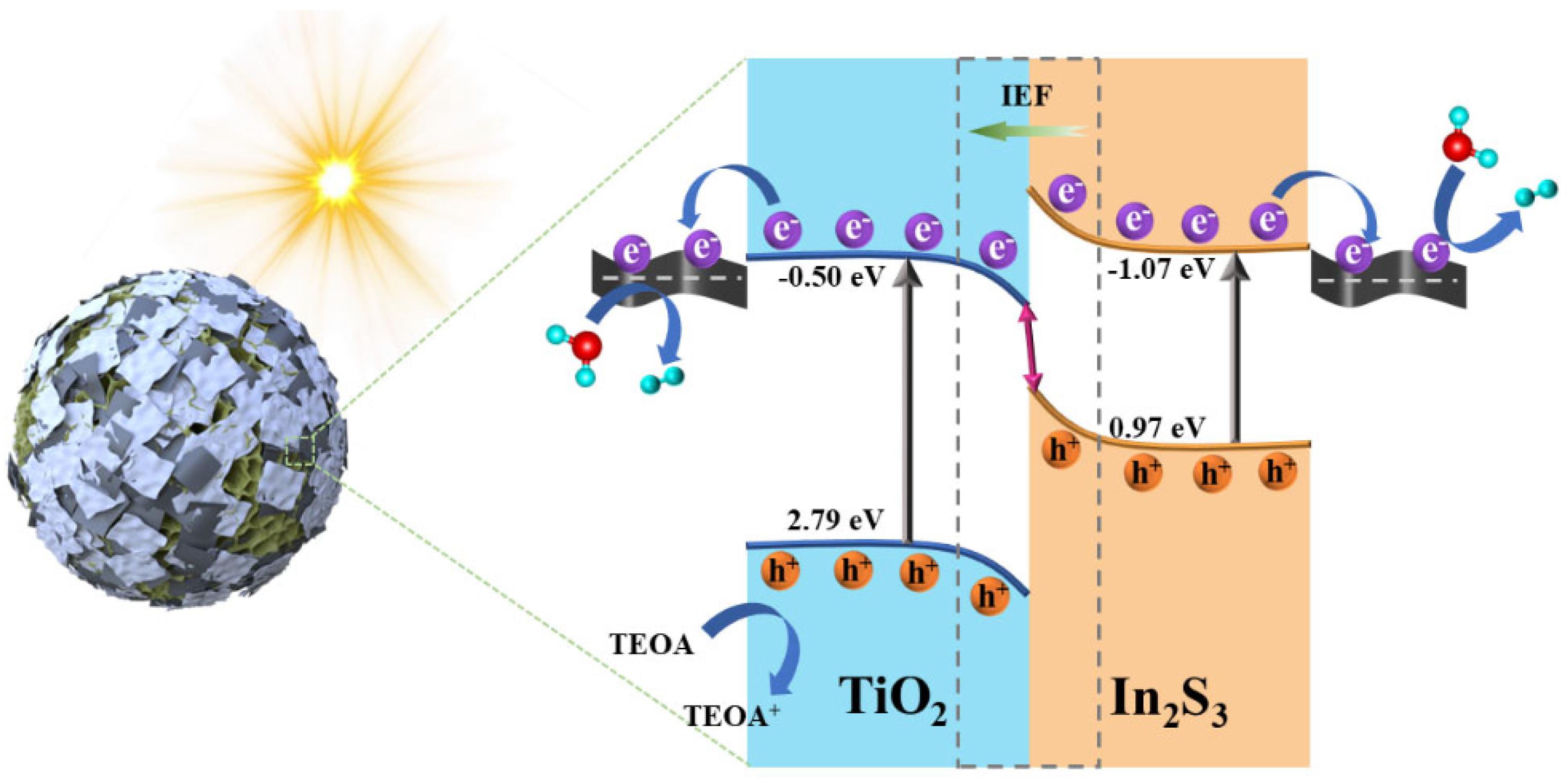
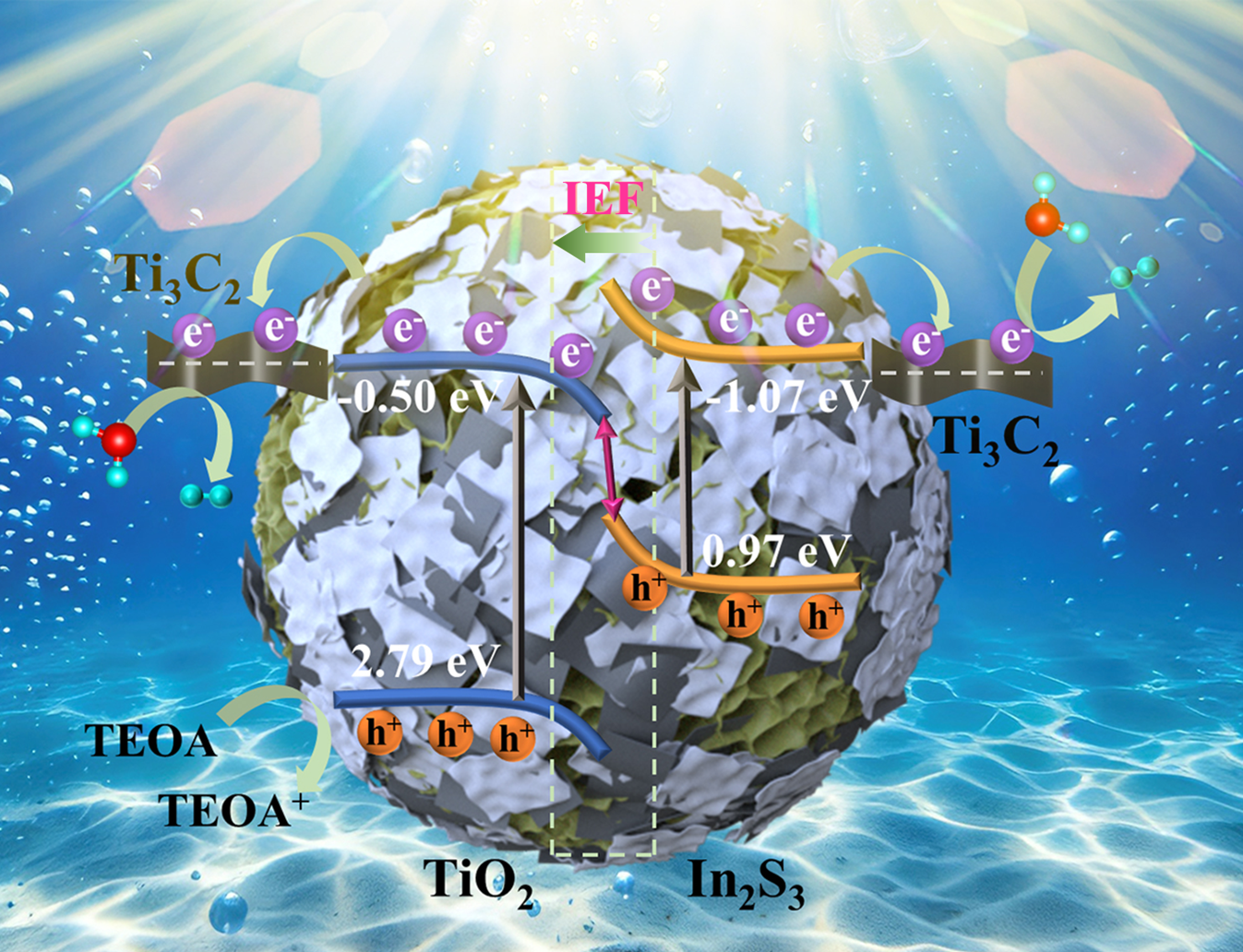
Based on the above analysis, the possible charge transfer mechanism of the In2S3/TiO2 heterojunction is proposed. As shown in Figure 8c–e, the electron in In2S3 will migrate to TiO2 across the contact interface due to the different Ef of In2S3 and TiO2, achieving a balanced Ef and forming an internal electric field (IEF) in the direction of In2S3 to TiO2 [42,43]. As a result, the downward and upward energy band bending occur in TiO2 and In2S3, respectively. Under light irradiation, the photogenerated electrons of In2S3 and TiO2 are stimulated to the CB, while the holes remain in the VB. By the combined influence of the IEF and energy band bending, the electrons in the CB of TiO2 can transfer and combine with the holes in the VB of In2S3. The results imply that the CB of In2S3 holds electrons with high reducing capacity and the VB of TiO2 retains strong oxidizing holes. Furthermore, owing to the metallic character of Ti3C2, it can form a Schottky junction with In2S3 and TiO2, and thus electrons in the In2S3 and TiO2 can be transferred to the Ti3C2 (Figure 9). The photogenerated electrons gathered on the Ti3C2 reduce H2O into H2, while the photogenerated holes in the TiO2 can oxidize triethanolamine (TEOA) into by-products [44,45]. Therefore, the In2S3/Ti3C2/TiO2 ternary heterojunction can realize a dual photogenerated charge transfer channel due to the formation of the S-scheme and Schottky junction, which can effectively improve the separation and efficiency of the photogenerated charge. At the same time, the tight binding between nanosheets also shortens the transfer distance of photogenerated charge, thereby boosting the photocatalytic H2 production activity.

3. Materials and Methods

3.1. Preparation of Ti3C2 Nanosheets

A total of 1 g of Ti3AlC2 was slowly added into a 40 mL solution containing 2 g of LiF and 9 mol L−1 HCl, and the mixture was stirred at 35 °C for 24 h to etch the Al layers from Ti3AlC2. The resulting suspension was centrifuged and washed repeatedly with deionized water until the pH approached approximately 6. Next, the obtained black powder was redispersed in deionized water and treated by sonication for 3 h under a N2 atmosphere. Finally, centrifugation was performed at 3500× g rpm for 1 h to obtain few-layered Ti3C2 nanosheets.

3.2. Preparation of TiO2 Nanosheets

The 10 mL of tetrabutyl titanate was dropwise added into 5 mL of HF with continuous stirring at room temperature to form a homogeneous solution. Then, 30 mL of ethanol was added and followed by 20 min of stirring to achieve uniform dispersion. Thereafter, the dispersed solution was hydrothermally reacted at 180 °C for 16 h. After the reaction was completed, the sample was centrifuged and washed. Finally, the resulting powder was calcined at 500 °C for 2 h with a heating rate of 5 °C min−1 to obtain TiO2 nanosheets.

3.3. Preparation of In2S3/Ti3C2 Heterojunction

The In2S3/Ti3C2 heterojunction was prepared via the hydrothermal method. Typically, 0.01 g of Ti3C2 was added into 25 mL of deionized water and 25 mL of ethylene glycol to achieve homogeneous dispersion under a constant stirring condition. Then, 0.221 g of InCl3 4H2O and 0.09 g of TAA were added to the above solution and stirred for 30 min. Subsequently, the above solution was subjected to a hydrothermal reaction at 140 °C for 8 h. The In2S3/Ti3C2 heterojunction was obtained after centrifugation, washing, and vacuum drying.
The mass ratios of Ti3C2 in the In2S3/Ti3C2 heterojunctions were adjusted to 3 wt%, 7 wt%, and 11 wt%, and the corresponding products were labelled as IM-3%, IM-7%, and IM-11%, respectively. Furthermore, pure In2S3 was also prepared via the same procedure without adding Ti3C2 nanosheets.

3.4. Preparation of In2S3/Ti3C2/TiO2 Ternary Heterojunction

The In2S3/Ti3C2/TiO2 ternary heterojunction was prepared using a self-assembly strategy. Typically, 0.1 g of TiO2 nanosheets and 0.1 g of the In2S3/Ti3C2 heterojunction (IM-7%) were added into 50 mL of deionized water, and ultrasonication was carried out for 1 h to make the dispersion uniform. After that, N2 was passed for 30 min and stirred for 12 h. Finally, the resulting precipitates were filtered, vacuum dried, and milled to obtain the In2S3/Ti3C2/TiO2 ternary heterojunction. Furthermore, the mass ratios of TiO2 in the In2S3/Ti3C2/TiO2 ternary heterojunctions were controlled at 30 wt%, 50 wt%, and 70 wt%, corresponding to IMT-30%, IMT-50%, and IMT-70%, respectively.

3.5. Photocatalytic H2 Production Test

Photocatalytic H2 production activity was evaluated in a Pyrex glass reaction vessel integrated with a gas-tight circulation system using a 300 W Xenon lamp as the light source (Beijing China Education Au-light Co., Ltd., Beijing, China). Typically, 20 mg of photocatalyst was dispersed into 100 mL of aqueous solution containing 20 vol% triethanolamine, followed by sonication for 10 min. Before light irradiation, the glass reactor was evacuated thoroughly to eliminate the air. The amount of H2 production was quantified using an on-line GC7920 gas chromatograph equipped with a thermal conductivity detector (Beijing China Education Au-light Co., Ltd., Beijing, China).
More details can be found in the Supplementary Materials.

4. Conclusions

In summary, the In2S3/Ti3C2/TiO2 ternary heterojunction with a hierarchical structure was successfully fabricated through a combination of the hydrothermal method and a self-assembly strategy. The resulting ternary heterojunction provides intimate interfacial contact and excellent structural stability. Under simulated sunlight irradiation, the optimized In2S3/Ti3C2/TiO2 ternary heterojunction exhibits an outstanding photocatalytic H2 production activity of 446.65 umol g−1 h−1, corresponding to about 22 and 20 times higher activity than that of the pure TiO2 and In2S3, respectively. The excellent photocatalytic H2 production activity is correlated with the dual photogenerated charge transfer channel, which is constructed by the S-scheme and Schottky junction in the ternary heterojunction and serves to facilitate the efficient separation and transfer of photogenerated electron–hole pairs. This study may open up a platform for improving the photocatalytic H2 production activity by integrating two different heterojunctions.

Supplementary Materials

The following supporting information can be downloaded at: https://www.mdpi.com/article/10.3390/molecules31101751/s1. Figure S1. FESEM images of (a) TiO2 nanosheets and (b) Ti3C2 nanosheets. Figure S2. Photocatalytic H2 production curves of the In2S3/Ti3C2/TiO2 ternary heterojunction under visible light irradiation (λ > 420 nm). Figure S3. FESEM image of IMT-50% after the photocatalytic H2 production experiment. Figure S4. Schematic illustration of the charge-transfer pathway for a conventional type-II heterojunction. Table S1. The comparison of the photocatalytic H2 production rate of the In2S3/Ti3C2/TiO2 heterojunction with other reported photocatalysts. References [46,47,48,49,50,51,52,53] are cited in the Supplementary Materials.

Author Contributions

Conceptualization, B.S. and G.Z.; methodology, W.L., D.L. and X.L. (Xingpeng Liu); validation, W.L., B.S. and G.Z.; formal analysis, W.L., X.L. (Xiao Lin) and B.S.; investigation, W.L., D.L. and P.G.; data curation, W.L. and D.L.; writing—original draft preparation, W.L. and D.L.; writing—review and editing, W.L., D.L. and B.S.; supervision, W.L., B.S. and G.Z.; project administration, B.S.; funding acquisition, W.L., B.S. and G.Z. All authors have read and agreed to the published version of the manuscript.

Funding

This work was supported by the Natural Science Foundation of Shandong Province (ZR2021QE282), National Natural Science Foundation of China (52202102, 52472215, and 52202007), Key Research & Development Project of Shandong Province (2024TSGC0222), and Key Innovation Project of the Science-Education-Industry Integration Pilot Engineering of Qilu University of Technology (Shandong Academy of Sciences) (2025ZDZX08).

Institutional Review Board Statement

Not applicable.

Informed Consent Statement

Not applicable.

Data Availability Statement

The original contributions presented in this study are included in the article/Supplementary Materials. Further inquiries can be directed to the corresponding authors.

Conflicts of Interest

The authors declare no conflicts of interest.

References

  1. Zhu, X.L.; Zong, H.B.; Pérez, C.J.V.; Miao, H.H.; Sun, W.; Yuan, Z.M.; Wang, S.H.; Zeng, G.X.; Xu, H.; Jiang, Z.Y.; et al. Supercharged CO2 photothermal catalytic methanation: High conversion, rate, and selectivity. Angew. Chem. Int. Ed. 2023, 62, e202218694. [Google Scholar] [CrossRef]
  2. Li, S.J.; Li, X.Y.; Liu, Y.P.; Zhang, P.; Zhang, J.L.; Zhang, B. Interfacial engineering of a plasmonic Ag/Ag2CO3/C3N5 S-scheme heterojunction for high-performance photocatalytic degradation of antibiotics. Chin. J. Catal. 2025, 72, 130–142. [Google Scholar] [CrossRef]
  3. Pan, X.R.; Kong, F.Y.; Xing, M.Y. Spatial separation of photo-generated carriers in g-C3N4/MnO2/Pt with enhanced H2 evolution and organic pollutant control. Res. Chem. Intermed. 2022, 48, 2837–2855. [Google Scholar] [CrossRef]
  4. Zhang, H.Y.; Yuan, Z.M.; Zhao, X.L.; Zhu, X.L.; Wang, H.Q.; Luo, Y.; Wang, Z.; Jiang, Z.Y. Graphitic carbon nitride photocatalysts for sustainable energy and environmental remediation: Performance optimization and future perspectives. J. Environ. Sci. 2026, 163, 59–75. [Google Scholar] [CrossRef] [PubMed]
  5. Teng, Y.; Ning, L.L.; Tan, C.W.; Zhao, J.; Xiong, Y.W.; Zou, H.L.; Ye, Z.M.; Zhang, X.M.; Kuang, D.B.; Li, Y.J. Bi3TiNbO9/Bi2S3 heterojunction for efficient photosynthesis of H2O2 in pure water. Adv. Funct. Mater. 2025, 35, 2414892. [Google Scholar] [CrossRef]
  6. Zhuang, C.Q.; Zhang, C.; Zhang, D.; Zhang, Y.H.; Shan, P.; Zhang, W.; Xu, P.; Li, S.J. Role of transmission electron microscopy in heterogeneous structural nanomaterials for photocatalytic applications. J. Mater. Sci. Technol. 2025, 239, 195–233. [Google Scholar] [CrossRef]
  7. Hao, L.; Shen, R.C.; Qin, C.C.; Li, N.; Hu, H.B.; Liang, G.J.; Li, X. Regulating local polarization in truxenone-based covalent organic frameworks for boosting photocatalytic hydrogen evolution. Sci. China Mater. 2024, 67, 504–513. [Google Scholar] [CrossRef]
  8. Feng, B.N.; Qi, B.; Wang, S.; Zhang, P.; Shen, R.C.; Li, Y.J.; Li, X. Elucidating the charge-separation and oxidation dynamics in fluorenone-COF/CdS S-scheme heterojunction for photocatalytic benzaldehyde and hydrogen production. Energy Environ. Mater. 2025, 9, e70153. [Google Scholar] [CrossRef]
  9. Wang, S.K.; Liu, Q.H.; Zhang, W.; Liu, J.C.; Ji, X.Y.; Cai, P.Q.; Chen, R.Q.; Liu, S.Y.; Ma, W.Q.; Zhang, D.F.; et al. Boosting photocatalytic H2 evolution performance of ZnIn2S4 via S-scheme heterostructuring with ZnMoO4. Carbon Neutraliz. 2025, 4, e70054. [Google Scholar] [CrossRef]
  10. Wang, S.; Chen, Q.L.; Gao, T.; Zhou, Y. Z-scheme In2S3/MnO2/BiOCl heterojunction photo-enhanced high-performance lithium-oxygen batteries. J. Mater. Sci. Technol. 2025, 215, 1–14. [Google Scholar] [CrossRef]
  11. Yang, Y.; Cheng, B.; Yu, J.G.; Wang, L.X.; Ho, W.K. TiO2/In2S3 S-scheme photocatalyst with enhanced H2O2-production activity. Nano Res. 2023, 16, 4506–4514. [Google Scholar] [CrossRef]
  12. Guo, Q.Y.; Yang, Y.; Hu, T.T.; Chu, H.Q.; Liao, L.J.; Wang, X.P.; Li, Z.Z.; Guo, L.P.; Zhou, W. Regulating local electron transfer environment of covalent triazine frameworks through F, N co-modification towards optimized oxygen reduction reaction. Chin. Chem. Lett. 2025, 36, 110235. [Google Scholar] [CrossRef]
  13. Yuan, Z.M.; Zhang, B.K.; Zhu, X.L.; Wang, S.H.; Sun, W.; Huang, B.B.; Jiang, Z.Y.; Dai, Y.; Wang, Z.; Wei, W.; et al. In-situ doping coupling with vacancy regulation induced strong metal-support interaction in Ni/CaTiO3 to boost supercharged photothermal CO2 methanation. Adv. Funct. Mater. 2025, 35, 2503531. [Google Scholar] [CrossRef]
  14. Li, S.J.; Li, R.; Dong, K.X.; Liu, Y.P.; Yu, X.; Li, W.Y.; Liu, T.; Zhao, Z.W.; Zhang, M.Y.; Zhang, B.; et al. Self-floating Bi4O5Br2/P-doped C3N4/carbon fiber cloth with S-scheme heterostructure for boosted photocatalytic removal of emerging organic contaminants. Chin. J. Catal. 2025, 76, 37–49. [Google Scholar] [CrossRef]
  15. Miao, H.H.; Wu, J.B.; Luo, X.; Li, X.; Mo, Z.; Liu, J.Y.; Jiang, Z.Y.; Yi, J.J.; Zhu, X.L.; Xu, H. Mechanism decoding of an S-scheme ZnIn2S4/H2WO4 heterojunction with favorable surface electronic potential for enhanced and anti-corrosion photocatalytic hydrogen evolution. Inorg. Chem. 2025, 64, 10290–10301. [Google Scholar] [CrossRef]
  16. Zhu, X.L.; Zhou, E.L.; Tai, X.S.; Zong, H.B.; Yi, J.J.; Yuan, Z.M.; Zhao, X.L.; Huang, P.; Xu, H.; Jiang, Z.Y. g-C3N4 S-scheme homojunction through van der waals interface regulation by intrinsic polymerization tailoring for enhanced photocatalytic H2 evolution and CO2 reduction. Angew. Chem. Int. Ed. 2025, 64, e202425439. [Google Scholar] [CrossRef]
  17. Xu, K.Q.; Zhu, W.J.; Sayed, M.; Han, S. Design and preparation of 1D-based S-scheme photocatalysts. Chin. J. Catal. 2026, 83, 24–53. [Google Scholar] [CrossRef]
  18. Fu, W.J.; Wang, S.; Zhang, Y.J.; Cheng, B.; Wu, Y. 2D/2D F-doped TiO2/CdS S-scheme heterojunction photocatalyst for enhanced photocatalytic H2 generation. J. Mater. Sci. Technol. 2025, 232, 181–190. [Google Scholar] [CrossRef]
  19. Xiong, Q.; Shi, Q.Q.; Wang, B.L.; Baiker, A.; Li, G. Facet-induced reduction directed AgBr/AgO/TiO2{100} Z-scheme heterojunction for tetracycline removal. Chin. J. Catal. 2025, 75, 164–179. [Google Scholar] [CrossRef]
  20. Gao, R.Q.; Shen, R.C.; Huang, C.; Huang, K.H.; Liang, G.J.; Zhang, P.; Li, X. 2D/2D hydrogen-bonded organic frameworks/covalent organic frameworks S-scheme heterojunctions for photocatalytic hydrogen evolution. Angew. Chem. Int. Ed. 2025, 64, e202414229. [Google Scholar]
  21. Yang, C.; Zhang, Q.H.; Wang, W.; Cheng, B.; Yu, J.G.; Cao, S.W. 2D/2D g-C3N4@BiOI S-scheme heterojunction with gas-liquid-solid triphase interface for highly efficient CO2 photoreduction. Sci. China Mater. 2024, 67, 1830–1838. [Google Scholar] [CrossRef]
  22. Liu, D.F.; Sun, B.; Bai, S.J.; Gao, T.T.; Zhou, G.W. Dual co-catalyst Ag/Ti3C2/TiO2 hierarchical flower-like microspheres with enhanced photocatalytic H2-production activity. Chin. J. Catal. 2023, 50, 273–283. [Google Scholar] [CrossRef]
  23. Liu, X.P.; Li, X.Y.; Sun, B.; Wu, Y.Y.; Wang, Y.Y.; Sun, X.F.; Lin, X.; Gao, T.T.; Zhou, G.W. Redox dual-cocatalysts modified ZnIn2S4 hollow sphere with spatially separated carrier for photocatalytic H2 production coupled with selective benzyl alcohol oxidation. Sci. China Mater. 2026, 69, 1550–1561. [Google Scholar] [CrossRef]
  24. Mansoor, S.; Hu, Z.X.; Zhang, Y.X.; Tayyab, M.; Khan, M.; Akmal, Z.; Zhou, L.; Lei, J.L.; Nasir, M.; Zhang, J.L. Simultaneous hydrogen production with photo reforming of lactic acid over MXene derived MoS2/TiO2/Ti3C2 nanowires. Chin. J. Catal. 2025, 71, 234–245. [Google Scholar] [CrossRef]
  25. Meng, D.P.; Ruan, X.W.; Xu, M.H.; Jiao, D.X.; Fang, G.Z.; Qiu, Y.; Zhang, Y.Y.; Zhang, H.Y.; Ravi, S.K.; Cui, X.Q. An S-scheme artificial photosynthetic system with H-TiO2/g-C3N4 heterojunction coupled with MXene boosts solar H2 evolution. J. Mater. Sci. Technol. 2025, 211, 22–29. [Google Scholar] [CrossRef]
  26. Nazir, M.A.; Najam, T.; Ullah, S.; Hossain, I.; Javed, M.S.; Naseer, M.; Rehman, A.U.; Shah, S.S.A. Recent advances in MXene nanomaterials: Fundamentals to applications in environment sector. EcoEnergy 2024, 2, 505–548. [Google Scholar] [CrossRef]
  27. Ontiveros, D.; Vela, S.; Vines, F.; Sousa, C. Tuning MXenes towards their use in photocatalytic water splitting. Energy Environ. Mater. 2024, 7, e12774. [Google Scholar] [CrossRef]
  28. Tang, T.; Dou, X.Y.; Zhang, H.R.; Wang, H.X.; Li, M.; Hu, G.H.; Wen, J.F.; Jiang, L. Enhancing the photocatalytic activity of lead-free halide perovskite Cs3Bi2I9 by compositing with Ti3C2 MXene. Molecules 2024, 29, 5096. [Google Scholar] [CrossRef]
  29. Li, H.P.; Sun, B.; Gao, T.T.; Li, H.; Ren, Y.Q.; Zhou, G.W. Ti3C2 MXene co-catalyst assembled with mesoporous TiO2 for boosting photocatalytic activity of methyl orange degradation and hydrogen production. Chin. J. Catal. 2022, 43, 461–471. [Google Scholar] [CrossRef]
  30. Seling, T.R.; Songsart-Power, M.; Shringi, A.K.; Paudyal, J.; Yan, F.; Limbu, T.B. Ti3C2Tx MXene-based hybrid photocatalysts in organic dye degradation: A review. Molecules 2025, 30, 1463. [Google Scholar] [CrossRef]
  31. Li, S.J.; Shao, L.H.; Yang, Z.F.; Cheng, S.; Yang, C.; Liu, Y.T.; Xia, X.M. Constructing Ti3C2 MXene/ZnIn2S4 heterostructure as a Schottky catalyst for photocatalytic environmental remediation. Green Energy Environ. 2022, 7, 246–256. [Google Scholar] [CrossRef]
  32. Liu, C.; Xiao, W.; Yu, G.Y.; Wang, Q.; Hu, J.W.; Xu, C.H.; Du, X.Y.; Xu, J.G.; Zhang, Q.F.; Zou, Z.G. Interfacial engineering of Ti3C2 MXene/CdIn2S4 Schottky heterojunctions for boosting visible-light H2 evolution and Cr(VI) reduction. J. Colloid Interface Sci. 2023, 640, 851–863. [Google Scholar] [CrossRef]
  33. Cao, F.; Zhou, Q.R.; Zhou, Y.T.; Yang, Y.Q.; Zhang, L.; Xie, Y.X. A novel electrochemical sensor based on Ti3C2Tx MXene/mesoporous hollow carbon sphere hybrid to detect bisphenol A. Molecules 2025, 30, 3992. [Google Scholar] [CrossRef]
  34. Zhang, B.L.; Liu, F.X.; Sun, B.; Gao, T.T.; Zhou, G.W. Hierarchical S-scheme heterojunctions of ZnIn2S4-decorated TiO2 for enhancing photocatalytic H2 evolution. Chin. J. Catal. 2024, 59, 334–345. [Google Scholar] [CrossRef]
  35. Liu, L.M.; Shen, Z.R.; Wang, C. Highly efficient visible-light-driven photocatalytic disinfection of flowing bioaerosol using mono/multilayer MXene based catalyst. Chem. Eng. J. 2023, 457, 141327. [Google Scholar] [CrossRef]
  36. Xie, G.S.; Zhu, Y.S.; Yu, C.Q.; Xie, X.Q.; Zhang, N. Engineered charge transfer and reactive site over hierarchical Ti3C2Tx MXene@In2S3-NiS toward enhanced photocatalytic H2 evolution. 2D Mater. 2023, 10, 014004. [Google Scholar] [CrossRef]
  37. Yang, Y.; Li, Y.X.; Tao, S.S.; Dai, X.W.; Liao, W.Z.; Zhou, M.H.; Huang, Y.X.; Zhang, H.X.; Yang, Z.Y. Interfacial charge transfer in 2D/2D S-scheme Bi2MoO6/MoS2 heterojunction for enhanced photocatalytic antibiotic degradation. Chem. Eng. J. 2025, 522, 167608. [Google Scholar] [CrossRef]
  38. Park, J.; Lee, T.H.; Kim, C.; Lee, S.A.; Choi, M.J.; Kim, H.; Yang, J.W.; Lim, J.; Jang, H.W. Hydrothermally obtained type-II heterojunction nanostructures of In2S3/TiO2 for remarkably enhanced photoelectrochemical water splitting. Appl. Catal. B Environ. Energy 2021, 295, 120276. [Google Scholar] [CrossRef]
  39. Liu, F.X.; Li, X.Y.; Sun, B.; He, Y.Y.; Gao, T.T.; Zhou, G.W. Building hollow multi-shell structured Zn2MnO4/CdS S-scheme heterojunction for boosted photocatalytic H2 production. J. Mater. Sci. Technol. 2026, 250, 233–242. [Google Scholar] [CrossRef]
  40. Huang, J.; Zong, Z.; Wang, P.H.; Zhou, H.; Zhang, Y.X.; Li, Z.J. Atomic-level steering of charge flow from type-II to S-scheme in In2O3/BiOCl via vacancy–metal pairs for CO2 photoreduction. Chem. Eng. J. 2026, 528, 172537. [Google Scholar] [CrossRef]
  41. Ni, J.B.; Boffa, V.; Westphal, K.; Wang, D.Y.; Kristensen, P.K.; Calza, P. Visible-light responsive Z-scheme Ti3C2 MXene/In2S3/CeO2 heterojunction for enhanced photocatalytic water purification. Mater. Sci. Semicond. Process. 2025, 191, 109379. [Google Scholar] [CrossRef]
  42. Li, W.; Li, J.J.; Liu, Z.F.; Ma, H.Y.; Fang, P.F.; Xiong, R.; Wei, J.H. Fast charge transfer kinetics in Sv-ZnIn2S4/Sb2S3 S-scheme heterojunction photocatalyst for enhanced photocatalytic hydrogen evolution. Rare Met. 2024, 43, 533–542. [Google Scholar] [CrossRef]
  43. Cao, S.; Zhong, B.; Bie, C.B.; Cheng, B.; Xu, F.Y. Insights into photocatalytic mechanism of H2 production integrated with organic transformation over WO3/Zn0.5Cd0.5S S-scheme heterojunction. Acta Phys. Chim. Sin. 2024, 40, 2307016. [Google Scholar] [CrossRef]
  44. Shahrezaei, M.; Kalytchuk, S.; Šedajová, V.; Badura, Z.; Lukáš, Z.; Afshar, M.; Zdražil, R.; Kment, S.; Rej, S. Oxygen vacancy-induced strong coordination of carbon dots with TiO2 for enhanced photocatalytic hydrogen production. Energy Fuels 2026, 40, 9630–9640. [Google Scholar] [CrossRef] [PubMed]
  45. Kaur, M.; Rej, S.; Navrátil, J.; Santiago, E.Y.; Otyepka, M.; Livraghi, S.; Mino, L.; Kment, Š.; Xu, Z.K.; Zhu, H.B.; et al. Near-infrared plasmonic activation of molecular oxygen for selective oxidation of biomass derivatives. Nat. Catal. 2025, 8, 1370–1381. [Google Scholar] [CrossRef]
  46. Lin, Y.; Chen, L.; Zhang, J.H.; Gui, Y.Y.; Liu, L.J. Hierarchical In2S3 microflowers decorated with WO3 quantum dots: Sculpting S-scheme heterostructure for enhanced photocatalytic H2 evolution and nitrobenzene hydrogenation. J. Mater. Sci. Technol. 2024, 174, 218–225. [Google Scholar] [CrossRef]
  47. Liu, Y.P.; Li, X.D.; Li, Z.G.; Chen, J.G.; Fang, B.Z. A dual reduction-type semiconductor heterojunction of In2S3/C3N4 for improved photocatalytic hydrogen production under visible light. J. Alloys Compd. 2026, 1052, 186085. [Google Scholar] [CrossRef]
  48. Zhang, R.Y.; Jia, X.W.; Li, Y.R.; Yu, X.D.; Xing, Y. Oxidation co-catalyst modified In2S3 with efficient interfacial charge transfer for boosting photocatalytic H2 evolution. Int. J. Hydrogen Energy 2022, 47, 25300–25308. [Google Scholar] [CrossRef]
  49. Yang, S.Y.; Wang, K.L.; Chen, Q.; Wu, Y. Enhanced photocatalytic hydrogen production of S-scheme TiO2/g-C3N4 heterojunction loaded with single-atom Ni. J. Mater. Sci. Technol. 2024, 175, 104–114. [Google Scholar] [CrossRef]
  50. Zhao, Y.; Yang, N.; Zhou, T.; Zhan, W.J.; Zhao, J.H.; Chen, M.P.; He, T.W.; Zhang, J.; Zhang, Y.M.; Zhang, G.L.; et al. Mechanism and performance of photocatalytic H2 evolution for carbon self-doped TiO2 derived from MIL-125. Int. J. Hydrogen Energy 2024, 65, 151–157. [Google Scholar] [CrossRef]
  51. Sundaram, I.M.; Kalimuthu, S.; Sekar, K.; Rajendran, S. Hierarchical TiO2 spheroids decorated g-C3N4 nanocomposite for solar driven hydrogen production and water depollution. Int. J. Hydrogen Energy 2022, 47, 3709–3721. [Google Scholar] [CrossRef]
  52. Yang, W.X.; Ma, G.Z.; Fu, Y.; Peng, K.; Yang, H.L.; Zhan, X.Q.; Yang, W.Y.; Wang, L.; Hou, H.L. Rationally designed Ti3C2 MXene@TiO2/CuInS2 Schottky/S-scheme integrated heterojunction for enhanced photocatalytic hydrogen evolution. Chem. Eng. J. 2022, 429, 132381. [Google Scholar] [CrossRef]
  53. Chen, T.T.; Wang, P.; Wang, X.F.; Chen, F. Surface terminal engineering of Ti sites in Ti3C2 MXene to weaken H adsorption for efficient photocatalytic H2 evolution. Int. J. Hydrogen Energy 2026, 202, 152869. [Google Scholar] [CrossRef]
Figure 1. (a) Synthesis diagram of the hierarchical structured In2S3/Ti3C2/TiO2 ternary heterojunction; XRD spectra of (b) Ti3AlC2, Ti3C2, and (c) In2S3, TiO2, In2S3/Ti3C2, and In2S3/Ti3C2/TiO2.
Molecules 31 01751 g001
Figure 2. FESEM images of (a,b) In2S3, (c,d) IM-7%, and (e,f) IMT-50%.
Molecules 31 01751 g002
Figure 3. (a) TEM image, (b) HRTEM image, (c) EDS, and (dh) elemental mappings of C, In, S, Ti, and O of IMT-50%.
Molecules 31 01751 g003
Figure 4. (a) XPS survey spectra and high-resolution XPS spectra of (b) In 3d, (c) S 2p, (d) Ti 2p, (e) O 1s, and (f) C 1s of Ti3C2, In2S3, TiO2, IM-7%, and IMT-50%.
Molecules 31 01751 g004
Figure 5. (a) UV–vis diffuse reflectance spectra of the as-obtained samples. (b) Tauc plots, (c,d) Mott–Schottky curves, (e) VB-XPS spectra, and (f) the band structure diagram of In2S3 and TiO2.
Molecules 31 01751 g005
Figure 6. (a) PL spectra, (b) transient photocurrent response, (c) EIS, and (d) LSV tests of In2S3, TiO2, IM-7%, and IMT-50%.
Molecules 31 01751 g006
Figure 7. (a) Photocatalytic H2 production curves and (b) photocatalytic H2 production rates of the as-prepared samples under simulated sunlight irradiation; (c) recyclability experiments of IMT-50% and (d) XRD patterns of IMT-50% before and after photocatalytic H2 production experiments.
Molecules 31 01751 g007
Figure 8. In situ EPR spectra of (a) DMPO-•OH and (b) DMPO-•O2 of TiO2, In2S3, and IMT-50% under light illumination; (ce) schematic diagram of the S-scheme mechanism of the In2S3/TiO2 heterojunction.
Molecules 31 01751 g008
Figure 9. The band structure and possible photocatalytic H2 production mechanism of the In2S3/TiO2/Ti3C2 ternary heterojunction under simulated sunlight irradiation.
Molecules 31 01751 g009
Disclaimer/Publisher’s Note: The statements, opinions and data contained in all publications are solely those of the individual author(s) and contributor(s) and not of MDPI and/or the editor(s). MDPI and/or the editor(s) disclaim responsibility for any injury to people or property resulting from any ideas, methods, instructions or products referred to in the content.