Comparative Phytochemical Profiling and In Vitro Investigation of the Antioxidant and Antimicrobial Potential of Arnica montana L., Melissa officinalis L. and Capsella bursa-pastoris Medik. Extracts and Their Synergistic Combinations


 , ,
, ,  , , ,
, , ,
Abstract
1. Introduction
2. Results
2.1. The Content of Polyphenols, Flavonoids and Anthocyanin in the Studied Plant Extracts
2.2. Antioxidant Capacity for Capsella bursa-pastoris Medik., Arnica montana L., Melissa officinalis L. Species
2.3. LC-MS Analysis
2.4. Antimicrobial Activity for Capsella bursa-pastoris Medik., Arnica montana L., Melissa officinalis L. Species
2.5. Antioxidant Capacity for Mixture of Capsella bursa-pastoris Medik., Melissa officinalis L., Arnica montana L.
2.6. Antimicrobial Activity for Mixture of Species
3. Discussion
3.1. The Content of Polyphenols, Flavonoids and Anthocyanin in the Studied Plant Extracts
3.2. Antioxidant Capacity for Capsella bursa-pastoris Medik., Arnica montana L., Melissa officinalis L. Species
3.3. LC-MS Analysis
3.4. Antimicrobial Activity for Capsella bursa-pastoris Medik., Arnica montana L., Melissa officinalis L. Species
3.5. Antioxidant Capacity for Mixture of Capsella bursa-pastoris Medik., Melissa officinalis L., Arnica montana L.
3.6. Antimicrobial Activity for Mixture of Species Capsella bursa-pastoris Medik., Melissa officinalis L., Arnica montana L.
4. Materials and Methods
4.1. Plant Material
4.2. Phytochemical Analysis
4.2.1. Determination of Total Polyphenol Content
4.2.2. Determination of Total Flavonoids
4.2.3. Determination of Total Anthocyanin Content
4.2.4. Antioxidant Capacity
Ferric-Reducing Antioxidant Power (FRAP) Assay
Cupric Ion (Cu2+)-Reducing CUPRAC Assay
Free Radical-Scavenging Method (DPPH) According to Brand-Williams et al. (1995) [7]
ABTS Method
4.2.5. LC-MS Analysis
4.3. Antimicrobial Activity
5. Conclusions
Author Contributions
Funding
Institutional Review Board Statement
Informed Consent Statement
Data Availability Statement
Acknowledgments
Conflicts of Interest
References
- Durazzo, A.; Lucarini, M.; Souto, E.B.; Cicala, C.; Caiazzo, E.; Izzo, A.A.; Santini, A. Polyphenols: A concise overview on the chemistry, occurrence, and human health. Phytother. Res. 2019, 33, 2221–2243. [Google Scholar] [CrossRef] [Scilit]
- Skendi, A.; Irakli, M.; Chatzopoulou, P. Analysis of phenolic compounds in medicinal plants and their antioxidant activity. Plants 2020, 9, 457. [Google Scholar] [CrossRef] [Scilit]
- Garcia-Oliveira, P.; Chamorro, F.; Simal-Gandara, J.; Prieto, M.A.; Cassani, L. Improving phenolic compound extraction from Arnica montana flowers through multivariate optimization of heat and ultrasound-assisted methods. Sustain. Chem. Pharm. 2024, 41, 101722. [Google Scholar] [CrossRef] [Scilit]
- Silva, B.N.; Cadavez, V.; Caleja, C.; Pereira, E.; Calhelha, R.C.; Añibarro-Ortega, M.; Finimundy, T.; Kostić, M.; Soković, M.; Teixeira, J.A.; et al. Phytochemical Composition and Bioactive Potential of Melissa officinalis L., Salvia officinalis L. and Mentha spicata L. Extracts. Foods 2023, 12, 947. [Google Scholar] [CrossRef] [Scilit]
- Zhou, T.Q.; Wei, Z.Z.; Zhang, J.R.; Dong, J.H.; Liu, C.Y.; Jiang, C.Z.; Xia, Z.M.; Liu, S.F.; Li, M.; Zhang, G.J.; et al. Phytochemical Constituents from the Seeds of Capsella bursa-pastoris and Their Antioxidant Activities. Plant Foods Hum. Nutr. 2023, 78, 776–782. [Google Scholar] [CrossRef] [Scilit]
- Cha, J.M.; Suh, W.S.; Lee, T.H.; Subedi, L.; Kim, S.Y.; Lee, K.R. Phenolic Glycosides from Capsella bursa-pastoris (L.) Medik and Their Anti-Inflammatory Activity. Molecules 2017, 22, 1023. [Google Scholar] [CrossRef] [Scilit] [PubMed]
- Brand-Williams, W.; Cuvelier, M.E.; Berset, C. Use of a free radical method to evaluate antioxidant activity. LWT–Food Sci. Technol. 1995, 28, 25–30. [Google Scholar] [CrossRef] [Scilit]
- Jakubczyk, K.; Szymczykowska, K.; Melkis, K.; Maciejewska-Markiewicz, D.; Nowak, A.; Muzykiewicz-Szymańska, A.; Skonieczna-Żydecka, K. The role of light in enhancing the nutritional and antioxidant qualities of basil, mint and lemon balm. Foods 2024, 13, 3954. [Google Scholar] [CrossRef] [Scilit]
- Prior, R.L.; Cao, G. Antioxidant phytochemicals in fruits and vegetables: Diet and health implications. HortScience 2000, 35, 588–592. [Google Scholar] [CrossRef] [Scilit]
- Rice-Evans, C.A.; Miller, N.J.; Paganga, G. Antioxidant properties of phenolic compounds. Trends Plant Sci. 1997, 2, 152–159. [Google Scholar] [CrossRef] [Scilit]
- Heim, K.E.; Tagliaferro, A.R.; Bobilya, D.J. Flavonoid antioxidants: Chemistry, metabolism and structure–activity relationships. J. Nutr. Biochem. 2002, 13, 572–584. [Google Scholar] [CrossRef] [Scilit] [PubMed]
- Andersen, Ø.M.; Jordheim, M. The anthocyanins. In Flavonoids: Chemistry, Biochemistry and Applications; Andersen, Ø.M., Markham, K.R., Eds.; CRC Press: Boca Raton, FL, USA, 2006; pp. 471–553. [Google Scholar]
- Khoo, H.E.; Azlan, A.; Tang, S.T.; Lim, S.M. Anthocyanidins and anthocyanins: Colored pigments as food, pharmaceutical ingredients, and the potential health benefits. Food Nutr. Res. 2017, 61, 1361779. [Google Scholar] [CrossRef] [Scilit]
- Łukaszyk, A.; Kwiecień, I.; Szopa, A. Traditional Uses, Bioactive Compounds, and New Findings on Pharmacological, Nutritional, Cosmetic and Biotechnology Utility of Capsella bursa-pastoris. Nutrients 2024, 16, 4390. [Google Scholar] [CrossRef] [Scilit]
- Băbeanu, C. The Phenolic Compounds Content and Antioxidant Activity of Some Medicinal Plants. Analele Univ. Din Craiova Ser. Agric.-Mont.-Cadastru 2022, 52, 1361. [Google Scholar] [CrossRef] [Scilit]
- Kozłowska, M.; Ścibisz, I.; Przybył, J.L.; Laudy, A.E.; Majewska, E.; Tarnowska, K.; Małajowicz, J.; Ziarno, M. Antioxidant and Antibacterial Activity of Extracts from Selected Plant Material. Appl. Sci. 2022, 12, 9871. [Google Scholar] [CrossRef] [Scilit]
- Petrisor, G.; Motelica, L.; Craciun, L.N.; Oprea, O.C.; Ficai, D.; Ficai, A. Melissa officinalis: Composition, Pharmacological Effects and Derived Release Systems—A Review. Int. J. Mol. Sci. 2022, 23, 3591. [Google Scholar] [CrossRef] [Scilit] [PubMed]
- Adamczyk-Szabela, D.; Chrześcijańska, E.; Zielenkiewicz, P.; Wolf, W.M. Antioxidant activity and photosynthesis efficiency in Melissa officinalis under heavy-metal stress. Molecules 2023, 28, 2642. [Google Scholar] [CrossRef] [Scilit]
- Şeker Karatoprak, G.; Baskal, G.; Yücel, Ç. Melissa officinalis L. nanoethosomal formulation: Evaluation of antioxidant, enzyme inhibitory activities and in vitro toxicity. Int. J. Environ. Health Res. 2023, 33, 1112–1121. [Google Scholar] [CrossRef] [Scilit]
- Toma, C.-C.; Marrelli, M.; Puticiu, M.; Conforti, F.; Statti, G. Effects of Arnica Phytotherapeutic and Homeopathic Formulations on Traumatic Injuries and Inflammatory Conditions: A Systematic Review. Plants 2024, 13, 3112. [Google Scholar] [CrossRef] [Scilit]
- Petrova, M.; Geneva, M.; Trendafilova, A.; Miladinova-Georgieva, K.; Dimitrova, L.; Sichanova, M.; Nikolova, M.; Ivanova, V.; Dimitrova, M.; Sozoniuk, M. Antioxidant capacity and accumulation of caffeoylquinic acids in Arnica montana L. In Vitro shoots after elicitation with yeast extract or salicylic acid. Plants 2025, 14, 967. [Google Scholar] [CrossRef] [Scilit]
- Yousuf, S.; Shabir, S.; Kauts, S.; Minocha, T.; Obaid, A.A.; Khan, A.A.; Mujalli, A.; Jamous, Y.F.; Almaghrabi, S.; Baothman, B.K.; et al. Appraisal of the Antioxidant Activity, Polyphenolic Content, and Characterization of Selected Himalayan Herbs: Anti-Proliferative Potential in HepG2 Cells. Molecules 2022, 27, 8629. [Google Scholar] [CrossRef] [Scilit]
- Jan, R.; Khan, M.; Asaf, S.; Lubna; Asif, S.; Kim, K.-M. Bioactivity and Therapeutic Potential of Kaempferol and Quercetin: New Insights for Plant and Human Health. Plants 2022, 11, 2623. [Google Scholar] [CrossRef] [Scilit] [PubMed]
- Apak, R.; Güçlü, K.; Özyürek, M.; Karademir, S.E. Novel Total Antioxidant Capacity Index for Dietary Polyphenols and Vitamins C and E, Using Their Cupric Ion Reducing Capability in the Presence of Neocuproine: CUPRAC Method. J. Agric. Food Chem. 2004, 52, 7970–7981. [Google Scholar] [CrossRef] [Scilit] [PubMed]
- Dai, J.; Mumper, R.J. Plant Phenolics: Extraction, Analysis and Their Antioxidant and Anticancer Properties. Molecules 2010, 15, 7313–7352. [Google Scholar] [CrossRef] [Scilit] [PubMed]
- Serrano, C.; Oliveira, M.C.; Lopes, V.R.; Soares, A.; Molina, A.K.; Paschoalinotto, B.H.; Pires, T.C.S.P.; Serra, O.; Barata, A.M. Chemical Profile and Biological Activities of Brassica rapa and Brassica napus Ex Situ Collection from Portugal. Foods 2024, 13, 1164. [Google Scholar] [CrossRef] [Scilit]
- Gantait, S.; Singh, S.; Das, G.; Mukherjee, S. Glucosinolates-Mediated Regulation of Enzymatic Activity in Response to Oxidative Stress in Brassica spp. Plants 2024, 13, 3422. [Google Scholar] [CrossRef] [Scilit]
- Flemmig, T.F.; Beikler, T. Control of oral biofilms. Periodontology 2000 2011, 55, 9–15. [Google Scholar] [CrossRef] [Scilit]
- Rudin, L.; Roth, N.; Kneubühler, J.; Dubey, B.N.; Bornstein, M.M.; Shyp, V. Inhibitory effect of natural flavone luteolin on Streptococcus mutans biofilm formation. Microbiol. Spectr. 2023, 11, e0522322. [Google Scholar] [CrossRef] [Scilit]
- Kariu, T.; Hamada, N.; Lakshmyya, K. Luteolin inhibits Porphyromonas gingivalis growth and alleviates alveolar bone resorption in experimental murine periodontitis. Biosci. Biotechnol. Biochem. 2023, 88, 37–43. [Google Scholar] [CrossRef] [Scilit]
- Luo, Y.; Shang, P.; Li, D. Target Effectors in Cardio-Protective Mechanisms of Luteolin (Review). Front. Pharmacol. 2017, 8, 692. [Google Scholar] [CrossRef] [Scilit]
- Jiang, H.; Xing, J.; Fang, J.; Wang, L.; Wang, Y.; Zeng, L.; Li, Z.; Liu, R. Tilianin Protects against Ischemia/Reperfusion-Induced Myocardial Injury through the Inhibition of the Ca2+/Calmodulin-Dependent Protein Kinase II-Dependent Apoptotic and Inflammatory Signaling Pathways. BioMed Res. Int. 2020, 2020, 5939715. [Google Scholar] [CrossRef] [Scilit]
- Al Aboody, M.S.; Mickymaray, S. Anti-Fungal Efficacy and Mechanisms of Flavonoids. Antibiotics 2020, 9, 45. [Google Scholar] [CrossRef] [Scilit]
- Mooney, E.C.; Holden, S.E.; Xia, X.-J.; Li, Y.; Jiang, M.; Banson, C.N.; Zhu, B.; Sahingur, S.E. Quercetin Preserves Oral Cavity Health by Mitigating Inflammation and Fostering a Healthy Oral Microenvironment. Front. Immunol. 2021, 12, 774273. [Google Scholar] [CrossRef] [Scilit] [PubMed]
- Lou, Z.; Wang, H.; Zhu, S.; Ma, C.; Wang, Z. Antibacterial Activity and Mechanism of Action of Chlorogenic Acid. J. Food Sci. 2011, 76, M398–M403. [Google Scholar] [CrossRef] [Scilit]
- Koo, H.; Hayacibara, M.F.; Schobel, B.D.; Cury, J.A.; Rosalen, P.L.; Park, Y.K.; Bowen, W.H. Inhibition of Streptococcus mutans Biofilm Accumulation and Polysaccharide Production by Apigenin and tt-Farnesol. Caries Res. 2002, 36, 422–428. [Google Scholar] [CrossRef] [Scilit]
- Shakeri, A.; Sahebkar, A.; Javadi, B. Melissa officinalis L.—A Review of Its Traditional Uses, Phytochemistry, and Pharmacology. J. Ethnopharmacol. 2016, 188, 204–228. [Google Scholar] [CrossRef] [Scilit]
- Mabrouki, H.; Duarte, C.M.M.; Akretche, D.E. Estimation of Total Phenolic Contents and In Vitro Antioxidant and Antimicrobial Activities of Various Solvent Extracts of Melissa officinalis L. Arab J. Sci. Eng. 2018, 43, 3349–3357. [Google Scholar] [CrossRef] [Scilit]
- Žitek, T.; Postružnik, V.; Knez, Ž.; Golle, A.; Dariš, B.; Knez Marevci, M. Arnica montana L. Supercritical Extraction Optimization for Antibiotic and Anticancer Activity. Front. Bioeng. Biotechnol. 2022, 10, 897185. [Google Scholar] [CrossRef] [Scilit] [PubMed]
- Kryvtsova, M.V.; Koščová, J. Antibiofilm and Antimicrobial Activity of Arnica montana L. and Achillea millefolium L. Extracts on Staphylococcus spp. Biotechnol. Acta 2020, 13, 50–58. [Google Scholar] [CrossRef] [Scilit]
- Dadaş, Y.; Buğdacı, G.T.; Çobanoğlu, Ş.; Yazıcı, A. In Vitro Anticandidal and Antibiofilm Activities of Capsella bursa-pastoris Root Against Candida Species. Eur. Mol. Biochem. Sci. 2023, 2, 1–5. [Google Scholar]
- Hancock, R.E.W. Resistance Mechanisms in Pseudomonas aeruginosa and Other Nonfermentative Gram-Negative Bacteria. Clin. Infect. Dis. 1998, 27, S93–S99. [Google Scholar] [CrossRef] [Scilit] [PubMed]
- Oroian, M.; Escriche, I. Antioxidants: Characterization by DPPH and Other Assays. Food Chem. 2015, 166, 111–117. [Google Scholar]
- Sipos, S.; Moacă, E.A.; Pavel, I.Z.; Avram, Ș.; Crețu, O.M.; Coricovac, D.; Racoviceanu, R.M.; Ghiulai, R.; Pană, R.D.; Șoica, C.M.; et al. Melissa officinalis L. Aqueous Extract Exerts Antioxidant and Antiangiogenic Effects and Improves Physiological Skin Parameters. Molecules 2021, 26, 2369. [Google Scholar] [CrossRef] [Scilit]
- Greinwald, A.; Hartmann, M.; Heilmann, J.; Heinrich, M.; Luick, R.; Reif, A. Soil and vegetation drive sesquiterpene lactone content and profile in Arnica montana L. flower heads from Apuseni Mountains, Romania. Front. Plant Sci. 2022, 13, 813939. [Google Scholar] [CrossRef] [Scilit]
- Sharma, A.; Kumar, V.; Singh, S.; Verma, R.; Gupta, P.; Yadav, A. Eco-friendly remediation of triflumuron-induced stress with Capsella bursa-pastoris extract. Sci. Rep. 2025, 15, 26298. [Google Scholar] [CrossRef] [Scilit]
- Wagner, H.; Ulrich-Merzenich, G. Synergy research: Approaching a new generation of phytopharmaceuticals. Phytomedicine 2009, 16, 97–110. [Google Scholar] [CrossRef] [Scilit]
- Williamson, E.M. Synergy and other interactions in phytomedicines. J. Ethnopharmacol. 2001, 75, 101–115. [Google Scholar] [CrossRef] [Scilit] [PubMed]
- Vaou, N.; Stavropoulou, E.; Voidarou, C.; Tsigalou, C.; Bezirtzoglou, E. Towards Advances in Medicinal Plant Antimicrobial Activity: A Review. Microorganisms 2021, 9, 2041. [Google Scholar] [CrossRef] [Scilit] [PubMed]
- Oulahal, N.; Degraeve, P. Phenolic-Rich Plant Extracts with Antimicrobial Activity: An Alternative to Food Preservatives and Biocides? Front. Microbiol. 2022, 12, 753518. [Google Scholar] [CrossRef] [Scilit]
- Kriplani, P.; Guarve, K.; Baghael, U.S. Arnica montana L.—A plant of healing: Review. J. Pharm. Pharmacol. 2017, 69, 925–945. [Google Scholar] [CrossRef] [Scilit]
- Al-Snafi, A.E. The chemical constituents and pharmacological effects of Capsella bursa-pastoris—A review. Int. J. Pharm. Rev. Res. 2015, 5, 76–81. [Google Scholar]
- Kubínová, R.; Spačková, V.; Svajdlenka, E.; Lučivjanská, K. Antioxidant activity of extracts and HPLC analysis of flavonoids from Capsella bursa-pastoris (L.) Medik. Ceska Slov. Farm. 2013, 62, 174–176. [Google Scholar] [PubMed]
- Miraj, S.; Rafieian-Kopaei, M.; Kiani, S. Melissa officinalis L.: A review study with an antioxidant prospective. J. Evid.-Based Complement. Altern. Med. 2017, 22, 385–394. [Google Scholar] [CrossRef] [Scilit]
- Sugier, P.; Sugier, D.; Miazga-Karska, M.; Nurzyńska, A.; Król, B.; Sęczyk, Ł.; Kowalski, R. Effect of Different Arnica montana L. Plant Parts on the Essential Oil Composition, Antimicrobial Activity, and Synergistic Interactions with Antibiotics. Molecules 2025, 30, 3812. [Google Scholar] [CrossRef] [Scilit]
- Onea (Minz), S.-G.; Pallag, A.; Burlou-Nagy (Fati), C.; Jurca, T.; Vicaș, L.G.; Marian, E.; Olah, N.K.; Kiss, R.; Pașca, B. Histological Research and Phytochemical Characterization of Capsella bursa-pastoris Medik. from Bihor County, Romania. Life 2025, 15, 67. [Google Scholar] [CrossRef] [Scilit]
- Lohvina, H.; Sándor, M.; Wink, M. Effect of Ethanol Solvents on Total Phenolic Content and Antioxidant Properties of Seed Extracts of Fenugreek (Trigonella foenum-graecum L.) Varieties and Determination of Phenolic Composition by HPLC-ESI-MS. Diversity 2022, 14, 7. [Google Scholar] [CrossRef] [Scilit]
- Sánchez-Rangel, J.C.; Benavides, J.; Heredia, J.B.; Cisneros-Zevallos, L.; Jacobo-Velázquez, D.A. The Folin–Ciocalteu Assay Revisited: Improvement of Its Specificity for Total Phenolic Content Determination. Anal. Methods 2013, 5, 5990–5999. [Google Scholar] [CrossRef] [Scilit]
- Cerutti, P.A. Oxi-radicals and cancer. Lancet 1994, 344, 862–863. [Google Scholar] [CrossRef] [Scilit] [PubMed]
- Tulipani, S.; Mezzetti, B.; Capocasa, F.; Bompadre, S.; Beekwilder, J.; de Vos, C.H.R.; Capanoglu, E.; Bovy, A.; Battino, M. Antioxidants, Phenolic Compounds, and Nutritional Quality of Different Strawberry Genotypes. J. Agric. Food Chem. 2008, 56, 696–704. [Google Scholar] [CrossRef] [Scilit]
- Yuan, W.; Zhou, L.; Deng, G.; Wang, P.; Creech, D.; Li, S. Anthocyanins, Phenolics, and Antioxidant Capacity of Vaccinium L. in Texas, USA. Pharm. Crops 2011, 2, 11–23. [Google Scholar] [CrossRef] [Scilit]
- Connor, A.M.; Luby, J.J.; Tong, C.B.; Finn, C.E.; Hancock, J.F. Genotypic and Environmental Variation in Antioxidant Activity, Total Phenolic Content, and Anthocyanin Content among Blueberry Cultivars. J. Am. Soc. Hortic. Sci. 2002, 127, 89–97. [Google Scholar] [CrossRef] [Scilit]
- Ivanova, D.; Gerova, D.; Chervenkov, T.; Yankova, T. Polyphenols and Antioxidant Capacity of Bulgarian Medicinal Plants. J. Ethnopharmacol. 2005, 96, 145–150. [Google Scholar] [CrossRef] [Scilit]
- Riaz, I.; Bibi, Y.; Ahmed, N. Evaluation of nutritional, phytochemical, antioxidant and cytotoxic potential of Capsella bursa-pastoris, a wild vegetable from potohar region of Pakistan. Kuwait J. Sci. 2021, 48, 1–11. [Google Scholar] [CrossRef] [Scilit]
- Benzie, I.F.F.; Strain, J.J. The ferric reducing ability of plasma (FRAP) as a measure of antioxidant power: The FRAP assay. Anal. Biochem. 1996, 239, 70–76. [Google Scholar] [CrossRef] [Scilit]
- Mohd Akbar, D.; Reyaz Hassan, M.; Roohi, M.-U.-D.; Prince Ahad, M.; Mubashir Hussain, M.; Seema, A.; Showkat Rasool, M.; Gifty, S. Capsella bursa-pastoris (L.) Medic: An Insight into Its Pharmacology, Expository Traditional Uses and Extensive Phytochemistry. Curr. Tradit. Med. 2021, 7, 168–179. [Google Scholar] [CrossRef] [Scilit]
- Knez, E.; Bucar, F. Evaluation of Spectrophotometric Methods for Assessing Antioxidant Capacity of Plant Extracts: A Comparison Including the CUPRAC Assay. Appl. Sci. 2025, 15, 5925. [Google Scholar] [CrossRef] [Scilit]
- Karaman, S.; Tütem, E.; Sözgen Başkan, K.; Apak, R. Comparison of total antioxidant capacity and phenolic composition of some fruit juices with the CUPRAC method. Food Chem. 2010, 120, 120–127. [Google Scholar] [CrossRef] [Scilit]
- Boscá, L.; Zeini, M.; Través, P.G.; Hortelano, S. Nitric oxide and cell viability in inflammatory cells: A role for NO in macrophage function and fate. Toxicology 2005, 208, 249–258. [Google Scholar] [CrossRef] [Scilit] [PubMed]
- Peng, J.; Hu, T.; Li, J.; Du, J.; Zhu, K.; Cheng, B.; Li, K. Shepherd’s Purse Polyphenols Exert Its Anti-Inflammatory and Antioxidative Effects Associated with Suppressing MAPK and NF-κB Pathways and Heme Oxygenase-1 Activation. Oxidative Med. Cell. Longev. 2019, 2019, 7202695. [Google Scholar] [CrossRef] [Scilit]
- Kaplanski, G.; Marin, V.; Montero-Julian, F.; Mantovani, A.; Farnarier, C. IL-6: A regulator of the transition from neutrophil to monocyte recruitment during inflammation. Trends Immunol. 2003, 24, 25–29. [Google Scholar] [CrossRef] [Scilit]
- Jackson, S.J.T.; Singletary, K.W. Sulforaphane: A naturally occurring mammary carcinoma mitotic inhibitor, which disrupts tubulin polymerization. Carcinogenesis 2004, 25, 219–227. [Google Scholar] [CrossRef] [Scilit] [PubMed]
- Shimadzu Corporation LCMS-8045 Triple Quadrupole Mass Spectometer (Brochure), 2016. Available online: https://www.shimadzu.com.sg/an/sites/shimadzu.com.sg.an/files/literature/LCMS-8045-Brochure.pdf (accessed on 25 August 2025).
- Phenomenex. Luna C18(2) HPLC Columns [Product Sheet]. Available online: https://www.phenomenex.com (accessed on 25 August 2025).
- Kebarle, P.; Tang, L. From ions in solution to ions in the gas phase: The mechanism of electrospray mass spectrometry. Anal. Chem. 1993, 65, 972A–986A. [Google Scholar] [CrossRef] [Scilit]
- Kebarle, P.; Ho, Y. Electrospray ionization mass spectrometry: Fundamentals, instrumentation, and applications. Mass Spectrom. Rev. 2005, 24, 876–905. [Google Scholar] [CrossRef] [Scilit]
- Niessen, W.M.A. Liquid Chromatography–Mass Spectrometry, 3rd ed.; CRC Press: Boca Raton, FL, USA, 2006. [Google Scholar]
- Niessen, W.M.A. Progress in liquid chromatography–mass spectrometry instrumentation and its impact on high-throughput screening. J. Chromatogr. A 2017, 1523, 117–126. [Google Scholar] [CrossRef] [Scilit]
- McCormack, M.G.; Smith, A.J.; Akram, A.N.; Jackson, M.; Robertson, D.; Edwards, G. Staphylococcus aureus and the oral cavity: An overlooked source of carriage and infection? Am. J. Infect. Control. 2015, 43, 35–37. [Google Scholar] [CrossRef] [Scilit]
- Hernández-Hernández, E.; Regalado-González, C.; Vázquez-Landaverde, P.; Guerrero-Legarreta, I.; García-Almendárez, B.E. Microencapsulation, chemical characterization, and antimicrobial activity of Mexican (Lippia graveolens H.B.K.) and European (Origanum vulgare L.) oregano essential oils. Sci. World J. 2014, 2014, 641814. [Google Scholar] [CrossRef] [Scilit]
- Ghitea, T.C.; El-Kharoubi, A.; Ganea, M.; Bimbo-Szuhai, E.; Németh, T.S.; Ciavoi, G.; Foghis, M.; Dobjanschi, L.; Pallag, A.; Micle, O. The antimicrobial activity of Origanum vulgare L. correlated with the gastrointestinal perturbation in patients with metabolic syndrome. Molecules 2021, 26, 283. [Google Scholar] [CrossRef] [Scilit]



| Bioactive Compounds | C.B.P. Herba | M.O. Leaves | A.M. Flowers |
|---|---|---|---|
| Content in total polyphenols (mg GAE */g DW) | 368.17 | 352.73 | 426.12 |
| Total flavonoids (mg QE **/g DW) | 18.84 | 20.08 | 24.53 |
| Anthocyanin (mg cyanidin/100 g DW) | 2.7013 | 1.1250 | 3.4740 |
| Part of the Plant | DPPH % | CUPRAC (μmol Trolox Equivalent/mL) | ABTS (μmol Trolox Equivalent/mL) | FRAP (μmol Trolox Equivalent/100 g) |
|---|---|---|---|---|
| C.B.P. | 84 | 358 | 280 | 617 |
| M.O. | 89 | 516 | 314 | 573 |
| A.M. | 92 | 538 | 331 | 632 |
| Name of Identified and Quantified Compound | UM | A.M. | M.O. | C.B.P. |
|---|---|---|---|---|
| Caffeic acid | μg/mL | 0.333 ± 0.0005 | 0.238 ± 0.0139 | 2.324 ± 0.0123 |
| Chlorogenic acid | μg/mL | 4.026 ± 0.0090 | 0.946 ± 0.0171 | 4.015 ± 0.0075 |
| Crypto-Chlorogenic acid | μg/mL | 2.509 ± 0.0056 | 0.830 ± 0.0094 | 1.081 ± 0.1260 |
| Neo-Chlorogenic acid | μg/mL | 0.923 ± 0.0105 | 0.145 ± 0.0100 | 1.097 ± 0.0198 |
| Acacetin | μg/mL | 2.059 ± 0.0470 | 3.259 ± 0.0585 | 0.310 ± 0.1032 |
| Apigenina | μg/mL | <QL | <QL | 5.173 ± 0.0534 |
| Hesperetin | μg/mL | 1.741 ± 0.0782 | <QL | <QL |
| Luteolin-7-O-glucosid | μg/mL | 121.800 ± 1.2329 | 11.495 ± 0.2888 | 7.305 ± 0.0550 |
| Luteolin-7-O-rutosid | μg/mL | <QL | <QL | 1.0471 ± 0.0071 |
| Naringenin | μg/mL | 0.564 ± 0.0090 | <QL | <QL |
| Quercetin | μg/mL | 22.807 ± 0.5472 | 1.698 ± 0.1232 | 12.445 ± 0.0520 |
| Tilianin | μg/mL | 11.707 ± 0.1649 | 1.161 ± 0.0472 | 6.357 ± 0.0065 |
| Vitexin | μg/mL | Not identified | <QL | Not identified |
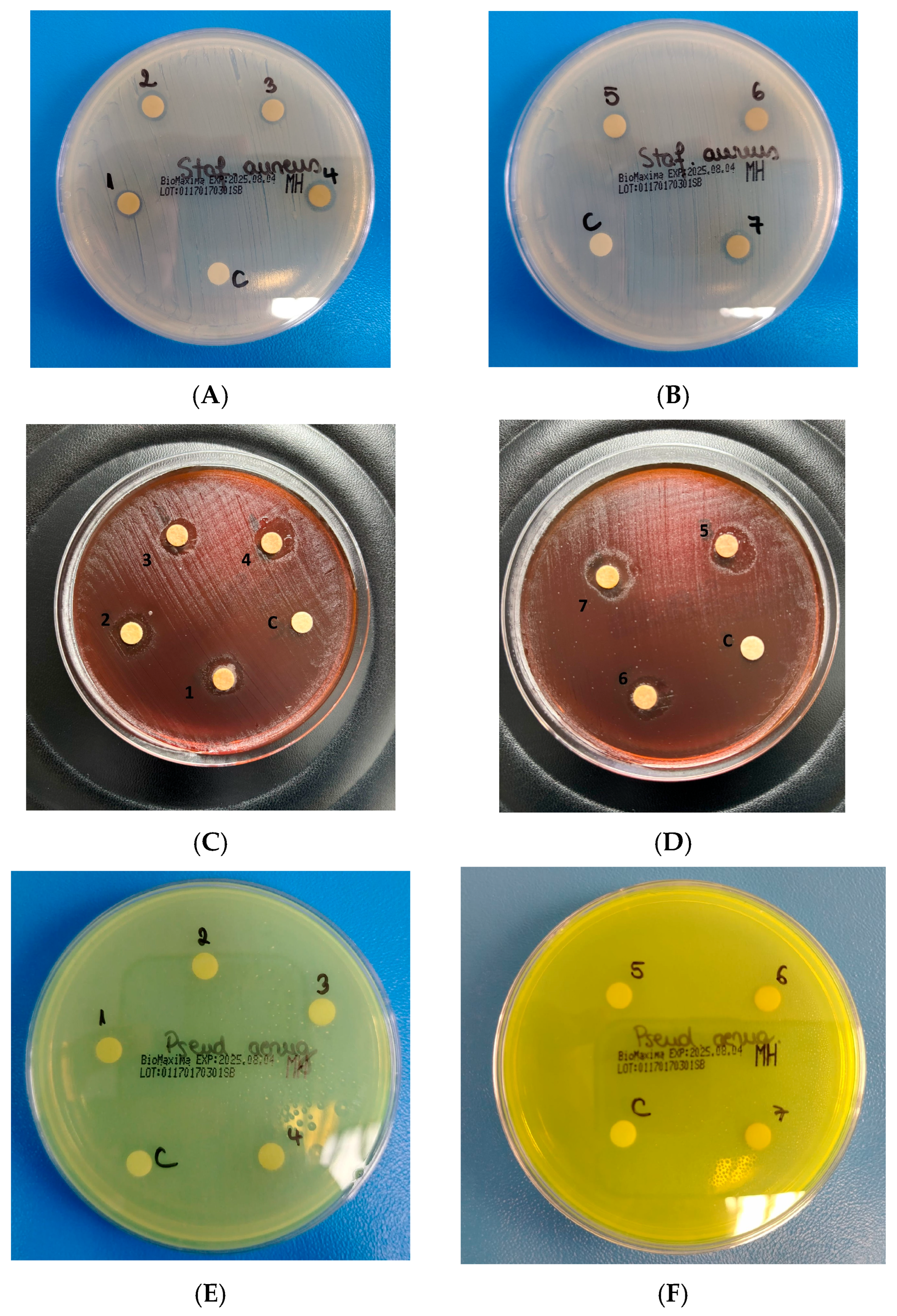
| Samples | UM/DISC (µL) | Staphyloccocus aureus Inhibition Zone (mm) | Streptococcus pneumoniae Inhibition Zone (mm) |
|---|---|---|---|
| M.O.:Ethanol 1:1 (5%) | 20 µL | 3 ± 0.1 | Not detected |
| M.O.:Ethanol 1:2 (3.33%) | 20 µL | 5 ± 0.1 | 8 ± 0.2 |
| M.O.:Ethanol 1:4 (2%) | 20 µL | 12 ± 0.3 | 15 ± 0.3 |
| M.O.:Ethanol 1:6 (1.43%) | 20 µL | 10 ± 0.2 | 13 ± 0.3 |
| A.M.:Ethanol 1:1 (5%) | 20 µL | 7 ± 0.2 | 3 ± 0.1 |
| A.M.:Ethanol 1:2 (3.33%) | 20 µL | 15 ± 0.4 | 8 ± 0.2 |
| A.M.:Ethanol 1:4 (2%) | 20 µL | 20 ± 0.4 | 18 ± 0.4 |
| A.M.:Ethanol 1:6 (1.43%) | 20 µL | 10 ± 0.2 | 15 ± 0.3 |
| CBP:Ethanol 1:1 (5%) | 20 µL | 2 ± 0.07 | 5 ± 0.1 |
| CBP:Ethanol 1:2 (3.33%) | 20 µL | 6 ± 0.1 | Not detected |
| CBP:Ethanol 1:4 (2%) | 20 µL | 12 ± 0.3 | 10 ± 0.3 |
| CBP:Ethanol 1:6 (1.43%) | 20 µL | 10 ± 0.3 | 8 ± 0.2 |
| Amoxicillin–clavulanic acid | 2 µg | 22 | Not tested |
| Ampicilin | 2 µg | 18 | 28 |
| Benzylpeniciline | 1 µg | 15 | 19 |
| Ciprofloxacin | 5 µg | 24 | 25 |
| Erytromycin | 15 µg | 26 | 29 |
| Gentamicin | 10 µg | 22 | Not tested |
| Levofloxacin | 5 µg | 26 | 24 |
| Norfloxacin | 10 µg | 21 | 21 |
| Oxacilin | 1 µg | 22 | 11 |
| Ttraciclyne | 30 µg | 27 | 31 |
| Samples | Ratio A.M.:C.B.P.:M.O. | DPPH % | CUPRAC (μmol Trolox Equivalent/mL) | ABTS (μmol Trolox Equivalent/mL) | FRAP (μmol Trolox Equivalent/100 g) |
|---|---|---|---|---|---|
| ACM1 | 1:1:1 | 85 | 375 | 280 | 617 |
| ACM2 | 2:1:1 | 87 | 528 | 314 | 573 |
| ACM3 | 1:2:1 | 84 | 512 | 328 | 514 |
| ACM4 | 1:1:2 | 88 | 542 | 335 | 632 |
| ACM5 | 2:2:1 | 89 | 539 | 351 | 661 |
| ACM6 | 2:1:2 | 87 | 494 | 317 | 574 |
| ACM7 | 1:2:2 | 86 | 438 | 310 | 568 |
| Sample | Ratio AM:CBP:MO | UM/DISC (µL) | Staphylococcus aureus Inhibition Zone (mm) | Streptococcus pneumoniae Inhibition Zone (mm) | Pseudomona aeruginosa |
|---|---|---|---|---|---|
| ACM1 | 1:1:1 | 20 µL | 8 ± 0.2 | 13 ± 0.4 | Not detected |
| ACM2 | 2:1:1 | 20 µL | 9 ± 0.2 | 16 ± 0.4 | Not detected |
| ACM3 | 1:2:1 | 20 µL | 8 ± 0.2 | 15 ± 0.4 | Not detected |
| ACM4 | 1:1:2 | 20 µL | 10 ± 0.3 | 20 ± 0.3 | Not detected |
| ACM5 | 2:2:1 | 20 µL | 10 ± 0.3 | 20 ± 0.4 | Not detected |
| ACM6 | 2:1:2 | 20 µL | 10 ± 0.2 | 16 ± 0.3 | Not detected |
| ACM7 | 1:2:2 | 20 µL | 9 ± 0.1 | 14 ± 0.2 | Not detected |
| Amoxicillin–clavulanic acid | - | 2 µg | 22 | Not tested | Not tested |
| Ampicilin | - | 2 µg | 18 | 28 | Not tested |
| Benzylpeniciline | - | 1 µg | 15 | 19 | Not tested |
| Ciprofloxacin | - | 5 µg | 24 | 25 | 29 |
| Erytromycin | - | 15 µg | 26 | 29 | Not tested |
| Gentamicin | - | 10 µg | 22 | Not tested | 20 |
| Levofloxacin | - | 5 µg | 26 | 24 | 22 |
| Norfloxacin | - | 10 µg | 21 | 21 | Not tested |
| Oxacilin | - | 1 µg | 22 | 11 | Not tested |
| Ttraciclyne | - | 30 µg | 27 | 31 | Not tested |
| Plant:Ethanol | Ratio (%) | |||
|---|---|---|---|---|
| C.B.P.:Ethanol | 1:1 (5%) | 1:2 (3.33%) | 1:4 (2%) | 1:6 (1.43%) |
| M.O.:Ethanol | 1:1 (5%) | 1:2 (3.33%) | 1:4 (2%) | 1:6 (1.43%) |
| A.M.:Ethanol | 1:1 (5%) | 1:2 (3.33%) | 1:4 (2%) | 1:6 (1.43%) |
| Mixtures | A.M. | C.B.P. | M.O. |
|---|---|---|---|
| ACM1 | 1 | 1 | 1 |
| ACM2 | 2 | 1 | 1 |
| ACM3 | 1 | 2 | 1 |
| ACM4 | 1 | 1 | 2 |
| ACM5 | 2 | 2 | 1 |
| ACM6 | 2 | 1 | 2 |
| ACM7 | 1 | 2 | 2 |
| Name of Standard | Concentration Range, mg/mL | Calibration Curve Equation | Correlation Factor | Detection Limit, μg/mL | Quantification Limit, μg/mL |
|---|---|---|---|---|---|
| Caffeic acid | 0.113–1.13 | Area = 4.56317 ∗ 107 ∗ conc[μg/mL] + 507,513 | 0.9908 | 0.02 | 0.04 |
| Chlorogenic acid | 0.14–1.40 | Area = 4.53128 ∗ 108 ∗ conc[μg/mL] − 2.63229 ∗ 106 | 0.9753 | 0.02 | 0.03 |
| Crypto-Chlorogenic acid | 0.10–1.00 | Area = 9.79604 ∗ 107 ∗ conc[μg/mL] + 418,649 | 0.9989 | 0.01 | 0.02 |
| Neo-Chlorogenic acid | 0.10–1.00 | Area = 2.08756 ∗ 108 ∗ conc[μg/mL] + 81,773.3 | 0.9988 | 0.001 | 0.002 |
| Acacetin | 1.20–12.00 | Area = 2.02177 ∗ 106 ∗ conc[μg/mL] – 535,751 | 0.9532 | 1.06 | 1.59 |
| Apigenin | 0.105–1.05 | Area = 7.72301 ∗ 106 ∗ conc[μg/mL] + 500,152 | 0.9852 | 0.13 | 0.26 |
| Hesperetin | 1.00–10.00 | Area = 828328 ∗ conc[μg/mL] + 249,156 | 0.9999 | 0.60 | 1.20 |
| Luteolin-7-O-glucoside | 0.285–2.85 | Area = 2.50924 ∗ 106 ∗ conc[μg/mL] + 376,997 | 0.9854 | 0.30 | 0.60 |
| Luteolin-7-O-rutoside | 5.70–57.00 | Area = 1.29002 ∗ 106 ∗ conc[μg/mL] + 6.69912 ∗ 106 | 0.9886 | 10.39 | 20.77 |
| Naringenin | 0.16–1.60 | Area = 2.87930 ∗ 106 ∗ conc[μg/mL] + 187,922 | 0.9889 | 0.13 | 0.26 |
| Quercetin | 0.91–9.10 | Area = 1.45460 ∗ 106 ∗ conc[μg/mL] + 2.03435 ∗ 106 | 0.9790 | 2.80 | 5.59 |
| Tilianin | 3.10–31.00 | Area = 5880.86 ∗ conc[μg/mL] + 28,495.1 | 0.9901 | 9.69 | 19.38 |
| Vitexine | 0.10–1.00 | Area = 4.38714 ∗ 106 ∗ conc[μg/mL] + 309,385 | 0.9827 | 0.14 | 0.28 |
Disclaimer/Publisher’s Note: The statements, opinions and data contained in all publications are solely those of the individual author(s) and contributor(s) and not of MDPI and/or the editor(s). MDPI and/or the editor(s) disclaim responsibility for any injury to people or property resulting from any ideas, methods, instructions or products referred to in the content. |
© 2026 by the authors. Licensee MDPI, Basel, Switzerland. This article is an open access article distributed under the terms and conditions of the Creative Commons Attribution (CC BY) license.
Share and Cite
Mînz, S.-G.O.; Fati, C.B.-N.; Olah, N.K.; Karetka, A.J.; Negrean, R.A.; Ganea, M.; Frent, O.D.; Banica, F.; Pallag, A. Comparative Phytochemical Profiling and In Vitro Investigation of the Antioxidant and Antimicrobial Potential of Arnica montana L., Melissa officinalis L. and Capsella bursa-pastoris Medik. Extracts and Their Synergistic Combinations. Molecules 2026, 31, 1735. https://doi.org/10.3390/molecules31101735
Mînz S-GO, Fati CB-N, Olah NK, Karetka AJ, Negrean RA, Ganea M, Frent OD, Banica F, Pallag A. Comparative Phytochemical Profiling and In Vitro Investigation of the Antioxidant and Antimicrobial Potential of Arnica montana L., Melissa officinalis L. and Capsella bursa-pastoris Medik. Extracts and Their Synergistic Combinations. Molecules. 2026; 31(10):1735. https://doi.org/10.3390/molecules31101735
Chicago/Turabian StyleMînz, Sorina-Georgiana Onea, Cristina Burlou-Nagy Fati, Neli Kinga Olah, Anett Jolan Karetka, Rodica Anamaria Negrean, Mariana Ganea, Olimpia Daniela Frent, Florin Banica, and Annamaria Pallag. 2026. "Comparative Phytochemical Profiling and In Vitro Investigation of the Antioxidant and Antimicrobial Potential of Arnica montana L., Melissa officinalis L. and Capsella bursa-pastoris Medik. Extracts and Their Synergistic Combinations" Molecules 31, no. 10: 1735. https://doi.org/10.3390/molecules31101735
APA StyleMînz, S.-G. O., Fati, C. B.-N., Olah, N. K., Karetka, A. J., Negrean, R. A., Ganea, M., Frent, O. D., Banica, F., & Pallag, A. (2026). Comparative Phytochemical Profiling and In Vitro Investigation of the Antioxidant and Antimicrobial Potential of Arnica montana L., Melissa officinalis L. and Capsella bursa-pastoris Medik. Extracts and Their Synergistic Combinations. Molecules, 31(10), 1735. https://doi.org/10.3390/molecules31101735