
Accelerated Oxidative Degradation of Polystyrene: Correlating UV Aging with Reactive Molecular Dynamics

 ,
,  ,
,  and
and
Abstract
1. Introduction
2. Results
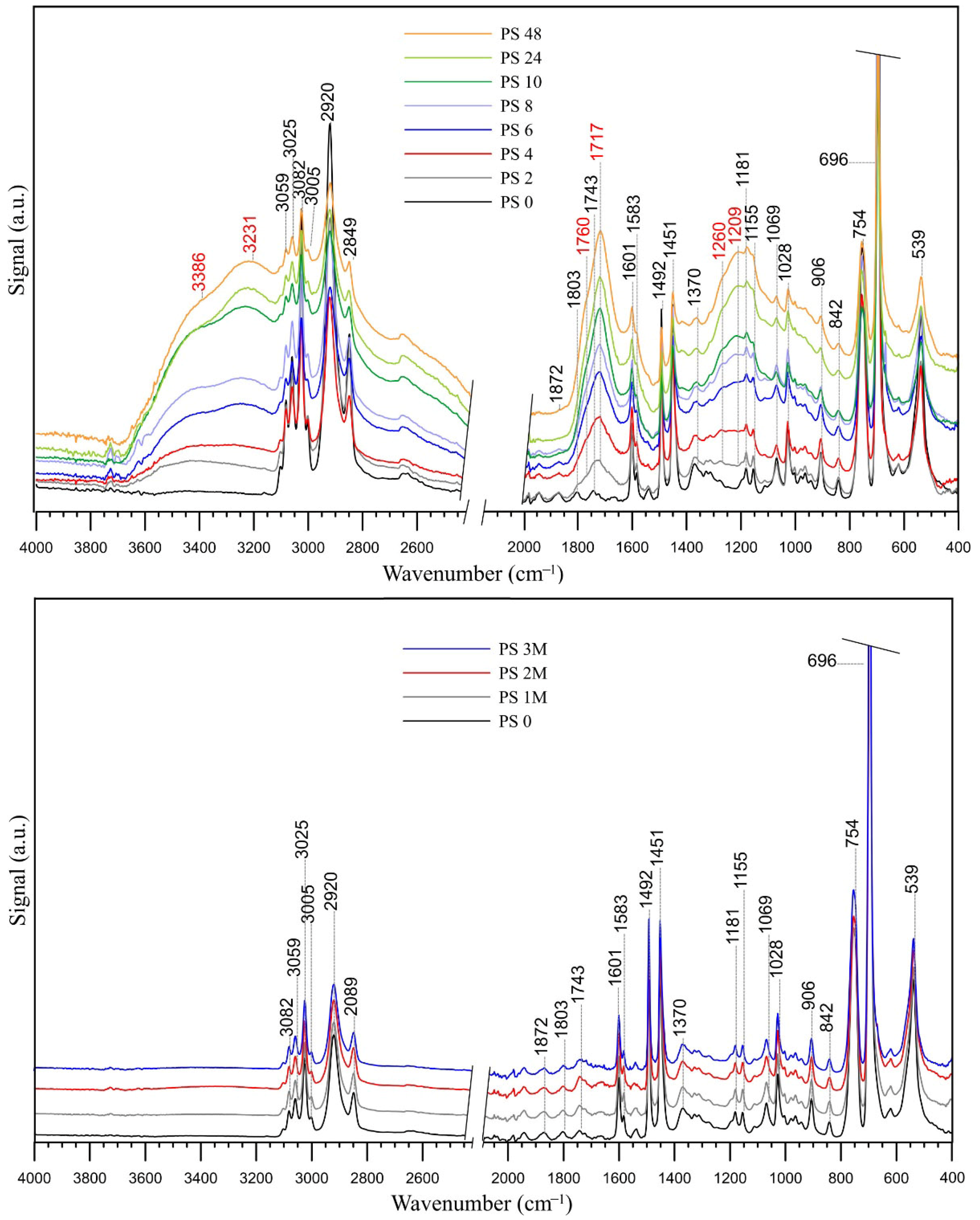
2.1. FT-IR Analysis of EPS Samples
2.2. Molecular Dynamics Simulation of PS Degradation in the Presence of Oxygen
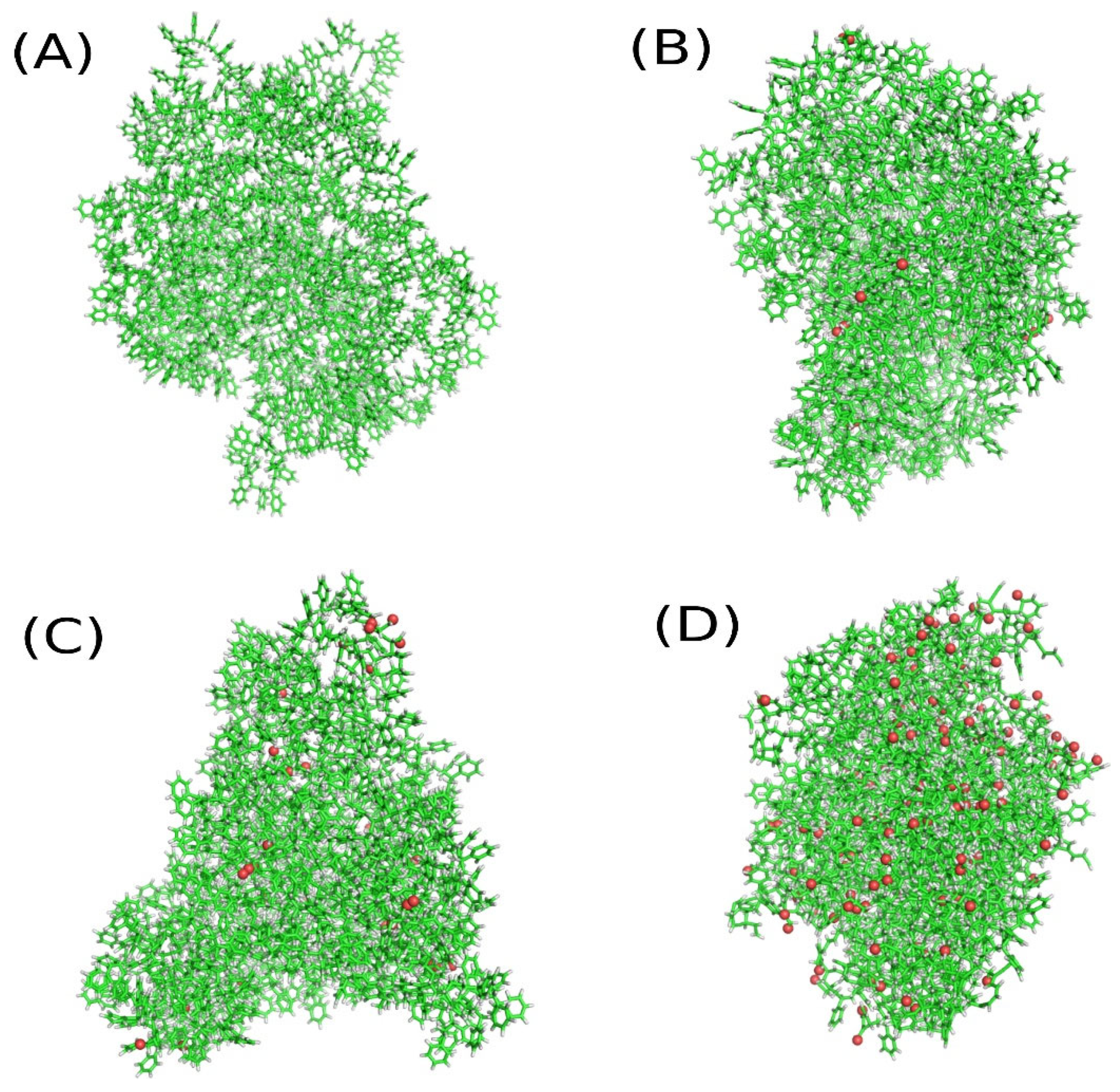
2.2.1. Generation of Intact Polystyrene Nanoparticles for MD Simulations of Degradation
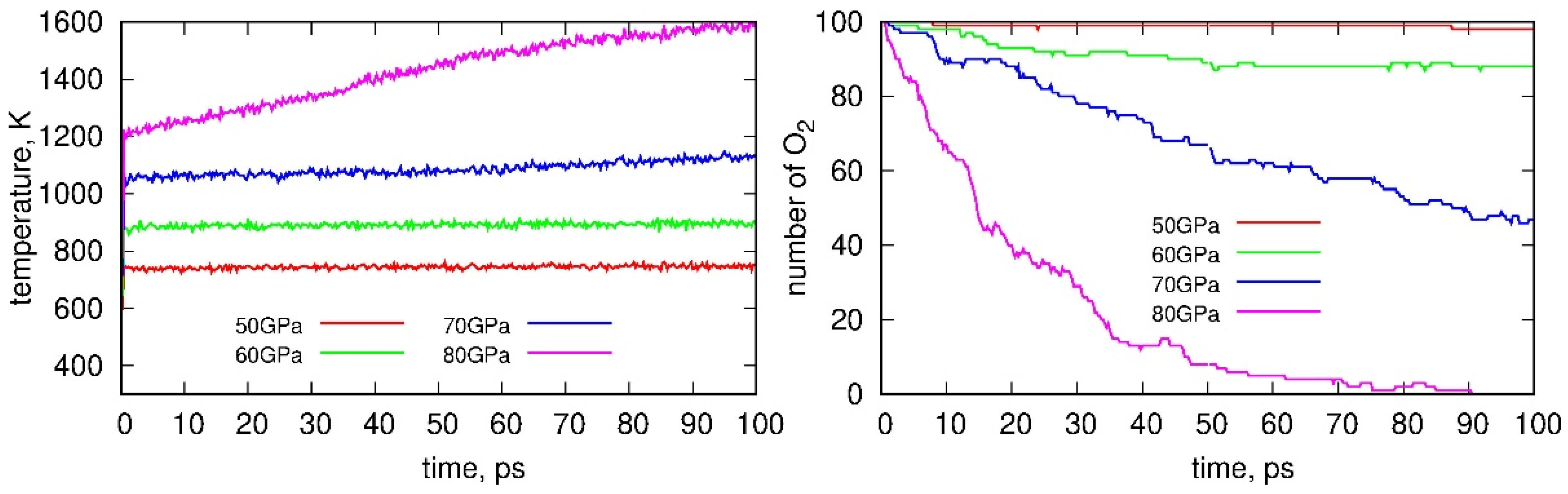
2.2.2. Degradation of the Polystyrene Nanoparticle in the Presence of Oxygen
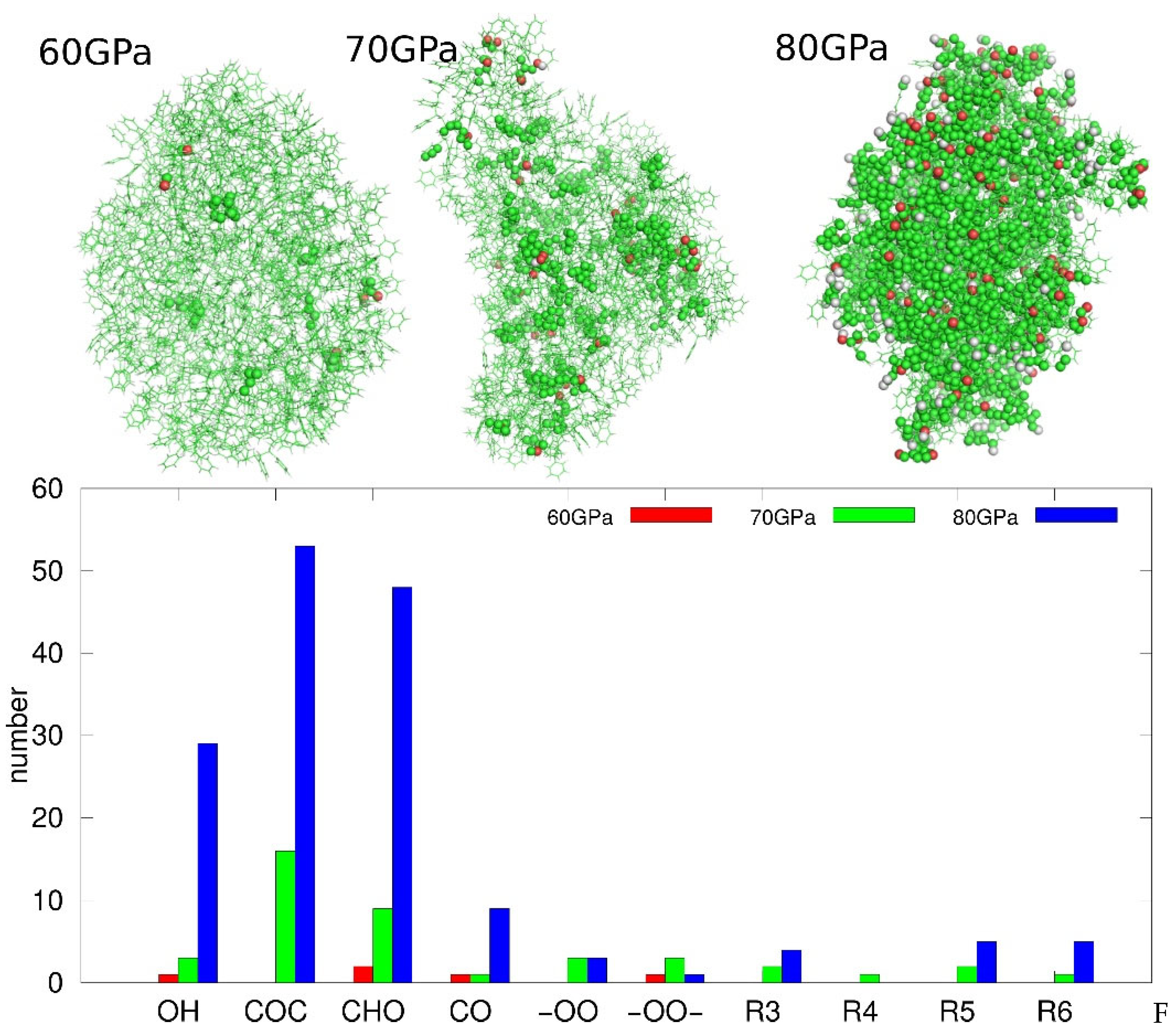
2.2.3. Analysis of the Chemical Composition of Degraded PS Nanoparticles
3. Discussion
4. Materials and Methods
4.1. Photodegradation of EPS Samples Under UV and Natural Sunlight
4.2. FT-IR/ATR Analysis Methodology and Setup
4.3. Molecular Dynamics Simulation Protocol
5. Conclusions
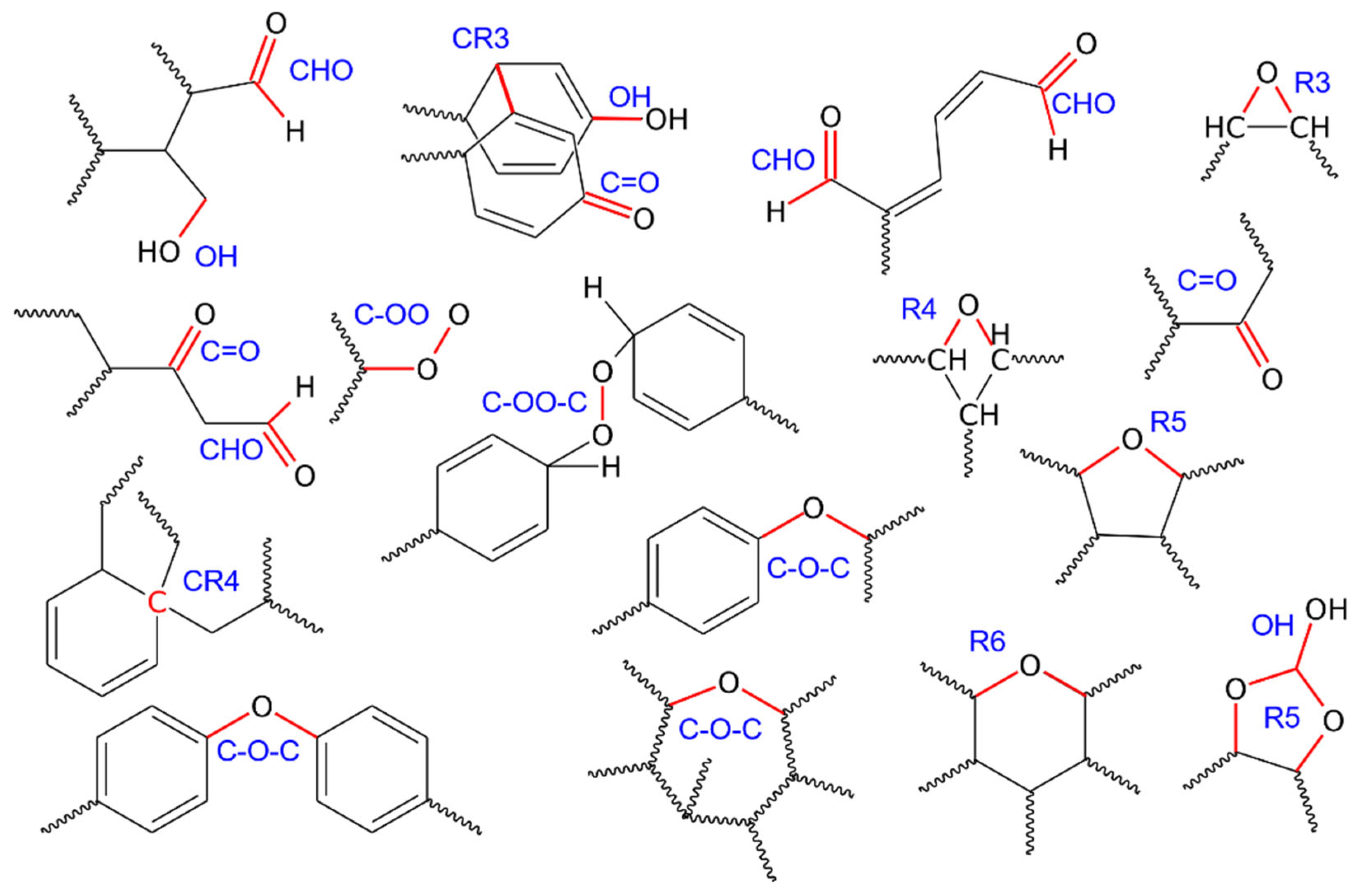
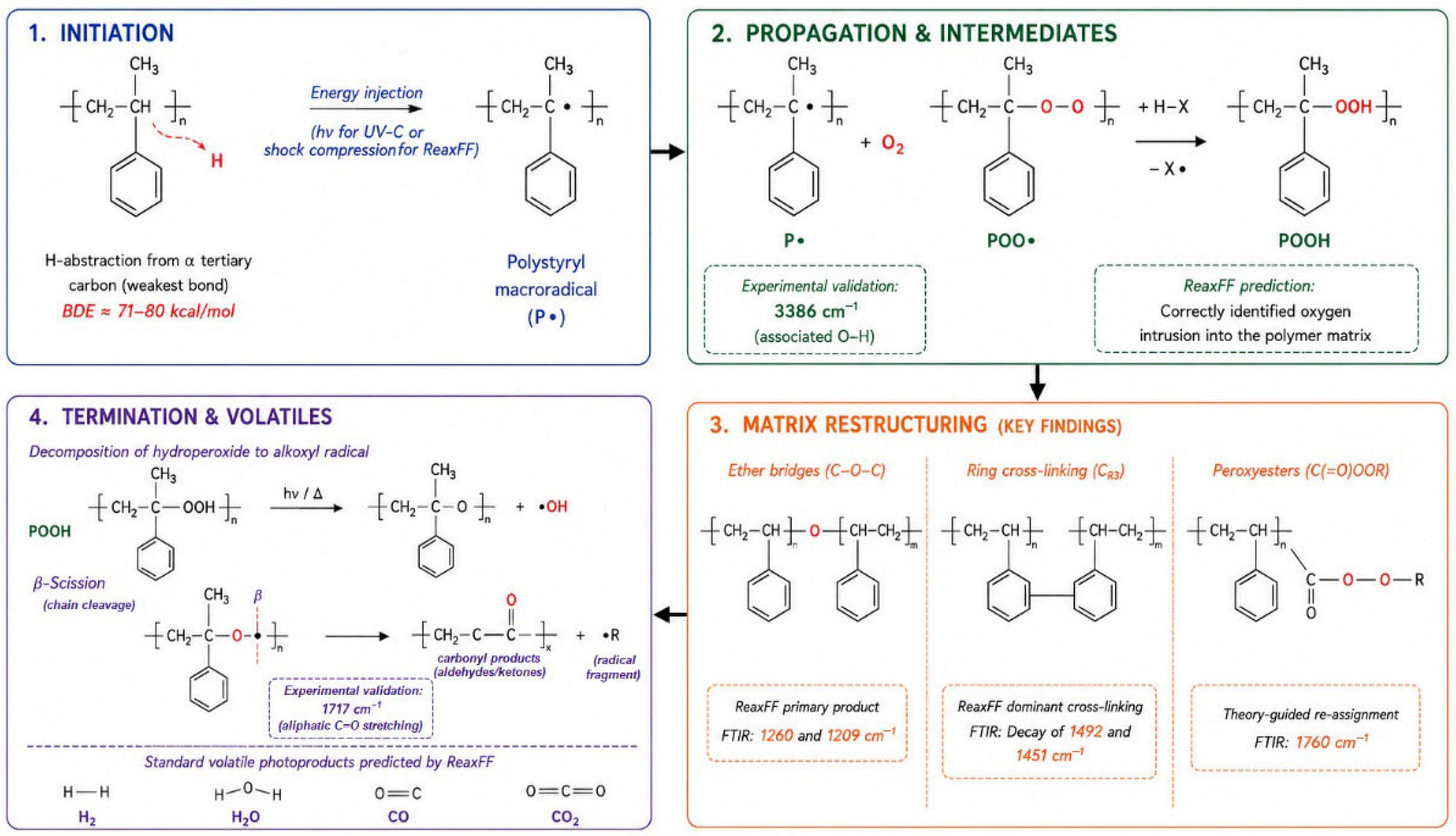
- The simulation identified extensive intermolecular ring-ring coupling (CR3) as a dominant mechanism. This was empirically confirmed by the systematic depletion of native aromatic skeletal bands at 1492 and 1451 cm−1 in the 48 h UV-aged samples, proving that ring fusion is a valid aging mechanism. However, we also note that the large number of CR3 cross-links may be partially facilitated by the high pressure experienced by the sample during shock wave propagation.
- The ReaxFF model correctly predicted the formation of ether-type oxygen bridges (validated by bands at 1260 and 1209 cm−1) and peroxide intermediates. Specifically, the re-assignment of the 1760 cm−1 band to peroxyesters, supported by theory and recent literature, provides a more nuanced understanding of oxygen incorporation than traditional assignments.
- While simulations identified high-abundance aldehyde precursors, the experimental observation of carboxylic acid dimers (3231 cm−1) highlights the complementary nature of this methodology—ReaxFF captures the primary oxidative steps, while FTIR confirms the secondary chemical endpoints that evolve over longer experimental periods.
- The identification of H2, H2O, and CO in the simulation trajectories is consistent with established literature identifying these as standard volatile photoproducts of low-temperature PS aging, resulting from hydroperoxide decomposition and Norrish-type reactions, rather than being exclusive indicators of pyrolysis.
Author Contributions
Funding
Institutional Review Board Statement
Informed Consent Statement
Data Availability Statement
Conflicts of Interest
References
- Houssini, K.; Li, J.; Tan, Q. Complexities of the Global Plastics Supply Chain Revealed in a Trade-Linked Material Flow Analysis. Commun. Earth Environ. 2025, 6, 257. [Google Scholar] [CrossRef]
- OECD. OECD Global Plastics Outlook: Economic Drivers, Environmental Impacts and Policy Options; OECD Publishing: Paris, France, 2022. [Google Scholar]
- Sekar, V.; Rao, Y.R.S.; Tyagi, V.K.; Singh, R.; Sundaram, B. Microplastics in Landfill Leachate: Sources, Potential Impacts, and Remediation Technologies. Curr. Pollut. Rep. 2026, 12, 3. [Google Scholar] [CrossRef]
- Gewert, B.; Plassmann, M.M.; MacLeod, M. Pathways for Degradation of Plastic Polymers Floating in the Marine Environment. Environ. Sci. Process. Impacts 2015, 17, 1513–1521. [Google Scholar] [CrossRef] [PubMed]
- Gazeau, B.; Minunno, R.; Zaman, A.; Shaikh, F. Elevating Recycling Standards: Global Requirements for Plastic Traceability and Quality Testing. Sustainability 2024, 16, 5122. [Google Scholar] [CrossRef]
- Fernández-González, V.; Andrade-Garda, J.M.; López-Mahía, P.; Muniategui-Lorenzo, S. Impact of Weathering on the Chemical Identification of Microplastics from Usual Packaging Polymers in the Marine Environment. Anal. Chim. Acta 2021, 1142, 179–188. [Google Scholar] [CrossRef]
- Trusler, M.M.; Kent, M.S.; Lomax, B.H.; Vane, C.H.; Cook, S. The Use of ATR-FTIR to Track the Degradation of Single-Use Polystyrene Cup Lids during 24 Months of Temperate Outdoor Exposure. PLoS ONE 2025, 20, e0330354. [Google Scholar] [CrossRef]
- Lee, Q.Y.; Li, H. Photocatalytic Degradation of Plastic Waste: A Mini Review. Micromachines 2021, 12, 907. [Google Scholar] [CrossRef] [PubMed]
- Chaudhary, A.K.; Chaitanya, K.; Vijayakumar, R.P. Synergistic Effect of UV and Chemical Treatment on Biological Degradation of Polystyrene by Cephalosporium Strain NCIM 1251. Arch. Microbiol. 2021, 203, 2183–2191. [Google Scholar] [CrossRef]
- Cakir, Y.B.; Uzun, R.T.; Kiliclar, H.C.; Kaya, K.; Jockusch, S.; Yagci, Y.; Kiskan, B. Efficient Photolytic Breakdown of Waste Polystyrene Foam Using an “All-in-One” Photo-HAT Reagent at Ambient Conditions. ACS Sustain. Chem. Eng. 2024, 12, 9978–9986. [Google Scholar] [CrossRef]
- Yousif, E.; Haddad, R. Photodegradation and Photostabilization of Polymers, Especially Polystyrene: Review. SpringerPlus 2013, 2, 398. [Google Scholar] [CrossRef]
- Pino-Ramos, V.H.; Bucio, E.; Daza-Gómez, L.-C.; Díaz, D. Photocatalytic Degradation of Polystyrene under Mild Conditions by Nanostructured Bismuth Carbonate. Polym. Degrad. Stab. 2025, 235, 111271. [Google Scholar] [CrossRef]
- Jyoti, A.; Kumar, D.; Rasane, P.; Ercisli, S.; Singh, J. Health Implications of Microplastic Exposure and Sustainable Solutions. Environ. Sci. Eur. 2026, 38, 33. [Google Scholar] [CrossRef]
- Mieda, S. Comparison of Computational Methods for Simulating Depolymerization Reaction. ACS Omega 2025, 10, 5973–5980. [Google Scholar] [CrossRef] [PubMed]
- Wang, J.; Bai, M.; Zhuang, W.; Wang, S.; Zhang, S.; Cai, S.; Huo, E. ReaxFF Reactive Molecular Dynamic Simulation and Density Functional Theory Calculation of Pyrolysis Mechanism and Electronic Characteristic of Lignin with the Addition of Plastics. Comput. Theor. Chem. 2025, 1254, 115511. [Google Scholar] [CrossRef]
- Berselli, A.; Menziani, M.C.; Piccini, G.; Muniz-Miranda, F. Molecular-Level Mechanistic Insights into PETase-Catalyzed Plastics Hydrolysis from Accurate QM/MM Free Energy Calculations. ACS Catal. 2025, 15, 10702–10721. [Google Scholar] [CrossRef]
- Chowdhury, T.; Wang, Q.; Enyoh, C.E. Degradation of Polyethylene Terephthalate Microplastics by Mineral Acids: Experimental, Molecular Modelling and Optimization Studies. J. Polym. Environ. 2022, 30, 5211–5227. [Google Scholar] [CrossRef]
- Tersoff, J. New Empirical Approach for the Structure and Energy of Covalent Systems. Phys. Rev. B 1988, 37, 6991–7000. [Google Scholar] [CrossRef]
- Stuart, S.J.; Tutein, A.B.; Harrison, J.A. A Reactive Potential for Hydrocarbons with Intermolecular Interactions. J. Chem. Phys. 2000, 112, 6472. [Google Scholar] [CrossRef]
- O’Connor, T.C.; Andzelm, J.; Robbins, M.O. AIREBO-M: A Reactive Model for Hydrocarbons at Extreme Pressures. J. Chem. Phys. 2015, 142, 024903. [Google Scholar] [CrossRef]
- Chenoweth, K.; Van Duin, A.C.T.; Goddard, W.A. ReaxFF Reactive Force Field for Molecular Dynamics Simulations of Hydrocarbon Oxidation. J. Phys. Chem. A 2008, 112, 1040–1053. [Google Scholar] [CrossRef]
- Panczyk, T.; Nieszporek, K.; Wolski, P. Modeling the Degradation of Polypropylene and Polystyrene under Shock Compression and Mechanical Cleaving Using the ReaxFF Force Field. Chemosphere 2024, 357, 142056. [Google Scholar] [CrossRef]
- Bai, M.; Huo, E.; Wang, J.; Zhang, Q.; Wang, S.; Cai, S.; Zhang, S. ReaxFF Reactive Molecular Dynamic and Density Functional Theory Study on the Co-Pyrolysis Mechanism of Waste 1,1,1,2-Tetrafluoroethane and Waste Plastics to Produce High Value-Added Chemicals and Fuels. Energy 2024, 299, 131505. [Google Scholar] [CrossRef]
- Chen, J.; Gaan, S.; Heuberger, M.; Gooneie, A. When PET Meets Phosphorus Flame Retardants: A ReaxFF Molecular Dynamics Study. Polym. Degrad. Stab. 2026, 245, 111876. [Google Scholar] [CrossRef]
- Wolf, M.; Salvato Vallverdu, G. Reactive Molecular Dynamics Simulations of Plastics Pyrolysis with Additives: Comparison of ReaxFF Branches and Experimental Results. J. Anal. Appl. Pyrolysis 2024, 177, 106266. [Google Scholar] [CrossRef]
- Kowalik, M.; Ashraf, C.; Damirchi, B.; Akbarian, D.; Rajabpour, S.; Van Duin, A.C.T. Atomistic Scale Analysis of the Carbonization Process for C/H/O/N-Based Polymers with the ReaxFF Reactive Force Field. J. Phys. Chem. B 2019, 123, 5357–5367. [Google Scholar] [CrossRef] [PubMed]
- Polruang, S.; Asokbunyarat, V.; Bouthong, P.; Rizqa, F.; Somprasong, A. Simulated Environmental Weathering of Expanded Polystyrene Foam and Polypropylene under UV and Wave Agitation. Sci. Rep. 2025, 15, 38649. [Google Scholar] [CrossRef]
- Conterosito, E.; Roncoli, M.; Ivaldi, C.; Ferretti, M.; De Felice, B.; Parolini, M.; Gazzotti, S.; Ortenzi, M.A.; Gianotti, V. μ-FTIR Reflectance Spectroscopy Coupled with Multivariate Analysis: A Rapid and Robust Method for Identifying the Extent of Photodegradation on Microplastics. Anal. Chem. 2025, 97, 3263–3273. [Google Scholar] [CrossRef]
- Ravelo, R.; Holian, B.; Germann, T.; Lomdahl, P. Constant-Stress Hugoniostat Method for Following the Dynamical Evolution of Shocked Matter. Phys. Rev. B 2004, 70, 014103. [Google Scholar] [CrossRef]
- Daymon, S.P.; Olson, B.G.; Reynolds, K.J.; Zagho, M.M.; Rothberg, M.; Pisani, W.A.; Bowman, A.L.; Thornell, T.L.; Shukla, M.K.; Nazarenko, S. Molecular Dynamics Simulation of Shock Compression in Polyisobutylene: Effect of Chain Orientation. Phys. Rev. Mater. 2025, 9, 085602. [Google Scholar] [CrossRef]
- Boronat, C.; Correcher, V.; García-Guinea, J.; Bravo-Yagüe, J.C. Effects of UVC Irradiation on Polystyrene for Healthcare Packaging: Study by FTIR and Raman Spectroscopy with Thermoluminescence. Polym. Degrad. Stab. 2024, 222, 110700. [Google Scholar] [CrossRef]
- Turner, A. Foamed Polystyrene in the Marine Environment: Sources, Additives, Transport, Behavior, and Impacts. Environ. Sci. Technol. 2020, 54, 10411–10420. [Google Scholar] [CrossRef]
- Song, Y.K.; Hong, S.H.; Eo, S.; Han, G.M.; Shim, W.J. Rapid Production of Micro- and Nanoplastics by Fragmentation of Expanded Polystyrene Exposed to Sunlight. Environ. Sci. Technol. 2020, 54, 11191–11200. [Google Scholar] [CrossRef] [PubMed]
- Chelomin, V.P.; Dovzhenko, N.V.; Slobodskova, V.V.; Mazur, A.A.; Kukla, S.P.; Zhukovskaya, A.F. Expanded Polystyrene-Debris-Induced Genotoxic Effect in Littoral Organisms. Toxics 2023, 11, 781. [Google Scholar] [CrossRef]
- Mailhot, B.; Gardette, J.L. Polystyrene Photooxidation. 1. Identification of the IR-Absorbing Photoproducts Formed at Short and Long Wavelengths. Macromolecules 1992, 25, 4119–4126. [Google Scholar] [CrossRef]
- Nwachukwu, O.; Kniazev, K.; Abarca Perez, A.; Kuno, M.; Doudrick, K. Single-Particle Analysis of the Photodegradation of Submicron Polystyrene Particles Using Infrared Photothermal Heterodyne Imaging. Environ. Sci. Technol. 2024, 58, 1312–1320. [Google Scholar] [CrossRef]
- Rabek, J.F. Polymer Photodegradation; Springer: Dordrecht, The Netherlands, 1995. [Google Scholar]
- Socrates, G. Infrared and Raman Characteristic Group Frequencies: Tables and Charts, 3rd ed.; repr. as paperback; Wiley: Chichester, UK, 2010. [Google Scholar]
- Mailhot, B.; Jarroux, N.; Gardette, J.-L. Comparative Analysis of the Photo-Oxidation of Polystyrene and Poly(α-Methylstyrene). Polym. Degrad. Stab. 2000, 68, 321–326. [Google Scholar] [CrossRef]
- Campanale, C.; Savino, I.; Massarelli, C.; Uricchio, V.F. Fourier Transform Infrared Spectroscopy to Assess the Degree of Alteration of Artificially Aged and Environmentally Weathered Microplastics. Polymers 2023, 15, 911. [Google Scholar] [CrossRef]
- Case, D.A.; Aktulga, H.M.; Belfon, K.; Cerutti, D.S.; Cisneros, G.A.; Cruzeiro, V.W.D.; Forouzesh, N.; Giese, T.J.; Götz, A.W.; Gohlke, H.; et al. AmberTools. J. Chem. Inf. Model. 2023, 63, 6183–6191. [Google Scholar] [CrossRef] [PubMed]
- Vanquelef, E.; Simon, S.; Marquant, G.; Garcia, E.; Klimerak, G.; Delepine, J.C.; Cieplak, P.; Dupradeau, F.-Y. R.E.D. Server: A Web Service for Deriving RESP and ESP Charges and Building Force Field Libraries for New Molecules and Molecular Fragments. Nucleic Acids Res. 2011, 39, W511–W517. [Google Scholar] [CrossRef]
- Dupradeau, F.-Y.; Pigache, A.; Zaffran, T.; Savineau, C.; Lelong, R.; Grivel, N.; Lelong, D.; Rosanski, W.; Cieplak, P. The R.E.D. Tools: Advances in RESP and ESP Charge Derivation and Force Field Library Building. Phys. Chem. Chem. Phys. 2010, 12, 7821. [Google Scholar] [CrossRef]
- Thompson, A.P.; Aktulga, H.M.; Berger, R.; Bolintineanu, D.S.; Brown, W.M.; Crozier, P.S.; In ’T Veld, P.J.; Kohlmeyer, A.; Moore, S.G.; Nguyen, T.D.; et al. LAMMPS—A Flexible Simulation Tool for Particle-Based Materials Modeling at the Atomic, Meso, and Continuum Scales. Comput. Phys. Commun. 2022, 271, 108171. [Google Scholar] [CrossRef]
- Nakatani, H.; Ohshima, Y.; Uchiyama, T.; Motokucho, S. Degradation and Fragmentation Behavior of Polypropylene and Polystyrene in Water. Sci. Rep. 2022, 12, 18501. [Google Scholar] [CrossRef]
- Chauhan, D.; Agrawal, G.; Deshmukh, S.; Roy, S.S.; Priyadarshini, R. Biofilm Formation by Exiguobacterium Sp. DR11 and DR14 Alter Polystyrene Surface Properties and Initiate Biodegradation. RSC Adv. 2018, 8, 37590–37599. [Google Scholar] [CrossRef] [PubMed]
- Achhammer, B.G.; Reiney, M.J.; Reinhart, F.W. Study of Degradation of Polystyrene, Using Infrared Spectrophotometry. J. Res. Natl. Bur. Stand. 1951, 47, 116. [Google Scholar] [CrossRef]
- Dole, M. (Ed.) The Radiation Chemistry of Macromolecules, Volume II; Academic Press: New York, NY, USA, 1973. [Google Scholar]
- Plimpton, S. Fast Parallel Algorithms for Short-Range Molecular Dynamics. J. Comput. Phys. 1995, 117, 1–19. [Google Scholar] [CrossRef]
- Aktulga, H.M.; Fogarty, J.C.; Pandit, S.A.; Grama, A.Y. Parallel Reactive Molecular Dynamics: Numerical Methods and Algorithmic Techniques. Parallel Comput. 2012, 38, 245–259. [Google Scholar] [CrossRef]
- Rappe, A.K.; Goddard, W.A. Charge Equilibration for Molecular Dynamics Simulations. J. Phys. Chem. 1991, 95, 3358–3363. [Google Scholar] [CrossRef]



| Compression Pressure | |||||
|---|---|---|---|---|---|
| 50 GPa | 60 GPa | 70 GPa | 80 GPa | ||
| New chemical connections/ functional groups within/on the nanoparticle | ALT | 0 | 53 | 490 | 2509 |
| OH | 0 | 1 | 4 | 29 | |
| C–O–C | 0 | 0 | 16 | 53 | |
| CHO | 0 | 2 | 9 | 48 | |
| C=O | 0 | 1 | 1 | 9 | |
| R3 | 0 | 0 | 2 | 4 | |
| R4 | 0 | 0 | 1 | 0 | |
| R5 | 0 | 0 | 2 | 5 | |
| R6 | 0 | 0 | 1 | 5 | |
| CR3 | 0 | 39 | 334 | 1178 | |
| CR4 | 0 | 1 | 26 | 121 | |
| C–OO | 0 | 0 | 3 | 3 | |
| C–OO–C | 0 | 1 | 3 | 1 | |
| Big species | 3xC1546H1550 | C1546H1550O4 C3092H3100O2 | C4636H4648O44 | C4527H4470O160 | |
| Small species | - | - | C2H2O2 (glyoxal) | C22H20O; C13H12O2; C8H8O2; C8H8; C7H5O; C7H6;C6H5 | |
| Rg, nm | 2.192 | 2.114 | 2.282 | 2.032 | |
| SASA, nm2 | 176.5 | 168.4 | 196.2 | 177.6 | |
| Predicted Group (Theory) | Experimental FT-IR Peak (cm−1) | Spectral Assignment |
|---|---|---|
| Ring-ring connections (CR3) | 1492, 1451 (decay) | Polymer matrix cross-linking |
| Ether bridges (C–O–C) | 1260, 1209 | C–O stretching in esters/skeletal |
| Aldehydes/ketones | 1717 | Aliphatic C=O stretching |
| Peroxyesters/peroxides | 1760 | C=O stretching in peroxyesters |
| Hydroxyls (OH) | 3386, 3231 | O–H stretching/acid dimers |
| Peroxides (O–O) | 3386 (broad) | Hydroperoxide (PS–OOH) |
Disclaimer/Publisher’s Note: The statements, opinions and data contained in all publications are solely those of the individual author(s) and contributor(s) and not of MDPI and/or the editor(s). MDPI and/or the editor(s) disclaim responsibility for any injury to people or property resulting from any ideas, methods, instructions or products referred to in the content. |
© 2026 by the authors. Licensee MDPI, Basel, Switzerland. This article is an open access article distributed under the terms and conditions of the Creative Commons Attribution (CC BY) license.
Share and Cite
Pasieczna-Patkowska, S.; Cichy, M.; Panczyk, M.; Nieszporek, K.; Panczyk, T. Accelerated Oxidative Degradation of Polystyrene: Correlating UV Aging with Reactive Molecular Dynamics. Molecules 2026, 31, 1730. https://doi.org/10.3390/molecules31101730
Pasieczna-Patkowska S, Cichy M, Panczyk M, Nieszporek K, Panczyk T. Accelerated Oxidative Degradation of Polystyrene: Correlating UV Aging with Reactive Molecular Dynamics. Molecules. 2026; 31(10):1730. https://doi.org/10.3390/molecules31101730
Chicago/Turabian StylePasieczna-Patkowska, Sylwia, Marcin Cichy, Monika Panczyk, Krzysztof Nieszporek, and Tomasz Panczyk. 2026. "Accelerated Oxidative Degradation of Polystyrene: Correlating UV Aging with Reactive Molecular Dynamics" Molecules 31, no. 10: 1730. https://doi.org/10.3390/molecules31101730
APA StylePasieczna-Patkowska, S., Cichy, M., Panczyk, M., Nieszporek, K., & Panczyk, T. (2026). Accelerated Oxidative Degradation of Polystyrene: Correlating UV Aging with Reactive Molecular Dynamics. Molecules, 31(10), 1730. https://doi.org/10.3390/molecules31101730