Effect of Diets Containing Phytoestrogen on Livestock Production: Nutrient Utilization, Carcass Traits, Lactational Performance, and Reproductive Function—A Review


 , ,
, ,  ,
,  and
and 
Abstract
1. Introduction
2. Review Design
3. Classification of Phytoestrogens
3.1. Isoflavones
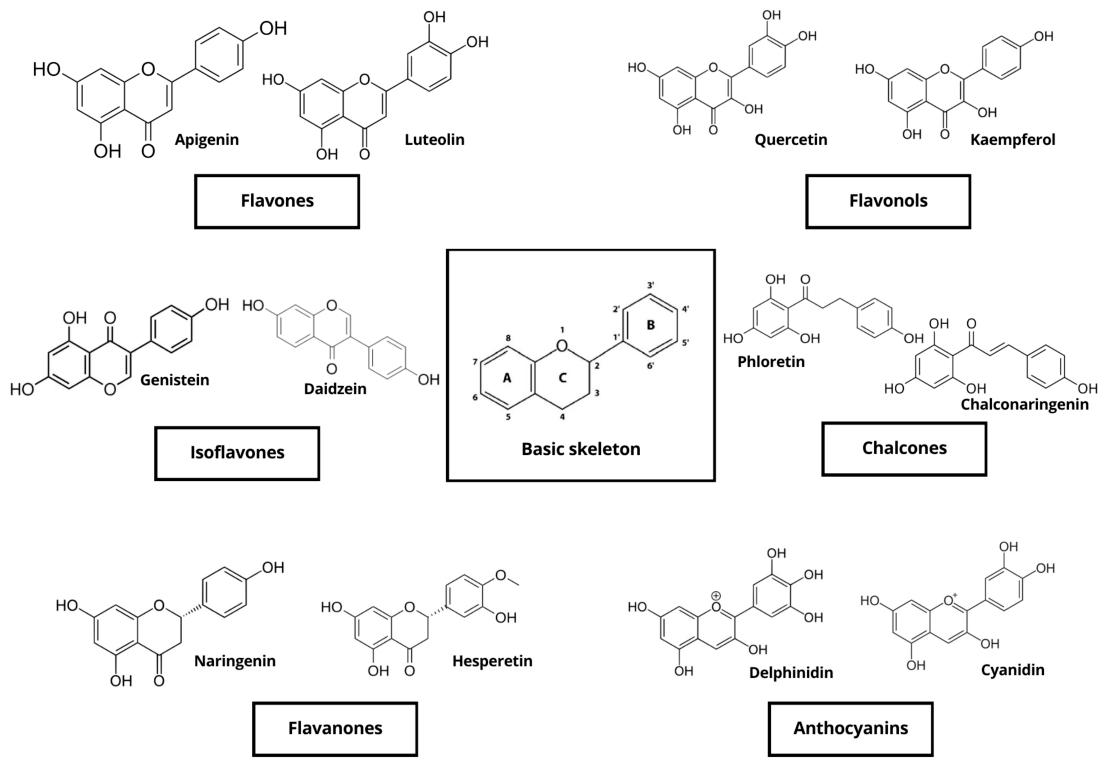
3.2. Flavonoids
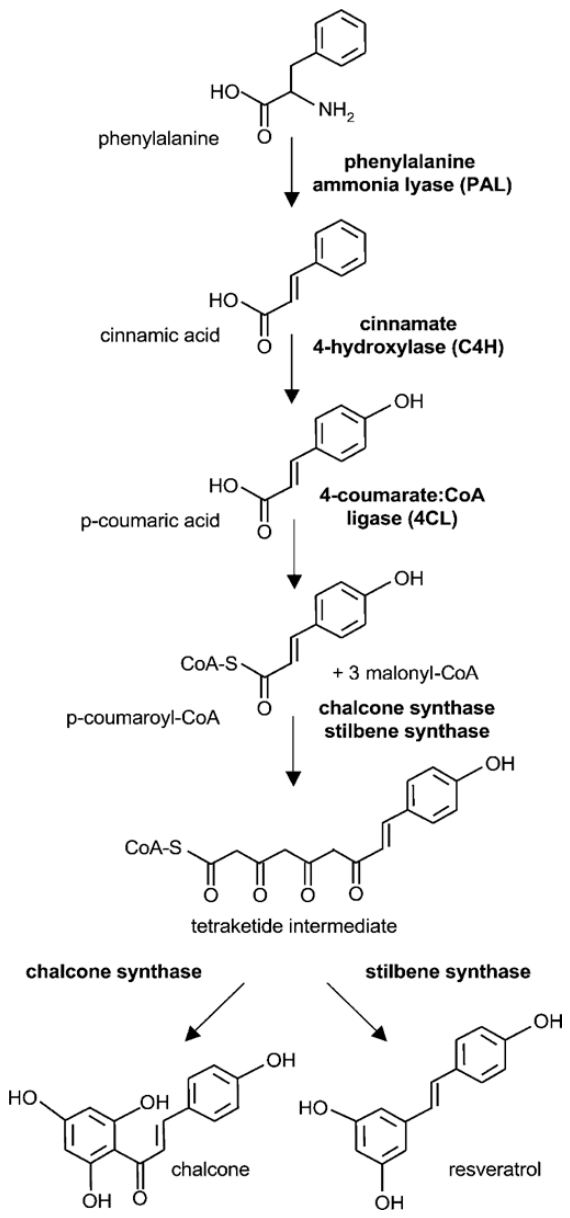
3.3. Stilbenes
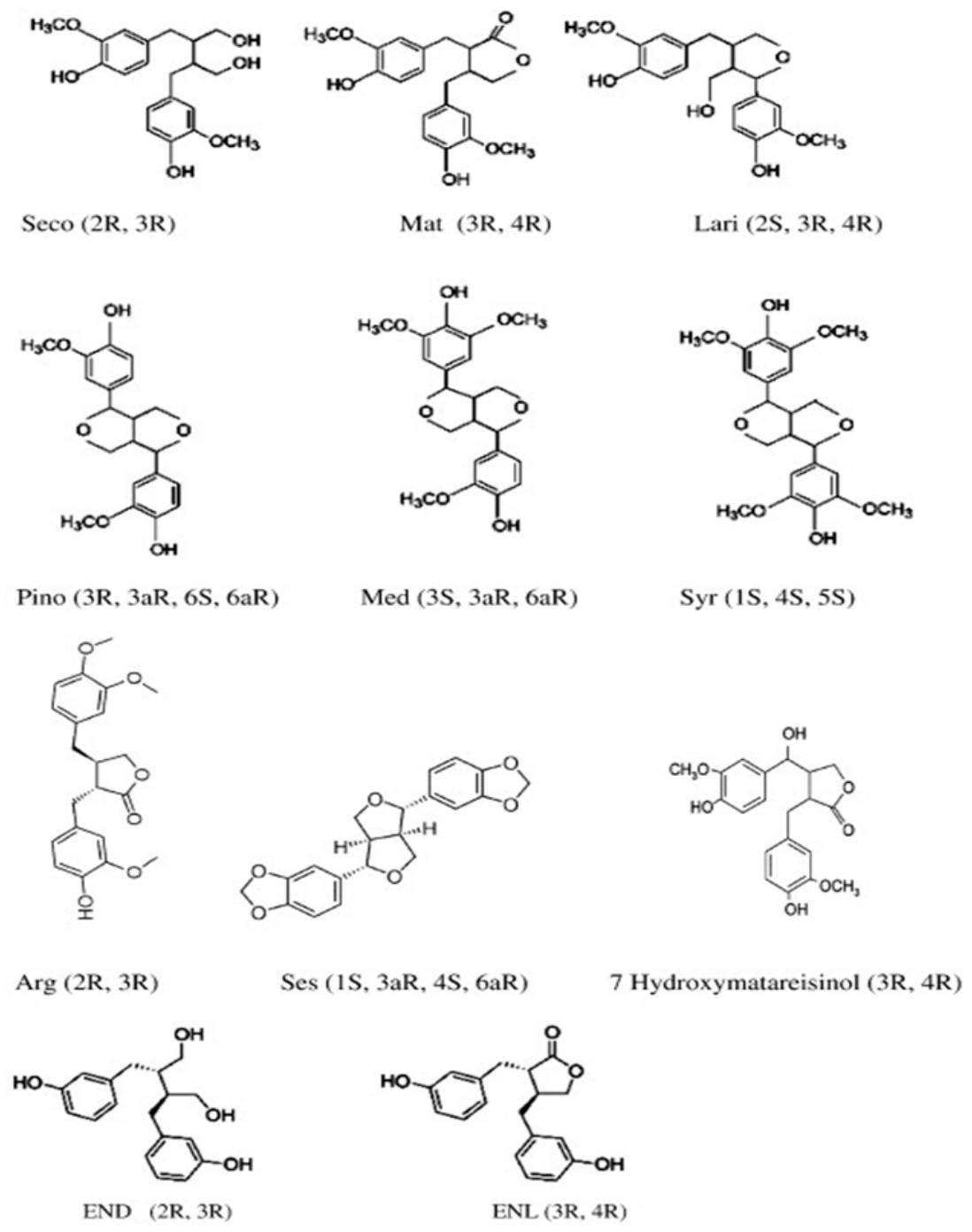
3.4. Lignans
3.5. Coumestans
4. The Effect of Phytoestrogens on Ruminant Nutrition
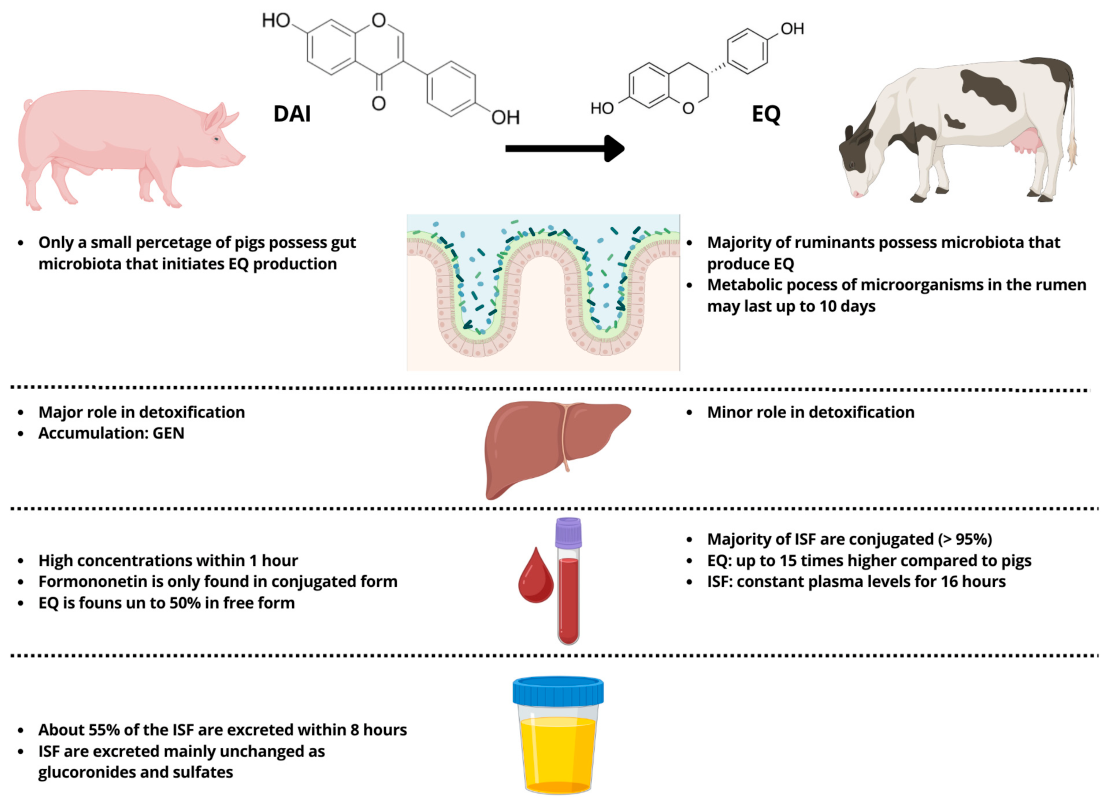
4.1. Effects on Feed Intake and Nutrient Utilization
4.2. Effects on Growth Performance and Carcass Traits
4.3. Effects on Lactational Performance and Milk Composition
4.4. Effects on Rumen Fermentation, Oxidative Status and Health
5. Effects of Phytoestrogens on Reproductive Function in Ruminants
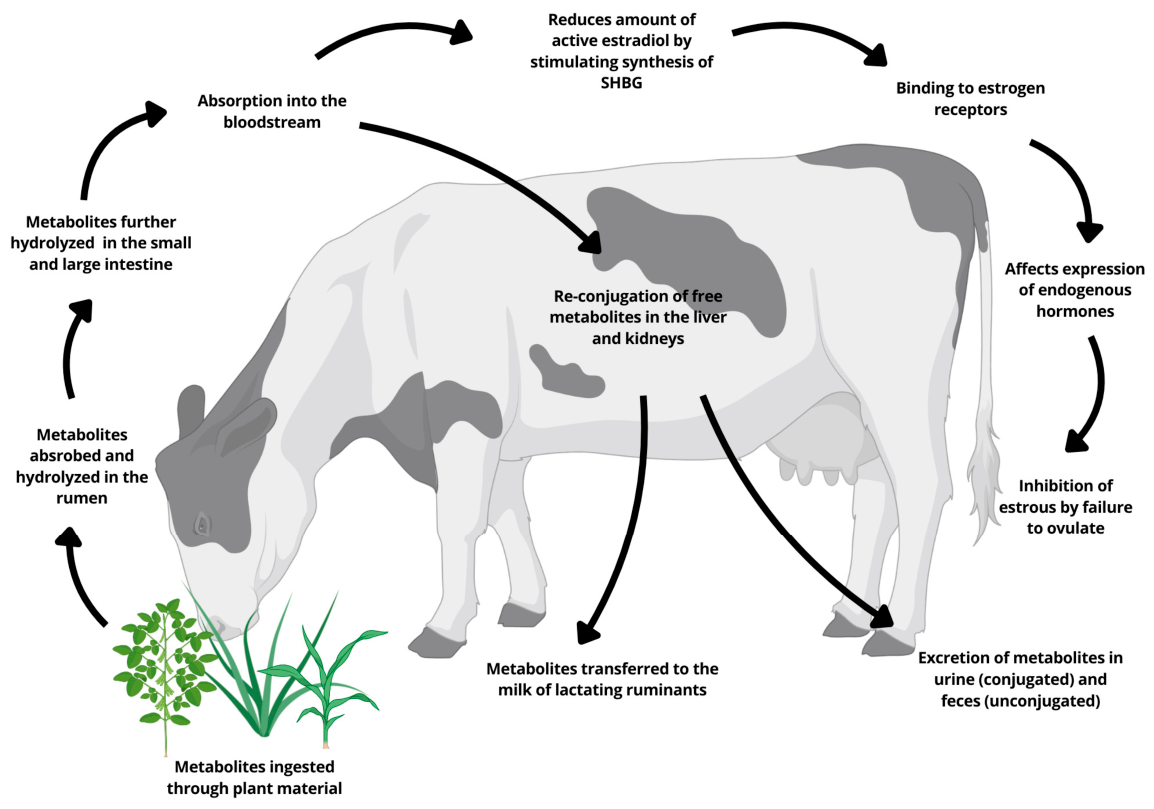
5.1. Mechanisms of Endocrine Disruption
5.2. Female Reproduction in Sheep: Estrogenic Pastures and Clover Disease
5.3. Female Reproduction in Cattle and Goats
5.4. Male Reproductive Function
5.5. Developmental Windows and Transgenerational Aspects
6. Practical Thresholds and Risk Management
7. Conclusions
Author Contributions
Funding
Institutional Review Board Statement
Informed Consent Statement
Data Availability Statement
Conflicts of Interest
References
- Nikolić, I.; Savić-Gajić, I.; Tačić, A.; Savić, I. Classification and biological activity of phytoestrogens: A review. Adv. Technol. 2017, 6, 96–106. [Google Scholar] [CrossRef]
- Křížová, L.; Dadáková, K.; Kašparovská, J.; Kašparovský, T. Isoflavones. Molecules 2019, 24, 1076. [Google Scholar] [CrossRef] [PubMed]
- Dakora, F.D.; Phillips, D.A. Diverse functions of isoflavonoids in legumes transcend anti-microbial definitions of phytoalexins. Physiol. Mol. Plant Pathol. 1996, 49, 1–20. [Google Scholar] [CrossRef]
- Kurzer, M.S.; Xu, X. Dietary phytoestrogens. Annu. Rev. Nutr. 1997, 17, 353–381. [Google Scholar] [CrossRef] [PubMed]
- Choi, Y.S.; Lee, B.H.; Kim, J.H.; Kim, N.S. Concentration of phytoestrogens in soybeans and soybean products in Korea. J. Sci. Food Agric. 2000, 80, 1709–1712. [Google Scholar] [CrossRef]
- Hashem, N.M.; Soltan, Y.A. Impacts of phytoestrogens on livestock production: A review. Egypt. J. Nutr. Feed. 2016, 19, 81–89. [Google Scholar] [CrossRef]
- Narayana, K.R.; Reddy, M.S.; Chaluvadi, M.R.; Krishna, D.R. Bioflavonoids classification, pharmacological, biochemical effects and therapeutic potential. Indian J. Pharmacol. 2001, 33, 2–16. [Google Scholar]
- Havsteen, B.H. The biochemistry and medical significance of the flavonoids. Pharmacol. Ther. 2002, 96, 67–202. [Google Scholar] [CrossRef]
- Tucker, H.A. Factors Affecting Estrogen Excretion in Dairy Heifers. Master’s Thesis, Virginia Polytechnic Institute and State University, Blacksburg, VA, USA, 2009. [Google Scholar]
- Adams, N.R. Detection of the effects of phytoestrogens on sheep and cattle. J. Anim. Sci. 1995, 73, 1509–1515. [Google Scholar] [CrossRef]
- Wocławek-Potocka, I.; Mannelli, C.; Boruszewska, D.; Kowalczyk-Zieba, I.; Waśniewski, T.; Skarżyński, D.J. Diverse effects of phytoestrogens on the reproductive performance: Cow as a model. Int. J. Endocrinol. 2013, 2013, 650984. [Google Scholar] [CrossRef]
- Wyse, J.M.; Nevard, R.P.; Loy, J.; Weston, P.A.; Gurusinghe, S.; McCormick, J.; Weston, L.A.; Stephen, C.P. Effects of Mixed Pasture Legume Phytoestrogens on Superovulatory Response and Embryo Quality in Angus Cows. Animals 2024, 14, 1125. [Google Scholar] [CrossRef]
- Bennetts, H.W.; Underwood, E.J.; Shier, F.L. A specific breeding problem of sheep on subterranean clover pastures in Western Australia. Aust. Vet. J. 1946, 22, 2–12. [Google Scholar] [CrossRef] [PubMed]
- Adler, S.A.; Purup, S.; Hansen-Møller, J.; Thuen, E.; Steinshamn, H. Phytoestrogens and their metabolites in bulk-tank milk: Effects of farm management and season. PLoS ONE 2015, 10, e0127187. [Google Scholar] [CrossRef] [PubMed]
- Adler, S.A.; Jensen, S.K.; Govasmark, E.; Steinshamn, H. Effect of short-term versus long-term grassland management and seasonal variation in organic and conventional dairy farming on the composition of bulk tank milk. J. Dairy Sci. 2013, 96, 5793–5810. [Google Scholar] [CrossRef] [PubMed]
- Page, M.J.; McKenzie, J.E.; Bossuyt, P.M.; Boutron, I.; Hoffmann, T.C.; Mulrow, C.D.; Shamseer, L.; Tetzlaff, J.M.; Akl, E.A.; Brennan, S.E.; et al. The PRISMA 2020 statement: An updated guideline for reporting systematic reviews. BMJ 2021, 372, n71. [Google Scholar] [CrossRef] [PubMed]
- Tricco, A.C.; Lillie, E.; Zarin, W.; O’Brien, K.K.; Colquhoun, H.; Levac, D.; Moher, D.; Peters, M.D.J.; Horsley, T.; Weeks, L.; et al. PRISMA Extension for Scoping Reviews (PRISMA-ScR): Checklist and Explanation. Ann. Intern. Med. 2018, 169, 467–473. [Google Scholar]
- Wyse, J.; Latif, S.; Gurusinghe, S.; McCormick, J.; Weston, L.A.; Stephen, C.P. Phytoestrogens: A review of their impacts on reproductive physiology and other effects upon grazing livestock. Animals 2022, 12, 2709. [Google Scholar] [CrossRef]
- Cos, P.; De Bruyne, T.; Apers, S.; Vanden Berghe, D.; Pieters, L.; Vlietinck, A.J. Phytoestrogens: Recent developments. Planta Medica 2003, 69, 589–599. [Google Scholar] [CrossRef]
- Konar, N.; Poyrazoğlu, E.S.; Demir, K.; Haspolat, I.; Artık, N. Phytoestrogens: Plant-derived Estrogenic Compounds. Karaelmas Sci. Eng. J. 2012, 1, 69–75. [Google Scholar] [CrossRef]
- Whitten, P.L.; Patisaul, H.B. Cross-species and interassay comparisons of phytoestrogen action. Environ. Health Perspect. 2001, 109, 5–20. [Google Scholar]
- Coward, L.; Barnes, N.C.; Setchell, K.D.R.; Barnes, S. Genistein, daidzein, and their beta-glycoside conjugates: Antitumor isoflavones in soybean foods from American and Asian diets. J. Agric. Food Chem. 1993, 41, 1961–1967. [Google Scholar]
- Bertram, C.; Trowern, A.R.; Copin, N.; Jackson, A.A.; Whorwood, C.B. The Maternal Diet during Pregnancy Programs Altered Expression of the Glucocorticoid Receptor and Type 2 11β-Hydroxysteroid Dehydrogenase: Potential Molecular Mechanisms Underlying the Programming of Hypertension in Utero*. Endocrinology 2001, 142, 2841–2853. [Google Scholar]
- Saloniemi, H.; Wähälä, K.; Nykänen-Kurki, P.; Kallela, K.; Saastamoinen, I. Phytoestrogen content and estrogenic effect of legume fodder. Proc. Soc. Exp. Biol. Med. 1995, 208, 13–17. [Google Scholar] [PubMed]
- Steinshamn, H.; Purup, S.; Thuen, E.; Hansen-Møller, J. Effects of clover-grass silages and concentrate supplementation on the content of phytoestrogens in dairy cow milk. J. Dairy Sci. 2008, 91, 2715–2725. [Google Scholar] [CrossRef]
- Butkutė, B.; Padarauskas, A.; Cesevičienė, J.; Taujenis, L.; Norkevičienė, E. Phytochemical composition of temperate perennial legumes. Crop Pasture Sci. 2018, 69, 1020–1030. [Google Scholar]
- Cassidy, A. Phytoestrogens and women’s health. Women’s Health Med. 2004, 1, 30–33. [Google Scholar]
- Dixon, R.A. Phytoestrogens. Annu. Rev. Plant Biol. 2004, 55, 225–261. [Google Scholar] [CrossRef]
- Nilsson, A.; Hill, J.L.; Davies, H.L. An in vitro study of formononetin and biochanin A metabolism in rumen fluid from sheep. Biochim. Biophys. Acta 1967, 148, 92–98. [Google Scholar] [CrossRef]
- Dickinson, J.M.; Smith, G.R.; Randel, R.D.; Pemberton, I.J. In vitro metabolism of formononetin and biochanin A in bovine rumen fluid. J. Anim. Sci. 1988, 66, 1969–1973. [Google Scholar] [CrossRef] [PubMed]
- Choi, E.J.; Kim, G.H. The antioxidant activity of daidzein metabolites, O-desmethylangolensin and equol, in HepG2 cells. Mol. Med. Rep. 2014, 9, 328–332. [Google Scholar] [CrossRef] [PubMed]
- Njåstad, K.M.; Adler, S.A.; Hansen-Møller, J.; Thuen, E.; Gustavsson, A.M.; Steinshamn, H. Gastrointestinal metabolism of phytoestrogens in lactating dairy cows fed silages with different botanical composition. J. Dairy Sci. 2014, 97, 7735–7750. [Google Scholar] [CrossRef]
- Shutt, D.A.; Weston, R.H.; Hogan, J.P. Quantitative aspects of phytooestrogen metabolism in sheep fed on subterranean clover (Trifolium subterraneum cultivar Clare) or red clover (Trifolium pratense). Aust. J. Agric. Res. 1970, 21, 713–722. [Google Scholar] [CrossRef]
- Grgic, D.; Varga, E.; Novak, B.; Müller, A.; Marko, D. Isoflavones in animals: Metabolism and effects in livestock and occurrence in feed. Toxins 2021, 13, 836. [Google Scholar] [CrossRef] [PubMed]
- Ye, H.; Ng, H.W.; Sakkiah, S.; Ge, W.; Perkins, R.; Tong, W.; Hong, H. Pathway analysis revealed potential diverse health impacts of flavonoids that bind estrogen receptors. Int. J. Environ. Res. Public Health 2016, 13, 373. [Google Scholar] [CrossRef] [PubMed]
- Avior, Y.; Bomze, D.; Ramon, O.; Nahmias, Y. Flavonoids as dietary regulators of nuclear receptor activity. Food Funct. 2013, 4, 831–844. [Google Scholar] [CrossRef]
- Huang, Z.; Fang, F.; Wang, J.; Wong, C.-W. Structural activity relationship of flavonoids with estrogen-related receptor gamma. FEBS Lett. 2010, 584, 22–26. [Google Scholar] [CrossRef] [PubMed]
- Liu, F.; Peng, Y.; Qiao, Y.; Huang, Y.; Song, F.; Zhang, M.; Song, F. Consumption of flavonoids and risk of hormone-related cancers: A systematic review and meta-analysis of observational studies. Nutr. J. 2022, 21, 27. [Google Scholar] [CrossRef]
- Basly, J.-P.; Lavier, M.-C.C. Dietary phytoestrogens: Potential selective estrogen enzyme modulators? Planta Med. 2005, 71, 287–294. [Google Scholar] [CrossRef]
- Safna Hussan, K.P.; Davis, A.; Lekshmi, S.; Shahin Thayyil, M.; Chathrattil Raghavamenon, A.; Devassy Babu, T. Evaluation of the binding efficacy of flavonol derivatives on estrogen receptors (ER) with respect to ring B hydroxylation. Results Chem. 2024, 7, 101544. [Google Scholar] [CrossRef]
- Pohjanvirta, R.; Nasri, A. The potent phytoestrogen 8-prenylnaringenin: A friend or a foe? Int. J. Mol. Sci. 2022, 23, 3168. [Google Scholar] [CrossRef]
- Nastoh, N.A.; Waqas, M.; Çınar, A.A.; Salman, M. The impact of phytogenic feed additives on ruminant production: A review. J. Anim. Feed Sci. 2024, 33, 431–453. [Google Scholar]
- Milligan, S.R.; Kalita, J.C.; Heyerick, A.; Rong, H.; De Cooman, L.; De Keukeleire, D. Identification of a potent phytoestrogen in hops (Humulus lupulus L.) and beer. J. Clin. Endocrinol. Metab. 1999, 84, 2249–2252. [Google Scholar] [CrossRef]
- Štulíková, K.; Karabín, M.; Nešpor, J.; Dostálek, P. Therapeutic perspectives of 8-prenylnaringenin, a potent phytoestrogen from hops. Molecules 2018, 23, 660. [Google Scholar] [CrossRef] [PubMed]
- Aichinger, G.; Beisl, J.; Marko, D. The hop polyphenols xanthohumol and 8-prenyl-naringenin antagonize the estrogenic effects of Fusarium mycotoxins in human endometrial cancer cells. Front. Nutr. 2018, 5, 85. [Google Scholar] [CrossRef] [PubMed]
- Vastolo, A.; Calabrò, S.; Cutrignelli, M.I. A review on the use of agro-industrial co-products in animals’ diets. Ital. J. Anim. Sci. 2022, 21, 577–594. [Google Scholar]
- Hassan, Y.I.; Kosir, V.; Yin, X.; Ross, K.; Diarra, M.S. Grape pomace as a promising antimicrobial alternative in feed: A critical review. J. Agric. Food Chem. 2019, 67, 9705–9718. [Google Scholar] [CrossRef]
- Tayengwa, T.; Mapiye, C. Citrus and winery wastes: Promising dietary supplements for sustainable ruminant animal nutrition, health, production, and meat quality. Sustainability 2018, 10, 3718. [Google Scholar] [CrossRef]
- Nudda, A.; Carta, S.; Correddu, F.; Caratzu, M.F.; Cesarani, A.; Hidalgo, J.; Pulina, G.; Lunesu, M.F. A meta-analysis on use of agro-industrial by-products rich in polyphenols in dairy small ruminant nutrition. Animal 2025, 19, 101522. [Google Scholar] [CrossRef] [PubMed]
- Olagaray, K.E.; Bradford, B.J. Plant flavonoids to improve productivity of ruminants—A review. Anim. Feed Sci. Technol. 2019, 251, 21–36. [Google Scholar]
- Orzuna-Orzuna, J.F.; Dorantes-Iturbide, G.; Lara-Bueno, A.; Chay-Canul, A.J.; Miranda-Romero, L.A.; Mendoza-Martínez, G.D. Meta-analysis of flavonoids use into beef and dairy cattle diet: Performance, antioxidant status, ruminal fermentation, meat quality, and milk composition. Front. Vet. Sci. 2023, 10, 1134925. [Google Scholar] [CrossRef]
- Lucio-Ruíz, F.; Godina-Rodríguez, J.E.; Granados-Rivera, L.D.; Orzuna-Orzuna, J.F.; Joaquín-Cancino, S.; Hernández-García, P.A. Meta-analysis of dietary supplementation with flavonoids in small ruminants: Growth performance, antioxidant status, nutrient digestibility, ruminal fermentation, and meat quality. Small Rumin. Res. 2024, 241, 107401. [Google Scholar] [CrossRef]
- Puranik, N.V.; Srivastava, P.; Bhatt, G.; John Mary, D.J.S.; Limaye, A.M.; Sivaraman, J. Determination and analysis of agonist and antagonist potential of naturally occurring flavonoids for estrogen receptor (ERα) by various parameters and molecular modelling approach. Sci. Rep. 2019, 9, 7450. [Google Scholar] [CrossRef]
- D’Arrigo, G.; Gianquinto, E.; Rossetti, G.; Cruciani, G.; Lorenzetti, S.; Spyrakis, F. Binding of androgen- and estrogen-like flavonoids to their cognate (non)nuclear receptors: A comparison by computational prediction. Molecules 2021, 26, 1613. [Google Scholar] [CrossRef] [PubMed]
- Pecyna, P.; Warguła, J.; Murias, M.; Kucińska, M. More than resveratrol: New insights into stilbene-based compounds. Biomolecules 2020, 10, 1111. [Google Scholar] [CrossRef]
- Tian, J.; Jin, L.; Liu, H.; Hua, Z. Stilbenes: A promising small molecule modulator for epigenetic regulation in human diseases. Front. Pharmacol. 2023, 14, 1326682. [Google Scholar] [CrossRef] [PubMed]
- Chong, J.; Poutaraud, A.; Hugueney, P. Metabolism and roles of stilbenes in plants. Plant Sci. 2009, 177, 143–155. [Google Scholar] [CrossRef]
- Meng, Q.; Li, J.; Wang, C.; Shan, A. Biological function of resveratrol and its application in animal production: A review. J. Anim. Sci. Biotechnol. 2023, 14, 25. [Google Scholar] [CrossRef] [PubMed]
- Bejenaru, L.E.; Biță, A.; Belu, I.; Segneanu, A.-E.; Radu, A.; Dumitru, A.; Ciocîlteu, M.V.; Mogoşanu, G.D.; Bejenaru, C. Resveratrol: A review on the biological activity and applications. Appl. Sci. 2024, 14, 4534. [Google Scholar] [CrossRef]
- Gehm, B.D.; McAndrews, J.M.; Chien, P.-Y.; Jameson, J.L. Resveratrol, a polyphenolic compound found in grapes and wine, is an agonist for the estrogen receptor. Proc. Natl. Acad. Sci. USA 1997, 94, 14138–14143. [Google Scholar] [CrossRef]
- Levenson, A.S.; Gehm, B.D.; Pearce, S.T.; Horiguchi, J.; Simons, L.A.; Ward, I.E.; Jameson, J.L.; Jordan, V.C. Resveratrol acts as an estrogen receptor (ER) agonist in breast cancer cells stably transfected with ERα. Int. J. Cancer 2003, 104, 587–596. [Google Scholar] [CrossRef]
- Qasem, R.J. The estrogenic activity of resveratrol: A comprehensive review of in vitro and in vivo evidence and the potential for endocrine disruption. Crit. Rev. Toxicol. 2020, 50, 439–462. [Google Scholar] [CrossRef] [PubMed]
- Nwachukwu, J.C.; Srinivasan, S.; Bruno, N.E.; Parent, A.A.; Hughes, T.S.; Pollock, J.A.; Gjyshi, O.; Cavett, V.; Nowak, J.; Garcia-Ordonez, R.D.; et al. Resveratrol modulates the inflammatory response via an estrogen receptor-signal integration network. eLife 2014, 3, e02057. [Google Scholar] [CrossRef] [PubMed]
- Sanoh, S.; Kitamura, S.; Sugihara, K.; Fujimoto, N.; Ohta, S. Estrogenic activity of stilbene derivatives. J. Health Sci. 2003, 49, 359–367. [Google Scholar] [CrossRef]
- Schmitt, E.; Lehmann, L.; Metzler, M.; Stopper, H. Hormonal and genotoxic activity of resveratrol. Toxicol. Lett. 2002, 136, 133–142. [Google Scholar] [CrossRef]
- Song, Z.; Han, S.; Pan, X.; Gong, Y.; Wang, M. Pterostilbene mediates neuroprotection against oxidative toxicity via oestrogen receptor α signalling pathways. J. Pharm. Pharmacol. 2015, 67, 720–730. [Google Scholar] [CrossRef] [PubMed]
- Pan, C.; Hu, Y.; Li, J.; Wang, Z.; Huang, J.; Zhang, S.; Ding, L. Estrogen receptor-α36 is involved in pterostilbene-induced apoptosis and anti-proliferation in in vitro and in vivo breast cancer. PLoS ONE 2014, 9, e104459. [Google Scholar] [CrossRef]
- Robb, E.L.; Stuart, J.A. The stilbenes resveratrol, pterostilbene and piceid affect growth and stress resistance in mammalian cells via a mechanism requiring estrogen receptor beta and the induction of Mn-superoxide dismutase. Phytochemistry 2014, 98, 164–173. [Google Scholar] [CrossRef]
- Nagarajan, S.; Mohandas, S.; Ganesan, K.; Xu, B.; Ramkumar, K.M. New insights into dietary pterostilbene: Sources, metabolism, and health promotion effects. Molecules 2022, 27, 6316. [Google Scholar] [CrossRef] [PubMed]
- Gan, J.; Ji, Q.; Zhu, K.; Wu, Z.; Chen, X.; Hou, S.; Gui, L.; Yang, C. Metabolome combined with 16S rDNA sequencing reveals a novel mechanistic insight into the collaboration of resveratrol and β-hydroxy-β-methylbutyric acid in regulating the meat quality of Tibetan sheep through altering rumen microbiota. Microorganisms 2025, 13, 2845. [Google Scholar] [CrossRef]
- Ryu, C.H.; Kim, B.H.; Lee, S.; Bang, H.T.; Baek, Y.C. Effects of supplemented resveratrol on in vitro ruminal fermentation and growth performance of Hanwoo calves. Animals 2022, 12, 3420. [Google Scholar] [CrossRef]
- Zhang, R.; Zhang, W.B.; Bi, Y.L.; Tu, Y.; Ma, T.; Dong, L.F.; Du, H.C.; Diao, Q.Y. Sanguinarine and resveratrol affected rumen fermentation parameters and bacterial community in calves. Anim. Feed Sci. Technol. 2019, 251, 64–75. [Google Scholar] [CrossRef]
- Elwakeel, E.A.; Ahmed, M.G.; El-sawy, H.B.; El-Zarkouny, S.Z.; Al-Sagheer, A.A. Resveratrol and curcumin as natural alternatives to monensin for preventing in vitro induced ruminal acidosis in buffalo bulls. Trop. Anim. Health Prod. 2025, 57, 385. [Google Scholar] [CrossRef]
- Rezaei Ahvanooei, M.R.; Norouzian, M.A.; Hedayati, M.; Ghaffari, M.H. Comprehensive review of resveratrol as a feed additive in dairy cows: Exploring its potential diverse effects and implications. Vet. Res. Commun. 2023, 47, 1115–1124. [Google Scholar] [CrossRef]
- Landete, J.M. Plant and mammalian lignans: A review of source, intake, metabolism, intestinal bacteria and health. Food Res. Int. 2012, 46, 410–424. [Google Scholar] [CrossRef]
- Yeung, A.W.K.; Tzvetkov, N.T.; Balacheva, A.A.; Georgieva, M.G.; Gan, R.-Y.; Jozwik, A.; Pyzel, B.; Horbańczuk, J.O.; Novellino, E.; Durazzo, A.; et al. Lignans: Quantitative analysis of the research literature. Front. Pharmacol. 2020, 11, 37. [Google Scholar] [CrossRef] [PubMed]
- Senizza, A.; Rocchetti, G.; Mosele, J.I.; Patrone, V.; Callegari, M.L.; Morelli, L.; Lucini, L. Lignans and gut microbiota: An interplay revealing potential health implications. Molecules 2020, 25, 5709. [Google Scholar] [CrossRef]
- Brito, A.F.; Zang, Y. A Review of Lignan Metabolism, Milk Enterolactone Concentration, and Antioxidant Status of Dairy Cows Fed Flaxseed. Molecules 2018, 24, 41. [Google Scholar] [CrossRef]
- Zhou, W.; Wang, G.; Han, Z.; Yao, W.; Zhu, W. Metabolism of flaxseed lignans in the rumen and its impact on ruminal metabolism and flora. Anim. Feed Sci. Technol. 2009, 150, 18–26. [Google Scholar] [CrossRef]
- Gagnon, N.; Côrtes, C.; da Silva, D.; Kazama, R.; Benchaar, C.; dos Santos, G.; Zeoula, L.; Petit, H.V. Ruminal metabolism of flaxseed (Linum usitatissimum) lignans to the mammalian lignan enterolactone and its concentration in ruminal fluid, plasma, urine and milk of dairy cows. Br. J. Nutr. 2009, 102, 1015–1023. [Google Scholar] [CrossRef] [PubMed]
- Zhuang, C.-C.; Feng, X.; Xu, H.-Y.; Zhang, L.; Liu, L.; Zhang, G.; Zheng, Z.; Ma, C.-M. Technical note: Quantification of lignans in the urine, milk, and plasma of flaxseed cake–fed dairy sheep. J. Dairy Sci. 2021, 104, 391–396. [Google Scholar] [CrossRef] [PubMed]
- Matumoto-Pintro, P.T.; Petit, H.V.; Giroux, H.J.; Côrtes, C.; Gagnon, N.; Britten, M. Effect of flaxseed lignans added to milk or fed to cows on oxidative degradation of dairy beverages enriched with polyunsaturated fatty acids. J. Dairy Res. 2011, 78, 111–117. [Google Scholar] [CrossRef]
- Zachut, M. Short communication: Concentrations of the mammalian lignan enterolactone in preovulatory follicles and the correlation with intrafollicular estradiol in dairy cows fed extruded flaxseed. J. Dairy Sci. 2015, 98, 8814–8817. [Google Scholar] [CrossRef]
- Rico, D.E.; Gervais, R.; Schwebel, L.; Lebeuf, Y.; Chouinard, P.Y. Production performance and oxidative stability of milk enriched with n-3 fatty acids in Holstein cows fed flaxseed meal. Can. J. Anim. Sci. 2021, 101, 329–341. [Google Scholar] [CrossRef]
- Leduc, M.; Létourneau-Montminy, M.P.; Gervais, R.; Chouinard, P.Y. Effect of dietary flax seed and oil on milk yield, gross composition, and fatty acid profile in dairy cows: A meta-analysis and meta-regression. J. Dairy Sci. 2017, 100, 8906–8927. [Google Scholar] [CrossRef] [PubMed]
- Neveu, C.; Baurhoo, B.; Mustafa, A. Effect of feeding extruded flaxseed with different forage:concentrate ratios on the performance of dairy cows. J. Dairy Sci. 2013, 96, 3886–3894. [Google Scholar] [CrossRef]
- Ososki, A.L.; Kennelly, E.J. Phytoestrogens: A review of the present state of research. Phytother. Res. 2003, 17, 845–869. [Google Scholar] [CrossRef]
- Bickoff, E.M.; Booth, A.N.; Lyman, R.L.; Livingston, A.L.; Thompson, C.R.; DeEds, F. Coumestrol, a New Estrogen Isolated from Forage Crops. Science 1957, 126, 969–970. [Google Scholar] [CrossRef]
- Latif, S.; Weston, P.A.; Barrow, R.A.; Gurusinghe, S.; Piltz, J.W.; Weston, L.A. Metabolic Profiling Provides Unique Insights to Accumulation and Biosynthesis of Key Secondary Metabolites in Annual Pasture Legumes of Mediterranean Origin. Metabolites 2020, 10, 267. [Google Scholar] [CrossRef] [PubMed]
- Wyse, J.M.; Latif, S.; Gurusinghe, S.; Berntsen, E.D.; Weston, L.A.; Stephen, C.P. Characterization of Phytoestrogens in Medicago sativa L. and Grazing Beef Cattle. Metabolites 2021, 11, 550. [Google Scholar] [CrossRef] [PubMed]
- Park, S.; Sim, K.-S.; Heo, W.; Kim, J.-H. Protective Effects of Coumestrol on Metabolic Dysfunction and Its Estrogen Receptor-Mediated Action in Ovariectomized Mice. Nutrients 2023, 15, 954. [Google Scholar] [CrossRef]
- Młynarczuk, J.; Wróbel, M.H.; Kotwica, J. Adverse influence of coumestrol on secretory function of bovine luteal cells in the first trimester of pregnancy. Environ. Toxicol. 2013, 28, 411–418. [Google Scholar] [CrossRef] [PubMed]
- Nørskov, N.P.; Givens, I.; Purup, S.; Stergiadis, S. Concentrations of phytoestrogens in conventional, organic and free-range retail milk in England. Food Chem. 2019, 295, 1–9. [Google Scholar] [CrossRef] [PubMed]
- Adams, N.R. Pathological changes in the tissues of infertile ewes with clover disease. J. Comp. Pathol. 1976, 86, 29–35. [Google Scholar] [CrossRef]
- Sarelli, L.; Tuori, M.; Saastamoinen, I.; Syrjälä-qvist, L.; Saloniemi, H. Phytoestrogen Content of Birdsfoot Trefoil and Red Clover: Effects of Growth Stage and Ensiling Method. Acta Agric. Scand. Sect. A Anim. Sci. 2003, 53, 58–63. [Google Scholar] [CrossRef]
- Kasparovska, J.; Pecinkova, M.; Dadakova, K.; Krizova, L.; Hadrova, S.; Lexa, M.; Lochman, J.; Kasparovsky, T. Effects of isoflavone-enriched feed on the rumen microbiota in dairy cows. PLoS ONE 2016, 11, e0154642. [Google Scholar] [CrossRef]
- Bu, Y.; Zhang, X.; Xiong, Z.; Li, K.; Zhang, S.; Lin, M.; Zhao, G.; Zheng, N.; Wang, J.; Zhao, S. Effect of red clover isoflavones on ruminal microbial composition and fermentation in dairy cows. Appl. Microbiol. Biotechnol. 2025, 109, 107. [Google Scholar] [CrossRef]
- Shao, Y.; Xu, J.; Wang, M.; Ren, Y.; Wei, M.; Tian, B.; Luo, J.; Loor, J.J.; Shi, H. Preliminary results on the effects of soybean isoflavones on growth performance and ruminal microbiota in fattening goats. Animals 2024, 14, 1188. [Google Scholar] [CrossRef] [PubMed]
- Cordero-Llarena, J.F.; McLean, K.J.; Henniger, M.T.; Schrick, F.N.; Bates, G.E.; Myer, P.R. Dataset of the effects of a low dose of isoflavones in beef cattle undergoing tall fescue toxicosis. Data 2025, 10, 79. [Google Scholar] [CrossRef]
- Davis, B.E.; Jacobs, A.A.; Flythe, M.D.; Hamilton, T.A.; Ji, H.; Schrick, F.N.; Goodman, J.P. Effects of isoflavone supplementation, via red clover hay, on the growth and postgraze physiological recovery of beef steers grazing endophyte-infected tall fescue pastures. J. Anim. Sci. 2025, 103, skaf304. [Google Scholar] [CrossRef] [PubMed]
- Zhao, X.H.; Zhou, S.; Bao, L.B.; Song, X.Z.; Ouyang, K.H.; Xu, L.J.; Pan, K.; Liu, C.J.; Qu, M.R. Response of rumen bacterial diversity and fermentation parameters in beef cattle to diets containing supplemental daidzein. Ital. J. Anim. Sci. 2018, 17, 643–649. [Google Scholar] [CrossRef]
- Pace, V.; Carbone, K.; Spirito, F.; Iacurto, M.; Terzano, M.G.; Verna, M.; Vincenti, F.; Settineri, D. The effects of subterranean clover phytoestrogens on sheep growth, reproduction and carcass characteristics. Meat Sci. 2006, 74, 616–622. [Google Scholar] [CrossRef] [PubMed]
- Liang, H.; Xu, L.; Zhao, X.; Bai, J.; Chen, Z.; Zhou, S.; Song, X.; Ouyang, K.; Pan, K.; Liu, C. Effect of daidzein on fermentation parameters and bacterial community of finishing Xianan cattle. Ital. J. Anim. Sci. 2018, 17, 950–958. [Google Scholar] [CrossRef]
- Zhao, X.-H.; Yang, Z.-Q.; Bao, L.-B.; Wang, C.-Y.; Zhou, S.; Gong, J.-M.; Fu, C.-B.; Xu, L.-J.; Liu, C.-J.; Qu, M. Daidzein enhances intramuscular fat deposition and improves meat quality in finishing steers. Exp. Biol. Med. 2015, 240, 1152–1157. [Google Scholar] [CrossRef] [PubMed]
- Trnková, A.; Šancová, K.; Zapletalová, M.; Kašparovská, J.; Dadáková, K.; Křížová, L.; Lochman, J.; Hadrová, S.; Ihnatová, I.; Kašparovský, T. Determination of in vitro isoflavone degradation in rumen fluid. J. Dairy Sci. 2018, 101, 5134–5144. [Google Scholar] [CrossRef]
- Xiong, Z.; Li, Y.; Zhang, X.; Zhang, S.; Li, K.; Zheng, N.; Zhao, S.; Wang, J. Effects of biochanin A on lactational performance, nitrogen metabolism, and blood metabolites in dairy cows. Anim. Nutr. 2024, 18, 441–449. [Google Scholar] [CrossRef]
- Zhao, X.H.; Chen, Z.D.; Zhou, S.; Song, Z.X.; Ouyang, K.H.; Pan, K.; Xu, L.J.; Liu, C.J.; Qu, M.R. Effects of daidzein on performance, serum metabolites, nutrient digestibility, and fecal bacterial community in bull calves. Anim. Feed. Sci. Technol. 2017, 225, 87–96. [Google Scholar] [CrossRef]
- Bertilsson, J.; Murphy, M. Effects of feeding clover silages on feed intake, milk production and digestion in dairy cows. Grass Forage Sci. 2003, 58, 309–322. [Google Scholar] [CrossRef]
- Lecot, S.; Belouzard, S.; Dubuisson, J.; Rouillé, Y. Bovine viral diarrhea virus entry is dependent on clathrin-mediated endocytosis. J. Virol. 2005, 79, 10826–10829. [Google Scholar] [CrossRef] [PubMed]
- Nair, M.R.R.; Frady, K.; Yu, Z.; Cantet, J.M.; Hasan, M.S.; Ríus, A.G. Resveratrol supplementation improves productivity and health in heat-stressed lactating Holstein cows. J. Dairy Sci. 2025, 108, 6400–6411. [Google Scholar] [CrossRef]
- Reed, K.F.M. Fertility of herbivores consuming phytoestrogen-containing Medicago and Trifolium species. Agriculture 2016, 6, 35. [Google Scholar] [CrossRef]
- Pool, K.R.; Chazal, F.; Smith, J.T.; Blache, D. Estrogenic pastures: A source of endocrine disruption in sheep reproduction. Front. Endocrinol. 2022, 13, 880861. [Google Scholar] [CrossRef]
- Gunnarsson, D.; Selstam, G.; Ridderstråle, Y.; Holm, L.; Ekstedt, E.; Madej, A. Effects of dietary phytoestrogens on plasma testosterone and triiodothyronine (T3) levels in male goat kids. Acta Vet. Scand. 2009, 51, 51. [Google Scholar] [CrossRef]
- Mohammed, Z.A.; Shawkat, S.S.; Sanahmmed, A.M. Effect of phytoestrogens on some reproductive physiology and performance. J. Vet. Med. Anim. Sci. 2024, 7, 1145. [Google Scholar] [CrossRef]
- Piotrowska, K.K.; Wocławek-Potocka, I.; Bah, M.M.; Piskula, M.K.; Pilawski, W.; Bober, A.; Skarzynski, D.J. Phytoestrogens and their metabolites inhibit the sensitivity of the bovine corpus luteum to luteotropic factors. J. Reprod. Dev. 2006, 52, 33–41. [Google Scholar] [CrossRef]
- Lookhart, G.L. Analysis of coumestrol, a plant estrogen, in animal feeds by high-performance liquid chromatography. J. Agric. Food Chem. 1980, 28, 666–667. [Google Scholar] [CrossRef]
- Borzym, E.; Bobowiec, R.; Kosior-Korzecka, U.; Martelli, F.; Burmaczuk, A. Disturbances of cow oocyte maturation by phytoestrogens. Med. Weter. 2008, 64, 1107–1111. [Google Scholar]
- Smith, J.F.; Jagusch, K.T.; Brunswick, L.F.C.; Kelly, R.W. Coumestans in lucerne and ovulation in ewes. N. Z. J. Agric. Res. 1979, 22, 411–416. [Google Scholar] [CrossRef]
- Silvestre, M.A.; Vicente-Fiel, S.; Raga, E.; Salvador, I.; Soler, C.; Yániz, J.L. Effect of genistein added to bull semen after thawing on pronuclear and sperm quality. Anim. Reprod. Sci. 2015, 163, 120–127. [Google Scholar] [CrossRef] [PubMed]
- Menzel, V.A.; Hinsch, E.; Hägele, W.; Hinsch, K.D. Effect of genistein on acrosome reaction and zona pellucida binding independent of protein tyrosine kinase inhibition in bull. Asian J. Androl. 2007, 9, 650–658. [Google Scholar] [CrossRef] [PubMed]
- Kumi-Diaka, J.; Townsend, J. Effects of genistein isoflavone and dexamethasone on functional characteristics of spermatozoa. J. Med. Food 2001, 4, 39–47. [Google Scholar] [CrossRef]
- Setchell, K.D.R.; Clerici, C. Equol: Pharmacokinetics and biological actions. J. Nutr. 2010, 140, 1363S–1368S. [Google Scholar] [CrossRef]
- Wocławek-Potocka, I.; Bober, A.; Korzekwa, A.; Okuda, K.; Skarzynski, D.J. Equol and para-ethyl-phenol stimulate prostaglandin F2α secretion in bovine corpus luteum. Prostaglandins Other Lipid Mediat. 2006, 79, 287–297. [Google Scholar] [CrossRef]
- Wocławek-Potocka, I.; Okuda, K.; Acosta, T.J.; Korzekwa, A.; Pilawski, W.; Skarzynski, D.J. Phytoestrogen metabolites increase prostaglandin F2α synthesis in bovine endometrium. Prostaglandins Other Lipid Mediat. 2005, 78, 202–217. [Google Scholar] [CrossRef]
- Adams, N.R. Permanent infertility in ewes exposed to plant oestrogens. Aust. Vet. J. 1990, 67, 197–201. [Google Scholar] [CrossRef] [PubMed]
- Mustonen, E.; Taponen, S.; Andersson, M.; Sukura, A.; Katila, T.; Taponen, J. Fertility and growth of nulliparous ewes after feeding red clover silage with high phyto-oestrogen concentrations. Animal 2014, 8, 1699–1705. [Google Scholar] [CrossRef] [PubMed]
- Lundh, T.J.O.; Pettersson, H.I.; Martinsson, K.A. Comparative levels of plant estrogens in sheep and cattle fed silage. J. Agric. Food Chem. 1990, 38, 1530–1534. [Google Scholar] [CrossRef]
- Swelum, A.A.; Hashem, N.M.; Abdelnour, S.A.; Taha, A.E.; Ohran, H.; Khafaga, A.F.; El-Tarabily, K.A.; El-Hack, M.E.A. Effects of phytogenic feed additives on reproductive performance of animals. Saudi J. Biol. Sci. 2021, 28, 5816–5822. [Google Scholar] [CrossRef] [PubMed]
- Pool, K.R.; Kent, T.C.; Ding, L.; Connolly, C.; Foster, K.J.; Enkhbat, G.; Ryan, M.H.; Blache, D. Low-moderate dietary phytoestrogens disrupt spermatogenesis in the ram. Reproduction 2023, 165, 445–456. [Google Scholar] [CrossRef]
- Dewulf, M.; Van Eetvelde, M.; Wiczkowski, W.; Opsomer, G. Dairy calves are exposed to isoflavones during the most sensitive period of life. Theriogenology 2023, 201, 53–58. [Google Scholar] [CrossRef]
- Hui, L.; Ziyue, Z.; Chao, L.; Bin, Y.; Aoyu, L.; Haijing, W. Epigenetic regulations in autoimmunity and cancer. Eur. J. Immunol. 2023, 53, 2048980. [Google Scholar] [CrossRef] [PubMed]
- Zamudio, D.; De Castro, R.A.; Jimenez-Lagos, A.P.; Cardoso, M.V.S.B.; Killerby, M.A.; Pereira, G.; Lima, M.R.M.; Knight, C.; Romero, J.J. Effects of wilting extent on phytoestrogens in red clover silage. J. Dairy Sci. 2025, 108, 8391–8409. [Google Scholar] [CrossRef] [PubMed]



| Isoflavones | Flavonoids | Stilbenes | Coumestans | Lignans |
|---|---|---|---|---|
| Genistein | Flavones | Resveratrol | Coumestrol | Secoisolariciresinol |
| Daidzein | Flavanones | 4′-methoxy-coumestrol | Matairesinol | |
| Formononetin | Chalcones | 3′-methoxy-coumestrol Trifoliol | Pinoresinol | |
| Biochanin A | Sativol | Lariciresinol | ||
| Medicagol | ||||
| Lucernol | ||||
| Repensol | ||||
| 11,12-dimethoxy-7-hydroxy |
| Aglycon |  | R1 | R2 | R3 | |
| Daidzein | H | H | OH | ||
| Glycitein | H | OCH3 | OH | ||
| Genistein | OH | H | OH | ||
| Formononetin | H | H | OCH3 | ||
| Biochanin A | OH | H | OCH3 | ||
| Glucoside | R4 | R5 | R6 | ||
| Daidzin |  | H | OH | H | R7 |
| Genistin |  | H | H | OH | H |
| Ononin | H | H | OCH3 | H | |
| Glycitin | H | OCH3 | OH | H | |
| Acetyldaidzin | H | H | OH | COCH3 | |
| Sissotrin | OH | H | OCH3 | H | |
| Acetylglycitin | H | OCH3 | OH | COCH3 | |
| Acetylgenistin | OH | H | OH | COCH3 | |
| Malonylgenistin | OH | H | OH | COCH2COOH | |
| Malonyldaidzin | H | H | OH | COCH2COOH | |
| Malonylononin | H | H | OCH3 | COCH2COOH | |
| Malonylglycitin | H | OCH3 | OH | COCH2COOH | |
| Malonylsissotrin | OH | H | OCH3 | COCH2COOH |
| Plant Species | Main Isoflavones | Isoflavone Content |
|---|---|---|
| Alfalfa (Medicago sativa) | Coumestrol, formononetin | 0.5–3.5% |
| Red clover (Trifolium pratense) | Genistein, daidzein, formononetin, biochanin A | 1.5–2.5% |
| Mung bean (Vigna radiata) | - | 3.51 mg/kg crude sample |
| Psoralea (Psoralea corylifolia) | - | 2 g/kg dried sample |
| Kudzu root (Pueraria lobata) | Puerarin, daidzein, genistein | 0.95 g/kg daidzein |
| Soybean (Glycine max) | Daidzein, genistein, glycitein | 0.1–0.5% |
| Chickpea (Cicer arietinum) | Daidzein, genistein, glycitein | - |
| Plant Species | Daidzein | Genistein | Secoisolariciresinol | Matairesinol |
|---|---|---|---|---|
| Soybean | 413–2205 | 993–3115 | <1–8 | <1 |
| Sunflower seed | <1 | <1 | 17 | 0 |
| Kidney bean | <1–2 | <1–19 | 2–4 | <1 |
| Wheat bran | <1 | <1 | 3 | 0 |
| American groundnut | <1 | 4–30 | <1–2 | <1 |
| Rye bran | 0 | 0 | 4 | 5 |
| Chickpea | <1–8 | 3–8 | <1 | 0 |
| Cranberry | 0 | 0 | 29 | 0 |
| Pea | <1 | <1 | <1 | <1 |
| Raspberry | 0 | 0 | 4 | 0 |
| Lentil | <1 | <1 | <1 | <1 |
| Broccoli | <1 | <1 | 11 | <1 |
| Kudzu root | 7283 | 467 | <1 | <1 |
| Zucchini | 0 | 0 | 23 | <1 |
| Flaxseed | 0 | 0 | 10,247 | 30 |
| Beetroot | 0 | 0 | 3 | <1 |
| Sesame seed | 6 | <1 | 2 | 17 |
| Black tea | Trace | Trace | 73 | 12 |
| Peanut | 1 | 2 | 8 | <1 |
| Barley (whole grain) | <1 | <1 | 2 | 0 |
| Strawberry | 0 | 0 | 33 | <1 |
| Blueberry | 0 | 0 | 23 | 0 |
| Red cabbage | <1 | <1 | 4 | <1 |
| Garlic | 0 | 0 | 11 | <1 |
| Carrot | 0 | 0 | 10 | <1 |
| Green tea | Trace | Trace | 75 | 5 |
| Stilbene | Occurrence | R3 | R5 | R3′ | R4′ | |
|---|---|---|---|---|---|---|
| Trans-piceid | Vitis | OGlu | OH | H | OH |  |
| Trans-resveratrol | Vitis, Arachis, Fallopia | OH | OH | H | OH | |
| Piceatannol | Picea | OH | OH | OH | OH | |
| Trans-pterostilbene | Vitis, Vaccinium | OCH3 | OCH3 | H | OH | |
| Pinosylvin | Pinus | OH | OH | H | ||
| Pinosylvin monomethyl ether | Pinus, Alnus | OCH3 | OH | H | OH | |
| Rhapontin | Rheum | OGlu | OH | OH | OCH3 | |
| Astringin | Picea | OGlu | OH | OH | OH |
| Plant Species | Main Lignans | Lignan Content Per 100 g |
|---|---|---|
| Flax seed (linum usitatissimum L.) | Secoisolariciresinol, matairesionol | 0.3 g |
| Sesame seed (sesamum indicum L.) | Sesamolin | 29 mg |
| Cabbages | - | 185–2321 µg |
| Cereal’s grain (rye, barley, wheat) | Syringaresinol | - |
| Fruit (berries and nuts) | Medioresinol | - |
| Estrogenic Compounds | Species | Main Finding | Reference |
|---|---|---|---|
| Genistein | Ewes and lambs | Increased daily weight gain | [102] |
| Daidzein | Beef cattle | Enhanced rumen fermentation in beef cattle | [103] |
| Daidzein | Steers cattle | Improve the marbling score and enhance the intramuscular fat content | [104] |
| Equol | Lactating cows | Microbial richness decreased | [96] |
| Isoflavones | Cows | Increased feed intake | [105] |
| Biochanin A | Dairy cows | Enhanced nitrogen utilization efficiency | [106] |
| Isoflavones | Lambs | Internal fat and total fat percentages | [102] |
| Daidzein | Bull calves | Promoted the digestion of dietary proteins | [107] |
| Daidzein | Steers | Increased marbling score and the intramuscular fat content | [104] |
| Formononetin | Lambs | Increased body weight gain | [102] |
| Estrogenic Compounds | Species | Main Finding | Reference |
|---|---|---|---|
| Equol | Dairy cows | Increased milk production | [108] |
| Biochanin A | Dairy cows | Increase milk production | [106] |
| Biochanin A | Dairy cows | Decreased nitrogen level in milk | [106] |
| Estrogenic Compounds | Species | Main Finding | Reference |
|---|---|---|---|
| Biochanin A | Dairy cows | Did not adversely affect body condition or general health | [106] |
| Daidzein | Bull calves | Increases serum levels of IgG, IgA and IgM | [107] |
| Genistein | Bovine | Inhibits bovine viral diarrhea virus | [109] |
| Estrogenic Compounds | Species | Main Finding | Reference |
|---|---|---|---|
| Daidzein | Cow | Infertility | [11] |
| Isoflavones | Goat | Increased testosterone concentrations | [113] |
| Genistein | Bull | Decreased fertility of bulls | [114] |
| Equol | Heifer | Embryonic loss happened | [115] |
| Coumestrol | Heifer | Vaginal prolapse has been observed | [116] |
| Coumestrol | Cattle | Increased number of immature oocytes | [117] |
| Genistein | Cattle | Increased number of immature oocytes | [117] |
| Coumestans | Ewe | Decreased the ovulation rate | [118] |
| Formononetin | Ewe | Prolapse of the cervix, vagina and the rectum | [102] |
| Genistein | Bull | Reduced sperm motility | [119] |
| Genistein | Male | Decreased acrosome reaction | [120] |
| Genistein | Ram | Decreased sperm motility | [121] |
Disclaimer/Publisher’s Note: The statements, opinions and data contained in all publications are solely those of the individual author(s) and contributor(s) and not of MDPI and/or the editor(s). MDPI and/or the editor(s) disclaim responsibility for any injury to people or property resulting from any ideas, methods, instructions or products referred to in the content. |
© 2026 by the authors. Licensee MDPI, Basel, Switzerland. This article is an open access article distributed under the terms and conditions of the Creative Commons Attribution (CC BY) license.
Share and Cite
Salimolnafs, S.; Besharati, M.; Azhir, D.; Forte, L.; De Palo, P.; Ponnampalam, E.N.; Salem, A.Z.M.; Maggiolino, A. Effect of Diets Containing Phytoestrogen on Livestock Production: Nutrient Utilization, Carcass Traits, Lactational Performance, and Reproductive Function—A Review. Molecules 2026, 31, 1724. https://doi.org/10.3390/molecules31101724
Salimolnafs S, Besharati M, Azhir D, Forte L, De Palo P, Ponnampalam EN, Salem AZM, Maggiolino A. Effect of Diets Containing Phytoestrogen on Livestock Production: Nutrient Utilization, Carcass Traits, Lactational Performance, and Reproductive Function—A Review. Molecules. 2026; 31(10):1724. https://doi.org/10.3390/molecules31101724
Chicago/Turabian StyleSalimolnafs, Sina, Maghsoud Besharati, Deniz Azhir, Lucrezia Forte, Pasquale De Palo, Eric N. Ponnampalam, Abdelfattah Z. M. Salem, and Aristide Maggiolino. 2026. "Effect of Diets Containing Phytoestrogen on Livestock Production: Nutrient Utilization, Carcass Traits, Lactational Performance, and Reproductive Function—A Review" Molecules 31, no. 10: 1724. https://doi.org/10.3390/molecules31101724
APA StyleSalimolnafs, S., Besharati, M., Azhir, D., Forte, L., De Palo, P., Ponnampalam, E. N., Salem, A. Z. M., & Maggiolino, A. (2026). Effect of Diets Containing Phytoestrogen on Livestock Production: Nutrient Utilization, Carcass Traits, Lactational Performance, and Reproductive Function—A Review. Molecules, 31(10), 1724. https://doi.org/10.3390/molecules31101724