Chemical Composition and Bioactivities of Turkish Leonurus Species (Lamiaceae) Extracts: Antioxidant, Antimicrobial, and Antiproliferative Potential



Abstract
1. Introduction
2. Results
2.1. HPLC–MS/MS Analysis
2.2. Determination of Total Phenolic Contents (TPC), Flavonoid (TFC) Contents
2.3. Antioxidant Capacity: DPPH and ABTS Radical Scavenging Assays
2.4. Determination of Antimicrobial Activity
2.5. In Vitro Cytotoxicity and Antiproliferative Potential
3. Discussion
4. Materials and Methods
4.1. Plant Materials and Extraction Procedures
4.2. Analysis of the Extracts by High-Performance Liquid Chromatography Systems (HPLC)
4.3. Total Phenolic (TPC) and Flavonoid (TFC) Content Assay
- A: Absorbance at 425 nm;
- m: Mass of the substance being analysed (in grams).
4.4. DPPH• and ABTS•+ Scavenging Capacity Determination
4.5. Antimicrobial Activity
4.6. Antiproliferative Activity
4.7. Statistical Analysis and Data Visualization
5. Conclusions
Supplementary Materials
Author Contributions
Funding
Data Availability Statement
Acknowledgments
Conflicts of Interest
Abbreviations
| ABTS | 2,2′-azino-bis (3-ethylbenzothiazoline-6-sulfonic acid) |
| ATCC | American Type Culture Collection |
| DPPH | 2,2-diphenyl-1-picrylhydrazyl |
| CLSI | Clinical and Laboratory Standards Institute |
| DMSO | Dimethyl Sulfoxide |
| EtOH | Ethanol |
| TEAC | Trolox Equivalent Antioxidant Capacity |
| MeOH | Methanol |
| mM | Millimolar |
| Na2CO3 | Sodium Carbonate |
| EC50 | Half-maximal effective concentration |
| MIC | Minimum Inhibitory Concentration |
| TPC | Total Phenol Content |
| TFC | Total Flavonoid Content |
References
- Sermukhamedova, O.V.; Sakipova, Z.B.; Ternynko, I.I.; Gemedzhieva, N.G. Representatives of motherwort genus (Leonurus spp.): Aspects of pharmacognostic features and relevance of new species application. Acta Pol. Pharm. 2017, 74, 31–40. [Google Scholar] [PubMed]
- WFO. Leonurus L. World Flora Online. 2026. Available online: http://www.worldfloraonline.org/taxon/wfo-4000021038 (accessed on 29 April 2026).
- Mill, R.R. Leonurus L. In Flora of Turkey and the East Aegean Islands; Davis, P.H., Ed.; Edinburgh University Press: Edinburgh, UK, 1982; Volume 7, pp. 152–154. [Google Scholar]
- Güner, A.; Aslan, S.; Ekim, T.; Vural, M.; Babaç, M.T. Türkiye Bitkileri Listesi: (Damarlı Bitkiler); Nezahat Gökyiğit Botanik Bahçesi ve Flora Araştırmaları Derneği Yayını: İstanbul, Türkiye, 2012. [Google Scholar]
- Culpeper, N. The Complete Herbal; BoD–Books on Demand: Norderstedt, Germany, 2018. [Google Scholar]
- Keller, K. Assessment Report on Leonurus cardiaca L. Herba; EMA/HMPC/127430; Committee on Herbal Medicinal Products: Amsterdam, The Netherlands, 2010. [Google Scholar]
- Council of Europe. Motherwort. In European Pharmacopoeia, 7th ed.; Council of Europe: Strasbourg, France, 2011; pp. 1190–1191. [Google Scholar]
- Pharmacopoeia Commission. Pharmacopoeia of the People’s Republic of China; Chemical Industry Press: Beijing, China, 2010. [Google Scholar]
- Altundag, E.; Ozturk, M. Ethnomedicinal studies on the plant resources of east Anatolia, Turkey. Procedia -Soc. Behav. Sci. 2011, 19, 756–777. Available online: https://www.sciencedirect.com/science/article/pii/S1877042811013103 (accessed on 1 April 2026). [CrossRef]
- Popescu, M.L.; Dinu, M.; Toth, O. Contributions to the pharmacognostical and phytobiological study on Leonurus cardiaca L. (Lamiaceae). Farmacia 2009, 57, 424–431. Available online: https://www.researchgate.net/publication/242182950_Contributions_to_the_pharmacognostical_and_phytobiological_study_on_Leonurus_cardiaca_L_Lamiaceae (accessed on 30 March 2026).
- Angeloni, S.; Spinozzi, E.; Maggi, F.; Sagratini, G.; Caprioli, G.; Borsetta, G.; Ak, G.; Sinan, K.I.; Zengin, G.; Arpini, S.; et al. Phytochemical Profile and Biological Activities of Crude and Purified Leonurus cardiaca Extracts. Plants 2021, 10, 195. [Google Scholar] [CrossRef]
- Oliveira, A.S.; Cercato, L.M.; de Santana Souza, M.T.; Melo, A.J.O.; Lima, B.D.S.; Duarte, M.C.; Araujo, A.A.S.; de Oliveira, E.; Silva, A.M.; Camargo, E.A. The ethanol extract of Leonurus sibiricus L. induces antioxidant, antinociceptive and topical anti-inflammatory effects. J. Ethnopharmacol. 2017, 206, 144–151. [Google Scholar] [CrossRef]
- Sitarek, P.; Skała, E.; Toma, M.; Wielanek, M.; Szemraj, J.; Skorski, T.; Białas, A.J.; Sakowicz, T.; Kowalczyk, T.; Radek, M.; et al. Transformed root extract of Leonurus sibiricus induces apoptosis through intrinsic and extrinsic pathways in various grades of human glioma cells. Pathol. Oncol. Res. 2017, 23, 679–687. [Google Scholar] [CrossRef]
- Liu, W.; Ma, S.; Pan, W.; Tan, W. Combination of motherwort injection and oxytocin for the prevention of postpartum hemorrhage after cesarean section. J. Matern. Fetal. Neonatal Med. 2016, 29, 2490–2493. [Google Scholar] [CrossRef]
- Rauwald, H.W.; Savtschenko, A.; Merten, A.; Rusch, C.; Appel, K.; Kuchta, K. GABAA receptor binding assays of standardized Leonurus cardiaca and Leonurus japonicus extracts as well as their isolated constituents. Planta Med. 2015, 81, 1103–1110. [Google Scholar] [CrossRef]
- Jafari, S.; Salaritabar, A.; Moradi, A.; Khanavi, M.; Samadi, M. Antioxidant activity and total phenolic content of extracts and fractions of cultivated Leonurus cardiaca L. Planta Med. 2010, 76, 376–381. Available online: https://www.researchgate.net/publication/240232573_Antioxidant_activity_and_total_phenolic_content_of_extracts_and_fractions_of_cultivated_Leonurus_cardiaca_L (accessed on 30 March 2026). [CrossRef]
- Rudolf, E.; Andelova, H.; Cervinka, M. Polyphenolic compounds in chemoprevention of colon cancer-targets and signaling pathways. Anti-Cancer Agents Med. Chem. 2007, 7, 559–575. [Google Scholar] [CrossRef]
- Li, Y.; Yu, H.; Jin, Y.; Li, M.; Qu, C. Verbascoside alleviates atopic dermatitis-like symptoms in mice via its potent anti-inflammatory effect. Int. Arch. Allergy Immunol. 2018, 175, 220–230. [Google Scholar] [CrossRef]
- de Moura Sperotto, N.D.; Steffens, L.; Veríssimo, R.M.; Henn, J.G.; Péres, V.F.; Vianna, P.; Chies, J.A.B.; Roehe, A.; Saffi, J.; Moura, D.J. Wound healing and anti-inflammatory activities induced by a Plantago australis hydroethanolic extract standardized in verbascoside. J. Ethnopharmacol. 2018, 225, 178–188. [Google Scholar] [CrossRef]
- Kris-Etherton, P.M.; Hecker, K.D.; Bonanome, A.; Coval, S.M.; Binkoski, A.E.; Hilpert, K.F.; Griel, A.E.; Etherton, T.D. Bioactive compounds in foods: Their role in the prevention of cardiovascular disease and cancer. Am. J. Med. 2002, 113, 71–88. [Google Scholar] [CrossRef] [PubMed]
- Vertuani, S.; Beghelli, E.; Scalambra, E.; Malisardi, G.; Copetti, S.; Dal Toso, R.; Baldisserotto, A.; Manfredini, S. Activity and stability studies of verbascoside, a novel antioxidant, in dermo-cosmetic and pharmaceutical topical formulations. Molecules 2011, 16, 7068–7080. [Google Scholar] [CrossRef] [PubMed]
- Sgarbossa, A.; Dal Bosco, M.; Pressi, G.; Cuzzocrea, S.; Dal Toso, R.; Menegazzi, M. Phenylpropanoid glycosides from plant primary constituents cell cultures induce heme oxygenase 1 gene expression in a human keratinocyte cell line by affecting the balance of NRF2 and BACH1 transcription factors. Chem. Biol. Interact. 2012, 199, 87–95. [Google Scholar] [CrossRef]
- Alipieva, K.; Korkina, L.; Orhan, I.E.; Georgiev, M.I. Verbascoside—A review of its occurrence, (bio)synthesis and pharmacological significance. Biotechnol. Adv. 2014, 32, 1065–1076. [Google Scholar] [CrossRef]
- Tasdemir, D.; Calis, I.; Sticher, O. Labdane diterpenes from Leonurus persicus. Phytochemistry 1998, 49, 137–143. [Google Scholar] [CrossRef]
- Alcázar Magaña, A.; Kamimura, N.; Soumyanath, A.; Stevens, J.F.; Maier, C.S. Caffeoylquinic acids: Chemistry, biosynthesis, occurrence, analytical challenges, and bioactivity. Plant J. 2021, 107, 1299–1319. [Google Scholar] [CrossRef]
- Pitschmann, A.; Zehl, M.; Heiss, E.; Purevsuren, S.; Urban, E.; Dirsch, V.M.; Glasl, S. Quantitation of phenylpropanoids and iridoids in insulin-sensitising extracts of Leonurus sibiricus L. (Lamiaceae). Phytochem. Anal. 2016, 27, 23–31. [Google Scholar] [CrossRef]
- Kuchta, K.; Ortwein, J.; Calis, I.; Volk, R.B.; Rauwald, H.W. Identification of cardioactive Leonurus and Leonotis drugs by quantitative HPLC determination and HPTLC detection of phenolic marker constituents. Nat. Prod. Commun. 2016, 11, 1129–1133. [Google Scholar] [CrossRef] [PubMed]
- Calis, I.; Ersoz, T.; Tasdemir, D.; Rüedi, P. Two phenylpropanoid glycosides from Leonurus glaucescens. Phytochemistry 1992, 31, 357–359. [Google Scholar] [CrossRef] [PubMed]
- Cottigli, F.; Loy, G.; Garau, D.; Floris, C.; Casu, M.; Pompei, R.; Bonsignore, L. Antimicrobial evaluation of coumarins and flavonoids from the stems of Daphne gnidium L. Phytomedicine 2001, 8, 302–305. [Google Scholar] [CrossRef] [PubMed]
- Martini, N.; Katerere, D.R.; Eloff, J.N. Biological activity of five antibacterial flavonoids from Combretum erythrophyllum (Combretaceae). J. Ethnopharmacol. 2004, 93, 207–212. [Google Scholar] [CrossRef]
- Kim, A.R.; Zou, Y.N.; Park, T.H.; Shim, K.H.; Kim, M.S.; Kim, N.D.; Kim, J.D.; Bae, S.J.; Choi, J.S.; Chung, H.Y. Active components from Artemisia iwayomogi displaying ONOO− scavenging activity. Phytother. Res. 2004, 18, 1–7. [Google Scholar] [CrossRef]
- Suh, N.; Luyengi, L.; Fong, H.H.; Kinghorn, A.D.; Pezzuto, J.M. Discovery of natural product chemopreventive agents utilizing HL-60 cell differentiation as a model. Anticancer Res. 1995, 15, 233–239. [Google Scholar]
- Micota, B.; Sadowska, B.; Podsedek, A.; Redzynia, M.; Rozalska, B. Leonurus cardiaca L. Herb—A derived extract and an ursolic acid as the factors affecting the adhesion capacity of Staphylococcus aureus in the context of infective endocarditis. Acta Biochim. Pol. 2014, 61, 385–388. [Google Scholar] [CrossRef]
- Sitarek, P.; Synowiec, E.; Kowalczyk, T.; Śliwiński, T.; Skała, E. An in vitro estimation of the cytotoxicity and genotoxicity of root extract from Leonurus sibiricus L. overexpressing AtPAP1 against different cancer cell lines. Molecules 2018, 23, 2049. [Google Scholar] [CrossRef]
- Boik, J. Natural Compounds in Cancer Therapy; Oregon Medical Press: Princeton, NJ, USA, 2001. [Google Scholar]
- Srisawat, T.; Chumkaew, P.; Heed-Chim, W.; Sukpondma, Y.; Kanokwiroon, K. Phytochemical screening and cytotoxicity of crude extracts of Vatica diospyroides Symington type LS. Trop. J. Pharm. Res. 2013, 12, 71–76. [Google Scholar] [CrossRef]
- Chahar, M.K.; Sharma, N.; Dobhal, M.P.; Joshi, Y.C. Flavonoids: A versatile source of anticancer drugs. Pharmacogn. Rev. 2011, 5, 1–12. [Google Scholar] [CrossRef]
- Yang, Z.Y.; Pan, S.L.; Huo, K.K.; Wu, B.Y.; Chao, Z. Molecular Analysis of Leonurus Species in China Based on ITS and mat K Sequences. Am. J. Chin. Med. 2011, 39, 411–422. [Google Scholar] [CrossRef]
- Kim, M.A.; Kang, K.; Lee, H.J.; Kim, M.; Kim, C.Y.; Nho, C.W. Apigenin isolated from Daphne genkwa Siebold et Zucc. inhibits 3T3-L1 preadipocyte differentiation through a modulation of mitotic clonal expansion. Life Sci. 2014, 101, 64–72. [Google Scholar] [CrossRef]
- Lee, E.R.; Kim, J.H.; Kang, Y.J.; Cho, S.G. The anti-apoptotic and anti-oxidant effect of eriodictyol on UV-induced apoptosis in keratinocytes. Biol. Pharm. Bull. 2007, 30, 32–37. [Google Scholar] [CrossRef]
- Wang, X.; Song, Z.J.; He, X.; Zhang, R.Q.; Zhang, C.F.; Li, F.; Wang, C.Z.; Yuan, C.S. Antitumor and immunomodulatory activity of genkwanin on colorectal cancer in the APCMin/+ mice. Int. Immunopharmacol. 2015, 29, 701–707. [Google Scholar] [CrossRef]
- Singleton, V.L.; Orthofer, R.; Lamuela-Raventós, R.M. Analysis of total phenols and other oxidation substrates and antioxidants by means of folin-ciocalteu reagent. Methods Enzymol. 1999, 299, 152–178. Available online: https://www.sciencedirect.com/science/chapter/bookseries/abs/pii/S0076687999990171 (accessed on 28 March 2026).
- Kumarasamy, Y.; Byres, M.; Cox, P.J.; Jaspars, M.; Nahar, L.; Sarker, S.D. Screening seeds of some Scottish plants for free radical scavenging activity. Phytother. Res. 2007, 21, 615–621. [Google Scholar] [CrossRef] [PubMed]
- Re, R.; Pellegrini, N.; Proteggente, A.; Pannala, A.; Yang, M.; Rice-Evans, C. Antioxidant activity applying an improved ABTS radical cation decolorization assay. Free Radic. Biol. Med. 1999, 26, 1231–1237. [Google Scholar] [CrossRef] [PubMed]
- NCCLS. Methods for Dilution Antimicrobial Susceptibility Tests for Bacteria That Grow Aerobically; Approved Standard-M7A7, 7th ed.; National Committee for Clinical Laboratory Standards: Wayne, PA, USA, 2006. [Google Scholar]
- NCCLS. Reference Method for Broth Dilution Antifungal Susceptibility Testing of Yeasts; Approved Standard-M27A2; National Committee for Clinical Laboratory Standards: Wayne, PA, USA, 2002. [Google Scholar]
- Osmaniye, D.; Levent, S.; Ardic, C.M.; Atli, O.; Ozkay, Y.; Kaplancikli, Z.A. Synthesis and anticancer activity of some novel benzothiazole-thiazolidine derivatives. Phosphorus Sulfur Silicon Relat. Elem. 2018, 193, 249–256. [Google Scholar] [CrossRef]
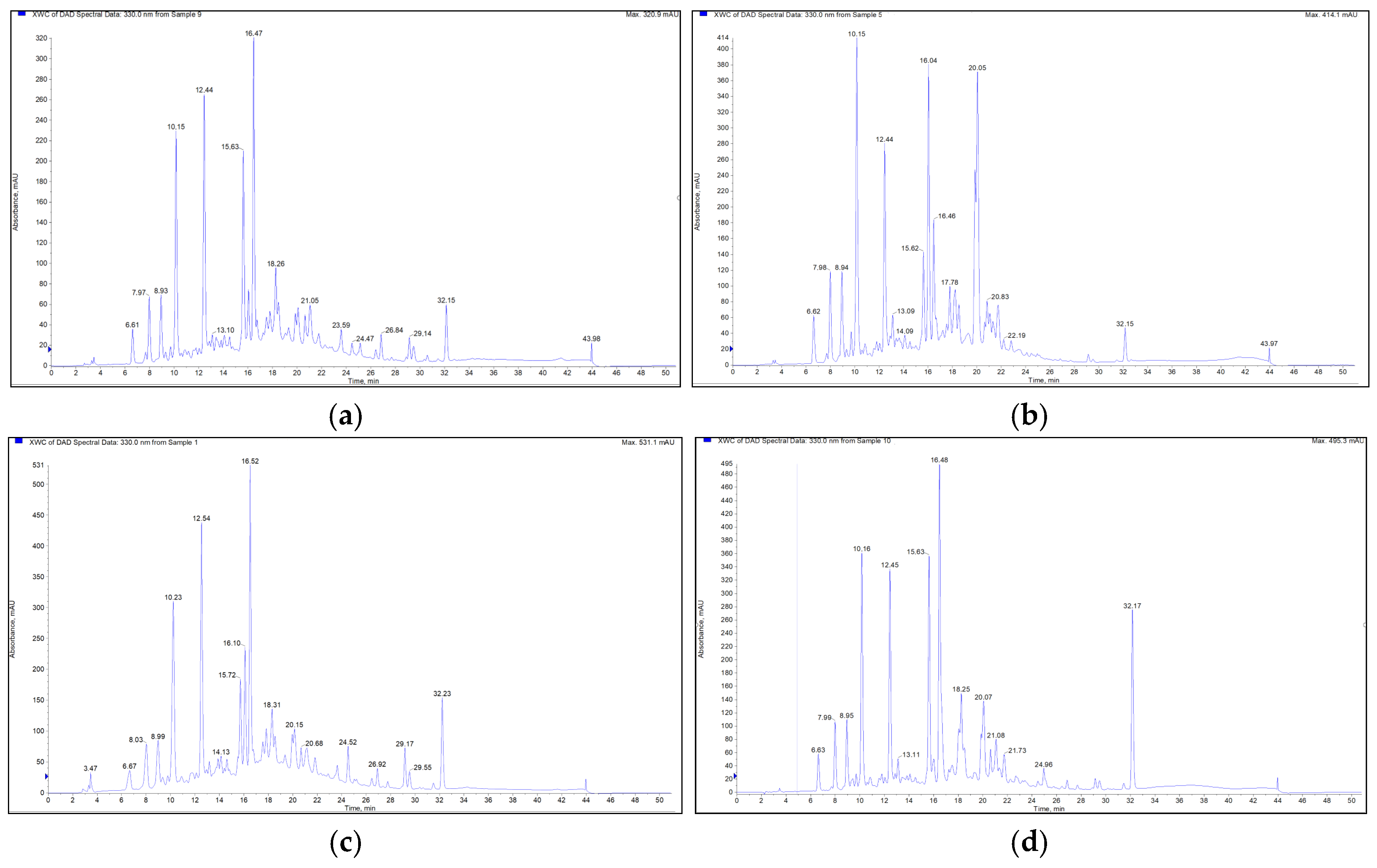



| Rt (min) | [M−H]− (m/z) | Main MS2 Fragments (m/z) | Compound | L. persicus | L. glaucescens | L. quinquelobatus | L. cardiaca | |
|---|---|---|---|---|---|---|---|---|
| 1 | 12.5 | 352.7 | 191, 179, 173 | Caffeoylquinic acid | E, M, I | E, I | E, M, I | E, M, I |
| 2 | 12.8 | 352.7 | 191, 179, 135 | 5-O-Caffeoylquinic acid | E, M, I | E, I | – | – |
| 3 | 15.7 | 178.8 | 135 | Caffeic acid | E, M, I | E, I | E, M, I | E, M, I |
| 4 | 16.1 | 754.4 | 623, 462, 305, 179, 161, 135 | Lavandulifolioside | – | E, I | E, M, I | E, M, I |
| 5 | 16.5 | 622.4 | 461, 161, 135 | Verbascoside | E, M, I | E, M, I | E, M | E, M |
| 6 | 18.0 | 358.7 | 197, 179, 161 | Rosmarinic acid | E, M, I | – | – | – |
| 7 | 19.9 | 608.4 | 300, 271, 179, 151 | Quercetin rutinoside | E, M, I | E, M, I | E, M, I | E, M, I |
| 8 | 20.2 | 462.6 | 300, 271, 255 | Quercetin glucoside | – | E, M | E, M, I | E, M, I |
| 9 | 32.2 | 282.7 | 268, 239, 211, 151, 117 | Genkwanin | E, M, I | E | E, M | E, M |
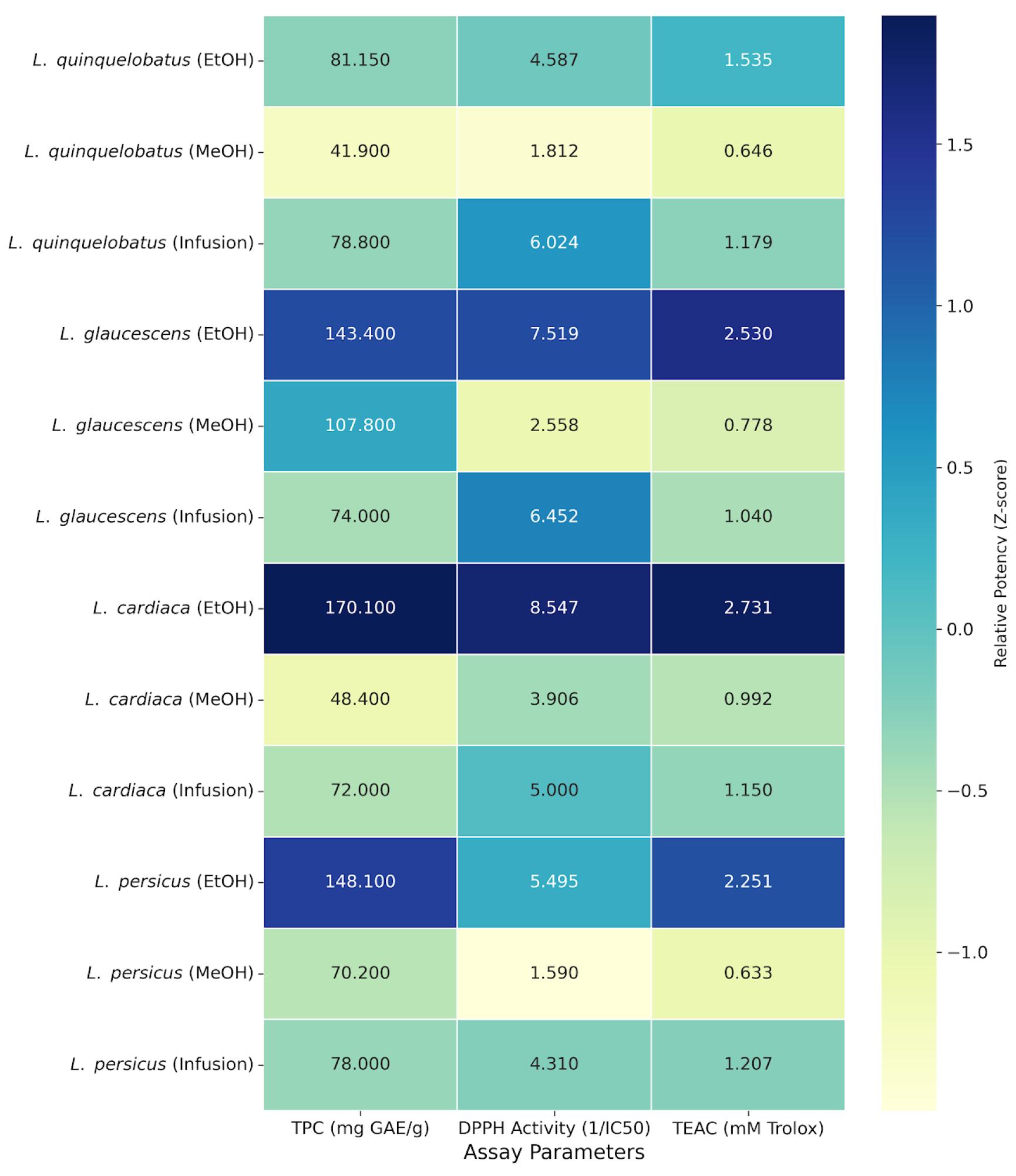
| Samples | Yield% | TPC mg GAE/g Ext. | DPPH˙(EC50 mg/mL) | TEAC (mM/Trolox) |
|---|---|---|---|---|
| L. quinquelobatus | ||||
| EtOH | 11 | 81.15 ± 0.02 | 0.218 ± 0.11 | 1.535 ± 0.14 |
| MeOH | 6.6 | 41.9 ± 0.01 | 0.552 ± 0.03 | 0.646 ± 0.04 |
| Infusion | 7.8 | 78.8 ± 0.04 | 0.166 ± 0.02 | 1.179 ± 0.04 |
| L. glaucescens | ||||
| EtOH | 10 | 143.4 ± 0.03 | 0.133 ± 0.01 | 2.53 ± 0.01 |
| MeOH | 10.3 | 107.8 ± 0.02 | 0.391 ± 0.10 | 0.778 ± 0.02 |
| Infusion | 13.6 | 74 ± 0.01 | 0.155 ± 0.01 | 1.04 ± 0.02 |
| L. cardiaca | ||||
| EtOH | 9.3 | 170.1 ± 0.02 | 0.117 ± 0.01 | 2.731 ± 0.01 |
| MeOH | 13.3 | 48.4 ± 0.02 | 0.256 ± 0.02 | 0.992 ± 0.05 |
| Infusion | 13.8 | 72 ± 0.02 | 0.200 ± 0.02 | 1.15 ± 0.04 |
| L. persicus | ||||
| EtOH | 10.6 | 148.1 ± 0.04 | 0.182 ± 0.04 | 2.251 ± 0.05 |
| MeOH | 10.5 | 70.2 ± 0.03 | 0.629 ± 0.03 | 0.633 ± 0.03 |
| Infusion | 15.6 | 78 ± 0.01 | 0.232 ± 0.03 | 1.207 ± 0.02 |
| GA (gallic acid) | 0.003 ± 0.001 | 2.926 ± 0.03 | ||
| TFC (%) | ||||
| Species | Absorbance | % Flavonoid | ||
| L. quinquelobatus | 0.214 | 0.26 ± 0.05 | ||
| L. glaucescens | 0.284 | 0.35 ± 0.03 | ||
| L. cardiaca | 0.196 | 0.24 ± 0.02 | ||
| L. persicus | 0.255 | 0.31 ± 0.03 | ||
| Ec | Saa | See | Ef | Se | Pa | |
|---|---|---|---|---|---|---|
| L. quinquelobatus | ||||||
| EtOH | 2000 | 2000 | 2000 | 2000 | 2000 | >8000 |
| MeOH | 2000 | 2000 | 2000 | 1000 | 1000 | 4000 |
| Inf | 2000 | >8000 | 2000 | 2000 | 2000 | >8000 |
| L. glaucescens | ||||||
| EtOH | 2000 | >8000 | 2000 | 2000 | 2000 | >8000 |
| MeOH | 2000 | 1000 | 2000 | 1000 | 2000 | >8000 |
| Inf | 2000 | 4000 | 2000 | 2000 | 2000 | >8000 |
| L. cardiaca | ||||||
| EtOH | 2000 | 4000 | 2000 | 2000 | 2000 | >8000 |
| MeOH | 2000 | 2000 | 2000 | 1000 | 2000 | >8000 |
| Inf | 2000 | 4000 | 2000 | 2000 | 2000 | >8000 |
| L. persicus | ||||||
| EtOH | 2000 | 2000 | 2000 | 2000 | 2000 | >8000 |
| MeOH | 2000 | 2000 | 2000 | 2000 | 2000 | >8000 |
| Inf | 2000 | 4000 | 2000 | 2000 | 2000 | >8000 |
| Ampicillin | 4 | 2 | 2 | 4 | 4 | 128 |
| Chloramphenicol | 4 | 4 | 4 | 4 | 4 | 64 |
| Extracts | Ca1 | Cu | Ca2 | Ct | Cp | Ck |
|---|---|---|---|---|---|---|
| L. quinquelobatus | ||||||
| EtOH | 1000 | 500 | 1000 | 1000 | 1000 | 500 |
| MeOH | 1000 | 500 | 1000 | 500 | 500 | 250 |
| Inf | 2000 | 1000 | 2000 | 1000 | 1000 | 500 |
| L. glaucescens | ||||||
| EtOH | 1000 | 500 | 1000 | 1000 | 1000 | 250 |
| MeOH | 1000 | 500 | 500 | 1000 | 500 | 250 |
| Inf | 1000 | 1000 | 1000 | 2000 | 500 | 500 |
| L. cardiaca | ||||||
| EtOH | 500 | 250 | 500 | 1000 | 500 | 250 |
| MeOH | 500 | 250 | 500 | 500 | 500 | 500 |
| Inf | 2000 | 1000 | 2000 | 2000 | 2000 | 2000 |
| L. persicus | ||||||
| EtOH | 500 | 250 | 500 | 500 | 125 | 125 |
| MeOH | 250 | 125 | 500 | 250 | 500 | 125 |
| Inf | 1000 | 500 | 1000 | 2000 | 1000 | 500 |
| Amphotericin-B | 0.25 | 0.125 | 0.5 | 0.25 | 0.25 | 0.25 |
| Ketoconazole | 0.06 | 0.03 | 0.03 | 0.03 | 0.03 | 0.06 |
| Cell Lines | |||
|---|---|---|---|
| Extracts/Standard | A549 | C6 | MCF7 |
| L. quinquelobatus | |||
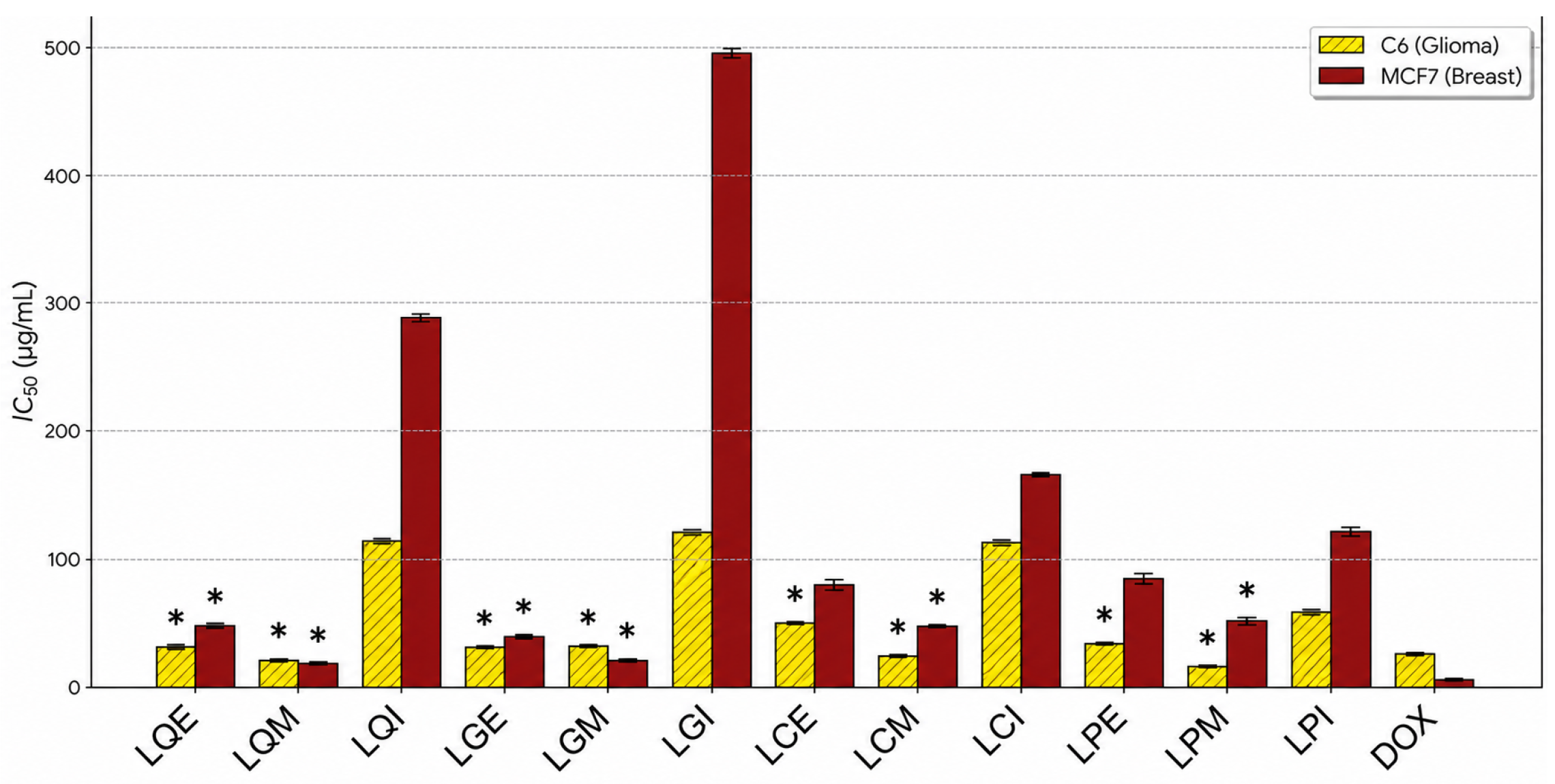
| EtOH | >1000 | 31.33 ± 1.39 | 47.81 ± 2.08 |
| MeOH | >1000 | 21.14 ± 1.15 | 18.19 ± 0.45 |
| Inf | >1000 | 114.78 ± 1.39 | 288.61 ± 2.65 |
| L. glaucescens | |||
| EtOH | >1000 | 31.22 ± 0.60 | 39.26 ± 1.65 |
| MeOH | >1000 | 32.38 ± 0.27 | 21.22 ± 0.93 |
| Inf | >1000 | 121.76 ± 1.39 | 495.87 ± 3.62 |
| L. cardiaca | |||
| EtOH | 869.56 ± 10.5 | 50.12 ± 1.09 | 80.65 ± 3.94 |
| MeOH | 673.67 ± 9.85 | 24.31 ± 1.03 | 47.59 ± 1.38 |
| Inf | >1000 | 113.64 ± 1.39 | 165.91 ± 1.56 |
| L. persicus | |||
| EtOH | >1000 | 33.96 ± 0.39 | 85.65 ± 3.71 |
| MeOH | 601.86 ± 8.66 | 16.43 ± 0.17 | 51.79 ± 2.36 |
| Inf | >1000 | 58.93 ± 1.39 | 122.27 ± 2.54 |
| DOX | 10.76 ± 0.513 | 25.64 ± 1.11 | 5.70 ± 0.22 |
Disclaimer/Publisher’s Note: The statements, opinions and data contained in all publications are solely those of the individual author(s) and contributor(s) and not of MDPI and/or the editor(s). MDPI and/or the editor(s) disclaim responsibility for any injury to people or property resulting from any ideas, methods, instructions or products referred to in the content. |
© 2026 by the authors. Licensee MDPI, Basel, Switzerland. This article is an open access article distributed under the terms and conditions of the Creative Commons Attribution (CC BY) license.
Share and Cite
Saltan, N.; Köse, Y.B.; Göger, F.; Osmaniye, D.; İşcan, G. Chemical Composition and Bioactivities of Turkish Leonurus Species (Lamiaceae) Extracts: Antioxidant, Antimicrobial, and Antiproliferative Potential. Molecules 2026, 31, 1708. https://doi.org/10.3390/molecules31101708
Saltan N, Köse YB, Göger F, Osmaniye D, İşcan G. Chemical Composition and Bioactivities of Turkish Leonurus Species (Lamiaceae) Extracts: Antioxidant, Antimicrobial, and Antiproliferative Potential. Molecules. 2026; 31(10):1708. https://doi.org/10.3390/molecules31101708
Chicago/Turabian StyleSaltan, Nagehan, Yavuz Bülent Köse, Fatih Göger, Derya Osmaniye, and Gökalp İşcan. 2026. "Chemical Composition and Bioactivities of Turkish Leonurus Species (Lamiaceae) Extracts: Antioxidant, Antimicrobial, and Antiproliferative Potential" Molecules 31, no. 10: 1708. https://doi.org/10.3390/molecules31101708
APA StyleSaltan, N., Köse, Y. B., Göger, F., Osmaniye, D., & İşcan, G. (2026). Chemical Composition and Bioactivities of Turkish Leonurus Species (Lamiaceae) Extracts: Antioxidant, Antimicrobial, and Antiproliferative Potential. Molecules, 31(10), 1708. https://doi.org/10.3390/molecules31101708