Article

In Silico Studies of Potent Tyrosine Kinase Inhibitors: Molecular Docking and Pharmacophore Modeling Approaches


by
Evangelos Mavridis
,
Eleni Pontiki
and
Dimitra Hadjipavlou-Litina
*
Laboratory of Pharmaceutical Chemistry, School of Pharmacy, Faculty of Health Sciences, Aristotle University of Thessaloniki, 54124 Thessaloniki, Greece
*
Author to whom correspondence should be addressed.
Molecules 2026, 31(10), 1689; https://doi.org/10.3390/molecules31101689
Submission received: 16 March 2026 / Revised: 29 April 2026 / Accepted: 12 May 2026 / Published: 16 May 2026
(This article belongs to the Special Issue Molecular Docking in Drug Discovery, 2nd Edition)

Abstract

Compound repurposing is an efficient method to save both time and costs by redirecting previously synthesized small molecules towards new biological targets. In this research, we employ computational methodologies to investigate and assess target engagement of small molecules as tyrosine kinase inhibitors (TKIs). Therefore, compounds TKI.2a, TKI.2b, TKI.6, TKI.16, TKI.19, and TKI.21b identified from our earlier research, undergo assessments of molecular similarity, docking studies, and pharmacophore modeling along with those discovered through database searches. Compounds TKI.2a, TKI.2b, TKI.6, and TKI.19 appear to exhibit multi-target tyrosine kinase inhibitory activities against VEGFR-2 (Vascular Endothelial Growth Factor Receptor), RET (proto-oncogene tyrosine–protein kinase receptor), PDGFRα (Platelet-Derived Growth Factor Receptor alpha), EGFR (Epidermal Growth Factor Receptor), and HER2 (Human Epidermal Receptor) receptors. Pharmacophore models were applied for ligand-based virtual screening using defined parameters to discover candidate compounds that exhibit drug-likeness with FDA (Food and Drug Administration)-approved tyrosine kinase inhibitors. Molecular docking studies identified lead compounds for each biological target based on their overall affinity values and established interactions. Compound ChEMBL2170947 was found to be the most promising candidate for the VEGFR-2 receptor, ChEMBL5019511 for PDGFRα, ChEMBL2216869 for EGFR, and ChEMBL3355044 for HER2.

1. Introduction

The application of computational methods in drug discovery began in the early 1960s, highlighted by the quantitative structure–activity relationship studies conducted by Prof. Corwin Hansch and his research group [1]. As more data was generated and became increasingly accessible, advanced algorithms were also developed to analyze it. Machine learning includes a wide variety of algorithms that enable systems to learn from data without direct programming, whereas deep learning specifically applies artificial neural networks with multiple layers to interpret data [2].
The application of machine learning (ML) in drug discovery represents a groundbreaking method showing a significant change in how scientists and researchers develop new therapeutic compounds. Prominent examples of this advancement include the implementation of Quantitative Structure–Activity Relationships (QSARs) and the prediction of pharmacokinetic/toxicity (ADMET—Absorption, Distribution, Metabolism, Excretion, Toxicity) properties, which made possible the prediction of biological activities based on molecular structure, considering that molecules with similar structures tend to exhibit comparable bioactivity [3]. Furthermore, the application of deep learning (DL) algorithms, such as convolutional neural networks, has improved the ability to recognize and evaluate intricate patterns and images within large datasets, for instance, in molecular docking studies [2].
In silico approaches offer a deeper understanding of atomistic details that current experimental methods cannot achieve. Naturally, the primary aim of computational methods is not to substitute experiments but to assist multidisciplinary scientific teams in applying more efficient and comprehensive strategies.
In this study, we employed in silico computational methods to explore and evaluate the bioactivity of small molecules that are newly developed as tyrosine kinase inhibitors (TKIs). The frequent deregulation of tyrosine kinases (TKs) in various diseases has inspired investigations into their structure. This structural arrangement is primarily characterized by the presence of two distinct lobes: the smaller N-terminal lobe (N-lobe) and the larger C-terminal lobe (C-lobe). Together, these lobes create a deep cleft that serves as the active site, which accommodates an ATP (Adenosine triphosphate) molecule in conjunction with either one or two divalent cations, such as magnesium or manganese [4]. The N-lobe and C-lobe are linked by an area known as the hinge region, which allows the relative movement of these two lobes. Such movements are essential for catalysis, as they spatially arrange the catalytic residues into a well-conserved configuration that enables the transfer of phosphate. In most kinases, the N-terminal lobe (N-lobe) of the protein kinase domain is typically characterized as a small, predominantly anti-parallel-sheet structure comprising five strands (labeled β1–β5) and a crucial regulatory single helix, the αC-helix. The αC helix is crucial for catalysis and for transitioning the kinase between its inactive and active forms. Additionally, the N-lobe features a significant glycine-rich loop that connects the β1 and β2 strands, known as the phosphate-binding loop (P-loop or G-loop). In contrast, the C-lobe is more stable and primarily composed of alpha helices. It includes seven helices (αD–αI) and two to four very short β strands (β6–β9). Throughout the catalytic cycle, an important structural element called the activation loop (A-loop) alters its conformation. The N-terminal section of the activation loop contains a segment featuring a highly conserved sequence, Asp-Phe-Gly, referred to as the DFG motif, which is involved in coordinating metal cations. The central region of the activation loop varies more between different kinases, both in length and sequence, and is involved in substrate binding, ensuring that the substrate is appropriately positioned for phosphorylation. The activation loop also includes one or more phosphorylation sites playing a key role in the kinase activation process [5]. It seems that these characteristics are essential for grasping kinase catalytic activity. However, in the process of designing an inhibitor, the main objective is to replicate certain aspects of ATP’s binding and to investigate additional areas where the synthetic compound can forge new interactions, focusing on selectivity [2].
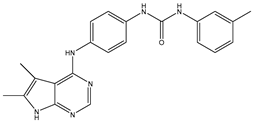
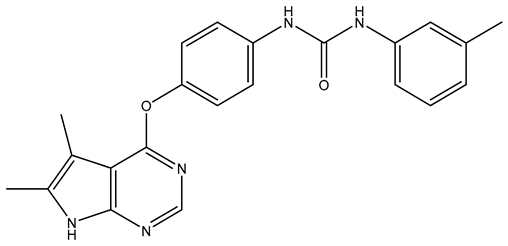
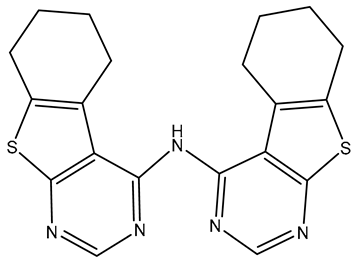
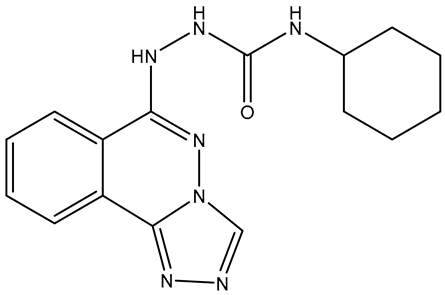
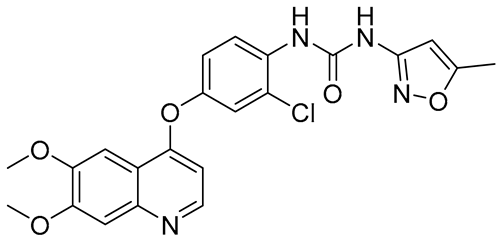
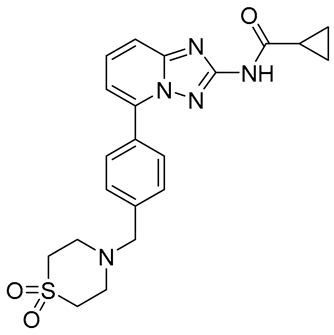
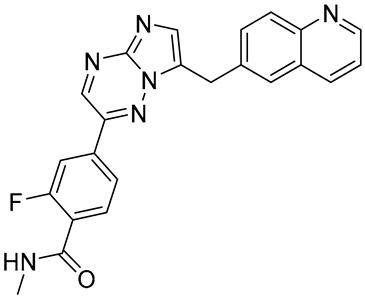
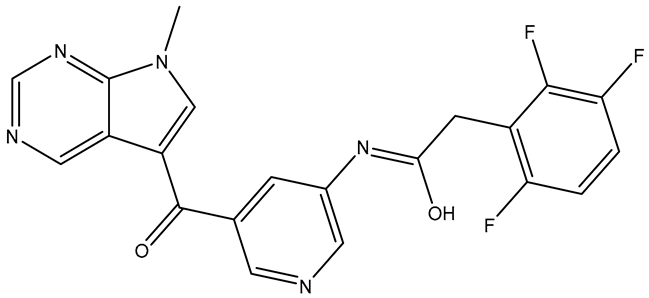
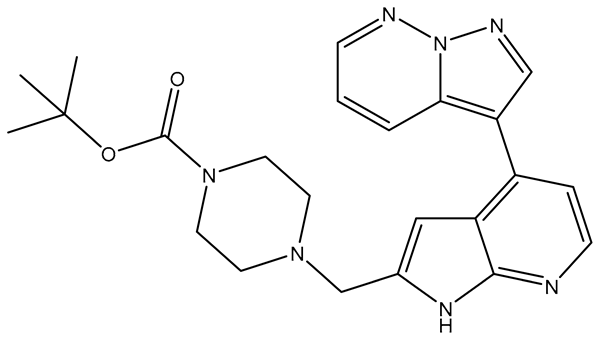
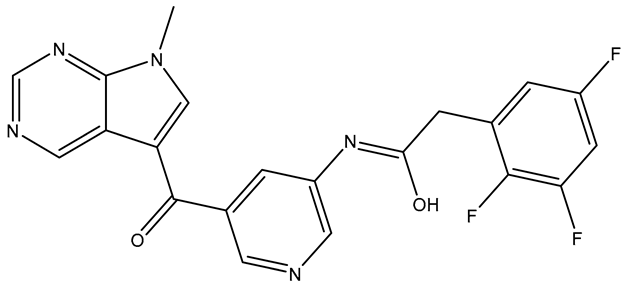
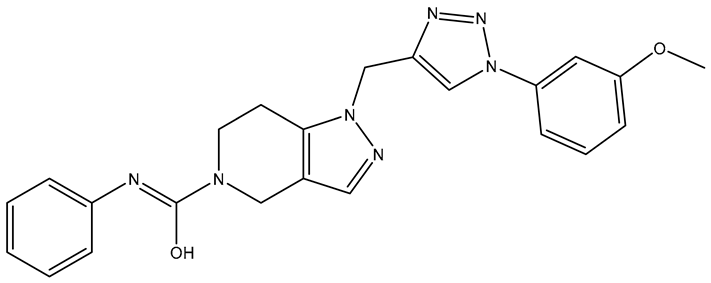
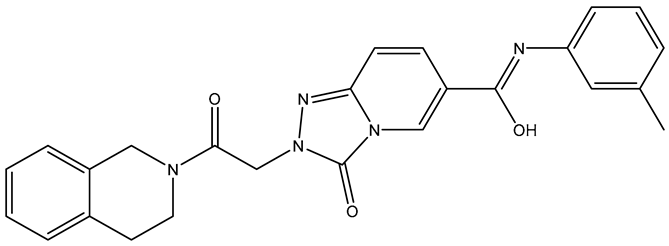
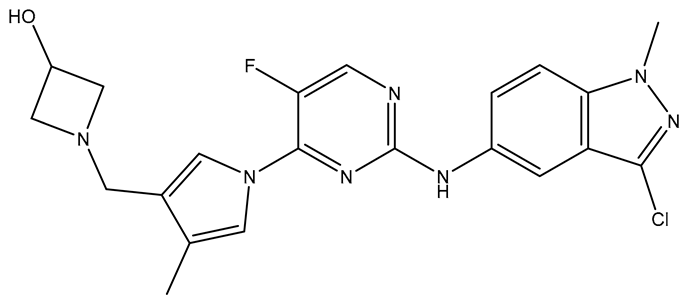
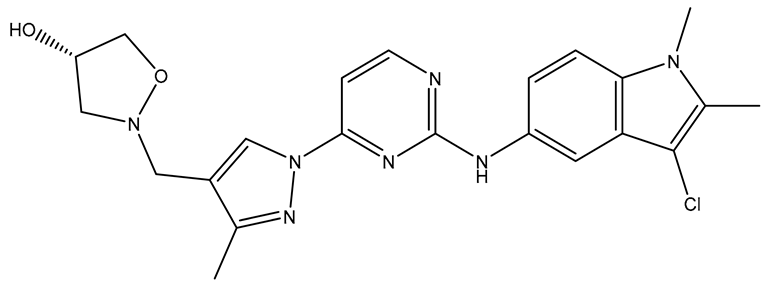
In our earlier docking studies [6], we discovered that compounds TKI.2a, TKI.2b, TKI.6, TKI.16, TKI.19, and TKI.21b maintained their original biological targeting (Table 1).
Therefore, in the project herein, the aforementioned compounds underwent molecular similarity studies to identify new potential tyrosine kinase targets based on their structural similarity to known FDA (Food and Drug Administration)-approved drugs. New biological targets that emerged, along with the previously identified targets, were utilized in molecular docking studies (preliminary) for validation purposes (Figure 1).
All validated compounds were combined with standout molecules from the docking screening (initial) of the ChEMBL database [12,13] corresponding to each specific target. The newly organized groups underwent pharmacophore modeling, isolating pharmacophores for VEGFR-2, EGFR, HER2, and PDGFRα (Platelet-Derived Growth Factor Receptor alpha). Ultimately, these scaffolds were employed to screen the entirety of the ChEMBL34 database [14], leading to the identification of potent TKIs, which, following additional molecular docking studies (validation), could be classified as lead compounds against these specific biological targets.

2. Results and Discussion

2.1. Molecular Similarity

Descriptors are classified based on their dimensional complexity, a system that mirrors the richness of the features they extract. Higher-dimensional descriptors offer a more sophisticated look at a molecule’s geometry and interactions, whereas lower-dimensional ones focus on fundamental structural counts. Molecular weight and logP represent typical 1D descriptors, while topological indicators and fingerprints fall under the category of 2D descriptors. 3D descriptors encompass a wide variety of properties, including electrostatic potential and the three-dimensional arrangement of ligand moieties [2].

Molecular Similarity Studies

The Tanimoto coefficient (T) is the most widely used metric for evaluating the similarity of new compounds to existing FDA-approved drugs. Compounds that exceed a 90% similarity threshold [15], specifically those with TaniAtom pairs ≥ 0.237 and TaniMACCS ≥ 0.528 simultaneously, were considered eligible (Table S1) for targeting new biological entities, as molecules with comparable structures often show similar bioactivity [16]. The most noteworthy findings with the highest similarity indices were observed between TKI.2a and Tivozanib (VEGFR-2), which had TaniAtom pairs = 0.44 and TaniMACCS = 0.62; between TKI.2b and Tivozanib (VEGFR-2), with TaniAtom pairs = 0.48 and TaniMACCS = 0.75; and finally, between TKI.21b and Capmatinib (c-MET/HGFR—hepatocyte growth factor receptor), where TaniAtom pairs = 0.27 and TaniMACCS = 0.63. Compounds were investigated to meet similarity criteria with known FDA-approved drugs. All the potential investigated biological targets for the compounds that follow the FDA-approved drugs molecular similarity criteria are given in Table 2.
It is striking that the shared urea group among TKI.2a, TKI.2b, and Tivozanib correlated with their elevated Tanimoto indices. Further clarification of additional common substructures between the compounds and the drugs could be achieved through pharmacophore modeling studies.
Newly identified biological targets include c-Kit/SCFR, PDGFRα, MEK1/2, RET, JAK1/2, and c-MET/HGFR, many of which are undergoing molecular docking studies with our compounds to validate the results of molecular similarity assessments or to explore new ones.

2.2. Molecular Docking

Molecular docking focuses on modeling the interaction between a molecule and the three-dimensional structure of a specific target. The main aim of docking is to identify a favorable conformation of the target–ligand complex, enhancing the number of interactions while reducing the predicted binding energy (calculated from the scoring function). Scoring functions (SFs) are computational algorithms employed in molecular docking simulations to evaluate and rank various ligand conformations within the target protein [2].

2.2.1. Statistical Analyses

Binding efficacy was evaluated using selection criteria established through statistical analyses of molecular docking results for FDA-approved drugs and their reported biological targets [17]. The criteria included (i) binding affinity measured in kcal/mol, (ii) CNN (convolutional neural network) pose score, which estimates the likelihood that the pose exhibits minimal root mean square deviation (RMSD) from the reference binding pose, and (iii) CNN affinity, representing the predicted affinity to the biological target as determined by the convolutional neural network.
Table 3 presents the average values of the parameters affinity, CNN pose score, and CNN affinity for each biological target, along with the overall averages, maximum, and minimum values. The CNN pose score ranges from 0 to 1, where a value of 1 indicates a high probability that the ligand’s conformation within the cavity is optimal. Inferential statistical analyses were conducted at a significance level of α = 0.05 (95% confidence limits) to determine the upper confidence limit for affinity and the lower confidence limits for CNN pose score and CNN affinity, as detailed below:
  • One-sided upper confidence interval (CI) for the affinity parameter: (−∞, −9.00);
  • One-sided lower confidence interval (CI) for the CNN pose score parameter: (0.843, ∞);
  • One-sided lower confidence interval (CI) for the CNN affinity parameter: (7.702, ∞).
Statistical analysis revealed that the estimated 95% confidence limits (soft thresholds) for affinity (−9.00), CNN pose score (0.843), and CNN affinity (7.702) significantly surpassed their respective benchmark values (hard thresholds) of −6.82, 0.526, and 7.010 (Table 3). As these benchmarks fall outside the one-sided confidence intervals, the null hypothesis was rejected in each case. This provides 95% confidence that the “true/real means” of potent TKIs’ population lies within the calculated limits.
The results of the molecular binding studies were evaluated according to the following criteria:
(i)
They must surpass at least two of the three soft thresholds determined through statistical analyses;
(ii)
If a soft threshold is not achieved, the value must not fall below or rise above the corresponding minimum or maximum value (hard thresholds), respectively;
(iii)
The interactions between the chemical groups of the compounds and those of the receptors should always be considered, alongside the interactions given in the literature [18].
Only the results that satisfied the criteria (i) and (ii) are discussed below and we investigated compounds’ interactions per biological target.

2.2.2. Vascular Endothelial Growth Factor Receptor 2 (VEGFR-2)

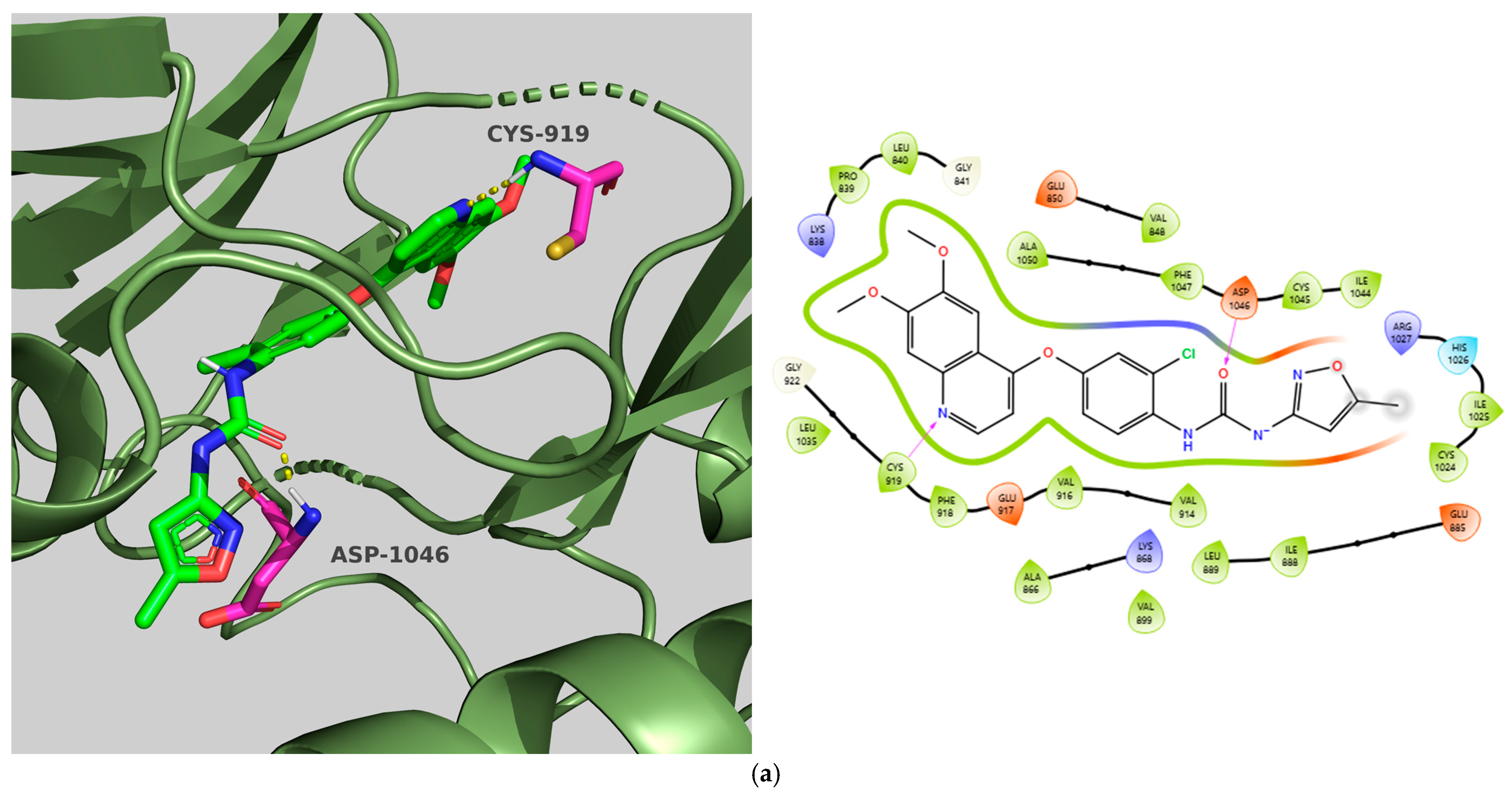
Due to the fact that the DFG (Asp-Phe-Gly) residues are positioned to impede ATP binding and obstruct the substrate binding site, the selected X-ray crystal structure of VEGFR-2 (PDB ID: 4ASE–Tivozanib) [19] displays a “DFG-out” (inactive) conformation, signifying that the kinase is predominantly inactive. The DFG motif area, the hinge region, and the hydrophobic regions (HYD-I and HYD-II) constitute the four main sections of the VEGFR-2 active site.
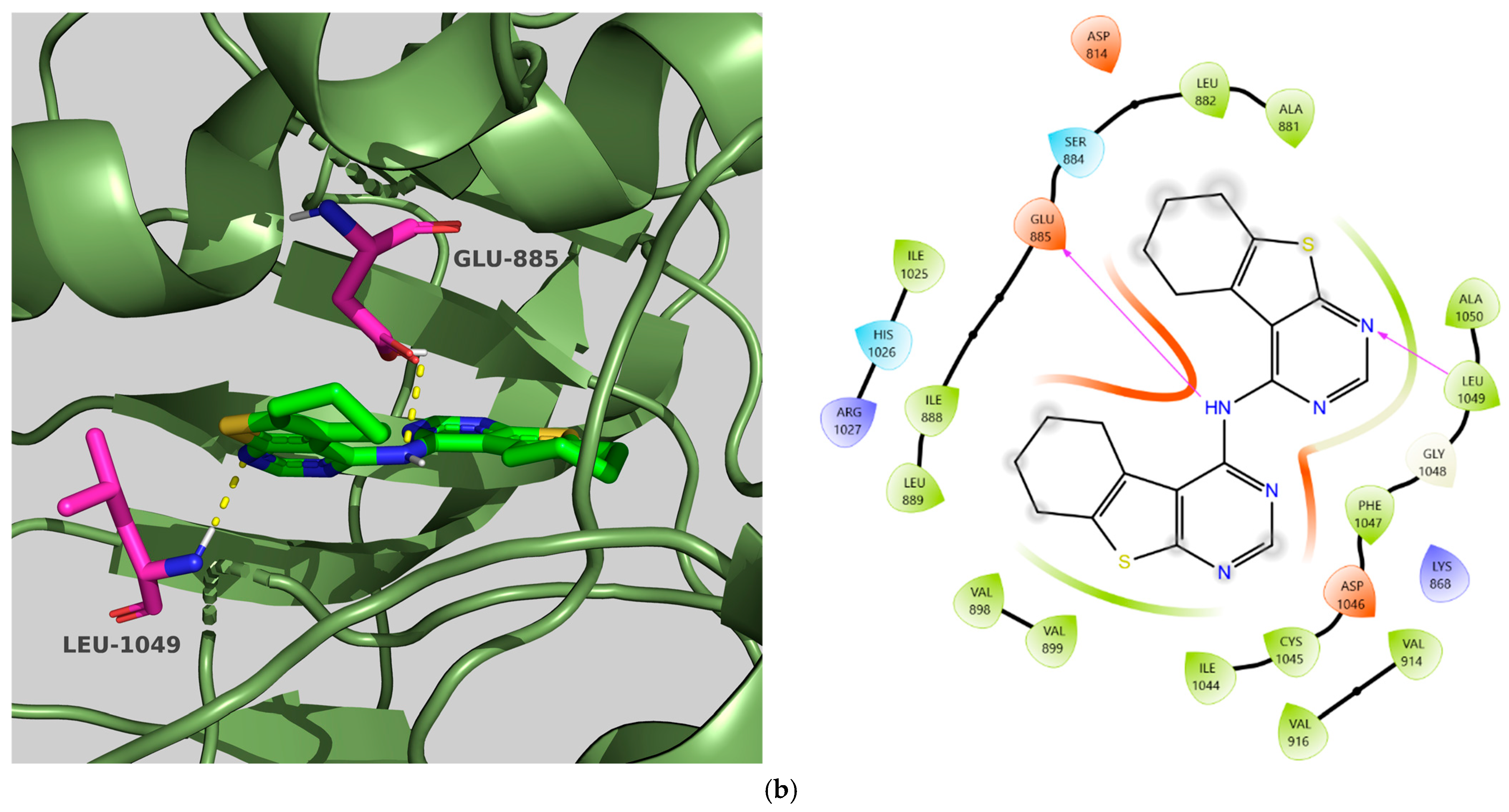
Regarding the docking data, TKI.6 demonstrated binding and CNN affinities of −11.13 and 7.932, respectively. These values are comparable to those of Tivozanib, the co-crystallized ligand, possessing a binding affinity of −10.87 kcal/mol and a CNN affinity of 8.124. TKI.6 reported a CNN pose score of 0.667, which is considerably lower than Tivozanib’s 0.925. Once redocked in its co-crystal form, the ligand Tivozanib formed two hydrogen bonds: one with the DFG domain’s Asp1046 and another with the hinge area at Cys919. Hydrophobic interactions were observed in the HYD-I region with Leu840 and Phe918 as well as in the more specific HYD-II region featuring Ile888, Leu889, Val899, and the gatekeeper residue Val916. Conversely, TKI.6 established an H-bond with Glu885 (αC helix) and yet showed no interaction with the hinge region (Cys919). TKI.6’s unsatisfactory performance in the CNN pose score (<0.843 one-sided lower CI) might be explained by this deviation. Additionally, hydrophobic interactions were observed with Glu885 and Asp1046, along with the HYD-II region (Val898). Finally, TKI.6 exhibited an extra H-bond interaction with Leu1049 (Figure 2).

2.2.3. Proto-Oncogene Tyrosine–Protein Kinase Receptor (RET)

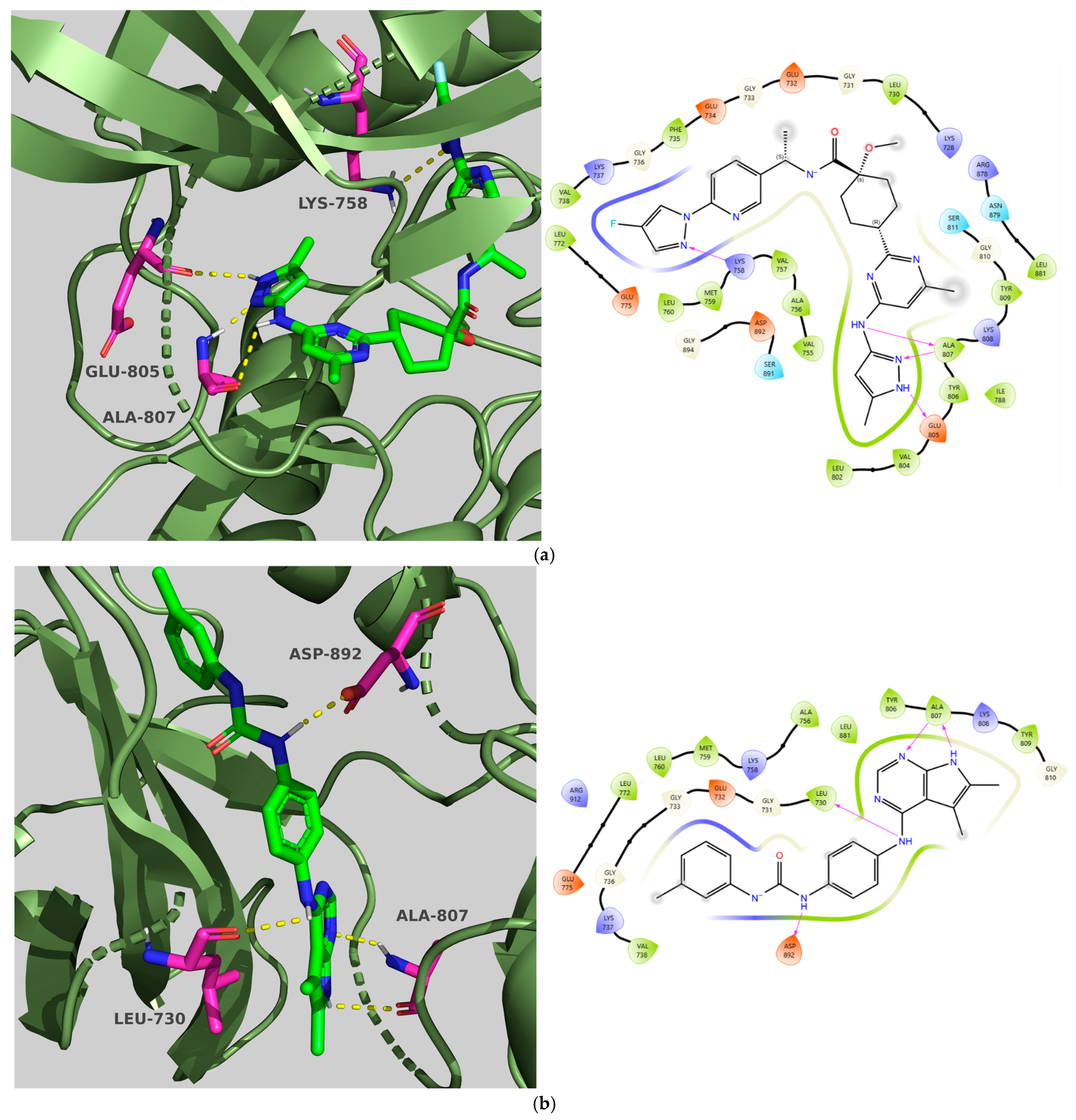
In our study of RET kinase inhibitors, we employed the RET protein tyrosine kinase in association with Pralsetinib (PDB ID: 7JU5) [20]. This structure features a hinge region spanning from Glu805 to Ala807 and a hydrophobic pocket situated between the gatekeeper residue Val804 and the catalytic lysine Lys758. The gatekeeper pocket is recognized for its role in influencing the affinity and selectivity of numerous classes of kinase inhibitors [21].
Pralsetinib showed three hydrogen bonds with the hinge region (Glu805, Ala807, Ala807), enhancing its binding to the protein (affinity: −9.89, CNN pose score: 0.970 and CNN affinity: 8.129). In contrast, TKI.2a lost one hydrogen bond connection (Ala807, Ala807), which may explain the lower CNN affinity score (affinity: −9.87, CNN pose score: 0.866 and CNN affinity: 7.349) when compared to the co-crystallized ligand. Additionally, another distinction is that Pralsetinib formed a hydrogen bond with the catalytic lysine Lys758, while TKI.2a formed bonds with the DFG domain’s Asp892 and Leu730 of the b1 strand on the N-lobe side. Lastly, regarding hydrophobic interactions, both ligands stabilized within the selectivity pocket by interacting with residues Leu730 and Val738 located on the b2 strand (glycine-rich loop) on the N-lobe side, along with the catalytic lysine Lys758, gatekeeper Val804, and Leu881 from the b7 strand on the C-lobe side [20] (Figure 3).

2.2.4. Platelet-Derived Growth Factor Receptor Alpha (PDGFRα)

Compounds TKI.2a, TKI.2b, and TKI.19 demonstrated significant outcomes in molecular docking experiments conducted using the X-ray crystal structure of PDGFRα (PDB ID: 6JOL) [22]. The key residues in this structure include a hinge region residue (Cys677), a gatekeeper residue (Thr674), a catalytic loop residue (Val815), residues of the DFG motif (Asp836, Phe837), and a residue from the αC-helix (Glu644). Ultimately, interactions with hydrophobic residues such as Val607, Met648, Val658, Leu825, Cys835, and Phe837, along with the occupation of a hydrophobic pocket located between the catalytic loop and αC-helix (Met648, Ile657, Val815, Leu809, Ile834), may play a vital role in enhancing activity against PDGFRα [22].
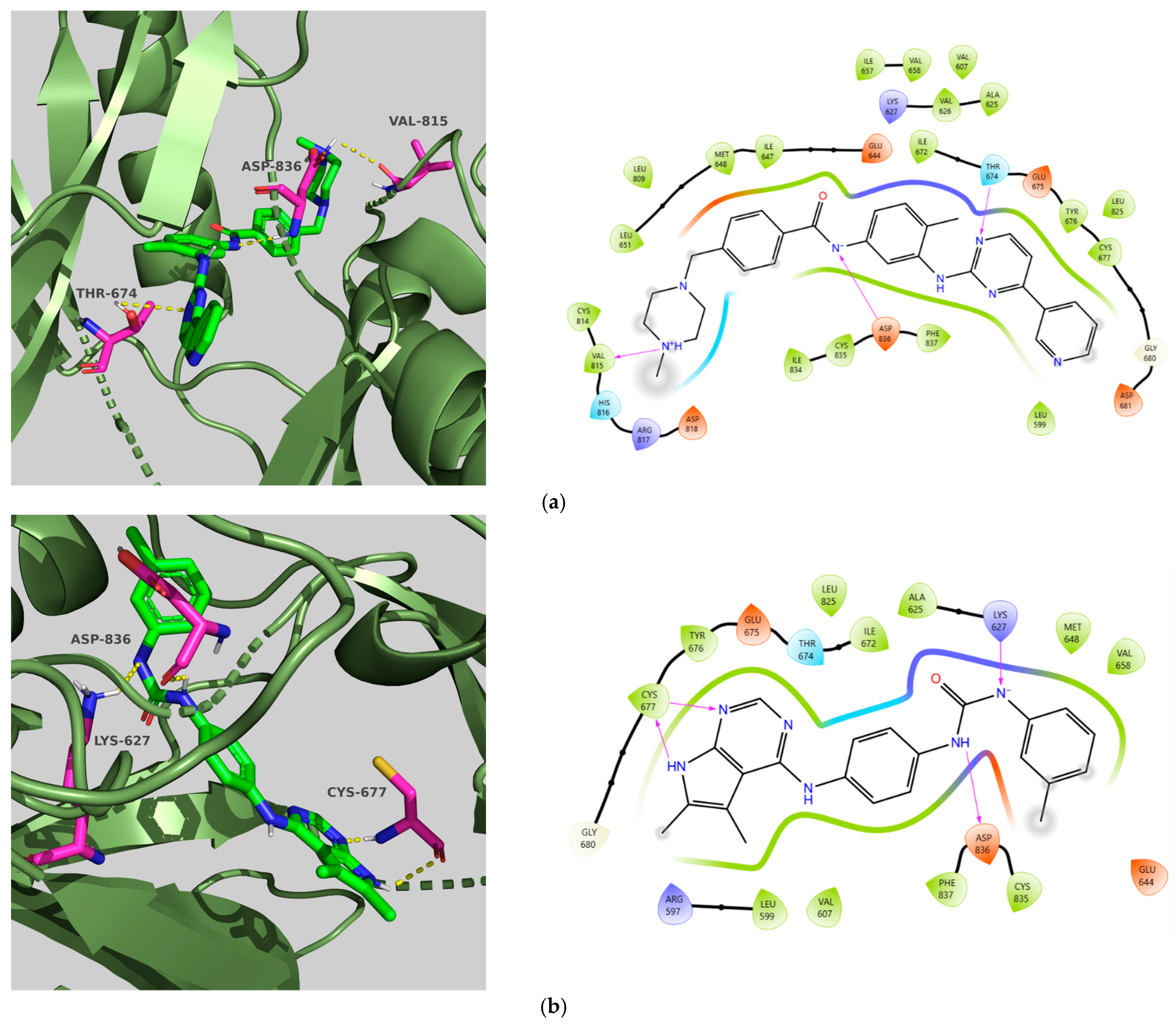
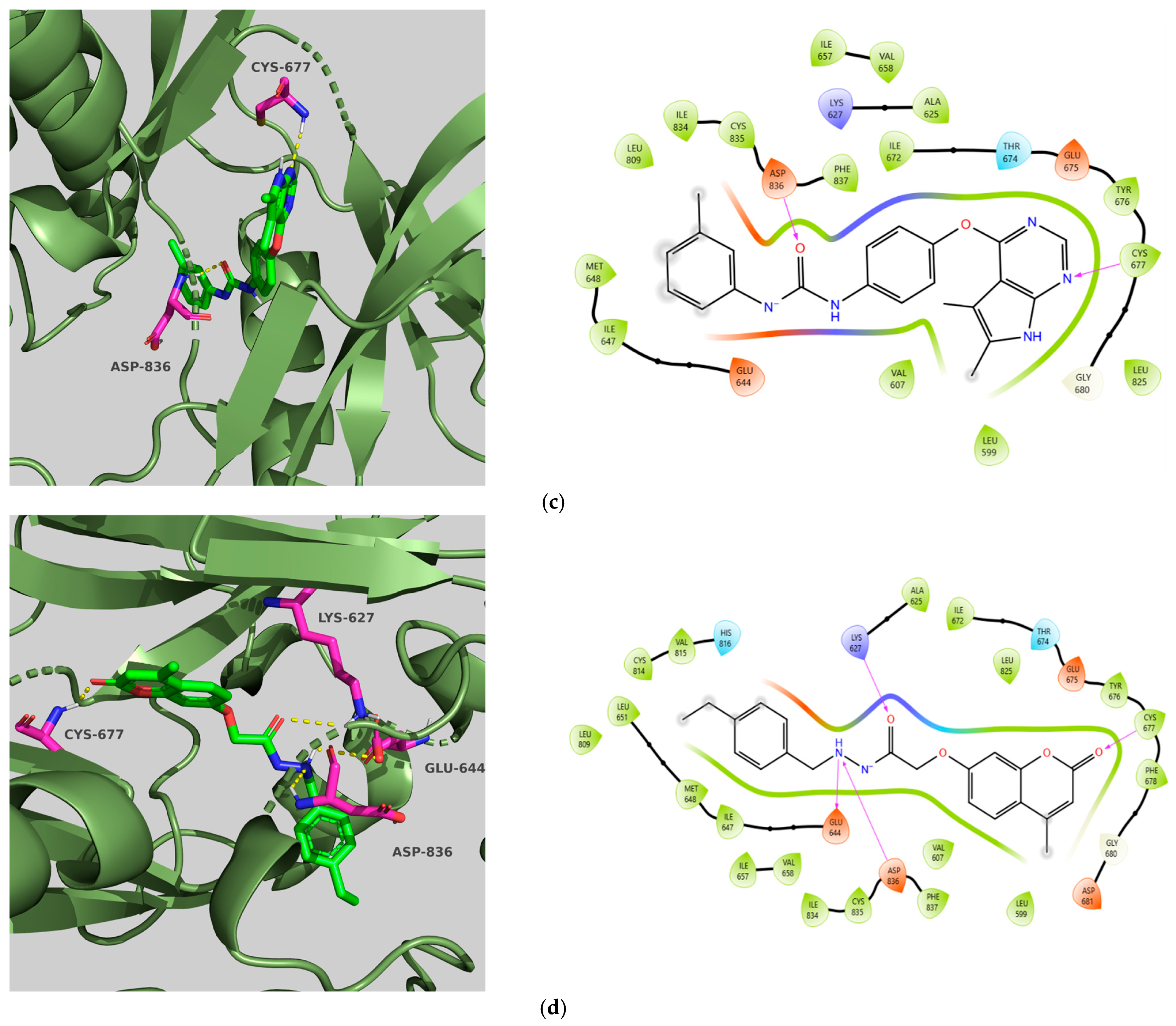
Compounds TKI.2a and TKI.2b exhibited the most favorable outcomes (CNN pose score: 0.963, 0.977 and CNN affinity: 7.936, 8.108, respectively) by establishing hydrogen bonds with the hinge region and the DFG motif. The most significant distinction in comparison with Imatinib and TKI.19, which enhanced both CNN affinity and CNN pose score values, appeared to be the shared hydrophobic interactions with residues Glu644, Val658, Leu825, and Phe837. Notably, the hydrophobic interactions with Phe837 of the DFG motif were achievable due to the Asp-Phe-Gly/DFG-out conformation characteristic of the inactive form of PDGFRα. Even though Imatinib lost a crucial hydrogen bond with the hinge region, it still maintained a high CNN affinity and CNN pose score (7.952 and 0.862, respectively), possibly due to the establishment of two hydrogen bonds with the gatekeeper residue Thr674 and catalytic Val815, along with interactions with several hydrophobic residues (Leu599, Val607, Ala625, Lys627, Ile672, Thr674, Leu825, Asp836). Compound TKI.19 exhibited four hydrogen bonds (Lys627, Glu644, Cys677, and Asp836) yet paradoxically had a CNN affinity of only 7.040. A possible explanation for this could be that TKI.19 had the lowest hydrophobic interactions (Leu599, Val607, Ala625, Leu809, Asp836) compared to other compounds. Ultimately, the elevated CNN pose score (0.872) was attributed to its distinct double engagement with Leu809 in the hydrophobic pocket (Figure 4).

2.2.5. Epidermal Growth Factor Receptor (EGFR)

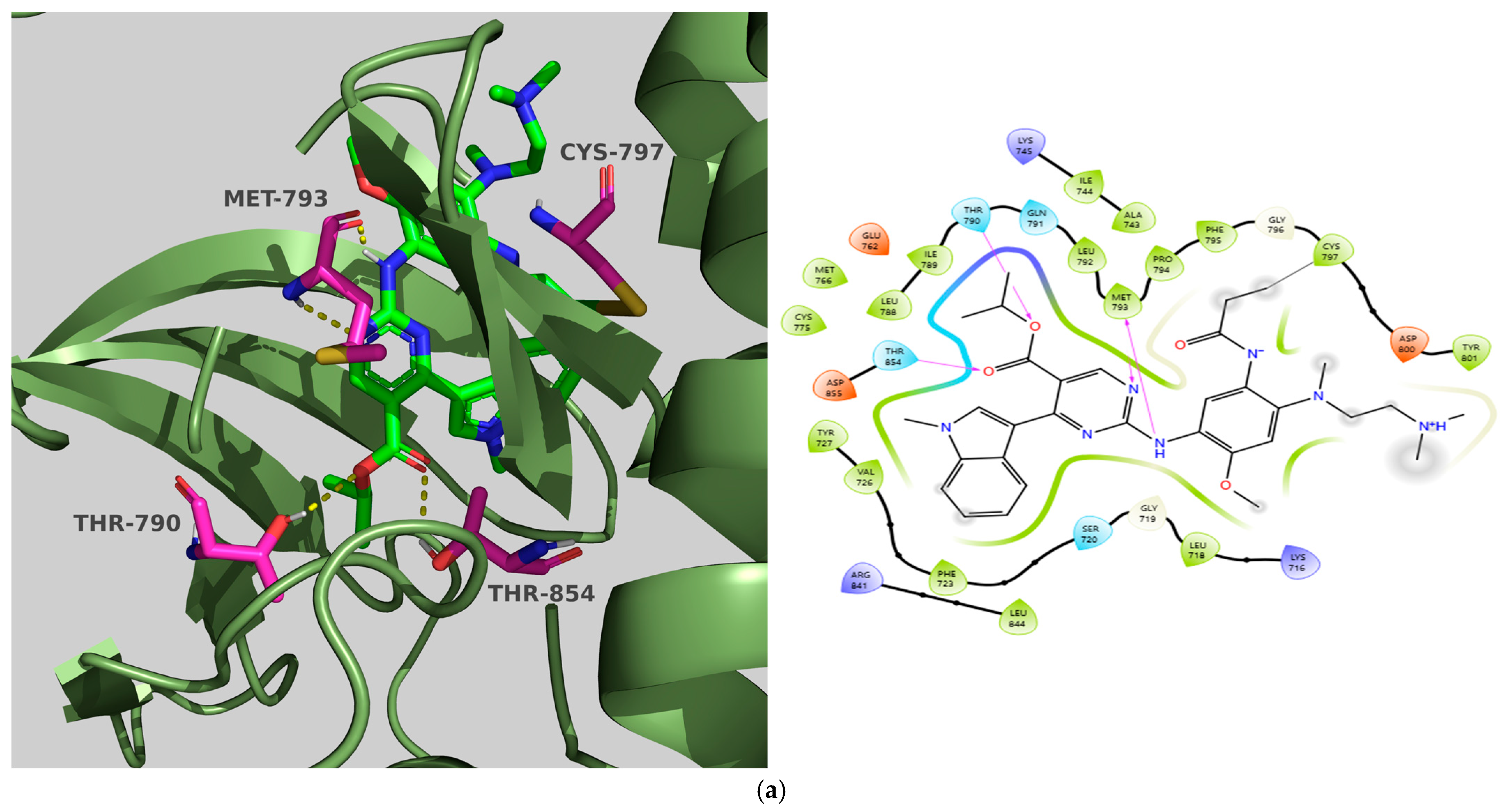
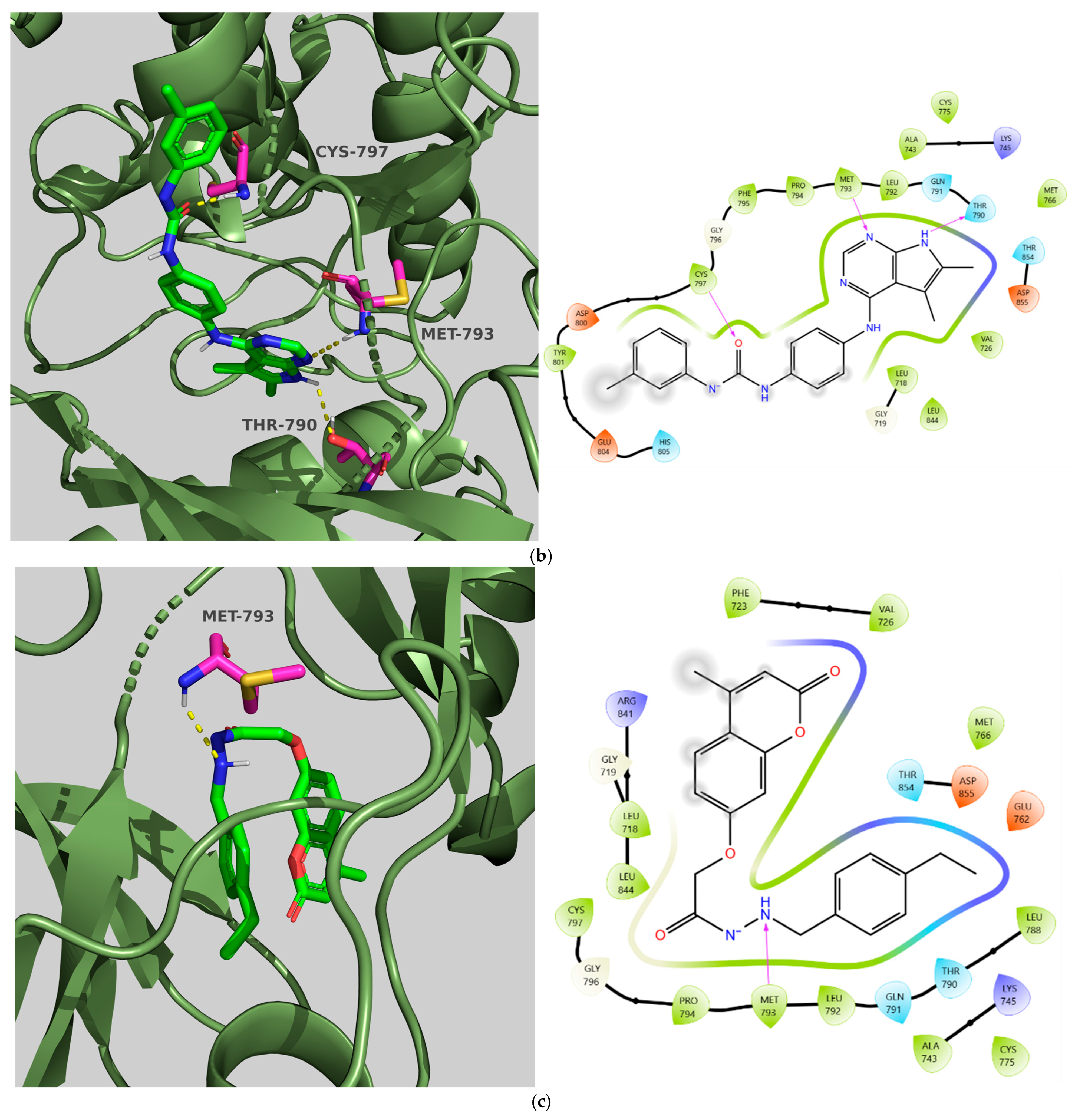
In our molecular docking study, we dealt with a member of the HER (Human Epidermal Growth Factor Receptor) kinase family, specifically EGFR. To facilitate this, we employed the surrogate crystal structure of the wild-type EGFR bound to mobocertinib (PDB ID: 7T4I) [23]. This study emphasizes key residues, such as Met793 located in the hinge region, and particular areas like the selectivity pocket, where Thr790 acts as the gatekeeper for ATP binding, Lys745 functions as the catalytic residue, and Thr854 interacts with the DFG motif (855–857), in addition to two distinct hydrophobic regions. Hydrophobic region I includes amino acids like Phe723, Leu747, Ile759, Met766, Leu777, and Leu788, while hydrophobic region II, found near Thr790 and made up of Leu718, Gly719, Val726, and Leu844, is vital for binding compounds to EGFR. Finally, Cys797, located at the border of the active site cleft is recognized as the most solvent-exposed cysteine in the EGFR kinase domain, being a key to forming covalent bonds with irreversible TKIs.
The binding affinities of the selected compounds, TKI.2a (−8.60) and TKI.19 (−8.17), outperformed the co-crystallized ligand mobocertinib (−7.66), even though they do not reach the conventional −9.00 soft threshold. The literature suggests that molecular docking frequently underestimates the affinity of FDA-approved drugs for wild-type EGFR [24,25]. This is primarily attributed to the inability of docking models to account for EGFR’s significant conformational shifts [26]. Consequently, a category-specific threshold of −7.95—representing the average affinity of FDA-approved inhibitors—was established (Table 3). Notably, CNN scoring bypassed these docking limitations, providing a more accurate representation of binding parameters, demonstrating superiority over traditional affinity metrics.
Both the co-crystallized ligand and the chosen compounds established hydrogen bonds with the hinge region. However, mobocertinib exhibited a greater affinity than TKI.2a and TKI.19 for the active site, attributed to an additional hydrogen bond with Met793, another bond with the gatekeeper Thr790, and with Thr854, and primarily due to a covalent bond with Cys797, which explains the differences in their CNN affinities of 8.106, 7.047, and 7.087, respectively. In contrast, TKI.2a formed two hydrogen bonds with the gatekeeper Thr790 and Cys797, along with hydrophobic interactions with region II (Leu718, Val726, and Leu844), resulting in a CNN pose score of 0.843, while mobocertinib achieved a score of 0.970. Finally, TKI.19, despite forming only one hydrogen bond with Met793, was appropriately positioned in the binding site due to extensive hydrophobic interactions with hydrophobic region I (Phe723, Leu788), key region II (Val726, Leu844), and the gatekeeper residues Thr790 and Thr854, leading to a remarkable CNN pose score of 0.851 (Figure 5).

2.2.6. Receptor Tyrosine–Protein Kinase erbB-2 (HER2)

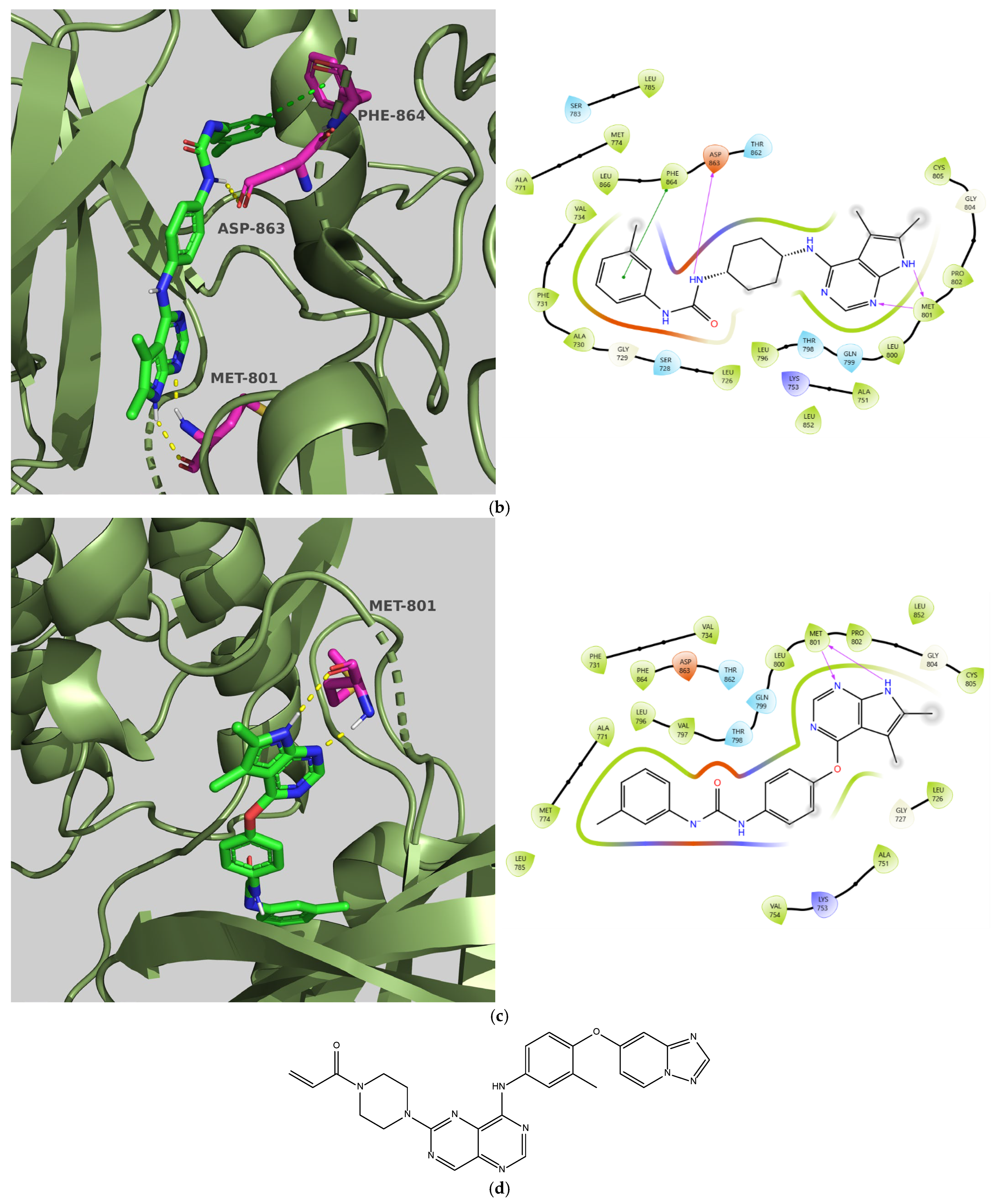
The selected X-ray crystal structure of HER2 (PDB ID: 7PCD–covalent inhibitor) [27] displays the typical bilobed folding pattern found in kinases. The glycine-rich nucleotide phosphate-binding loop (P-loop;Leu726–Val734) and the αC helix (Pro761–Ala775) of the N-lobe are connected by a flexible hinge region (Met801) to the DFG motif (Asp863–Gly865), the catalytic loop (Arg844–Asn850), and the activation loop (A-loop; Asp863–Val884) of the C-lobe of the kinase, and divided by a deep cleft that contains the ATP binding site [28]. The covalent inhibitor (IUPAC name: 1-[4-[4-[[3,5-dichloro-4-([1,2,4]triazolo[1,5-a]pyridin-7-yloxy)phenyl]amino]pyrimido[5,4-d]pyrimidin-6-yl]piperazin-1-yl]-4-(3-fluoroazetidin-1-yl)but-3en-1-one) is a close analog of BI-1622 (Figure 6d), a lead compound developed by Boehringer Ingelheim as a proof-of-concept molecule for selective HER2 inhibition [27].
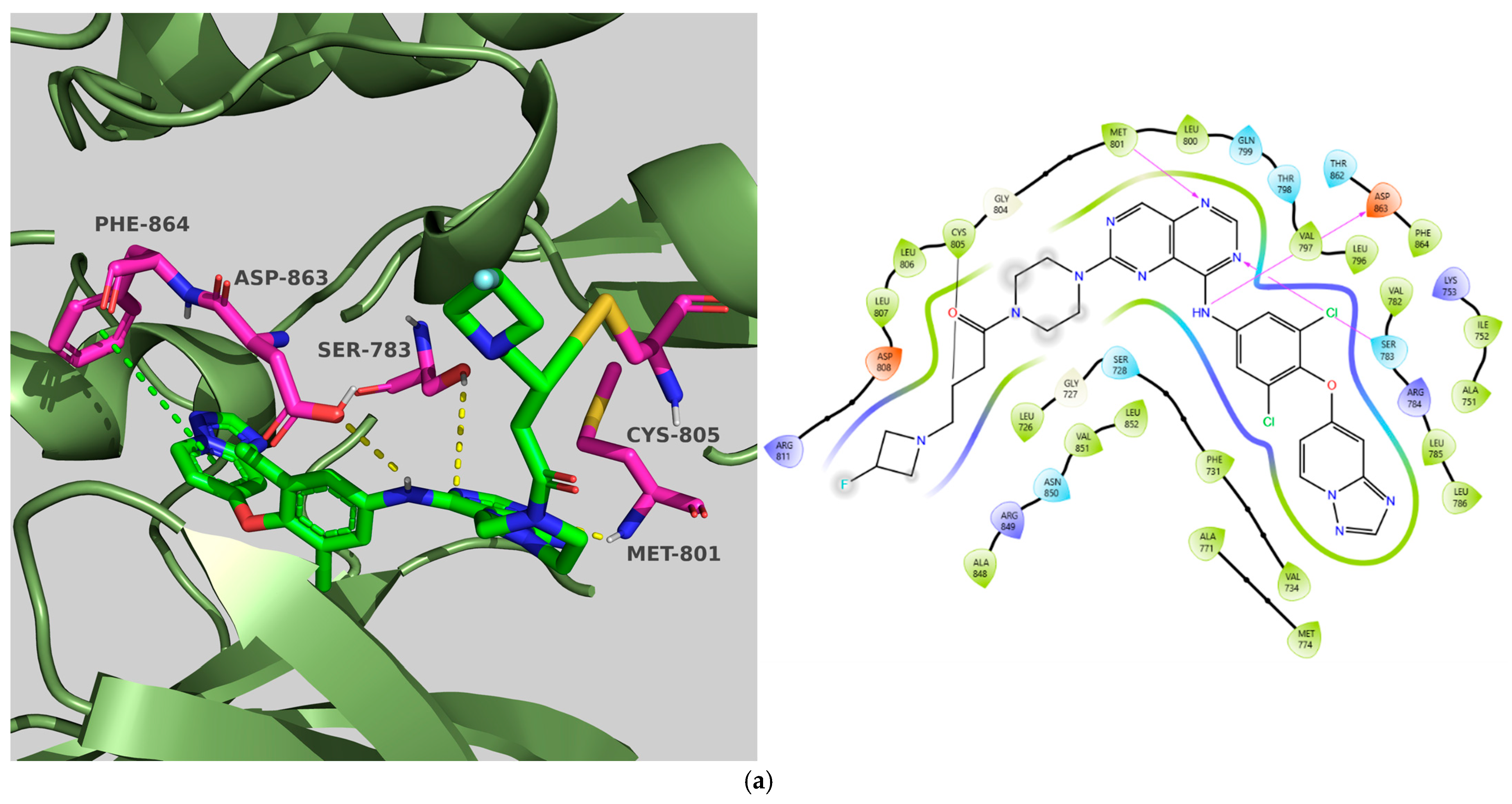
The docking studies of the co-crystallized ligand (covalent inhibitor) indicated that a prominent hydrogen bond was established in the hinge region with Met801, in addition to a hydrogen bond and a π-stacking interaction involving Asp863 and Phe864, which are both components of the DFG motif. Although significant hydrophobic interactions were lacking, leading to a lower CNN pose score (0.814), a covalent bond with Cys805 resulted in an increased CNN affinity value (7.734). In contrast, TKI.2b exhibited a notably higher CNN pose score (0.885) and a satisfactory CNN affinity score (7.410) due to a wealth of hydrophobic interactions (Leu726, Leu726, Phe731, Val734, Lys753, Ala771, Leu785, Leu796, Leu796, Leu852, Phe864) and two hydrogen bonds established in the hinge region (Met801). Ultimately, TKI.2a, which formed three hydrogen bonds (two with Met801 and one with Asp863) and a π-stacking interaction with Phe864, along with multiple hydrophobic interactions (Leu726, Leu726, Val734, Lys753, Leu796, Leu852, Thr862), achieved the highest CNN pose and CNN affinity values of 0.889 and 7.740, respectively. Finally, while Ser783 is regarded as a key amino acid that influences the selectivity between HER2 and EGFR activity, it is the only covalent inhibitor (co-crystallized) that demonstrated a hydrogen bond interaction (Figure 6).

2.2.7. Hepatocyte Growth Factor Receptor (c-MET)

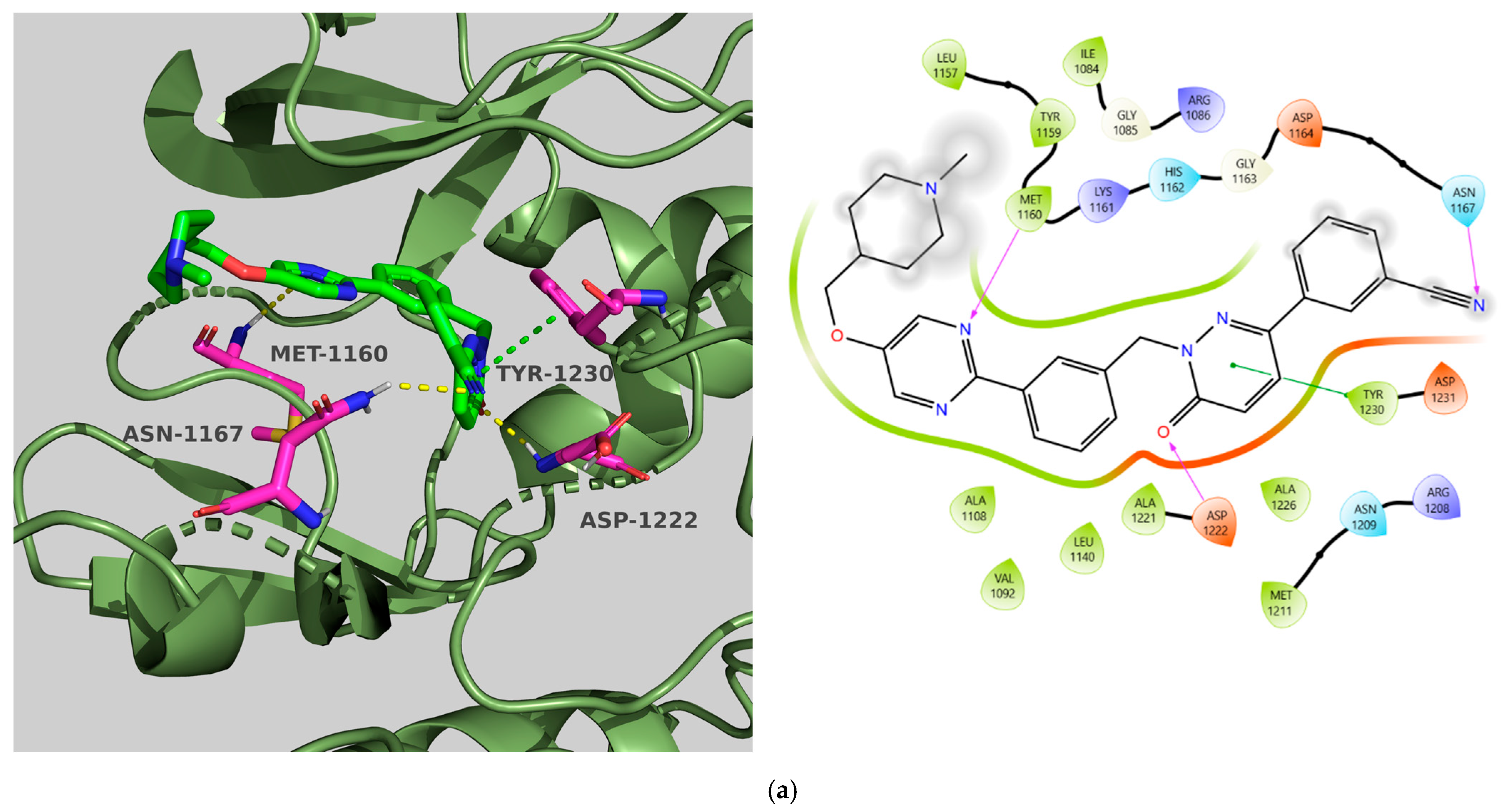
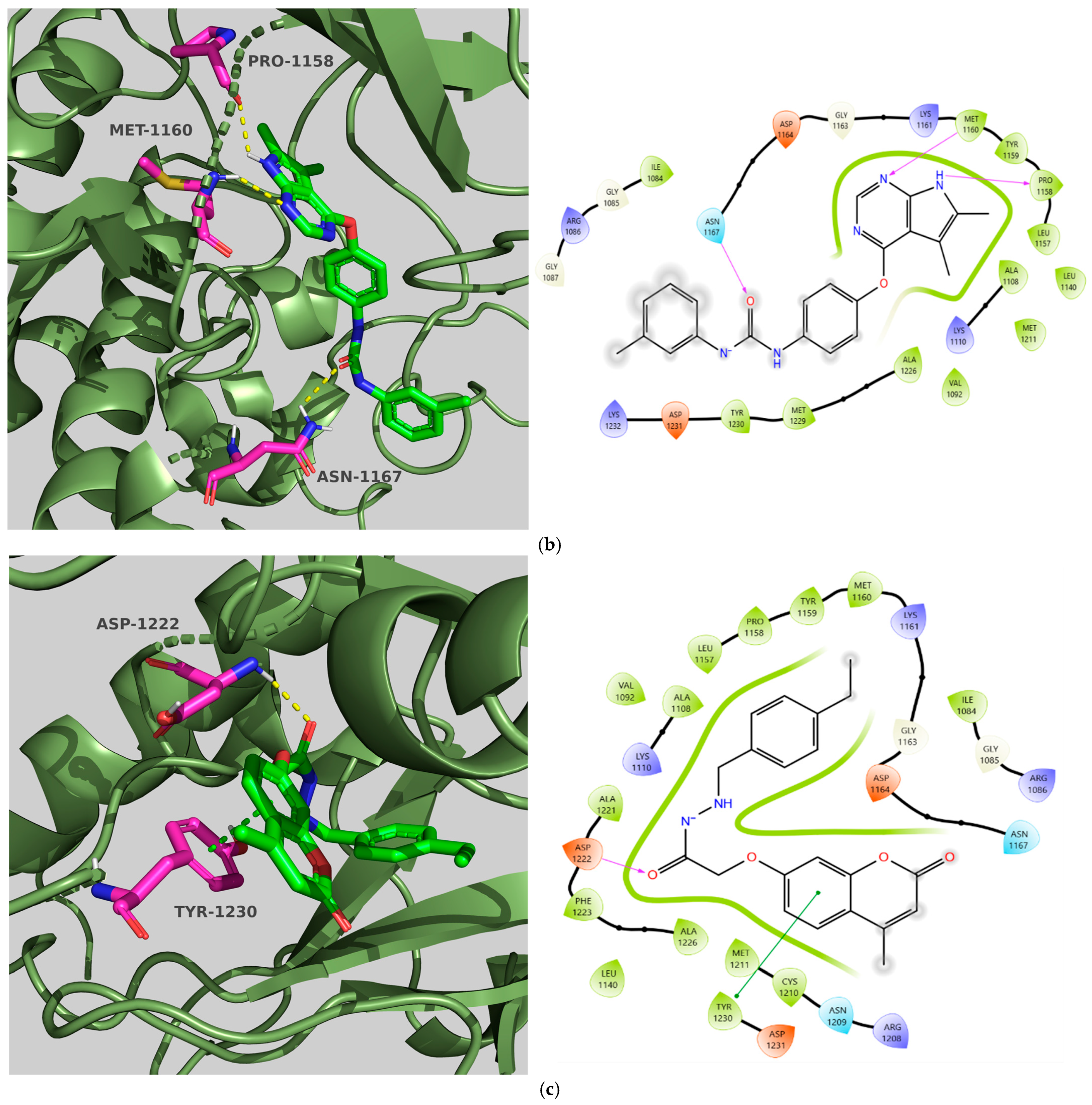
We employed the X-ray crystal structure of c-Met co-crystallized with Tepotinib (PDB ID: 4R1V), which reveals a DGF-in conformation, to investigate into binding mode [29]. Key characteristics of the complex include a fully resolved A-loop that extends into the ATP pocket, facilitating π-stacking interactions between potential inhibitors and Tyr1230. Nevertheless, while the interaction with the A-loop residue Tyr1230 is crucial for overall potency and selectivity, anchoring the molecule in the binding pocket through the hinge residue (Met1160) is equally significant [30]. Interactions with the DFG motif (Asp1222) and various hydrophobic residues (Ile1084, Val1092, Ala1108, Met1211, and Tyr1230) enhance the affinity values [31].
Tepotinib exhibited all essential interactions with the protein, including a hydrogen bond with the hinge region and π-stacking with Tyr1230, along with two hydrogen bonds to Asp1222 and Asn1167, which contributed to its high affinity scores (affinity: −10.00, CNN pose score: 0.863, and CNN affinity: 8.222). TKI.2b and TKI.19 were unable to meet the CNN affinity lower confidence limit (7.120 and 7.199 < 7.702), despite demonstrating key interactions with either Met1160 or Tyr1230 that allowed for proper orientation in the binding pocket, maintaining high CNN pose scores at 0.843 and 0.856, respectively. The compound TKI.2b formed two additional hydrogen bonds with Pro1158 and Asn1167, while TKI.19 established a hydrogen bond with Asp1222. All three compounds showed beneficial hydrophobic interactions with the residues (Val1092, Leu1157, Tyr1230), with TKI.19 demonstrating two additional interactions with Ile1084 and Ala1108, compensating for the fewer hydrogen bond interactions in comparison with the other two compounds (Figure 7).
In conclusion, a greater number of hydrophobic interactions enhance CNN pose scores, alongside binding with hinge and gatekeeper residues. Additionally, the affinity of CNN is primarily influenced by the total number of interactions as well as their quality. Therefore, interactions with particular hydrophobic residues that are vital for binding, an increased number of hydrogen bonds with hinge and gatekeeper residues, covalent interactions, and π-stacking appear to strengthen CNN affinity. All interactions and binding affinities are thoroughly outlined in Table S2. The segments of molecules that are engaged with proteins are identified in pharmacophore modeling studies (Section 2.3).
The docking studies results indicate that the compounds presented in Table 4 in addition to their initially identified biological target(s), might be inhibitors for additional kinases.

2.2.8. Validation Results

It is important that there is not any universally applicable validation technique for docking studies, as the selection of a validation approach is contingent on the specific context, research goals, and the available data. Often, a variety of validation methods are employed to achieve a thorough evaluation of the performance of docking techniques. In this study, we utilized standard methods for evaluating the accuracy of docking protocols, which included self-docking, cross-docking, and ligand enrichment.
The docking procedure was initially validated by re-docking the co-crystallized ligand in the vicinity of the enzyme’s binding site and, subsequently, calculating the root mean square deviation (RMSD) between the final conformation and the original coordinates. RMSD values below 2.0 Å indicate consistent results; values ranging from 2.0 Å to 3.0 Å suggest a deviation from the reference position while maintaining the intended orientation. RMSD values beyond 3.0 Å are deemed completely inaccurate [18]. In our molecular docking studies, we recorded reliable RMSD values of 1.144 Å for VEGFR-2, 1.171 Å for RET, 1.417 Å for PDGFRα, 1.430 Å for EGFR, 1.121 Å for HER2, and 0.900 Å for c-MET, all of which stayed below 1.5 Å.
To further assess the docking protocols, cross-docking procedures were implemented. In the cross-docking analyses, each known FDA-approved ligand of the specified biological targets was docked into the above-mentioned receptors. According to Table 5, a significant majority (20 out of 25) of the known drugs achieved measurements of below 3 Å, confirming the reliability of our docking protocols. The only exceptions were Axitinib, Pazopanib, and Sunitinib in their molecular studies on VEGFR-2, Lenvatinib on RET, and Avapritinib on PDGFRα, which exhibited measurements of greater than 3 Å.
Finally, to assess the docking program, we employed the enrichment factor (EF), which acts as an indicator of the docking program’s trustworthiness. The objective was to evaluate the ability of the receptor to differentiate between inactive substances and known active compounds by determining enrichment values. An enrichment factor (EF) exceeding 1 demonstrates that the approach is more efficient than random selection, with higher values indicating improved performance. For instance, an EF of 5 in the top 5% of the dataset implies that there are five times more active compounds present in that top 5% of the evaluated set than one would anticipate by random chance.
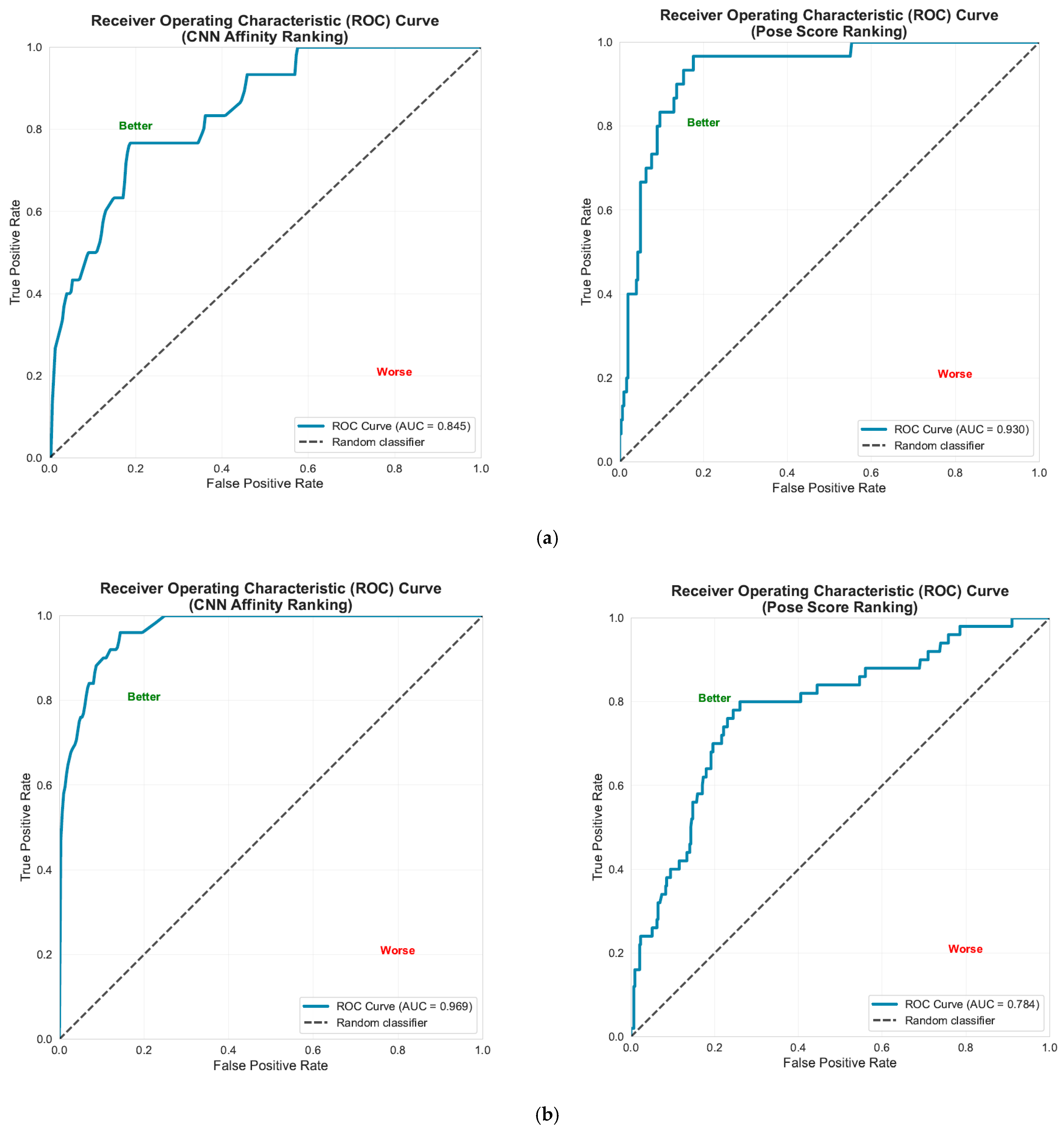
In this study, we used two proteins as receptors: HER2 (PDB ID: 3PP0) and VEGFR-2 (PDB ID: 2P2I). As far as HER2 is concerned, we analyzed a dataset consisting of 332 compounds, which included 30 active compounds and 302 inactive ones. As a result, when we ranked the compounds based on their CNN affinity values, the enrichment factor at 5% (EF(5%)) was calculated to be 6.917, successfully identifying 10 active compounds within the top 16 structures (representing 5%) (Supplementary Materials, Tables S3 and S4), which matched the CNN pose score enrichment factor at 5%. Furthermore, the receiver operating characteristic (ROC) curve along with the area under the curve (AUC) offered significant insights into the model’s ability to distinguish between active and inactive compounds across different threshold settings, with the AUC reflecting the model’s overall performance, as shown in Figure 8a. It is clear that the ranking based on the CNN pose score demonstrated a superior ROC-AUC compared to the CNN affinity ranking, showing values of 0.930 and 0.845, respectively. In the second scenario (VEGFR-2), we analyzed a total of 484 compounds, which included 50 active compounds. The CNN affinity enrichment factor was determined to be 9.277, significantly higher than that of the CNN pose score enrichment factor (EF(5%) = 4.840) (Supplementary Materials, Tables S5 and S6). Consequently, the CNN affinity exhibited a much better ROC-AUC (0.969) in comparison to the CNN pose score ranking (0.784), as depicted in Figure 8b.
Finally, after applying combined validation methods, we demonstrated that our molecular docking studies were able to yield reliable results.

2.3. Pharmacophore Modeling

As previously mentioned, 3D descriptors encompass a wide variety of properties, including electrostatic potential and the three-dimensional arrangement of ligand moieties, making them an essential component of pharmacophore modeling. Per IUPAC guidelines, a pharmacophore is defined as “an ensemble of steric and electronic features that is necessary to ensure the optimal supramolecular interactions with a specific biological target and to trigger (or block) its biological response” [2]. Consequently, pharmacophore methods are among the most valuable and significant tools developed, as they identify the molecular functional characteristics required for a molecule to bind to a specific receptor, subsequently guiding the virtual screening of extensive libraries of compounds to select the most suitable candidates [32].
Herein, we conducted pharmacophore modeling investigations for four biological targets (VEGFR-2, PDGFRα, EGFR, and HER2) to identify the key characteristics shared among active compounds that target each biological entity. The dataset of active compounds was compiled from substances sourced from the ChEMBL database following initial molecular docking, along with those identified from preliminary molecular docking results (Figure 1).

2.3.1. Vascular Endothelial Growth Factor Receptor 2 (VEGFR-2)

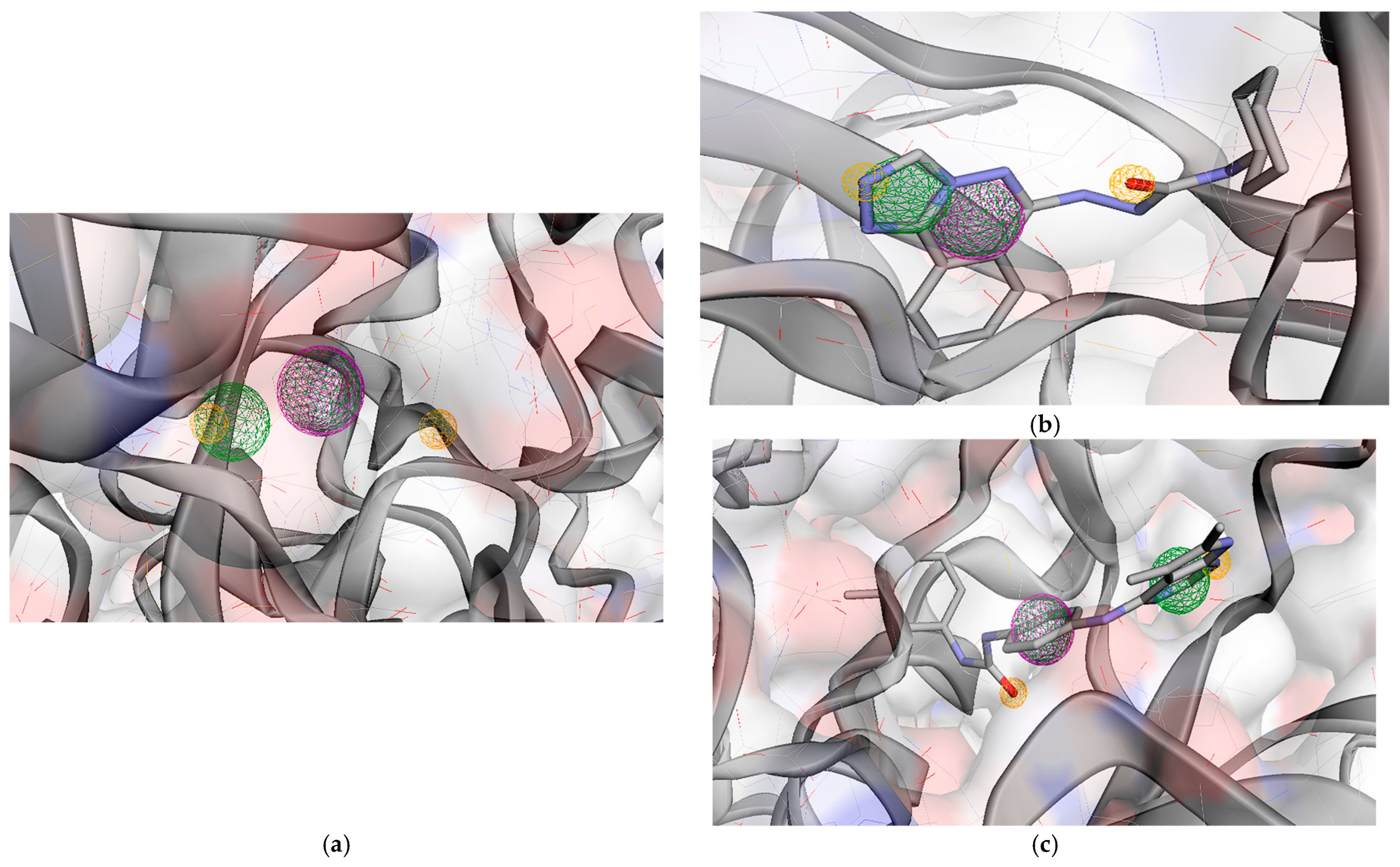
The dataset consisted of 28 compounds that were effectively bound to the receptor, as demonstrated by molecular docking studies. The model achieved a performance score of 0.6628, demonstrating its effectiveness in integrating all individual molecular features. Analyses identified a five-feature pharmacophore map consisting of two hydrogen bond acceptors (HAC), two hydrophobic regions (HPB), and one aromatic ring (ARO) (Figure 9a). Generally, considering the positioning of these pharmacophores in relation to their role in ligand–receptor interactions (Figure 9b,c), the aromatic–hydrophobic groups appear to interact with the HYD-II region, while the basic hydrophobic one interacts with HYD-I. Furthermore, the HAC pharmacophore (located near the basic hydrophobic one) forms an essential bond with the hinge amino acid, and the second HAC interacts with the DFG region (Section 2.2.2).

2.3.2. Platelet-Derived Growth Factor Receptor Alpha (PDGFRα)

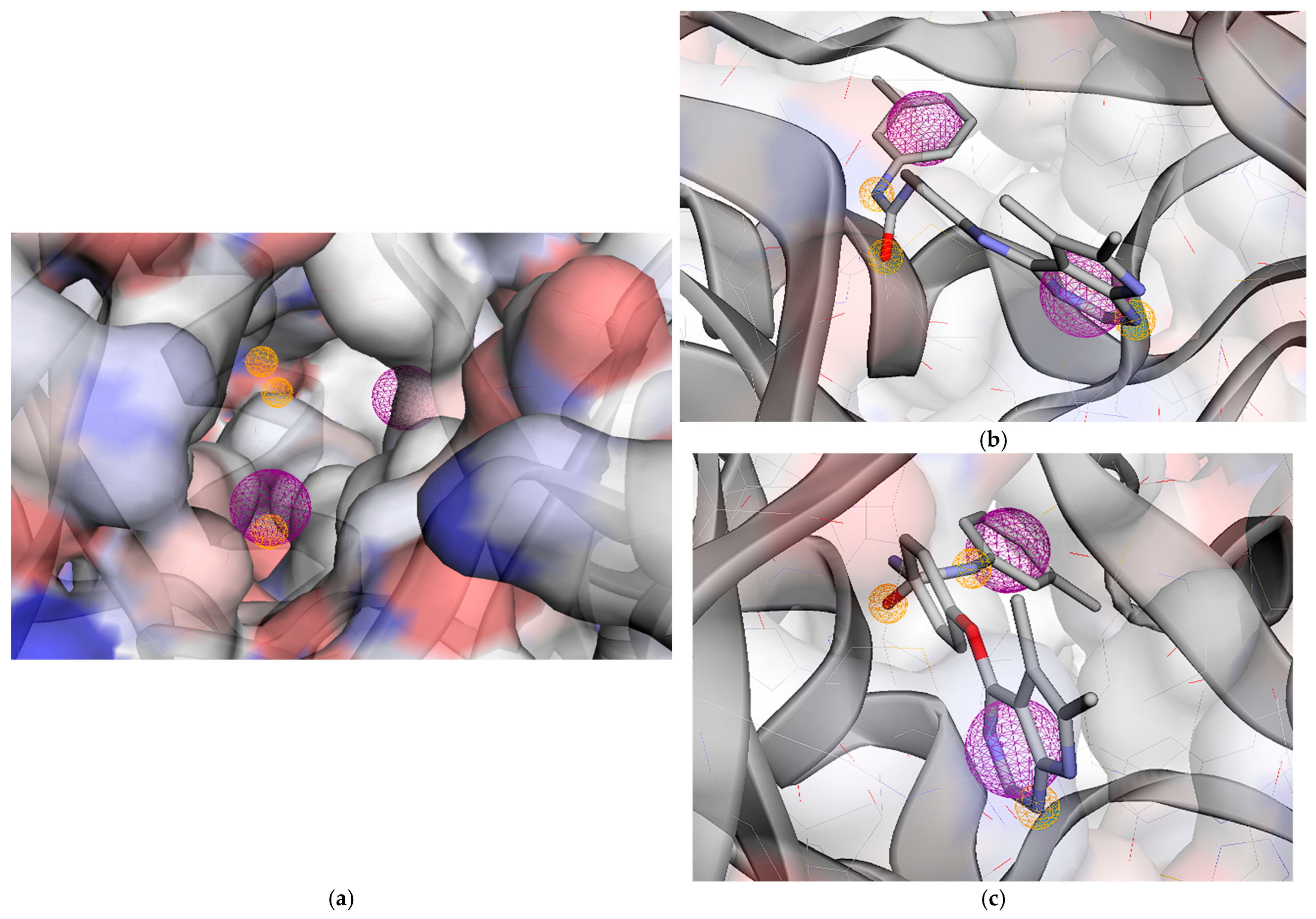
Molecular docking studies indicated that just five of the substances within the dataset were successfully bound to the receptor. Five pharmacophores were detected by the model’s performance, which was assessed at 0.8286, including two aromatic groups (ARO) and three hydrogen acceptors (HAC). The aromatic group and the attached HAC pharmacophore generally form essential bonds with the hinge and the gatekeeper residues. In contrast, the most active part of the model, composed of two HACs and an aromatic group, engages with the DFG region and the hydrophobic pocket between the catalytic loop and αC-helix (Figure 10) (Section 2.2.4).

2.3.3. Epidermal Growth Factor Receptor (EGFR)

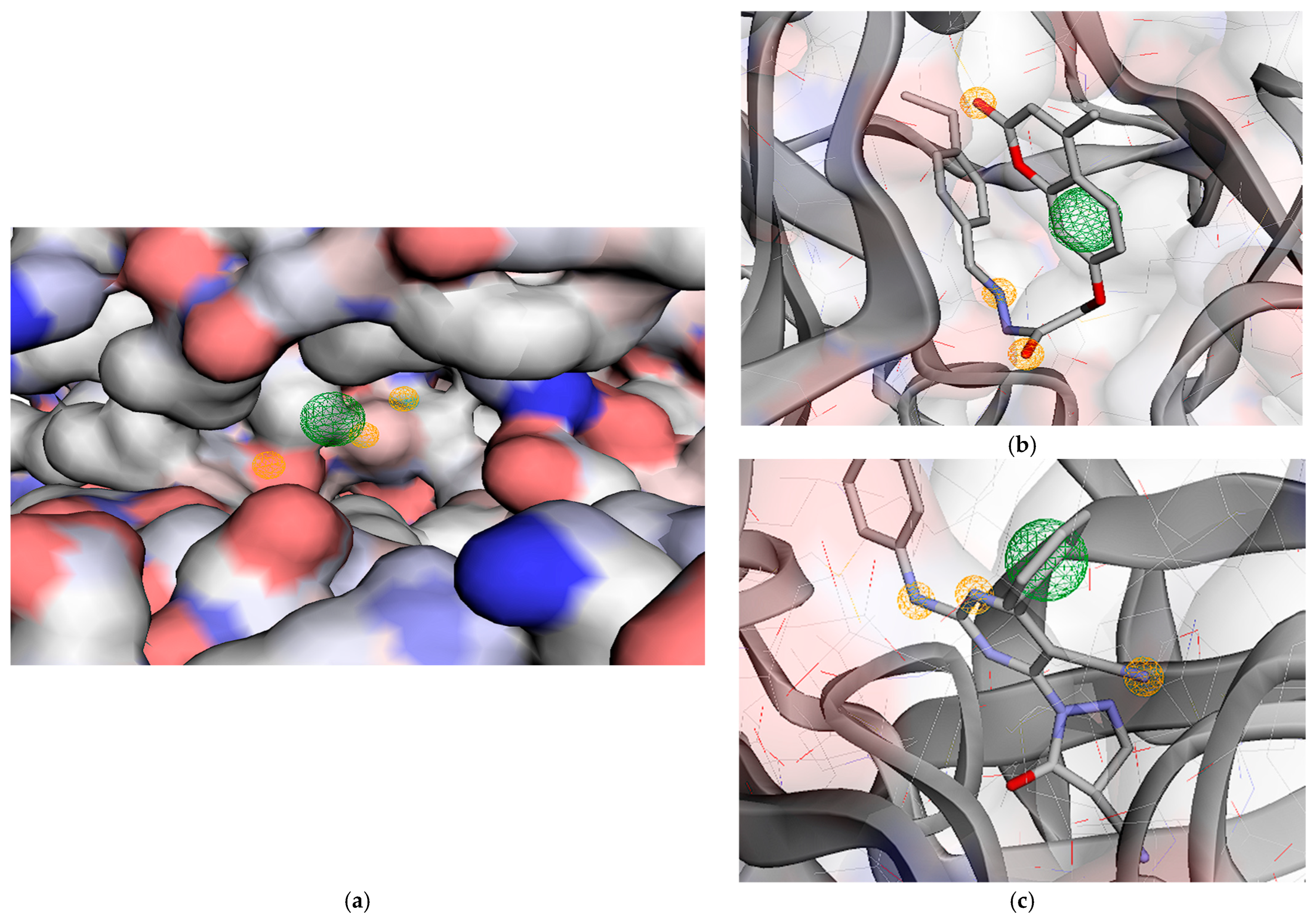
The dataset comprised 32 compounds that were successfully bound to the receptor, as evidenced by molecular docking studies. Three hydrogen acceptors (HAC) and one hydrophobic group (HPB) were among the four pharmacophores identified by the model’s performance, which was assessed at 0.7707. The two HACs located near one another are responsible for interactions with the hinge region, while the distinct HAC is likely engaged with the DFG motif region. Finally, the interaction with the hydrophobic region II, which is essential for the binding of substances to EGFR, is facilitated by the hydrophobic group (Figure 11) (Section 2.2.5).

2.3.4. Receptor Tyrosine–Protein Kinase erbB-2 (HER2)

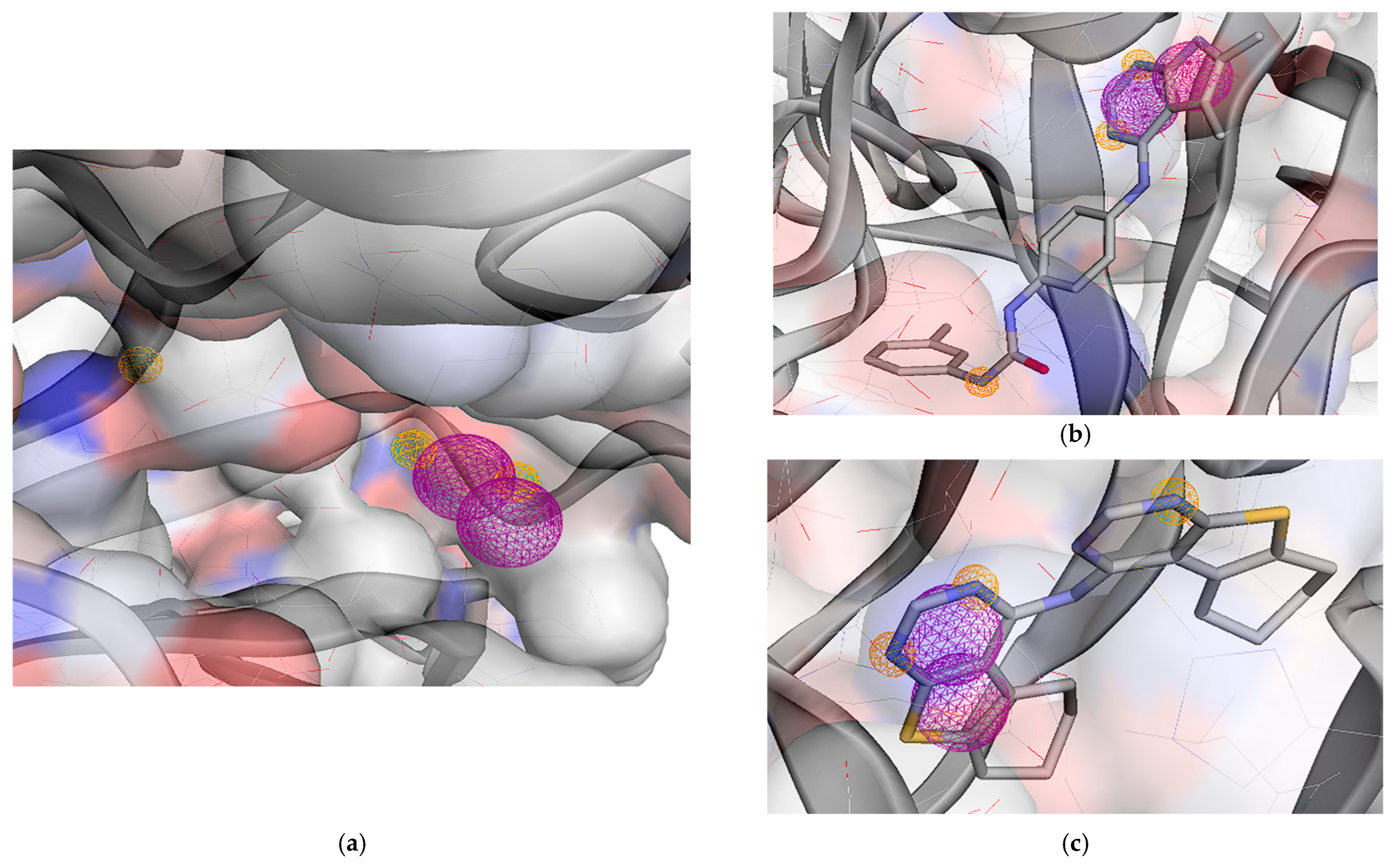
After conducting molecular docking studies, 12 compounds were analyzed to create a pharmacophore model with a reliability value of 0.8145, which includes three hydrogen bond acceptors (HAC) and two aromatic groups (ARO). The two adjacent HACs facilitate interaction with the hinge region, while the third HAC likely connects to the DFG area or to Ser783, a crucial amino acid that affects the selectivity between HER2 and EGFR activities (Figure 12) (Section 2.2.6).

2.4. Virtual Screening

In silico screening supports the high-throughput evaluation of a large number of potential candidate molecules. This computational method for prioritizing initial virtual candidates is commonly referred to as virtual screening (VS). Historically, VS campaigns have focused either on the ligands or the receptors [2]. Specifically, in the context of ligand-based VS, methods that utilize the three-dimensional structural details of small molecules, such as pharmacophore searches, often yield a more comprehensive understanding of biological mechanisms than 2D descriptors. The objective is to engage in scaffold hopping, which entails discovering new active compounds that may possess entirely distinct chemical structures (scaffolds) from the known active compounds while still retaining the same crucial binding characteristics.
In this research, the pharmacophore models identified earlier were employed in ligand-based virtual screening of the ChEMBL34 library, applying particular parameters outlined in the materials and methods (Section 3.4). The outcomes were then integrated into receptor-based virtual screening (molecular docking—validation) for further assessment, according to the criteria mentioned earlier (Section 2.2.1).

2.4.1. Vascular Endothelial Growth Factor Receptor 2 (VEGFR-2)

Fourteen out of twenty-six compounds are successfully identified as meeting the pharmacophore model’s requirements in molecular docking studies (Table 6).
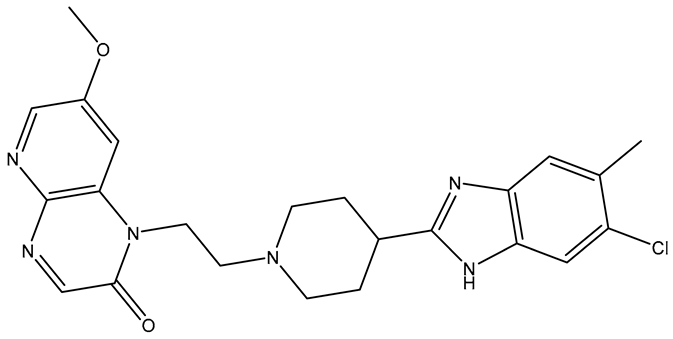
Eight out of fourteen compounds displayed at least one hydrogen bond with the newly identified residue Asn923, often described as part of the solvent-accessible region [33], contributing to the overall stability and specificity of the ligand–protein complex. The most promising compounds, ChEMBL4790167 {2}, ChEMBL4171108 {4}, ChEMBL3661578 {7}, ChEMBL3641531 {8}, and ChEMBL2170947 {10}, surpassed all soft thresholds for affinity values and established all basic hydrophilic (e.g., Cys919) and hydrophobic interactions (e.g., Val848, Val916).

2.4.2. Platelet-Derived Growth Factor Receptor Alpha (PDGFRα)

The application of our stringent criteria during the ChEMBL virtual screening resulted in the identification of a single compound as a potent PDGFRα inhibitor (Table 7).
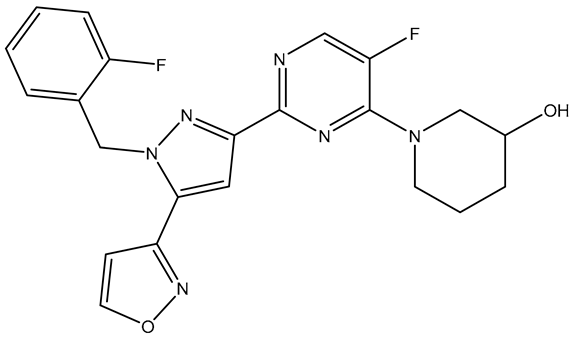
Compound ChEMBL5019511 established a fundamental hydrogen bond with the hinge region (Cys677) and exhibited several basic hydrophobic interactions (Val607, Val658). These interactions contributed to a favorable CNN affinity; however, the compound fell short of the CNN pose score soft threshold.

2.4.3. Epidermal Growth Factor Receptor (EGFR)

ChEMBL’s virtual screening which was conducted under specific parameters identified eighteen compounds. Nonetheless, only nine were able to meet the molecular docking criteria (Table 8).
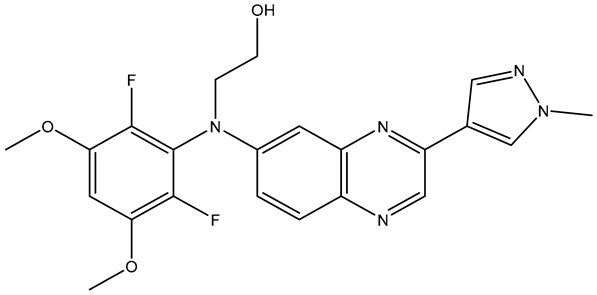
It should be noted that the new affinity threshold was established at −7.95, in accordance with Section 2.2.5, and all compounds exceeded this affinity limit. However, only two compounds, ChEMBL4865595 {2} and ChEMBL2216869 {6}, were able to satisfy all three soft thresholds at the same time. Notably, ChEMBL2216869 did not have any interactions with the hinge region but demonstrated the most promising outcomes. One possible explanation for this could be the formation of a covalent bond with Cys797, which is situated at the edge of the active site cleft and recognized as the most solvent-exposed cysteine in the EGFR kinase domain.

2.4.4. Receptor Tyrosine–Protein Kinase erbB-2 (HER2)

Pharmacophore-based virtual screening initially yielded eight candidate compounds. However, the subsequent molecular docking analyses served as a critical filter, approving only a single compound (Table 9).
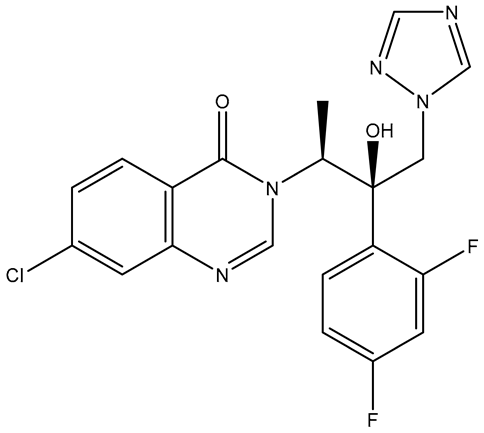
Compound ChEMBL3355044 exhibited known hydrophilic and hydrophobic interactions with key areas (hinge, DGF motif), resulting in favorable affinity values.

3. Materials and Methods

3.1. Molecular Similarity

The Tanimoto coefficient is an association metric tailored for binary data, where 0 and 1 signify the absence and presence of molecular structures, respectively. It is calculated as the number of common features shared by both structures (c) divided by the total number of features present in either structure (a and b) minus the common features (c) [16].
Tani = c a + b c  
To quantify the similarity of molecular representations using the Tanimoto coefficient, we obtained atom pair (AP) and Molecular ACCess Systems keys (MACCS) fingerprints through the online platforms, ChemDes [34,35] and ChemMine [36,37]. A molecular fingerprint provides a way to characterize a molecular structure by converting it into a bit string. As molecular fingerprints encode a molecule’s structure, they serve as an effective method for describing structural similarities among different molecules. Typically, there are two approaches to describe a molecular structure using fingerprints: substructure key-based fingerprints and topological path-based fingerprints [38]. Substructure key-based fingerprints encode the presence of predefined structural features in a molecule, such as MACCS fingerprint. In contrast, topological path-based fingerprints, like the Atom Pairs fingerprint (AP), represent atom connectivity patterns.

3.2. Molecular Docking

In molecular docking research, X-ray crystal structures were obtained from the Protein Data Bank via the Research Collaboration for Structural Bioinformatics (RCSB) website [39]. Protein preparation was carried out using OpenMM v8.1.2 [40,41], where energy minimizations were performed utilizing either the AMBER14 [42] or Charm36 [43] force fields. Ligand 3D coordinates were generated and minimized using GypSUm-DL v1.2.1 [44,45], while docking was performed with GNINA v1.0 [46,47], a molecular docking program that integrates convolutional neural networks (CNNs) for scoring and optimizing ligands.
The docking studies were conducted for enhanced accuracy, by enabling flexibility solely in the side chains within 3.5 Å of the co-crystallized ligand. Furthermore, we utilized the built-in CNN_crossdock_default2018_dense_3 model, which employs an architecture of 3D convolutional and pooling layers followed by two distinct fully connected output layers for pose scoring and affinity prediction. This model was trained on the PDBbind v2016 and CrossDocked2020 datasets using custom fork of the Caffe deep learning framework [48]. Under the CNN_scoring rescoring protocol, the CNN model was applied to rank ligand conformations only during the final sorting stage, following initial refinement via empirical scoring function [46]. The min_RMSD_filter was set to 1 to ensure that the resulting conformations vary more than the specified threshold. Input files for docking were visualized using PyMOL v3.0.4 [49] and Schrödinger Maestro v14.5.131 [50].
To validate the protocols associated with molecular docking studies (which include re-docking and cross-docking), we employed Python v3.2.2 [51] to identify matching atoms between docked and co-crystallized ligands and calculate the RMSD values. In terms of verifying the docking software, the main objective was to utilize active structures and decoys obtained from publicly available repositories [52,53], and compute the enrichment factor using the formula below [2]:
EF x % = actives x % dataset x % actives total dataset total
where activesx% refers to the active compounds present in the selected dataset (datasetx%), while datasettotal encompasses all compounds within that dataset, and activestotal indicates the number of active molecules included among the decoys. We defined x% as 5%, which means we aimed to determine how many active compounds exist within the top 5% of our ranked dataset. Additionally, ROC-AUCs were created using Python.

3.3. Pharmacophore Modeling

We employed the ChEMBL database to identify all small molecules classified as approved drugs or clinical candidates associated with specific biological targets. After converting these compounds into a 3D format using GypSUm-DL v1.2.1, we examined their interactions with the receptors through molecular docking studies (initial), as described in Section 3.2. Only those that met our previously mentioned criteria (Section 2.2.1) were merged with the notable compounds from the preliminary docking findings (Figure 1). Datasets for each biological target were compiled, and pharmacophore modeling was performed using LigandScout v4.5 [54,55] to pinpoint the essential groups responsible for inhibiting biological responses.

3.4. Virtual Screening

For the pharmacophore-based virtual screening of ChEMBL34, we employed Pharmit webserver [56,57], which offers an online and interactive platform for screening large compound databases via pharmacophores and molecular shapes. Pharmacophore queries were initiated using pharmacophore files formatted for LigandScout v4.5, illustrating features such as hydrogen bond acceptors and donors, negative and positive charges, aromatic structures, and hydrophobic characteristics. A pharmacophore/shape search was conducted where the chosen database was first examined for compounds that fit the defined pharmacophore. Subsequently, shape constraints (tolerance 1.5) were applied to the pharmacophore-aligned poses to remove compounds that, while matching the pharmacophore, would cause significant steric clashes with the receptor. Furthermore, compounds were filtered by applying specific ranges derived from FDA-approved drugs identified in our earlier study [6]. These parameters were set as follows: MW [416.81, 461.47], TPSA [83.48, 95.83], LogPo/w [2.62, 3.49], nRB [5, 7], nHA [4, 10], nHD [0, 5], and nRings [4, 5]. Finally, results were aligned to the pharmacophore and ranked based on the root mean squared deviation (RMSD) between the features of the query and those of the hit compounds. Ultimately, an energy minimization was performed on the results to refine both the pose and conformation of the identified hits concerning the provided receptor, using GNINA v1.0, parameterized as described in the molecular docking studies (validation).

4. Conclusions

Compounds TKI.2a, TKI.2b, TKI.6, TKI.16, TKI.19, and TKI.21b, which were prominent in our earlier research [6], indicated novel biological targets through studies on molecular similarities. To confirm these findings, preliminary molecular docking studies were carried out using soft (affinity: −9.00, CNN pose score: 0.843, CNN affinity: 7.702) and hard (affinity: −6.82, CNN pose score: 0.526, CNN affinity: 7.010) thresholds determined through statistical analyses of molecular docking outcomes related to FDA-approved drugs and their biological targets. Additionally, the interactions between the chemical groups of the compounds and the receptors were also considered. Consequently, compounds TKI.2a, TKI.2b, TKI.6, and TKI.19 appear to exhibit multi-target tyrosine kinase inhibitory activity against VEGFR-2, RET, PDGFRα, EGFR, and HER2 receptors.
Upon integrating the initial molecular docking results of ChEMBL’s compounds targeting VEGFR-2, PDGFRα, EGFR, and HER2 proteins, we proceeded with pharmacophore modeling studies. From all the pharmacophore models, it can be concluded that the identified hydrogen bond acceptors (HACs) and their unique spatial configurations are crucial for interaction with the hinge and DFG areas of the receptors. Moreover, hydrophobic and aromatic pharmacophoric groups are essential for engaging with significant hydrophobic residues and selectivity pockets. These characteristics seem vital for obstructing the receptor and, consequently, inhibiting the biological response.
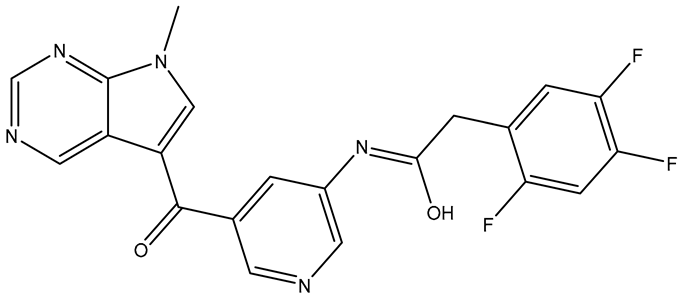
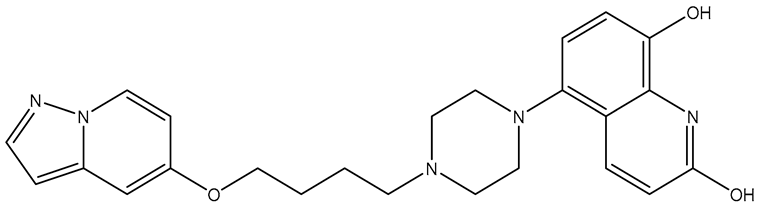
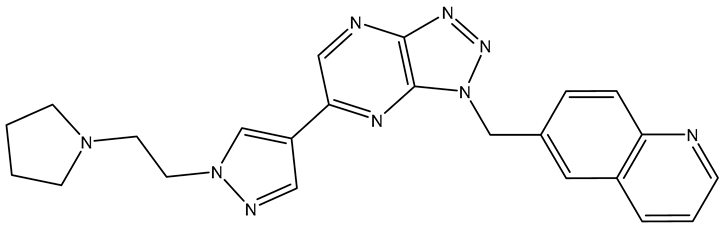
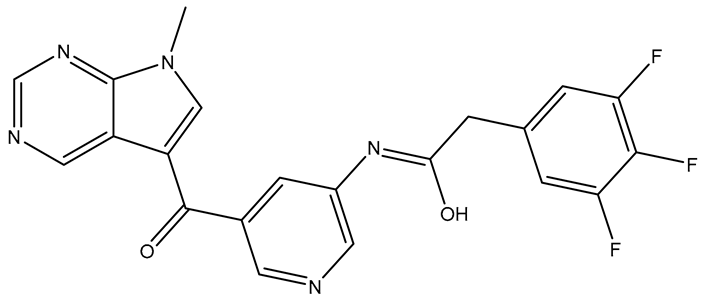
Finally, pharmacophore models were applied for ligand-based virtual screening using defined parameters to discover candidate compounds that exhibit drug-likeness with FDA-approved tyrosine kinase inhibitors. The structure-based virtual screening (molecular docking studies) identified lead compounds for each biological target based on their overall affinity values and established interactions. Compound ChEMBL2170947, originally designed as a c-Met inhibitor [58], emerged as the most promising candidate for VEGFR-2 due to its unique dual interactions with the hinge region; its CNN-based parameters were only marginally inferior to those of Tivozanib. ChEMBL5019511, initially screened for antimalarial therapy [59], was identified as a lead for PDGFRα; however, it exhibited a significantly worse CNN pose score than Imatinib. Furthermore, ChEMBL2216869—a potent PI3Kδ (Phosphoinositide 3-kinase delta) inhibitor developed for autoimmune diseases [60]—was selected for EGFR, as its binding parameters exceeded the average values of the FDA-approved inhibitors for this protein. Finally, ChEMBL3355044, originally synthesized as a PERK (PKR-like endoplasmic reticulum kinase) inhibitor [61], was identified for HER2 after demonstrating a superior CNN pose score compared to the covalent co-crystallized inhibitor (Table 2 and Table S2).
In future studies, we aim to experimentally validate the potential of compounds TKI.2a, TKI.2b, TKI.6, TKI.19, ChEMBL2170947, ChEMBL5019511, ChEMBL2216869, and ChEMBL3355044 to inhibit the receptors under question. Furthermore, in terms of repositioning, we will apply pharmacophore modeling studies to identify existing synthesized compounds that may inhibit tyrosine kinase receptors, even if they were not originally designed for that purpose. Repurposing methodology is efficient in terms of time and cost, promoting sustainability.

Supplementary Materials

The following supporting information can be downloaded at https://www.mdpi.com/article/10.3390/molecules31101689/s1, Table S1: Tanimoto’s coefficients of compounds TKI.2a, TKI.2b, TKI.16 and TKI.21b in comparison to various known FDA-approved drugs.; Table S2: Hydrogen bond and hydrophobic interactions with proteins, binding affinity values, CNN pose scores and CNN affinities for each compound per biological target. Green indicates values exceeding the statistical threshold, while red signifies those falling below the thresholds.; Table S3: Compounds in the top 5% ranked according to their CNN affinity for HER2.; Table S4: Compounds in the top 5% ranked according to their CNN pose score for HER2.; Table S5: Compounds in the top 5% ranked according to their CNN affinity for VEGFR-2.; Table S6: Compounds in the top 5% ranked according to their CNN pose score for VEGFR-2.

Author Contributions

Conceptualization, E.M., E.P. and D.H.-L.; methodology, E.M., E.P. and D.H.-L.; software, E.M. and E.P.; validation, E.M.; formal analysis, E.M.; investigation, E.M. and D.H.-L.; resources, E.M.; data curation, E.M.; writing—original draft preparation, E.M.; writing—review and editing, E.P. and D.H.-L.; visualization, E.M.; supervision, D.H.-L.; project administration, D.H.-L. All authors have read and agreed to the published version of the manuscript.

Funding

This research received no external funding.

Informed Consent Statement

Not applicable.

Data Availability Statement

The data are available by the authors and through literature.

Acknowledgments

The authors are grateful to Alexandros Patsilinakos for his helpful suggestions.

Conflicts of Interest

The authors declare no conflicts of interest.

References

  1. Hansch, C. Quantitative Approach to Biochemical Structure-Activity Relationships. Acc. Chem. Res. 1969, 2, 232–239. [Google Scholar] [CrossRef]
  2. Maltarollo, V.G. (Ed.) Computer-Aided and Machine Learning-Driven Drug Design: From Theory to Applications; Computer-Aided Drug Discovery and Design; Springer Nature: Cham, Switzerland, 2024; Volume 3. [Google Scholar]
  3. Martin, Y.C.; Kofron, J.L.; Traphagen, L.M. Do Structurally Similar Molecules Have Similar Biological Activity? J. Med. Chem. 2002, 45, 4350–4358. [Google Scholar] [CrossRef]
  4. Kornev, A.P.; Taylor, S.S. Defining the Conserved Internal Architecture of a Protein Kinase. Biochim. Biophys. Acta (BBA)-Proteins Proteom. 2010, 1804, 440–444. [Google Scholar] [CrossRef]
  5. Wheeler, D.L.; Yarden, Y. (Eds.) Receptor Tyrosine Kinases: Structure, Functions and Role in Human Disease; Springer: New York, NY, USA, 2015. [Google Scholar]
  6. Mavridis, E.; Hadjipavlou-Litina, D. Using a Novel Consensus-Based Chemoinformatics Approach to Predict ADMET Properties and Druglikeness of Tyrosine Kinase Inhibitors. Int. J. Mol. Sci. 2025, 26, 10207. [Google Scholar] [CrossRef]
  7. Adel, M.; Serya, R.A.T.; Lasheen, D.S.; Abouzid, K.A.M. Identification of New Pyrrolo[2,3-d]Pyrimidines as Potent VEGFR-2 Tyrosine Kinase Inhibitors: Design, Synthesis, Biological Evaluation and Molecular Modeling. Bioorganic Chem. 2018, 81, 612–629. [Google Scholar] [CrossRef]
  8. Elmetwally, S.A.; Saied, K.F.; Eissa, I.H.; Elkaeed, E.B. Design, Synthesis and Anticancer Evaluation of Thieno[2,3-d]Pyrimidine Derivatives as Dual EGFR/HER2 Inhibitors and Apoptosis Inducers. Bioorganic Chem. 2019, 88, 102944. [Google Scholar] [CrossRef] [PubMed]
  9. El-Helby, A.A.; Ayyad, R.R.A.; Sakr, H.; El-Adl, K.; Ali, M.M.; Khedr, F. Design, Synthesis, Molecular Docking, and Anticancer Activity of Phthalazine Derivatives as VEGFR-2 Inhibitors. Arch. Pharm. 2017, 350, 1700240. [Google Scholar] [CrossRef]
  10. Ahmed, E.Y.; Abdel Latif, N.A.; El-Mansy, M.F.; Elserwy, W.S.; Abdelhafez, O.M. VEGFR-2 Inhibiting Effect and Molecular Modeling of Newly Synthesized Coumarin Derivatives as Anti-Breast Cancer Agents. Bioorganic Med. Chem. 2020, 28, 115328. [Google Scholar] [CrossRef]
  11. AboulWafa, O.M.; Daabees, H.M.G.; Badawi, W.A. 2-Anilinopyrimidine Derivatives: Design, Synthesis, in Vitro Anti-Proliferative Activity, EGFR and ARO Inhibitory Activity, Cell Cycle Analysis and Molecular Docking Study. Bioorganic Chem. 2020, 99, 103798. [Google Scholar] [CrossRef]
  12. Davies, M.; Nowotka, M.; Papadatos, G.; Dedman, N.; Gaulton, A.; Atkinson, F.; Bellis, L.; Overington, J.P. ChEMBL Web Services: Streamlining Access to Drug Discovery Data and Utilities. Nucleic Acids Res. 2015, 43, W612–W620. [Google Scholar] [CrossRef] [PubMed]
  13. Zdrazil, B.; Felix, E.; Hunter, F.; Manners, E.J.; Blackshaw, J.; Corbett, S.; de Veij, M.; Ioannidis, H.; Lopez, D.M.; Mosquera, J.F.; et al. The ChEMBL Database in 2023: A Drug Discovery Platform Spanning Multiple Bioactivity Data Types and Time Periods. Nucleic Acids Res. 2024, 52, D1180–D1192. [Google Scholar] [CrossRef] [PubMed]
  14. ChEMBL Database, Version 34; European Molecular Biology Laboratory-European Bioinformatics Institute (EMBL-EBI): Hinxton, UK, 2024. Available online: https://www.ebi.ac.uk/chembl/ (accessed on 13 December 2025).
  15. RDKit Blog Thresholds for “Random” in Fingerprints the RDKit Supports. Available online: https://greglandrum.github.io/rdkit-blog/posts/2021-05-18-fingerprint-thresholds1.html (accessed on 26 September 2025).
  16. Bero, S.A.; Muda, A.K.; Choo, Y.H.; Muda, N.A.; Pratama, S.F. Similarity Measure for Molecular Structure: A Brief Review. J. Phys. Conf. Ser. 2017, 892, 012015. [Google Scholar] [CrossRef]
  17. Roskoski, R. Properties of FDA-Approved Small Molecule Protein Kinase Inhibitors: A 2025 Update. Pharmacol. Res. 2025, 216, 107723. [Google Scholar] [CrossRef] [PubMed]
  18. Ramírez, D.; Caballero, J. Is It Reliable to Take the Molecular Docking Top Scoring Position as the Best Solution without Considering Available Structural Data? Molecules 2018, 23, 1038. [Google Scholar] [CrossRef] [PubMed]
  19. McTigue, M.; Murray, B.W.; Chen, J.H.; Deng, Y.-L.; Solowiej, J.; Kania, R.S. Molecular Conformations, Interactions, and Properties Associated with Drug Efficiency and Clinical Performance among VEGFR TK Inhibitors. Proc. Natl. Acad. Sci. USA 2012, 109, 18281–18289. [Google Scholar] [CrossRef]
  20. Subbiah, V.; Shen, T.; Terzyan, S.S.; Liu, X.; Hu, X.; Patel, K.P.; Hu, M.; Cabanillas, M.; Behrang, A.; Meric-Bernstam, F.; et al. Structural Basis of Acquired Resistance to Selpercatinib and Pralsetinib Mediated by Non-Gatekeeper RET Mutations. Ann. Oncol. 2021, 32, 261–268. [Google Scholar] [CrossRef]
  21. Newton, R.; Bowler, K.A.; Burns, E.M.; Chapman, P.J.; Fairweather, E.E.; Fritzl, S.J.R.; Goldberg, K.M.; Hamilton, N.M.; Holt, S.V.; Hopkins, G.V.; et al. The Discovery of 2-Substituted Phenol Quinazolines as Potent RET Kinase Inhibitors with Improved KDR Selectivity. Eur. J. Med. Chem. 2016, 112, 20–32. [Google Scholar] [CrossRef]
  22. Keretsu, S.; Ghosh, S.; Cho, S.J. Molecular Modeling Study of C-KIT/PDGFRα Dual Inhibitors for the Treatment of Gastrointestinal Stromal Tumors. Int. J. Mol. Sci. 2020, 21, 8232. [Google Scholar] [CrossRef]
  23. Huang, W.-S.; Li, F.; Gong, Y.; Zhang, Y.; Youngsaye, W.; Xu, Y.; Zhu, X.; Greenfield, M.T.; Kohlmann, A.; Taslimi, P.M.; et al. Discovery of Mobocertinib, a Potent, Oral Inhibitor of EGFR Exon 20 Insertion Mutations in Non–Small Cell Lung Cancer. Bioorganic Med. Chem. Lett. 2023, 80, 129084. [Google Scholar] [CrossRef]
  24. Meenu; Sheikh, K.A.; Shaquiquzzaman, M.; Gupta, S.; Barkha; Tasneem, S.; Akhter, M.; Anwer, T.; Kaleem, M.; Singh, S.; et al. Pharmacophore-Guided Review of EGFR-Targeted Anticancer Drugs with Gefitinib as a Reference. Eur. J. Med. Chem. 2026, 303, 118411. [Google Scholar] [CrossRef] [PubMed]
  25. Abd El-Lateef, H.M.; Ezelarab, H.A.A.; Ali, A.M.; Alsaggaf, A.T.; Mahdi, W.A.; Alshehri, S.; El Hamd, M.A.; Aboelez, M.O. Design and Evaluation of Sulfadiazine Derivatives as Potent Dual Inhibitors of EGFRWT and EGFRT790M: Integrating Biological, Molecular Docking, and ADMET Analysis. RSC Adv. 2024, 14, 28608–28625. [Google Scholar] [CrossRef] [PubMed]
  26. Khan, M.N.; Farooq, U.; Khushal, A.; Wani, T.A.; Zargar, S.; Khan, S. Unraveling Potential EGFR Kinase Inhibitors: Computational Screening, Molecular Dynamics Insights, and MMPBSA Analysis for Targeted Cancer Therapy Development. PLoS ONE 2025, 20, e0321500. [Google Scholar] [CrossRef]
  27. Wilding, B.; Scharn, D.; Böse, D.; Baum, A.; Santoro, V.; Chetta, P.; Schnitzer, R.; Botesteanu, D.A.; Reiser, C.; Kornigg, S.; et al. Discovery of Potent and Selective HER2 Inhibitors with Efficacy against HER2 Exon 20 Insertion-Driven Tumors, Which Preserve Wild-Type EGFR Signaling. Nat. Cancer 2022, 3, 821–836. [Google Scholar] [CrossRef] [PubMed]
  28. Aertgeerts, K.; Skene, R.; Yano, J.; Sang, B.-C.; Zou, H.; Snell, G.; Jennings, A.; Iwamoto, K.; Habuka, N.; Hirokawa, A.; et al. Structural Analysis of the Mechanism of Inhibition and Allosteric Activation of the Kinase Domain of HER2 Protein. J. Biol. Chem. 2011, 286, 18756–18765. [Google Scholar] [CrossRef]
  29. Dorsch, D.; Schadt, O.; Stieber, F.; Meyring, M.; Grädler, U.; Bladt, F.; Friese-Hamim, M.; Knühl, C.; Pehl, U.; Blaukat, A. Identification and Optimization of Pyridazinones as Potent and Selective C-Met Kinase Inhibitors. Bioorganic Med. Chem. Lett. 2015, 25, 1597–1602. [Google Scholar] [CrossRef]
  30. Grädler, U.; Schwarz, D.; Wegener, A.; Eichhorn, T.; Bandeiras, T.M.; Freitas, M.C.; Lammens, A.; Ganichkin, O.; Augustin, M.; Minguzzi, S.; et al. Biophysical and Structural Characterization of the Impacts of MET Phosphorylation on Tepotinib Binding. J. Biol. Chem. 2023, 299, 105328. [Google Scholar] [CrossRef]
  31. Mohamady, S.; Galal, M.; Eldehna, W.M.; Gutierrez, D.C.; Ibrahim, H.S.; Elmazar, M.M.; Ali, H.I. Dual Targeting of VEGFR2 and C-Met Kinases via the Design and Synthesis of Substituted 3-(Triazolo-Thiadiazin-3-Yl)Indolin-2-One Derivatives as Angiogenesis Inhibitors. ACS Omega 2020, 5, 18872–18886. [Google Scholar] [CrossRef]
  32. Giordano, D.; Biancaniello, C.; Argenio, M.A.; Facchiano, A. Drug Design by Pharmacophore and Virtual Screening Approach. Pharmaceuticals 2022, 15, 646. [Google Scholar] [CrossRef]
  33. Elrazaz, E.Z.; Serya, R.A.T.; Ismail, N.S.M.; Albohy, A.; Abou El Ella, D.A.; Abouzid, K.A.M. Discovery of Potent Thieno[2,3-d]Pyrimidine VEGFR-2 Inhibitors: Design, Synthesis and Enzyme Inhibitory Evaluation Supported by Molecular Dynamics Simulations. Bioorganic Chem. 2021, 113, 105019. [Google Scholar] [CrossRef]
  34. Dong, J.; Cao, D.-S.; Miao, H.-Y.; Liu, S.; Deng, B.-C.; Yun, Y.-H.; Wang, N.-N.; Lu, A.-P.; Zeng, W.-B.; Chen, A.F. ChemDes: An Integrated Web-Based Platform for Molecular Descriptor and Fingerprint Computation. J. Cheminform. 2015, 7, 60. [Google Scholar] [CrossRef] [PubMed]
  35. FPS-Similarity-ChemDes-ChemDes-Molecular Descriptors Computing Platform. Available online: http://www.scbdd.com/fps-similarity/index/ (accessed on 26 September 2025).
  36. Backman, T.W.H.; Cao, Y.; Girke, T. ChemMine Tools: An Online Service for Analyzing and Clustering Small Molecules. Nucleic Acids Res. 2011, 39, W486–W491. [Google Scholar] [CrossRef]
  37. ChemMine Tools. Available online: https://chemminetools.ucr.edu/ (accessed on 26 September 2025).
  38. Seo, M.; Shin, H.K.; Myung, Y.; Hwang, S.; No, K.T. Development of Natural Compound Molecular Fingerprint (NC-MFP) with the Dictionary of Natural Products (DNP) for Natural Product-Based Drug Development. J. Cheminform. 2020, 12, 6. [Google Scholar] [CrossRef]
  39. RCSB Protein Data Bank. RCSB PDB: Homepage. Available online: https://www.rcsb.org/ (accessed on 1 July 2025).
  40. Eastman, P.; Galvelis, R.; Peláez, R.P.; Abreu, C.R.A.; Farr, S.E.; Gallicchio, E.; Gorenko, A.; Henry, M.M.; Hu, F.; Huang, J.; et al. OpenMM 8: Molecular Dynamics Simulation with Machine Learning Potentials. J. Phys. Chem. B 2024, 128, 109–116. [Google Scholar] [CrossRef]
  41. Eastman, P.; Galvelis, R.; Peláez, R.P.; Abreu, C.R.A.; Farr, S.E.; Gallicchio, E.; Gorenko, A.; Henry, M.M.; Hu, F.; Huang, J.; et al. OpenMM, version 8.1.2; Stanford University: Stanford, CA, USA, 2024.
  42. Maier, J.A.; Martinez, C.; Kasavajhala, K.; Wickstrom, L.; Hauser, K.E.; Simmerling, C. ff14SB: Improving the Accuracy of Protein Side Chain and Backbone Parameters from ff99SB. J. Chem. Theory Comput. 2015, 11, 3696–3713. [Google Scholar] [CrossRef]
  43. Huang, J.; MacKerell, A.D., Jr. CHARMM36 All-Atom Additive Protein Force Field: Validation Based on Comparison to NMR Data. J. Comput. Chem. 2013, 34, 2135–2145. [Google Scholar] [CrossRef]
  44. Ropp, P.J.; Spiegel, J.O.; Walker, J.L.; Green, H.; Morales, G.A.; Milliken, K.A.; Ringe, J.J.; Durrant, J.D. Gypsum-DL: An Open-Source Program for Preparing Small-Molecule Libraries for Structure-Based Virtual Screening. J. Cheminform. 2019, 11, 34. [Google Scholar] [CrossRef]
  45. Durrant, J.D. Gypsum-DL, version 1.2.1; University of Pittsburgh: Pittsburgh, PA, USA, 2024.
  46. McNutt, A.T.; Francoeur, P.; Aggarwal, R.; Masuda, T.; Meli, R.; Ragoza, M.; Sunseri, J.; Koes, D.R. GNINA 1.0: Molecular Docking with Deep Learning. J. Cheminform. 2021, 13, 43. [Google Scholar] [CrossRef] [PubMed]
  47. McNutt, A.T.; Francoeur, P.; Aggarwal, R.; Masuda, T.; Meli, R.; Ragoza, M.; Sunseri, J.; Koes, D.R. GNINA, version 1.0; University of Pittsburgh: Pittsburgh, PA, USA, 2021.
  48. Francoeur, P.G.; Masuda, T.; Sunseri, J.; Jia, A.; Iovanisci, R.B.; Snyder, I.; Koes, D.R. Three-Dimensional Convolutional Neural Networks and a Cross-Docked Data Set for Structure-Based Drug Design. J. Chem. Inf. Model. 2020, 60, 4200–4215. [Google Scholar] [CrossRef] [PubMed]
  49. Schrödinger, LLC. PyMOL Molecular Graphics System, version 3.0.4; Schrödinger, LLC: New York, NY, USA, 2021.
  50. Schrödinger Release 2025-3: Maestro, version 14.5.131; Schrödinger, LLC: New York, NY, USA, 2025.
  51. Python Software Foundation. Python Language Reference, version 3.2.2; Python Software Foundation: Wilmington, DE, USA, 2011.
  52. Mysinger, M.M.; Carchia, M.; Irwin, J.J.; Shoichet, B.K. Directory of Useful Decoys, Enhanced (DUD-E): Better Ligands and Decoys for Better Benchmarking. J. Med. Chem. 2012, 55, 6582–6594. [Google Scholar] [CrossRef]
  53. InformaticsMatters Docking-Validation/Datasets/DEKOIS_2.0 at Master InformaticsMatters/Docking-Validation. Available online: https://github.com/InformaticsMatters/docking-validation/tree/master/datasets/DEKOIS_2.0 (accessed on 22 September 2025).
  54. Wolber, G.; Langer, T. LigandScout: 3-D Pharmacophores Derived from Protein-Bound Ligands and Their Use as Virtual Screening Filters. J. Chem. Inf. Model. 2005, 45, 160–169. [Google Scholar] [CrossRef] [PubMed]
  55. LigandScout, version 4.5; Inte:Ligand GmbH: Vienna, Austria, 2025.
  56. Sunseri, J.; Koes, D.R. Pharmit: Interactive Exploration of Chemical Space. Nucleic Acids Res. 2016, 44, W442–W448. [Google Scholar] [CrossRef]
  57. Pharmit Search Engine. Available online: https://pharmit.csb.pitt.edu/search.html (accessed on 1 July 2025).
  58. Cui, J.J.; McTigue, M.; Nambu, M.; Tran-Dubé, M.; Pairish, M.; Shen, H.; Jia, L.; Cheng, H.; Hoffman, J.; Le, P.; et al. Discovery of a Novel Class of Exquisitely Selective Mesenchymal-Epithelial Transition Factor (c-MET) Protein Kinase Inhibitors and Identification of the Clinical Candidate 2-(4-(1-(Quinolin-6-Ylmethyl)-1H-[1,2,3]Triazolo[4,5-b]Pyrazin-6-Yl)-1H-Pyrazol-1-Yl)Ethanol (PF-04217903) for the Treatment of Cancer. J. Med. Chem. 2012, 55, 8091–8109. [Google Scholar] [CrossRef] [PubMed]
  59. Dechering, K.J.; Timmerman, M.; Rensen, K.; Koolen, K.M.J.; Honarnejad, S.; Vos, M.W.; Huijs, T.; Henderson, R.W.M.; Chenu, E.; Laleu, B.; et al. Replenishing the Malaria Drug Discovery Pipeline: Screening and Hit Evaluation of the MMV Hit Generation Library 1 (HGL1) against Asexual Blood Stage Plasmodium Falciparum, Using a Nano Luciferase Reporter Read-Out. SLAS Discov. 2022, 27, 337–348. [Google Scholar] [CrossRef] [PubMed]
  60. Cushing, T.D.; Metz, D.P.; Whittington, D.A.; McGee, L.R. PI3Kδ and PI3Kγ as Targets for Autoimmune and Inflammatory Diseases. J. Med. Chem. 2012, 55, 8559–8581. [Google Scholar] [CrossRef]
  61. Rosse, G. Pyrrolopyridines-Quinazolines Inhibitors of PKR-Like ER Kinase. ACS Med. Chem. Lett. 2015, 6, 21–22. [Google Scholar] [CrossRef] [PubMed][Green Version]
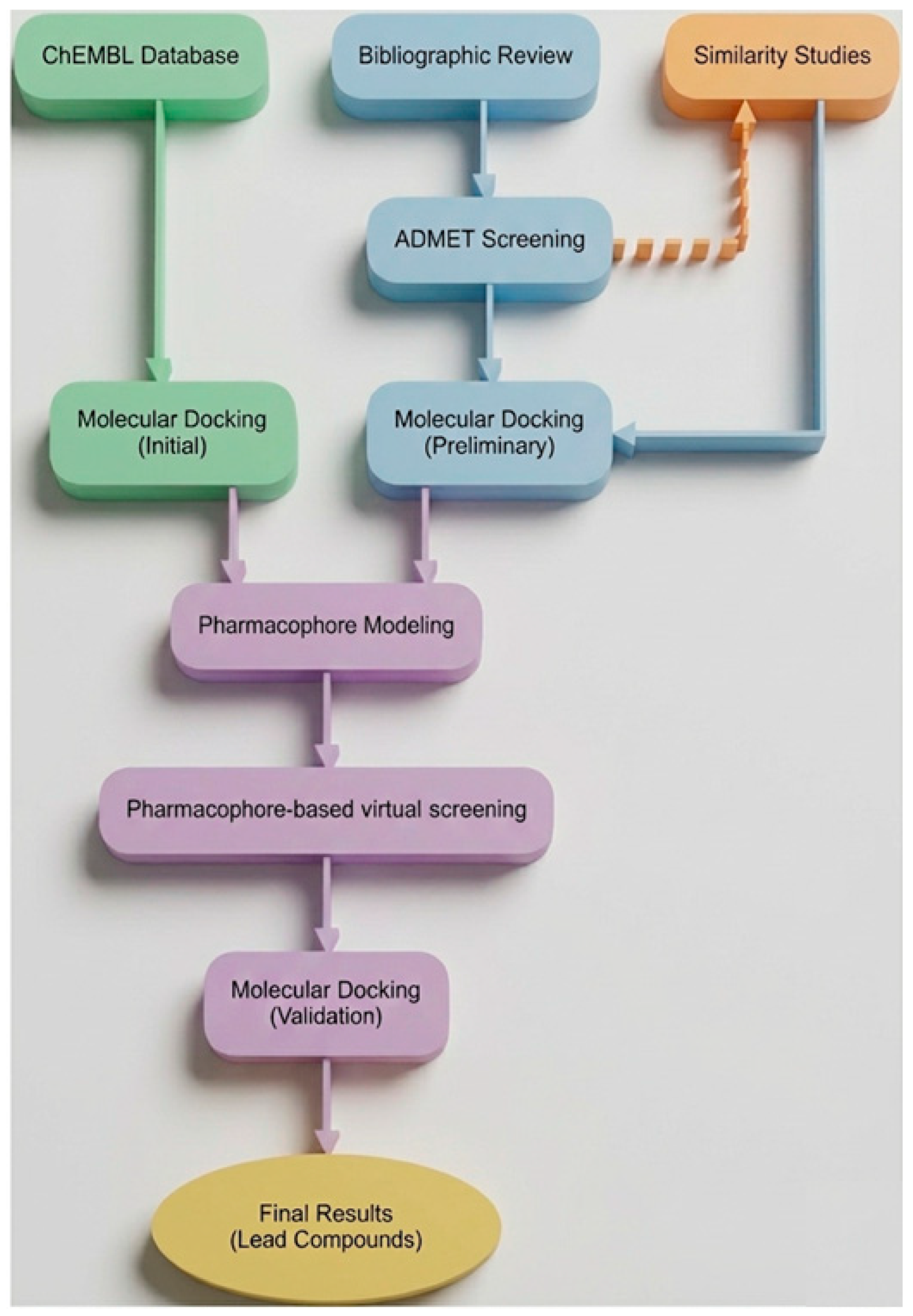
Figure 1. Flowchart displaying the procedure of our research.
Molecules 31 01689 g001
Figure 2. Preferred docking pose (3D) and ligand interaction diagram (2D) of (a) Tivozanib; (b) TKI.6, with VEGFR-2 (PDB ID: 4ASE). Green core: ligands; magenta core: key amino acids; yellow dashes/magenta arrows: hydrogen bond interactions.
Molecules 31 01689 g002aMolecules 31 01689 g002b
Figure 3. Preferred docking pose (3D) and ligand interaction diagram (2D) of (a) Pralsetinib; (b) TKI.2a, with RET (PDB ID: 7JU5). Green core: ligands; magenta core: key amino acids; yellow dashes/magenta arrows: hydrogen bond interactions.
Molecules 31 01689 g003
Figure 4. Preferred docking pose (3D) and ligand interaction diagram (2D) of (a) Imatinib; (b) TKI.2a; (c) TKI.2b; (d) TKI.19, with PDGFRα (PDB ID: 6JOL). Green core: ligands; magenta core: key amino acids; yellow dashes/magenta arrows: hydrogen bond interactions.
Molecules 31 01689 g004aMolecules 31 01689 g004b
Figure 5. Preferred docking pose (3D) and ligand interaction diagram (2D) of EGFR with (a) mobocertinib; (b) TKI.2a; (c) TKI.19, showing key interactions at the active site of EGFR (PDB ID: 7T4I). Green core: ligands; magenta core: key amino acids; yellow dashes/magenta arrows: hydrogen, black lines: covalent bonds.
Molecules 31 01689 g005aMolecules 31 01689 g005b
Figure 6. Preferred docking pose (3D) and ligand interaction diagram (2D) of (a) covalent inhibitor; (b) TKI.2a; (c) TKI.2b, showing key interactions at the active site of HER2 (PDB ID: 7PCD). (d) Chemical structure of BI-1622, covalent inhibitor’s close analog. Green core: ligands; magenta core: key amino acids; yellow dashes/magenta arrows: hydrogen bond interactions; green dashes/green lines: π-stacking; black lines: covalent bonds.
Molecules 31 01689 g006aMolecules 31 01689 g006b
Figure 7. Preferred docking pose (3D) and ligand interaction diagram (2D) of (a) Tepotinib; (b) TKI.2b; (c) TKI.19, showing key interactions at the active site of c-MET (PDB ID: 4R1V). Green core: ligands; magenta core: key amino acids; yellow dashes/magenta arrows: hydrogen bond interactions; green dashes/green lines: π-stacking.
Molecules 31 01689 g007aMolecules 31 01689 g007b
Figure 8. Receiver operating characteristic (ROC) curve and area under the ROC curve (AUC-ROC) ranked by CNN affinity and CNN pose score for (a) HER2; (b) VEGFR-2 proteins.
Molecules 31 01689 g008
Figure 9. (a) A depiction of pharmacophore modeling for the VEGFR-2 receptor (PDB ID: 4ASE) demonstrates overall interaction features, comprising two hydrogen bond acceptors (HAC), two hydrophobic areas (HPB), and one aromatic component (ARO); (b) pharmacophore model aligned with the 16–VEGFR-2 interaction; (c) pharmacophore model aligned with the 2a–VEGFR-2 interaction. Hydrogen Acceptor: color = orange/radius (Å) = 0.5, hydrophobic: color = green/radius (Å) = 1.0, aromatic: color = purple/radius (Å) = 1.1.
Molecules 31 01689 g009
Figure 10. (a) A depiction of pharmacophore modeling for the PDFGRα receptor (PDB ID: 6JOL) demonstrates overall interaction features, comprising three hydrogen acceptors (HAC), and two aromatic groups (ARO); (b) pharmacophore model aligned with the 2a–PDFGRα interaction; (c) pharmacophore model aligned with the 2b–PDFGRα interaction. Hydrogen Acceptor: color = orange/radius (Å) = 0.5, aromatic: color = purple/radius (Å) = 1.1.
Molecules 31 01689 g010
Figure 11. (a) A depiction of pharmacophore modeling for the EGFR (PDB ID: 7T4I) demonstrates overall interaction features, comprising three hydrogen acceptors (HAC), and one hydrophobic region (HPB); (b) pharmacophore model aligned with the 19–EGFR interaction; (c) pharmacophore model aligned with the 21b–EGFR interaction. Hydrogen acceptor: color = orange/radius (Å) = 0.5; hydrophobic: color = green/radius (Å) = 1.0.
Molecules 31 01689 g011
Figure 12. (a) A depiction of pharmacophore modeling for the HER2 receptor (PDB ID: 7PCD) demonstrates overall interaction features, comprising three hydrogen acceptors (HAC), and two aromatic groups (ARO); (b) Pharmacophore model aligned with the 2a–HER2 interaction; (c) Pharmacophore model aligned with the 6–HER2 interaction. Hydrogen Acceptor: color = orange/radius (Å) = 0.5, Aromatic: color = purple/radius (Å) = 1.1.
Molecules 31 01689 g012
Table 1. Verification of primary biological targets of compounds following molecular docking analyses through our novel screening approach.
No.CompoundStructureReported Biological TargetReference
1TKI.2aMolecules 31 01689 i001VEGFR-2
(Vascular Endothelial Growth Factor Receptor)
[7]
2TKI.2bMolecules 31 01689 i002VEGFR-2
3TKI.6Molecules 31 01689 i003Dual EGFR/HER2 (Epidermal Growth Factor Receptor/Human Epidermal Receptor 2)[8]
4TKI.16Molecules 31 01689 i004VEGFR-2[9]
5TKI.19Molecules 31 01689 i005VEGFR-2[10]
6TKI.21bMolecules 31 01689 i006EGFR[11]
Table 2. Compounds displaying their updated biological targets following molecular similarity analyses using the Tanimoto coefficient.
CompoundReported Biological TargetTargeted Kinases Identified by Molecular Similarity Studies 1Drug Exhibiting the Maximum Tanimoto IndexStructure
TKI.2aVEGFR-2HER2, c-Kit (SCFR—Stem Cell Factor Receptor), PDGFRα, MEK1/2 (Mitogen-Activated Protein Kinase Kinase), VEGFR-2Tivozanib
(VEGFR-2)
Molecules 31 01689 i007
TKI.2bVEGFR-2VEGFR-1/2/3, RET (proto-oncogene tyrosine–protein kinase receptor), HER2, c-Kit (SCFR), PDGFRα, MEK1/2Tivozanib
(VEGFR-2)
TKI.6dual EGFR/HER2---
TKI.16VEGFR-2JAK1/2
(Janus kinase)
Filgotinib
(JAK1)
Molecules 31 01689 i008
TKI.19VEGFR-2---
TKI.21bEGFRc-MET (HGFR)Capmatinib
(c-MET/HGFR)
Molecules 31 01689 i009
1 Bold = highest Tanimoto index; color index: green = reported biological target.
Table 3. Statistical analyses of molecular docking data for FDA-approved drugs and their biological targets.
Biological TargetDrugAffinity (kcal/mol)CNN Pose ScoreCNN AffinityMean Affinity (kcal/mol)Mean CNN Pose ScoreMean
CNN Affinity
VEGFR−2Axitinib−8.530.8427.634−9.770.8827.765
Cabozatinib−11.860.9137.725
Fruquitinib−8.740.9067.672
Lenvatinib−11.030.9578.049
Pazopanib−8.690.8567.407
Regorafenib−11.240.8907.833
Sorafenib−11.250.8827.588
Sunitinib−7.350.7287.312
Tivozanib−10.940.9468.408
Vandetanib−8.030.9008.025
PDGFRαAvapritinib−6.820.9048.235−7.870.8928.079
Ripretinib−8.910.8817.922
c−METCapmatinib−11.410.9017.976−10.130.9128.129
Tepotinib−10.000.8638.222
Savolitinib−8.990.9738.189
RETCabozatinib−8.830.5267.169−9.000.8207.572
Lenvatinib−7.240.9277.532
Pralsetinib−10.090.9748.053
Selpercatinib−9.830.8547.535
EGFRAfatinib−8.350.9007.852−7.950.9458.027
Dacomitinib−8.600.9328.125
Gefitinib−7.930.9837.986
Mobocertinib−7.770.9798.225
Osimertinib−7.120.9327.948
HER2Afatinib−7.610.9257.381−9.090.8427.590
Capivasertib−9.710.8987.450
Lapatinib−9.980.8587.609
Neratinib−7.510.7807.875
Tucatinib−10.640.7507.634
JAK1Abrocitinib−9.100.9747.630−9.030.8477.611
Ruxolitinib−9.050.9437.976
Filgotinib−8.120.5867.010
Upadacitinib−9.850.8867.826
JAK2Fedratinib−7.830.9648.352−8.470.9387.856
Momelotinib−8.710.9677.799
Pacritinib−9.220.9457.551
Ruxolitinib−8.020.9107.796
Baricitinib−8.550.9027.780
BTKAcalabrutinib−11.440.8437.959−10.440.8527.607
Ibrutinib−9.800.8587.688
Pirtobrutinib−10.010.7557.189
Zanubrutinib−10.500.9547.593
BCR−AblAsciminib−10.690.7977.737−10.380.7627.771
Bosutinib−8.800.7487.687
Dasatinib−9.840.8037.527
Imatinib−11.220.6387.613
Nilotinib−10.720.8338.306
Ponatinib−11.000.7557.758
Hard
Thresholds
Mean−9.320.8677.778
Minimum−11.860.5267.010
Maximum−6.820.9838.408
Table 4. Compounds displayed their verified biological targets following molecular docking analyses in relation to those identified through molecular similarity studies.
CompoundReported Biological TargetTargeted Kinases Identified by Molecular Similarity Studies 1Targeted Kinases Verified by Molecular Docking Studies 1
TKI.2aVEGFR-2HER2, c-Kit/SCFR, PDGFRα, MEK1/2, VEGFR-2RET, PDGFRα, EGFR, HER2
TKI.2bVEGFR-2VEGFR-1/2/3, RET, HER2, c-Kit/SCFR, PDGFRα, MEK1/2PDGFRα, HER2, c-MET
TKI.6dual EGFR/HER2-VEGFR-2
TKI.16VEGFR-2JAK1/2-
TKI.19VEGFR-2-PDGFRα, EGFR, c-MET
TKI.21bEGFRc-MET/HGFR-
1 Bold = highest Tanimoto index, color index: green = reported biological target, blue = biological target identified by molecular similarity studies.
Table 5. Results from cross-docking demonstrating affinity, CNN pose score, CNN affinity, and RMSD values for known drugs pertaining to each biological target.
TargetDrugAffinity (kcal/mol)CNN Pose ScoreCNN AffinityCross-Docking RMSD (Å)
VEGFR-2Axitinib−8.530.8427.6345.500
Cabozatinib−11.860.9137.7251.059
Fruquitinib−8.740.9067.6721.499
Lenvatinib−11.030.9578.0492.776
Pazopanib−8.690.8567.4073.730
Regorafenib−11.240.8907.8331.688
Sorafenib−11.250.8827.5882.536
Sunitinib−7.350.7287.3125.250
Vandetanib−10.420.8148.0621.514
RETCabozatinib−8.830.5267.1691.920
Lenvatinib−7.240.9277.5323.108
Selpercatinib−9.830.8547.5352.064
PDGFRαAvapritinib−6.820.9048.2355.095
Ripretinib−8.910.8817.9222.000
EGFRAfatinib−8.350.9007.8522.169
Dacomitinib−8.600.9328.1252.186
Gefitinib−7.930.9837.9861.862
Osimertinib−7.120.9327.9481.562
HER2Afatinib−7.610.9257.3812.906
Capivasertib−9.710.8987.452.537
Lapatinib−9.980.8587.6092.022
Neratinib−7.510.7807.8752.432
Tucatinib−10.640.7507.6341.494
c-METCapmatinib−11.410.9017.9762.534
Savolitinib−8.990.9738.1891.079
Table 6. Compounds that fulfill molecular docking criteria following the virtual screening of ChEMBL34, according to the VEGFR-2 pharmacophore model.
No.CompoundStructureAffinityCNN Pose ScoreCNN AffinityInteractions
1ChEMBL
3661566
Molecules 31 01689 i010−10.990.5377.802Hydrophobic: Val840, Val848, Leu889, Val898, Val899, Val916/Hydrogen bonds: Asp1046
2ChEMBL
4790167
Molecules 31 01689 i011−10.280.8757.894Hydrophobic: Val848, Ile888, Val898, Val899, Val916, Leu1019, Leu1019, His1026, Leu1035/Hydrogen bonds: Cys919, Asp1046
3ChEMBL
3661571
Molecules 31 01689 i012−10.440.8047.759Hydrophobic: Val840, Val840, Val840, Val848, Val848, Lys868, Leu889, Leu1035/Hydrogen bonds: Asn923, Asn923
4ChEMBL
4171108
Molecules 31 01689 i013−10.140.8968.176Hydrophobic: Val840, Val848, Val848, Leu889, Val899, Val916, Phe918, Asp1046/Hydrogen bonds: Glu885, Cys919, Asn923, Asn923/π-stacking: Phe1047
5ChEMBL
2354367
Molecules 31 01689 i014−10.140.8098.386Hydrophobic: Val840, Val840, Val840, Val848, Glu885, Leu889, Val899, Val916, Phe918, Asp1046, Phe1047/Hydrogen bonds: Cys919, Asn923, Asp1046
6ChEMBL
4581299
Molecules 31 01689 i015−11.120.8797.467Hydrophobic: Lys838, Val840, Val848, Lys868, Leu889, Leu889, Val914, Val916, Phe918, Phe1047/Hydrogen bonds: Cys919, Asn923
7ChEMBL
3661578
Molecules 31 01689 i016−10.520.86717.804Hydrophobic: Val840, Val840, Lys868, Val899, Val916, Val916, Leu1035/Hydrogen bonds: Cys919, Asn923
8ChEMBL
3641531
Molecules 31 01689 i017−10.850.9058.133Hydrophobic: Val840, Val848, Val899, Val916, Phe918, Leu1035, Phe1047/Hydrogen bonds: Glu917, Cys919, Asn923, Asn923
9ChEMBL
4092441
Molecules 31 01689 i018−9.550.74887.734Hydrophobic: Lys868, Leu882, Glu885, Glu885, Ile888, Leu889, Val898, Asp1046/Hydrogen bonds: Glu885, Asp1046, Phe1047
10ChEMBL
2170947
Molecules 31 01689 i019−9.110.8788.273Hydrophobic: Val848, Val848, Val899, Val916, Val916, Phe1047/Hydrogen bonds: Glu917, Cys919, Cys919, Asn923/π-stacking: Phe1047
11ChEMBL
3661581
Molecules 31 01689 i020−10.030.7638.067Hydrophobic: Val848, Leu889, Ile892, Asp1046/Hydrogen bonds: Asp1046/π-stacking: Phe1047
12ChEMBL
1459733
Molecules 31 01689 i021−9.980.9227.120Hydrophobic: Leu840, Val848, Val899, Val916, Leu1035, Arg1051, Tyr1059/Hydrogen bonds: Cys919
13ChEMBL
3661565
Molecules 31 01689 i022−10.820.8007.989Hydrophobic: Val840, Glu885, Leu889, Leu889, Val916, Leu1035, Leu1035/Hydrogen bonds: Cys919, Asn923
14ChEMBL
3318995
Molecules 31 01689 i023−10.110.5977.962Hydrophobic: Val840, Val840, Leu889, Val898, Val899, Val916, Leu1019, Phe1047/Hydrogen bonds: Lys868, Cys919, Asp1046
Table 7. Compounds that fulfill molecular docking criteria following the virtual screening of ChEMBL34, according to the PDGFRα pharmacophore model.
No.CompoundStructureAffinityCNN Pose ScoreCNN AffinityInteractions
1ChEMBL
5019511
Molecules 31 01689 i024−10.360.8047.725Hydrophobic: Leu599, Leu599, Leu599, Val607, Lys627, Val658, Tyr676, Asp836, Phe837/Hydrogen bonds: Cys677
Table 8. Compounds that fulfill molecular docking criteria following the virtual screening of ChEMBL34, according to the EGFR pharmacophore model.
No.CompoundStructureAffinityCNN Pose ScoreCNN AffinityInteractions
1ChEMBL
3903973
Molecules 31 01689 i025−8.060.7917.780Hydrophobic: Leu718, Ala743/Hydrogen bonds: Met793, Cys797
2ChEMBL
4865595
Molecules 31 01689 i026−8.110.8807.755Hydrophobic: Leu718, Val726, Lys745, leu788, Thr790, Arg841, Leu844, Thr854/Hydrogen bonds: Met793, Asp800, Asp855
3ChEMBL
59202
Molecules 31 01689 i027−8.690.5877.696Hydrophobic: Leu718, Val726, Ala743, Leu844/Hydrogen bonds: Lys745, Thr854, Asp855, Asp855/π-stacking: Phe723
4ChEMBL
3657549
Molecules 31 01689 i028−8.620.8437.286Hydrophobic: Leu718, Val726, Phe723/Hydrogen bonds: Met793
5ChEMBL
3984043
Molecules 31 01689 i029−8.490.8907.441Hydrophobic: Leu718, Phe723, Val726, Val726, Val726, Leu844/Hydrogen bonds: Met793, Met793, Asp800
6ChEMBL
2216869
Molecules 31 01689 i030−9.000.9668.171Hydrophobic: Leu718, Leu718, Leu718, Phe723/Hydrogen bonds: Thr790, Gln791, Thr854
7ChEMBL
165023
Molecules 31 01689 i031−8.490.8897.323Hydrophobic: Leu718, Leu718, Val726, Ala743, Met793, Arg841, Leu844/Hydrogen bonds: Thr790
8ChEMBL
5091998
Molecules 31 01689 i032−8.000.9117.268Hydrophobic: Leu718, Val726, Leu844, Leu844/Hydrogen bonds: Met793, Met793
9ChEMBL
2041238
Molecules 31 01689 i033−9.050.8357.528Hydrophobic: Leu718, Leu718, Phe723, Val726, Ala743, Leu844, Thr854/Hydrogen bonds: Lys745, Met793, Thr854, Asp855
Table 9. Compounds that fulfill molecular docking criteria following the virtual screening of ChEMBL34, according to the HER2 pharmacophore model.
No.CompoundStructureAffinityCNN Pose ScoreCNN AffinityInteractions
1ChEMBL
3355044
Molecules 31 01689 i034−10.390.8697.564Hydrophobic: Leu726, Phe731, Lys753, Thr798, Met801, Thr862, Asp863, Phe864/Hydrogen bonds: Lys753, Met801, Asp863, Phe864
Disclaimer/Publisher’s Note: The statements, opinions and data contained in all publications are solely those of the individual author(s) and contributor(s) and not of MDPI and/or the editor(s). MDPI and/or the editor(s) disclaim responsibility for any injury to people or property resulting from any ideas, methods, instructions or products referred to in the content.