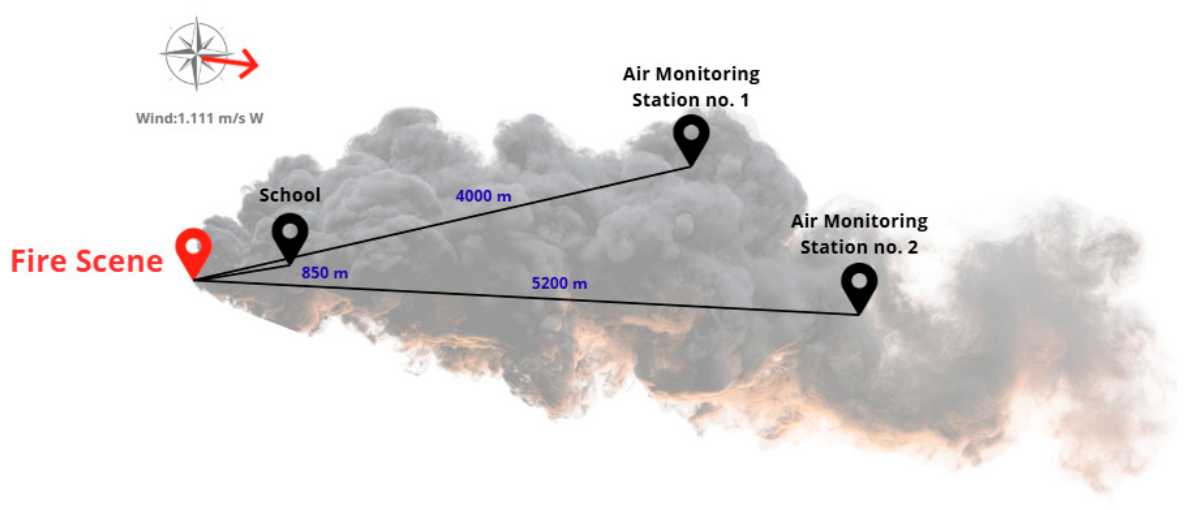
Acute Pediatric Health Risks from Elastomer Thermolysis—PAH Emission Scenarios at School Receptors Following an Industrial Tire Fire



Abstract
1. Introduction
2. Results
2.1. Toxicological Burden and Acute Exposure Levels in the School Environment
2.2. Acute Exposure and Hazard Indices
3. Discussion
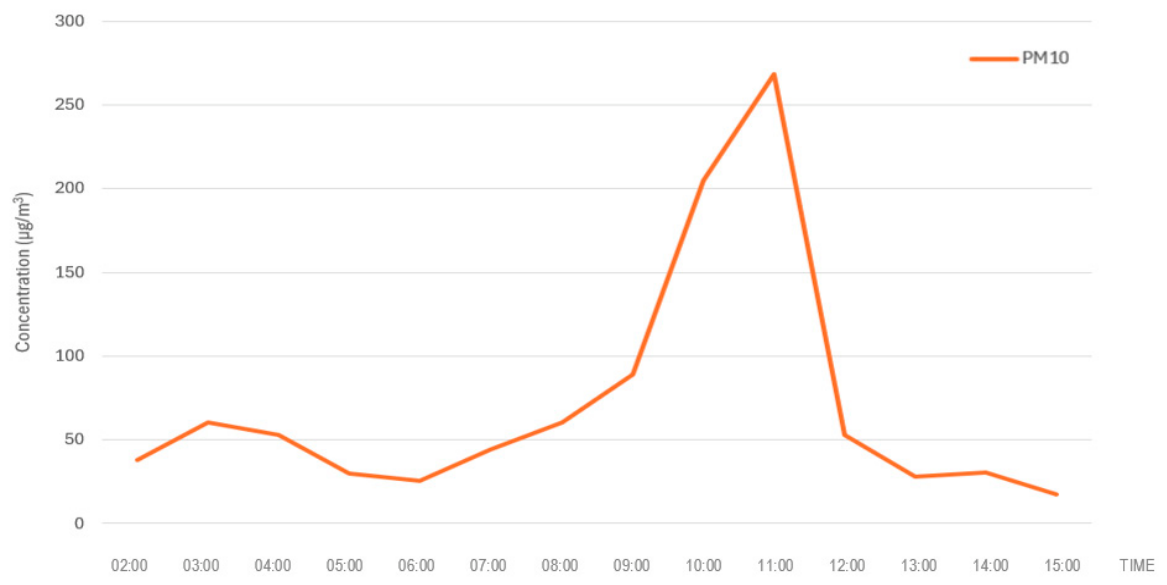
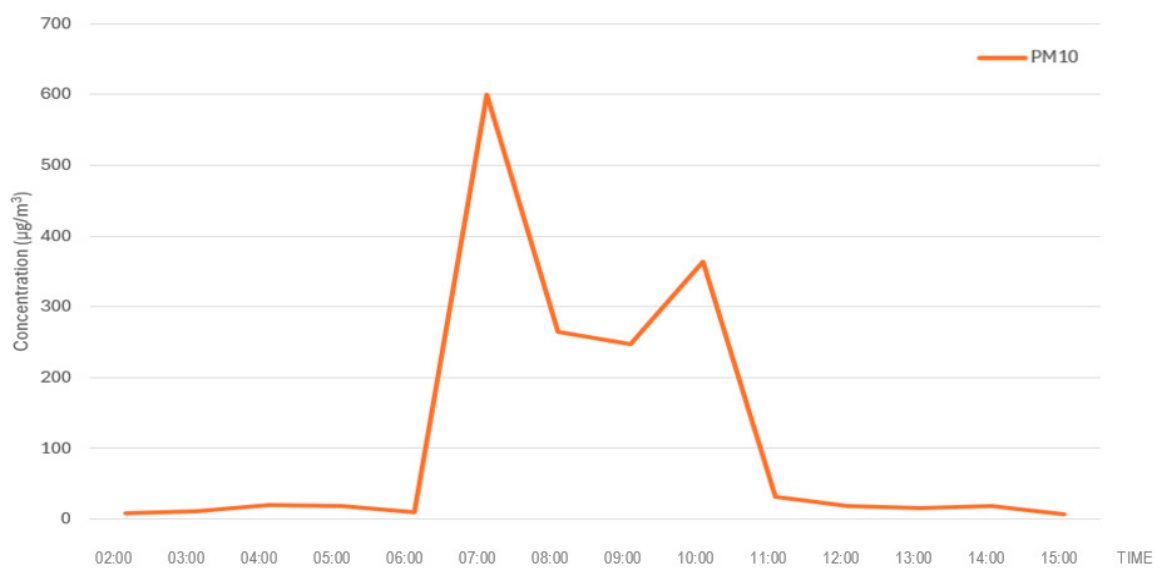
3.1. Atmospheric Burden and Combustion Dynamics
3.2. Toxicological Significance of the PAH Profile
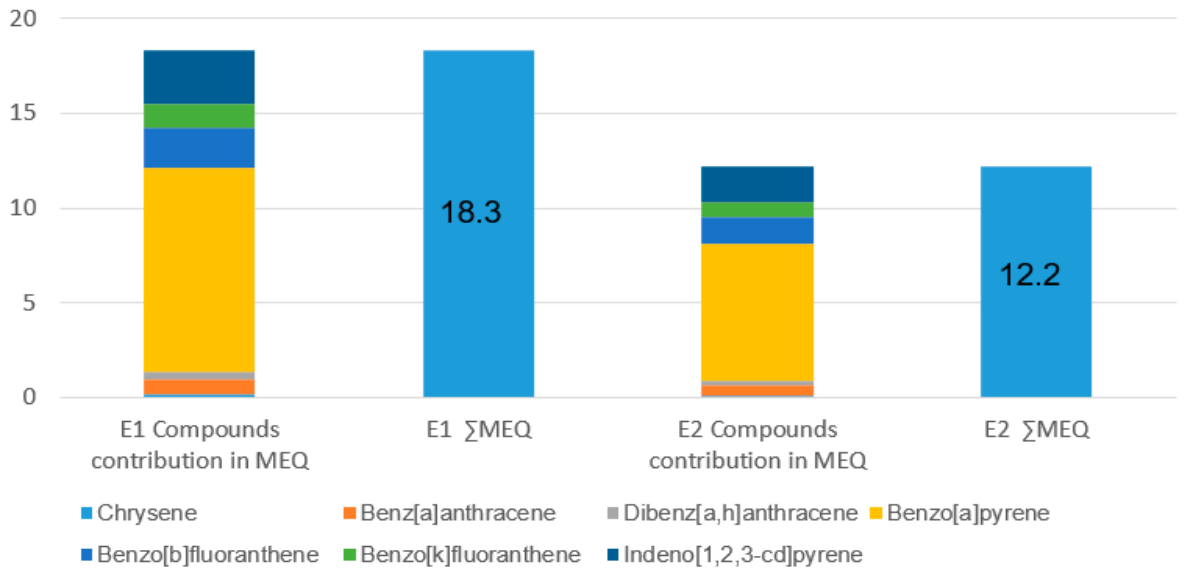
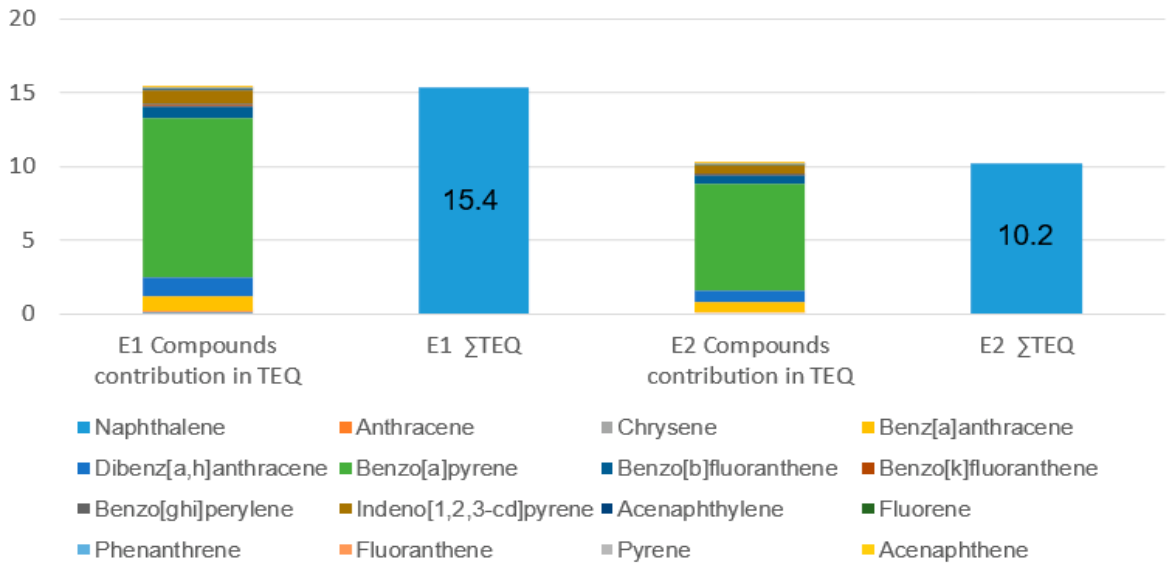
3.3. Mutagenic vs. Toxic Equivalency (MEQ and TEQ)
3.4. Human Health Risk
4. Study Limitations and Future Perspectives
5. Materials and Methods
5.1. Study Limitations
5.2. Emission Factors and Source-Term Estimation
5.3. Atmospheric Dispersion Modelling and Receptor Concentration
5.4. Plume Trajectory and Population Exposure Validation
5.5. Assessing the Cumulative Chemical Hazard
5.6. Health Risk Assessment Framework: Acute and Chronic Perspectives
5.7. Target Groups and Exposure Routes
5.8. Mathematical Risk Quantification
6. Conclusions
- −
- Acute Particulate Exposure: The interaction of high-thermal-mass fuel with oxygen-starved conditions generates a persistent “toxic slug” of high-molecular-weight pollutants, driving PM10 concentrations to an extreme 23,765.89 ug/m3 at the distal school receptor.
- −
- Underestimation of Biological Hazard: Standard toxicological assessments significantly underestimate the biological threat. The modeled Mutagenic Equivalency (MEQ) exceeded the Toxic Equivalency (TEQ) by a considerable margin, driven primarily by potent isomers of Benzo[b]fluoranthene and Indeno[1,2,3-cd]pyrene.
- −
- Forensic Pyrogenic Signatures: The identification of MW 302 and 278 PAH isomers, alongside the unique Zn-Se correlation, provides a robust framework for distinguishing acute tire fire fallout from chronic urban traffic emissions.
- −
- Severe Carcinogenic Burden: Plume buoyancy coupled with the atmospheric “fumigation” effect delivers critical concentrations of Benzo[a]pyrene (10.75 ug/m3 to distal communities, elevating the Incremental Lifetime Cancer Risk (ILCR) to the 10−4 priority threshold.
Supplementary Materials
Author Contributions
Funding
Institutional Review Board Statement
Informed Consent Statement
Data Availability Statement
Acknowledgments
Conflicts of Interest
References
- James, B.D.; Reddy, C.M.; Hahn, M.E.; Nelson, R.K.; De Vos, A.; Aluwihare, L.I.; Wade, T.L.; Knap, A.H.; Bera, G. Fire and Oil Led to Complex Mixtures of PAHs on Burnt and Unburnt Plastic during the M/V X-Press Pearl Disaster. ACS Environ. Au 2023, 3, 319–335. [Google Scholar] [CrossRef]
- Nogueira, T.; Kumar, P.; Nardocci, A.; Andrade, M.D.F. Public Health Implications of Particulate Matter inside Bus Terminals in Sao Paulo, Brazil. Sci. Total Environ. 2020, 711, 135064. [Google Scholar] [CrossRef]
- Downard, J.; Singh, A.; Bullard, R.; Jayarathne, T.; Rathnayake, C.M.; Simmons, D.L.; Wels, B.R.; Spak, S.N.; Peters, T.; Beardsley, D.; et al. Uncontrolled Combustion of Shredded Tires in a Landfill—Part 1: Characterization of Gaseous and Particulate Emissions. Atmos. Environ. 2015, 104, 195–204. [Google Scholar] [CrossRef] [PubMed]
- Kieta, K.A.; Owens, P.N.; Petticrew, E.L.; French, T.D.; Koiter, A.J.; Rutherford, P.M. Polycyclic Aromatic Hydrocarbons in Terrestrial and Aquatic Environments Following Wildfire: A Review. Environ. Rev. 2023, 31, 141–167. [Google Scholar] [CrossRef]
- Fullana, A.; Font, R.; Conesa, J.A.; Blasco, P. Evolution of Products in the Combustion of Scrap Tires in a Horizontal, Laboratory Scale Reactor. Environ. Sci. Technol. 2000, 34, 2092–2099. [Google Scholar] [CrossRef]
- Seidelt, S.; Müller-Hagedorn, M.; Bockhorn, H. Description of Tire Pyrolysis by Thermal Degradation Behaviour of Main Components. J. Anal. Appl. Pyrolysis 2006, 75, 11–18. [Google Scholar] [CrossRef]
- DeMarini, D.M.; Linak, W.P. Mutagenicity and Carcinogenicity of Combustion Emissions Are Impacted More by Combustor Technology than by Fuel Composition: A Brief Review. Environ. Mol. Mutagen. 2022, 63, 135–150. [Google Scholar] [CrossRef] [PubMed]
- Hoffer, A.; Jancsek-Turóczi, B.; Tóth, Á.; Kiss, G.; Naghiu, A.; Levei, E.A.; Marmureanu, L.; Machon, A.; Gelencsér, A. Emission Factors for PM10 and Polycyclic Aromatic Hydrocarbons (PAHs) from Illegal Burning of Different Types of Municipal Waste in Households. Atmos. Chem. Phys. 2020, 20, 16135–16144. [Google Scholar] [CrossRef]
- Probert, C.; Nixon, E.; Ormond, R.B.; Baynes, R. Percutaneous Absorption of Fireground Contaminants: Naphthalene, Phenanthrene, and Benzo[a]Pyrene in Porcine Skin in an Artificial Sweat Vehicle. Toxics 2024, 12, 588. [Google Scholar] [CrossRef] [PubMed]
- Kumar, A.V.; Kothiyal, N.C.; Kumari, S.; Mehra, R.; Parkash, A.; Sinha, R.R.; Tayagi, S.K.; Gaba, R. Determination of Some Carcinogenic PAHs with Toxic Equivalency Factor along Roadside Soil within a Fast Developing Northern City of India. J. Earth Syst. Sci. 2014, 123, 479–489. [Google Scholar] [CrossRef]
- U.S. Environmental Protection Agency (U.S. EPA). Provisional Guidance for Quantitative Risk Assessment of Polycyclic Aromatic Hydrocarbons; U.S. Environmental Protection Agency, Office of Research and Development, Office of Health and Environmental Assessment: Washington, DC, USA, 1993.
- Durant, J.L.; Lafleur, A.L.; Busby, W.F.; Donhoffner, L.L.; Penman, B.W.; Crespi, C.L. Mutagenicity of C24H14 PAH in Human Cells Expressing CYP1A1. Mutat. Res. Toxicol. Environ. Mutagen. 1999, 446, 1–14. [Google Scholar] [CrossRef]
- Lemieux, P.M.; Ryan, J.V. Characterization of Air Pollutants Emitted from a Simulated Scrap Tire Fire. Air Waste 1993, 43, 1106–1115. [Google Scholar] [CrossRef]
- Rein, G. Smouldering Combustion. In SFPE Handbook of Fire Protection Engineering; Springer: New York, NY, USA, 2016; pp. 581–603. [Google Scholar]
- Wang, Z.; Li, K.; Lambert, P.; Yang, C. Identification, Characterization and Quantitation of Pyrogenic Polycylic Aromatic Hydrocarbons and Other Organic Compounds in Tire Fire Products. J. Chromatogr. A 2007, 1139, 14–26. [Google Scholar] [CrossRef]
- Raudonytė-Svirbutavičienė, E.; Stakėnienė, R.; Jokšas, K.; Valiulis, D.; Byčenkienė, S.; Žarkov, A. Distribution of Polycyclic Aromatic Hydrocarbons and Heavy Metals in Soil Following a Large Tire Fire Incident: A Case Study. Chemosphere 2022, 286, 131556. [Google Scholar] [CrossRef]
- Smolders, E.; Degryse, F. Fate and Effect of Zinc from Tire Debris in Soil. Environ. Sci. Technol. 2002, 36, 3706–3710. [Google Scholar] [CrossRef] [PubMed]
- Kim, Y.H.; Sinha, A.; George, I.J.; DeMarini, D.M.; Grieshop, A.P.; Gilmour, M.I. Toxicity of Fresh and Aged Anthropogenic Smoke Particles Emitted from Different Burning Conditions. Sci. Total Environ. 2023, 892, 164778. [Google Scholar] [CrossRef]
- Occupational Safety and Health Administration (OSHA). Potential Carbon Dioxide (CO2) Asphyxiation Hazard When Filling Stationary Low Pressure CO2 Supply Systems; U.S. Department of Labor: Washington, DC, USA, 1996.
- Office of Environmental Health Hazard Assessment. Air Toxics Hot Spots Program Guidance Manual for Preparation of Health Risk Assessments; California Environmental Protection Agency: Sacramento, CA, USA, 2015.
- World Health Organization. WHO Global Air Quality Guidelines: Particulate Matter (PM2.5 and PM10), Ozone, Nitrogen Dioxide, Sulfur Dioxide and Carbon Monoxide, 1st ed.; World Health Organization: Geneva, Switzerland, 2021; ISBN 978-92-4-003422-8. [Google Scholar]
- Molhave, L. Volatile Organic Compounds, Indoor Air Quality and Health. Indoor Air 1991, 1, 357–376. [Google Scholar] [CrossRef]
- Agency for Toxic Substances and Disease Registry. Minimal Risk Levels (MRLs) for Hazardous Substances; Agency for Toxic Substances and Disease Registry: Atlanta, GA, USA, 2026.
- Trawińska, A.; Tankiewicz, M.; Pająk, K.; Cieszyńska-Semenowicz, M.; Reindl, A.R. Chemical Characterization and Aquatic Toxicity of Firefighting Runoff—Linking Organic Profiling to Multi-Trophic Bioassays in the One Health Framework. Molecules 2026, 31, 1554. [Google Scholar] [CrossRef]
- Conesa, J.A.; Font, R.; Fullana, A.; Martín-Gullón, I.; Aracil, I.; Gálvez, A.; Moltó, J.; Gómez-Rico, M.F. Comparison between Emissions from the Pyrolysis and Combustion of Different Wastes. J. Anal. Appl. Pyrolysis 2009, 84, 95–102. [Google Scholar] [CrossRef]
- Lemieux, P.M. Air Emissions from Scrap Tire Combustion; U.S. Environmental Protection Agency, Office of Research and Development: Washington, DC, USA, 1997.
- Kumari, S.; Elumalai, S.P.; Jain, M.K. Study on Effect of Tire Burning on Particulate Matter Concentration and Respiratory Deposition Doses to the Workers and Inhabitants during Road Pavement Activity. Air Qual. Atmos. Health 2022, 15, 1413–1426. [Google Scholar] [CrossRef]
- DeMarini, D.M.; Lemieux, P.M.; Ryan, J.V.; Brooks, L.R.; Williams, R.W. Mutagenicity and Chemical Analysis of Emissions from the Open Burning of Scrap Rubber Tires. Environ. Sci. Technol. 1994, 28, 136–141. [Google Scholar] [CrossRef] [PubMed]
- Stec, A.A.; Dickens, K.; Barnes, J.L.J.; Bedford, C. Environmental Contamination Following the Grenfell Tower Fire. Chemosphere 2019, 226, 576–586. [Google Scholar] [CrossRef] [PubMed]
- Deary, M.E.; Griffiths, S.D. The Impact of Air Pollution from Industrial Fires in Urban Settings: Monitoring, Modelling, Health, and Environmental Justice Perspectives. Environments 2024, 11, 157. [Google Scholar] [CrossRef]
- Samburova, V.; Connolly, J.; Gyawali, M.; Yatavelli, R.L.N.; Watts, A.C.; Chakrabarty, R.K.; Zielinska, B.; Moosmüller, H.; Khlystov, A. Polycyclic Aromatic Hydrocarbons in Biomass-Burning Emissions and Their Contribution to Light Absorption and Aerosol Toxicity. Sci. Total Environ. 2016, 568, 391–401. [Google Scholar] [CrossRef]
- Tavakoli, M.; Peyzari, P.; Tamaddon, F.; Zare-Banadkouki, B. A Novel Zinc Complex for Rubber Vulcanization: Enhanced Mechanical Properties and Reduced Environmental Impact through ZnO Substitution. Polym. Eng. Sci. 2025, 65, 2699–2713. [Google Scholar] [CrossRef]
- Yuan, B.; Hu, H.; Huang, Y.; Fu, B.; Liu, H.; Luo, G.; Zhao, Y.; Yao, H. Condensation and Adsorption Characteristics of Gaseous Selenium on Coal-Fired Fly Ash at Low Temperatures. Chemosphere 2022, 287, 132127. [Google Scholar] [CrossRef]
- Ravindra, K.; Wauters, E.; Van Grieken, R. Variation in Particulate PAHs Levels and Their Relation with the Transboundary Movement of the Air Masses. Sci. Total Environ. 2008, 396, 100–110. [Google Scholar] [CrossRef]
- Rovira, J.; Domínguez-Morueco, N.; Nadal, M.; Schuhmacher, M.; Domingo, J.L. Temporal Trend in the Levels of Polycyclic Aromatic Hydrocarbons Emitted in a Big Tire Landfill Fire in Spain: Risk Assessment for Human Health. J. Environ. Sci. Health Part A 2018, 53, 222–229. [Google Scholar] [CrossRef]
- Yang, W.P. Speciation Profiles for Tire Burning—PM1301 (Controlled Tire Combustion) & PM1302 (Uncontrolled Open Tire Fire); California Air Resources Board: Sacramento, CA, USA, 2018.
- Wang, D.; Ma, J.; Li, H.; Zhang, X. Concentration and Potential Ecological Risk of PAHs in Different Layers of Soil in the Petroleum-Contaminated Areas of the Loess Plateau, China. Int. J. Environ. Res. Public. Health 2018, 15, 1785. [Google Scholar] [CrossRef] [PubMed]
- U.S. Environmental Protection Agency (U.S. EPA). Section 2.4: Municipal Solid Waste Landfills. In AP-42: Compilation of Air Emissions Factors from Stationary Sources, 5th ed.; Office of Air Quality Planning and Standards; U.S. EPA: Research Triangle Park, NC, USA, 2025. [Google Scholar]
- IARC Working Group on the Identification of Carcinogenic Hazards to Humans. Occupational Exposure as a Firefighter; IARC Monographs on the Identification of Carcinogenic Hazards to Humans; International Agency for Research on Cancer: Lyon, France; World Health Organization: Geneva, Switzerland, 2023; ISBN 978-92-832-0131-1. [Google Scholar]
- Sousa, G.; Teixeira, J.; Delerue-Matos, C.; Sarmento, B.; Morais, S.; Wang, X.; Rodrigues, F.; Oliveira, M. Exposure to PAHs during Firefighting Activities: A Review on Skin Levels, In Vitro/In Vivo Bioavailability, and Health Risks. Int. J. Environ. Res. Public Health 2022, 19, 12677. [Google Scholar] [CrossRef]
- Bihałowicz, J.S.; Rogula-Kozłowska, W.; Krasuski, A. Contribution of Landfill Fires to Air Pollution—An Assessment Methodology. Waste Manag. 2021, 125, 182–191. [Google Scholar] [CrossRef]
- Ministry of the Environment, Republic of Poland. Regulation of the Minister of the Environment of 26 January 2010 on Reference Values for Certain Substances in the Air; Ministry of the Environment, Republic of Poland: Warsaw, Poland, 2010.
- Oleniacz, R.; Drzewiecki, W.; Gorzelnik, T.; Grzesik, K.; Kozakiewicz, R.; Kowalewski, Z.; Kossakowska, K. Assessment of the Impact of Waste Fires on Air Quality and Atmospheric Aerosol Optical Depth: A Case Study in Poland. Energy Rep. 2023, 9, 16–38. [Google Scholar] [CrossRef]
- Nisbet, I.C.T.; LaGoy, P.K. Toxic Equivalency Factors (TEFs) for Polycyclic Aromatic Hydrocarbons (PAHs). Regul. Toxicol. Pharmacol. 1992, 16, 290–300. [Google Scholar] [CrossRef]
- Durant, J.L.; Busby, W.F.; Lafleur, A.L.; Penman, B.W.; Crespi, C.L. Human Cell Mutagenicity of Oxygenated, Nitrated and Unsubstituted Polycyclic Aromatic Hydrocarbons Associated with Urban Aerosols. Mutat. Res./Genet. Toxicol. 1996, 371, 123–157. [Google Scholar] [CrossRef]
- U.S. Environmental Protection Agency. Risk Assessment Guidance for Superfund, Volume I: Human Health Evaluation Manual (Part A)—Interim Final; Office of Emergency and Remedial Response, U.S. Environmental Protection Agency: Washington, DC, USA, 1989.
- Deelaman, W.; Pongpiachan, S.; Tipmanee, D.; Choochuay, C.; Suttinun, O.; Charoenkalunyuta, T.; Promdee, K. Ecotoxicological Risk and Health Risk Characterization of Polycyclic Aromatic Hydrocarbons (PAHs) in Terrestrial Soils of King George Island, Antarctica. Polar Sci. 2021, 29, 100715. [Google Scholar] [CrossRef]
- Stefanova, M.; Marinov, S.P.; Gonsalvesh, L.; Mastral, A.; Callen, M.; Gadjanov, P. PAHs in Fly Ash from Lignite Combustion. Bull. Geol. Soc. Greece 2018, 40, 1499. [Google Scholar] [CrossRef][Green Version]
- Yang, W.; Lang, Y.; Li, G. Cancer Risk of Polycyclic Aromatic Hydrocarbons (PAHs) in the Soils from Jiaozhou Bay Wetland. Chemosphere 2014, 112, 289–295. [Google Scholar] [CrossRef] [PubMed]



| Compounds | Maximum Concentration in Air—Point D1 School | |
|---|---|---|
| Scenario E1 (4 h Emission) Open Flame Stage | Scenario E2 (6 h Emission) Smouldering Stage | |
| CO2 | 806,976 | 537,983 |
| CO | 19,864 | 13,242 |
| NOx | 1676 | 1117 |
| SO2 | 7821 | 5214 |
| PM10 | 23,766 | 15,843 |
| CH4 | 4469 | 2979 |
| VOC (total) | 8691 | 5793 |
| Naphthalene | 130.2 | 86.79 |
| Anthracene | 11.10 | 7.402 |
| Chrysene | 12.29 | 8.19 |
| Benz[a]anthracene | 9.70 | 6.47 |
| Dibenz[a,h]anthracene | 1.26 | 0.84 |
| Benzo[a]pyrene | 10.75 | 7.17 |
| Benzo[b]fluoranthene | 8.51 | 5.68 |
| Benzo[k]fluoranthene | 11.24 | 7.50 |
| Benzo[ghi]perylene | 6.91 | 4.61 |
| Indeno[1,2,3-cd]pyrene | 9.15 | 6.10 |
| Acenaphthylene | 54.98 | 36.65 |
| Fluorene | 12.58 | 8.38 |
| Phenanthrene | 62.61 | 41.74 |
| Fluoranthene | 34.76 | 23.18 |
| Pyrene | 30.51 | 20.34 |
| Acenaphthene | 0.78 | 0.52 |
| ∑16 PAHs | 313.92 | 209.28 |
| Compounds | HQ | RfC/REL * | ||
|---|---|---|---|---|
| Scenario E1 Open Flame Stage | Scenario E2 Smouldering Stage | Reference | ||
| CO2 | 0.09 | 0.06 | 9,000,000 | [19] |
| CO | 0.86 | 0.58 | 23,000 | [20] |
| NOx | 3.57 | 2.38 | 470 | [20] |
| SO2 | 11.85 | 7.90 | 660 | [20] |
| PM10 | 528.13 | 352.09 | 45 | [21] |
| VOC total | 2.90 | 1.93 | 3000 | [22] |
| Naphthalene | 0.04 | 0.03 | 3144 | [23] |
| ∑ HI | 547.44 | 364.96 | ||
| Compounds | Scenario E1 (4 h) Open Flame Stage | Scenario E2 (6 h) Smouldering Stage | ||
|---|---|---|---|---|
| Adults | Children | Adults | Children | |
| Naphthalene | 2.885 × 10⁻⁵ | 1.208 × 10⁻⁵ | 1.923 × 10⁻⁵ | 0.805 × 10⁻⁵ |
| Anthracene | 0.246 × 10⁻⁵ | 0.103 × 10⁻⁵ | 0.164 × 10⁻⁵ | 0.069 × 10⁻⁵ |
| Chrysene | 0.272 × 10⁻⁵ | 0.114 × 10⁻⁵ | 0.182 × 10⁻⁵ | 0.076 × 10⁻⁵ |
| Benz[a]anthracene | 0.215 × 10⁻⁵ | 0.090 × 10⁻⁵ | 0.143 × 10⁻⁵ | 0.060 × 10⁻⁵ |
| Dibenz[a,h]anthracene | 0.028 × 10⁻⁵ | 0.012 × 10⁻⁵ | 0.019 × 10⁻⁵ | 0.008 × 10⁻⁵ |
| Benzo[a]pyrene | 0.238 × 10⁻⁵ | 0.100 × 10⁻⁵ | 0.159 × 10⁻⁵ | 0.066 × 10⁻⁵ |
| Benzo[b]fluoranthene | 0.189 × 10⁻⁵ | 0.079 × 10⁻⁵ | 0.126 × 10⁻⁵ | 0.053 × 10⁻⁵ |
| Benzo[k]fluoranthene | 0.249 × 10⁻⁵ | 0.104 × 10⁻⁵ | 0.166 × 10⁻⁵ | 0.070 × 10⁻⁵ |
| Benzo[ghi]perylene | 0.153 × 10⁻⁵ | 0.064 × 10⁻⁵ | 0.102 × 10⁻⁵ | 0.043 × 10⁻⁵ |
| Indeno[1,2,3-cd]pyrene | 0.203 × 10⁻⁵ | 0.085 × 10⁻⁵ | 0.135 × 10⁻⁵ | 0.057 × 10⁻⁵ |
| Acenaphthylene | 1.218 × 10⁻⁵ | 0.510 × 10⁻⁵ | 0.812 × 10⁻⁵ | 0.340 × 10⁻⁵ |
| Fluorene | 0.279 × 10⁻⁵ | 0.117 × 10⁻⁵ | 0.186 × 10⁻⁵ | 0.078 × 10⁻⁵ |
| Phenanthrene | 1.387 × 10⁻⁵ | 0.581 × 10⁻⁵ | 0.925 × 10⁻⁵ | 0.387 × 10⁻⁵ |
| Fluoranthene | 0.770 × 10⁻⁵ | 0.322 × 10⁻⁵ | 0.514 × 10⁻⁵ | 0.215 × 10⁻⁵ |
| Pyrene | 0.676 × 10⁻⁵ | 0.283 × 10⁻⁵ | 0.451 × 10⁻⁵ | 0.189 × 10⁻⁵ |
| Acenaphthene | 0.017 × 10⁻⁵ | 0.007 × 10⁻⁵ | 0.011 × 10⁻⁵ | 0.005 × 10⁻⁵ |
| ∑ ILCR estimated | 9.026 × 10⁻⁵ | 3.778 × 10⁻⁵ | 6.017 × 10⁻⁵ | 2.519 × 10⁻⁵ |
Disclaimer/Publisher’s Note: The statements, opinions and data contained in all publications are solely those of the individual author(s) and contributor(s) and not of MDPI and/or the editor(s). MDPI and/or the editor(s) disclaim responsibility for any injury to people or property resulting from any ideas, methods, instructions or products referred to in the content. |
© 2026 by the authors. Licensee MDPI, Basel, Switzerland. This article is an open access article distributed under the terms and conditions of the Creative Commons Attribution (CC BY) license.
Share and Cite
Pająk, K.; Reindl, A.R. Acute Pediatric Health Risks from Elastomer Thermolysis—PAH Emission Scenarios at School Receptors Following an Industrial Tire Fire. Molecules 2026, 31, 1659. https://doi.org/10.3390/molecules31101659
Pająk K, Reindl AR. Acute Pediatric Health Risks from Elastomer Thermolysis—PAH Emission Scenarios at School Receptors Following an Industrial Tire Fire. Molecules. 2026; 31(10):1659. https://doi.org/10.3390/molecules31101659
Chicago/Turabian StylePająk, Kamil, and Andrzej R. Reindl. 2026. "Acute Pediatric Health Risks from Elastomer Thermolysis—PAH Emission Scenarios at School Receptors Following an Industrial Tire Fire" Molecules 31, no. 10: 1659. https://doi.org/10.3390/molecules31101659
APA StylePająk, K., & Reindl, A. R. (2026). Acute Pediatric Health Risks from Elastomer Thermolysis—PAH Emission Scenarios at School Receptors Following an Industrial Tire Fire. Molecules, 31(10), 1659. https://doi.org/10.3390/molecules31101659