Conformation-Driven Bilayer Nanocarriers for Anthocyanins Using Shell Polysaccharides: Stabilization Mechanisms and Enhanced In Vitro Lipid-Lowering Activity
 ,
,
Abstract
1. Introduction
2. Results
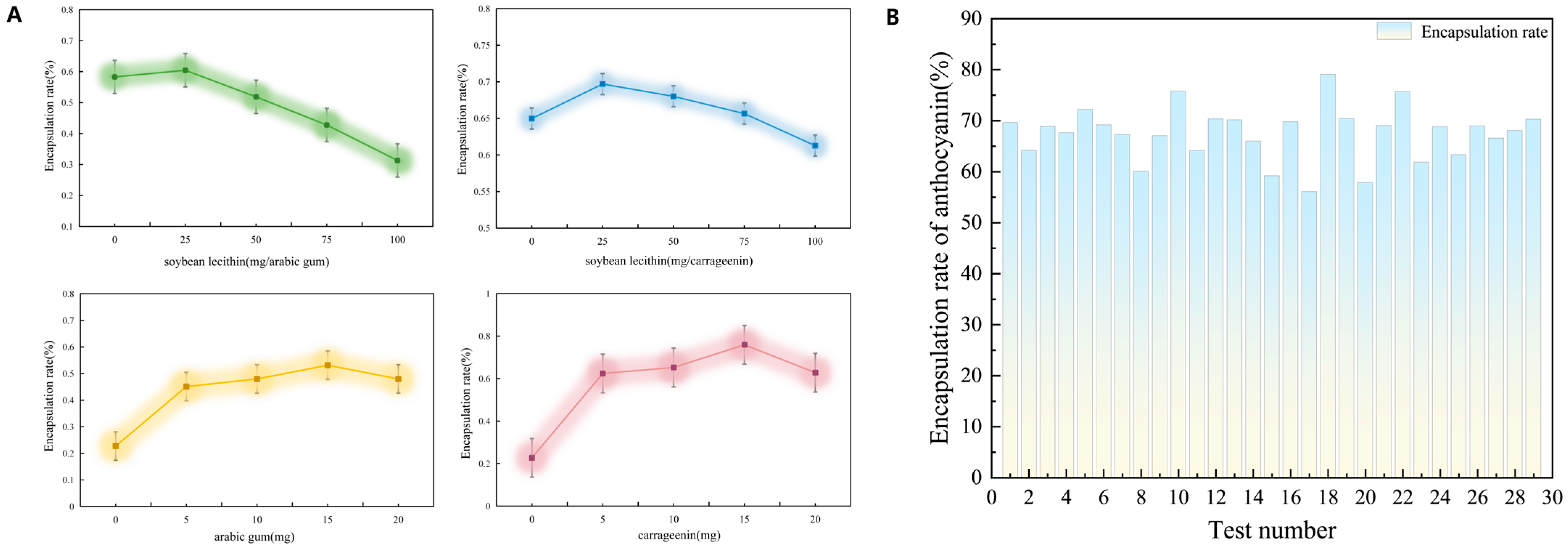
2.1. Process Optimization and Encapsulation Performance of Plant-Based Nanocarriers
2.1.1. Single-Factor Screening
2.1.2. Response Surface Optimization and Validation
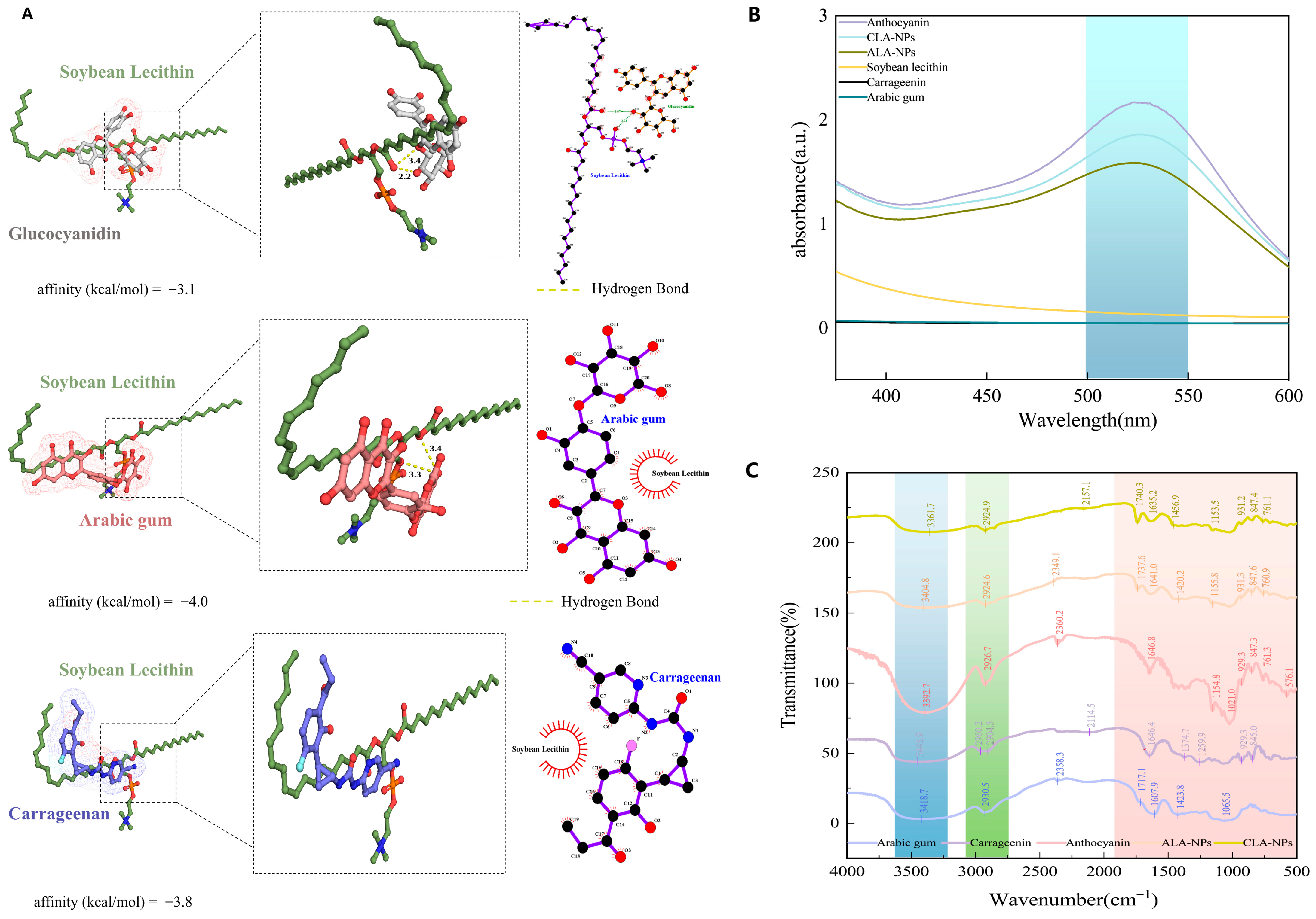
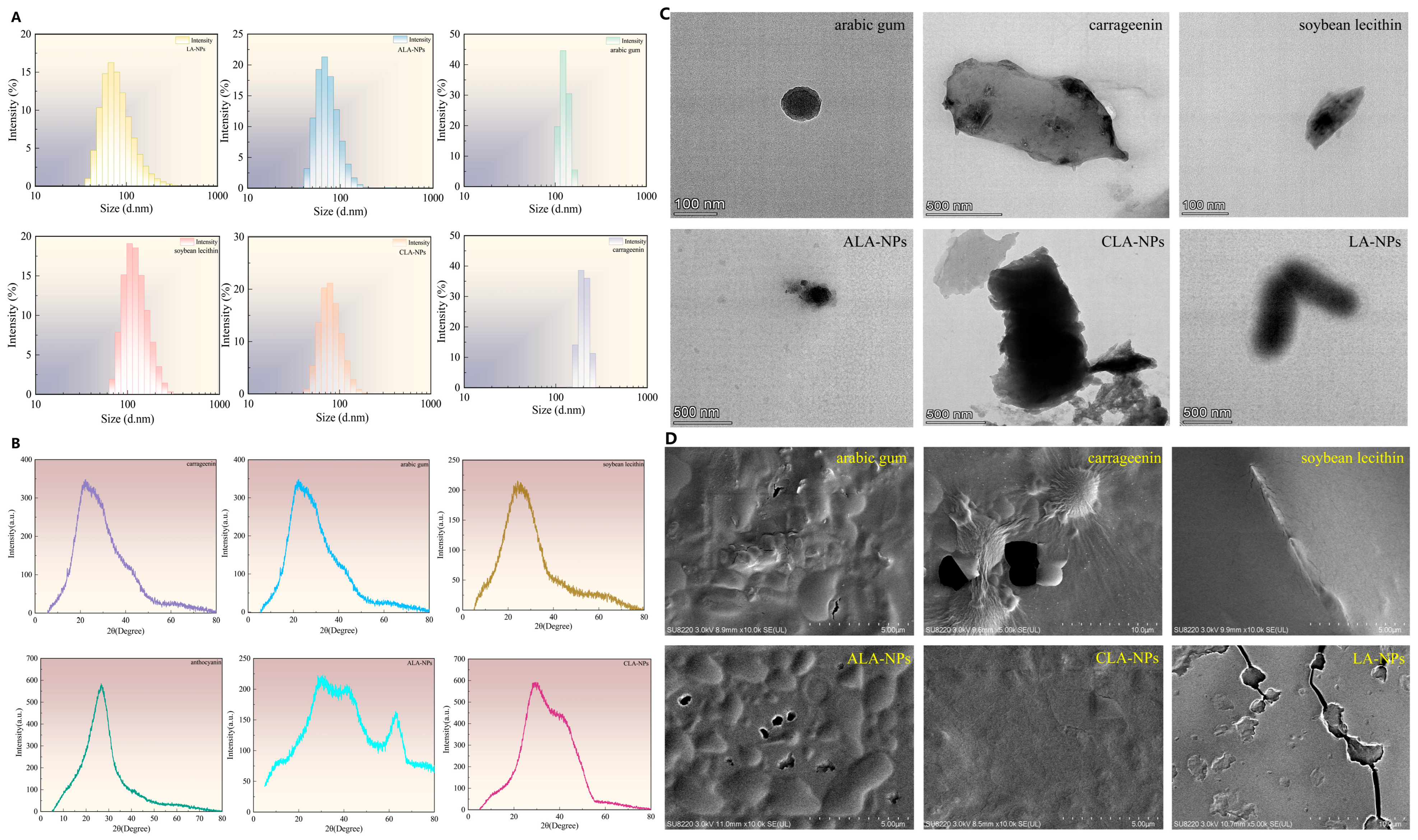
2.2. Molecular Interaction Mechanisms and Microstructural Analysis
2.2.1. Molecular Docking and Multispectral Characterization
2.2.2. Particle Size Distribution, Phase Transition, and Morphology
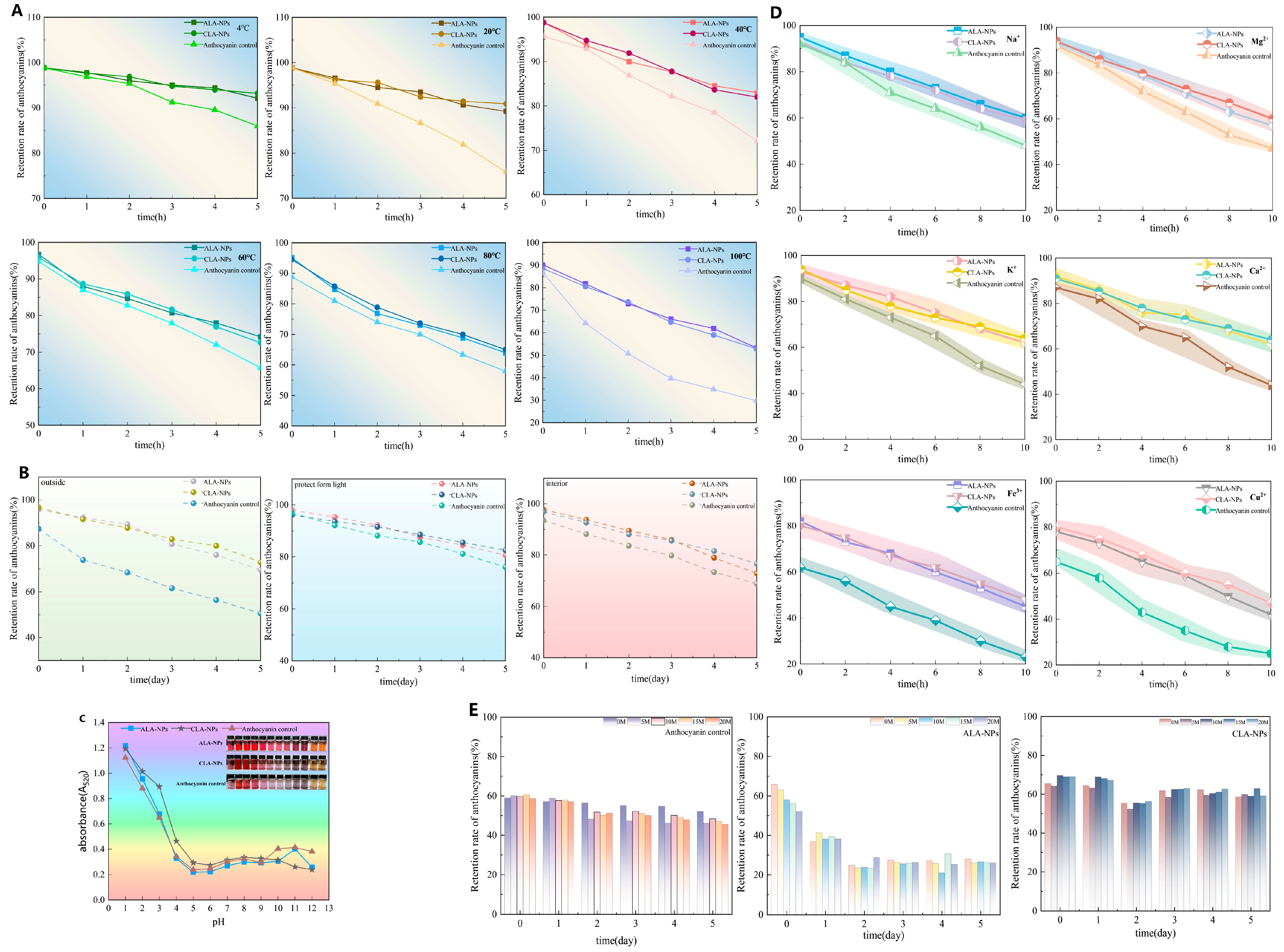
2.3. Environmental Stability of Bilayer Nanocarriers
2.3.1. Thermal and Photostability
2.3.2. Stability Against pH, Metal Ions, and Ascorbic Acid
2.4. In Vitro Gastrointestinal Fate and Antioxidant Activity
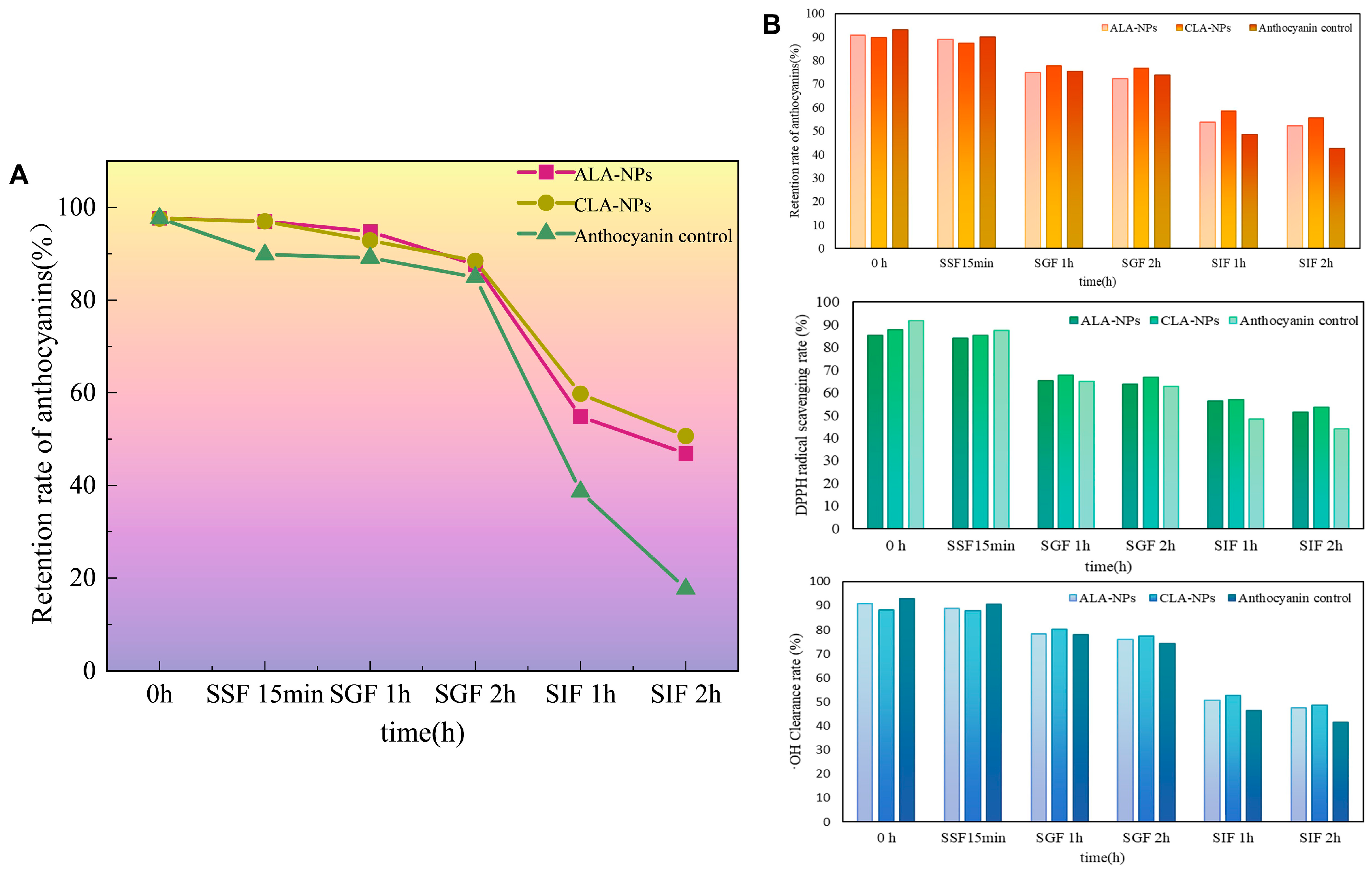
2.4.1. Anthocyanin Retention Kinetics During Gastrointestinal Digestion
2.4.2. Dynamic Changes in Antioxidant Activity After Digestion
2.5. Cell Compatibility and In Vitro Lipid-Lowering Efficacy
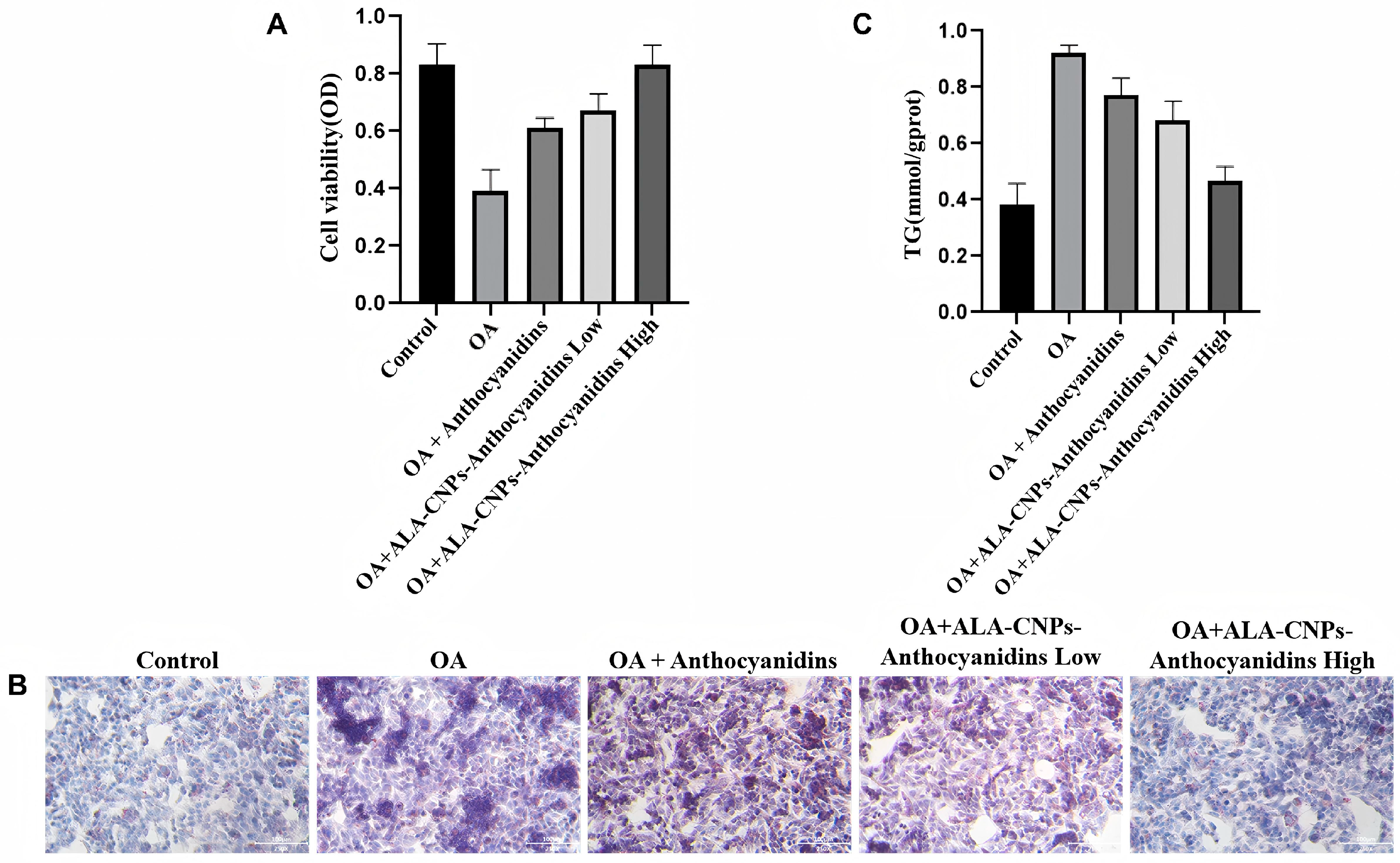
2.5.1. Cell Compatibility
2.5.2. Inhibition of OA-Induced Lipid Accumulation
3. Discussion
3.1. Regulatory Role of Shell Polysaccharide Conformation in Nanocarrier Self-Assembly and Encapsulation Efficiency
3.2. Multiple Non-Covalent Crosslinking and Phase Transformation: The Physicochemical Basis of Microstructural Stability
3.3. Physical Barrier and Microenvironment Reconstruction: Defense Across Extreme Environments and the Gastrointestinal Barrier
3.4. Cascade Amplification from Structure to Stability to Efficacy: Enhanced Intracellular Relief of Lipotoxicity
4. Materials and Methods
4.1. Materials and Reagents
4.2. Extraction of Blueberry Anthocyanins
4.3. Construction and Process Optimization of Plant-Based Bilayer Nanocarriers
4.3.1. Preparation of Nanocarriers
4.3.2. Optimization by Response Surface Methodology
4.4. Determination of Encapsulation Efficiency
4.5. Molecular Docking Simulation
4.6. Characterization of Microstructure and Physicochemical Properties
4.7. Environmental Stability Evaluation
4.8. In Vitro Simulated Gastrointestinal Digestion and Antioxidant Activity
4.9. Cell Experiments and Verification of In Vitro Lipid-Lowering Activity
4.9.1. Cell Culture and Biocompatibility Assessment
4.9.2. Establishment of the OA-Induced Lipid Accumulation Model and Intervention
4.10. Statistical Analysis
5. Conclusions
Supplementary Materials
Author Contributions
Funding
Institutional Review Board Statement
Informed Consent Statement
Data Availability Statement
Conflicts of Interest
References
- Wang, L.; Lan, W.; Chen, D. Blueberry (Vaccinium spp.) Anthocyanins and Their Functions, Stability, Bioavailability, and Applications. Foods 2024, 13, 2851. [Google Scholar] [CrossRef] [PubMed]
- Wu, X.; Beecher, G.R.; Holden, J.M.; Haytowitz, D.B.; Gebhardt, S.E.; Prior, R.L. Concentrations of anthocyanins in common foods in the United States and estimation of normal consumption. J. Agric. Food Chem. 2006, 54, 4069–4075. [Google Scholar] [CrossRef] [PubMed]
- Zhang, X.; Wang, S.; Wu, Q.; Battino, M.; Giampieri, F.; Bai, W.; Tian, L. Recovering high value-added anthocyanins from blueberry pomace with ultrasound-assisted extraction. Food Chem. X 2022, 16, 100476. [Google Scholar] [CrossRef] [PubMed]
- Araki, R.; Yada, A.; Ueda, H.; Tominaga, K.; Isoda, H. Differences in the Effects of Anthocyanin Supplementation on Glucose and Lipid Metabolism According to the Structure of the Main Anthocyanin: A Meta-Analysis of Randomized Controlled Trials. Nutrients 2021, 13, 2003. [Google Scholar] [CrossRef]
- Remberg, S.F.; Wold, A.-B.; Kvaal, K.; Appelgren, M.; Haffner, K. An approach towards rapid optical measurements of antioxidant activity in blueberry cultivars. J. Appl. Bot. Food Qual. 2012, 80, 36–39. [Google Scholar]
- Kang, J.; Thakali, K.M.; Jensen, G.S.; Wu, X. Phenolic acids of the two major blueberry species in the US Market and their antioxidant and anti-inflammatory activities. Plant Foods Hum. Nutr. 2015, 70, 56–62. [Google Scholar] [CrossRef]
- Li, C.; Feng, J.; Huang, W.Y.; An, X.T. Composition of polyphenols and antioxidant activity of rabbiteye blueberry (Vaccinium ashei) in Nanjing. J. Agric. Food Chem. 2013, 61, 523–531. [Google Scholar] [CrossRef]
- Su, M.-S.; Silva, J.L. Antioxidant Activity and Phytochemicals of Rabbiteye Blueberry Products and by-Products as Affected by Fermentation. In Proceedings of the 2002 IFT Annual Meeting, Anaheim, CA, USA, 15–19 June 2002. [Google Scholar]
- Altaf, M.M.; Ashraf, S.; Khalofah, A.; Khan, M.Q.N.; Anwar, M. Melatonin foliar application promoted anthocyanin accumulation boosted reactive oxygen scavenging by upregulating the key enzymes activities and genes expression of anthocyanin biosynthesis pathway in green and purple mustard under vanadium stress. Sci. Hortic. 2024, 331, 113112. [Google Scholar] [CrossRef]
- Xiao, J.; Li, S.; Sui, Y.; Li, X.; Wu, Q.; Zhang, R.; Zhang, M.; Xie, B.; Sun, Z. In vitro antioxidant activities of proanthocyanidins extracted from the lotus seedpod and ameliorative effects on learning and memory impairment in scopolamine-induced amnesia mice. Food Sci. Biotechnol. 2015, 24, 1487–1494. [Google Scholar] [CrossRef]
- Yilmaz, Y.; Toledo, R.T. Health aspects of functional grape seed constituents. Trends Food Sci. Technol. 2004, 15, 422–433. [Google Scholar] [CrossRef]
- Dong, R.; Wang, Y.; McClements, D.J.; Yu, Q.; Xie, J.; Zhang, H.; Huang, L.; Li, B.; Tian, J.; Chen, Y. Anthocyanin-sulfated polysaccharide-ovalbumin nanocomplex: Intestinal absorption mechanism and intracellular antioxidant activity in Caco-2 cells. Food Chem. 2025, 492, 145472. [Google Scholar] [CrossRef]
- Martinelli, I.; Tomassoni, D.; Bellitto, V.; Roy, P.; Micioni Di Bonaventura, M.V.; Amenta, F.; Amantini, C.; Cifani, C.; Tayebati, S.K. Anti-Inflammatory and Antioxidant Properties of Tart Cherry Consumption in the Heart of Obese Rats. Biology 2022, 11, 646. [Google Scholar] [CrossRef] [PubMed]
- Han, X.; Chen, X.; Zheng, X.; Yan, F. Strawberry anthocyanin pelargonidin-3-glucoside attenuated OA-induced neurotoxicity by activating UPR(mt). Food Funct. 2025, 16, 1330–1346. [Google Scholar] [CrossRef]
- Sendri, N.; Bhandari, P. Anthocyanins: A comprehensive review on biosynthesis, structural diversity, and industrial applications. Phytochem. Rev. 2024, 23, 1913–1974. [Google Scholar] [CrossRef]
- Chen, Y.; Belwal, T.; Xu, Y.; Ma, Q.; Li, D.; Li, L.; Xiao, H.; Luo, Z. Updated insights into anthocyanin stability behavior from bases to cases: Why and why not anthocyanins lose during food processing. Crit. Rev. Food Sci. Nutr. 2023, 63, 8639–8671. [Google Scholar] [CrossRef]
- Xue, H.; Zhao, J.; Wang, Y.; Shi, Z.; Xie, K.; Liao, X.; Tan, J. Factors affecting the stability of anthocyanins and strategies for improving their stability: A review. Food Chem. X 2024, 24, 101883. [Google Scholar] [CrossRef]
- Akkarachaneeyakorn, S.; Tinrat, S. Effects of types and amounts of stabilizers on physical and sensory characteristics of cloudy ready-to-drink mulberry fruit juice. Food Sci. Nutr. 2015, 3, 213–220. [Google Scholar] [CrossRef] [PubMed]
- Ghareaghajlou, N.; Hallaj-Nezhadi, S.; Ghasempour, Z. Red cabbage anthocyanins: Stability, extraction, biological activities and applications in food systems. Food Chem. 2021, 365, 130482. [Google Scholar] [CrossRef]
- Li, N.; Zhou, Z.; Wu, F.; Lu, Y.; Jiang, D.; Zhong, L.; Xie, F. Development of pH-indicative and antimicrobial films based on polyvinyl alcohol/starch incorporated with ethyl lauroyl arginate and mulberry anthocyanin for active packaging. Coatings 2022, 12, 1392. [Google Scholar] [CrossRef]
- Chen, K.; Hu, Y.; Chen, L.; Zhang, J.; Qiao, H.; Li, W.; Zhang, K.; Fang, Y. Role of dehydration temperature on flavonoids composition and free-form volatile profile of raisins during the drying process. Food Chem. 2022, 374, 131747. [Google Scholar] [CrossRef]
- Wu, G.; Fan, L.; Zhou, J.; Liu, X.; Wu, S.; Wu, C.; Wang, Y. Metal-induced color change in blackberry wine. LWT 2023, 173, 114361. [Google Scholar] [CrossRef]
- Walencik, P.K.; Choińska, R.; Gołębiewska, E.; Kalinowska, M. Metal–Flavonoid Interactions—From Simple Complexes to Advanced Systems. Molecules 2024, 29, 2573. [Google Scholar] [CrossRef] [PubMed]
- Zhang, P.; Li, Y.; Chong, S.; Yan, S.; Yu, R.; Chen, R.; Si, J.; Zhang, X. Identification and quantitative analysis of anthocyanins composition and their stability from different strains of Hibiscus syriacus L. flowers. Ind. Crops Prod. 2022, 177, 114457. [Google Scholar]
- Cai, Z.-Z.; Wang, H.-F.; Li, W.-Z.; Lee, W.J.; Li, W.; Wang, Y.; Wang, Y. Preparation of l-α-glyceryl phosphorylcholine by hydrolysis of soy lecithin using phospholipase A1 in a novel solvent-free water in oil system. LWT 2020, 129, 109562. [Google Scholar] [CrossRef]
- Alhajj, M.J.; Montero, N.; Yarce, C.J.; Salamanca, C.H. Lecithins from vegetable, land, and marine animal sources and their potential applications for cosmetic, food, and pharmaceutical sectors. Cosmetics 2020, 7, 87. [Google Scholar] [CrossRef]
- Swallah, M.S.; Yang, X.; Li, J.; Korese, J.K.; Wang, S.; Fan, H.; Yu, H.; Huang, Q. The pros and cons of soybean bioactive compounds: An overview. Food Rev. Int. 2023, 39, 5104–5131. [Google Scholar] [CrossRef]
- Wang, G.; Wang, T. Oxidative stability of egg and soy lecithin as affected by transition metal ions and pH in emulsion. J. Agric. Food Chem. 2008, 56, 11424–11431. [Google Scholar] [CrossRef]
- Huang, J.; Yang, D.; Gao, S.; Wang, T. Effects of soy-lecithin on lipid metabolism and hepatic expression of lipogenic genes in broiler chickens. Livest. Sci. 2008, 118, 53–60. [Google Scholar] [CrossRef]
- Poston, H.A. Response of rainbow trout to soy lecithin, choline, and autoclaved isolated soy protein. Progress. Fish-Cult. 1991, 53, 85–90. [Google Scholar] [CrossRef]
- Hellhammer, J.; Fries, E.; Buss, C.; Engert, V.; Tuch, A.; Rutenberg, D.; Hellhammer, D. Effects of soy lecithin phosphatidic acid and phosphatidylserine complex (PAS) on the endocrine and psychological responses to mental stress. Stress 2004, 7, 119–126. [Google Scholar] [CrossRef] [PubMed]
- Chen, B.H.; Stephen Inbaraj, B. Nanoemulsion and Nanoliposome Based Strategies for Improving Anthocyanin Stability and Bioavailability. Nutrients 2019, 11, 1052. [Google Scholar] [CrossRef]
- Yang, Y.; Sun, Y.; Kang, X.; Wang, Y. mRNA vaccine platforms and novel delivery systems: From mechanistic principles to clinical translation. Hum. Vaccin. Immunother. 2025, 21, 2597629. [Google Scholar] [CrossRef]
- Cao, T.; Wei, Z.; Xue, C. Recent advances in nutraceutical delivery systems constructed by protein-polysaccharide complexes: A systematic review. Compr. Rev. Food Sci. Food Saf. 2025, 24, e70115. [Google Scholar] [CrossRef]
- Catalkaya, G.; Guldiken, B.; Capanoglu, E. Encapsulation of anthocyanin-rich extract from black chokeberry (Aronia melanocarpa) pomace by spray drying using different coating materials. Food Funct. 2022, 13, 11579–11591. [Google Scholar] [CrossRef] [PubMed]
- Cui, H.; Si, X.; Tian, J.; Lang, Y.; Gao, N.; Tan, H.; Bian, Y.; Zang, Z.; Jiang, Q.; Bao, Y.; et al. Anthocyanins-loaded nanocomplexes comprising casein and carboxymethyl cellulose: Stability, antioxidant capacity, and bioaccessibility. Food Hydrocoll. 2022, 122, 107073. [Google Scholar] [CrossRef]
- Pirestani, S.; Nasirpour, A.; Keramat, J.; Desobry, S.; Jasniewski, J. Structural properties of canola protein isolate-gum Arabic Maillard conjugate in an aqueous model system. Food Hydrocoll. 2018, 79, 228–234. [Google Scholar] [CrossRef]
- Prasad, N.; Thombare, N.; Sharma, S.; Kumar, S. Gum arabic—A versatile natural gum: A review on production, processing, properties and applications. Ind. Crops Prod. 2022, 187, 115304. [Google Scholar] [CrossRef]
- Shi, Y.; Li, C.; Zhang, L.; Huang, T.; Ma, D.; Tu, Z.-C.; Wang, H.; Xie, H.; Zhang, N.-H.; Ouyang, B.-L. Characterization and emulsifying properties of octenyl succinate anhydride modified Acacia seyal gum (gum arabic). Food Hydrocoll. 2017, 65, 10–16. [Google Scholar] [CrossRef]
- Bai, L.; Huan, S.; Li, Z.; McClements, D.J. Comparison of emulsifying properties of food-grade polysaccharides in oil-in-water emulsions: Gum arabic, beet pectin, and corn fiber gum. Food Hydrocoll. 2017, 66, 144–153. [Google Scholar] [CrossRef]
- Pirestani, S.; Nasirpour, A.; Keramat, J.; Desobry, S. Preparation of chemically modified canola protein isolate with gum Arabic by means of Maillard reaction under wet-heating conditions. Carbohydr. Polym. 2017, 155, 201–207. [Google Scholar] [CrossRef]
- Zia, K.M.; Tabasum, S.; Nasif, M.; Sultan, N.; Aslam, N.; Noreen, A.; Zuber, M. A review on synthesis, properties and applications of natural polymer based carrageenan blends and composites. Int. J. Biol. Macromol. 2017, 96, 282–301. [Google Scholar] [CrossRef] [PubMed]
- Ahmed, A.B.; Adel, M.; Karimi, P.; Peidayesh, M. Pharmaceutical, cosmeceutical, and traditional applications of marine carbohydrates. Adv. Food Nutr. Res. 2014, 73, 197–220. [Google Scholar] [PubMed]
- Tarman, K.; Sadi, U.; Santoso, J.; Hardjito, L. Carrageenan and its enzymatic extraction. Encycl. Mar. Biotechnol. 2020, 1, 147–159. [Google Scholar]
- Hotchkiss, S.; Brooks, M.; Campbell, R.; Philp, K.; Trius, A. The use of carrageenan in food. In Carrageenans: Sources and Extraction Methods, Molecular Structure, Bioactive Properties and Health Effects; Nova Science Publishers, Inc.: Huntington, NY, USA, 2016; pp. 229–243. [Google Scholar]
- Mangione, M.R.; Giacomazza, D.; Bulone, D.; Martorana, V.; San Biagio, P.L. Thermoreversible gelation of kappa-carrageenan: Relation between conformational transition and aggregation. Biophys. Chem. 2003, 104, 95–105. [Google Scholar] [CrossRef]
- Tari, Ö.; Kara, S.; Pekcan, Ö. Critical exponents of kappa carrageenan in the coil-helix and helix-coil hysteresis loops. J. Macromol. Sci. Part B 2009, 48, 812–822. [Google Scholar] [CrossRef]
- Salah, M.; Xu, X. Anthocyanin-β-lactoglobulin nanoparticles in acidic media: Synthesis, characterization and interaction study. J. Mol. Struct. 2021, 1232, 129995. [Google Scholar] [CrossRef]
- Ghareaghajlou, N.; Hallaj-Nezhadi, S.; Ghasempour, Z. Nano-liposomal system based on lyophilization of monophase solution technique for encapsulating anthocyanin-rich extract from red cabbage. Dye. Pigment. 2022, 202, 110263. [Google Scholar] [CrossRef]
- Wang, L.; Wang, L.; Wang, X.; Lu, B.; Zhang, J. Preparation of blueberry anthocyanin liposomes and changes of vesicle properties, physicochemical properties, in vitro release, and antioxidant activity before and after chitosan modification. Food Sci. Nutr. 2022, 10, 75–87. [Google Scholar] [CrossRef]
- Li, Z.; Tian, J.; Tian, Q.; Zang, Z.; Wang, Y.; Jiang, Q.; Chen, Y.; Yang, B.; Yang, S.; Yang, Y.; et al. Improved uptake of anthocyanins-loaded nanoparticles based on phenolic acid-grafted zein and lecithin. Food Chem. 2025, 466, 142235. [Google Scholar] [CrossRef] [PubMed]
- Zhao, X.; Zhang, X.; Tie, S.; Hou, S.; Wang, H.; Song, Y.; Rai, R.; Tan, M. Facile synthesis of nano-nanocarriers from chitosan and pectin with improved stability and biocompatibility for anthocyanins delivery: An in vitro and in vivo study. Food Hydrocoll. 2020, 109, 106114. [Google Scholar] [CrossRef]
- Rosales, T.K.O.; Pedrosa, L.d.F.; Nascimento, K.R.; Fioroto, A.M.; Toniazzo, T.; Tadini, C.C.; Purgatto, E.; Hassimotto, N.M.A.; Fabi, J.P. Nanoencapsulated anthocyanins: A new technological approach to increase physical-chemical stability and bioaccessibility. Food Hydrocoll. 2023, 139, 108516. [Google Scholar] [CrossRef]
- Cheng, Z.; Wei, W.; Chen, Y.; Xu, A.; Wang, Y.; Li, B. Construction of nanoparticles from blueberry anthocyanins-lecithin/gum Arabic improves lipid droplet accumulation and gut microbiota disturbance in HFD-induced obese mice. Int. J. Biol. Macromol. 2024, 264, 130595. [Google Scholar] [CrossRef]
- Li, R.; Ye, Z.; Yang, W.; Xu, Y.-J.; Tan, C.-P.; Liu, Y. Blueberry anthocyanins from commercial products: Structure identification and potential for diabetic retinopathy amelioration. Molecules 2022, 27, 7475. [Google Scholar] [CrossRef]
- Li, D.; Meng, X.; Li, B. Profiling of anthocyanins from blueberries produced in China using HPLC-DAD-MS and exploratory analysis by principal component analysis. J. Food Compos. Anal. 2016, 47, 1–7. [Google Scholar] [CrossRef]
- Zhang, L.; Aniya; Xing, S.; Li, J.; Liu, Y.; Li, C.; Zhu, J.; Li, Y.; Fu, X. Preparation, physicochemical properties and stability of anthocyanin nanoliposomes before and after double-layer modification using synanthrin and pea protein isolate. Molecules 2025, 30, 2892. [Google Scholar] [CrossRef]
- Homayoonfal, M.; Mousavi, M.; Kiani, H.; Askari, G.; Desobry, S.; Arab-Tehrany, E. Modifying the stability and surface characteristic of anthocyanin compounds incorporated in the nanoliposome by chitosan biopolymer. Pharmaceutics 2022, 14, 1622. [Google Scholar] [CrossRef] [PubMed]
- Zhang, J.; Yang, Y.; Zhang, J.; Shi, J.; Liu, L.; Huang, X.; Song, W.; Li, Z.; Zou, X.; Povey, M. High-Stability Bi-Layer Films Incorporated with Liposomes @Anthocyanin/Carrageenan/Agar for Shrimp Freshness Monitoring. Foods 2023, 12, 732. [Google Scholar] [CrossRef]
- Gonçalves, A.C.; Falcão, A.; Alves, G.; Lopes, J.A.; Silva, L.R. Employ of Anthocyanins in Nanocarriers for Nano Delivery: In Vitro and In Vivo Experimental Approaches for Chronic Diseases. Pharmaceutics 2022, 14, 2272. [Google Scholar] [CrossRef] [PubMed]
- Guo, H.; Liu, G.; Zhong, R.; Wang, Y.; Wang, D.; Xia, M. Cyanidin-3-O-β-glucoside regulates fatty acid metabolism via an AMP-activated protein kinase-dependent signaling pathway in human HepG2 cells. Lipids Health Dis. 2012, 11, 10. [Google Scholar] [CrossRef]
- Jia, Y.; Wu, C.; Kim, Y.-S.; Yang, S.O.; Kim, Y.; Kim, J.-S.; Jeong, M.-Y.; Lee, J.H.; Kim, B.; Lee, S. A dietary anthocyanin cyanidin-3-O-glucoside binds to PPARs to regulate glucose metabolism and insulin sensitivity in mice. Commun. Biol. 2020, 3, 514. [Google Scholar] [CrossRef]
- Chen, J.; Fang, W.; Liu, W.; Liu, J.; Gong, P. Microcapsules and Nanoliposomes Based Strategies to Improve the Stability of Blueberry Anthocyanins. Molecules 2023, 28, 7344. [Google Scholar] [CrossRef]
- Al-Khayri, J.M.; Asghar, W.; Akhtar, A.; Ayub, H.; Aslam, I.; Khalid, N.; Al-Mssallem, M.Q.; Alessa, F.M.; Ghazzawy, H.S.; Attimarad, M. Anthocyanin delivery systems: A critical review of recent research findings. Appl. Sci. 2022, 12, 12347. [Google Scholar] [CrossRef]
- Gan, N.; Li, Q.; Li, Y.; Li, M.; Li, Y.; Chen, L.; Zeng, T.; Song, Y.; Geng, F.; Wu, D. Encapsulation of lemongrass essential oil by bilayer liposomes based on pectin, gum Arabic, and carrageenan: Characterization and application in chicken meat preservation. Int. J. Biol. Macromol. 2024, 281, 135706. [Google Scholar] [CrossRef]
- Mohammadalinejhad, S.; Kurek, M.A. Microencapsulation of anthocyanins—Critical review of techniques and wall materials. Appl. Sci. 2021, 11, 3936. [Google Scholar] [CrossRef]
- Ge, J.; Yue, P.; Chi, J.; Liang, J.; Gao, X. Formation and stability of anthocyanins-loaded nanocomplexes prepared with chitosan hydrochloride and carboxymethyl chitosan. Food Hydrocoll. 2018, 74, 23–31. [Google Scholar] [CrossRef]
- Fu, W.; Li, S.; Helmick, H.; Hamaker, B.R.; Kokini, J.L.; Reddivari, L. Complexation with Polysaccharides Enhances the Stability of Isolated Anthocyanins. Foods 2023, 12, 1846. [Google Scholar] [CrossRef] [PubMed]
- Dudek, A.; Strugała-Danak, P.; Kral, T.; Hof, M.; Pruchnik, H. An analysis of interactions between three structurally diverse anthocyanidins, as well as their glucosides, and model biological membranes, albumin, and plasmid DNA. Sci. Rep. 2023, 13, 12883. [Google Scholar] [CrossRef] [PubMed]
- Ossman, T.; Fabre, G.; Trouillas, P. Interaction of wine anthocyanin derivatives with lipid bilayer membranes. Comput. Theor. Chem. 2016, 1077, 80–86. [Google Scholar] [CrossRef]
- Oteiza, P.I.; Erlejman, A.G.; Verstraeten, S.V.; Keen, C.L.; Fraga, C.G. Flavonoid-membrane interactions: A protective role of flavonoids at the membrane surface? J. Immunol. Res. 2005, 12, 19–25. [Google Scholar] [CrossRef]
- Guan, Y.; Zhong, Q. The improved thermal stability of anthocyanins at pH 5.0 by gum arabic. LWT-Food Sci. Technol. 2015, 64, 706–712. [Google Scholar] [CrossRef]
- Lin, Y.; Li, C.; Shi, L.; Wang, L. Anthocyanins: Modified New Technologies and Challenges. Foods 2023, 12, 1368. [Google Scholar] [CrossRef]
- Zhou, M.; Han, Y.; McClements, D.J.; Cheng, C.; Chen, S. Co-encapsulation of anthocyanin and cinnamaldehyde in nanoparticle-filled carrageenan films: Fabrication, characterization, and active packaging applications. Food Hydrocoll. 2024, 149, 109609. [Google Scholar] [CrossRef]
- Ali, B.H.; Ziada, A.; Blunden, G. Biological effects of gum arabic: A review of some recent research. Food Chem. Toxicol. 2009, 47, 1–8. [Google Scholar] [CrossRef]
- Kumkum, R.; Aston-Mourney, K.; McNeill, B.A.; Rivera, L.R. Protection of Anthocyanins by Food Matrix During Simulated Digestion: Comparative Analysis of Whole-Açaí Powder and Extracts. Foods 2026, 15, 263. [Google Scholar] [CrossRef] [PubMed]
- Liu, Y.N.; Zhu, H.X.; Li, T.Y.; Yang, X.; Li, X.J.; Zhang, W.K. Lipid nanoparticle encapsulated oleic acid induced lipotoxicity to hepatocytes via ROS overload and the DDIT3/BCL2/BAX/Caspases signaling in vitro and in vivo. Free Radic. Biol. Med. 2024, 222, 361–370. [Google Scholar] [CrossRef] [PubMed]
- Brodkorb, A.; Egger, L.; Alminger, M.; Alvito, P.; Assunção, R.; Ballance, S.; Bohn, T.; Bourlieu-Lacanal, C.; Boutrou, R.; Carrière, F.; et al. INFOGEST static in vitro simulation of gastrointestinal food digestion. Nat. Protoc. 2019, 14, 991–1014. [Google Scholar] [CrossRef] [PubMed]
- Ni, C.; Liao, Q.; Ying, R.; Hayat, K.; Salamatullah, A.M.; Huang, M. Recent advances in surface-modified liposomes with polysaccharides for bioactive delivery. Food Chem. 2025, 492, 145580. [Google Scholar] [CrossRef]
- Sebaaly, C.; Trifan, A.; Sieniawska, E.; Greige-Gerges, H. Chitosan-coating effect on the characteristics of liposomes: A focus on bioactive compounds and essential oils: A review. Processes 2021, 9, 445. [Google Scholar] [CrossRef]
- Zhong, H.; Xu, J.; Wang, L.; Hussain, M.; Chen, L.; Guan, R. Preparation, physicochemical characterization, stability, and in vitro digestion kinetics of polysaccharide-coated cyanidin-3-O-glucoside-loaded liposomes. Int. J. Biol. Macromol. 2025, 318, 145329. [Google Scholar] [CrossRef]
- Cheng, Z.; Wang, J.; Bian, Y.; Tan, M.; Chen, Y.; Wang, Y.; Li, B. Oral polysaccharide-coated liposome-modified double-layered nanoparticles containing anthocyanins: Preparation, characterization, biocompatibility and evaluation of lipid-lowering activity in vitro. Food Chem. 2024, 439, 138166. [Google Scholar] [CrossRef]
- Awad, M.G.; El-Shafiey, S.H.; Ali, R.A.; Abd El-Monem, D.D.; Badawy, A.A.; Al-Serwi, R.H.; El-Magd, M.A.; Hanafy, N.A.N. Targeted liposomal nano-therapy combining anthocyanin and cisplatin reduces Ehrlich ascites carcinoma burden. Front. Pharmacol. 2025, 16, 1659575. [Google Scholar] [CrossRef] [PubMed]
- Zhang, H.; Qi, X.; Yang, L.; Xia, P.; Ling, J.; Zheng, X.; Liang, J.; Yang, P.; Chen, Y.; Liu, X.; et al. Advances in anthocyanin nanoparticle delivery systems in anti-inflammatory therapies. Pharmacol. Res. 2025, 222, 108038. [Google Scholar] [CrossRef]
- Wupperfeld, D.; Fricker, G.; Bois De Fer, B.; Frank, L.; Wehrle, A.; Popovic, B. Essential phospholipids decrease apoptosis and increase membrane transport in human hepatocyte cell lines. Lipids Health Dis. 2022, 21, 91. [Google Scholar] [CrossRef]
- Duan, D.-L.; Xu, H.-Y.; Feng, Z.-Q.; Chen, Y.-L.; Dong, X.-Y.; Wang, Q.; Xiao, G.-S.; Yu, Y.-S.; Huang, H.-S. Extraction of anthocyanin from blueberry and its antioxidant activity and stability. Food Res. Dev. 2023, 44, 137–143. [Google Scholar]
- Lee, J.; Durst, R.W.; Wrolstad, R.E.; Eisele, T.; Giusti, M.M.; Hofsommer, H.; Koswig, S.; Krueger, D.A.; Kupina, S.; Martin, S.K.; et al. Determination of total monomeric anthocyanin pigment content of fruit juices, beverages, natural colorants, and wines by the pH differential method: Collaborative study. J. AOAC Int. 2005, 88, 1269–1278. [Google Scholar] [CrossRef]
- Lemkul, J.A.; Huang, J.; Roux, B.; MacKerell, A.D., Jr. An empirical polarizable force field based on the classical drude oscillator model: Development history and recent applications. Chem. Rev. 2016, 116, 4983–5013. [Google Scholar] [CrossRef] [PubMed]
- Osipova, D.; Kokoreva, K.; Lazebnik, L.; Golovanova, E.; Pavlov, C.; Dukhanin, A.; Orlova, S.; Starostin, K. Regression of liver steatosis following phosphatidylcholine administration: A review of molecular and metabolic pathways involved. Front. Pharmacol. 2022, 13, 797923. [Google Scholar] [CrossRef]
- Delova, A.; Losantos, R.; Pecourneau, J.; Mourer, M.; Pasc, A.; Monari, A. Modelling the effects of E/Z photoisomerization of a cyclocurcumin analogue on the properties of cellular lipid membranes. Phys. Chem. Chem. Phys. 2023, 25, 20567–20574. [Google Scholar] [CrossRef] [PubMed]


Disclaimer/Publisher’s Note: The statements, opinions and data contained in all publications are solely those of the individual author(s) and contributor(s) and not of MDPI and/or the editor(s). MDPI and/or the editor(s) disclaim responsibility for any injury to people or property resulting from any ideas, methods, instructions or products referred to in the content. |
© 2026 by the authors. Licensee MDPI, Basel, Switzerland. This article is an open access article distributed under the terms and conditions of the Creative Commons Attribution (CC BY) license.
Share and Cite
Zhu, C.; Xu, J.; Ma, Y.; Mi, Y.; Yang, X.; Shi, D.; Song, K. Conformation-Driven Bilayer Nanocarriers for Anthocyanins Using Shell Polysaccharides: Stabilization Mechanisms and Enhanced In Vitro Lipid-Lowering Activity. Molecules 2026, 31, 1634. https://doi.org/10.3390/molecules31101634
Zhu C, Xu J, Ma Y, Mi Y, Yang X, Shi D, Song K. Conformation-Driven Bilayer Nanocarriers for Anthocyanins Using Shell Polysaccharides: Stabilization Mechanisms and Enhanced In Vitro Lipid-Lowering Activity. Molecules. 2026; 31(10):1634. https://doi.org/10.3390/molecules31101634
Chicago/Turabian StyleZhu, Chunting, Jing Xu, Yunmei Ma, Yue Mi, Xing Yang, Dongfang Shi, and Kai Song. 2026. "Conformation-Driven Bilayer Nanocarriers for Anthocyanins Using Shell Polysaccharides: Stabilization Mechanisms and Enhanced In Vitro Lipid-Lowering Activity" Molecules 31, no. 10: 1634. https://doi.org/10.3390/molecules31101634
APA StyleZhu, C., Xu, J., Ma, Y., Mi, Y., Yang, X., Shi, D., & Song, K. (2026). Conformation-Driven Bilayer Nanocarriers for Anthocyanins Using Shell Polysaccharides: Stabilization Mechanisms and Enhanced In Vitro Lipid-Lowering Activity. Molecules, 31(10), 1634. https://doi.org/10.3390/molecules31101634