Recent Advances in Electrocatalytic Treatment and Valorization of Pulping and Papermaking Wastewater



Abstract
1. Introduction
2. Pulping and Paper-Making Processes and Wastewater Characteristics
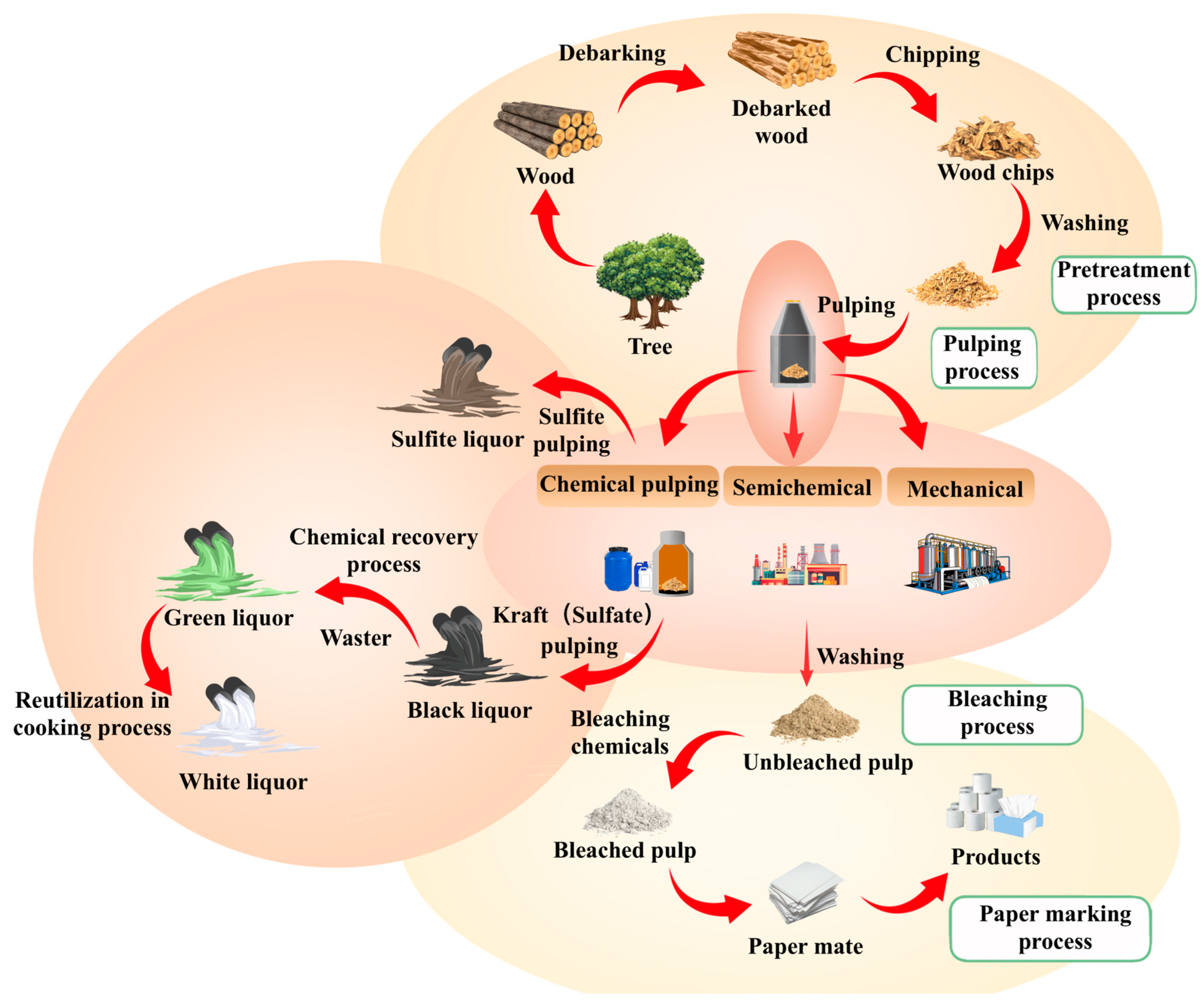
2.1. Pulping Processes and Wastewater Characteristics
2.1.1. Chemical Pulping
2.1.2. Mechanical Pulping
2.1.3. Semi-Chemical Pulping
2.2. Bleaching Processes and Wastewater Characteristics
2.3. Papermaking Process and Wastewater Characteristics

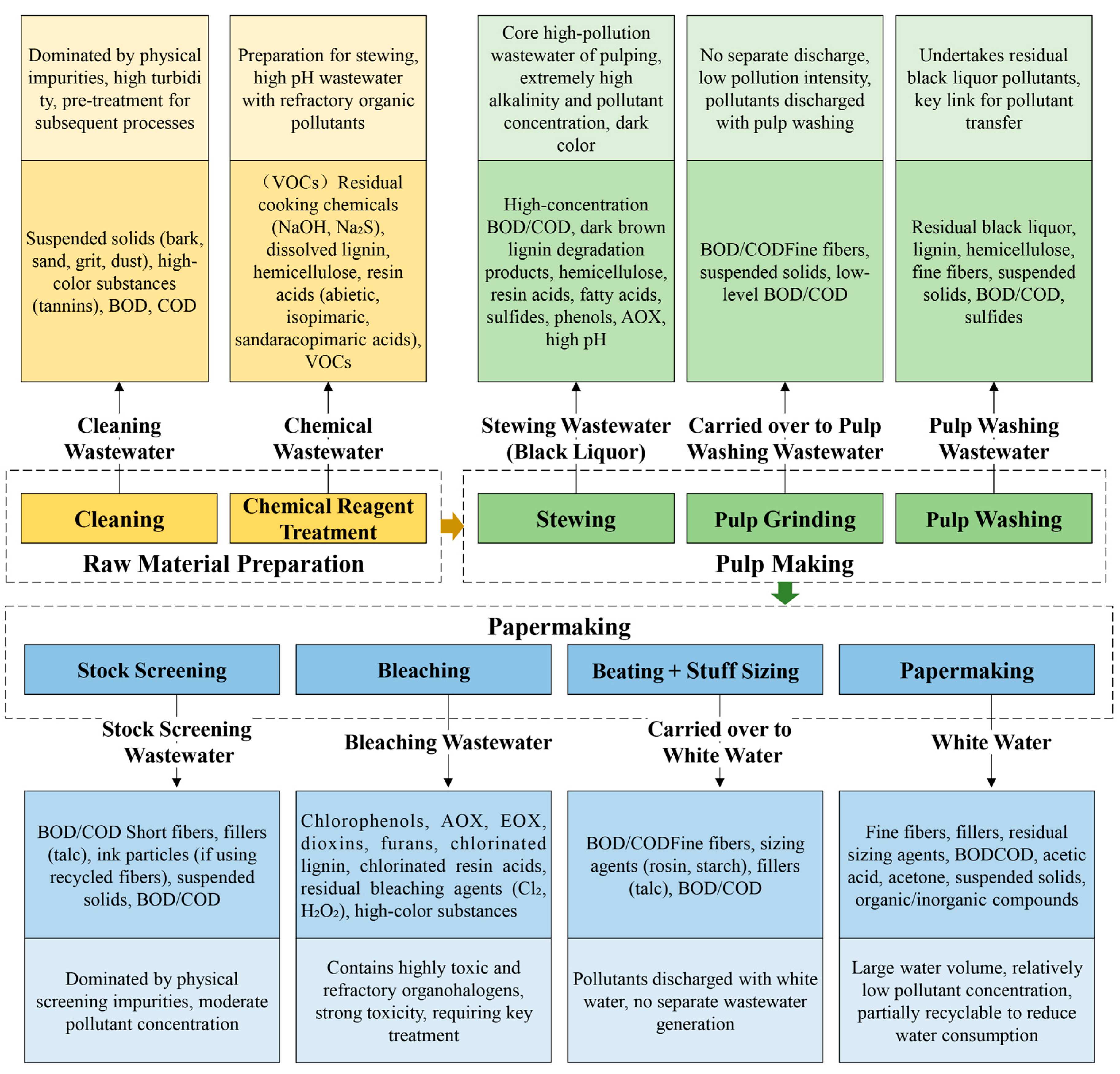
| Process Stage | Key Process Step | Main Wastewater/Pollutant Source | Key Pollutant Types & Characteristics | pH | COD Concentration (mg/L) | BOD/COD Ratio | Pollutant Load Intensity | TSS (mg/L) | Biodegradability | Refs. |
|---|---|---|---|---|---|---|---|---|---|---|
| Raw Material Prep. | Debarking, chipping, washing | Wood/non-wood surface impurities, silt, extractives | Suspended Solids (SS), resin acids, fatty acids, tannins (color), pesticide residues, silicates (agro-based) | 6.0–7.5 | 1000–3000 | 0.3–0.5 | Low | 7150 | Good | [33,47,48] |
| Pulping | Chemical (Kraft) | BL, methanol, ethanol, furfural, reduced sulfur compounds (H2S, CH3SH) | Alkali lignin, lignin fragments, hemicellulose deg. products (formic, acetic acids), resins, fatty acids, residual inorganics (NaOH, Na2S); Volatile organic compounds (VOCs), Total reduced sulfur (TRS) | 9–12 | 10,000–100,000 | 0.15–0.3 | Very High (>90% of pulping load) | 40 | Poor | [19,47,48,49] |
| Chemical (Sulfite) | Spent sulfite liquor (SSL) | Lignosulfonates, carbohydrates, sulfites, phenols, furan derivatives | 1–3 | 5000–50,000 | 0.2–0.4 | High (60–80% of kraft load) | - | Moderate | [27,50] | |
| Mechanical | Washing wastewater | Fiber fines, lignin fragments, resin acids, fatty acids, residual peroxides | 4.0–7.5 | 1000–3000 | 0.3–0.4 | Low (1/5–1/3 of chemical pulping) | 330–510 | Good | [31,33,48] | |
| Semi-chemical | Spent cooking/washing water | Partially dissolved lignin, DCS, residual Na2SO3, trace AOX | 7.0–8.5 | 5000–15,000 | 0.25–0.45 | Moderate (1.2–1.8× mech.; 40–60% of chem.) | - | Moderate | [24,25,33,37,38] | |
| Bleaching | ECF/TCF Bleaching | Bleach plant effluent | AOX, chlorides, residual oxidants, lignin oxidation products, high color | 2–12 | 2000–8000 | 0.15–0.3 | Medium-High (high toxicity) | 950 | Poor | [39,41,44,51] |
| Papermaking | Stock prep. forming, pressing, drying | Whitewater, spills, dryer condensate | Fibers, fillers (clay, CaCO3), additives (starch, dyes, sizing), trace VOCs, microplastics | 6.5–8.0 | 500–1500 | 0.25–0.4 | Low-Medium | 1241 | Moderate | [6,44,46,49,51] |
2.4. Key Factors Affecting Wastewater Characteristics and Pollutant Differences
2.4.1. Raw Material Characteristics
2.4.2. Processing Technologies
2.4.3. Operating Parameters and Process Control Levels
3. Common Treatment Methods for Pulping and Paper-Making Wastewater
3.1. Physical Treatments
3.2. Biological Treatments
3.3. Chemical Treatments
3.4. Electrochemical Treatments
3.4.1. Electrocoagulation Technologies
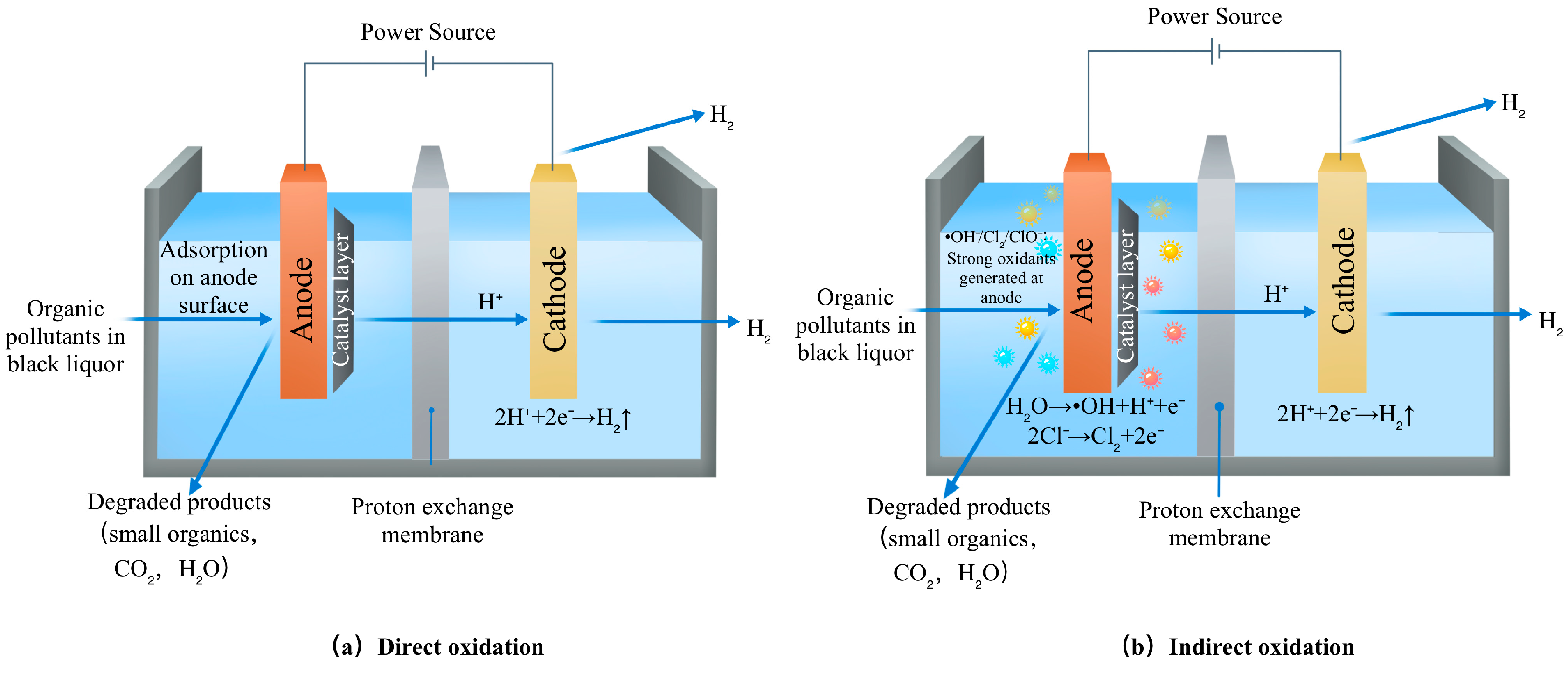
3.4.2. Electro-Oxidation Technologies
3.4.3. Electroreduction Technologies
3.4.4. Integration of Electrocatalytic Oxidation with Biotechnologies
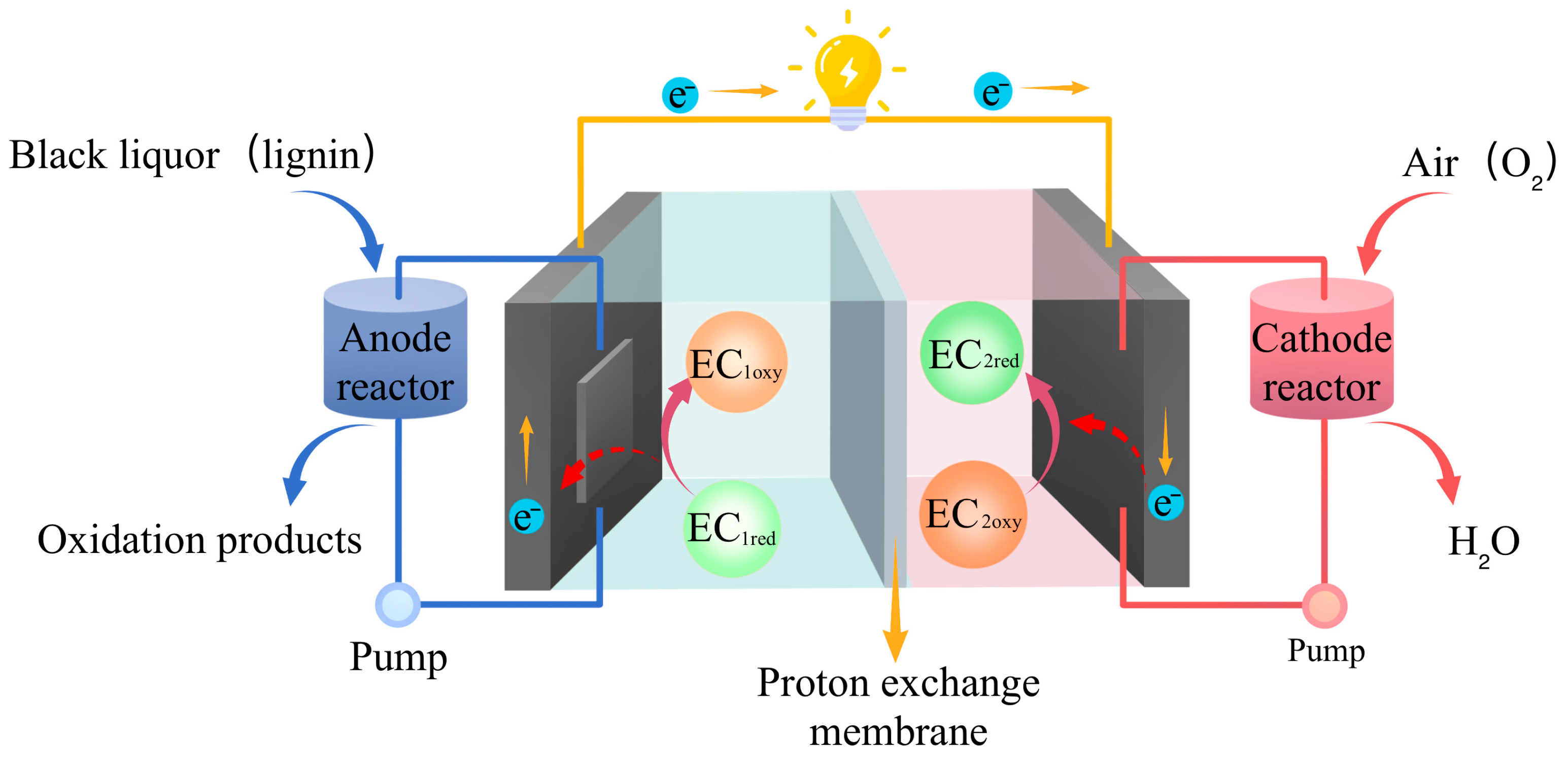
4. Biomass Fuel Cells for Treatment and Valorization of Pulping Wastewater
5. Conclusions
Author Contributions
Funding
Institutional Review Board Statement
Informed Consent Statement
Data Availability Statement
Conflicts of Interest
Abbreviations
| BL | black liquor |
| AOX | adsorbable organic halides |
| AOPs | advanced oxidation processes |
| BEF | bio-electro-Fenton |
| BESs | bioelectrochemical systems |
| BOD | biochemical oxygen demand |
| CCF | chlorine-containing bleaching |
| COD | chemical oxygen demand |
| DBFC | direct biomass fuel cell |
| DCS | dissolved and colloidal substances |
| EAOPs | electrochemical advanced oxidation processes |
| ECF | elemental chlorine-free |
| EF | Electro-Fenton |
| ER | electrocatalytic reduction |
| FAO | Food and Agriculture Organization |
| ISO | International Organization for Standardization |
| KL | kraft lignin |
| LFFC | lignin-based flow fuel cell |
| MEC | microbial electrolysis cell |
| MFC | microbial fuel cell |
| P&P | pulping and paper-making |
| PNSB | purple non-sulfur bacteria |
| POM | polyoxometalate |
| SCWO | supercritical water oxidation |
| SS | suspended solids |
| SSL | spent sulfite liquor |
| TCF | totally chlorine-free |
| TOC | total organic carbon |
| TRS | total reduced sulfur |
| TSS | total suspended solids |
| VOCs | volatile organic compounds |
References
- Yang, M.; Li, J.; Wang, S.; Zhao, F.; Zhang, C.; Zhang, C.; Han, S. Status and Trends of Enzyme Cocktails for Efficient and Ecological Production in the Pulp and Paper Industry. J. Clean. Prod. 2023, 418, 138196. [Google Scholar] [CrossRef]
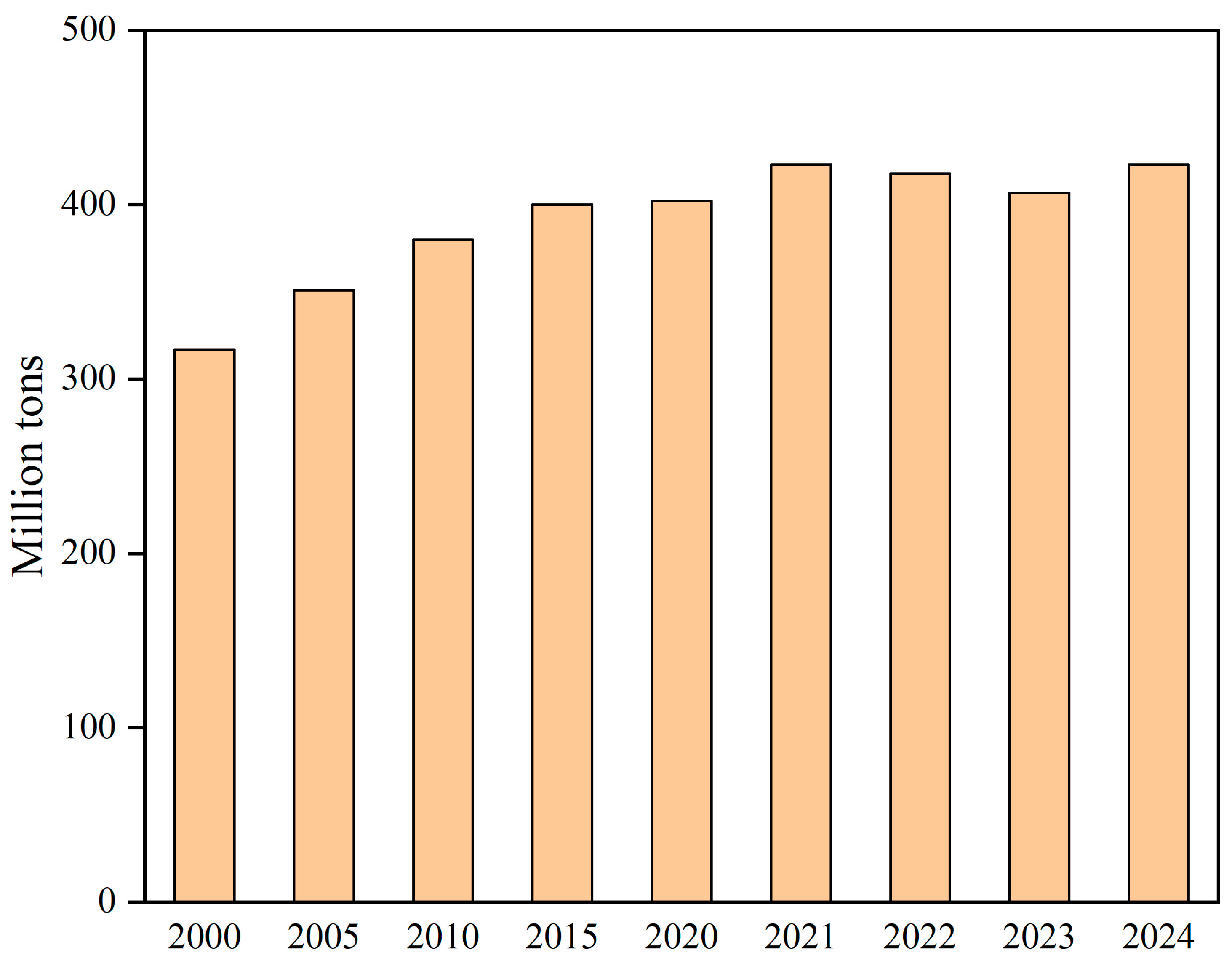
- FAO. Global Forest Products Facts and Figures 2024; FAO: Rome, Italy, 2025. [Google Scholar]
- Sousa, M.R.S.; Lora-García, J.; López-Pérez, M.-F.; Santafé-Moros, A.; Gozálvez-Zafrilla, J.M. Operating Conditions Optimization via the Taguchi Method to Remove Colloidal Substances from Recycled Paper and Cardboard Production Wastewater. Membranes 2020, 10, 170. [Google Scholar] [CrossRef] [PubMed]
- Liang, X.; Xu, Y.; Yin, L.; Wang, R.; Li, P.; Wang, J.; Liu, K. Sustainable Utilization of Pulp and Paper Wastewater. Water 2023, 15, 4135. [Google Scholar] [CrossRef]
- Ministry of Ecology and Environment of the People’s Republic of China (MEE). 2024 National Emission Source Statistical Survey Report (Guotongzhi [2024] No.11); MEE: Beijing, China, 2025.
- Pokhrel, D.; Viraraghavan, T. Treatment of Pulp and Paper Mill Wastewater—A Review. Sci. Total Environ. 2004, 333, 37–58. [Google Scholar] [CrossRef]
- Meyer, T.; Edwards, E.A. Anaerobic Digestion of Pulp and Paper Mill Wastewater and Sludge. Water Res. 2014, 65, 321–349. [Google Scholar] [CrossRef]
- Dubeski, C.V.; Branion, R.M.R.; Lo, K.V. Biological Treatment of Pulp Mill Wastewater Using Sequencing Batch Reactors. J. Environ. Sci. Health A 2001, 36, 1245–1255. [Google Scholar] [CrossRef]
- El-Ahmady El-Naggar, N.; Rabei, N.H.; El-Malkey, S.E. Eco-Friendly Approach for Biosorption of Pb2+ and Carcinogenic Congo Red Dye from Binary Solution onto Sustainable Ulva Lactuca Biomass. Sci. Rep. 2020, 10, 16021. [Google Scholar] [CrossRef]
- Badar, S.; Farooqi, I.H. Pulp and Paper Industry—Manufacturing Process, Wastewater Generation and Treatment. In Environmental Protection Strategies for Sustainable Development; Malik, A., Grohmann, E., Eds.; Springer: Dordrecht, The Netherlands, 2012; pp. 397–436. [Google Scholar]
- Ali, M.; Sreekrishnan, T.R. Aquatic Toxicity from Pulp and Paper Mill Effluents: A Review. Adv. Environ. Res. 2001, 5, 175–196. [Google Scholar] [CrossRef]
- Kumar, V.; Verma, P. A Critical Review on Environmental Risk and Toxic Hazards of Refractory Pollutants Discharged in Chlorolignin Waste of Pulp and Paper Mills and Their Remediation Approaches for Environmental Safety. Environ. Res. 2023, 236, 116728. [Google Scholar] [CrossRef] [PubMed]
- Chia, W.Y.; Chew, K.W.; Le, C.F.; Lam, S.S.; Chee, C.S.C.; Ooi, M.S.L.; Show, P.L. Sustainable Utilization of Biowaste Compost for Renewable Energy and Soil Amendments. Environ. Pollut. 2020, 267, 115662. [Google Scholar] [CrossRef]
- Li, Q.; Fang, X.; Jin, L.; Sun, X.; Huang, H.; Ma, R.; Zhao, H.; Ren, H. Scientometric Analysis of Electrocatalysis in Wastewater Treatment: Today and Tomorrow. Environ. Sci. Pollut. Res. 2024, 31, 19025–19046. [Google Scholar] [CrossRef]
- Zhou, X.; Yang, J.; Guo, J.; Xiong, W.; Leung, M.K.H. Advances and Prospects in Electrocatalytic Processes for Wastewater Treatment. Processes 2024, 12, 1615. [Google Scholar] [CrossRef]
- Worku, L.A.; Bachheti, A.; Bachheti, R.K.; Rodrigues Reis, C.E.; Chandel, A.K. Agricultural Residues as Raw Materials for Pulp and Paper Production: Overview and Applications on Membrane Fabrication. Membranes 2023, 13, 228. [Google Scholar] [CrossRef]
- Bajpai, P. Basic Overview of Pulp and Paper Manufacturing Process. In Green Chemistry and Sustainability in Pulp and Paper Industry; Springer: Cham, Switzerland, 2015; pp. 11–39. [Google Scholar]
- Farooq, R.; Ahmad, Z. Biological Wastewater Treatment and Resource Recovery; BoD—Books on Demand: Norderstedt, Germany, 2017. [Google Scholar]
- Mandeep; Gupta, G.K.; Liu, H.; Shukla, P. Pulp and Paper Industry–Based Pollutants, Their Health Hazards and Environmental Risks. Curr. Opin. Environ. Sci. Health 2019, 12, 48–56. [Google Scholar] [CrossRef]
- Borton, D.L.; Hall, T.J.; Fisher, R.P.; Thomas, J.F. Pulp & Paper Mill Effluent Environmental Fate & Effects; DEStech Publications, Inc.: Lancaster, PA, USA, 2004. [Google Scholar]
- Liao, B.Q.; Xie, K.; Lin, H.J.; Bertoldo, D. Treatment of Kraft Evaporator Condensate Using a Thermophilic Submerged Anaerobic Membrane Bioreactor. Water Sci. Technol. 2010, 61, 2177–2183. [Google Scholar] [CrossRef] [PubMed]
- Čabalová, I.; Bélik, M.; Kučerová, V.; Jurczyková, T.; Bubeníková, T. Evaluation of Chemical and Morphological Properties of Spruce Wood Stored in the Natural Environment. Polymers 2023, 15, 4734. [Google Scholar] [CrossRef]
- Henriksson, G.; Germgård, U.; Lindström, M.E. A Review on Chemical Mechanisms of Kraft Pulping. Nord. Pulp Pap. Res. J. 2024, 39, 297–311. [Google Scholar] [CrossRef]
- Variny, M. Enhancing the Energy Efficiency of a Black Liquor Evaporation Plant by Mechanical Vapor Recompression Integration. Eng. Proc. 2023, 37, 50. [Google Scholar] [CrossRef]
- Sousa, A.M.; Pinto, I.S.S.; Machado, L.; Gando-Ferreira, L.; Quina, M.J. Sustainability of Kraft Pulp Mills: Bleaching Technologies and Sequences with Reduced Water Use. J. Ind. Eng. Chem. 2023, 125, 58–70. [Google Scholar] [CrossRef]
- Norizan, M.N.; Shazleen, S.S.; Alias, A.H.; Sabaruddin, F.A.; Asyraf, M.R.M.; Zainudin, E.S.; Abdullah, N.; Samsudin, M.S.; Kamarudin, S.H.; Norrrahim, M.N.F. Nanocellulose-Based Nanocomposites for Sustainable Applications: A Review. Nanomaterials 2022, 12, 3483. [Google Scholar] [CrossRef] [PubMed]
- Rueda, C.; Fernández-Rodríguez, J.; Ruiz, G.; Llano, T.; Coz, A. Monosaccharide Production in an Acid Sulfite Process: Kinetic Modeling. Carbohydr. Polym. 2015, 116, 18–25. [Google Scholar] [CrossRef]
- Sirviö, J.A.; Liao, M.; Arjmandi, D.; Haverinen, J.; Wu, R.; Jonsson, M.P.; Xu, C.; Ämmälä, A.; Räty, J.P. Fractionation of Wood Biomass with Thiolactic Acid and Choline Chloride-Based Solvent into White Lignin for Sustainable Cooling Applications. ChemSusChem 2026, 19, e202502104. [Google Scholar] [CrossRef]
- Brar, A.; Kumar, M.; Pareek, N. Comparative Appraisal of Biomass Production, Remediation, and Bioenergy Generation Potential of Microalgae in Dairy Wastewater. Front. Microbiol. 2019, 10, 678–689. [Google Scholar] [CrossRef]
- Li, X.; Ma, R.; Gao, X.; Li, H.; Wang, S.; Song, G. Harnessing Atomically Dispersed Cobalt for the Reductive Catalytic Fractionation of Lignocellulose. Adv. Sci. 2024, 11, 2310202. [Google Scholar] [CrossRef]
- Sharma, N.; Bhardwaj, N.K.; Singh, R.B.P. Environmental Issues of Pulp Bleaching and Prospects of Peracetic Acid Pulp Bleaching: A Review. J. Clean. Prod. 2020, 256, 120338. [Google Scholar] [CrossRef]
- Kamali, M.; Khodaparast, Z. Review on Recent Developments on Pulp and Paper Mill Wastewater Treatment. Ecotoxicol. Environ. Saf. 2015, 114, 326–342. [Google Scholar] [CrossRef]
- Esmaeeli, A.; Sarrafzadeh, M.-H.; Zeighami, S.; Kalantar, M.; Bariki, S.G.; Fallahi, A.; Asgharnejad, H.; Ghaffari, S.-B. A Comprehensive Review on Pulp and Paper Industries Wastewater Treatment Advances. Ind. Eng. Chem. Res. 2023, 62, 8119–8145. [Google Scholar] [CrossRef]
- Pérez, A.D.; Fiskari, J.; Schuur, B. Delignification of Low-Energy Mechanical Pulp (Asplund Fibers) in a Deep Eutectic Solvent System of Choline Chloride and Lactic Acid. Front. Chem. 2021, 9, 688291. [Google Scholar] [CrossRef]
- Danielewicz, D. Industrial Hemp as a Potential Nonwood Source of Fibres for European Industrial-Scale Papermaking—A Review. Materials 2023, 16, 6548. [Google Scholar] [CrossRef] [PubMed]
- Bian, H.; Gao, Y.; Luo, J.; Jiao, L.; Wu, W.; Fang, G.; Dai, H. Lignocellulosic Nanofibrils Produced Using Wheat Straw and Their Pulping Solid Residue: From Agricultural Waste to Cellulose Nanomaterials. Waste Manag. 2019, 91, 1–8. [Google Scholar] [CrossRef] [PubMed]
- Haq, I.; Kumar, S.; Kumari, V.; Singh, S.K.; Raj, A. Evaluation of Bioremediation Potentiality of Ligninolytic Serratia liquefaciens for Detoxification of Pulp and Paper Mill Effluent. J. Hazard. Mater. 2016, 305, 190–199. [Google Scholar] [CrossRef]
- Gribble, G.W. A Recent Survey of Naturally Occurring Organohalogen Compounds. Environ. Chem. 2015, 12, 396–405. [Google Scholar] [CrossRef]
- Schnell, A.; Hodson, P.V.; Steel, P.; Melcer, H.; Carey, J.H. Enhanced Biological Treatment of Bleached Kraft Mill Effluents—II. Reduction of Mixed Function Oxygenase (MFO) Induction in Fish. Water Res. 2000, 34, 501–509. [Google Scholar] [CrossRef]
- Jiménez-López, L.; Eugenio, M.E.; Ibarra, D.; Darder, M.; Martín, J.A.; Martín-Sampedro, R. Cellulose Nanofibers from a Dutch Elm Disease-Resistant Ulmus Minor Clone. Polymers 2020, 12, 2450. [Google Scholar] [CrossRef]
- Rintala, J.A.; Lepistö, S.S. Anaerobic Treatment of Thermomechanical Pulping Whitewater at 35–70 °C. Water Res. 1992, 26, 1297–1305. [Google Scholar] [CrossRef]
- Landim, A.B.; Correia, F.M.; Dalvi, L.C. Oxidant Compounds Neutralization and Control in Bleaching Effluents from a Kraft Hardwood Pulp Mill. IPBC 05 Stockholm June 14–16 2005, 1–6. [Google Scholar]
- Mansour, L.B.; Ksentini, I.; Elleuch, B. Treatment of Wastewaters of Paper Industry by Coagulation–Electroflotation. Desalination 2007, 208, 34–41. [Google Scholar] [CrossRef]
- De los Santos Ramos, W.; Poznyak, T.; Chairez, I.; Córdova, R.I. Remediation of Lignin and Its Derivatives from Pulp and Paper Industry Wastewater by the Combination of Chemical Precipitation and Ozonation. J. Hazard. Mater. 2009, 169, 428–434. [Google Scholar] [CrossRef] [PubMed]
- Mandal, D.D.; Singh, G.; Majumdar, S.; Chanda, P. Challenges in Developing Strategies for the Valorization of Lignin—A Major Pollutant of the Paper Mill Industry. Environ. Sci. Pollut. Res. 2022, 30, 11119–11140. [Google Scholar] [CrossRef]
- Bengtsson, S.; Werker, A.; Christensson, M.; Welander, T. Production of Polyhydroxyalkanoates by Activated Sludge Treating a Paper Mill Wastewater. Bioresour. Technol. 2008, 99, 509–516. [Google Scholar] [CrossRef] [PubMed]
- Mainardis, M.; Buttazzoni, M.; De Bortoli, N.; Mion, M.; Goi, D. Evaluation of Ozonation Applicability to Pulp and Paper Streams for a Sustainable Wastewater Treatment. J. Clean. Prod. 2020, 258, 120781. [Google Scholar] [CrossRef]
- Wang, B.; Gu, L.; Ma, H. Electrochemical Oxidation of Pulp and Paper Making Wastewater Assisted by Transition Metal Modified Kaolin. J. Hazard. Mater. 2007, 143, 198–205. [Google Scholar] [CrossRef]
- Särkkä, H.; Bhatnagar, A.; Sillanpää, M. Recent Developments of Electro-Oxidation in Water Treatment—A Review. J. Electroanal. Chem. 2015, 754, 46–56. [Google Scholar] [CrossRef]
- Rueda, C.; Calvo, P.A.; Moncalián, G.; Ruiz, G.; Coz, A. Biorefinery Options to Valorize the Spent Liquor from Sulfite Pulping. J. Chem. Technol. Biotechnol. 2015, 90, 2218–2226. [Google Scholar] [CrossRef]
- Avşar, E.; Demirer, G.N. Cleaner Production Opportunity Assessment Study in SEKA Balikesir Pulp and Paper Mill. J. Clean. Prod. 2008, 16, 422–431. [Google Scholar] [CrossRef]
- Li, H.; Yang, Z. Does Digital Economy Development Affect Urban Environment Quality: Evidence from 285 Cities in China. PLoS ONE 2024, 19, e0297503. [Google Scholar] [CrossRef] [PubMed]
- Pals, M.; Lauberte, L.; Ponomarenko, J.; Lauberts, M.; Arshanitsa, A. Microwave-Assisted Water Extraction of Aspen (Populus tremula) and Pine (Pinus sylvestris L.) Barks as a Tool for Their Valorization. Plants 2022, 11, 1544. [Google Scholar] [CrossRef] [PubMed]
- Bajpai, P. Biermann’s Handbook of Pulp and Paper: Volume 1: Raw Material and Pulp Making; Elsevier: Amsterdam, The Netherlands, 2018. [Google Scholar]
- Pennells, J.; Godwin, I.D.; Amiralian, N.; Martin, D.J. Trends in the Production of Cellulose Nanofibers from Non-Wood Sources. Cellulose 2020, 27, 575–593. [Google Scholar] [CrossRef]
- Hänninen, K. Historical and Current Progress in Understanding the Origin and Structure of Humic Substances. Chem. Ecol. 2010, 26, 1–11. [Google Scholar] [CrossRef]
- Pydimalla, M.; Chirravuri, H.V.; Uttaravalli, A.N. An Overview on Non-Wood Fiber Characteristics for Paper Production: Sustainable Management Approach. Mater. Today Proc. 2023; in press. [CrossRef]
- Romas, M.S.; Martini, S. Recycling Paper Industry: Analysis of Raw Material Consumption in Indonesia. IOP Conf. Ser. Earth Environ. Sci. 2021, 733, 012148. [Google Scholar] [CrossRef]
- Sandberg, C.; Hill, J.; Jackson, M. On the Development of the Refiner Mechanical Pulping Process—A Review. Nord. Pulp Pap. Res. J. 2020, 35, 1–17. [Google Scholar] [CrossRef]
- Harrison, K. Ideas and Environmental Standard-Setting: A Comparative Study of Regulation of the Pulp and Paper Industry. Governance 2002, 15, 65–96. [Google Scholar] [CrossRef]
- Rivera-Hoyos, C.M.; Morales-Álvarez, E.D.; Abelló-Esparza, J.; Buitrago-Pérez, D.F.; Martínez-Aldana, N.; Salcedo-Reyes, J.C.; Poutou-Piñales, R.A.; Pedroza-Rodríguez, A.M. Detoxification of Pulping Black Liquor with Pleurotus Ostreatus or Recombinant Pichia Pastoris Followed by CuO/TiO2/Visible Photocatalysis. Sci. Rep. 2018, 8, 3503. [Google Scholar] [CrossRef] [PubMed]
- Matos, J.M.S.; Evtuguin, D.V.; De Sousa, A.P.M.; Carvalho, M.G.V.S. Xylanase Treatment of Eucalypt Kraft Pulps: Effect of Carryover. Appl. Microbiol. Biotechnol. 2024, 108, 210–222. [Google Scholar] [CrossRef]
- Nylund, J.-E. Forestry Legislation in Sweden; Rapp. (SLU Inst. skogens produkter); Department of Forest Products, Swedish University of Agricultural Sciences: Uppsala, Sweden, 2009. [Google Scholar]
- Rullifank, K.F.; Roefinal, M.E.; Kostanti, M.; Sartika, L. Evelyn Pulp and Paper Industry: An Overview on Pulping Technologies, Factors, and Challenges. IOP Conf. Ser. Mater. Sci. Eng. 2020, 845, 012005. [Google Scholar] [CrossRef]
- Popa, V.I. Pulp Production and Processing: High-Tech Applications; Walter de Gruyter GmbH & Co. KG: Berlin, Germany, 2020. [Google Scholar]
- Hacıoğlu, B.; Dupaul, G.; Paladino, G.; Edman, M.; Hedenström, E. Unlocking the Biodegradative Potential of Native White-Rot Fungi: A Comparative Study of Fiberbank Organic Pollutant Mycoremediation. Bioengineered 2024, 15, 2396642. [Google Scholar] [CrossRef]
- Schnell, A.; Steel, P.; Melcer, H.; Hodson, P.V.; Carey, J.H. Enhanced Biological Treatment of Bleached Kraft Mill Effluents—I. Removal of Chlorinated Organic Compounds and Toxicity. Water Res. 2000, 34, 493–500. [Google Scholar] [CrossRef]
- Ashrafi, O.; Yerushalmi, L.; Haghighat, F. Wastewater Treatment in the Pulp-and-Paper Industry: A Review of Treatment Processes and the Associated Greenhouse Gas Emission. J. Environ. Manag. 2015, 158, 146–157. [Google Scholar] [CrossRef] [PubMed]
- Jadhav, D.A.; Chendake, A.D.; Pandit, S.; Mungray, A.K.; Jang, J.-H.; Kumar, G.; Al-Qaradawi, S.Y.; Abdelkareem, M.A.; Chae, K.-J. Is the Bioelectrochemical System Ready for Industrial Commercialization? J. Power Sources 2025, 629, 236001. [Google Scholar] [CrossRef]
- Belousov, A.S.; Shafiq, I. Overview and Comparison of Various Pulp and Paper Wastewater Treatment Techniques. In Pulp and Paper Industry; Elsevier: Amsterdam, The Netherlands, 2026; pp. 137–179. [Google Scholar]
- Jaafarzadeh, N.; Omidinasab, M.; Ghanbari, F. Combined Electrocoagulation and UV-Based Sulfate Radical Oxidation Processes for Treatment of Pulp and Paper Wastewater. Process Saf. Environ. Prot. 2016, 102, 462–472. [Google Scholar] [CrossRef]
- Žarković, D.B.; Todorović, Ž.N.; Rajaković, L.V. Simple and cost-effective measures for the improvement of paper mill effluent treatment—A case study. J. Clean. Prod. 2011, 19, 764–774. [Google Scholar] [CrossRef]
- Grötzner, M.; Melchiors, E.; Schroeder, L.H.; Dos Santos, A.R.; Moscon, K.G.; De Andrade, M.A.; Martinelli, S.H.S.; Xavier, C.R. Pulp and Paper Mill Effluent Treated by Combining Coagulation-Flocculation-Sedimentation and Fenton Processes. Water Air Soil. Pollut. 2018, 229, 364–371. [Google Scholar] [CrossRef]
- Nawaz, A.; Ahmed, Z.; Shahbaz, A.; Khan, Z.; Javed, M. Coagulation–Flocculation for Lignin Removal from Wastewater—A Review. Water Sci. Technol. 2014, 69, 1589–1597. [Google Scholar] [CrossRef] [PubMed]
- Irfan, M.; Butt, T.; Imtiaz, N.; Abbas, N.; Khan, R.A.; Shafique, A. The Removal of COD, TSS and Colour of Black Liquor by Coagulation–Flocculation Process at Optimized pH, Settling and Dosing Rate. Arab. J. Chem. 2017, 10, S2307–S2318. [Google Scholar] [CrossRef]
- Thompson, G.; Swain, J.; Kay, M.; Forster, C.F. The Treatment of Pulp and Paper Mill Effluent: A Review. Bioresour. Technol. 2001, 77, 275–286. [Google Scholar] [CrossRef]
- Ekstrand, E.-M.; Larsson, M.; Truong, X.-B.; Cardell, L.; Borgström, Y.; Björn, A.; Ejlertsson, J.; Svensson, B.H.; Nilsson, F.; Karlsson, A. Methane Potentials of the Swedish Pulp and Paper Industry—A Screening of Wastewater Effluents. Appl. Energy 2013, 112, 507–517. [Google Scholar] [CrossRef]
- Salvador, D.; Neto, C.; Benoliel, M.J.; Caeiro, M.F. Assessment of the Presence of Hepatitis E Virus in Surface Water and Drinking Water in Portugal. Microorganisms 2020, 8, 761. [Google Scholar] [CrossRef]
- Valderrama, O.J.; Zedda, K.L.; Velizarov, S. Membrane Filtration Opportunities for the Treatment of Black Liquor in the Paper and Pulp Industry. Water 2021, 13, 2270. [Google Scholar] [CrossRef]
- Seify, A.; Ahmadi, H.; Peyravi, M.; Esfahanian, M. Evaluation of Bio-Membrane System Efficiency Optimized with Nanotechnology for Treatment of Pulp and Paper Industry Wastewater. Arch. Hyg. Sci. 2023, 12, 35–42. [Google Scholar] [CrossRef]
- Singhal, A.; Thakur, I.S. Decolourization and detoxification of pulp and paper mill effluent by Emericella nidulans var. nidulans. J. Hazard. Mater. 2009, 171, 619–625. [Google Scholar] [CrossRef]
- Kemeny, T.E.; Banerjee, S. Relationships among effluent constituents in bleached kraft pulp mills. Water Res. 1997, 31, 1589–1594. [Google Scholar] [CrossRef]
- Zainith, S.; Chowdhary, P.; Bharagava, R.N. Recent Advances in Physico-Chemical and Biological Techniques for the Management of Pulp and Paper Mill Waste. In Emerging and Eco-Friendly Approaches for Waste Management; Bharagava, R.N., Chowdhary, P., Eds.; Springer: Singapore, 2019; pp. 271–297. [Google Scholar]
- Eskelinen, K.; Särkkä, H.; Kurniawan, T.A.; Sillanpää, M.E.T. Removal of Recalcitrant Contaminants from Bleaching Effluents in Pulp and Paper Mills Using Ultrasonic Irradiation and Fenton-like Oxidation, Electrochemical Treatment, and/or Chemical Precipitation: A Comparative Study. Desalination 2010, 255, 179–187. [Google Scholar] [CrossRef]
- Kurniawan, T.A.; Lo, W.H.; Sillanpää, M.E. Treatment of Contaminated Water Laden with 4-Chlorophenol Using Coconut Shell Waste-Based Activated Carbon Modified with Chemical Agents. Sep. Sci. Technol. 2011, 46, 460–472. [Google Scholar] [CrossRef]
- Matta, R.; Hanna, K.; Chiron, S. Fenton-like Oxidation of 2,4,6-Trinitrotoluene Using Different Iron Minerals. Sci. Total Environ. 2007, 385, 242–251. [Google Scholar] [CrossRef] [PubMed]
- Kaya, Ş.; Aşçi, Y. Evaluation of Color and COD Removal by Fenton and Photo-Fenton Processes from Industrial Paper Wastewater. Iğdır Üniv. Fen Bilim. Enst. Derg. 2019, 9, 1539–1550. [Google Scholar] [CrossRef]
- Mendes, S.F.; Rodrigues, J.S.; de Lima, V.H.; Botaro, V.R.; Cardoso, V.L.; Reis, M.H.M. Forward Black Liquor Acid Precipitation: Lignin Fractionation by Ultrafiltration. Appl. Biochem. Biotechnol. 2021, 193, 3079–3097. [Google Scholar] [CrossRef]
- Ribeiro, J.P.; Marques, C.C.; Portugal, I.; Nunes, M.I. Fenton Processes for AOX Removal from a Kraft Pulp Bleaching Industrial Wastewater: Optimisation of Operating Conditions and Cost Assessment. J. Environ. Chem. Eng. 2020, 8, 104032. [Google Scholar] [CrossRef]
- Majumder, A.; Otter, P.; Röher, D.; Bhatnagar, A.; Khalil, N.; Gupta, A.K.; Bresciani, R.; Arias, C.A. Combination of Advanced Biological Systems and Photocatalysis for the Treatment of Real Hospital Wastewater Spiked with Carbamazepine: A Pilot-Scale Study. J. Environ. Manag. 2024, 351, 119672. [Google Scholar] [CrossRef]
- Zaied, M.; Bellakhal, N. Electrocoagulation Treatment of Black Liquor from Paper Industry. J. Hazard. Mater. 2009, 163, 995–1000. [Google Scholar] [CrossRef]
- Buzzini, A.P.; Motheo, A.J.; Pires, E.C. Assessment of Electrochemical and Chemical Coagulation as Post-Treatment for the Effluents of a UASB Reactor Treating Cellulose Pulp Mill Wastewater. Water Sci. Technol. 2005, 52, 183–188. [Google Scholar] [CrossRef]
- Pandey, N.; Thakur, C.; Agarwal, N.; Kumar, K. Continuous Electrocoagulation with Aluminum Electrodes: An Efficient Method for Pollutant Reduction in Paper Mill Wastewater and Sludge Analysis. Water Sci. Eng. 2025, 18, 506–514. [Google Scholar] [CrossRef]
- Dogan, A.D.; Kara, N.; Caglak, A.; Sari Erkan, H. Improving Paper Mill Effluent Treatment: A Hybrid Approach Using Electrocoagulation and Electrooxidation with Oxone. Int. J. Environ. Sci. Technol. 2025, 22, 2461–2478. [Google Scholar] [CrossRef]
- Li, J.; Guo, M.; Shao, Y.; Yu, H.; Ni, K. Electrocatalytic Properties of a Novel β-PbO2/Halloysite Nanotube Composite Electrode. ACS Omega 2021, 6, 5436–5444. [Google Scholar] [CrossRef]
- Fontecha-Cámara, M.Á.; Delgado-Blanca, I.; Mañas-Villar, M.; Orriach-Fernández, F.J.; Soriano-Cuadrado, B. Extraction and Depolymerization of Lignin from Different Agricultural and Forestry Wastes to Obtain Building Blocks in a Circular Economy Framework. Polymers 2024, 16, 1981. [Google Scholar] [CrossRef]
- Zirbes, M.; Schmitt, D.; Beiser, N.; Pitton, D.; Hoffmann, T.; Waldvogel, S.R. Anodic Degradation of Lignin at Active Transition Metal-Based Alloys and Performance-Enhanced Anodes. ChemElectroChem 2019, 6, 155–161. [Google Scholar] [CrossRef]
- Smith, C.Z.; Utley, J.H.P.; Hammond, J.K. Electro-Organic Reactions. Part 60[1]. The Electro-Oxidative Conversion at Laboratory Scale of a Lignosulfonate into Vanillin in an FM01 Filter Press Flow Reactor: Preparative and Mechanistic Aspects. J. Appl. Electrochem. 2011, 41, 363–375. [Google Scholar] [CrossRef]
- Yan, K.; Zhang, Y.; Tu, M.; Sun, Y. Electrocatalytic Valorization of Organosolv Lignin Utilizing a Nickel-Based Electrocatalyst. Energy Fuels 2020, 34, 12703–12709. [Google Scholar] [CrossRef]
- Ndambakuwa, W.; Ndambakuwa, Y.; Choi, J.; Fernando, G.; Neupane, D.; Mishra, S.R.; Perez, F.; Gupta, R.K. Nanostructured Nickel-Cobalt Oxide and Sulfide for Applications in Supercapacitors and Green Energy Production Using Waste Water. Surf. Coat. Technol. 2021, 410, 126933. [Google Scholar] [CrossRef]
- Xu, S.; Ruan, X.; Ganesan, M.; Wu, J.; Ravi, S.K.; Cui, X. Transition Metal-Based Catalysts for Urea Oxidation Reaction (UOR): Catalyst Design Strategies, Applications, and Future Perspectives. Adv. Funct. Mater. 2024, 34, 2313309. [Google Scholar] [CrossRef]
- Ma, C.; Zhang, Y. Spinel CuxCo1−xMn2O4 Electrode for Effectively Cleaning Organic Wastewater via Electrocatalytic Oxidation. Sep. Purif. Technol. 2021, 258, 118024. [Google Scholar] [CrossRef]
- Bjørsvik, H.-R.; Minisci, F. Fine Chemicals from Lignosulfonates. 1. Synthesis of Vanillin by Oxidation of Lignosulfonates. Org. Process Res. Dev. 1999, 3, 330–340. [Google Scholar] [CrossRef]
- Yang, L.; Liu, W.; Zhang, Z.; Du, X.; Gong, J.; Dong, L.; Deng, Y. Hydrogen Evolution from Native Biomass with Fe3+/Fe2+ Redox Couple Catalyzed Electrolysis. Electrochim. Acta 2017, 246, 1163–1173. [Google Scholar] [CrossRef]
- Shen, L.; Xue, X.; Wang, M.; Fan, Y.; Gu, D.; Zhu, L.; Jiang, T.; Yuan, D.; Wu, H.; Wang, B. Review on Catalytic Cracking of Lignin for the Production of Fuels and High-Value-Added Chemicals: Advances, Challenges, Opportunities, and Outlook. Energy Fuels 2023, 37, 15309–15347. [Google Scholar] [CrossRef]
- Yang, W.; Deng, Z.; Liu, L.; Zhou, K.; Sharel, P.E.; Meng, L.; Ma, L.; Wei, Q. Co-Generation of Hydroxyl and Sulfate Radicals via Homogeneous and Heterogeneous Bi-Catalysis with the EO-PS-EF Tri-Coupling System for Efficient Removal of Refractory Organic Pollutants. Water Res. 2023, 243, 120312. [Google Scholar] [CrossRef]
- Gu, L.; Yu, C.; Chen, K.; Wu, Y.; Wang, X.; Zhang, H.; Zhou, P.; Xiong, Z.; Lai, B. Simultaneous Degradation of Pharmaceutical Contaminants and Sterilization in Real Hospital Wastewater by a Highly Efficient Electrocatalytic Ozonation Process: Performance, Mechanism and Application. Chem. Eng. J. 2024, 491, 152020. [Google Scholar] [CrossRef]
- Du, M.; Wang, R.; Wang, H.; Li, J. A Nanofiltration and Electrocatalytic Membrane Reactor with Ozone Oxidation Integrated System for Dyeing Wastewater Treatment and Na2SO4 Recovery. Water Res. 2025, 278, 123412. [Google Scholar] [CrossRef]
- Du, X.; Zhang, H.; Sullivan, K.P.; Gogoi, P.; Deng, Y. Electrochemical Lignin Conversion. ChemSusChem 2020, 13, 4318–4343. [Google Scholar] [CrossRef] [PubMed]
- Wu, W.-B.; Huang, J.-M. Electrochemical Cleavage of Aryl Ethers Promoted by Sodium Borohydride. J. Org. Chem. 2014, 79, 10189–10195. [Google Scholar] [CrossRef]
- Chen, A.; Wen, Y.; Han, X.; Qi, J.; Liu, Z.-H.; Zhang, S.; Li, G. Electrochemical Decomposition of Wheat Straw Lignin into Guaiacyl-, Syringyl-, and Phenol-Type Compounds Using Pb/PbO2 Anode and Alloyed Steel Cathode in Alkaline Solution. Environ. Prog. Sustain. Energy 2019, 38, 13117. [Google Scholar] [CrossRef]
- Garedew, M.; Young-Farhat, D.; Bhatia, S.; Hao, P.; Jackson, J.E.; Saffron, C.M. Electrocatalytic Cleavage of Lignin Model Dimers Using Ruthenium Supported on Activated Carbon Cloth. Sustain. Energy Fuels 2020, 4, 1340–1350. [Google Scholar] [CrossRef]
- Cyr, A.; Chiltz, F.; Jeanson, P.; Martel, A.; Brossard, L.; Lessard, J.; Ménard, H. Electrocatalytic Hydrogenation of Lignin Models at Raney Nickel and Palladium-Based Electrodes. Can. J. Chem. 2000, 78, 307–315. [Google Scholar] [CrossRef]
- Shen, D.; Yu, X.; Yuan, L.; Zhang, S.; Li, G. Selective Production of 1,3-Diethylbenzene by Electrocatalytic Hydrocracking of Bamboo Lignin in Alkaline Solution. ChemistrySelect 2019, 4, 10430–10435. [Google Scholar] [CrossRef]
- Chen, M.Y.T. The In-Situ Brightening of Pulp by the Electro-Reduction of Oxygen, Mediated with Anthraquinone-2-Sulfonic Acid. Master’s Thesis, University of British Columbia, Vancouver, BC, Canada, 1998; pp. 1–126. [Google Scholar] [CrossRef]
- Nong, G.; Zhou, Z.; Wang, S. Generation of Hydrogen, Lignin and Sodium Hydroxide from Pulping Black Liquor by Electrolysis. Energies 2016, 9, 13. [Google Scholar] [CrossRef]
- Hassan, M.; Pous, N.; Xie, B.; Colprim, J.; Balaguer, M.D.; Puig, S. Employing Microbial Electrochemical Technology-Driven Electro-Fenton Oxidation for the Removal of Recalcitrant Organics from Sanitary Landfill Leachate. Bioresour. Technol. 2017, 243, 949–956. [Google Scholar] [CrossRef]
- Tunay, O.; Kabdasli, I. Chemical Oxidation Applications for Industrial Wastewaters; IWA Publishing: London, UK, 2010. [Google Scholar]
- Gebregiorgis Ambaye, T.; Vaccari, M.; Franzetti, A.; Prasad, S.; Formicola, F.; Rosatelli, A.; Hassani, A.; Aminabhavi, T.M.; Rtimi, S. Microbial Electrochemical Bioremediation of Petroleum Hydrocarbons (PHCs) Pollution: Recent Advances and Outlook. Chem. Eng. J. 2023, 452, 139372. [Google Scholar] [CrossRef]
- Ahmad, F.; Atiyeh, M.N.; Pereira, B.; Stephanopoulos, G.N. A Review of Cellulosic Microbial Fuel Cells: Performance and Challenges. Biomass Bioenergy 2013, 56, 179–188. [Google Scholar] [CrossRef]
- Schröder, U. Anodic Electron Transfer Mechanisms in Microbial Fuel Cells and Their Energy Efficiency. Phys. Chem. Chem. Phys. 2007, 9, 2619–2629. [Google Scholar] [CrossRef]
- Christwardana, M.; Frattini, D.; Accardo, G.; Yoon, S.P.; Kwon, Y. Optimization of Glucose Concentration and Glucose/Yeast Ratio in Yeast Microbial Fuel Cell Using Response Surface Methodology Approach. J. Power Sources 2018, 402, 402–412. [Google Scholar] [CrossRef]
- Zhao, X.; Liu, W.; Deng, Y.; Zhu, J.Y. Low-Temperature Microbial and Direct Conversion of Lignocellulosic Biomass to Electricity: Advances and Challenges. Renew. Sustain. Energy Rev. 2017, 71, 268–282. [Google Scholar] [CrossRef]
- Huang, L.; Logan, B.E. Electricity Generation and Treatment of Paper Recycling Wastewater Using a Microbial Fuel Cell. Appl. Microbiol. Biotechnol. 2008, 80, 349–355. [Google Scholar] [CrossRef]
- Sathe, S.M.; Chakraborty, I.; Dubey, B.K.; Ghangrekar, M.M. Microbial Fuel Cell Coupled Fenton Oxidation for the Cathodic Degradation of Emerging Contaminants from Wastewater: Applications and Challenges. Environ. Res. 2022, 204, 112135. [Google Scholar] [CrossRef]
- Khater, D.Z.; Amin, R.S.; Zhran, M.O.; Abd El-Aziz, Z.K.; Mahmoud, M.; Hassan, H.M.; El-Khatib, K.M. The Enhancement of Microbial Fuel Cell Performance by Anodic Bacterial Community Adaptation and Cathodic Mixed Nickel–Copper Oxides on a Graphene Electrocatalyst. J. Genet. Eng. Biotechnol. 2022, 20, 12. [Google Scholar] [CrossRef] [PubMed]
- Narasimman, K.; Mathimani, T. Advances in Microbial Processes for Biohydrogen Production: Biomass Diversification, Parameter Optimization, and Microbial Fuel Cell-Microbial Electrolysis Cell Hybrid System. Int. J. Hydrogen Energy 2025, 189, 152179. [Google Scholar] [CrossRef]
- Popat, A.; Nidheesh, P.V.; Anantha Singh, T.S.; Suresh Kumar, M. Mixed Industrial Wastewater Treatment by Combined Electrochemical Advanced Oxidation and Biological Processes. Chemosphere 2019, 237, 124419. [Google Scholar] [CrossRef] [PubMed]
- Aboudalle, A.; Djelal, H.; Domergue, L.; Fourcade, F.; Amrane, A. A Novel System Coupling an Electro-Fenton Process and an Advanced Biological Process to Remove a Pharmaceutical Compound, Metronidazole. J. Hazard. Mater. 2021, 415, 125705. [Google Scholar] [CrossRef]
- Ranieri, E.; Giuliano, S.; Ranieri, A.C. Energy Consumption in Anaerobic and Aerobic Based Wastewater Treatment Plants in Italy. Water Pract. Technol. 2021, 16, 851–863. [Google Scholar] [CrossRef]
- Mahesh, S.; Prasad, B.; Mall, I.D.; Mishra, I.M. Electrochemical Degradation of Pulp and Paper Mill Wastewater. Part 1. COD and Color Removal. Ind. Eng. Chem. Res. 2006, 45, 2830–2839. [Google Scholar] [CrossRef]
- Mainardis, M.; Flaibani, S.; Trigatti, M.; Goi, D. Techno-Economic Feasibility of Anaerobic Digestion of Cheese Whey in Small Italian Dairies and Effect of Ultrasound Pre-Treatment on Methane Yield. J. Environ. Manag. 2019, 246, 557–563. [Google Scholar] [CrossRef]
- Hassan, S.R.; Hung, Y.-T.; Dahlan, I.; Abdul Aziz, H. Kinetic Study of the Anaerobic Digestion of Recycled Paper Mill Effluent (RPME) by Using a Novel Modified Anaerobic Hybrid Baffled (MAHB) Reactor. Water 2022, 14, 390–404. [Google Scholar] [CrossRef]
- Zhang, F.; He, Z. A Cooperative Microbial Fuel Cell System for Waste Treatment and Energy Recovery. Environ. Technol. 2013, 34, 1905–1913. [Google Scholar] [CrossRef] [PubMed]
- Weetal, H.H.; Forsyth, B.D.; Hertl, W. A Direct Fuel Cell for the Production of Electricity from Lignin. Biotechnol. Bioeng. 1985, 27, 972–979. [Google Scholar] [CrossRef]
- Liu, W.; Mu, W.; Deng, Y. High-Performance Liquid-Catalyst Fuel Cell for Direct Biomass-into-Electricity Conversion. Angew. Chem. Int. Ed. 2014, 53, 13558–13562. [Google Scholar] [CrossRef]
- Zhao, X.; Zhu, J.Y. Efficient Conversion of Lignin to Electricity Using a Novel Direct Biomass Fuel Cell Mediated by Polyoxometalates at Low Temperatures. ChemSusChem 2016, 9, 197–207. [Google Scholar] [CrossRef] [PubMed]
- Zu, X.; Yang, Z.; Sun, L.; Lin, W.; Yi, G.; Zheng, X.; Li, W.; Deng, Y.; Xiao, J. Ferric-Ferrous Redox Couple Mediated Low Temperature Symmetric Flow Fuel Cell for Direct Conversion of Biomass Residues into Electricity. J. Power Sources 2020, 448, 227441. [Google Scholar] [CrossRef]
- Ouyang, D.; Wang, F.; Hong, J.; Gao, D.; Zhao, X. Ferricyanide and Vanadyl (V) Mediated Electron Transfer for Converting Lignin to Electricity by Liquid Flow Fuel Cell with Power Density Reaching 200 mW/cm2. Appl. Energy 2021, 304, 117927. [Google Scholar] [CrossRef]
- Ouyang, D.; Gao, D.; Qiang, Y.; Zhao, X. Highly-Efficient Conversion of Lignin to Electricity by Nickel Foam Anode Loaded with Solid Electrocatalysts. Appl. Catal. B 2023, 328, 122491. [Google Scholar] [CrossRef]
- Gao, D.; Ouyang, D.; Zhao, X. Controllable Oxidative Depolymerization of Lignin to Produce Aromatic Aldehydes and Generate Electricity under Mild Conditions with Direct Biomass Fuel Cells as Flexible Reactors. Chem. Eng. J. 2024, 479, 147874. [Google Scholar] [CrossRef]


| Technology Category | Main Target Pollutants | Representative Treatment Performance | Main Advantages | Main Limitations | Applicable Wastewater Scenario | Engineering Maturity | Refs. |
|---|---|---|---|---|---|---|---|
| Physical methods | Fibers, suspended solids, coarse colloids, part of color | Mainly effective as pretreatment or solid–liquid separation; limited for dissolved refractory organics | Simple operation, high practicality, easy integration with downstream units | Poor removal of dissolved COD, lignin, AOX and low-molecular refractory compounds; follow-up treatment is usually needed | Fiber recovery, primary clarification, load equalization, pretreatment of mixed mill effluent | High | [6,68,69,70] |
| Chemical methods | Color, lignin-derived compounds, AOX, colloids, non-biodegradable organics | Often effective for rapid decolorization and partial COD/AOX reduction | Fast response; useful for toxic or refractory fractions | Chemical consumption, sludge generation, possible secondary pollution, cost sensitivity | High-color bleaching effluent, refractory side streams, pretreatment or polishing | High | [6,68,69,70] |
| Biological methods | Biodegradable COD/BOD, part of phenolics and soluble organics | Strong for biodegradable organic load removal; aerobic/anaerobic combinations often outperform single-unit systems | Mature, scalable, relatively economical for bulk-flow treatment | Limited for highly toxic, high-color, AOX-rich or strongly refractory streams; sludge and process stability issues remain | Mainstream mill wastewater with moderate biodegradability; secondary treatment trains | High | [6,68,69,70] |
| Electrochemical methods | Refractory organics, color, lignin fragments, phenolics, AOX precursors | Promising for refractory oxidation and biodegradability enhancement under controlled conditions | Tunable operation; useful for difficult-to-treat wastewater | Energy demand, electrode cost/fouling, electrolyte sensitivity, and scale-up uncertainty | Concentrated or toxic side streams, pretreatment, polishing, coupled processes | Low–medium | [6,70] |
| Integrated methods | Mixed pollutant loads including COD, color, lignin and toxic fractions | Usually outperform single-unit systems by combining complementary mechanisms | Better overall removal and greater design flexibility | Higher system complexity and more demanding optimization/control | Wastewaters with variable composition or multiple treatment targets | Medium–high | [6,68,69,70] |
| Wastewater Treatment Process | Energy Consumption [kWh/kg COD] | Energy Production [kWh/kg COD] | Refs. |
|---|---|---|---|
| Aerobic Treatment | 0.8–1.0 | 0 | [130] |
| Electrochemical Methods | 6.6 | 0 | [131] |
| Anaerobic Digestion | 0.025–0.1 | 0.2–0.4 | [10,132,133] |
| MFC Technologies | 0.02–0.07 | Up to 0.17 | [134] |
| System | Fuel/Feedstock | Catalyst/Mediator | Peak Power Density | Product/Selectivity | Key Limitations | Ref. |
|---|---|---|---|---|---|---|
| Early liquid-mediator DBFC | Sulfate lignin | Anthraquinone-2-sulfonic acid (AQS), liquid catalyst | 0.34 mW/cm2 | Electricity generation; product selectivity not reported | Very low power density; mediator recovery and recycle not addressed | [135] |
| POM-mediated DBFC | Lignin | Phosphomolybdic acid (liquid catalyst) | ≈5 mW/cm2 | Electricity generation; Faradaic efficiency improved | Acidic mediator system; liquid catalyst recovery and system integration still required | [136] |
| Fe-mediated symmetric biomass flow fuel cell | Sugarcane bagasse, rice straw, other biomass residues | Fe3+/Fe2+ redox couple | 54.5 mW/cm2 | Electricity generation; oxidation to value-added chemicals | Laboratory-scale demonstration; stack integration and mediator circulation remain unresolved | [137] |
| Direct lignin liquid flow fuel cell | Corn stover alkaline lignin | Ferricyanide/vanadyl(V) redox couples | 200.3 mW/cm2 | Overall electron-transfer efficiency ≈ 90% | Liquid mediator recovery; system complexity; mainly relevant to segregated lignin-rich streams | [138] |
| Lignin-based flow fuel cell (LFFC) | Sodium lignosulfonate/lignin | CoS@Ni foam (solid electrocatalyst) with VO2+/VO2+ cathodic redox couple | 176 mW/cm2 | Anodic selectivity for lignin oxidation: 97% | Catalyst durability and fouling in real wastewater still need validation | [139] |
Disclaimer/Publisher’s Note: The statements, opinions and data contained in all publications are solely those of the individual author(s) and contributor(s) and not of MDPI and/or the editor(s). MDPI and/or the editor(s) disclaim responsibility for any injury to people or property resulting from any ideas, methods, instructions or products referred to in the content. |
© 2026 by the authors. Licensee MDPI, Basel, Switzerland. This article is an open access article distributed under the terms and conditions of the Creative Commons Attribution (CC BY) license.
Share and Cite
Bai, Y.; Liu, S.; Liu, X.; Zhao, X. Recent Advances in Electrocatalytic Treatment and Valorization of Pulping and Papermaking Wastewater. Molecules 2026, 31, 1604. https://doi.org/10.3390/molecules31101604
Bai Y, Liu S, Liu X, Zhao X. Recent Advances in Electrocatalytic Treatment and Valorization of Pulping and Papermaking Wastewater. Molecules. 2026; 31(10):1604. https://doi.org/10.3390/molecules31101604
Chicago/Turabian StyleBai, Yuchen, Shuangshuang Liu, Xiangchi Liu, and Xuebing Zhao. 2026. "Recent Advances in Electrocatalytic Treatment and Valorization of Pulping and Papermaking Wastewater" Molecules 31, no. 10: 1604. https://doi.org/10.3390/molecules31101604
APA StyleBai, Y., Liu, S., Liu, X., & Zhao, X. (2026). Recent Advances in Electrocatalytic Treatment and Valorization of Pulping and Papermaking Wastewater. Molecules, 31(10), 1604. https://doi.org/10.3390/molecules31101604