Review

Micelle-Assisted Lewis and Brønsted Acid Catalysis: A Review Towards Greener and Efficient Synthesis of Polycyclic and Heteroaromatic Compounds


1
Materials and Natural Product Laboratory, Department of Chemistry, Chandigarh University, Gharuan, Mohali 140413, Punjab, India
2
Department of Chemistry, Faculty of Science, Gokul Global University, Sidhpur 384151, Gujarat, India
3
Department of Chemistry and Biochemistry, University of Nevada Las Vegas, 4505 S. Maryland Parkway, Box 454003, Las Vegas, NV 89154, USA
4
Chitkara School of Planning and Architecture, Chitkara University, Rajpura 140401, Punjab, India
5
School of Engineering and Technology, K. R. Mangalam University, Gurugram 122103, Haryana, India
6
Department of Physics, Graphic Era Deemed to be University, Dehradun 248002, Uttarakhand, India
*
Authors to whom correspondence should be addressed.
Molecules 2026, 31(10), 1572; https://doi.org/10.3390/molecules31101572
Submission received: 1 April 2026 / Revised: 28 April 2026 / Accepted: 5 May 2026 / Published: 8 May 2026
(This article belongs to the Section Green Chemistry)

Abstract

Considering the expanded interest in reducing organic solvents in synthesis, surfactants and surfactant-based catalysis have been used to carry out various organic transformations in water. In recent years, the integration of Lewis and Brønsted acid catalysis with micellar systems has gained considerable attention as a powerful approach to enhance reaction efficiency while minimizing the environmental impact of synthetic processes. In this article, we depict the most recent advances in the water-interceded synthesis of different organic systems by utilizing different surfactant-type catalysts, which are important structural motifs in pharmaceuticals, agrochemicals and functional materials. Further, these methods incorporate green reaction media, mild reaction conditions, and a great yield of product with high purity in a shorter interval of time. Understanding the scope and impact of this area, authors have made efforts to collect and compile the data that indicates many named reactions, such as Friedlander annulation, aldol condensation, the Biginelli reaction, the Mannich reaction, Suzuki–Miyaura cross-coupling, etc., now take place using surfactant-based catalysts.

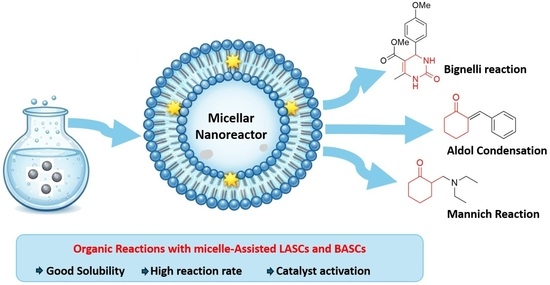
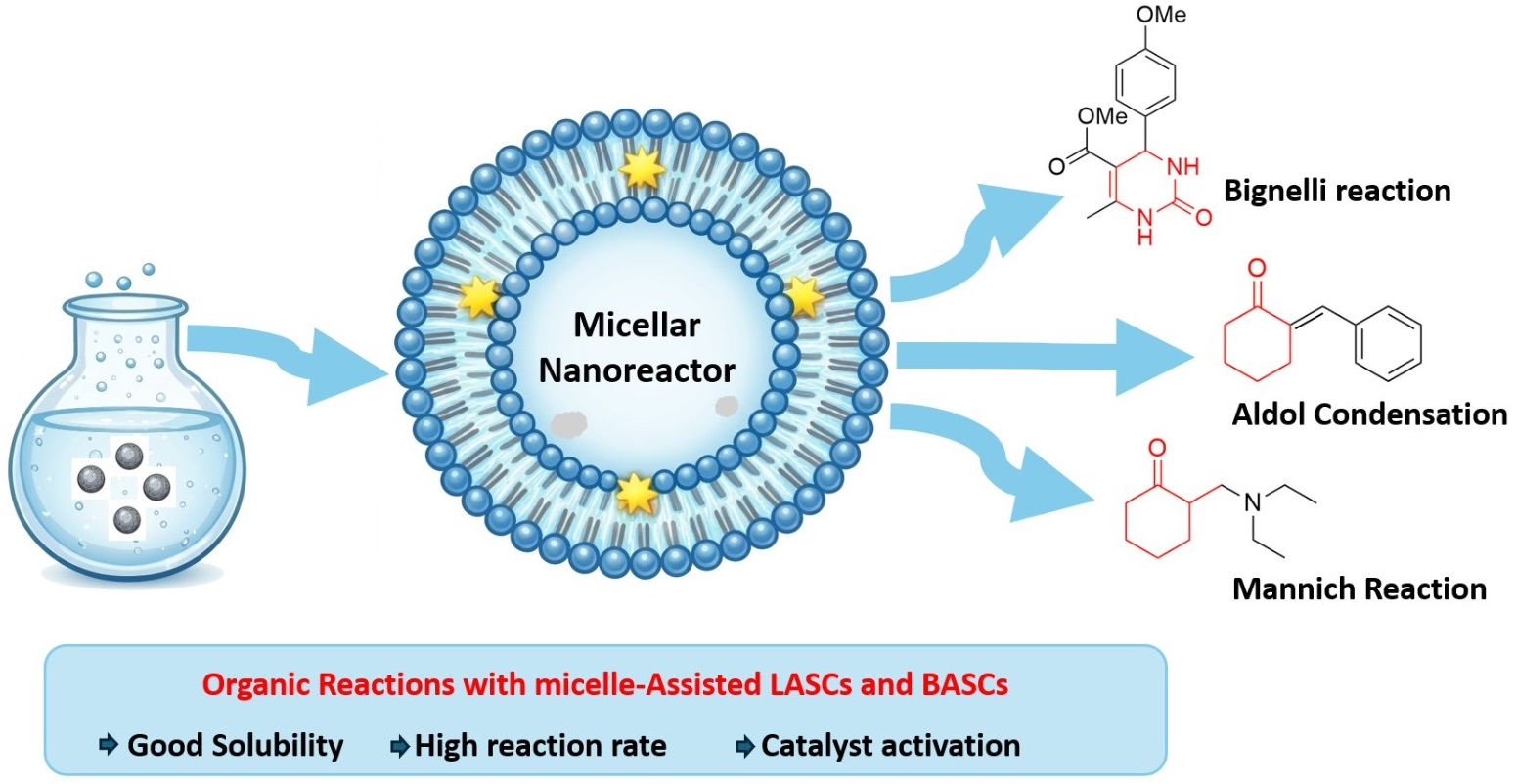
Graphical Abstract

1. Introduction

In modern chemistry, one of the biggest challenges is avoiding environmental issues like the massive use of organic reagents in organic transformations. Out of green chemistry principles, the choice of solvent is the key problem that has driven great efforts in the development of alternative green solvents [1]. This ideal solvent should possess the environmentally beneficial properties of lessening toxicity, pollution, and energy. Out of all possible liquids, water is undoubtedly the first choice of researchers as it is selected by nature to carry out organic transformations for the synthesis of several organic composites in varied forms, like chemicals [2] and therapeutics [3]. Moreover, it is safe, non-poisonous, promptly accessible, inexpensive, environmentally benign, non-combustible, polar and clean compared with other hazardous solvents [4]. Furthermore, in many cases, because of hydrophobic effects, utilizing water as a solvent not only increases reaction rates but also improves reaction selectivity and reactivity, even when the reagents are partially soluble or insoluble in it [4]. Therefore, from the perspective of green science, when performing chemical reactions, water would be the ideal solvent, as it has a small impact on the environment [5].
Despite its numerous advantages, one of the major issues in utilizing water as a solvent is the low solubility of organic substances, and at times, for many substances, the catalyst is deactivated through water particles [6]. Limited dispersion of substrates often results in slower reaction kinetics and incomplete conversion, ultimately lowering catalytic efficiency. Traditionally, such limitations have been addressed by introducing organic co-solvents to improve solubility or by developing water-tolerant catalytic systems [7]. Co-solvent utilization can improve substrate solubility to some extent [8], but it compromises the environmental benefits of water-based chemistry [8,9]. Various alternative strategies, such as the development of water-tolerant Lewis acids and specially designed catalytic systems, have demonstrated their potential [10]. Nevertheless, the call for more sustainable, efficient, and universally applicable methods is still there.
Along this line, surfactants and surfactant-based catalytic systems have indeed become promising tools for mitigating the shortcomings of water as a reaction medium. Due to their amphiphilic character [11], surfactants in aqueous media become micelles, which offer hydrophobic microenvironments that are capable of enhancing catalyst stability, selectivity, and reaction rates. At the same time, Lewis acid–surfactant-combined catalysts (LASCs) and Brønsted acid–surfactant-combined catalysts (BASCs) are two types of catalysts that incorporate the catalytic function in every surfactant molecule [12,13]. Thus, surfactants have proved to be potent agents in aqueous organic synthesis because they not only raise solubility but also create catalytic microenvironments in water, which are unique.

2. Surfactants in Organic Synthesis

The short term for amphipathic molecules (micelle-forming molecules) is “Surface Active Agents”. The surface tension and viscosity of the solvent are changed by the addition of a surfactant in the reaction medium [10]. Due to the structural uniqueness of surfactants, they can direct almost all synthetic pathways and are nowadays extensively used in several well-known reactions [11]. Amphiphilic surfactants that will self-assemble into micelles in the water phase can improve substrate solubility and reaction rate by participating in micelle-assisted catalysis [12]. In the solution phase, surfactant molecules are self-assembled to form micelles with sizes ranging from nanometers to microns [13]. The catalytic applications of micelles were introduced in the 70s (1970s) but this concept has gained attention in the last decade under green chemistry [14]. In 2015, Lasorella [15] briefly illustrated the micellar effects on reaction kinetics and selectivity, emphasizing how micelles act as nanoreactors that enhance local reactant concentration, stabilize transition states, and provide unique microenvironments that significantly accelerate organic transformations in aqueous media.
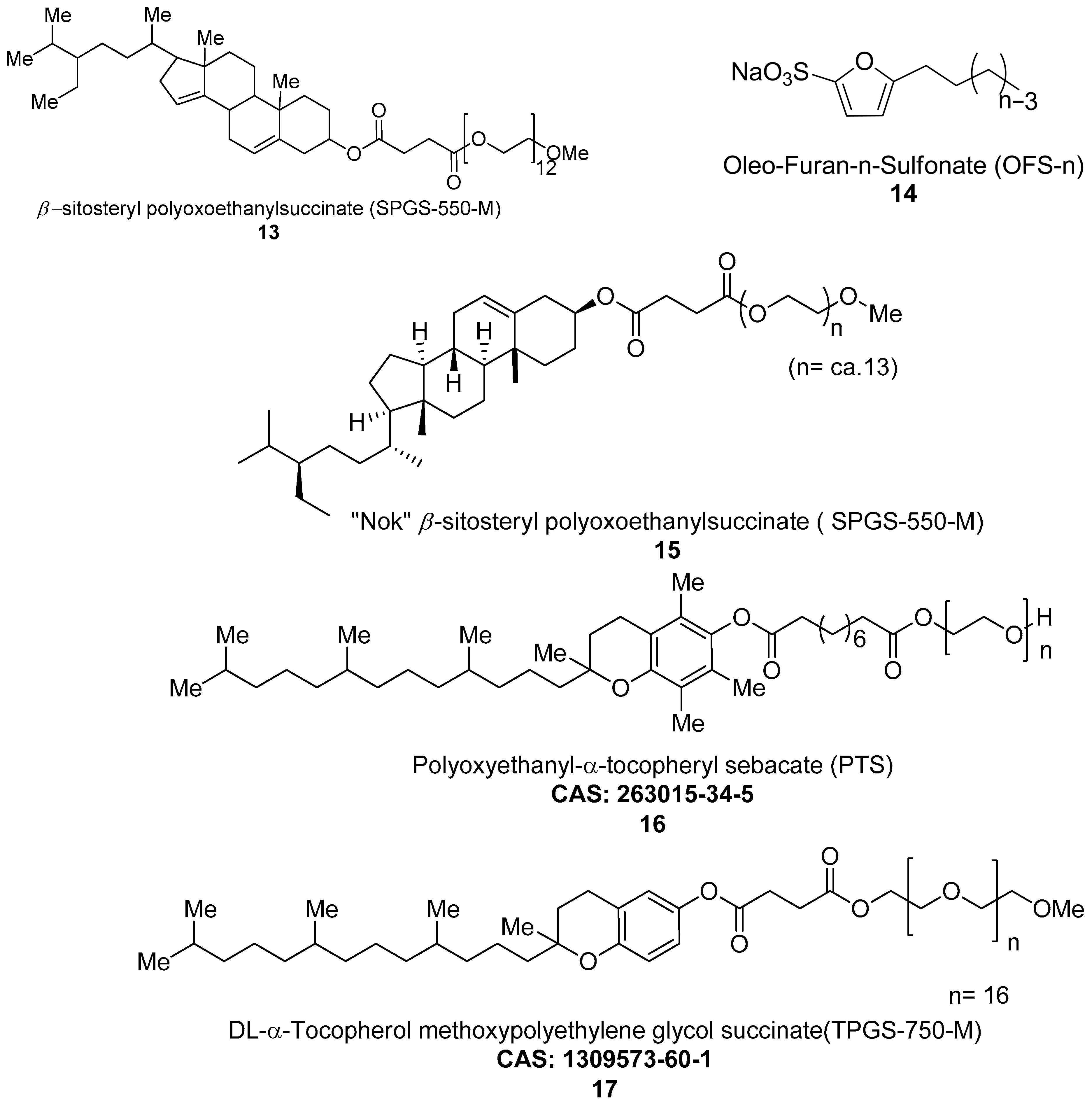
Since micellar structure and interfacial properties strongly depend on the nature of the surfactant head group, surfactants are generally classified on the basis of the polar head group. In the case of anionic surfactants, the polar head comprises sulfate, carboxylate, sulfonate, and phosphate as the polar groups, and all these carry a negative charge. While positive charge-carrying cationic surfactants contain a nitrogen atom, the common cationic surfactants are pH-sensitive amine and quaternary ammonium-based surfactants [16]. Both positive- and negative-charge-bearing zwitterionic (amphoteric) surfactants are represented mainly by acyl ethylene diamines and alkyl amino acids. In surfactant chemistry, one of the exciting developments was introduced in the late 1980s and early 1990s by Menger [17] in the form of Gemini surfactants, which comprise two hydrophobic tails that are joined together via a spacer (mostly methylene or oxyethylene) of varied length. Uncharged nonionic surfactants comprise polyhydroxyl and polyether units as polar groups. Since the nonionic surfactant hydrophilic group is uncharged, it derives its solubility from polar polyoxyethylene or polyol groups. Lipshutz and his coworkers reported the use of nonionic surfactants, such as PTS [18], 5TPGS-750-M [19], or Nok [20], as efficient catalysts in the development of a variety of water-mediated transformations. To extend the role of surfactants beyond solubilization, acidic catalytic sites have been deliberately incorporated into amphiphilic architectures, enabling surfactants to function as both self-assembling media and catalysts. Based on the nature of the acidic functionality, these systems are broadly classified into Lewis acid–surfactant catalysts (LASCs) and Brønsted acid–surfactant catalysts (BASCs) [21], where catalysis occurs at the micellar interface. Such dual-functional catalysts facilitate acid-catalyzed organic transformations in aqueous media while minimizing or eliminating the need for organic co-solvents.

2.1. LASC-Based Synthesis of Organic Compounds

Since the revelation of water-tolerant Lewis acids, reactions catalyzed via Lewis acids have become feasible in water media [22]. To carry out various organic transformations, Lewis acids, like Yb(OTf)3 [23] and Sc(OTf)3 [24], and a few various metal salts [25] are used. As already discussed above, similarly, in the case of Lewis acid catalysis, there is also a need to apply some natural co-solvents [THF, toluene, acetonitrile] to quicken the organic reaction [26,27]. Thus, to overcome this issue, anionic surfactants are employed with a Lewis acid to form LASCs. The structure of an LASC impetus comprises a metal Lewis acid, and, to date, Sr [28], Sc [29], Cu [30], Zr [31], Al [32], Yb [33], metals, Lewis acids, surfactants, and joined catalysts have been prepared. Additionally, the Mukaiyama aldol reaction of silylenol ethers with aldehydes in water is catalyzed via Sc(OTf)3, with the addition of a minimum quantity of surfactant SDS in it [34]. Firstly, Kobayashi reported distinct attributes of LASCs in multifunctional catalytic properties [35], as one of the most broadly researched catalytic systems, which has attracted growing attention in many previous years. The reaction catalyzed by this new type of catalyst is prompted in water without the utilization of organic co-solvents [36]. This new kind of catalyst plays a dual role: as proposed by Kobayashi, it behaves both as a Lewis acid and as a surfactant. As a Lewis acid, it initiates the reactant molecule, and as a surfactant, it forms emulsions in water. Consequently, utilization of an LASC in the reaction shows high productivity and is an environmentally benign method. LASCs, for example, Fe(DS)2, Sc(DS)3, and Zr(DS)4, catalyzed a few organic reactions, including aldol, Diels–Alder, lack of hydration, allylation, Mannich-type, multi-part, and cationic polymerization.
[Sc(DS)3] Scandium tris (dodecyl sulfate) has been utilized by numerous analysts for catalyzing various organic changes, as it catalyzed the Michael reaction [37], Friedlander annulation for the formation of polycyclic quinolines [38], and the formation of different α-amino phosphonates [39], indoles and electron-deficient olefin conjugate addition (Friedel Crafts type) [29] in water at room temperature. [Zr(DS)4] catalyzed the formation of quinoxaline-imitative [31] and quinazoline-imitative [40] C-C and C-N bond-forming through Michael addition of aromatic amines or indoles to electron-deficient olefins [41] utilizing H2O as green media at room temperature. While “Lewis acid–surfactant-combined catalyst (LASC)” [Al(DS)3·3H2O]-catalyzed synthesis of thiiranes from epoxides and of β-amino alcohol [32] in water at room temperature has also been reported.
Scandium tris-dodecyl sulfate (STDS) [36], copper bis(dodecyl sulfate) [30], and a polymer-upheld scandium-based Lewis acid [42] have been utilized to quicken carbon coupling reactions, such as Mukaiyama aldol condensation and allylation reactions in water. However, different [LASCs] dodecane sulfonate salts [25] and Brønsted acids [43] have been utilized to increase the speed of aldol and allylation reactions in water. The allylation reaction can also be accomplished in water by the utilization of a metal–surfactant-consolidated impetus, like a lanthanide (III)/transition metal (II) impetus [Yb (DOS)3, Cu (DOS)2] [33]. The Mukaiyama aldol reaction in water was also catalyzed utilizing proficient surfactant amphiphilic calix [6] arene derivatives [44] and iron (II) dodecyl sulfate [45].
Several analysts have utilized different LASCs in water. For example, the “Lewis acid–surfactant-combined catalyst (LASC)” C12H25SO3Na/CuSO4 was used to prepare a 1,2-dihydro-isoquinoline imitative [46]; Cu(DS)2 was used to catalyze the thioacetalization and trans-thioacetalization of carbonyl compounds and O, O-acetals [47]; [Fe(DS)3] was used to catalyze the preparation of a chromeno[4,3-b] chromene imitative [48]; and dodecyl-sulfated silica support, as another upheld surfactant, was used to immobilize nano-TiO2 to form an NTDSS impetus [49]. This impetus is utilized to catalyze the combination of coumarin imidate. Ce[LS]3 has been utilized in the preparation of dihydropyrimidinones or thiones [50] and cerium trisdodecylsulfate for the creation of alkyl esters by dissolvable-free transesterification and esterification reactions [51].
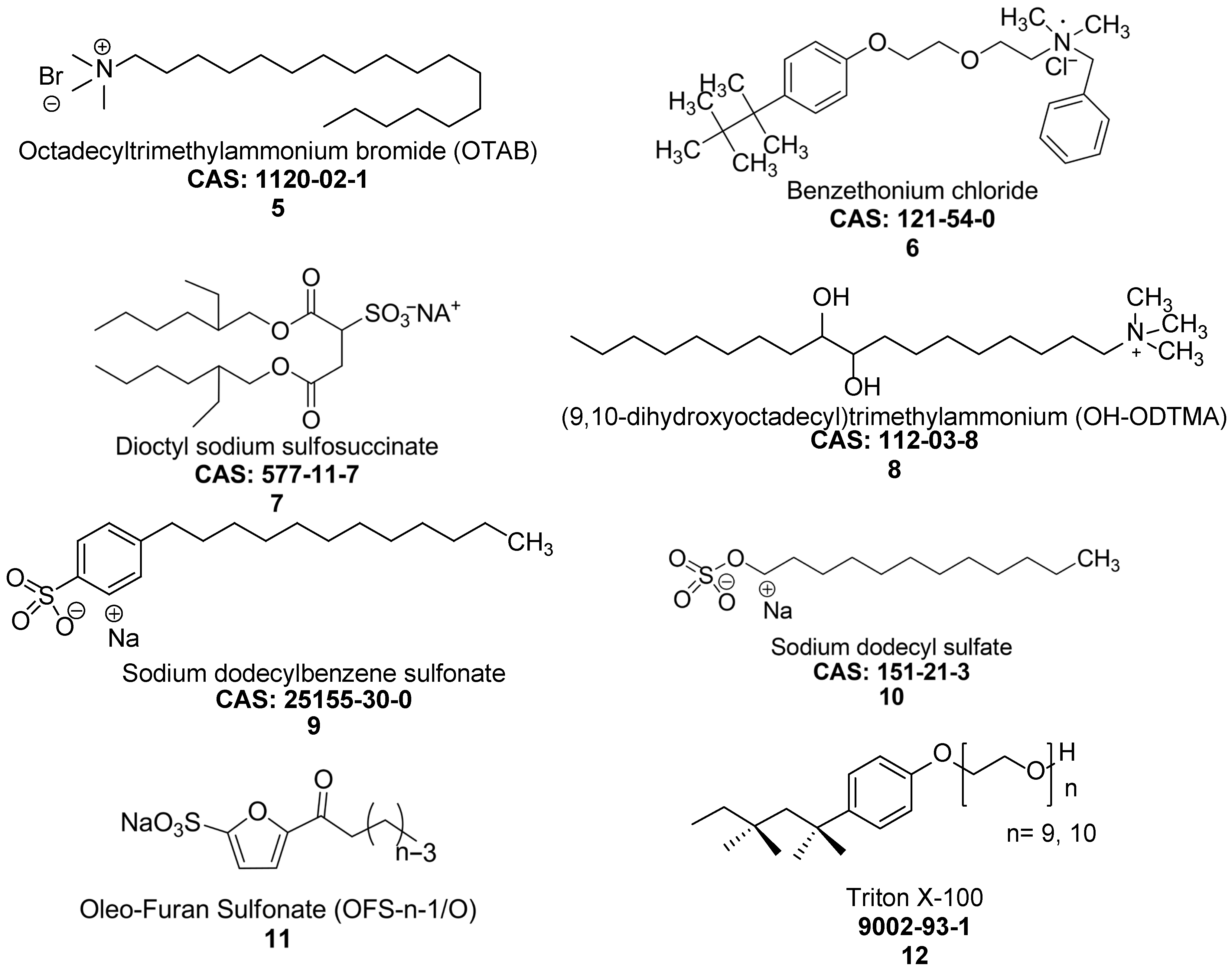
So, “Lewis acid–surfactant-combined catalysts (LASCs)” are among the influential heterogeneous catalysts in synthetic chemistry. The research using LASCs has been summarized from time to time by researchers around the world. In 2003, Schramm and his coworkers [52] discussed the application of surfactants. In 2015, De [53] and his team published a report on natural surfactant classification and their properties and La Sorella [15] discussed advancements in organic synthesis catalyzed via amphiphilic micellar media. All the structures are shown in Scheme 1 (113).

2.1.1. Classification of Lewis Acid–Surfactant-Combined Catalysts (LASCs)

Lewis acid–surfactant-combined catalysts (LASCs) represent a distinct category of micelle-assisted catalytic systems in which a Lewis acidic metal center is integrated with an amphiphilic anionic surfactant. This dual design allows catalysis to be done effectively in water by using both substrate activation and micellar solubilization. LASCs can be classified based on: (i) the nature of the metal center, (ii) the type of surfactant used, and (iii) their catalytic role in green aqueous transformations.
Classification Based on Metal Center (Lewis Acid Component)
  • Rare Earth Metal-Based LASCs
One of the most thoroughly studied classes of micellar catalysts is LASCs containing lanthanide rare earth metals, such as scandium (Sc) [29], Ytterbium (Yb) [54], Yttrium (Y), Lanthanum (La), and other lanthanides. They possess good water tolerance and high Lewis acidity, which is very beneficial for aqueous organic transformations. Enhanced catalytic performance can be explained as the combined actions between efficient carbonyl activation by the Lewis acid center and an enrichment in substrate concentration at the hydrophobic micellar core.
  • Transition Metal-Based LASCs
Since then, many transition metal-based LASCs, such as Fe(II), Fe(III), In(III) and Cu(II) salts, along with alkyl sulphate/sulphonate surfactants, have become indispensable due to their low costs and broad applications. Iron-based LASCs like Fe(DS)3 have been widely used in the synthesis of heterocycles, the synthesis of benzothiazole and the preparation of bis(indolyl)methanes [55]. Copper systems are best suited for C-C and C-N bond formation reactions, i.e., Michael addition, and the functionalization of indole. They give a better combination of economic factors, environmental effects and catalytic efficiency.
  • Main Group Metal-Based LASCs
Main group metal-based LASCs provide a lower toxicity system, are more sustainable and have moderate Lewis acidity compared to the main group metal system [56]. This method uses Zinc (Zn) and Tin (Sn) salts as sources for these main group metal-based LASCs. Zinc and Tin surfactant–aqueous conditions support the development of greener synthetic methodologies.
Classification Based on Surfactant Type (Anionic Component)
  • Sulphate-based LASCs
Alkyl sulphate surfactants, especially dodecyl sulphate (DS), are the most often used anionic component for LASC systems [38]. It is known that metal dodecyl sulphate complexes such as Sc(DS)3 and Fe(DS)3 are effective in the formation of micelles, in which organic substrates are encapsulated into hydrophobic cores [55]. The sulphate head group remains firmly coordinated with the metal center, which provides solubility in water. These systems showed high catalytic activity in aqueous media without any organic co-solvent.
  • Sulphonate-based LASCs
The amphiphilic and catalytic properties of LASCs with similar characteristics have also been investigated with dodecane sulphonate and other sulphonate-containing surfactants. Sulphonate surfactants usually showed high hydrolytic stability, tunability of hydrophilic–lipophilic balance [57] and high catalyst activity sustained through structural stability in aqueous media.
Classification Based on Catalytic Role and Application
  • Hydrophobic/Water-stable Catalysts
In aqueous media, LASCs self-assemble into micelles that generate hydrophobic domains. This leads to solubilization and portioning of organic substrates into such confined regions. Thus, this will lead to effective molarity and an enhanced reaction rate, and this structure will also prevent water from interacting with the Lewis acidic center, thus avoiding poisoning [58].
  • Green Catalysts
LASCs are seen as environmentally safe catalysts because the reaction can be carried out in an aqueous medium, thereby eliminating the use of any potentially harmful organic solvents. These systems also make product separation easier and reduce the toxicity of chemicals involved in the reaction, and the catalyst can also be reused for the next reaction without much loss of its activity; hence, these systems can be termed green catalysts [59].

2.2. BASC-Based Synthesis of an Organic Compound

“Brønsted acid–surfactant-combined (BASC) catalysts” are very advantageous for catalyzing organic reactions in water media. As expressed before, to reduce the use of harmful metal impurities in water media, an enormous number of researchers are involved in searching for justifiable as well as effective alternatives. Association with a [BASC] catalytic agent, for example, p-octylbenzenesulfonic acid (OBSA), perfluorooctanesulfonic acid, lauric acid, dodecylsulfonic acid (DSA), p-dodecylbenzenesulfonic acid (DBSA), and so forth, in organic transformation sometimes satisfies this goal.
BASCs, such as dodecyl benzenesulfonic acid, have been used to catalyze the synthesis of α-amino ketones [60] and a bis(indol-3-yl)alkane imitative in water [61]. However, p-dodecylbenzene sulfonic acid (DBSA) has been used to catalyze the synthesis of dihydropyrimidinone derivatives by a one-pot Biginelli reaction [62]. Further, DBSA was utilized for the preparation of 1, 3, 5-triaryl benzenes [63], and allylic alkylation of alkyl alcohol was done via [BASCs] calix[n] arene sulfonic acids in water [64]. Others revealed that the Lewis and Brønsted–surfactant-consolidated HPA impetus Cr[(DS)H2PW12O40]3 [65] is used for the productive change of cellulose into sugar, followed by the dehydration of sugar into HMF. BASCs like (PEG-OSO3H) sulfuric acid-modified polyethene glycol are used for Strecker synthesis of α-aminonitriles [66]. BASCs functionalized with [DOPA][Tos] 3-(N, N-dimethyloctylammonium) propane sulfonic acid toluene sulfate were utilized for the amalgamation of a series of toluene sulfonic acid [67]. In 2009, Shiri and coworkers reported data on different types of Brønsted acid–surfactant-combined catalysts [68]. Kaur and teammates [69], in 2018, specifically discussed p-DBSA as a “Brønsted acid–surfactant-combined catalyst (BASC) ”. From the literature reports, it is evident that not many efforts have been made to compile data on [BASC]-based reactions. All the structures are shown in Scheme 2 (1324).

2.2.1. Classification of Brønsted Acid–Surfactant-Combined Catalysts (BASCs)

Brønsted acid–surfactant-combined catalysts (BASCs) are amphiphilic systems in which a proton-donating acidic functionality is integrated with a surfactant structure. These catalysts simultaneously provide Brønsted acidity and micellar confinement, facilitating acid-catalyzed reactions in aqueous media. Based on the literature surveyed, BASCs can be categorized into anionic sulfonic acid surfactants, ionic liquid-based BASCs, di-cationic ionic liquid systems, and natural/bio-based BASCs.
Anionic Surfactant-Based BASCs
Anionic sulfonic acid surfactants such as dodecyl benzenesulfonic acid (DBSA) represent the most widely reported BASC systems. These catalysts have a strongly acidic sulphonic acid group on a long hydrophobic alkyl chain. They form micellar aggregates in aqueous media; thus, they act effectively in proton transfer and concentrate hydrophobic substrates [70]. They were successfully used in aldol concentration, Bignelli reactions, multicomponent synthesis and heterocyclic formations. As a result, they produced high yields under mild and eco-friendly conditions.
Ionic Liquid-Based BASCs
Ionic liquid-based BASCs are quaternary ammonium or imidazolium salt-derived systems designed with tailored hydrophobic tails and acidic counterions. An example includes 3-(N, N-dimethyloctylammonium)propane sulfonic acid toluene sulphate ([DOPA][Tos]). These catalysts exhibit the combined nature of ionic liquids (low volatility, thermal stability) and surfactants (good emulsification, interfacial catalysis), which is advantageous for aqueous organic reactions. The tunability of the structure gives them the ability to adjust acidity and micelle formation properties and accordingly control catalysis performance.
Di-Cationic Ionic Liquid BASCs (BASDILs)
Di-cationic ionic liquid systems, termed BASDILs, are a sub-category of BASCs that comprise acidic groups (usually sulphonic acid) and two cations, which are linked by a spacer. The example of 1,2-bis[N-methyl-N-(3-sulphopropyl)-alkylammonium]ethane betaines shows good thermal stability, low CMC, and recyclability [71], which may favor multiple catalysis cycles in aqueous organic synthesis.
Natural and Bio-Based BASCs
To support sustainable chemistry, bio-based BASCs have been developed by combining renewable surfactants such as saponins with Brønsted acids (e.g., p-toluene sulphonic acid). These systems are biodegradable, less toxic, and environmentally benign while retaining efficient catalytic activity. Bio-based BASCs demonstrate the potential of integrating naturally occurring amphiphiles with acid catalysis for greener organic synthesis [72].

3. Review of the Literature

Synthetic organic reactions for cyclic compounds have been of significant interest, particularly in water, as it is a safe, inexpensive, and clean solvent. To overcome the issue related to a traditional catalytic system for the preparation of organic compounds [heterocycles, non-heterocycles] or to avoid the use of co-solvents, environment-benign surfactants and surfactant-combined LASCs and BASCs have been developed [36]. The catalytic activity of surfactants and surfactant-combined catalysts is generally enhanced in aqueous systems compared to organic solvents. Additionally, LASCs and BASCs perform double functions; for example, as an acid, both initiate substrate particles, and as a surfactant, both form emulsions in water. Among the numerous advantages of LASCs and BASCs, the main features are magnificent yields, ecological benefits, and ease of operation, and the catalysts can be reused without any significant loss in their catalytic properties. The latest literature of the last five years on the most recent advancements in surfactant-, LASC- and BASC-catalyzed organic changes in watery media has been surveyed below.
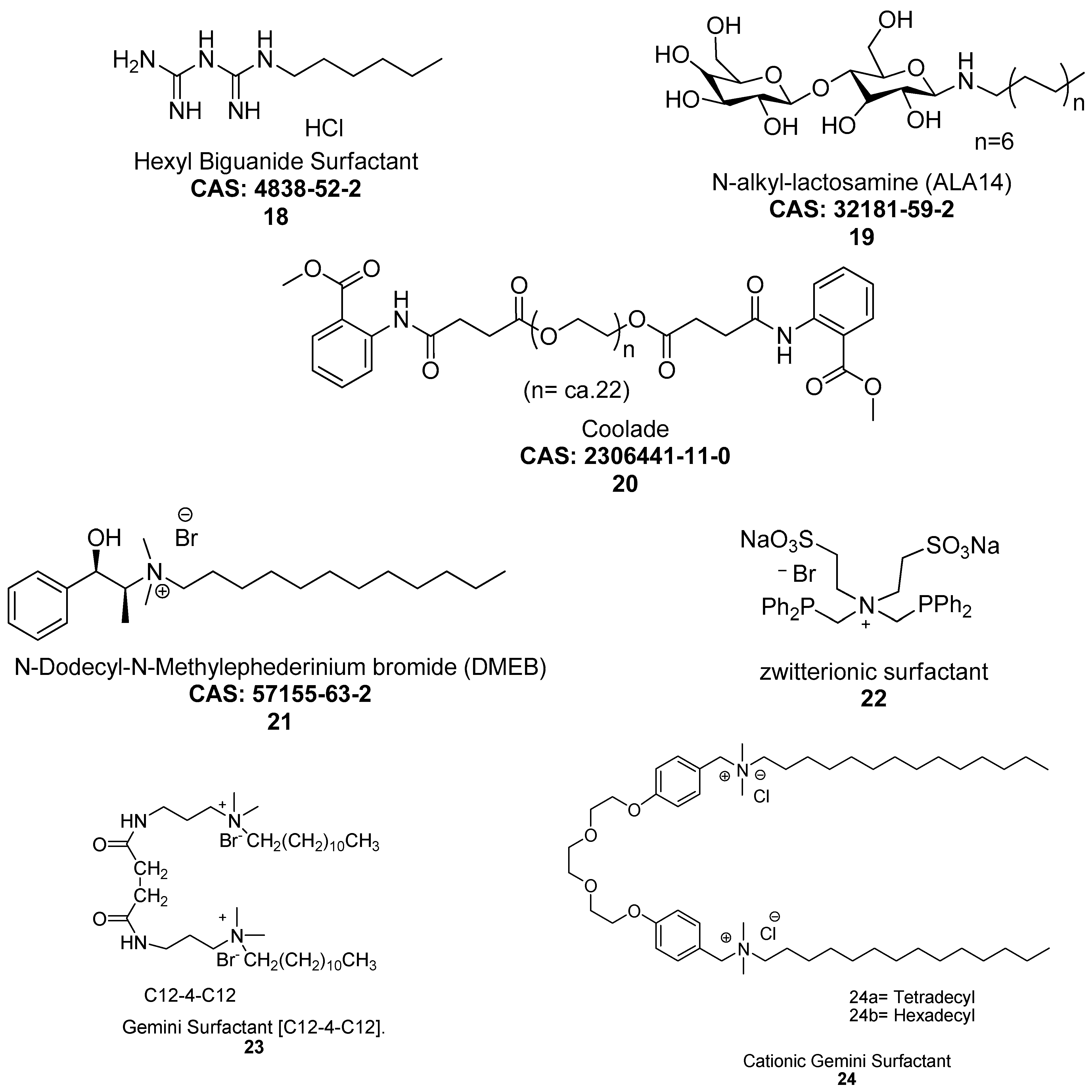
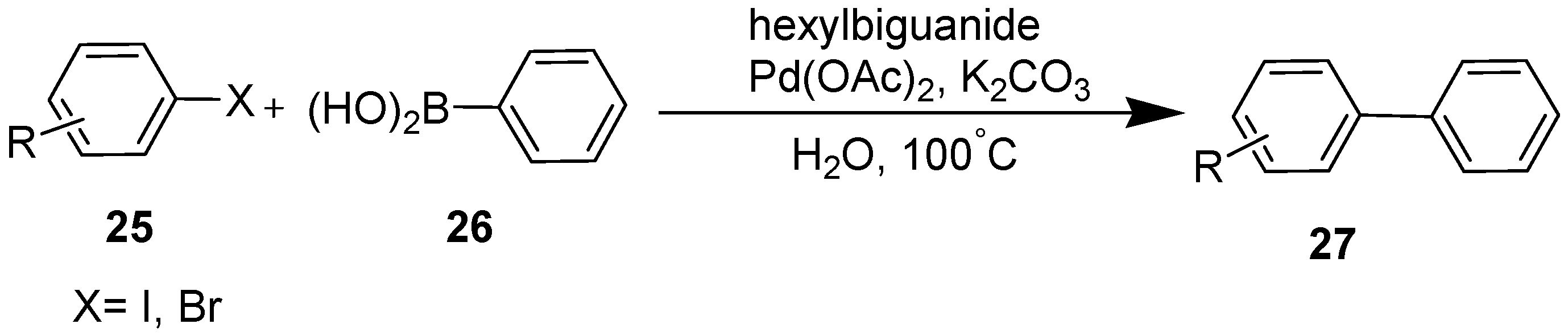
In 2018, Fortun et al. [73] worked on the synthesis of alkyl-biguanide/biguanidium surfactants. This newly reported Pd/hexyl biguanide surfactant is used to catalyze the reaction of aryl halide 25 and phenyl boronic acid 26, i.e., the Suzuki–Miyaura reaction, in water at 100 °C (Scheme 3). On substitution of various aryl groups or the electron-withdrawing group in the R position using this efficient catalytic procedure, products 27 are acquired in good yield.
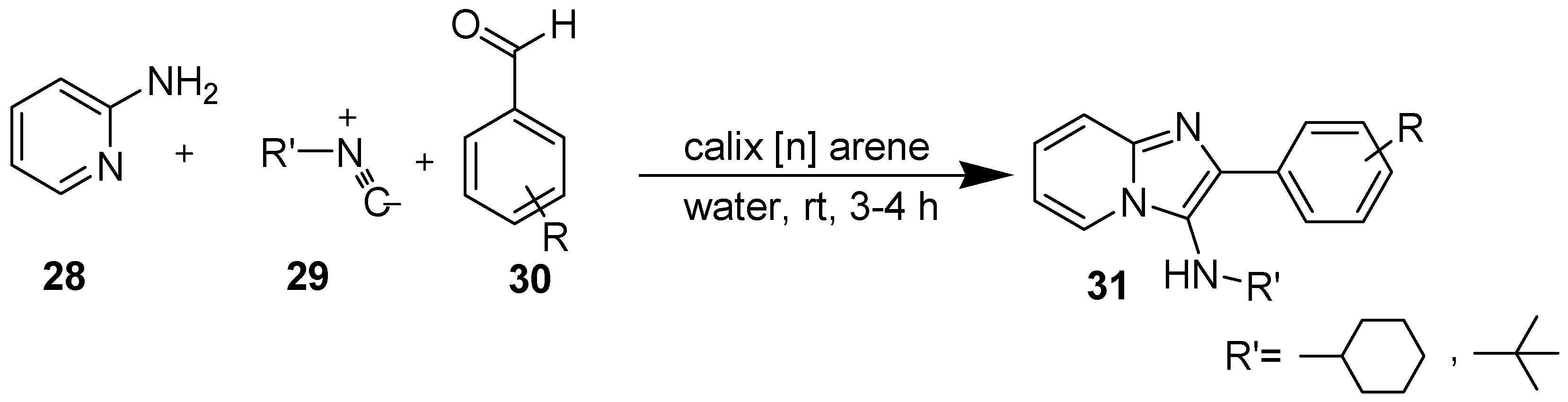
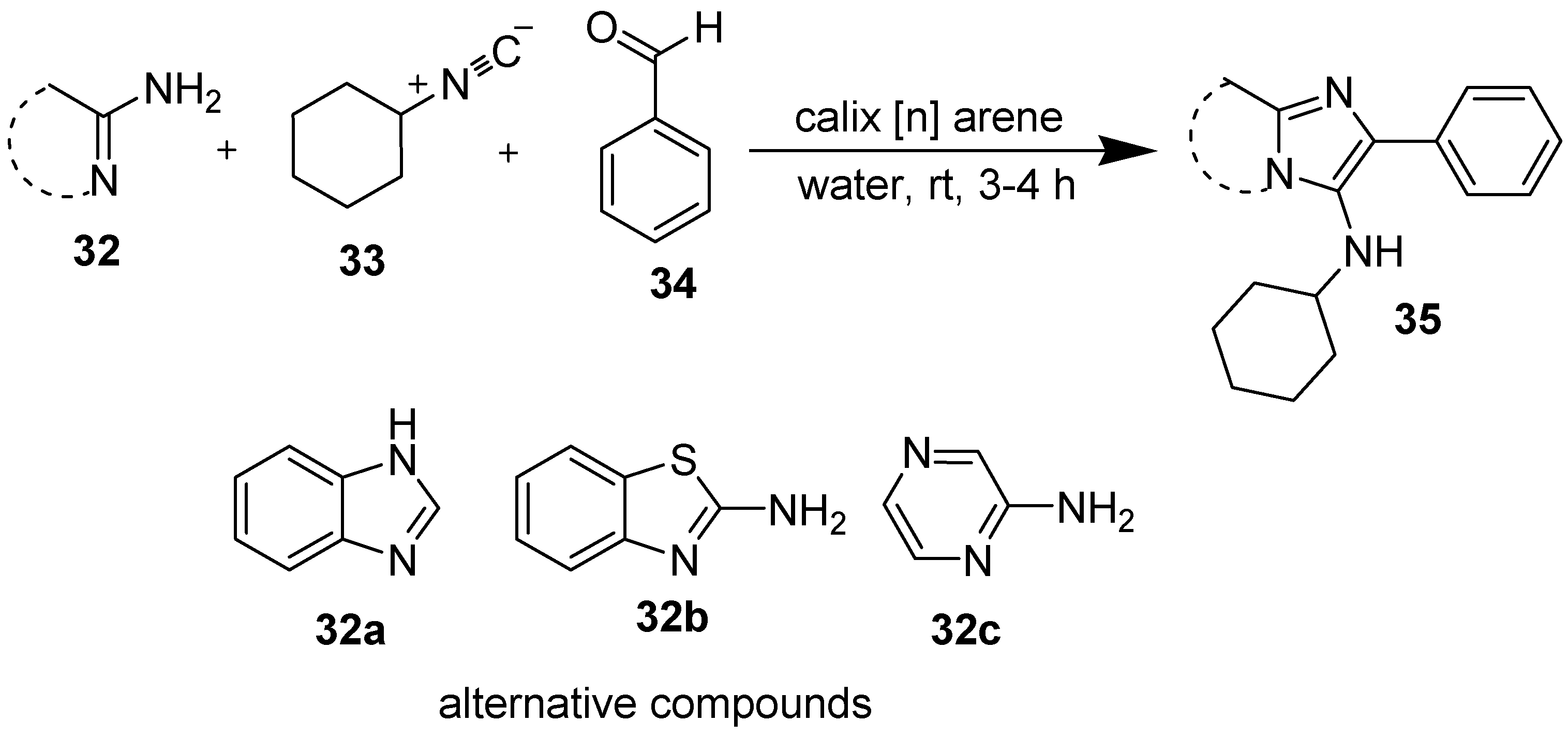
In 2018, Rostami et al. [74] revealed the synthesis of compounds 31/35 using surfactant imidazo[1,2-a] pyridines calix[n]arenes-SO3H. A moderate to excellent yield of product 31 is obtained via reacting isocyanides 29, aldehyde 30, and 2-aminopyridine 28 in the presence of a surfactant catalyst (Scheme 4). Moreover, a different range of yield from 75 to 96% in a shorter period is acquired on the substitution of different electron-withdrawing or releasing groups in the R position. However, it is also used to catalyze the reaction of fused imidazole 32, aldehyde 34, and isocyanides 33 to give product 35 (Scheme 5). The key highlight of this catalyst is that it can be easily recycled or reused without any noticeable change in its activity.
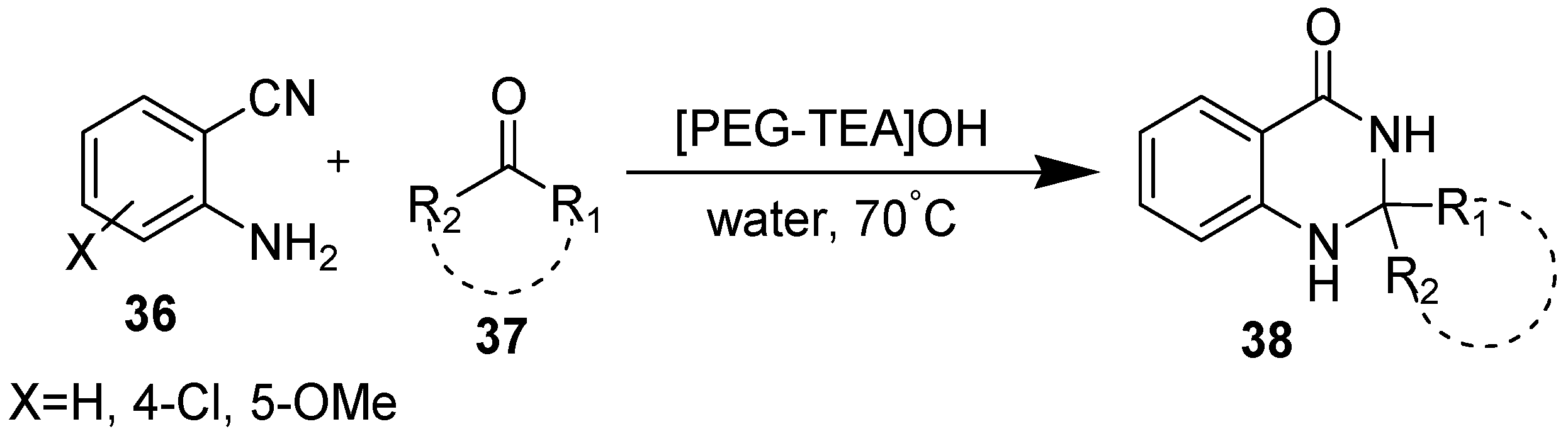
In 2018, Safaei et al. [75] reported the use of [PEG-TEA] OH polyethene glycol-bonded tetraethyl ammonium hydroxide as a catalyst in the preparation of substituted-2,3-dihydroquinazolin-4(1H)-ones 38. This catalyst is used to catalyze the reaction of carbonyl compounds 37 with 2-aminobenzonitrile 36 in water to give product 38 (Scheme 6). In this efficient procedure, a wide range of carbonyl compounds, which include aliphatic and aromatic ketones 37 and aldehydes, react with 2-aminobenzonitrile 36 and give product 38 in good to excellent yield from 70 to 95%.
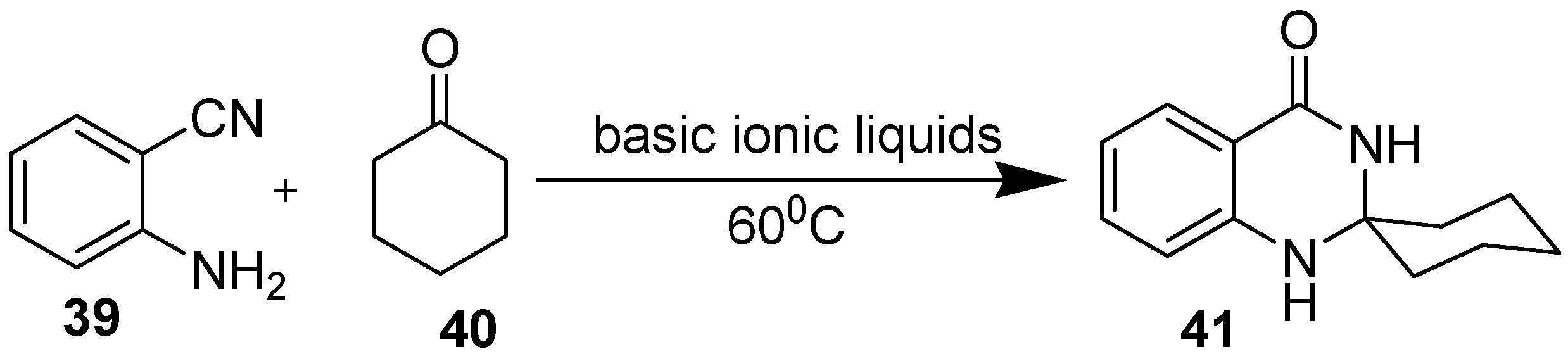
In 2018, Zhang et al. [76] synthesized IL-([PRIm][OH]). This 1-Propyl-3-alkylimidazole hydroxide ionic liquid is used in catalyzing the condensation reaction of 2-aminobenzonitrile 39 with cyclohexanone 40 at 60 °C (Scheme 7). A high yield of product 41 was acquired using this procedure within a short interval of time.
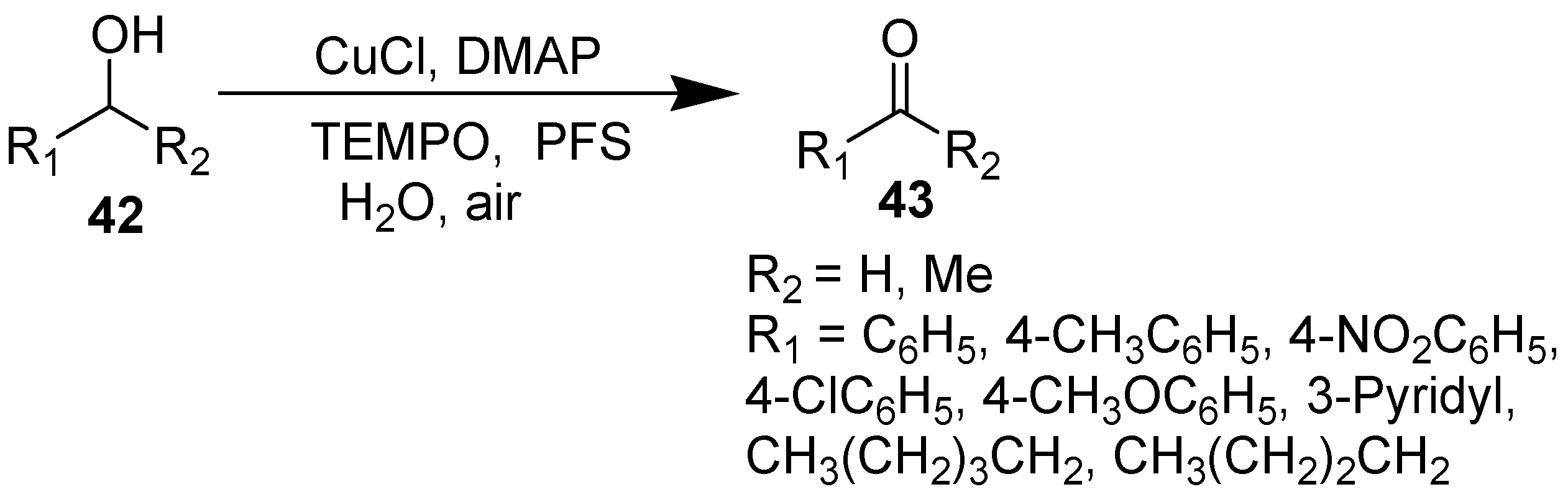
In 2018, Shen et al. [77] investigated the use of a perfluoro surfactant as a cocatalyst in the aerobic oxidation of alcohols. This cocatalyst, along with catalyst CuCl/DMAP/TEMPO, is used to catalyze aerobic oxidation of alcohols 42 to ketones 43 in water (Scheme 8).
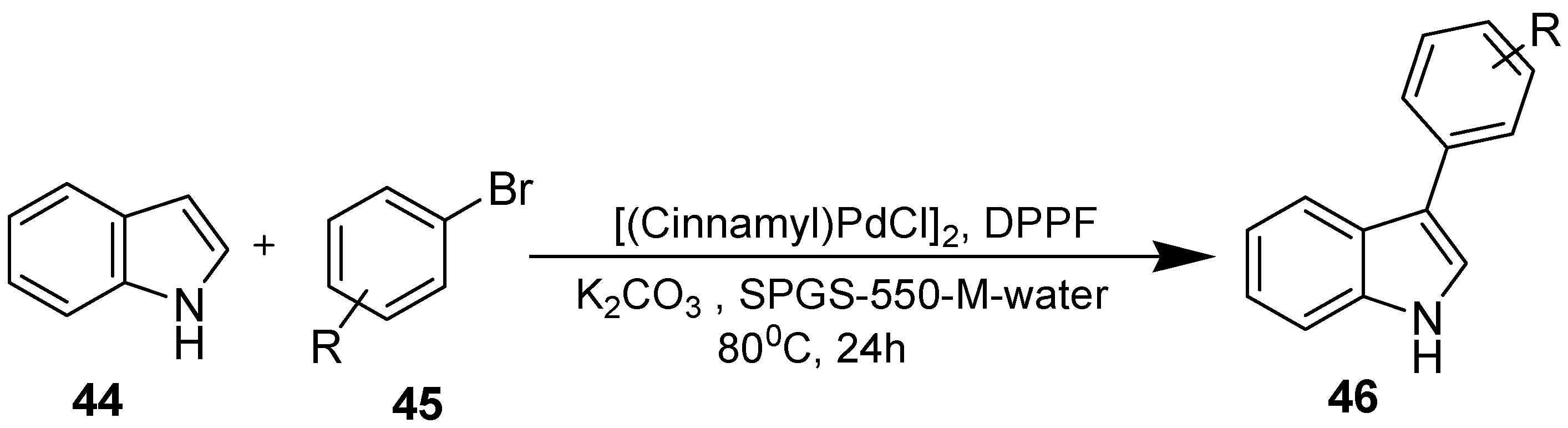
In 2019, Vaidya et al. [78] reported C-H arylation of indoles in water carried out using SPGS-550-M surfactant along with [(Cinnamyl)PdCl]2 and DPPF. Using this designer surfactant, C-3/C-2-arylation of aryl bromide 45 and indole 44 is done in the easiest way to give products 46 and 47. However, the catalytic micellar aqueous solution can be reobtained or reused without showing any noticeable effect on product yield. The targeted products 46, acquired via reacting indole 44 and aryl bromide 45 with different electron-releasing or electron-withdrawing groups in C-3 arylation, give a higher yield from 52 to 80% (Scheme 9). In a similar manner, in C-2 arylation, products 47, obtained by reacting indole 44 with aryl bromide 45 carrying different electron-releasing/withdrawing groups, also give a good yield, i.e., from 71 to 76% (Scheme 10).
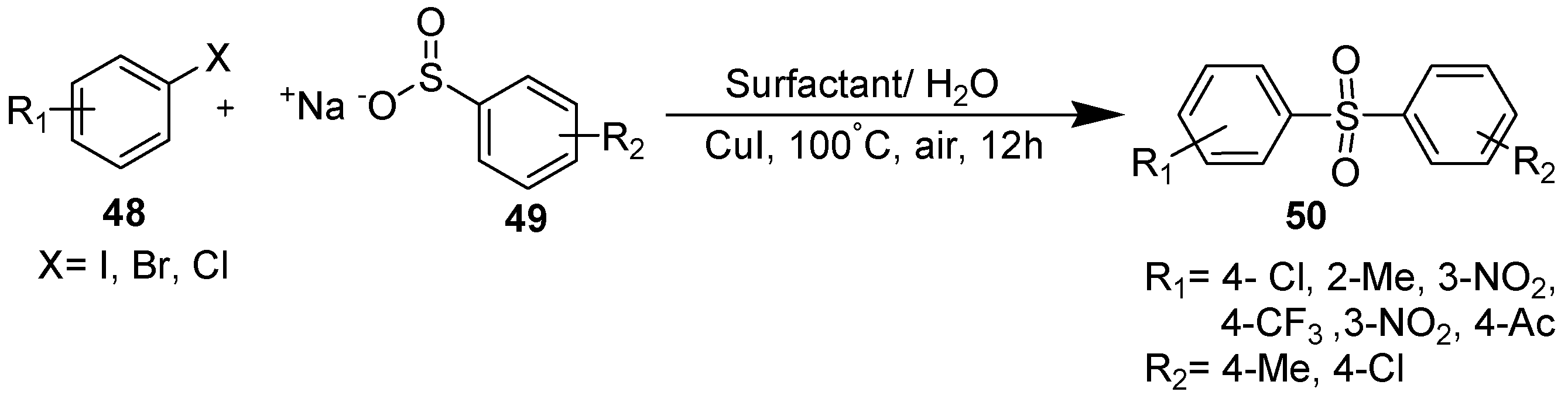
In 2019, Ge et al. [79] revealed the preparation of a sugar-based surfactant, alkyl lactosamine ALA14 19. This surfactant 19 plays a dual function by providing a micellar environment for the aggregation of substrates and by acting as a ligand. The structure of this naturally degradable catalyst comprises a lactose-based hydrophilic part and a long alkyl chain-based hydrophobic part. The C-X coupling reaction of compounds 48 and 49, carried out using this efficient catalyst 19 in water, gives products 50 in good to excellent yield (Scheme 11). Further, the catalyst, along with the catalytic micellar aqueous system, can be easily recycled.
In 2019, Chakraborty et al. [80] worked on the synthesis of nanocatalyst CTAB/Fe3O4@dopa@ML and also showed its use in catalyzing the oxidation of alcohols 51 to keto 52 groups at room temperature in an aqueous medium (Scheme 12). This nanocatalyst can be easily recycled five times without any noticeable change in its effectiveness.
In 2019, Lee et al. [81] reported an advantageous, easily accessible, low-foaming “Coolade” surfactant 20. Catalyst 20 is used to catalyze several gas-evolving reactions; for example, it is used in the double reduction of gem-dibromocyclopropane 53 to 54 in the presence of water (Scheme 13). This advantageous surfactant plays a major role in solving the issue of this reduction, i.e., the production of a massive amount of foam due to the evolution of hydrogen gas. Using this catalyst in the double reduction of gem-dibromocyclopropane 53 solves this issue as it possesses low-foaming properties while carrying out the reaction in micellar aqueous conditions.
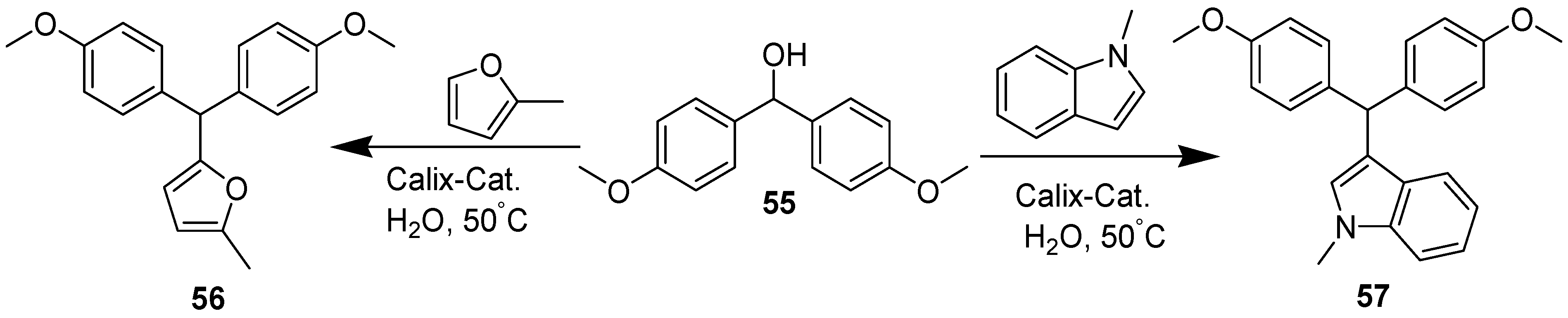
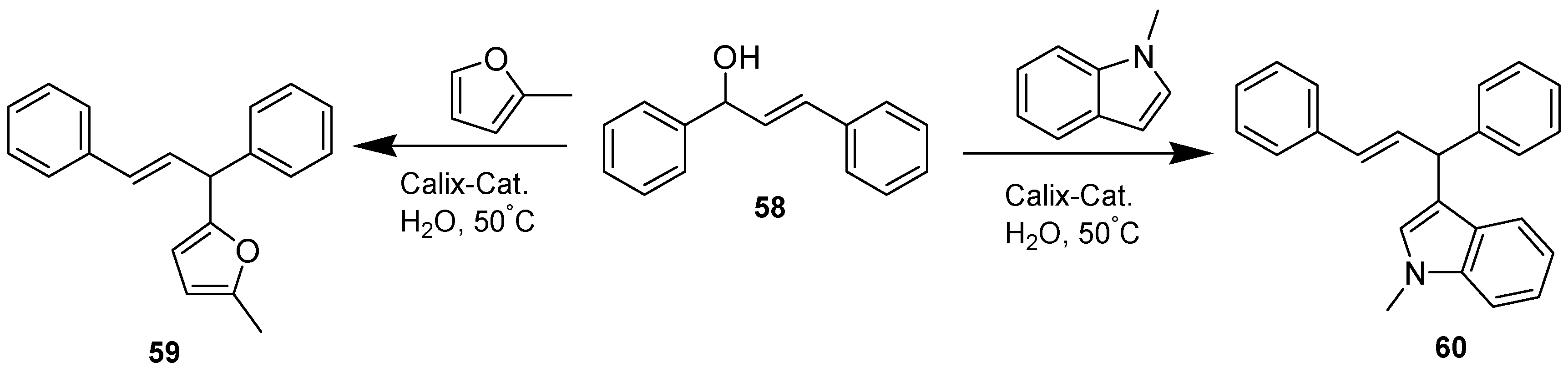
In 2016, Sayin et al. [82] synthesized amphiphilic calix[n]arene derivatives and also showed their use as a catalyst in a coupling reaction (Scheme 14). This efficient catalyst is used in the coupling reaction of two activated sec-alcohols 55 and 58 with 2-methylfuranto give products 56 and 59, while reaction with N-methylindole gives 57 and 60 (Scheme 15).
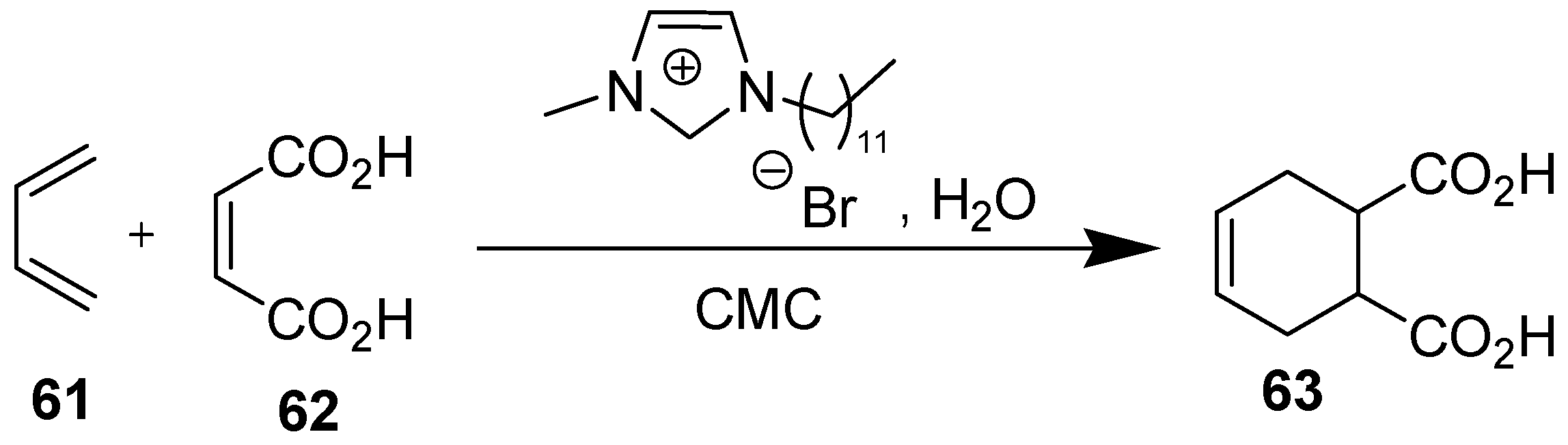
In 2019, Soffietti et al. [83] reported the synthesis of ionic liquids (ILs) based on 1-alkyl-3-methylimidazolium cations. These ionic liquids act as a surfactant, and also, they are used to catalyze the Diels–Alder reaction of diene 61 and dienophile 62 in water conditions (Scheme 16). The yield of cycloadduct 63 obtained by this effective method is good. So, this catalytic micellar system that is used for cycloaddition between 61 and 62 is beneficial for cycloalkene 63 development.
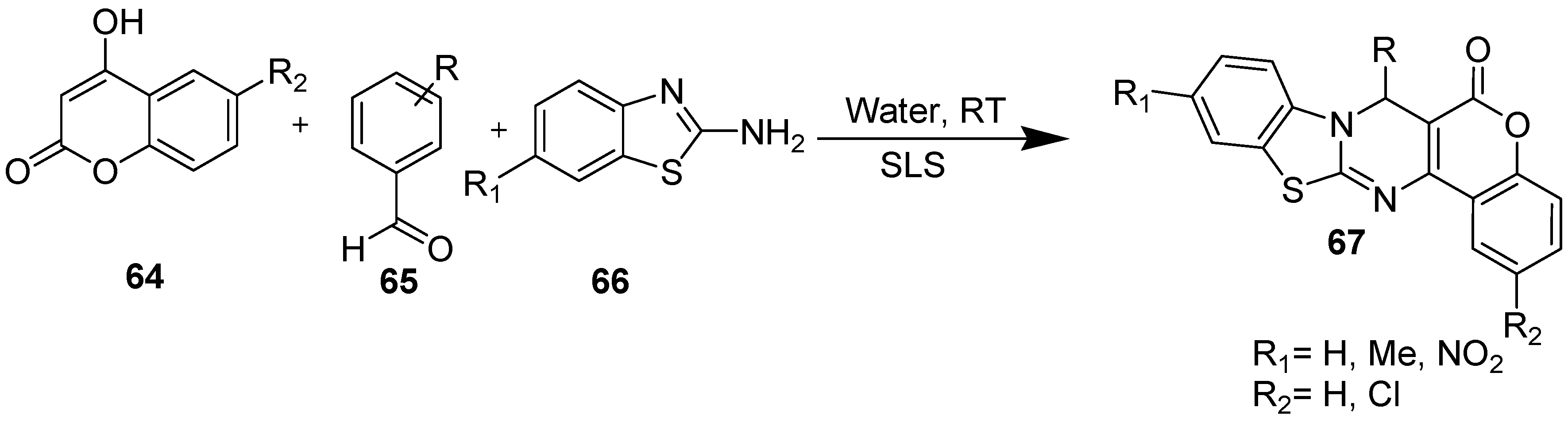
In 2016, Sahu et al. [84] investigated the preparation of fused pyrimidines 67 via using sodium lauryl sulphate as a catalyst in a reaction of 4-hydroxycoumarin 64, benzaldehyde 65, and 2-amino benzothiazole 66 in an aqueous medium (Scheme 17). Moreover, using this environmentally friendly method, the resultant products 67 are acquired in good to excellent yields of 81–95%.
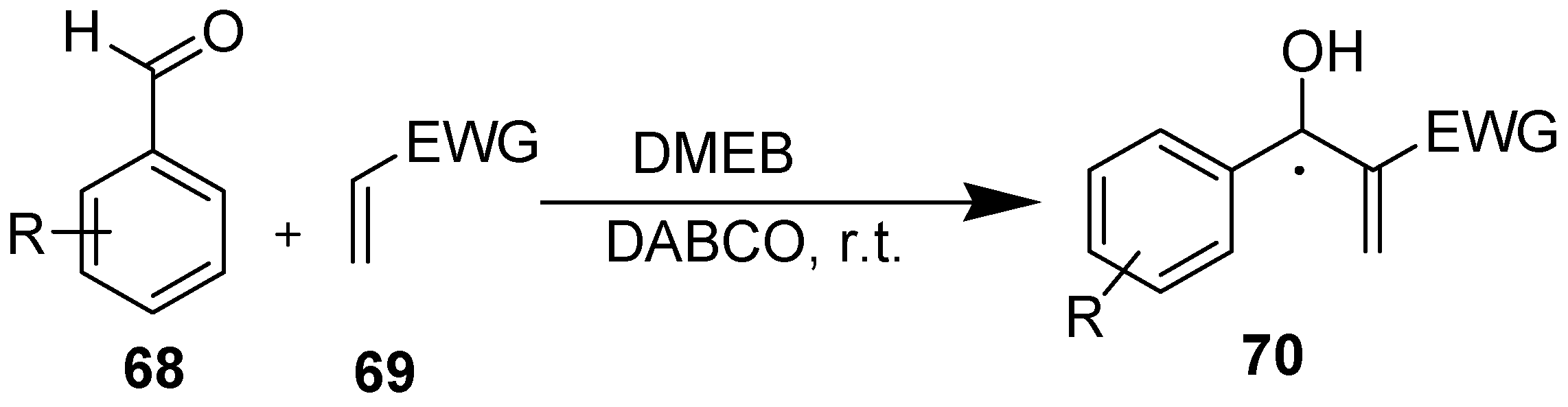
In 2016, Shairgojray et al. [85] revealed that (DMEB) 21 a cationic chiral surfactant can be used to induce asymmetry in the Morita–Baylis–Hillman reaction. This catalyst, with further aid of DABCO, catalyzed the reaction of acrylonitrile 69 and aromatic aldehyde 68 in water to give the resultant product 70 (Scheme 18). The products targeted using this methodology are acquired in good to moderate yield, i.e., from 68 to 78%.
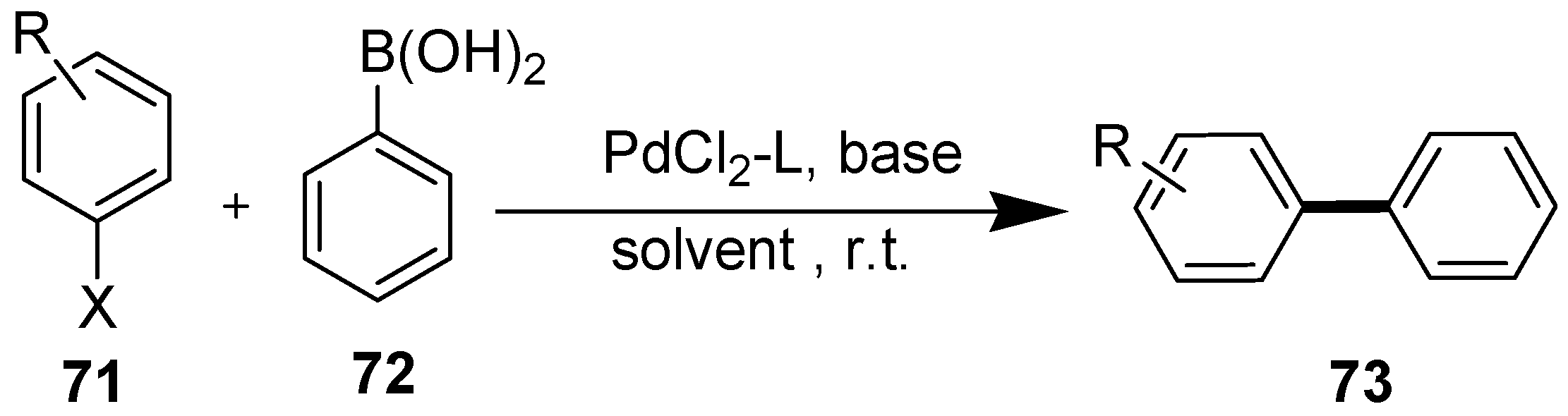
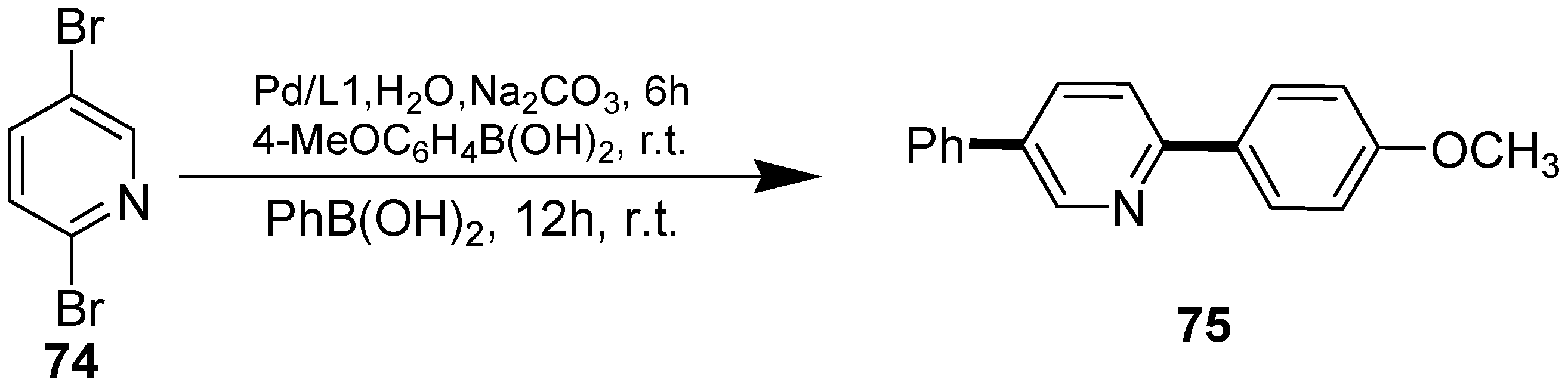
In 2016, Qiu et al. [86] reported the SM (Suzuki–Miyaura) cross-coupling reaction using a Pd catalyst with a bidentate phosphine-type zwitterionic surfactant in water at room temperature. The reaction of aryl halides 71 (R = EDG or EWG) with arylboronic acids 72 formed several biaryls 73 in moderate to excellent yields of 78–96%, with similar efficiency for heteroaryl substrates (79–93%) (Scheme 19). The system also enabled regioselective diarylation of 2,5-dibromopyridine (Scheme 20), affording high yields with selectivity at the C-2 position.
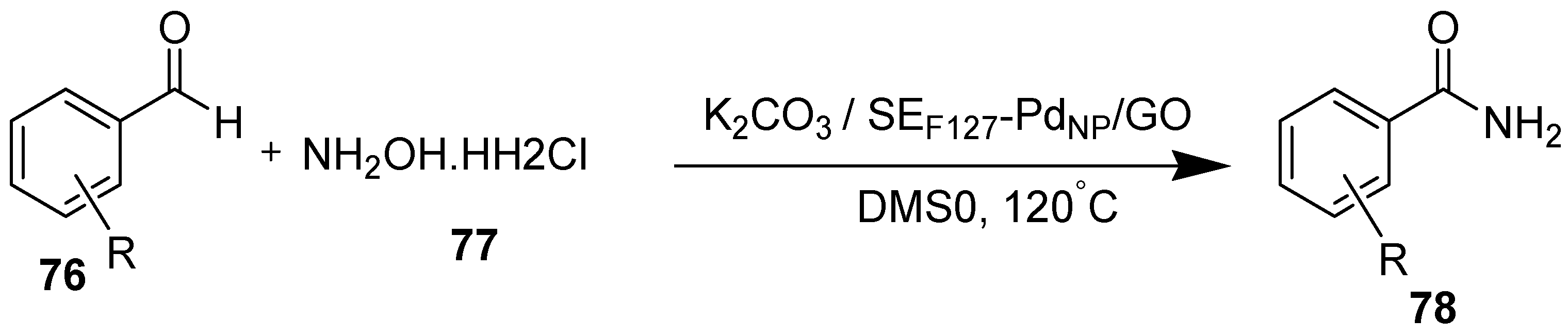
In 2016, Rostamnia et al. [87] investigated the effect of several polyethene glycol-type (PEG-type) polyethers, including PEG-300, F127, and P123, on the catalytic activity of Pd/rGO in the reaction of aldehyde 76 (R = EWG or EDG), hydroxylamine hydrochloride 77, and potassium carbonate to give benzamide 78 (Scheme 21). The result obtained showed that among polyethers, F127 showed better results in raising the catalytic power of Pd(nanoparticle)/GO by the exfoliation of GO sheets. This catalytic system was successfully applied as a relatively green, recyclable, and efficient system in cascade primary amide 78 synthesis and single-pot amidation. Using this efficient procedure, targeted products 78 with different electron-withdrawing or electron-releasing groups are obtained in good to excellent yields of 61–92%. Some of the highlights of this catalyst are that it is highly active, efficient, and environmentally benign in one-pot conditions with recyclability at least for eight runs.
In 2016, Yang et al. [88] reported that 2,5-norbornadiene (NBD) 79 hydroformylation using HRh(CO) (TPPTS)3 in an organic/aqueous biphasic system gives monoaldehyde 80 and dialdehyde 81 products (Scheme 22). The observed results showed that the cationic surfactant had a greater impact on hydroformylation in a biphasic system. Moreover, this NBD 79 hydroformylation carried out in a biphasic system under mild conditions showed high selectivity/activity to the resultant product dialdehydes 81 and 82.
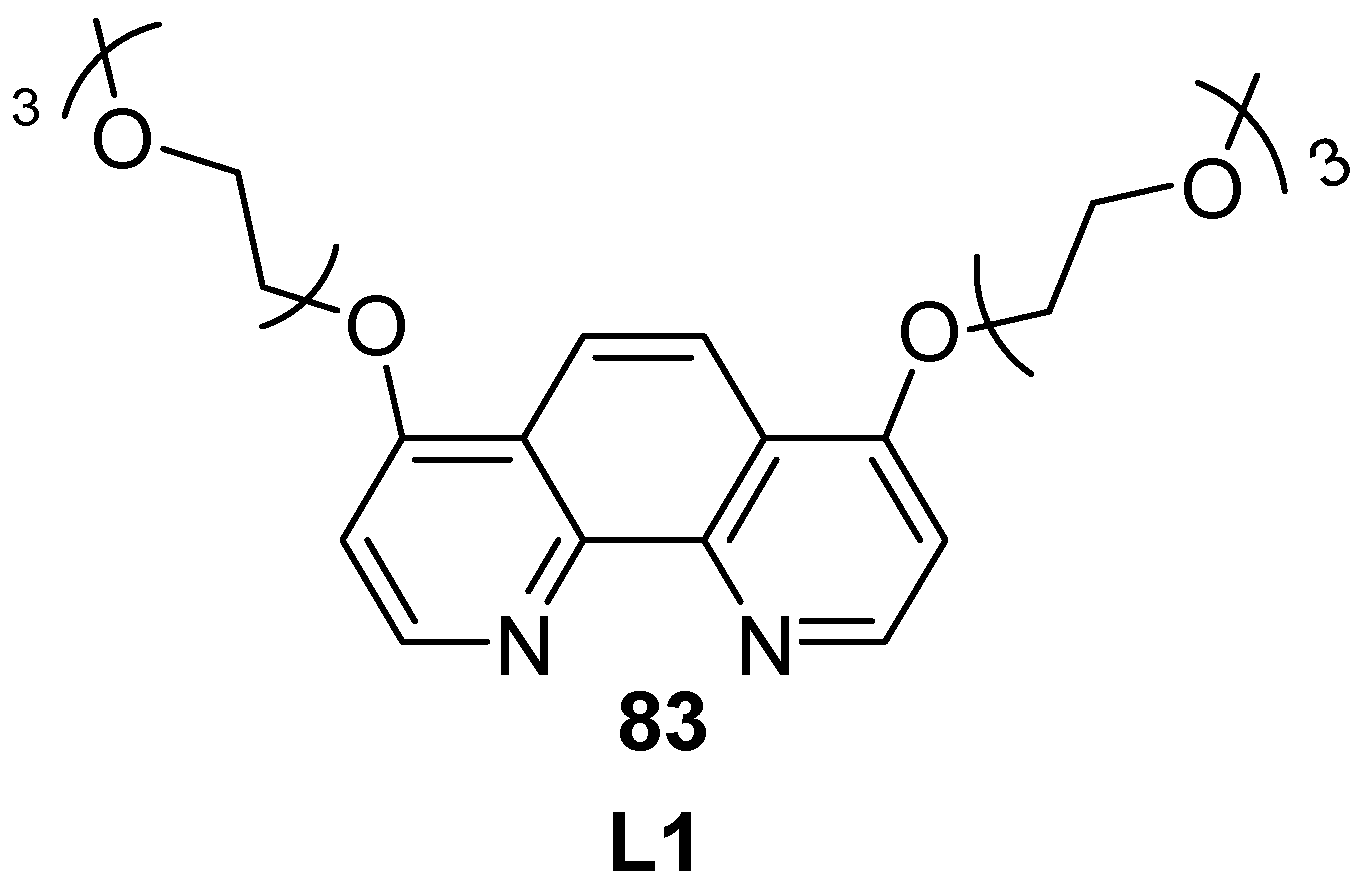
In 2019, Ren et al. [89] investigated the preparation and catalytic use of an efficient surfactant-type catalyst, i.e., 83 (Scheme 23) [L1] PEG-functionalized nitrogen ligands, in aerobic oxidative coupling of thiols 85 and aryl/alkyl hydrazine 84 to compound 86 (Scheme 24). The catalytic aqueous mother liquor can be utilized up to five times without any noticeable change in its effectiveness. Moreover, the products resulting from this Cu–surfactant catalysis show excellent yield.
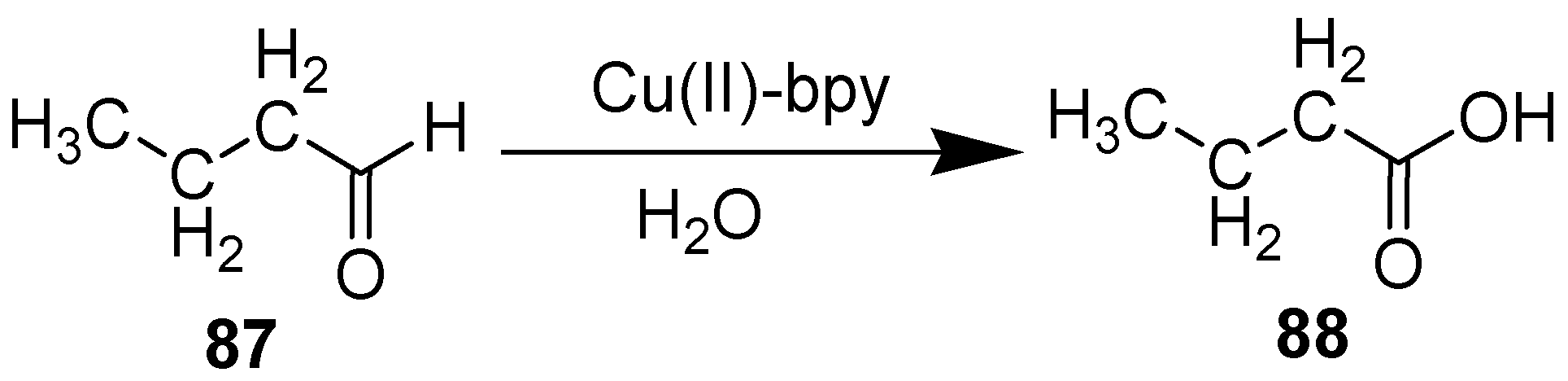
In 2016, Mondal et al. [90] explained that a hetero-aromatic nitrogen base (bipyridine) in combination with surfactants [Cu (II)-bpy] as a catalyst can be used to enhance the rate of oxidation of butanal 87 to butyric acid 88 in water (Scheme 25).
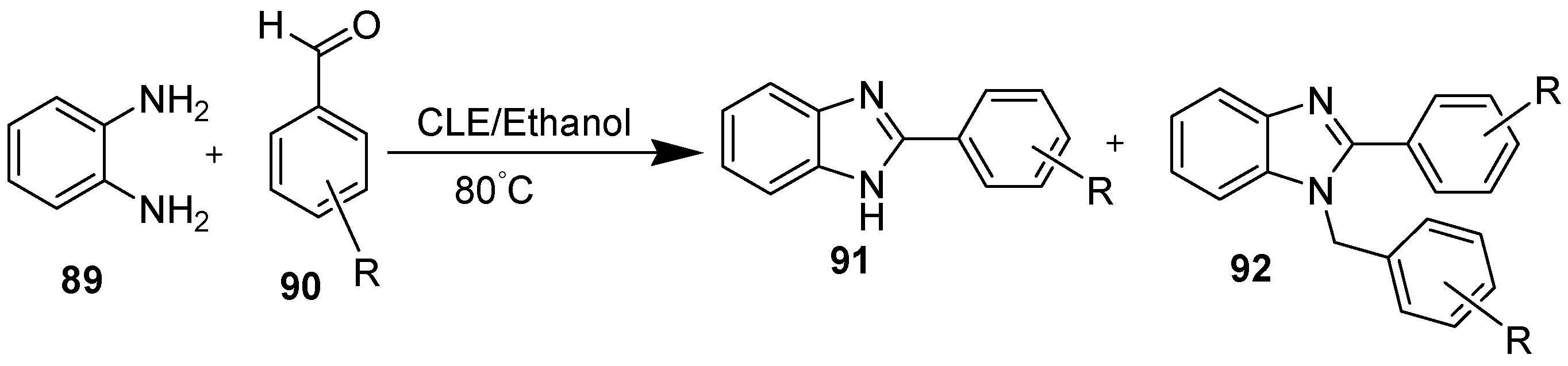
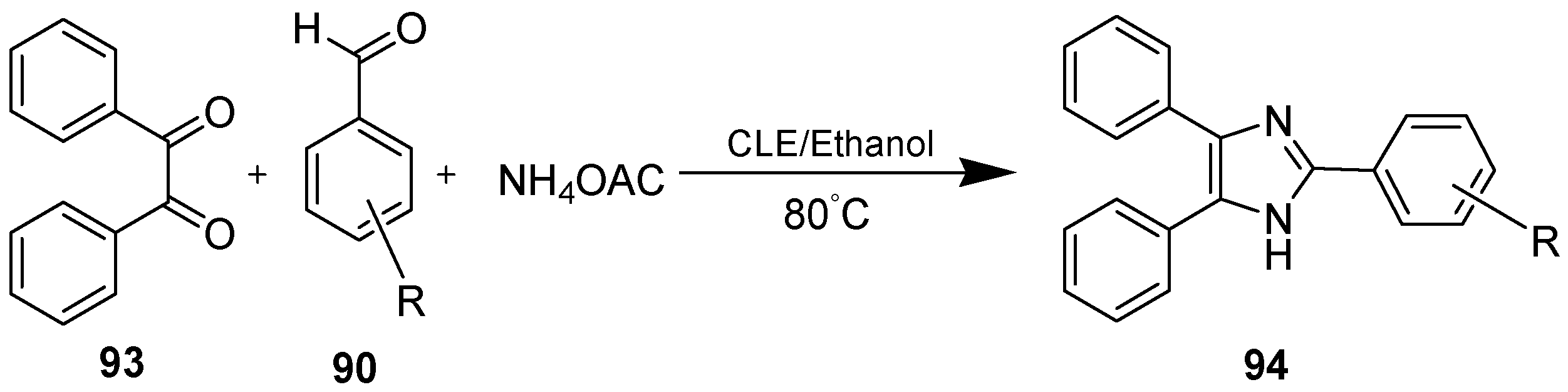
In 2017, Morbale et al. [91] prepared 2-aryl-1-arylmethyl-1H-benzimidazoles by employing a CLE biosurfactant as a catalyst. This catalyst catalyzes the reaction of aromatic aldehydes 90 with o-phenylenediamine 89 at 80 °C (Scheme 26). The reaction of o-phenylenediamine 89 with various aromatic aldehydes 90 containing electron-withdrawing/releasing groups gives products 91 and 92 in good to excellent yield. Moreover, reaction feasibility is also checked on several aromatic aldehydes 90 with ammonium acetate and a 1,2-dicarbonyl compound (benzil) 93 (Scheme 27). The acquired results of this reaction procedure showed a good yield of products 94, from 81 to 92%.
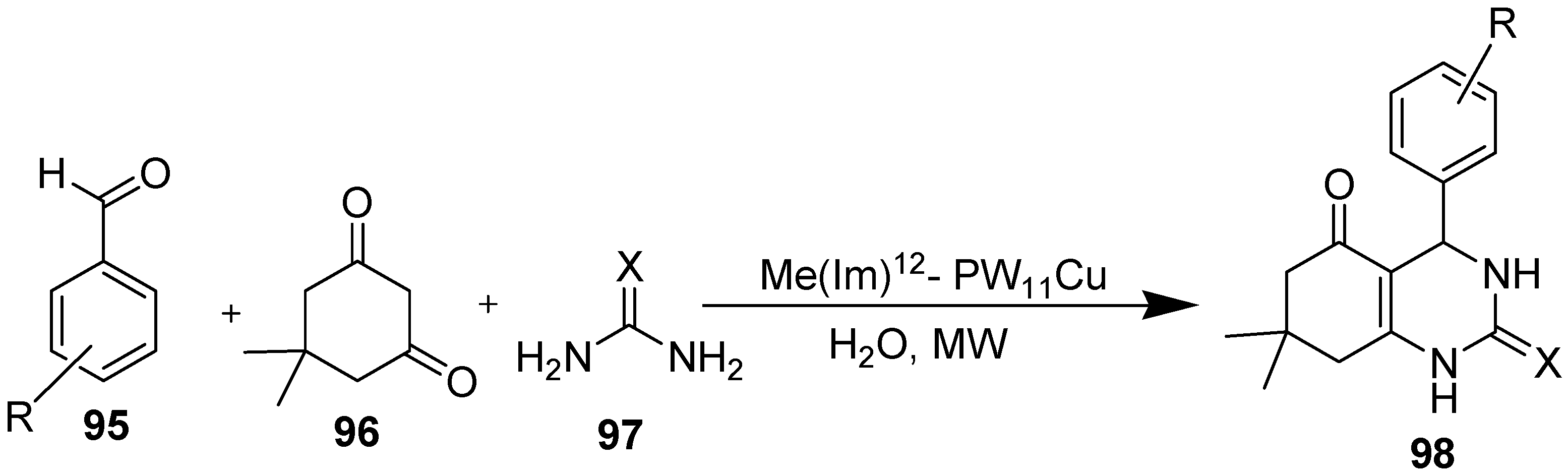
In 2016, Mozafari et al. [92] synthesized octahydroquinazolinone derivatives 98 via using a surfactant-type polyoxometalate-based organic–inorganic hybrid as a catalyst in a reaction of dimedone 96, urea 97, and substituted (R = H, 3-OMe, 3-Cl, 4-NO2, 4-Cl) benzaldehyde 95 (Scheme 28). On employing several substituents, which included different aryl/heteroaryl-containing electron-withdrawing and electron-releasing groups in the R position of aldehyde 95, the desired product 98 can be obtained in good yield, i.e., from 87 to 90%.
In 2017, Pogrzeba et al. [93] reported a nonionic surfactant used to accelerate the rhodium-catalyzed hydroformylation of 1-dodecane 99 to compounds 100 and 101 (Scheme 29). The efficient catalyst structure and hydrophilicity (degree of ethoxylation) have a strong impact on the reaction rate or catalytic reaction performance.
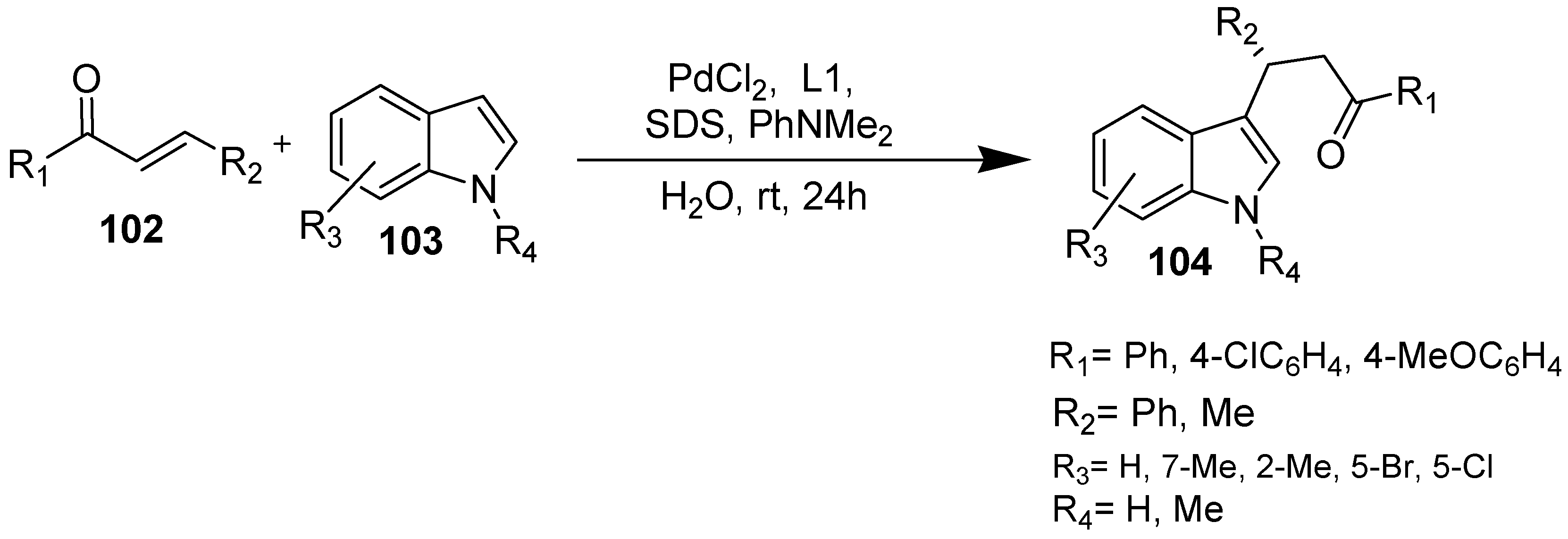
In 2016, Kitanosono et al. [94] reported the specific nature of chiral palladium(II) catalysis with the aid of an additive or an anionic surfactant 10 in C-H indole functionalization. Indole 103 electrophilic palladation with 102 through C-H bond functionalization was accomplished in a very enantioselective way in water (Scheme 30). A long range of substituents with aryl/heteroaryl-containing electron-withdrawing or electron-releasing groups attached to indoles 103 give the resultant products 104 in good to excellent yields of 25–93%.
In 2017, Kar et al. [95] reported that C-C homo/cross-coupling reactions proceed faster when using anionic water/AOT/Cy RM as an efficient reaction medium. The homo-coupling reaction of heteroaryl boronic acid and aryl boronic acid 105 with different electron-releasing or electron-donating groups in an aromatic gives symmetrical and unsymmetrical biaryl 106 yields from 53 to 91% (Scheme 31). Similarly, Suzuki–Miyaura cross-coupling of different aryl halides (X = Cl, Br, I) 107 with Phenylboronic acid 105 gives the desired product 108 at a yield of 62–82% (Scheme 32).
In 2017, Choudhary et al. [96] confirmed that an efficient catalyst, a hydrotalcite-supported palladium catalyst (PdCl2/HT), with the aid of surfactant 12, when used to catalyze the reaction of chlorobenzene 109 and phenyl boronic acid 110 (Suzuki–Miyaura coupling reaction), attained the desired product 111 in a high yield up to 96% (Scheme 33). In comparison with using bare (PdCl2/HT) as a catalyst, this yield is reduced to 69%.
In 2019, Hafidi et al. [97] examined the catalytic efficacy of different polar groups carrying three (C14EtOH, C14iPrOH, C14PrOH) cationic surfactants in the condensation reaction (Claisen–Schmidt) between an aromatic aldehyde (R = 4-CH3, 4-OCH3, 4-Cl) 112 and acetophenone 113 (Scheme 34). The observed result on the effectiveness of the catalytic activity in the NaOH–micellar system showed that compound C14EtOH gives resultant product 114 in good yield up to 80%, followed by C14iPrOH and C14PrOH.
In 2017, Kraïem et al. [98] investigated an efficient method for synthesizing N-alkylbenzamides 118 via the formation of 2-alkyl-3-aryloxaziridines 117 from benzaldehydes 116 and N-alkylamines 115, followed by their rearrangement using Fe(III) sulfate in water with a surfactant. The in-situ formation of a Lewis acid–surfactant-combined catalyst enhanced the reaction rate. Oxaziridines were obtained in high yields (87–99%), while the final amides were produced in good yields (74–94), regardless of alkyl substitution (Scheme 35).
In 2018, Xu et al. [99] investigated the synthesis of Gemini surfactant [C12-4-C12] 23 and its role in visualizing the kinetics of hydrolysis reaction. Due to the phenomenon of high surface activity, it can easily form micelles. Better micellar catalysis efficiency for the hydrolysis reaction of 4-nitrophenyl acetate is shown by this newly reported surfactant, with lower one- or two-order values of CMC and γCMC than the old CTAB surfactant.
In 2018, Öztürk et al. in [100] prepared a newly designed cationic Gemini surfactant 24b linked to a hydrophilic oligo-oxyethylene spacer group. This surfactant 24b had a great impact on the catalyzation of cycloaddition reactions [3+2] of compounds 119 and 120 using benzene as a solvent to give targeted isoxazolidine product 121 (Scheme 36).
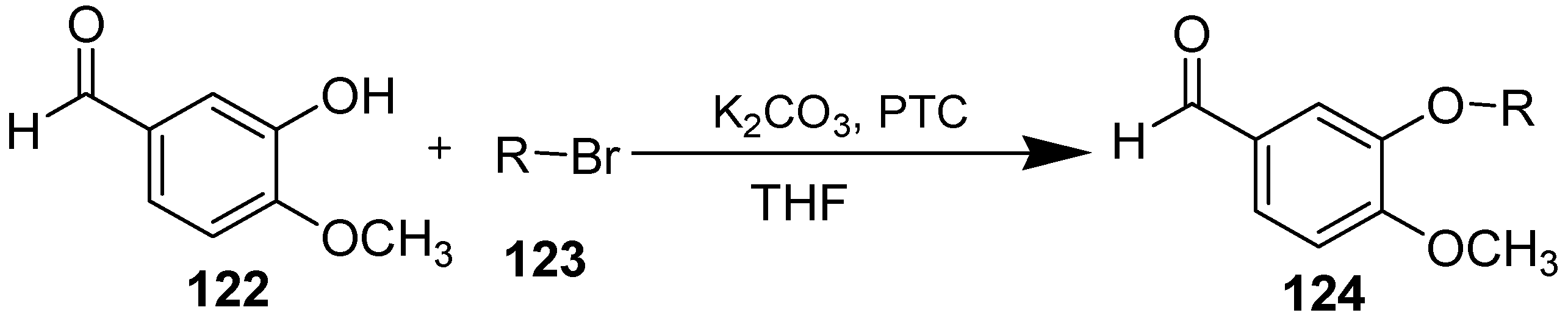
In 2016, Boz et al. [101] investigated the use of Gemini surfactants to catalyze the alkylation of isovanillin 122 with alkyl halide (cyclopentyl or octyl group) 123 in the presence of THF and K2CO3 to yield the desired product 124. The advantages of this strategy are that it is environmentally benign and the catalyst is of low cost (Scheme 37).
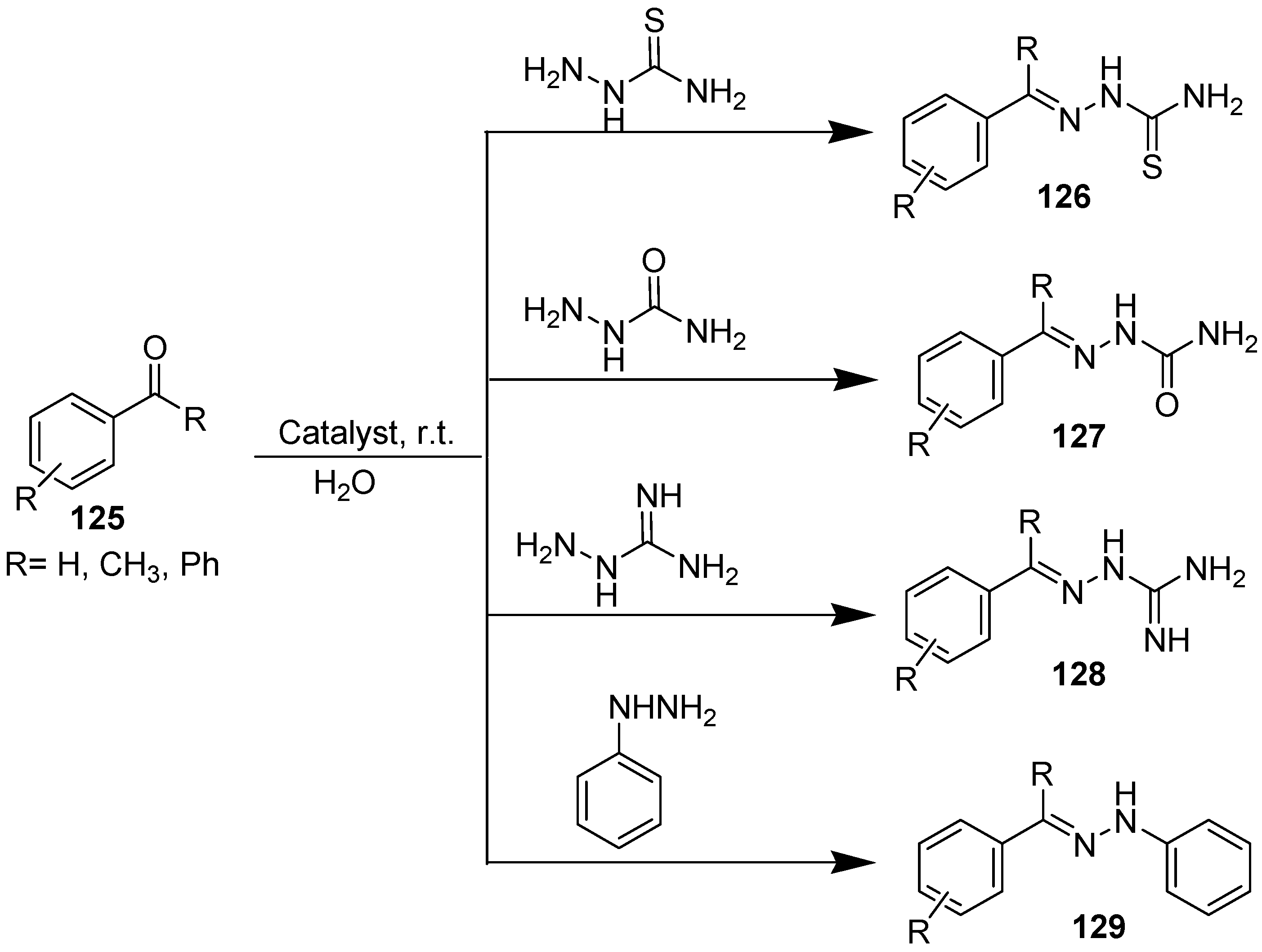
In 2016, Chavan et al. [102] reported the use of an aqueous extract of Acacia concinna pods as a natural-type surfactant in the preparation of aryl-hydrazones. This efficient catalyst is used to catalyze the reaction of a variety of carbonyl compounds 125 with thiosemicarbazide, semicarbazide, aminoguanidine, and phenyl hydrazine in shorter reaction times in water at room temperature to yield desired products 126, 127, 128 and 129, respectively (Scheme 38).
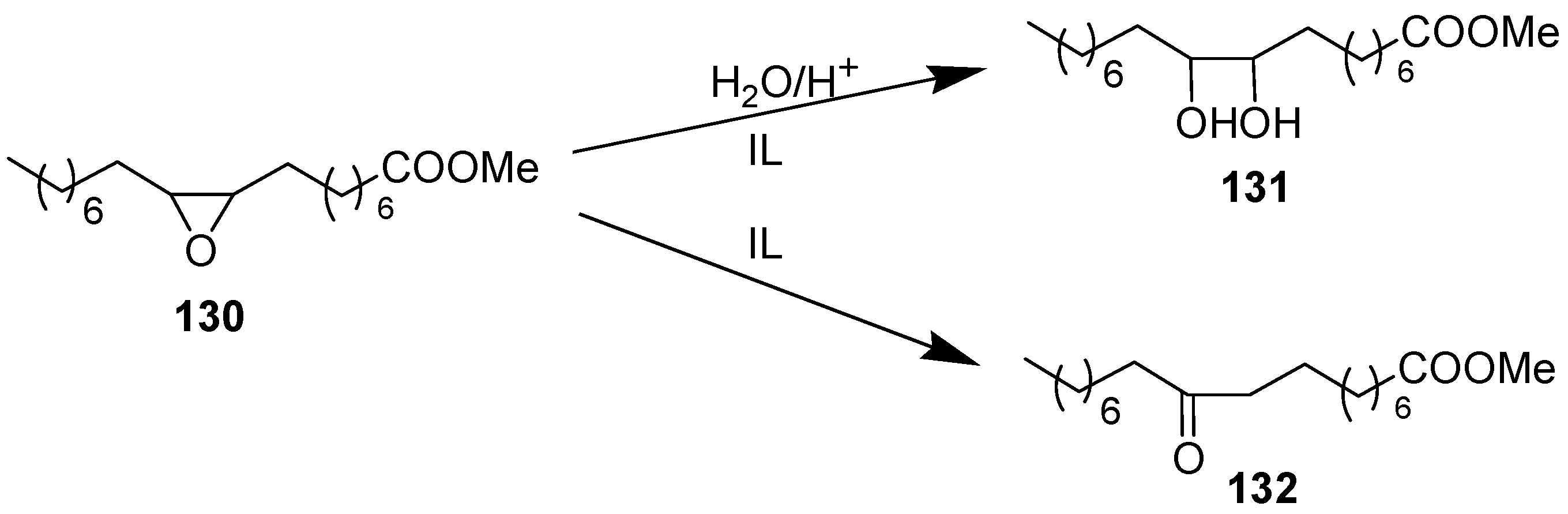
In 2016, Nowicki et al. [103] synthesized amphiphilic 1-alkyl-3-methylimidazolium hydrogen sulfate ionic liquids. They act as a cocatalyst in the oxirane ring-opening reaction of 130 in epoxidized fatty acid methyl esters 131 and 132 (Scheme 39).
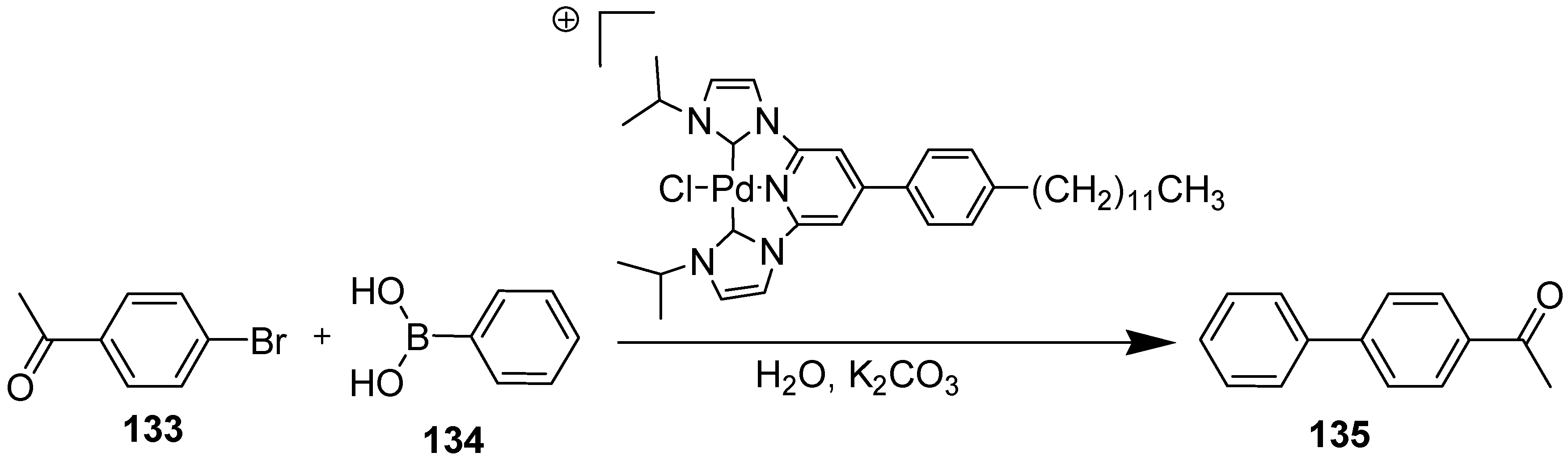
In 2017, Donner et al. [104] worked on the synthesis of a new type of surfactant that contains an NHC moiety as a head group. Further, it also showed high catalytic activity in the Suzuki coupling of phenylboronic acid 134 with 4-bromoacetophenone 133 in water to yield the desired product 135 in great yield (Scheme 40).
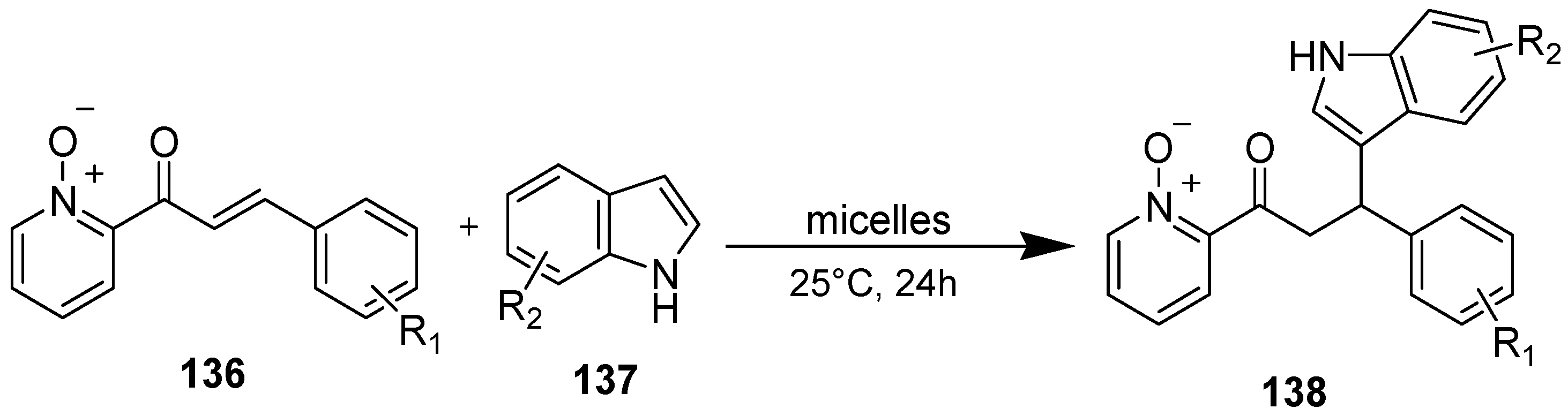
In 2020, Liang et al. [105] described a surfactant-type Metallo-micellar catalyst that was prepared and employed in the Michael addition reaction of aromatic 2-enoylpyridine-1-oxides (R1 = EWG, EDG, heteroaryl) 136 and indoles (R2 = H, 5-F, 5-Cl, 5-Br, 5-OMe, 5-COOMe, 6-Cl) 137 in water (Scheme 41). The desired products 138 are acquired in high yield, 88–96%, using this catalyst.
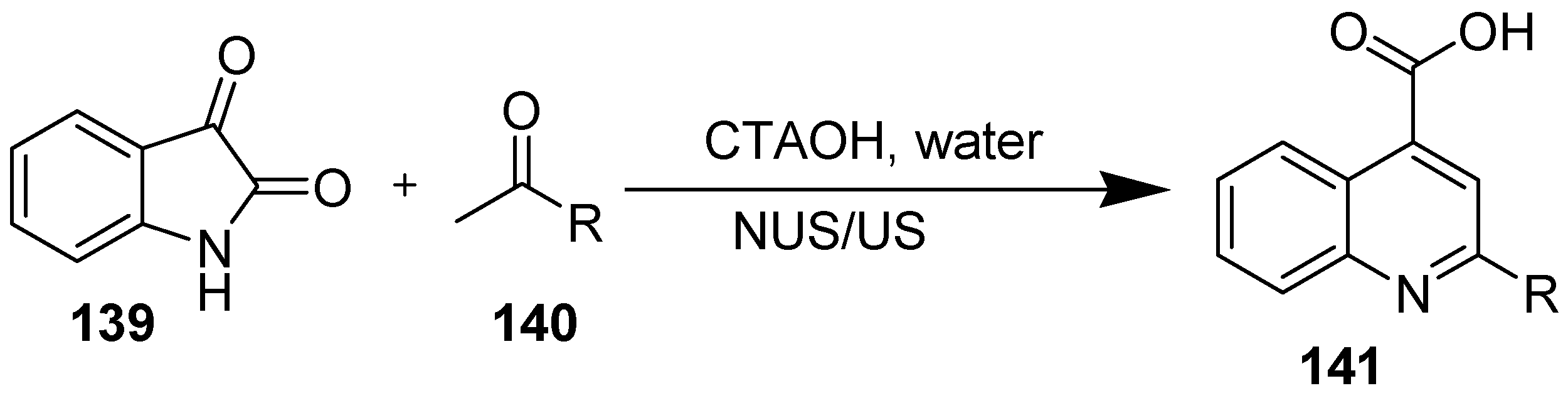
In 2017, More et al. [106] illustrated the use of a surfactant, cetyltrimethylammonium hydroxide, in the Pfitzinger reaction. Using this catalyst, the desired product, 2-substituted quinoline-4-carboxylic acid 141, is acquired in good yield (75–95%) via reacting isatin 139 with acetophenone 140 in water under ultrasonic irradiation (Scheme 42).
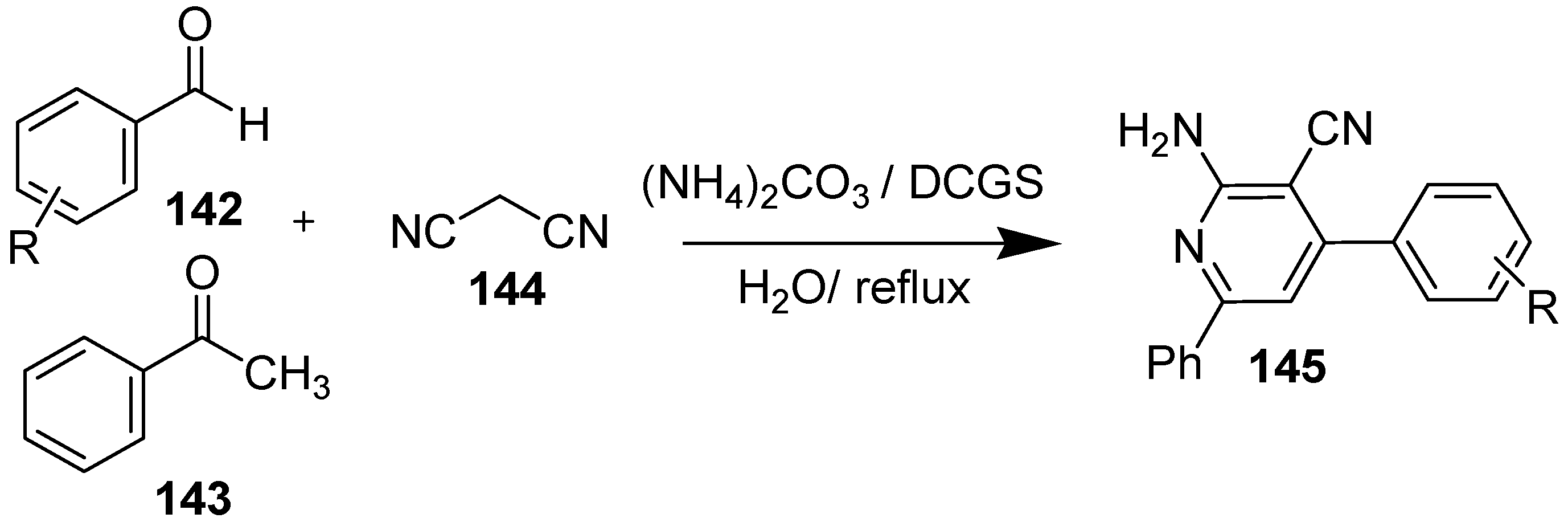
In 2020, Tammadon et al. [107] worked on the synthesis of a diester cationic Gemini surfactant (DCGS) and also on its utilization as a catalyst in the synthesis of aminocyanopyridine 145. The catalysis reaction of acetophenone 143, malononitrile 144, (NH4)2CO3, and aldehydes 142 in water to yield the targeted product in good yield, i.e., from 85 to 96% (Scheme 43).
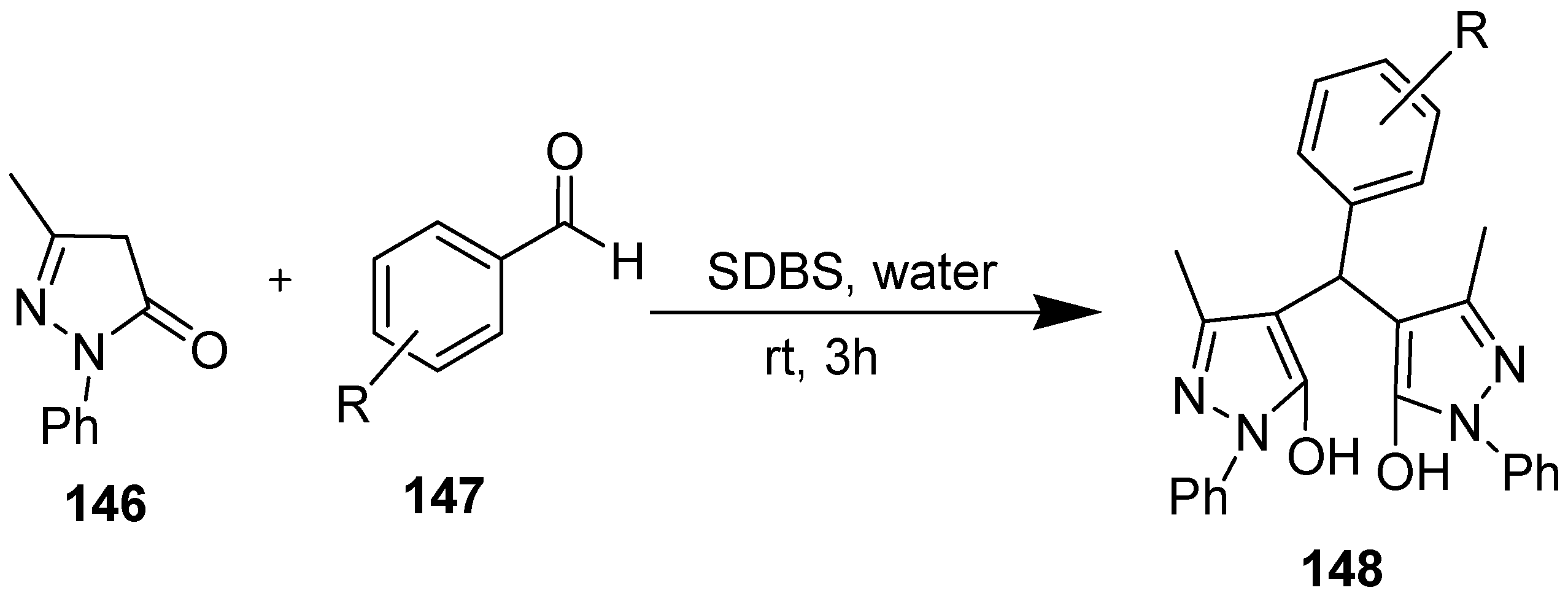
In 2018, Zheng et al. [108] reported that an efficient catalyst, sodium dodecyl benzene sulfonate 9, can be used to catalyze the reaction of aromatic aldehydes 147 with 1-phenyl-3-methyl-5-pyrazolone 146 in water for the preparation of 4, 4′-arylmethylene-bis(1-phenyl-3-methyl-5-pyrazolones) 148 (Scheme 44). A large number of substituted aldehydes (R = EWG, EDG and heteroaryl) 147 produced 148 with a yield from 88 to 94%. The key features of this methodology are selectivity, high yield and mild reaction conditions.
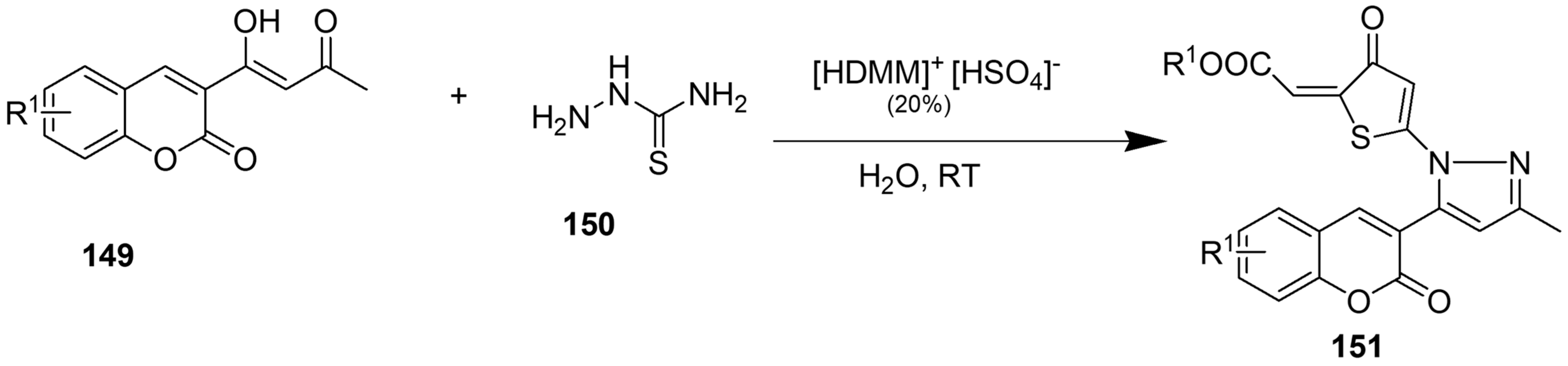
In 2025, Patil et al. reported a Brønsted acidic surfactant, hexadecyl methyl morpholinium hydrogen sulphate ([HDMM]+[HSO4]), as an efficient micellar microreactor for one-pot three-component synthesis of thiazolyl-pyrazole-chromen-2-one derivatives 151 in water [109]. Using a 20 mol% catalyst at room temperature, the reactions of 3-acetyl-4-hydroxy-2H-chromen-2-one derivatives 149, thiosemicarbazide 150, and dialkyl acetylene dicarboxylates afforded products in good to excellent yields (up to 90%) within short times, with broad substrate tolerance (Scheme 45). The enhanced activity was attributed to micelle-assisted solubilization and bond formation, and the catalyst was recyclable for up to five cycles with minimal efficiency loss.
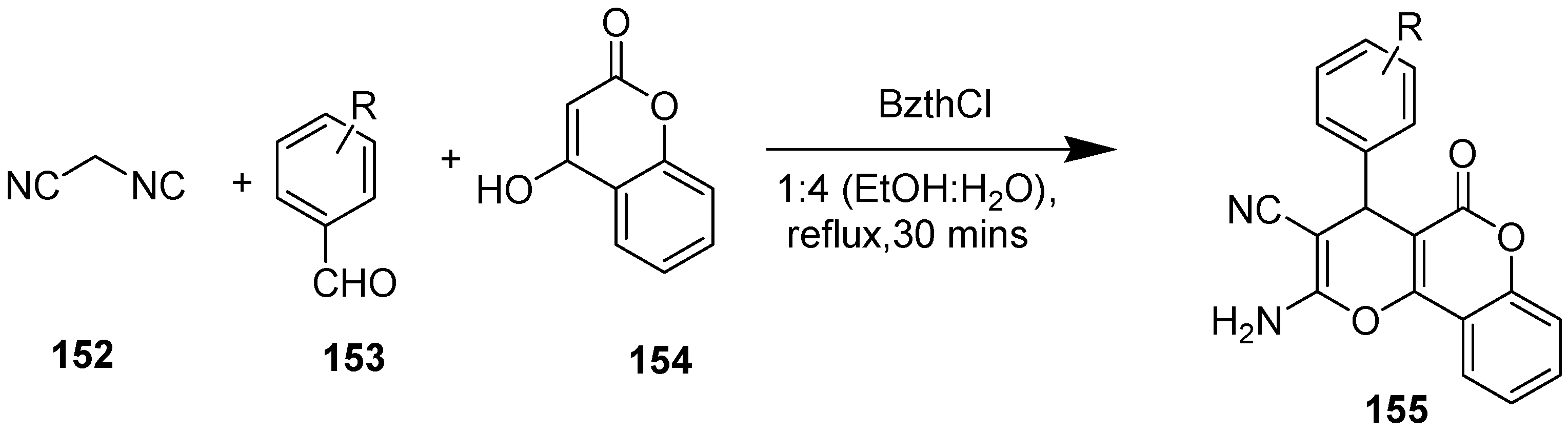
In 2023, Parthiban et al. reported that benzethonium chloride (BzthCl) is an efficient bi-tailed cationic surfactant catalyst for a one-pot three-component synthesis of pyrano[3,2]chromene derivatives 155 via condensation of malononitrile 152, substituted benzaldehydes 153, and 4-hydroxycoumarin 154. The reaction proceeded smoothly in a green 1:4 EtOH/H2O medium under reflux, affording 13 pyranochromene derivatives in good to excellent yields (77–96%) within 30–75 min [110]. Both electron-donating and electron-withdrawing substituents (R = H, halogens, NO2, OH, CH3, OCH3, furyl, thiophenyl) were well tolerated. The enhanced catalytic activity was attributed to micelle formation by BzthCl, which promoted the Knoevenagel–Michael–cyclization sequence efficiently under mild conditions (Scheme 46).
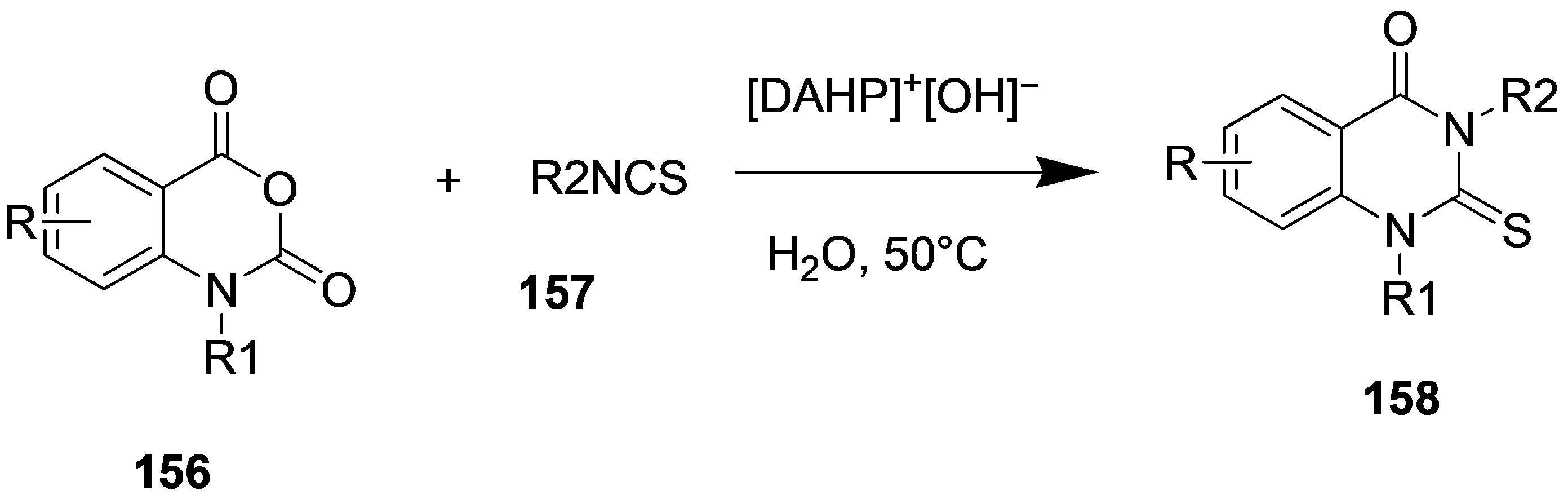
In 2022, Patil et al. investigated the catalytic efficiency of 4-(dimethylamino)-1-hexadecylpyridinium hydroxide [DAHP]+[OH], a Brønsted basic surfactant, as a nano-micellar reactor for the production of 2-thioxo-2,3-dihydroquinazolin-4(1H)-ones 158 in water. The reaction between isatoic anhydrides 156 and isothiocyanates 157 was carried out in an aqueous medium at 50 °C using a 20 mol% surfactant, affording the desired products in an efficient yield (up to 81%) within short reaction times (Scheme 47). Due to effective micellar solubilization and Brønsted basic activation, [DAHP]+[OH] demonstrated higher catalytic activity among several common surfactants (SDS, CTAB, Triton X-100, SDOSS) [111]. The study demonstrates the micellar system’s effectiveness as a green and sustainable nanoreactor, with the catalyst maintaining its activity over four consecutive recycling cycles.
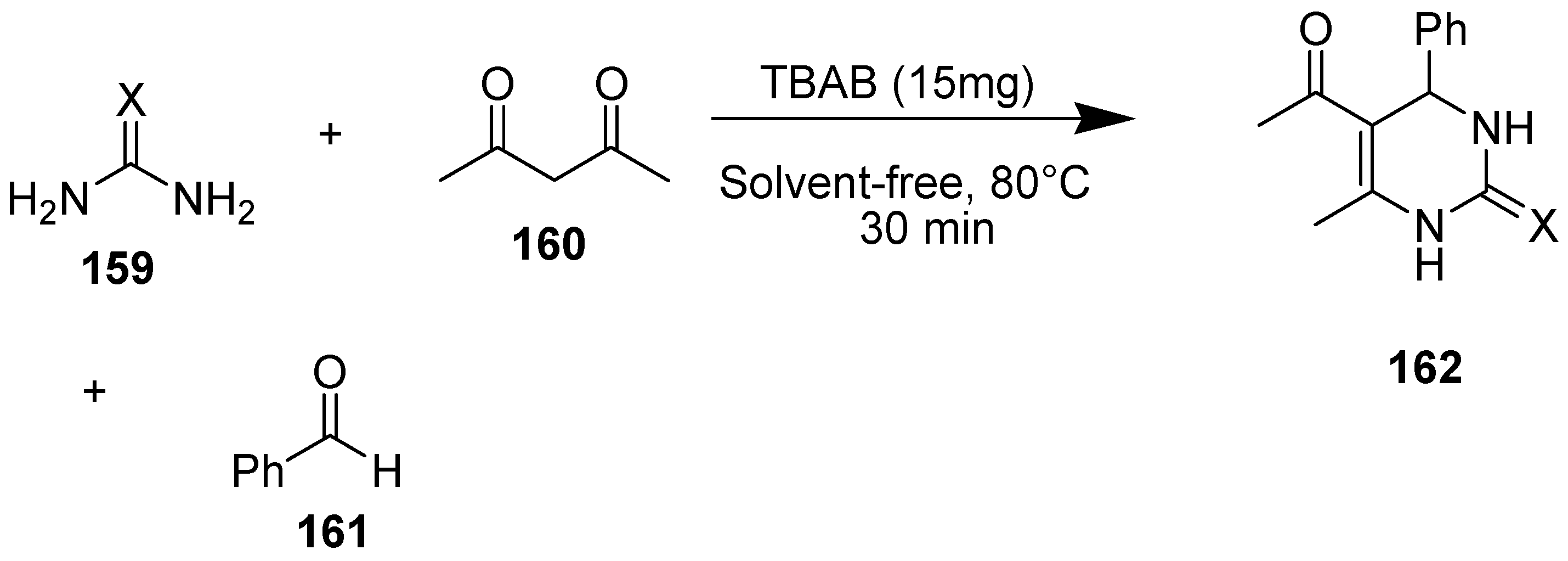
In 2024, Zolfaghari et al. investigated the efficient use of the cationic surfactant tetrabutylammonium bromide (TBAB) in the Biginelli reaction for synthesizing 3,4-dihydropyrimidine derivatives 162. The solvent-free reaction of aromatic aldehydes 161, β-dicarbonyl compounds 160, and urea/thiourea 159 at 80 °C (15 mg TBAB) yielded 12 derivatives in high yields (85–97%) within 30 min. Electron-withdrawing substituents enhanced yields compared to EDGs (Scheme 48). The high efficiency was attributed to TBAB creating a homogeneous ionic medium and activating the carbonyl group, highlighting its eco-friendly catalytic role [112].
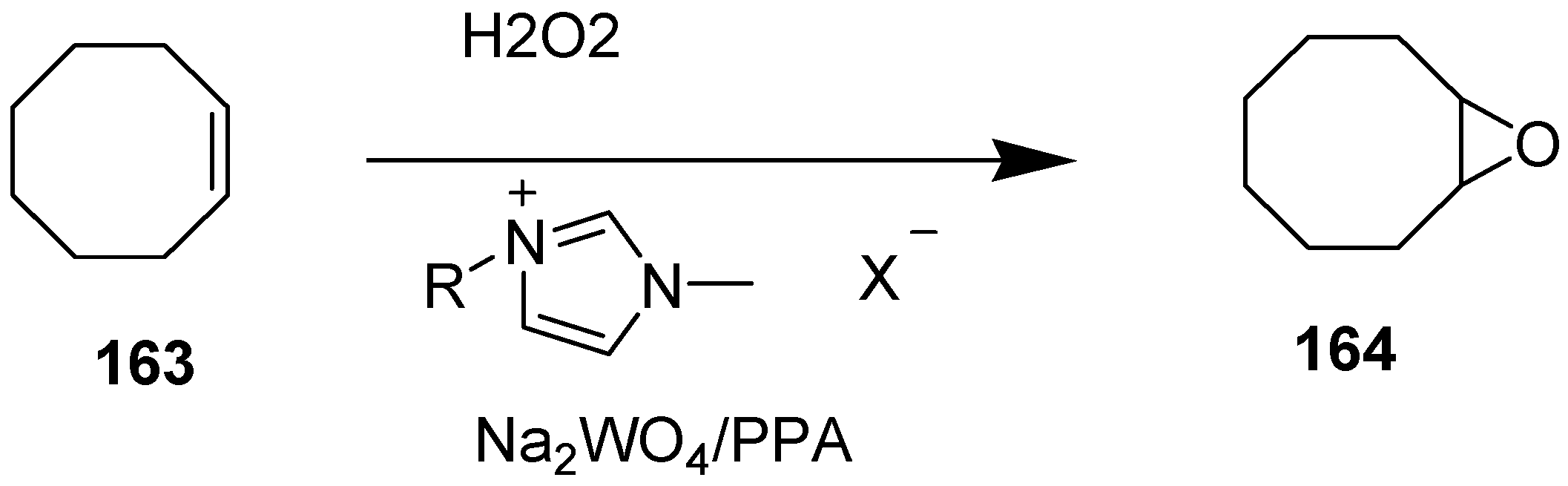
In 2025, Luibl et al. studied fluorinated surface-active ionic liquids (FSAILs) as micellar phase transfer catalysts for biphasic epoxidation of cis-cyclooctene 163 using aqueous H2O2 and sodium tungstate to prepare cis-cyclooctene oxide 164 (Scheme 49). The FSAILs formed micelles that enhanced substrate solubilization and interfacial mass transfer, with catalytic activity strongly influenced by alkyl chain length and anion type. Dodecyl-substituted systems, particularly [DoMIm][BF4] and [DoMIm][PF6], provided near-complete conversions and high selectivity, while [NTf2] analogues were less active due to lower stability [113]. The catalysts preferentially resided in the organic phase, enabling interfacial epoxidation and facile recycling with sustained selectivity, demonstrating the efficiency of FSAIL-based systems in green epoxidation.
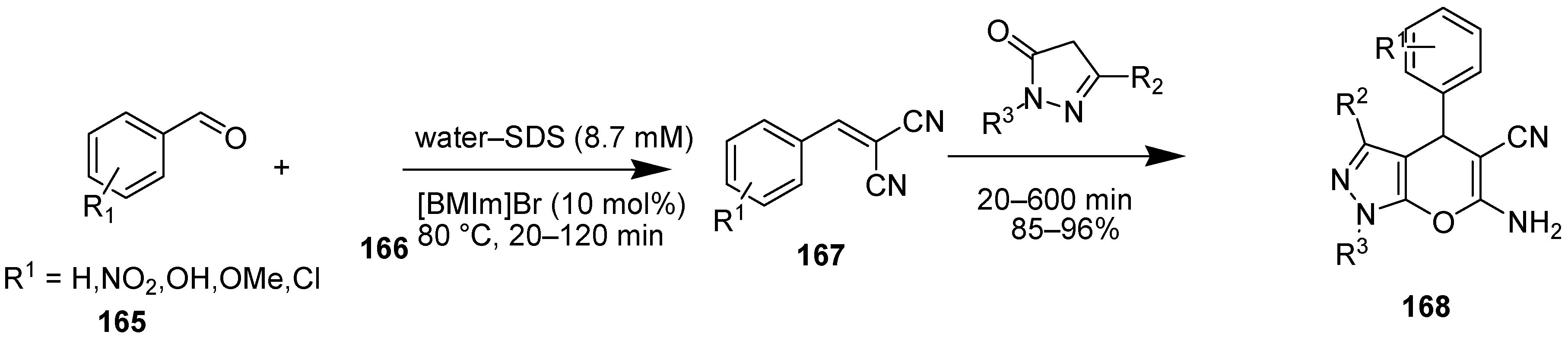
In 2024, the authors reported an efficient one-pot sequential multicomponent synthesis of spiro[indoline-3,4′-pyrano[2,3-c]chromene]-2-one derivatives 168 using SDS (8.7 mM) and [BMIm]Br (10 mol%) in water at 80 °C. Substituted aromatic aldehydes 165 (R1 = H, NO2, OH, OMe, Cl), malononitrile 166, and (5,5-dimethyl-1,3-cyclohexanedione) 167 with pyrazolone derivatives underwent Knoevenagel condensation, Michael addition, and cyclization to afford the desired products in excellent yields (85–96%) within 20–120 min (Scheme 50). The enhanced catalytic performance was attributed to the synergistic effect of SDS micelles, which improved substrate solubilization, and the ionic liquid, which facilitated intermediate activation, demonstrating an efficient and green micellar system for heterocycle synthesis [114].
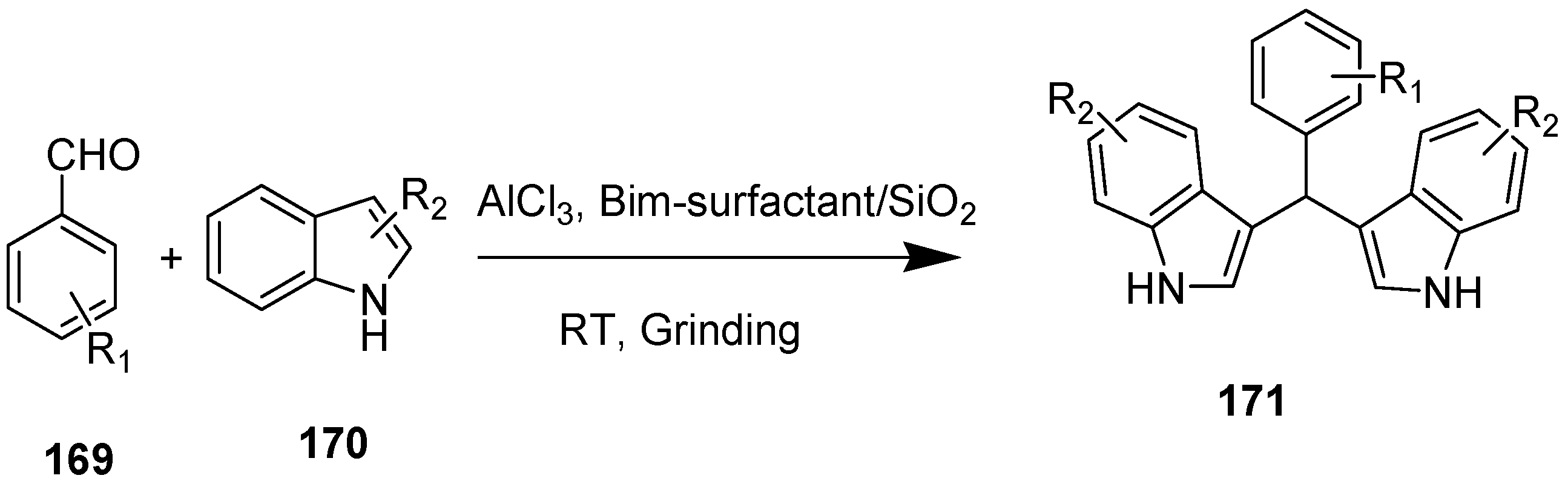
In 2025, Khandare et al. developed a Lewis acid–benzimidazolium-based ionic liquid surfactant–SiO2-combined catalyst (LABimSC) for the green synthesis of bis(indolyl)methane 171 under solvent-free and dry-grinding conditions at room temperature. The LABimSC system efficiently activated aldehydes 169 toward electrophilic substitution with indoles 170, affording 16 derivatives in 15–20 min with higher yields (83–99%) (Scheme 51). AlCl3.6H2O (0.1 mmol), surfactant (0.3 mmol) and 0.5 g of SiO2 support were used in the reaction [115]. The catalyst was proven to be highly recyclable and useful for gram-scale synthesis, with a good green profile, working without the use of solvents and any harmful reagents. Efficient water-assisted vesicle formation in situ and carbonyl activation by carbocation were the reasons for the high efficiency, which exhibited good performance of mechanochemical surfactant-assisted catalysis.
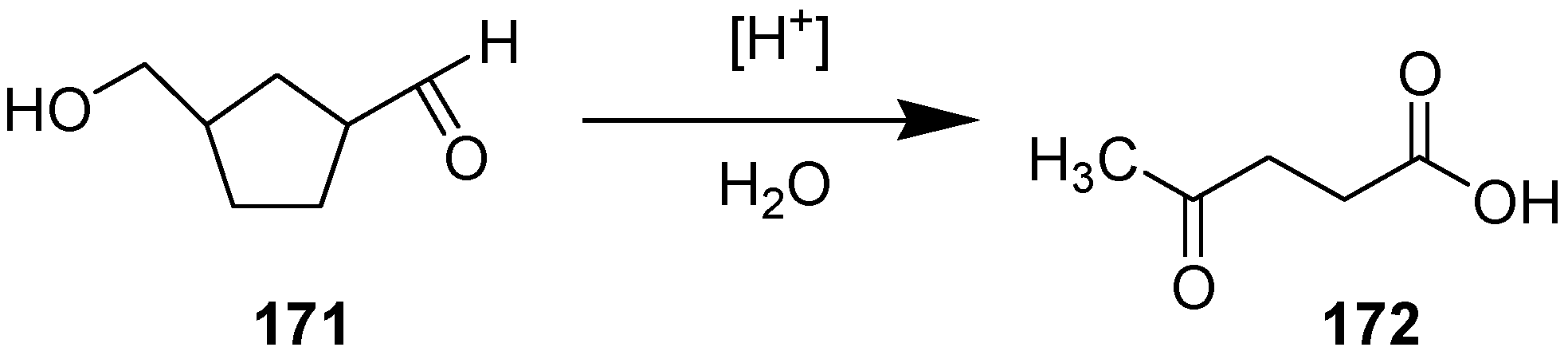
In 2021, Qieo He et al. synthesized a sulfonated carbon-based solid acid catalyst (AC-SO3H) using a serial sulfhydrylation–sulfonation of activated carbon for the dehydration of 5-(Hydroxymethyl) cyclopentane-1-carbaldehyde 172 into 5-hydroxymethylfurfural (5-HMF) 173 (Scheme 52). This catalyst possesses high acid density, excellent thermal stability, and abundant –SO3H groups, which enables effective fructose transformation in DMSO. The highest 5-HMF yield (100%) and good selectivity could be achieved under optimal conditions: 65 weight% H2SO4 sulfonation, 120 °C for 2 h, and a ratio of catalyst to 5-(Hydroxymethyl) cyclopentane-1-carbaldehyde of 1:1. The AC-SO3H catalyst could be separated easily and showed good reusability. It could achieve about 94% yield even after four cycles. These excellent catalytic performances were ascribed to the appropriate surface acidity and porous nature of AC-SO3H, which illustrates that sulfonated carbon material is an attractive solid acid catalyst for biomass transformation [116].
In 2025, Attanatho et al. reported a surfactant-assisted sulfonation of methyl oleate 173 using sodium bisulfite 174 in a two-phase system. With TBPB as the initiator and FeCl3 as the cocatalyst, the addition of the branched-chain methyl oleate sulfonate MOS 175 surfactant significantly enhanced performance by reducing interfacial tension and improving phase dispersion (Scheme 53). Optimized conditions gave >80% yield after 10 h at 40 °C, whereas the reaction without surfactant was slower due to mass transfer limitations. The improved efficiency was attributed to microemulsion formation and micellar solubilization, highlighting the importance of interfacial engineering [117].
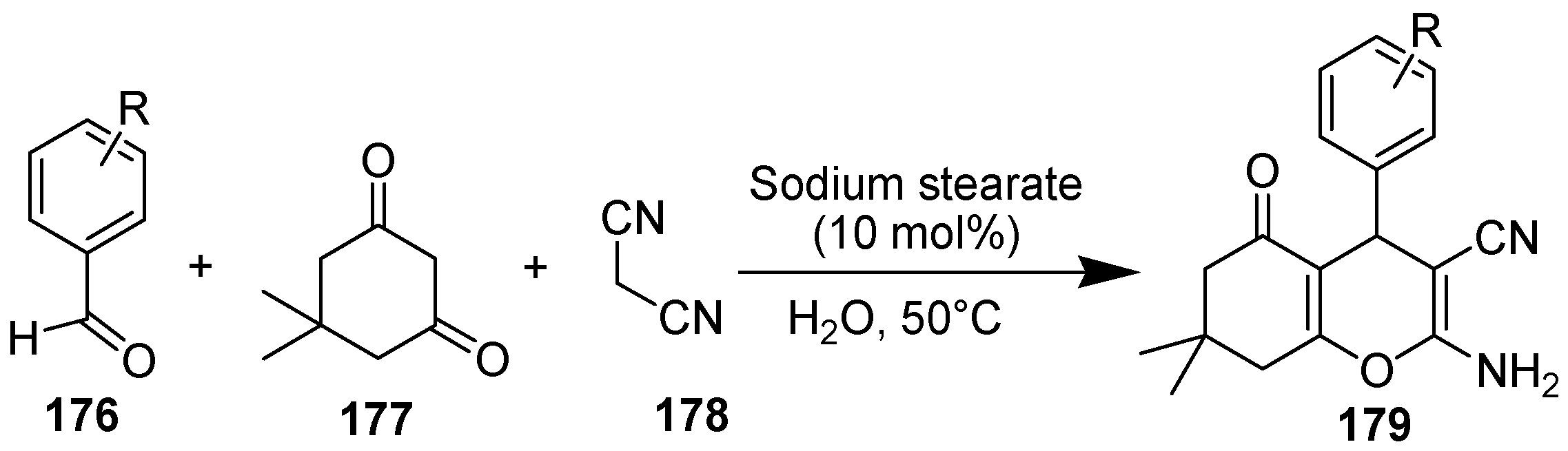
In 2023, Mohamadpour et al. conducted a micellar catalytic study of sodium stearate as a combined Lewis base–surfactant catalyst for the one-pot three-component synthesis of tetrahydrobenzo[b]pyranes in water. Dynamic sodium stearate micelles (10 mol%) were used, and at 50 °C, the condensations of aromatic aldehydes 176 with malononitrile 178 and dimedone 177 gave corresponding tetrahydrobenzo[b]pyranes 179 in high yields (82–93%) in good reaction times (Scheme 54). Compared with blank and non-aqueous solvents, a low conversion rate was observed [118]. This can be attributed to the fact that the micellar structure can provide a hydrophobic reaction medium, activating substrates and inducing their cyclization in water.
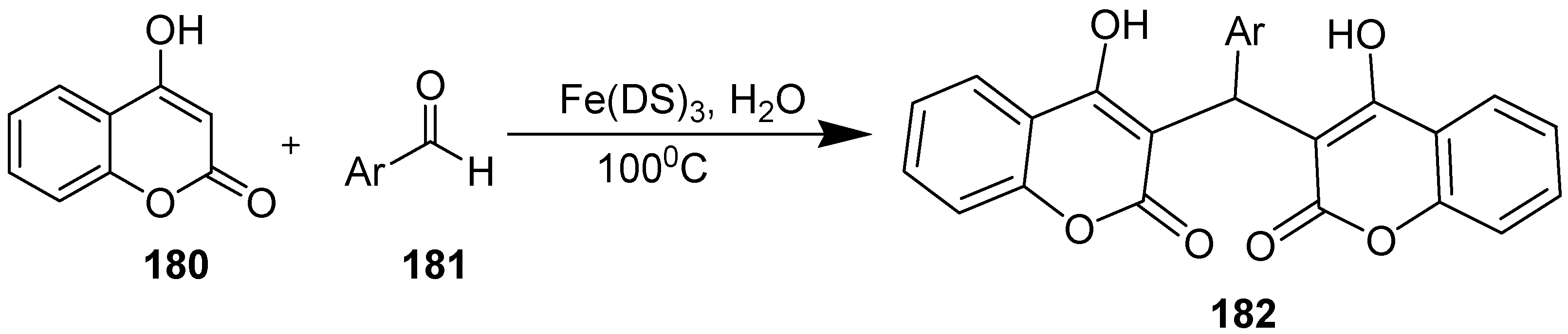
In 2019, Mahmoodi et al. [119] described the preparation of biscoumarins 182 through a reaction of 4-hydroxycoumarin 180 and various aldehyde 181 catalyzed by Fe(DS)3 [Iron(III) dodecyl sulfate] in water at 100 °C. An extensive variety of aldehydes 181 with electron-withdrawing or electron-releasing groups in the benzene ring reacts with 4-hydroxycoumarin 180 to give a yield from 55 to 91% (Scheme 55). The substituted di-halogenated compounds exhibited great antibacterial action against Gram-positive (M. luteus and S. aureus) and Gram-negative (P. aeruginosa and E. coli) bacterial strains.
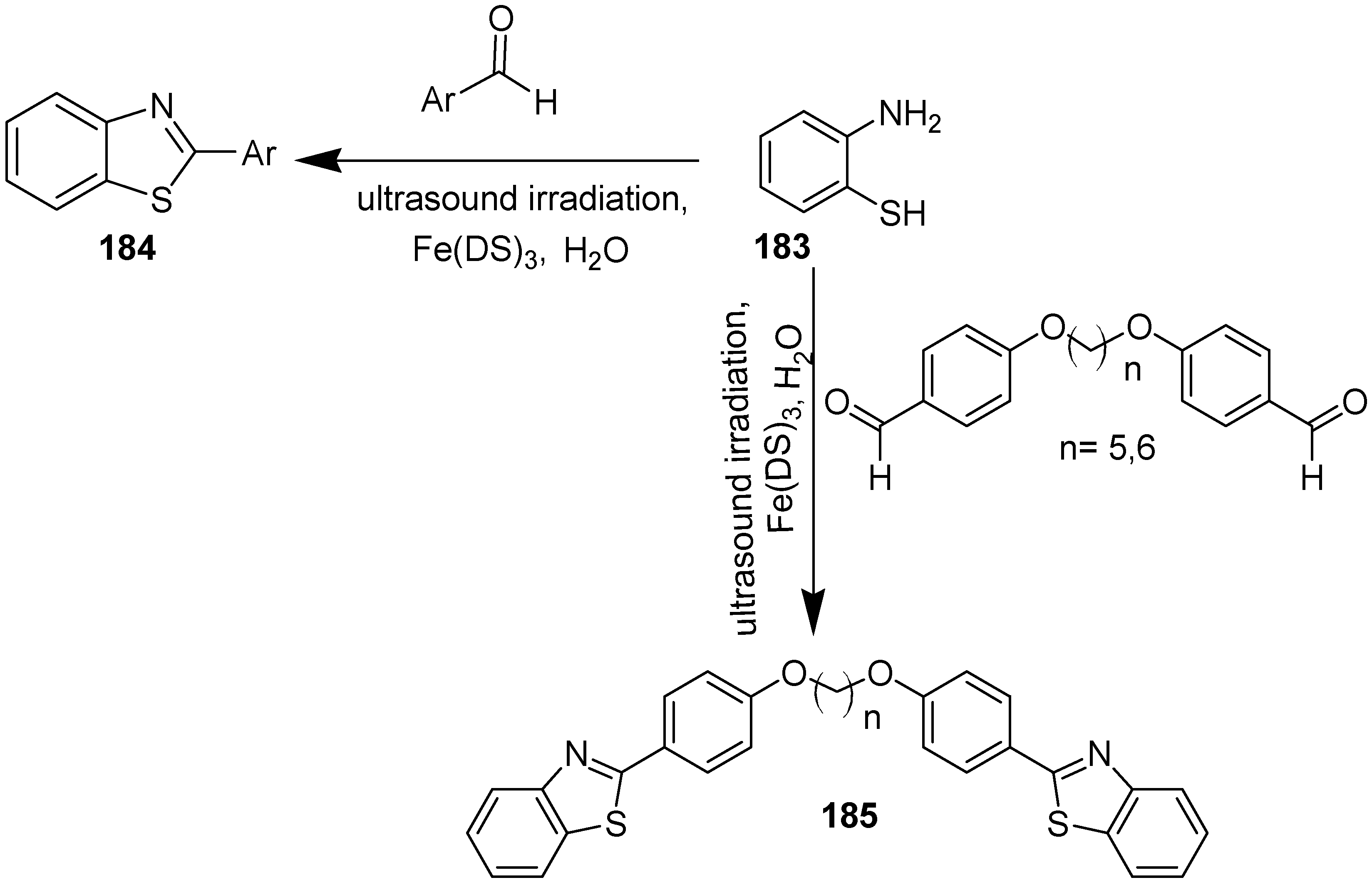
In 2016, Pirbasti et al. [55] described the LASC Fe(DS)3-catalyzed synthesis of benzothiazoles by a reaction of 2-aminothiophenol 183 with different aromatic aldehydes under ultrasound irradiation in water. The benzothiazole products (184 mono- and 185 bis-benzothiazoles) of this surfactant-catalyzed reaction are obtained in great yields up to 94%. The advantageous attributes of this methodology are that it is environmentally friendly and requires a short reaction time with great yields. A broad spectrum of aldehydes, heteroaryl, and bis-aldehydes, with electron-withdrawing or electron-releasing groups connected to the benzene ring, react with 2-aminothiophenol 184 to give yields from 82 to 94% (Scheme 56).
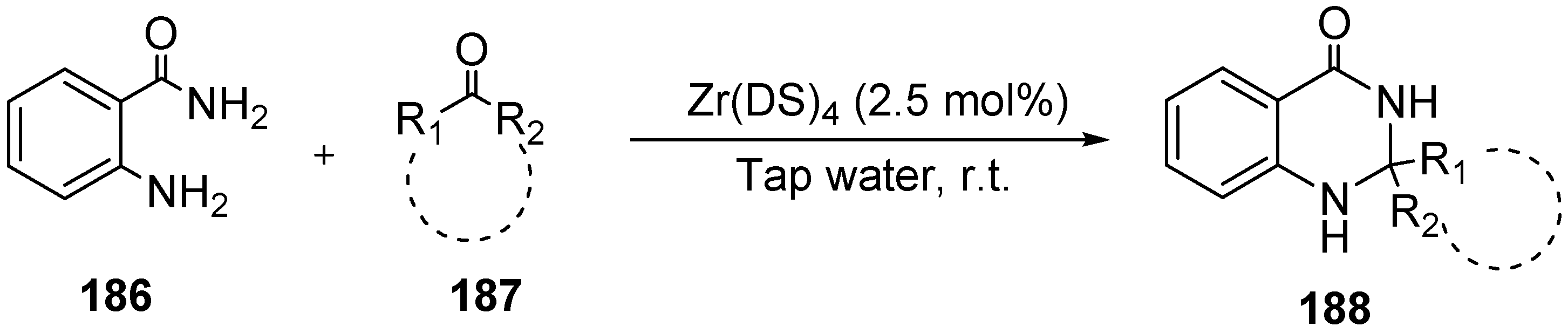
In 2015, Safaei et al. [40] worked on the synthesis of a quinazoline derivative 188 through a [Zr(DS)4]-catalyzed condensation reaction of carbonyl compounds 187 and 2-aminobenzamide 186 in water at room temperature. Various ketones and aldehydes 187 react with 2-aminobenzamide 186 to give a great yield of products from 83 to 97% (Scheme 57). In comparison with the old methodology, this new surfactant-combined methodology shows significant advantageous features, such as catalyst recycling, great yields, and short reaction times.
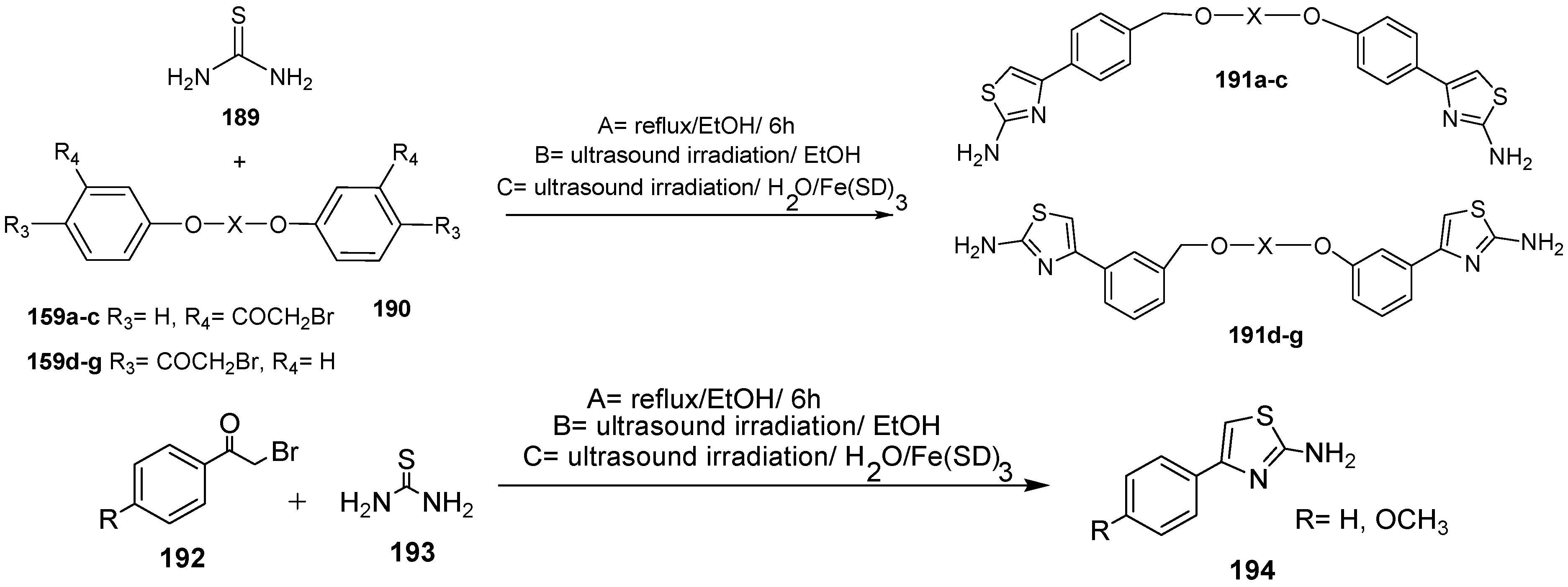
In 2017, Parvizi et al. [120] showed a novel route for the synthesis of bis-thiazoles 191. Bis-thiazole 191 synthesis is carried out by a reaction of compound 190, 189 thiourea, and 192 using the LASC Fe(DS)3 under ultrasound irradiation in water (Scheme 58). The product yield obtained by this method is brilliant, up to 87%. In correlation with the reflux strategy, this technique is exceptionally effective because of the simple setup, great yields, safety, and shorter reaction times.
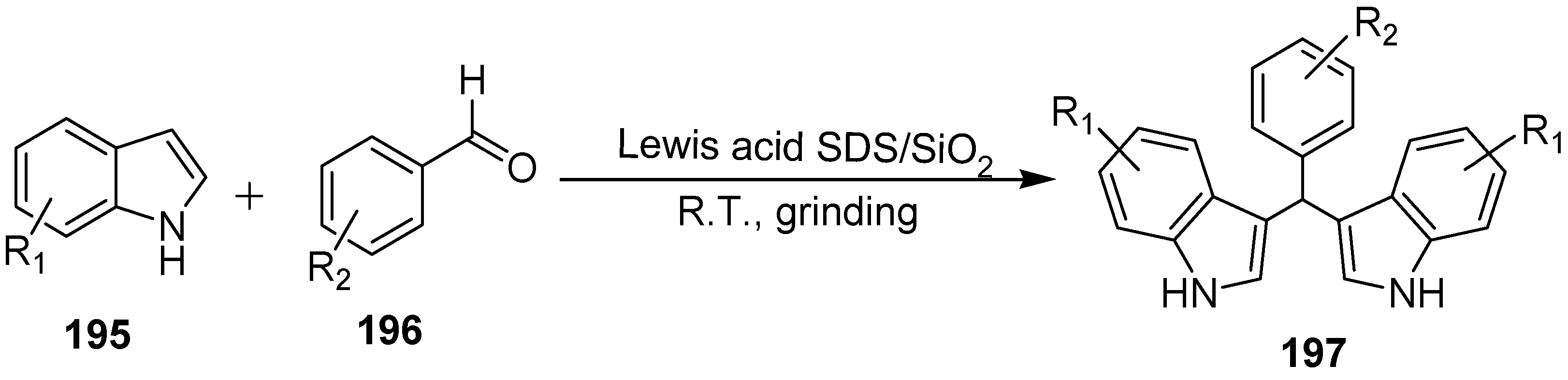
In 2019, Wu et al. [121] worked on the synthesis of indolyl methane derivative 195 by a reaction between indole 193 (R1 = H, 2-methyl, 3-methyl) and aldehyde 194 (R2 = NO2, Br, Cl, CN) catalyzed by LASCs under grinding at room temperature. The desired products 195 of this efficient procedure are obtained in great yields (Scheme 59). The key highlights of this methodology are great yields, a simple workup, and the use of a non-hazardous solvent, making this strategy more environmentally benign.
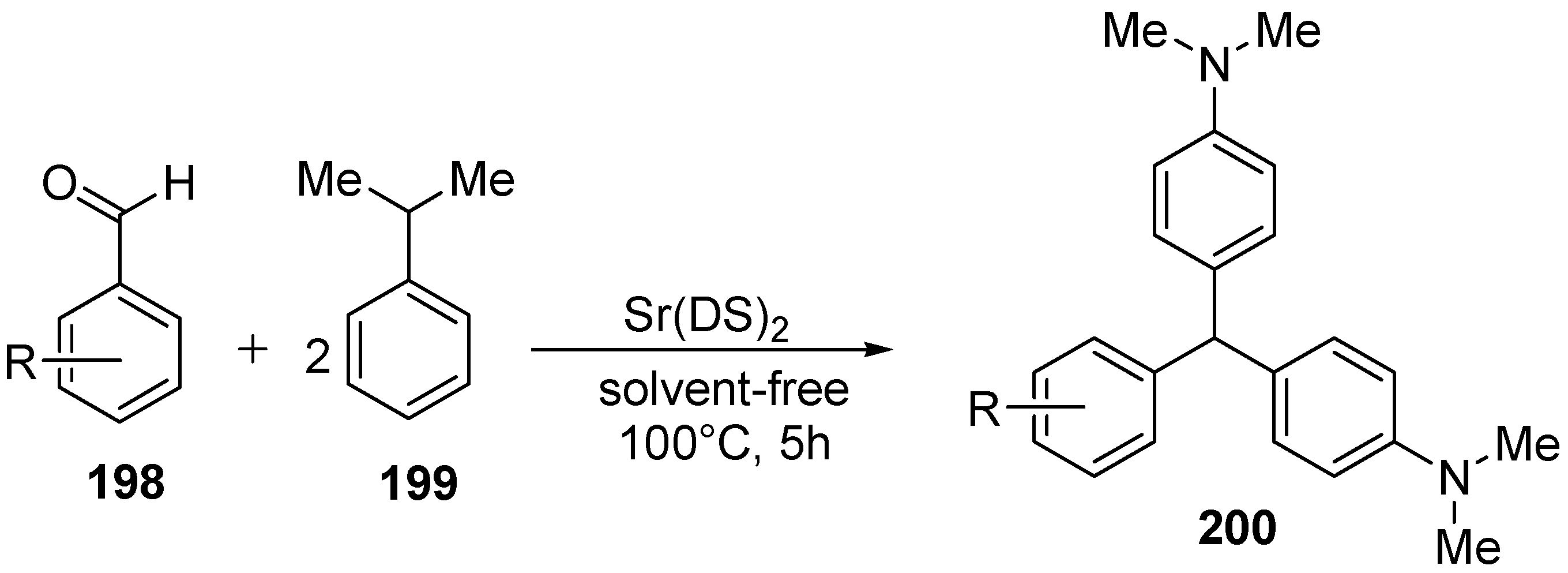
In 2018, Behbahani et al. [51] developed Sr(DS)2-catalyzed synthesis of 4,4′-diaminotriarylmethanes 200. The Sr(DS)2-catalyzed reaction of aryl aldehyde 198 with N, N-dimethyl aniline 199 was performed in an oil bath at 100 °C (Scheme 60). By substituting different electron-releasing or electron-withdrawing groups in the benzene ring of aldehyde 196, product 198 is acquired in yields from 70 to 94%. The key highlights of this technique are simple separation and recuperation, high activity or selectivity, and great yields.
In 2018, Hulnik et al. [122] reported an emulsion cation polymerization with an LASC for the preparation of bio-based [poly-(β-myrcene, β-myrcene-co-styrene)] 203. Higher-molecular-mass polymers [50 to 150 kg/mol] were obtained in (co)polymeric form in 10–14 h with a water-dispersible Lewis acid–surfactant-consolidated impetus (LASC) from naturally occurring β-myrcene 201 and 202 as the parent source. Here, the catalyst from the reaction mixture is easily recycled with no observable change in its effectiveness (Scheme 61).
In 2020, Destephen et al. [123] reported a new Lewis acid–surfactant hb-DBSNa/YbCl3 used for cationic polymerization of vinylic monomer in water. He reported that the polymerization of these monomers did not follow the cationic pathway in water; instead, these reactions proceeded via a radical pathway. Radical species identification via spin trapping experiments combined with (ESR) shows that this cationic polymerization proceeds via a radical pathway.
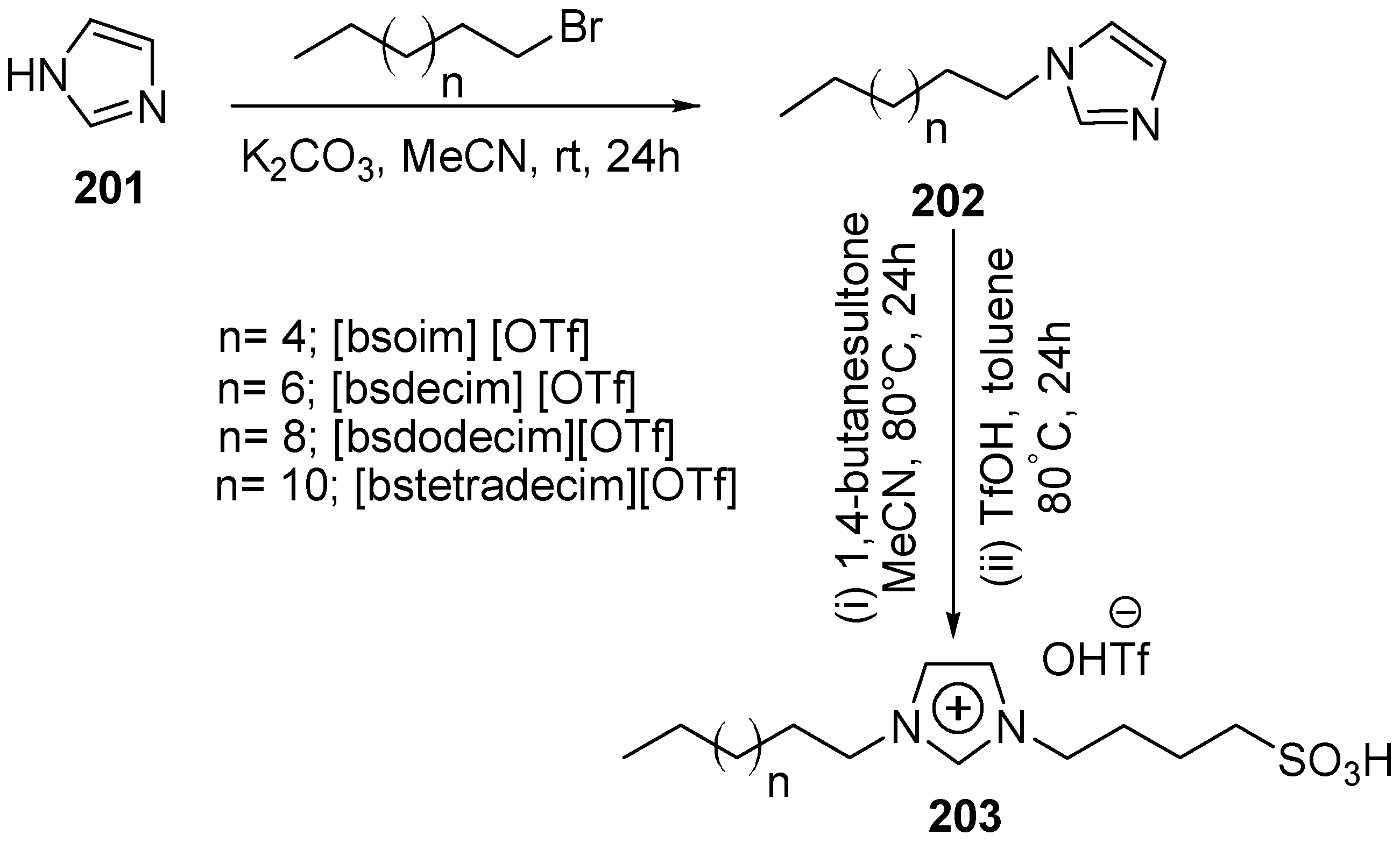
In 2018, Senapak et al. [124] investigated the synthesis of 2-substituted benzothiazole 206 using [bsdodecim][OTf] as a catalyst. The preparation of 2-substituted benzothiazoles 206 is carried out by a reaction of 2-aminothiophenol 204 with aldehyde 205 using catalyst [bsdodecim][OTf] in water at room temperature (Scheme 62). On substituting different alkyl, aryl, heteroaryl and electron-withdrawing or electron-releasing groups within the benzene ring in the R2 position of aldehyde 205, up to 98% is obtained.
In 2016, Preetam et al. [125] reported that spiro[indoline-3,2′-thiazolidinones] 210 are formed by the DBSA-catalyzed reaction of aniline 207 and chloroindolin-2,3-dione 208 in water at room temperature (Scheme 63). This reaction results in the formation of a Schiff base 209, which, on further addition of thioglycolic acid, gives the desired product 210. The product 210 yields obtained by this methodology are excellent, from 75 to 88%. When electron-withdrawing groups are attached to isatin groups, the yield obtained is higher than that when electron-releasing groups are attached to isatin. This synthetic procedure exhibits a few points of interest, for example, the use of water as a solvent, good to brilliant separated yields, and short reaction times.
In 2024, Abraham et al. studied the micellar catalytic efficiency of 4-dodecylbenzenesulfonic acid (DBSA) in the acid-catalyzed cross-aldol condensation of benzaldehyde 211 and cyclohexanone 212 in water to give product 2,6-Dibenzylidenecyclohexanone 213 and 2-Benzylidenecyclohexanone 214 (Scheme 64) [126]. Dynamic DBSA micelles at lower concentrations (37.5 mM) showed superior catalytic activity, giving 81% conversion with up to 96% selectivity toward the di-condensation product (ABA), whereas higher concentrations (>75 mM) resulted in reduced efficiency due to stable micelle and vesicle formation. The enhanced performance was attributed to dynamic micelles providing a large reactive interface and accessible H+ ions, highlighting the critical role of micellar structure in aqueous acid catalysis.
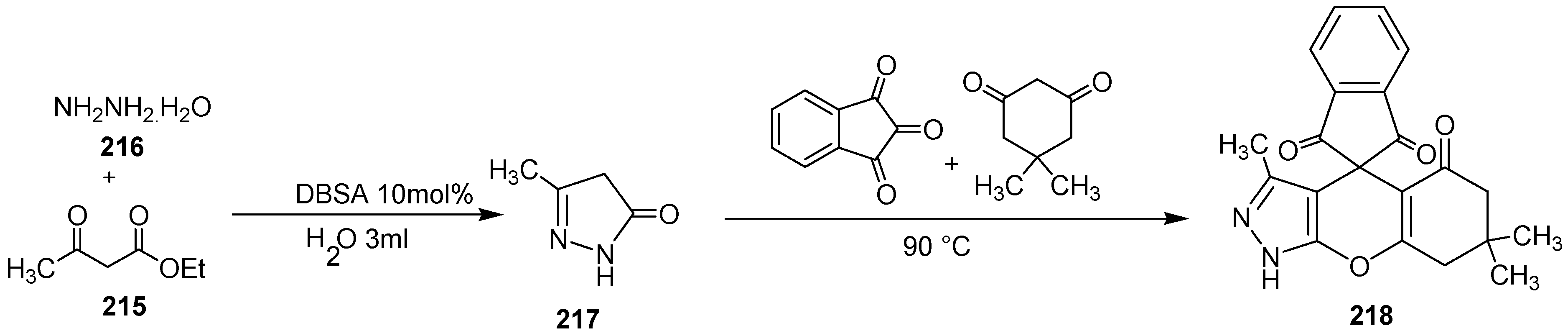
In 2015, Mukherjee et al. [127] developed DBSA-catalyzed synthesis of tricyclic 4-spiro pyrano[2,3-c]pyrazole 218. This Brønsted acid–surfactant-catalyzed reaction of hydrazines 216 and ethyl acetoacetate 215 in water at room temperature forms a pyrazolone derivative 217. Then, this pyrazolone derivative 217 reacts with 1,3-dicarbonyl and forms the desired product 218 (Scheme 65). On substitution of different aryls and the electron-withdrawing and electron-releasing groups within the benzene ring to pyrazolone 217, yields of the desired product are obtained from 75 to 96%. Broad substrate variety, great yield, operational effortlessness, absence of hazardous reagents, easy workup, and use of an environmentally friendly catalyst are the remarkable highlights of this strategy.
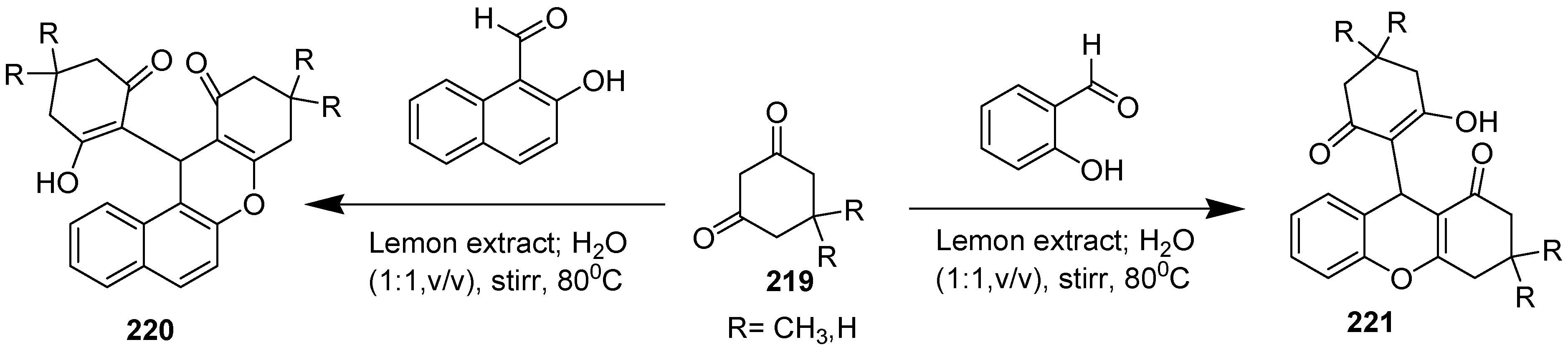
In 2015, Morbale et al. [128] described the preparation of benzopyran 220 and 221 from the reaction of salicylaldehyde, cyclic 1,3-diketones 219, and 2-hydroxy naphthaldehyde using a biosurfactant [lemon extract] in water at 80 °C (Scheme 66). Various electron-withdrawing or electron-releasing groups attached to carbonyl compound 219 react with 2-hydroxy naphthaldehyde and salicylaldehyde to give products yielding 96–84%. In contrast with regular strategies, this synthetic technique exhibits some significant attributes, such as the use of inexpensive, easily accessible, and environmentally benign catalysts, high yield, and the prevention of the use of hazardous reagents.
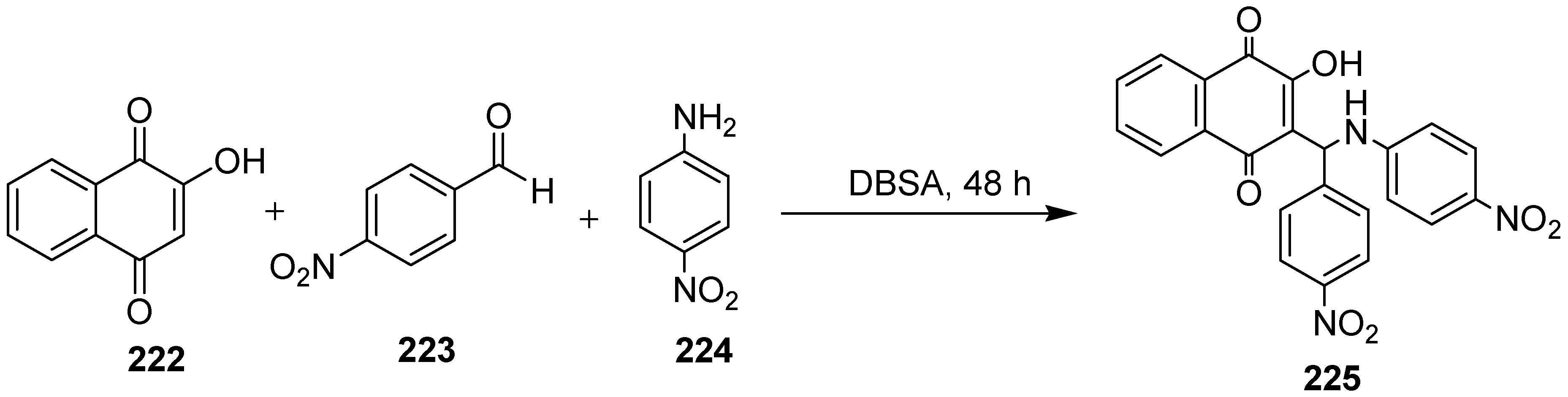
In 2015, Filho et al. [129] worked on the synthesis of amino naphthoquinones 225 using (BASC) dodecyl benzenesulfonic acid (DBSA). DBSA catalyzed the reaction of 2-hydroxy-1,4-naphthoquinone 222, p-nitrobenzaldehyde 223, and p-nitroaniline 224 in water at room temperature to give the desired product 225. Substitution of an aryl and an electron-withdrawing group on aldehyde 223 in the BASC-catalyzed reaction gives a yield of products up to 85%. While in the case of electron-releasing groups, this yield is reduced by 13%. The exhibited highlights of this approach that are appropriate for green chemistry are that it [BASC] is non-hazardous, inexpensive, and easily accessible (Scheme 67).
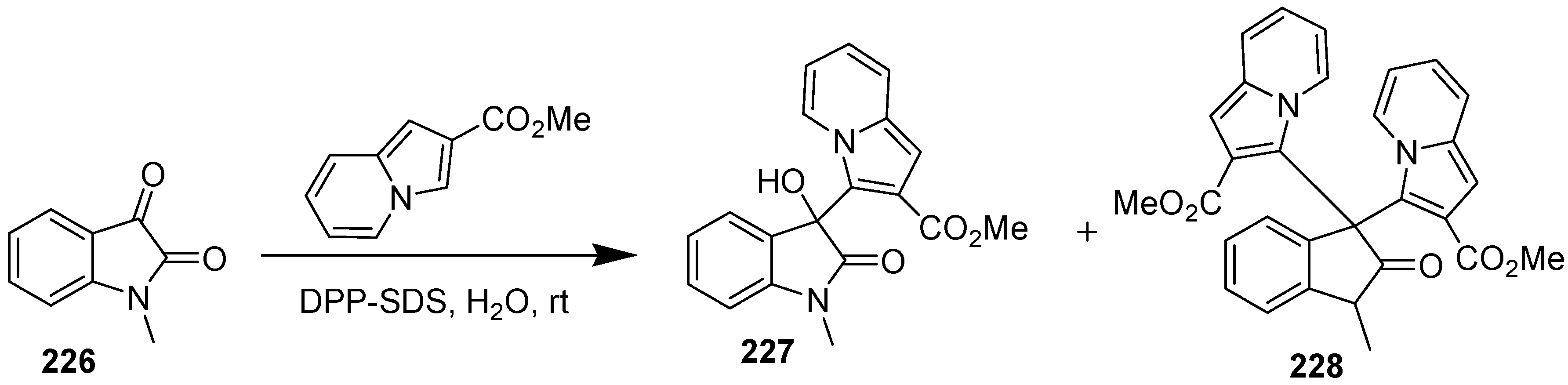
In 2020, Guidotti et al. [130] reported the synthesis of 3-hydroxy-3-indolizinyl-2-oxindoles scaffolds by performing a Friedel–Craft alkylation reaction between isatin 226 and indolizine using Brønsted acid [DPP]diphenyl phosphate and SDS as a catalyst in water. Products 227 and 228 are obtained in excellent yield up to 99% by this surfactant-catalyzed methodology (Scheme 68).
In 2020, Vafaeezadeh et al. [131] prepared a Brønsted acid–Janus surfactant from anisotropic Janus-type material. This Brønsted acid–Janus surfactant was used to catalyze the oxidation of cyclohexene 229 with hydrogen peroxide 230 to adipic acid 231. Other advantages of this catalyst are that it can also be used for the preparation of diethyl phthalate and a carboxylic acid imitative (Scheme 69). Furthermore, it can also be used for the oxidation of cyclohexanone and cyclopentene. This catalyst can easily be recycled via simple filtration without any noticeable change in its effectiveness.
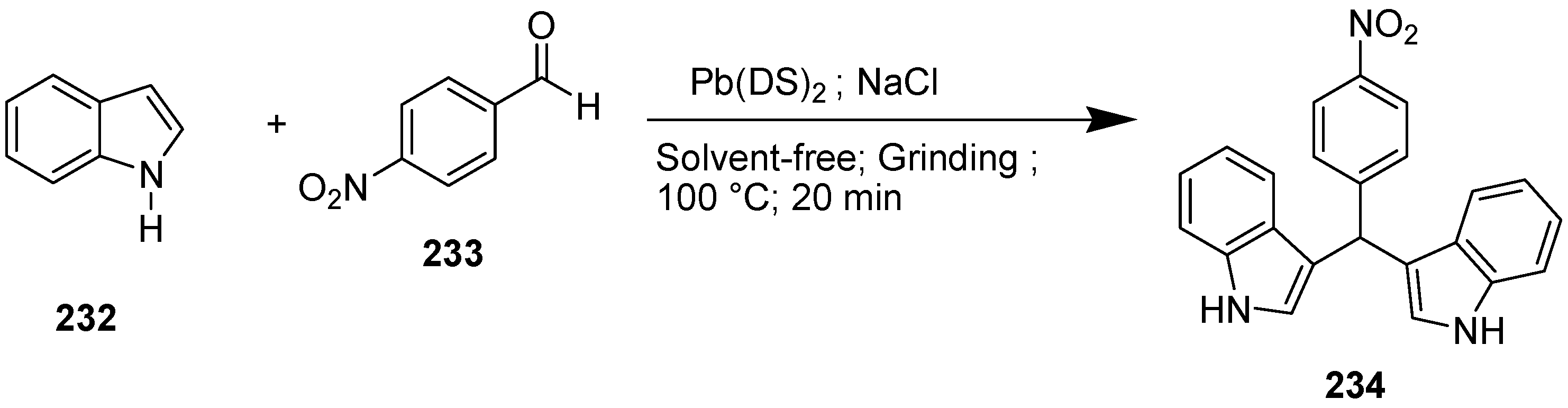
In 2025, Wu et al. reported a mechanochemically synthesized Pb(DS)2 Lewis acid surfactant as an efficient catalyst for solvent-free organic transformations under grinding conditions. The catalyst promoted the condensation of indole 232 with aromatic aldehydes 233 to give bis(indolyl)methane 234 in excellent yields (up to 98%) within 20 min at 100 °C using NaCl as a grinding aid (Scheme 70). It also efficiently catalyzed cyclo-condensation of o-phenylenediamines with 1,2-dicarbonyls to form quinoxalines and three-component Biginelli reactions to afford dihydropyrimidinones in efficient yields (79–90%). The catalyst showed high recyclability, highlighting its potential for green mechanochemical heterocycle synthesis [132].
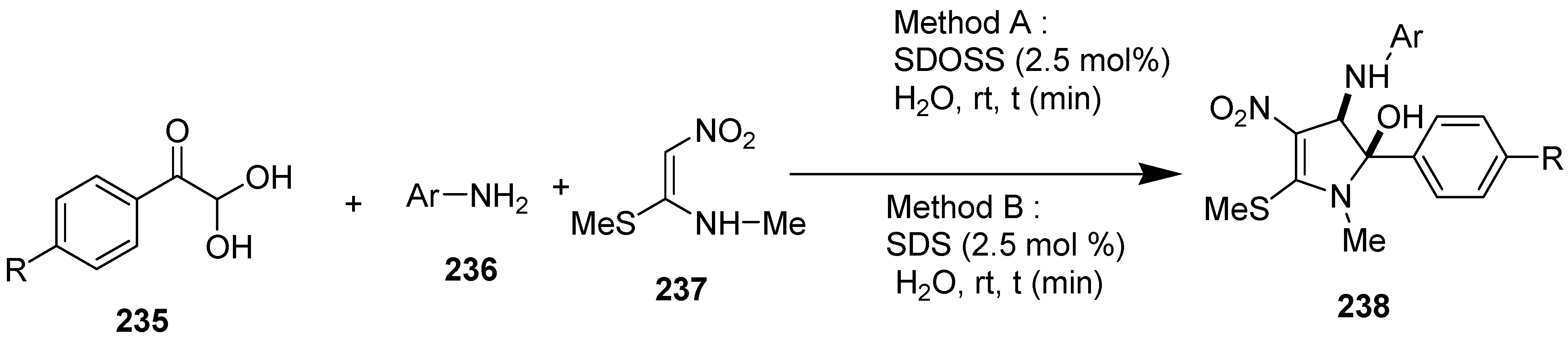
In 2024, Saigal et al. examined the catalytic efficacy of anionic surfactants, sodium dodecyl sulphate (SDS) and sodium dioctyl sulfosuccinate (SDOSS), in an in-water three-component Mannich-type condensation reaction between substituted α-hydroxy ketones 235, aromatic amines 236, and nitro-olefin derivatives 237 to afford β-amino alcohol products 238 (Scheme 71). With 2.5 mol% SDS or SDOSS, the reactions were effectively conducted in water at room temperature, producing the intended products in short reaction times with efficient yields [133]. A comparison indicated that the catalytic efficiencies of SDOSS were greater than those of SDS due to the better micellar aggregation ability of SDOSS and, consequently, the enhanced solubility of hydrophobic reactants in aqueous media. This implied that the micelle-mediated catalytic effects effectively promoted multicomponent reactions under environmentally benign and mild conditions.
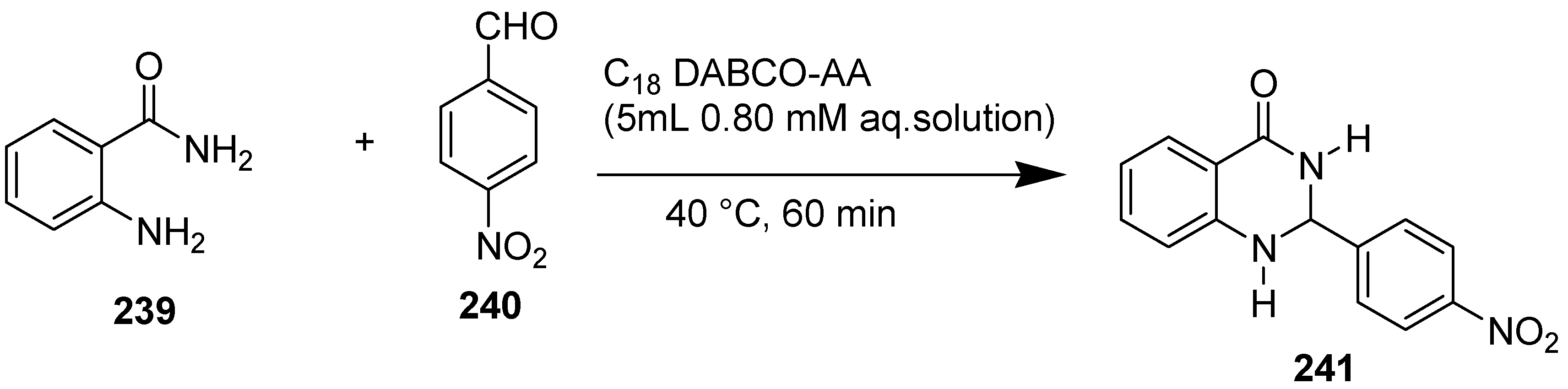
In 2024, Rajmane et al. investigated a Brønsted acidic Gemini surfactant, C18-DABCO-AA, which was used as an effective micellar catalyst to carry out the green synthesis of 2,3-dihydroquinazolin-4(1H)-ones 241 using anthranilamide 239 and aromatic aldehydes/ketones 240 in water (Scheme 72). Due to its low CMC (0.80 mM) and high acidity (pKa~3.3), this reaction was performed under mild conditions (40 °C), yielding products in high yield (84–96%) in a short reaction time (60–70 min). When the two sites could be reacted (using a dibasic agent), a bis-DHQ derivative product was obtained in 92% yield. The catalyst was recyclable up to five cycles without losing much activity. This indicates a good, sustainable aqueous catalytic application of this catalyst [134].
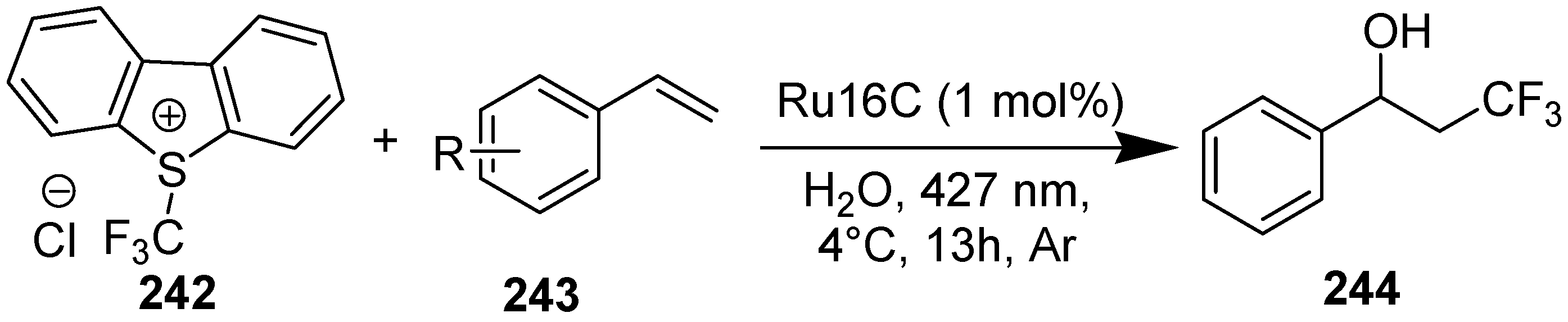
In 2025, Wang et al. employed a visible-light-induced photoredox strategy to achieve the hydroxytrifluoromethylation of styrene derivatives (242, 243) in aqueous media. A 1 mol% of a Ru(II)-based photocatalyst (Scheme 73) mediated the reaction between styrene and a CF3+ reagent under blue LED light in water, and both OH and CF3 fragments were added across the double bond of styrene, forming trifluoromethyl alcohols 244 in excellent yields. Several sources of CF3+ reagents were evaluated, with sulfonium salts providing the best yields with appropriate counter anions [135]. The efficient generation and capture of radicals was facilitated by an aqueous medium, and a controlled radical reaction mediated by the photocatalyst allowed high selectivities under mild, oxygen-free conditions. This provides a greener strategy to perform selective trifluoromethylative alkene functionalization by integrating a photoredox catalytic approach and water.
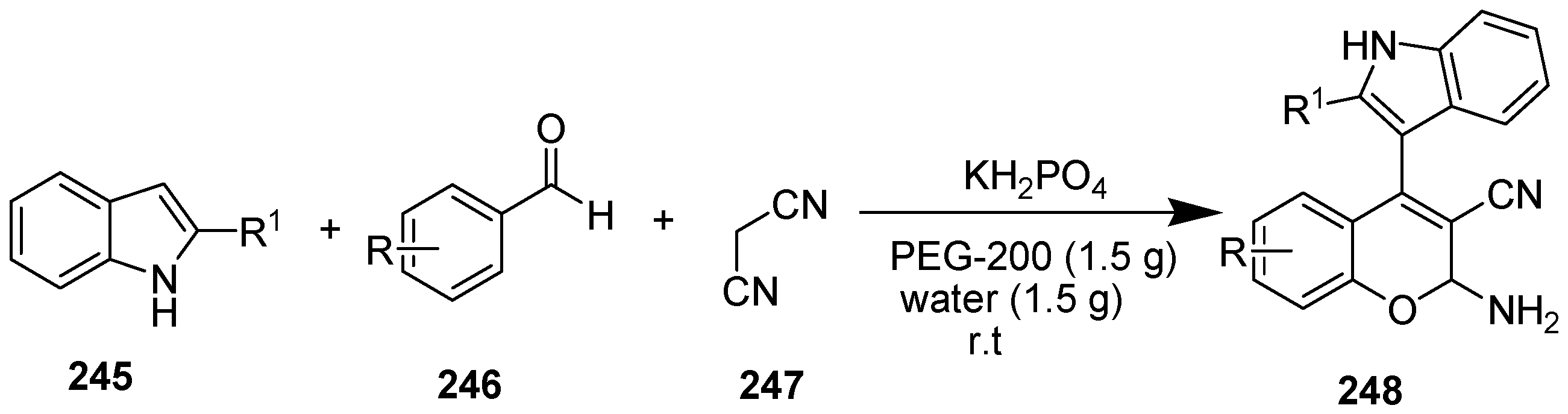
In 2014, Salih et al. surveyed new progress for the synthesis of 3-substituted indoles 248 using substituted indoles 245, substituted benzaldehydes 246 and malonitrile 247, with special attention paid to catalysts, which efficiently promote the key steps with selectivity and an environmentally benign effect. Different roles of bases, Brønsted and Lewis acids, amino acids, ionic liquids, surfactant and heteropoly acid systems in Knoevenagel condensation, Michael addition and Pinner cyclization were reviewed and summarized [56]. Yield and substrate scope were influenced by the catalyst system and reaction media, respectively. Environment-friendly catalysts, e.g., recyclable heterogeneous materials, electrochemistry, and green solvents, were also surveyed (Scheme 74). The article emphasized the scope and utility of these catalysts in the synthesis of pharmacologically important indole compounds and recommended future directions to develop more efficient and greener procedures.
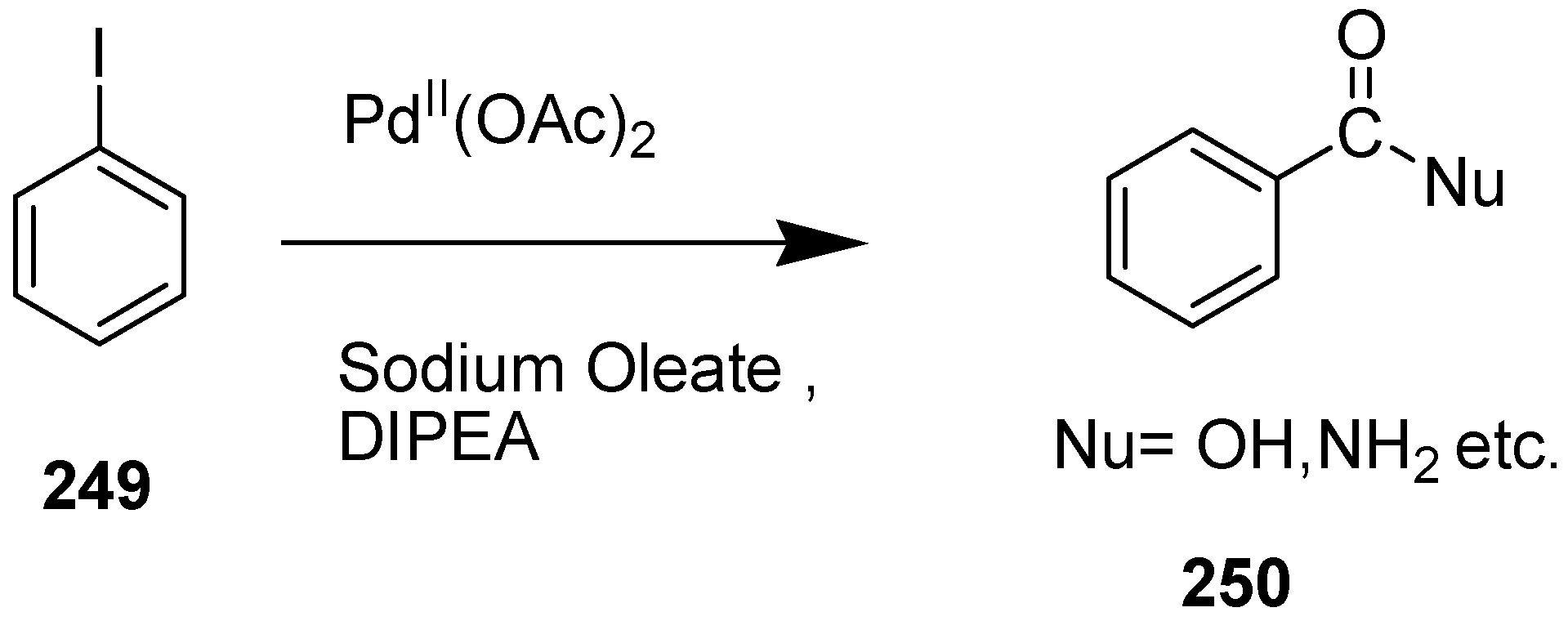
In 2024, Ravi Pratap Singh et al. reported surfactant-assisted palladium-catalyzed hydroxycarbonylation of aryl iodides in water mediated by the micellar solubilizing role of sodium oleate under a CO atmosphere. Using Pd(OAc)2 (1 mol%) and DIPEA (2 eq.) in 5% aq. sodium oleate (0.16 M) at room temperature and 1 atm. CO, aryl iodides readily underwent efficient conversion into corresponding carboxylic acids in a few hours, and for the model substrata, 1-iodo-4-nitrobenzene 249 provided the substituted benzophenone derivatives 250 in excellent isolated yield up to 90% (Scheme 75). A lack of surfactant yielded remarkably slow reactions, while sodium oleate effectively solubilized the hydrophobic substrates and accelerated the reactivity in the gas–liquid–organic triphasic system [46]. The method exhibited good functional group compatibility and could be readily modified to furnish esters and amides. It was found that micellar solubilization and colloidal stabilization of Pd species were responsible for the increased catalytic activity.
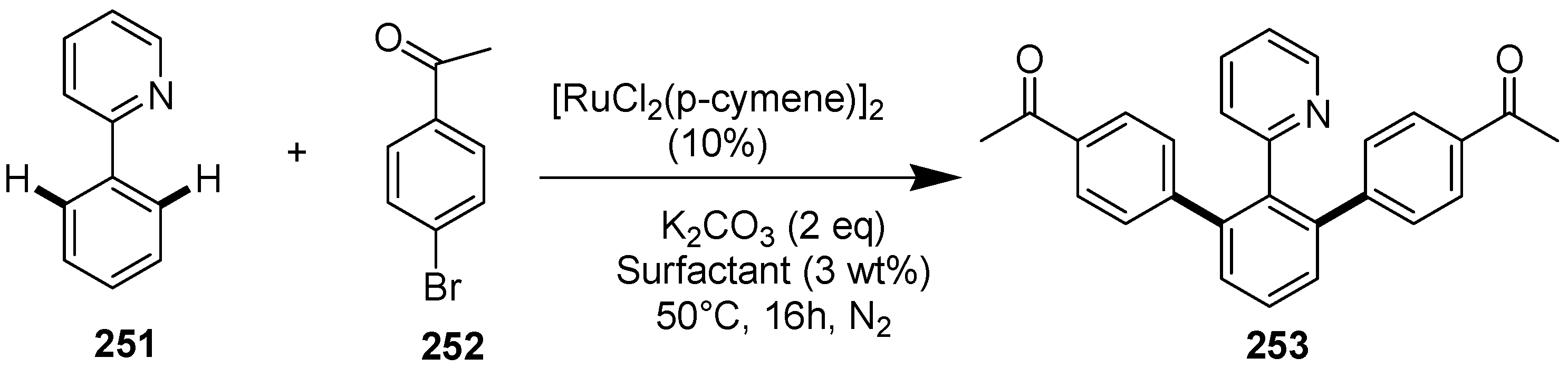
In 2024, Hauk et al. developed a next-generation “C-H-friendly” functional surfactant, PyOH-750-M, for Ru-catalyzed direct C-H arylation under micellar conditions in water. By incorporating a pyridone ligand into a PS-750-M-type surfactant, the system overcame compartmentalization issues and promoted efficient metalation, enabling selective C-C bond formation at remarkably mild temperatures (as low as 35 °C). Using substrates such as 2-phenylpyridine 251 as the directing-group-containing arene and aryl halides 252 (e.g., bromo-substituted arenes) as coupling partners in the presence of a Ru(II) catalyst, the tailored micellar environment enabled efficient ortho-C-H arylation 253 in water (Scheme 76) [136]. The tailored micellar environment delivered high conversions and excellent chemoselectivity across a broad substrate scope, while conventional surfactants showed much lower activity under similar conditions.

4. Future of Surfactants: Surfactants and Surfactant-Based Catalysts as the Future of Organic Chemistry

From a nature perspective, the chemical reactions involved in various synthetic chemistry reactions, including harsh reaction conditions, dangerous substrates and solvents, and heterogeneous catalysts (that require a tedious and long procedure for their preparation), must be carried out by using modern and greener methodologies. Here, we give a comparison of various important reactions that were previously performed by traditional methodologies but are now carried out via clean and green procedures in water.
Comparison between the conventional organic solvent system and surfactant-assisted catalytic methods: A comparison between the conventional organic solvent system and the surfactant-assisted catalytic approach is outlined in Table 1. The reaction was previously carried out using iodine in ethanol with an acceptable result, but the reaction is run in an organic solvent, which does not contribute to sustainability at the conventional level.
In contrast, the reaction is successfully conducted using water Sc(DS)2 with much better yield and faster reaction. Performance comparison of conventional methods and the surfactant-assisted catalytic approach: In the Friedlander annulation reaction [7a,b], a superior efficiency and rate of reaction is observed due to the effect of the formation of micelles, which provide the maximum interaction between substrates and the Lewis acid catalyst by the micellar effect to give better yield. The use of water as a reaction solvent is environmentally favorable.

5. Conclusions

Reactions catalyzed by the synthetic organic protocol are expensive, toxic, and also release hazardous materials. To overcome such issues, organic transformations were performed under aqueous conditions, as water-mediated reactions are environmentally benign, non-poisonous, economical, easily accessible, and inexpensive. To make this strategy more efficient and environmentally benign, researchers initiated the use of surfactants and surfactants combined with catalysts, such as LASCs and BASCs, so there is no need to apply hazardous solvents and catalysts. The attractive features of this strategy are straightforward work-ups, natural amiability, as we use water as a solvent, great yields, and shorter reaction times. Further, we have compiled famously named reactions in a tabular form to compare the traditional approaches and current synthetic trends using these surfactants. The broad application of water-mediated reactions, surfactants and LASCs/BASCs catalysts is the driving force for the future scope of this surfactant-applied strategy.

Author Contributions

Investigation, H.H., K.S. and A.M.; writing—original draft, H.S.S., P.K.B., S.K. and M.K.; writing—review and editing, C.G.M., N.K., K.S., H.H. and P.K.B.; supervision, M.K., P.K.B. and H.S.S. All authors have read and agreed to the published version of the manuscript.

Funding

This review article was not funded by any agency.

Data Availability Statement

There are no restrictions on materials and data availability.

Acknowledgments

HH sincerely acknowledges the Faculty Opportunity Award (FOA) administered by the Office of Sponsored Programs (OSP) at the University of Nevada, Las Vegas (UNLV). PKB sincerely acknowledges the MUREP Partnership Learning Annual Notification (MPLAN) Prize sponsored by NASA, USA. PKB also sincerely acknowledges the Knowledge Fund that is administered by the Nevada Governor’s Office of Economic Development (GOED) and UNLV. H.S.S., S.K., and N.K. are thankful to Chandigarh University, C.G.M. thankful to Gokul Global University, M.K. thankful to Chitkara University, A.M. thankful to K. R. Mangalam University, and K.S. thankful to Graphic Era Deemed to be University, for their support and all other essential facilities to conduct this research.

Conflicts of Interest

The authors declare no conflicts of interest. The authors declare no known competing financial interests or personal relationships that appeared to influence the work reported in this paper.

References

  1. Nanda, B.; Sailaja, M.; Mohapatra, P.; Pradhan, R.; Nanda, B.B. Green solvents: A suitable alternative for sustainable chemistry. Mater. Today Proc. 2021, 47, 1234–1240. [Google Scholar] [CrossRef]
  2. Li, C.-J.; Chen, L. Organic chemistry in water. Chem. Soc. Rev. 2006, 35, 68–82. [Google Scholar] [CrossRef] [PubMed]
  3. Kolář, P.; Shen, J.-W.; Tsuboi, A.; Ishikawa, T. Solvent selection for pharmaceuticals. Fluid Phase Equilib. 2002, 194, 771–782. [Google Scholar] [CrossRef]
  4. Kitanosono, T.; Kobayashi, S. Reactions in Water Involving the ‘On-Water’ Mechanism. Chem.-A Eur. J. 2020, 26, 9408–9429. [Google Scholar] [CrossRef]
  5. Laird, T. Green chemistry is good process chemistry. Org. Process Res. Dev. 2012, 16, 1–2. [Google Scholar] [CrossRef]
  6. Mai, W.P.; Wang, H.H.; Li, Z.-C.; Yuan, J.-W.; Xiao, Y.-M.; Yang, L.-R.; Mao, P.; Qu, L.-B. nBu4NI-catalyzed direct synthesis of α-ketoamides from aryl methyl ketones with dialkylformamides in water using TBHP as oxidant. Chem. Commun. 2012, 48, 10117–10119. [Google Scholar] [CrossRef]
  7. Galan, M.C.; Tran, A.T.; Whitaker, S. [bmim][OTf] as co-solvent/promoter in room temperature reactivity-based one-pot glycosylation reactions. Chem. Commun. 2010, 46, 2106–2108. [Google Scholar] [CrossRef]
  8. Ackermann, L.; Lygin, A.V. Cationic ruthenium(II) catalysts for oxidative C–H/N–H bond functionalizations of anilines with removable directing group: Synthesis of indoles in water. Org. Lett. 2012, 14, 764–767. [Google Scholar] [CrossRef] [PubMed]
  9. Megens, R.P.; Roelfes, G. Organic co-solvents in aqueous DNA-based asymmetric catalysis. Org. Biomol. Chem. 2010, 8, 1387–1393. [Google Scholar] [CrossRef]
  10. Trembleau, L.; Rebek, J. Interactions between a surfactant and cavitand in water blur distinctions between host and guest. Chem. Commun. 2004, 4, 58–59. [Google Scholar] [CrossRef] [PubMed]
  11. Samiey, B.; Cheng, C.H.; Wu, J. Effects of surfactants on the rate of chemical reactions. J. Chem. 2014, 113, 271–401. [Google Scholar] [CrossRef]
  12. Guerrero-Hernández, L.; Meléndez-Ortiz, H.I.; Cortez-Mazatan, G.Y.; Vaillant-Sánchez, S.; Peralta-Rodríguez, R.D. Gemini and Bicephalous Surfactants: A Review on Their Synthesis, Micelle Formation, and Uses. Int. J. Mol. Sci. 2022, 23, 1798. [Google Scholar] [CrossRef]
  13. Kitanosono, T.; Masuda, K.; Xu, P.; Kobayashi, S. Catalytic Organic Reactions in Water toward Sustainable Society. Chem. Rev. 2018, 118, 679–746. [Google Scholar] [CrossRef] [PubMed]
  14. Lipshutz, B.H.; Ghorai, S.; Cortes-Clerget, M. The Hydrophobic Effect Applied to Organic Synthesis: Recent Synthetic Chemistry ‘in Water’. Chem.–A Eur. J. 2018, 24, 6672–6695. [Google Scholar] [CrossRef]
  15. La Sorella, G.; Strukul, G.; Scarso, A. Recent advances in catalysis in micellar media. Green Chem. 2015, 17, 644–683. [Google Scholar] [CrossRef]
  16. Brycki, B.; Szulc, A.; Brycka, J.; Kowalczyk, I. Properties and Applications of Quaternary Ammonium Gemini Surfactant 12-6-12: An Overview. Molecules 2023, 28, 6336. [Google Scholar] [CrossRef] [PubMed]
  17. Menger, F.M.; Littau, C.A. Gemini Surfactants: A New Class of Self-Assembling Molecules. J. Am. Chem. Soc. 1993, 115, 10083–10090. [Google Scholar] [CrossRef]
  18. Lipshutz, B.H.; Aguinaldo, G.T.; Ghorai, S.; Voigtritter, K. Olefin cross-metathesis reactions at room temperature using the nonionic amphiphile ‘PTS’: Just add water. Org. Lett. 2008, 10, 1325–1328. [Google Scholar] [CrossRef]
  19. Lipshutz, B.H.; Ghorai, S.; Abela, A.R.; Moser, R.; Nishikata, T.; Duplais, C.; Krasovskiy, A.; Gaston, R.D.; Gadwood, R.C. TPGS-750-M: A second-generation amphiphile for metal-catalyzed cross-couplings in water at room temperature. J. Org. Chem. 2011, 76, 4379–4391. [Google Scholar] [CrossRef] [PubMed]
  20. Klumphu, P.; Lipshutz, B.H. A phytosterol-based amphiphile enabling transition-metal-catalyzed couplings in water at room temperature. J. Org. Chem. 2014, 79, 888–900. [Google Scholar] [CrossRef]
  21. Murzin, D.Y. Brønsted to Lewis acid site ratio as a kinetic descriptor for catalysis with solid acids. Catal. Today 2026, 468, 115722. [Google Scholar] [CrossRef]
  22. Veisi, H.; Maleki, B.; Eshbala, F.H.; Veisi, H.; Masti, R.; Ashrafi, S.S.; Baghayeri, M. In situ generation of Iron(iii) dodecyl sulfate as Lewis acid-surfactant catalyst for synthesis of bis-indolyl, tris-indolyl, Di(bis-indolyl), Tri(bis-indolyl), tetra(bis-indolyl)methanes and 3-alkylated indole compounds in water. RSC Adv. 2014, 4, 30683–30688. [Google Scholar] [CrossRef]
  23. Kobayashi, S. Lanthanide Trifluoromethanesulfonates as Stable Lewis Acids in Aqueous Media. Yb(OTf)3 Catalyzed Hydroxymethylation Reaction of Silyl Enol Ethers with Commercial Formaldehyde Solution. Chem. Lett. 1991, 20, 2187–2190. [Google Scholar] [CrossRef]
  24. Kobayashi, S.; Hachiya, I.; Araki, M.; Ishitani, H. Scandium trifluoromethanesulfonate (Sc(OTf)3). A novel reusable catalyst in the Diels-Alder reaction. Tetrahedron Lett. 1993, 34, 3755–3758. [Google Scholar] [CrossRef]
  25. Kobayashi, S.; Nagayama, S.; Busujima, T. Lewis acid catalysts stable in water. Correlation between catalytic activity in water and hydrolysis constants and exchange rate constants for substitution of inner-sphere water ligands. J. Am. Chem. Soc. 1998, 120, 8287–8288. [Google Scholar] [CrossRef]
  26. Huang, C.; Chen, C.; Ye, X.; Ye, W.; Hu, J.; Xu, C.; Qiu, X. Stable colloidal boron nitride nanosheet dispersion and its potential application in catalysis. J. Mater. Chem. A 2013, 1, 12192–12197. [Google Scholar] [CrossRef]
  27. Pileni, M.P. Reverse micelles as microreactors. J. Phys. Chem. 1993, 97, 6961–6973. [Google Scholar] [CrossRef]
  28. Behbahani, F.K. The Application of Strontiumdodeceyl Sulfate, Sr(DS)2 in the Synthesis Of 4,4′-Diaminotriarylmethanes. Biomed. J. Sci. Technol. Res. 2018, 2, 2184–2188. [Google Scholar] [CrossRef]
  29. Manabe, K.; Aoyama, N.; Kobayashi, S. Friedel-Crafts-Type Conjugate Addition of Indoles Using a Lewis Acid-Surfactant-Combined Catalyst in Water. Adv. Synth. Catal. 2001, 343, 174–176. [Google Scholar] [CrossRef]
  30. Singh, R.; Bhardwaj, D.; Ganaie, S.; Singh, A. Lewis Acid Surfactant Combined (LASC) Catalyst as a Versatile Heterogeneous Catalyst in Various Organic Transformations. Mini-Rev. Org. Chem. 2020, 17, 124–140. [Google Scholar] [CrossRef]
  31. Hasaninejad, A.; Zare, A.; Zolfigol, M.A.; Shekouhy, M. Zirconium tetrakis(dodecyl sulfate) [Zr(DS)4] as an efficient lewis acid-surfactant combined catalyst for the synthesis of quinoxaline derivatives in aqueous media. Synth. Commun. 2009, 39, 569–579. [Google Scholar] [CrossRef]
  32. Firouzabadi, H.; Iranpoor, N.; Khoshnood, A. Aluminum tris (dodecyl sulfate) trihydrate Al(DS)3·3H2O as an efficient Lewis acid-surfactant-combined catalyst for organic reactions in water. Efficient conversion of epoxides to thiiranes and to amino alcohols at room temperature. J. Mol. Catal. A Chem. 2007, 274, 109–115. [Google Scholar] [CrossRef]
  33. Deleersnyder, K.; Shi, D.; Binnemans, K.; Parac-Vogt, T.N. Lanthanide-surfactant-combined catalysts for the allylation of benzaldehyde with tetraallyltin in aqueous solutions. J. Alloys Compd. 2008, 451, 418–421. [Google Scholar] [CrossRef]
  34. Kobayashi, S.; Wakabayashi, T.; Nagayama, S.; Oyamada, H. Lewis acid catalysis in micellar systems. Sc(OTf)3-catalyzed aqueous aldol reactions of silyl enol ethers with aldehydes in the presence of a surfactant. Tetrahedron Lett. 1997, 38, 4559–4562. [Google Scholar] [CrossRef]
  35. Kobayashi, S.; Manabe, K. Development of novel Lewis acid catalysts for selective organic reactions in aqueous media. Acc. Chem. Res. 2002, 35, 209–217. [Google Scholar] [CrossRef]
  36. Kobayashi, S.; Wakabayashi, T. Scandium trisdodecylsulfate (STDS). A new type of Lewis acid that forms stable dispersion systems with organic substrates in water and accelerates aldol reactions much faster in water than in organic solvents. Tetrahedron Lett. 1998, 39, 5389–5392. [Google Scholar] [CrossRef]
  37. Mori, Y.; Kakumoto, K.; Manabe, K.; Kobayashi, S. Michael reactions in water using Lewis acid-surfactant-combined catalysts. Tetrahedron Lett. 2000, 41, 3107–3111. [Google Scholar] [CrossRef]
  38. Zhang, L.; Wu, J. Friedländer synthesis of quinolines using a lewis acid-surfactant- combined catalyst in water. Adv. Synth. Catal. 2007, 349, 1047–1051. [Google Scholar] [CrossRef]
  39. Manabe, K.; Kobayashi, S. Facile synthesis of α-amino phosphonates in water using a Lewis acid- surfactant-combined catalyst. Chem. Commun. 2000, 221, 669–670. [Google Scholar] [CrossRef]
  40. Safaei, H.R.; Shekouhy, M.; Khademi, S.; Rahmanian, V.; Safaei, M. Diversity-oriented synthesis of quinazoline derivatives using zirconium tetrakis(dodecylsulfate) [Zr(DS)4] as a reusable Lewis acid-surfactant-combined catalyst in tap water. J. Ind. Eng. Chem. 2014, 20, 3019–3024. [Google Scholar] [CrossRef]
  41. Jafarpour, M.; Rezaeifard, A.; Aliabadi, M. Zirconium Tetrakis(dodecylsulfate) as an Efficient and Recyclable Lewis Acid-Surfactant-Combined Catalyzed C-C and C-N Bond Forming Under Mild and Environmentally Benign Conditions. Lett. Org. Chem. 2008, 6, 94–99. [Google Scholar] [CrossRef]
  42. Nagayama, S.; Kobayashi, S. A novel polymer-supported scandium catalyst which shows high activity in water. Angew. Chem. Int. Ed. 2000, 39, 567–569. [Google Scholar] [CrossRef]
  43. Manabe, K.; Mori, Y.; Nagayama, S.; Odashima, K.; Kobayashi, S. Synthetic reactions using organometallics in water. Aldol and allylation reactions catalyzed by Lewis acid-surfactant-combined catalysts/Brønsted acids systems. Inorganica Chim. Acta 1999, 296, 158–163. [Google Scholar] [CrossRef]
  44. Tian, H.Y.; Chen, Y.J.; Wang, D.; Zeng, C.C.; Li, C.J. Calix[6]arene derivatives bearing sulfonate and alkyl groups as surfactants in Sc(OTf)3-catalyzed Mukaiyama aldol reactions in water. Tetrahedron Lett. 2000, 41, 2529–2532. [Google Scholar] [CrossRef]
  45. Lafantaisie, M.; Mirabaud, A.; Plancq, B.; Ollevier, T. Iron(II)-derived lewis acid/surfactant combined catalysis for the enantioselective mukaiyama aldol reaction in pure water. ChemCatChem 2014, 6, 2244–2247. [Google Scholar] [CrossRef]
  46. Ye, Y.; Ding, Q.; Wu, J. Three-component reaction of 2-alkynylbenzaldehyde, amine, and nucleophile using Lewis acid-surfactant combined catalyst in water. Tetrahedron 2008, 64, 1378–1382. [Google Scholar] [CrossRef]
  47. Weng, S.S.; Chang, S.C.; Chang, T.-H.; Chyn, J.-P.; Lee, S.-W.; Lin, C.-A.; Chen, F.-K. Chemoselective (trans)thioacetalization of carbonyl compounds with a reusable lewis acid-surfactant-combined copper bis(dodecyl sulfate) catalyst in water. Synthesis 2010, 2010, 1493–1499. [Google Scholar] [CrossRef]
  48. Pradhan, K.; Paul, S.; Das, A.R. Fe(DS)3, an efficient Lewis acid-surfactant-combined catalyst (LASC) for the one pot synthesis of chromeno[4,3-b]chromene derivatives by assembling the basic building blocks. Tetrahedron Lett. 2013, 54, 3105–3110. [Google Scholar] [CrossRef]
  49. Khalafi-Nezhad, A.; Haghighi, S.M.; Panahi, F. Nano-TiO2 on dodecyl-sulfated silica: As an efficient heterogeneous lewis acid-surfactant-combined catalyst (HLASC) for reaction in aqueous media. ACS Sustain. Chem. Eng. 2013, 1, 1015–1023. [Google Scholar] [CrossRef]
  50. Qiu, Y.; Sun, H.; Ma, Z.; Xia, W. Efficient, stable, and reusable Lewis acid-surfactant-combined catalyst: One-pot Biginelli and solvent-free esterification reactions. J. Mol. Catal. A Chem. 2014, 392, 76–82. [Google Scholar] [CrossRef]
  51. Ghesti, G.F.; de Macedo, J.L.; Parente, V.C.I.; Dias, J.A.; Dias, S.C.L. Synthesis, characterization and reactivity of Lewis acid/surfactant cerium trisdodecylsulfate catalyst for transesterification and esterification reactions. Appl. Catal. A Gen. 2009, 355, 139–147. [Google Scholar] [CrossRef]
  52. Schramm, L.L.; Stasiuk, E.N.; Marangoni, D.G. Surfactants and their applications. Annu. Rep. Sect. C (Phys. Chem.) 2003, 99, 3–48. [Google Scholar] [CrossRef]
  53. De, S.; Malik, S.; Ghosh, A.; Saha, R.; Saha, B. A review on natural surfactants. RSC Adv. 2015, 5, 65757–65767. [Google Scholar] [CrossRef]
  54. Baum, F.; Forberger, L.; Bard, A.B.; Gariepy, R.; Pauzauskie, P.J.; Pozzo, L.D. Surfactant-assisted phase selective sonochemical synthesis of sodium yttrium fluoride nanoparticles. Ultrason. Sonochem. 2025, 114, 107275. [Google Scholar] [CrossRef] [PubMed]
  55. Pirbasti, F.G.; Mahmoodi, N.O. Green and Highly Efficient Synthesis of Mono- and Bis-Benzothiazoles in the Presence of Fe(SD)3 under Ultrasound Irradiation. J. Chin. Chem. Soc. 2017, 64, 80–86. [Google Scholar] [CrossRef]
  56. Valtsifer, V.A.; Sivtseva, A.V.; Kondrashova, N.B.; Shamsutdinov, A.S.; Averkina, A.S.; Valtsifer, I.V.; Feklistova, I.N.; Strelnikov, V.N. Influence of Synthesis Conditions on the Properties of Zinc Oxide Obtained in the Presence of Nonionic Structure-Forming Compounds. Nanomaterials 2023, 13, 2537. [Google Scholar] [CrossRef] [PubMed]
  57. Al Ghatta, A.; Aravenas, R.C.; Wu, Y.; Perry, J.M.; Lemus, J.; Hallett, J.P. New Biobased Sulfonated Anionic Surfactants Based on the Esterification of Furoic Acid and Fatty Alcohols: A Green Solution for the Replacement of Oil Derivative Surfactants with Superior Proprieties. ACS Sustain. Chem. Eng. 2022, 10, 8846–8855. [Google Scholar] [CrossRef]
  58. Sengupta, S.; Klaver, A.J.; Zheng, Q.; de Jong, M.; Voeten, R.L.; Gladden, L.F.; Bezemer, G.L. Hydrophilic or Hydrophobic? How Byproducts Change the Water Affinity of Fischer–Tropsch Catalysts. JACS Au 2025, 5, 5665–5675. [Google Scholar] [CrossRef]
  59. Nagtode, V.S.; Cardoza, C.; Yasin, H.K.A.; Mali, S.N.; Tambe, S.M.; Roy, P.; Singh, K.; Goel, A.; Amin, P.D.; Thorat, B.R.; et al. Green Surfactants (Biosurfactants): A Petroleum-Free Substitute for Sustainability—Comparison, Applications, Market, and Future Prospects. ACS Omega 2023, 8, 11674–11699. [Google Scholar] [CrossRef]
  60. Manabe, K.; Kobayashi, S. Mannich-Type Reactions of Aldehydes, Amines, and Ketones in a Colloidal Dispersion System Created by a Brønsted Acid-Surfactant-Combined Catalyst in Water. Org. Lett. 1999, 1, 1965–1967. [Google Scholar] [CrossRef]
  61. Peng, Y.; Zhang, Q.; Yuan, J.; Cheng, J. A Facile Aqueous Synthesis of Bis (indol-3-yl) alkanes Catalyzed by Dodecylbenzenesulfonic Acid. Chin. J. Chem. 2008, 26, 2228–2232. [Google Scholar] [CrossRef]
  62. Bigdeli, M.A.; Gholami, G.; Sheikhhosseini, E. P-dodecylbenzenesulfonic acid (DBSA), a Brønsted acid-surfactant catalyst for Biginelli reaction in water and under solvent free conditions. Chin. Chem. Lett. 2011, 22, 903–906. [Google Scholar] [CrossRef]
  63. Phatangare, K.; Padalkar, V.; Murugan, K.; Chaskar, A. Brønsted acid-surfactant (BAS) catalysed cyclotrimerization of aryl methyl ketone. Curr. Chem. Lett. 2012, 1, 133–138. [Google Scholar] [CrossRef]
  64. Liu, Y.L.; Liu, L.; Wang, Y.L.; Han, Y.C.; Wang, D.; Chen, Y.J. Calix[n]arene sulfonic acids bearing pendant aliphatic chains as recyclable surfactant-type Brønsted acid catalysts for allylic alkylation with allyl alcohols in water. Green Chem. 2008, 10, 635–664. [Google Scholar] [CrossRef]
  65. Zhao, S.; Cheng, M.; Li, J.; Tian, J.; Wang, X. One pot production of 5-hydroxymethylfurfural with high yield from cellulose by a Brønsted-Lewis-surfactant-combined heteropolyacid catalyst. Chem. Commun. 2011, 47, 2176–2178. [Google Scholar] [CrossRef] [PubMed]
  66. Shekouhy, M. Sulfuric acid-modified PEG-6000 (PEG-OSO3H): An efficient Brönsted acid-surfactant combined catalyst for the one-pot three component synthesis of α-aminonitriles in water. Catal. Sci. Technol. 2012, 2, 1010–1020. [Google Scholar] [CrossRef]
  67. Chang, T.; He, L.; Bian, L.; Han, H.; Yuan, M.; Gao, X. Brønsted acid-surfactant-combined catalyst for the Mannich reaction in water. RSC Adv. 2014, 4, 727–731. [Google Scholar] [CrossRef]
  68. Shiri, M.; Zolfigol, M.A. Surfactant-type catalysts in organic reactions. Tetrahedron 2009, 65, 587–598. [Google Scholar] [CrossRef]
  69. Kaur, G.; Thakur, S.; Kaundal, P.; Chandel, K.; Banerjee, B. p-Dodecylbenzenesulfonic Acid: An Efficient Brønsted Acid-Surfactant-Combined Catalyst to Carry out Diverse Organic Transformations in Aqueous Medium. ChemistrySelect 2018, 3, 12918–12936. [Google Scholar] [CrossRef]
  70. Li, L.; Chen, J.; Liu, J. Development, Anionic surfactant based on oil-solid interfacial interaction control for efficient residual oil. Colloids Surf. A Physicochem. Eng. Asp. 2022, 648, 129396. [Google Scholar] [CrossRef]
  71. Yoshimura, T.; Ichinokawa, T.; Kaji, M.; Esumi, K. Synthesis and surface-active properties of sulfobetaine-type zwitterionic gemini surfactants. Colloids Surf. A Physicochem. Eng. Asp. 2006, 273, 208–212. [Google Scholar] [CrossRef]
  72. Vega, G.R.; Stampino, P.G. Bio-Based Surfactants and Biosurfactants: An Overview and Main Characteristics. Molecules 2025, 30, 863. [Google Scholar] [CrossRef] [PubMed]
  73. Fortun, S.; Schmitzer, A.R. Synthesis and Characterization of Biguanide and Biguanidium Surfactants for Efficient and Recyclable Application in the Suzuki-Miyaura Reaction. ACS Omega 2018, 3, 1889–1896. [Google Scholar] [CrossRef]
  74. Rostami, M.E.; Gorji, B.; Zadmard, R. Green synthesis of imidazo[1,2-a]pyridines using calix[6]arene-SO3H surfactant in water. Tetrahedron Lett. 2018, 59, 2393–2398. [Google Scholar] [CrossRef]
  75. Safaei, H.R.; Shekouhy, M.; Ghorbanzadeh, S. Polyethylene Glycol-Bonded Tetraethyl Ammonium Hydroxide ([PEG-TEA]OH): A New Surfactant-Combined Base Catalyst for the Synthesis of 2,3-Dihydroquinazolin-4(1H)-ones in Water. ChemistrySelect 2018, 3, 4750–4759. [Google Scholar] [CrossRef]
  76. Zhang, Y.; Zhen, B.; Li, H.; Feng, Y. Basic ionic liquid as catalyst and surfactant: Green synthesis of quinazolinone in aqueous media. RSC Adv. 2018, 8, 36769–36774. [Google Scholar] [CrossRef]
  77. Shen, X.; Zhang, Q.; Zhang, G.; Wang, J. Significant and Synergistic Intensification of Aerobic Oxidation of Activated Alcohols in Water at Ambient Condition by Adding Perfluoro-Surfactant. ChemistrySelect 2018, 3, 7856–7861. [Google Scholar] [CrossRef]
  78. Vaidya, G.N.; Fiske, S.; Verma, H.; Lokhande, S.K.; Kumar, D. A micellar catalysis strategy applied to the Pd-catalyzed C-H arylation of indoles in water. Green Chem. 2019, 21, 1448–1454. [Google Scholar] [CrossRef]
  79. Ge, X.; Zhang, S.; Chen, X.; Liu, X.; Qian, C. A designed bi-functional sugar-based surfactant: Micellar catalysis for C-X coupling reaction in water. Green Chem. 2019, 21, 2771–2776. [Google Scholar] [CrossRef]
  80. Chakraborty, A.; Chakraborty, T.; Menendez, M.I.; Chattopadhyay, T. Surfactant-mediated solubilization of magnetically separable nanocatalysts for the oxidation of alcohols. ACS Omega 2019, 4, 11558–11565. [Google Scholar] [CrossRef]
  81. Lee, N.R.; Cortes-Clerget, M.; Wood, A.B.; Lippincott, D.J.; Pang, H.; Moghadam, F.A.; Gallou, F.; Lipshutz, B.H. Coolade. A Low-Foaming Surfactant for Organic Synthesis in Water. ChemSusChem 2019, 12, 3159–3165. [Google Scholar] [CrossRef] [PubMed]
  82. Sayin, S.; Yilmaz, M. Synthesis and investigation of catalytic affinities of water-soluble amphiphilic calix[n]arene surfactants in the coupling reaction of some heteroaromatic compounds. Tetrahedron 2016, 72, 6528–6535. [Google Scholar] [CrossRef]
  83. Soffietti, J.B.; Adam, C.G.; Della Rosa, C.D. Aqueous Micellar Systems Formed by Surfactant Ionic Liquids. Application in Diels-Alder Reactions. Proceedings 2019, 41, 72. [Google Scholar] [CrossRef]
  84. Sahu, P.K. Role of surfactant and micelle promoted mild, green, highly efficient and sustainable approach for construction of novel fused pyrimidines at room temperature in water. RSC Adv. 2016, 6, 67651–67661. [Google Scholar] [CrossRef]
  85. Shairgojray, B.A.; Dar, A.A.; Bhat, B.A. Cationic chiral surfactant based micelle-guided asymmetric Morita-Baylis-Hillman reaction. Catal. Commun. 2016, 83, 58–61. [Google Scholar] [CrossRef]
  86. Qiu, P.; Zhao, J.Y.; Shi, X.; Duan, X.H. An efficient water-soluble surfactant-type palladium catalyst for Suzuki cross-coupling reactions in pure water at room temperature. New J. Chem. 2016, 40, 6568–6572. [Google Scholar] [CrossRef]
  87. Rostamnia, S.; Doustkhah, E.; Zeynizadeh, B. Exfoliation effect of PEG-type surfactant on Pd supported GO (SE-Pd(nanoparticle)/GO) in cascade synthesis of amides: A comparison with Pd(nanoparticle)/rGO. J. Mol. Catal. A Chem. 2016, 416, 88–95. [Google Scholar] [CrossRef]
  88. Yang, X.; Liang, H.; Fu, H.; Zheng, X.; Yuan, M.; Li, R.; Chen, H. Hydroformylation of 2,5-norbornadiene in organic/aqueous two-phase system and acceleration by cationic surfactants. Appl. Organomet. Chem. 2016, 30, 335–340. [Google Scholar] [CrossRef]
  89. Ren, X.; Tang, S.; Li, L.; Li, J.; Liang, H.; Li, G.; Yang, G.; Li, H.; Yuan, B. Surfactant-Type Catalyst for Aerobic Oxidative Coupling of Hydrazine with Thiol in Water. J. Org. Chem. 2019, 84, 8683–8690. [Google Scholar] [CrossRef] [PubMed]
  90. Mondal, M.H.; Malik, S.; De, S.; Bhattacharyya, S.S.; Saha, B. Employment and resurrection of surfactants in bipyridine promoted oxidation of butanal using bivalent copper at NTP. Res. Chem. Intermed. 2017, 43, 1651–1670. [Google Scholar] [CrossRef]
  91. Morbale, S.T.; Shinde, S.K.; Damate, S.A.; Deshmukh, M.B.; Patil, S.S. Natural Bio-surfactant for Pseudomulticomponent Synthesis of 2-Aryl-1-aryl-methyl-1H-benzimidazoles. Lett. Org. Chem. 2017, 15, 57–63. [Google Scholar] [CrossRef]
  92. Mozafari, R.; Heidarizadeh, F. One Pot Synthesis of Octahydroquinazolinone Derivatives Using (Me(Im)12)H4CuPW11O39 as a Surfactant Type Catalyst. J. Clust. Sci. 2016, 27, 1629–1643. [Google Scholar] [CrossRef]
  93. Pogrzeba, T.; Schmidt, M.; Milojevic, N.; Urban, C.; Illner, M.; Repke, J.-U.; Schomäcker, R. Understanding the Role of Nonionic Surfactants during Catalysis in Microemulsion Systems on the Example of Rhodium-Catalyzed Hydroformylation. Ind. Eng. Chem. Res. 2017, 56, 9934–9941. [Google Scholar] [CrossRef]
  94. Kitanosono, T.; Miyo, M.; Kobayashi, S. Surfactant-aided chiral palladium(II) catalysis exerted exclusively in water for the C-H functionalization of indoles. ACS Sustain. Chem. Eng. 2016, 4, 6101–6106. [Google Scholar] [CrossRef]
  95. Kar, B.; Bardhan, S.; Ghosh, P.; Ganguly, B.; Kundu, K.; Sarkar, S.; Paul, B.K.; Das, S. A Fast and Additive Free C–C Homo/Cross-Coupling Reaction in Reverse Micelle: An Understanding of Role of Surfactant, Water Content and Base on the Product Yield and Reaction Site. ChemistrySelect 2017, 2, 1079–1088. [Google Scholar] [CrossRef]
  96. Choudhary, H.; Jia, J.; Nishimura, S.; Ebitani, K. Surfactant-Assisted Suzuki–Miyaura Coupling Reaction of Unreactive Chlorobenzene over Hydrotalcite-Supported Palladium Catalyst. Asian J. Org. Chem. 2017, 6, 274–277. [Google Scholar] [CrossRef]
  97. Hafidi, Z.; Taleb, M.A.; Amedlous, A.; El Achouri, M. Micellar Catalysis Strategy of Cross-Condensation Reaction: The Effect of Polar Heads on the Catalytic Properties of Aminoalcohol-Based Surfactants. Catal. Lett. 2020, 150, 1309–1324. [Google Scholar] [CrossRef]
  98. Kraïem, J.; Ollevier, T. Atom economical synthesis of: N -alkylbenzamides via the iron(III) sulfate catalyzed rearrangement of 2-alkyl-3-aryloxaziridines in water and in the presence of a surfactant. Green Chem. 2017, 19, 1263–1267. [Google Scholar] [CrossRef]
  99. Xu, D.; Wang, H.; Pan, Z.; Zhang, T. The kinetics and effect of a new gemini surfactant on the efficiency of micellar catalysis for the hydrolysis reaction of 4-nitrophenyl acetate. J. Mol. Liq. 2018, 250, 223–228. [Google Scholar] [CrossRef]
  100. Öztürk, S.; Yıldırım, A.; Gece, G.; Türkdemir, H. Flexible Semicrown Ether-Linked Symmetric Cationic Gemini Surfactants: Synthesis and Evaluation as Catalysts for Acceleration of Diastereoselective [3 + 2] Cycloaddition Reaction in Reversed Phase Micellar Media. J. Surfactants Deterg. 2019, 22, 197–208. [Google Scholar] [CrossRef]
  101. Boz, M.; Baştürk, S.S. Phase Transfer Catalysis with Quaternary Ammonium Type Gemini Surfactants: O-Alkylation of Isovanillin. J. Surfactants Deterg. 2016, 19, 663–671. [Google Scholar] [CrossRef]
  102. Chavan, H.V.; Sirsat, D.M.; Mule, Y.B. An environmentally benign synthesis of aryl-hydrazones with aqueous extract of Acacia pods as a natural surfactant type catalyst. Iran. Chem. Commun. 2016, 4, 373–388. Available online: http://icc.journals.pnu.ac.ir (accessed on 24 January 2016).
  103. Nowicki, J.; Łuczak, J.; Stańczyk, D. Dual functionality of amphiphilic 1-alkyl-3-methylimidazolium hydrogen sulfate ionic liquids: Surfactants with catalytic function. RSC Adv. 2016, 6, 11591–11601. [Google Scholar] [CrossRef]
  104. Donner, A.; Hagedorn, K.; Mattes, L.; Drechsler, M.; Polarz, S. Hybrid Surfactants with N-Heterocyclic Carbene Heads as a Multifunctional Platform for Interfacial Catalysis. Chem.-A Eur. J. 2017, 23, 18129–18133. [Google Scholar] [CrossRef]
  105. Liang, X.; Gui, Y.; Li, K.; Li, J.; Zha, Z.; Shi, L.; Wang, Z. A novel chiral surfactant-type metallomicellar catalyst for asymmetric Michael addition in water. Chem. Commun. 2020, 56, 11118–11121. [Google Scholar] [CrossRef]
  106. More, P.A.; Shankarling, G.S. Energy efficient Pfitzinger reaction: A novel strategy using a surfactant catalyst. New J. Chem. 2017, 41, 12380–12383. [Google Scholar] [CrossRef]
  107. Tamaddon, F.; Tadayonfar, S.E. Facile microwave-assisted preparation of an ester-based cationic gemini surfactant for the improved micellar synthesis of aminocyanopyridines. J. Mol. Struct. 2020, 1207, 127728. [Google Scholar] [CrossRef]
  108. Zheng, Y.; Zheng, Y.; Wang, Z.; Cao, Y.; Shao, Q.; Guo, Z. Sodium dodecyl benzene sulfonate-catalyzed reaction for aromatic aldehydes with 1-phenyl-3-methyl-5-pyrazolone in aqueous media. Green Chem. Lett. Rev. 2018, 11, 217–223. [Google Scholar] [CrossRef]
  109. Patil, M.V.; Mhaldar, P.M.; Mahadik, V.M.; Ghanta, R.; Shukla, M.; Sonawane, S.A.; Ghotekar, S.K.; Rashinkar, G.S.; Pore, D.M. Brønsted acidic surfactant [HDMM]+ [HSO4]: A green microreactor assembly for stereoselective synthesis of novel thiazolyl-pyrazole-chromen-2-ones in water. RSC Adv. 2025, 15, 13753–13762. [Google Scholar] [CrossRef] [PubMed]
  110. Parthiban, D. Bi-tailed N-cationic surfactant promoted green synthesis of 2-amino-5-oxo-4-alkyl-4,5-dihydropyrano[3,2-c]chromene-3-carbonitrile derivatives via multicomponent reaction. J. Heterocycl. Chem. 2023, 60, 1210–1222. [Google Scholar] [CrossRef]
  111. Patil, M.V.; Mhaldar, P.M.; Tayade, S.N.; Rashinkar, G.S.; Pore, D.M. Surfactant based nanoreactor micellar assembly: An innovative route for synthesis of 2-thioxo-2,3-dihydroquinazolin-4(1H)-ones. J. Mol. Liq. 2022, 359, 119305. [Google Scholar] [CrossRef]
  112. Zolfaghari, K.; Panahi, M.; Omidi, Z. Surfactant TBAB as a Catalyst for the Synthesis of 3, 4-Dihydropyrimidine Derivatives. J. Synth. Chem. 2024, 2024, 49–60. [Google Scholar] [CrossRef]
  113. Luibl, J.; Hegelmann, M.; Schwarzinger, S.; Korth, W.; Cokoja, M.; Jess, A. Amphiphobic surface-active ionic liquids as dynamic micellar phase-transfer catalysts for biphasic epoxidations. React. Chem. Eng. 2025, 10, 1350–1358. [Google Scholar] [CrossRef]
  114. Chakraborty, S.; Paul, B.; De, U.C.; Natarajan, R.; Majumdar, S. Water-SDS-[BMIm]Br composite system for one-pot multicomponent synthesis of pyrano[2,3-c]pyrazole derivatives and their structural assessment by NMR, X-ray, and DFT studies. RSC Adv. 2023, 13, 6747–6759. [Google Scholar] [CrossRef]
  115. Khandare, Y.V.; Subbaramanian, S.; Muskawar, P.N. Green synthesis of bis(indolyl)methane derivatives via dry grinding using lewis acid-benzimidazolium based ionic liquid surfactants-SiO2 combined catalysts. J. Mol. Struct. 2025, 1343, 142852. [Google Scholar] [CrossRef]
  116. He, Q.; Lu, Y.; Peng, Q.; Chen, W.; Fan, G.; Chai, B.; Song, G. Synthesis of 5-hydroxymethylfurfural from fructose catalyzed by sulfonated carbon-based solid acid. Biomass Convers. Biorefinery 2023, 13, 9195–9203. [Google Scholar] [CrossRef]
  117. Lalita, A.; Sisuthog, W.; Butniam, P.; Thanmongkhon, Y.; Prasongthum, N.; Khamdaeng, P.; Kongparakul, S.; Suemanotham, A. Enhanced synthesis of branched-chain methyl ester sulfonates via surfactant-assisted sulfonation of methyl oleate. Biomass Convers. Biorefinery 2025, 15, 17239–17250. [Google Scholar] [CrossRef]
  118. Mohamadpour, F. Synthesis of Tetrahydrobenzo[b]pyrans Promoted by Sodium Stearate as a Lewis Base-Surfactant Combined Catalyst in an Aqueous Micellar Medium. Org. Prep. Proced. Int. 2023, 55, 345–350. [Google Scholar] [CrossRef]
  119. Mahmoodi, N.O.; Jalalifard, Z.; Fathanbari, G.P. Green synthesis of bis-coumarin derivatives using Fe(SD)3 as a catalyst and investigation of their biological activities. J. Chin. Chem. Soc. 2020, 67, 172–182. [Google Scholar] [CrossRef]
  120. Parvizi, J.; Mahmoodi, N.O.; Pirbasti, F.G. Ultrasound and water-mediated synthesis of bis-thiazoles catalyzed by Fe(SD)3 as Lewis acid-surfactant-combined catalyst. J. Sulfur Chem. 2018, 39, 140–150. [Google Scholar] [CrossRef]
  121. Wu, Z.; Wang, G.; Yuan, S.; Wu, D.; Liu, W.; Ma, B.; Bi, S.; Zhan, H.; Chen, X. Synthesis of bis(indolyl)methanes under dry grinding conditions, promoted by a Lewis acid-surfactant-SiO2-combined nanocatalyst. Green Chem. 2019, 21, 3542–3546. [Google Scholar] [CrossRef]
  122. Hulnik, M.I.; Vasilenko, I.V.; Radchenko, A.V.; Peruch, F.; Ganachaud, F.; Kostjuk, S.V. Aqueous cationic homo- and co-polymerizations of β-myrcene and styrene: A green route toward terpene-based rubbery polymers. Polym. Chem. 2018, 9, 5690–5700. [Google Scholar] [CrossRef]
  123. Destephen, A.; Lezama, L.; Ballard, N. Lewis acid-surfactant complex catalyzed polymerization in aqueous dispersed media: Cationic or radical polymerization. Polym. Chem. 2020, 11, 5757–5766. [Google Scholar] [CrossRef]
  124. Senapak, W.; Saeeng, R.; Jaratjaroonphong, J.; Sirion, U. Brönsted acid-surfactant-combined ionic liquid catalyzed green synthesis of 2-alkyl and 2-arylbenzothiazoles in water: Reusable catalyst and metal-free conditions. Mol. Catal. 2018, 458, 97–105. [Google Scholar] [CrossRef]
  125. Preetam, A.; Nath, M. Ambient temperature synthesis of spiro[indoline-3,2′-thiazolidinones] by a DBSA-catalyzed sequential reaction in water. Tetrahedron Lett. 2016, 57, 1502–1506. [Google Scholar] [CrossRef]
  126. Abraham, D.; Reenu; Agola, A.; Shukla, A.; Sharma, R.; Ameta, L.; Bellare, J.; Shah, O.; Mishra, M.K. Micellar Catalysis by Dodecylbenzenesulfonic Acid in Water: Significance of Dynamic Micelles. J. Mol. Liq. 2024, 401, 124591. [Google Scholar] [CrossRef]
  127. Mukherjee, P.; Paul, S.; Das, A.R. Expeditious synthesis of functionalized tricyclic 4-spiro pyrano[2,3-c]pyrazoles in aqueous medium using dodecylbenzenesulphonic acid as a Brønsted acid-surfactant-combined catalyst. New J. Chem. 2015, 39, 9480–9486. [Google Scholar] [CrossRef]
  128. Morbale, S.T.; Jadhav, S.D.; Deshmukh, M.B.; Patil, S.S. Bronsted acid-type biosurfactant for heterocyclization: A green protocol for benzopyran synthesis. RSC Adv. 2015, 5, 84610–84620. [Google Scholar] [CrossRef]
  129. Filho, J.F.A.; Fiorot, R.G.; Lacerda, V.; dos Santos, R.B.; Vanini, G.; Romão, W.; Greco, S.J. First synthesis of aminonaphthoquinones derived from lawsone in a colloidal dispersion system created by a Brønsted acid-surfactant-combined catalyst in water: An environmentally friendly protocol. Colloids Interface Sci. Commun. 2015, 4, 14–18. [Google Scholar] [CrossRef]
  130. Guidotti, B.B.; Da Silva, T.S.; Correia, J.T.M.; Coelho, F. Brønsted-Acid-catalyzed selective Friedel-Crafts monoalkylation of isatins with indolizines in water. Org. Biomol. Chem. 2020, 18, 7330–7335. [Google Scholar] [CrossRef]
  131. Vafaeezadeh, M.; Wilhelm, C.; Breuninger, P.; Ernst, S.; Antonyuk, S.; Thiel, W.R. A Janus-type Heterogeneous Surfactant for Adipic Acid Synthesis. ChemCatChem 2020, 12, 2695–2701. [Google Scholar] [CrossRef]
  132. Wu, Z.; Min, Y.; Li, Y.; Qian, F.; Cao, L.-A.; Tan, R.; Feng, E.; Ding, J.; Jiang, P. Preparation of lead dodecyl sulfate nanorod materials mediated by mechanochemistry and green solvent-free catalytic synthesis of heterocyclic derivatives. RSC Mechanochem. 2025, 2, 584–597. [Google Scholar] [CrossRef]
  133. Saigal, N.; Sudheer, N.; Sahoo, S.C.; Khan, M.; Seth, K. ‘In-Water’ Three-Component One-Pot Reaction for the Facile Synthesis of Densely Functionalized 2,3-Dihydro-1H-pyrrol-2-ols and Mechanistic Insight. ACS Sustain. Chem. Eng. 2024, 12, 13336–13351. [Google Scholar] [CrossRef]
  134. Xu, T.; Chen, K.; Zhu, H.-Y.; Hao, W.-J.; Tu, S.-J.; Jiang, B. Yb(OTf)3-Catalyzed Alkyne–Carbonyl Metathesis–Oxa-Michael Addition Relay for Diastereoselective Synthesis of Functionalized Naphtho [2,1-b]Furans. Org. Lett. 2020, 22, 2414–2418. [Google Scholar] [CrossRef]
  135. Srivastava, V.; Singh, P.K.; Singh, P.P. Recent Advances of Visible-Light Photocatalysis in the Functionalization of Organic Compounds. J. Photochem. Photobiol. C Photochem. Rev. 2022, 50, 100488. [Google Scholar] [CrossRef]
  136. Hauk, P.; Trienes, S.; Gallou, F.; Ackermann, L.; Wencel-Delord, J. Next-generation functional surfactant for mild C−H arylation under micellar conditions. Chem Catal. 2024, 4, 101146. [Google Scholar] [CrossRef]
  137. Wu, J.; Xia, H.G.; Gao, K. Molecular iodine: A highly efficient catalyst in the synthesis of quinolines via Friedländer annulation. Org. Biomol. Chem. 2006, 4, 126–129. [Google Scholar] [CrossRef]
  138. Dong, F.; Jian, C.; Kai, G.; Qunrong, S.; Zuliang, L. Synthesis of coumarins via pechmann reaction in water catalyzed by acyclic acidic ionic liquids. Catal. Lett. 2008, 121, 255–259. [Google Scholar] [CrossRef]
  139. Das, B.; Venkateswarlu, K.; Mahender, G.; Holla, H. Synthesis of coumarins via a Pechmann condensation using heterogeneous catalysts. J. Chem. Res. 2004, 221, 836–837. [Google Scholar] [CrossRef]
  140. Vahabi, V.; Hatamjafari, F. Microwave assisted convenient one-pot synthesis of coumarin derivatives via Pechmann condensation catalyzed by FeF3 under solvent-free conditions and antimicrobial activities of the products. Molecules 2014, 19, 13093–13103. [Google Scholar] [CrossRef]
  141. Pakdel, S.; Akhlaghinia, B.; Mohammadinezhad, A. Fe3O4@Boehmite-NH2-CoII NPs: An Environment Friendly Nanocatalyst for Solvent Free Synthesis of Coumarin Derivatives Through Pechmann Condensation Reaction. Chem. Afr. 2019, 2, 367–376. [Google Scholar] [CrossRef]
  142. Tamaddon, F.; Razmi, Z.; Jafari, A.A. Synthesis of 3,4-dihydropyrimidin-2(1H)-ones and 1,4-dihydropyridines using ammonium carbonate in water. Tetrahedron Lett. 2010, 51, 1187–1189. [Google Scholar] [CrossRef]
  143. Córdova, A.; Barbas, C.F. Direct organocatalytic asymmetric Mannich-type reactions in aqueous media: One-pot Mannich-allylation reactions. Tetrahedron Lett. 2003, 44, 1923–1926. [Google Scholar] [CrossRef]
  144. Araki, S.; Ito, H.; Katsumura, N.; Butsugan, Y. A Barbier allylation and a Reformatsky reaction of carbonyl compounds mediated by indium(I) iodide. J. Organomet. Chem. 1989, 369, 291–296. [Google Scholar] [CrossRef]
  145. Majima, K.; Takita, R.; Okada, A.; Ohshima, T.; Shibasaki, M. Catalytic Asymmetric Michael Reaction of β-Keto Esters: Effects of the Linker Heteroatom in Linked-BINOL. J. Am. Chem. Soc. 2003, 125, 15837–15845. [Google Scholar] [CrossRef] [PubMed]
  146. Mukaiyama, T.; Banno, K.; Narasaka, K. New Cross-Aldol Reactions. Reactions of Silyl Enol Ethers with Carbonyl Compounds Activated by Titanium Tetrachloride. J. Am. Chem. Soc. 1974, 96, 7503–7509. [Google Scholar] [CrossRef]
  147. Mukaiyama, T.; Narasaka, K.; Banno, K. New Aldol Type Reaction. Chem. Lett. 1973, 2, 1011–1014. [Google Scholar] [CrossRef]
  148. Kobayashi, S.; Hachiya, I. The Aldol Reaction of Silyl Enol Ethers with Aldehydes in Aqueous Media. Tetrahedron Lett. 1992, 33, 1625–1628. [Google Scholar] [CrossRef]
  149. Yamada, Y.M.A.; Shibasaki, M. Direct catalytic asymmetric aldol reactions promoted by a novel barium complex. Tetrahedron Lett. 1998, 39, 5561–5564. [Google Scholar] [CrossRef]
  150. Ma, Y.; Qian, C.; Wang, L.; Yang, M. Lanthanide triflate catalyzed biginelli reaction. One-pot synthesis of dihydropyrimidinones under solvent-free conditions. J. Org. Chem. 2000, 65, 3864–3868. [Google Scholar] [CrossRef] [PubMed]
  151. Fiorot, R.G.; Filho, J.F.A.; Pereira, T.M.; Lacerda, V.; dos Santos, R.B.; Romão, W.; Greco, S.J. A simple and convenient method for synthesis of new aminonaphthoquinones derived from lawsone by catalytic multicomponent Mannich reaction. Tetrahedron Lett. 2014, 55, 4373–4377. [Google Scholar] [CrossRef]
  152. Hudlicky, T.; Kutchan, T.M.; Shen, G.; Sutliff, V.E.; Coscia, C.J. Improved Synthesis and Characterization of Pictet-Spengler Adducts of Phenylpyruvic Acid and Biogenic Amines. J. Org. Chem. 1981, 46, 1738–1741. [Google Scholar] [CrossRef]
  153. Raiman, M.V.; Pukin, A.V.; Tyvorskii, V.I.; De Kimpe, N.; Kulinkovich, O.G. A convenient approach to the synthesis of 2-(2-aminoethyl)pyrroles and their heterocyclization into hydrogenated pyrrolopyridines and related pyrroloindolizines. Tetrahedron 2003, 59, 5265–5272. [Google Scholar] [CrossRef]
  154. Saito, A.; Numaguchi, J.; Hanzawa, Y. Pictet-Spengler reactions catalyzed by Brønsted acid-surfactant-combined catalyst in water or aqueous media. Tetrahedron Lett. 2007, 48, 835–839. [Google Scholar] [CrossRef]
  155. Howarth, J.; Hanlon, K.; Fayne, D.; McCormac, P. Moisture stable dialkylimidazolium salts as heterogeneous and homogeneous Lewis acids in the Diels-Alder reaction. Tetrahedron Lett. 1997, 38, 3097–3100. [Google Scholar] [CrossRef]
  156. Otto, S.; Engberts, J.B.F.N.; Kwak, J.C.T. Million-fold acceleration of a Diels-Alder reaction due to combined Lewis acid and micellar catalysis in water. J. Am. Chem. Soc. 1998, 120, 9517–9525. [Google Scholar] [CrossRef]
  157. Thorand, S.; Krause, N. JOC dehalogenation. J. Org. Chem. 1998, 63, 8551–8553. [Google Scholar] [CrossRef]
  158. Roberts, G.M.; Lu, W.; Woo, L.K. Aqueous Sonogashira coupling of aryl halides with 1-alkynes under mild conditions: Use of surfactants in cross-coupling reactions. RSC Adv. 2015, 5, 18960–18971. [Google Scholar] [CrossRef]
  159. Molander, G.A.; Bernardi, C.R. Suzuki-Miyaura cross-coupling reactions of potassium alkenyltrifluoroborates. J. Org. Chem. 2002, 67, 8424–8429. [Google Scholar] [CrossRef] [PubMed]
  160. Parmentier, M.; Wagner, M.; Wickendick, R.; Baenziger, M.; Langlois, A.; Gallou, F. A General Kilogram Scale Protocol for Suzuki-Miyaura Cross-Coupling in Water with TPGS-750-M Surfactant. Org. Process Res. Dev. 2020, 24, 1536–1542. [Google Scholar] [CrossRef]
  161. Farjadian, F.; Hosseini, M.; Ghasemi, S.; Tamami, B. Phosphinite-functionalized silica and hexagonal mesoporous silica containing palladium nanoparticles in Heck coupling reaction: Synthesis, characterization, and catalytic activity. RSC Adv. 2015, 5, 79976–79987. [Google Scholar] [CrossRef]
  162. Bhattacharya, S.; Srivastava, A.; Sengupta, S. Remarkably facile Heck and Suzuki reactions in water using a simple cationic surfactant and ligand-free palladium catalysts. Tetrahedron Lett. 2005, 46, 3557–3560. [Google Scholar] [CrossRef]
  163. Lanzafame, P.; Temi, D.M.; Perathoner, S.; Centi, G.; Macario, A.; Aloise, A.; Giordano, G. Etherification of 5-hydroxymethyl-2-furfural (HMF) with ethanol to biodiesel components using mesoporous solid acidic catalysts. Catal. Today 2011, 175, 435–441. [Google Scholar] [CrossRef]
  164. Manabe, K.; Iimura, S.; Sun, X.M.; Kobayashi, S. Dehydration reactions in water. Brønsted acid-surfactant-combined catalyst for ester, ether, thioether, and dithioacetal formation in water. J. Am. Chem. Soc. 2002, 124, 11971–11978. [Google Scholar] [CrossRef]
  165. Buu-Hoï, P.; Royer, R.; Xuong, D.; Jacquignon, P. The pfitzinger reaction in the synthesis of quinoline derivatives. J. Org. Chem. 1953, 18, 1209–1224. [Google Scholar] [CrossRef]
  166. Kumar, A.; Maurya, R.A. Synthesis of polyhydroquinoline derivatives through unsymmetric Hantzsch reaction using organocatalysts. Tetrahedron 2007, 63, 1946–1952. [Google Scholar] [CrossRef]
  167. Wang, L.M.; Sheng, J.; Zhang, L.; Han, J.-W.; Fan, Z.-Y.; Tian, H.; Qian, C.-T. Facile Yb(OTf)3 promoted one-pot synthesis of polyhydroquinoline derivatives through Hantzsch reaction. Tetrahedron 2005, 61, 1539–1543. [Google Scholar] [CrossRef]
  168. Alves dos Santos, P.N.; Machado dos Reis, M.L.C.; de Moura Pita, B.L.; de Souza Dias, F.; Fricks, A.T.; Caramão, E.B. Extraction of high-value compounds from Theobroma grandiflorum (cupuassu) seed shells using pressurized liquid extraction with NADES: A green chemistry approach. Anal. Bioanal. Chem. 2026, 418, 1779–1788. [Google Scholar] [CrossRef]
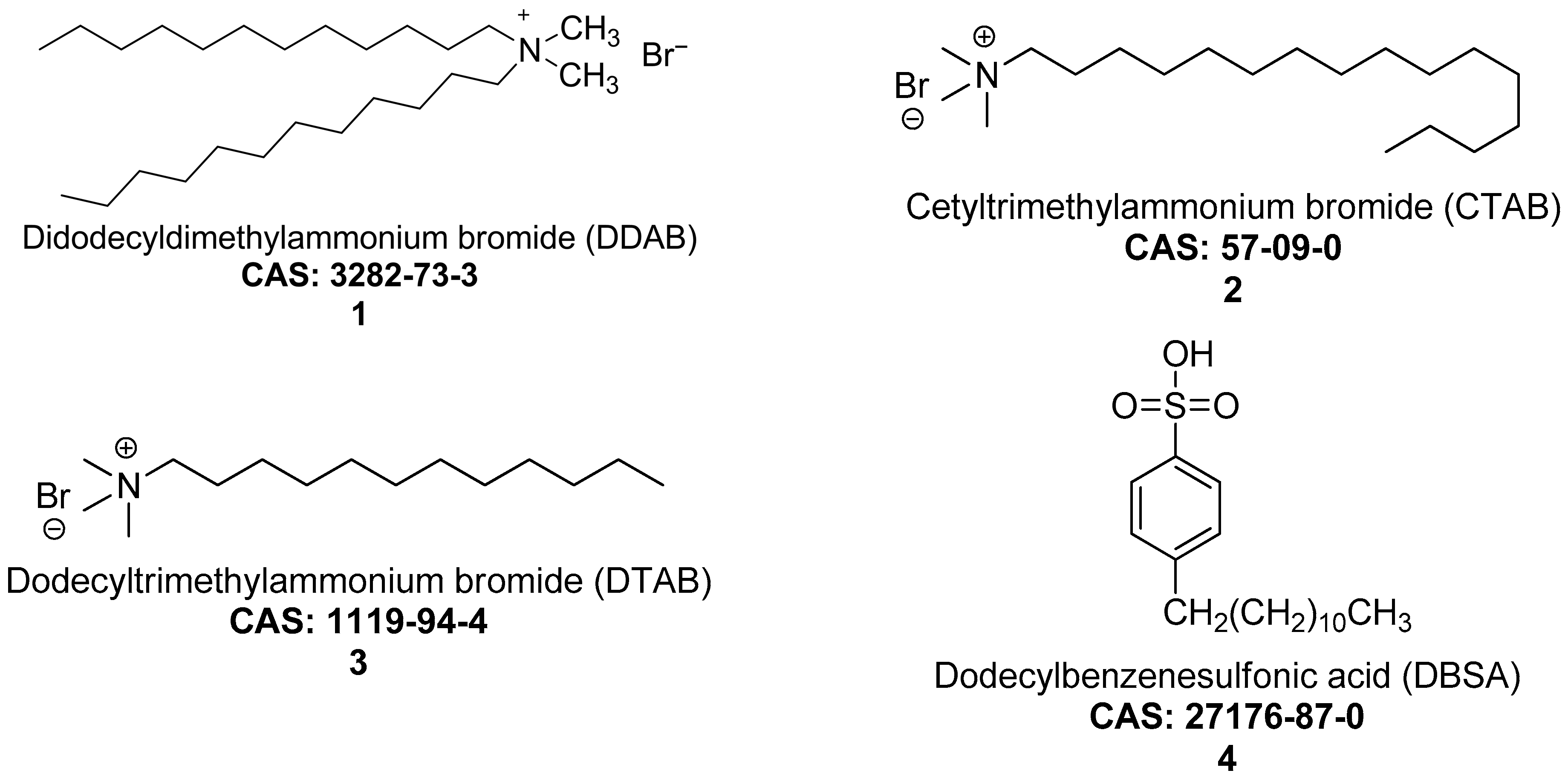
Scheme 1. Structures of LASCs used in organic transformations.
Molecules 31 01572 sch001aMolecules 31 01572 sch001b
Scheme 2. Structures of BASCs used in organic transformations.
Molecules 31 01572 sch002aMolecules 31 01572 sch002b
Scheme 3. Suzuki–Miyaura reaction using a hexyl biguanide surfactant.
Molecules 31 01572 sch003
Scheme 4. Synthesis of the imidazo[1,2-a] pyridines using calix[n]arenes.
Molecules 31 01572 sch004

Scheme 5. Preparation of some fused imidazole rings using Calix[6]arene-SO3H.
Molecules 31 01572 sch005

Scheme 6. [PEG-TEA] OH-based synthesis of 2-substituted-2,3-dihydroquinazolin-4(1H)-ones.
Molecules 31 01572 sch006

Scheme 7. ([PRIm][OH])-initiated condensation of cyclohexanone.
Molecules 31 01572 sch007
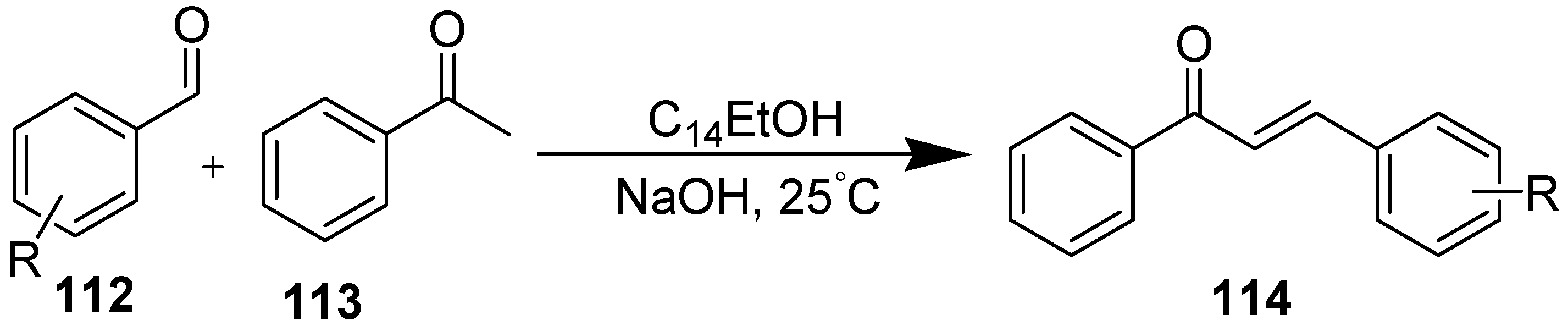
Scheme 8. Perfluoro surfactant-based aerobic oxidation of alcohols.
Molecules 31 01572 sch008

Scheme 9. C3-arylation of indole and aryl bromide.
Molecules 31 01572 sch009
Scheme 10. C2-arylation of aryl bromide and indole.
Molecules 31 01572 sch010
Scheme 11. Ullmann C-N couplings in ALA14 aqueous solution.
Molecules 31 01572 sch011
Scheme 12. Nanocatalyst-initiated oxidation of alcohol.
Molecules 31 01572 sch012
Scheme 13. Coolade-catalyzed double reduction of 54.
Molecules 31 01572 sch013
Scheme 14. Amphiphilic calix[n]arene-initiated coupling reaction.
Molecules 31 01572 sch014
Scheme 15. Amphiphilic calix[n]arene-initiated coupling reaction.
Molecules 31 01572 sch015
Scheme 16. IL-initiated Diels–Alder reaction.
Molecules 31 01572 sch016
Scheme 17. Synthesis of chromeno[4,3-d]benzothiazolo[3,2-a]pyrimidin-6(7H)-one.
Molecules 31 01572 sch017
Scheme 18. (DMEB)-catalyzed MBH reaction.
Molecules 31 01572 sch018
Scheme 19. SM cross-couplings.
Molecules 31 01572 sch019
Scheme 20. Diarylation of 2, 5-dibromopyridine.
Molecules 31 01572 sch020
Scheme 21. SEF127-Pd(nanoparticle)/GO-initiated synthesis of primary benzamides.
Molecules 31 01572 sch021
Scheme 22. Hydroformylation of 2,5-norbornadiene (NBD).
Molecules 31 01572 sch022
Scheme 23. PEG-functionalized amphiphilic nitrogen ligand L1.
Molecules 31 01572 sch023
Scheme 24. Surfactant-type-catalyst-initiated aerobic oxidative cross-couplings.
Molecules 31 01572 sch024
Scheme 25. Oxidation of butanal to butyric acid.
Molecules 31 01572 sch025
Scheme 26. Synthesis of benzimidazoles.
Molecules 31 01572 sch026
Scheme 27. Synthesis of 2, 4, 5-trisubstituted imidazole derivatives.
Molecules 31 01572 sch027
Scheme 28. Me(Im)12-PW11Cu-catalyzed preparation of octahydroquinazolinone.
Molecules 31 01572 sch028
Scheme 29. Hydroformylation of 1-dodecene.
Molecules 31 01572 sch029
Scheme 30. C–H functionalization of indoles.
Molecules 31 01572 sch030
Scheme 31. Homo-coupling of different aryl boronic acids.
Molecules 31 01572 sch031
Scheme 32. Suzuki–Miyaura cross-coupling.
Molecules 31 01572 sch032
Scheme 33. Surfactant-initiated SMC reaction.
Molecules 31 01572 sch033
Scheme 34. Cross-condensation (Claisen–Schmidt reaction) in micellar catalysis—NaOH/water–NaOH.
Molecules 31 01572 sch034
Scheme 35. Preparation of N-alkylbenzamides.
Molecules 31 01572 sch035
Scheme 36. Cationic Gemini surfactant-initiated preparation of isoxazolidine.
Molecules 31 01572 sch036
Scheme 37. Gemini surfactant-initiated alkylation of isovanillin.
Molecules 31 01572 sch037
Scheme 38. Preparation of aryl-hydrazones.
Molecules 31 01572 sch038
Scheme 39. Oxirane ring-opening reaction.
Molecules 31 01572 sch039
Scheme 40. Surfactant-containing NHC moiety-catalyzed Suzuki coupling reaction.
Molecules 31 01572 sch040
Scheme 41. Metallo-micellar catalyst-catalyzed Michael addition reaction.
Molecules 31 01572 sch041
Scheme 42. CTAOH initiated the preparation of quinoline-4-carboxylic acid derivatives.
Molecules 31 01572 sch042
Scheme 43. (DCGS) based synthesis of aminocyanopyridines.
Molecules 31 01572 sch043
Scheme 44. Preparation of 4, 4′-arylmethylene-bis(1-phenyl-3-methyl-5-pyrazolones).
Molecules 31 01572 sch044
Scheme 45. Preparation of thiazolyl-pyrazole-chromen-2-one.
Molecules 31 01572 sch045
Scheme 46. Preparation of pyrano[3,2]chromene derivatives.
Molecules 31 01572 sch046
Scheme 47. Preparation of 2-thioxo-2,3-dihydroquinazolin-4(1H)-ones.
Molecules 31 01572 sch047
Scheme 48. Preparation of substituted 3,4-dihydropyrimidine derivatives.
Molecules 31 01572 sch048
Scheme 49. Preparation of cis-cyclooctene oxide.
Molecules 31 01572 sch049
Scheme 50. Preparation of spiro[indoline-3,4′-pyrano[2,3-c]chromene]-2-one.
Molecules 31 01572 sch050
Scheme 51. Preparation of bis(indolyl)methane.
Molecules 31 01572 sch051
Scheme 52. Preparation of 5-hydroxymethylfurfural (5-HMF).
Molecules 31 01572 sch052
Scheme 53. Preparation of branched-chain methyl oleate sulfonate.
Molecules 31 01572 sch053
Scheme 54. Preparation of branched-chain methyl oleate sulfonate.
Molecules 31 01572 sch054
Scheme 55. Preparation of biscoumarins and tetrakiscoumarins using Fe(DS)3.
Molecules 31 01572 sch055
Scheme 56. Synthesis of mono- and bis-benzothiazoles using Fe(DS)3.
Molecules 31 01572 sch056
Scheme 57. Synthesis of quinazoline derivatives.
Molecules 31 01572 sch057
Scheme 58. Synthesis of bis-thiazoles.
Molecules 31 01572 sch058
Scheme 59. Synthesis of bis(indolyl)methane using Lewis acid–surfactant.
Molecules 31 01572 sch059
Scheme 60. Synthesis of 4,4′-diaminotriarylmethane using Sr(DS)2.
Molecules 31 01572 sch060
Scheme 61. Synthesis of BAILs.
Molecules 31 01572 sch061
Scheme 62. Synthesis of 2-substituted benzothiazole in water.
Molecules 31 01572 sch062
Scheme 63. Preparation of 5-chlorospiro[indoline-3,2′-thiazolidine]-2,4′-dione.
Molecules 31 01572 sch063
Scheme 64. Preparation of 5-chlorospiro[indoline-3,2′-thiazolidine]-2,4′-dione.
Molecules 31 01572 sch064
Scheme 65. Synthesis of a tricyclic spiropyran derivative.
Molecules 31 01572 sch065
Scheme 66. Synthesis of benzopyran.
Molecules 31 01572 sch066
Scheme 67. Synthesis of amino naphthoquinones.
Molecules 31 01572 sch067
Scheme 68. Synthesis of 1,2-addition-type of the Friedel–Crafts reaction.
Molecules 31 01572 sch068
Scheme 69. Oxidation of cyclohexene to adipic acid using a Brønsted acid surfactant.
Molecules 31 01572 sch069
Scheme 70. Preparation of bis(indolyl)methane.
Molecules 31 01572 sch070
Scheme 71. Mannich-type condensation reaction for the production of β-amino alcohol products.
Molecules 31 01572 sch071
Scheme 72. Green synthesis of 2,3-dihydroquinazolin-4(1H)-ones.
Molecules 31 01572 sch072
Scheme 73. Preparation of β-trifluoromethyl alcohols.
Molecules 31 01572 sch073
Scheme 74. Preparation of 3-substituted indoles.
Molecules 31 01572 sch074
Scheme 75. Preparation of substituted benzophenone derivatives.
Molecules 31 01572 sch075
Scheme 76. Preparation of a micellar environment enabled efficient ortho-C-H arylation.
Molecules 31 01572 sch076
Table 1. Comparison of different named reactions with organic solvent systems and surfactant-based systems.
Sr. No.Name of Reaction Synthesis via Organic Solvents and a CatalystSynthesis via Surfactant-Based Catalyst
1Friedlander annulationMolecular iodine–ethanol [137]Sc (DS)3/water [38]
2Pechmann reactionN,N,N-trimethyl-N-propanesul-fonic acid ammonium hydrogen sulfate [TMPSA][HSO4/water [138], NaHSO4.SiO2 and silica chloride/solvent-free conditions [139], FeF3/solvent free(MW) [140], Fe3O4@Boehmite-NH2-CoII NPs/solvent-free [141]NTDSS/water [49]
3Esterification reactionAmmonium carbonate/water [142]LASC Ce[LS]3/water [51]
4Allylation reaction, alkylation reactionL-Proline/water [137], InI/THF [143]Ln(DS)3/water [33,60], LASC-BASC/water [43], Calix [5] arene sulfonic acid/water [64]
5Michael reaction La-NR-linked-BINOL-THF [144][STDS]/water [37]
6Aldol reactionTiCl4, CH2Cl2 [145,146], Yb(OTf)3 [147], BaB, DME [148], H2O.THF, (H2O-THF-toluene) [25]LASCs/BASCs catalyst [43], STDS/water [36], [Sc(OTf)3 + SDS] [34]
7Bignelli reactionYb(OTf)3/solvent-free [149]DBSA/water [62], Ce[LS]3/water [50]
8Mannich reactionp-TsOH [150]DBSA/water [125]
9Pictet–Spengler reactionSilica gel, EtOH [151], i-PrOH [152]Perfluorooctane sulfonic acid/water [153]
10Diels–Alder reactionMoisture-Stable Dialkylimidazolium Salt/DCM [154]Cu(DS)2/water [155]
11Sonogashira couplingPd(PPh3)2Cl2, CuI, and triethylamine in THF [156]Pd(PPh3)2Cl2, CuI, SDS, CTAB/water [157]
12Suzuki–Miyaura cross-couplingPdCl2(dppf)‚CH2Cl2 catalyst, i-PrOH-H2O [158]TPGS-750-M in water [159]
13Heck coupling reactionPd catalyst, DMF [160]CTAB-H2O [161]
14EtherificationAn acid catalyst, ethanol [162]DBSA/water [163]
15Pfitzinger reactionBase KOH, ethanol [164]CTAOH cetyltrimethylammonium hydroxide [165]
16Hantzsch reactionOrganocatalyst/NH4OAc [166], Yb(OTf)3/ethanol [167]Al(DS)3, water [168]
Disclaimer/Publisher’s Note: The statements, opinions and data contained in all publications are solely those of the individual author(s) and contributor(s) and not of MDPI and/or the editor(s). MDPI and/or the editor(s) disclaim responsibility for any injury to people or property resulting from any ideas, methods, instructions or products referred to in the content.