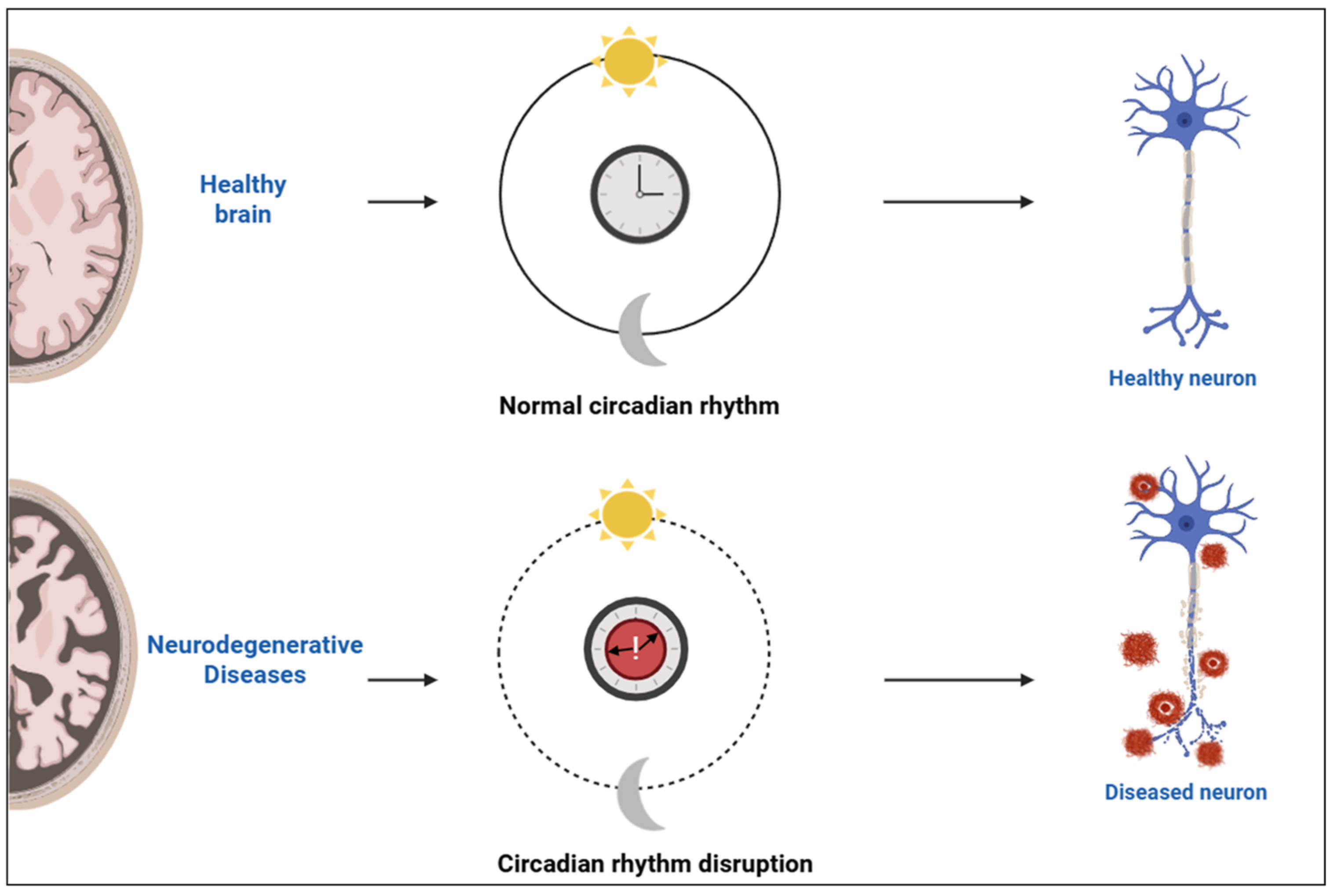
Molecular Links Between Circadian Rhythm Disruption, Melatonin, and Neurodegenerative Diseases: An Updated Review



Abstract
1. Introduction
2. Molecular Basis of Circadian Rhythms
2.1. Core Clock Genes and Mechanisms
2.2. Molecular and Cellular Targets of Circadian Clock Genes
2.3. Melatonin and Other Hormonal Regulators
2.4. Melatonin and Blood–Brain Barrier Integrity
3. Circadian Disruption as a Pathophysiological Trigger
3.1. Environmental and Lifestyle Factors
3.2. Chronodisruption and Aging
3.3. Circadian and Sleep-Based Biomarkers in Neurodegeneration
4. Neurodegenerative Diseases and Circadian Dysregulation
4.1. Circadian Dysregulation and Melatonin in AD
4.1.1. Circadian Rhythm Disturbances as Early Features of AD
4.1.2. Clinical Trials and Variability in Melatonin Therapy
4.1.3. Observational and Epidemiological Insights
4.1.4. Mechanistic and Preclinical Evidence of Melatonin
4.1.5. Melatonin as a Biological Supplement
4.2. Circadian Dysregulation and Melatonin in PD
4.2.1. Preclinical Evidence
4.2.2. Clinical Evidence
4.3. Circadian Dysregulation and Melatonin in HD
4.3.1. Preclinical Evidence
4.3.2. Clinical Evidence
4.3.3. Perspectives and Therapeutic Outlook
4.4. Circadian Dysregulation and Melatonin in MS
4.4.1. Preclinical Evidence
4.4.2. Clinical Evidence
4.5. Circadian Dysregulation and Melatonin in ALS
4.5.1. Preclinical Evidence
4.5.2. Clinical Perspective and Future Outlook
4.6. Circadian Dysregulation in Psychiatric and Neuropsychiatric Disorders
Clinical Evidence
5. Chrononutrition and the Gut–Brain–Clock Axis
5.1. Circadian Regulation of the Gut Microbiota
5.2. Melatonin and Intestinal Crosstalk
5.3. Nutrition, Obesity, and Circadian Rhythms
6. Chronopharmacology
6.1. Melatonin Analogs
6.2. Drug Timing
6.3. Emerging Therapeutic Targets
6.4. Non-Pharmacological Interventions: Music Therapy
7. Conclusions and Future Directions
Author Contributions
Funding
Institutional Review Board Statement
Informed Consent Statement
Conflicts of Interest
Abbreviations
| AANAT | Arylalkylamine N-Acetyltransferase |
| AD | Alzheimer’s Disease |
| AKT | Protein Kinase B |
| ALAN | Artificial Light at Night |
| ALS | Amyotrophic Lateral Sclerosis |
| AMPK | AMP-Activated Protein Kinase |
| AQP-4 | Aquaporin-4 |
| ASMT | Acetylserotonin O-Methyltransferase |
| AVP | Arginine Vasopressin |
| Aβ | Amyloid-Beta |
| BBB | Blood–Brain Barrier |
| BDNF | Brain-Derived Neurotrophic Factor |
| BMAL1 | Brain and Muscle ARNT-Like 1 |
| CCG | Clock-Controlled Genes |
| CK1δ/ε | Casein Kinase 1 Delta/Epsilon |
| CLOCK | Circadian Locomotor Output Cycles Kaput |
| CREB | cAMP Response Element-Binding Protein |
| CRY | Cryptochrome (gene family) |
| CSF | Cerebrospinal Fluid |
| DLB | Dementia with Lewy Bodies |
| DLMO | Dim-Light Melatonin Onset |
| GSK3β | Glycogen Synthase Kinase-3 Beta |
| HD | Huntington’s Disease |
| HIOMT | Hydroxyindole-O-Methyltransferase |
| HPA | Hypothalamic–Pituitary–Adrenal (axis) |
| ipRGC | Intrinsically Photosensitive Retinal Ganglion Cells |
| MDD | Major Depressive Disorder |
| MMP | Matrix Metalloproteinase |
| MMSE | Mini-Mental State Examination |
| MoCA | Montreal Cognitive Assessment |
| MPTP | 1-Methyl-4-phenyl-1,2,3,6-tetrahydropyridine |
| MS | Multiple Sclerosis |
| MT | Music Therapy |
| MT1 | Melatonin Receptor 1A |
| MT2 | Melatonin Receptor 1B |
| NLRP3 | NOD-like Receptor Protein 3 |
| PD | Parkinson’s Disease |
| PER | Period (gene family) |
| PGC-1α | Peroxisome Proliferator-Activated Receptor Gamma Coactivator 1-Alpha |
| PI3K | Phosphatidylinositol 3-Kinase |
| RBD | REM Sleep Behavior Disorder |
| REV-ERBα | Reverse-Erb Alpha |
| RORα | Retinoic Acid Receptor-Related Orphan Receptor Alpha |
| ROS | Reactive Oxygen Species |
| RRE | ROR Response Element |
| SCFA | Short-Chain Fatty Acids |
| SCN | Suprachiasmatic Nucleus |
| SIRT1 | Sirtuin 1 |
| TRE | Time-Restricted Eating |
| TTFL | Transcriptional–Translational Feedback Loop |
| VIP | Vasoactive Intestinal Peptide |
References
- Ono, M.; Dai, Y.; Fujiwara, T.; Fujiwara, H.; Daikoku, T.; Ando, H.; Kuji, N.; Nishi, H. Influence of lifestyle and the circadian clock on reproduction. Reprod. Med. Biol. 2025, 24, e12641. [Google Scholar] [CrossRef] [Scilit] [PubMed]
- Putthanbut, N.; Su, P.A.B.; Lee, J.Y.; Borlongan, C.V. Circadian rhythms in stem cells and their therapeutic potential. Stem Cell Res. Ther. 2025, 16, 85. [Google Scholar] [CrossRef] [Scilit]
- Moškon, M.; Kovač, U.; Raspor Dall’Olio, L.; Geršak, K.; Kavšek, G.; Bojc Šmid, E.; Trojner Bregar, A.; Rozman, D. Circadian characteristics of term and preterm labors. Sci. Rep. 2024, 14, 4033. [Google Scholar] [CrossRef] [Scilit]
- Nyamugenda, E.; Rosensweig, C.; Allada, R. Circadian Clocks, Daily Stress, and Neurodegenerative Disease. Annu. Rev. Pathol. 2025, 20, 355–374. [Google Scholar] [CrossRef] [Scilit]
- Su, J.; Zhao, L.; Fu, R.; Tang, Z. Linking Circadian Rhythms to Gut-Brain Axis Lipid Metabolism Associated With Endoplasmic Reticulum Stress in Alzheimer’s Disease. CNS Neurosci. Ther. 2025, 31, e70329. [Google Scholar] [CrossRef] [Scilit]
- Van Drunen, R.; Eckel-Mahan, K. Circadian Rhythms of the Hypothalamus: From Function to Physiology. Clocks Sleep 2021, 3, 189–226. [Google Scholar] [CrossRef] [Scilit] [PubMed]
- Begemann, K.; Neumann, A.M.; Oster, H. Regulation and function of extra-SCN circadian oscillators in the brain. Acta Physiol. 2020, 229, e13446. [Google Scholar] [CrossRef] [Scilit] [PubMed]
- Shen, Y.; Lv, Q.K.; Xie, W.Y.; Gong, S.Y.; Zhuang, S.; Liu, J.Y.; Mao, C.J.; Liu, C.F. Circadian disruption and sleep disorders in neurodegeneration. Transl. Neurodegener. 2023, 12, 8. [Google Scholar] [CrossRef] [Scilit]
- Maiese, K. Sleep Disorders, Neurodegeneration, Glymphatic Pathways, and Circadian Rhythm Disruption. Curr. Neurovasc. Res. 2021, 18, 269–270. [Google Scholar] [CrossRef] [Scilit]
- Fishbein, A.B.; Knutson, K.L.; Zee, P.C. Circadian disruption and human health. J. Clin. Investig. 2021, 131, e148286. [Google Scholar] [CrossRef] [Scilit]
- Kvetnoy, I.; Ivanov, D.; Mironova, E.; Evsyukova, I.; Nasyrov, R.; Kvetnaia, T.; Polyakova, V. Melatonin as the Cornerstone of Neuroimmunoendocrinology. Int. J. Mol. Sci. 2022, 23, 1835. [Google Scholar] [CrossRef] [Scilit] [PubMed]
- Shukla, M.; Vincent, B. Melatonin as a Harmonizing Factor of Circadian Rhythms, Neuronal Cell Cycle and Neurogenesis: Additional Arguments for Its Therapeutic Use in Alzheimer’s Disease. Curr. Neuropharmacol. 2023, 21, 1273–1298. [Google Scholar] [CrossRef] [Scilit]
- Carter, B.; Justin, H.S.; Gulick, D.; Gamsby, J.J. The Molecular Clock and Neurodegenerative Disease: A Stressful Time. Front. Mol. Biosci. 2021, 8, 644747. [Google Scholar] [CrossRef] [Scilit]
- Jiang, G.; Yuan, L.; Liu, X.; Wu, H.; Yu, H.; Zhang, W.; Zhang, S.; Huang, Y. Circadian rhythm in neurodegenerative disease: The role of RNA modifications and potential application of RNA-based therapeutics. Ageing Neur. Dis. 2024, 4, 16. [Google Scholar] [CrossRef] [Scilit]
- Takalo, M.; Jeskanen, H.; Rolova, T.; Kervinen, I.; Hellén, M.; Heikkinen, S.; Koivisto, H.; Jokivarsi, K.; Müller, S.A.; Koivumäki, E.M.; et al. The protective PLCγ2-P522R variant mitigates Alzheimer’s disease-associated pathologies by enhancing beneficial microglial functions. J. Neuroinflamm. 2025, 22, 64. [Google Scholar] [CrossRef] [Scilit]
- Erdag, E.; Haskologlu, I.C.; Mercan, M.; Abacioglu, N.; Sehirli, A.O. An in silico investigation: Can melatonin serve as an adjuvant in NR1D1-linked chronotherapy for amyotrophic lateral sclerosis? Chronobiol. Int. 2023, 40, 1395–1403. [Google Scholar] [CrossRef] [Scilit] [PubMed]
- Haskologlu, I.C.; Erdag, E.; Sehirli, A.O.; Uludag, O.; Abacioglu, N. Beyond Conventional Therapies: Molecular Dynamics of Alzheimer’s Treatment through CLOCK/BMAL1 Interactions. Curr. Alzheimer Res. 2023, 20, 862–874. [Google Scholar] [CrossRef] [Scilit] [PubMed]
- Haskologlu, I.C.; Erdag, E.; Sehirli, A.O.; Uludag, O.; Abacioglu, N. Exploring the Therapeutic Potential of Benzoxazolone Derivatives on the Circadian Clock: An In Silico and Hypothetical Approach. Chronobiol. Med. 2024, 6, 2. [Google Scholar] [CrossRef] [Scilit]
- Ozverel, C.S.; Erdag, E. Enhancing Quality of Life in Multiple Sclerosis Patients Through Coadministration of FDA-Approved Immunomodulators and Melatonin. Chronobiol. Med. 2024, 6, 135–142. [Google Scholar] [CrossRef] [Scilit]
- Herzog, E.D.; Hermanstyne, T.; Smyllie, N.J.; Hastings, M.H. Regulating the Suprachiasmatic Nucleus (SCN) Circadian Clockwork: Interplay between Cell-Autonomous and Circuit-Level Mechanisms. Cold Spring Harb. Perspect. Biol. 2017, 9, a027706. [Google Scholar] [CrossRef] [Scilit]
- Gooley, J.J.; Lu, J.; Chou, T.C.; Scammell, T.E.; Saper, C.B. Melanopsin in cells of origin of the retinohypothalamic tract. Nat. Neurosci. 2001, 4, 1165. [Google Scholar] [CrossRef] [Scilit] [PubMed]
- Mazuski, C.; Abel, J.H.; Chen, S.P.; Hermanstyne, T.O.; Jones, J.R.; Simon, T.; Doyle, F.J., III; Herzog, E.D. Entrainment of Circadian Rhythms Depends on Firing Rates and Neuropeptide Release of VIP SCN Neurons. Neuron 2018, 99, 555–563.e5. [Google Scholar] [CrossRef] [Scilit]
- Fagiani, F.; Di Marino, D.; Romagnoli, A.; Travelli, C.; Voltan, D.; Di Cesare Mannelli, L.; Racchi, M.; Govoni, S.; Lanni, C. Molecular regulations of circadian rhythm and implications for physiology and diseases. Signal Transduct. Target. Ther. 2022, 7, 41. [Google Scholar] [CrossRef] [Scilit]
- Astiz, M.; Heyde, I.; Oster, H. Mechanisms of Communication in the Mammalian Circadian Timing System. Int. J. Mol. Sci. 2019, 20, 343. [Google Scholar] [CrossRef] [Scilit]
- Alessandro, M.S.; Golombek, D.A.; Chiesa, J.J. Protein Kinases in the Photic Signaling of the Mammalian Circadian Clock. Yale J. Biol. Med. 2019, 92, 241–250. [Google Scholar] [PubMed]
- Marcheva, B.; Ramsey, K.M.; Peek, C.B.; Affinati, A.; Maury, E.; Bass, J. Circadian clocks and metabolism. Handb. Exp. Pharmacol. 2013, 217, 127–155. [Google Scholar]
- Guzmán-Ruiz, M.A.; Guerrero-Vargas, N.N.; Lagunes-Cruz, A.; González-González, S.; García-Aviles, J.E.; Hurtado-Alvarado, G.; Mendez-Hernández, R.; Chavarría-Krauser, A.; Morin, J.P.; Arriaga-Avila, V.; et al. Circadian modulation of microglial physiological processes and immune responses. Glia 2023, 71, 155–167. [Google Scholar] [CrossRef] [Scilit]
- Zhang, W.; Xiong, Y.; Tao, R.; Panayi, A.C.; Mi, B.; Liu, G. Emerging Insight Into the Role of Circadian Clock Gene BMAL1 in Cellular Senescence. Front. Endocrinol. 2022, 13, 915139. [Google Scholar] [CrossRef] [Scilit]
- Brenna, A.; Borsa, M.; Saro, G.; Ripperger, J.A.; Glauser, D.A.; Yang, Z.; Adamantidis, A.; Albrecht, U. Cyclin-dependent kinase 5 (Cdk5) activity is modulated by light and gates rapid phase shifts of the circadian clock. eLife 2025, 13, RP97029. [Google Scholar] [CrossRef]
- Rabinovich-Nikitin, I.; Love, M.; Kirshenbaum, L.A. Intersection of autophagy regulation and circadian rhythms in the heart. Biochim. Biophys. Acta Mol. Basis Dis. 2022, 1868, 166354. [Google Scholar] [CrossRef] [Scilit]
- Abdulraheem, M.I.; Xiong, Y.; Moshood, A.Y.; Cadenas-Pliego, G.; Zhang, H.; Hu, J. Mechanisms of Plant Epigenetic Regulation in Response to Plant Stress: Recent Discoveries and Implications. Plants 2024, 13, 163. [Google Scholar] [CrossRef] [Scilit] [PubMed]
- Best, J.; Kim, R.; Reed, M.; Nijhout, H.F. A mathematical model of melatonin synthesis and interactions with the circadian clock. Math. Biosci. 2024, 377, 109280. [Google Scholar] [CrossRef] [Scilit] [PubMed]
- Wang, Z.W.; Vedantham, K.; Ahmad, A.; Niu, L.G.; Shui, Y.; Lemtiri-Chlieh, F.; Kaback, D.; Ma, X.M.; Yee, S.P. Melatonin Enhances Sleep via MT1-Driven Activation of Slo1 in Suprachiasmatic Nucleus Neurons. bioRxiv 2025. [Google Scholar] [CrossRef] [Scilit]
- Pundkar, C.; Thanapaul, R.J.R.S.; Govindarajulu, M.; Phuyal, G.; Long, J.B.; Arun, P. Dysregulation of Retinal Melatonin Biosynthetic Pathway and Differential Expression of Retina-Specific Genes Following Blast-Induced Ocular Injury in Ferrets. Neurol. Int. 2025, 17, 42. [Google Scholar] [CrossRef] [Scilit]
- Zheng, Z.; Su, Z.; Zhang, W. Melatonin’s Role in Hair Follicle Growth and Development: A Cashmere Goat Perspective. Int. J. Mol. Sci. 2025, 26, 2844. [Google Scholar] [CrossRef] [Scilit]
- Ghavamikia, N.; Mehrnoosh, F.; Zare, F.; Ali-khiavi, P.; Sinehsepehr, A.; Boushehri, Y.G.; Vahedinezhad, M.; Abdollahi, E.; Hjazi, A.; Aminnezhad, S.; et al. Mitochondrial Quality Control and Melatonin: A Strategy Against Myocardial Injury. J. Biochem. Mol. Toxicol. 2025, 39, e70194. [Google Scholar] [CrossRef] [Scilit]
- Matsui, S.; Yanai-Inamura, H.; Kajiro, M.; Takamatsu, H.; Tanahashi, M.; Yokono, M. Melatonin induces urethral contraction and increases intraurethral pressure via MT1 receptor activation in female rats. Eur. J. Pharmacol. 2025, 998, 177539. [Google Scholar] [CrossRef] [Scilit]
- Giri, A.; Mehan, S.; Khan, Z.; Das Gupta, G.; Narula, A.S.; Kalfin, R. Modulation of neural circuits by melatonin in neurodegenerative and neuropsychiatric disorders. Naunyn-Schmiedeberg’s Arch. Pharmacol. 2024, 397, 3867–3895. [Google Scholar] [CrossRef] [Scilit]
- Banerjee, S.; Das, S.; Halder, N.; Bisht, S.; Talukdar, A.; Ray, S. Chronobiological Aspects of Aging, Neurodegeneration, and Inflammation. In Circadian Rhythms, Sleep and Inflammation; Springer: Cham, Switzerland, 2025; pp. 129–147. [Google Scholar]
- Mishra, P.; Mittal, A.K.; Kalonia, H.; Madan, S.; Ghosh, S.; Sinha, J.K.; Rajput, S.K. SIRT1 Promotes Neuronal Fortification in Neurodegenerative Diseases through Attenuation of Pathological Hallmarks and Enhancement of Cellular Lifespan. Curr. Neuropharmacol. 2021, 19, 1019–1037. [Google Scholar] [CrossRef] [Scilit]
- Blanchard, J.W.; Bula, M.; Davila-Velderrain, J.; Akay, L.A.; Zhu, L.; Frank, A.; Victor, M.B.; Bonner, J.M.; Mathys, H.; Lin, Y.T.; et al. Reconstruction of the human blood-brain barrier in vitro reveals a pathogenic mechanism of APOE4 in pericytes. Nat. Med. 2020, 26, 952–963. [Google Scholar] [CrossRef] [Scilit]
- Sharma, C.; Woo, H.; Kim, S.R. Addressing blood-brain barrier impairment in Alzheimer’s disease. Biomedicines 2022, 10, 742. [Google Scholar] [CrossRef] [Scilit] [PubMed]
- Kadry, H.; Noorani, B.; Cucullo, L. A blood-brain barrier overview on structure, function, impairment, and biomarkers of integrity. Fluids Barriers CNS 2020, 17, 69. [Google Scholar] [CrossRef] [Scilit] [PubMed]
- Sweeney, M.D.; Sagare, A.P.; Zlokovic, B.V. Blood-brain barrier breakdown in Alzheimer disease and other neurodegenerative disorders. Nat. Rev. Neurol. 2018, 14, 133–150. [Google Scholar] [CrossRef] [Scilit]
- Jumnongprakhon, P.; Sivasinprasasn, S.; Govitrapong, P.; Tocharus, C.; Tocharus, J. Activation of melatonin receptor (MT1/2) promotes P-gp transporter in methamphetamine-induced toxicity on primary rat brain microvascular endothelial cells. Toxicol. Vitr. 2017, 41, 42–48. [Google Scholar] [CrossRef] [Scilit]
- Jumnongprakho, P.; Govitrapong, P.; Tocharus, C.; Tocharus, J. Inhibitory effect of melatonin on cerebral endothelial cells dysfunction induced by methamphetamine via NADPH oxidase-2. Brain Res. 2016, 1650, 84–92. [Google Scholar] [CrossRef] [Scilit]
- Chen, T.Y.; Lee, M.Y.; Chen, H.Y.; Kuo, Y.L.; Lin, S.C.; Wu, T.S.; Lee, E.J. Melatonin attenuates the postischemic increase in blood-brain barrier permeability and decreases hemorrhagic transformation of tissue-plasminogen activator therapy following ischemic stroke in mice. J. Pineal Res. 2006, 40, 242–250. [Google Scholar] [CrossRef] [Scilit] [PubMed]
- Ramli, F.F.; Rejeki, P.S.; Ibrahim, N.; Abdullayeva, G.; Halim, S. A Mechanistic Review on Toxicity Effects of Methamphetamine. Int. J. Med. Sci. 2025, 22, 482–507. [Google Scholar] [CrossRef] [Scilit]
- Chen, H.Y.; Chen, T.Y.; Lee, M.Y.; Chen, S.T.; Hsu, Y.S.; Kuo, Y.L.; Chang, G.-L.; Wu, T.-S.; Lee, E.-J. Melatonin decreases neurovascular oxidative/nitrosative damage and protects against early increases in the blood-brain barrier permeability after transient focal cerebral ischemia in mice. J. Pineal Res. 2006, 41, 175–182. [Google Scholar] [CrossRef] [Scilit]
- Moretti, R.; Zanin, A.; Pansiot, J.; Spiri, D.; Manganozzi, L.; Kratzer, I.; Favero, G.; Vasiljevic, A.; Rinaldi, V.; Pic, I.; et al. Melatonin reduces excitotoxic blood-brain barrier breakdown in neonatal rats. Neuroscience 2015, 311, 382–397. [Google Scholar] [CrossRef] [Scilit]
- Sugiyama, S.; Sasaki, T.; Tanaka, H.; Yan, H.; Ikegami, T.; Kanki, H.; Nishiyama, K.; Beck, G.; Gon, Y.; Okazaki, S.; et al. The tight junction protein occludin modulates blood-brain barrier integrity and neurological function after ischemic stroke in mice. Sci. Rep. 2023, 13, 2892. [Google Scholar] [CrossRef] [Scilit]
- Cecon, E.; Fernandois, D.; Renault, N.; Coelho, C.F.F.; Wenzel, J.; Bedart, C.; Izabelle, C.; Gallet, S.; Le Poder, S.; Klonjkowski, B.; et al. Melatonin drugs inhibit SARS-CoV-2 entry into the brain and virus-induced damage of cerebral small vessels. Cell. Mol. Life Sci. 2022, 79, 361. [Google Scholar] [CrossRef] [Scilit] [PubMed]
- Zhang, Z.; Xue, P.; Bendlin, B.B.; Zetterberg, H.; De Felice, F.; Tan, X.; Benedict, C. Melatonin: A potential nighttime guardian against Alzheimer’s. Mol. Psychiatry 2025, 30, 237–250. [Google Scholar] [CrossRef] [Scilit]
- Qin, W.; Li, J.; Zhu, R.; Gao, S.; Fan, J.; Xia, M.; Zhao, R.C.; Zhang, J. Melatonin protects blood-brain barrier integrity and permeability by inhibiting matrix metalloproteinase-9 via the NOTCH3/NF-κB pathway. Aging 2019, 11, 11391–11415. [Google Scholar] [CrossRef] [Scilit] [PubMed]
- Rempe, R.G.; Hartz, A.M.S.; Bauer, B. Matrix metalloproteinases in the brain and blood-brain barrier: Versatile breakers and makers. J. Cereb. Blood Flow Metab. 2016, 36, 1481–1507. [Google Scholar] [CrossRef] [Scilit] [PubMed]
- Rudra, D.S.; Pal, U.; Maiti, N.C.; Reiter, R.J.; Swarnakar, S. Melatonin inhibits matrix metalloproteinase-9 activity by binding to its active site. J. Pineal Res. 2013, 54, 398–405. [Google Scholar] [CrossRef] [Scilit]
- Wang, X.; Xue, G.X.; Liu, W.C.; Shu, H.; Wang, M.; Sun, Y.; Liu, X.; Sun, Y.E.; Liu, C.-F.; Liu, J.; et al. Melatonin alleviates lipopolysaccharide-compromised integrity of blood-brain barrier through activating AMP-activated protein kinase in old mice. Aging Cell 2017, 16, 414–421. [Google Scholar] [CrossRef] [Scilit]
- Liu, C.; Wu, J.; Zou, M.H. Activation of AMP-activated protein kinase alleviates high-glucose-induced dysfunction of brain microvascular endothelial cell tight junction dynamics. Free Radic. Biol. Med. 2012, 53, 1213–1221. [Google Scholar]
- Meléndez-Fernández, O.H.; Liu, J.A.; Nelson, R.J. Circadian Rhythms Disrupted by Light at Night and Mistimed Food Intake Alter Hormonal Rhythms and Metabolism. Int. J. Mol. Sci. 2023, 24, 3392. [Google Scholar] [CrossRef] [Scilit]
- Roenneberg, T.; Merrow, M. The circadian clock and human health. Curr. Biol. 2016, 26, R432–R443. [Google Scholar] [CrossRef] [Scilit]
- Vetter, C. Circadian disruption: What do we actually mean? Eur. J. Neurosci. 2020, 51, 531–550. [Google Scholar] [CrossRef] [Scilit]
- Springer, N.; Echtler, L.; Volkmann, P.; Hühne-Landgraf, A.; Hochenbleicher, J.; Hoch, E.; Koller, G.; Landgraf, D. DAILY—A personalized circadian Zeitgeber therapy as an adjunctive treatment for alcohol use disorder patients: Results of a pilot trial. Front. Psychiatry 2025, 16, 1477895. [Google Scholar] [CrossRef] [Scilit] [PubMed]
- Cheng, W.J.; Liu, C.S.; Hu, K.C.; Cheng, Y.F.; Karhula, K.; Härmä, M. Night shift work and the risk of metabolic syndrome: Findings from an 8-year hospital cohort. PLoS ONE 2021, 16, e0261349. [Google Scholar] [CrossRef] [Scilit] [PubMed]
- Touitou, Y.; Reinberg, A.; Touitou, D. Association between light at night, melatonin secretion, sleep deprivation, and the internal clock: Health impacts and mechanisms of circadian disruption. Life Sci. 2017, 173, 94–106. [Google Scholar] [CrossRef] [Scilit]
- Ahmed, I.; Eltayeb, R.A.B.; Siddiqui, H.I.; Balan, Y.M.; Pulikaparambil Sasidharan, B.C.; Narayanan, S.N. Artificial blue light exposure induces anxiety-like behaviour, alters recognition memory and modifies hippocampal morphology in adolescent rats. Neurosci. Behav. Physiol. 2025, 1–16. [Google Scholar] [CrossRef] [Scilit]
- Sadria, M.; Layton, A.T. Aging affects circadian clock and metabolism and modulates timing of medication. iScience 2021, 24, 102245. [Google Scholar] [CrossRef] [Scilit]
- Wang, K.; Liu, H.; Hu, Q.; Wang, L.; Liu, J.; Zheng, Z.; Zhang, W.; Ren, J.; Zhu, F.; Liu, G.H. Epigenetic regulation of aging: Implications for interventions of aging and diseases. Signal Transduct. Target. Ther. 2022, 7, 374. [Google Scholar]
- Schmidt, C.; Peigneux, P.; Cajochen, C. Age-related changes in sleep and circadian rhythms: Impact on cognitive performance and underlying neuroanatomical networks. Front. Neurol. 2012, 3, 118. [Google Scholar] [CrossRef] [Scilit]
- Chen, C.Y.; Logan, R.W.; Ma, T.; Lewis, D.A.; Tseng, G.C.; Sibille, E.; McClung, C.A. Effects of aging on circadian patterns of gene expression in the human prefrontal cortex. Proc. Natl. Acad. Sci. USA 2016, 113, 206–211. [Google Scholar] [CrossRef] [Scilit]
- Yoo, S.H.; Yamazaki, S.; Lowrey, P.L.; Shimomura, K.; Ko, C.H.; Buhr, E.D.; Siepka, S.M.; Hong, H.K.; Oh, W.J.; Yoo, O.J.; et al. PERIOD2: LUCIFERASE real-time reporting of circadian dynamics reveals persistent circadian oscillations in mouse peripheral tissues. Proc. Natl. Acad. Sci. USA 2004, 101, 5339–5346. [Google Scholar] [CrossRef] [Scilit]
- Leng, Y.; Musiek, E.S.; Hu, K.; Cappuccio, F.P.; Yaffe, K. Association between circadian rhythms and neurodegenerative diseases. Lancet Neurol. 2019, 18, 307–318. [Google Scholar] [CrossRef] [Scilit]
- Crnko, S.; Schutte, H.; Doevendans, P.A.; Sluijter, J.P.G.; van Laake, L.W. Minimally Invasive Ways of Determining Circadian Rhythms in Humans. Physiology 2021, 36, 7–20. [Google Scholar] [CrossRef] [Scilit] [PubMed]
- Arjmandi-Rad, S.; Ebrahimnejad, M.; Zarrindast, M.R.; Vaseghi, S. Do Sleep Disturbances have a Dual Effect on Alzheimer’s Disease? Cell. Mol. Neurobiol. 2023, 43, 711–727. [Google Scholar] [CrossRef] [Scilit] [PubMed]
- Reddy, O.C.; van der Werf, Y.D. The Sleeping Brain: Harnessing the Power of the Glymphatic System through Lifestyle Choices. Brain Sci. 2020, 10, 868. [Google Scholar] [CrossRef] [Scilit]
- Voumvourakis, K.I.; Sideri, E.; Papadimitropoulos, G.N.; Tsantzali, I.; Hewlett, P.; Kitsos, D.; Stefanou, M.; Bonakis, A.; Giannopoulos, S.; Tsivgoulis, G.; et al. The Dynamic Relationship between the Glymphatic System, Aging, Memory, and Sleep. Biomedicines 2023, 11, 2092. [Google Scholar] [CrossRef] [Scilit]
- Postuma, R.B.; Gagnon, J.F.; Montplaisir, J. Rapid eye movement sleep behavior disorder as a biomarker for neurodegeneration: The past 10 years. Sleep Med. 2013, 14, 763–767. [Google Scholar] [CrossRef] [Scilit]
- Gubin, D.; Weinert, D.; Stefani, O.; Otsuka, K.; Borisenkov, M.; Cornelissen, G. Wearables in Chronomedicine and Interpretation of Circadian Health. Diagnostics 2025, 15, 327. [Google Scholar] [CrossRef] [Scilit]
- Yusuff, A.S. Exploring Potential Mechanisms of Sleep Disorders in Alzheimer’s Dementia: A Scoping Review. Cureus 2025, 17, e76859. [Google Scholar] [CrossRef] [Scilit] [PubMed]
- Rigat, L.; Ouk, K.; Kramer, A.; Priller, J. Dysfunction of circadian and sleep rhythms in the early stages of Alzheimer’s disease. Acta Physiol. 2023, 238, e13970. [Google Scholar] [CrossRef] [Scilit]
- Nous, A.; Engelborghs, S.; Smolders, I. Melatonin levels in the Alzheimer’s disease continuum: A systematic review. Alzheimers Res. Ther. 2021, 13, 52. [Google Scholar] [CrossRef] [Scilit]
- Yan, Y.J.; Huang, C.Q. Cognitive impairment induced by circadian rhythm disorders involves hippocampal brain-derived neurotrophic factor reduction and amyloid-β deposition. Chronobiol. Int. 2024, 41, 1299–1306. [Google Scholar] [CrossRef] [Scilit]
- Uddin, M.S.; Tewari, D.; Mamun, A.A.; Kabir, M.T.; Niaz, K.; Wahed, M.I.I.; Barreto, G.E.; Ashraf, G.M. Circadian and sleep dysfunction in Alzheimer’s disease. Ageing Res. Rev. 2020, 60, 101046. [Google Scholar] [CrossRef] [Scilit]
- Han, Z.; Yang, X.; Huang, S. Sleep deprivation: A risk factor for the pathogenesis and progression of Alzheimer’s disease. Heliyon 2024, 10, e28819. [Google Scholar] [CrossRef] [Scilit]
- Riemersma-van der Lek, R.F.; Swaab, D.F.; Twisk, J.; Hol, E.M.; Hoogendijk, W.J.; Van Someren, E.J. Effect of bright light and melatonin on cognitive and noncognitive function in elderly residents of group care facilities: A randomized controlled trial. JAMA 2008, 299, 2642–2655. [Google Scholar] [CrossRef] [Scilit]
- Van der Mussele, S.; Le Bastard, N.; Saerens, J.; Somers, N.; Mariën, P.; Goeman, J.; De Deyn, P.P.; Engelborghs, S. Agitation-associated behavioral symptoms in mild cognitive impairment and Alzheimer’s dementia. Aging Ment. Health 2015, 19, 247–257. [Google Scholar] [CrossRef] [Scilit] [PubMed]
- Cordone, S.; Scarpelli, S.; Alfonsi, V.; De Gennaro, L.; Gorgoni, M. Sleep-Based Interventions in Alzheimer’s Disease: Promising Approaches from Prevention to Treatment along the Disease Trajectory. Pharmaceuticals 2021, 14, 383. [Google Scholar] [CrossRef] [Scilit] [PubMed]
- Gehrman, P.R.; Connor, D.J.; Martin, J.L.; Shochat, T.; Corey-Bloom, J.; Ancoli-Israel, S. Melatonin fails to improve sleep or agitation in double-blind randomized placebo-controlled trial of institutionalized patients with Alzheimer disease. Am. J. Geriatr. Psychiatry 2009, 17, 166–169. [Google Scholar] [CrossRef] [Scilit]
- Sulkava, S.; Muggalla, P.; Sulkava, R.; Ollila, H.M.; Peuralinna, T.; Myllykangas, L.; Kaivola, K.; Stone, D.J.; Traynor, B.J.; Renton, A.E.; et al. Melatonin receptor type 1A gene linked to Alzheimer’s disease in old age. Sleep 2018, 41, zsy103. [Google Scholar] [CrossRef] [Scilit] [PubMed]
- Tuft, C.; Matar, E.; Menczel Schrire, Z.; Grunstein, R.R.; Yee, B.J.; Hoyos, C.M. Current insights into the risks of using melatonin as a treatment for sleep disorders in older adults. Clin. Interv. Aging 2023, 18, 49–59. [Google Scholar] [CrossRef] [Scilit]
- Wei, T.; Li, C.; Heng, Y.; Gao, X.; Zhang, G.; Wang, H.; Zhao, X.; Meng, Z.; Zhang, Y.; Hou, H. Association between nightshift work and level of melatonin: Systematic review and meta-analysis. Sleep Med. 2020, 75, 502–509. [Google Scholar] [CrossRef] [Scilit]
- Ren, J.J.; Zhang, P.D.; Li, Z.H.; Zhang, X.R.; Zhong, W.F.; Chen, P.L.; Huang, Q.-M.; Wang, X.-M.; Gao, P.-M.; Mao, C. Association of night shifts and lifestyle risks with incident dementia. J. Gerontol. A Biol. Sci. Med. Sci. 2023, 78, 1725–1732. [Google Scholar] [CrossRef] [Scilit]
- Cardinali, D.P.; Furio, A.M.; Brusco, L.I. Clinical aspects of melatonin intervention in Alzheimer’s disease progression. Curr. Neuropharmacol. 2010, 8, 218–227. [Google Scholar] [CrossRef] [Scilit] [PubMed]
- Zhai, Z.; Xie, D.; Qin, T.; Zhong, Y.; Xu, Y.; Sun, T. Effect and mechanism of exogenous melatonin on cognitive deficits in animal models of Alzheimer’s disease: A systematic review and meta-analysis. Neuroscience 2022, 505, 91–110. [Google Scholar] [CrossRef] [Scilit]
- Fang, X.; Han, Q.; Li, S.; Luo, A. Melatonin attenuates spatial learning and memory dysfunction in developing rats by suppressing isoflurane-induced endoplasmic reticulum stress via the SIRT1/Mfn2/PERK signaling pathway. Heliyon 2022, 8, e10326. [Google Scholar] [CrossRef] [Scilit] [PubMed]
- Sumsuzzman, D.M.; Choi, J.; Jin, Y.; Hong, Y. Neurocognitive effects of melatonin treatment in healthy adults and individuals with Alzheimer’s disease and insomnia: A systematic review and meta-analysis of randomized controlled trials. Neurosci. Biobehav. Rev. 2021, 127, 459–473. [Google Scholar] [CrossRef] [Scilit]
- Obayashi, K.; Saeki, K.; Iwamoto, J.; Tone, N.; Tanaka, K.; Kataoka, H.; Morikawa, M.; Kurumatani, N. Physiological levels of melatonin relate to cognitive function and depressive symptoms: The HEIJO-KYO Cohort. J. Clin. Endocrinol. Metab. 2015, 100, 3090–3096. [Google Scholar] [CrossRef] [Scilit]
- Rimmele, U.; Spillmann, M.; Bärtschi, C.; Wolf, O.T.; Weber, C.S.; Ehlert, U.; Wirtz, P.H. Melatonin improves memory acquisition under stress independent of stress hormone release. Psychopharmacology 2009, 202, 663–672. [Google Scholar] [CrossRef] [Scilit]
- Marzieh, S.H.; Jafari, H.; Shorofi, S.A.; Setareh, J.; Moosazadeh, M.; Espahbodi, F.; Saeedi, M.; Arbon, P.; Ghorbani Vajargah, P.; Karkhah, S. The effect of melatonin on sleep quality and cognitive function of individuals undergoing hemodialysis. Sleep Med. 2023, 111, 105–110. [Google Scholar] [PubMed]
- Moon, C.; Hoth, K.F.; Perkhounkova, Y.; Zhang, M.; Lee, J.; Hein, M.; Hopkins, L.; Magnotta, V.; Burgess, H.J. Circadian timing, melatonin and hippocampal volume in later-life adults. J. Sleep Res. 2023, 33, e14090. [Google Scholar] [CrossRef] [Scilit]
- Tseng, P.T.; Zeng, B.Y.; Chen, Y.W.; Yang, C.P.; Su, K.P.; Chen, T.Y.; Wu, Y.-C.; Tu, Y.-K.; Lin, P.-Y.; Carvalhoet, A.F.; et al. The dose and duration-dependent association between melatonin treatment and overall cognition in Alzheimer’s dementia: A network meta-analysis of randomized placebo-controlled trials. Curr. Neuropharmacol. 2022, 20, 1816–1833. [Google Scholar]
- Hablitz, L.M.; Nedergaard, M. The Glymphatic System: A Novel Component of Fundamental Neurobiology. J. Neurosci. 2021, 41, 7698–7711. [Google Scholar] [CrossRef] [Scilit]
- Yao, D.; Li, R.; Hao, J.; Huang, H.; Wang, X.; Ran, L.; Fang, Y.; He, Y.; Wang, W.; Liu, X.; et al. Melatonin alleviates depression-like behaviors and cognitive dysfunction in mice by regulating the circadian rhythm of AQP4 polarization. Transl. Psychiatry 2023, 13, 310. [Google Scholar] [CrossRef] [Scilit]
- Roh, J.H.; Jiang, H.; Finn, M.B.; Stewart, F.R.; Mahan, T.E.; Cirrito, J.R.; Heda, A.; Snider, B.J.; Li, M.; Yanagisawa, M.; et al. Potential role of orexin and sleep modulation in the pathogenesis of Alzheimer’s disease. J. Exp. Med. 2014, 211, 2487–2496. [Google Scholar] [CrossRef] [Scilit]
- Możdżan, M.; Możdżan, M.; Chałubiński, M.; Wojdan, K.; Broncel, M. The effect of melatonin on circadian blood pressure in patients with type 2 diabetes and essential hypertension. Arch. Med. Sci. 2014, 10, 669–675. [Google Scholar] [CrossRef] [Scilit]
- Cardinali, D.P.; Brown, G.M.; Pandi-Perumal, S.R. Melatonin’s Benefits and Risks as a Therapy for Sleep Disturbances in the Elderly: Current Insights. Nat. Sci. Sleep 2022, 14, 1843–1855. [Google Scholar] [CrossRef] [Scilit]
- Ferracioli-Oda, E.; Qawasmi, A.; Bloch, M.H. Meta-analysis: Melatonin for the treatment of primary sleep disorders. PLoS ONE. 2013, 8, e63773. [Google Scholar] [CrossRef] [Scilit]
- Cardinali, D.P.; Srinivasan, V.; Brzezinski, A.; Brown, G.M. Melatonin and its analogs in insomnia and depression. J. Pineal Res. 2012, 52, 365–375. [Google Scholar] [CrossRef] [Scilit]
- Asadpoordezaki, Z.; Coogan, A.N.; Henley, B.M. Chronobiology of Parkinson’s disease: Past, present and future. Eur. J. Neurosci. 2023, 57, 178–200. [Google Scholar] [CrossRef] [Scilit]
- Comas, M.; Vidal, X.; Rawashdeh, O.; Grunstein, R.; Lewis, S.; Matar, E. Alterations in sleep-activity cycles and clock gene expression across the synucleinopathy spectrum. J. Sleep Res. 2024, 33. [Google Scholar] [CrossRef] [Scilit]
- Yan, L.; Han, X.; Zhang, M.; Kou, H.; Liu, H.; Cheng, T. Melatonin exerts neuroprotective effects in mice with spinal cord injury by activating the Nrf2/Keap1 signaling pathway via the MT2 receptor. Exp. Ther. Med. 2023, 27, 37. [Google Scholar] [CrossRef] [Scilit]
- Sobreira-Neto, M.A.; Stelzer, F.G.; Gitaí, L.L.G.; Alves, R.C.; Eckeli, A.L.; Schenck, C.H. REM sleep behavior disorder: Update on diagnosis and management. Arq. Neuropsiquiatr. 2023, 81, 1179–1194. [Google Scholar] [CrossRef] [Scilit]
- Surmeier, D.J.; Obeso, J.A.; Halliday, G.M. Selective neuronal vulnerability in Parkinson disease. Nat. Rev. Neurosci. 2017, 18, 101–113. [Google Scholar] [CrossRef] [Scilit] [PubMed]
- Thangaleela, S.; Sivamaruthi, B.S.; Kesika, P.; Mariappan, S.; Rashmi, S.; Choeisoongnern, T.; Sittiprapaporn, P.; Chaiyasut, C. Neurological Insights into Sleep Disorders in Parkinson’s Disease. Brain Sci. 2023, 13, 1202. [Google Scholar] [CrossRef] [Scilit]
- Ma, H.; Yan, J.; Sun, W.; Jiang, M.; Zhang, Y. Melatonin Treatment for Sleep Disorders in Parkinson’s Disease: A Meta-Analysis and Systematic Review. Front. Aging Neurosci. 2022, 14, 784314. [Google Scholar] [CrossRef] [Scilit]
- Cruz-Sanabria, F.; Bruno, S.; Crippa, A.; Frumento, P.; Scarselli, M.; Skene, D.J.; Faraguna, U. Optimizing the Time and Dose of Melatonin as a Sleep-Promoting Drug: A Systematic Review of Randomized Controlled Trials and Dose-Response Meta-Analysis. J. Pineal Res. 2024, 76, e12985. [Google Scholar] [CrossRef] [Scilit]
- Kataoka, H.; Matsugi, A.; Nikaido, Y.; Hasegawa, N.; Kawasaki, T.; Okada, Y. Editorial: Advances in rehabilitation for motor symptoms in neurodegenerative disease. Front. Hum. Neurosci. 2023, 17, 1107061. [Google Scholar] [CrossRef] [Scilit] [PubMed]
- Khyati; Malik, I.; Agrawal, N.; Kumar, V. Melatonin and curcumin reestablish disturbed circadian gene expressions and restore locomotion ability and eclosion behavior in Drosophila model of Huntington’s disease. Chronobiol. Int. 2021, 38, 61–78. [Google Scholar] [CrossRef] [Scilit]
- Morton, A.J. Circadian and sleep disorder in Huntington’s disease. Exp. Neurol. 2013, 243, 34–44. [Google Scholar] [CrossRef] [Scilit]
- Aziz, N.A.; Pijl, H.; Frölich, M.; Schröder-van der Elst, J.P.; van der Bent, C.; Roelfsema, F.; Roos, R.A. Delayed onset of the diurnal melatonin rise in patients with Huntington’s disease. J. Neurol. 2009, 256, 1961–1965. [Google Scholar] [CrossRef] [Scilit]
- Saade-Lemus, S.; Videnovic, A. Sleep Disorders and Circadian Disruption in Huntington’s Disease. J. Huntingt. Dis. 2023, 12, 121–131. [Google Scholar] [CrossRef] [Scilit]
- Kalliolia, E.; Silajdžić, E.; Nambron, R.; Hill, N.R.; Doshi, A.; Frost, C.; Watt, H.; Hindmarsh, P.; Björkqvist, M.; Warner, T.T. Plasma melatonin is reduced in Huntington’s disease. Mov. Disord. 2014, 29, 1511–1515. [Google Scholar] [CrossRef] [Scilit]
- Dell’Angelica, D.; Singh, K.; Colwell, C.S.; Ghiani, C.A. Circadian Interventions in Preclinical Models of Huntington’s Disease: A Narrative Review. Biomedicines 2024, 12, 1777. [Google Scholar] [CrossRef] [Scilit]
- Muñoz-Jurado, A.; Escribano, B.M.; Caballero-Villarraso, J.; Galván, A.; Agüera, E.; Santamaría, A.; Túnez, I. Melatonin and multiple sclerosis: Antioxidant, anti-inflammatory and immunomodulator mechanism of action. Inflammopharmacology 2022, 30, 1569–1596. [Google Scholar] [CrossRef] [Scilit]
- Beriwal, N.; Namgyal, T.; Sangay, P.; Al Quraan, A.M. Role of immune-pineal axis in neurodegenerative diseases, unraveling novel hybrid dark hormone therapies. Heliyon 2019, 5, e01190. [Google Scholar] [CrossRef] [Scilit]
- Shin, J.W. Neuroprotective effects of melatonin in neurodegenerative and autoimmune central nervous system diseases. Encephalitis 2023, 3, 44–53. [Google Scholar] [CrossRef] [Scilit]
- Pivovarova-Ramich, O.; Zimmermann, H.G.; Paul, F. Multiple sclerosis and circadian rhythms: Can diet act as a treatment? Acta Physiol. 2023, 237, e13939. [Google Scholar] [CrossRef] [Scilit]
- Rojas, P.; Ramírez, A.I.; Fernández-Albarral, J.A.; López-Cuenca, I.; Salobrar-García, E.; Cadena, M.; Elvira-Hurtado, L.; Salazar, J.J.; de Hoz, R.; Ramírez, J.M. Amyotrophic Lateral Sclerosis: A Neurodegenerative Motor Neuron Disease With Ocular Involvement. Front. Neurosci. 2020, 14, 566858. [Google Scholar] [CrossRef] [Scilit]
- Killoy, K.M.; Pehar, M.; Harlan, B.A.; Vargas, M.R. Altered expression of clock and clock-controlled genes in a hSOD1-linked amyotrophic lateral sclerosis mouse model. FASEB J. 2021, 35, e21343. [Google Scholar] [CrossRef] [Scilit]
- Cunha-Oliveira, T.; Montezinho, L.; Simões, R.F.; Carvalho, M.; Ferreiro, E.; Silva, F.S.G. Mitochondria: A Promising Convergent Target for the Treatment of Amyotrophic Lateral Sclerosis. Cells 2024, 13, 248. [Google Scholar] [CrossRef] [Scilit]
- Anderson, G. Amyotrophic lateral sclerosis pathoetiology and pathophysiology: Roles of astrocytes, gut microbiome, and muscle interactions via the mitochondrial melatonergic pathway, with disruption by glyphosate-based herbicides. Int. J. Mol. Sci. 2024, 24, 587. [Google Scholar] [CrossRef] [Scilit]
- Kirlioglu, S.S.; Balcioglu, Y.H. Chronobiology Revisited in Psychiatric Disorders: From a Translational Perspective. Psychiatry Investig. 2020, 17, 725–743. [Google Scholar] [CrossRef] [Scilit]
- Knezevic, E.; Nenic, K.; Milanovic, V.; Knezevic, N.N. The Role of Cortisol in Chronic Stress, Neurodegenerative Diseases, and Psychological Disorders. Cells 2023, 12, 2726. [Google Scholar] [CrossRef] [Scilit]
- Cummings, J. The Role of Neuropsychiatric Symptoms in Research Diagnostic Criteria for Neurodegenerative Diseases. Am. J. Geriatr. Psychiatry 2021, 29, 375–383. [Google Scholar] [CrossRef] [Scilit]
- Cheng, W.Y.; Ho, Y.S.; Chang, R.C. Linking circadian rhythms to microbiome-gut-brain axis in aging-associated neurodegenerative diseases. Ageing Res. Rev. 2022, 78, 101620. [Google Scholar] [CrossRef] [Scilit]
- Yang, Y.; Hernandez, M.C.; Chitre, S.; Jobin, C. Emerging Roles of Modern Lifestyle Factors in Microbiome Stability and Functionality. Curr. Clin. Microbiol. Rep. 2025, 12, 6. [Google Scholar] [CrossRef] [Scilit]
- Loh, J.S.; Mak, W.Q.; Tan, L.K.S.; Ng, C.X.; Chan, H.H.; Yeow, S.H.; Foo, J.B.; Ong, Y.S.; How, C.W.; Khaw, K.Y. Microbiota-gut-brain axis and its therapeutic applications in neurodegenerative diseases. Signal Transduct. Target. Ther. 2024, 9, 37. [Google Scholar] [CrossRef] [Scilit]
- Murakami, M.; Tognini, P. The Circadian Clock as an Essential Molecular Link Between Host Physiology and Microorganisms. Front. Cell Infect. Microbiol. 2020, 9, 469. [Google Scholar] [CrossRef] [Scilit]
- Gao, K.; Mu, C.L.; Farzi, A.; Zhu, W.Y. Tryptophan Metabolism: A Link Between the Gut Microbiota and Brain. Adv. Nutr. 2020, 11, 709–723. [Google Scholar] [CrossRef] [Scilit]
- Liu, S.; Cheng, L.; Liu, Y.; Zhan, S.; Wu, Z.; Zhang, X. Relationship between Dietary Polyphenols and Gut Microbiota: New Clues to Improve Cognitive Disorders, Mood Disorders and Circadian Rhythms. Foods 2023, 12, 1309. [Google Scholar] [CrossRef] [Scilit]
- Ahmadi, S.; Taghizadieh, M.; Mehdizadehfar, E.; Hasani, A.; Khalili Fard, J.; Feizi, H.; Hamishehkar, H.; Ansarin, M.; Yekani, M.; Memar, M.Y. Gut microbiota in neurological diseases: Melatonin plays an important regulatory role. Biomed. Pharmacother. 2024, 174, 116487. [Google Scholar] [CrossRef] [Scilit]
- Kumar, P.; Lee, J.H.; Lee, J. Diverse roles of microbial indole compounds in eukaryotic systems. Biol. Rev. Camb. Philos. Soc. 2021, 96, 2522–2545. [Google Scholar] [CrossRef] [Scilit]
- Bonmatí-Carrión, M.Á.; Rol, M.A. Melatonin as a Mediator of the Gut Microbiota-Host Interaction: Implications for Health and Disease. Antioxidants 2023, 13, 34. [Google Scholar] [CrossRef] [Scilit]
- Peters, B.; Vahlhaus, J.; Pivovarova-Ramich, O. Meal timing and its role in obesity and associated diseases. Front. Endocrinol. 2024, 15, 1359772. [Google Scholar] [CrossRef] [Scilit]
- Engin, A. Misalignment of Circadian Rhythms in Diet-Induced Obesity. Adv. Exp. Med. Biol. 2024, 1460, 27–71. [Google Scholar]
- Ribas-Latre, A.; Fernández-Veledo, S.; Vendrell, J. Time-restricted eating, the clock ticking behind the scenes. Front. Pharmacol. 2024, 15, 1428601. [Google Scholar] [CrossRef] [Scilit]
- Davis, J.A.; Paul, J.R.; Yates, S.D.; Cutts, E.J.; McMahon, L.L.; Pollock, J.S.; Pollock, D.M.; Bailey, S.M.; Gamble, K.L. Time-restricted feeding rescues high-fat-diet-induced hippocampal impairment. iScience 2021, 24, 102532. [Google Scholar] [CrossRef] [Scilit]
- Man, A.W.C.; Xia, N.; Li, H. Circadian Rhythm in Adipose Tissue: Novel Antioxidant Target for Metabolic and Cardiovascular Diseases. Antioxidants 2020, 9, 968. [Google Scholar] [CrossRef] [Scilit]
- Heyde, I.; Begemann, K.; Oster, H. Contributions of white and brown adipose tissues to the circadian regulation of energy metabolism. Endocrinology 2021, 162, bqab009. [Google Scholar] [CrossRef] [Scilit]
- Duez, H.; Staels, B. Circadian Disruption and the Risk of Developing Obesity. Curr. Obes. Rep. 2025, 14, 20. [Google Scholar] [CrossRef] [Scilit]
- Dionysopoulou, S.; Charmandari, E.; Bargiota, A.; Vlahos, N.; Mastorakos, G.; Valsamakis, G. The Role of Hypothalamic Inflammation in Diet-Induced Obesity and Its Association with Cognitive and Mood Disorders. Nutrients 2021, 13, 498. [Google Scholar] [CrossRef] [Scilit]
- Hao, S.; Dey, A.; Yu, X.; Stranahan, A.M. Dietary obesity reversibly induces synaptic stripping by microglia and impairs hippocampal plasticity. Brain Behav. Immun. 2016, 51, 230–239. [Google Scholar] [CrossRef] [Scilit]
- Bracke, A.; Domanska, G.; Bracke, K.; Harzsch, S.; van den Brandt, J.; Bröker, B.; von Bohlen Und Halbach, O. Obesity Impairs Mobility and Adult Hippocampal Neurogenesis. J. Exp. Neurosci. 2019, 13, 1179069519883580. [Google Scholar] [CrossRef] [Scilit]
- Stranahan, A.M.; Norman, E.D.; Lee, K.; Cutler, R.G.; Telljohann, R.S.; Egan, J.M.; Mattson, M.P. Diet-induced insulin resistance impairs hippocampal synaptic plasticity and cognition in middle-aged rats. Hippocampus 2008, 18, 1085–1088. [Google Scholar] [CrossRef] [Scilit]
- Turek, F.W.; Joshu, C.; Kohsaka, A.; Lin, E.; Ivanova, G.; McDearmon, E.; Laposky, A.; Losee-Olson, S.; Easton, A.; Jensen, D.R.; et al. Obesity and metabolic syndrome in circadian Clock mutant mice. Science 2005, 308, 1043–1045. [Google Scholar] [CrossRef] [Scilit]
- Srinivasan, V.; Cardinali, D.P.; Srinivasan, U.S.; Kaur, C.; Brown, G.M.; Spence, D.W.; Hardeland, R.; Pandi-Perumal, S.R. Therapeutic potential of melatonin and its analogs in Parkinson’s disease: Focus on sleep and neuroprotection. Ther. Adv. Neurol. Disord. 2011, 4, 297–317. [Google Scholar] [CrossRef] [Scilit]
- Williams, W.P., 3rd; McLin, D.E., 3rd; Dressman, M.A.; Neubauer, D.N. Comparative Review of Approved Melatonin Agonists for the Treatment of Circadian Rhythm Sleep-Wake Disorders. Pharmacotherapy 2016, 36, 1028–1041. [Google Scholar] [CrossRef] [Scilit]
- Alidadi, M.; Omidi, N.; Abdi, M.; Mohammadi, M.; Shabani, M.; Kashani, I.R. Melatonin ameliorates astrogliosis and microgliosis in a cuprizone demyelinating mouse model. Biochem. Biophys. Rep. 2025, 41, 101929. [Google Scholar] [CrossRef] [Scilit]
- Dobrek, L. Chronopharmacology in Therapeutic Drug Monitoring—Dependencies between the Rhythmics of Pharmacokinetic Processes and Drug Concentration in Blood. Pharmaceutics 2021, 13, 1915. [Google Scholar] [CrossRef] [Scilit]
- Song, H.R.; Woo, Y.S.; Wang, H.R.; Jun, T.Y.; Bahk, W.M. Effect of the timing of acetylcholinesterase inhibitor ingestion on sleep. Int. Clin. Psychopharmacol. 2013, 28, 346–348. [Google Scholar] [CrossRef] [Scilit]
- Regensburger, M.; Ip, C.W.; Kohl, Z.; Schrader, C.; Urban, P.P.; Kassubek, J.; Jost, W.H. Clinical benefit of MAO-B and COMT inhibition in Parkinson’s disease: Practical considerations. J. Neural Transm. 2023, 130, 847–861. [Google Scholar] [CrossRef] [Scilit]
- Scherholz, M.L.; Schlesinger, N.; Androulakis, I.P. Chronopharmacology of glucocorticoids. Adv. Drug Deliv. Rev. 2019, 151–152, 245–261. [Google Scholar] [CrossRef] [Scilit]
- Silva, A.; Simón, D.; Pannunzio, B.; Casaravilla, C.; Díaz, Á.; Tassino, B. Chronotype-Dependent Changes in Sleep Habits Associated with Dim Light Melatonin Onset in the Antarctic Summer. Clocks Sleep 2019, 1, 352–366. [Google Scholar] [CrossRef] [Scilit]
- Pácha, J.; Balounová, K.; Soták, M. Circadian regulation of transporter expression and implications for drug disposition. Expert. Opin. Drug Metab. Toxicol. 2021, 17, 425–439. [Google Scholar] [CrossRef] [Scilit]
- Zaitone, S.A.; Hammad, L.N.; Farag, N.E. Antioxidant potential of melatonin enhances the response to L-dopa in 1-methyl 4-phenyl 1,2,3,6-tetrahydropyridine-parkinsonian mice. Pharmacol. Rep. 2013, 65, 1213–1226. [Google Scholar] [CrossRef] [Scilit]
- Cardinali, D.P.; Vigo, D.E.; Olivar, N.; Vidal, M.F.; Furio, A.M.; Brusco, L.I. Therapeutic application of melatonin in mild cognitive impairment. Am. J. Neurodegener. Dis. 2012, 1, 280–291. [Google Scholar]
- Pachón-Angona, I.; Refouvelet, B.; Andrýs, R.; Martin, H.; Luzet, V.; Iriepa, I.; Moraleda, I.; Diez-Iriepa, D.; Oset-Gasque, M.J.; Marco-Contelles, J.; et al. Donepezil + chromone + melatonin hybrids as promising agents for Alzheimer’s disease therapy. J. Enzym. Inhib. Med. Chem. 2019, 34, 479–489. [Google Scholar] [CrossRef] [Scilit]
- Zhuang, Y.; Zhang, Y.; Liu, C.; Zhong, Y. Interplay Between the Circadian Clock and Sirtuins. Int. J. Mol. Sci. 2024, 25, 11469. [Google Scholar] [CrossRef] [Scilit]
- Wang, Y.; Kumar, N.; Nuhant, P.; Cameron, M.D.; Istrate, M.A.; Roush, W.R.; Griffin, P.R.; Burris, T.P. Identification of SR1078, a synthetic agonist for the orphan nuclear receptors RORα and RORγ. ACS Chem. Biol. 2010, 5, 1029–1034. [Google Scholar] [CrossRef] [Scilit]
- Sas, K.; Robotka, H.; Toldi, J.; Vécsei, L. Mitochondria, metabolic disturbances, oxidative stress and the kynurenine system, with focus on neurodegenerative disorders. J. Neurol. Sci. 2007, 257, 221–239. [Google Scholar] [CrossRef] [Scilit]
- Sheng, M.; Chen, X.; Yu, Y.; Wu, Q.; Kou, J.; Chen, G. Rev-erbα agonist SR9009 protects against cerebral ischemic injury through mechanisms involving Nrf2 pathway. Front. Pharmacol. 2023, 14, 1102567. [Google Scholar] [CrossRef] [Scilit]
- Ashimori, A.; Nakahata, Y.; Sato, T.; Fukamizu, Y.; Matsui, T.; Yoshitane, H.; Fukada, Y.; Shinohara, K.; Bessho, Y. Attenuated SIRT1 Activity Leads to PER2 Cytoplasmic Localization and Dampens the Amplitude of Bmal1 Promoter-Driven Circadian Oscillation. Front. Neurosci. 2021, 15, 647589. [Google Scholar] [CrossRef] [Scilit]
- Pearson, K.J.; Baur, J.A.; Lewis, K.N.; Peshkin, L.; Price, N.L.; Labinskyy, N.; Swindell, W.R.; Kamara, D.; Minor, R.K.; Perez, E.; et al. Resveratrol delays age-related deterioration and mimics transcriptional aspects of dietary restriction without extending life span. Cell Metab. 2008, 8, 157–168. [Google Scholar] [CrossRef] [Scilit]
- Sharma, A.; Moon, E.; Kim, G.; Kang, S.U. Perspectives of Circadian-Based Music Therapy for the Pathogenesis and Symptomatic Treatment of Neurodegenerative Disorders. Front. Integr. Neurosci. 2022, 15, 769142. [Google Scholar] [CrossRef] [Scilit]

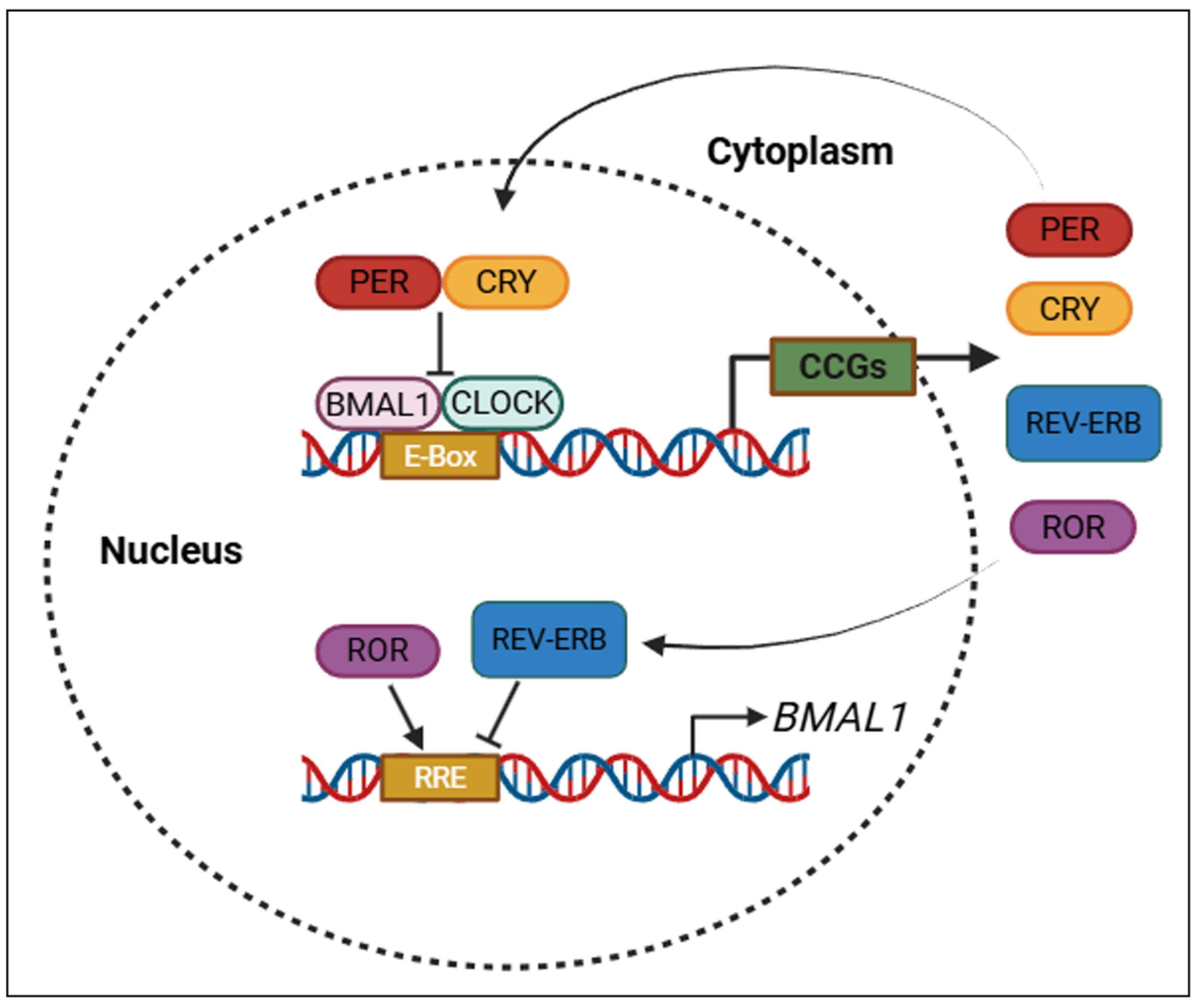

| Component | Location | Function | Mechanism/Pathway | Notes/Role in Rhythm Maintenance | Ref(s) |
|---|---|---|---|---|---|
| SCN | Anterior hypothalamus | Master circadian pacemaker | Receives light via retinohypothalamic tract → CREB activation → clock gene induction | Synchronizes peripheral clocks, modulates neuroendocrine and behavioral rhythms | [20,21,22] |
| Peripheral Clocks | All tissues | Local timekeeping | Follows TTFL but influenced by feeding, temperature, and glucocorticoids | Depends on SCN for phase alignment | [23] |
| CLOCK | Nucleus | Transcriptional activator | Dimerizes with BMAL1 → binds E-box → activates Per/Cry | Positive arm of TTFL | [24] |
| BMAL1 | Nucleus | Core transcription factor | Forms CLOCK–BMAL1 complex → initiates circadian transcription | Essential for rhythm generation | [24] |
| PER (PER1–3) | Cytoplasm Nucleus | Transcriptional repressors | Phosphorylated by CK1δ/ε → translocates to nucleus → inhibits CLOCK–BMAL1 | Forms negative arm of feedback loop | [25] |
| CRY (CRY1/2) | Cytoplasm Nucleus | Transcriptional repressors | Stabilizes PER, part of the inhibitory complex | Completes core loop with PER | [25] |
| CK1δ/ε | Cytoplasm | Kinase | Phosphorylates PER/CRY → regulates degradation and nuclear entry | Controls circadian period length | [25] |
| REV-ERBα | Nucleus | Transcriptional repressor | Binds RRE in BMAL1 promoter → represses BMAL1 transcription | Stabilizes loop amplitude | [24,25] |
| RORα | Nucleus | Transcriptional activator | Binds the same RRE as REV-ERBα → promotes BMAL1 transcription | Antagonistic to REV-ERBα, maintains phase precision | [24,25] |
| Model/System | Model Type/Species | Target/Pathway | Molecular Mechanism | Observed Effect on BBB | Reference(s) |
|---|---|---|---|---|---|
| Methamphetamine-induced toxicity | In vivo, Rat | NADPH oxidase 2 | Inhibition via melatonin receptors | Prevention of endothelial damage | [45,46,47,48] |
| Excitotoxic insult via ibotenate | In vivo, Neonatal Rat | Occludin, Claudin-5, JAM1/2, ZO-1, Cdh5, ABCG2 | Normalization of TJ and transporter expression; prevention of tight junction disruption | Reduced dextran leakage, preserved BBB integrity, smaller lesion size | [49] |
| Transient focal ischemia | In vivo, Young Mice | Claudin-5, ZO-1 | Preservation of tight junction integrity under ischemic stress | Attenuated vascular leakage, reduced infarct area | [50] |
| BBB tight junction culture model | In vitro, Human endothelial cells | Claudin-5, ZO-1, Occludin | Upregulation of tight junction proteins | Enhanced structural integrity of BBB | [51] |
| SARS-CoV-2 neuroinvasion model | In vivo and in vitro, Mice and Human Cells | ACE2 | Inhibition of ACE2-mediated viral entry | Decreased neuroinvasion, reduced Aβ-related burden | [52] |
| Gastric cancer cell line (MMP activity) | In vitro, Human cells | MMPs (e.g., MMP-9) | Inhibition of extracellular matrix degradation | Improved BBB stability | [53,54] |
| LPS-induced neuroinflammation | In vivo, Aged Mice | AMPK pathway, endothelial TJ proteins | AMPK activation reduces inflammation and stabilizes tight junctions | Restored BBB integrity under inflammatory conditions | [55,56,57,58] |
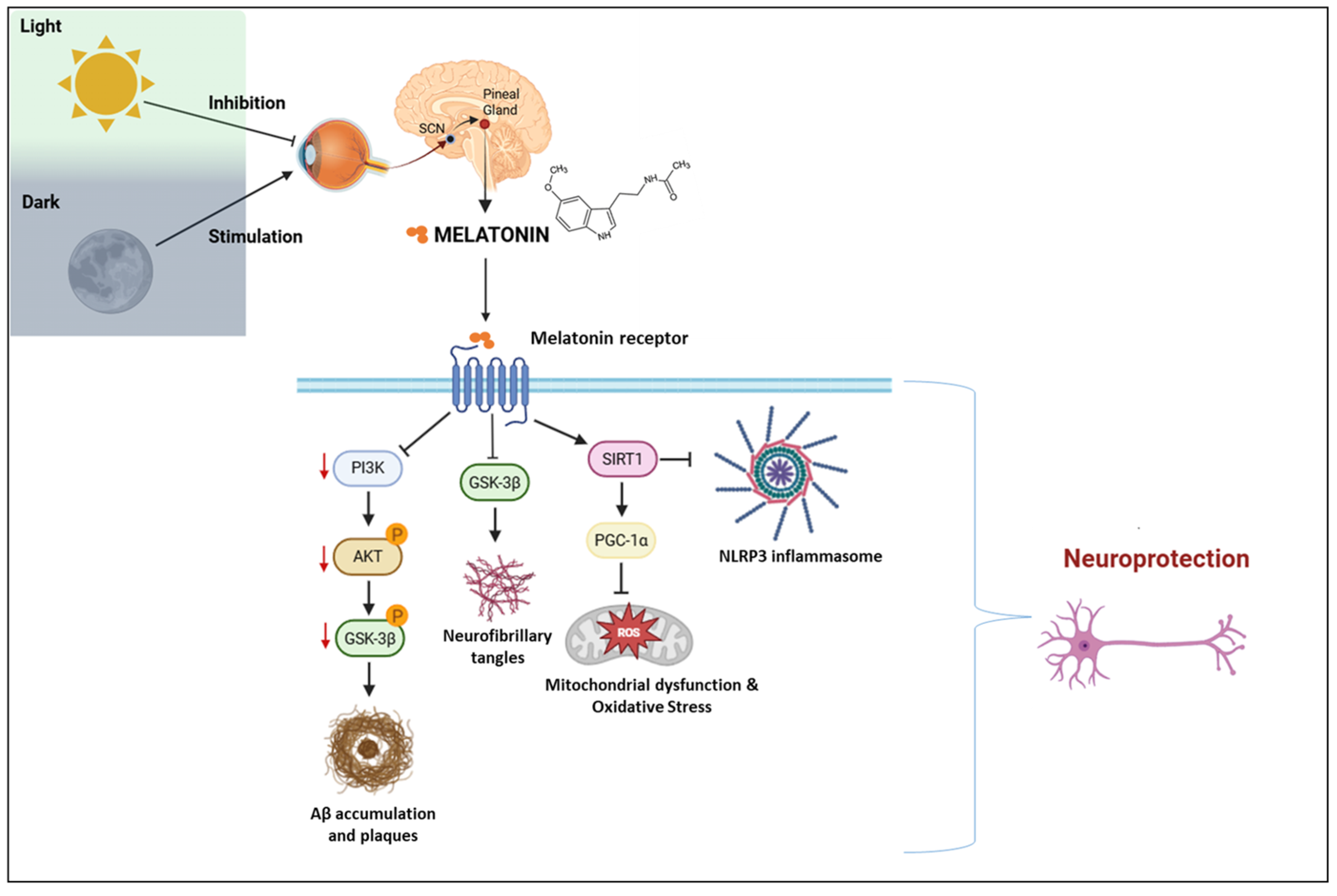
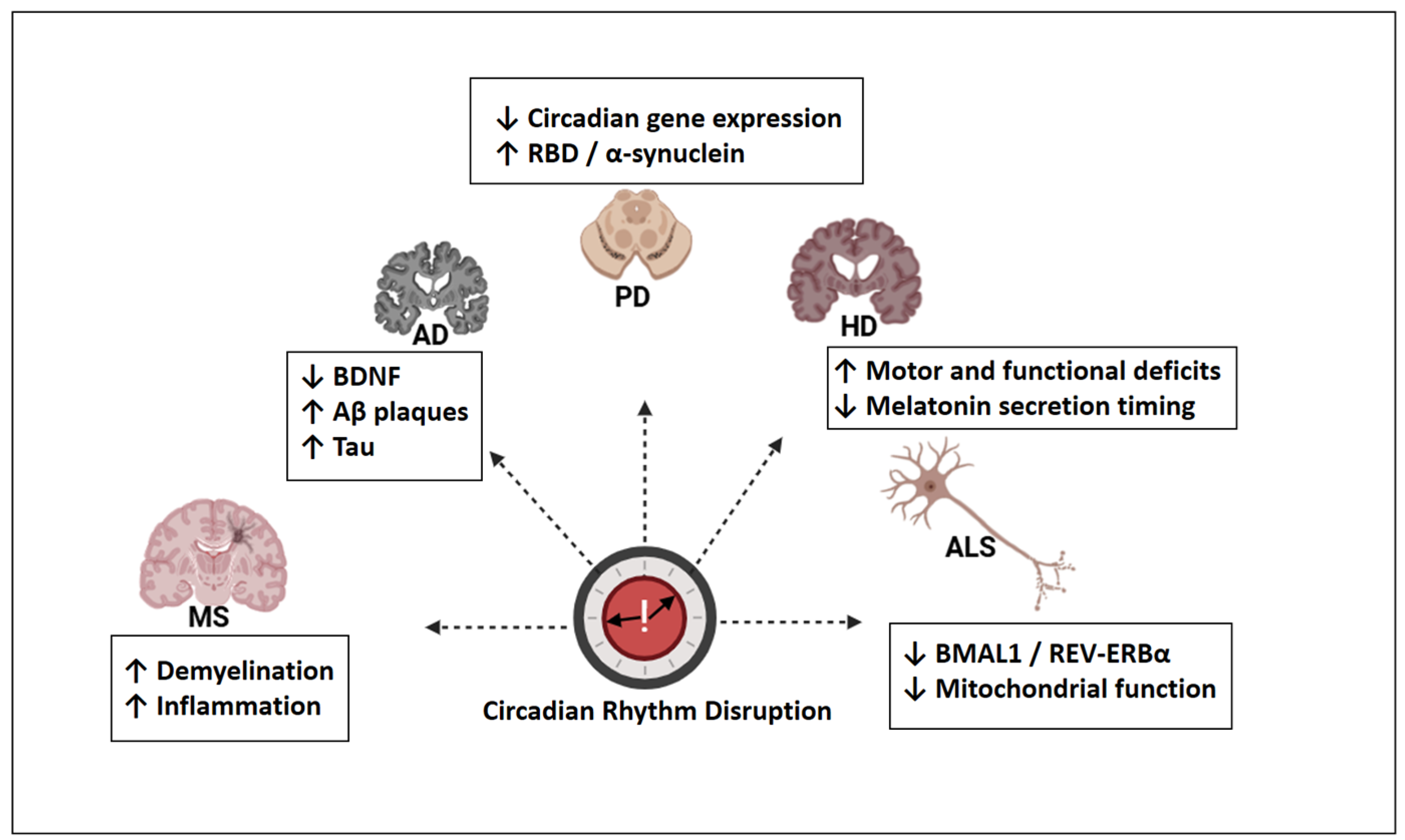
| Disease | Circadian Disturbance | Melatonin Alteration | MT1/MT2-Linked Pathways | Molecular/Pathway Involvement | Preclinical/Clinical Evidence | Therapeutic Implications | Reference(s) |
|---|---|---|---|---|---|---|---|
| AD | Fragmented sleep, blunted circadian markers | ↓ CSF/plasma melatonin, especially at night | MT1 → PI3K/AKT → GSK3β ↓ MT2 → SIRT1 ↑, AQP4 ↑ | BDNF ↓, SIRT1, PERK, AQP4, MTNR1A/B polymorphisms | 294 rodent studies: ↑ CREB/BDNF, cognitive improvement; RCTs: improved MMSE, sleep | Melatonin + light therapy may improve sleep and agitation | [78,79,80,81,82,83,84,85,86,87,88,89,90,91,92,93,94,95,96,97,98,99,100,101,102,103,104] |
| PD | Reduced amplitude, disrupted SCN, iRBD | ↓ Nocturnal melatonin, REM loss | MT2 → Nrf2 ↑, REV-ERBα ↑ MT1/MT2 → cytokine suppression | Nrf2, REV-ERBα, pro-inflammatory cytokines | Melatonin improves RBD and motor/REM sleep in trials | Potential adjunctive chronotherapy needs dosage standardization | [108,109,110,111,112,113,114,115,116] |
| HD | Delayed melatonin onset, sleep fragmentation | ↓ Melatonin secretion in early and late stages | MT1 → PER/CRY regulation, circadian resynchronization | Circadian gene dysregulation, SCN damage | Drosophila models: circadian rescue, behavioral benefit | Possible biomarker and therapeutic for rhythm restoration | [117,118,119,120,121,122] |
| MS | Disrupted rhythms, seasonal onset patterns | Altered melatonin; ↓ linked to inflammation | MT1/MT2 → SIRT1 ↑, AMPK ↑, cytokine suppression | Melatonin modulates immune pathways in EAE | Delayed onset, ↓ demyelination with melatonin | Combined with time-restricted feeding (TRE), it may enhance the effect | [123,124,125,126] |
| ALS | BMAL1, REV-ERBα dysregulation | Melatonin deficiency contributes to redox imbalance | MT1/MT2 → REV-ERBα ↑, SIRT1 ↑, mitochondrial biogenesis | ↑ Neuroinflammation, mitochondrial dysfunction | Melatonin: ↑ mitochondrial biogenesis, ↓ glial activation | Chronotherapy may aid disease management | [127,128,129,130] |
| Psychiatric/Neuropsychiatric Disorders | Abnormal sleep–wake patterns, REM behavior disorder | Dysregulated melatonin rhythms | MT1/MT2 → HPA axis modulation, circadian gene regulation | HPA axis, glucocorticoids, circadian gene variants | Linked to mood disorders, schizophrenia; RBD in neurodegeneration | Potential for rhythm-based interventions | [131,132,133] |
Disclaimer/Publisher’s Note: The statements, opinions and data contained in all publications are solely those of the individual author(s) and contributor(s) and not of MDPI and/or the editor(s). MDPI and/or the editor(s) disclaim responsibility for any injury to people or property resulting from any ideas, methods, instructions or products referred to in the content. |
© 2025 by the authors. Licensee MDPI, Basel, Switzerland. This article is an open access article distributed under the terms and conditions of the Creative Commons Attribution (CC BY) license (https://creativecommons.org/licenses/by/4.0/).
Share and Cite
Baser, K.H.C.; Haskologlu, I.C.; Erdag, E. Molecular Links Between Circadian Rhythm Disruption, Melatonin, and Neurodegenerative Diseases: An Updated Review. Molecules 2025, 30, 1888. https://doi.org/10.3390/molecules30091888
Baser KHC, Haskologlu IC, Erdag E. Molecular Links Between Circadian Rhythm Disruption, Melatonin, and Neurodegenerative Diseases: An Updated Review. Molecules. 2025; 30(9):1888. https://doi.org/10.3390/molecules30091888
Chicago/Turabian StyleBaser, Kemal Hüsnü Can, Ismail Celil Haskologlu, and Emine Erdag. 2025. "Molecular Links Between Circadian Rhythm Disruption, Melatonin, and Neurodegenerative Diseases: An Updated Review" Molecules 30, no. 9: 1888. https://doi.org/10.3390/molecules30091888
APA StyleBaser, K. H. C., Haskologlu, I. C., & Erdag, E. (2025). Molecular Links Between Circadian Rhythm Disruption, Melatonin, and Neurodegenerative Diseases: An Updated Review. Molecules, 30(9), 1888. https://doi.org/10.3390/molecules30091888