Article

Adsorption of Zinc Ions from Aqueous Solutions on Polymeric Sorbents Based on Acrylonitrile-Divinylbenzene Networks Bearing Aminophosphonate Groups


1
Faculty of Chemical Engineering, Biotehnologies and Environmental Protection, Politehnica University Timisoara, 6 Vasile Parvan Blvd., 300223 Timisoara, Romania
2
“Coriolan Drăgulescu” Institute of Chemistry, 24 Mihai Viteazu Blvd., 300223 Timisoara, Romania
3
Petru Poni Institute of Macromolecular Chemistry, 41A Aleea Grigore Ghica Voda, 700487 Iasi, Romania
*
Authors to whom correspondence should be addressed.
Molecules 2025, 30(24), 4805; https://doi.org/10.3390/molecules30244805

Submission received: 5 November 2025 / Revised: 4 December 2025 / Accepted: 15 December 2025 / Published: 17 December 2025

Abstract

Contamination of natural water sources with zinc ions poses serious ecological and health risks due to its toxicity and persistence. In this context, this study presents the preparation of new adsorbents based on acrylonitrile-divinylbenzene networks functionalized with aminophosphonate groups, selected for their strong chelating affinity towards Zn(II) ions. Both unmodified and functionalized materials were evaluated in adsorption experiments towards zinc ions. The adsorption capacity was evaluated as a function of the contact time and the initial zinc concentration. The functionalized adsorbents exhibited a significantly higher adsorption of zinc, attributed to the presence of aminophosphonate groups. In case of functionalisation with ethyl phosphonate group is achieved a maximum adsorption capacity of 101 mg/g. The equilibrium data followed the Langmuir isotherm, indicating monolayer adsorption, while the kinetic analysis followed the pseudo-second-order model, consistent with chemisorption. The optimal contact time was 60 min. Functionalized polymeric supports show strong potential for zinc ion removal, supporting their use in environmental remediation. Overall, the results demonstrate that aminophosphonate-functionalized polymers are highly effective adsorbents for the removal of zinc ions from contaminated waters.

1. Introduction

The worldwide shortage of water resources, exacerbated by pollution from industrial, agricultural and human activities, represents a serious and growing environmental challenge [1]. Factors such as population growth, uncontrolled urbanization and the excessive use of chemicals further contribute to the degradation of water quality [2]. In this context, the development of efficient technologies for the elimination of aquatic pollutants is crucial. Among these pollutants, heavy metal ions are of particular concern due to their high toxicity, persistence and bioaccumulation capacity [3]. Heavy metal ions can cause serious pathologies, highlight the need and importance of monitoring and implement effective remediation strategies to both protect public health and water resources. The World Health Organization (WHO) and the Environmental Protection Agency (EPA) have established certain permissible limits for the discharge of heavy metal ions into natural waters [4,5]. Zinc, although an essential element for the body involved in the synthesis of enzymes, bone and tissue growth, and numerous biochemical processes, can become harmful when present in excess. The main industrial sources of zinc are: galvanizing, paper and pulp industry, steel production, metallurgy, the chemical industry, and the production of paints and fertilizers [6]. High exposure to zinc can cause health problems such as headaches, nausea, skin irritations, fever, and anemia. The WHO recommends a maximum permissible limit of 5.0 mg/L of zinc in wastewater [4].
There are multiple processes for the removal of contaminants: coagulation/flocculation, precipitation, ion exchange, adsorption, etc. [7,8]. Special attention is paid to adsorption, which is an efficient and cost-effective method for removing heavy metal ions from polluted waters, generating high-quality effluents [2]. A major advantage of adsorption is the possibility of regenerating and reusing adsorbents, which reduces both operational costs and environmental impact, an especially important factor for countries with limited resources [5,9,10]. Unconventional adsorbents, such as agricultural waste and industrial sludge, are more accessible and efficient due to their favourable chemical properties. Biochar, another promising material that is obtained from carbonized biomass, has a porous structure, a large surface area and a low cost [2,11]. However, these adsorbents have limited regeneration capacity. The development of efficient regeneration methods could enhance both economic and environmental sustainability, the adsorbent reuse, and the recovery of metal ions [1]. Recent advances in the field of polymers have led to the development of synthetic polymeric adsorbents [12,13], which are characterized by tunable porosity, large surface area, dimensional stability, and fast adsorption kinetics. These adsorbents present a multitude of advantages, such as: availability in various forms (beads, membranes, fibers), the possibility of surface modification by methods such as functionalization, as well as high selectivity, obtained by attaching specific ligands that allow targeted adsorption of certain compounds [14]. Macrocross-linked materials based on styrene-divinylbenzene copolymers (S-DVB) were obtained by copolymerization of S and DVB in the presence of organic diluents, resulting in copolymers with a large surface area and high porosity [15,16,17]. Functionalization of these copolymers with aminophosphonate groups has yielded a new class of functionalized macroreticular supports with improved properties and increased selectivity towards certain organic molecules or bacteria [18,19].
Multicomponent reactions (MCRs) are processes that involve three reactants that combine in a single step to form complex products with minimal by-products. These reactions have attracted significant attention in the synthesis of functional polymers [20]. Thus, the Kabachnik-Fields (KF) reaction, first reported by M. I. Kabachnik and E. K. Fields in 1952 [20], can be considered a multicomponent reaction. In this reaction, an aldehyde, an amine, and a phosphite participate to produce an α-aminophosphonate. The α-aminophosphonate structure obtained through the KF reaction exhibits a wide range of biological activities and has also demonstrated promising metal-chelating properties, making it valuable for both biomedical and materials science applications [20].
In a previous study, we reported both the synthesis of porous anion exchangers bearing primary amine moieties based on acrylonitrile-15%divinylbenzene (AN-15%DVB) copolymers and their functionalization with aminophosphonate groups through the KF method, obtaining materials with antibacterial activity against bacterial cultures of E. coli and S. aureus [21]. These materials showed a significant antibacterial effect for reducing environmental impact. Based on our previous research [21], this article presents the functionalization with aminophosphonate groups of a weak anion exchanger derived from a gel like copolymer AN-10%DVB, having the code SV, by a KF reaction obtaining novel polymer chelators and the application of these materials in the adsorption of Zn2+ ions. The primary goal of the present research is to enhance the adsorption capacity and efficiency of a weak anion exchanger derived from the AN-10%DVB copolymer by functionalizing it with aminophosphonate groups through the Kabachnik-Fields (KF) reaction. This study specifically aims to develop novel polymer chelators that exhibit improved binding affinity for Zn2+ ions, thereby addressing the critical issue of heavy metal ion contamination in aqueous environments. Thus, this research enhances the current understanding of how heavy-metal ions interact with functionalized polymeric materials and also establishes a foundation for developing efficient and sustainable strategies for the remediation of contaminated water resources. Ultimately, the goal is to provide insights that can guide future studies aimed at optimizing polymeric support for the removal of various contaminants, thereby contributing to environmental protection and public health.

2. Results and Discussion

2.1. Chemical and Morphological Characterization of Polymer Chelators

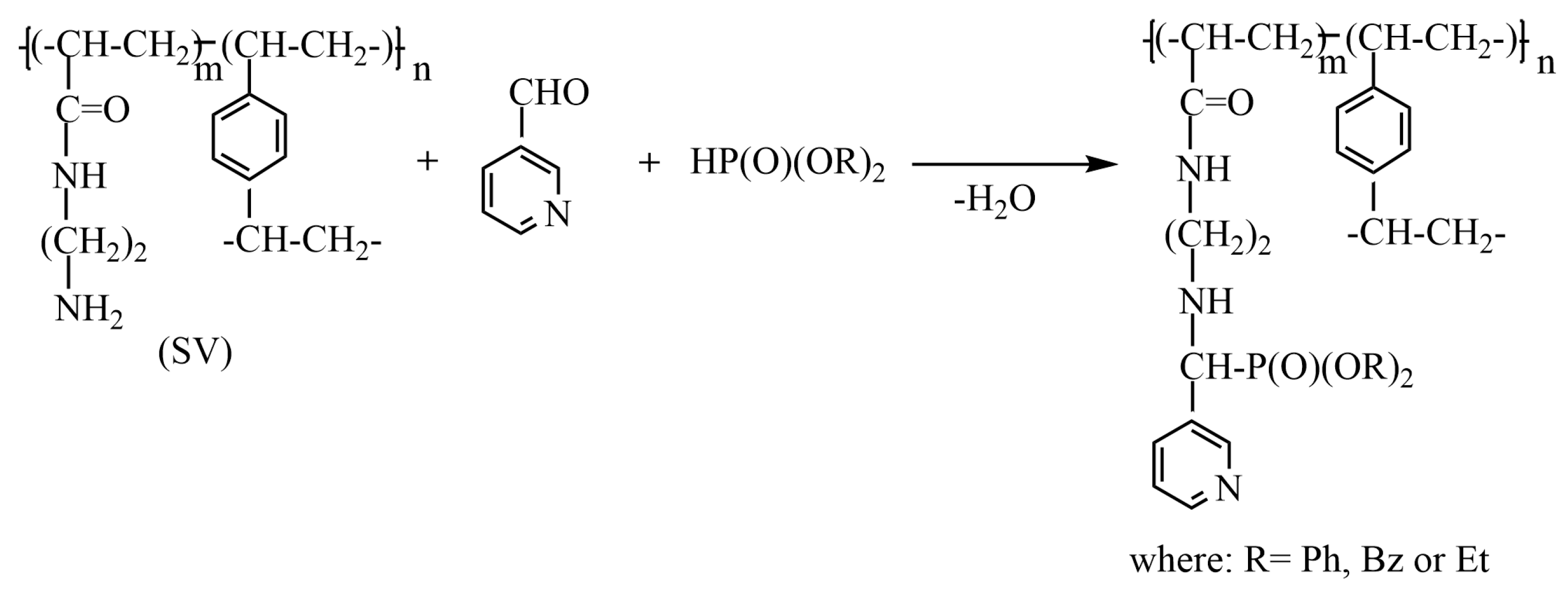
The chemical structures of the functionalized copolymers: aminodibenzylphosphonate groups (BzSV), aminodiethylphosphonate groups (EtSV) and aminodiphenylphosphonate groups (PhSV), are illustrated in Scheme 1. These materials are based on AN-10%DVB copolymers that have been chemically functionalized with aminophosphonate groups. The incorporation of aminophosphonate groups confers chelating properties, increasing the affinity of the copolymers for divalent metal ions, such as zinc ions.
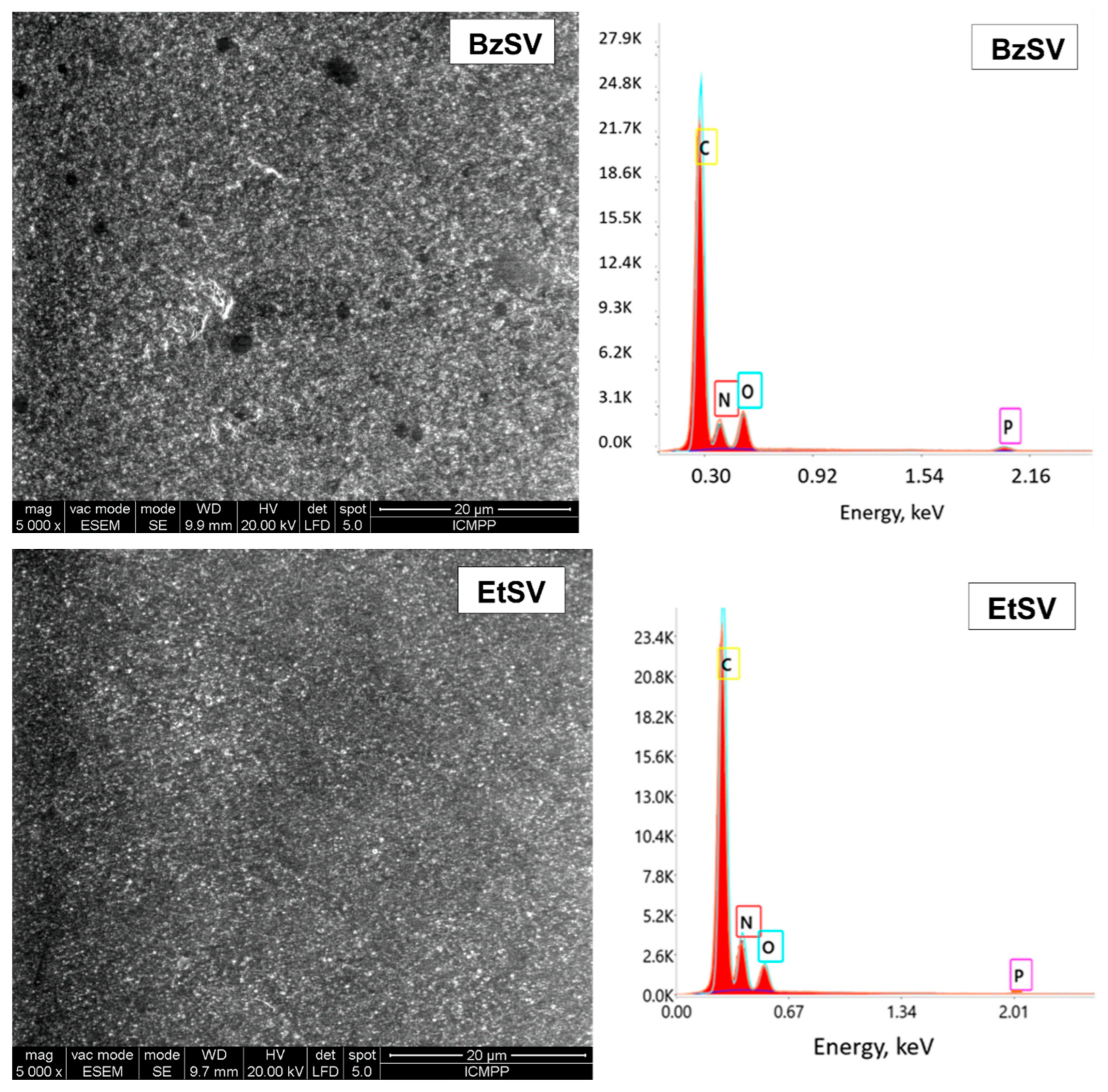
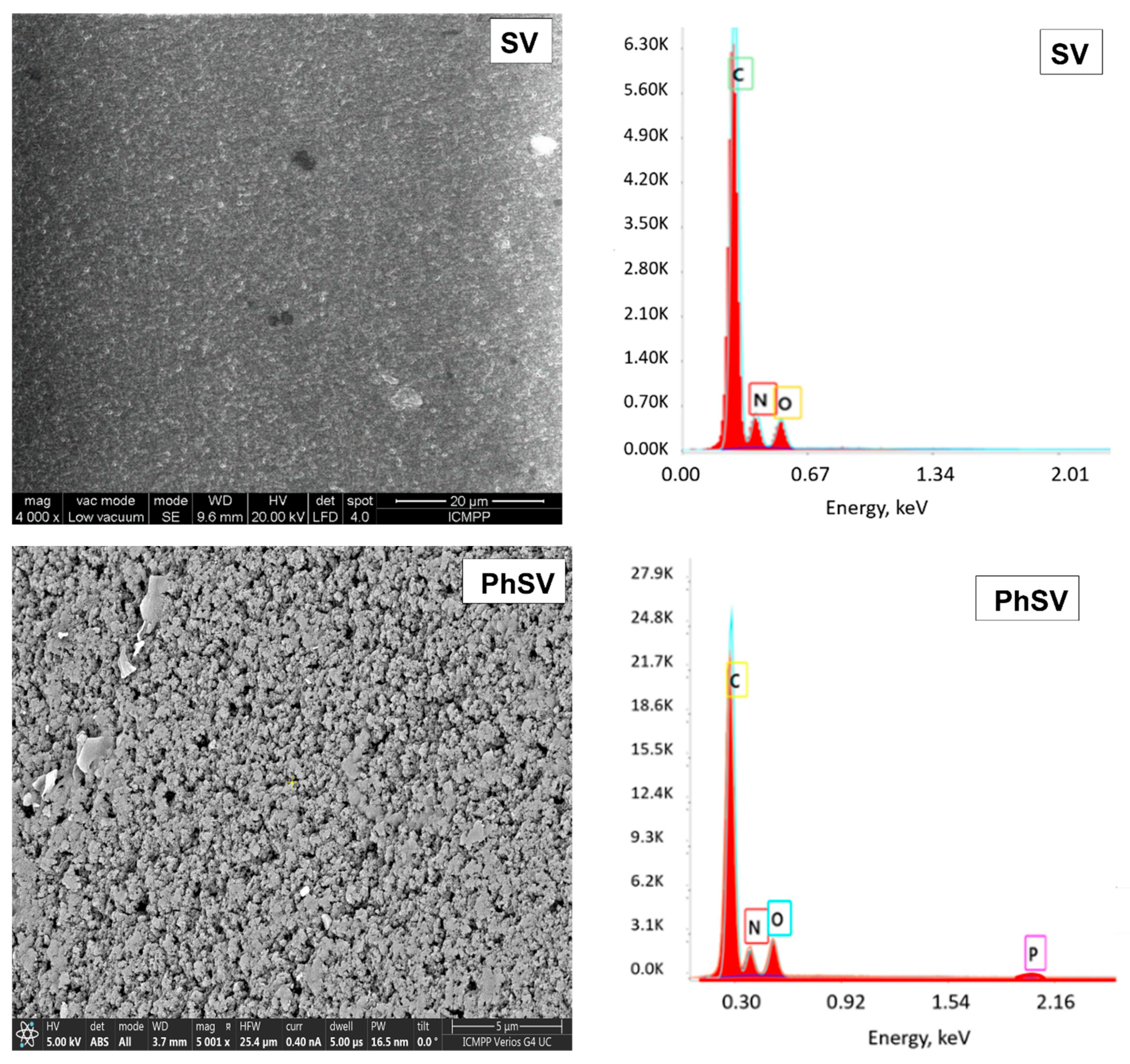
SEM and EDX images of the SV anion exchanger, both before and after the functionalization process, are shown in Figure 1. From the SEM images, it is obvious that the pristine network display a homogeneous surface. However, a certain roughness was observed after the functionalization through the KF reaction, which suggests the generation of heterogeneity in their morphology after functionalization. This roughness of the copolymers leads to a more efficient interaction between the adsorbent materials and zinc ions, and higher adsorption capacities were obtained with the functionalized copolymers compared to the pristine copolymer, as it will be shown below. The EDX spectra (Figure 1) indicate that the copolymer has been functionalized with aminophosphonate groups. The elemental analysis values obtained from the semi-quantitative EDX determination are presented in Table 1. The degree of functionalization for each copolymer sample was determined from the semi-quantitative EDX analysis. The functional group content for the obtained products was: 11.5 mmol/g for PhSV, 12.6 mmol/g for BzSV, and 14.0 mmol/g for EtSV.
From the semi-quantitative analysis, an increase in carbon content, the appearance of phosphorus, and a slight decrease in nitrogen and oxygen content are observed.
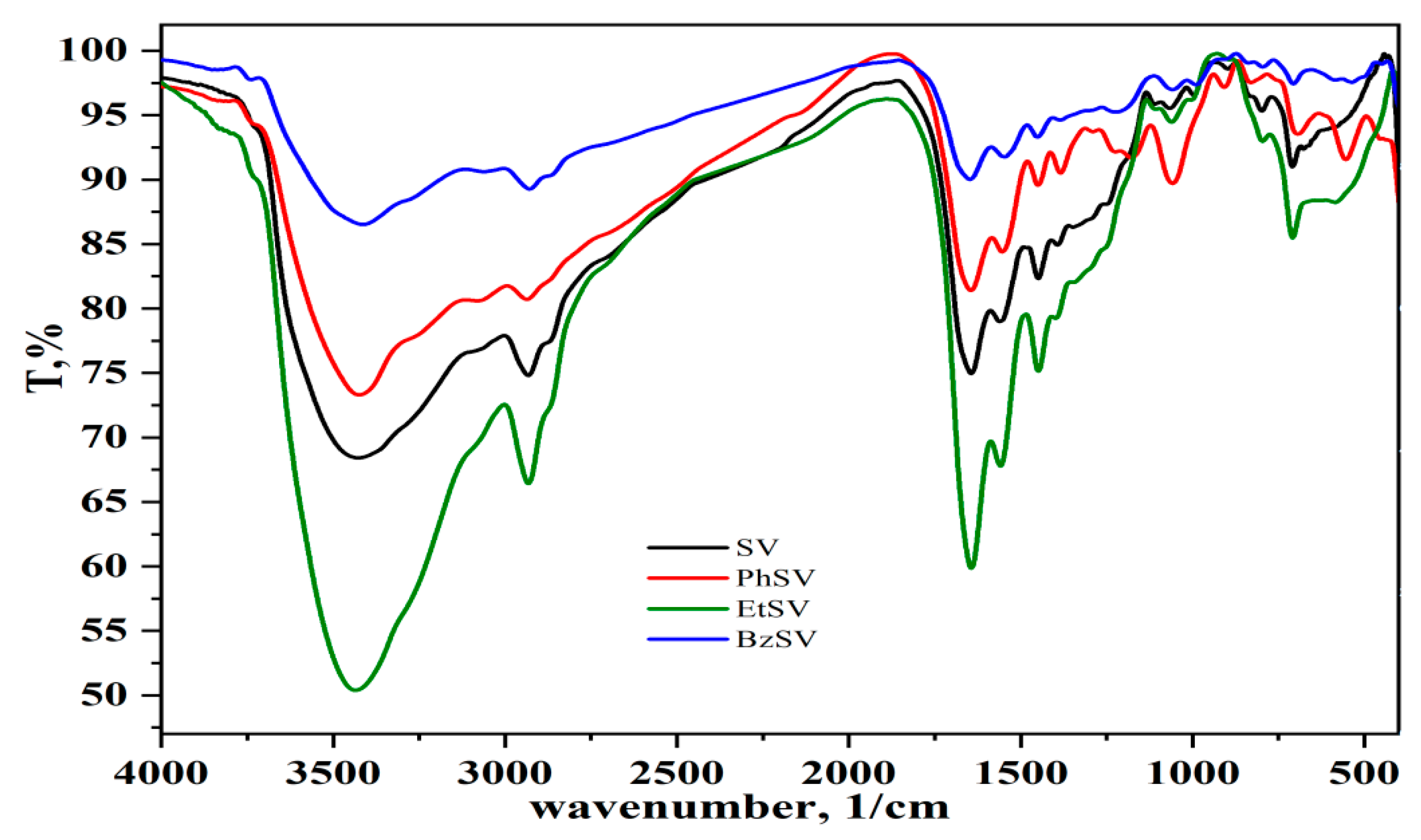
The FTIR spectra of the pristine anion exchanger (SV) and of the functionalized copolymers are presented in Figure 2.
The FTIR spectrum of the pristine SV anion exchanger showed the following bands: 1449 cm−1 and 710 cm−1 and were assigned to N-H groups, while the bands located at 3429 cm−1 and 1643 cm−1 were assigned to -NH2 groups, and C=O bond in the secondary amide bond in SV copolymer (amide I). The FTIR spectrum of the BzSV sample showed adsorption bands in the following regions: 3510–3350 cm−1 assigned to groups (aliphatic–NH and -OH), 1680–1570 cm−1 assigned to groups (-C=C, aromatic ring, C=O in the secondary amide bond, and the bending vibration of N-H bonds in amine groups), 1360–1210 cm−1 assigned to groups (γN-aliphatic, γP=O bond), 1169–950 cm−1 assigned to groups (γP=O) and 880–709 cm−1 assigned to groups (N-H groups in primary amine and P-OR). For the EtSV sample, significant adsorption bands were observed in the following regions: 3440–3320 cm−1 assigned (to aliphatic –OH and NH groups), 1650–1555 cm−1 assigned (C=O in the secondary amide bond and the bending vibration of N-H bonds in amine groups), 1458–1370 cm−1 assigned (γP=O) and 908–680 cm−1 assigned (to N-H groups in primary amine and P-OR). The FTIR spectrum of the PhSV sample showed adsorption bands in the following regions: 3545–3350 cm−1 assigned to (aliphatic -OH and NH groups), 1660–1569 cm−1 assigned to (C=O in the secondary amide bond and the bending vibration of N-H bonds in amine groups), 1460–1390 cm−1 assigned to (γP=O) and 880–690 cm−1 assigned to N-H groups in primary amine and P-OR [18,19,21,22].
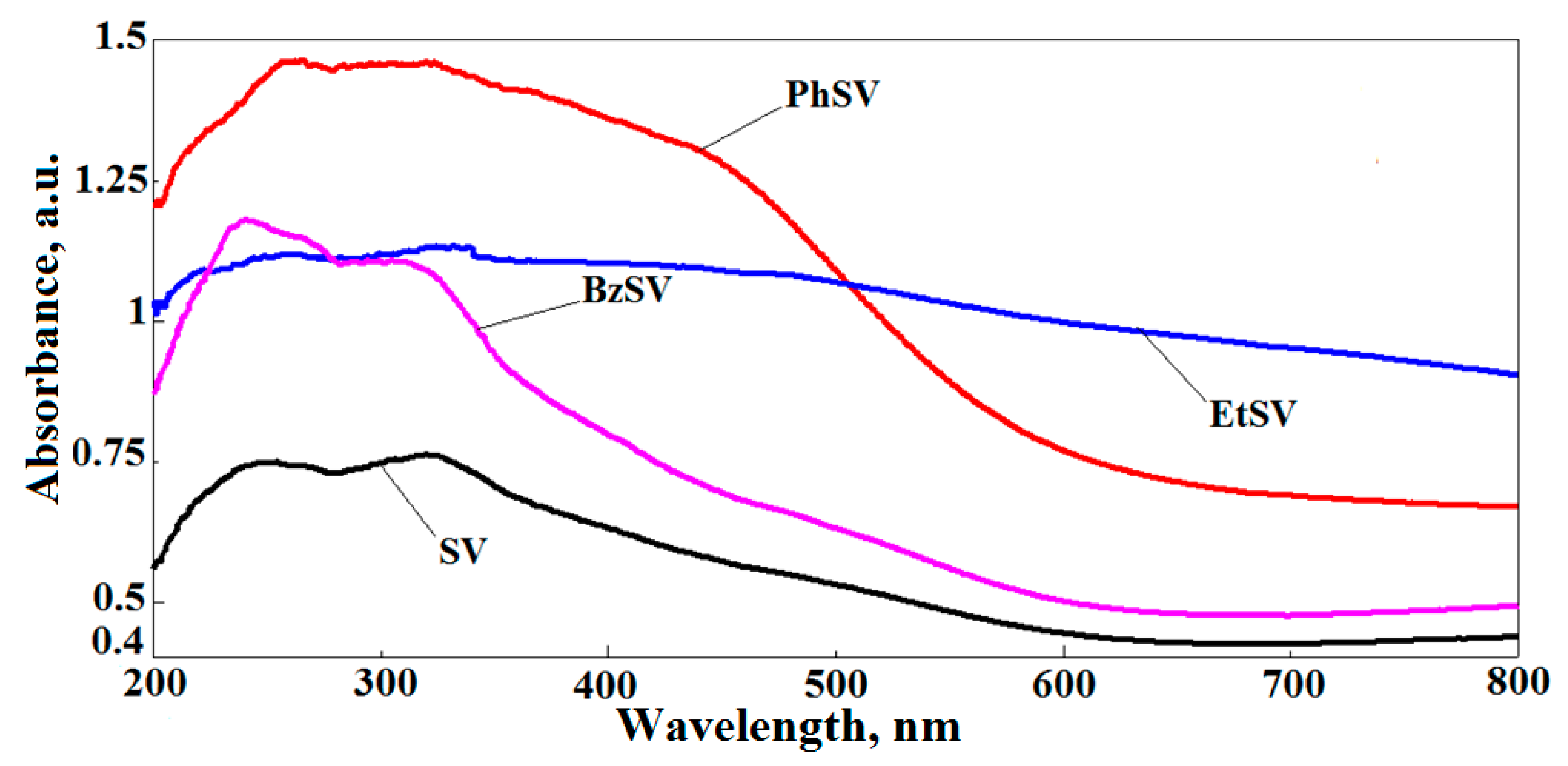
UV–Vis spectra of the SV anion exchanger, before and after functionalization with aminophosphonate groups (BzSV, EtSV, and PhSV), are presented in Figure 3.
A weak absorption band observed for the pristine SV anion exchanger, located in the range of 250–350 nm, is most likely attributed to n–π* transitions originating from lone pairs on the amino groups [23]. All copolymers resulting from functionalization with aminophosphonate groups (BzSV, EtSV and PhSV), exhibit broad and intense absorption bands in the high-energy region (200–450 nm). These absorption features are mainly associated with π–π* transitions of the aromatic rings [23]. In addition, contributions from n–π* transitions originating from lone pairs on the aminophosphonate groups are also evident, suggesting functionalization with aminophosphonate groups.
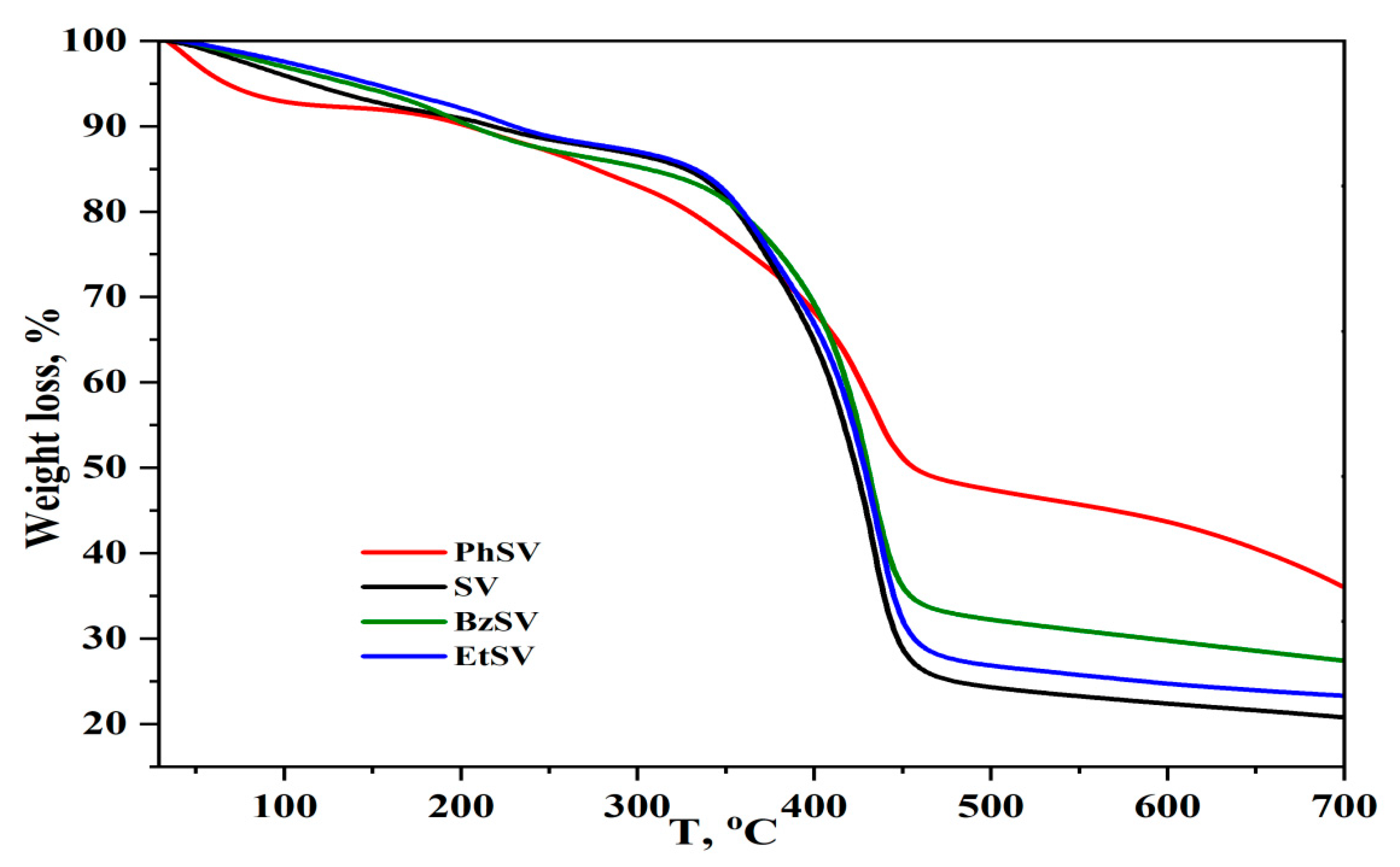
The thermal analysis data obtained for the pristine SV anion exchanger and functionalized copolymers with the aminophosphonate group (PhSV, EtSV, BzSV), up to 700 °C, is presented in Figure 4.
For the SV anion exchanger, a percentage of 11.74% residue was found at 700 °C after a total mass loss of 88.26%. The highest thermal stability was found for PhSV, with the highest residue (36%) and the lowest mass loss (64%). EtSV and BzSV show moderate stability, BzSV (lost 72.59% of its total mass, leaving 27.41% residue) being less thermally stable than EtSV (with a residue of 23.30% and a total mass loss of 76.70%). Functionalization of AN-DVB copolymer with aminophosphonate groups improves the thermal stability of the SV pristine copolymer [21].

2.2. Adsorption Study

2.2.1. Kinetic Studies

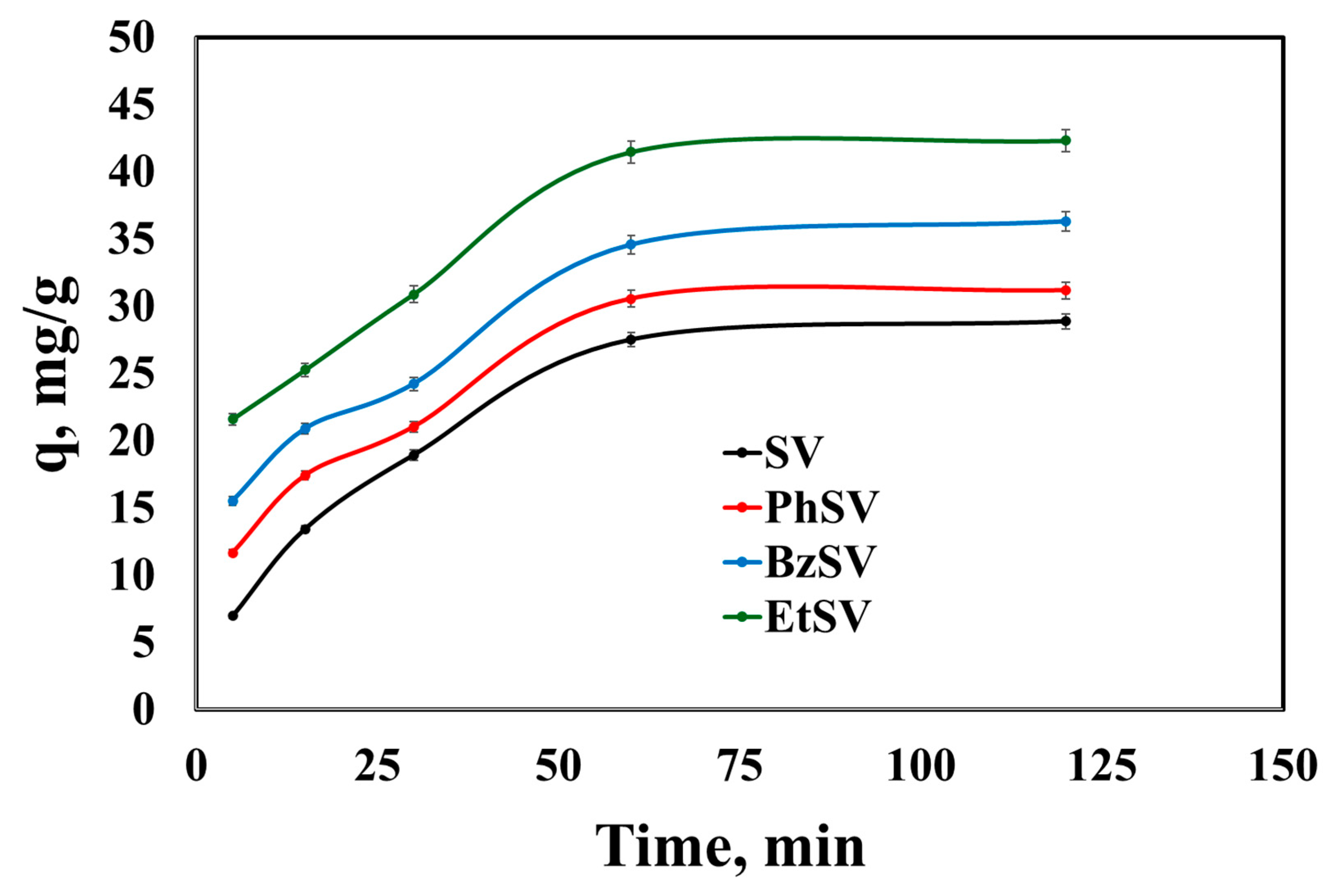
To assess the equilibrium time between the adsorbent and zinc ions, the impact of stirring time on the adsorption performance of the studied polymers support in the removal of Zn2+ ions from aqueous solutions was investigated. The findings are illustrated in Figure 5.
It can be observed that initially, the adsorption capacity exhibits a linear increase with the extension of contact time. However, after 60 min, the rate of increase in adsorption capacity becomes gradual, ultimately reaching a plateau. This indicates that equilibrium between the polymers support and zinc ions is achieved at 60 min, which was therefore selected as the optimal reaction time for subsequent experiments.
The experimental data collected at various time intervals can be utilized for the design and modelling the adsorption process. The most commonly employed kinetic models for this purpose are the pseudo-first order (PFO) and pseudo-second order (PSO) kinetic models. The linear forms of these kinetic models are represented by the following equations [24,25]:
ln q e q t = l n q t k 1 t
t q t = 1 k 2 q e 2 + t q t
where qt and qe represent the amount of Zn2+ adsorbed on the polymer supports at the time t and at equilibrium, respectively, mg/g; k1 represents the PFO adsorption rate constant, min−1; k2 represents the PSO adsorption rate constant, min−1 (mg/g)−1.
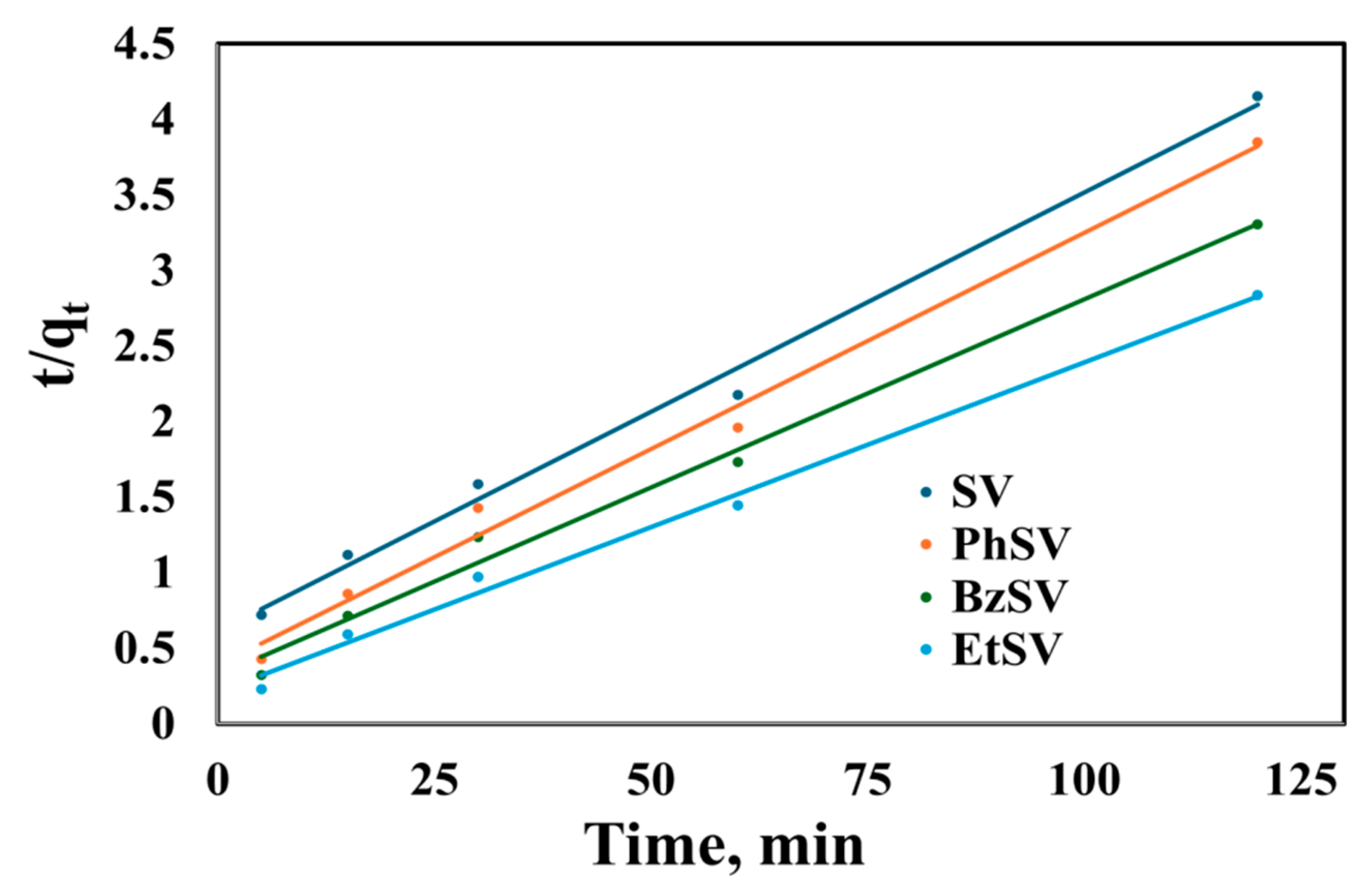
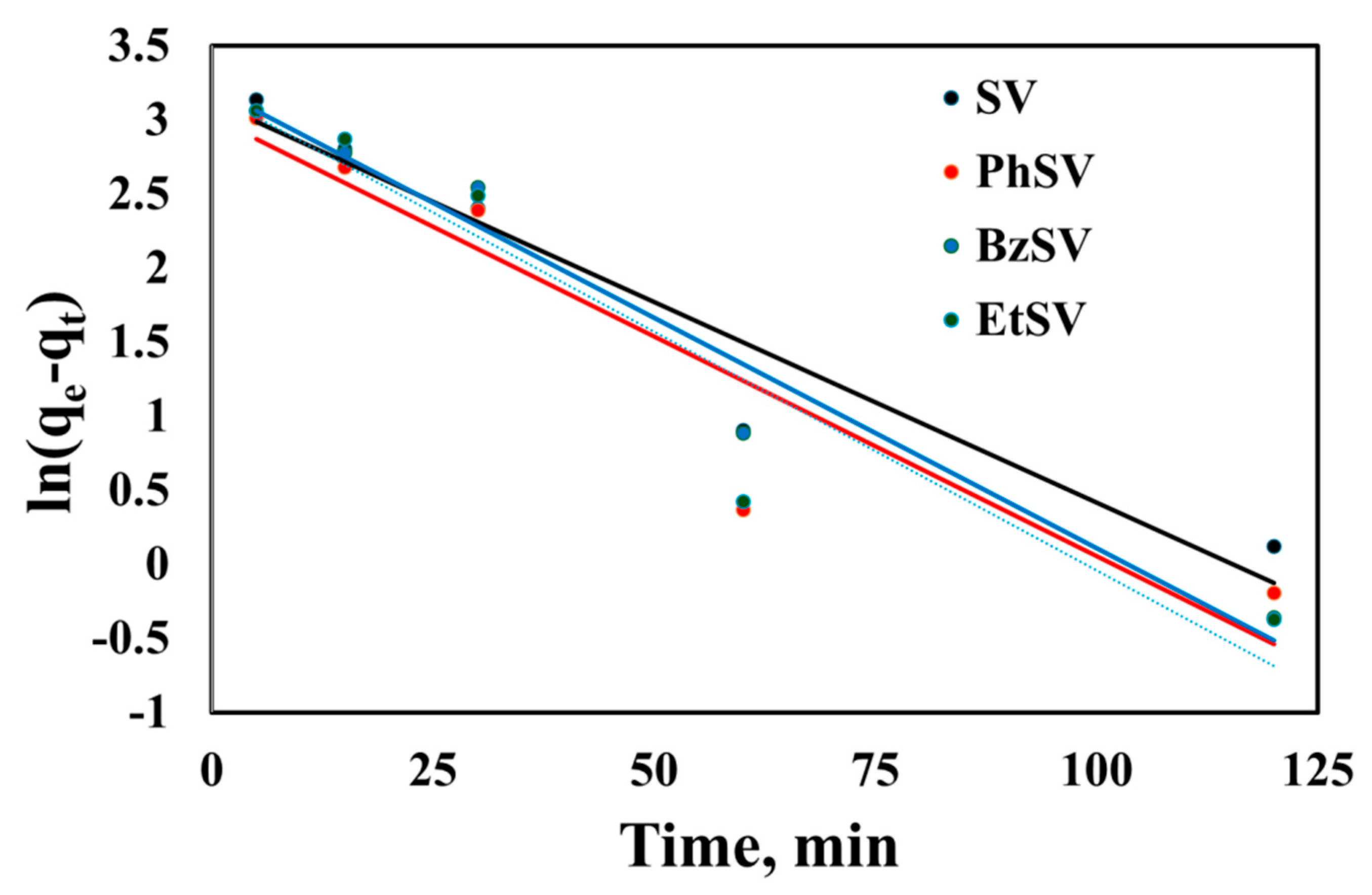
The PFO rate constant (k1) and the equilibrium adsorption capacity (qe) can be determined from the slope and intercept of the graphical representation of ln(qe − qt) vs. time (t), as shown in Figure 6. Additionally, the PSO rate constant (k2) and the equilibrium adsorption capacity (qe) were derived from the plot of t/qt versus time (t), illustrated in Figure 7. The values of the rate constants, along with the corresponding regression coefficients (R2) obtained for both models, are summarized in Table 2.
The data presented in Table 2 indicate that the kinetics of Zn2+ removal via adsorption onto the studied polymer supports is best described by a PSO kinetic model. This conclusion is supported by the correlation coefficient, which is very close to 1, indicating a strong linear relationship between the variables involved. Furthermore, the theoretically predicted equilibrium adsorption capacity (qe) closely aligns with the experimentally determined value, reinforcing the validity of the PSO model.
The PSO kinetic model suggests that the rate of adsorption is dependent on the square of the concentration of the adsorbate (Zn2+ ions) at the interface. This implies that the adsorption process is likely governed by chemical interactions rather than purely physical adsorption. In this context, the rate-determining step may involve chemisorption, characterized by the formation of chemical bonds between the adsorbent (functional groups of the polymer support) and the adsorbate (Zn2+ ions). Such interactions often involve valence forces, which may occur through the sharing or exchange of electrons between the zinc ions, and the functional groups present on the polymer surface [26,27,28]. This mechanism highlights the significance of chemical affinity in the adsorption process, suggesting that the polymer supports possess specific binding sites that facilitate the effective removal of Zn2+ ions from aqueous solutions.

2.2.2. Equilibrium Studies

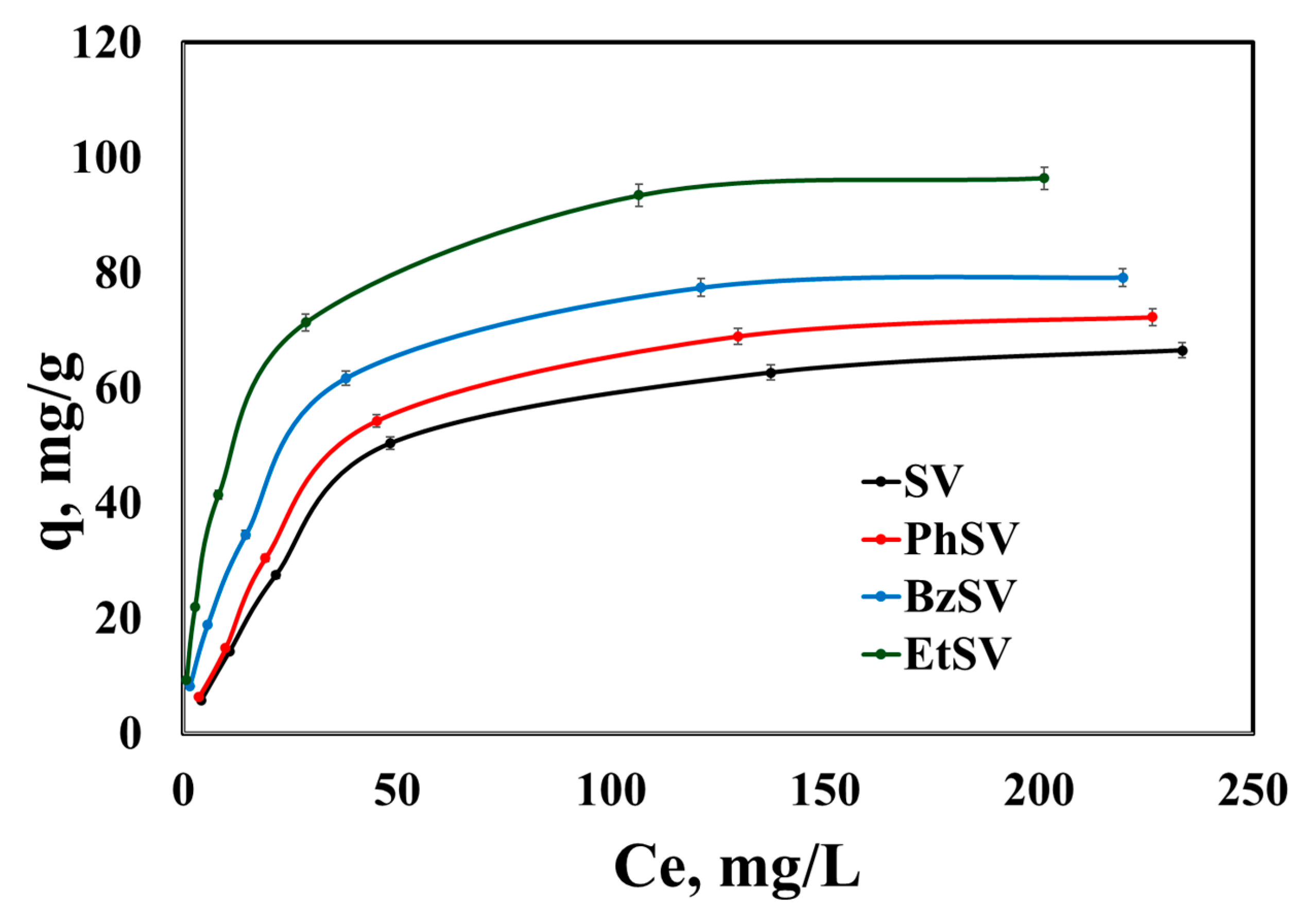
The equilibrium data obtained from experiments and presented in Figure 8 highlight the variation in the adsorption capacity of functionalized polymer supports as a function of the equilibrium concentration of Zn2+ in aqueous solutions, with the adsorption capacity increasing as the concentration of Zn2+ ions rises. This phenomenon occurs because a higher concentration of Zn2+ ions leads to greater availability of adsorbate, enhancing the likelihood of adsorption events on the polymer supports. Additionally, the increased concentration creates a stronger concentration gradient that drives more Zn2+ ions towards the polymer surface. Initially, this results in the effective utilization of active sites on the functional polymer, and at higher concentrations, multi-layer adsorption may occur, further boosting capacity.
Furthermore, stronger ionic or coordination bonds can form at elevated concentrations, enhancing the retention of zinc ions. However, for concentrations greater than 75 mg/L, a constant level of adsorption is reached, indicating saturation of the adsorption sites.
To characterize the equilibrium established between the liquid phase and the polymeric adsorbent, as well as to determine the maximum adsorption capacity, the experimental results were analyzed using the Langmuir and Freundlich isotherm models in their linear forms [24,25].
C e q e = 1 k L q m + C e q m
ln q e = l n K F + 1 n l n C e
where qe is the adsorption capacity at equilibrium and qm is the maximum adsorption capacity of polymer support in the removal process of Zn2+ ions from aqueous solutions (mg/g); Ce is Zn2+ equilibrium concentration (mg/L); KL Langmuir constant associated with energy of adsorption (L/mg); KF is the Freundlich constant (mg/g); 1/n represents dimensionless heterogeneity factor.
The Langmuir isotherm model is based on the assumption of a monolayer adsorption on a surface with a finite number of identical sites, suggesting that once a site is occupied by an adsorbate molecule, no further adsorption can occur at that site. This model is characterized by a maximum adsorption capacity, which represents the saturation point of the adsorbent. By applying these models to the experimental data, we can derive key parameters such as the maximum adsorption capacity (qm) and the affinity constant for the adsorption process. The comparative analysis of these models provides insights into the nature of the adsorption process and the suitability of the polymeric adsorbent for removing contaminants, such as Zn2+ ions, from aqueous solutions. In contrast, the Freundlich isotherm model, which is applicable for heterogeneous surfaces, assumes that the adsorption capacity increases with the concentration of the adsorbate in a non-linear manner, reflecting the multilayer adsorption process. This model is particularly useful in describing systems where the energy of adsorption varies across the surface of the adsorbent.
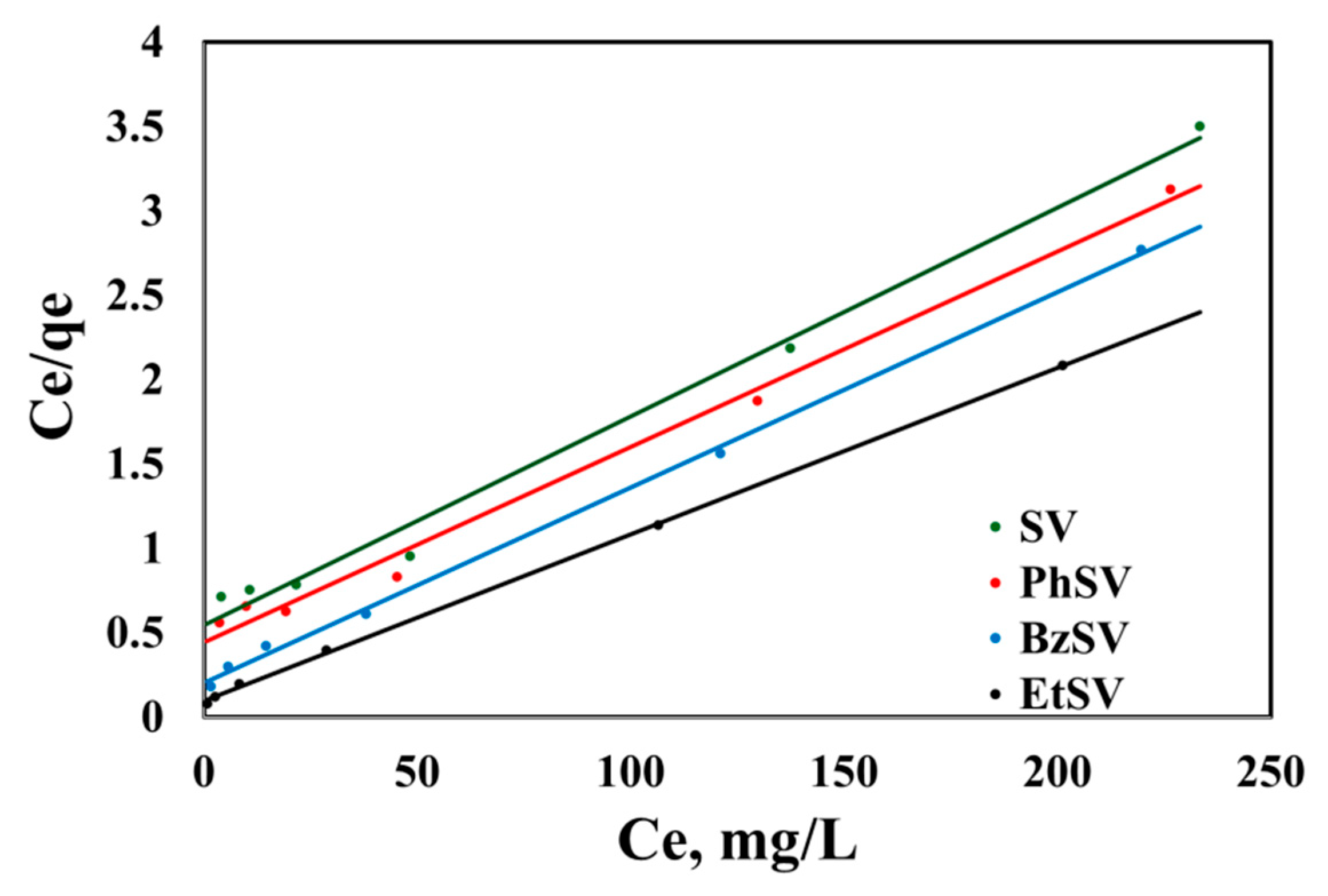
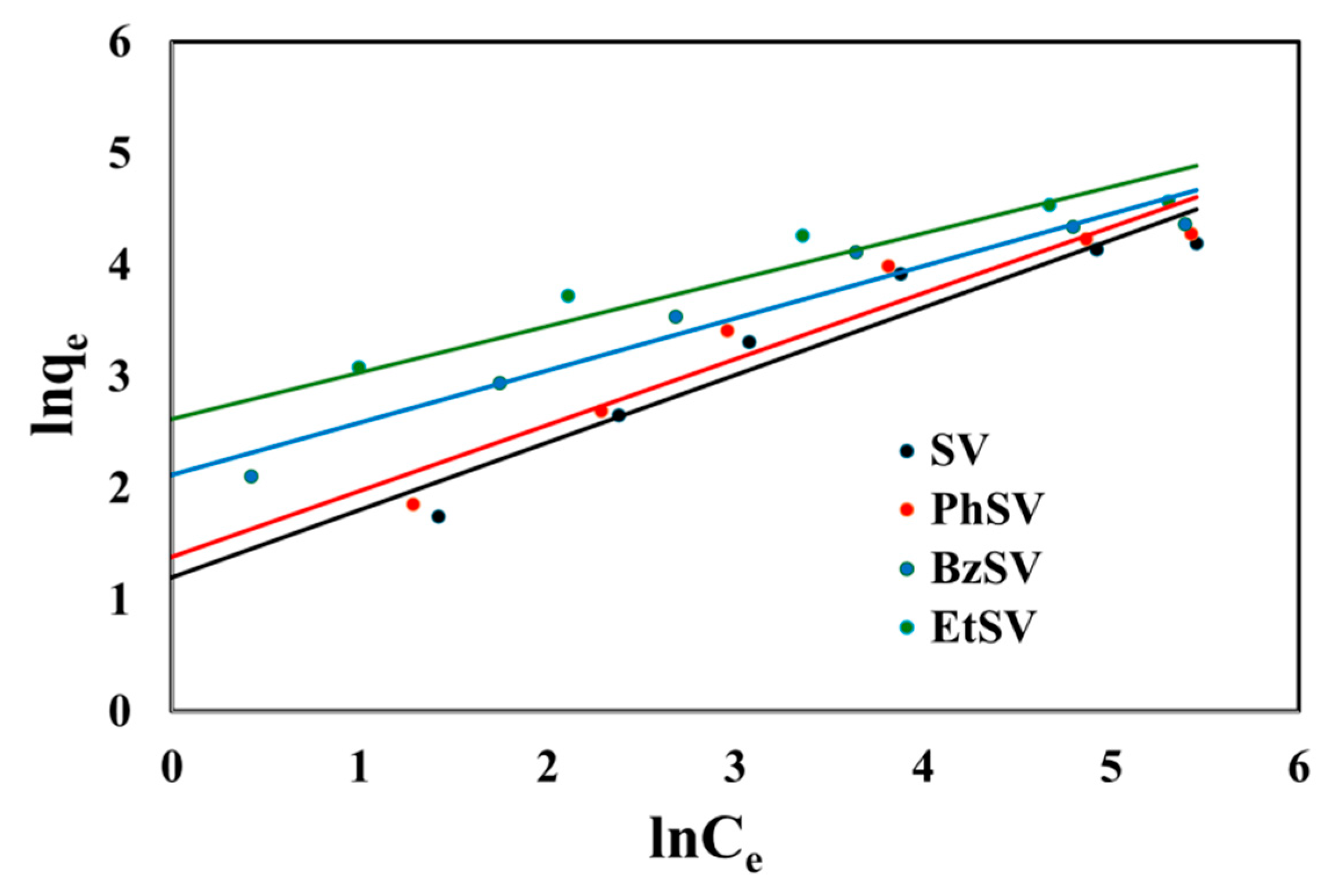
The isotherms, plotted according to their respective linearized equations, are illustrated in Figure 9 and Figure 10. The values of the isotherm parameters derived from these plots, along with their corresponding correlation coefficients, are summarized in Table 3. By plotting Ce/qe vs. Ce, the slope and intercept of the resulting linear plot allow the calculation of qm and KL (Figure 9). By plotting ln qe against ln Ce (Figure 10), the slope and intercept of the resulting linear graph provide the values for KF and 1/n.
The Langmuir model has proven to be suitable for describing the adsorption process of Zn2+ ions onto the analyzed materials, as evidenced by the correlation coefficients obtained, which are very close to unity in all cases. This indicates a strong correspondence between the experimental data and the theoretical model across the entire range of tested concentrations. Moreover, the estimated maximum adsorption capacities derived from the Langmuir plots align well with the values determined experimentally. This close agreement suggests a uniform distribution of the adsorbed species on the surface of the materials, which can be associated with a homogeneous distribution of active adsorption sites. The absence of a trend indicating migration of the adsorbed species on the solid surface also supports the possibility of a chemisorption mechanism, wherein the interactions between the polymeric support and the adsorbed component, Zn2+, are of a chemical nature rather than purely physical. Furthermore, the Langmuir model demonstrates a better fit compared to the Freundlich model for the adsorption of Zn2+ ions onto the studied polymeric supports. Notably, the Freundlich constant 1/n is less than one for all the examined polymeric supports, indicating favourable adsorption conditions. This suggests that while the Freundlich model captures some aspects of the adsorption process, the Langmuir model more accurately reflects the underlying mechanisms of adsorption, particularly in terms of the uniformity of active sites and the nature of the interactions involved.

2.2.3. Influence of the Nature of Polymeric Supports on Their Adsorptive Properties

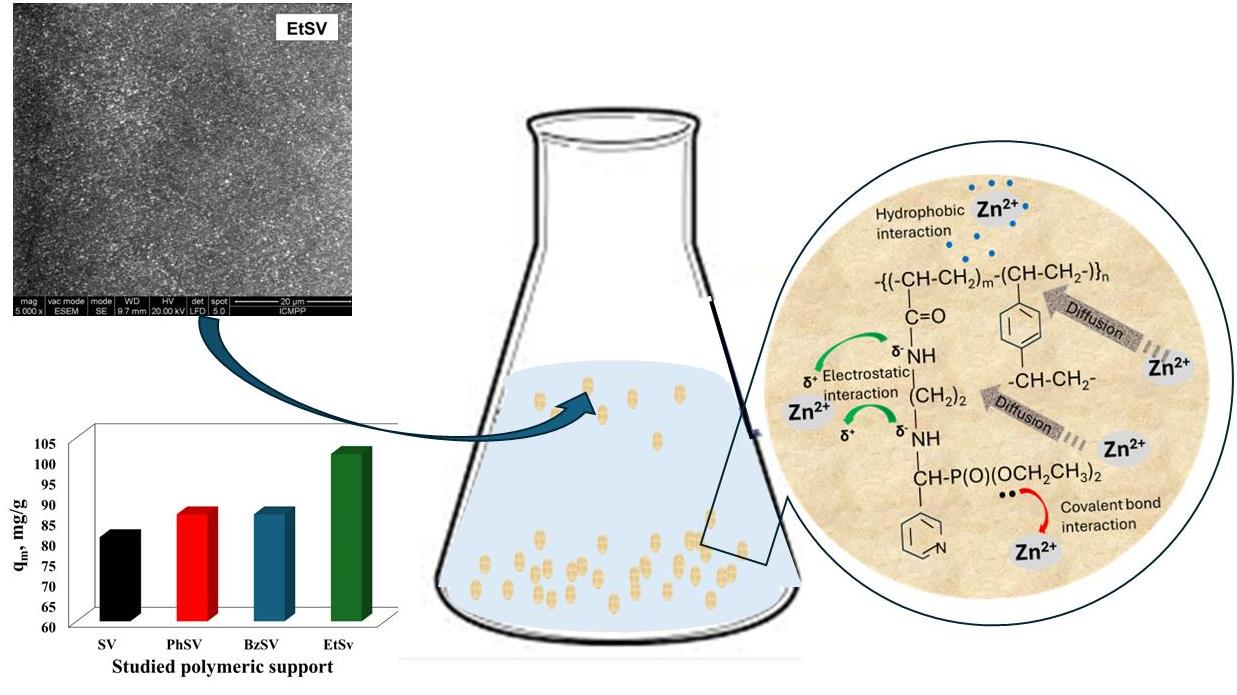
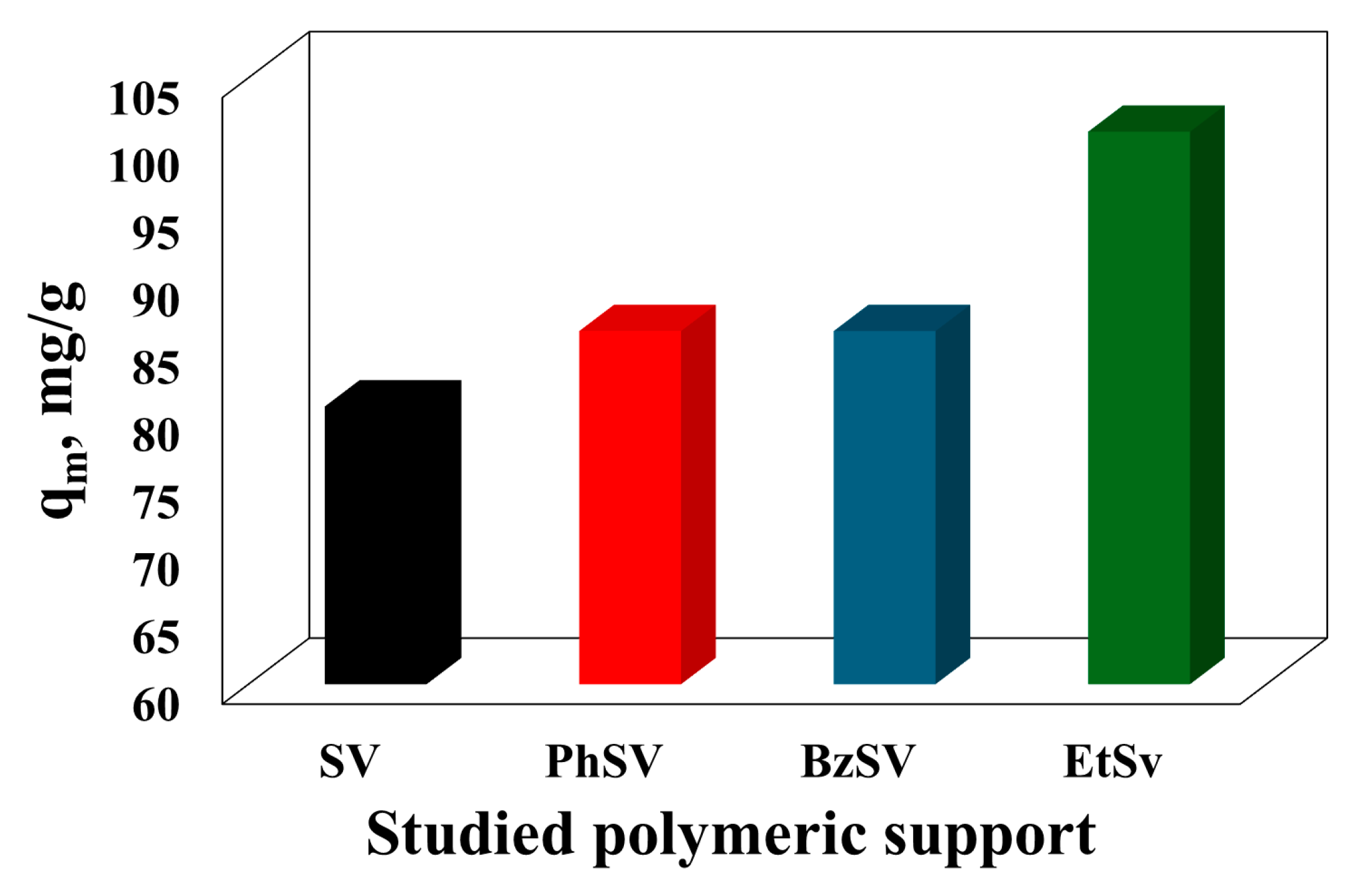
To identify the most effective polymeric support for the removal of Zn2+ ions from aqueous solutions, the maximum adsorption capacities, determined from the Langmuir isotherm for all adsorbents, were compared in Figure 11.
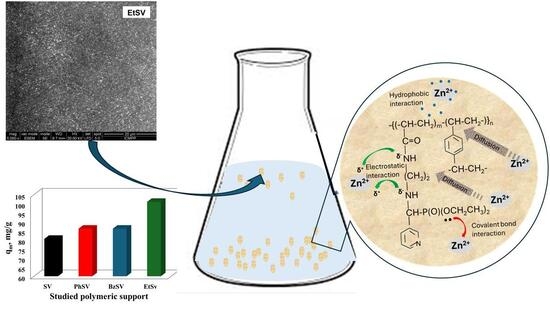
As can be observed in Figure 11, the functionalization with aminophosphonate groups of the AN-DVB (10%) polymeric networks, which initially possess primary amine groups, enhances the adsorption capacity of the resulting adsorbent material. Among the utilized phosphonate groups, the ethyl phosphonate group proved to be the most effective, probably due to its smaller size and compact shape, which allow it to approach the surface of the polymeric support and Zn2+ ions more efficiently. The steric and electronic interactions of the benzyl and phenyl aromatic groups can hinder the mobility and overall efficiency of zinc adsorption. These larger groups may create steric hindrance, preventing optimal contact between the adsorbent and the Zn2+ ions. In contrast, the ethyl phosphonic group provides favourable polarity, which facilitates more effective interactions with the Zn2+ ions. This increased polarity enhances the electrostatic and chemical interactions between the adsorbent and the target ions, leading to improved adsorption performance [26,27]. Overall, the choice of functional groups significantly impacts the adsorption characteristics of the polymeric supports. The findings suggest that optimizing the functionalization of polymeric materials can lead to more effective adsorbents for the removal of specific contaminants, such as Zn2+ ions, from aqueous solutions.
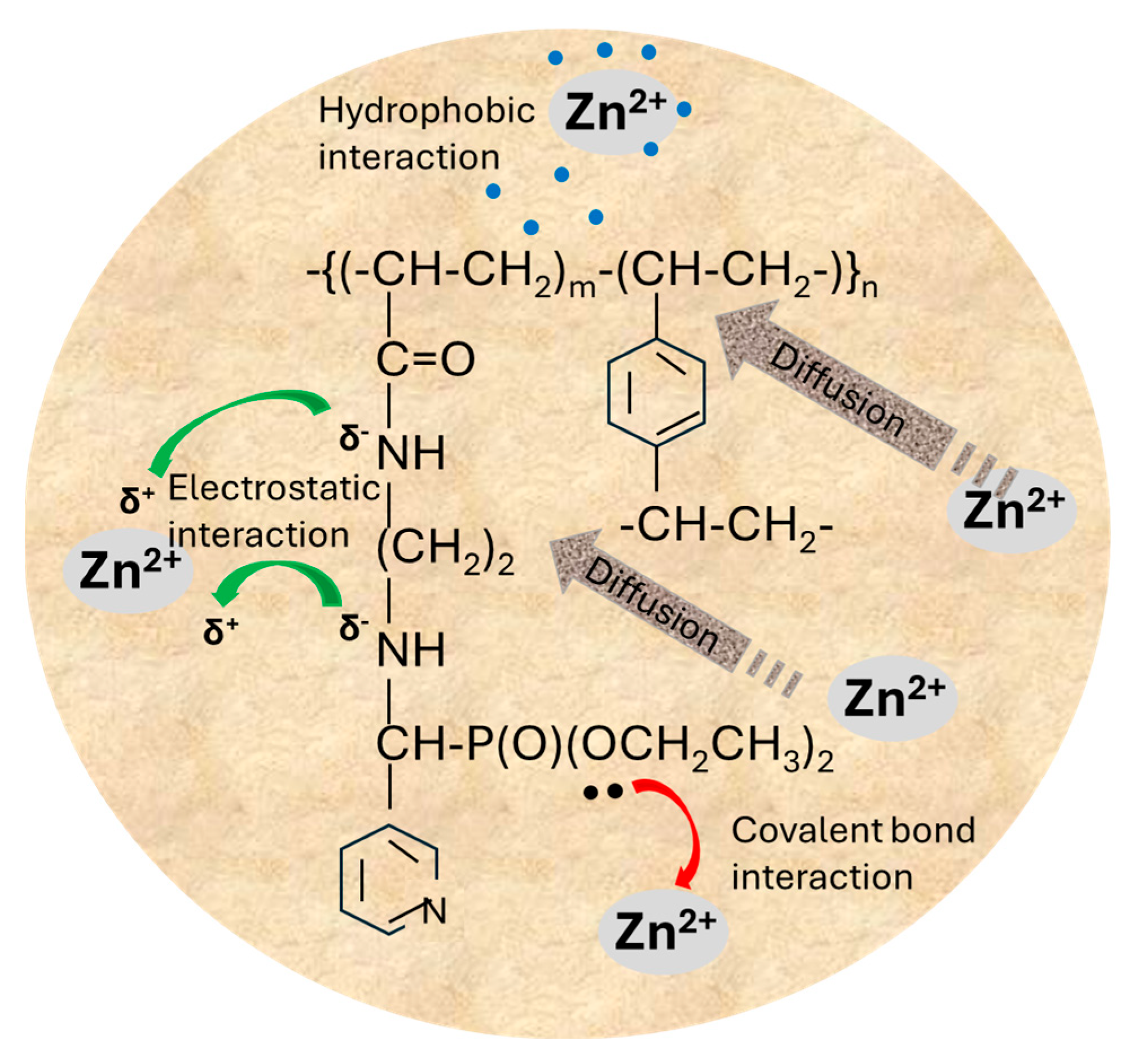
The sorption mechanism of zinc ions onto AN-DVB (10%) polymeric networks functionalized with ethyl phosphonate groups is illustrated in Figure 12. The acrylonitrile-divinylbenzene (AN-DVB) networks functionalized with ethyl phosphonate groups exhibit several potential interactions with zinc ions that facilitate adsorption. Firstly, the ethyl phosphonate groups provide active sites for coordination through the lone pairs on the oxygen atoms, forming coordinate covalent bonds with zinc ions. Additionally, electrostatic interactions occur due to the positively charged zinc ions attracting negatively charged sites within the polymer matrix, enhancing the binding affinity. Hydrophobic interactions may also play a role, as the polymer’s hydrophobic regions can promote the displacement of water molecules surrounding the zinc ions, favoring their attachment to the polymer surface. Furthermore, the diffusion of zinc ions through the polymer network to reach these active sites is influenced by concentration gradients and the physical properties of the polymer. Collectively, these interactions contribute to the effective adsorption of zinc ions onto the functionalized AN-DVB networks.
Utilizing the adsorbent material in multiple cycles of adsorption and desorption is crucial for evaluating its efficiency and sustainability in practical applications. The ability to regenerate the material and maintain its performance over several cycles is indicative of its long-term viability as an effective adsorbent for zinc removal. The adsorbent material, EtSV, was regenerated through treatment with 1 M HNO3, which demonstrated the best performance for desorption of zinc ions. This regenerated material was subsequently utilized in three cycles of adsorption and desorption. The adsorption capacity remained consistent during the first two cycles, indicating effective regeneration and stability of the adsorbent material. However, in the third cycle, a decrease in adsorption capacity of approximately 7% was observed. This reduction may be attributed to potential changes in the surface characteristics of the adsorbent or the cumulative effects of previous adsorption cycles. Overall, these results suggest that while the EtSV material exhibits good reusability, some decline in performance can occur after multiple cycles of use.
The adsorption capacity of the AN-DVB (10%) polymeric networks, functionalized with ethyl phosphonate groups, was evaluated against the maximum adsorption capacity derived from the Langmuir isotherm for other materials discussed in the literature concerning the adsorption of zinc from aqueous solutions. The results are presented in Table 4. It was observed that the studied material exhibited significantly superior adsorption capacity.
This leads to the conclusion that the AN-DVB (10%) polymeric networks functionalized with ethyl phosphonate groups are highly effective for the removal of zinc ions from aqueous solutions. The enhanced adsorption performance can be attributed to the specific interactions between the ethyl phosphonate functional groups and zinc ions, which facilitate a more efficient binding process compared to other materials previously studied. This finding suggests that the functionalization of polymeric networks can be a promising strategy for improving the adsorption characteristics of materials used in environmental remediation applications.

3. Materials and Methods

3.1. Materials

Divinylbenzene (DVB), technical grade—comprising 64% ortho-, meta-, and para-DVB isomers and 36% ethylstyrene as determined by gas chromatography—was purchased from Purolite (Victoria, Romania) and used as received. Benzoyl peroxide (BPO), obtained from Fluka (Buchs, Switzerland), served as the radical polymerization initiator after being recrystallized twice from methanol. Acrylonitrile (AN), acquired from Sigma-Aldrich (Burlington, MA, USA), was distilled at 76–77 °C under atmospheric pressure (101.3 × 10³ Pa). 2-Ethyl-1-hexanol (2-EH) technical grade, was distilled at 183.5 °C and 101.3 × 10³ Pa. 1,2-Diaminoethane (EDA), also from Sigma-Aldrich, was distilled at 118 °C prior to use. Dimethylformamide (DMF, Sigma-Aldrich) was used without further purification. Hydrochloric acid (HCl) and sodium hydroxide (NaOH) were supplied by Chemical Company (Iași, Romania) and used as received. Diphenylphosphite (Aldrich, technical grade ≥ 85%), 3-pyridinecarboxaldehyde (Aldrich, 98%), anhydrous tetrahydrofuran (THF, Sigma-Aldrich, >99.9%), and ethanol p.a. (Chimopar, Bucharest, Romania) were employed as reagents in the synthesis procedures.

3.2. Equipments

Fourier-transform infrared (FTIR) spectroscopy was performed using KBr pellet samples on a JASCO FTIR spectrophotometer (JASCO, Tokyo, Japan) over the range of 4000–400 cm−1. The Ultraviolet-visible (UV-vis) spectra of solid samples (previously ground using a mortar and pestle) were recorded at room temperature using a JASCO V-650 spectrometer (JASCO GmbH, Schwentinental, Germany), equipped with an integrating sphere that allows the collection of diffuse reflectance. Calibration was performed using PTFE (polytetrafluoroethylene), commonly known as Spectralon, a highly reflective, stable white material commonly used as a reference standard in UV-VIS diffuse reflectance measurements. Thermogravimetric analysis (TGA) was conducted on a TGA/SDTA 851-LF1100 instrument (Mettler Toledo, Greifensee, Switzerland) from 25 to 700 °C at a heating rate of 10 °C/min under a nitrogen atmosphere. The elemental composition of the copolymers was determined by energy-dispersive X-ray (EDX) analysis using an Octane Elect Super SDD detector (Ametek, Berwyn, PA, USA) mounted on a Verios G4 UC scanning electron microscope (Thermo Scientific, Brno, Czech Republic).

3.3. Preparation of Pure SV Copolymer with Primary Amine Groups

First, the AN-10%DVB copolymer was synthesized using 2-EH as diluent agent, following a previously established protocol [21]. The synthesis was carried out by suspension polymerization, starting with 2 h at 60 °C, followed by 3 h at 70 °C, and then 5 h at 85 °C. The resulting copolymer beads were washed thoroughly with water. The diluent and PAN homopolymer were removed via extraction first with methanol and then with DMF. Finally, the selected beads (0.3–1.0 mm) were washed with methanol and dried at room temperature for 24 h, and 48 h under vacuum at 50 °C. The anion exchanger containing primary amine groups (code SV) was prepared via the aminolysis–hydrolysis reaction of the nitrile groups with EDA, conducted over 10 h at 118–120 °C, using a molar ratio CN:EDA:H2O of 1:10:2. Finally, the beads were filtered and washed with distilled water up to the neutral pH. The anion exchange capacity was evaluated according to the previously presented protocol and was about 2.93 milliequivalents per gram (meq g−1) [21].

3.4. Functionalization of Amino Groups in AN-DVB Copolymers with Aminophosphonate Groups

In this work, we used a previously described procedure [21] to introduce aminophosphonate groups onto the anion exchanger bearing primary amine groups (SV) derived from the AN-10%DVB copolymer was functionalized by a one-step Kabachnik-Fields reaction using diphenylphosphite and pyridinecarboxaldehyde, obtaining functionalized copolymer with aminodiphenylphosphonate groups (PhSV). The reaction was carried out in tetrahydrofuran at 60 °C, using a 1:1.3:1.3 molar ratio for polymer:aldehyde:phosphite. After 40 h, the reaction mixture was filtered, washed with ethanol and dried at 50 °C for 24 h. The functionalized copolymer with aminodibenzylphosphonate groups (BzSV) and the functionalized copolymer with aminodiethylphosphonate groups (EtSV) were obtained by the previously reported procedure [21].

3.5. Adsorption of Zinc Ions

The research on the adsorption of Zn2+ ions from aqueous solutions on the synthesized materials was carried out in batch mode. A specified amount of adsorbent (0.025 g) was added to 25 mL of the zinc solution, which was contained in 50 mL glass Erlenmeyer flasks. The mixture was then agitated to ensure thorough contact between the adsorbent and the zinc ions, allowing for efficient sorption to occur, at a constant speed of 200 rpm (this speed being maintained in all experiments), using a Julabo SW23 stirring bath (Seelbach, Germany), at 25 °C. The adsorbent properties of the investigated materials were evaluated depending on the initial zinc concentration, the contact time between the adsorbent and the adsorbate, as well as the nature of the adsorbent material. The adsorption capacity of the studied materials was calculated using Equation (5):
q t = C 0 C t V m
where C0 and Ct are the zinc concentrations (mg/L) in the initial solution (t = 0) and after a certain contact time t, V is the volume of the solution (L), and m is the mass of the adsorbent (g). To evaluate the influence of zinc concentration on the adsorptive capacity of the investigated materials, solutions with zinc concentrations varying in the range (10–300 mg/L) were used, keeping constant the other parameters (pH = 6, solid:liquid ratio = 1:1, stirring time of 1 h). The solutions with known concentrations of zinc were prepared from a stock solution of 1 g/L zinc nitrate. This stock solution served as the basis for diluting to the desired concentrations for the adsorption experiments. It was chose to conduct the experiments at a neutral pH (pH = 6) because it is well-established that at acidic pH, competition occurs between Zn2+ ions and H+ ions. This competitive interaction can significantly hinder zinc adsorption. Conversely, at higher alkaline pH levels, zinc ions tend to precipitate, particularly in more concentrated solutions, leading to removal through precipitation rather than adsorption [32,34]. This approach not only optimizes zinc adsorption but also facilitates the potential discharge of treated waters without the need for an additional pH adjustment step prior to discharge. The initial pH of the zinc solutions was adjusted with 0.1 N NaOH or HCl solutions. The pH of the solutions was determined using a Metler Toledo pH meter (Greifensee, Switzerland), ensuring accurate and reliable measurements throughout the experiments. To determine the equilibrium time between the adsorbent and the adsorbate, the studies were carried out at a solid:liquid ratio of 1 g/L, using a zinc solution with a concentration of 50 mg/L. The two phases were left in contact for different time intervals (5–120 min) at 298 K. After the expiration of the time, the suspensions were filtered, and the residual zinc concentration in the solution was measured by atomic absorption spectrometry, using a Varian SpectrAA 280 FS spectrometer (Victoria, Australia). For the calibration a Merk standard solution was used and the specific wavelength used for the detection of Zn(II) by Atomic Absorption Spectroscopy (AAS) is 213.9 nm. This wavelength corresponds to the resonance line of zinc, allowing for accurate measurement of its concentration in various samples.

4. Conclusions

The adsorption of Zn2+ ions onto the functionalized polymeric networks has been thoroughly investigated in this study, highlighting the significant impact of both the nature of the polymeric material and the specific functional groups employed. The results demonstrate that functionalizing an anion exchanger bearing primary amine groups (SV), derived from an AN-10%DVB copolymer, with aminophosphonate groups markedly changed the copolymer morphology from a homogeneous surface to a heterogeneous one, facilitating the access of Zn2+ ions to a higher number of chelating sites, thus increasing their adsorption capacity. Among the various phosphonate groups tested, the ethyl phosphonate group emerged as the most effective due to its compact structure, which allows for closer proximity to the Zn2+ ions and facilitates stronger interactions. The application of the Langmuir and Freundlich isotherm models provided valuable insights into the adsorption behaviour, with the Langmuir model showing a superior fit, indicating a monolayer adsorption on a surface with finite identical sites. The results of the kinetic study indicated that the pseudo-second-order kinetic model best described the adsorption kinetics of zinc ions onto the functionalized networks. This suggests that the rate of adsorption is primarily controlled by chemical interactions rather than mass transfer limitations. The presence of steric hindrance from larger aromatic groups was noted to limit the efficiency of adsorption, underscoring the importance of selecting appropriate functional groups for optimizing adsorption performance. In conclusion, this research underscores the potential of functionalized polymeric networks as effective adsorbents for the removal of Zn2+ ions from aqueous solutions. The findings contribute to the development of advanced materials for environmental remediation, paving the way for future studies aimed at optimizing polymeric supports for various contaminants and further investigating the kinetics of adsorption processes.

Author Contributions

Coordination of the research project, A.P. and E.S.D.; Coordination and carrying out the experimental works, A.P., L.L., M.V.D. and E.S.D.; methodology, A.P., E.S.D. and L.L.; data curation, A.P., E.S.D. and L.L.; Products characterization and analysis, A.P., M.V.D., A.V., L.L. and I.F.; Formal analysis, A.P., L.L. and E.S.D.; Writing—original draft preparation, A.P., E.S.D. and L.L.; writing—review and editing, A.P., M.V.D., L.L., A.V. and E.S.D.; visualization, A.P. and E.S.D.; supervision, E.S.D. All authors have read and agreed to the published version of the manuscript.

Funding

This work was partially supported by Program 2 of Romanian Academy, “Coriolan Dragulescu” Institute of Chemistry. The grant of the Ministry of Research, Innovation and Digitization, CNCS-UEFISCDI, project number PN-IV-P1-PCE-2023-1968, within PNCDI IV is gratefully acknowledged.

Institutional Review Board Statement

Not applicable.

Informed Consent Statement

Not applicable.

Data Availability Statement

Data are contained within the article.

Conflicts of Interest

The authors declare no conflicts of interest.

References

  1. Rashid, R.; Shafiq, I.; Akhter, P.; Iqbal, M.J.; Hussain, M. A state-of-the-art review on wastewater treatment techniques: The effectiveness of adsorption method. Environ. Sci. Pollut. Res. 2021, 28, 9050–9066. [Google Scholar] [CrossRef]
  2. Aziz, K.H.H.; Mustafa, F.S.; Omer, K.M.; Hama, S.; Hamarawf, R.F.; Rahman, K.O. Heavy metal pollution in the aquatic environment: Efficient and low-cost removal approaches to eliminate their toxicity: A review. RSC Adv. 2023, 13, 17595–17610. [Google Scholar] [CrossRef]
  3. Raji, Z.; Karim, A.; Karam, A.; Khalloufi, S. Adsorption of heavy metals: Mechanisms, kinetics, and applications of various adsorbents in wastewater remediation—A review. Waste 2023, 1, 775–805. [Google Scholar] [CrossRef]
  4. Karim, A.; Raji, Z.; Karam, A.; Khalloufi, S. Valorization of fibrous plant-based food waste as biosorbents for remediation of heavy metals from wastewater—A review. Molecules 2023, 28, 4205. [Google Scholar] [CrossRef] [PubMed]
  5. Azimi, A.; Azari, A.; Rezakazemi, M.; Ansarpour, M. Removal of heavy metals from industrial wastewaters: A review. ChemBioEng Rev. 2017, 4, 37–59. [Google Scholar] [CrossRef]
  6. Alengebawy, A.; Abdelkhalek, S.T.; Qureshi, S.R.; Wang, M.-Q. Heavy metals and pesticides toxicity in agricultural soil and plants: Ecological risks and human health implications. Toxics 2021, 9, 42. [Google Scholar] [CrossRef]
  7. Vecino, X.; Reig, M. Wastewater Treatment by Adsorption and/or Ion-Exchange Processes for Resource Recovery. Water 2022, 14, 911. [Google Scholar] [CrossRef]
  8. Jamshaid, A.; Hamid, A.; Muhammad, N.; Naseer, A.; Ghauri, M.; Iqbal, J.; Rafiq, S.; Shah, N.S. Cellulose-based materials for the removal of heavy metals from wastewater—An overview. ChemBioEng Rev. 2017, 4, 240–256. [Google Scholar] [CrossRef]
  9. Duranoğlu, D.; Trochimczuk, A.W.; Beker, Ü. A comparison study of peach stone and acrylonitrile-divinylbenzene copolymer based activated carbons as chromium(VI) sorbents. Chem. Eng. J. 2010, 165, 56–63. [Google Scholar] [CrossRef]
  10. Duranoğlu, D.; Trochimczuk, A.W.; Beker, U. Kinetics and thermodynamics of hexavalent chromium adsorption onto activated carbon derived from acrylonitrile-divinylbenzene copolymer. Chem. Eng. J. 2012, 187, 193–202. [Google Scholar] [CrossRef]
  11. Carolin, C.F.; Kumar, P.S.; Saravanan, A.; Joshiba, G.J.; Naushad, M. Efficient techniques for the removal of toxic heavy metals from aquatic environment: A review. J. Environ. Chem. Eng. 2017, 5, 2782–2799. [Google Scholar] [CrossRef]
  12. Otero, M.; Coimbra, R.N. Polymeric materials for wastewater treatment applications. Polymers 2025, 17, 552. [Google Scholar] [CrossRef]
  13. Alkhaldi, H.; Alharthi, S.; Alharthi, S.; AlGhamdi, H.A.; AlZahrani, Y.M.; Mahmoud, S.A.; Amin, L.G.; Al-Shaalan, N.H.; Boraie, W.E.; Attia, M.S.; et al. Sustainable polymeric adsorbents for adsorption-based water remediation and pathogen deactivation: A review. RSC Adv. 2024, 14, 33143. [Google Scholar] [CrossRef]
  14. Cho, S.; Kim, J.-H.; Yang, K.S.; Chang, M. Facile preparation of amino-functionalized polymeric microcapsules as efficient adsorbent for heavy metal ions removal. Chem. Eng. J. 2021, 425, 130645. [Google Scholar] [CrossRef]
  15. Dragan, E.S.; Avram, E.; Axente, D.; Marcu, C. Ion-exchange resins. III. Functionalization–morphology correlations in the synthesis of some macroporous, strong basic anion exchangers and uranium-sorption properties evaluation. J. Polym. Sci. Part A Polym. Chem. 2004, 42, 2451–2461. [Google Scholar] [CrossRef]
  16. Dragan, E.S.; Humelnicu, D.; Dinu, M.V. Design of porous strong base anion exchangers bearing N,N-dialkyl 2-hydroxyethyl ammonium groups with enhanced retention of Cr(VI) ions from aqueous solution. React. Funct. Polym. 2018, 124, 55–63. [Google Scholar] [CrossRef]
  17. Ma, J.; Nie, Y.; Wang, B. Simulation Study on the Relationship between the Crosslinking Degree and Structure, Hydrophobic Behavior for Poly(styrene-co-divinylbenzene) Copolymer. J. Mol. Struct. 2018, 1173, 120–127. [Google Scholar] [CrossRef]
  18. Nichita, I.; Lupa, L.; Stoia, M.; Dragan, E.S.; Popa, A. Aminophosphonic groups grafted onto the structure of macroporous styrene–divinylbenzene copolymer: Preparation and studies on the antimicrobial effect. Polym. Bull. 2019, 76, 4539–4557. [Google Scholar] [CrossRef]
  19. Alexandratos, S.D.; Zhu, X. ATR-FTIR Spectroscopy as a Probe for Metal Ion Binding onto Immobilized Ligands. Mater. Chem. Phys. 2018, 218, 196–203. [Google Scholar] [CrossRef]
  20. Yuan, R.; He, X.; Zhu, C.; Tao, L. Recent developments in functional polymers via the Kabachnik–Fields reaction: The state of the art. Molecules 2024, 29, 727. [Google Scholar] [CrossRef]
  21. Nichita, I.; Lupa, L.; Visa, A.; Dragan, E.S.; Dinu, M.V.; Popa, A. Chemical modification of acrylonitrile-divinylbenzene polymer supports with aminophosphonate groups and their antibacterial activity testing. Molecules 2024, 29, 6054. [Google Scholar] [CrossRef]
  22. Wei, Y.; Salih, K.A.M.; Hamza, M.F.; Fujita, T.; Rodríguez-Castellón, E.; Guibal, E. Synthesis of a New Phosphonate-Based Sorbent and Characterization of Its Interactions with Lanthanum (III) and Terbium (III). Polymers 2021, 13, 1513. [Google Scholar] [CrossRef]
  23. Popa, A.; Ilia, G.; Iliescu, S.; Plesu, N.; Ene, R.; Parvulescu, V. Styrene-co-divinylbenzene/silica hybrid supports for immobilization of transitional metals and their application in catalysis. Polym. Bull. 2019, 76, 139–152. [Google Scholar] [CrossRef]
  24. Legan, M.; Trochimczuk, A.W. Bis-Imidazolium Type Ion-Exchange Resin with Poly(HIPE) Structure for the Selective Separation of Anions from Aqueous Solutions. Sep. Sci. Technol. 2018, 53, 1163–1177. [Google Scholar] [CrossRef]
  25. Khalifa, R.E.; Omer, A.M.; Tamer, T.M.; Salem, W.M.; Mohy Eldin, M.S. Removal of Methylene Blue Dye from Synthetic Aqueous Solutions Using Novel Phosphonate Cellulose Acetate Membranes: Adsorption Kinetic, Equilibrium, and Thermodynamic Studies. Desalination Water Treat. 2019, 144, 272–285. [Google Scholar] [CrossRef]
  26. Głowińska, A.; Trochimczuk, A.W. Polymer-supported phosphoric, phosphonic and phosphinic acids—From synthesis to properties and applications in separation processes. Molecules 2020, 25, 4236. [Google Scholar] [CrossRef]
  27. Perkins, C.L. Molecular anchors for self-assembled monolayers on ZnO: A direct comparison of the thiol and phosphonic acid moieties. J. Phys. Chem. C 2009, 113, 18276–18286. [Google Scholar] [CrossRef]
  28. Bhattacharya, A.K.; Mandal, S.N.; Das, S.K. Adsorption of Zn(II) from Aqueous Solution by Using Different Adsorbents. Chem. Eng. J. 2006, 123, 43–51. [Google Scholar] [CrossRef]
  29. Mousavi, S.J.; Parvini, M.; Ghorbani, M. Experimental Design Data for the Zinc Ions Adsorption Based on Mesoporous Modified Chitosan Using Central Composite Design Method. Carbohydr. Polym. 2018, 188, 197–212. [Google Scholar] [CrossRef] [PubMed]
  30. Burham, N.; Sayed, M. Adsorption Behavior of Cd2+ and Zn2+ onto Natural Egyptian Bentonitic Clay. Minerals 2016, 6, 129. [Google Scholar] [CrossRef]
  31. Wang, C.; Wang, H.; Cao, Y. Pb(II) Sorption by Biochar Derived from Cinnamomum camphora and Its Improvement with Ultrasound-Assisted Alkali Activation. Colloids Surf. A Physicochem. Eng. Asp. 2018, 556, 177–184. [Google Scholar] [CrossRef]
  32. Dang, J.; Wang, H.; Wang, C. Adsorption of Toxic Zinc by Functionalized Lignocellulose Derived from Waste Biomass: Kinetics, Isotherms and Thermodynamics. Sustainability 2021, 13, 10673. [Google Scholar] [CrossRef]
  33. Wu, W.; Guo, W.; Ji, Z.; Liu, Y.; Hu, X.; Liu, Z. Static and Dynamic Sorption Study of Heavy Metal Ions on Amino-Functionalized SBA-15. J. Dispers. Sci. Technol. 2018, 39, 594–604. [Google Scholar] [CrossRef]
  34. Yu, T.; Qiao, X.; Lu, X.; Fan, X. Selective Adsorption of Zn2+ on Surface Ion-Imprinted Polymer. Desalination Water Treat. 2016, 57, 15455–15466. [Google Scholar] [CrossRef]
Scheme 1. Reaction of the final products, aminodibenzylphosphonate groups (BzSV), aminodiethylphosphonate groups (EtSV) and aminodiphenylphosphonate groups (PhSV).
Molecules 30 04805 sch001
Figure 1. SEM images and EDX spectra of the networks before and after functionalization; mag. 5000×; scaling bare 200 μm.
Molecules 30 04805 g001aMolecules 30 04805 g001b
Figure 2. FTIR spectra of polymer networks before and after functionalization with aminophosphonate groups.
Molecules 30 04805 g002
Figure 3. UV–Vis Spectra of pristine SV and functionalized derivatives (BzSV, EtSV, PhSV).
Molecules 30 04805 g003
Figure 4. TG curves for SV and functionalized networks (EtSV, BzSV and PhSV) recorded in nitrogen atmosphere.
Molecules 30 04805 g004
Figure 5. Variation in adsorption capacity as a function of contact time for polymer networks tested in the removal of zinc ions from aqueous solution. Sorption conditions: T = 25 °C, adsorbent dose 1 g/L; CZn = 50 mg/L, pH = 6.
Molecules 30 04805 g005
Figure 6. PFO kinetic plot for Zn2+ adsorption onto polymer networks.
Molecules 30 04805 g006
Figure 7. PSO kinetic plot for Zn2+ adsorption onto polymer networks.
Molecules 30 04805 g007
Figure 8. Equilibrium isotherms of in the adsorption process of zinc from aqueous solutions onto the studied polymer networks. Sorption conditions: T = 25 °C, adsorbent dose 1 g/L, CZn = 10–300 mg/L, t = 60 min, pH = 6.
Molecules 30 04805 g008
Figure 9. Langmuir isotherm for Zn2+ adsorption onto polymer networks.
Molecules 30 04805 g009
Figure 10. Freundlich isotherm for Zn2+ adsorption onto polymer networks.
Molecules 30 04805 g010
Figure 11. Dependence of the adsorptive properties of the studied polymer networks on their structure.
Molecules 30 04805 g011
Figure 12. Sorption mechanism of zinc ions onto EtSV.
Molecules 30 04805 g012
Table 1. The EDX analysis of the pristine anion exchanger (SV) and of the aminophosphonate functionalized networks.
Element/
Sample
Wt.%
SVPhSVBzSVEtSV
C67.7068.4368.069.0
N21.016.1317.7019.6
O11.3010.7313.010.2
P-4.711.31.2
Table 2. Kinetic parameters for Zn2+ adsorption onto polymer networks.
Adsorbent Materialqe, exp, mg/gPFO Kinetic ModelPSO Kinetic Model
qe, calc, mg/gk1,
min−1
R2qe, Calc, mg/gk2,
min−1 (mg/g)−1
R2
SV28.922.70.02710.933434.50.001360.9931
PhSV31.220.40.02970.884834.90.002110.9907
BzSV36.324.90.03110.963940.20.001950.9905
EtSV42.324.10.03220.909545.90.002220.9933
Table 3. Equilibrium sorption isotherm parameters for Zn2+ adsorption onto polymer networks.
Adsorbent Materialqm, exp
mg/g
Langmuir IsothermFreundlich Isotherm
KL L/mgqm, calc mg/gR2KF mg/g1/nR2
SV66.60.022880.60.99033.320.60530.9169
PhSV72.30.000386.20.99153.980.59130.9170
BzSV79.20.057286.20.99848.360.46650.9427
EtSV96.50.10021010.999513.70.41630.9408
Table 4. Comparison of the maximum adsorption capacity of different adsorbents for removal of zinc ions from aqueous solution.
Adsorbent.qm, mg/gT, Kt, minpHReferences
Fe2O3@SBA-15-CS-AEAPTMS102.6298606[29]
Na-Bentonite9.45299606.5[30]
Spirodela polyrhiza28.53031206[31]
CC46.49303306[32]
SBA-15-NN52.3298405[33]
ion-imprinted polymer21.612002986[34]
EtSV101602986This work
Disclaimer/Publisher’s Note: The statements, opinions and data contained in all publications are solely those of the individual author(s) and contributor(s) and not of MDPI and/or the editor(s). MDPI and/or the editor(s) disclaim responsibility for any injury to people or property resulting from any ideas, methods, instructions or products referred to in the content.