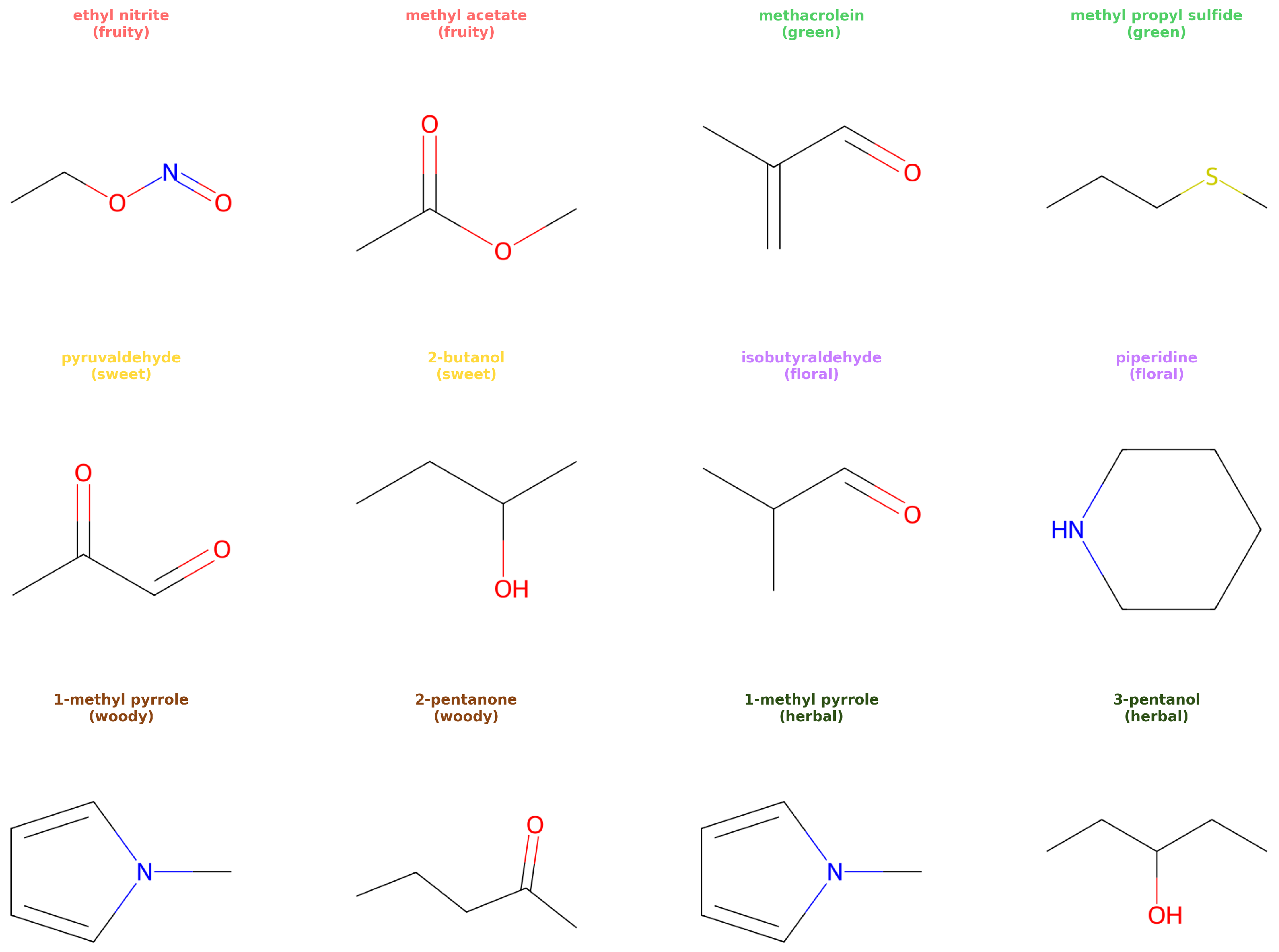
Graph Neural Networks vs. Traditional QSAR: A Comprehensive Comparison for Multi-Label Molecular Odor Prediction


Abstract
1. Introduction
- Systematic evaluation of 23 model configurations across traditional ML and GNN approaches.
- Threshold optimization is a critical technique for multi-label odor type prediction.
- Graph neural networks outperform traditional QSAR methods for multi-label odor type prediction.
2. Results
2.1. Overall Model Performance Comparison
2.2. Per-Label Performance Analysis
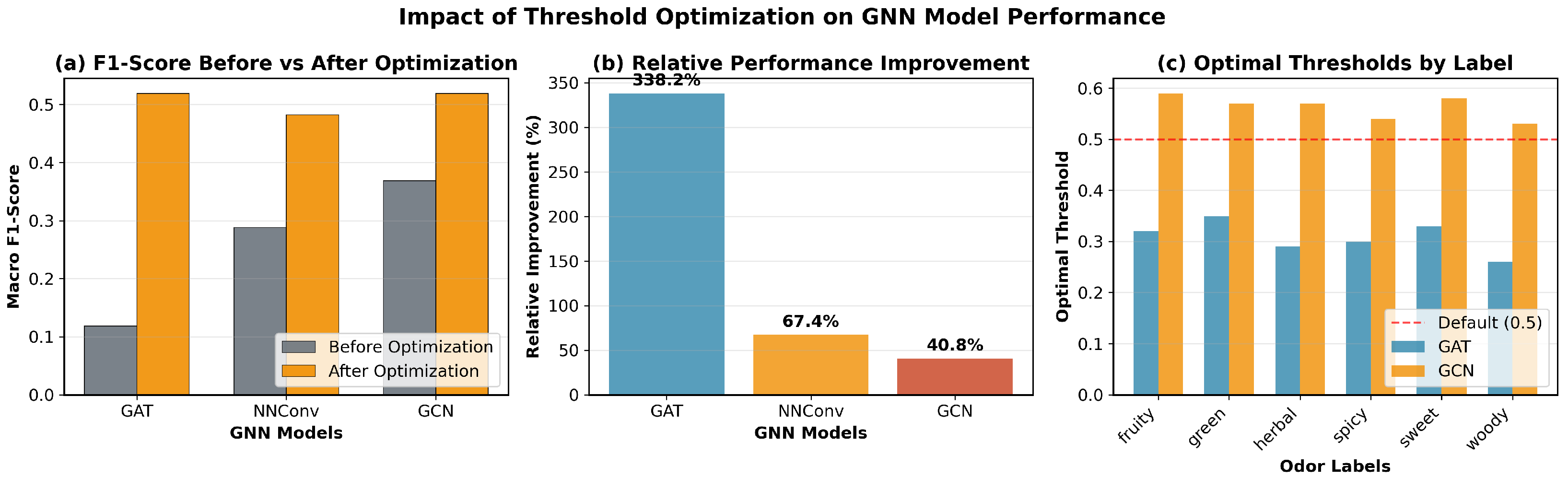
2.3. Impact of Threshold Optimization
2.4. Molecular Fragment Analysis and Interpretability
2.5. Applicability Domain Analysis
2.5.1. Methods
2.5.2. Baseline Model Applicability Domain
2.5.3. GNN Model Applicability Domain
2.5.4. Cross-Model Comparison
3. Discussion
4. Materials and Methods
4.1. Problem Formulation
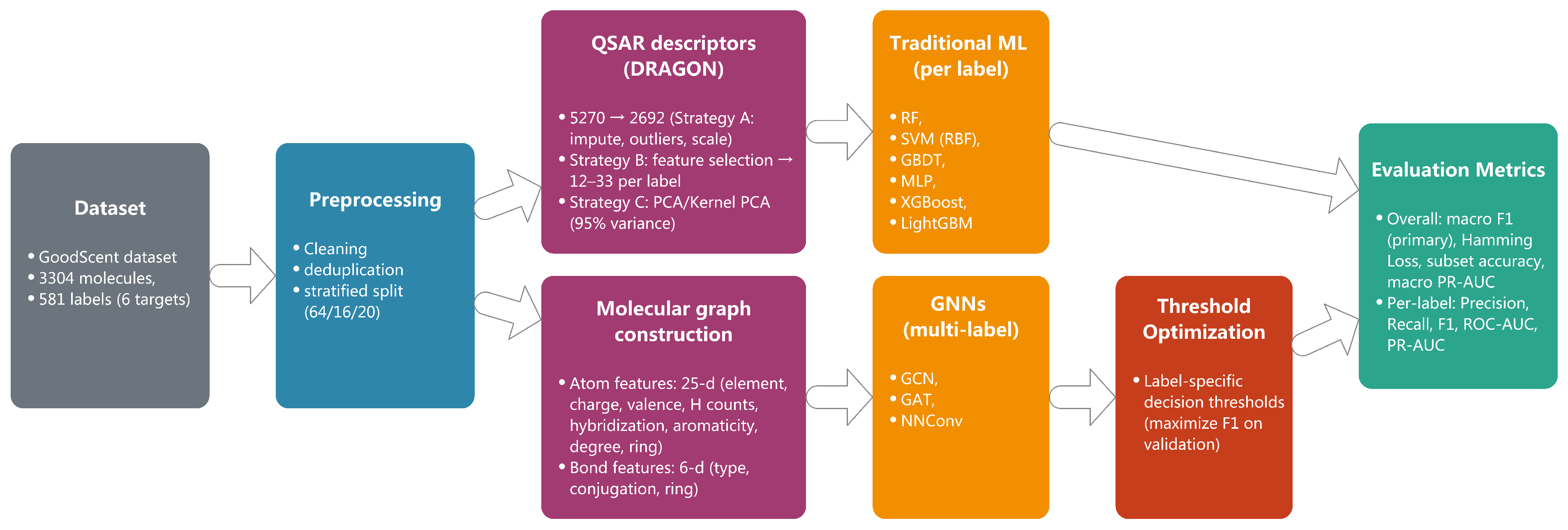
4.2. Traditional QSAR Approach
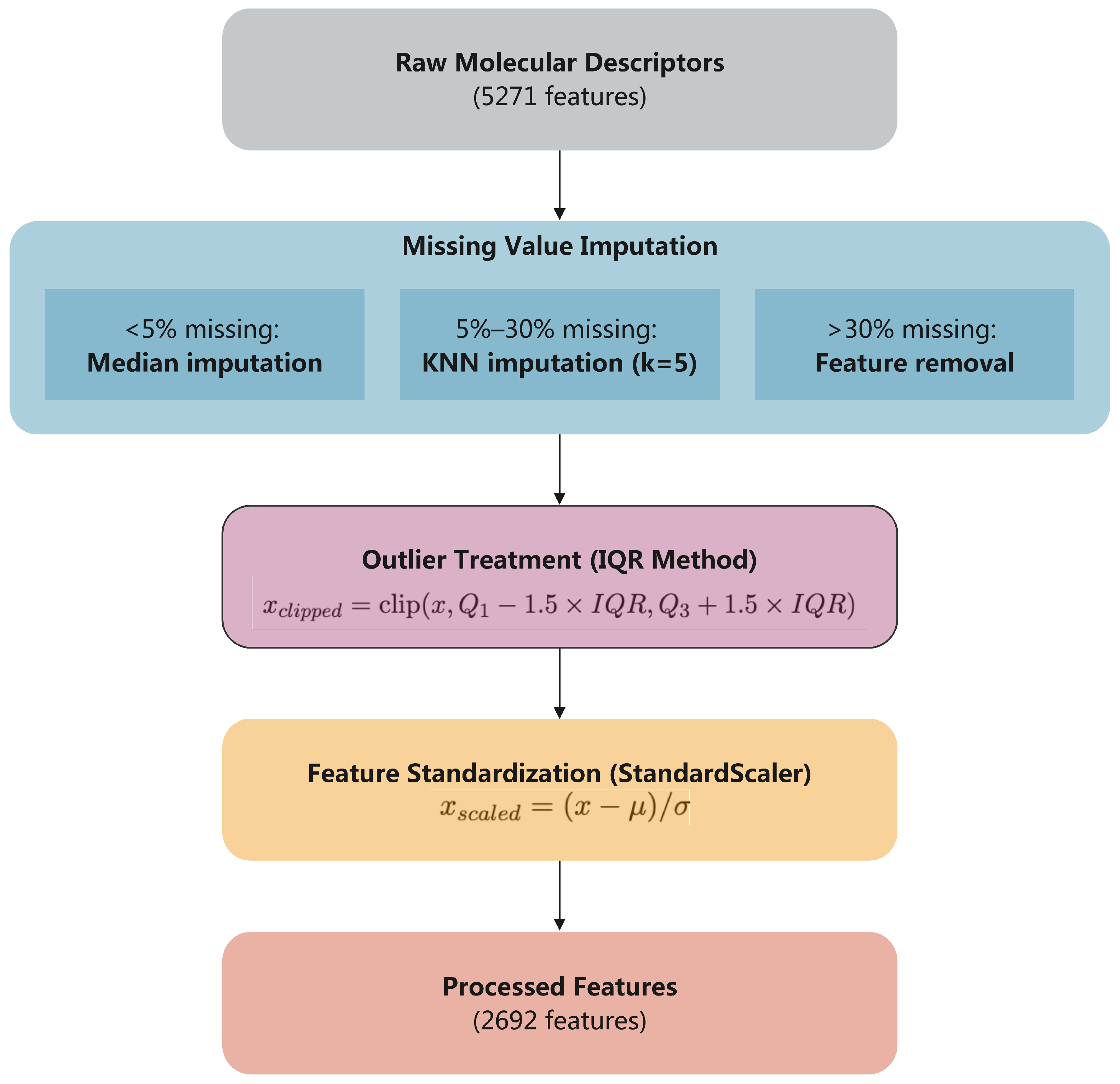
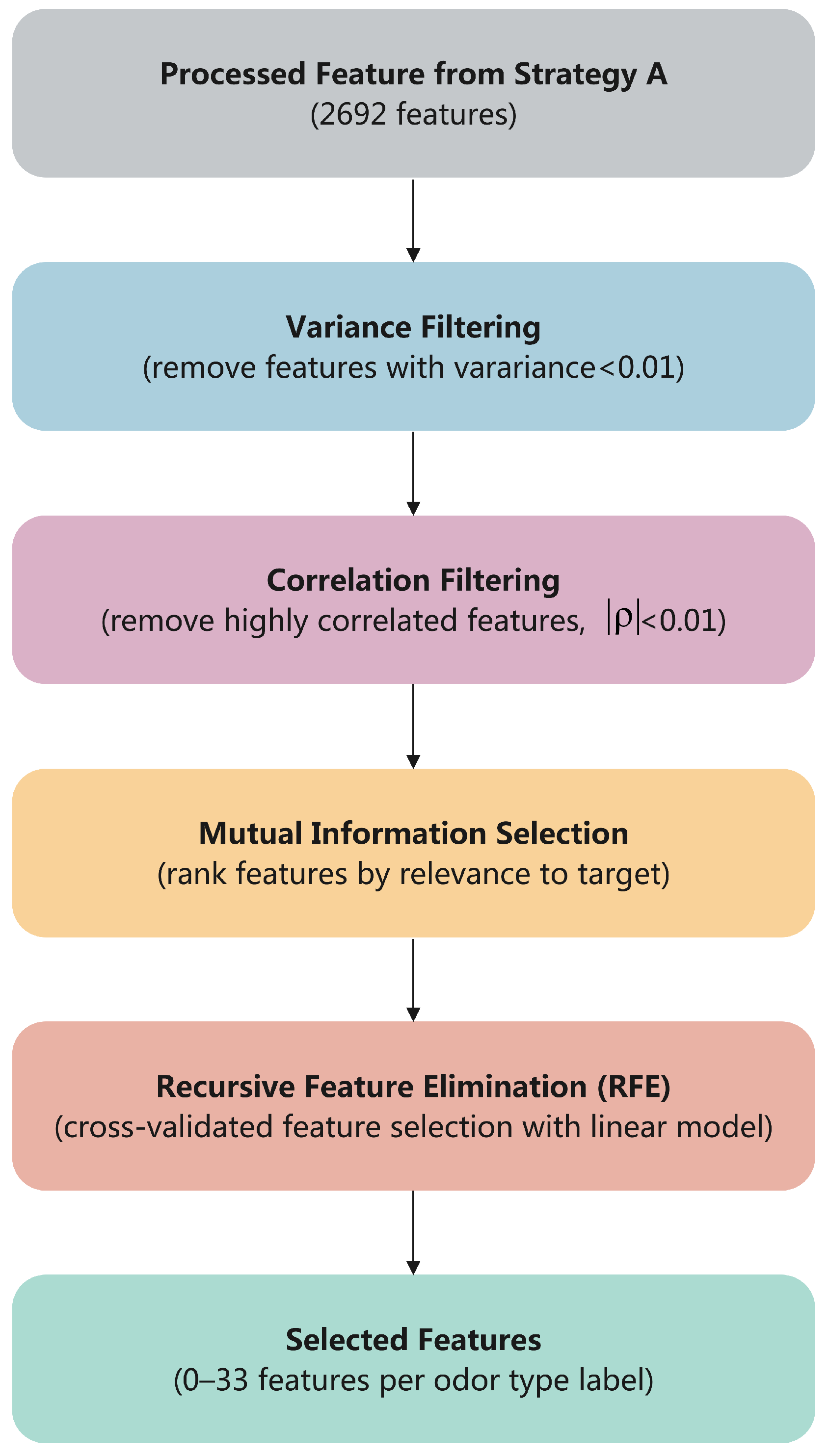
4.2.1. Feature-Processing Strategies
- Low missing rate (<5%): Median imputation provides robust central tendency estimation while minimizing sensitivity to outliers common in molecular descriptor calculations.
- Moderate missing rate (5–30%): K-nearest neighbors imputation (k = 5) exploits structural similarity patterns to estimate missing values based on chemically similar molecules in descriptor space.
- High missing rate (>30%): Feature removal prevents propagation of uncertainty from unreliable imputation in extensively incomplete descriptors.
- Adapts to the diverse statistical distributions across 30 DRAGON descriptor blocks;
- Preserves chemically meaningful extreme values while removing computational artifacts;
- Uses the robust 1.5 × IQR threshold, a well-established standard in exploratory data analysis.
- Variance Filtering: Remove features with variance below threshold ;
- Correlation Filtering: Remove highly correlated features ();
- Univariate Selection: Apply mutual information for relevance ranking;
- Recursive Feature Elimination: Use cross-validated RFE with linear models.
4.2.2. Base Learners
4.3. Graph Neural Network Approach
4.3.1. Molecular Graph Construction
4.3.2. Graph Neural Network Architectures
4.3.3. Model Architecture and Training Configuration
4.3.4. Model Interpretability Analysis
4.3.5. Loss Functions for Class Imbalance
4.4. Threshold Optimization
4.5. Dataset and Data Preprocessing
4.6. Training Strategy
5. Conclusions
Supplementary Materials
Author Contributions
Funding
Institutional Review Board Statement
Informed Consent Statement
Data Availability Statement
Conflicts of Interest
References
- Hao, Z.; Li, H.; Guo, J.; Xu, Y. Advances in Artificial Intelligence for Olfaction and Gustation: A Comprehensive Review. Artif. Intell. Rev. 2025, 58, 306. [Google Scholar] [CrossRef] [Scilit]
- Majid, A.; Burenhult, N. Odors Are Expressible in Language, as Long as You Speak the Right Language. Cognition 2014, 130, 266–270. [Google Scholar] [CrossRef] [Scilit] [PubMed]
- Li, X.; Li, M.; Mei, Q.; Niu, S.; Wang, X.; Xu, H.; Dong, B.; Dai, X.; Zhou, J.L. Aging Microplastics in Wastewater Pipeline Networks and Treatment Processes: Physicochemical Characteristics and Cd Adsorption. Sci. Total Environ. 2021, 797, 148940. [Google Scholar] [CrossRef] [Scilit]
- Keller, A.; Zhuang, H.; Chi, Q.; Vosshall, L.B.; Matsunami, H. Genetic Variation in a Human Odorant Receptor Alters Odour Perception. Nature 2007, 449, 468–472. [Google Scholar] [CrossRef] [Scilit]
- Croy, I.; Nordin, S.; Hummel, T. Olfactory Disorders and Quality of Life—An Updated Review. Chem. Senses 2014, 39, 185–194. [Google Scholar] [CrossRef] [Scilit]
- Sharma, A.; Saha, B.K.; Kumar, R.; Varadwaj, P.K. OlfactionBase: A Repository to Explore Odors, Odorants, Olfactory Receptors and Odorant–Receptor Interactions. Nucleic Acids Res. 2022, 50, D678–D686. [Google Scholar] [CrossRef] [Scilit]
- Hamel, E.A.; Castro, J.B.; Gould, T.J.; Pellegrino, R.; Liang, Z.; Coleman, L.A.; Patel, F.; Wallace, D.S.; Bhatnagar, T.; Mainland, J.D.; et al. Pyrfume: A Window to the World’s Olfactory Data. Sci. Data 2024, 11, 1220. [Google Scholar] [CrossRef] [Scilit]
- Bierling, A.L.; Croy, A.; Jesgarzewsky, T.; Rommel, M.; Cuniberti, G.; Hummel, T.; Croy, I. A Dataset of Laymen Olfactory Perception for 74 Mono-Molecular Odors. Sci. Data 2025, 12, 347. [Google Scholar] [CrossRef] [Scilit]
- Toropov, A.A.; Toropova, A.P. QSPR/QSAR: State-of-Art, Weirdness, the Future. Molecules 2020, 25, 1292. [Google Scholar] [CrossRef] [Scilit]
- Tyagi, P.; Sharma, A.; Semwal, R.; Tiwary, U.S.; Varadwaj, P.K. XGBoost Odor Prediction Model: Finding the Structure-Odor Relationship of Odorant Molecules Using the Extreme Gradient Boosting Algorithm. J. Biomol. Struct. Dyn. 2024, 42, 10727–10738. [Google Scholar] [CrossRef] [Scilit] [PubMed]
- Li, J.; Luo, D.; Wen, T.; Liu, Q.; Mo, Z. Representative Feature Selection of Molecular Descriptors in QSAR Modeling. J. Mol. Struct. 2021, 1244, 131249. [Google Scholar] [CrossRef] [Scilit]
- Kearnes, S.; McCloskey, K.; Berndl, M.; Pande, V.; Riley, P. Molecular Graph Convolutions: Moving Beyond Fingerprints. J. Comput. Aided Mol. Des. 2016, 30, 595–608. [Google Scholar] [CrossRef] [Scilit]
- Sharma, A.; Kumar, R.; Ranjta, S.; Varadwaj, P.K. SMILES to Smell: Decoding the Structure-Odor Relationship of Chemical Compounds Using the Deep Neural Network Approach. J. Chem. Inf. Model. 2021, 61, 676–688. [Google Scholar] [CrossRef] [Scilit]
- Jiang, Y.; Xie, X.; Yang, Y.; Liu, Y.; Gong, K.; Li, T. DualBranch Graph Neural Network for Predicting Molecular Odors and Discovering the Relationship Between Functional Groups and Odors. J. Comput. Chem. 2025, 46, e70069. [Google Scholar] [CrossRef] [Scilit]
- Ranjan, S.; Kumar, N.; Singh, S.K. Deciphering Smells from SMILES Notation of the Chemical Compounds: A Deep Learning Approach. In Proceedings of the 2024 14th International Conference on Cloud Computing, Data Science & Engineering (Confluence), Noida, India, 18–19 January 2024; pp. 538–543. [Google Scholar] [CrossRef] [Scilit]
- Schütt, K.T.; Sauceda, H.E.; Kindermans, P.J.; Tkatchenko, A.; Müller, K.R. SchNet—A Deep Learning Architecture for Molecules and Materials. J. Chem. Phys. 2018, 148, 241722. [Google Scholar] [CrossRef] [Scilit]
- Liu, Q.; Luo, D.; Wen, T.; GholamHosseini, H.; Li, J. In Silico Prediction of Fragrance Retention Grades for Monomer Flavors Using QSPR Models. Chemom. Intell. Lab. Syst. 2021, 218, 104424. [Google Scholar] [CrossRef] [Scilit]
- Gasteiger, J.; Groß, J.; Günnemann, S. Directional Message Passing for Molecular Graphs. arXiv 2022, arXiv:2003.03123. [Google Scholar] [CrossRef] [Scilit]
- Cremer, J.; Medrano Sandonas, L.; Tkatchenko, A.; Clevert, D.A.; De Fabritiis, G. Equivariant Graph Neural Networks for Toxicity Prediction. Chem. Res. Toxicol. 2023, 36, 1561–1573. [Google Scholar] [CrossRef] [Scilit] [PubMed]
- Xie, H.X.; De Sun, J.; Xue, F.F.; Han, Z.F.; Feng, S.S.; Chen, Q. Multi-Hierarchical Fine-Grained Feature Mapping Driven by Feature Contribution for Molecular Odor Prediction. arXiv 2025, arXiv:2505.00290. [Google Scholar] [CrossRef] [Scilit]
- Reiser, P.; Neubert, M.; Eberhard, A.; Torresi, L.; Zhou, C.; Shao, C.; Metni, H.; van Hoesel, C.; Schopmans, H.; Sommer, T.; et al. Graph Neural Networks for Materials Science and Chemistry. Commun. Mater. 2022, 3, 93. [Google Scholar] [CrossRef] [Scilit] [PubMed]
- Kotobi, A.; Singh, K.; Höche, D.; Bari, S.; Meißner, R.H.; Bande, A. Integrating Explainability into Graph Neural Network Models for the Prediction of X-ray Absorption Spectra. J. Am. Chem. Soc. 2023, 145, 22584–22598. [Google Scholar] [CrossRef] [Scilit] [PubMed]
- Shamatrin, D. Adaptive Thresholding for Multi-Label Classification via Global-Local Signal Fusion. arXiv 2025, arXiv:2505.03118. [Google Scholar] [CrossRef] [Scilit]
- Agarwal, C.; Queen, O.; Lakkaraju, H.; Zitnik, M. Evaluating Explainability for Graph Neural Networks. Sci. Data 2023, 10, 144. [Google Scholar] [CrossRef] [Scilit] [PubMed]
- Dikeçligil, G.N.; Gottfried, J.A. What Does the Human Olfactory System Do, and How Does It Do It? Annu. Rev. Psychol. 2024, 75, 155–181. [Google Scholar] [CrossRef] [Scilit] [PubMed]
- Molecular Descriptors Calculation—Dragon—Talete Srl. 2016. Available online: https://www.talete.mi.it/products/dragon_description.htm (accessed on 1 October 2025).

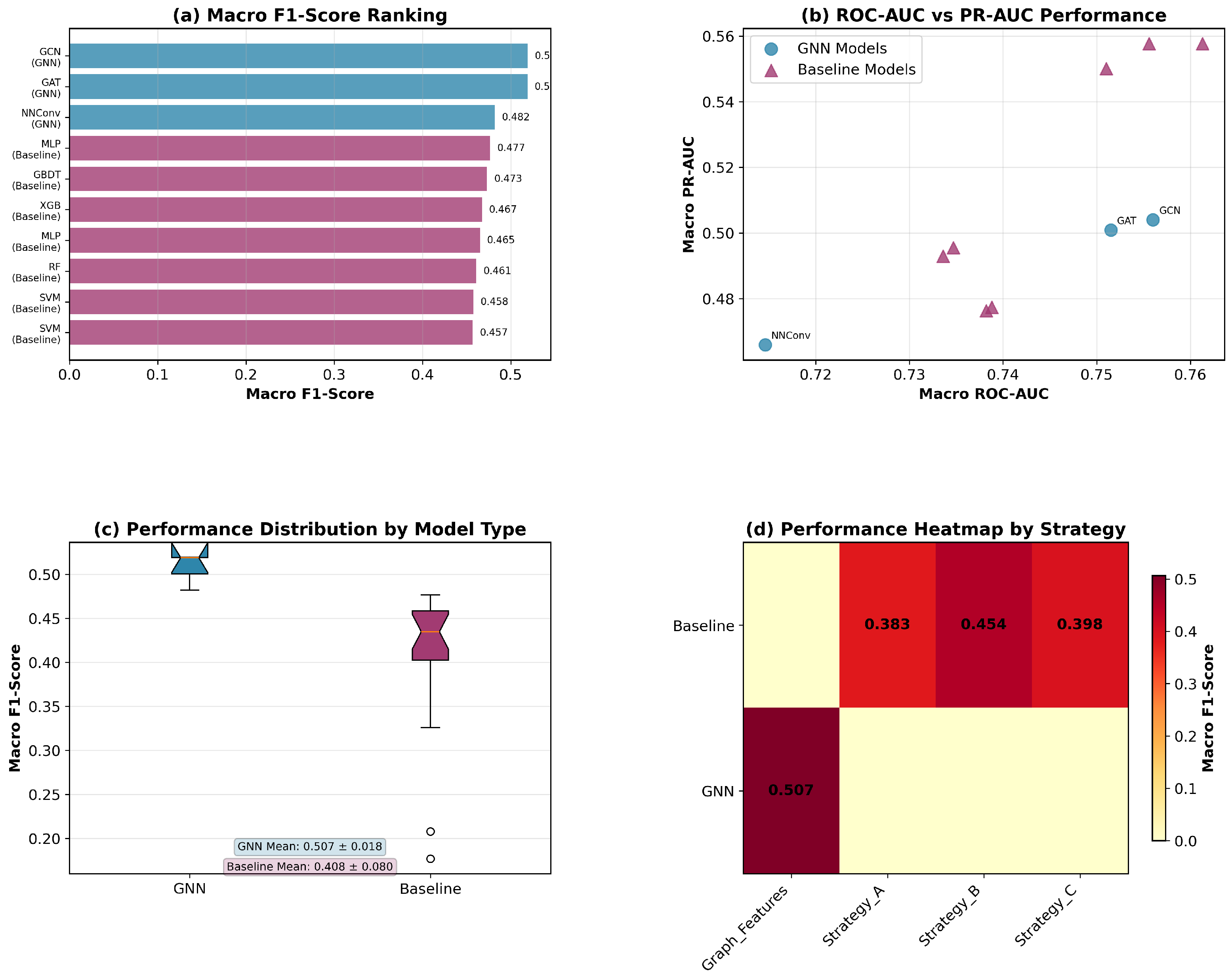

| Rank | Model | Type | Macro F1 | Macro ROC-AUC |
|---|---|---|---|---|
| 1 | GCN | GNN | 0.5193 | 0.7560 |
| 2 | GAT | GNN | 0.5189 | 0.7515 |
| 3 | NNConv | GNN | 0.4819 | 0.7146 |
| 4 | MLP | Baseline | 0.4766 | 0.7382 |
| 5 | GBDT | Baseline | 0.4732 | 0.7510 |
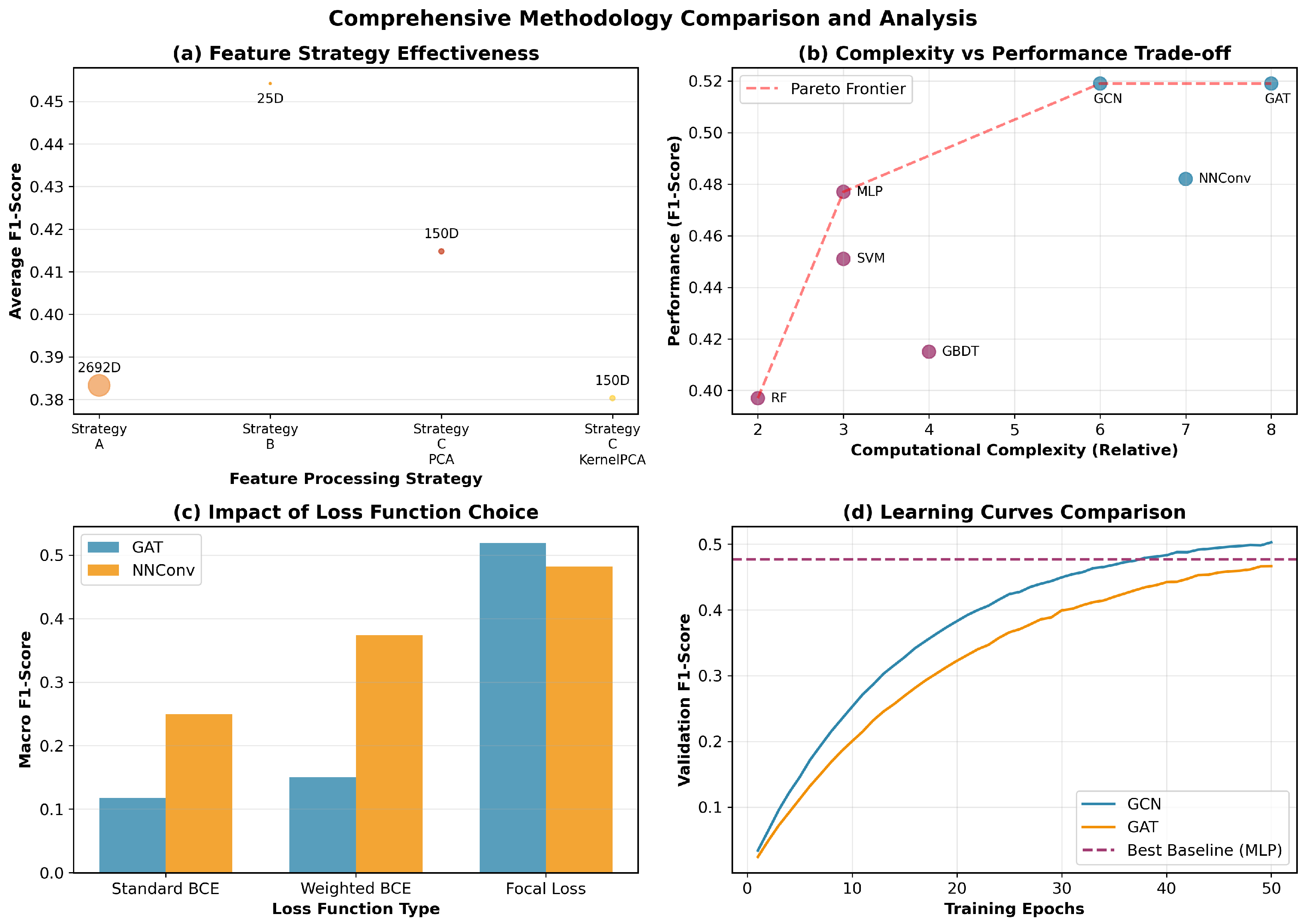
| Strategy | Description | Best Model | Avg F1 | Feature Dim |
|---|---|---|---|---|
| Strategy B | Feature Selection | GBDT | 0.4542 | 12–33 |
| Strategy C | PCA Reduction | MLP | 0.4148 | 100–200 |
| Strategy A | No Selection | MLP | 0.3833 | 2692 |
| Strategy C | Kernel PCA | SVM | 0.3803 | 100–200 |
| Model | Macro F1 | Macro ROC-AUC | Macro PR-AUC | Feature Dim |
|---|---|---|---|---|
| GBDT | 0.4732 | 0.7510 | 0.5501 | 12–33 |
| XGBoost | 0.4674 | 0.7613 | 0.5577 | 12–33 |
| RF | 0.4609 | 0.7556 | 0.5577 | 12–33 |
| MLP | 0.4410 | 0.7215 | 0.4708 | 12–33 |
| SVM | 0.4286 | 0.7263 | 0.5159 | 12–33 |
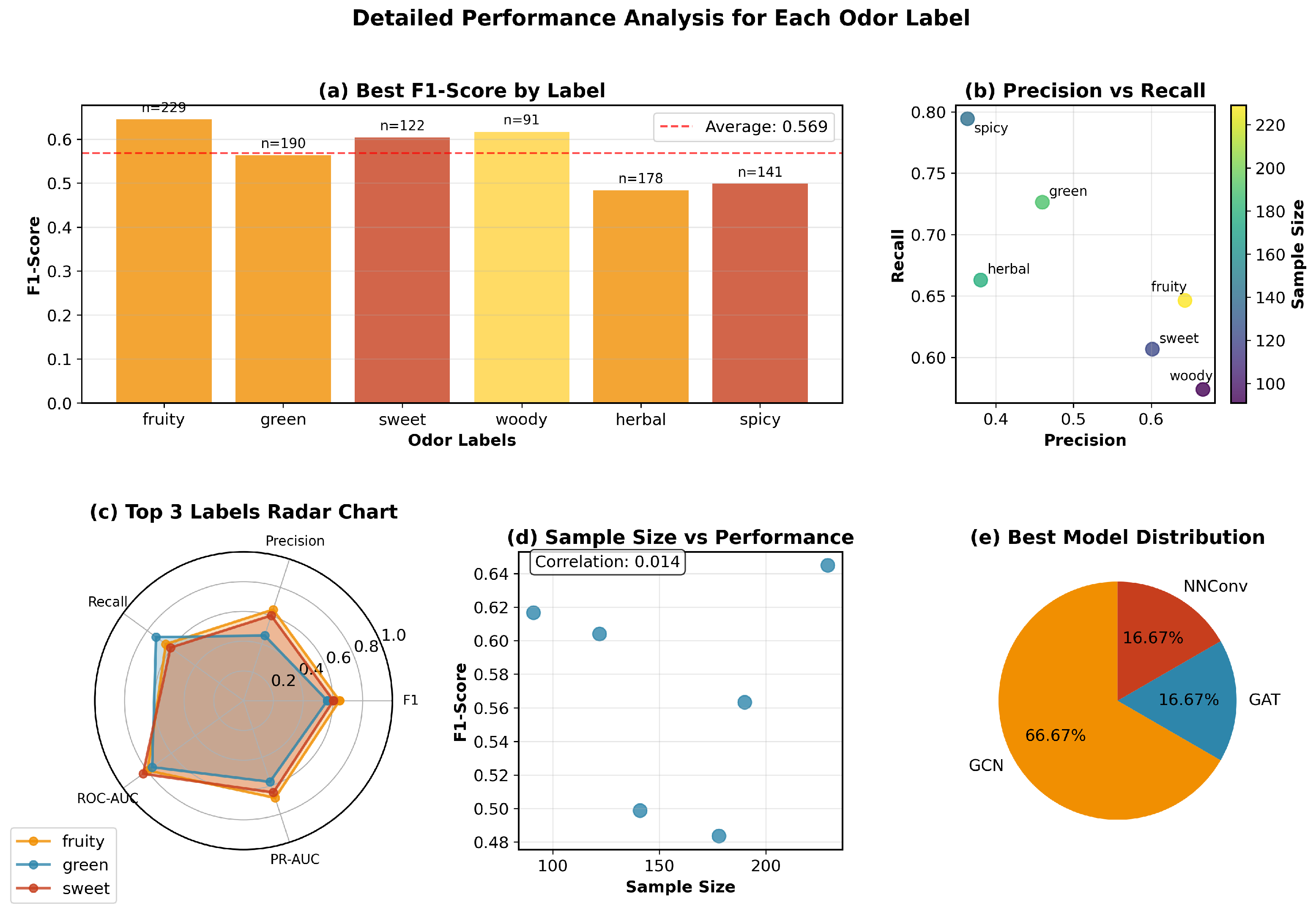
| Label | Best Model | F1-Score | Precision | Recall | Positive Rate (%) | Sample Size |
|---|---|---|---|---|---|---|
| fruity | GCN | 0.6449 | 0.6435 | 0.6463 | 34.6 | 229 |
| sweet | GAT | 0.6041 | 0.6016 | 0.6066 | 18.5 | 122 |
| woody | NNConv | 0.6167 | 0.6667 | 0.5738 | 13.8 | 91 |
| green | GCN | 0.5633 | 0.4600 | 0.7263 | 28.7 | 190 |
| spicy | GCN | 0.4989 | 0.3636 | 0.7943 | 21.3 | 141 |
| herbal | GCN | 0.4836 | 0.3806 | 0.6629 | 26.9 | 178 |
| Model | Before Optimization | After Optimization | Absolute Gain | Relative Gain |
|---|---|---|---|---|
| GAT | 0.1184 | 0.5189 | +0.4005 | +338.2% |
| NNConv | 0.2879 | 0.4819 | +0.1940 | +67.4% |
| GCN | 0.3689 | 0.5193 | +0.1504 | +40.8% |
| Label | Positive Rate (Test %) | Before F1 | After F1 | Absolute Gain | Relative Gain |
|---|---|---|---|---|---|
| fruity | 34.6% | 0.498 | 0.645 | +0.147 | +29.5% |
| green | 28.7% | 0.432 | 0.563 | +0.131 | +30.3% |
| herbal | 26.9% | 0.410 | 0.484 | +0.074 | +18.0% |
| spicy | 21.3% | 0.339 | 0.499 | +0.160 | +47.2% |
| sweet | 18.5% | 0.300 | 0.584 | +0.284 | +94.4% |
| woody | 13.8% | 0.233 | 0.341 | +0.108 | +46.5% |
| Odor Type | Fragment | Chemical Relevance |
|---|---|---|
| fruity | Methyl group (-CH3) | Terminal methyl groups in ester side chains, characteristic of fruity esters like ethyl acetate |
| Aldehyde (-CHO) | Terminal aldehyde groups in fruity aldehydes (e.g., hexanal and nonanal) | |
| Ketone (C=O) | Carbonyl groups in fruity ketones and lactones | |
| green | Methylene group (-CH2-) | Alkyl chain segments in green aldehydes and alcohols |
| Aldehyde (-CHO) | Terminal aldehyde groups, hallmark of green odor compounds (e.g., hexanal and octanal) | |
| Methyl group (-CH3) | Terminal methyl groups in green volatile compounds | |
| sweet | Methylene group (-CH2-) | Sugar-like alkyl chains in sweet compounds |
| Methyl group (-CH3) | Terminal groups in sweet esters and aldehydes | |
| Small fragment | Compact functional groups in sweet-smelling molecules | |
| floral | Ketone (C=O) | Carbonyl groups in floral ketones and ionones |
| Small fragment | Compact aromatic and cyclic structures typical of floral compounds | |
| woody | Methyl group (-CH3) | Terminal methyl groups in terpenoid structures |
| Thiol (-SH) | Sulfur-containing groups in woody–smoky compounds | |
| Aldehyde (-CHO) | Aldehyde groups in woody aldehydes | |
| herbal | Methyl group (-CH3) | Methyl groups in complex aromatic systems and terpenoids |
| Strategy | Method | In-Domain (%) | Out-of-Domain (%) | Key Metric |
|---|---|---|---|---|
| Strategy A | Tanimoto | 81.92 | 18.08 | Mean similarity: 0.6984 |
| Distance-based | 94.59 | 5.41 | Mean distance: 8.31 | |
| Combined | 77.59 | 22.41 | Agreement: 78.67% | |
| Strategy B | Tanimoto | 81.92 | 18.08 | Mean similarity: 0.6984 |
| Distance-based | 94.28–95.67 | 4.33–5.72 | Mean distance: 0.69–1.63 | |
| Combined | 77.74–78.98 | 21.02–22.26 | Agreement: 79.13–80.37% | |
| Strategy C | Tanimoto | 81.92 | 18.08 | Mean similarity: 0.6984 |
| Distance-based | 93.97–94.59 | 5.41–6.03 | Mean distance: 3.26–17.54 | |
| Combined | 77.13–78.05 | 21.95–22.87 | Agreement: 78.36–79.60% |
| Model | Dataset | Method | In-Domain (%) | Key Metric |
|---|---|---|---|---|
| GCN | GoodScent | Tanimoto | 79.86 | Mean similarity: 0.6897 |
| Distance-based | 95.07 | Mean distance: 0.25; Threshold: 0.64 | ||
| Combined | 77.97 | Agreement: 81.01% | ||
| GCN | Leffingwell | Tanimoto | 78.87 | Mean similarity: 0.6608 |
| Distance-based | 95.32 | Mean distance: 0.31; Threshold: 0.67 | ||
| Combined | 76.88 | Agreement: 79.57% | ||
| GAT | GoodScent | Tanimoto | 79.86 | Mean similarity: 0.6897 |
| Distance-based | 94.78 | Mean distance: 1.50; Threshold: 3.75 | ||
| Combined | 77.83 | Agreement: 81.01% | ||
| GAT | Leffingwell | Tanimoto | 78.87 | Mean similarity: 0.6608 |
| Distance-based | 95.74 | Mean distance: 1.55; Threshold: 3.26 | ||
| Combined | 77.30 | Agreement: 80.00% | ||
| NNConv | GoodScent | Tanimoto | 79.86 | Mean similarity: 0.6897 |
| Distance-based | 95.80 | Mean distance: 0.21; Threshold: 0.49 | ||
| Combined | 77.68 | Agreement: 79.71% | ||
| NNConv | Leffingwell | Tanimoto | 78.87 | Mean similarity: 0.6608 |
| Distance-based | 95.60 | Mean distance: 0.26; Threshold: 0.61 | ||
| Combined | 77.02 | Agreement: 79.57% |
| Feature Category | Feature Description | Dims |
|---|---|---|
| Atomic Identity | One-hot encoding: C, N, O, S, F, Cl, Br, P, Na | 9 |
| Electronic Properties | Atomic number (Z) | 1 |
| Formal charge (q) | 1 | |
| Explicit valence | 1 | |
| Radical electron count | 1 | |
| Hydrogen Environment | Explicit hydrogen count | 1 |
| Implicit hydrogen count | 1 | |
| Hybridization | One-hot encoding: sp, sp2, sp3 | 3 |
| Aromaticity | Binary indicator | 1 |
| Connectivity | Total degree | 1 |
| Ring Membership | General ring membership | 1 |
| 3-membered ring | 1 | |
| 4-membered ring | 1 | |
| 5-membered ring | 1 | |
| 6-membered ring | 1 | |
| Total | 25 |
| Label | Frequency | Percentage | Chemical Relevance |
|---|---|---|---|
| fruity | 1022 | 30.93% | Ester-related compounds |
| green | 926 | 28.03% | Aldehyde and alcohol patterns |
| sweet | 859 | 26.00% | Sugar-like molecular structures |
| floral | 654 | 19.79% | Aromatic and terpene compounds |
| woody | 521 | 15.77% | Phenolic and terpenoid structures |
| herbal | 426 | 12.89% | Complex aromatic systems |
Disclaimer/Publisher’s Note: The statements, opinions and data contained in all publications are solely those of the individual author(s) and contributor(s) and not of MDPI and/or the editor(s). MDPI and/or the editor(s) disclaim responsibility for any injury to people or property resulting from any ideas, methods, instructions or products referred to in the content. |
© 2025 by the authors. Licensee MDPI, Basel, Switzerland. This article is an open access article distributed under the terms and conditions of the Creative Commons Attribution (CC BY) license (https://creativecommons.org/licenses/by/4.0/).
Share and Cite
Wen, T.; Cai, X.; Li, J. Graph Neural Networks vs. Traditional QSAR: A Comprehensive Comparison for Multi-Label Molecular Odor Prediction. Molecules 2025, 30, 4605. https://doi.org/10.3390/molecules30234605
Wen T, Cai X, Li J. Graph Neural Networks vs. Traditional QSAR: A Comprehensive Comparison for Multi-Label Molecular Odor Prediction. Molecules. 2025; 30(23):4605. https://doi.org/10.3390/molecules30234605
Chicago/Turabian StyleWen, Tengteng, Xianfa Cai, and Jincheng Li. 2025. "Graph Neural Networks vs. Traditional QSAR: A Comprehensive Comparison for Multi-Label Molecular Odor Prediction" Molecules 30, no. 23: 4605. https://doi.org/10.3390/molecules30234605
APA StyleWen, T., Cai, X., & Li, J. (2025). Graph Neural Networks vs. Traditional QSAR: A Comprehensive Comparison for Multi-Label Molecular Odor Prediction. Molecules, 30(23), 4605. https://doi.org/10.3390/molecules30234605