
Article

Diffusiophoresis of a Conducting Liquid Metal Droplet (LMD) in a Cylindrical Pore

Department of Chemical Engineering, National Taiwan University, Taipei 10617, Taiwan
*
Author to whom correspondence should be addressed.
Molecules 2025, 30(16), 3372; https://doi.org/10.3390/molecules30163372

Submission received: 7 July 2025 / Revised: 4 August 2025 / Accepted: 6 August 2025 / Published: 13 August 2025

Abstract

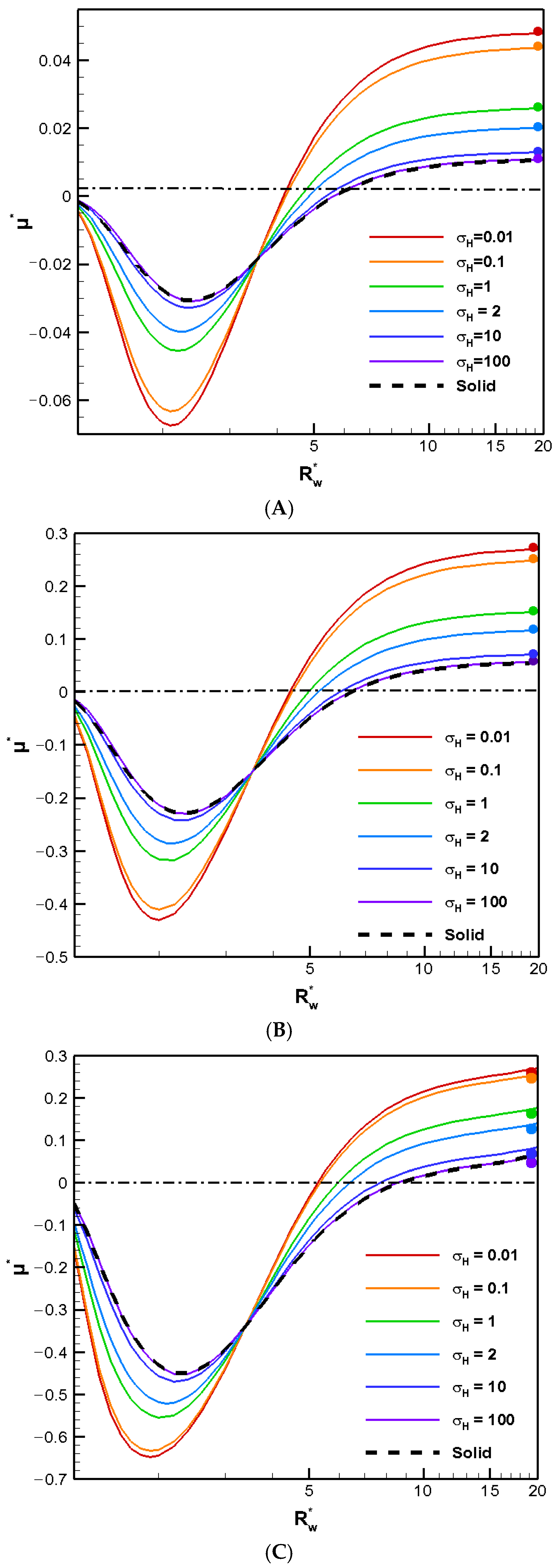
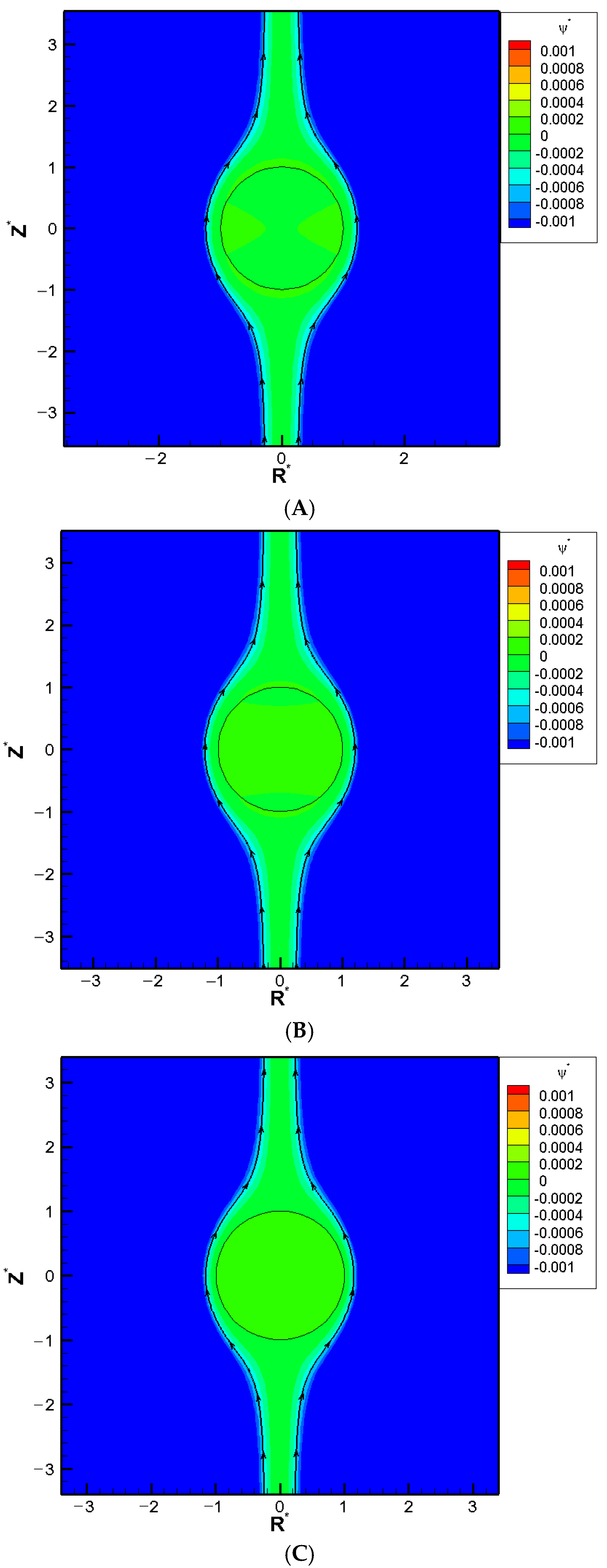
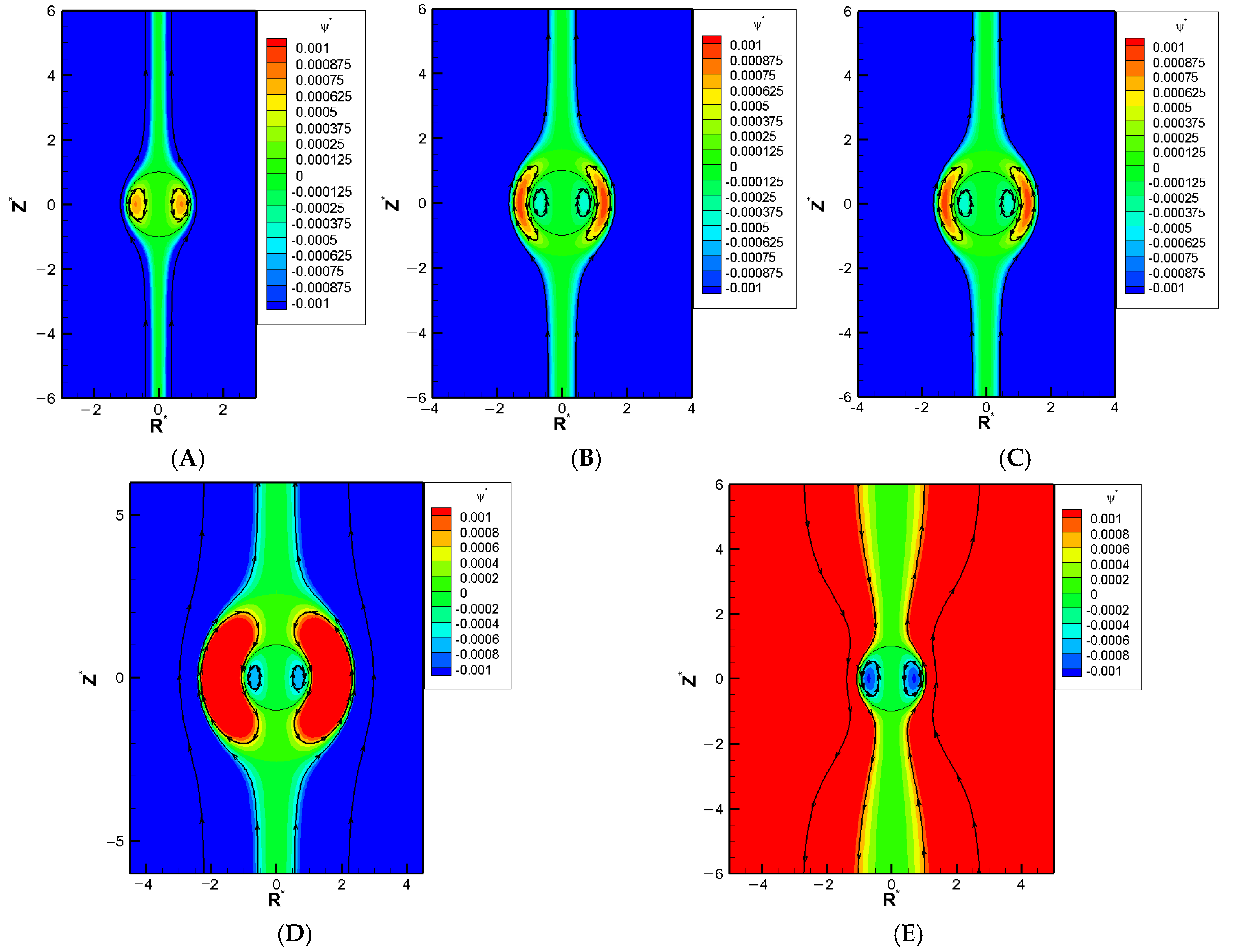
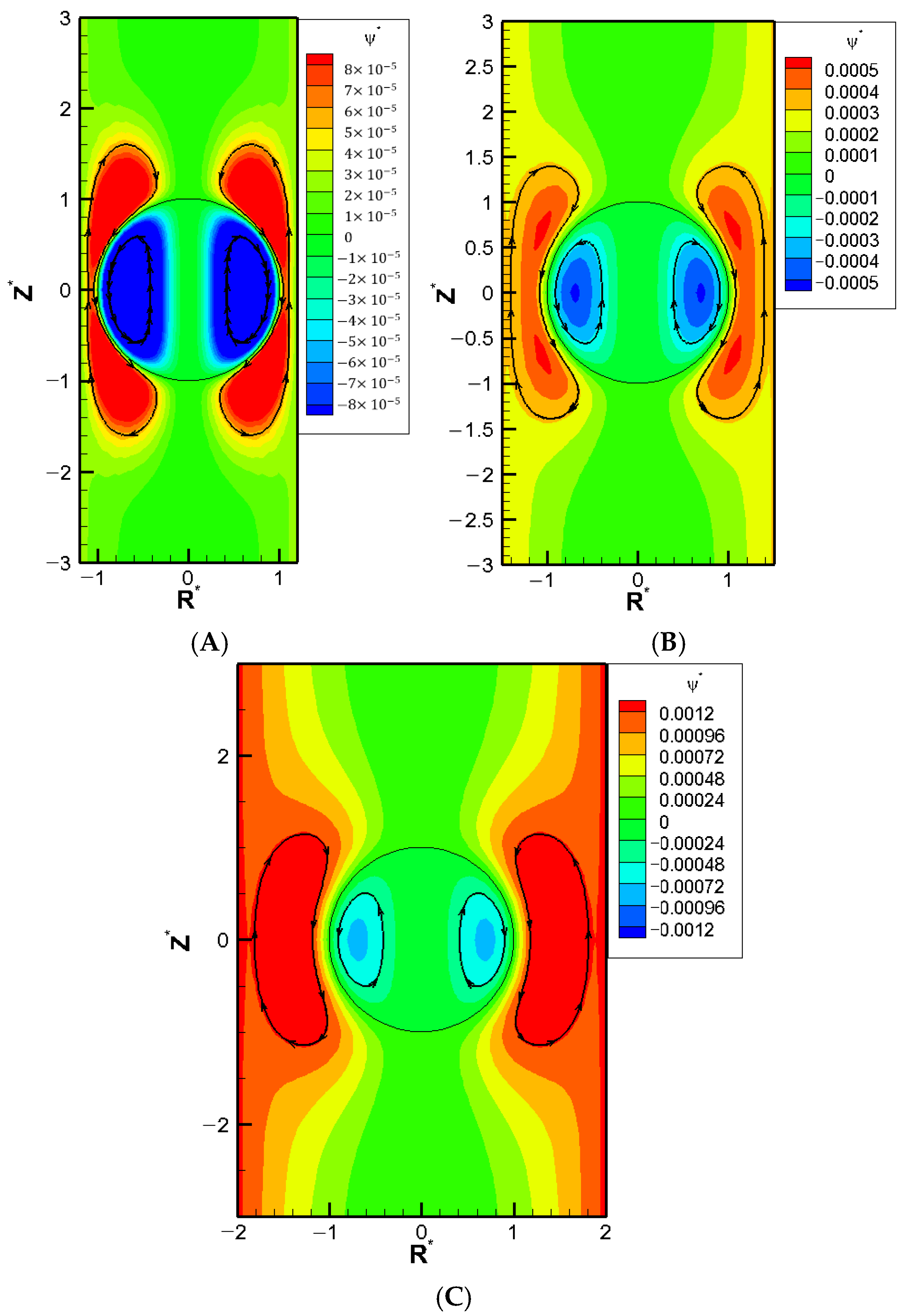
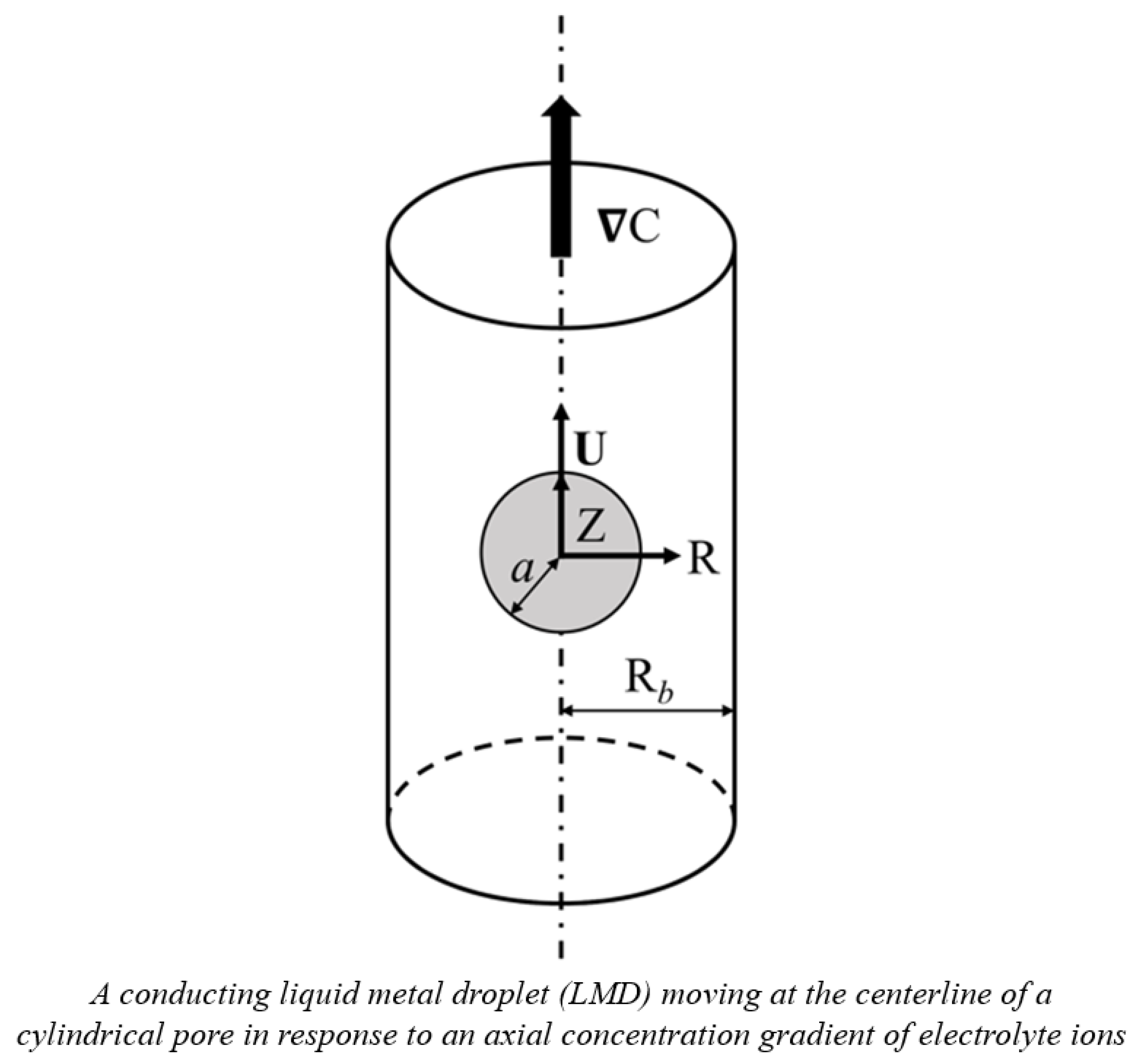
Diffusiophoresis of a liquid metal droplet (LMD) in a cylindrical pore is investigated theoretically in this study. A patched pseudo-spectral method based on Chebyshev polynomials combined with a geometric mapping technique is adopted to solve the resulting governing electrokinetic equations in irregular geometries. Several interesting phenomena are found which provide useful guidelines in practical applications involving liquid metal droplets (LMDs) such as drug delivery. In particular, the severe boundary confinement effect brings about unique features of droplet motion, leading to mobility reversal and a “stagnation phenomenon” where droplets cease to move regardless of their surface charge densities in a narrow cylindrical pore. An overwhelming exterior vortex flow nearly enclosing the entire droplet is found to be responsible for this. This finds various practical applications in droplet microfluidics and drug delivery. For instance, a cylindrical pore or blood vessel may be clogged by a droplet much smaller than its radius. In addition, the “solidification phenomenon”, where all droplets move with identical speed regardless of their viscosities like rigid particles with no interior recirculating vortex flows, is also discovered. The electrokinetic mechanism behind it and its potential applications are discussed. Overall, the geometric configuration considered here is a classic one, with many other possible applications yet to be found by experimental researchers and engineers in the field of colloid industry and operations.
Keywords: diffusiophoresis; liquid metal droplet; LMD; conducting droplet; cylindrical pore; boundary confinement effect; double layer polarization; stagnation phenomenon; solidification phenomenon; drug delivery diffusiophoresis; liquid metal droplet; LMD; conducting droplet; cylindrical pore; boundary confinement effect; double layer polarization; stagnation phenomenon; solidification phenomenon; drug delivery