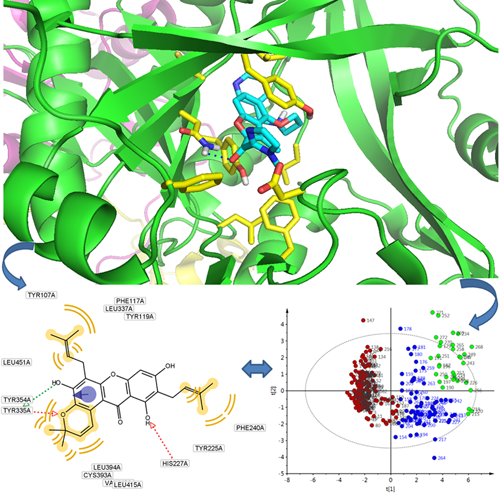
Molecular Docking and Multivariate Analysis of Xanthones as Antimicrobial and Antiviral Agents


Abstract
Share and Cite
Bernal, F.A.; Coy-Barrera, E. Molecular Docking and Multivariate Analysis of Xanthones as Antimicrobial and Antiviral Agents. Molecules 2015, 20, 13165-13204. https://doi.org/10.3390/molecules200713165
Bernal FA, Coy-Barrera E. Molecular Docking and Multivariate Analysis of Xanthones as Antimicrobial and Antiviral Agents. Molecules. 2015; 20(7):13165-13204. https://doi.org/10.3390/molecules200713165
Chicago/Turabian StyleBernal, Freddy A., and Ericsson Coy-Barrera. 2015. "Molecular Docking and Multivariate Analysis of Xanthones as Antimicrobial and Antiviral Agents" Molecules 20, no. 7: 13165-13204. https://doi.org/10.3390/molecules200713165
APA StyleBernal, F. A., & Coy-Barrera, E. (2015). Molecular Docking and Multivariate Analysis of Xanthones as Antimicrobial and Antiviral Agents. Molecules, 20(7), 13165-13204. https://doi.org/10.3390/molecules200713165