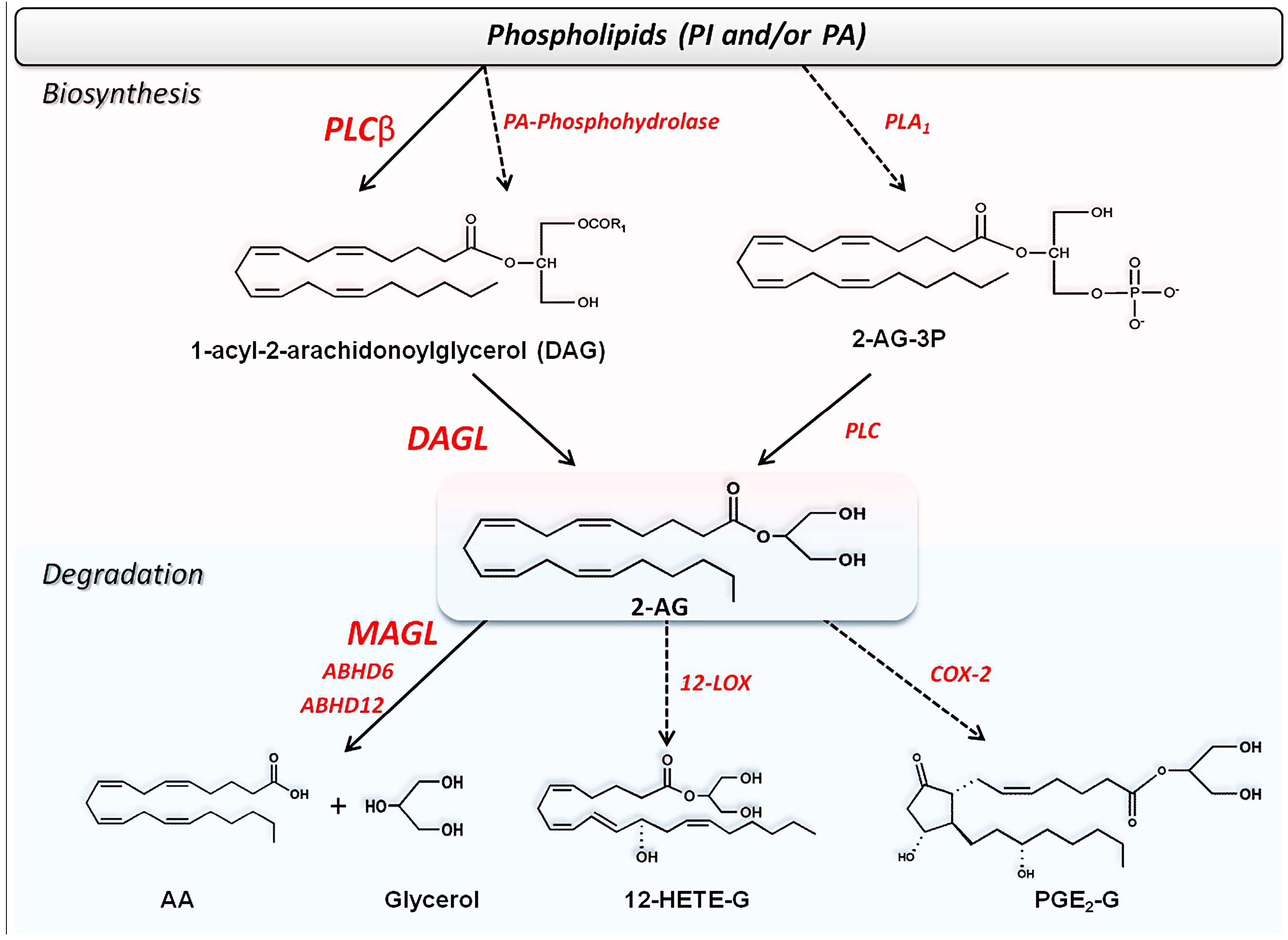
Endocannabinoids, Related Compounds and Their Metabolic Routes


Abstract
Share and Cite
Fezza, F.; Bari, M.; Florio, R.; Talamonti, E.; Feole, M.; Maccarrone, M. Endocannabinoids, Related Compounds and Their Metabolic Routes. Molecules 2014, 19, 17078-17106. https://doi.org/10.3390/molecules191117078
Fezza F, Bari M, Florio R, Talamonti E, Feole M, Maccarrone M. Endocannabinoids, Related Compounds and Their Metabolic Routes. Molecules. 2014; 19(11):17078-17106. https://doi.org/10.3390/molecules191117078
Chicago/Turabian StyleFezza, Filomena, Monica Bari, Rita Florio, Emanuela Talamonti, Monica Feole, and Mauro Maccarrone. 2014. "Endocannabinoids, Related Compounds and Their Metabolic Routes" Molecules 19, no. 11: 17078-17106. https://doi.org/10.3390/molecules191117078
APA StyleFezza, F., Bari, M., Florio, R., Talamonti, E., Feole, M., & Maccarrone, M. (2014). Endocannabinoids, Related Compounds and Their Metabolic Routes. Molecules, 19(11), 17078-17106. https://doi.org/10.3390/molecules191117078