

Antiphytoviral Activity of Sesquiterpene-Rich Essential Oils from Four Croatian Teucrium Species



Abstract
:1. Introduction
2. Results and Discussion
2.1. Essential Oil Composition and Variability
2.2. Antiphytoviral Activity

| Component | RI VF-5MS | RI CP-Wax 52 | T. polium | T. flavum | T. montanum | T. chamaedrys | Identification | |
|---|---|---|---|---|---|---|---|---|
| Monoterpene hydrocarbons | 6.3 | 28.4 | 24.4 | 3.9 | ||||
| α-Pinene | 938 | - | tr | 10.5 | 1.9 | 1.0 | RI, MS, Co-GC | |
| Camphene | 962 | - | - | 0.1 | - | - | RI, MS | |
| β-Pinene | 982 | <1200 | 0.3 | 8.4 | 12.3 | 1.9 | RI, MS, Co-GC | |
| Myrcene | 992 | <1200 | 0.1 | 0.7 | 4.2 | 0.2 | RI, MS | |
| Limonene | 1032 | 1204 | 5.9 | 7.9 | 4.6 | 0.6 | RI, MS, Co-GC | |
| (Z)-β-Ocimene | 1052 | 1218 | tr | 0.6 | 0.8 | 0.2 | RI, MS | |
| Terpinolene | 1089 | 1286 | - | 0.2 | 0.6 | - | RI, MS | |
| Oxygenated monoterpenes | 12.5 | 3.4 | 12.4 | 0.2 | ||||
| Linalool | 1099 | 1548 | 1.9 | 1.5 | 3.6 | - | RI, MS, Co-GC | |
| β-Thujone | 1121 | 1438 | 5.7 | - | 0.3 | - | RI, MS, Co-GC | |
| trans-Pinocarveol | 1147 | - | - | 0.4 | 1.2 | - | RI, MS | |
| Camphor | 1151 | 1499 | 1.4 | - | 1.3 | - | RI, MS, Co-GC | |
| Borneol | 1176 | 1719 | 1.4 | - | 1.6 | - | RI, MS, Co-GC | |
| Terpinen-4-ol | 1184 | 1611 | 0.2 | 0.2 | 1.5 | - | RI, MS | |
| Myrtenol | 1197 | 1782 | - | 0.6 | 1.2 | 0.2 | RI, MS | |
| β-Cyclocitral | 1223 | 1629 | - | 0.2 | - | tr | RI, MS | |
| Linalyl acetate | 1252 | 1553 | 0.8 | 0.3 | 0.5 | - | RI, MS, Co-Gc | |
| Bornyl acetate | 1285 | 1570 | 1.1 | 0.2 | 0.2 | - | RI, MS, Co-Gc | |
| α-Terpenyl acetate | 1349 | - | - | - | 1.0 | - | RI, MS | |
| Sesquiterpene hydrocarbons | 76.0 | 50.8 | 35.1 | 86.9 | ||||
| α-Copaene | 1377 | 1484 | 0.2 | 0.7 | - | 0.7 | RI, MS | |
| β-Bourbonene | 1383 | 1508 | 0.7 | 2.6 | 3.4 | 3.7 | RI, MS | |
| α-Gurjunene | 1407 | 1520 | - | 0.3 | - | 0.2 | RI, MS | |
| β-Caryophyllene | 1424 | 1585 | 52.0 | 23.1 | 7.1 | 47.6 | RI, MS, Co-GC | |
| β -Copaene | 1429 | - | 1.4 | 2.7 | - | 5.7 | RI, MS | |
| trans-α-Bergamotene | 1433 | - | 4.1 | - | - | - | RI, MS | |
| (Z)-β-Farnesene | 1454 | 1639 | 4.3 | 2.1 | 2.9 | - | RI, MS | |
| α-Humulene | 1456 | 1654 | 4.6 | - | - | - | RI, MS | |
| allo-Aromadendrene | 1465 | 1662 | - | 1.2 | - | - | RI, MS | |
| Germacrene D | 1481 | 1692 | 8.7 | 15.3 | 17.2 | 29.0 | RI, MS | |
| β-Bisabolene | 1494 | 1729 | tr | 1.8 | 1.8 | - | RI, MS | |
| δ-Cadinene | 1517 | 1745 | tr | 1.0 | 2.7 | - | RI, MS | |
| Oxygenated sesquiterpenes | tr | 5.0 | 5.1 | 5.9 | ||||
| Spathulenol | 1577 | 2101 | tr | 1.6 | 1.9 | tr | RI, MS | |
| Caryophyllene oxide | 1581 | 1955 | tr | 2.6 | 1.0 | 4.5 | RI, MS, Co-GC | |
| α-Cadinol | 1655 | 2208 | tr | 0.8 | 2.2 | 1.4 | RI, MS | |
| Phenolic compounds | 0.1 | 1.1 | - | 0.6 | ||||
| p-Vinylanisole | 1159 | - | - | 0.5 | - | - | RI, MS | |
| Methyl salicylate | 1194 | - | - | - | - | 0.3 | RI, MS | |
| p-Vinyl-guaiacol | 1312 | - | - | 0.2 | - | 0.1 | RI, MS | |
| Eugenol | 1370 | 2020 | 0.1 | 0.4 | - | 0.2 | RI, MS, Co-GC | |
| Carbonylic compounds | tr | 7.2 | 0.9 | 0.4 | ||||
| n-Amyl isovalerate | 1113 | - | - | 3.7 | 0.5 | - | RI, MS | |
| 3-Octanol acetate | 1125 | 1376 | - | 0.4 | - | - | RI, MS | |
| Isobutyl hexanoate | 1155 | - | - | 0.4 | - | - | RI, MS | |
| Butylhexanoate | 1193 | - | - | 0.5 | - | - | RI, MS | |
| Hexyl isovalerate | 1245 | 1409 | - | 0.1 | - | - | RI, MS | |
| Isoamyl hexanoate | 1256 | 1457 | - | 1.6 | - | - | RI, MS | |
| 6,10,14-Trimethyl-2-pentadecanone | 1839 | 2113 | tr | 0.5 | 0.4 | 0.4 | RI, MS | |
| Hydrocarbons | 0.4 | 1.4 | 21.6 | 0.4 | ||||
| Eicosane | 2000 | 2000 | - | - | 0.2 | - | RI, MS, Co-GC | |
| Heneicosane | 2100 | 2100 | tr | - | 1.0 | 0.4 | RI, MS, Co-GC | |
| Docosane | 2200 | 2200 | - | 0.1 | 1.9 | - | RI, MS, Co-GC | |
| Tricosane | 2300 | 2300 | tr | 0.2 | 2.8 | - | RI, MS, Co-GC | |
| Tetracosane | 2400 | 2400 | - | 0.1 | 3.1 | - | RI, MS, Co-GC | |
| Pentacosane | 2500 | 2500 | 0.2 | 0.3 | 3.3 | - | RI, MS, Co-GC | |
| Hexacosane | 2600 | 2600 | - | 0.1 | 3.4 | - | RI, MS, Co-GC | |
| Heptacosane | 2700 | 2700 | 0.1 | 0.3 | 2.7 | - | RI, MS, Co-GC | |
| Octacosane | 2800 | 2800 | 0.1 | 0.1 | 2.0 | - | RI, MS, Co-GC | |
| Nonacosane | 2900 | 2900 | tr | 0.2 | 1.2 | - | RI, MS, Co-GC | |
| Total identified (%) | 95.3 | 97.3 | 99.5 | 98.3 | ||||
| Yield (%) | 0.5 | 0.4 | 0.4 | 0.3 | ||||
| Mean of L.L ± SEM % of inhibition | ||
|---|---|---|
| Control | 7.0 ± 0.5 | / |
| T. polium | 4.1 ± 0.3 * | 41.4 |
| T. flavum | 5.4 ± 0.3 * | 22.9 |
| T. montanum | 3.9 ± 0.4 * | 44.3 |
| T. chamaedrys | 5.2 ± 0.4 * | 25.7 |
3. Experimental
3.1. Plant Material
| Locality in Croatia | Plant species | Habitat Types | Coordinates: Gauss-Krüger (X,Y) | Altidude a.s.l. (m) |
|---|---|---|---|---|
| Elevations between Trogir and Prapatnica | T. polium | Rocky grassland, once an area affected by fire | X = 5598845Y = 4820965 | 277 |
| Marjan, hill above town Split | T. flavum | Dry grasslands as. Querco ilici-Pinetum halepensis Loisel 1971 | X = 5614505Y = 4819218 | 158 |
| Elevations between Trogir and Prapatnica | T. montanum | Rocky grassland, once an area affected by fire | X = 5598845Y = 4820965 | 277 |
| Klis Grlo | T. chamaedrys | Rocky grassland in succession towards under-growth and lower forest as. Carpino orientali-Quercetum virgilianae Trinajstić 1987 | X = 5624263Y = 4826875 | 356 |
3.2. Isolation of Essential Oils
3.3. Gas Chromatography and Mass Spectrometry (GC, GC/MS)
3.4. Data Analysis and Data Evaluation
3.6. Solution of Essential Oil
3.7. Viral Inoculums
3.8. Application to the Local Host Plants
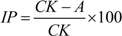
3.9. Statistical Analysis
4. Conclusion
Acknowledgments
- Sample Availability: Samples of the compounds are available from the authors.
References
- Tutin, T.G.; Wood, D. Teucrium. In Flora Europaea; Tutin, T.G., Ed.; Cambridge University Press: Cambridge, UK, 1972; Volume 3. [Google Scholar]
- Nikolić, T. (Ed.) Flora Croatica Database; Department of Botany, Faculty of Science, University of Zagreb: Zagreb, Croatia, 2011. Available online: http://hirc.botanic.hr/fcd (accessed on 25 July 2011).
- Trinajstić, I. Plant Communities of Croatia; Academy of Forestry Sciences: Zagreb, Croatia, 2008; pp. 106–125. [Google Scholar]
- Cavalerio, C.; Salgueiro, L.R.; Antunes, T.; Sevinate-Pinto, I.; Barroso, G. Composition of the essential oil and micromorphology of trichomes of Teucrium salviastrum, an endemic species from Portugal. Flavour Fragr. J. 2002, 17, 287–291. [Google Scholar] [CrossRef]
- Hisham, A.; Pathare, N.; Al-Saidi, S. The Composition and Antimicrobial Activity of the Essential Oil of Teucrium stocksianum subsp. stocksianum Leaf from Oman. Nat. Prod. Comm. 2006, 1, 195–199. [Google Scholar]
- Kazemizadeh, Z.; Basiri, A.; Habibi, Z. Chemical Composition of the Essential Oil of Teucrium hyrcanicum and T. chamaedrys L. subsp. chamaedrys from Iran. Chem. Nat. Comp. 2008, 44, 651–653. [Google Scholar]
- Formisano, C.; Rigano, D.; Senatore, F.; Al-Hillo, M.R.Y.; Piozzi, F.; Rosselli, S. Analysis of Essential Oil from Teucrium maghrebinum Greuter et Burdet Growing Wild in Algeria. Nat. Prod. Comm. 2009, 5, 411–414. [Google Scholar]
- De Martino, L.; Formisano, C.; Mancini, E.; De Feo, V.; Piozzi, F.; Rigano, D.; Senatore, F. Chemical Composition and Phytotoxic Effects of Essential Oils from Four Teucrium Species. Nat. Prod. Comm. 2010, 5, 1969–1976. [Google Scholar]
- Morteza-Semnani, K.; Saeed, M.; Akbarzade, M. Essential oil composition of Teucrium scordium L. Acta Pharm. 2007, 57, 499–504. [Google Scholar] [CrossRef]
- Wink, M. Evolution of secondary metabolites from an ecological and molecular phylogenetic perspective. Phytochemistry 2003, 64, 3–19. [Google Scholar]
- Gershenzon, J.; Dudareva, N. The function of terpene natural products in the natural world. Nat. Chem. Biol. 2007, 3, 408–414. [Google Scholar] [CrossRef]
- Michaelakis, A.; Theotokatos, S.A.; Koliopoulos, G.; Chorianopoulos, N.G. Essential oils of Satureja species: insecticidal effects on Culex pipens larvae (diptera: culicidae). Molecules 2007, 12, 2567–2578. [Google Scholar]
- Bishop, C.D. Antiviral activity of the essential oil of Melaluca alternifolia (Maiden & Betche) cheel (tea tree) against tobacco mosaic virus. J. Essent. Oil Res. 1995, 7, 641–644. [Google Scholar] [CrossRef]
- Juglal, S.; Govinden, R.; Odhav, B. Spice oils for the control of co-occurring mycotoxin-producing fungi. J. Food Prot. 2002, 65, 683–687. [Google Scholar]
- Moon, T.; Wilkinson, J.M.; Cavanagh, H.M.A. Antiparasitic activity of two Lavandula essential oils against Giardia duodenalis, Trichomonas vaginalis and Hexamita inflata. Parasitol. Res. 2006, 99, 722–728. [Google Scholar] [CrossRef]
- Lamiri, A.; Lhaloui, S.; Benjilali, B.; Berrada, M. Insecticidal effects of essential oils against Hessian fly, Mayetiola destructor (Say). Field Crop. Res. 2001, 71, 9–15. [Google Scholar] [CrossRef]
- Othman, B.A.; Shoman, S.A. Antiphytoviral Activity of the Plectranthus tenuiflorus on Some Important Viruses. Int. J. Agri. Biol. 2004, 6, 844–849. [Google Scholar]
- Krcatović, E.; Rusak, G.; Bezić, N.; Krajačić, M. Inhibition of Tobacco Mosaic Virus infection by quercetin and vitexin. Acta Virolog. 2008, 52, 119–124. [Google Scholar]
- Rusak, G.; Krajačić, M.; Pleše, N. Inhibition of tomato bushy stunt virus infection using a quercetagetin flavonoid isolated from Centaurea rupestris L. Antiviral Res. 1997, 36, 125–129. [Google Scholar] [CrossRef]
- Yordanova, A.; Korparov, N.; Stomenova, E.; Starcheva, M. Antiphytoviral activity of 1-morpholinomethyl tetrahydro 2-Pyrimidinone (DDB). Plant Pathol. 1996, 45, 547–551. [Google Scholar]
- Dunkić, V.; Bezić, N.; Vuko, E.; Cukrov, D. Antiphytoviral Activity of Satureja montana L. ssp. variegata (Host) P. W. Ball Essential Oil and Phenol Compounds on CMV and TMV. Molecules 2010, 15, 6713–6721. [Google Scholar] [CrossRef]
- Dunkić, V.; Bezić, N.; Vuko, E. Antiphytoviral Activity of Essential Oil from Endemic Species Teucrium arduini L. Nat. Prod. Comm. 2011, 6, 1385–1388. [Google Scholar]
- Maghtader, M. Chemical Composition of the Essential Oil of Teucrium polium L. From Iran. Amer.-Euroas. J. Agric. Environ. Sci. 2009, 5, 843–856. [Google Scholar]
- Adams, R.P. Identification of Essential Oil Components by Gas Chromatography/Mass Spectroscopy, 4th ed; Allured Publishing Corporation: Carol Stream, IL, USA, 2007. [Google Scholar]
© 2011 by the authors; licensee MDPI, Basel, Switzerland. This article is an open access article distributed under the terms and conditions of the Creative Commons Attribution license ( http://creativecommons.org/licenses/by/3.0/).
Share and Cite
Bezić, N.; Vuko, E.; Dunkić, V.; Ruščić, M.; Blažević, I.; Burčul, F. Antiphytoviral Activity of Sesquiterpene-Rich Essential Oils from Four Croatian Teucrium Species. Molecules 2011, 16, 8119-8129. https://doi.org/10.3390/molecules16098119
Bezić N, Vuko E, Dunkić V, Ruščić M, Blažević I, Burčul F. Antiphytoviral Activity of Sesquiterpene-Rich Essential Oils from Four Croatian Teucrium Species. Molecules. 2011; 16(9):8119-8129. https://doi.org/10.3390/molecules16098119
Chicago/Turabian StyleBezić, Nada, Elma Vuko, Valerija Dunkić, Mirko Ruščić, Ivica Blažević, and Franko Burčul. 2011. "Antiphytoviral Activity of Sesquiterpene-Rich Essential Oils from Four Croatian Teucrium Species" Molecules 16, no. 9: 8119-8129. https://doi.org/10.3390/molecules16098119
APA StyleBezić, N., Vuko, E., Dunkić, V., Ruščić, M., Blažević, I., & Burčul, F. (2011). Antiphytoviral Activity of Sesquiterpene-Rich Essential Oils from Four Croatian Teucrium Species. Molecules, 16(9), 8119-8129. https://doi.org/10.3390/molecules16098119
