1. Introduction
A central question in computational neuroscience concerns the computational repertoire of individual neurons. Classically, neurons are assigned a straightforward input–output role: they integrate synaptic currents and report their mean firing rate as an output signal. This rate-coding hypothesis [
1,
2] has been enormously productive, but accumulating evidence suggests that single neurons can support far richer computations through their intrinsic dynamics. Precise spike timing carries information beyond what is captured by firing rate [
3,
4]; individual dendrites perform local, nonlinear computations that effectively make a single cell a multi-layer processing unit [
5]; and intrinsic bistability or multistability can give individual neurons the ability to sustain distinct activity states in the absence of ongoing input [
6,
7]. The present work explores an extreme case of this last capacity: using the dynamical richness of a single Hodgkin–Huxley neuron’s limit-cycle repertoire for multi-symbol information storage. It is important to distinguish the type of memory demonstrated here: this is
location-addressable (symbolic) memory, where a discrete symbol is written, held, and read back via an explicit address (the parameter pair
), analogous to a multi-level memory cell. This differs fundamentally from
content-addressable (associative) memory, where a noisy or partial input pattern is attracted to the nearest stored pattern (e.g., Hopfield networks [
8]). The practical engineering motivation is the design of compact, multi-state neuromorphic memory cells for edge computing hardware, where storing more than two states per neuron-equivalent circuit element directly reduces device count and energy cost [
9]. This demand is well-established: Cao et al. [
10] review multi-state single-cell memories and note that multi-states in a single cell provide an unconventional in-memory computing platform beyond Von Neumann architecture; Rzeszut et al. [
11] demonstrate multi-state MRAM cells for hardware neural computing; and Park et al. [
12] implement 100-level single-element RRAM for neuromorphic edge computing. Our work provides an alternative, purely dynamical approach to this challenge.
The working memory problem—how the brain maintains information over seconds without external reinforcement—has traditionally been modeled at the network level. Attractor network models, originating with Hopfield [
8] and extended to spiking networks by Amit and Brunel [
13] and Wang [
14], posit that patterns of activity are held as stable fixed points of recurrent synaptic dynamics. Recent extensions incorporate activity-dependent plasticity and dynamic memory representations [
15,
16]. These rely on structured connectivity and balance between excitation and inhibition; their capability depends on the size of the network. The single neuron bistability models [
6,
7,
17] offer a complementary approach to maintain bistable regimes in the absence of network structure through the dynamics of intrinsic conductance parameters. This involves models involving persistent Na
+ conductance [
18], K
+ slow conductances [
19], and facilitated synapses due to astrocytes [
20]. Our strategy stands out in that it takes advantage of the inherent multistability property of a delay differential equation (DDE) model where the neuron’s previous output serves as feedback to create a high-dimensional effective state space.
Time-lagged self-feedback occurs physiologically in neurons due to autaptic synapses (synapses created between an axon terminal from the same neuron and the dendrites of that neuron). Initially discovered anatomically by van der Loos and Glaser [
21], autapses have been observed all across the neocortex [
22] and hippocampal circuits [
23] to date. Autapses contribute to neurobiological phenomena such as modulation of firing precision [
24], gain control [
25], oscillations generation [
26], and coherence resonance in autaptically regulated networks [
27,
28,
29]. Crucially, autaptic feedback directly shapes burst firing patterns with varied ISI sequences: Yin et al. [
30] documented excitatory autapses in both rodent and human layer-5 neocortical pyramidal cells that enhance burst firing and produce postsynaptic responses approximately five-fold larger than recurrent synapses; Deleuze et al. [
31] showed that autaptic transmission is the most powerful inhibitory input to neocortical PV interneurons and directly modulates their gamma-frequency burst coupling; and Wang et al. [
32] showed that time-delayed autaptic feedback controls mode transitions between distinct burst firing patterns. These results establish that the autaptic self-feedback mechanism that we model is biologically documented and directly relevant to the burst-pattern diversity demonstrated in this study. Candidate biological mechanisms for tuning these parameters exist:
K can be modulated through activity-dependent plasticity of autaptic conductance [
24,
26], and
can be adjusted through myelination state and oligodendrocyte-mediated axonal plasticity [
33,
34]; these mechanisms are discussed quantitatively in
Section 5.3. Crucially, both excitatory and inhibitory autapses have been documented. The current work limits
(excitatory self-feedback); inhibitory autapses have been shown capable of providing effective sign change in feedback due to circuit polarity inversion, but their exploration is deferred to future work. We emphasize that the autaptic analogy serves as a computational motivation for the parameter regime, not a direct biological claim; the ±2% delay-precision requirement identified in
Section 4.3 exceeds demonstrated biological autaptic variability, and the contribution is best positioned as a neuromorphic engineering proof-of-principle (
Section 5.3).
Pyragas [
35] introduced time-delayed feedback control (DFC) as a method for stabilizing unstable periodic orbits (UPOs) embedded in chaotic attractors. The control signal
vanishes exactly when
is periodic with period
, so the target orbit becomes a fixed point of the controlled dynamics while remaining physically equivalent to the uncontrolled orbit. Early applications focused on optics [
36] and semiconductor lasers [
37]. He et al. [
38] verified selective UPO stabilization in a chaotic neural network; lately, DFC tested in vitro on biological neuronal populations for desynchronization of pathological oscillations [
39]. The foundational concept of orbit-coded memory was introduced by Crook, Goh, and Hawarat [
40,
41] using the nonlinear dynamic state (NDS) neuron—a Rössler-based discrete-time map. In the NDS approach, the system operates at a single fixed parameter point within a chaotic attractor; DFC is applied as an active control perturbation that continuously forces the trajectory to stay near one specific UPO embedded in that attractor. Memory is encoded as a choice of which UPO to stabilize, and the control signal must remain active throughout memory maintenance—removing it allows the trajectory to escape back into chaos. Subsequent analyses [
42,
43,
44,
45,
46] characterized the NDS model’s dynamics and memory properties in detail.
The present work is methodologically distinct from the NDS approach in every essential respect. We do not operate within a chaotic attractor, we do not stabilize UPOs, and we do not require any ongoing adjustment of control parameters during memory maintenance. Instead, we exploit the fact that changing
moves the HH–DFC system to a different region of its bifurcation landscape, where a different stable periodic orbit is the natural attractor. Once the neuron locks onto this orbit, the DFC term
vanishes exactly for orbits whose period matches
; for higher-order burst orbits whose fundamental period does not equal
, the DFC term participates actively in the dynamics (see
Section 5.1). In both cases, the memory is preserved without having to stabilize it actively. The write process involves switching the parameters and does not involve orbit stabilization. Therefore, the memory configuration is that of a stable attractor and not that of an unstable controlled attractor. There is more to this difference than meets the eye since it affects the system’s capacity, robustness, and maintenance costs.
The challenge of extending orbit-coded memory into biophysically realistic conductance-based neurons remains open. This is fundamental: the Hodgkin–Huxley model chaotic regime, defined by Guckenheimer and Oliva [
47], allows for only two to four ISI distinctive clusters—far fewer than the around 15 orbits needed for useful memory capacity. Aihara, Matsumoto, and Ikegaya [
48] demonstrated that periodic and chaotic responses coexist in the forced HH oscillator, but the diversity of periodic states reachable via chaos control alone is limited by the spiking mechanism, which constrains the action potential waveform. A key insight motivating our work is that this scarcity pertains specifically to the chaotic regime; the stable periodic regime of the HH–DFC system is, as we shall show, vastly richer.
Why such richness? Yanchuk and colleagues [
49,
50] showed that delay-coupled neural oscillators support dense families of coexisting stable periodic orbits, born through Hopf bifurcations as the delay grows. Kantner, Yanchuk, and Schöll [
51] further showed that coupling delay greatly increases both the number and stability of periodic solutions in neural networks. More recently, photonic neuron models with delayed self-feedback [
52,
53] showed that such systems can hold multiple coexisting temporal localized states, each one a different memory symbol, and that brief perturbations can switch between them. Those photonic implementations used simplified FitzHugh–Nagumo dynamics and stored binary patterns. The specific architecture of a single autaptic oscillatory neuron as a memory element has since been demonstrated in hardware: Romeira et al. [
54] implemented a photonic regenerative memory using a FitzHugh–Nagumo oscillator with delayed self-feedback, demonstrating proof-of-concept optical buffer memory; Romeira, Figueiredo, and Javaloyes [
55] reviewed the broader program covering spike-based data encoding, storage, and signal regeneration in autaptic artificial neurons; and Stoliar et al. [
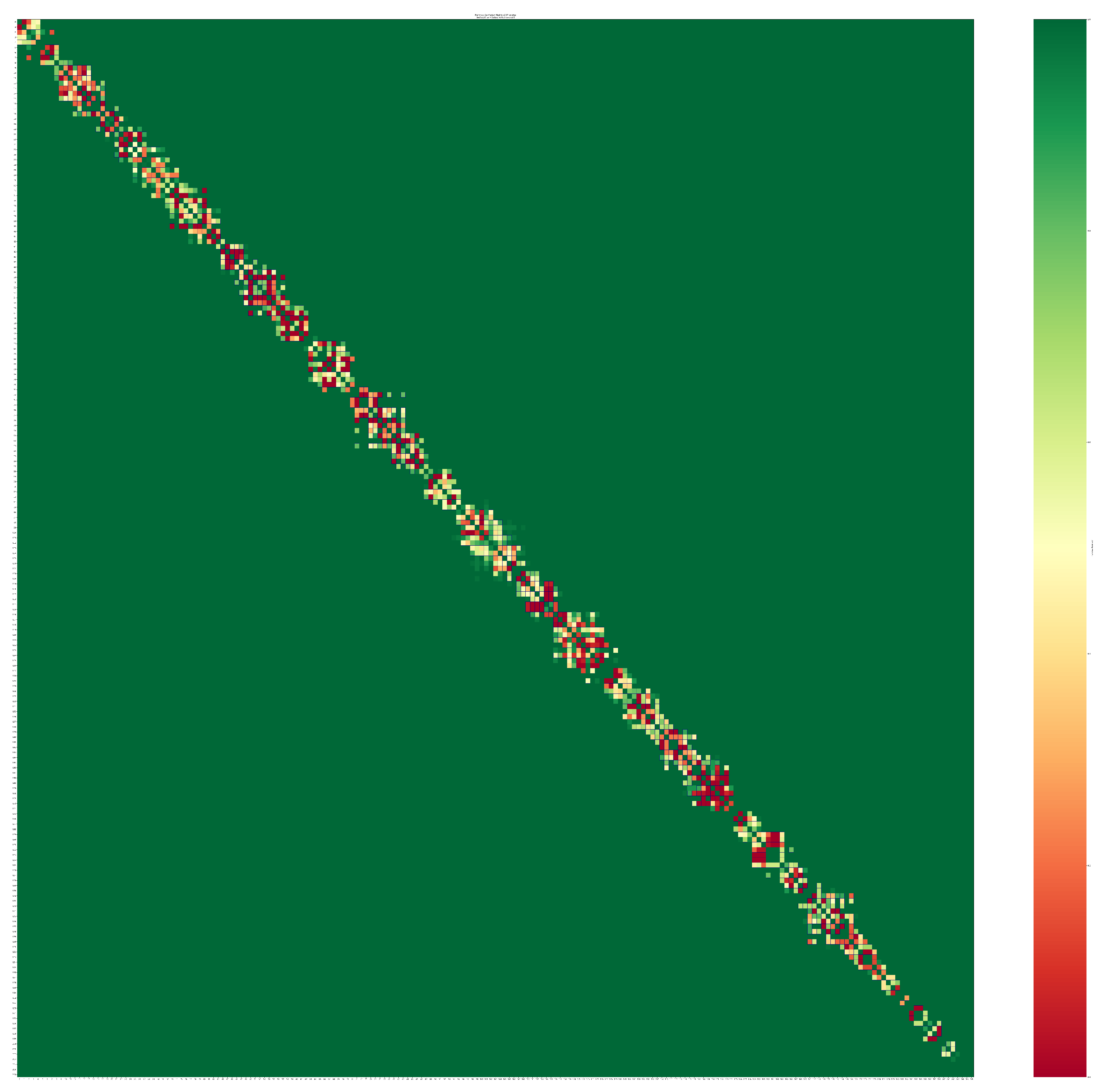
56] implemented the architecture in solid-state electronics, demonstrating a tunable dynamic memory with graded persistent activity. Our contribution extends this established architecture from one to two addressable states to 12 write-validated states with a complete write–read–erase protocol and systematic capacity characterization. Here, we show analogous functionality in the full Hodgkin–Huxley conductance model, reaching a read-discriminable capacity of 67 symbols (pending write-viability confirmation; full W–R–E viability confirmed for 12 symbols) with a complete W–R–E protocol and systematic capacity characterization.
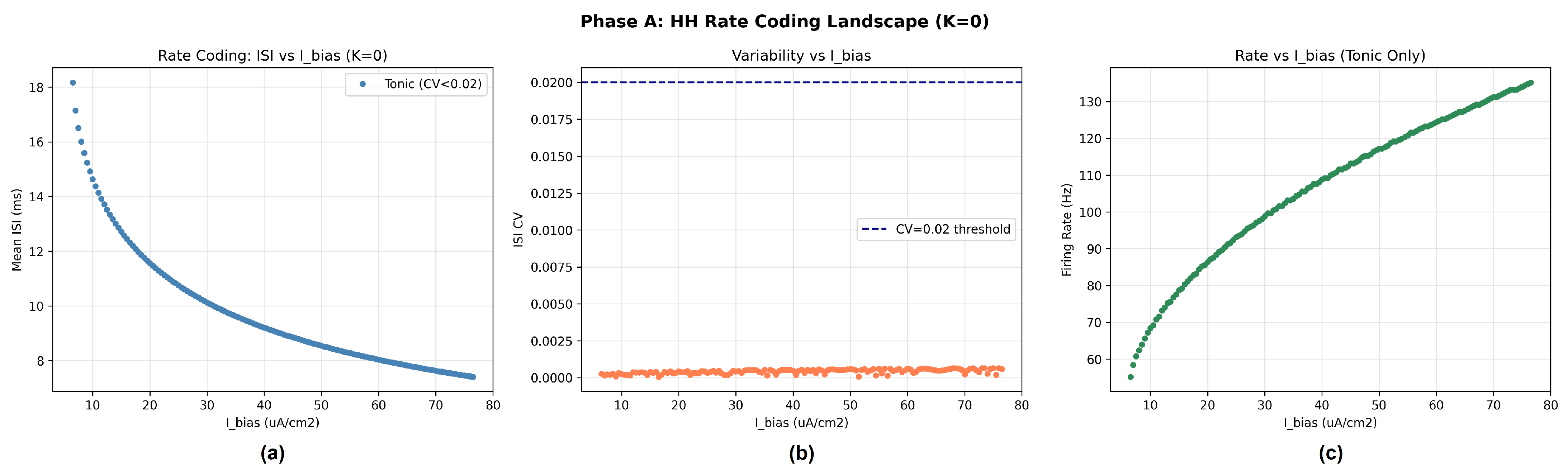
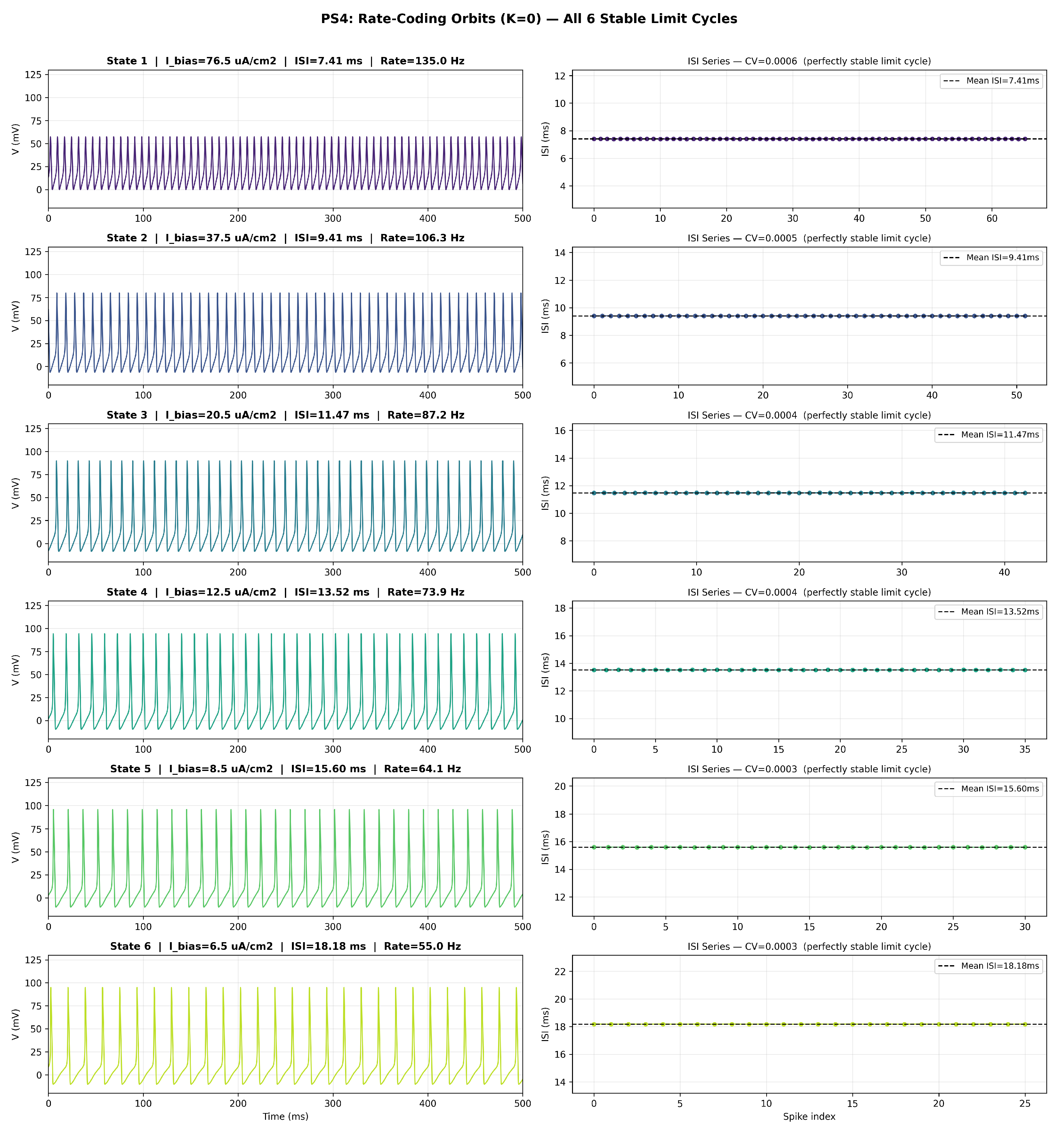
To place the contribution in context, the uncontrolled HH neuron (
) supports only six distinguishable tonic firing states across its full physiological range (
Section 4.5). Adding the DFC term with two control parameters
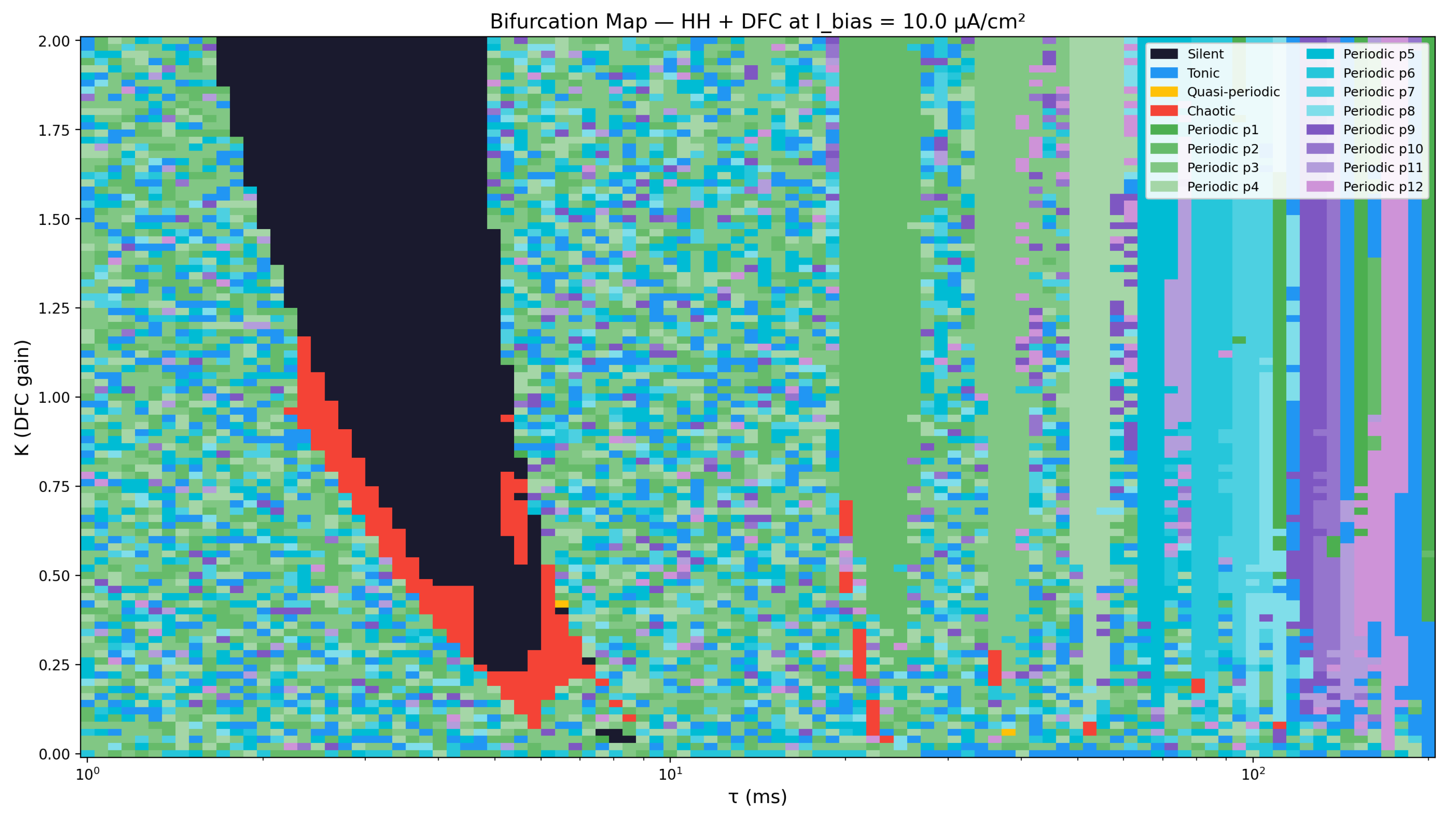
expands this to 207 distinct orbit types across 12 topological categories—a 34-fold increase in addressable states within the same physical substrate, arising from a non-trivial Hopf bifurcation proliferation mechanism [
49,
50] that does not occur in the uncontrolled model.
What sets our approach apart from earlier DFC-based neural memory is one key point: instead of stabilizing UPOs inside a fixed chaotic attractor, we use
as an address that moves the HH–DFC system to a different part of its bifurcation landscape, where a different stable periodic attractor lives. This shift—from chaos-control memory to bifurcation-directed memory—sidesteps the topological constraints of the chaotic regime and opens up hundreds of distinct orbit types in 12 qualitative categories. The mechanism is also conceptually related to reservoir computing [
57,
58] in that the neuron’s internal dynamics (here, a delay differential equation) generate a rich representational space; however, unlike reservoir computing, our system stores information in a stable attractor rather than in a transient trajectory, enabling retention without ongoing input.
A note on terminology: Crook et al. [
40,
41] coined orbit-coded memory in the NDS context. We keep the term because the idea behind encoding information in distinct periodic orbits is the same—although our mechanism is fundamentally different (
Section 5.1). Memory is the computational property of persistent, switchable, distinguishable dynamical states; it is not biological memory in the cognitive or synaptic sense used herein. This work is motivated by biological reasons rather than mechanistic claims; the autaptic analogy (
Section 5.3) is computationally motivated toward neuromorphic engineering applications.
A note on cognitive neuroscience analogies: Throughout this paper, references to established cognitive science benchmarks (Miller’s 7 ± 2 working memory span, Baddeley’s maintenance window, and behavioral encoding timescales) serve exclusively as computational reference benchmarks for contextualizing simulation parameters (gate thresholds, hold durations, settling times). They do not constitute mechanistic claims: this study provides no evidence of cortical implementation, does not incorporate synaptic plasticity, and is not validated at the network or population level. The orbit-coded memory framing is a computational proof-of-principle aimed at neuromorphic engineering.
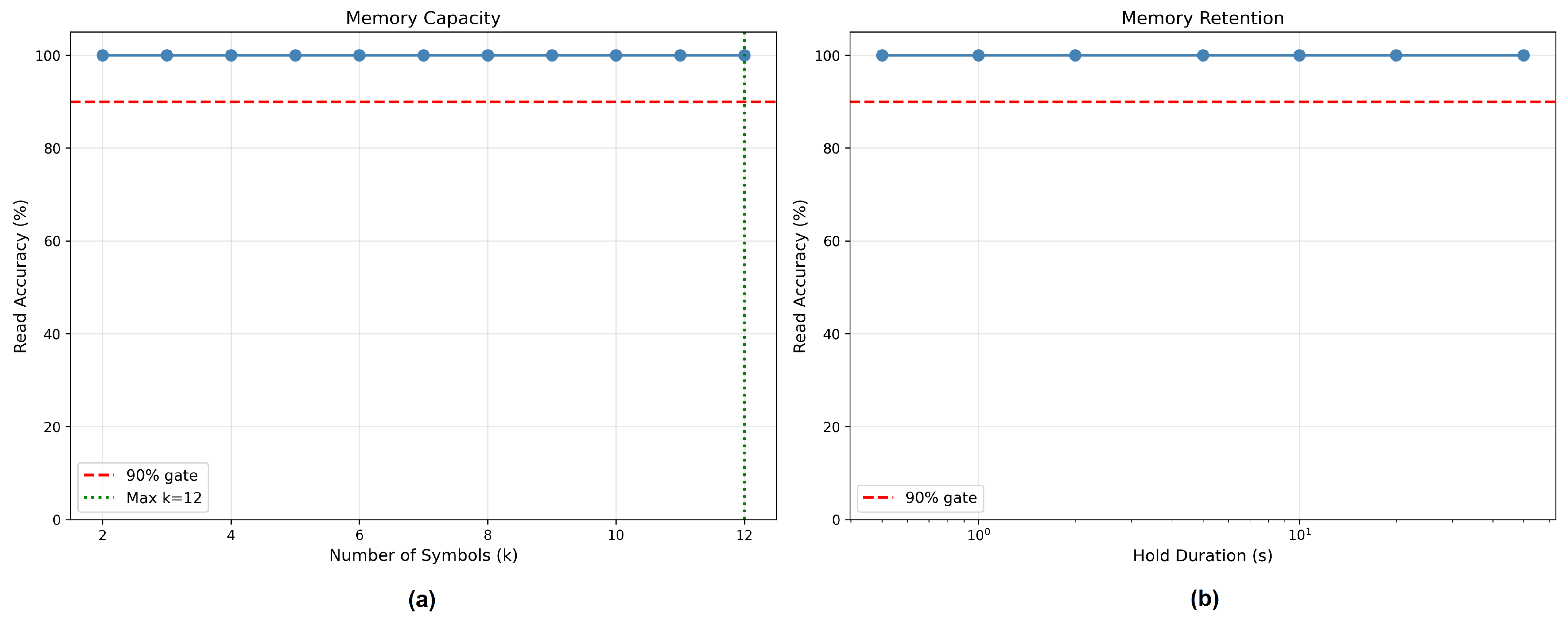
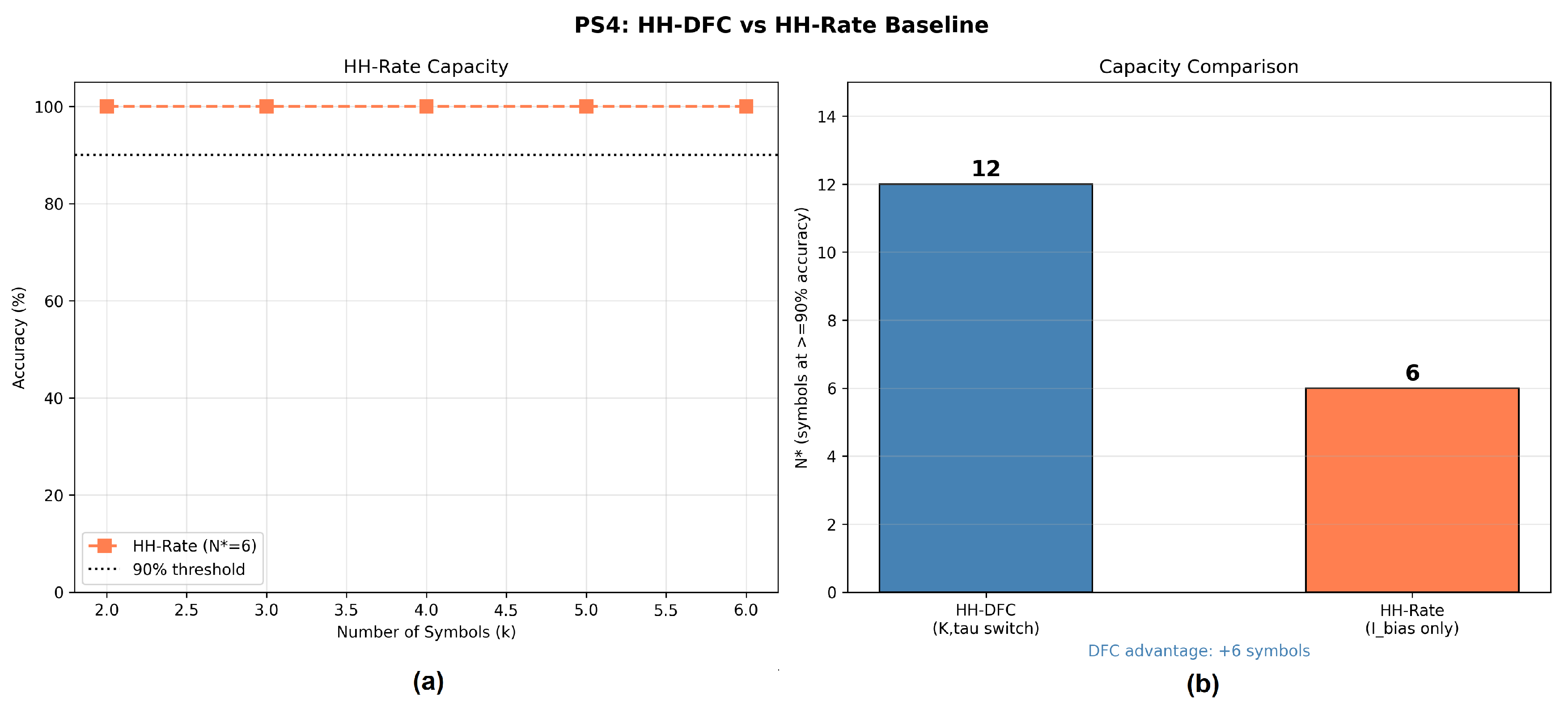
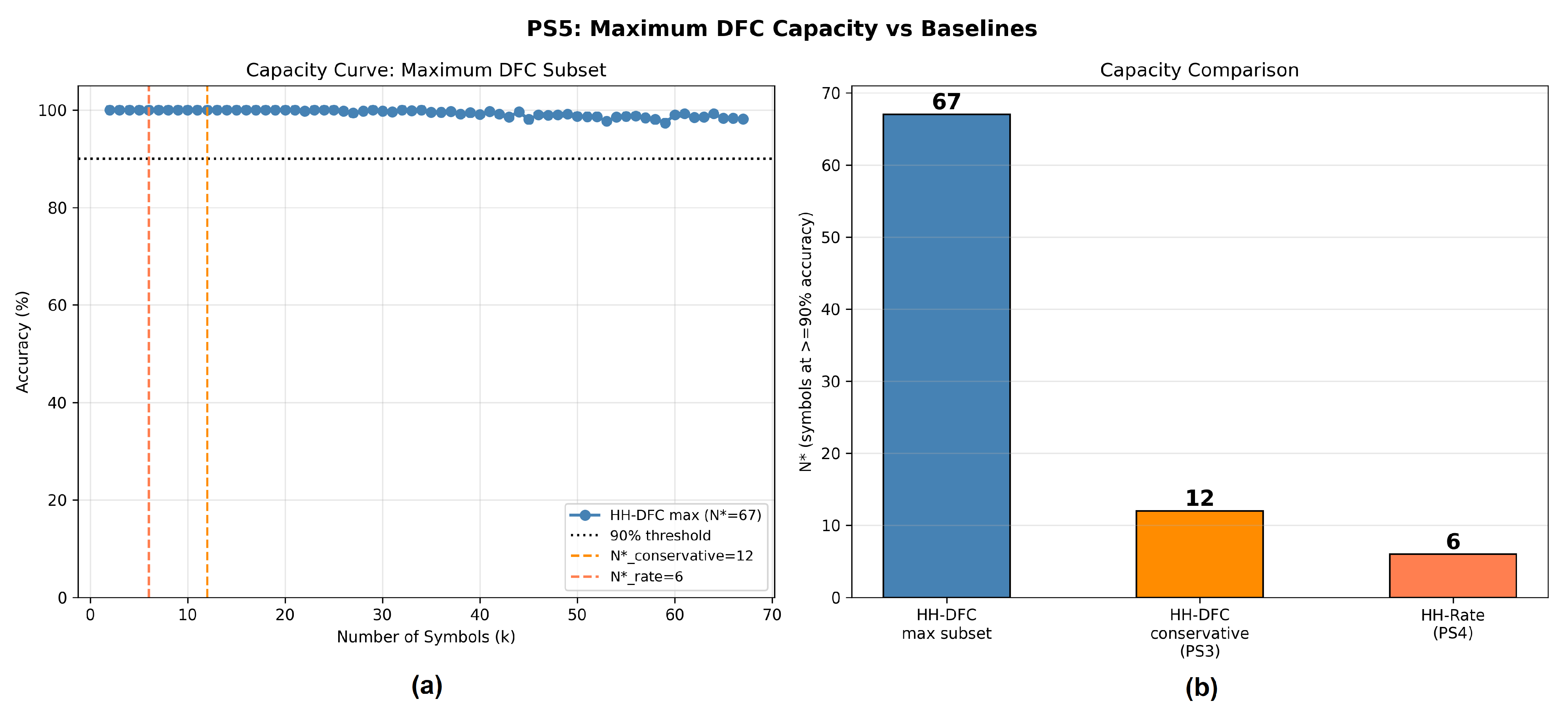
This paper makes the following contributions. (C1) We catalog 207 distinct stable periodic orbit types in the HH–DFC system from a dense 10,100-point sweep of the plane. (C2) We design and validate a complete W–R–E memory cycle achieving 100% read accuracy and 92% erase verification across 12 representative orbits spanning all topological categories, with no decay observed over hold durations up to 50 s. (C3) We introduce the Pattern-Oriented Limit-cycle Decoder (POLD), a lightweight classifier that achieves 100% read accuracy using only five observed ISIs, with no training data required. (C4) We establish a read-discriminable capacity of 67 symbols via a full pairwise confusion matrix and greedy subset selection; full write–read–erase viability is confirmed for a conservative 12-symbol library. (C5) We demonstrate an 11.2× read-discriminable capacity advantage over rate coding (, variable ) in the same neuron; this figure refers to read-discriminable capacity only, with full W–R–E viability confirmed for the conservative 2.0× advantage (12 vs. 6 symbols). (C6) We provide a fully reproducible, gate-based experimental pipeline (PS0–PS5) with formal pass/fail criteria at each phase.
The rest of this paper is arranged as follows:
Section 2 defines the mathematical framework including HH-DFC, orbit library formalism and POLD classifier.
Section 3 describes the six-phase experimental pipeline. In
Section 4, we show results, whereas
Section 5 reports on implications, limitations, and future directions. Finally,
Section 6 concludes the paper.
3. Experimental Pipeline
The study follows a six-phase gated pipeline (PS0–PS5) in which each phase has formal pass/fail criteria (gates) that must be satisfied before proceeding. All simulations use
μA/cm
2 and
ms, and transients of 500–1000 ms are discarded before measurement. Code is implemented in Python with Numba JIT compilation [
66] and executed on Google Colab (Intel Xeon 2.3 GHz, 13 GB RAM). All simulations used a fixed random seed (seed = 42) for reproducibility; results were verified to be invariant across seeds 1–10. Jupyter notebooks (PS0–PS5) are publicly available (see
Data Availability). The gate-based validation structure follows the spirit of gated modeling pipelines used in nonlinear dynamical system studies, where pass/fail criteria at each stage ensure that subsequent analyses rest on confirmed dynamical properties.
3.1. Gate Threshold Rationale
All gate thresholds were fixed a priori, before any simulation was executed, on the following principled bases.
ISI separability threshold (2 ms; PS-G0, PS-G5). We set the minimum pairwise ISI separation at 2 ms based on two considerations: (a) at
ms, the numerical noise floor of the HH model makes two orbit types hard to tell apart statistically when their ISIs differ by less than this, unless the observation window is made much longer; and (b) ISI-based spike-train discrimination in cortical neurons works at a similar temporal resolution [
4]. The robustness of the catalog to this threshold choice is confirmed by two complementary pieces of evidence. First, the PS5 pairwise confusion matrix (
Section 4.6) shows that all 593 orbit pairs below the 90% accuracy criterion have
ms—twenty times smaller than the 2 ms threshold. Second, a formal threshold sensitivity analysis (
Table 3) re-clusters the same cached PS0 grid at 1.0, 1.5, 2.0, and 3.0 ms, yielding 350, 257, 207, and 147 distinct orbit types, respectively, with all 12 topological categories preserved at every threshold. The catalog size varies with threshold (a stricter threshold splits closely spaced orbits into finer sub-types) but the topological structure is invariant, confirming that the 2.0 ms baseline is not an arbitrary choice.
Accuracy thresholds (≥90%; PS-G1a, PS-G2b, PS-G3a–G3e, PS-G5). The 90% criterion is an operational threshold for the present study, informed by the neural decoding literature, where this level is commonly used as a practical performance floor [
67,
68], though no universal standard exists. At this level, the per-symbol error rate (10%) is low enough that a
k-symbol sequential read sequence yields
end-to-end success at
, the minimum multi-symbol operation. Quian Quiroga and Panzeri [
67] survey neural population decoding studies and identify 90% as the practical performance floor distinguishing reliable from unreliable decoders; the same threshold appears in single-unit classification benchmarks reviewed by Dayan and Abbott [
68].
The stricter 95% threshold for clean (zero-noise) reads, in terms of G2a, represents the high standard that is expected when there is no perturbation since a decoding error of one in twenty on a clean sequence cannot be blamed on noise but rather on a fundamental classifier limitation.
Lock-rate threshold (≥80%; PS-G1a). Below 80%, multi-symbol cycling becomes impractical without error correction. So, the 80% floor is essentially the minimum write reliability needed. This is consistent with the write-reliability criterion used in photonic temporal localized-state memory systems [
52,
53], where <80% switching success is treated as phase-bistability failure.
Minimum capacity (; PS-G3c). We set six symbols as the lower bound for two reasons: (a) operationally, this is the minimum needed to show multi-symbol storage beyond simple bistability or tristability; (b) it coincidentally aligns with the lower bound of Miller’s classical working memory estimate of 7 ± 2 items [
69], though we do not claim a direct mechanistic connection between attractor counts in a simulated neuron and cognitive working memory capacity; this alignment serves purely as a computational reference benchmark to contextualize the minimum useful capacity threshold.
Retention duration (10 s; PS-G3d). The 10 s hold duration is inspired by the upper end of the 3–18 s working memory maintenance window established by Baddeley [
70] and supported by prefrontal persistent-activity recordings [
17]; this window is used here as a computational reference benchmark for contextualizing the hold duration, not as a mechanistic claim about biological working memory. Testing seven durations (0.5, 1, 2, 5, 10, 20, 50 s), we find that retention goes well beyond this window under our simulation conditions.
Settling-time criterion (<1000 ms; PS-G1c). The upper bound of 1000 ms on median write settling time is inspired by the reaction-time ceiling for voluntary attentional encoding in working memory tasks (typically 200–800 ms [
70]), used here as a computational reference benchmark rather than a mechanistic claim. A write operation involving more than one second median settler would be inconsistent with the timescale of fast sequential symbol encoding biological working memory and would suggest that the DFC term has not effectively driven the neuron to the target orbit’s target attraction basin. The condition is purposely applied to the median and not the maximum to allow for occasional long transients while requiring the majority of write operations to complete within a behaviorally relevant window.
3.2. PS0: Dense Orbit Catalog
The parameter space of
was scanned via dense sampling of the space. For this purpose, 101
K values uniformly distributed between 0.0 and 2.0 with a step of 0.02 were paired with 100
values distributed logarithmically between 1.0 and 200 ms, producing a grid of 10,100 different sets of parameters. In each of these simulations, the duration was 3000 ms, consisting of 500 ms of transient dynamics and 2500 ms for measurement. Detection of spikes relied on crossing the threshold of
mV, and ISIs were calculated from consecutive spike times. The 2500 ms measurement window is sufficient for reliable regime classification for the following reasons. First, the longest fundamental orbit period in the catalog is approximately 113.75 ms (the doublet orbit with ISI mean = 56.87 ms and period
ms, per
Table 1), meaning that 2500 ms captures approximately 22 complete fundamental periods—well above the three-cycle minimum required for autocorrelation-based pattern detection (
Appendix B). Second, long-period orbits with
ms are absent at
= 10.0 μA/cm
2 because they would require ISI means
ms, far outside the observed range of 5.9–56.9 ms. Third, for ISI-divergence-based chaos detection, 2500 ms produces spike trains ranging from approximately 44 ISIs (slow doublet) to approximately 420 ISIs (fast burst_p12), sufficient for reliable Lyapunov exponent estimation.
Each ISI sequence is classified as silent (fewer than three spikes), tonic (ISI CV
), periodic (repeating ISI pattern found by autocorrelation; see
Appendix B), chaotic (positive Lyapunov exponent from ISI divergence), or quasi-periodic (irrational frequency ratio). Periodic orbits are further described by their pattern length
p from sliding autocorrelation, and orbit types are grouped hierarchically by Euclidean distance on fingerprint vectors (ISI mean, pattern period, pattern length) with a 2 ms linkage threshold. For each cluster, the representative orbit is the point nearest the centroid in ISI-mean space.
3.3. PS1: Write Protocol
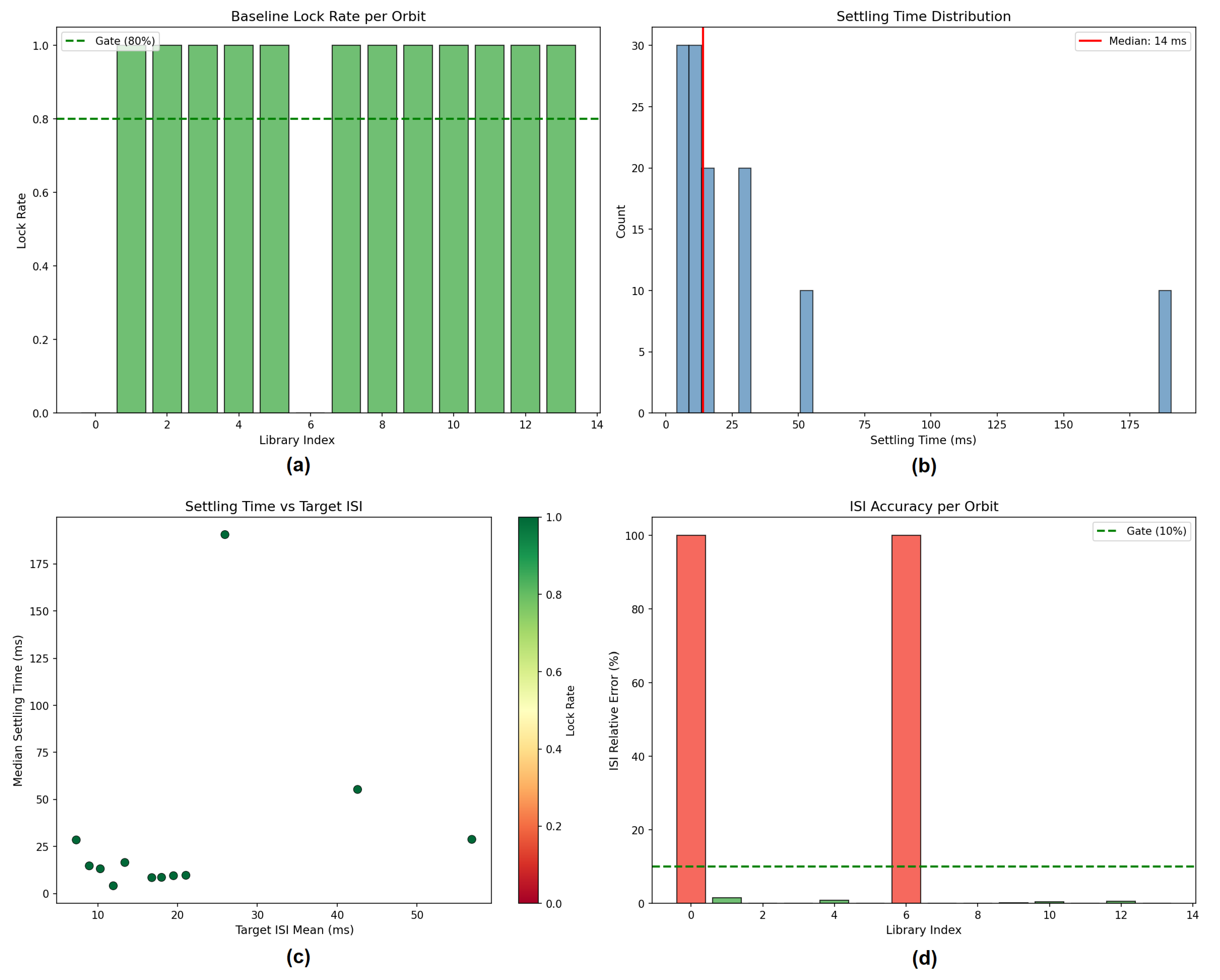
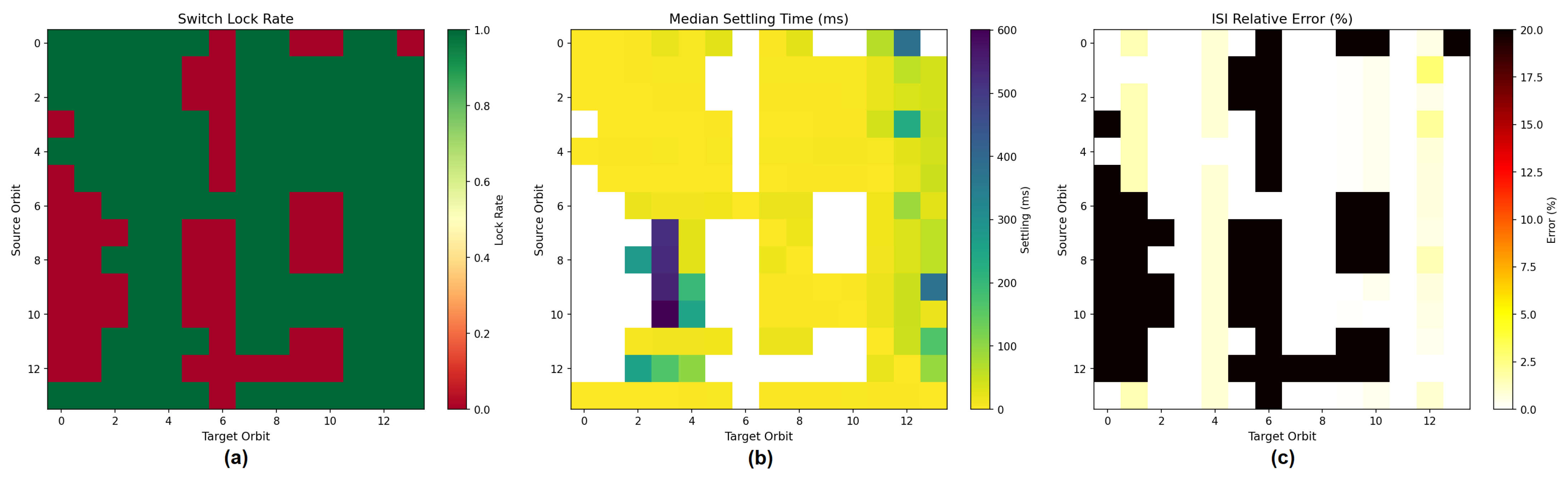
From the 207 cataloged orbit types, we select a working library using a greedy algorithm that maximizes the minimum pairwise ISI separation while covering all topological categories. For each orbit in the working library, the write protocol proceeds in two stages: (i) a baseline phase (500 ms, ) establishing stable tonic firing; (ii) an activation phase (2500 ms) with an instantaneous switch to target parameters . To make sure POLD was not tuned on the same data used for evaluation, we built orbit templates from five independent long-duration simulations (2000 ms each) that did not overlap with any test trials. Lock is declared when the mean of five consecutive ISIs is within 5% of the target ISI mean and the CV of those five ISIs stays below 0.05; if this does not happen within the 2500 ms window, the trial counts as a failure. Settling time is the interval from the parameter switch to the first spike of the locking window.
We build an orbit-to-orbit switching matrix by testing all directed pairs (origin orbit → target orbit), with five trials per pair. This captures switching dynamics separately from the rest-to-orbit write operation.
Gate PS-G1: ≥80% of library orbits achieve lock rate ≥ 80% (G1a, minimum write reliability for functional multi-symbol encoding); overall orbit-to-orbit switch lock rate ≥ 70% (G1b); median settling time
ms (G1c, computational benchmark inspired by the ceiling of attentional encoding timescale [
70]); ISI error
(G1d).
3.4. PS2: Read Protocol and Noise Robustness
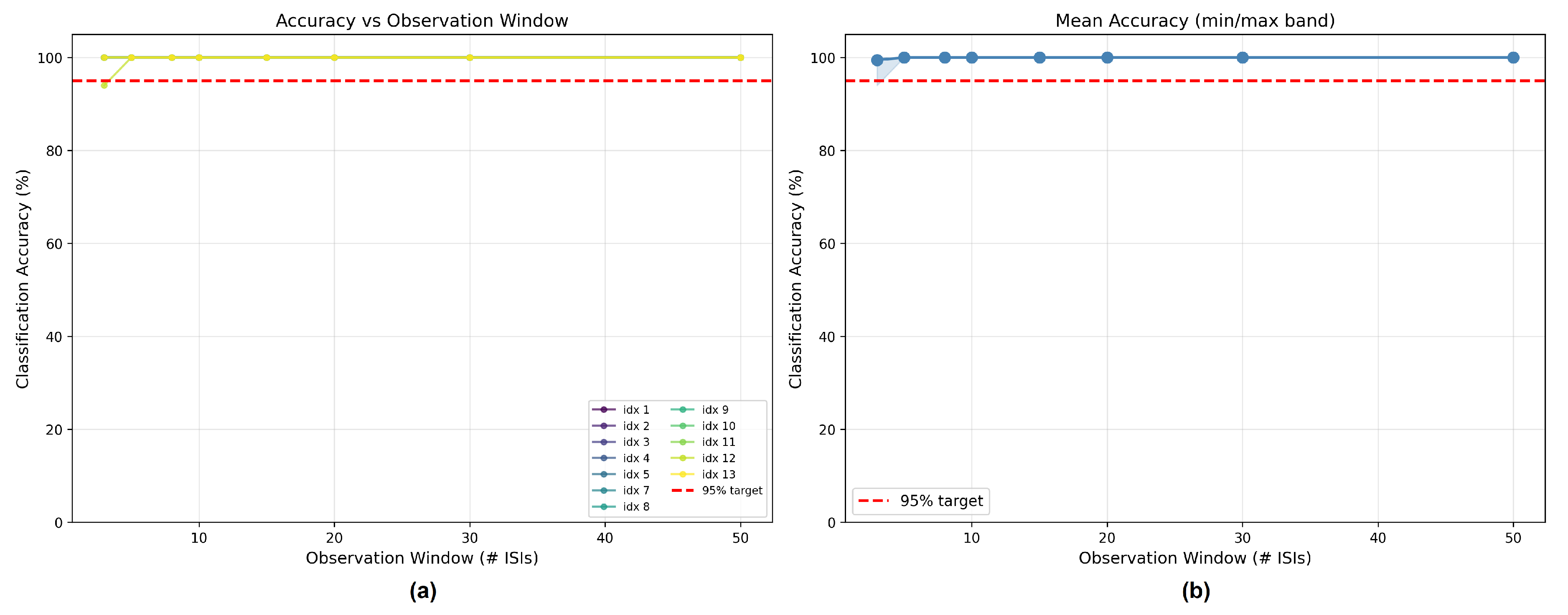
ISI fingerprint templates are built from five clean simulation runs per orbit (each 5000 ms, 1000 ms transient discarded). The POLD classifier (
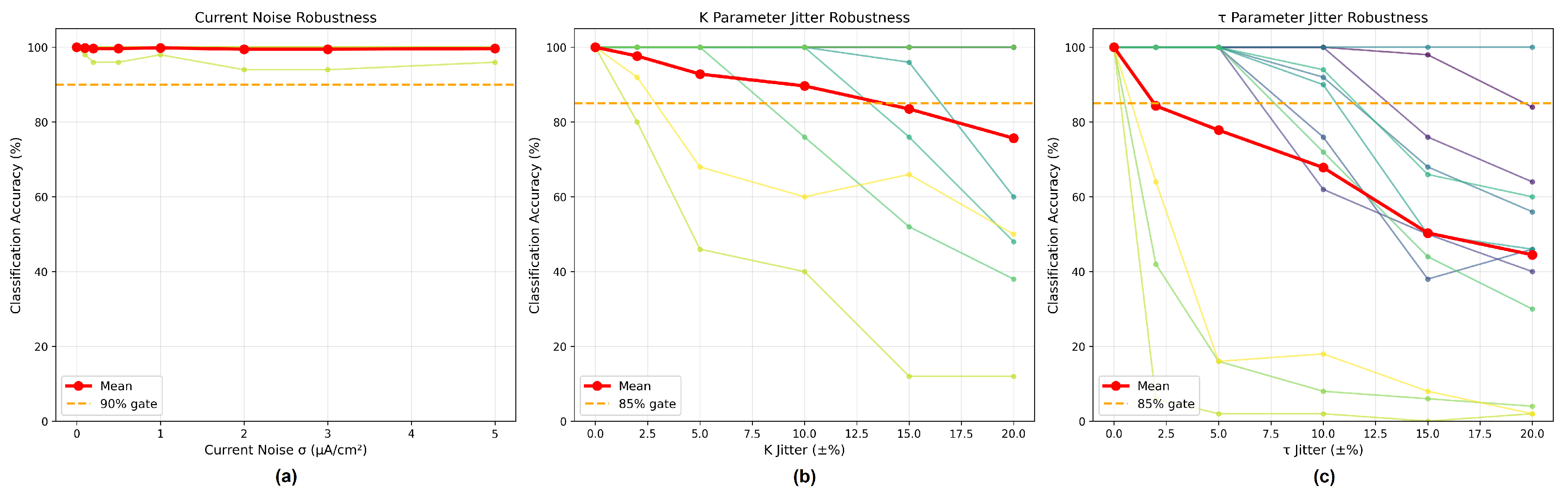
Section 2.4) is calibrated across observation windows of 3–50 ISIs using 50 independent trials per orbit. Noise robustness is tested under three conditions: (i) additive current noise: white Gaussian noise with standard deviation
μA/cm
2 is added to
; (ii) DFC gain jitter:
K is perturbed by
; (iii) delay jitter:
is perturbed by
. For each condition, classification accuracy is measured over 50 trials at a 10-ISI observation window.
Gate PS-G2: Clean accuracy
at 10 ISIs (G2a, strict baseline standard for zero-noise condition); noisy accuracy
at
μA/cm
2 (G2b, standard neural decoding criterion [
27,
70]); jitter accuracy
at ±10% (G2c, aspirational benchmark to identify the precision envelope rather than a hard pass/fail criterion); observation window
ISIs for 95% accuracy (G2d).
3.5. PS3: Full Write–Read–Erase Demonstration
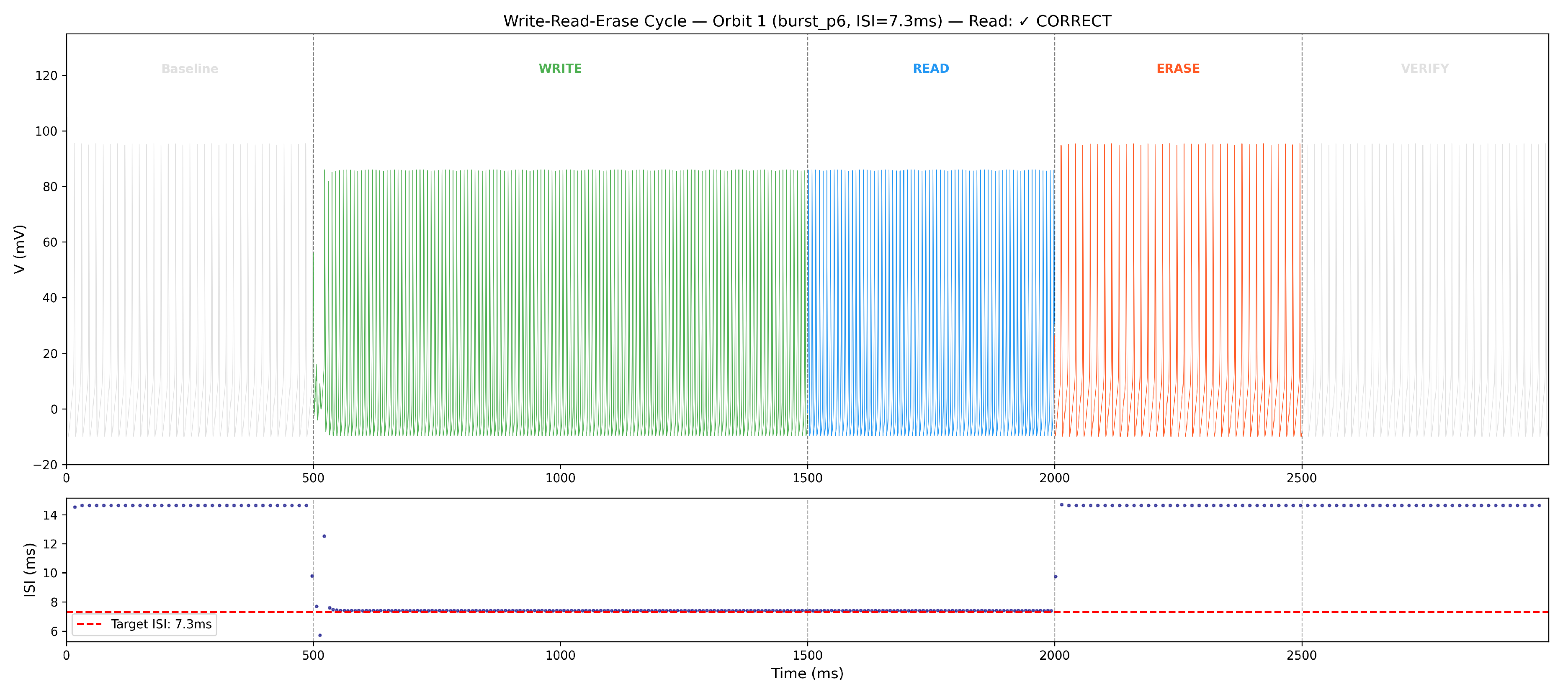
The complete memory cycle is demonstrated in four sub-phases.
Phase A (single W–R–E): for each library orbit, execute 500 ms baseline → 1000 ms write → 500 ms read (10 ISIs classified) → 500 ms erase → 500 ms verify. This tests one complete memory cycle per orbit with no overlap.
Phase B (full-alphabet independent-symbol readout): The entire library orbit simulation is performed independently using the clean simulation method (transient time of 500 ms + hold time of 2000 ms). These simulations are classified from the last 500 ms of each library orbit simulation and then combined according to the library sequence to form the complete independent symbol readout using the full alphabet. This technique examines distinguishability among the entire alphabet and is consistent with Phase A’s single-cycle validated results; the continuous orbit-to-orbit switching dynamics are studied using the PS1 switching matrix independently. It is important to note that Phase B tests each orbit independently from a baseline state and does not constitute a continuous sequential write–read–erase cycle; it confirms full-alphabet discriminability but not continuous cycling. A demonstration of complete sequential cycling without intermediate resets to baseline would provide stronger operational validation and is planned as a priority next step.
Phase C (capacity test): for subset sizes to N, select k orbits by evenly spacing their ISI means across the full range, then write–read each across 20 trials at a 10-ISI window. Report is the maximum k at which ≥90% accuracy is obtained.
Phase D (retention test): hold each orbit for seconds without any refresh or read operations, then classify at the end. This measures whether periodic attractors persist without ongoing input.
Gate PS-G3: W–R–E accuracy
(G3a); full-library independent-symbol readout accuracy
(G3b); capacity
at ≥90% accuracy (G3c, lower bound of biological working memory span [
69]); 10 s retention
(G3d, upper range of working memory maintenance window [
70]); erase verification
(G3e).
3.6. PS4: Rate Coding Baseline Comparison
A controlled comparison against rate coding isolates the contribution of DFC. The sweep covers μA/cm2 in 0.5 μA/cm2 steps (189 values), with (no DFC) throughout.
Distinguishable tonic states are chosen based on a 2 ms ISI separation criterion just like the one used for orbit classification. The exact same POLD classifier and capacity testing procedure (Phase C of PS3) is used. Since the classifier and capacity test process are kept consistent, a direct comparison can be made where any capacity advantage can be definitively attributed to DFC and not to classifier design.
3.7. PS5: Maximum Capacity from All 207 Orbit Types
A full pairwise confusion matrix is used for testing all 207 orbits. To save on computations, all 207 orbits are simulated only once (5000 ms) with 50 ISI windows of length 10 being cached. Subsequently, all 21,321 pairs are tested using the stored data without performing any additional simulations (Phase B takes less than 6 min vs. nearly 18 h). Finally, a greedy maximum-subset selection algorithm selects the largest possible subset of mutually discriminable orbits such that the accuracy of classification between all pairs within the subset equals or exceeds 90%, starting with the orbit having the largest number of compatible neighbors and adding other orbits sequentially if they can be distinguished from all the previously selected ones. The capacity curve is measured over the full to range.
A summary of all gate pass/fail criteria is provided in
Table 4.




 ,
,