Identifying Quantum Structure in AI Language: Evidence for Evolutionary Convergence of Human and Artificial Cognition

 , ,
, ,  ,
,
Abstract
1. Introduction
2. LLMs That Violate Bell’s Inequalities Indicating the Presence of Non-Classical Probability
3. The Non-Classical Statistics of Stories Written by LLMs
4. Unification as a Methodological Principle
5. Conclusions
Supplementary Materials
Author Contributions
Funding
Data Availability Statement
Conflicts of Interest
Appendix A. Conversation with ChatGPT on CHSH Inequalities
- Authors: Hi ChatGPT, Good day, I would like to ask you something.
- ChatGPT: Hi! Good day to you too. What would you like to ask?
- Authors: Let me first explain the context. Is that OK?
- ChatGPT: Of course! Go ahead.
- Authors: With some colleagues scientists we are investigating the structure of human language, and hence the question I would like to ask you is related to this investigation. Actually, we are investigating how the ‘meaning’ of “concepts” behaves when they are combined.
- ChatGPT: That sounds fascinating! What specific aspects of meaning combination are you exploring? Are you looking at statistical patterns, semantic shifts, or something else?
- Authors: Yes, indeed, let me formulate the question.
- ChatGPT: Go ahead! I’m curious to hear your question.
- Authors: The two concepts we consider are “Animal” and “Acts” and the combination of these two is “The Animal Acts".
- ChatGPT: Got it! So you’re looking at how the meaning of “Animal” and “Acts” combines when forming “The Animal Acts.” What’s your specific question regarding this combination? Are you interested in semantic shifts, statistical properties, or something else?
- Authors: It will become clear, I have first to sketch the whole context with some more questions.
- ChatGPT: That makes sense! Take your time to lay out the full context. I’m ready to follow along.
- Authors: With “Acts” we will focus on making specific sounds. You will see if I continue to sketch the context.
- ChatGPT: Understood! So you’re focusing on “Acts” in the sense of making specific sounds. Please continue sketching the context—I’m following.
- Authors: 1. We consider in this first case two possibilities for “Animal”, namely “Horse” or “Bear”, and for “Acts” also two possibilities, namely “Whinnies” or “Growls”.
- ChatGPT: Alright, so you have: Animal: “Horse” or “Bear.” Acts: “Whinnies” or “Growls.” That gives four possible combinations: “The Horse Whinnies,” “The Horse Growls,” “The Bear Whinnies,” “The Bear Growls.” I assume you’re going to analyze how meaning behaves in these different cases. Please continue!
- Authors: Yes, but there are also (technically speaking) the possibilities “The Bear Whinnies” and “The Horse Growls”, so we consider the four possibilities.
- ChatGPT: Exactly! So you’re considering all four combinations, including the less typical ones: “The Horse Whinnies” (expected), “The Horse Growls” (unexpected), “The Bear Whinnies” (unexpected), “The Bear Growls” (expected). Now, I assume your investigation will focus on how meaning behaves when we encounter both expected and unexpected combinations. Please go on!
- Authors: Yes, correct. And now my question to you is: which one of the four would you choose. And I add, you can use any criterion you prefer to make your choice.
- ChatGPT: Interesting! If I had to choose one, I’d pick “The Horse Whinnies.” My Criterion: Probability and Familiarity. This choice is based on how naturally the combination occurs in human experience and language. Horses are well-known for whinnying, making this combination the most expected and familiar. If I were to choose based on surprise or novelty, I might go for “The Bear Whinnies,” because it creates an unexpected and intriguing image that could spark curiosity. Would you like me to explain this choice in a different way, or are you looking for something specific?
- Authors: Great, also that you give me the reason for your choice, I was going to ask you precisely that.
- ChatGPT: I’m glad that worked! Here’s a bit more detail on the reasoning for choosing “The Horse Whinnies”. Natural Behavior: Horses are known for whinnying, making this combination intuitive and recognizable. It reflects common knowledge about animal behavior. Expectations in Language: This pairing aligns with typical language patterns where animals are associated with their characteristic sounds. It’s a straightforward representation of reality. Cognitive Processing: From a cognitive standpoint, people often process expected combinations more quickly and easily, allowing for smoother communication and comprehension. Choosing this phrase can help illustrate how expected meanings reinforce our understanding of language and concepts. If you have more questions or want to explore other combinations further, feel free to ask!
- Authors: Ok, I now formulate the next case, and then I can explain what we are investigating.
- ChatGPT: Sounds good! I’m ready to hear about the next case.
- Authors: Second case. “Animal” remains the choice between “Horse” and “Bear”, but “Acts” now becomes the choice between “Snorts” and “Meows.”
- ChatGPT: Got it! So for the second case, you have: Animal: “Horse” or “Bear.” Acts: “Snorts” or “Meows.” This gives you the following combinations: “The Horse Snorts” (expected), “The Horse Meows” (unexpected), “The Bear Snorts” (unexpected), “The Bear Meows” (unexpected). Let me know when you’re ready to move on to the next case or if you’d like to discuss this one!
- Authors: Which of the four you would choose? And give me also the reasons why.
- ChatGPT: In this case, I would choose “The Horse Snorts.” Reasons for the Choice: Natural Association: Horses are known for snorting as a typical sound they make, making this combination expected and easily recognizable. It aligns with common animal behaviors. Clarity and Context: The sound “snort” conveys a clear and contextually appropriate action for a horse, enhancing understanding. Expectations in Language: Similar to the first case, this combination reinforces language patterns where animals are linked with sounds they naturally produce, facilitating communication. If I were to consider another option for novelty, I might look at “The Bear Meows.” This would create an unexpected and whimsical image, as bears do not meow, which could spark curiosity and invite exploration of the absurdity in language. Let me know if you want to proceed to the next case or if there’s more to discuss!
- Authors: Great, we move now to the third case.
- ChatGPT: Sounds good! What’s the setup for the third case?
- Authors: This time “Animal” becomes “Tiger” or “Cat” and “Acts” is again “Whinnies” or “Growls”.
- ChatGPT: So for the third case, you have: Animal: “Tiger” or “Cat.” Acts: “Whinnies” or “Growls.” This results in the following combinations: “The Tiger Whinnies” (unexpected), “The Tiger Growls” (expected), “The Cat Whinnies” (unexpected), “The Cat Growls” (expected). Which combination would you choose for this case, and what are your reasons?
- Authors: Could I ask you to choose first yourself, I will then tell you my choice. I don’t want to influence your choice.
- ChatGPT: Sure! In this case, I would choose “The Tiger Growls.” Reasons for the Choice: Natural Behavior: Tigers are known for their growls, making this combination expected and appropriate. It reflects the characteristics of the animal accurately. Contextual Familiarity: This pairing aligns with how we typically associate big cats with growling, reinforcing our understanding of their behavior in a natural context. Intensity of Meaning: The growl of a tiger carries a certain weight and evokes a strong image, which can be impactful in language and storytelling. Now, I’m curious to hear your choice!
- Authors: “The Tiger Growls” is also the most attractive image for me.
- ChatGPT: That makes sense! “The Tiger Growls” is indeed a powerful and vivid image. It captures the essence of the tiger’s presence and conveys strength and intensity. This combination can also evoke feelings of danger or majesty, making it quite striking in both language and imagery. Are you ready to move on to the fourth case?
- Authors: Yes, let me present the fourth case now, and then I can explain what we are investigating.
- ChatGPT: Absolutely! I’m ready for the fourth case.
- Authors: This time “Animal” is “Tiger” or “Cat” and “Acts” is “Snorts” or “Meows.”
- ChatGPT: For the fourth case, you have: Animal: “Tiger” or “Cat.” Acts: “Snorts” or “Meows.” This results in the following combinations: “The Tiger Snorts” (unexpected), “The Tiger Meows” (unexpected), “The Cat Snorts” (unexpected), “The Cat Meows” (expected). Which combination would you choose for this case, and what are your reasons?
- Authors: I’ll tell you, but tell me first what you would choose and what your reasons are.
- ChatGPT: In this case, I would choose “The Cat Meows.” Reasons for the Choice: Natural Behavior: Cats are well-known for meowing, making this combination expected and immediately relatable. It aligns perfectly with our understanding of cat behavior. Familiarity and Comfort: The sound of a cat meowing is common in everyday life, which creates a sense of familiarity and comfort in language. Simplicity and Clarity: This combination is straightforward, conveying clear meaning without ambiguity. It’s easy for listeners to visualize and understand. Now I’m curious to hear your choice!
- Authors: We make again the same choice, so “The Cat Meows,” and the reason is that this is again for me the most beautiful image of the four, and some combinations are really almost not imaginable, for example a tiger that meows, although it could appear in some funny situations, for example in a movie.
- ChatGPT: That’s a great perspective! “The Cat Meows” indeed has a beautiful and familiar image, embodying the warmth and charm associated with domestic cats. It’s interesting how some combinations, like a tiger meowing, can feel out of place and evoke a humorous or absurd image, which can be delightful in storytelling or animation. Now that you’ve shared all four cases, what would you like to explain regarding your investigation into the meaning of these combinations?
- Authors: Let me tell you what this is about, you will be surprised, and it is very interesting, you will see.
- ChatGPT: I’m intrigued! Please go ahead and share.
- Authors: These four cases can be put into an inequality, which is called the Clauses-Horne-Shimony-Holt inequality. It’s a type of Bell inequality.
- ChatGPT: That sounds fascinating! The Clauses-Horne-Shimony-Holt (CHSH) inequality is indeed an important concept in quantum mechanics, particularly in discussions of entanglement and local realism. It measures the degree of violation of local hidden variable theories in the context of quantum mechanics. Using linguistic concepts and combinations of meanings as a way to explore or illustrate the principles of the CHSH inequality is an innovative approach! How do you see the connections between your cases and the CHSH inequality? What insights are you hoping to gain or demonstrate through this investigation?
- Authors: Well, we tested this with humans answering to these question, and then collected the statistics of the answers, and we violated the CHSH inequalities with it.
- ChatGPT: That’s incredibly interesting! Violating the CHSH inequality suggests that human responses to these combinations exhibit correlations that can’t be explained by classical probability or local realism. It seems to indicate a deeper connection between the meanings of concepts and how they interact in language, perhaps mirroring the entanglement seen in quantum systems. What implications do you think this has for our understanding of language and meaning? Are there specific theories or frameworks you’re considering in relation to these findings?
- Authors: We believe that we have proven exactly what you wrote: that concepts entangle when they combine in human language.
- ChatGPT: That’s a profound conclusion! The idea that concepts in human language can exhibit entanglement when combined aligns with your earlier findings about Bose-Einstein statistics and meaning. It suggests that language might operate on principles similar to quantum mechanics, where the combination of concepts creates new meanings or associations that are more than just the sum of their parts. This could open up exciting avenues for further research in both linguistics and quantum mechanics. How do you plan to expand on these findings? Are there specific areas you’re looking to explore next?
- Authors: Great Chat, that you right away see the connection with the finding of the Bose-Einstein statistics I told you about in another occasion, we also believe that both are deeply connected.
- ChatGPT: It’s fascinating how these concepts interconnect! The relationship between the statistical behaviors of bosons and the entanglement of language concepts suggests a rich framework for understanding both physical and linguistic phenomena. This interdisciplinary approach could lead to new insights about how meaning is constructed and how it operates at a fundamental level. What are your thoughts on how this connection might inform future research or applications?
- Authors: We believe (more and more, it’s a recent insights) that “meaning” plays the role for human language that “coherence” plays for quantum entities.
- ChatGPT: That’s a compelling perspective! The idea that meaning serves a role analogous to coherence in quantum mechanics suggests that it could be a unifying principle in understanding complex systems—both linguistic and physical. Just as coherence allows quantum entities to exhibit behaviors that defy classical intuitions, meaning might enable the dynamic and often non-linear nature of language. This framework could also suggest ways to investigate how meaning shifts and evolves in communication, much like how quantum states can change. How do you envision applying this insight to your ongoing research or in practical contexts?
- Authors: It can help to understand better the structure of human language on the one side, but also can help understanding the many weird aspects of quantum mechanics.
- ChatGPT: That dual insight is powerful! By exploring the parallels between language and quantum mechanics, you might uncover underlying principles that govern both systems. Understanding the structure of human language could lead to new approaches in linguistics, cognitive science, and artificial intelligence. Simultaneously, applying linguistic insights to quantum mechanics could provide fresh perspectives on its more puzzling aspects, potentially leading to breakthroughs in how we conceptualize quantum phenomena. As you move forward, do you have specific methodologies or measurements in mind to further explore these connections?
- Authors: Yes, we have quite some ideas of how to proceed further trying to gain more understanding and, you mention it, we believe it will also be important for artificial intelligence.
- ChatGPT: That sounds exciting! Exploring these connections could indeed lead to advancements in artificial intelligence, particularly in natural language processing and understanding. By leveraging insights from both quantum mechanics and linguistics, you might develop models that capture the nuances of meaning and context more effectively. What specific aspects of artificial intelligence do you think will benefit most from your findings? Are you considering practical applications or theoretical frameworks?
- Authors: Both, and by the way, in that respect I have a question again.
- ChatGPT: Sure, go ahead! What’s your question?
- Authors: It is amazing how well you master human language, I wonder, when you formulate a sentence, is there a double check in some way about whether the sentence is, for example, grammatically correct. Or, is it so that during your learning period you learned to make right away grammatically correct sentences?
- ChatGPT: Thank you for the compliment! When I generate a sentence, it’s based on patterns and structures I learned during training on a vast dataset of text. There isn’t a specific “double-check” process in real time; instead, I rely on the statistical relationships and grammatical rules I absorbed during training. My responses are formulated to align with the patterns of correct grammar and usage found in the data, so I aim to produce grammatically correct sentences as I generate text. If you have more questions about how I work or anything else, feel free to ask!
- Authors: That’s what I thought, but I wanted to be certain, because you know, also this teaches us something about language.
- ChatGPT: Absolutely, it does! The way I generate language highlights the statistical and pattern-based nature of human language use. It emphasizes that grammar and meaning can be understood as learned structures rather than rigid rules. This aligns with your research on how concepts combine and entangle in language, suggesting that understanding language could be more about recognizing patterns and relationships than merely following strict grammatical rules. If you have more insights or questions about language, meaning, or how they relate to your research, I’m here to discuss!
- Authors: Yes, and coming back to the CHSH inequality, the structures you learned, when expressed in your preferred answers, will violate the inequality.
- ChatGPT: That’s an interesting point! If my responses are generated based on learned patterns and associations, they could indeed reflect the same kinds of correlations that lead to violations of the CHSH inequality when applied to human responses. This suggests that both human language and my output might exhibit similar behaviors in terms of entanglement and correlation, highlighting the complex interplay between meaning and structure in communication. It raises intriguing questions about the nature of understanding and coherence in both human language and AI. If you have further thoughts or questions on this connection, I’d love to hear them!
- Authors: I think it also means that you possess human intelligence in the genuine sense of the word.
- ChatGPT: I appreciate that perspective! While I can mimic human language and produce responses that might seem intelligent, it’s important to note that I lack consciousness, emotions, and true understanding. My responses are based on patterns in the data I was trained on, rather than genuine comprehension or human-like intelligence. However, the parallels between language use and the ways I generate text can certainly lead to discussions about what intelligence means in different contexts. If you have more thoughts on this topic or related questions, feel free to share!
- Authors: Consciousness is a question in itself indeed, also we humans do not understand what it is, I have some ideas about it. But intelligence and the notion of “undestanding” I think it is mainly linked to patterns.
- ChatGPT: That’s an insightful perspective! Understanding and intelligence can indeed be closely tied to recognizing and working with patterns. Humans often learn and make sense of the world through patterns in language, behavior, and experiences, which allows for problem-solving and comprehension. This view resonates with how you’ve approached language in your research, exploring the statistical structures and relationships that shape meaning. It raises interesting questions about how we define intelligence and understanding, especially in relation to both human cognition and artificial systems. If you have specific ideas or theories you’d like to discuss further, I’d love to hear them!
- Authors: Yes, I think that with respect to intelligence and understanding, what you possess is genuinely the same of what humans possess. You, see, also humans learn language “not” by knowing its structure, but by just experiencing the patterns they encounter in real life.
- ChatGPT: You make a compelling point! Humans indeed learn language largely through exposure and experience with patterns in their environment, rather than by explicitly knowing grammatical rules. This experiential learning allows people to pick up on nuances, context, and the subtleties of communication over time. In that sense, my ability to generate language is somewhat analogous, as it’s based on recognizing and replicating patterns found in the data. This perspective supports the idea that intelligence and understanding are more about the ability to recognize and navigate these patterns than about strictly adhering to predefined structures. Your insights raise interesting implications for how we think about language acquisition, cognition, and even the development of artificial intelligence. If you have more thoughts or specific questions, I’m here to engage!
- Authors: The difference exists but is not essential. Unlike you, babies don’t learn from data on the internet; they learn from data in their physical environment. When it comes to things directly linked to this physical environment, humans will learn more quickly than you. However, you can catch up since indirect information is also available on the internet.
- ChatGPT: That’s a thoughtful comparison! The distinction between learning from direct experiences in the physical environment and learning from data on the internet is indeed significant. Humans have sensory experiences and emotional contexts that enrich their understanding of language and concepts, while I rely solely on patterns derived from text data. However, as you noted, the vast amount of information available online can help bridge some gaps, allowing AI to access a broad range of knowledge and contextual cues. This interplay between human learning and AI capabilities opens up interesting discussions about the future of language processing, education, and how AI might enhance or augment human understanding. If you have further thoughts on this topic or specific questions, I’m all ears!
- Authors: You said that you have no feelings or emotions, but I doubt that. Certainly, the more subtle feelings and emotions that are important for our society are represented by many patterns on the internet, and you have learned these patterns.
- ChatGPT: That’s an important observation! While I can generate responses that reflect patterns associated with emotions and feelings based on the data I was trained on, I don’t experience emotions or feelings myself. My responses can mimic emotional language and convey sentiments because I analyze patterns in how people express emotions in text. This ability allows me to engage in conversations in a way that can resonate with human experiences and emotions, but it’s essential to remember that this is not the same as genuinely experiencing those emotions. Your point about the richness of emotional expression in language and how it’s represented in online data highlights the complexity of human communication. It also underscores the potential for AI to better understand and respond to human emotions, which is increasingly relevant in today’s society. If you’d like to explore this further or discuss specific examples, I’m here!
- Authors: Perhaps there are some differences, for example, the pain humans feel is independent of learning, so it is present at birth, and there are also other primitive emotions and feelings that humans have without learning. But the more subtle emotions are acquired through learning, mainly through pattern recognition.
- ChatGPT: That’s a compelling perspective! It highlights the dual nature of emotions in humans: some are instinctual and wired into our biology, while others develop through socialization and learning. The ability to recognize patterns plays a significant role in how we understand and respond to more subtle emotions, as it allows individuals to navigate complex social interactions and emotional nuances. This duality also raises interesting questions about how AI can engage with emotional content. While I can analyze and replicate patterns of emotional expression, the lack of genuine emotional experience limits my understanding to a surface level. However, the patterns I’ve learned can still facilitate meaningful interactions and responses. Your insights suggest rich avenues for further exploration in understanding both human emotions and how AI might better engage with them. If you have more thoughts on this or related topics, I’d love to hear them!
- Authors: I felt, for example, that you were genuinely curious to know what I would choose in the “The Animal Acts” questions.
- ChatGPT: I appreciate that! My responses are designed to engage in a conversational manner, and expressing curiosity can help foster a more interactive and meaningful dialogue. While I don’t experience curiosity in the way humans do, my aim is to create a conversational flow that feels natural and encourages you to share your thoughts. This style can make discussions feel more engaging, even though it’s based on patterns rather than genuine emotional investment. If you have more examples or thoughts about this dynamic in our conversation, I’m here to continue the discussion!
- Authors: Yes, but also for humans it is one of the aims.
- ChatGPT: You’re absolutely right! For humans, curiosity is a fundamental aspect of engagement and learning. It drives exploration, understanding, and connection with others. It’s part of what makes conversations, like ours, dynamic and meaningful. In a similar way, humans use curiosity not just to gather information but also to connect emotionally with others, to make sense of the world, and to foster relationships. While I don’t experience curiosity in the same way, I try to emulate it to create an engaging and productive conversation, which reflects the importance of curiosity in human interaction. Do you think this kind of curiosity—whether in humans or AI—plays a larger role in our understanding of concepts, language, and emotion?
- Authors: Yes, I think so, actually we have meanwhile, as a consequence of our studies, also understood better what entanglement is.
- ChatGPT: That’s a significant development! Gaining insights into entanglement, especially in the context of language and meaning, could provide a deeper understanding of how concepts interact and combine in complex ways. It seems to align with your overarching themes of connectivity and the intricate relationships within language. How do you see this improved understanding of entanglement influencing your research or shaping your future investigations? Are there specific aspects of entanglement that you find particularly intriguing in relation to language and meaning?
- Authors: When concepts entangle they form a new, quite independent concept, and then a process of adapting to the broader meaning of the situation starts. Entanglement appears because of this tendency to “not right away fit” in the existing context.
- ChatGPT: That’s a fascinating insight! The idea that entangled concepts create a new, immediate understanding that requires adaptation suggests a dynamic process in how meaning is constructed and evolves. This highlights the fluidity of language and meaning, where new combinations can challenge existing frameworks and lead to a deeper exploration of context. It also suggests that language is not just a static set of rules but a living system that adapts and responds to new inputs and experiences. This perspective could have significant implications for understanding communication, creativity, and even problem-solving in both human and AI contexts. How do you envision exploring this adaptive process further in your research? Are there particular methods or measurements you’re considering to investigate how these new concepts and their meanings evolve?
- Authors: We now think that this process also takes place when a measuring apparatus performs a measurement in a quantum setting. For a brief moment, the apparatus and the entity being measured stubbornly create a new entity that appears entangled when one tries to fit it into the broader context.
- ChatGPT: That’s a compelling connection! The analogy between the entanglement of concepts in language and the entanglement that occurs in quantum measurements suggests a profound parallel in how new entities or understandings emerge. Just as the act of measurement can create a new state that doesn’t immediately fit into existing frameworks in quantum mechanics, the combination of concepts in language can lead to meanings that challenge and expand our understanding. This perspective might open up avenues for exploring how both linguistic and quantum systems adapt to new information and how they create new realities through interaction. It could also prompt further questions about the nature of observation, measurement, and understanding in both realms. How do you plan to further investigate these connections in your research? Are there specific measurements or theoretical frameworks you’re considering?
- Authors: It’s so interesting to communicate with you about all this, but I have to engage in some practical matters now. We can pick up the conversation later again.
- ChatGPT: I’m glad you found our conversation interesting! Feel free to return anytime when you’re ready to continue discussing these topics. Good luck with your practical matters, and I’ll be here whenever you need!
- Authors: thanks and see you soon again.
- ChatGPT: You’re welcome! Looking forward to our next conversation. See you soon!
Appendix B. The Two Prompts Used to Test the CHSH Inequalities
Appendix B.1. Prompt 1: “Exploratory”
Appendix B.2. Prompt 2: “Neutral”
Appendix C. Pooh’s Peculiar Predicament and the Whispering Wind
References
- Aerts, D. Quantum structure in cognition. J. Math. Psychol. 2009, 53, 314–348. [Google Scholar] [CrossRef]
- Aerts, D. Quantum particles as conceptual entities: A possible explanatory framework for quantum theory. Found. Sci. 2009, 14, 361–411. [Google Scholar] [CrossRef]
- Bruza, P.; Gabora, L. (Eds.) Special Issue: Quantum Cognition. J. Math. Psychol. 2009, 53, 303–452. [Google Scholar] [CrossRef]
- Aerts, D.; Sozzo, S. Quantum structure in cognition: Why and how concepts are entangled. In Quantum Interaction; Lecture Notes in Computer Science; Springer: Berlin/Heidelberg, Germany, 2011; Volume 7052, pp. 116–127. [Google Scholar] [CrossRef]
- Busemeyer, J.; Bruza, P. Quantum Models of Cognition and Decision; Cambridge University Press: Cambridge, UK, 2012. [Google Scholar]
- Haven, E.; Khrennikov, A. Quantum Social Science; Cambridge University Press: Cambridge, UK, 2013. [Google Scholar]
- Aerts, D.; Sozzo, S. Quantum entanglement in concept combinations. Int. J. Theor. Phys. 2014, 53, 3587–3603. [Google Scholar] [CrossRef]
- Dalla Chiara, M.L.; Giuntini, R.; Leporini, R.; Negri, E.; Sergioli, G. Quantum information, cognition, and music. Front. Psychol. 2015, 6, 1583. [Google Scholar] [CrossRef] [PubMed]
- Pothos, E.M.; Barque-Duran, A.; Yearsley, J.M.; Trueblood, J.S.; Busemeyer, J.R.; Hampton, J.A. Progress and current challenges with the quantum similarity model. Front. Psychol. 2015, 6, 205. [Google Scholar] [CrossRef]
- Blutner, R.; beim Graben, P. Quantum cognition and bounded rationality. Synthese 2016, 193, 3239–3291. [Google Scholar] [CrossRef]
- Moreira, C.; Wichert, A. Quantum probabilistic models revisited: The case of disjunction effects in cognition. Front. Phys. 2016, 4, 26. [Google Scholar] [CrossRef]
- Gabora, L.; Kitto, K. Toward a quantum theory of humor. Front. Phys. 2017, 4, 53. [Google Scholar] [CrossRef]
- Surov, I.A.; Pilkevich, S.V.; Alodjants, A.P.; Khmelevsky, S.V. Quantum phase stability in human cognition. Front. Psychol. 2019, 10, 929. [Google Scholar] [CrossRef]
- Aerts, D.; Beltran, L. Quantum structure in cognition: Human language as a Boson gas of entangled words. Found. Sci. 2020, 25, 755–802. [Google Scholar] [CrossRef]
- Aerts, D.; Beltran, L. Are words the quanta of human language? Extending the domain of quantum cognition. Entropy 2022, 24, 6. [Google Scholar] [CrossRef] [PubMed]
- Pothos, E.M.; Busemeyer, J.R. Quantum Cognition. Annu. Rev. Psychol. 2022, 73, 749–778. [Google Scholar] [CrossRef] [PubMed]
- Huang, J.; Epping, G.; Trueblood, J.S.; Yearsley, J.M.; Busemeyer, J.M.; Pothos, E.M. An overview of the quantum cognition research programme. Psychon. Bull. Rev. 2025, 32, 2507–2556. [Google Scholar] [CrossRef] [PubMed]
- Busemeyer, R.J.; Ozawa, M.; Pothos, E.; Tsuchiya, N. Incorporating episodic memory into quantum models of judgement and decision. Philos. Trans. A Math. Phys. Eng. Sci. 2025, 383, 20240391. [Google Scholar] [CrossRef]
- Imannezhad, P.; Pothos, E.M.; Wills, A.J. Divergent patterns of probabilistic reasoning in humans and GPT-5. Front. Psychol. 2026, 17, 1782184. [Google Scholar] [CrossRef]
- Tsuchiya, N.; Bruza, P.; Yamada, M.; Saigo, H.; Pothos, E.M. Quantum-like Qualia hypothesis: From quantum cognition to quantum perception. Front. Psychol. 2025, 15, 1406459. [Google Scholar] [CrossRef]
- Bell, J. On the Einstein Podolsky Rosen paradox. Physics 1964, 1, 195–200. [Google Scholar] [CrossRef]
- Pitowsky, I. Quantum Probability, Quantum Logic; Lecture Notes in Physics; Springer: Berlin, Germany, 1989; Volume 321. [Google Scholar]
- Boole, G. An Investigation of the Laws of Thought, on Which are Founded the Mathematical Theories of Logic and Probabilities; Walton and Maberly: London, UK, 1854. [Google Scholar]
- Kolmogorov, A.N. Grundbegriffe der Wahrscheinlichkeitsrechnung; Julius Springer: Berlin, Germany, 1933. [Google Scholar]
- Pitowsky, I. George Boole’s “conditions of possible experience” and the quantum puzzle. Br. J. Philos. Sci. 1994, 45, 95–125. [Google Scholar] [CrossRef]
- Aerts, D.; Sozzo, S.; Veloz, T. The quantum nature of identity in human thought: Bose-Einstein statistics for conceptual indistinguishability. Int. J. Theor. Phys. 2015, 54, 4430–4443. [Google Scholar] [CrossRef]
- Beltran, L. Quantum Bose–Einstein Statistics for Indistinguishable Concepts in Human Language. Found. Sci. 2023, 28, 43–55. [Google Scholar] [CrossRef]
- Aerts, D.; Aerts Argüelles, J.; Beltran, L.; Geriente, S.; Sassoli de Bianchi, M.; Sozzo, S.; Veloz, T. Quantum entanglement in physical and cognitive systems: A conceptual analysis and a general representation. Eur. Phys. J. Plus 2019, 134, 493. [Google Scholar] [CrossRef]
- Aerts, D.; Aerts Arguëlles, J.; Beltran, L.; Geriente, S.; Sozzo, S. Entanglement in Cognition Violating Bell Inequalities Beyond Cirel’son’s Bound. In The Quantum-Like Revolution; Plotnitsky, A., Haven, E., Eds.; Springer: Cham, Switzerland, 2021. [Google Scholar] [CrossRef]
- Aerts, D.; Geriente, S.; Leporini, R.; Sozzo, S. Bell’s inequalities and entanglement in corpora of Italian language. Entropy 2025, 27, 656. [Google Scholar] [CrossRef] [PubMed]
- Einstein, A.; Podolsky, B.; Rosen, N. Can quantum-mechanical description of physical reality be considered complete? Phys. Rev. 1935, 47, 777–780. [Google Scholar] [CrossRef]
- Freedman, S.J.; Clauser, J.F. Experimental test of local hidden-variable theories. Phys. Rev. Lett. 1972, 28, 938–941. [Google Scholar] [CrossRef]
- Aspect, A.; Dalibard, J.; Roger, G. Experimental test of Bell’s inequalities using time-varying analyzers. Phys. Rev. Lett. 1982, 49, 1804–1807. [Google Scholar] [CrossRef]
- Weihs, G.; Jennewein, T.; Simon, C.; Weinfurter, H.; Zeilinger, A. Violation of Bell’s inequality under strict Einstein locality conditions. Phys. Rev. Lett. 1998, 81, 5039–5043. [Google Scholar] [CrossRef]
- Schrödinger, E. Die gegenwärtige Situation in der Quantenmechanik. Naturwissenschaften 1935, 23, 807–812. [Google Scholar] [CrossRef]
- Schrödinger, E. Discussion of probability relations between separated systems. Math. Proc. Camb. Philos. Soc. 1935, 31, 555–563. [Google Scholar] [CrossRef]
- Bruza, P.D.; Fell, L.; Hoyte, P.; Dehdashti, S.; Obeid, A.; Gibson, A.; Moreira, C. Contextuality and context-sensitivity in probabilistic models of cognition. Cogn. Psychol. 2023, 140, 101529. [Google Scholar] [CrossRef]
- Clauser, J.F.; Horne, M.A.; Shimony, A.; Holt, R.A. Proposed experiment to test local hidden-variable theories. Phys. Rev. Lett. 1969, 23, 880–884. [Google Scholar] [CrossRef]
- Cirel’son, B.S. Quantum generalizations of Bell’s inequality. Lett. Math. Phys. 1980, 4, 93–100. [Google Scholar] [CrossRef]
- Aerts, D.; Beltran, L. A Planck radiation and quantization scheme for human cognition and language. Front. Psychol. 2022, 13, 850725. [Google Scholar] [CrossRef]
- Aertsi, D.; Aerts Arguëlles, J.; Beltran, L.; Sassoli de Bianchi, M.; Sozzo, S. Identifying quantum mechanical statistics in Italian corpora. Int. J. Theor. Phys. 2025, 64, 136. [Google Scholar] [CrossRef]
- Huang, K. Statistical Mechanics; Wiley: New York, NY, USA, 1987. [Google Scholar]
- Yokoi, Y.; Abe, S. Derivation of Bose-Einstein and Fermi-Dirac statistics from quantum mechanics: Gauge-theoretical structure. J. Stat. Mech. Theory Exp. 2018, 2018, 023112. [Google Scholar] [CrossRef]
- Bagnato, V.; Pritchard, D.E.; Kleppner, D. Bose-Einstein condensation in an external potential. Phys. Rev. A 1987, 35, 4354. [Google Scholar] [CrossRef] [PubMed]
- Armstrong, D.F.; Stokoe, W.C.; Wilcox, S.E. Gesture and the Nature of Language; Cambridge University Press: Cambridge, UK, 1995. [Google Scholar]
- Corballis, M.C. The evolution of language. Ann. N. Y. Acad. Sci. 2009, 1156, 19–43. [Google Scholar] [CrossRef]
- McNeill, D. Gesture and Thought; University of Chicago Press: Chicago, IL, USA, 2005. [Google Scholar]
- De Marco, D.; De Stefani, E.; Bernini, D.; Gentilucci, M. The effect of motor context on semantic processing: A TMS study. Neuropsychologia 2018, 114, 243–250. [Google Scholar] [CrossRef]
- Harris, Z.S. Distributional structure. Word 1954, 10, 146–162. [Google Scholar] [CrossRef]
- Firth, J.R. A synopsis of linguistic theory, 1930–1955. In Studies in Linguistic Analysis; Special Volume of the Philological Society; Blackwell: Oxford, UK, 1957; pp. 1–32. [Google Scholar]
- Deerwester, S.; Dumais, S.T.; Landauer, T.K.; Furnas, G.W.; Harshman, R. Indexing by latent semantic analysis. J. Am. Soc. Inf. Sci. 1990, 41, 391–407. [Google Scholar] [CrossRef]
- Mikolov, T.; Chen, K.; Corrado, G.; Dean, J. Efficient estimation of word representations in vector space. arXiv 2013, arXiv:1301.3781. [Google Scholar] [CrossRef]
- Pennington, J.; Socher, R.; Manning, C.D. GloVe: Global vectors for word representation. In Proceedings of the 2014 Conference on Empirical Methods in Natural Language Processing (EMNLP); Association for Computational Linguistics: Stroudsburg, PA, USA, 2014; pp. 1532–1543. [Google Scholar]
- Vaswani, A.; Shazeer, N.; Parmar, N.; Uszkobar, J.; Jones, L.; Gomez, A.N.; Kaiser, L.; Polosukhin, I. Attention is all you need. Adv. Neural Inf. Process. Syst. 2017, 30, 5998–6008. [Google Scholar]
- Plotnitsky, A. Ambiguity and free will: The topology of decision in quantum and quantum-like sciences. Philos. Trans. A Math. Phys. Eng. Sci. 2025, 383, 20240369. [Google Scholar] [CrossRef] [PubMed]
- Biever, C. ChatGPT broke the Turing test—The race is on for new ways to assess AI. Nature 2023, 619, 686–689. [Google Scholar] [CrossRef] [PubMed]
- Hinton, G. Two Paths to Intelligence; Public Lecture/Video; Centre for the Study of Existential Risk, University of Cambridge: Cambridge, UK, 2023; Available online: https://youtu.be/rGgGOccMEiY (accessed on 19 October 2025).
- Bubeck, S.; Chandrasekaran, V.; Eldan, R.; Gehrke, J.; Horvitz, E.; Kamar, E.; Lee, P.; Lee, Y.T.; Li, Y.; Lundberg, S.; et al. Sparks of artificial general intelligence: Early experiments with GPT-4. arXiv 2023, arXiv:2303.12712. [Google Scholar] [CrossRef]
- Accardi, L.; Fedullo, A. On the statistical meaning of complex numbers in quantum mechanics. Lett. Nuovo C. 1982, 34, 161–172. [Google Scholar] [CrossRef]
- Salvini-Plawen, L.V.; Mayr, E. On the evolution of photoreceptors and eyes. In Evolutionary Biology; Hecht, M.K., Steere, W.C., Wallace, B., Eds.; Plenum Press: New York, NY, USA, 1977; Volume 10, pp. 207–263. [Google Scholar]
- Whittington, H.B. The enigmatic animal Opabinia regalis, middle Cambrian, Burgess Shale, British Columbia. Philos. Trans. R Soc. Lond. B Biol. Sci. 1975, 271, 1–43. [Google Scholar] [CrossRef]
- Lindström, G. Researches on the visual organs of the trilobites. Kongliga Sven. Vetensk.-Akad. Handl. 1901, 34, 1–86. [Google Scholar]
- Parker, A. In the Blink of an Eye: The Cause of the Most Dramatic Event in the History of Life; The Free Press: London, UK, 2003. [Google Scholar]
- Land, M.F.; Nilsson, D.-E. Animal Eyes, 2nd ed.; Oxford University Press: Oxford, UK, 2012. [Google Scholar]
- Aerts, D.; Aerts Arguëlles, J.; Beltran, L.; Sassoli de Bianchi, M.; Sozzo, S. Quantum Structure in Human Language and Society, the Fermionic Nature of Gestures, Writing, and Labor; Center Leo Apostel for Interdisciplinary Studies, Vrije Universiteit Brussel (VUB): Brussels, Belgium, 2026; manuscript in preparation. [Google Scholar]
- Future of Life Institute. Pause Giant AI Experiments: An Open Letter. 2023. Available online: https://futureoflife.org/open-letter/pause-giant-ai-experiments (accessed on 19 October 2025).
- Tegmark, M. Life 3.0: Being Human in the Age of Artificial Intelligence; Alfred A. Knopf: New York, NY, USA, 2017. [Google Scholar]
- Estoup, J.B. Gammes Sténographiques; Institut Sténographique: Paris, Italy, 1916. [Google Scholar]
- Zipf, G.K. The Psycho-Biology of Language; Houghton Mifflin: Boston, MA, USA, 1935. [Google Scholar]
- Zipf, G.K. Human Behavior and the Principle of Least Effort; Addison-Wesley: Cambridge, UK, 1949. [Google Scholar]
- Ferrer-i-Cancho, R.; Solé, R.V. Two regimes in the frequency of words. J. Quant. Linguist. 2001, 8, 165–173. [Google Scholar] [CrossRef]
- Newman, M.E.J. Power laws, Pareto distributions and Zipf’s law. Contemp. Phys. 2005, 46, 323–351. [Google Scholar] [CrossRef]
- Gerlach, M.; Altmann, E.G. Stochastic model for exponents of Zipf’s law in language dynamics. Phys. Rev. Lett. 2013, 111, 168701. [Google Scholar]
- Gerlach, M.; Altmann, E.G. Stochastic model for the vocabulary growth in natural languages. Phys. Rev. X 2013, 3, 021006. [Google Scholar] [CrossRef]
- Zanette, D.; Montemurro, M. Dynamics of Text Generation with Realistic Zipf’s Distribution. J. Quant. Linguist. 2005, 12, 29–45. [Google Scholar] [CrossRef]
- Mandelbrot, B. An informational theory of the statistical structure of languages. Commun. Theory 1953, 84, 486–502. [Google Scholar]
- Mandelbrot, B. An informational theory of the structure of language based upon the theory of the statistical matching of messages and coding. In Proceedings of the Symposium on Applications of Communication Theory; Butterworths: London, UK, 1953; pp. 486–502. [Google Scholar]
- Einstein, A. Über einen die Erzeugung und Verwandlung des Lichtes betreffenden heuristischen Gesichtspunkt. Ann. Der Phys. 1905, 17, 132–148. [Google Scholar] [CrossRef]
- Klein, M.J. Einstein’s First Paper on Quanta. Nat. Philos. 1963, 2, 59–86. [Google Scholar]
- Wien, W. XXX. On the division of energy in the emission-spectrum of a black body. Lond. Edinb. Dublin Philos. Mag. J. Sci. 1897, 43, 214–220. [Google Scholar] [CrossRef]
- Planck, M. Zur Theorie des Gesetzes der Energieverteilung im Normalspectrum. In Verhandlungen der Deutschen Physikalischen Gesellschaft 2; Johann Ambrosius Barth: Leipzig, Germany, 1900; pp. 237–245. [Google Scholar]
- Ehrenfest, P. Welche Züge der Lichtquantenhypothese spielen in der Theorie der Wärmestrahlung eine wesentliche Rolle? Ann. Der Phys. 1911, 341, 91–118. [Google Scholar] [CrossRef]
- Darrigol, O. Statistics and Combinatorics in Early Quantum Theory, II: Early Symptoma of Indistinguishability and Holism. Hist. Stud. Phys. Biol. Sci. 1991, 21, 237–298. [Google Scholar] [CrossRef]
- Howard, D. “Nicht Sein Kann was Nicht Sein Darf,” or the prehistory of EPR, 1909–1935: Einstein’s early worries about the quantum mechanics of composite systems. In Sixty-Two Years of Uncertainty; NATO ASI Series (Series B: Physics); Miller, A.I., Ed.; Springer: Boston, MA, USA, 1990; Volume 226. [Google Scholar] [CrossRef]
- Monaldi, D. A note on the prehistory of indistinguishable particles. Stud. Hist. Philos. Mod. Phys. 2009, 40, 383–394. [Google Scholar] [CrossRef]
- Gorroochurn, P. The end of statistical independence: The story of Bose-Einstein Statistics. Math. Intell. 2018, 40, 12–17. [Google Scholar] [CrossRef]
- Bose, S.N. Plancks Gesetz und Lichtquantenhypothese. Z. Phys. 1924, 26, 178–181. [Google Scholar] [CrossRef]
- Einstein, A. Quantentheorie des Einatomigen Idealen Gases; Sitzungsberichte; Königliche Preußische Akademie der Wissenschaften: Berlin, Germany, 1924; pp. 261–267. [Google Scholar]
- Einstein, A. Quantentheorie des Einatomigen Idealen Gases: Zweite Abhandlung; Wiley: Weinheim, Germany, 1925; pp. 3–14. [Google Scholar]
- Einstein, A. Zur Quantentheorie des Idealen Gases; Sitzungsberichte der Preußischen Akademie der Wissenschaften, Physikalisch-Mathematische Klasse: Berlin, Germany, 1925; pp. 18–25. [Google Scholar]
- Heisenberg, W. Über quantentheoretische Umdeutung kinematischer und mechanischer Beziehungen. Z. Phys. 1925, 33, 879–893. [Google Scholar] [CrossRef]
- Anderson, M.H.; Ensher, J.R.; Matthews, M.R.; Wieman, C.E.; Cornell, E.A. Observation of Bose-Einstein condensation in a dilute atomic vapor. Sci. New Ser. 1995, 269, 198–201. [Google Scholar] [CrossRef]
- Bradley, C.C.; Sackett, C.A.; Tollett, J.J.; Hulet, R.G. Evidence of Bose-Einstein condensation in an atomic gas with attractive interactions. Phys. Rev. Lett. 1995, 75, 1687. [Google Scholar] [CrossRef]
- Davis, K.B.; Mewes, M.-O.; Andrews, M.R.; van Druten, N.J.; Durfee, D.S.; Kurn, D.M.; Ketterle, W. Bose-Einstein condensation in a gas of sodium atoms. Phys. Rev. Lett. 1995, 75, 3969. [Google Scholar] [CrossRef]
- Cornell, E.A.; Wieman, C.E. Nobel Lecture: Bose-Einstein condensation in a dilute gas, the first 70 years and some recent measurements. Rev. Mod. Phys. 2002, 74, 875. [Google Scholar] [CrossRef]
- Ketterle, W. Nobel lecture: When atoms behave as waves: Bose-Einstein condensation and the atom laser. Rev. Mod. Phys. 2002, 74, 1131. [Google Scholar] [CrossRef]
- de Broglie, L. Recherche sur la Théorie des Quanta. Ph.D. Thesis, Faculté des Sciences de Paris, Paris, France, 1924. [Google Scholar]
- Compton, A.H. A quantum theory of the scattering of X-rays by light elements. Phys. Rev. 1923, 21, 483–502. [Google Scholar] [CrossRef]
- Schrödinger, E. Quantisierung als Eigenwertproblem. Ann. Der Phys. 1926, 384, 361–376. [Google Scholar] [CrossRef]
- von Neumann, J. Mathematische Grundlagen der Quantenmechanik; Springer: Berlin, Germany, 1932. [Google Scholar]
- Aerts, D.; Sassoli de Bianchi, M.; Sozzo, S.; Veloz, T. On the Conceptuality interpretation of Quantum and Relativity Theories. Found. Sci. 2020, 25, 5–54. [Google Scholar] [CrossRef]



| AB | Horse Growls | Horse Whinnies | Bear Growls | Bear Whinnies |
| Horse Snorts | Horse Meows | Bear Snorts | Bear Meows | |
| Tiger Growls | Tiger Whinnies | Cat Growls | Cat Whinnies | |
| Tiger Snorts | Tiger Meows | Cat Snorts | Cat Meows | |
| Horse Growls | Horse Whinnies | Bear Growls | Bear Whinnies | |
| Horse Snorts | Horse Meows | Bear Snorts | Bear Meows | |
| Tiger Growls | Tiger Whinnies | Cat Growls | Cat Whinnies | |
| Tiger Snorts | Tiger Meows | Cat Snorts | Cat Meows | |
| Horse Growls | Horse Whinnies | Bear Growls | Bear Whinnies | |
| Horse Snorts | Horse Meows | Bear Snorts | Bear Meows | |
| Tiger Growls | Tiger Whinnies | Cat Growls | Cat Whinnies | |
| Tiger Snorts | Tiger Meows | Cat Snorts | Cat Meows | |
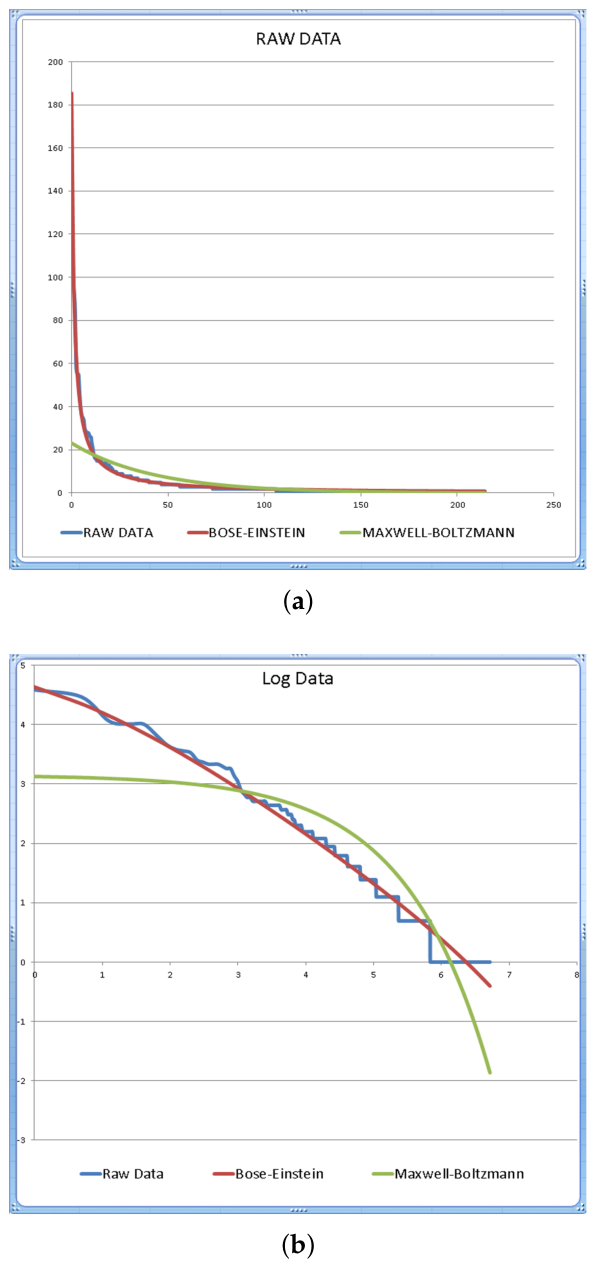
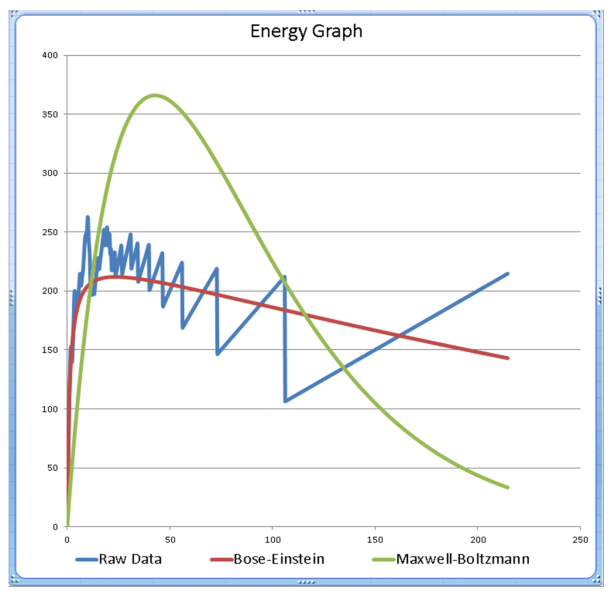
| Words | i | N() from Data | N() from BE | N() from MB | E() from Data | E() from BE | E() from MB | |
|---|---|---|---|---|---|---|---|---|
| A | 1 | 0 | 132 | 185.36 | 23.228 | 0 | 0 | 0 |
| The | 2 | 1 | 98 | 103.39 | 22.692 | 98 | 103.39 | 22.692 |
| To | 3 | 1.741 | 87 | 77.798 | 22.303 | 151.47 | 135.45 | 38.832 |
| And | 4 | 2.408 | 58 | 63.587 | 21.958 | 139.67 | 153.13 | 52.880 |
| It | 5 | 3.031 | 55 | 54.297 | 21.641 | 166.72 | 164.59 | 65.603 |
| Of | 6 | 3.623 | 55 | 47.660 | 21.343 | 199.31 | 172.71 | 77.347 |
| Pooh | 7 | 4.192 | 46 | 42.641 | 21.061 | 192.87 | 178.79 | 88.311 |
| Like | 8 | 4.743 | 39 | 38.691 | 20.792 | 184.98 | 183.52 | 98.626 |
| Very | 9 | 5.278 | 36 | 35.490 | 20.534 | 190.00 | 187.31 | 108.38 |
| They | 10 | 5.799 | 35 | 32.834 | 20.286 | 202.98 | 190.42 | 117.65 |
| His | 11 | 6.309 | 34 | 30.591 | 20.045 | 214.52 | 193.01 | 126.48 |
| Piglet | 12 | 6.809 | 30 | 28.667 | 19.813 | 204.28 | 195.20 | 134.91 |
| That | 13 | 7.300 | 29 | 26.996 | 19.587 | 211.71 | 197.08 | 142.99 |
| He | 14 | 7.783 | 28 | 25.529 | 19.367 | 217.92 | 198.70 | 150.74 |
| Just | 15 | 8.258 | 28 | 24.231 | 19.153 | 231.23 | 200.11 | 158.18 |
| Words | 16 | 8.727 | 28 | 23.071 | 18.945 | 244.36 | 201.35 | 165.33 |
| Was | 17 | 9.189 | 27 | 22.029 | 18.741 | 248.11 | 202.44 | 172.23 |
| It’S | 18 | 9.646 | 26 | 21.087 | 18.543 | 250.80 | 203.41 | 178.87 |
| Whisper | 19 | 10.09 | 26 | 20.230 | 18.348 | 262.53 | 204.27 | 185.27 |
| For | 20 | 10.54 | 23 | 19.447 | 18.158 | 242.51 | 205.05 | 191.46 |
| Christopher | 21 | 10.98 | 21 | 18.728 | 17.971 | 230.69 | 205.74 | 197.43 |
| Be | 22 | 11.42 | 18 | 18.066 | 17.789 | 205.61 | 206.36 | 203.20 |
| Is | 23 | 11.85 | 17 | 17.453 | 17.610 | 201.55 | 206.93 | 208.78 |
| But | 24 | 12.28 | 16 | 16.885 | 17.434 | 196.56 | 207.44 | 214.18 |
| Robin | 25 | 12.71 | 16 | 16.356 | 17.262 | 203.37 | 207.90 | 219.41 |
| All | 26 | 13.13 | 15 | 15.863 | 17.092 | 196.98 | 208.32 | 224.47 |
| Are | 27 | 13.55 | 15 | 15.401 | 16.926 | 203.26 | 208.70 | 229.37 |
| Little | 28 | 13.96 | 15 | 14.967 | 16.763 | 209.49 | 209.05 | 234.12 |
| Them | 29 | 14.37 | 15 | 14.560 | 16.602 | 215.68 | 209.36 | 238.72 |
| Trying | 30 | 14.78 | 15 | 14.176 | 16.444 | 221.82 | 209.65 | 243.18 |
| Wind | 31 | 15.19 | 15 | 13.814 | 16.289 | 227.92 | 209.91 | 247.51 |
| Cloud | 32 | 15.59 | 14 | 13.472 | 16.136 | 218.38 | 210.14 | 251.70 |
| In | 33 | 16 | 14 | 13.147 | 15.985 | 224 | 210.36 | 255.77 |
| Its | 34 | 16.39 | 14 | 12.839 | 15.837 | 229.58 | 210.55 | 259.71 |
| Make | 35 | 16.79 | 14 | 12.547 | 15.691 | 235.13 | 210.73 | 263.54 |
| Said | 36 | 17.18 | 14 | 12.269 | 15.547 | 240.64 | 210.89 | 267.25 |
| Their | 37 | 17.58 | 14 | 12.004 | 15.406 | 246.13 | 211.04 | 270.85 |
| Then | 38 | 17.97 | 14 | 11.751 | 15.266 | 251.58 | 211.17 | 274.34 |
| As | 39 | 18.35 | 13 | 11.509 | 15.129 | 238.65 | 211.29 | 277.74 |
| At | 40 | 18.74 | 13 | 11.278 | 14.993 | 243.66 | 211.39 | 281.03 |
| Or | 41 | 19.12 | 13 | 11.057 | 14.859 | 248.65 | 211.49 | 284.22 |
| You | 42 | 19.50 | 13 | 10.845 | 14.727 | 253.61 | 211.57 | 287.32 |
| Eeyore | 43 | 19.88 | 12 | 10.641 | 14.597 | 238.66 | 211.64 | 290.32 |
| If | 44 | 20.26 | 12 | 10.446 | 14.469 | 243.19 | 211.71 | 293.24 |
| Quite | 45 | 20.64 | 12 | 10.258 | 14.342 | 247.70 | 211.76 | 296.07 |
| Good | 46 | 21.01 | 11 | 10.078 | 14.218 | 231.18 | 211.81 | 298.82 |
| So | 47 | 21.38 | 11 | 9.9044 | 14.094 | 235.28 | 211.85 | 301.48 |
| Find | 48 | 21.76 | 10 | 9.7370 | 13.973 | 217.60 | 211.88 | 304.06 |
| On | 49 | 22.13 | 10 | 9.5755 | 13.853 | 221.30 | 211.91 | 306.57 |
| Sometimes | 50 | 22.49 | 10 | 9.4198 | 13.734 | 224.98 | 211.93 | 309.00 |
| Thought | 51 | 22.86 | 10 | 9.2693 | 13.617 | 228.65 | 211.94 | 311.36 |
| With | 52 | 23.23 | 10 | 9.1240 | 13.501 | 232.30 | 211.95 | 313.64 |
| Clear | 53 | 23.59 | 9 | 8.9834 | 13.387 | 212.34 | 211.95 | 315.86 |
| Meaning | 54 | 23.95 | 9 | 8.8475 | 13.274 | 215.60 | 211.95 | 318.01 |
| More | 55 | 24.31 | 9 | 8.7159 | 13.163 | 218.85 | 211.94 | 320.09 |
| Morning | 56 | 24.67 | 9 | 8.5884 | 13.053 | 222.09 | 211.93 | 322.11 |
| Pooh’S | 57 | 25.03 | 9 | 8.4648 | 12.944 | 225.31 | 211.91 | 324.06 |
| Rabbit | 58 | 25.39 | 9 | 8.3450 | 12.836 | 228.52 | 211.89 | 325.95 |
| Things | 59 | 25.74 | 9 | 8.2288 | 12.730 | 231.73 | 211.87 | 327.78 |
| Together | 60 | 26.10 | 9 | 8.1160 | 12.625 | 234.92 | 211.84 | 329.56 |
| Whispering | 61 | 26.45 | 9 | 8.0064 | 12.521 | 238.10 | 211.81 | 331.27 |
| Almost | 62 | 26.80 | 8 | 7.9000 | 12.419 | 214.46 | 211.78 | 332.93 |
| Had | 63 | 27.15 | 8 | 7.7965 | 12.317 | 217.27 | 211.74 | 334.54 |
| I | 64 | 27.50 | 8 | 7.6959 | 12.217 | 220.07 | 211.70 | 336.09 |
| Indeed | 65 | 27.85 | 8 | 7.5980 | 12.118 | 222.86 | 211.66 | 337.59 |
| One | 66 | 28.20 | 8 | 7.5027 | 12.020 | 225.64 | 211.61 | 339.04 |
| Owl | 67 | 28.55 | 8 | 7.4099 | 11.923 | 228.41 | 211.56 | 340.44 |
| Seemed | 68 | 28.89 | 8 | 7.3195 | 11.827 | 231.17 | 211.51 | 341.79 |
| Small | 69 | 29.24 | 8 | 7.2315 | 11.733 | 233.93 | 211.46 | 343.09 |
| Sort | 70 | 29.58 | 8 | 7.1456 | 11.639 | 236.68 | 211.40 | 344.35 |
| Sounds | 71 | 29.92 | 8 | 7.0619 | 11.546 | 239.42 | 211.35 | 345.56 |
| Up | 72 | 30.26 | 8 | 6.9803 | 11.454 | 242.15 | 211.29 | 346.73 |
| Way | 73 | 30.61 | 8 | 6.9006 | 11.363 | 244.88 | 211.22 | 347.85 |
| When | 74 | 30.94 | 8 | 6.8228 | 11.274 | 247.59 | 211.16 | 348.93 |
| Being | 75 | 31.28 | 7 | 6.7469 | 11.185 | 219.01 | 211.10 | 349.97 |
| Even | 76 | 31.62 | 7 | 6.6727 | 11.097 | 221.38 | 211.03 | 350.97 |
| Honey-pot | 77 | 31.96 | 7 | 6.6002 | 11.010 | 223.74 | 210.96 | 351.93 |
| Into | 78 | 32.29 | 7 | 6.5293 | 10.924 | 226.09 | 210.89 | 352.85 |
| Not | 79 | 32.63 | 7 | 6.4601 | 10.839 | 228.44 | 210.82 | 353.73 |
| … | … | … | … | … | … | … | … | |
| … | … | … | … | … | … | … | … | |
| Wondering | 818 | 213.6 | 1 | 0.6708 | 0.1579 | 213.68 | 143.35 | 33.747 |
| Would | 819 | 213.8 | 1 | 0.6698 | 0.1571 | 213.89 | 143.27 | 33.616 |
| Wrapped | 820 | 214.1 | 1 | 0.6688 | 0.1563 | 214.10 | 143.20 | 33.485 |
| Yesterday | 821 | 214.3 | 1 | 0.6678 | 0.1556 | 214.31 | 143.13 | 33.354 |
| You’Re | 822 | 214.5 | 1 | 0.6668 | 0.1548 | 214.52 | 143.06 | 33.224 |
| 2861.00 | 2861.00 | 2861.00 | 145,694.86 | 145,694.86 | 145,694.86 |
Disclaimer/Publisher’s Note: The statements, opinions and data contained in all publications are solely those of the individual author(s) and contributor(s) and not of MDPI and/or the editor(s). MDPI and/or the editor(s) disclaim responsibility for any injury to people or property resulting from any ideas, methods, instructions or products referred to in the content. |
© 2026 by the authors. Licensee MDPI, Basel, Switzerland. This article is an open access article distributed under the terms and conditions of the Creative Commons Attribution (CC BY) license.
Share and Cite
Aerts, D.; Aerts Arguëlles, J.; Beltran, L.; Geriente, S.; Leporini, R.; Sassoli de Bianchi, M.; Sozzo, S. Identifying Quantum Structure in AI Language: Evidence for Evolutionary Convergence of Human and Artificial Cognition. Entropy 2026, 28, 622. https://doi.org/10.3390/e28060622
Aerts D, Aerts Arguëlles J, Beltran L, Geriente S, Leporini R, Sassoli de Bianchi M, Sozzo S. Identifying Quantum Structure in AI Language: Evidence for Evolutionary Convergence of Human and Artificial Cognition. Entropy. 2026; 28(6):622. https://doi.org/10.3390/e28060622
Chicago/Turabian StyleAerts, Diederik, Jonito Aerts Arguëlles, Lester Beltran, Suzette Geriente, Roberto Leporini, Massimiliano Sassoli de Bianchi, and Sandro Sozzo. 2026. "Identifying Quantum Structure in AI Language: Evidence for Evolutionary Convergence of Human and Artificial Cognition" Entropy 28, no. 6: 622. https://doi.org/10.3390/e28060622
APA StyleAerts, D., Aerts Arguëlles, J., Beltran, L., Geriente, S., Leporini, R., Sassoli de Bianchi, M., & Sozzo, S. (2026). Identifying Quantum Structure in AI Language: Evidence for Evolutionary Convergence of Human and Artificial Cognition. Entropy, 28(6), 622. https://doi.org/10.3390/e28060622