Article

Fragmentation of Nuclear Remnants in Electron–Nucleus Collisions at High Energy as a Nonextensive Process

1
State Key Laboratory of Quantum Optics Technologies and Devices, Institute of Theoretical Physics, Shanxi University, Taiyuan 030006, China
2
Collaborative Innovation Center of Extreme Optics, Shanxi University, Taiyuan 030006, China
3
Department of Science Teaching, Beijing Vocational College of Agriculture, Beijing 102442, China
4
Laboratory of High Energy Physics, Physical-Technical Institute of Uzbekistan Academy of Sciences, Chingiz Aytmatov Str. 2b, Tashkent 100084, Uzbekistan
5
Department of Natural Sciences, National University of Science and Technology MISIS (NUST MISIS), Almalyk Branch, Almalyk 110105, Uzbekistan
*
Authors to whom correspondence should be addressed.
Entropy 2026, 28(4), 470; https://doi.org/10.3390/e28040470
Submission received: 9 March 2026 / Revised: 16 April 2026 / Accepted: 17 April 2026 / Published: 20 April 2026
(This article belongs to the Special Issue Complexity in High-Energy Physics: A Nonadditive Entropic Perspective)

Abstract

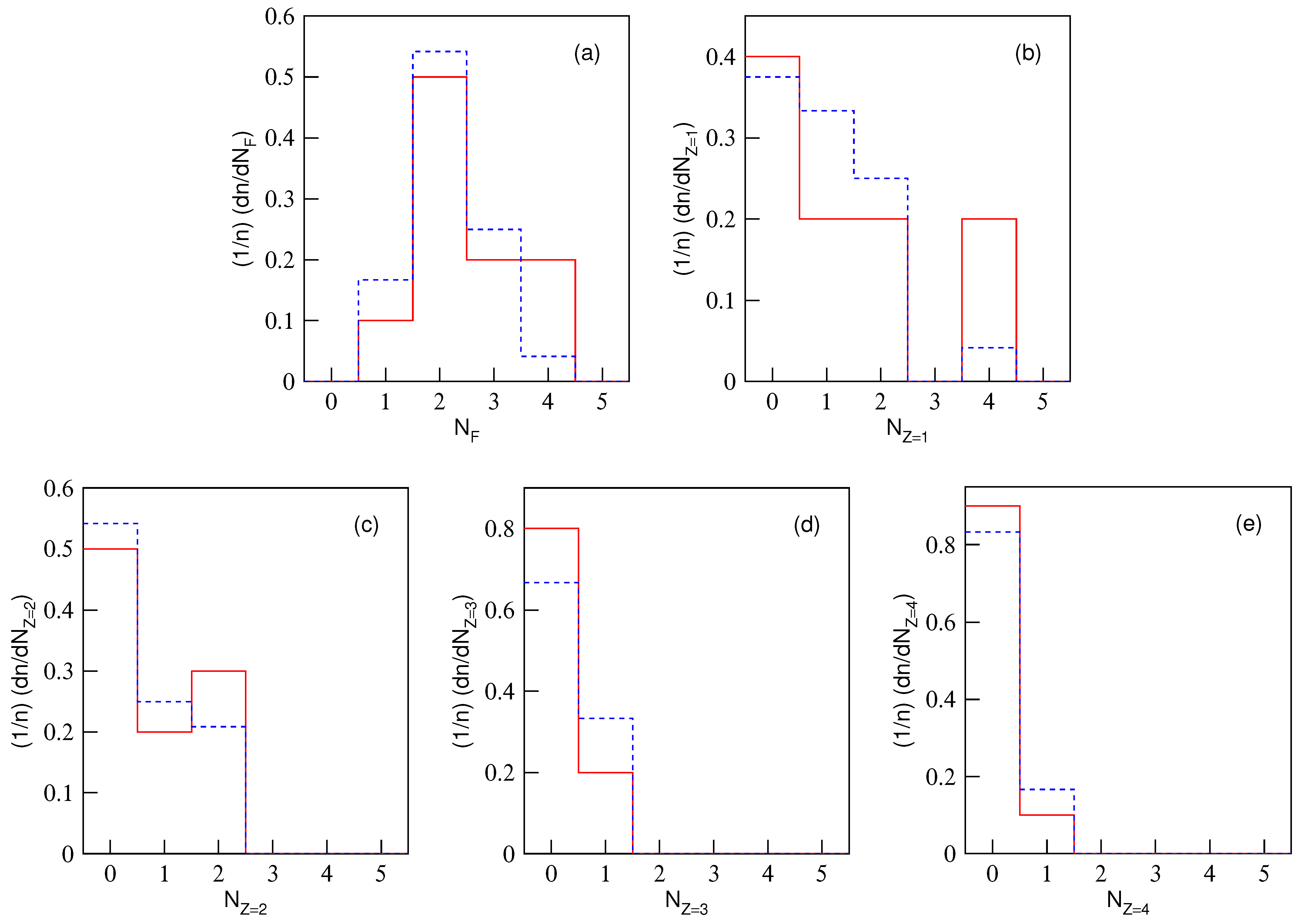
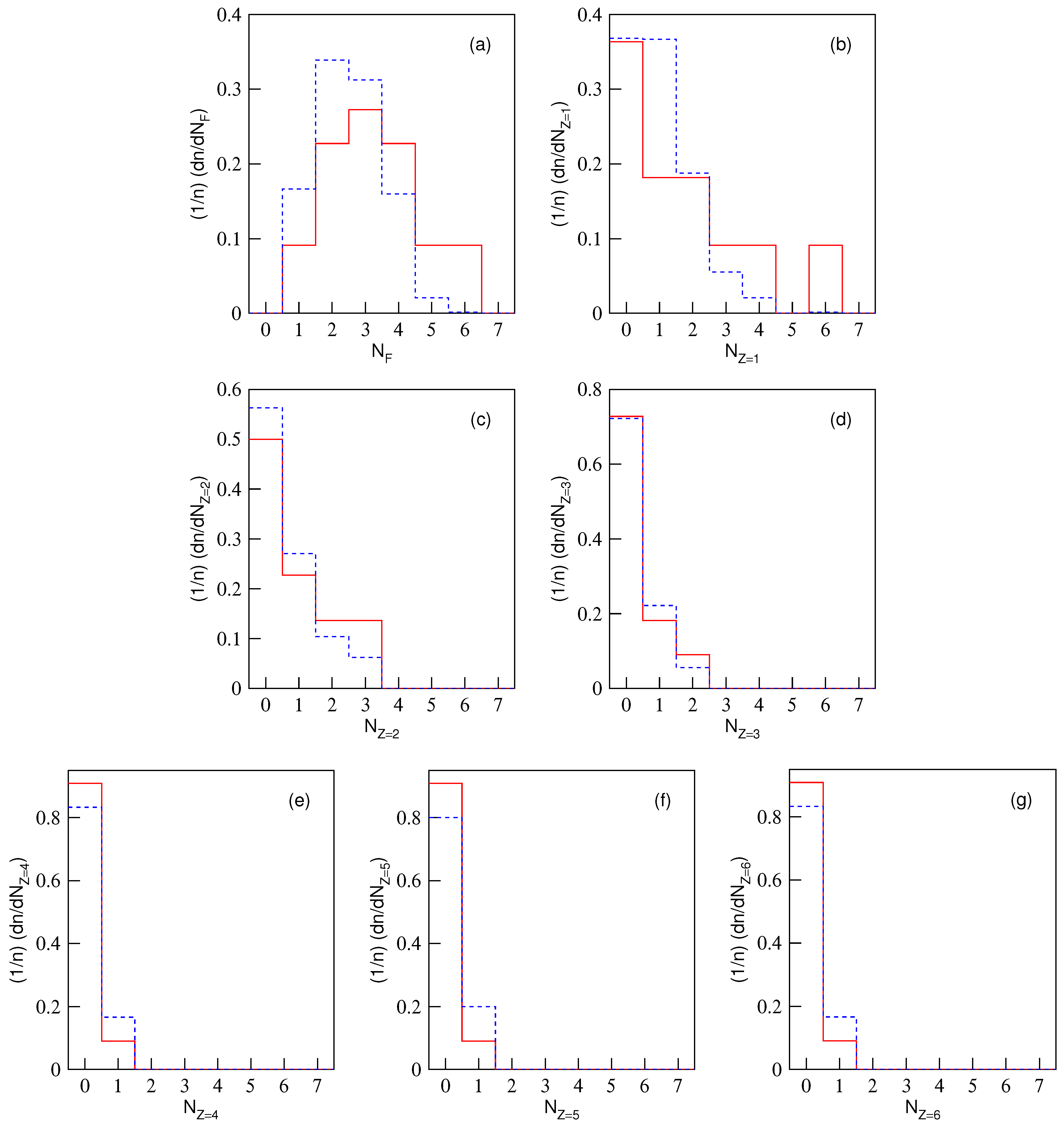
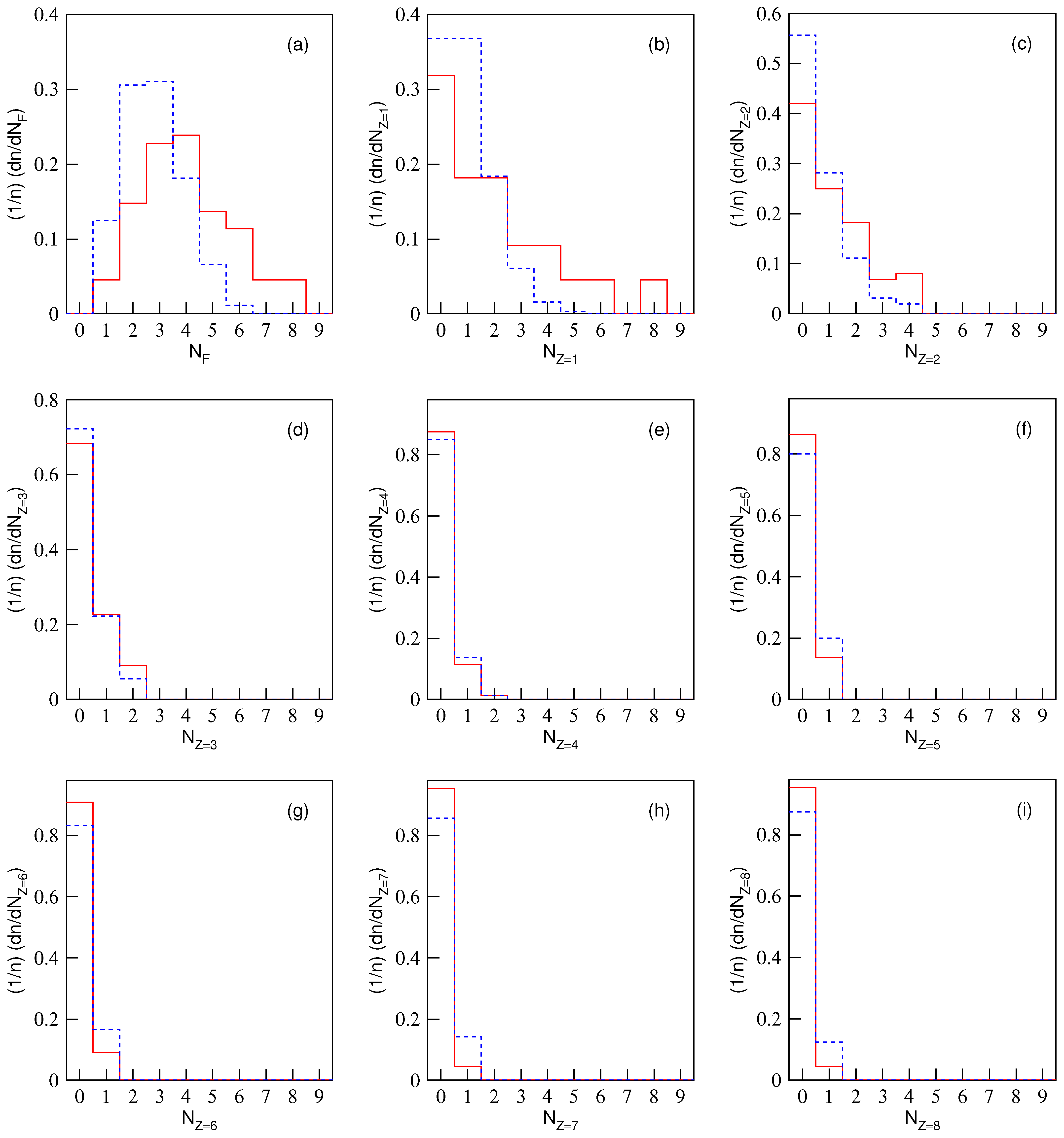
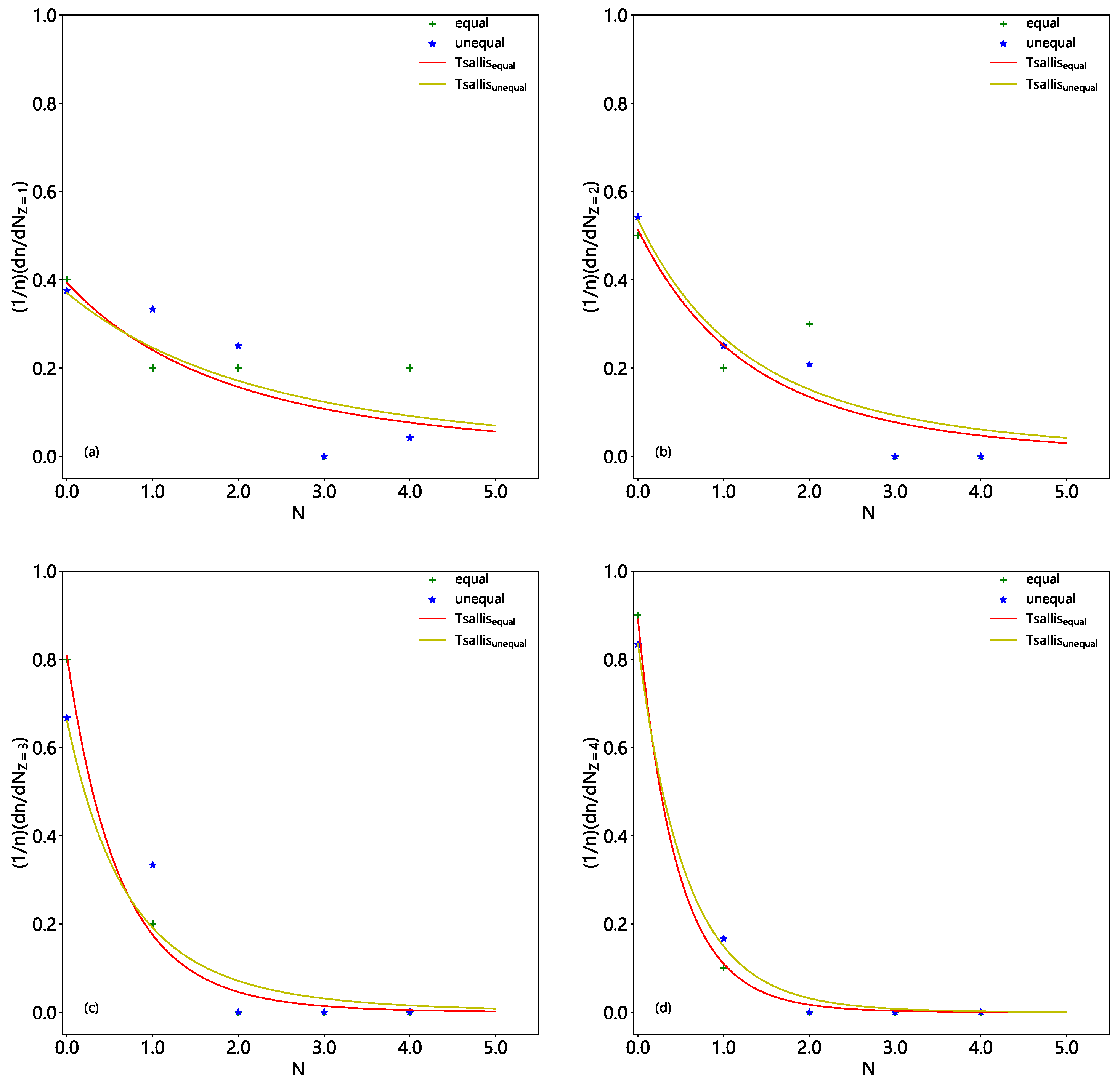
Utilizing a partitioning method based on equal (or unequal) probabilities—without incorporating the alpha-cluster (α-cluster) model—allows for the derivation of diverse topological configurations of nuclear fragments resulting from fragmentation. Subsequently, we predict the multiplicity distribution of nuclear fragments for specific excited nuclei, such as Be*9, C*12, and O*16, which can be formed as nuclear remnants in electron–nucleus (eA) collisions at high energy. Based on the α-cluster model, an α-cluster structure may result in deviations in the multiplicity distributions of nuclear fragments with charge Z=2, compared to those predicted by the partitioning methods. Furthermore, in the framework of Tsallis statistics, the nonextensive generalized temperature, entropy index, and q-entropy are obtained from the multiplicity distribution of nuclear fragments with a given charge number. Our work shows that fragmentation of nuclear remnants in electron–nucleus collisions at high energy is a nonextensive process.
Keywords: α-cluster structure; nuclear structure; multiplicity distribution of nuclear fragments; nonextensive process; the Electron-Ion Collider α-cluster structure; nuclear structure; multiplicity distribution of nuclear fragments; nonextensive process; the Electron-Ion Collider