Forecasting the Price of Gold with Integrated Media Sentiment—A Prediction Framework Based on Online News Sentiment Mining with CNN-QRLSTM


Abstract
1. Introduction
1.1. Background and Significance of the Study
1.2. Literature Review
1.2.1. Factors Affecting the Price of Gold
1.2.2. Gold Price Forecasting Model
1.2.3. Information-Theoretic Approaches in Financial Forecasting
1.2.4. Existing Model Flaws and the Innovation of This Paper
Limitations of Existing Models and Methods
Innovative Contributions of This Paper
2. Methodology
2.1. EEMD–Hurst–Entropy Model Theory
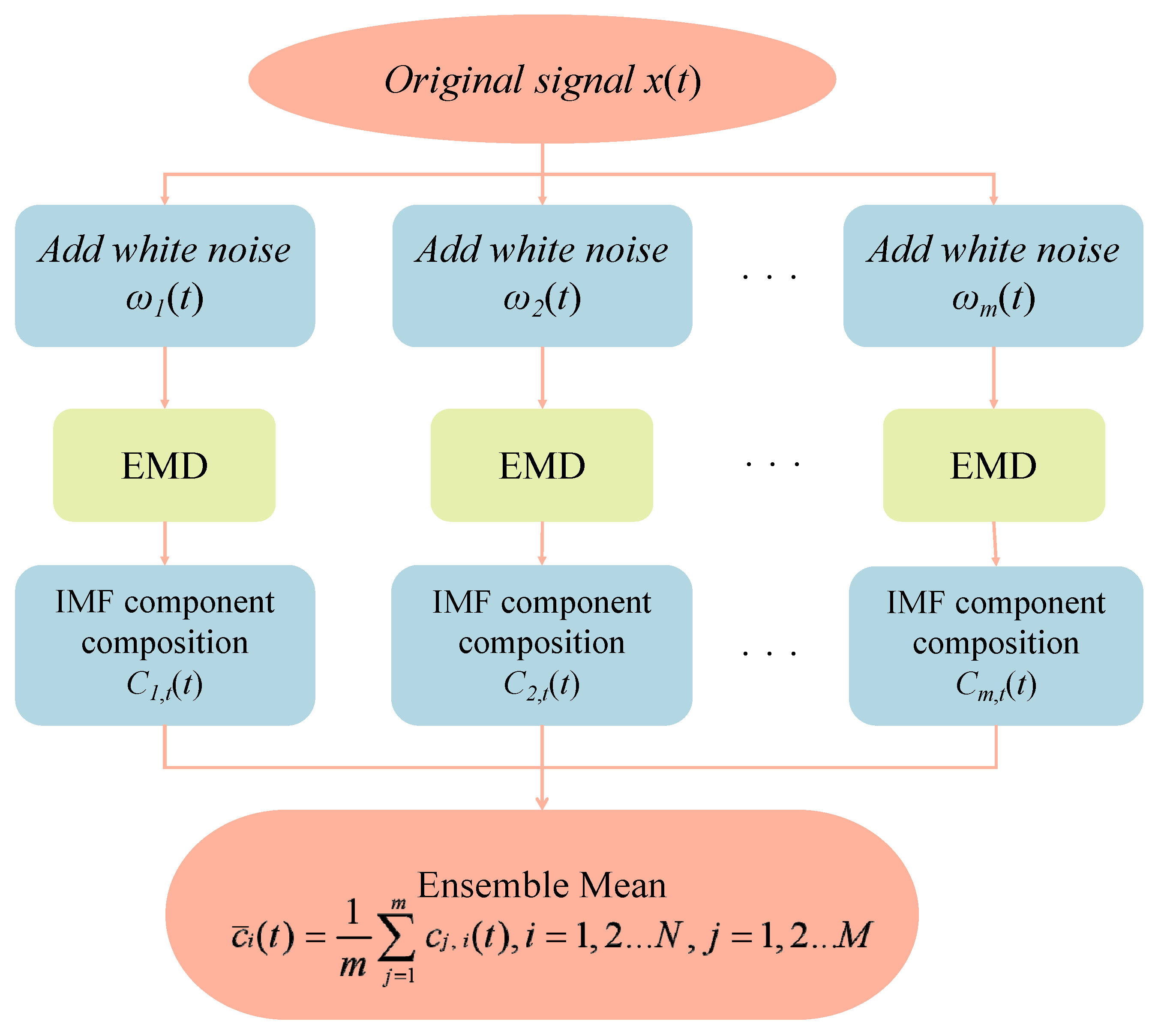
2.1.1. EEMD Model
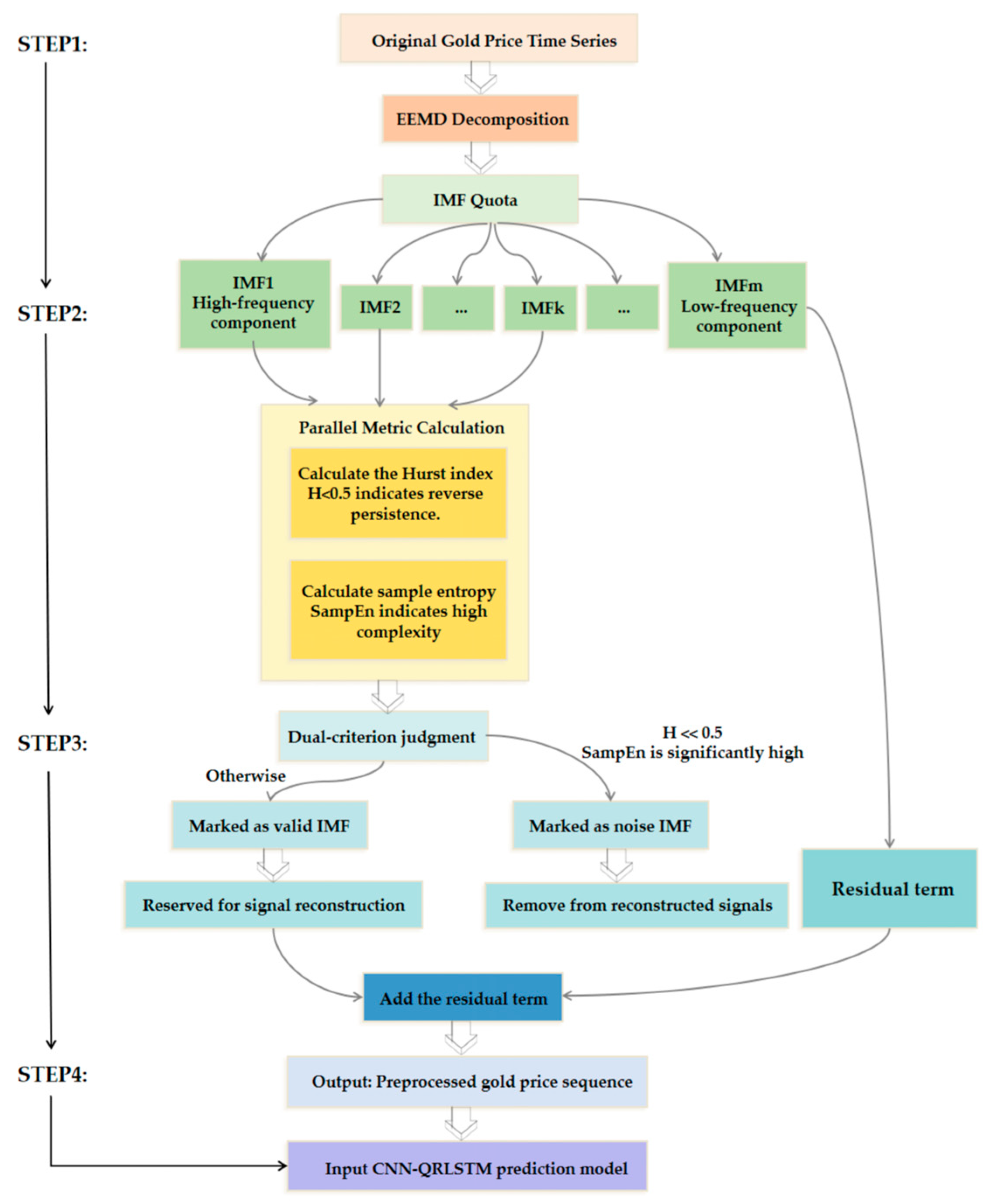
2.1.2. IMF Selection Based on Hurst Exponents and Information Entropy
Introduction of the Hurst Index
Theory and Computation of Sample Entropy
Hurst–Entropy Dual-Criterion Screening Mechanism
Dual-Criteria Screening Process
| Algorithm 1. The EEMD model pseudo-code. | |
| EEMD (Ensemble Empirical Mode Decomposition) | |
Parameters:
1: /* Initialize IMF storage and parameters */ 2: IMFlist←∅, n←1 3: Normalize x(t) to zero mean 18: h(t)←h(t) − m(t) 19: UNTIL (SD < 0.3)/* Stopping criterion */ 20: Store IMFkn←h(t) 21: r(t)←r(t) − IMFkn 22: k←k + 1 23: END WHILE 24: Store residue Rn(t)←r(t) 25: /*Calculate the sample entropy or Shannon entropy for each IMF order*/ 26: FOR each IMF index k DO 27: Compute SampEn(IMF_kn) 28: END FOR 29: *n←n + 1* 30: END WHILE 31: n←n + 1 32: END WHILE to IMFlist 37: END FOR /* Final residue */ |
2.2. Online News Sentiment Mining Model Theory
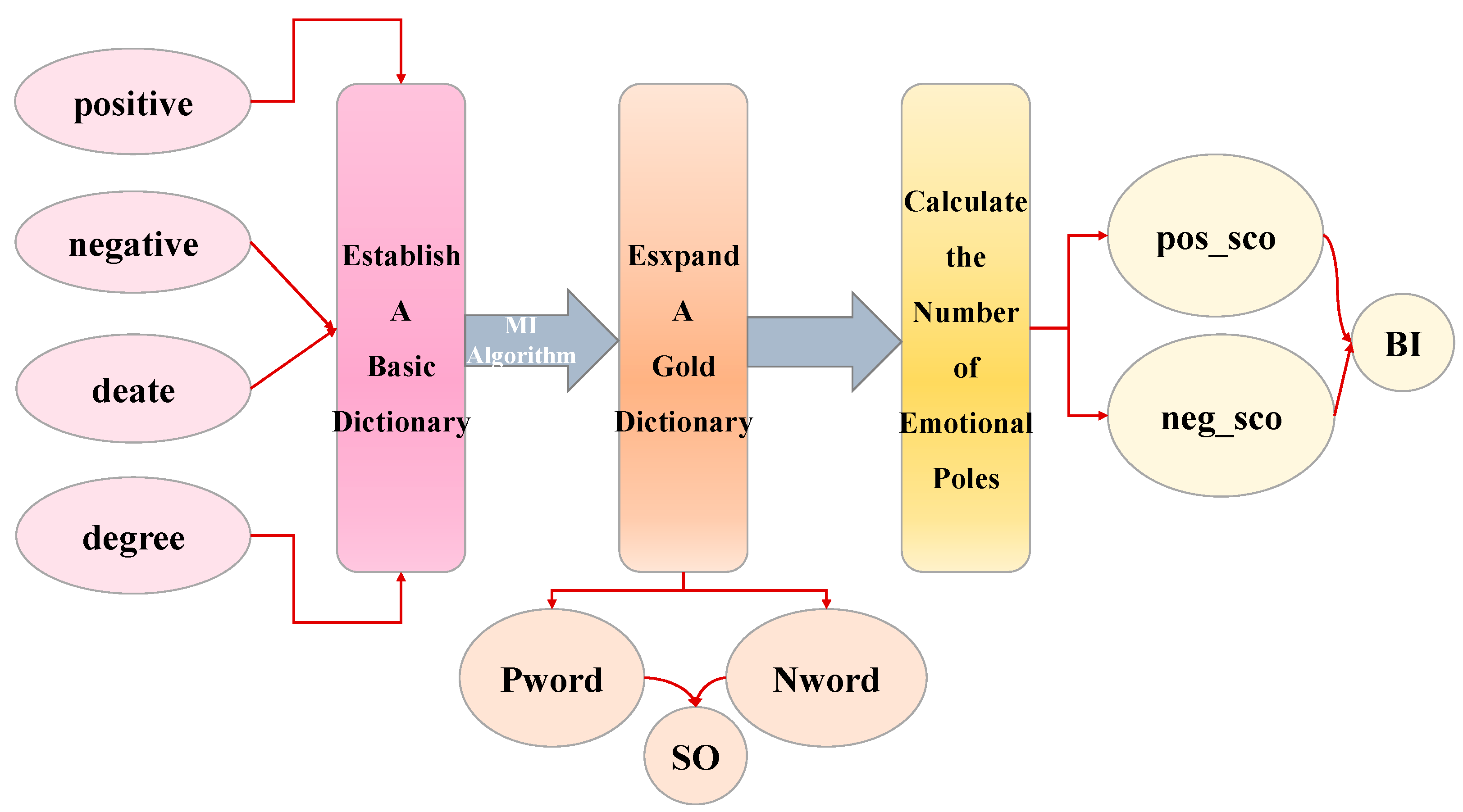
2.2.1. Construction of a Basic Lexicon
Chinese Participle
Construction of an Emotional Lexicon
Construction of an Auxiliary Dictionary
2.2.2. Theory of MI Algorithms: An Information-Theoretic Foundation
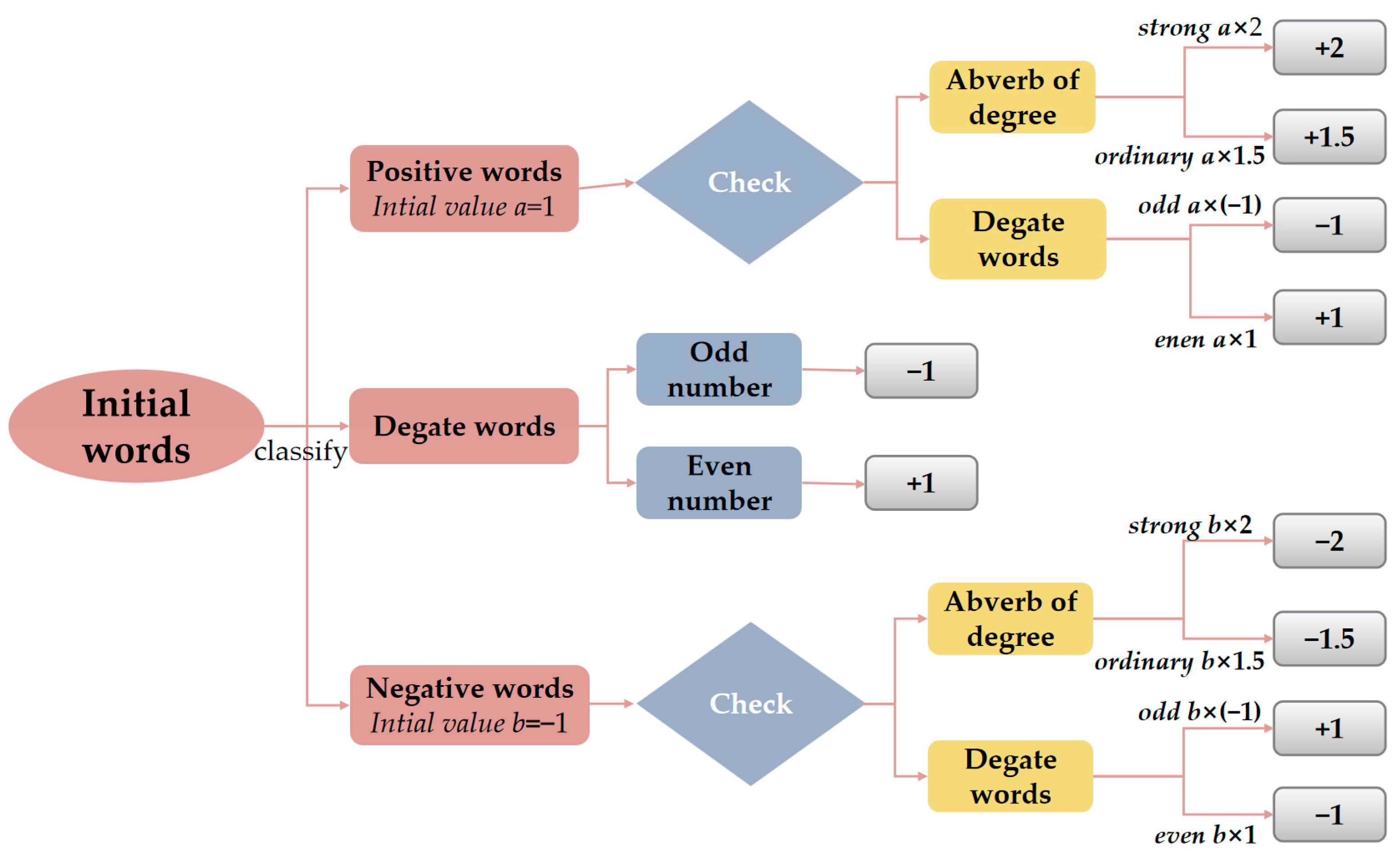
2.2.3. Calculation of the Number of Gold News Sentiment Poles
| Algorithm 2. Online News Sentiment Mining Model pseudo-code. |
| Online News Sentiment Mining Model |
Parameters:
2: FOR each document di∈D DO 3: Remove non-alphabetic characters 4: Convert to lowercase 5: Tokenize using NLTK/Spacy →tokens = [w1,…,wm] 6: Lemmatize tokens 7: Remove stopwords 8: Pad/truncate to length L 9: END FOR 10:/Feature Extraction/ 11: Initialize pretrained embedding matrix W∈ℝ∣V∣ ×E (GloVe/BERT) 12: FOR each token sequence tokensi DO 13: Xi←LookupEmbedding(W,tokensi)Xi←LookupEmbedding(W,tokensi)/* Shape: (L, E) */ 14: END FOR 15:/Hybrid Neural Network/ 16: Define model architecture: 17: Input layer: input←(None,L,E) 18:/* Parallel Feature Extractors */ 19: CNN Branch: 20: conv1←Conv1D(filters = 128,kernel_size = 3,activation = ‘relu’)(input) 21: pool1←MaxPooling1D(pool_size = 2)(conv1) 22: drop1←Dropout(0.5)(pool1) 23: LSTM Branch: 24: lstm1←Bidirectional(LSTM(units = 64,return_sequences = True))(input) 25: att←AttentionLayer()(lstm1)/* Self-attention mechanism */ 26:/* Feature Fusion */ 27: merged←Concatenate()([drop1,att]) 28: dense1←Dense(128,activation = ‘relu’)(merged) 29: output←Dense(K,activation = ‘softmax’)(dense1) 30:/Model Training/ 31: Compile with: 32: loss←‘categorical_crossentropy’ 33: optimizer←Adam(α) 34: metrics←[‘accuracy’,F1_score] 35: Train using mini-batches: 36: FOR epoch = 1 TO max_epochs DO 37: Xbatch,Ybatch←SampleBatch(X,Y,batch_size = 32)Xbatch,Ybatch←SampleBatch(X,Y,batch_size = 32) 38: grads←Backpropagate(loss,output) 39: UpdateWeights(optimizer,grads) 40: IF EarlyStopping(val_loss,patience = 3) THEN BREAK 41: END FOR |
2.3. CNN-QRLSTM Modeling Theory
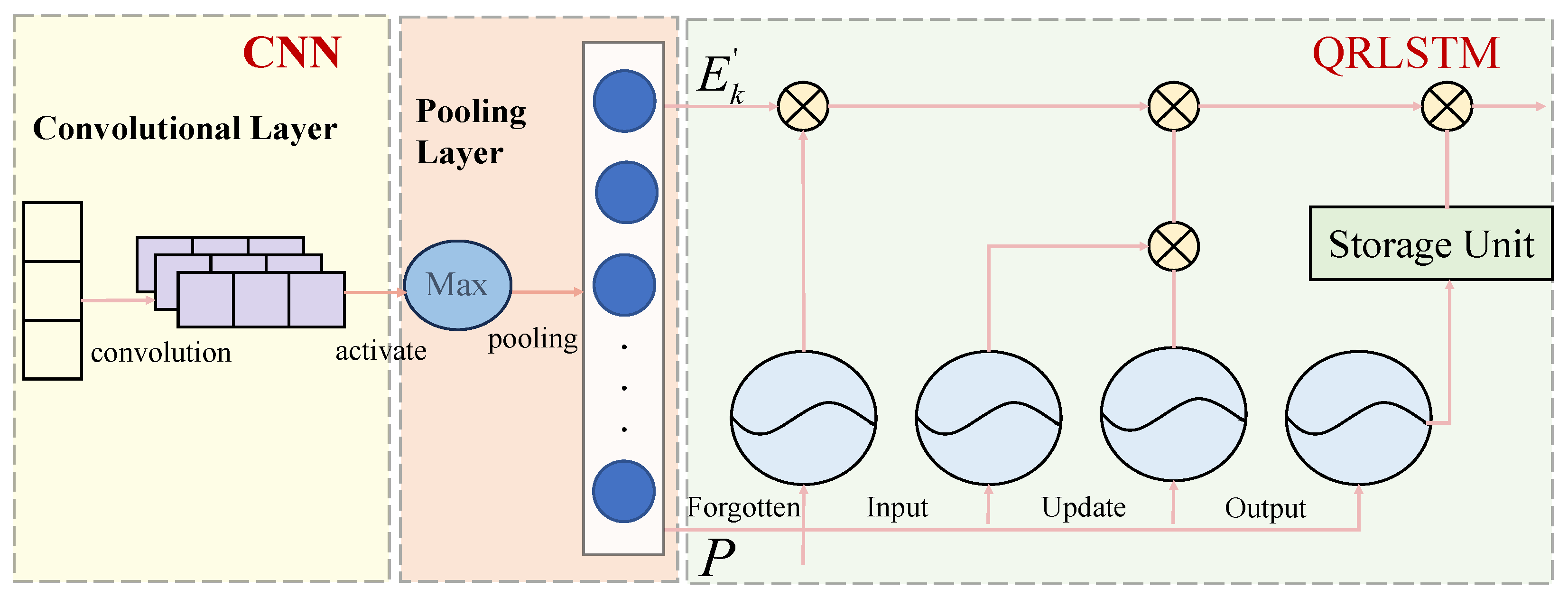
2.3.1. Convolutional Neural Network (CNN)
2.3.2. Quartile Regression of Long- and Short-Term Memory Networks (QRLSTM)
2.3.3. Entropy as a Measure of Predictive Uncertainty
| Algorithm 3. The pseudo-code of CNN-QRLSTM. | |
| CNN-QRLSTM for Multi-Quantile Time Series Forecasting | |
Parameters:
2: Set epoch←0, converged←False 3: Initialize network weights θ randomly 4: Normalize input data X∈ℝN× w × f and targets y 20: END FOR 21: total_loss = ∑k∈Kk 22: /* Backpropagation */ 23: Compute gradients ∇θtotal_loss 24: Update parameters θ←θ − η∇θ 25: END FOR 26: /*Epoch Evaluation*/ 27: IF (∣total_lossepoch − total_lossepoch − 1∣ < δ) THEN 28: converged←True 29: END IF 30: epoch←epoch + 1 31: END WHILE |
2.3.4. CNN-QRLSTM Collaborative Mechanism and Performance Enhancement Approaches
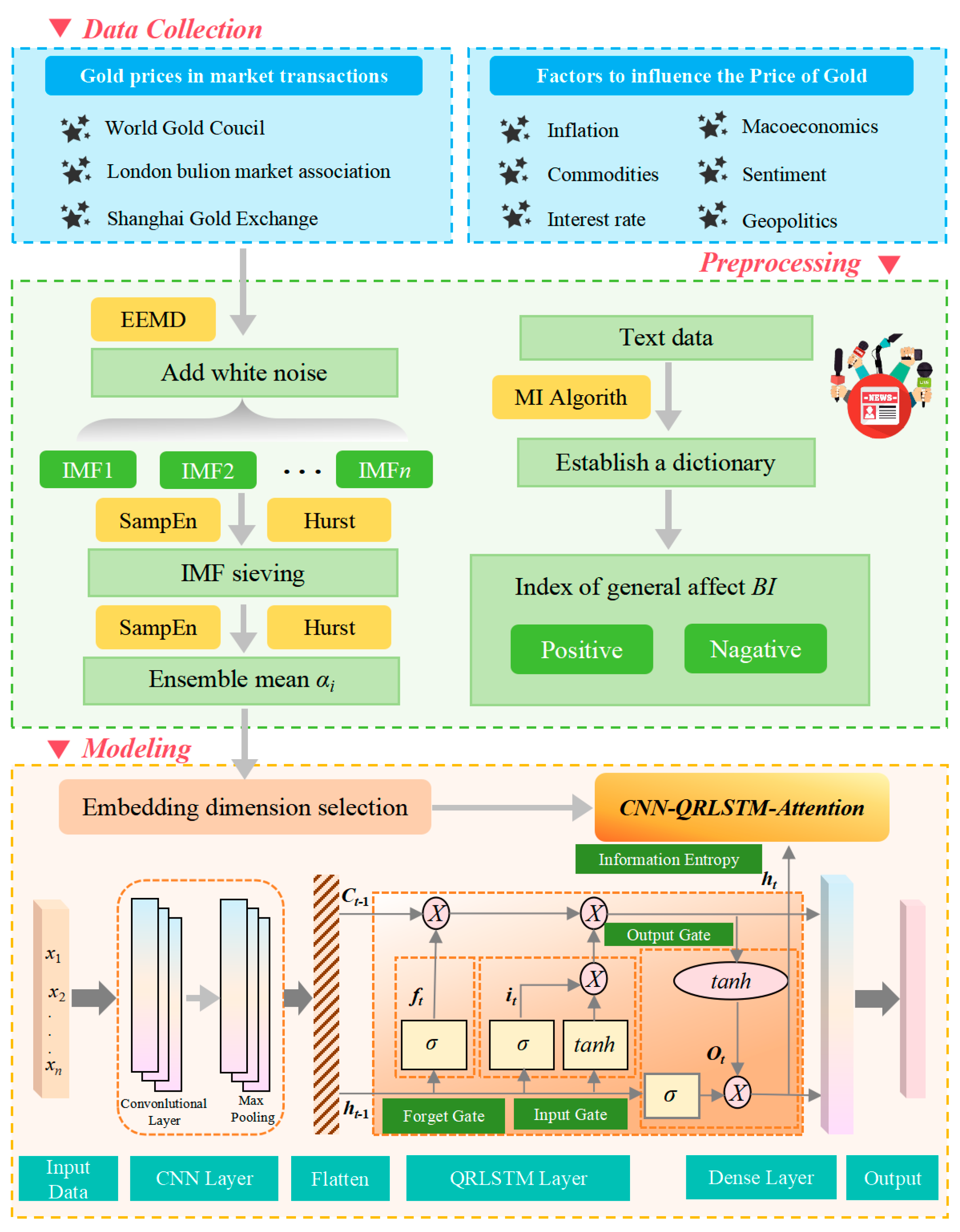
2.4. Framework of the Proposed Model
3. Results
3.1. Data Selection and Model Parameters
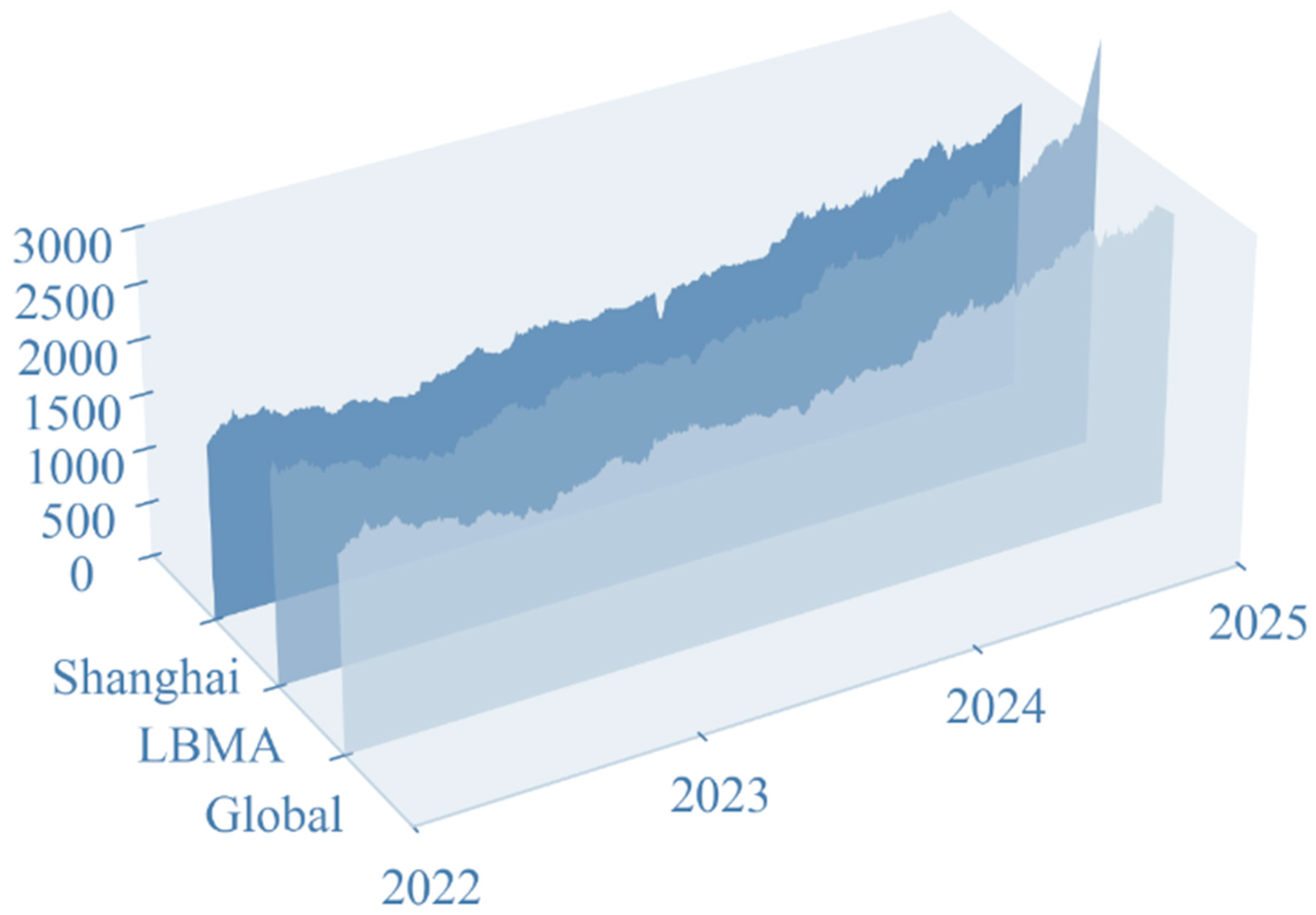
3.1.1. Gold Price Date
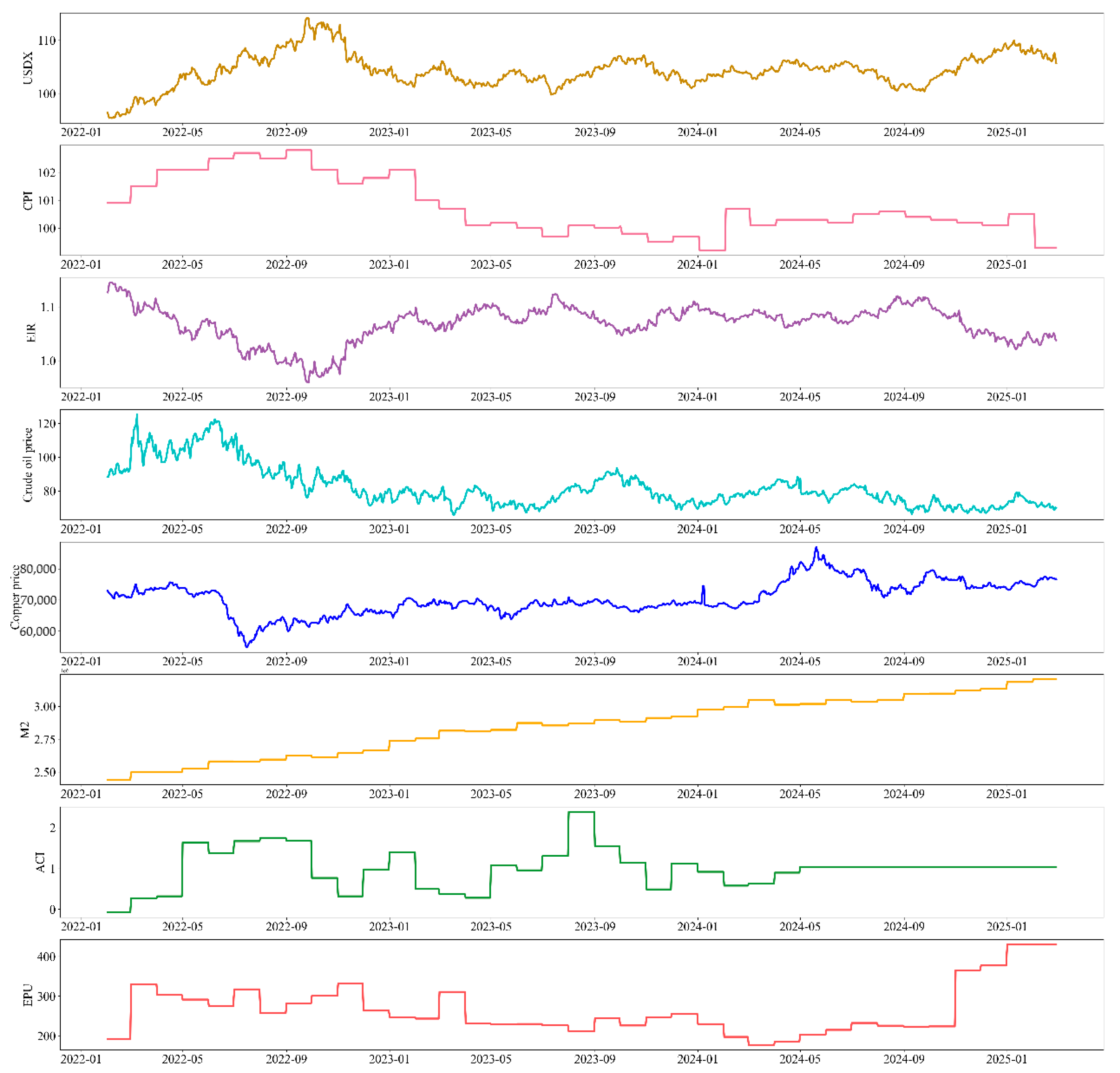
3.1.2. Data on Impact Factors
- ●
- US dollar index (USDX): Gold is a commodity denominated in U.S. dollars, and the U.S. dollar index is a measure of the U.S. dollar in the international foreign exchange market. Exchange rate changes in a comprehensive indicator, so the U.S. dollar index is one of the factors closely related to the price of gold. A stronger U.S. dollar index means that the U.S. dollar strengthens relative to other major currencies, making it more expensive to buy gold, dampening demand for gold, which tends to fall in price. Therefore, USDX has a significant negative correlation with the price of gold, and the inclusion of the U.S. dollar index in the model in this study helps to improve the accuracy of the model’s predictions.
- ●
- Inflation (CPI): Gold is seen as an effective tool in the fight against inflation. When CPI figures rise, inflationary pressures increase, and investors tend to shift their assets to value-protecting commodities such as gold, which raises the demand for gold, and the price of gold tends to rise. Thus the CPI is significantly and positively correlated with the price of gold in the short run.
- ●
- Effective interest rate (EIR): “Real interest rate” refers to the real interest rate at which investors receive interest returns after excluding inflation, and the level of EIR directly affects investors’ investment decisions. When real interest rates rise, investors are more inclined to deposit their money in banks or more profitable financial products, the demand for gold falls, and the price falls; instead, investors will shift their money to gold based on avoidance. Thus, EIR is negatively correlated with the price of gold.
- ●
- Monetary policy (M2): The easing or tightening of monetary policy directly affects the country’s money supply. China’s current monetary statistics system divides the money supply into three levels, M0, M1, and M2, of which the growth rate of M2 is often used to measure the degree of monetary policy easing. When M2 grows rapidly, it indicates a looser monetary policy, more money on the market, and lower interest rates when investors seek more value-preserving assets, and the price of gold rises. Therefore, M2 is positively correlated with the price of gold, and the looser the monetary policy, the faster the price of gold grows.
- ●
- Bulk commodities (Petroleum and Copper): Commodity markets are closely linked to global economic conditions and the monetary environment. Prices of energy commodities (e.g., oil) and metal commodities (e.g., copper, aluminum) are typically influenced by global economic growth and industrial production activity. When the global economy booms, industrial production increases, and the demand for energy and metal grows; price increases at the same time will also trigger the rise of inflation. Then investors usually choose to preserve value, gold demand increases, and the price rises. Whereas agricultural commodities have a relatively weak relationship with the price of gold, in the case of an extreme food crisis, which could lead to rising prices and severe inflation, investors would tend to acquire gold, leading to an increase in the price of gold. Thus, in general, commodities are positively correlated with the price of gold, with petroleum as a proxy for energy commodities and copper as a proxy for metals in our dataset, leaving out for the time being agricultural commodities, where the correlation is weak.
- ●
- Economic policy (EPU): The Economic Policy Uncertainty Index (EPU) reflects global economic and political events such as trade disputes and political unrest. Rising EPU means increased economic policy uncertainty and increased uncertainty about the future economic outlook, which prompts investors to move their money to relatively value-protecting gold, and the price of gold thus rises. Since the implementation of economic policies does not happen overnight and requires a long-term process, EPU and gold prices show a positive correlation in the long run, but the relationship is not significant in the short run.
- ●
- Climate risk (ACI): Extreme weather events caused by climate change, such as high temperatures and heavy rains, have had a significant impact on the gold mining industry. Extreme weather events often increase the difficulty of miners’ work as well as their equipment requirements, increase economic costs, and can even result in economic losses when the price of gold rises as a result of increased mining costs. In addition to this, investors will invest in gold as a safe-haven asset in the face of uncertain weather events, and the price of gold will rise. We use the Actuarial Climate Index (ACI) as a numerical indicator of climate risk factors, which looks at six extreme climate events: extreme low temperatures (LT), extreme high temperatures (HT), extreme rainfall (Hr), extreme drought (Dr), strong winds (Hw), and sea level (Sl). We therefore believe that the ACI is positively correlated with the price of gold.
- ●
- Media sentiment (BI): Media sentiment has a significant impact on the volatility of the gold price. The price of gold falls when there is a large amount of positive news about gold in the media, causing positive sentiment to permeate the market, which in turn leads investors to invest in high-risk, high-return assets such as equities and emerging industries when there is less demand for gold; conversely, when the media reports negative news in a big way, the price of gold rises. We built an online news sentiment model for calculating the sentiment polarity (BI) of text data and chose BI as a digital indicator reflecting media sentiment, with higher BI values indicating more negative media sentiment and more disturbed market sentiment. Therefore, BI is considered to be negatively correlated with the price of gold. We incorporate the calculation of daily BI values into the prediction framework using the method of crawling gold news texts.
3.1.3. Risk Prevention and Control for Aligning Sentiment Data with Price Sequences
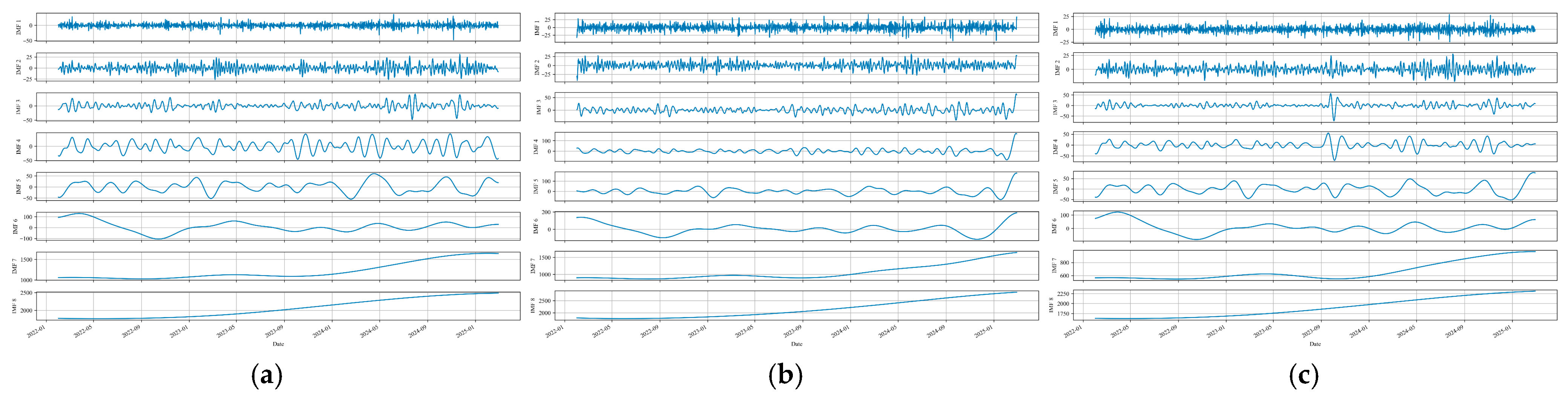
3.2. Data Preprocessing Based on EEDM and Hurst Indexes
3.3. Calculation of Sentiment Poles Based on Online News Sentiment Mining Models
3.4. Embedded Dimension Selection for Hurst Index Based Prediction Framework
3.5. Modeling Results Based on the Golden Sentiment Polarity BI
3.6. Numerical Verification
4. Discussion
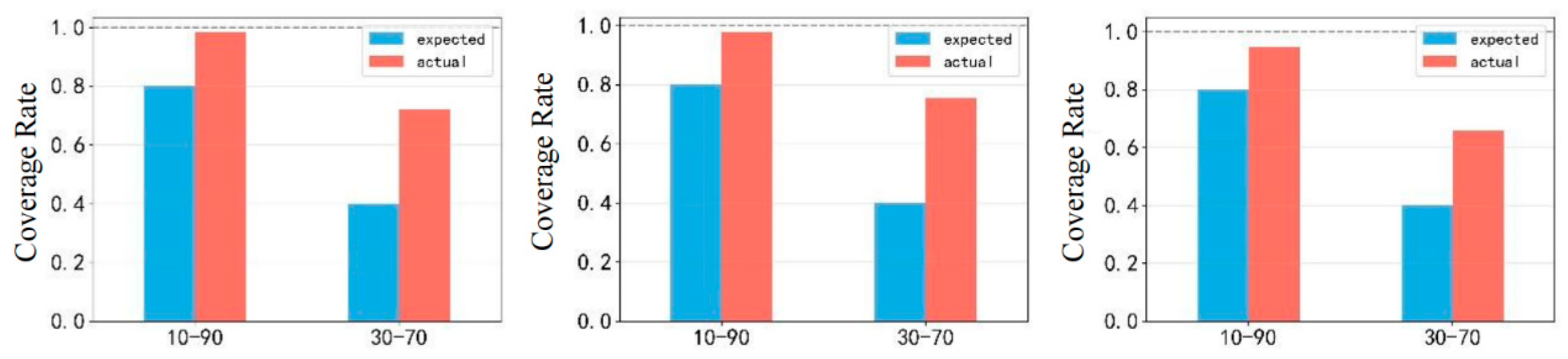
4.1. Forecast Interval Coverage Test
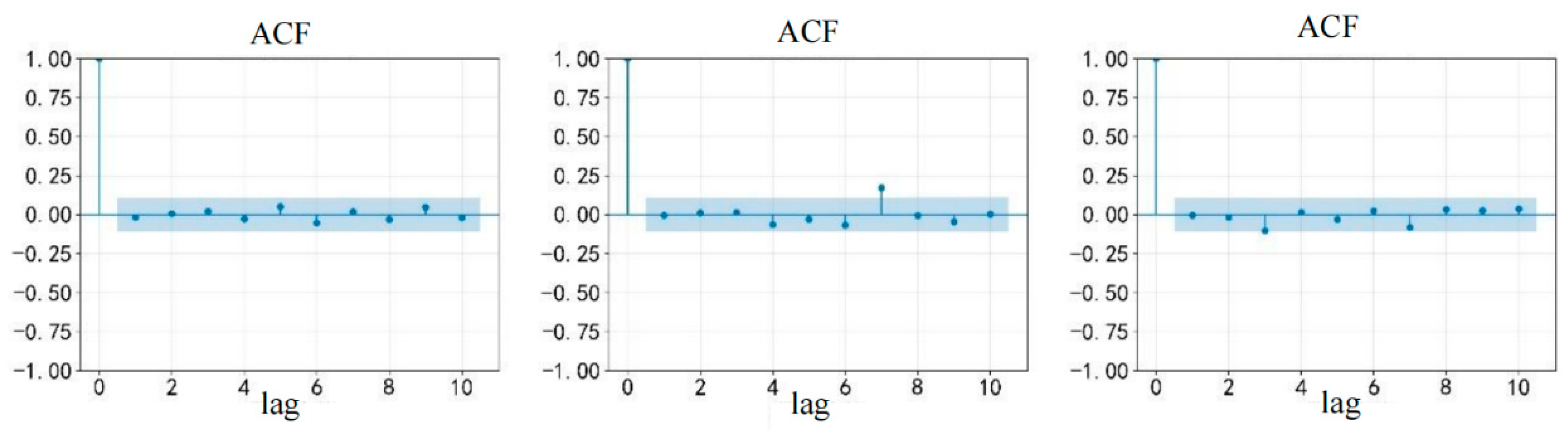
4.2. Time-Dependent Test
4.3. Extreme Case Performance
4.4. Information-Theoretic Analysis of Uncertainty Reduction
4.5. Computational Overhead and Real-Time Applicability of the CNN-QRLSTM Model
5. Conclusions
Author Contributions
Funding
Data Availability Statement
Conflicts of Interest
References
- Chang, S.; Qin, M.; Su, C.W. The Uncertainty in Energy and Cryptocurrency Markets: Is Gold Really a Safe Haven? Manch. Sch. 2025, 93, 254–266. [Google Scholar] [CrossRef]
- Shi, H.; Heng, J.; Duan, H.; Li, H.; Chen, W.; Wang, P.; Cui, L.; Wang, S. Critical Mineral Constraints Pressure Energy Transition and Trade toward the Paris Agreement Climate Goals. Nat. Commun. 2025, 16, 4496. [Google Scholar] [CrossRef] [PubMed]
- The Drivers of Gold Price. Available online: https://xueshu.baidu.com/ndscholar/browse/detail?paperid=a3f467ded7447d54b618d2c3335d37f3&site=xueshu_se (accessed on 25 September 2025).
- Poor, S.K.; Fattahi, S.; Hajian, M. Gold Price Forecasting: A Novel Approach Based on Text Mining and Big-Data-Driven Model. Stud. Bus. Econ. 2024, 19, 156–171. [Google Scholar] [CrossRef]
- Zhou, H. An Empirical Analysis of Factors Affecting Gold Prices. J. Chongqing Jiaotong Univ. (Soc. Sci. Ed.) 2008, 8, 42–46. [Google Scholar]
- Haque, M.A.; Topal, E.; Lilford, E. Relationship between the Gold Price and the Australian Dollar—US Dollar Exchange Rate. Miner. Econ. 2015, 28, 65–78. [Google Scholar] [CrossRef]
- Huang, D.; Wang, S. The Real Diagnosis Analysis of the Correlation Relations between USD Index & Gold Price. In 2010 Sixth International Conference on Natural Computation; IEEE: Piscataway, NJ, USA, 2010; pp. 724–727. [Google Scholar]
- Xie, C. Analysis of the Dollar Factor in the Long-Term Evolution of International Gold Prices. China’s Circ. Econ. 2010, 24, 70–73. [Google Scholar] [CrossRef]
- Fu, D.; Mei, X.; Zhang, H. An Empirical Analysis of the Correlation Between Gold Prices and Inflation. Gold 2009, 30, 4–7. [Google Scholar]
- Zhu, Y.; Fan, J.; Tucker, J. The Impact of Monetary Policy on Gold Price Dynamics. Res. Int. Bus. Financ. 2018, 44, 319–331. [Google Scholar] [CrossRef]
- Zhou, H.; Liang, C. Geopolitical Risk and Gold Price Bubbles. Rev. Account. Financ. 2025, 24, 353–374. [Google Scholar] [CrossRef]
- Apergis, N.; Cooray, A.; Khraief, N.; Apergis, I. Do Gold Prices Respond to Real Interest Rates? Evidence from the Bayesian Markov Switching VECM Model. J. Int. Financ. Mark. Inst. Money 2019, 60, 134–148. [Google Scholar] [CrossRef]
- Kanjilal, K.; Ghosh, S. Dynamics of Crude Oil and Gold Price Post 2008 Global Financial Crisis—New Evidence from Threshold Vector Error-Correction Model. Resour. Policy 2017, 52, 358–365. [Google Scholar] [CrossRef]
- Zhang, Y.-J.; Wei, Y.-M. The Crude Oil Market and the Gold Market: Evidence for Cointegration, Causality and Price Discovery. Resour. Policy 2010, 35, 168–177. [Google Scholar] [CrossRef]
- Zhu, J.; Han, W.; Zhang, J. Does Climate Risk Matter for Gold Price Volatility? Financ. Res. Lett. 2023, 58, 104544. [Google Scholar] [CrossRef]
- Soni, R.K.; Nandan, T.; Chatnani, N.N. Dynamic Association of Economic Policy Uncertainty with Oil, Stock and Gold: A Wavelet-Based Approach. J. Econ. Stud. 2023, 50, 1501–1525. [Google Scholar] [CrossRef]
- Luo, J.; Demirer, R.; Gupta, R.; Ji, Q. Forecasting Oil and Gold Volatilities with Sentiment Indicators under Structural Breaks. Energy Econ. 2022, 105, 105751. [Google Scholar] [CrossRef]
- Ismail, Z.; Yahya, A.; Shabri, A. Forecasting Gold Prices Using Multiple Linear Regression Method. Am. J. Appl. Sci. 2009, 6, 1509–1514. [Google Scholar] [CrossRef]
- El Hedi Arouri, M.; Lahiani, A.; Nguyen, D.K. World Gold Prices and Stock Returns in China: Insights for Hedging and Diversification Strategies. Econ. Model. 2015, 44, 273–282. [Google Scholar] [CrossRef]
- Li, H.; Wang, Q.; Wei, D. A Novel Hybrid Model Combining BPNN Neural Network and Ensemble Empirical Mode Decomposition. Int. J. Comput. Intell. Syst. 2024, 17, 77. [Google Scholar] [CrossRef]
- Hadavandi, E.; Ghanbari, A.; Abbasian-Naghneh, S. Developing a Time Series Model Based on Particle Swarm Optimization for Gold Price Forecasting. In 2010 Third International Conference on Business Intelligence and Financial Engineering; IEEE: Piscataway, NJ, USA, 2010; pp. 337–340. [Google Scholar]
- You, W.; Chen, J.; Xie, H.; Ren, Y. Which Uncertainty Measure Better Predicts Gold Prices? New Evidence from a CNN-LSTM Approach. N. Am. J. Econ. Financ. 2025, 76, 102375. [Google Scholar] [CrossRef]
- Solikhun, S.; Siregar, M.R. Analyzing Perceptron Algorithm for Global Gold Price Prediction Using Quantum Computing Approach. Kinet. Game Technol. Inf. Syst. Comput. Netw. Comput. Electron. Control 2025, 10, 17–28. [Google Scholar] [CrossRef]
- Nallamothu, S.; Rajyalakshmi, K.; Arumugam, P. Gold Price Prediction Using Skewness and Kurtosis Based Generalized Auto-Regressive Conditional Heteroskedasticity Approach with Long Short Term Memory Network. J. Inst. Eng. India Ser. B 2024, 105, 1715–1727. [Google Scholar] [CrossRef]
- Guo, Y.; Li, C.; Wang, X.; Duan, Y. Gold Price Prediction Using Two-Layer Decomposition and XGboost Optimized by the Whale Optimization Algorithm. Comput. Econ. 2025, 66, 1157–1189. [Google Scholar] [CrossRef]
- Bhavana, P. Multi-Objective Optimization of Gold Price Forecasting Using the Pareto Alpha-Cut Technique. MethodsX 2025, 15, 103534. [Google Scholar] [CrossRef]
- Pillai, G.S.; Mary, M.I. Hybrid Markov Weighted Fuzzy Kernel Time Series with Red Piranha Walrus Optimization for Gold Price Forecasting. Ain Shams Eng. J. 2025, 16, 103448. [Google Scholar] [CrossRef]
- Wu, H.; Gao, X.-Z.; Li, K.; Heng, J.-N. An Improved Brain-Motivated Network for Forecasting Day-Ahead Stock Prices of Electricity Companies. Knowl.-Based Syst. 2025, 325, 114040. [Google Scholar] [CrossRef]
- Chen, N.; Gao, C.; Yuan, L.; Heng, J.; Fan, J. An Integrated Framework for Electricity Price Analysis and Forecasting Based on DROI Framework: Application to Spanish Power Markets. Sustainability 2025, 17, 11210. [Google Scholar] [CrossRef]
- Che, J.; Xia, W.; Xu, Y.; Hu, K. Multivariate Wind Speed Forecasting with Genetic Algorithm-Based Feature Selection and Oppositional Learning Sparrow Search. Inf. Sci. 2025, 695, 121736. [Google Scholar] [CrossRef]
- Sun, S.; Wei, Y.; Li, J. A Study on Exchange Rate Forecasting Based on Sentiment Mining of Online Foreign Exchange News. J. Econom. 2022, 2, 441–464. [Google Scholar]
- Tsinghua Finance Vocabulary Database. Available online: https://www.heywhale.com/mw/dataset/611a163b911b3300174a19f2 (accessed on 26 September 2025).
- Wu, H.; Chen, W.; Zhang, S.; Tang, L.; Liu, A.; Deng, S. A Short-Term Load Forecasting Method Based on QRLSTM Considering Multiple Factors Analysis. J. Phys. Conf. Ser. 2024, 2876, 012028. [Google Scholar] [CrossRef]
- Yang, M.; Wang, R.; Zeng, Z.; Li, P. Improved Prediction of Global Gold Prices: An Innovative Hurst-Reconfiguration-Based Machine Learning Approach. Resour. Policy 2024, 88, 104430. [Google Scholar] [CrossRef]
- Wu, H.; Shao, H.; Gao, X.-Z.; Yan, M.; Heng, J.; Li, Z. Brain-Inspired Network with Distinct Brain Mechanisms for Short-Term Load Forecasting. IEEE Internet Things J. 2026, 13, 7167–7178. [Google Scholar] [CrossRef]








| Author | Factor | Research Methodology | Conclusion |
|---|---|---|---|
| Huang (2010) [7] | US dollar index | - | There is a negative correlation between the price of gold and the US dollar index, and there is no cointegration relationship. |
| Xie (2010) [8] | US dollar index | Cointegration equation | There is a little bit of cointegration between the world gold price and the US dollar. |
| Dan (2009) [9] | CPI | The Phillips expanding curve equation and the method of least squares estimation | The price of gold plays a role in forecasting the inflation, and can be used as a reference to indicate the economic trends and the changes of the inflation fluctuations. |
| Zhu (2018) [10] | Monetary policy | - | The Federal Reserve and the European Central Bank have had a large impact on the gold price, while the monetary policies of the Bank of England and the Bank of Japan have had no significant impact on the gold price. |
| Zhou (2025) [11] | Geopolitical risk | The log-periodic power law singularity (LPPLS) model | A significant relationship between GPR and gold price bubbles, particularly with GPRA, which exerts a stronger influence than GPRT does. |
| Apergis (2019) [12] | Effective interest rate | VECM | There is a positive correlation between the price of gold and real interest rates. |
| Kanjilal (2017) [13] | Crude oil | Dual-mechanism threshold vector error correction Model | The relationship between gold and oil prices is nonlinear and asymmetric. |
| Zhang (2010) [14] | Crude oil price | - | The price of oil is positively linked to the price of gold in most cases. |
| Zhu (2023) [15] | Climate risk | Predictive modeling and STL decomposition | Gold price volatility is negatively correlated with physical risk. |
| Soni (2023) [16] | EPU | Wavelet Method | In the short to medium term, gold prices are positively correlated with EPU, but the effect is not significant; in the long term, EPU has a positive impact on gold prices. |
| Luo (2022) [17] | Investor sentiment | Infinite Hidden Markov (IHM) transformation model within a Heterogeneous Autoregressive (HAR) | The predictive role of investor sentiment-related factors in improving the accuracy of forecasting commodity volatility dynamics. |
| Author | Predictive Model | Research Methodology | Conclusion |
|---|---|---|---|
| Ismail (2009) [18] | Multiple Megression Model | Influencing factors such as inflation, exchange rates, and money supply | Forecast the future movement of the gold price based on the influencing factors. |
| Amina (2015) [19] | Bivariate vector autoregression-VAR-GARCH | Dynamic Returns and Forecasts of China’s Gold and Stock Markets | Assessed the diversification and hedging effectiveness of gold in China. |
| Li (2024) [20] | Combining BP neural networks and ensemble empirical modal decomposition to build a new model | - | The effect of white noise is reduced compared to the original BP neural network to improve the robustness of the model. |
| Hadavandi (2010) [21] | Particle swarm optimization (PSO) | Parameter estimation using PSO algorithm | It is able to cope with the volatility of the gold price time series and has good prediction accuracy. |
| You (2025) [22] | CNN and LSTM | - | Extracting data features to improve prediction accuracy. |
| Poor (2024) [4] | Introducing unstructured data to construct a CNN-based gold price prediction model | - | A highly accurate decision support tool for investors and financial institutions. |
| Solikhun (2025) [23] | Quantum computer | - | Multiple computations can be performed simultaneously, enabling the solution of problems that are difficult to solve with classical computers. |
| Nallamothul (2024) [24] | SKGARCH and LSTM for skewness and Kurtosis | - | The problem of under-consideration of volatility information and non-normal distribution characteristics in traditional methods is addressed. |
| Guo (2025) [25] | The VMD-RES.-CEEMDAN-WOA-XGBoost model | Variable selection using a traditional LASSO model followed by prediction using QRNN | CEEMDAN is employed to decompose a residual term containing complex information following the VMD and XGBoost optimized by the WOA |
| Bhavana (2025) [26] | A multi-objective optimization framework | Utilizes Pareto alpha cutting techniques to evaluate and enhance gold price forecasting models | ARDL achieves excellent accuracy and goodness-of-fit, while the stochastic model exhibits robust stability. |
| Gijy (2025) [27] | MWFKTS-RPWO | - | It provides an optimal balance between computational efficiency and accuracy compared to existing methods. |
| Wu (2025) [28] | An improved brain-inspired neural network | The GELU function and residual connections | By utilizing residual connections to transmit information between shallow and deep layers, the network fully leverages information to mine deep hidden features. |
| Chen (2025) [29] | DROI framework | Coupled with an econometric breakpoint test | Effectively addressed the inherent complexities of electricity prices. |
| Che (2025) [30] | CEEMDAN-GAFSF-DBiGRU-OLSSA | - | It employs multi-temporal and spatial characteristics for wind speed modeling to enhance information acquisition and complex pattern analysis. |
| Financial Words | Positive Emotional Words | Positive Evaluation Words | Negative Emotion Words | Negative Evaluation Words |
|---|---|---|---|---|
| developmental | carry | peaceful | worried | exorbitant |
| governments | praise | insurance | pessimism | conservative |
| economics | reverence | indispensable | tentative | complicated |
| market | favor | impartial | muffled | monotonous |
| resource | complacent | well-to-do | bad reaction | take time |
| offerings | gratitude | fairness | awkward | high cost |
| interest | solicitous | convenient | anxiety | dim |
| buying | exuberant | reliably | panic-stricken | cunning |
| odds | thirst | full of vitality | attack | straitened circumstances |
| Degate Words | Stop-Word Phrases | Degree Level Terms |
|---|---|---|
| not yet | including | very |
| unavoidable | and | especially |
| not | in order to | a little bit |
| difficult | what | mildly |
| why bother | thereby | counterpart |
| none | but | more and more |
| nothing | for example | adequately |
| less | in addition | a little |
| un- | also | too |
| Form | Factor | Digital Indicators |
|---|---|---|
| Macroeconomic | US dollar index | USDX |
| Inflation | CPI | |
| Effective interest rate | EIR | |
| Economic and Political | Monetary policy | M2 |
| Economic policy | EPU | |
| Others | Bulk commodities | Petroleum |
| Copper | ||
| Climate risk | ACI | |
| Media sentiment | BI |
| IMF | WGC | LBMA | SGE |
|---|---|---|---|
| IMF1 | −0.004 | −0.002 | −0.005 |
| IMF2 | −0.016 | −0.015 | −0.013 |
| IMF3 | 0.012 | 0.005 | 0.020 |
| IMF4 | 0.133 | 0.131 | 0.140 |
| IMF5 | 0.575 | 0.400 | 0.534 |
| IMF6 | 0.915 | 0.844 | 0.867 |
| IMF7 | 0.995 | 0.984 | 0.999 |
| IMF8 | 0.974 | 0.975 | 0.972 |
| Positive Seed Words | Negative Seed Words |
|---|---|
| appreciation | price reduction |
| firm | tumble |
| steady | fall apar |
| favorable | negative |
| buy | sell |
| signal | diving |
| peace party | war party |
| praise | weak |
| Positive Emotional Words | Negative Emotion Words |
|---|---|
| rising significantly | stresses |
| escalate | price reduction |
| rising | sell |
| steady | depreciation |
| loose | disadvantageous |
| look forward to | damages |
| open | slump |
| work force | panic-stricken |
| deterministic | bullion rush |
| flood in | deeply entrenched |
| BI | Model | MAE | MSE | RMSE | MAPE | R2 |
|---|---|---|---|---|---|---|
| Without BI data | LSTM | 26.505 | 1225.715 | 35.010 | 1.254 | 0.989 |
| CNN-LSTM | 39.061 | 4382.585 | 66.201 | 1.794 | 0.957 | |
| CNN-QRLSTM | 31.751 | 1504.485 | 38.788 | 1.543 | 0.986 | |
| EEMD-CNN-LSTM | 27.079 | 1271.598 | 35.660 | 1.123 | 0.988 | |
| EEMD-CNN-QRLSTM | 21.770 | 1043.686 | 32.306 | 0.874 | 0.990 | |
| With BI | LSTM | 20.670 | 743.864 | 27.274 | 0.974 | 0.993 |
| CNN-LSTM | 26.761 | 1240.784 | 35.225 | 1.262 | 0.987 | |
| CNN-QRLSTM | 32.300 | 965.040 | 31.065 | 1.201 | 0.991 | |
| EEMD-CNN-LSTM | 20.174 | 1210.872 | 34.780 | 0.844 | 0.989 | |
| EEMD-CNN-QRLSTM | 13.200 | 281.660 | 16.783 | 0.542 | 0.998 | |
| XGBoost | 312.880 | 106,787.051 | 326.783 | 18.244 | −11.169 | |
| ARIMA-GRACH | 224.997 | 60,157.020 | 245.269 | 13.573 | −5.855 |
| BI | Model | MAE | MSE | RMSE | MAPE | R2 |
|---|---|---|---|---|---|---|
| Without BI data | LSTM | 23.487 | 1077.188 | 32.821 | 1.218 | 0.987 |
| CNN-LSTM | 28.941 | 1715.414 | 41.417 | 1.468 | 0.981 | |
| CNN-QRLSTM | 27.436 | 2521.761 | 50.217 | 1.400 | 0.972 | |
| EEMD-CNN-LSTM | 31.049 | 2547.504 | 50.473 | 1.582 | 0.968 | |
| EEMD-CNN-QRLSTM | 16.002 | 515.246 | 22.699 | 0.871 | 0.993 | |
| With BI | LSTM | 13.652 | 467.667 | 21.626 | 0.709 | 0.995 |
| CNN-LSTM | 19.791 | 812.582 | 28.506 | 1.300 | 0.990 | |
| CNN-QRLSTM | 15.820 | 538.650 | 23.209 | 0.807 | 0.993 | |
| EEMD-CNN-LSTM | 16.362 | 470.668 | 21.695 | 0.848 | 0.994 | |
| EEMD-CNN-QRLSTM | 10.117 | 167.209 | 12.931 | 0.535 | 0.998 | |
| XGBoost | 312.880 | 102,845.783 | 320.695 | 17.683 | −10.874 | |
| ARIMA-GRACH | 218.654 | 58,243.876 | 241.338 | 12.875 | −5.630 |
| BI | Model | MAE | MSE | RMSE | MAPE | R2 |
|---|---|---|---|---|---|---|
| Without BI data | LSTM | 26.505 | 1225.715 | 35.010 | 1.254 | 0.989 |
| CNN-LSTM | 39.061 | 4382.585 | 66.201 | 1.794 | 0.957 | |
| CNN-QRLSTM | 32.951 | 2009.762 | 44.830 | 1.506 | 0.986 | |
| EEMD-CNN-LSTM | 30.894 | 2105.213 | 45.883 | 1.362 | 0.985 | |
| EEMD-CNN-QRLSTM | 21.083 | 1137.877 | 33.732 | 0.894 | 0.992 | |
| With BI | LSTM | 28.172 | 1469.841 | 38.339 | 1.300 | 0.992 |
| CNN-LSTM | 34.111 | 2504.921 | 50.049 | 1.513 | 0.985 | |
| CNN-QRLSTM | 24.611 | 965.040 | 31.065 | 1.201 | 0.991 | |
| EEMD-CNN-LSTM | 23.875 | 1223.978 | 34.985 | 1.056 | 0.992 | |
| EEMD-CNN-QRLSTM | 21.590 | 1054.347 | 32.470 | 0.952 | 0.993 | |
| XGBoost | 289.457 | 91,267.845 | 302.105 | 16.894 | −9.765 | |
| ARIMA-GRACH | 198.765 | 45,892.768 | 241.338 | 11.987 | −4.987 |
| Market | Market Scenario | RMSE | MAE | R2 |
|---|---|---|---|---|
| WGC | Normal Stability | 13.520 | 10.480 | 0.999 |
| High-Volatility Rally | 19.240 | 15.120 | 0.997 | |
| High-Volatility Drop | 23.460 | 18.350 | 0.995 | |
| LBMA | Normal Stability | 29.830 | 22.680 | 0.995 |
| High-Volatility Rally | 37.240 | 29.150 | 0.992 | |
| High-Volatility Drop | 41.810 | 33.050 | 0.990 | |
| SGE | Normal Stability | 10.760 | 8.390 | 0.999 |
| High-Volatility Rally | 16.310 | 12.790 | 0.998 | |
| High-Volatility Drop | 19.390 | 15.210 | 0.996 |
Disclaimer/Publisher’s Note: The statements, opinions and data contained in all publications are solely those of the individual author(s) and contributor(s) and not of MDPI and/or the editor(s). MDPI and/or the editor(s) disclaim responsibility for any injury to people or property resulting from any ideas, methods, instructions or products referred to in the content. |
© 2026 by the authors. Licensee MDPI, Basel, Switzerland. This article is an open access article distributed under the terms and conditions of the Creative Commons Attribution (CC BY) license.
Share and Cite
Ji, Y.; Lei, X.; Zhang, L.; Heng, J.; Fan, J. Forecasting the Price of Gold with Integrated Media Sentiment—A Prediction Framework Based on Online News Sentiment Mining with CNN-QRLSTM. Entropy 2026, 28, 271. https://doi.org/10.3390/e28030271
Ji Y, Lei X, Zhang L, Heng J, Fan J. Forecasting the Price of Gold with Integrated Media Sentiment—A Prediction Framework Based on Online News Sentiment Mining with CNN-QRLSTM. Entropy. 2026; 28(3):271. https://doi.org/10.3390/e28030271
Chicago/Turabian StyleJi, Yu, Xinyue Lei, Lining Zhang, Jiani Heng, and Jianwei Fan. 2026. "Forecasting the Price of Gold with Integrated Media Sentiment—A Prediction Framework Based on Online News Sentiment Mining with CNN-QRLSTM" Entropy 28, no. 3: 271. https://doi.org/10.3390/e28030271
APA StyleJi, Y., Lei, X., Zhang, L., Heng, J., & Fan, J. (2026). Forecasting the Price of Gold with Integrated Media Sentiment—A Prediction Framework Based on Online News Sentiment Mining with CNN-QRLSTM. Entropy, 28(3), 271. https://doi.org/10.3390/e28030271