1. Introduction
Understanding the collective behavior of systems composed of many interacting degrees of freedom remains a central focus in statistical physics and beyond. In particular, since even simple local rules may exhibit rich and sometimes unexpected emergent collective phenomena. In this regard, the Ising model, introduced nearly a century ago [
1], has played and is still playing a central driving role in tackling the issue.
Despite its minimal definition, consisting of binary spins on a lattice with nearest-neighbor coupling, it captures most of the essential features of cooperative ordering, critical behavior, and universality. The model’s conceptual simplicity and rich phenomenology have made it the standard testing ground for both analytical approximations and numerical simulations aimed at elucidating how macroscopic properties emerge from short and long-range microscopic interactions.
Over the decades, thanks to its simplicity and generality, the Ising model became a cornerstone prototype to investigate many body problems. The model provides a unifying framework for studying how collective behavior arises from local interactions in many systems with discrete symmetry, far beyond its original magnetic background.
Indeed, the same mathematical structure has been used to describe cooperative phenomena in a wide variety of systems, including binary alloys and lattice gases [
2], neural networks [
3], protein folding and glassy dynamics [
4], as well as structural phase transitions and adsorption phenomena on surfaces.
Moreover, numerous Ising-like formulations have also been successfully adapted out of the traditional realm of physics to model decision-making processes, opinion dynamics, and social phenomena, where interacting agents replace interacting spins [
5,
6,
7,
8,
9].
These interdisciplinary extensions have clarified how macroscopic collective behavior can emerge from local microscopic interactions even in complex or heterogeneous social networks, similarly to condensed matter physics. The large spectrum of applications of the Ising model has reinforced its framework as one of the most versatile and influential paradigms in modern quantitative sciences.
This diversity of applications underscores the model’s fundamental nature and motivates the pursuit of accurate theoretical and numerical methods capable of capturing its critical behavior. Understanding how the critical temperature and other macroscopic properties depend on the dimensionality and connectivity of the underlying lattice remains a central challenge in both physics and related disciplines. In particular, the evaluation of the critical exponents is instrumental in describing a related phase transition.
Thus, determining the critical temperature as a function of the various parameters of the model is an instrumental challenge. Especially since, up to date, the Ising model has been solved exactly only in one and two dimensions.
In one dimension, the model does not exhibit a finite-temperature phase transition with no order occurring at
. However, in two dimensions, the Onsager exact solution yields a finite
[
10]. In three or higher dimensions, the model being not exactly solvable, approximate or numerical approaches must be used.
With respect to analytical approximations, mean-field theory provides the simplest treatment, but it overestimates because it neglects fluctuations entirely. However, deviations from exact and numerical estimates decrease with increasing dimension, as fluctuations are gradually averaged out.
The Bethe approximation improves on the mean field result by incorporating short-range correlations via a tree-like effective lattice, yielding more accurate estimates of
, particularly in low-dimensional systems [
11]. Nevertheless, it still fails to account for loop contributions that are crucial in finite-dimensional lattices.
Later, the development of the renormalization group (RG) theory marked a major analytical breakthrough in the understanding of phase transitions and critical phenomena [
4,
12,
13,
14]. However, implementing RG transformations requires careful coarse-graining, truncation of degrees of freedom, and often intricate perturbative expansions, making the analysis technically more demanding than direct numerical simulations [
15,
16].
At the current stage of available analytical tools, to get accurate estimates of critical temperatures at any dimension requires running Monte Carlo simulations using either Metropolis or Glauber dynamics [
17,
18]. But then, large-sized systems are needed, raising the computational cost [
19].
Last, but not least, an ad hoc formula for Ising critical temperatures inspired by another ad hoc formula for percolation thresholds was shown to yield very good estimates of Ising
at all dimensions [
20]. But till now, no derivation has been found.
Therefore, there is a methodological gap between analytically tractable but oversimplified approximations (mean-field and Bethe) and computationally heavy but accurate simulations (Monte Carlo, numerical RG). The goal of this work is thus to introduce a new, simple analytical scheme to reduce this gap.
Accordingly, I build a novel scheme, which combines the Bethe cluster setting, the Metropolis update, and the Galam Majority Model (GMM) [
21,
22] developed in sociophysics [
23,
24,
25]. A two-stroke pumping technique is thus obtained (TSP). When applied to the Ising model in
d-dimensions, associated values of
can be extracted. The results are found to be in good agreement with exact and numerical estimates while requiring very little computational resources. In addition, while TSP recovers the exact
at
, it also indicates the practical impossibility of reaching full symmetry breaking at
.
Indeed, a previous work has applied the Global Unifying Frame (GUF) [
26] to the two-dimensional Ising system using both Metropolis and Glauber updates [
27]. While the associated dynamics are different from the two-stroke pumping techniques, the associated value of
is identical.
The rest of this article is organized as follows. I review the Ising model and various schemes to calculate its critical temperature at various dimensions using mean field, Bethe, real-space renormalization group, series, Monte Carlo, and ad hoc Galam-Mauger (GM) formula. The two-stroke pumping technique is presented in
Section 3 and implemented at
.
Section 4 deals with applying TSP at
,
Section 5 to
and
Section 6 to
. Concluding remarks are presented in
Section 7.
2. The Ising Model
Before introducing my new proposal to evaluate the critical temperatures of the Ising model defined on a d-dimensional hypercubic lattice, it is useful to recall its basic setting.
Given a lattice, each site carries a spin variable
. All the spins interact via nearest-neighbor interactions with a coupling constant
J where
favors ferromagnetic ordering with parallel alignment, and
antiferromagnetic ordering with anti-parallel alignment. The Hamiltonian reads
where
runs over all distinct nearest-neighbor pairs of the lattice,
h is an external uniform field applied to all spins, and
is a local field, which couples linearly to the spin
at site
i and may vary from site to site. It can be positive, negative, or zero.
While the coupling favors ordering, a non-zero temperature produces thermal fluctuations, which in turn create disorder. Thermal fluctuations are governed by the Boltzmann weight , where the temperature T is expressed in units with .
For the hypercube in dimensions d, the coordination number is . In the absence of both uniform () and local fields (), the model exhibits a thermal phase transition for all dimensions .
At high temperature, thermal agitation dominates, and the system remains disordered with zero magnetization. However, at low temperatures, the interaction term prevails over the thermal fluctuations and the system spontaneously orders, developing a nonzero magnetization.
The temperature separating these two regimes is the critical temperature , or equivalently, the critical coupling when setting . Determining is a central problem in statistical physics. It is known exactly only in with (no finite-temperature transition) and with Onsager’s solution. For , the critical temperatures must be estimated through approximations including mean-field and Bethe, high-temperature series, renormalization-group methods, or large-scale Monte Carlo simulations. The dependence of on dimension provides a direct measure of how geometry and connectivity shape the balance between order and disorder in interacting spin systems.
Before moving on to my new proposal to evaluate critical temperatures of the nearest-neighbor Ising model at dimensions d, I report the current available estimates obtained using several different techniques. More precisely, I list a series of estimates for with coupling constant using, respectively, mean-field theory, Bethe approximation, real-space renormalization using the Migdal-Kadanoff, high-temperature series expansions, Monte Carlo simulations, combining finite-size scaling and high-statistics sampling, and the GM empirical formula.
2.1. Mean-Field (MF)
Mean-field (MF) estimates assume that each spin experiences an effective field proportional to the average magnetization. This yields
where
z is the coordination number [
28]. MF theory predicts wrongly a transition at
but correctly a continuous transition at
. However, as MF neglects spatial correlations, related
are systematically overestimated at low dimensions, i.e., underestimating
as seen in
Table 1. For example, on a square lattice (
), MF predicts
, nearly half the exact Onsager value. In three dimensions (
),
, compared to the Monte Carlo value of about 0.221655 [
29]. MF becomes exact when the lattice is fully connected.
2.2. Bethe
The Bethe approximation [
11] treats a central spin exactly while assuming that its z neighbors are uncorrelated and each has a magnetization equal to the mean magnetization. Within this approximation, the critical coupling is
For a one-dimensional chain (
), Bethe gives
, corresponding to
. For a square lattice (
), it yields
, underestimating the exact Onsager value
[
10]. With respect to MF, Bethe theory incorporates local correlations and partially accounts for dimensional effects [
30]. Results are better from
and up.
2.3. Real-Space Renormalization (RG)
Real-space renormalization in the Migdal–Kadanoff (MK) approach [
31,
32] relies on a coarse-graining transformation combining bond moving and decimation to approximate the exact real-space RG flow of the Ising model. Despite its simplicity, this coarse-graining scheme yields a coherent sequence of critical couplings for the hypercubic Ising model across dimensions as seen in
Table 1. These values reflect the typical accuracy of MK coarse-graining, which is qualitatively correct in low dimensions and increasingly accurate at higher dimensions [
33,
34].
2.4. Series
High-temperature series expansions [
35,
36] give precise estimates of
by summing contributions from clusters of increasing size and using Padé extrapolations. They converge to the exact
solution [
10] and to high-precision Monte Carlo results in
[
37,
38,
39,
40,
41,
42]. Series methods explicitly capture both short- and long-range correlations, accurately reflecting the dimensional dependence of
.
2.5. Monte Carlo Simulations (MC)
Monte Carlo simulations, combining finite-size scaling and high-statistics sampling, yield some of the most precise at
[
37,
41,
42].
Monte Carlo simulations, using Metropolis [
17] or Glauber dynamics [
18], provide numerical benchmarks that reproduce known critical temperatures with high precision. For
, Monte Carlo reproduces Onsager’s exact value. These methods directly sample equilibrium distributions, capturing full many-body correlations, but are affected by critical slowing down near
, necessitating finite-size scaling [
43], histogram reweighing [
44], and very large sample sizes to achieve high accuracy.
2.6. Galam–Mauger Formula (GM)
Finally, the ad hoc GM formula [
20] writes,
with
and
. The formula produces highly accurate estimates in all dimensions as seen in
Table 1. However, no analytical derivation has been found so far.
2.7. Table of Estimates
Table 1 shows tha associated estimates at dimensions
. All values are given with 3 digits. At
and at
Onsager solution [
10] writes,
3. Two Stroke Pumping Technique (TSP)
A decade ago, with Martins, we applied the Global Unifying Frame (GUF) developed in sociophysics to evaluate the critical temperature of the 2-d Ising model with groups of 5 spins to account for a central spin and its 4 nearest-neighbors [
27].
Given a number of interacting agents, here five, GUF enumerates all possible configurations of [
26]. An update of each configuration is applied according to the specificity of the model; only the central spin was updated according to either a Metropolis or a Glauber rule, leaving the other four unchanged. Then, all agents are randomly reshuffled to obtain a new distribution within the same configurations. The process is repeated until an equilibrium state is obtained. A general sequential probabilistic frame is thus built from which a phase diagram can be constructed.
The Metropolis update yields a first-order transition with two critical temperatures and , the second one being close to the exact Onsager result . It is worth noting that the vertical first-order transition line is reminiscent of the abrupt vanishing of the Onsager second-order transition. Surprisingly, the Glauber update yields a continuous transition at closer to the Bethe estimate of than to the MF value .
On this basis, I extend the Galam-Martins scheme by building a two-stroke pumping technique (TSP). Combining a Bethe topology, a single-spin Monte Carlo update, and the GMM iteration scheme, I obtain an analytical formula valid at any dimension d. Here, I apply the formula at to evaluate the associated critical temperatures.
The Two-DimensionalCase
I start at
with a cluster of one spin and its 4 nearest-neighbors. For all five spins, the probability of having the spin up is
and
of having it down. Then, I update the central spin according to the Metropolis scheme applied to the actual configuration of the 4 nearest-neighbors spins, which are not updated. Accordingly, given a surrounding configuration for a given site
i, the energy change associated with flipping the spin
is,
with
where
denote the 4 nearest-neighbors of spin
and
c labels one of its 16 surrounding possible configurations. The proposed flip
is then accepted with the Metropolis probability,
and rejected otherwise.
Following GMM, aligned with the local surrounding majority, and a flip is done with probability . When opposed to the majority and there is a tie, a flip is systematically done.
Among the 16 configurations of the 4 nearest-neighbors spins, one () has 4 spins and 0 spin , 4 () have 3 spins and one spin , 6 () have 2 spins and 2 spins (a tie), 4 () have 1 spin and 3 spins , one () has 0 spin and 4 spins .
The respective are , , , , . In addition, the associated probabilities of each group of configurations are , , , , .
Applying Equation (
8) to the spin
, which is equal to
with probability
, leads to a new probability
to have it equal to
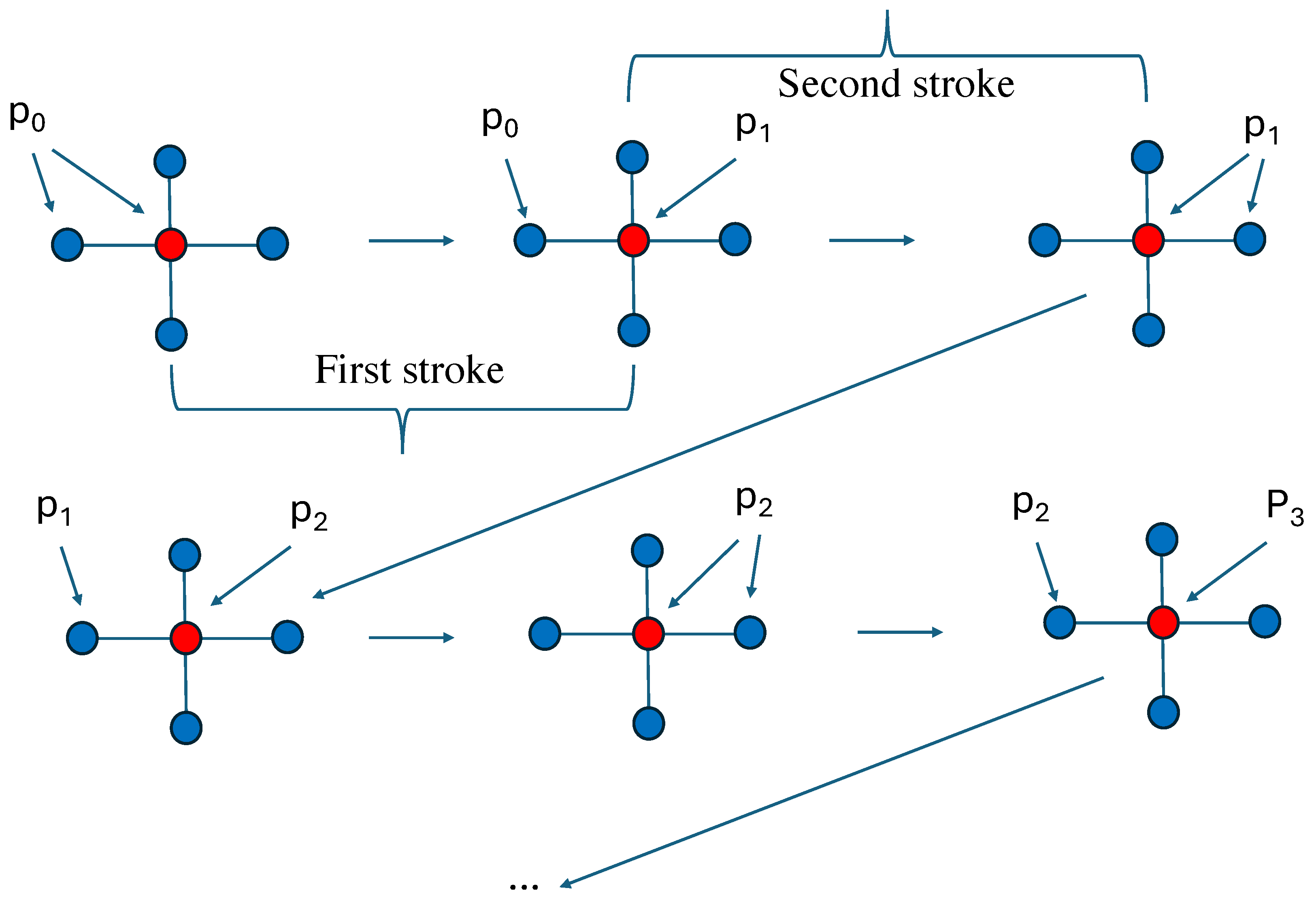
. This step is the first stroke of the new pumping technique. Then I restart the same process, but now the probability of having a value
is
for all five spins. That is the second stroke, which in turn yields
for the central spin when updated as shown in
Figure 1.
Iterating the two stroke pumping (TSP) technique
times leads to a probability
to have the central spin equal to
with,
where
is the probability to have the central spin equal to
prior to the last update,
and
. Equation (
9) can be reduced to,
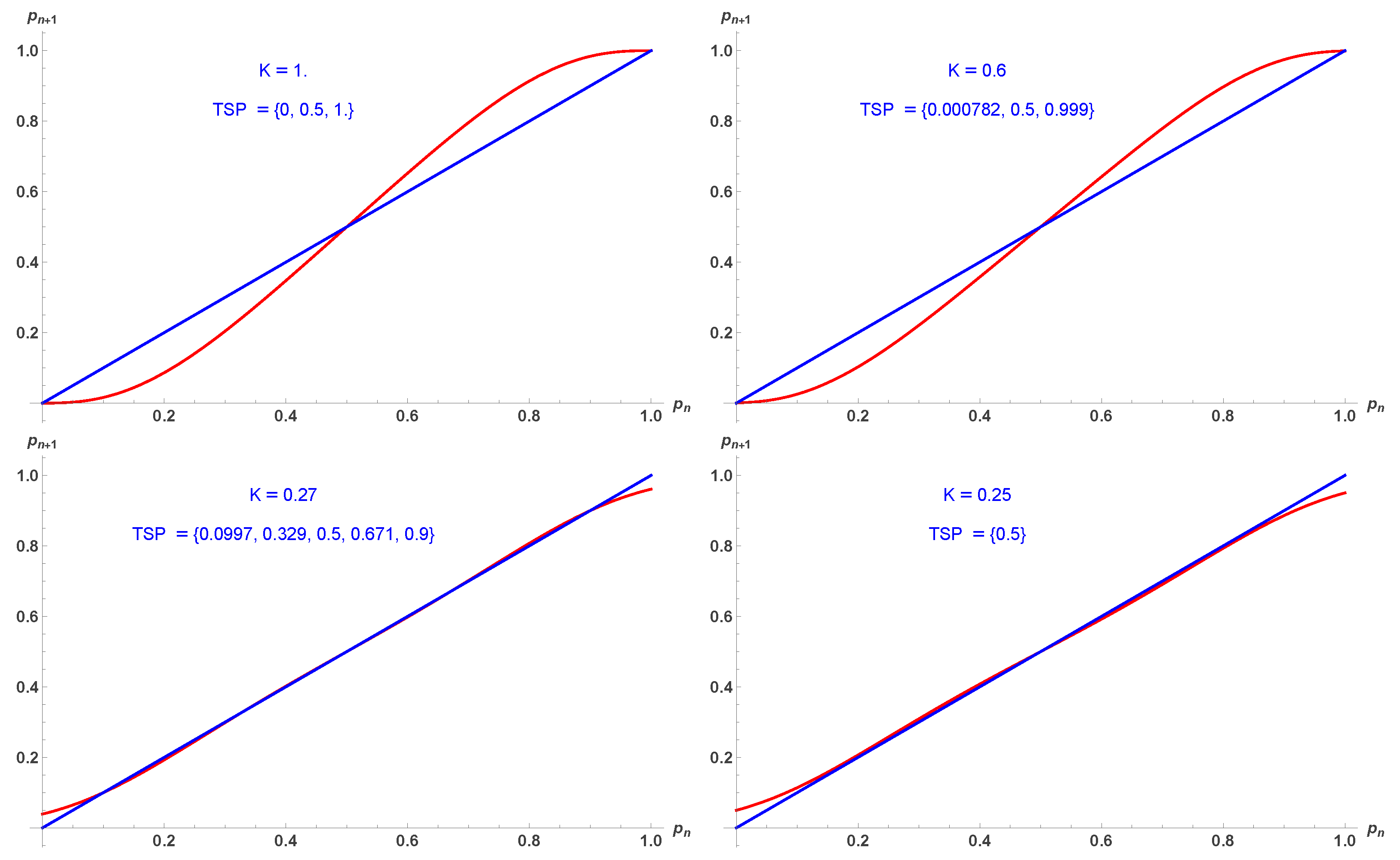
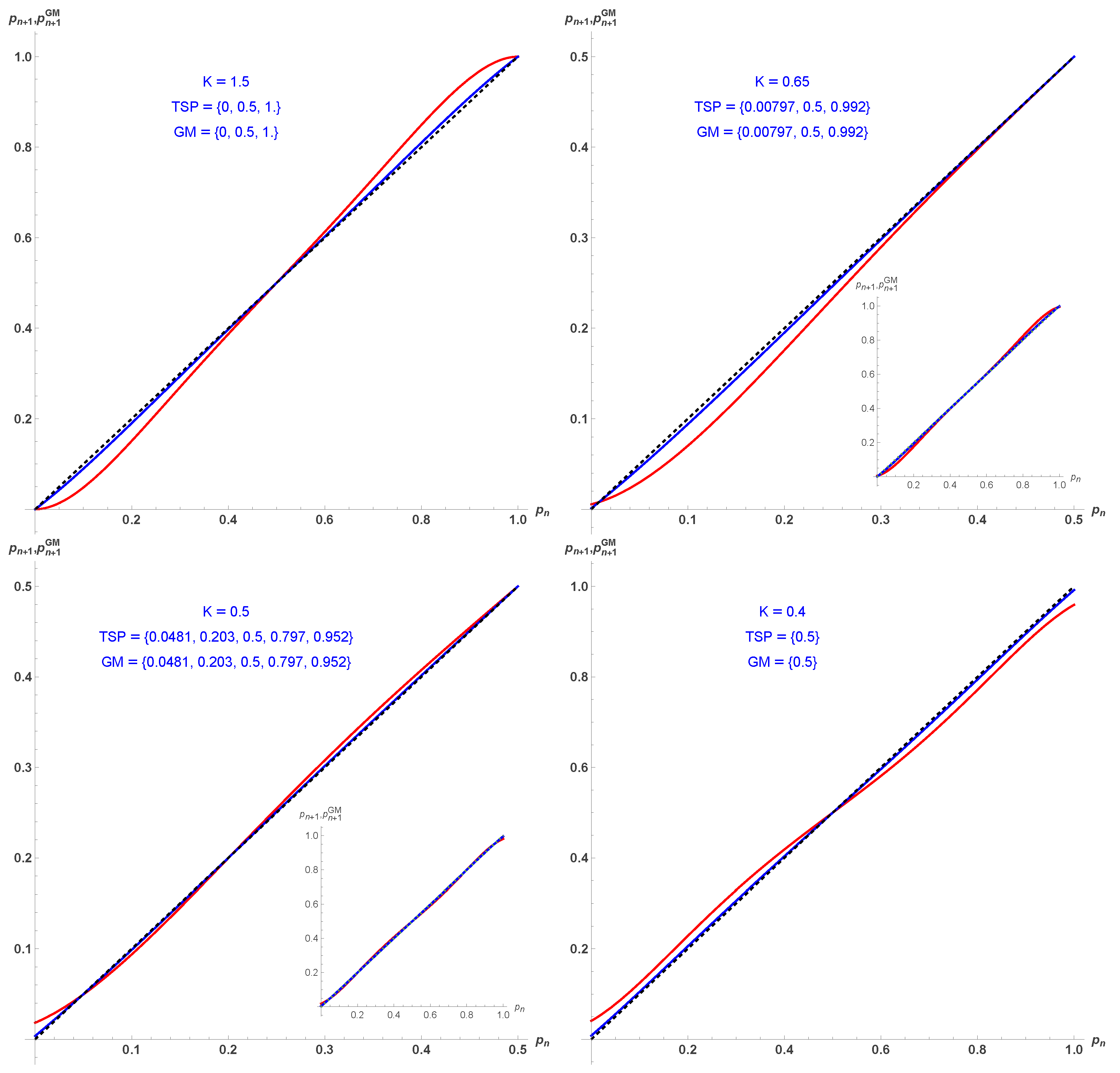
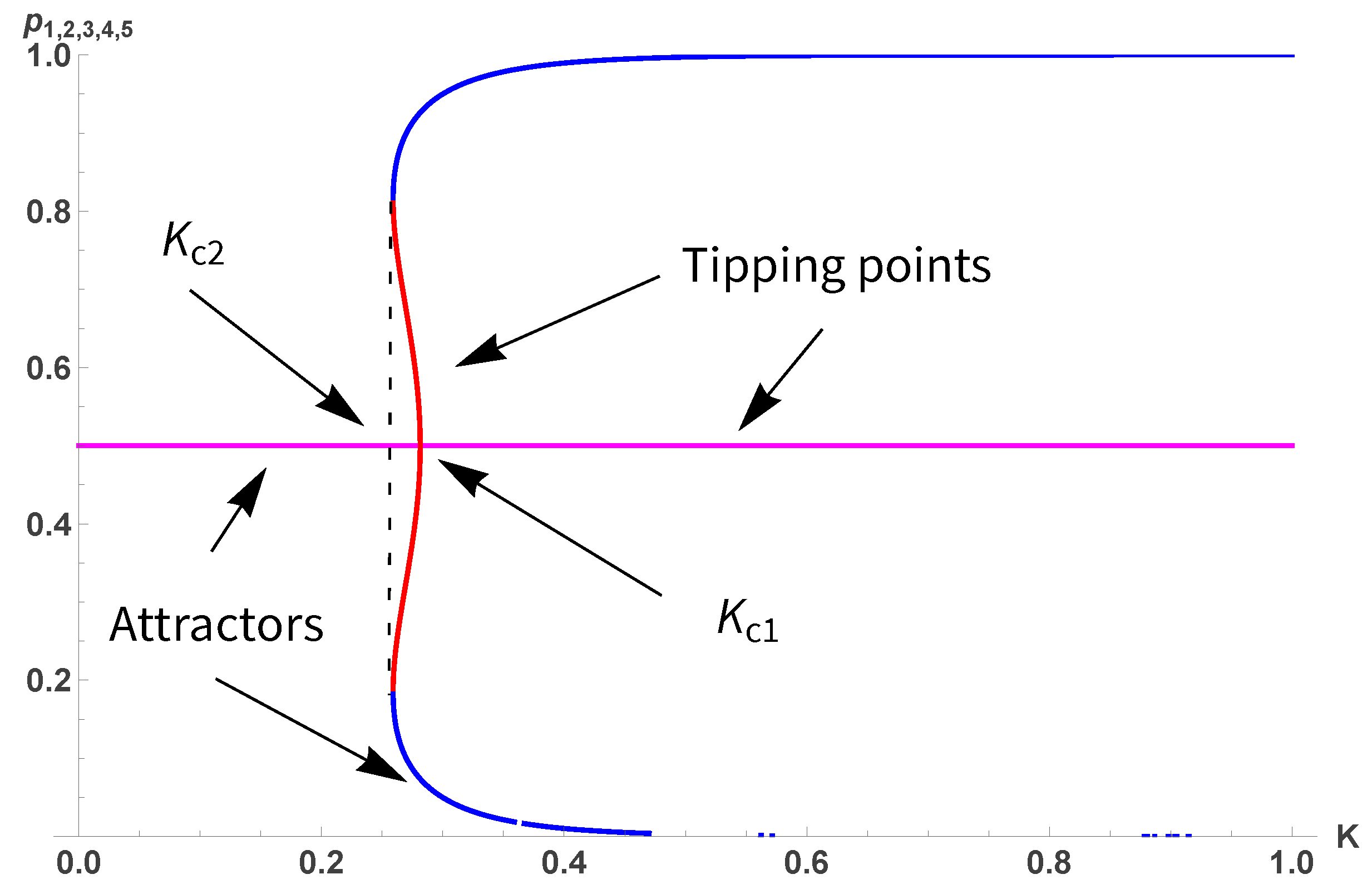
whose fixed points are shown in
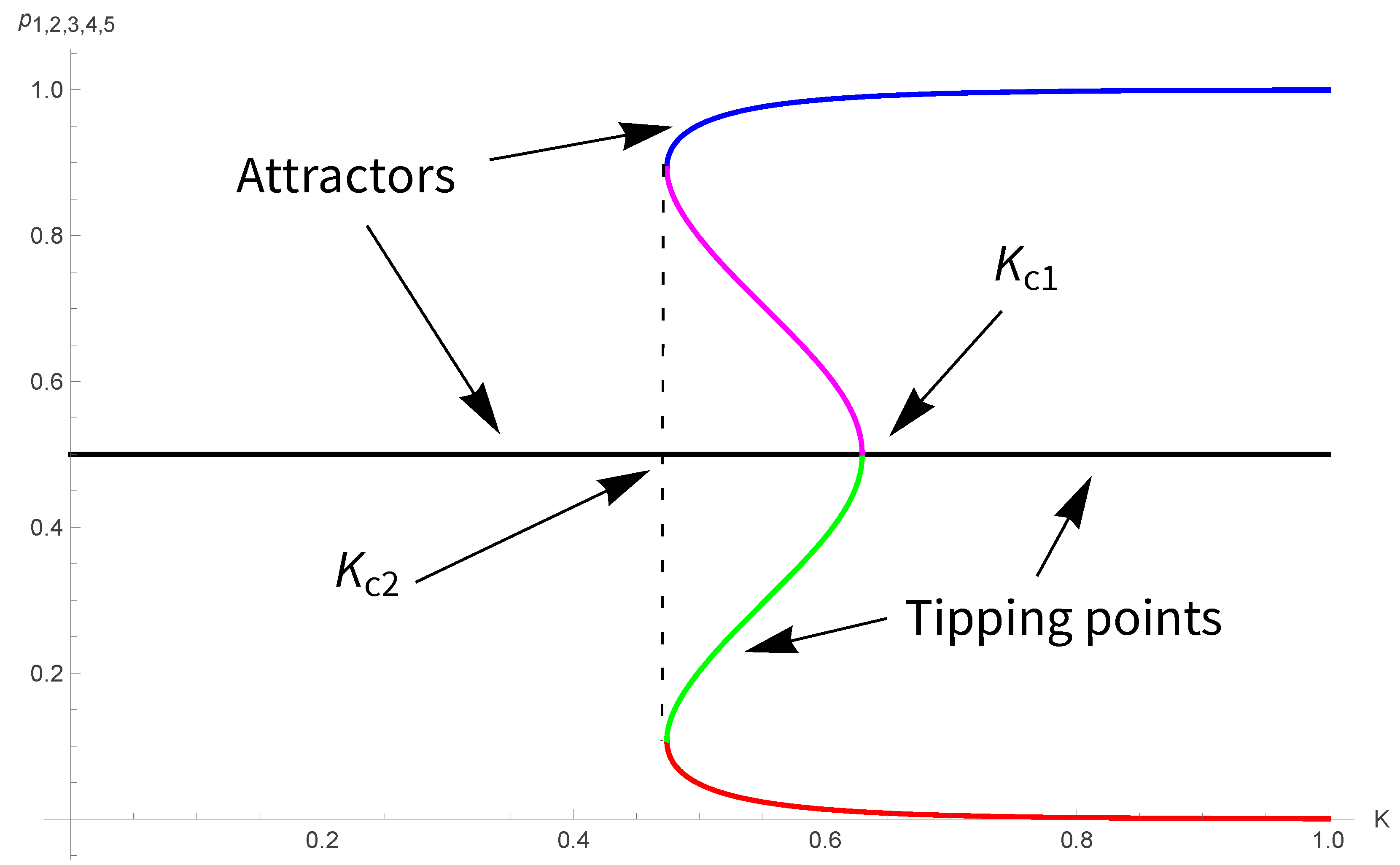
Figure 2. The associated transition is first-order, with
and
, which is close to the Onsager value
.
With this respect, the updated equation is [
27],
which is different from Equation (
10). However, both update equations yield identical fixed points and first-order transition as a function of
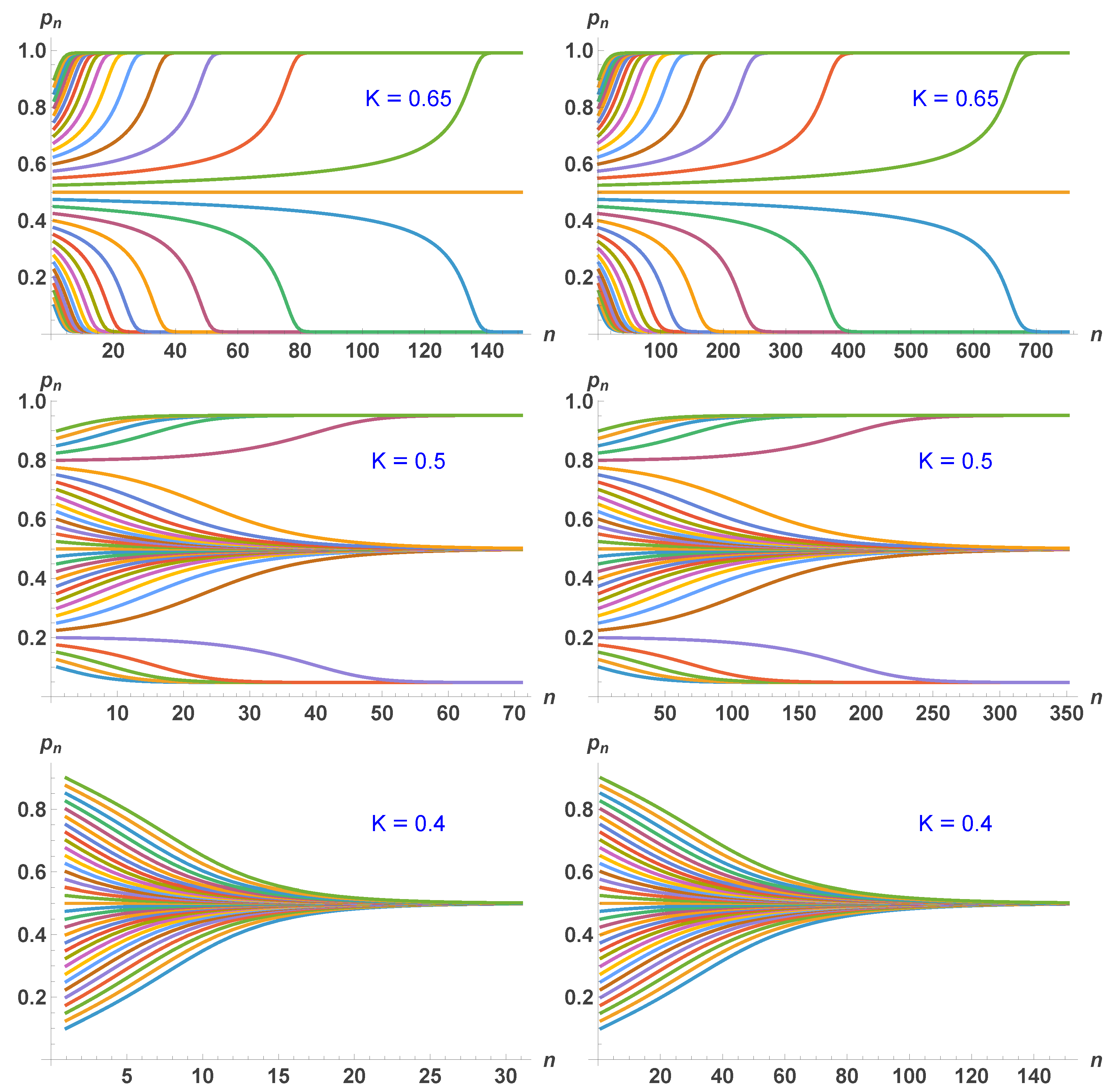
K. However, while the updates include five spins, only one of them is updated, making the dynamics slower to reach the various attractors, as seen in
Figure 3 and
Figure 4.
Figure 4 shows that about five more updates are required to reach the relevant attractor in comparison to TSP, which considers one spin at a time.
More precisely,
Figure 4 presents iterated updates from a series of initial values
covering the full spectrum of values from 0 to 1, using Equations (
10) (left side) and (
11) (right side). Three values of
K are shown with
illustrating the case of full ordering (low temperatures),
illustrating the case of the first order region with either ordering or disorder as a function of the initial value
, and
illustrating the case of full disorder (high temperatures).
4. The One-Dimensional Case
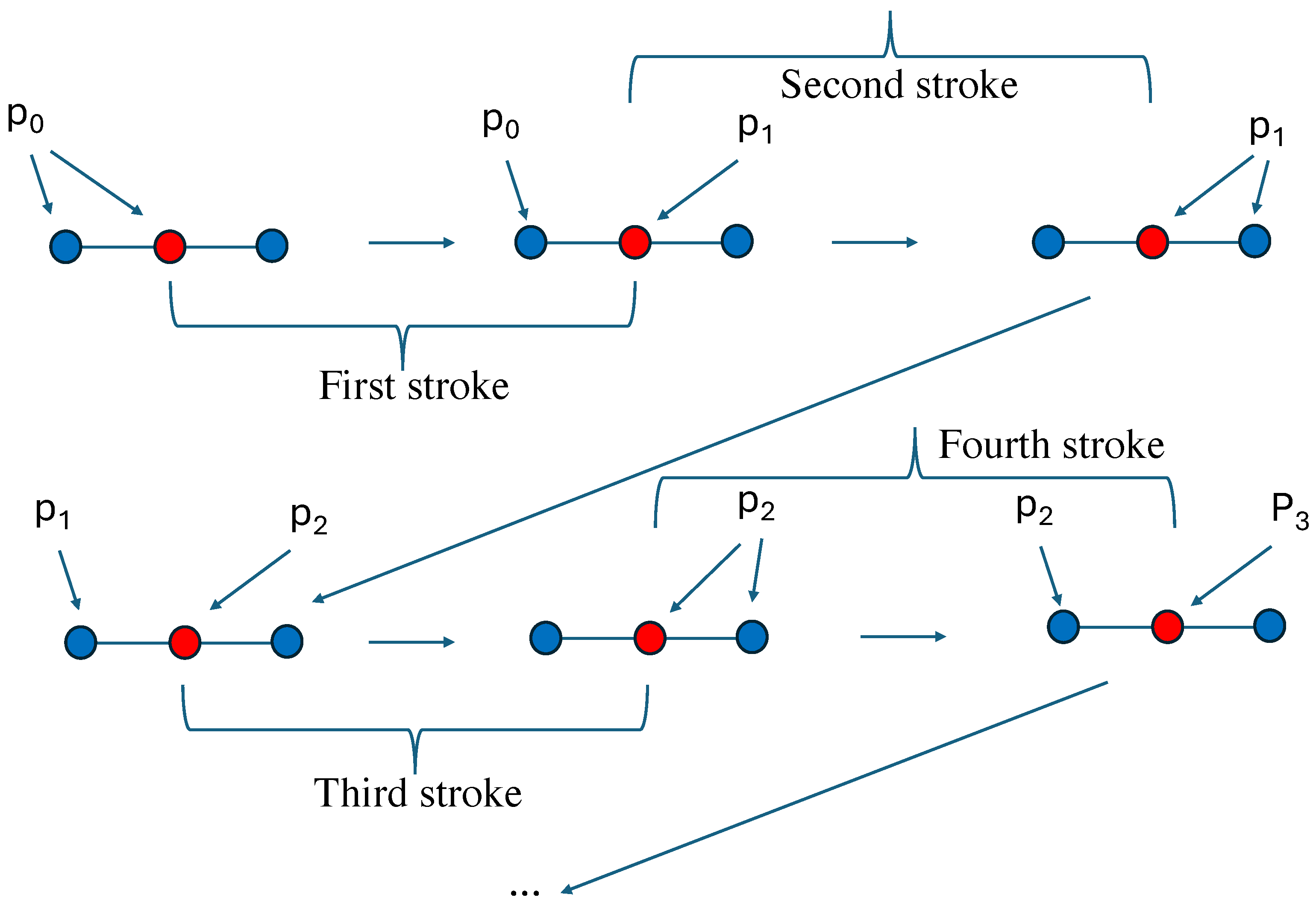
I now apply TSP to the one-dimensional Ising model where each spin has two nearest neighbors.
Figure 5 illustrates the associated dynamics. The resulting update function is,
which reduces to,
Solving Equation (
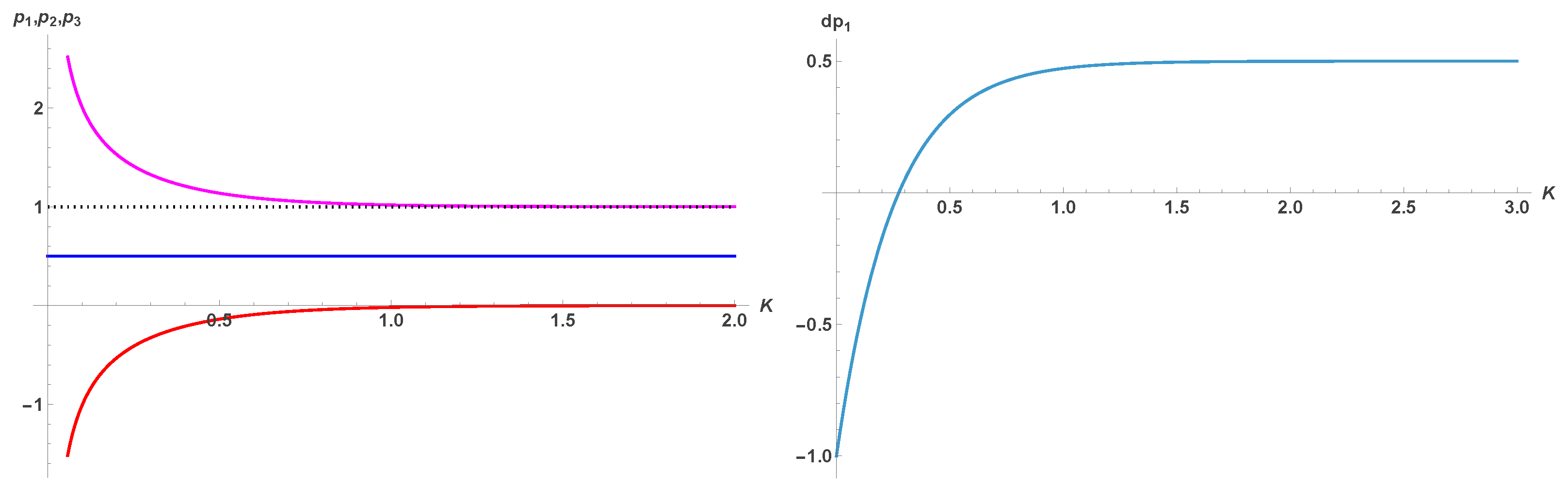
13) fixed point equation yields 3 values
with
and,
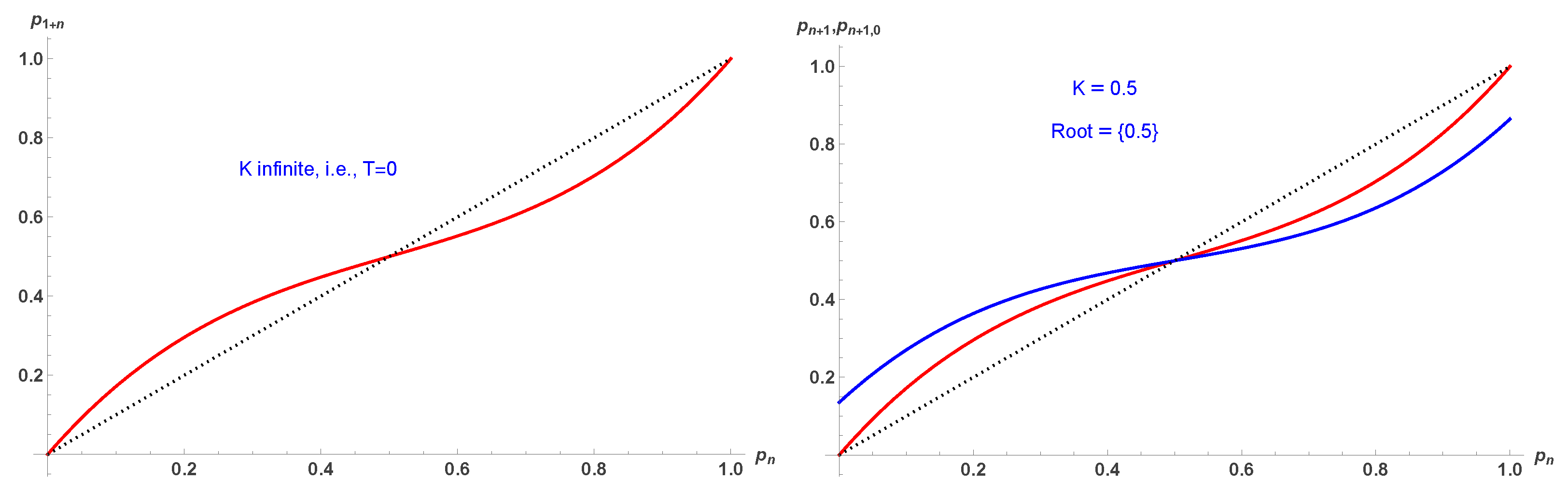
which are shown in left part of
Figure 6 as a function of
K. Only
is valid with the asymptotic limits
of
.
The derivative of Equation (
13) taken at
is
which satisfies
as seen in the right part of
Figure 6 indicating
is always attractor for any value of
K including its infinite limit, i.e.,
.
Indeed, at
Equation (
13) becomes,
which yields three fixed points
where
is still attractor and
two tipping points. Equation (
16) is shown in the left part of
Figure 7. Right part of the
Figure 7 shows Equations (
13) and (
16) for
.
Therefore, is always an attractor even at . However, at , while the values are unstable fixed points, as soon as , they stop being fixed points as expected from the fact that the one-dimensional Ising model has no ordered phase at .
At this stage, the TSP techniques yield a dynamics driven by two repulsive fixed points at and separated by an attractor located at . However, the one-dimensional Ising model has a repulsive fixed point at with two attractors at respectively and .
While this apparent contrast could, at first sight, be interpreted as a failure of the TSP techniques, it acquires a different meaning once the notion of dynamical stability is evoked. In particular, discriminating asymptotic properties and operationally dynamic results shed new light on the TSP outcome.
With this respect, it is of importance to notice that at
and
the single-spin-flip dynamics produces diffusive domain-wall motion without energy change, leading to relaxation times diverging as
[
45].
As a consequence, although the ground state is asymptotically reached, the evolution of the magnetization becomes arbitrarily slow and no full ordering is achieved on finite, physically or numerically accessible time scales.
This behavior is directly consistent with what is observed in Monte Carlo simulations, which necessarily probe finite times and finite system sizes. For instance, system sizes and correspond to ordering times and respectively, which are out of reach for standard Monte Carlo studies.
From this perspective, the TSP dynamics could be seen as providing an effective description of the dynamical states that are actually reached in simulations, whereas the asymptotic fixed-point structure of the 1D Ising model becomes relevant on diverging time scales. The origin of this property can be connected to the use of the single-spin Metropolis update in the TSP techniques.
Therefore, the TSP outcome is not to contrast the asymptotic fixed-point structure where is a repeller, but rather to contribute an additional insight into the actual dynamics observed on finite, physically and numerically accessible time scales.
With this regard, it is worth stressing that RG transformations eliminate dynamically generated absorbing states by the related coarse-graining and thus do not yield the above situation. As a result, the RG description reproduces the correct equilibrium fixed points but fails to account for the dynamics that make the ordered state practically inaccessible from a generic initial condition.
Likewise, Bethe approximation yields the equilibrium ordered phases but fails to account for the slowing down dynamics that arise when the system relaxes under local dynamics from a mixed initial condition within finite times.
5. The Three-Dimensional Case
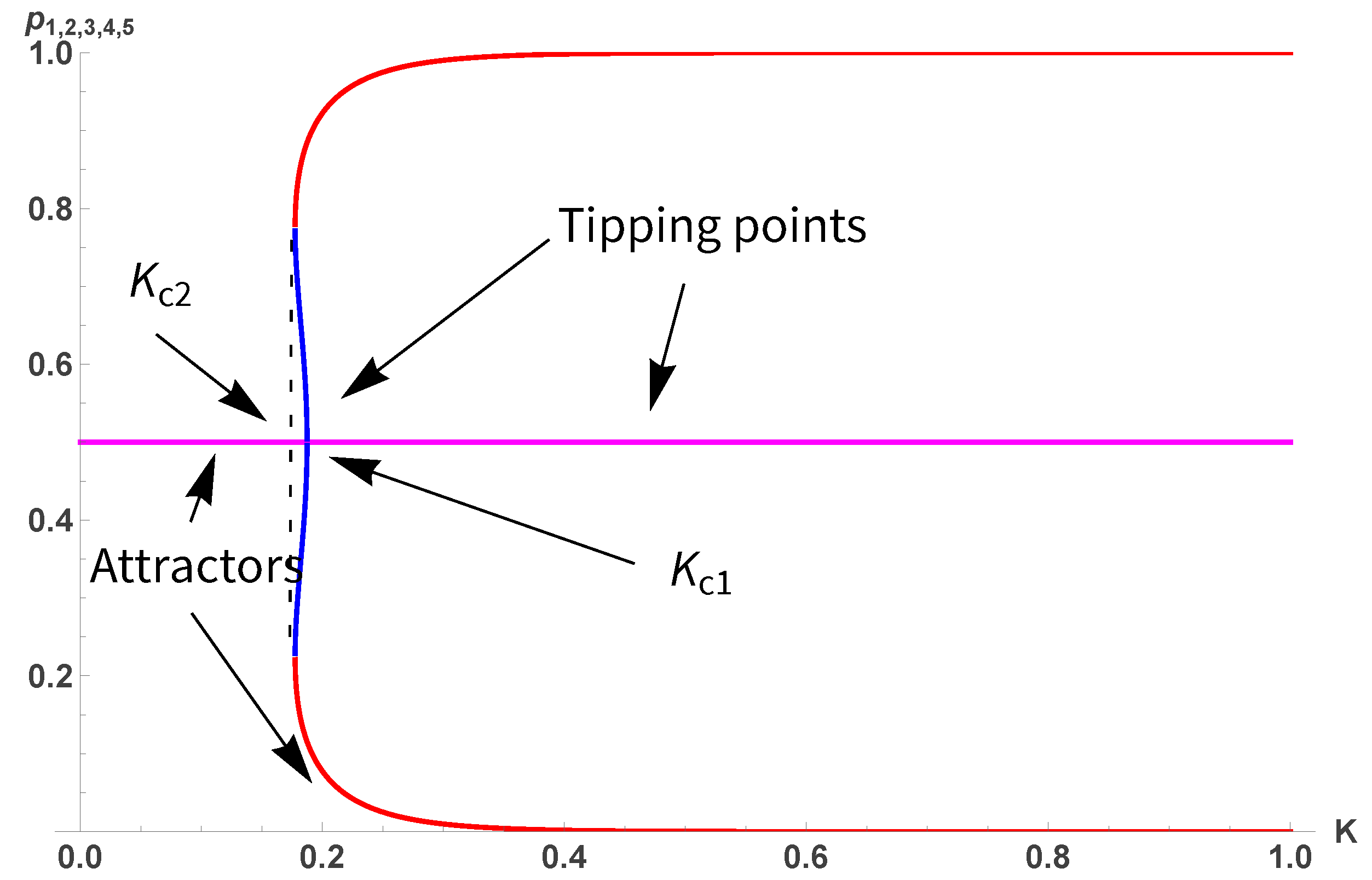
Applying TSP to the three-dimensional Ising model yields the update equation,
whose fixed points are exhibited in
Figure 8.
While the phase diagram is similar to the two-dimensional case, the extent of the first-order transition is reduced with now
and
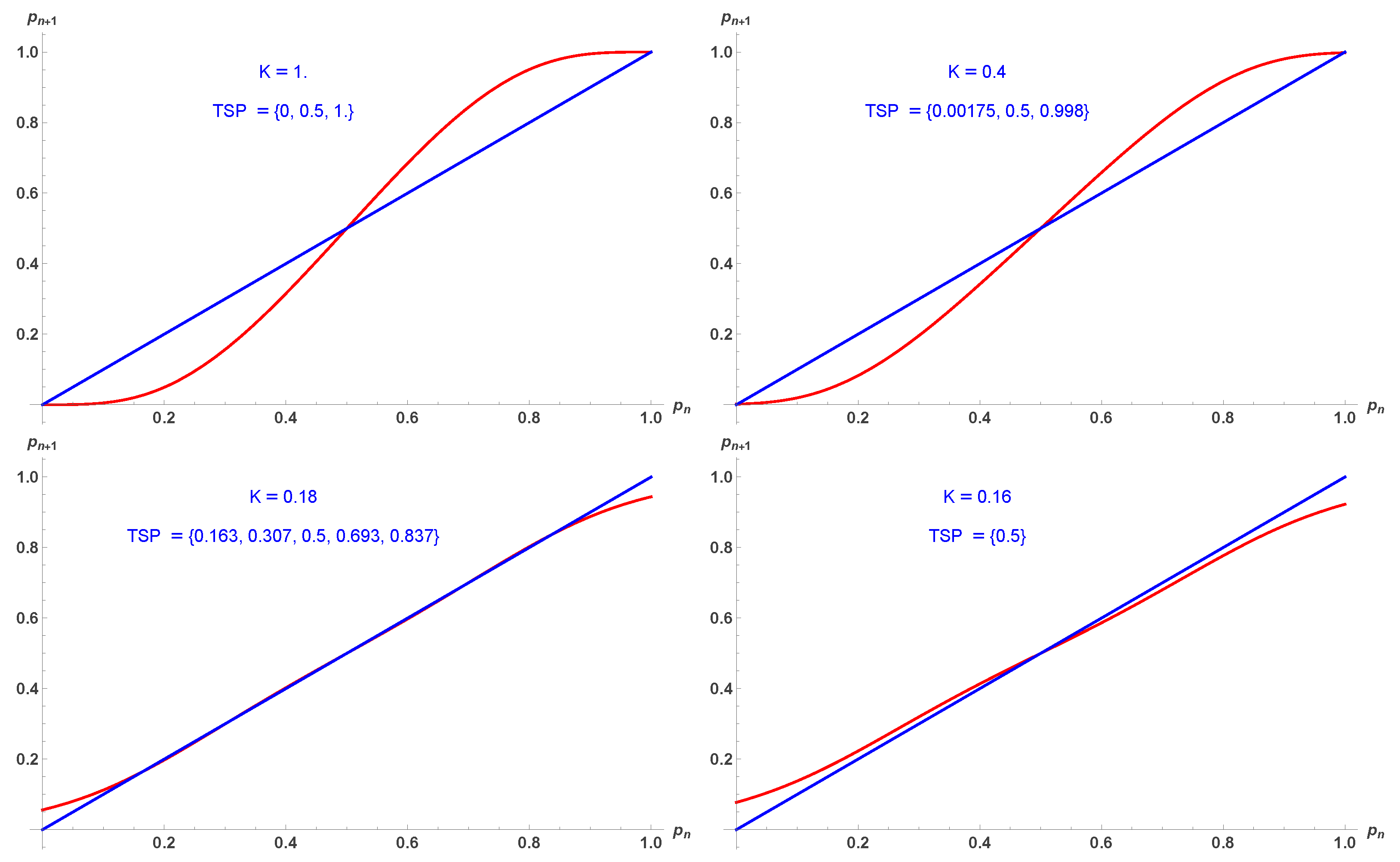
. The same applies to Equation (
17) as seen from
Figure 9 with respect to
Figure 3.
6. The Four-Dimensional Case
At
, the update equation becomes,
with its fixed points shown in
Figure 10.
As for moving from
up to
, moving up to
reduces against the first order region to a very narrow strip with
and
.
Figure 11 illustrates the shrinking.
7. Conclusions
In this paper, I have introduced a novel technique to evaluate the critical temperatures of the nearest-neighbors Ising model at any dimension
d. Denoted two-stroke pumping (TSP), I have implemented it at
. Associated values of
are exhibited in
Table 2 along with estimates using MF, Bethe, GM, and MC. All values are reported with two digits only since this precision is sufficient for making meaningful comparisons.
TMS values overestimate exact estimates with a constant excess of . The fact that the difference is constant indicates it does not depend on the dimension. However, at the moment, I have no explanation of its origin.
TSP and Bethe hold a series of respective advantages. Bethe (i) correctly predicts a second-order phase transition at ; (ii) is asymptotically exact in the limit, and (iii) yields more precise values of at . In contrast, STP (i) includes the dynamics to reach equilibrium; (ii) at shows that the full ordering at , it is not reachable on finite, physically and numerically accessible time scales, in agreement with MC simulations, while requiring significantly fewer computational resources; (iii) and yields a much better value of at , yet with a first order transition.
The STP framework is general, does not rely on lattice-specific geometric assumptions, and can be extended to a broad class of discrete spin models. It would be interesting in future work to apply this two-stroke pumping technique to other spin and lattice models with complex coupling structures, diluted fields, quenched disorder, and other many-body systems.