BeamNet: Unsupervised Beamforming for ISAC Systems Under Imperfect CSI






Abstract
1. Introduction
- We propose an unsupervised learning-based beamforming framework for ISAC systems operating under imperfect CSI, formulating beamforming as a multi-objective optimization problem in terms of CR and SR.
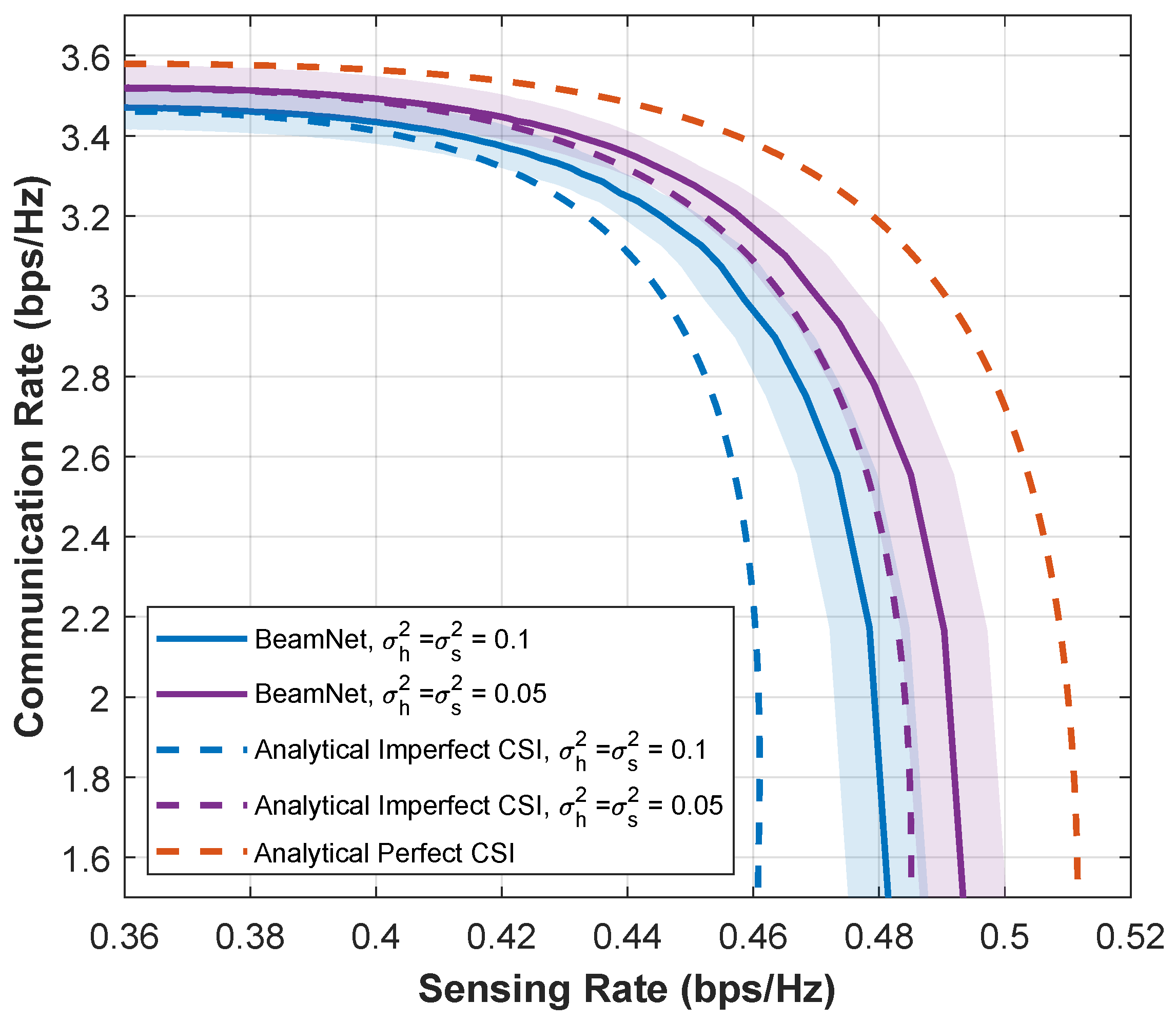
- The proposed approach is inherently distribution-agnostic at the loss level and can be trained on data from general fading channels (BeamNet is not tied to any specific distribution and only requires sample channels.) (e.g., Nakagami-m, Rician), enabling robust performance even under distribution mismatch between training and test channel statistics.
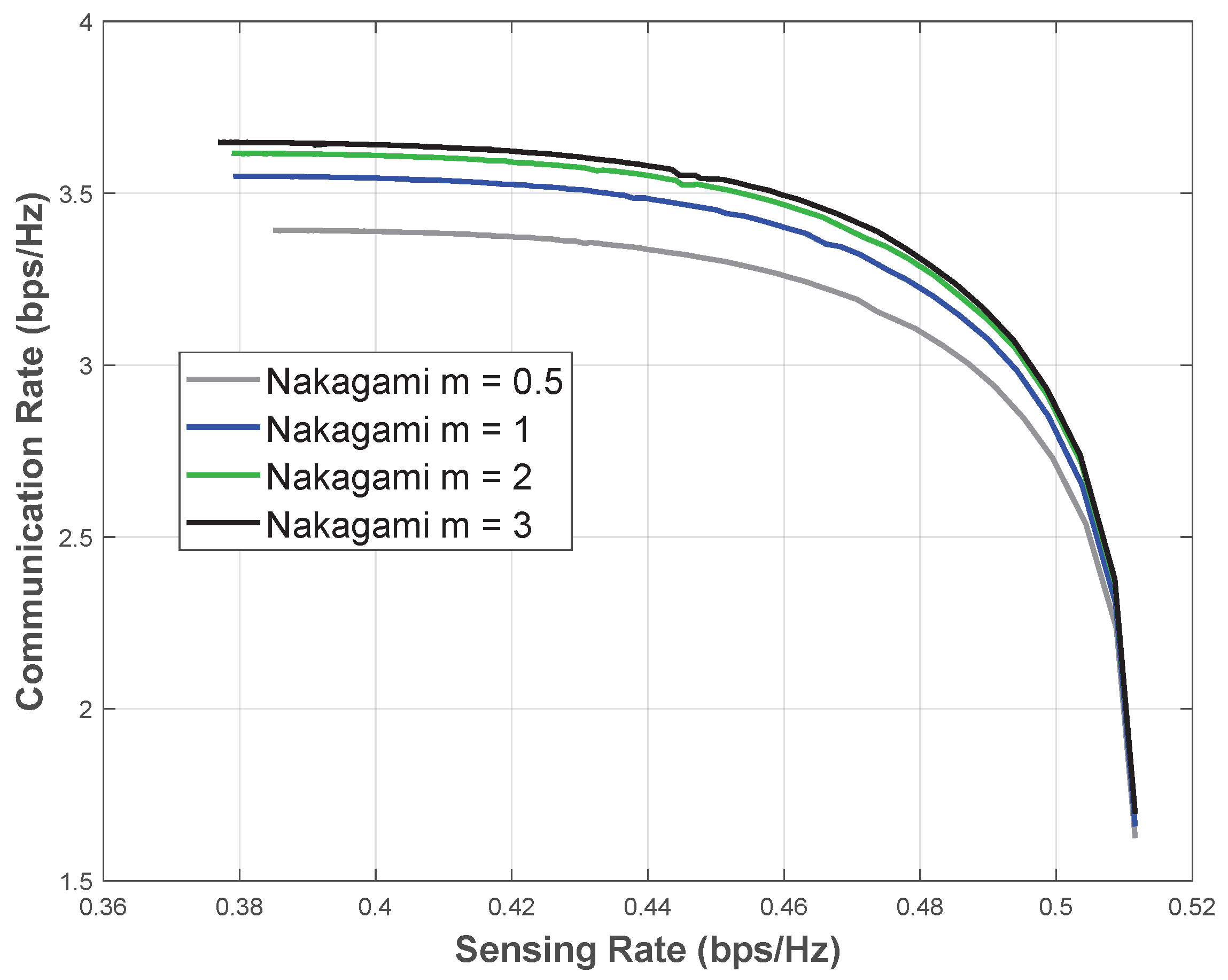
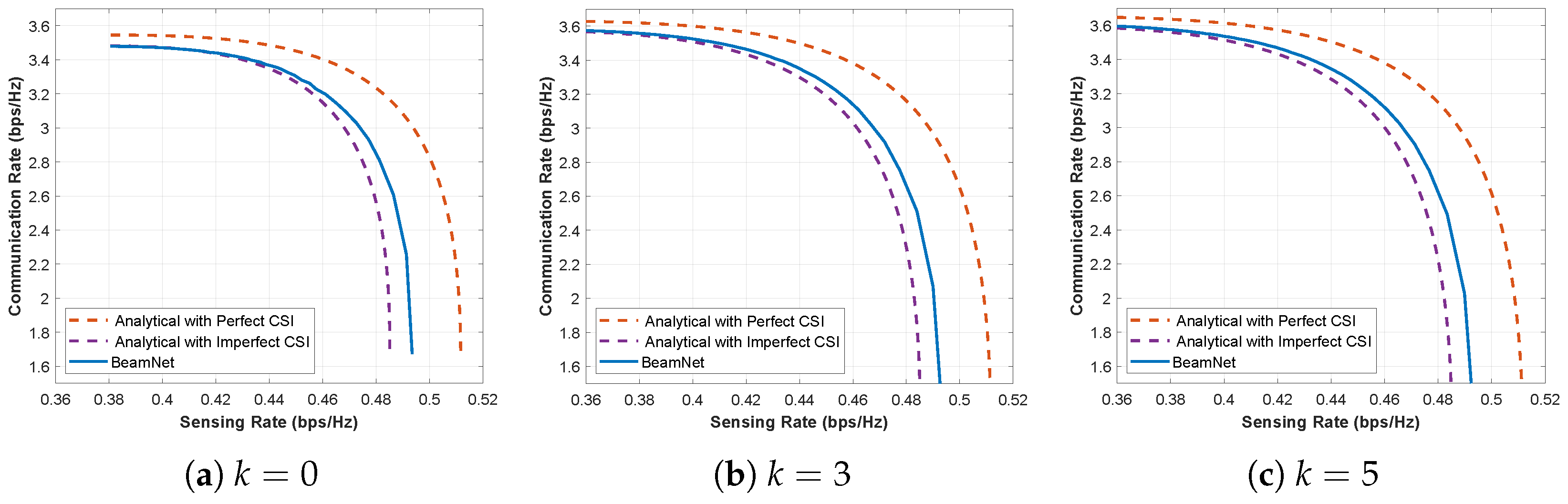
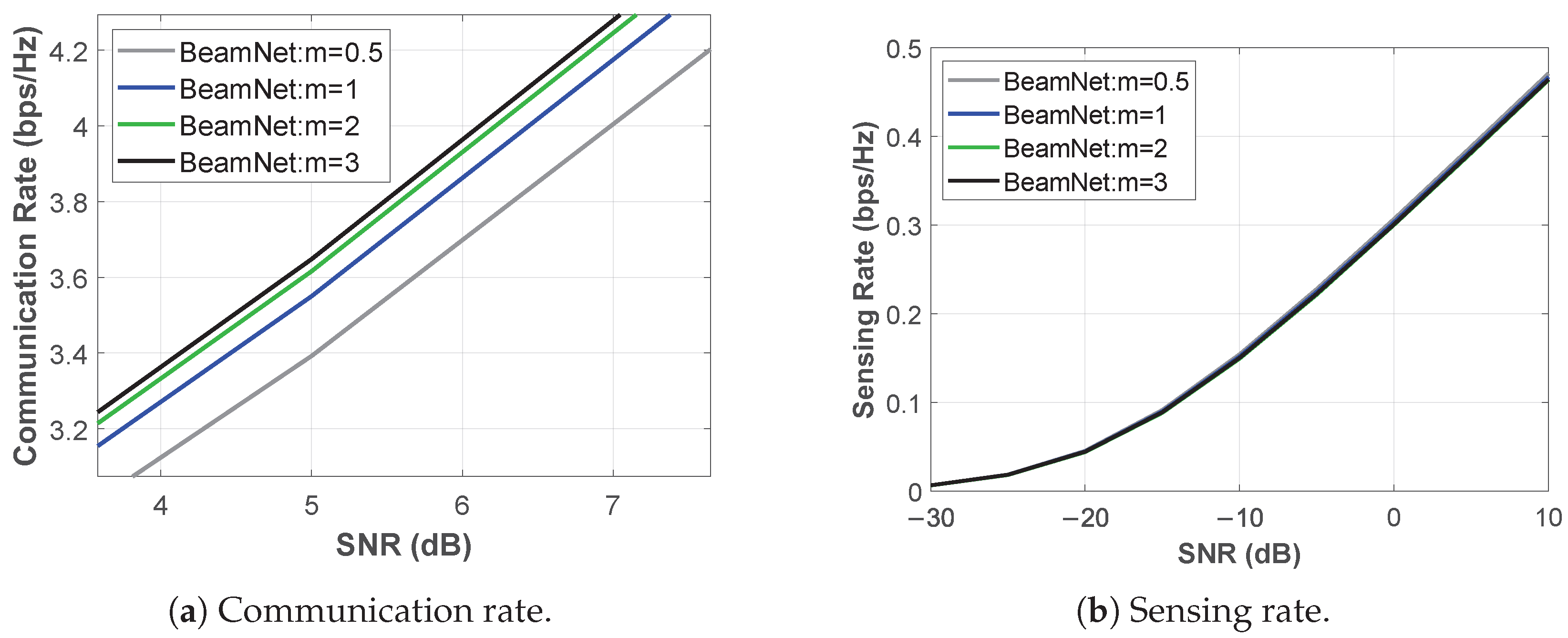
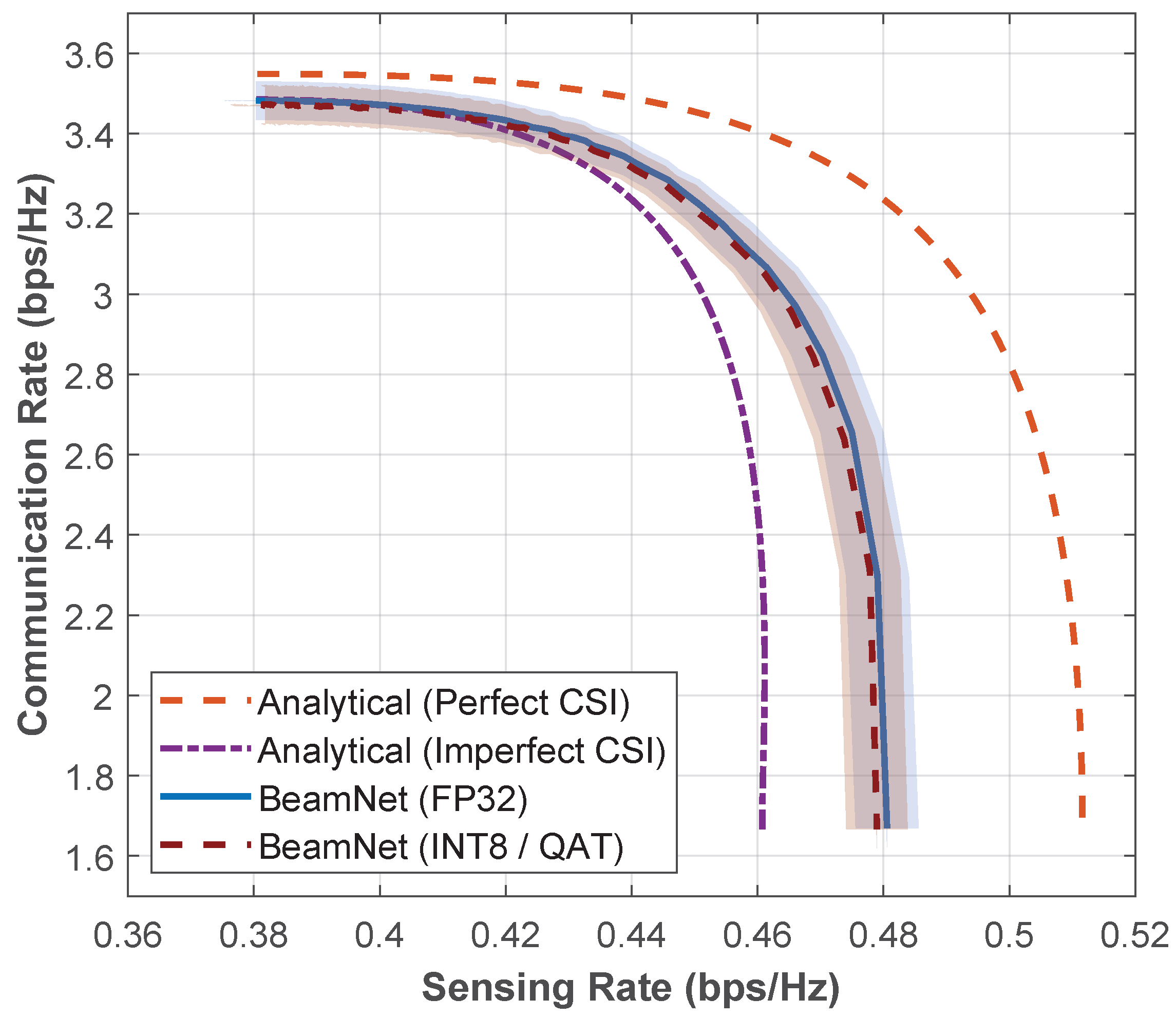
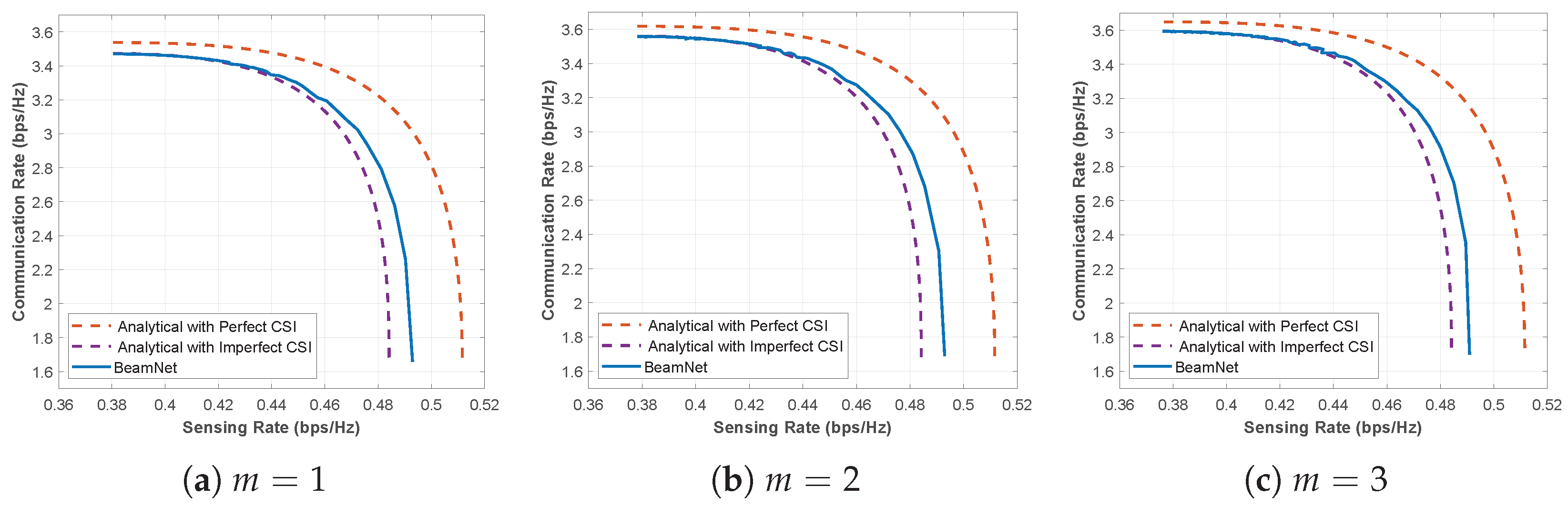
- Using a single trained model and by sweeping the loss weights, BeamNet efficiently characterizes the Pareto-optimal CR-SR trade-off across fading environments, providing a flexible tool to study ISAC performance frontiers beyond analytically tractable regimes.
2. Related Work
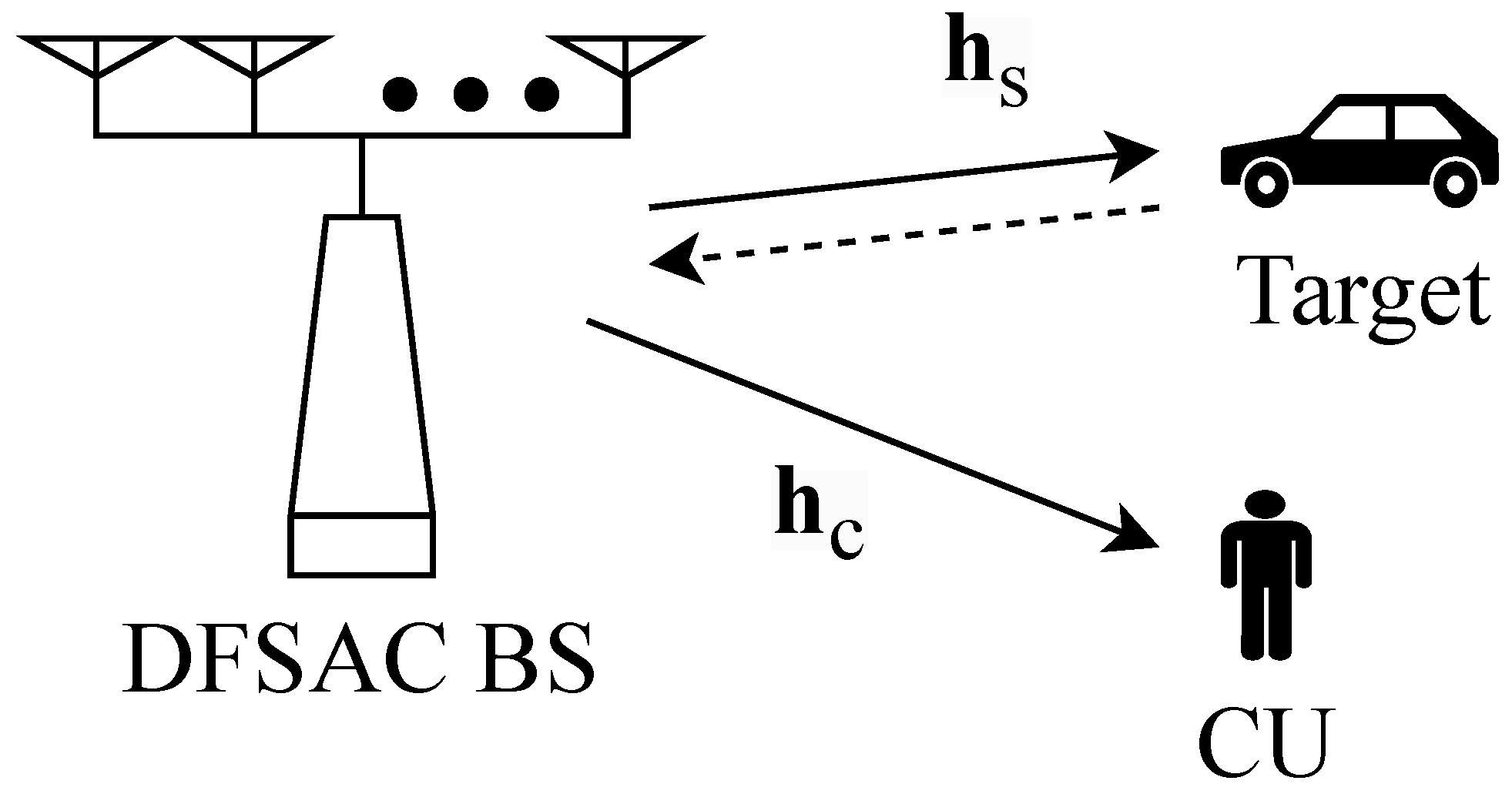
3. System Setup
3.1. Communication Model
3.2. Sensing Model
4. DL-Based Beamforming Framework
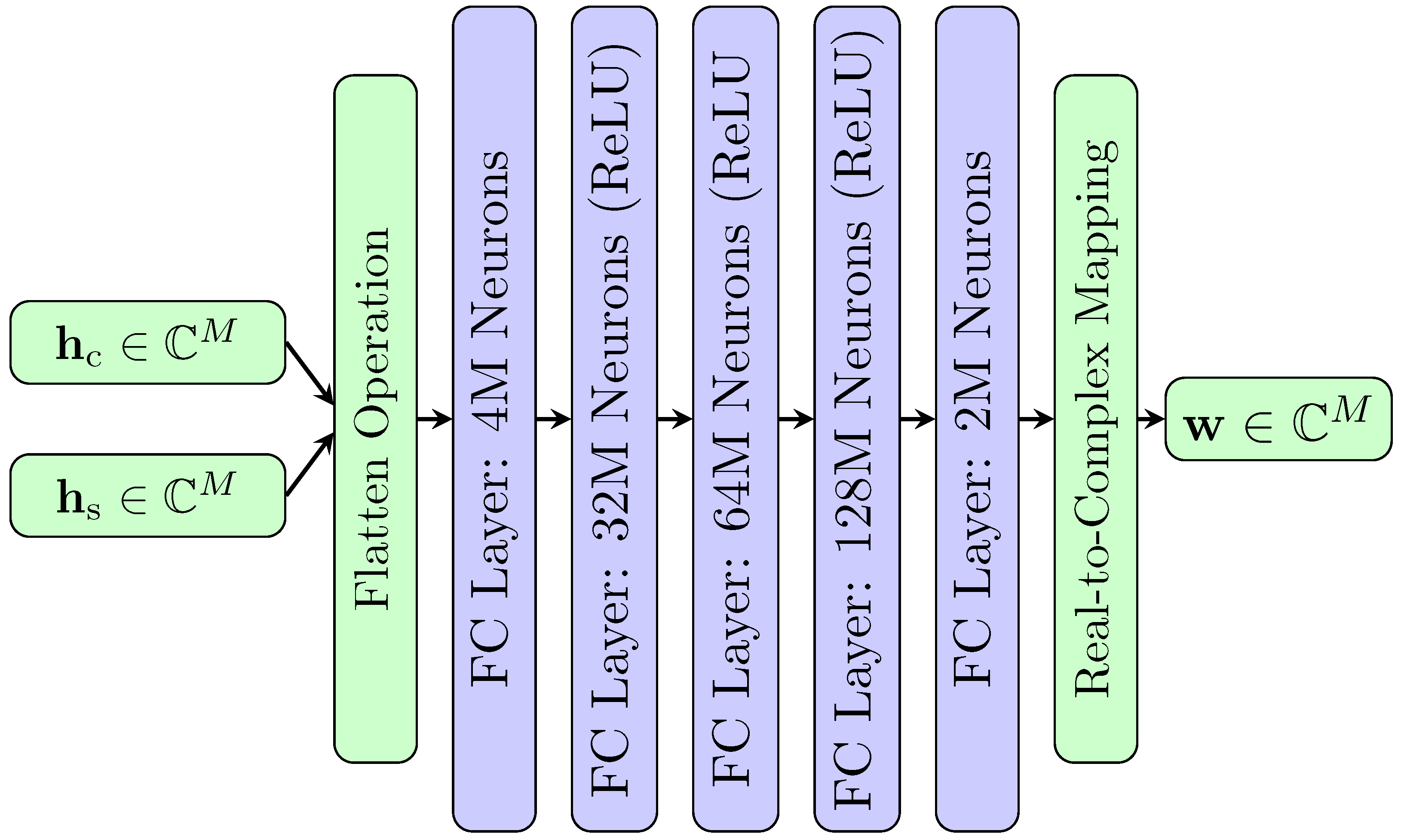
4.1. Deep Learning Model Architecture
4.2. Deep Learning Model Training
5. Experimental Results
5.1. Benchmark BeamNet Under Rayleigh Fading () with Perfect CSI
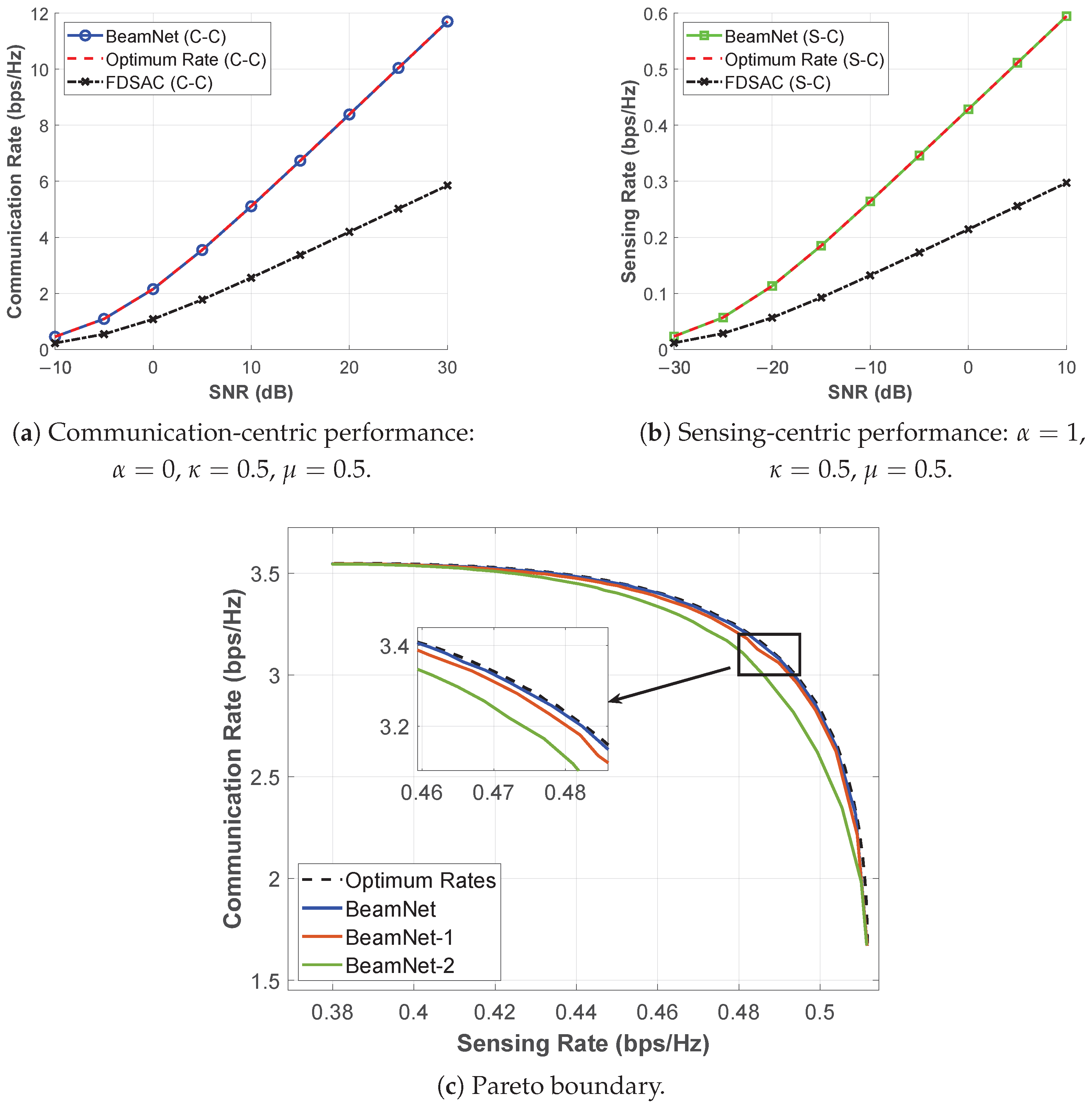
5.1.1. Communication-Centric Design
5.1.2. Sensing-Centric Design
5.1.3. Pareto Optimal Design
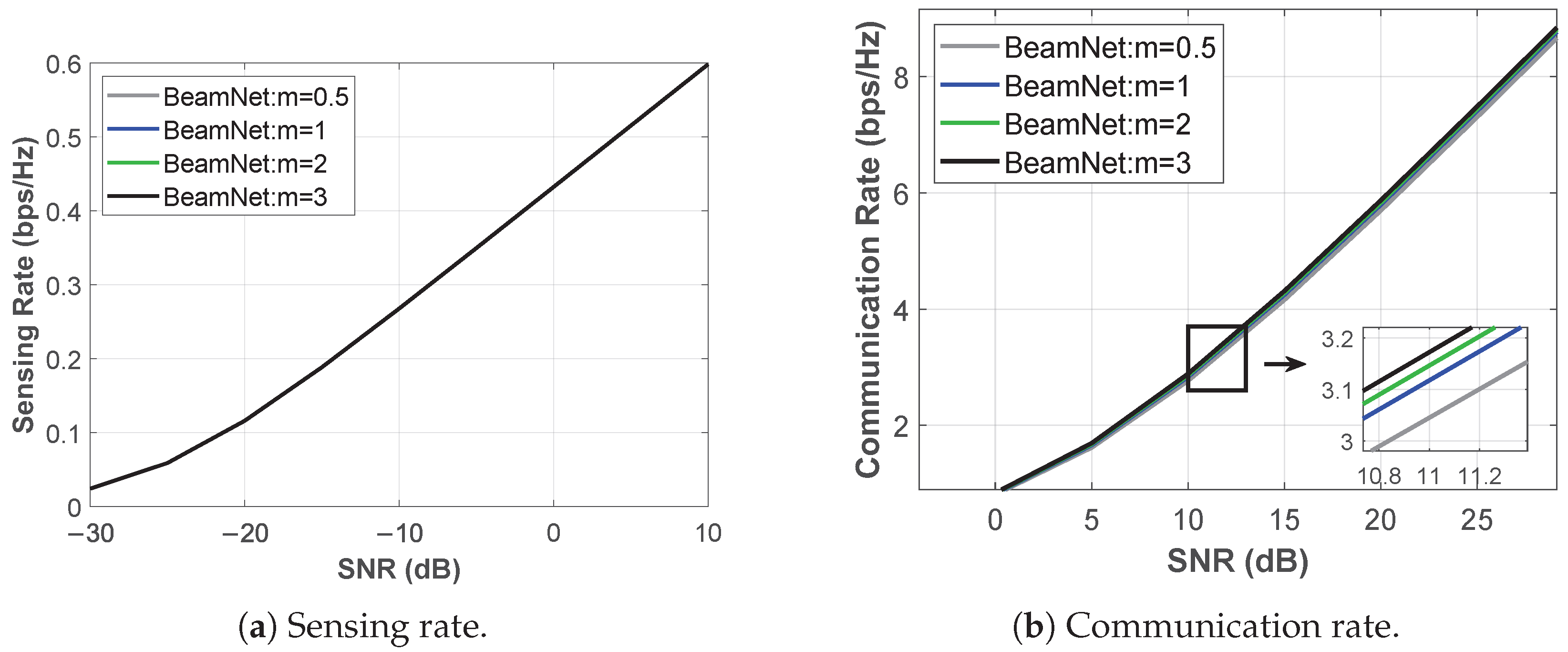
5.1.4. Impact of the Number of Layers (Ablation Study)
5.2. Performance Under Nakagami-m Fading with Perfect CSI
5.2.1. Communication-Centric Design
5.2.2. Sensing-Centric Design
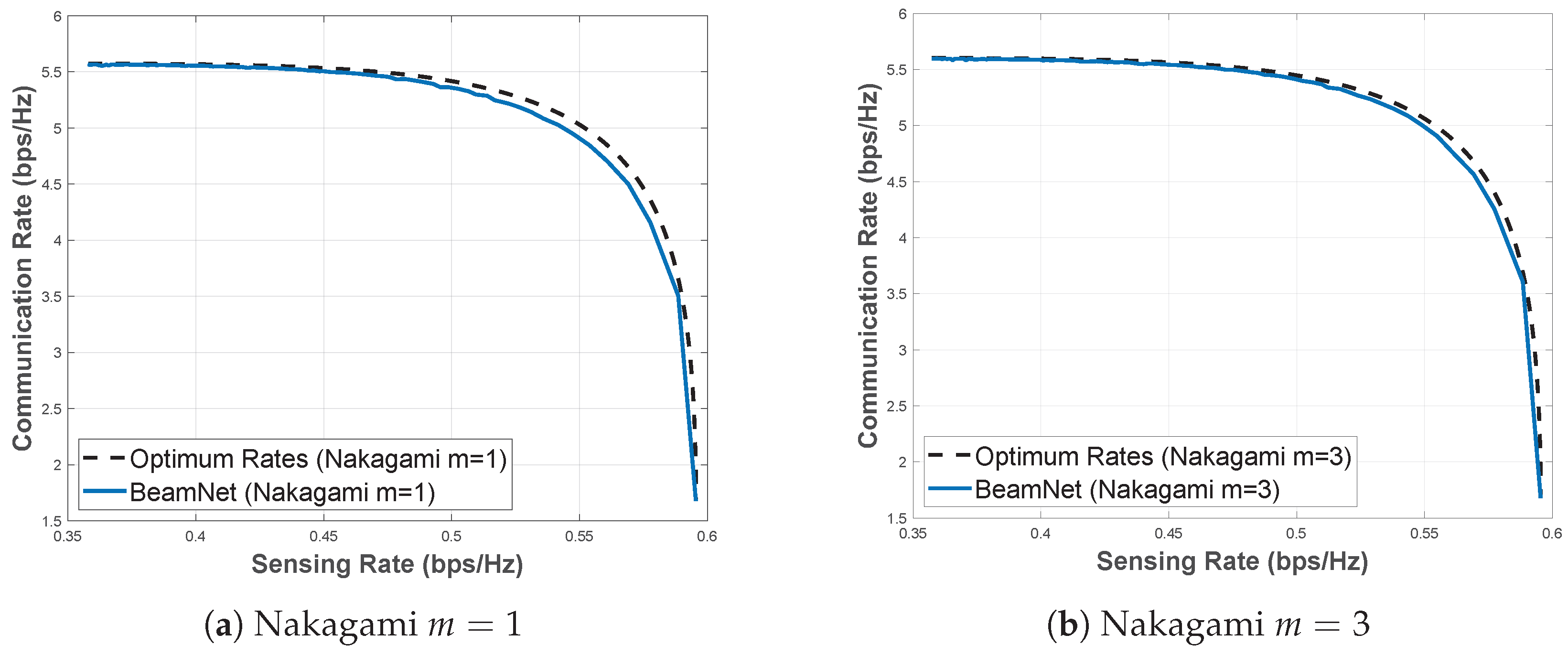
5.2.3. Pareto Optimal Design
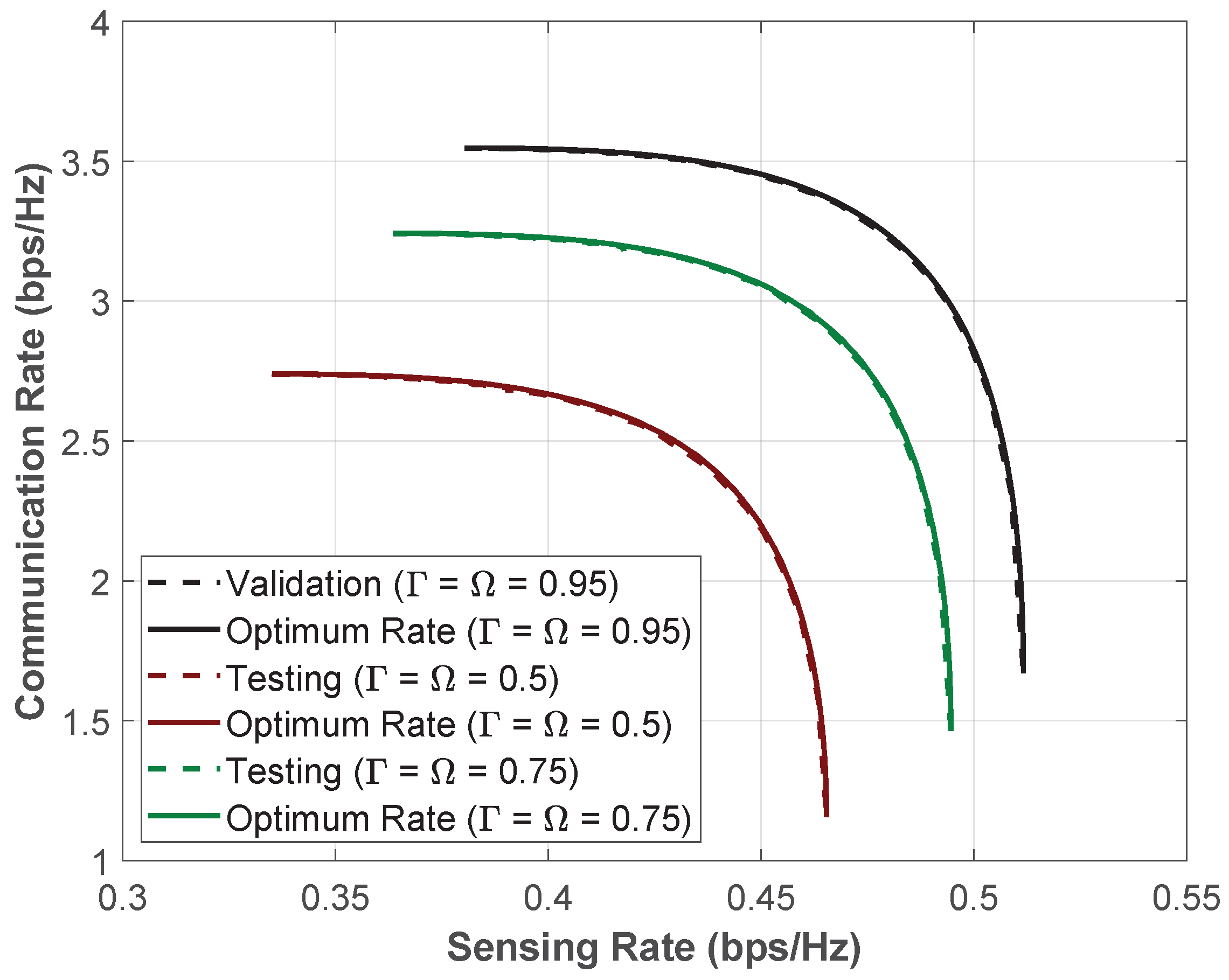
5.3. Model Robustness Test and Generalization
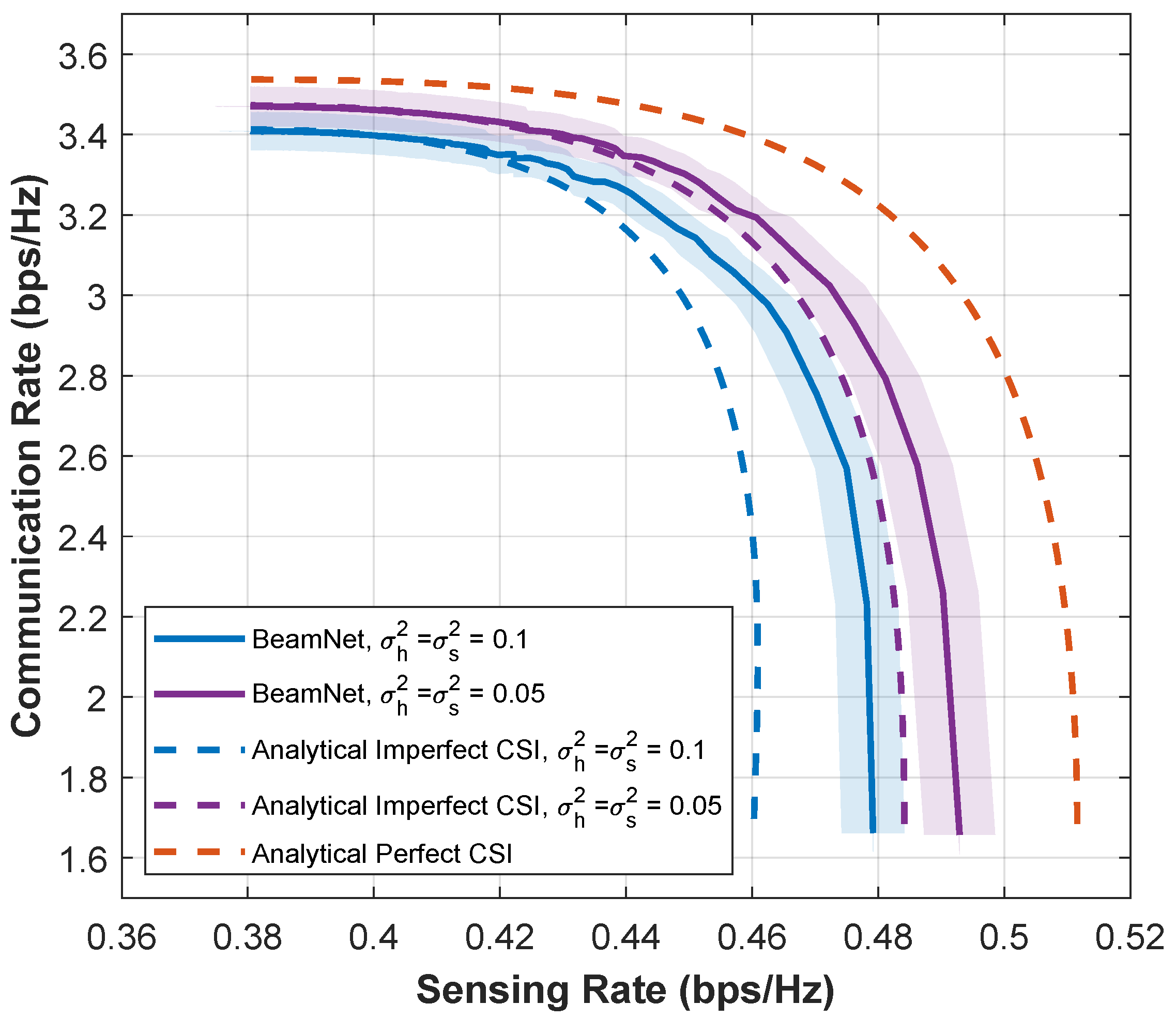
5.4. Performance Under Nakagami-m Fading with Imperfect CSI
6. Conclusions and Future Work
Author Contributions
Funding
Institutional Review Board Statement
Informed Consent Statement
Data Availability Statement
Conflicts of Interest
Abbreviations
| AE | Autoencoder |
| Adam | Adaptive Moment Estimation |
| BS | Base Station |
| CNN | Convolutional Neural Network |
| CR | Communication Rate |
| CSI | Channel State Information |
| CU | Communication User |
| DFRC | Dual-Function Radar-Communication |
| DL | Deep Learning |
| DoA | Direction of Arrival |
| FDSAC | Frequency-Division Sensing-and-Communication |
| ISAC | Integrated Sensing and Communication |
| LSTM | Long Short-Term Memory |
| MF | Matched Filter |
| MIMO | Multiple-Input Multiple-Output |
| MISO | Multiple-Input Single-Output |
| MUSIC | MUltiple SIgnal Classification |
| RCS | Radar Cross Section |
| ReLU | Rectified Linear Unit |
| SE | Squeeze-and-Excitation |
| Signal-to-Noise Ratio | |
| SR | Sensing Rate |
| ULA | Uniform Linear Array |
| UWB | Ultrawideband |
References
- Jin, X.; Lv, T.; Ni, W.; Lin, Z.; Zhu, Q.; Hossain, E.; Poor, H.V. A Reconfigurable Subarray Architecture and Hybrid Beamforming for Millimeter-Wave Dual-Function-Radar-Communication Systems. IEEE Trans. Wirel. Commun. 2024, 23, 12594–12607. [Google Scholar] [CrossRef]
- Cui, Y.; Liu, F.; Masouros, C.; Xu, J.; Han, T.X.; Eldar, Y.C. Integrated Sensing and Communications: Background and Applications. In Integrated Sensing and Communications; Springer: Cham, Switzerland, 2023; pp. 3–21. [Google Scholar]
- Ouyang, C.; Liu, Y.; Zhang, X. Revealing the Impact of Beamforming in ISAC. IEEE Wirel. Commun. Lett. 2024, 13, 362–366. [Google Scholar] [CrossRef]
- Temiz, M.; Masouros, C. Unsupervised Learning-Based Low-Complexity Integrated Sensing and Communication Precoder Design. IEEE Open J. Commun. Soc. 2025, 6, 3543–3554. [Google Scholar] [CrossRef]
- Qi, Q.; Chen, X.; Zhong, C.; Yuen, C.; Zhang, Z. Deep Learning-Based Design of Uplink Integrated Sensing and Communication. IEEE Trans. Wirel. Commun. 2024, 23, 10639–10652. [Google Scholar] [CrossRef]
- Mateos-Ramos, J.M.; Song, J.; Wu, Y.; Häger, C.; Keskin, M.F.; Yajnanarayana, V.; Wymeersch, H. End-to-End Learning for Integrated Sensing and Communication. In Proceedings of the IEEE International Conference on Communications (ICC), Seoul, Republic of Korea, 16–20 May 2022; pp. 1942–1947. [Google Scholar]
- Mateos-Ramos, J.M.; Chatelier, B.; Häger, C.; Keskin, M.F.; Magoarou, L.L.; Wymeersch, H. Semi-Supervised End-to-End Learning for Integrated Sensing and Communications. In Proceedings of the IEEE International Conference on Machine Learning for Communication and Networking (ICMLCN), Stockholm, Sweden, 5–8 May 2024; pp. 132–138. [Google Scholar]
- Liu, C.; Yuan, W.; Li, S.; Liu, X.; Ng, D.W.K.; Li, Y. Predictive Beamforming for Integrated Sensing and Communication in Vehicular Networks: A Deep Learning Approach. In Proceedings of the IEEE International Conference on Communications (ICC), Seoul, Republic of Korea, 16–20 May 2022; pp. 1948–1954. [Google Scholar]
- Li, A.; Bodanese, E.; Singh, S.; Huang, Z.; Hou, T.; Wu, K.; Luo, F. An Integrated Sensing and Communication System for Fall Detection and Recognition Using Ultrawideband Signals. IEEE Internet Things J. 2024, 11, 1509–1521. [Google Scholar] [CrossRef]
- Ye, J.; Huang, L.; Chen, Z.; Zhang, P.; Rihan, M. Unsupervised Learning for Joint Beamforming Design in RIS-Aided ISAC Systems. IEEE Wirel. Commun. Lett. 2024, 13, 2571–2575. [Google Scholar] [CrossRef]
- Elrashidy, M.; Masood, M.; Nasir, A.A. Unsupervised Learning Approach for Distributed Beamforming in Cell-Free Integrated Sensing and Communication with Dynamic Balancing Method. Phys. Commun. 2025, 69, 102591. [Google Scholar] [CrossRef]
- Demirhan, U.; Alkhateeb, A. Learning Beamforming in Cell-free Massive MIMO ISAC Systems. In Proceedings of the 25th International Workshop on Signal Processing Advances in Wireless Communications (SPAWC), Lucca, Italy, 10–13 September 2024; pp. 326–330. [Google Scholar]
- Zhang, Y.; Ni, W.; Wang, J.; Tang, W.; Jia, M.; Eldar, Y.C.; Niyato, D. Robust Transceiver Design for Covert Integrated Sensing and Communications with Imperfect CSI. IEEE Trans. Commun. 2024, 73, 8016–8031. [Google Scholar] [CrossRef]
- Chen, Z.; Wang, F.; Han, G.; Wang, X.; Lau, V.K.N. Robust Beamforming Design for Secure Near-Field ISAC Systems. IEEE Wirel. Commun. Lett. 2025, 14, 3089–3093. [Google Scholar] [CrossRef]
- Guo, Y.; Gu, Y.; Xia, B. Fundamental CRB-Rate Tradeoff in ISAC: The Pareto Boundary with Arbitrary Input Distribution. In Proceedings of the IEEE International Conference on Communications (ICC), Montreal, QC, Canada, 8–12 June 2025; pp. 1–6. [Google Scholar]
- Zhang, C.; Yi, W.; Liu, Y.; Hanzo, L. Semi-Integrated-Sensing-and-Communication (Semi-ISaC): From OMA to NOMA. IEEE Trans. Commun. 2023, 71, 1878–1893. [Google Scholar] [CrossRef]
- Kang, B.; Ye, N.; An, J. Achieving Positive Rate of Covert Communications Covered by Randomly Activated Overt Users. IEEE Trans. Inf. Forensics Secur. 2025, 20, 2480–2495. [Google Scholar] [CrossRef]
- Tang, J.; Luo, J.; Ou, J.; Zhang, X.; Zhao, N.; So, D.K.C.; Wong, K.K. Decoupling or Learning: Joint Power Splitting and Allocation in MC-NOMA with SWIPT. IEEE Trans. Commun. 2020, 68, 5834–5848. [Google Scholar] [CrossRef]
- Ouyang, C.; Liu, Y.; Yang, H.; Al-Dhahir, N. Integrated Sensing and Communications: A Mutual Information-Based Framework. IEEE Commun. Mag. 2023, 61, 26–32. [Google Scholar] [CrossRef]
- Richards, M.A. Fundamentals of Radar Signal Processing, 2nd ed.; McGraw-Hill Education: New York, NY, USA, 2014. [Google Scholar]
- Schmidt, R.O. Multiple Emitter Location and Signal Parameter Estimation. IEEE Trans. Antennas Propag. 1986, 34, 276–280. [Google Scholar] [CrossRef]
- Ouyang, C.; Liu, Y.; Wymeersch, H.; Poor, H.V. MIMO-ISAC: Performance Analysis and Rate Region Characterization. IEEE Wirel. Commun. Lett. 2023, 12, 669–673. [Google Scholar] [CrossRef]
- Beaulieu, N.; Cheng, C. Efficient Nakagami-m fading channel simulation. IEEE Trans. Veh. Technol. 2005, 54, 413–424. [Google Scholar] [CrossRef]
- Zhang, R.; Cui, S. Cooperative Interference Management with MISO Beamforming. IEEE Trans. Signal Process. 2010, 58, 5450–5458. [Google Scholar] [CrossRef]








| Item | Setting |
|---|---|
| Dataset size | synthetic channel realizations |
| Train/Test split | 85%/15% (85,000/15,000) |
| Batch size | Full-batch (entire training set per epoch) |
| Optimizer | Adam |
| Learning rate | |
| Epochs | 500 epochs per |
| Initialization | PyTorch 2.5.1 default Kaiming-uniform (linear layers) |
| Regularization | None (no weight decay, no explicit ) |
| sweep (Pareto tracing) | 101 uniformly spaced values in (step 0.01) |
| Numeric precision | FP32 tensors/parameters; channels stored as complex64 |
| Model complexity | FLOPs per inference |
| Inference latency (FP32) | ms ms (GPU/CUDA) |
| Hardware | NVIDIA GeForce RTX 2080 Ti (CUDA 12.7); Intel Core i9-9900K CPU |
| Models trained | One model per |
Disclaimer/Publisher’s Note: The statements, opinions and data contained in all publications are solely those of the individual author(s) and contributor(s) and not of MDPI and/or the editor(s). MDPI and/or the editor(s) disclaim responsibility for any injury to people or property resulting from any ideas, methods, instructions or products referred to in the content. |
© 2026 by the authors. Licensee MDPI, Basel, Switzerland. This article is an open access article distributed under the terms and conditions of the Creative Commons Attribution (CC BY) license.
Share and Cite
Nimnaka, H.; Gayan, S.; Zhang, R.; Inaltekin, H.; Poor, H.V. BeamNet: Unsupervised Beamforming for ISAC Systems Under Imperfect CSI. Entropy 2026, 28, 175. https://doi.org/10.3390/e28020175
Nimnaka H, Gayan S, Zhang R, Inaltekin H, Poor HV. BeamNet: Unsupervised Beamforming for ISAC Systems Under Imperfect CSI. Entropy. 2026; 28(2):175. https://doi.org/10.3390/e28020175
Chicago/Turabian StyleNimnaka, Helitha, Samiru Gayan, Ruhui Zhang, Hazer Inaltekin, and H. Vincent Poor. 2026. "BeamNet: Unsupervised Beamforming for ISAC Systems Under Imperfect CSI" Entropy 28, no. 2: 175. https://doi.org/10.3390/e28020175
APA StyleNimnaka, H., Gayan, S., Zhang, R., Inaltekin, H., & Poor, H. V. (2026). BeamNet: Unsupervised Beamforming for ISAC Systems Under Imperfect CSI. Entropy, 28(2), 175. https://doi.org/10.3390/e28020175