Article

Driver Stress Detection Using Ultra-Short-Term HRV Analysis under Real World Driving Conditions

1
School of Transportation & Logistics, Southwest Jiaotong University, Chengdu 610097, China
2
School of Mines, China University of Mining and Technology, Xuzhou 221116, China
3
Department of Aeronautical and Aviation Engineering, The Hong Kong Polytechnic University, Hung Hom, Hong Kong, China
4
Department of Purchase Management, Sichuan Tourism University, Chengdu 610100, China
*
Author to whom correspondence should be addressed.
Entropy 2023, 25(2), 194; https://doi.org/10.3390/e25020194
Submission received: 1 December 2022 / Revised: 13 January 2023 / Accepted: 17 January 2023 / Published: 19 January 2023
(This article belongs to the Section Signal and Data Analysis)

Abstract

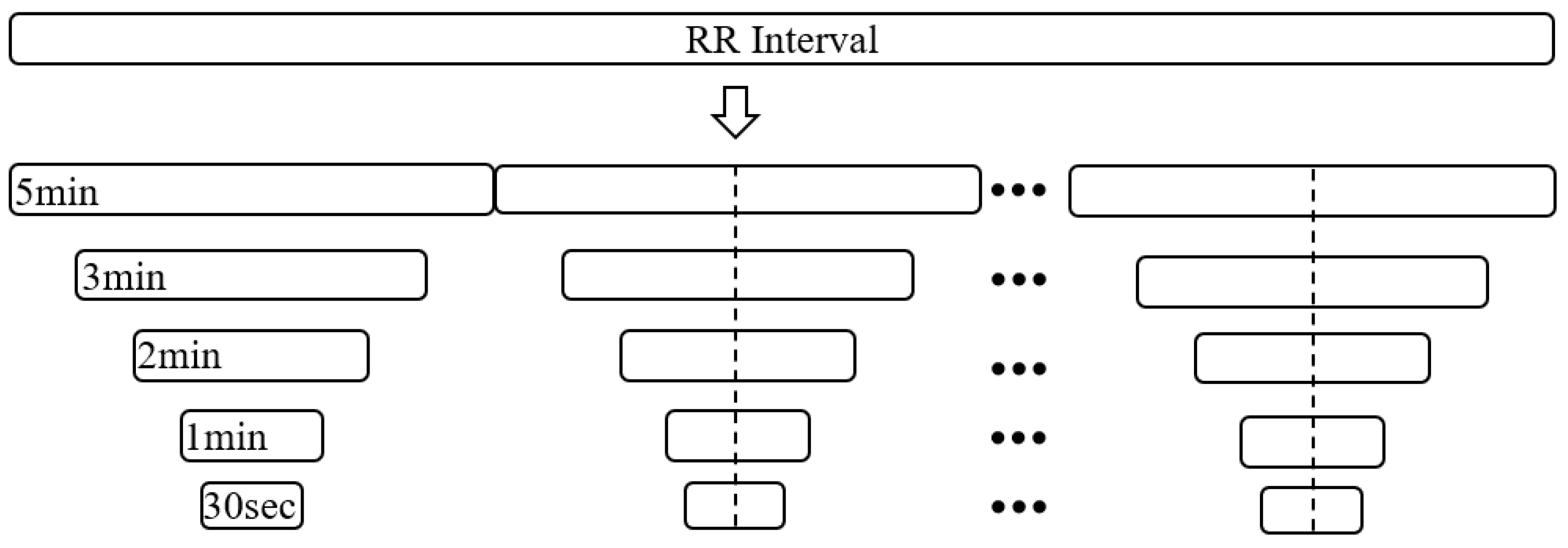
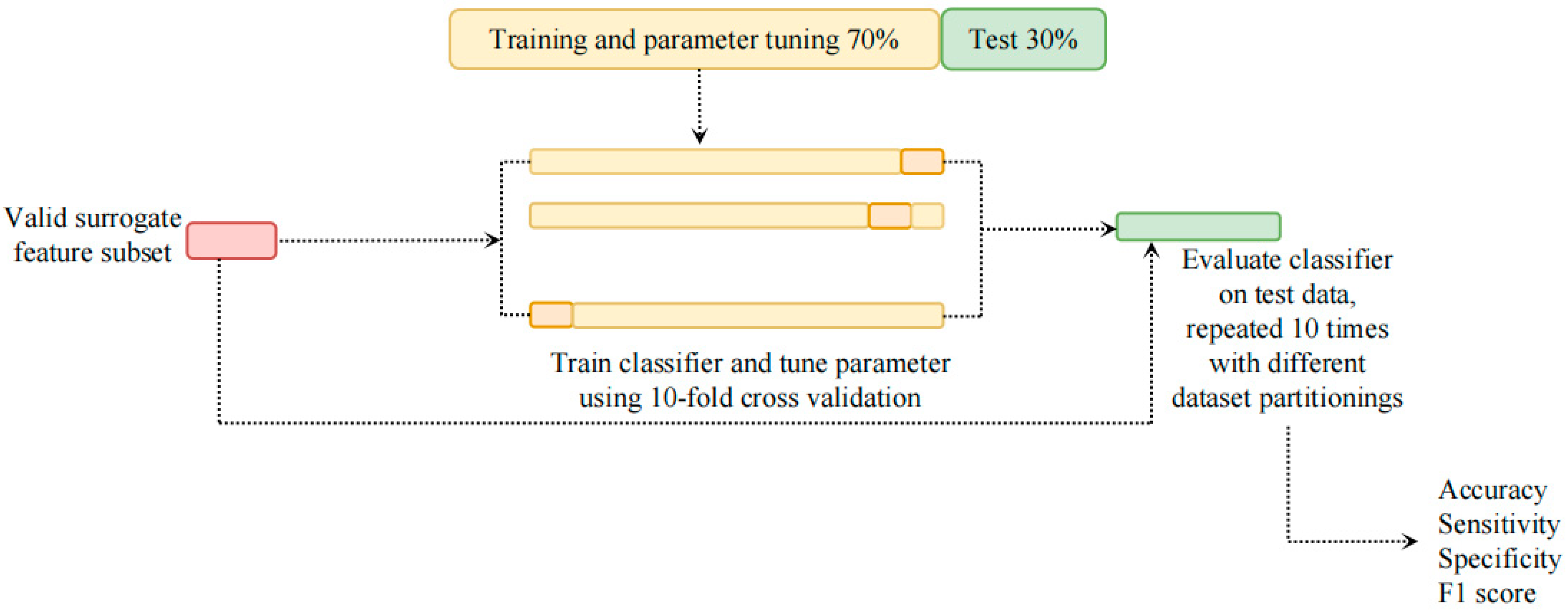
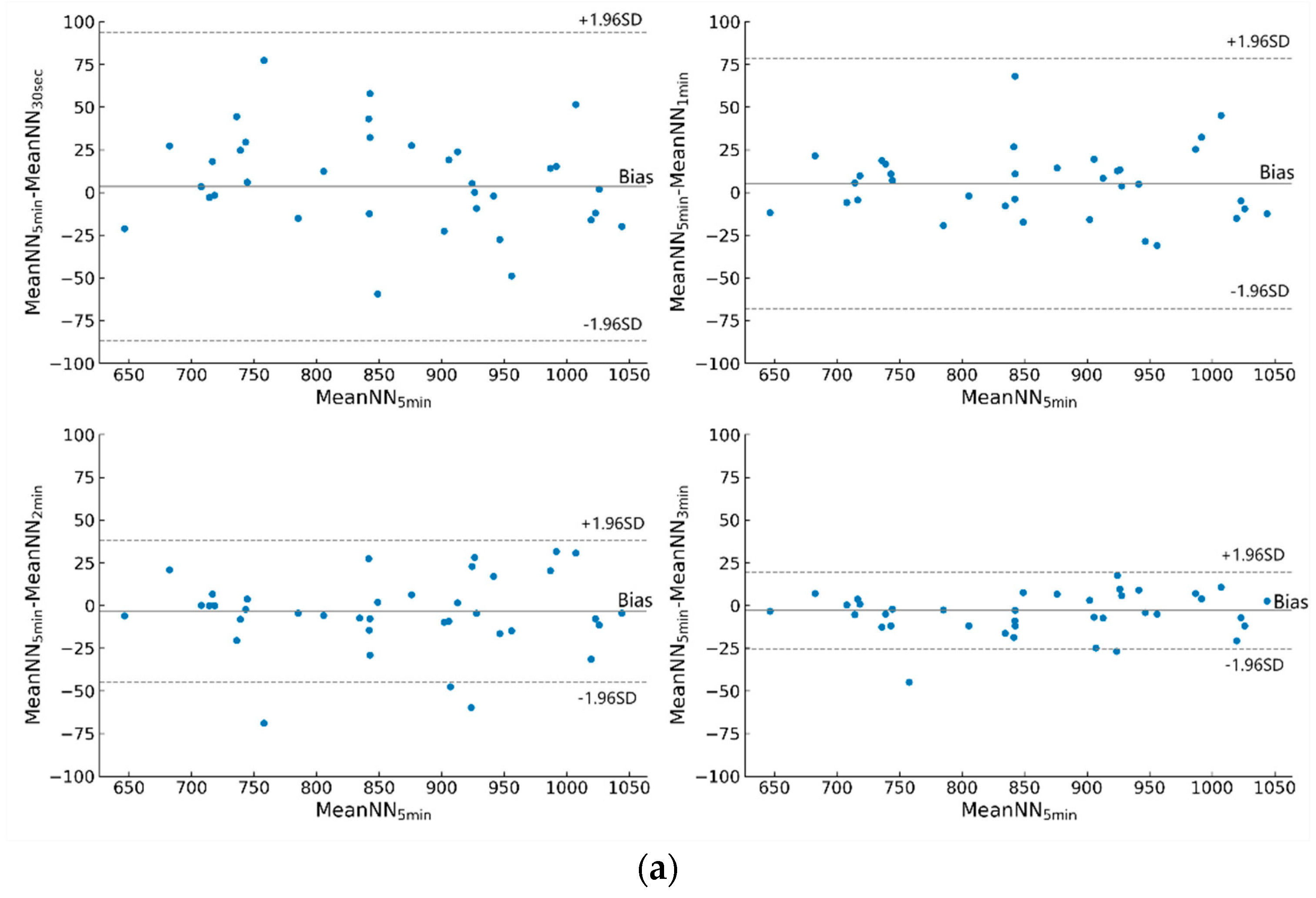
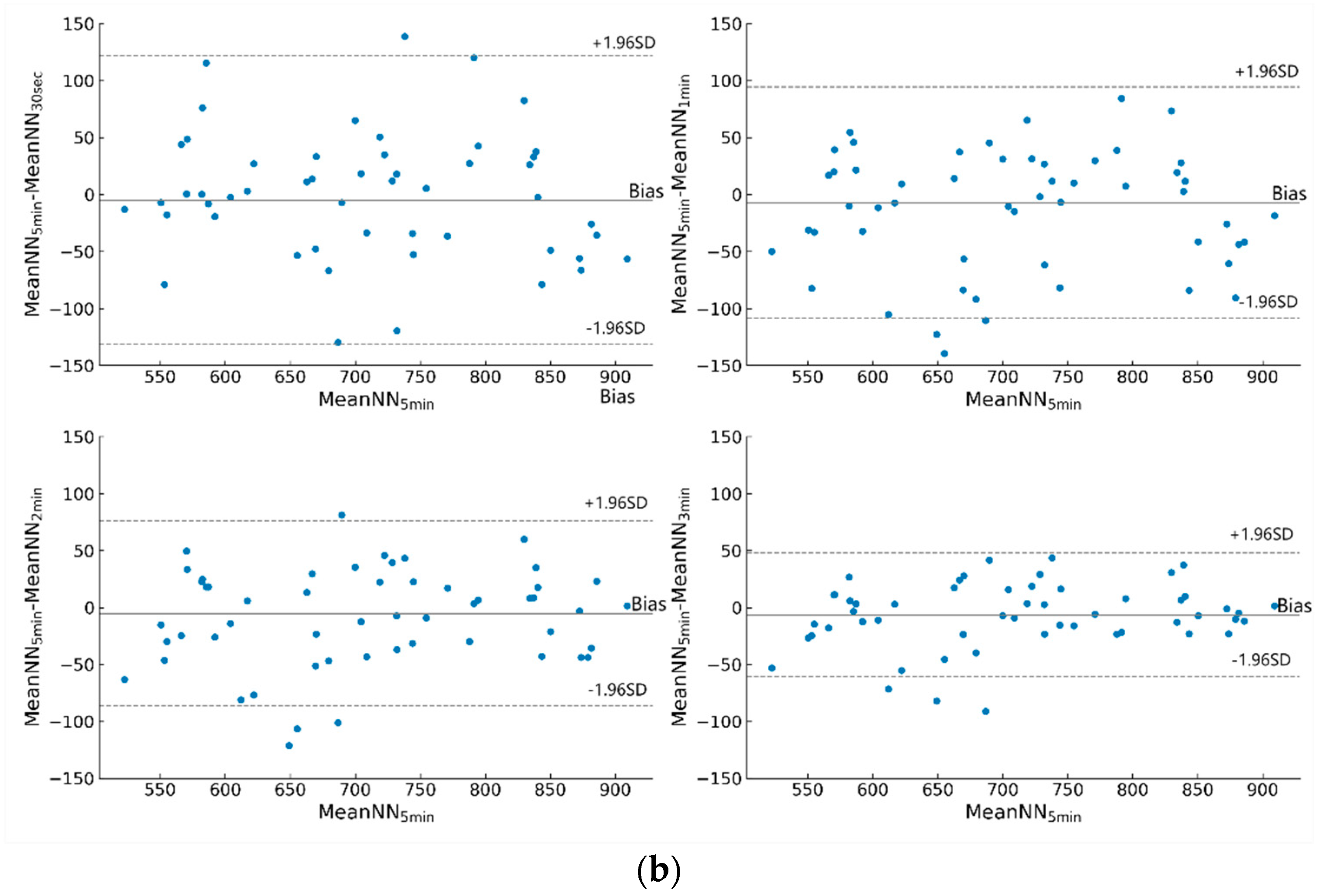
Considering that driving stress is a major contributor to traffic accidents, detecting drivers’ stress levels in time is helpful for ensuring driving safety. This paper attempts to investigate the ability of ultra-short-term (30-s, 1-min, 2-min, and 3-min) HRV analysis for driver stress detection under real driving circumstances. Specifically, the t-test was used to investigate whether there were significant differences in HRV features under different stress levels. Ultra-short-term HRV features were compared with the corresponding short-term (5-min) features during low-stress and high-stress phases by the Spearman rank correlation and Bland–Altman plots analysis. Furthermore, four different machine-learning classifiers, including a support vector machine (SVM), random forests (RFs), K-nearest neighbor (KNN), and Adaboost, were evaluated for stress detection. The results show that the HRV features extracted from ultra-short-term epochs were able to detect binary drivers’ stress levels accurately. In particular, although the capability of HRV features in detecting driver stress also varied between different ultra-short-term epochs, MeanNN, SDNN, NN20, and MeanHR were selected as valid surrogates of short-term features for driver stress detection across the different epochs. For drivers’ stress levels classification, the best performance was achieved with the SVM classifier, with an accuracy of 85.3% using 3-min HRV features. This study makes a contribution to building a robust and effective stress detection system using ultra-short-term HRV features under actual driving environments.
Keywords: driving safety; stress detection; heart rate variability; classification; machine learning driving safety; stress detection; heart rate variability; classification; machine learning