
Article

Brand- or User-Generated? The Impact of Product Tutorial Sources on Purchase Intention in Social Commerce

School of Economics and Management, Beihang University, No. 37 Xueyuan Road, Beijing 100191, China
*
Authors to whom correspondence should be addressed.
J. Theor. Appl. Electron. Commer. Res. 2026, 21(7), 224; https://doi.org/10.3390/jtaer21070224
Submission received: 8 June 2026 / Revised: 29 June 2026 / Accepted: 8 July 2026 / Published: 11 July 2026

Abstract

Product usage tutorials are central to social commerce, yet little is known about whether the same tutorial information persuades consumers differently when it is generated by brands or by peer users. Drawing on the Persuasion Knowledge Model and cue consistency theory, this study examines how brand-generated tutorials (BGTs) and user-generated tutorials (UGTs) influence purchase intention, and how trust, brand image, and cross-source content similarity shape these effects. Two between-subjects experiments were conducted in the context of cosmetics tutorials on Rednote. Study 1 used a 3 (tutorial source: BGT, UGT, none) × 2 (brand image: high, low) design; Study 2 compared high BGT–UGT similarity, low similarity, and UGT-only conditions. Results show that both BGTs and UGTs increase purchase intention relative to no tutorial, with UGTs producing a stronger effect. Trust mediates the effect of UGTs but not BGTs, while brand image does not moderate source effects. In co-presence conditions, high BGT–UGT similarity strengthens purchase intention, whereas low similarity weakens it. These findings identify source-level commercial intent as a boundary condition for trust formation and show that cross-source cue consistency determines whether brand tutorials validate or undermine peer-generated guidance.

1. Introduction

Social commerce has become an increasingly important channel for consumer engagement [1,2]. The global social commerce market is projected to reach $604.5 billion by 2027 [3], and platform-level data suggest that the source of product information has measurable consequences for consumer behavior. For example, beauty products accompanied by user-generated tutorials achieve a 37% higher conversion rate than those relying solely on official content [4]. On platforms such as Rednote (i.e., Xiaohongshu), consumers frequently encounter product usage tutorials from two distinct sources: brand-generated tutorials (BGTs), created by official brand accounts, and user-generated tutorials (UGTs), shared by ordinary users. While both types of tutorials aim to help consumers use products effectively, they differ in source credibility, perceived motivation, and communicative style.
This distinction is particularly relevant for experience goods such as cosmetics, whose perceived value depends on proper application techniques [5]. In online shopping environments where physical trials are unavailable, usage instructions serve as an important source of information for purchase decisions [6,7]. Among cosmetic products, liquid foundation is especially reliant on tutorials, as the application technique directly affects the perceived outcome. On social commerce platforms, consumers can access both official tutorials and peer-created guides, often for the same product. Therefore, understanding how these two sources of tutorials influence consumer purchasing intention is both practically relevant and theoretically important.
However, while a substantial body of work has examined user-generated content (UGC) such as reviews and ratings [8,9], UGTs as a distinct content type remain underexplored. UGTs differs from typical UGC in its educational and utilitarian focus, providing step-by-step guidance rather than subjective evaluations [10,11]. Moreover, the question of how the same type of content produces different effects depending on whether it originates from a brand or a peer user has not been adequately addressed. The existing research has generally treated trust as a universal mediator linking content to purchase intention (e.g., [12,13,14]), without considering that the commercial identity of the source may affect whether trust can be effectively formed. This gap leaves unexamined the possibility that trust mediation is conditional on source characteristics.
This study aims to address this gap by investigating the following research questions: (1) How do BGTs and UGTs influence consumers’ purchase intentions in social commerce? (2) Does the accessibility of commercial motives associated with different sources create asymmetric conditions for trust mediation? (3) When both sources are present, how does the degree of content similarity between BGTs and UGTs affect purchase intention?
Drawing on the Persuasion Knowledge Model (PKM) [15], this study proposes that BGTs and UGTs differ in the degree to which they make commercial motives accessible to consumers, and that this difference determines whether trust can be effectively established as a mediator of purchase intention. Two experimental studies were conducted. Study 1 examined the independent effects of tutorial source on purchase intention, the asymmetric mediating role of trust, and the potential moderating role of brand image. Study 2 examined how the co-presence of BGTs and UGTs, under varying degrees of content similarity, affects purchase intention.
This research contributes to the social commerce literature in two ways. First, it provides a persuasion knowledge account of differential trust mediation, identifying the accessibility of commercial motives as a boundary condition that shapes trust formation for BGTs and UGTs, an effect that remains stable across brand image levels. Second, it extends cue consistency theory to cross-source evaluation by showing that BGTs function as a validation or contradiction signal when co-present with UGTs, with content similarity determining the direction of the effect.

2. Theoretical Background and Literature Review

2.1. Product Usage Tutorials and Motivational Signals in Social Commerce

User-generated tutorials (UGTs) refer to tutorial content, such as cosmetics usage guides, that provide practical, step-by-step guidance on how to use products effectively [11,16]. Unlike other forms of user-generated content (UGC), such as product reviews or ratings, which primarily offer subjective opinions or personal experiences, UGTs are distinguished by their educational and utilitarian focus, emphasizing actionable application techniques and delivering value through clarity and functionality [10,16]. UGTs can reduce consumer uncertainty and increase confidence in product use, particularly for experience goods like cosmetics whose value depends on proper application [11]. However, prior research has largely subsumed UGTs under broader UGC analyses [10,12], leaving the specific effects of UGTs and the role of their sources underexplored.
Beyond their informational function, UGTs also carry distinct motivational signals. Whereas the motivations behind general UGC are varied, including self-expression, social capital accumulation, and emotional venting [17], the creation of step-by-step product tutorials is more closely associated with knowledge sharing and the desire to help others [18]. By contrast, when the same type of content originates from a brand account, consumers may assign a different set of motives tied to the source’s commercial identity. This motivational distinction between user-sourced and brand-sourced tutorials, and its implications for trust formation, are developed through the Persuasion Knowledge Model in the following sections.

2.2. Persuasion Knowledge and Trust Formation

Trust—consumers’ confidence in the reliability and integrity of information sources—alleviates perceived risk in online shopping and serves as an important antecedent to purchase intention [12,19,20]. Prior research has treated trust as a general mediator linking content characteristics to purchase intention across social commerce contexts [13,14,21]. The present study qualifies this assumption by proposing that the effectiveness of trust mediation depends on whether conditions for trust formation are met, with the perceived commercial intent of the source functioning as a critical boundary condition.
The Persuasion Knowledge Model (PKM; [15]) provides a theoretical basis for understanding how source characteristics influence trust formation. The PKM posits that consumers develop knowledge about persuasion tactics and use it to interpret persuasion attempts. When consumers recognize that a message carries persuasive or commercial intent, they activate coping responses that include heightened skepticism and reduced trust in the communicator [22]. Grillo and Pizzutti [23] provide empirical support, showing across three experiments that perceiving a communicator’s persuasive intent significantly lowers trustworthiness judgments.
A key factor determining whether persuasion knowledge is activated is what Campbell and Kirmani [24] term the accessibility of ulterior motives: when cues make a source’s commercial motivation readily apparent, consumers spontaneously infer persuasive intent and engage their persuasion knowledge; when such cues are absent or ambiguous, this inference is less likely to be triggered. Boerman et al. [25] further distinguished two stages of this process: conceptual persuasion knowledge (recognizing content as a persuasion attempt) and attitudinal persuasion knowledge (developing critical or distrusting evaluations). Boerman et al. [26] subsequently showed that identifying the commercial nature of sponsored content activates conceptual persuasion knowledge, which gives rise to distrusting beliefs and lowers brand trust [27].

2.3. Applying the PKM Framework: Asymmetric Conditions for Trust Formation

Applying this framework to BGTs and UGTs, we propose that the two sources differ fundamentally in the accessibility of their commercial motives. Brand-generated tutorials are published through official brand accounts that carry explicit commercial identifiers—brand logos, verified account badges, and corporate naming conventions—which function as transparent signals of commercial origin. In Campbell and Kirmani’s [24] terms, the ulterior motive behind BGTs is highly accessible. Consumers therefore recognize BGTs as brand communications aimed at promoting sales, which activates persuasion knowledge and, via the two-stage process noted above, progresses from identifying commercial motivation to skeptical evaluations. Trust formation is thereby inhibited—not because BGTs lack useful information, but because defensive processing prevents it from translating into the kind of trust that drives purchase behavior.
User-generated tutorials present a different scenario. UGTs are published by ordinary user accounts that lack these commercial markers, so the commercial motive behind the content is not readily accessible. As discussed in Section 2.1, consumers are more likely to attribute peer tutorials to knowledge-sharing motivations. Because the conditions for activating persuasion knowledge are not met, consumers process UGTs in a more open and receptive manner, allowing trust to form through the perceived authenticity and helpfulness of the content. This reasoning is supported by evidence that peer-created content is perceived as more authentic and less commercially motivated than brand-originated content, facilitating trust formation [12,28]; related work further finds that UGC’s lack of apparent commercial intent reduces persuasion knowledge activation and promotes higher trust and purchase intentions [29].
Taken together, persuasion knowledge functions as a boundary condition for trust mediation: it is activated by BGTs’ accessible commercial intent and inhibits trust formation, whereas it remains dormant for UGTs, allowing trust to form. This does not imply that BGTs lacks value; their effect on purchase behavior may operate through channels other than trust.

2.4. Information Co-Presence and Cross-Source Cue Consistency

The analysis thus far has considered BGTs and UGTs as independent sources of information. In practice, however, consumers on social commerce platforms frequently encounter both types of content for the same product. This co-presence of sources creates a context in which consumers may compare and integrate information across sources, and the relationship between the two becomes a relevant factor in shaping consumer responses.
Cue consistency theory [30] provides a framework for understanding these dynamics. The theory proposes that when multiple information cues are congruent, they reinforce each other’s credibility and enhance persuasion. When cues are incongruent, the resulting inconsistency may generate confusion or skepticism, reducing the overall persuasive effect [31,32]. Prior applications of this theory have primarily examined consistency among cues of a similar nature, such as the alignment of multiple product quality indicators, including price, warranty, and retailer reputation [30]. In such within-source or within-type consistency scenarios, the cues under comparison tend to share a similar baseline credibility level, and congruence primarily functions to reinforce informational confidence.
The present study extends the theory to a cross-source consistency context, in which the cues originate from fundamentally different types of communicators, namely official brand accounts and ordinary peer users, that carry different levels of perceived credibility, as established by the PKM analysis above. This extension introduces a qualitative difference in the consistency mechanism. In within-type consistency, congruence among cues of similar credibility reinforces information at a common trust level. In cross-source consistency, the two sources enter the comparison with an inherent credibility differential: UGTs are perceived as more trustworthy due to the absence of commercial markers, whereas BGTs carry the skepticism associated with recognized commercial intent. Under these conditions, content alignment between BGTs and UGTs may function not merely as informational corroboration, but as a form of official endorsement that validates peer-generated guidance from an authoritative reference point. Conversely, content divergence may be particularly destabilizing because it introduces conflicting signals from sources that consumers evaluate through different trust frameworks.
In the co-presence context, BGTs take on a role that differs from their function as a standalone source. Rather than serving primarily as an independent persuasive message, BGTs function as a reference point against which the content of UGTs can be evaluated. When BGTs and UGTs convey consistent information, such as recommending similar application techniques, BGTs effectively corroborate the content of UGTs. This corroboration provides external validation for the peer-generated content, reducing uncertainty about its accuracy and reinforcing its persuasive effect. Liu et al. [33] provide related evidence in the context of influencer-generated and user-generated content, showing that consistency between sources affects perceived content credibility. Conversely, when BGTs and UGTs diverge in their recommendations, the inconsistency introduces doubt about the reliability of UGTs. Consumers confronted with conflicting guidance from an official source and a peer source face increased uncertainty, which can undermine the positive influence of UGTs on purchase intention.
This analysis suggests that in co-presence scenarios, the degree of content similarity between BGTs and UGTs determines whether BGTs serve a corroborative or contradictory function, and consequently whether the combined effect on purchase intention is enhanced or diminished relative to UGTs alone. The theoretical framework is shown in Figure 1.

3. Hypotheses Development

3.1. The Effects of Tutorial Sources on Purchase Intention

Product usage tutorials reduce consumers’ uncertainty about how to use a product effectively, thereby facilitating purchase decisions [11]. For experience goods like cosmetics, whose perceived value depends on proper application techniques, such usage instructions address a key barrier to purchase by providing actionable guidance that consumers cannot obtain from product descriptions alone [5,6]. Both BGTs and UGTs offer this functional benefit. BGTs convey the manufacturer’s intended application techniques and shows professional reliability, while UGTs reflect real-world usage outcomes from the perspective of actual users. Both types of tutorials are therefore expected to enhance purchase intention relative to a situation where no usage guidance is available.
However, the two sources may differ in the strength of their influence. The diagnosticity of an information cue refers to its perceived usefulness in evaluating a product [34]. For experience goods, consumers’ primary concern is whether they can personally achieve satisfactory results through proper application. UGTs, by demonstrating how ordinary users apply the product and the outcomes they achieve, provide evidence that is directly relevant to this concern. This peer-based evidence is often perceived as more authentic and personally applicable than brand-originated content [28]. Because UGTs offer more diagnostic information about the actual user experience, they is expected to have a stronger positive effect on purchase intention. Thus, we propose:
H1a. 
Compared to no usage information, BGTs will significantly enhance consumers’ purchase intentions.
H1b. 
Compared to no usage information, UGTs will significantly enhance consumers’ purchase intentions.
H1c. 
Compared to BGTs, UGTs will have a stronger positive effect on purchase intentions.

3.2. The Asymmetric Mediating Role of Trust

The theoretical analysis in Section 2.2 and Section 2.3 leads to differentiated predictions about the mediating role of trust for UGTs and BGTs.
For UGTs, the conditions for trust formation are favorable. As argued in Section 2.1 and Section 2.3, ordinary user accounts lack commercial markers, and consumers are likely to attribute peer tutorials to knowledge-sharing motivations. Without persuasion knowledge activation, trust can develop through the perceived authenticity and helpfulness of the content, and in turn, serve as a psychological basis for purchase intention [13,14]. The mediating pathway from UGTs to purchase intention through trust is therefore expected to be effective.
For BGTs, the conditions differ. As discussed in Section 2.3, the explicit commercial identifiers of brand accounts activate persuasion knowledge, leading to skeptical evaluations that inhibit trust formation [22,26]. BGTs may still influence purchase intention through other pathways, such as reducing usage uncertainty, but the trust-mediated pathway is expected to be weakened or absent. Accordingly, we propose:
H2a. 
Trust mediates the positive effect of UGTs on purchase intention.
H2b. 
Trust does not significantly mediate the effect of BGTs on purchase intention.

3.3. The Moderating Role of Brand Image

Brand image reflects consumers’ overall perception of a brand based on its attributes, reputation, and associations [35]. Brand signaling theory suggests that a strong brand image may enhance the credibility of BGTs by reducing doubts about its promotional nature, while a weaker brand image may lead consumers to rely more on peer-generated content for guidance [28,36]. Under this reasoning, brand image would interact with tutorial source such that BGTs are more effective for high-image brands and UGTs are more influential for low-image brands.
However, it is worth noting that the cue diagnosticity literature offers a different perspective. Akdeniz et al. [34] and Purohit and Srivastava [37] have shown that when a specific information cue is highly relevant to the evaluation task at hand, consumers tend to prioritize it over broader background cues. For experience goods, consumers face uncertainty primarily about whether they can personally achieve satisfactory results through proper application, and usage tutorials provide directly relevant procedural information for this concern. Whether this task-specific diagnosticity limits the moderating role of brand image is an empirical question. Following the brand signaling logic, we propose:
H3. 
Brand image moderates the relationship between the sources of usage tutorials and purchase intentions. Specifically, BGTs have a stronger positive effect for high-image brands, while UGTs have a greater impact for low-image brands.

3.4. The Interaction Effects of BGTs and UGTs

As discussed in Section 2.4, when both BGTs and UGTs are present for the same product, the degree of content similarity between them becomes a relevant factor for purchase intention.
When BGTs and UGTs recommend similar application techniques, BGTs serve a corroborative function: the alignment between official guidance and peer experience provides external validation for UGTs, reducing residual uncertainty and strengthening its persuasive effect on purchase intention. Liu et al. [33] provide supporting evidence, showing that consistency between influencer-generated and user-generated content enhances perceived content credibility.
Conversely, when BGTs and UGTs diverge, the inconsistency introduces a contradictory signal. Consumers who encounter conflicting guidance face increased uncertainty, which can undermine the positive influence of UGTs and reduce purchase intention below the UGT-only baseline. For experience goods where application technique directly affects perceived efficacy, such contradictions are likely to be particularly consequential. We propose:
H4a. 
When content similarity between BGTs and UGTs is high, the presence of BGTs will strengthen the positive effect of UGTs on purchase intentions.
H4b. 
When content similarity is low, the presence of BGTs will weaken the positive effect of UGTs on purchase intentions.

3.5. Overview of Studies

Two experimental studies were conducted to test these hypotheses. Study 1 employed a 3 (tutorial source: BGT, UGT, none) × 2 (brand image: high, low) between-subjects design to test H1a through H1c, H2a and H2b, and H3. Study 2 used a single-factor design to examine the interaction of BGTs and UGTs under different content similarity conditions (H4a and H4b).

4. Study 1: The Impact of Tutorial Sources and Brand Image

4.1. Materials and Methods

4.1.1. Study Design

Study 1 used a 3 (tutorial source: BGT, UGT, none) × 2 (brand image: high, low) between-subjects design to test H1, H2, and H3. Both Study 1 and Study 2 were conducted as part of a single data collection wave. A total of 496 participants were recruited via the online survey platform Wenjuanxing (www.wjx.cn, a survey platform widely used in Chinese academic research, comparable to Qualtrics), with recruitment conducted on Rednote and Weibo. Upon accessing the survey, each participant was randomly assigned by the platform to one of nine experimental conditions: six conditions corresponding to Study 1 and three corresponding to Study 2. This random assignment ensured data independence between the two studies while maintaining consistent recruitment procedures. The sample size was determined through a priori power analysis using G*Power 3.1 (f = 0.25, α = 0.05, 1 − β = 0.95). After excluding invalid responses across all conditions (5 failed the attention check, 22 did not use Rednote or foundation, and 12 had response times below the threshold), 457 valid responses remained: 307 in Study 1 and 150 in Study 2. Among the 307 Study 1 participants, 97.4% were female and 87.3% were aged 18–25.

4.1.2. Materials and Procedure

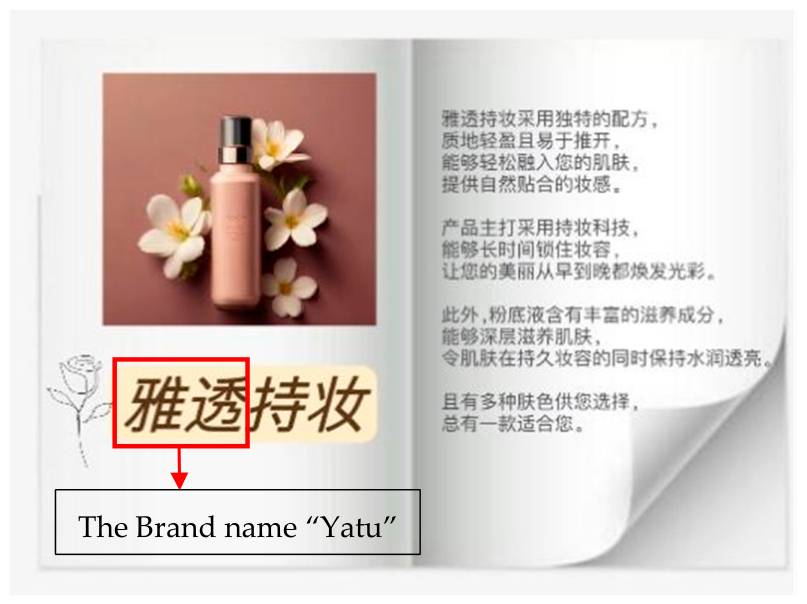
We selected foundation as the focal product. A preliminary survey (N = 54) confirmed that foundation’s effectiveness is perceived as highly dependent on usage instructions (M = 5.61, SD = 1.27), more so than other cosmetic categories (p < 0.05). A fictional brand (“Yatu”) was used to control for pre-existing brand attitudes. Standardized basic product information (image, description, ingredients) was consistent across conditions (see Figure 2).
Brand image was manipulated via textual descriptions: the high brand image condition presented Yatu as an established global leader, while the low condition depicted it as a new, lesser-known entrant. A manipulation check (N = 30) confirmed the effectiveness of this manipulation (M_high = 5.4, M_low = 3.2, p < 0.001).
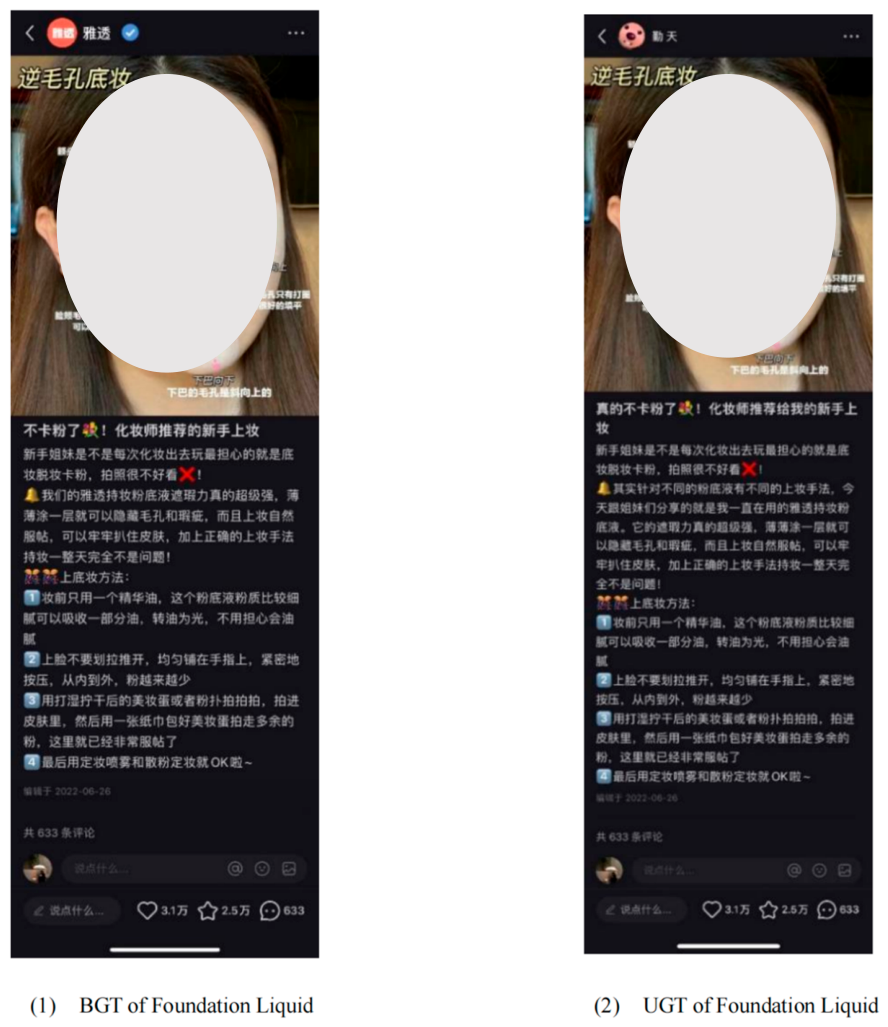
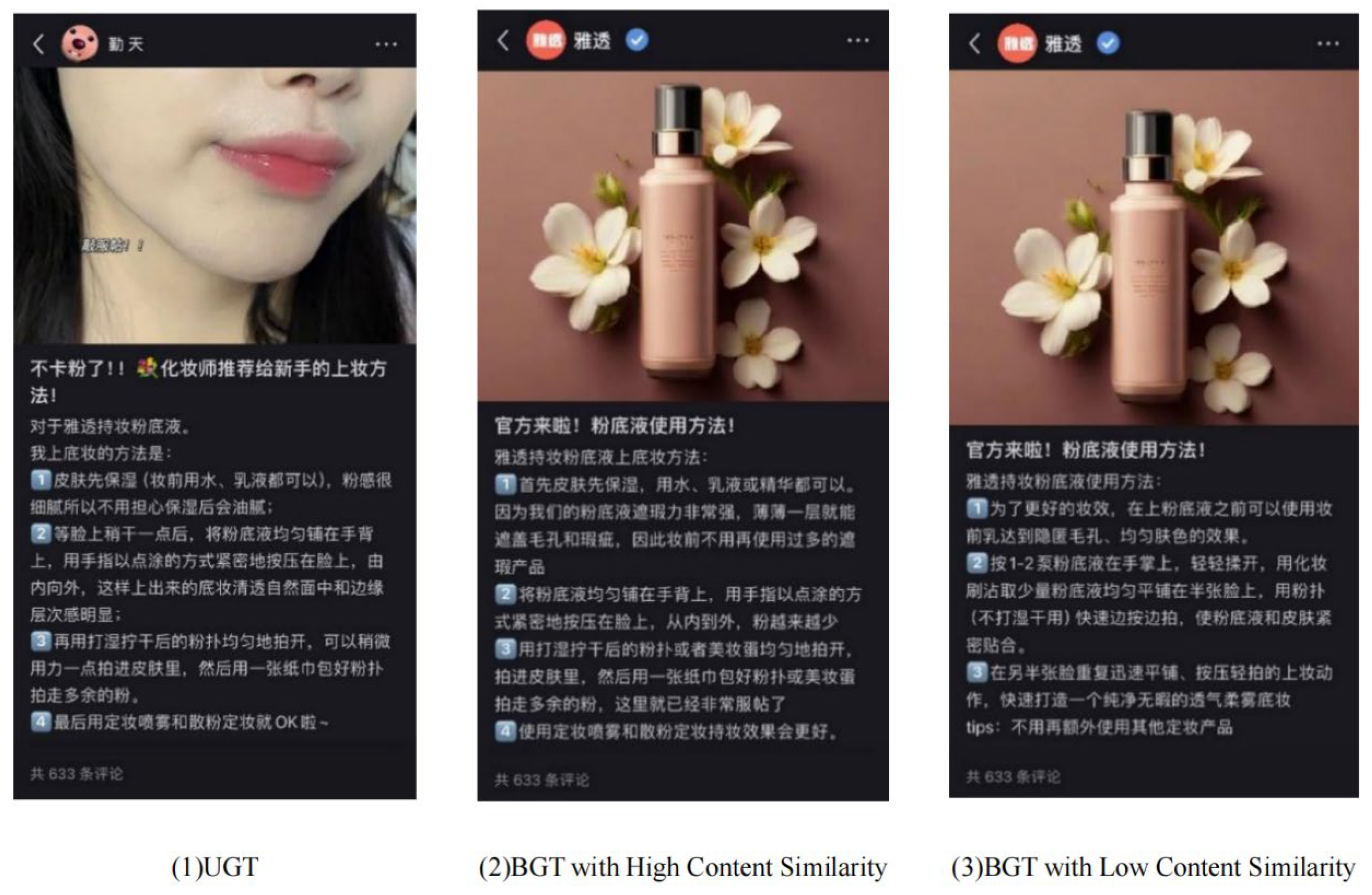
The tutorial source was manipulated across three conditions (see Figure 3). The UGT was developed based on a systematic analysis of 752 high-engagement foundation tutorial posts on Rednote. These posts were identified by searching the keyword “foundation tutorial” and filtering for posts with above-median engagement metrics (likes, comments, and saves) published within the preceding 12 months. A content analysis of these posts identified recurring features of authentic user tutorials, including conversational and personal language style, emphasis on common application concerns (e.g., skin preparation, blending technique, and finish control), a problem–solution narrative structure, and the inclusion of personal usage outcomes. The experimental UGT stimulus was constructed to reflect these characteristics and was presented with a typical user profile (avatar, username, and engagement indicators) to simulate the appearance of a genuine Rednote post. The BGT was developed by referencing the official tutorial formats of established cosmetic brand accounts on Rednote, adopting an authoritative, step-by-step instructional tone and incorporating official account indicators (brand logo, verified badge, and corporate account name). The no-tutorial group received only basic product information. As noted in Section 4.1.3, a pretest confirmed that participants identified the tutorial source with 95% accuracy, supporting the ecological validity of the stimulus materials.

4.1.3. Procedure and Measures

Participants were presented with a scenario in which they imagined seeking a new foundation due to dissatisfaction with their current product. They were randomly assigned to one of six conditions. After viewing the stimuli, participants completed measures for purchase intention, trust, and brand image. All scales used a seven-point Likert format (one = strongly disagree, seven = strongly agree).
We measured trust with a three-item scale adapted from Mayer et al. [38] and Sun et al. [39]. Consumer trust is commonly conceptualized as comprising integrity, competence, and benevolence [38]. The present study treated trust as a unidimensional mediator, but the three items were designed to capture these dimensions: “I believe the product information in this content is free from falsehood” (integrity), “I believe this content is honest in conveying product information” (integrity), and “I believe one purpose of this content is to help others understand the product and make informed purchase decisions” (benevolence). The trust measure thus reflects consumers’ trust in the informational content and its source rather than trust in the product or the brand per se. This unidimensional operationalization is appropriate for testing the boundary condition proposition advanced in H2, which concerns whether trust is established at a level sufficient to mediate purchase intention, rather than whether different trust dimensions are differentially engaged.
We assessed purchase intention with a three-item scale adapted from Cheng and Loi [40]. Brand image was measured with a four-item scale adapted from Lin et al. [41], assessing perceptions of brand leadership, social visibility, product quality assurance, and self-enhancement (see the online Supplementary Materials for full item wording).
Cronbach’s α values exceeded 0.70 for all constructs (purchase intention: 0.85; trust: 0.82; brand image: 0.88). A pretest (N = 40) confirmed that participants differentiated between brand image conditions (M_high = 5.82, M_low = 2.67; t(38) = 9.47, p < 0.001) and identified tutorial sources with 95% accuracy. A confirmatory factor analysis on the pretest data yielded acceptable model fit (χ2/df = 2.15, CFI = 0.94, RMSEA = 0.05), with all standardized factor loadings exceeding 0.70 [42]. Discriminant validity was supported, as the square root of the average variance extracted for each construct exceeded inter-construct correlations [43]. Full pretest results are reported in the Supplementary Materials.

4.2. Results

4.2.1. Main Effects

We conducted a one-way ANOVA with tutorial source (BGT, UGT, none) as the independent variable and purchase intention as the dependent variable. Results showed a significant effect of tutorial source on purchase intention (F = 6.819, p = 0.001). The UGT (M = 4.704, SD = 1.323) led to significantly higher purchase intention than the BGT (M = 4.300, SD = 1.363) and no tutorial (M = 4.018, SD = 1.370, p < 0.05). The BGT also showed a significant advantage over no tutorial (p < 0.05). These results support H1a, H1b, and H1c. Detailed results are presented in Table 1.

4.2.2. Mediation Analysis

To test H2a and H2b, we conducted a mediation analysis using the PROCESS macro (Model 4; [44]) with 5000 bootstrap resamples. For the UGT, the indirect effect through trust was significant (estimate = 0.096, 95% CI [0.010, 0.181]), as the confidence interval did not include zero, supporting H2a. For the BGT, the indirect effect through trust was not significant (estimate = 0.069, 95% CI [−0.019, 0.156]), as the confidence interval included zero, indicating that trust did not mediate the BGT–purchase intention relationship. These results also support H2b, as trust did not significantly mediate the effect of BGTs on purchase intention. Path coefficients are presented in Table 2.

4.2.3. Moderation Analysis

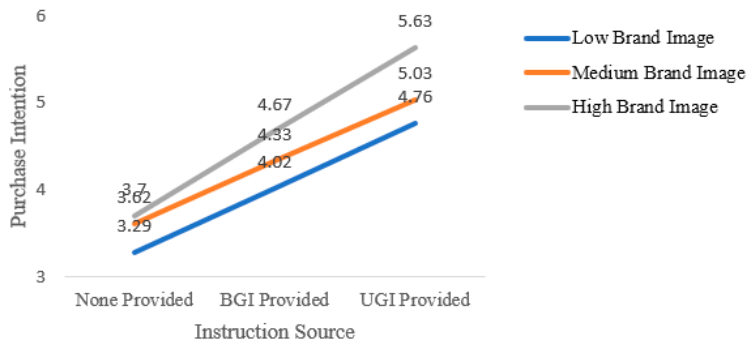
To test H3, we conducted a hierarchical regression analysis. Model 1 included tutorial source only (R2 = 0.043), confirming the main effect: both BGT (β = −0.138, p < 0.05) and the none condition (β = −0.230, p < 0.001) showed lower purchase intention than UGT. Model 2 added brand image, which significantly increased explanatory power (ΔR2 = 0.349, p < 0.001; β = 0.591, p < 0.001). Model 3 included the interaction terms. Neither the BGT × Brand Image interaction (β = −0.109, p = 0.073) nor the None × Brand Image interaction (β = −0.086, p = 0.138) was significant. H3 was therefore not supported: brand image did not significantly moderate the effect of tutorial source on purchase intention. The results are presented in Table 3 and Figure 4.

4.3. Discussion

Study 1 provided evidence for the differential effects of tutorial sources on purchase intention. Both BGTs and UGTs enhanced purchase intention compared to no tutorial, but UGTs had a stronger effect, supporting H1a through H1c. The mediation analysis supported the predicted asymmetry: trust mediated the effect of UGTs on purchase intention (H2a) but not that of BGTs (H2b). Brand image did not moderate the effect of tutorial source (H3 not supported). Below we discuss the interpretation of these findings.
The asymmetric mediation result is consistent with the persuasion knowledge account developed in Section 2.2 and Section 2.3. The significant main effect of BGTs on purchase intention (H1a) suggests that they contribute through informational channels that do not depend on trust, such as reducing usage uncertainty, while UGTs’ significant indirect effect through trust confirms a meaningful trust-mediated pathway for peer-generated content. However, this asymmetry should be interpreted with caution. The confidence interval for BGTs’ indirect effect ([−0.019, 0.156]) has a lower bound very close to zero, and the point estimate (0.069) is not substantially smaller than that of UGTs (0.096). The present results therefore establish that trust mediation is statistically significant for UGTs but not for BGTs at conventional significance levels; however, the difference between the two indirect effects may reflect a difference in degree rather than a categorical distinction. It is possible that the non-significant result for BGTs is partly attributable to limited statistical power. Future research with larger samples should conduct a formal contrast test of the two indirect effects (e.g., a bootstrap test of the difference between indirect effects) to determine whether they are statistically distinguishable from each other.
To clarify the underlying mechanisms, the two pathways can be summarized as follows. For UGTs, ordinary user accounts lack explicit commercial identifiers, so consumers are unlikely to activate persuasion knowledge when processing the tutorial. This allows the content to be received in an open and receptive manner, enabling trust to form on the basis of perceived authenticity and helpfulness. The trust thus established serves as a psychological basis for purchase intention, completing the mediated pathway from UGTs through trust to purchase intention. For BGTs, official brand account indicators make the commercial motive readily accessible, triggering persuasion knowledge and prompting defensive or skeptical processing. Under these conditions, trust formation is inhibited, and the trust-mediated pathway fails to reach significance. However, BGTs still enhance purchase intention relative to no tutorial through a direct pathway, likely by providing authoritative procedural guidance that reduces consumers’ uncertainty about how to use the product correctly. In short, both sources enhance purchase intention, but they do so through distinct mechanisms: UGTs operate primarily through trust, whereas BGTs operate through informational utility without relying on trust.
This asymmetry concerns the conditions under which trust can be effectively formed, not the dimensionality of trust itself. The unidimensional measure captured whether trust was established at a level sufficient to mediate purchase intention; this threshold was reached for UGTs but not for BGTs. Whether the two sources additionally engage different dimensions of trust [38] is addressed as a future research direction in Section 6.3.
The non-significant moderation effect of brand image (H3) may be understood from several perspectives. First, cue diagnosticity theory [34,37] suggests that when a specific information cue is directly relevant to the evaluation concern at hand, it tends to override broader background signals. In the present study, consumers faced performance risk related to application technique [45] rather than quality risk. Usage tutorials address this concern directly by providing procedural guidance, and participants may therefore have prioritized tutorial content over the reputational signal conveyed by brand image. Because perceived cue diagnosticity was not directly measured, this interpretation remains tentative.
Second, the use of a fictional brand (“Yatu”) may have contributed to the null result. Although fictional brands are widely used in experimental research to control for pre-existing attitudes, they lack the affective associations and accumulated consumption experiences that characterize real brands. The brand image manipulation relied on textual descriptions, which may not have generated the same depth of brand perception as a well-known brand with established market presence. It is therefore possible that brand image exerts a moderating effect in real-world settings where consumers hold richer and more personally relevant brand associations, but that this effect was not captured under the present experimental conditions.
Third, the specific product category may have limited the moderating role of brand image. Foundation is a product for which perceived effectiveness depends heavily on visible application outcomes, and consumers in this category may rely primarily on demonstration-based evidence rather than brand reputation when evaluating product suitability. Whether brand image plays a stronger moderating role for product categories in which quality is less directly observable, such as skincare or nutritional supplements, remains an open question for future research.
In summary, both sources enhance purchase intention, with UGTs exerting a stronger, trust-mediated effect; this asymmetry is robust across brand image levels. However, in real-world social commerce settings, these sources often appear together. Study 2 examines how the co-presence of BGTs and UGTs, and specifically their content similarity, affects purchase intention.

5. Study 2: The Interaction of BGTs and UGTs Under Varying Content Similarity

5.1. Materials and Methods

5.1.1. Study Design

Study 2 used a single-factor between-subjects design with three conditions: UGTs with high-similarity BGTs, UGTs with low-similarity BGTs, and a UGT-only control. As described in Section 4.1.1, participants were drawn from the same recruitment wave as in Study 1 and randomly assigned by the survey platform to either Study 1 or Study 2 conditions at the point of entry, ensuring that no participant contributed data to both studies. The final sample comprised 150 valid responses (50 in high similarity, 52 in low similarity, and 48 in the control group).

5.1.2. Materials and Procedure

The UGT material was identical to that in Study 1 (see Figure 3). The key manipulation was the content similarity of the BGTs relative to the UGTs. To operationalize content similarity, the texts of BGTs and UGTs were preprocessed using Chinese word segmentation (jieba) and stop-word removal, then represented as term-frequency–inverse-document-frequency (TF-IDF) vectors. Cosine similarity between the BGT and UGT vectors was calculated to quantify their textual overlap. Two versions of BGTs were developed to represent distinct similarity levels. The high-similarity BGT (cosine = 0.497) recommended application steps, techniques, and product usage tips that closely paralleled those in the UGT material, using comparable terminology and a similar sequential structure. The low-similarity BGT (cosine = 0.126) described a noticeably different set of application steps and techniques, with distinct vocabulary and an alternative procedural sequence. These threshold values were informed by a preliminary analysis of cosine similarity scores between actual brand-account tutorials and high-engagement user tutorials for foundation products on Rednote, which indicated that naturally occurring BGT–UGT pairs ranged from approximately 0.10 to 0.55 in textual similarity. The stimulus materials are shown in Figure 5. The procedure and purchase intention measure were the same as in Study 1.

5.1.3. Procedure and Measures

The procedure mirrored that of Study 1. Participants were presented with the scenario and basic product information, followed by the tutorial manipulation materials. After viewing the materials, they completed measures of purchase intention and demographic items.

5.2. Results

A manipulation check confirmed that participants in the high-similarity condition perceived greater content similarity between BGTs and UGTs (M = 5.463) than those in the low-similarity condition (M = 3.877, p < 0.001), indicating successful manipulation.
A one-way ANOVA with content similarity condition (high, low, UGT-only) as the independent variable and purchase intention as the dependent variable revealed a significant effect (F = 6.816, p = 0.001; Welch’s F = 6.879, p = 0.001). The high-similarity condition (M = 4.824, SD = 1.315) showed significantly higher purchase intention than the UGT-only control (M = 4.322, SD = 1.309), supporting H4a. The low-similarity condition (M = 4.065, SD = 1.378) showed lower purchase intention than the control, supporting H4b. The results are presented in Table 4.

5.3. Discussion

Study 2 examined how the co-presence of BGTs and UGTs affects purchase intention depending on content similarity. The results indicate that when BGTs align with UGTs, the combined effect on purchase intention is stronger than UGTs alone, suggesting that official content serves a corroborative function by providing external validation for peer-generated guidance. When BGTs diverge from UGTs, purchase intention is reduced below the UGT-only baseline, indicating that inconsistency between the two sources introduces uncertainty that undermines the persuasive effect of UGTs. These findings are consistent with cue consistency theory [30] and with the framework developed in Section 2.4: in the presence of UGTs, BGTs function as a validation or contradiction signal depending on the degree of content alignment, rather than operating as an independent persuasive force.
These results also complement Study 1 by revealing a different channel through which BGTs can influence consumer responses. Whereas Study 1 showed that BGTs’ trust-mediated pathway is inhibited by persuasion knowledge activation, the present findings indicate that when BGTs appear alongside UGTs, they take on a qualitatively different role—serving as a reference anchor against which consumers evaluate peer-generated content rather than as an independent persuasive message. This suggests that BGTs’ influence in co-presence scenarios operates through a cross-source validation mechanism rather than through the trust pathway. From a practical standpoint, brands retain an indirect channel of influence by shaping the informational environment in which UGTs are evaluated.

6. General Discussion

This study examined how the source of product usage tutorials influences consumer purchase intention in social commerce, and explored the roles of trust, brand image, and content similarity in this process. Two experiments were conducted. Study 1 showed that both BGTs and UGTs enhance purchase intention relative to no tutorial, but UGTs have a stronger effect. Trust mediates the UGT–purchase intention relationship but not the BGT pathway, consistent with the predicted role of persuasion knowledge as a boundary condition for trust formation. Brand image does not moderate the effect of tutorial source (H3 not supported). Study 2 showed that when BGTs and UGTs are both present, the high content similarity between them strengthens the positive effect of UGTs, while low similarity weakens it.

6.1. Theoretical Implications

This research makes two primary contributions to the literature on information sources, UGC, and social commerce by investigating the differential effects and underlying mechanisms of distinct sources of product tutorial information (i.e., peer users vs. brands).
First, this study provides a persuasion knowledge account of differential trust mediation in social commerce. Prior research has generally treated trust as a universal mediator linking information stimuli to purchase intention (e.g., [12,13,14]). This study qualifies that assumption by showing that trust mediation reaches statistical significance for UGTs but not for BGTs at conventional significance levels. The theoretical explanation, grounded in the Persuasion Knowledge Model [15] and the accessibility of commercial motives [24], is that source-level commercial intent determines whether the conditions for trust formation are met. As noted in the Study 1 discussion, the two indirect effects are not dramatically different in magnitude, and the distinction may be one of degree rather than kind. Nevertheless, the pattern is consistent with the theoretical prediction and contributes to social commerce theory by identifying commercial intent accessibility as a condition that shapes whether trust mediation is effective, a boundary condition not previously examined in this literature, despite recognition that trust mediation can be moderated by factors such as cultural context and relationship strength. More broadly, this finding suggests that whether trust operates as a mediator in a given context cannot be assessed without considering whether the informational environment permits trust to be effectively established.
Moreover, the robustness of this source effect across brand image levels is noteworthy. As discussed in Section 4.3, cue diagnosticity theory suggests that task-specific procedural information may take precedence over broader reputational signals [34]. More broadly, future research on trust mediation should routinely assess source-level boundary conditions before assuming uniform effects across communicator types.
Further, by examining the co-presence of BGTs and UGTs, this study extends cue consistency theory [30] to cross-source information evaluation in social commerce. Prior applications of this theory have primarily focused on consistency among cues of a similar nature, such as multiple quality indicators that share comparable credibility levels. The present study demonstrates that consistency effects also operate across cues from fundamentally different origins that carry an inherent credibility differential, with UGTs perceived as more trustworthy due to the absence of commercial markers and BGTs subject to skepticism as a recognized commercial communication. This cross-source extension reveals a qualitatively different consistency mechanism: when content alignment exists, BGTs do not merely corroborate UGTs at an informational level, but provide a form of official validation that reinforces peer-generated guidance from an authoritative reference point. Conversely, content divergence is particularly destabilizing because it introduces conflicting signals from sources that consumers evaluate through different trust frameworks. This extension shows that in social commerce, the direction of BGTs’ influence on purchase intention is contingent on their alignment with UGTs, rather than operating as an independent persuasive force. The finding also complements the first contribution by revealing that while BGTs’ trust-mediated pathway is inhibited when they appear alone, BGTs can still influence consumer responses indirectly through their relationship with UGT content. This cross-source dynamic suggests a broader research agenda: in multi-source information environments, the persuasive effect of any single source may depend less on its intrinsic properties than on its relationship with co-present sources, a perspective that future work could extend to other pairings such as influencer content and brand content or expert reviews and peer reviews.

6.2. Practical Implications

These findings, which are based on stated purchase intentions in experimental settings, have practical implications for brands operating in social commerce environments, particularly for experience goods marketed through UGC-oriented platforms. First, given that UGTs influence purchase intention primarily through trust, and that this trust pathway depends on the absence of perceived commercial intent, brands should be cautious about practices that may blur the distinction between user-generated and brand-generated content. Covert sponsorship of user tutorials, for example, risks triggering persuasion knowledge if the commercial connection is discovered, potentially undermining the trust that gives UGTs their persuasive advantage. Instead, brands may benefit from treating user-generated tutorials as a form of distributed product feedback and establishing dedicated community management practices to identify, recognize, and amplify high-quality user tutorials.
Second, the finding that content similarity between BGTs and UGTs affect purchase intention suggests that brands should actively monitor the usage techniques emerging from the user community and align their official guidance accordingly. A specific approach is to invite experienced UGT creators to participate in the development of official tutorials. This co-creation practice can help ensure content consistency while preserving the authentic qualities associated with peer-generated content. The results of Study 2 indicate that such alignment enhances the combined persuasive effect, whereas inconsistency between official and peer content can reduce purchase intention below the level achieved by UGTs alone.
Third, the combined findings of the two studies suggest that brands should reconceive the role of BGTs in their content strategy. Rather than treating brand-generated tutorials as independent persuasive tools, the results indicate that BGTs are most effective when positioned as a reference anchor that validates and corroborates existing peer-generated guidance. In practice, this means that when brands detect emerging usage techniques within the user community that diverge from their official recommendations, they should evaluate whether updating BGTs to reflect these practices is warranted, rather than allowing the inconsistency to persist. More broadly, the degree to which a brand invests in tutorial content management should be calibrated to the product category’s dependence on usage guidance: for experience goods where application technique strongly affects perceived outcomes, maintaining BGT–UGT alignment is a strategic priority; for product categories with lower tutorial relevance, resources may be better allocated elsewhere.

6.3. Limitations and Future Research

This study has several limitations that should be considered when interpreting the findings. First, both studies relied on scenario-based experiments measuring stated purchase intention rather than actual purchase behavior. The intention–behavior gap is well documented in consumer research, and the effects observed here may not translate directly into real purchasing decisions. The practical implications discussed above should therefore be interpreted with this limitation in mind. Future research could employ field experiments with behavioral outcome measures, such as click-through rates or actual transaction data on social commerce platforms, to validate these findings.
Second, the sample was highly concentrated among young female participants (97.4% female; 87.3% aged 18–25) recruited from Chinese social commerce platforms. While this demographic is representative of the primary user base for cosmetics tutorials on Rednote, it limits the generalizability of the findings to other consumer segments. Male consumers or older adults may differ in their sensitivity to source cues, their reliance on peer-generated content, and the extent to which persuasion knowledge is activated by brand signals. Furthermore, the Chinese social commerce context is characterized by a collectivist cultural orientation that may foster stronger baseline trust in peer-generated content compared to more individualist cultural settings. Whether the observed differential trust mediation pattern holds across different cultural contexts remains an open question. Future research should extend the investigation to more diverse demographic groups and cross-cultural settings.
Third, the study focused on a single platform (Rednote) and a single product category (foundation). Rednote’s content ecosystem is strongly oriented toward user-generated content, which may amplify the relative advantage of UGTs over BGTs. On platforms where brand content occupies a more prominent position in the information architecture, the balance between source effects could differ. Similarly, foundation is a product category for which perceived effectiveness is highly dependent on application technique, making tutorials especially relevant. For product categories where usage complexity is lower or where quality can be assessed through other cues (e.g., product specifications for electronics), the role of tutorials and the patterns of trust mediation may differ. Future research should examine these relationships across multiple platforms and product categories to establish broader boundary conditions.
Fourth, the non-significant moderating effect of brand image may be partly attributable to the use of a fictional brand and the specific product category, as discussed in Section 4.3. Future studies could examine this moderating relationship using real brands with established market presence and extend the investigation to categories where brand reputation plays a more central role in consumer evaluation. Fifth, the present study did not directly measure persuasion knowledge or its components. Future research could include measures of perceived persuasive intent and skepticism to provide more direct evidence for the proposed mechanism and to test the two-stage process described by Boerman et al. [25]. Sixth, the present study treated trust as a unidimensional construct; future research could examine whether BGTs and UGTs differentially engage specific dimensions of trust, such as competence, integrity, and benevolence [38], to provide a more fine-grained understanding of the trust formation process under different source conditions. Finally, as noted in the Study 1 discussion, future research with larger samples should conduct a formal contrast test of the indirect effects of UGTs and BGTs through trust, to determine whether the difference between them is statistically significant rather than relying on the pattern of one being significant and the other not.

7. Conclusions

This study demonstrates that product usage tutorials from brand and user sources affect purchase intention in different ways in social commerce. User-generated tutorials exert a stronger positive effect than brand-generated tutorials because they are more capable of supporting trust formation when commercial motives are less accessible. The findings also show that when brand- and user-generated tutorials appear together, content similarity determines whether brand information validates or weakens the persuasive value of peer guidance. These results clarify the boundary conditions of trust mediation and extend cue consistency theory to cross-source tutorial evaluation in social commerce.

Supplementary Materials

The following supporting information can be downloaded at: https://www.mdpi.com/article/10.3390/jtaer21070224/s1, Supplementary Materials including the pilot study for product selection, pretest reliability and validity analyses, and confirmatory factor analysis for Study 1.

Author Contributions

Conceptualization, Z.Y. and W.B.; methodology, Z.Y.; validation, W.X.; formal analysis, Y.L.; investigation, Y.L.; data curation, Y.L.; writing—original draft preparation, W.B.; writing—review and editing, W.X.; supervision, Z.Y. All authors have read and agreed to the published version of the manuscript.

Funding

This research was funded by the National Natural Science Foundation of China, grant numbers 72371007 (Funder: Zhong Yao) and 72201020 (Funder: Pengfei Tang).

Institutional Review Board Statement

The study was conducted in accordance with the Declaration of Helsinki, and approved by Ethics Committee of Beihang University School of Economics and Management (protocol code IRB-BUAA-SEM-2026-0205 and date of approval 5 February 2026). This study was conducted at a university in China and was undertaken solely for academic purposes.

Informed Consent Statement

Informed consent was obtained from all participants involved in the studies.

Data Availability Statement

The data presented in this study are available on request from the corresponding authors.

Conflicts of Interest

The authors declare no conflicts of interest.

References

  1. Dincer, C.; Dincer, B. Social commerce and purchase intention: A brief look at the last decade by bibliometrics. Sustainability 2023, 15, 846. [Google Scholar] [CrossRef]
  2. Thoumrungroje, A. The influence of social media intensity and EWOM on conspicuous consumption. Procedia-Soc. Behav. Sci. 2014, 148, 7–15. [Google Scholar] [CrossRef]
  3. Statista. Social Commerce Revenue Forecast Worldwide from 2018 to 2028. Available online: https://www.statista.com/statistics/1231944/social-commerce-global-market-size/ (accessed on 15 March 2024).
  4. Rednote (Xiaohongshu). Rednote 2023 Annual Data Report. Available online: https://www.xiaohongshu.com (accessed on 15 March 2024).
  5. Lim, J.; Al-Aali, A.; Heinrichs, J.H. Impact of satisfaction with e-retailers’ touch points on purchase behavior: The moderating effect of search and experience product type. Mark. Lett. 2015, 26, 225–235. [Google Scholar] [CrossRef]
  6. Limbu, Y.B.; Pham, L.; Nguyen, T. Predictors of green cosmetics purchase intentions among young female consumers in Vietnam. Sustainability 2022, 14, 12599. [Google Scholar] [CrossRef]
  7. Sadiq, M.; Adil, M.; Paul, J. An innovation resistance theory perspective on purchase of eco-friendly cosmetics. J. Retail. Consum. Serv. 2021, 59, 102369. [Google Scholar] [CrossRef]
  8. Chevalier, J.A.; Mayzlin, D. The effect of word of mouth on sales: Online book reviews. J. Mark. Res. 2006, 43, 345–354. [Google Scholar] [CrossRef]
  9. Mudambi, S.M.; Schuff, D. What makes a helpful online review? A study of customer reviews on Amazon.com. MIS Q. 2010, 34, 185–200. [Google Scholar] [CrossRef]
  10. Han, X.; Zhou, J.R. The impact of UGC information type and publisher’s avatar on other users’ purchase intention. Shanghai Manag. Sci. 2020, 42, 31–37. (In Chinese) [Google Scholar]
  11. Lu, X.; Li, Y.; Li, S. Research on the influence of user sharing on consumers’ purchase intention in online shopping communities: A case study of ‘Xiaohongshu’. In Proceedings of the 13th Annual Conference of China Academy of Management, Hangzhou, China, 3–4 November 2018. (In Chinese) [Google Scholar]
  12. Hajli, N.; Sims, J.; Zadeh, A.H.; Richard, M.-O. A social commerce investigation of the role of trust in a social networking site on purchase intentions. J. Bus. Res. 2017, 71, 133–141. [Google Scholar] [CrossRef]
  13. Lu, B.; Fan, W.; Zhou, M. Social presence, trust, and social commerce purchase intention. Comput. Hum. Behav. 2016, 56, 225–237. [Google Scholar] [CrossRef]
  14. Wang, J.; Shahzad, F.; Ahmad, Z.; Abdullah, M.; Hassan, N.M.; Iqbal, S.; Javed, M. Trust and consumers’ purchase intention in a social commerce platform: A meta-analytic approach. SAGE Open 2022, 12, 1–15. [Google Scholar] [CrossRef]
  15. Friestad, M.; Wright, P. The persuasion knowledge model: How people cope with persuasion attempts. J. Consum. Res. 1994, 21, 1–31. [Google Scholar] [CrossRef]
  16. Deng, M.; Yang, Y.; Sun, B. Research on the purchase intention of social commerce consumers in video streams: Dual pathways of affection and rationality. Behav. Sci. 2024, 14, 738. [Google Scholar] [CrossRef] [PubMed]
  17. Hennig-Thurau, T.; Gwinner, K.P.; Walsh, G.; Gremler, D.D. Electronic word-of-mouth via consumer-opinion platforms: What motivates consumers to articulate themselves on the Internet? J. Interact. Mark. 2004, 18, 38–52. [Google Scholar] [CrossRef]
  18. Wasko, M.M.; Faraj, S. Why should I share? Examining social capital and knowledge contribution in electronic networks of practice. MIS Q. 2005, 29, 35–57. [Google Scholar] [CrossRef]
  19. Kim, S.; Park, H. Effects of various characteristics of social commerce (s-commerce) on consumers’ trust and trust performance. Int. J. Inf. Manag. 2013, 33, 318–332. [Google Scholar] [CrossRef]
  20. Semuel, H.; Chandra, S.S. The analysis of corporate social responsibility implementation effects towards price fairness, trust and purchase intention at Oriflame cosmetics product in Surabaya. Procedia-Soc. Behav. Sci. 2014, 155, 42–47. [Google Scholar] [CrossRef]
  21. Chen, Y.; Fay, S.; Wang, Y. The role of trust in the relationship between social media influencers and purchase intention. J. Retail. Consum. Serv. 2021, 60, 102473. [Google Scholar]
  22. Eisend, M. Persuasion knowledge in the marketplace: A meta-analysis. J. Consum. Psychol. 2022, 32, 3–22. [Google Scholar]
  23. Grillo, T.L.H.; Pizzutti, C. Recognizing and trusting persuasion agents: Attitudes bias trustworthiness judgments, but not persuasion detection. Personal. Soc. Psychol. Bull. 2021, 47, 796–809. [Google Scholar]
  24. Campbell, M.C.; Kirmani, A. Consumers’ use of persuasion knowledge: The effects of accessibility and cognitive capacity on perceptions of an influence agent. J. Consum. Res. 2000, 27, 69–83. [Google Scholar] [CrossRef]
  25. Boerman, S.C.; van Reijmersdal, E.A.; Neijens, P.C. Sponsorship disclosure: Effects of duration on persuasion knowledge and brand responses. J. Commun. 2012, 62, 1047–1064. [Google Scholar] [CrossRef]
  26. Boerman, S.C.; Willemsen, L.M.; Van Der Aa, E.P. “This post is sponsored”: Effects of sponsorship disclosure on persuasion knowledge and electronic word of mouth in the context of Facebook. J. Interact. Mark. 2017, 38, 82–92. [Google Scholar] [CrossRef]
  27. Chen, Z.; Cheng, Y. Consumer response to fake news about brands on social media: The effects of self-efficacy, media trust, and persuasion knowledge on brand trust. J. Prod. Brand Manag. 2019, 29, 188–198. [Google Scholar] [CrossRef]
  28. Sokolova, K.; Kefi, H. Instagram and YouTube bloggers promote it, why should I buy? J. Retail. Consum. Serv. 2020, 53, 101741. [Google Scholar] [CrossRef]
  29. Sarhour, K. The influence of persuasion knowledge activation on Gen Z purchase decisions: A comparative analysis of user-generated content and macro-influencer marketing. Int. J. Res. Innov. Soc. Sci. 2025, 9, 4965–4976. [Google Scholar] [CrossRef]
  30. Miyazaki, A.D.; Grewal, D.; Goodstein, R.C. The effect of multiple extrinsic cues on quality perceptions: A matter of consistency. J. Consum. Res. 2005, 32, 146–153. [Google Scholar] [CrossRef]
  31. Xu, Y.J.; Cai, S.; Kim, H.W. Cue consistency and page value perception. Inf. Manag. 2013, 50, 33–42. [Google Scholar] [CrossRef]
  32. Korfiatis, N.; García-Bariocanal, E.; Sánchez-Alonso, S. Evaluating content quality and helpfulness of online product reviews. Electron. Commer. Res. Appl. 2012, 11, 205–217. [Google Scholar] [CrossRef]
  33. Liu, Y.; Wang, X.; Chen, Y. Does inconsistency between influencer-generated and user-generated content hurt brands? The role of perceived content credibility. Psychol. Mark. 2025, 42, 2444–2472. [Google Scholar] [CrossRef]
  34. Akdeniz, B.; Calantone, R.J.; Voorhees, C.M. Effectiveness of marketing cues on consumer perceptions of quality: The moderating roles of brand reputation and third-party information. Psychol. Mark. 2013, 30, 76–89. [Google Scholar]
  35. Keller, K.L. Conceptualizing, measuring, and managing customer-based brand equity. J. Mark. 1993, 57, 1–22. [Google Scholar] [CrossRef]
  36. Lin, Y.; Lin, F.; Wang, K. The effect of social mission on service quality and brand image. J. Bus. Res. 2021, 132, 744–752. [Google Scholar] [CrossRef]
  37. Purohit, D.; Srivastava, J. Effect of manufacturer reputation, retailer reputation, and product warranty on consumer judgments of product quality: A cue diagnosticity framework. J. Consum. Psychol. 2001, 10, 123–134. [Google Scholar] [CrossRef]
  38. Mayer, R.C.; Davis, J.H.; Schoorman, F.D. An integrative model of organizational trust. Acad. Manag. Rev. 1995, 20, 709–734. [Google Scholar] [CrossRef]
  39. Sun, J.; Zheng, Y.; Chen, J. The impact of perceived online review credibility on consumer trust: The moderating role of uncertainty avoidance. Manag. Rev. 2020, 32, 146–159. (In Chinese) [Google Scholar]
  40. Cheng, V.T.P.; Loi, M.K. Handling negative online customer reviews: The effects of elaboration likelihood model and distributive justice. J. Travel Tour. Mark. 2014, 31, 1–15. [Google Scholar] [CrossRef]
  41. Lin, W.; Wei, J.; Zhang, Y. Understanding the impact of social presence on trust and purchase intention in social commerce. Int. J. Inf. Manag. 2019, 48, 108–117. [Google Scholar]
  42. Guo, J.; Wu, X.; Tang, Y.; Cai, R. Measurement model of high-order thinking structure for high school students in chemistry: Based on exploratory and confirmatory factor analysis. Chem. Teach. 2019, 11, 13–19. (In Chinese) [Google Scholar]
  43. Fornell, C.; Larcker, D.F. Evaluating structural equation models with unobservable variables and measurement error. J. Mark. Res. 1981, 18, 39–50. [Google Scholar] [CrossRef]
  44. Hayes, A.F. Introduction to Mediation, Moderation, and Conditional Process Analysis: A Regression-Based Approach, 2nd ed.; Guilford Press: New York, NY, USA, 2017. [Google Scholar]
  45. Feldman, J.M.; Lynch, J.G. Self-generated validity and other effects of measurement on belief, attitude, intention, and behavior. J. Appl. Psychol. 1988, 73, 421–435. [Google Scholar] [CrossRef]
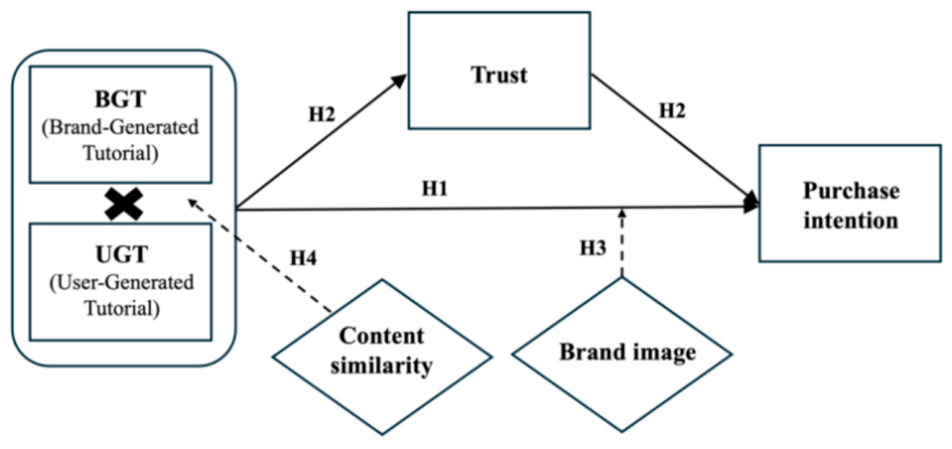
Figure 1. The theoretical framework of our research (figure by authors).
Jtaer 21 00224 g001
Figure 2. Display of basic product information (figure by authors). (Note: The Chinese text describes the product’s moisturizing effect, long-lasting wear, skincare ingredients, and available shades.)
Jtaer 21 00224 g002
Figure 3. Experimental materials: tutorials from different sources (figure by authors). (Note: The Chinese texts indicate recommended methods for applying foundation.)
Jtaer 21 00224 g003
Figure 4. Simple slope graph of the impact of different tutorial sources and brand image on purchase intention (figure by authors).
Jtaer 21 00224 g004
Figure 5. Tutorials with different content similarities (figure by authors). (Note: The Chinese texts indicate recommended application steps for applying foundation.)
Jtaer 21 00224 g005
Table 1. Main effects of ANOVA results.
Dependent VariableIndependent VariableSample SizeMeanS. D.Variance TestWelch’s Variance Test
Purchase
Intention
UGT Provided1154.7041.323F = 6.819
p = 0.001
F = 6.85
p = 0.001
BGT Provided994.3001.363
None Provided934.0181.37
Total3074.3661.376
Table 2. Results of mediation effect analysis of trust on purchase intention.
PathEstimate95% Confidence Interval
Compared with the control group:
UGT → Consumer Trust → Consumer Purchase Intention0.096(0.010, 0.181)
UGT → Consumer Purchase Intention0.420(0.133, 0.707)
BGT → Consumer Trust → Consumer Purchase Intention0.069(−0.019, 0.156)
BGT → Consumer Purchase Intention0.082(−0.214, 0.378)
Table 3. Results of the moderation test of brand image.
Model 1Model 2Model 3
tpβtpβtpβ
Constant37.3580.000-46.4550.000-46.5160.000-
Source—UGT
[Reference Item]
---------
Source—BGT−2.1860.030−0.138−2.3080.022−0.116−2.3030.022−0.116
Source—None−3.6450.000−0.23−4.3010.000−0.216−4.2780.000−0.215
Brand Image 13.1870.0000.5919.8270.0000.699
Source—BGT × Brand Image −1.7980.073−0.109
Source—None × Brand Image −1.4880.138−0.086
R20.0430.3920.4
Adjusted R20.0370.3860.39
Delta R20.0430.3490.008
Table 4. The effect of content similarity on purchase intention.
Dependent VariableIndependent
Variable
Sample SizeMeanS.D.Variance TestWelch’s Variance Test
Purchase
Intention
G (High Similarity)504.8241.315F = 6.816
p = 0.001
F = 6.879
p = 0.001
H (Low Similarity)524.0651.378
I (Control Group)484.3221.309
Total1504.4041.334
Disclaimer/Publisher’s Note: The statements, opinions and data contained in all publications are solely those of the individual author(s) and contributor(s) and not of MDPI and/or the editor(s). MDPI and/or the editor(s) disclaim responsibility for any injury to people or property resulting from any ideas, methods, instructions or products referred to in the content.