
Article

When Relevance Feels Risky: Consumer Avoidance of Personalized Advertising in the Digital Age
1
School of Journalism and Communication, Jinan University, Guangzhou 510632, China
2
College of Foreign Studies, Jinan University, Guangzhou 510632, China
3
School of Communication, Hong Kong Baptist University, Hongkong 999077, China
4
Baidu Online Network Technology (Beijing) Co., Ltd., Shenzhen 518000, China
*
Author to whom correspondence should be addressed.
J. Theor. Appl. Electron. Commer. Res. 2026, 21(6), 178; https://doi.org/10.3390/jtaer21060178
Submission received: 11 April 2026 / Revised: 28 May 2026 / Accepted: 31 May 2026 / Published: 4 June 2026

Abstract

Personalized advertising is now routine in digital commerce and new media, but relevance does not always translate into acceptance. When consumers read tailored messages as signs of tracking or inference rather than as useful assistance, they may feel exposed and avoid the advertising. Drawing on advertising avoidance theory, privacy calculus theory, and control agency theory, this study examines a privacy-risk account of personalized advertising avoidance. Survey data from 502 consumers and structural equation modeling show that privacy concern, privacy fatigue, and prior negative experiences are directly associated with advertising avoidance. Privacy concern, prior negative experiences, and perceived personalization are also positively associated with perceived risk; perceived industry self-regulation is negatively but non-significantly associated with perceived risk; and perceived risk is positively associated with advertising avoidance. These results position perceived risk as a close downstream appraisal through which consumers make sense of data-driven targeting. The study contributes to digital commerce and interactive marketing research by showing that consumers evaluate personalized advertising not only as a cue of relevance, but also as a possible source of privacy vulnerability. It also offers implications for transparent targeting, visible user control, platform governance, and less intrusive personalization.

1. Introduction

Recent advances in 5G, big data, cloud computing, artificial intelligence, and machine learning have accelerated the spread of personalized advertising in digital environments. By combining consumer data, browsing histories, and behavioral traces, advertisers can deliver messages that are more targeted, timely, and contextually relevant [1,2,3]. In contemporary e-commerce and online advertising ecosystems, these practices increasingly unfold through social media, live video commerce, short-form video, omnichannel interfaces, and other new media touchpoints that have become central to interactive marketing [4]. Recent research also shows that interactive commerce enhancements, social presence in live video commerce, and live comments in short-form online video shape user engagement, purchase responses, and app continuance in digitally mediated environments [5,6,7]. Although these practices may improve advertising efficiency, they also intensify consumer sensitivity to data collection, algorithmic profiling, and cross-platform tracking. Personalized advertising therefore needs to be understood as part of an interactive digital commerce environment in which relevance, privacy vulnerability, and perceived control are evaluated together.
Repeated privacy breaches and data misuse incidents have weakened online users’ confidence in digital platforms and heightened public scrutiny of algorithmic advertising. As consumers become more aware of how their data are collected, shared, and monetized, privacy concerns increasingly shape their responses to digitally personalized content. At the same time, privacy experiences do not produce a single consumer reaction. Some users become more vigilant and proactive in protecting their personal information, whereas others experience privacy fatigue and gradually disengage from privacy management. These contrasting responses suggest that personalized advertising avoidance should be understood through both consumers’ internal privacy perceptions and their evaluations of the surrounding privacy environment.
Against this backdrop, resistance to personalized advertising has become a salient issue for advertisers, platforms, and regulators [8,9,10]. Personalized advertising depends on tracking online behavior and inferring preferences from personal data, which can make consumers feel monitored, manipulated, or exposed. When users perceive that personalization exceeds acceptable boundaries, avoidance becomes a likely behavioral response [11,12].
In the current privacy landscape, personal data have become a core strategic asset in the digital economy. Accordingly, privacy protection is shaped by multiple actors, including individual consumers, industry institutions, technology platforms, and governments. Understanding advertising avoidance therefore requires attention not only to individual perceptions but also to the broader governance context in which data-driven advertising operates. At the institutional level, the governance of personalized advertising is closely tied to legal regulation and industry self-regulation. At the platform level, firms increasingly deploy privacy-protective technologies, consent interfaces, and data-control tools in response to regulatory pressure and public expectations.
Against this background, more work is needed to explain how privacy-related perceptions become advertising avoidance in contemporary digital commerce. Prior studies have examined direct personalized media, intrusive personalization, and platform-specific reactions to recommendation failure or prior negative experiences [13]. Recent work has also linked algorithm awareness, advertising privacy, and ad intrusiveness to consumer responses in evolving new media environments [4,8,14,15]. What remains less clearly specified is how privacy concerns, fatigue, past negative encounters, personalization cues, and governance beliefs come together through a downstream risk appraisal. This gap matters because consumers encounter personalized advertising across e-commerce, social media, short-form video, and other interactive touchpoints, rather than as a single stand-alone advertising exposure [1,4,7].
To address this gap, this study integrates advertising avoidance theory, privacy calculus theory, and control agency theory within a focused privacy-risk framework. It examines whether privacy concern, privacy fatigue, prior negative experiences, perceived personalization, and perceived industry self-regulation are associated with advertising avoidance, and whether perceived risk serves as the closest downstream appraisal in the model. This positioning follows calls for an explicitly interactive marketing perspective on emerging digital touchpoints [3] and research showing that trust and vulnerability shape responses to personalized online advertising [16]. The study therefore offers a more precise account of how consumers interpret data-driven targeting in digital commerce and new media contexts.
This study contributes to existing research in three ways. First, it specifies a privacy-risk pathway through which privacy concern, privacy fatigue, prior negative experiences, and personalization cues are linked to personalized advertising avoidance. Second, it separates close psychological appraisals from more distant governance beliefs. This distinction is important because the non-significant association between perceived industry self-regulation and perceived risk suggests that abstract industry reassurance may be less salient than consumers’ own privacy concerns and negative advertising experiences. Third, it extends digital commerce and interactive marketing research by examining personalized advertising in settings where consumers repeatedly encounter targeting cues across social media, online advertising, short-form video, and other interactive touchpoints [17,18]. This issue is especially relevant in the AI-driven digital age, as firms rely increasingly on social media, short-form video, livestreaming, and related new media channels to manage e-commerce journeys [19].

2. Theoretical Background

2.1. Advertising Avoidance

Personalized advertising has long been regarded as a double-edged sword in digital marketing. On the one hand, personalization can enhance message relevance and improve advertising effectiveness by aligning promotional content with users’ interests and behavioral profiles. On the other hand, the same practice may provoke discomfort because personalization often signals that firms are collecting, tracking, and inferring personal information. Early work on personalized advertising avoidance showed that consumers are more likely to avoid personalized messages when they perceive them as privacy-invasive, irritating, or untrustworthy [11]. Related research on online behavioural advertising further indicates that limited user knowledge and heightened privacy concerns are associated with coping and avoidance responses rather than greater acceptance [12].
The personalization paradox provides an important theoretical bridge for the present model. Aguirre et al. [20] showed that personalization can improve advertising responses when data collection is perceived as overt and legitimate, yet it can backfire when consumers feel vulnerable. Zhu and Chang [21] likewise found that ad relevance can mitigate perceived privacy invasion and support continued acceptance of personalized advertising. Recent boundary-condition research further shows that consumers react more negatively when personalization relies on highly private information, involves data sharing, or implies personalized pricing, because such practices are interpreted as inappropriate and boundary-crossing [22]. These findings indicate that personalization is not uniformly harmful; rather, its consequences depend on whether consumers interpret the tailored message primarily as a service cue or as a surveillance cue. Because the present study focuses on avoidance rather than acceptance, perceived personalization is incorporated into the model as a risk-relevant cue that may be associated with greater perceived privacy vulnerability when consumers infer intensive profiling or opaque data use.
Recent studies have further clarified the psychological mechanisms underlying personalized advertising avoidance. Morimoto [23] showed that privacy concerns mediate the relationship between information control and ad avoidance across multiple social media platforms, suggesting that consumers’ sense of control is central to how they evaluate personalized messages. Platform-based evidence likewise shows that prior negative experiences and unfavorable ad perceptions predict ad avoidance in mobile social media contexts such as WeChat and TikTok [24]. More recent work in Chinese SNS settings demonstrates that failures in personalized advertising recommendation services increase dissatisfaction and subsequent negative responses, including negative word-of-mouth and discontinuance intentions [25]. More broadly, consumer responses in interactive marketing are shaped by ad intrusiveness, retargeting specificity, recommendation-system design, and short-video advertising experiences [15,17,26,27]. Taken together, these findings suggest that privacy perceptions, control-related judgments, and prior advertising experiences should be synthesized through a downstream appraisal that captures consumers’ perceived exposure to harm.

2.2. Control Agency Theory

During the collection, use, and management of personal information, users may disclose data more readily when they perceive strong privacy assurance and meaningful control over subsequent use. This logic is captured by control agency theory, which distinguishes between personal control and proxy control [28]. Personal control refers to the extent to which individuals manage privacy directly, whereas proxy control refers to the role of external actors—such as governments, industry associations, firms, or platforms—in acting on behalf of users to protect privacy.
Existing research generally distinguishes three broad approaches to information privacy protection: individual self-protection, industry self-regulation, and government legislation. Because ordinary users typically lack information, expertise, and enforcement capacity, they often rely on proxy-control agents to expand their effective control over personal data [28,29]. In the context of personalized advertising, control agency is especially relevant because consumers rarely observe the full chain of data collection, profiling, and targeting. Instead, they infer whether meaningful safeguards exist in the surrounding governance environment.
Accordingly, control agency is treated here not as a broad institutional backdrop, but as a consumer-facing judgment about whether industry actors can credibly restrain privacy-invasive practices. This makes perceived industry self-regulation conceptually relevant, although it should be understood as a distal proxy-control belief rather than as a direct substitute for personal control. If consumers believe that platforms and industry bodies impose meaningful standards on the use of personal data, personalized targeting should appear less risky and less threatening. However, because industry self-regulation is often abstract and less visible than direct privacy tools, its empirical association with perceived risk may be weaker than the associations of personal privacy concern and prior negative experience.

2.3. Privacy Calculus Theory

Privacy calculus theory explains privacy-related decision making as a balancing process in which individuals weigh expected benefits against potential harms associated with information disclosure [30]. Within this framework, the key downstream appraisal is not simply concern, but a more concrete assessment of possible adverse consequences. In the personalized advertising context, this appraisal is best captured by perceived risk.
In the present study, perceived risk is defined as the perceived possibility that personalized advertising may trigger privacy loss, data misuse, manipulation, or other negative consequences for the consumer. This definition is narrower than a generic notion of overall risk because the relevant threat in this literature is closely tied to vulnerability, privacy intrusiveness, and harmful downstream consequences rather than to abstract uncertainty in general [20,31,32]. Accordingly, consumers’ avoidance of personalized advertising is expected to be associated not only with whether the ad appears tailored, but also with whether such tailoring is interpreted as controllable, privacy-threatening, and risky.

2.4. Critical Synthesis and Model Positioning

The three theoretical perspectives used in this study are complementary rather than additive. Advertising avoidance theory explains why consumers withdraw from advertising that is intrusive, irritating, or untrustworthy. Privacy calculus theory specifies the appraisal process through which consumers translate privacy-related cues into judgments of potential harm. Control agency theory adds a governance dimension by distinguishing direct personal control from proxy control exercised by industry actors or other institutions. Integrating these perspectives allows the model to explain not merely whether consumers dislike personalized advertising, but why some privacy-related antecedents are more closely associated with avoidance than others.
This synthesis also clarifies the role of the personalization paradox in the model. The paradox is not modeled as a direct positive-negative trade-off because the present study does not measure perceived benefits, perceived relevance, or acceptance outcomes as parallel mediators. Instead, the model isolates the risk pathway of the paradox: when personalization is interpreted as evidence of intensive profiling, it is expected to be positively correlated with perceived risk. This more focused specification avoids treating personalization as uniformly negative while remaining consistent with an avoidance-centered research question.
Finally, perceived industry self-regulation is positioned as a distal governance cue. A significant negative association would suggest that proxy control reduces perceived risk. A weak or non-significant association, by contrast, would not invalidate control agency theory; it would indicate that abstract self-regulatory reassurance may be insufficiently visible or credible in consumers’ day-to-day encounters with personalized advertising. This interpretation guides the hypotheses and provides a basis for interpreting the empirical results without overstating the contribution of the self-regulation construct.

3. Research Model and Hypotheses

3.1. Privacy Concern

Privacy concern reflects consumers’ subjective unease about the collection, secondary use, and possible misuse of personal information in digital environments. In personalized advertising, such concern becomes especially salient because targeting relies on data tracking, behavioral inference, and opaque algorithmic profiling [28,30]. When consumers are concerned about how their personal data are collected and used, they are more likely to resist targeted messages that appear intrusive or surveillance-based. Prior studies consistently show that privacy concern heightens vigilance and increases avoidance of online behavioural advertising and other forms of personalized promotion [11,12,23].
H1a. 
Privacy concern is positively associated with advertising avoidance.
Privacy concern is also expected to be positively associated with perceived risk. Once consumers suspect that personalized advertising relies on uncontrolled or nontransparent data practices, they become more sensitive to the possibility of misuse, unauthorized disclosure, manipulation, and privacy loss. In this sense, concern is expected to translate into a stronger perception that personalized advertising may result in harmful consequences for the consumer [20,31].
H1b. 
Privacy concern is positively associated with perceived risk.

3.2. Privacy Fatigue

Privacy fatigue refers to feelings of exhaustion, cynicism, and reduced efficacy that emerge when users face repeated privacy requests, complex disclosures, and persistent data-collection demands [33]. Rather than motivating careful privacy management, fatigue may prompt disengagement and withdrawal. In the context of personalized advertising, privacy fatigue should be positively associated with advertising avoidance because fatigued users are less willing to process messages that remind them of surveillance, data tracking, or privacy-management burdens. Avoidance thus becomes a low-effort coping response to a demanding privacy environment.
H2. 
Privacy fatigue is positively associated with advertising avoidance.

3.3. Prior Negative Experiences

Consumers do not encounter personalized advertising as blank slates. Prior negative experiences involving privacy invasion, unwanted targeting, excessive repetition, or deceptive digital promotion provide a concrete experiential basis for avoidance. Research on social mobile platforms shows that prior negative experience is a crucial antecedent of ad avoidance, both directly and indirectly through more negative ad perceptions [24].
H3a. 
Prior negative experiences are positively associated with advertising avoidance.
Prior negative experiences should also be positively associated with perceived risk because past harm makes future threats more salient and easier to imagine. In personalized advertising settings, such experiences are expected to correspond to a stronger sense of vulnerability and a stronger expectation that tailored messages may again bring about privacy loss, data misuse, manipulation, or other negative consequences [25].
H3b. 
Prior negative experiences are positively associated with perceived risk.

3.4. Perceived Personalization

Perceived personalization refers to the extent to which consumers believe that an advertisement is tailored specifically to them. This perception is theoretically double-edged. On the positive side, personalization may signal relevance and usefulness. On the negative side, strong personalization cues can signal intensive data collection and nontransparent inference. Research on personalized advertising therefore suggests that personalization can foster acceptance in some cases but also evoke vulnerability and resistance when consumers interpret it as invasive or manipulative [20,21,34]. Because the present study focuses on the privacy-risk pathway of the personalization paradox, perceived personalization is modeled as a cue that is positively associated with perceived risk in personalized advertising contexts. When consumers infer that the message is based on intensive profiling or opaque inference, they are more likely to anticipate privacy-related harm.
H4. 
Perceived personalization is positively associated with perceived risk.

3.5. Industry Self-Regulation

Control agency theory further suggests that consumers form judgments about whether industry actors can credibly restrain privacy-invasive practices through meaningful self-regulation. Within the governance environment surrounding personalized advertising, perceived industry self-regulation functions as a proxy-control belief that may lower consumers’ sense of vulnerability. When consumers believe that industry self-regulation is effective, they should feel less exposed to opportunistic data use, opaque targeting, and privacy-invasive advertising practices. Effective self-regulation is therefore expected to be negatively associated with perceived risk in personalized advertising environments [28,29].
H5. 
Perceived effectiveness of industry self-regulation is negatively associated with perceived risk.

3.6. Perceived Risk and Advertising Avoidance

Perceived risk is the pivotal appraisal in the model because consumers often evaluate personalized advertising in terms of possible privacy loss, data misuse, manipulation, and other negative downstream consequences. When personalized advertising is perceived as risky, avoidance becomes a coping response that reduces further exposure and interaction [11,20,32].
H6. 
Perceived risk is positively associated with advertising avoidance.
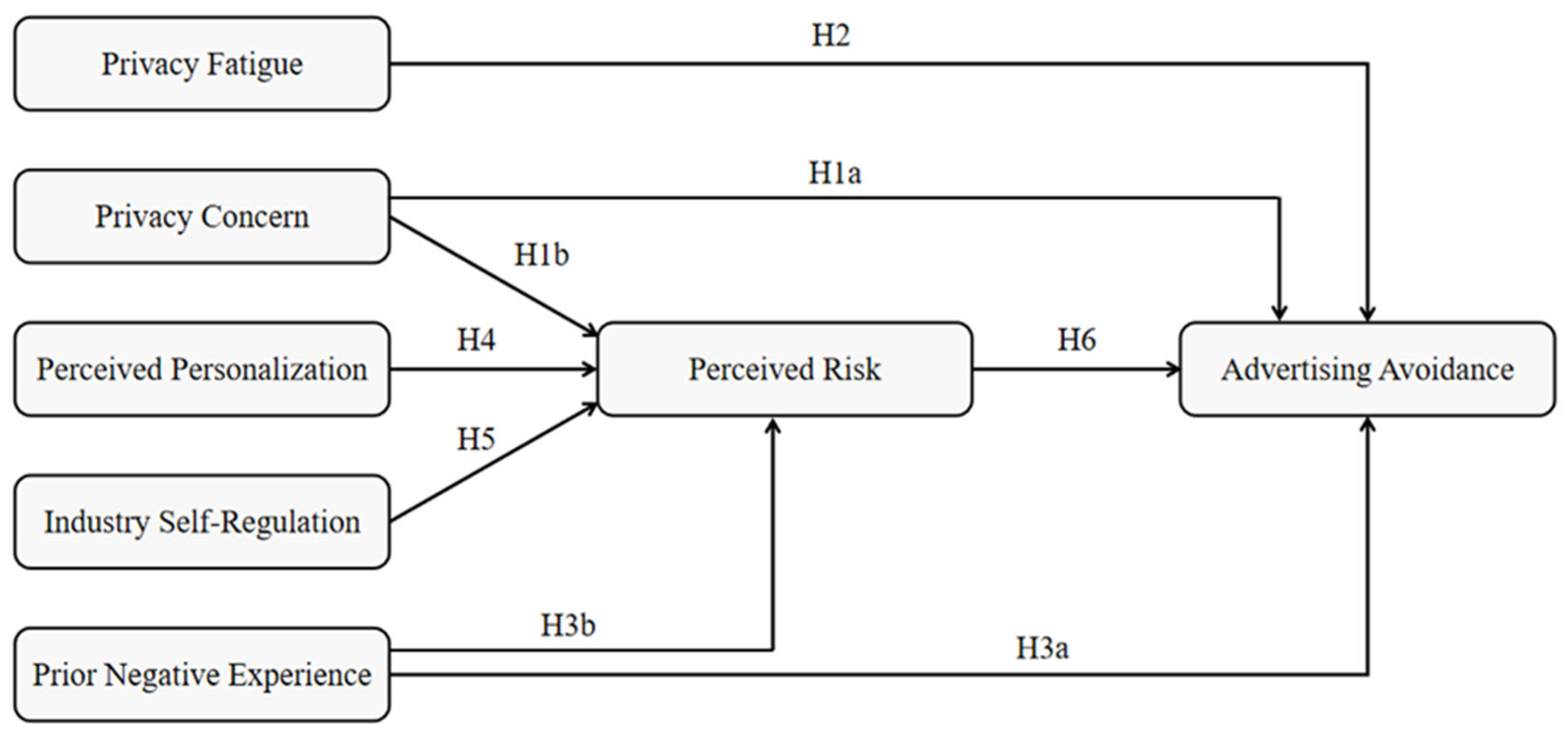
Figure 1 summarizes the hypothesized relationships among privacy concern, privacy fatigue, prior negative experiences, perceived personalization, perceived industry self-regulation, perceived risk, and advertising avoidance.

4. Research Methodology

4.1. Sampling and Data Collection

An online survey was conducted from March to May 2025 using snowball sampling through major Chinese social networking platforms, including WeChat groups, QQ groups, Weibo, and Douban. Initial invitations were distributed through the research team’s personal and professional networks, and respondents were encouraged to share the survey link within their own online communities. Snowball sampling was used because personalized advertising exposure is a distributed digital behavior rather than a membership-based population with a complete sampling frame. The approach was also suitable for reaching respondents who had prior exposure to personalized or targeted online advertising across different platforms and usage contexts.
A total of 535 responses were received, and 502 valid questionnaires remained after incomplete or invalid cases were removed, yielding an effective response rate of 93.8%. Of the valid responses, 170 were male (33.9%) and 332 were female (66.1%). The sample was relatively young, with 51.0% aged 20–29, 24.3% aged 30–39, and 19.7% aged 19 or below. In terms of education, 56.8% held a bachelor’s degree and 39.4% held a master’s degree or above. The dataset also included respondents’ residential area, indicating that 67.1% resided in urban areas and 32.9% in rural areas. Respondents were required to have prior experience with personalized or targeted online advertising. Although this procedure improved access to a relevant digital-advertising user group, it also limits statistical generalizability. Additional behavioral-profile variables, such as online shopping frequency, advertising exposure intensity, and major platforms used, were not included in the present dataset; this limitation is acknowledged in the Section 6.6. The sample characteristics are summarized in Table 1.

4.2. Research Measures

All constructs were measured using established multi-item scales adapted from prior studies and refined for the personalized advertising context. Advertising avoidance was measured with five items adapted from prior research on online and personalized advertising avoidance. Perceived risk was measured with four items capturing the perceived possibility that personalized advertising may trigger privacy loss, data misuse, manipulation, or other negative consequences. Privacy concern was measured with nine items covering perceived surveillance, perceived intrusion, and secondary use of personal information. Privacy fatigue was measured with five items reflecting emotional exhaustion and cynicism in response to repeated privacy-management demands. Perceived personalization was measured with two items capturing the extent to which advertisements were perceived as tailored to the individual. Prior negative experiences and perceived industry self-regulation were each measured with three items. Table 2 summarizes the construct definitions, sources, item numbers, and representative adapted items.
All items were measured on seven-point Likert scales ranging from 1 (“strongly disagree”) to 7 (“strongly agree”). The adaptation process involved four steps. First, the original English items were reviewed to identify wording that required contextualization for personalized advertising. Second, the items were translated into Chinese and then back-translated into English by bilingual researchers. Third, discrepancies between the original and back-translated versions were discussed and resolved to preserve conceptual equivalence rather than literal wording. Fourth, minor wording revisions were made to improve clarity in the Chinese digital-advertising context, especially for terms related to data tracking, personalized targeting, and industry self-regulation. This process was used to retain the theoretical meaning of the original scales while ensuring that respondents could interpret the items in relation to personalized advertising.

4.3. Analytical Strategy

Structural equation modeling (SEM) was employed to assess measurement quality and test the hypothesized relationships among the focal constructs. The analysis was conducted using AMOS 22. Following a two-step approach, the measurement model was first evaluated in terms of reliability, convergent validity, discriminant validity, and overall model fit, after which the structural model was estimated to test the proposed hypotheses. Several procedural steps were taken to reduce common method bias, including anonymous participation, neutral item wording, and separation of construct blocks in the questionnaire. In addition, Harman’s single-factor test indicated that the first unrotated factor accounted for 19.50% of the total variance, far below a dominant level, suggesting that common method bias was unlikely to fully explain the observed relationships.

5. Results

5.1. Measurement Quality and Model Fit

The measurement model demonstrated satisfactory psychometric properties across the focal constructs. As shown in Table 3, the overall model-fit indices were acceptable, with χ2 = 127.9, df = 76, χ2/df = 1.67, GFI = 0.90, CFI = 0.94, NFI = 0.92, and RMSEA = 0.04. Table 4 reports the standardized CFA loadings for the retained indicators, together with construct-wise Cronbach’s alpha, composite reliability (CR), and average variance extracted (AVE). Standardized factor loadings ranged from 0.58 to 0.94, exceeding the recommended minimum threshold of 0.50. Cronbach’s alpha values ranged from 0.72 to 0.86, CR values ranged from 0.81 to 0.92, and AVE values ranged from 0.58 to 0.76, supporting internal consistency and convergent validity. Table 5 presents descriptive statistics, inter-construct correlations, and HTMT ratios. All HTMT values were below the conservative threshold of 0.85, supporting discriminant validity across the focal constructs.

5.2. Structural Results

The structural results largely supported the proposed focal model. Privacy concern is positively associated with both advertising avoidance (β = 0.523, C.R. = 7.175, p < 0.001) and perceived risk (β = 0.481, C.R. = 6.672, p < 0.001), supporting H1a and H1b. There is a positive association between privacy fatigue and advertising avoidance (β = 0.342, C.R. = 5.588, p < 0.001), supporting H2. Prior negative experiences are positively associated with both advertising avoidance (β = 0.375, C.R. = 5.778, p < 0.001) and perceived risk (β = 0.305, C.R. =5.184, p < 0.001), supporting H3a and H3b. Higher perceived personalization was associated with higher perceived risk (β = 0.184, C.R. = 2.452, p = 0.014), supporting H4. In contrast, perceived industry self-regulation showed a negative but non-significant association with perceived risk (β = −0.062, C.R. = −1.105, p = 0.269), so H5 was not supported. Perceived risk is positively associated with advertising avoidance (β = 0.612, C.R. = 9.203, p < 0.001), supporting H6. Table 6 reports the standardized coefficient, standard error, critical ratio, p-value, and decision for each focal path.
Taken together, these results are consistent with perceived risk operating as the most proximal explanatory appraisal in the focal model. Consumers were more likely to avoid personalized advertising when privacy concern, prior negative experiences, and personalization cues were associated with heightened privacy-related vulnerability. By contrast, perceived industry self-regulation was not significantly associated with lower perceived risk in the present sample. The supplementary indirect-effect results indicate significant indirect associations between privacy concern and advertising avoidance and between prior negative experiences and advertising avoidance through perceived risk; in both cases, the corresponding direct associations with advertising avoidance remained in the focal model. Perceived personalization was also indirectly associated with advertising avoidance through perceived risk, whereas no direct path from perceived personalization to advertising avoidance was specified in the focal model. The indirect association from industry self-regulation to advertising avoidance through perceived risk was not statistically significant. These supplementary indirect-effect estimates are reported in Table 7.

6. Discussion

6.1. Overview of Findings

Drawing on advertising avoidance theory, privacy calculus theory, and control agency theory, this study examined personalized advertising avoidance with perceived risk positioned as the most proximal explanatory appraisal in the focal model. The findings indicate that consumers are more likely to avoid personalized advertising when privacy concern, privacy fatigue, and prior negative experiences are associated with heightened vulnerability, and when personalization cues are interpreted as signals of potentially intrusive data use. By contrast, perceived industry self-regulation did not significantly lower perceived risk in this sample, suggesting that broad governance claims alone may be insufficient to reassure users.

6.2. Core Theoretical Implications

The findings add to digital commerce research by showing that consumers may read personalized advertising in two ways: as a relevance-enhancing service cue and as a data practice that carries privacy risk. This argument also connects with interactive marketing and new media research, where consumer journeys now span social commerce, omnichannel interfaces, live video, short-form content, and immersive environments rather than isolated advertising exposures [4,6,14]. The study does not replace existing explanations of advertising avoidance. Its more specific contribution is to show how privacy-related perceptions and experiences are associated with avoidance through perceived risk. This contribution framing is consistent with recent editorial guidance that theoretical contributions should be demonstrated through coherent research storytelling [35].
First, the results indicate that privacy concern and privacy fatigue should be treated as distinct but complementary antecedents of personalized advertising avoidance. Privacy concern reflects active apprehension about how personal data are collected and used, whereas privacy fatigue reflects exhaustion and withdrawal in response to repeated privacy-management demands. Both are positively associated with avoidance, but they capture different psychological conditions: concern reflects vigilance, whereas fatigue reflects disengagement.
Second, the results clarify how the personalization paradox operates in an avoidance-centered model. Personalized advertising may be associated with greater perceived relevance and convenience, but it may also signal intensive tracking and opaque inference. Because the present study focuses on the risk pathway, perceived personalization was modeled as a cue that is positively associated with perceived risk rather than as a direct antecedent of avoidance. This specification explains why personalization can be valuable in some contexts while still becoming problematic when consumers interpret it as evidence of intrusive profiling.
Third, the non-significant association between perceived industry self-regulation and perceived risk qualifies the role of control agency in personalized advertising. The result suggests that proxy-control beliefs may need to be visible, concrete, and user-facing before they are associated with lower privacy-related vulnerability. This interpretation preserves the theoretical relevance of control agency while acknowledging that abstract industry discipline may be less persuasive than direct user experiences.

6.3. The Central Role of Perceived Risk

Perceived risk was a strong proximal antecedent of advertising avoidance in the model. This pattern is consistent with prior privacy and advertising research, but the present study adds explanatory value by showing how different antecedents converge through this appraisal. In digital commerce environments, where targeting, recommendation, retargeting, and cross-platform tracking are increasingly integrated, consumers appear to evaluate personalized advertising through the lens of potential privacy loss, data misuse, manipulation, and other adverse consequences. The supplementary indirect-effect results are consistent with this interpretation, especially for privacy concern, prior negative experiences, and perceived personalization.

6.4. Industry Self-Regulation as a Distal Governance Cue

The non-significant path from perceived industry self-regulation to perceived risk should be interpreted cautiously, but it is theoretically informative. Although the estimated association was negative, perceived industry self-regulation did not significantly reduce perceived risk. This suggests that self-regulation may be too distal, abstract, or insufficiently visible to be associated with lower immediate risk appraisals in personalized advertising contexts. In other words, consumers appear to respond more strongly to their own privacy concerns and prior experiences than to generalized beliefs about industry discipline.

6.5. Practical Implications

The findings point to several practice-oriented implications. First, reducing advertising avoidance requires more than better targeting accuracy. Platforms and advertisers should make targeting logic visible through clear “why am I seeing this ad” explanations, accessible ad-preference controls, and meaningful opt-out functions. Second, firms should distinguish relevance-enhancing personalization from surveillance-like personalization. A recommendation based on recent browsing, for instance, should be communicated differently from targeting based on sensitive inferred attributes, cross-platform tracking, or highly private data. Third, platforms should introduce frequency caps and cooling-off rules for retargeting, because repetition can turn relevance into perceived surveillance. Fourth, service recovery after intrusive advertising or privacy-related complaints should be visible and concrete, including correction notices, data-use explanations, and preference-reset options. Finally, the non-significant role of perceived industry self-regulation suggests that generic self-regulatory claims are unlikely to reassure users unless they are translated into concrete safeguards such as standardized consent dashboards, visible certification marks, plain-language data-use labels, and auditable privacy-control tools. These recommendations are especially relevant in e-commerce and new media environments where consumers encounter dense combinations of targeting cues, social signals, and cross-platform data use.

6.6. Limitations and Future Research

Several limitations should be noted. First, the cross-sectional and self-reported data do not allow strong causal claims. For this reason, the hypotheses and results are framed in terms of association. Second, the snowball sample limits statistical generalizability beyond the surveyed digital-advertising users. Although this sampling strategy was suitable for reaching respondents with prior exposure to personalized advertising, future studies should use probability-based or panel-based samples when feasible. Third, the present dataset did not include sufficiently detailed behavioral-profile variables that are relevant to advertising research, such as online shopping frequency, advertising exposure intensity, platform usage, ad-blocking behavior, and prior opt-out experience. As these variables were not available in this study, they could not be incorporated as additional controls in the current model. Future research should collect richer behavioral and platform-use data and examine whether the focal associations differ across platform types, ad transparency conditions, exposure frequency, and regulatory settings. Future studies using longitudinal, experimental, or multi-country designs would also help strengthen causal inference and assess whether the present findings generalize across different regulatory, cultural, and platform contexts.

7. Conclusions

This study offers a focused account of personalized advertising avoidance in digital commerce. The results suggest that consumers do not judge personalized advertising solely by its relevance or convenience. Avoidance becomes more likely when privacy concern, privacy fatigue, prior negative experiences, and personalization cues are associated with heightened perceived risk. Perceived risk therefore functions as the closest explanatory appraisal in the focal model, whereas perceived industry self-regulation did not significantly reduce risk in the present sample. These findings provide a cautious explanation for why personalized advertising may be accepted in some situations yet avoided in others. More broadly, the study shows how consumers interpret personalized communication across contemporary e-commerce and new media ecosystems, where interactive marketing increasingly unfolds across multiple digital touchpoints.

Author Contributions

Conceptualization, Y.C. and J.H.; methodology, Y.Z. (Yixiang Zhang); software, Y.Z. (Yin Zhang) and Y.Z. (Yixiang Zhang); validation, J.H.; formal analysis, Y.C. and Y.Z. (Yixiang Zhang); investigation, J.H. and Y.C.; resources, J.H.; data curation, Y.Z. (Yin Zhang); writing—original draft preparation, J.H. and Y.C.; writing—review and editing, J.H.; visualization, J.H.; supervision, Y.C. and J.H.; project administration, Y.C. and J.H.; funding acquisition, J.H. and Y.C. All authors have read and agreed to the published version of the manuscript.

Funding

This research was funded by National Social Science Fund of China (21BGL128); Guangdong Graduate Education Innovation Program Project “Jinan University-Shunfei Science and Technology Joint Graduate Training Demonstration Base”; Guangdong Provincial Undergraduate Teaching Reform Project, “Guangdong Brand Storytelling: A Practical Exploration Based on the Course Strategic Brand Management”; and Guangdong College Students’ Innovation and Entrepreneurship Training Program (Grant Nos. S202610559125, S202610559192X).

Institutional Review Board Statement

The study was conducted in accordance with the Declaration of Helsinki and approved by the Ethical Review Committee of the School of Journalism and Communication, Jinan University (approval ID: 2025022; approved on 2 February 2025).

Informed Consent Statement

Informed consent was obtained from all subjects involved in the study through a consent confirmation item included in the questionnaire.

Data Availability Statement

The data presented in this study are available on request from the corresponding author.

Acknowledgments

The authors would like to thank Zhien Hong, Ruixin Zhang and Jiaying Yu for their support and assistance in organizing relevant literature. During the preparation of this manuscript, the authors used Doubao AI (Version 2.0, ByteDance, Beijing, China) for language polishing, grammar checking, and formatting assistance. The authors have reviewed and edited the output and take full responsibility for the content of this publication.

Conflicts of Interest

The authors declare no conflicts of interest. Author Yixiang Zhang is employed by Baidu Company. The remaining authors declare that the research was conducted in the absence of any commercial or financial relationships that could be construed as a potential conflict of interest. The funders had no role in the design of the study, in the collection, analyses or interpretation of data, in the writing of the manuscript, or in the decision to publish the results.

References

  1. Krishen, A.S.; Dwivedi, Y.K.; Bindu, N.; Kumar, K.S. A broad overview of interactive digital marketing: A bibliometric network analysis. J. Bus. Res. 2021, 131, 183–195. [Google Scholar] [CrossRef]
  2. Wang, C.L. Interactive Marketing Is the New Normal. In The Palgrave Handbook of Interactive Marketing; Wang, C.L., Ed.; Springer Nature: Cham, Switzerland, 2023; pp. 1–12. [Google Scholar] [CrossRef]
  3. Wang, C.L. Editorial: What is an interactive marketing perspective and what are emerging research areas? J. Res. Interact. Mark. 2024, 18, 161–165. [Google Scholar] [CrossRef]
  4. Peltier, J.W.; Dahl, A.J.; Drury, L.; Khan, T. Cutting-edge research in social media and interactive marketing: A review and research agenda. J. Res. Interact. Mark. 2024, 18, 900–944. [Google Scholar] [CrossRef]
  5. Huang, Z.; Zhu, Y.; Hao, A.; Deng, J. How social presence influences consumer purchase intention in live video commerce: The mediating role of immersive experience and the moderating role of positive emotions. J. Res. Interact. Mark. 2023, 17, 493–509. [Google Scholar] [CrossRef]
  6. Chong, S.-E.; Ng, S.-I.; Basha, N.K.; Lim, X.-J. Social commerce in the social media age: Understanding how interactive commerce enhancements navigate app continuance intention. J. Res. Interact. Mark. 2024, 18, 865–899. [Google Scholar] [CrossRef]
  7. Li, W.; Jiang, M.; Zhan, W. Why Advertise on Short Video Platforms? Optimizing Online Advertising Using Advertisement Quality. J. Theor. Appl. Electron. Commer. Res. 2022, 17, 1057–1074. [Google Scholar] [CrossRef]
  8. Boerman, S.C.; Smit, E.G. Advertising and privacy: An overview of past research and a research agenda. Int. J. Advert. 2023, 42, 60–68. [Google Scholar] [CrossRef]
  9. Alzate, M.; Arce Urriza, M.; Cortiñas, M. Voice-activated personal assistants and privacy concerns: A Twitter analysis. J. Res. Interact. Mark. 2024, 18, 611–630. [Google Scholar] [CrossRef]
  10. Tsiotsou, R.H.; Hatzithomas, L.; Wetzels, M. Display advertising: The role of context and advertising appeals from a resistance perspective. J. Res. Interact. Mark. 2024, 18, 198–219. [Google Scholar] [CrossRef]
  11. Baek, T.H.; Morimoto, M. Stay away from me: Examining the determinants of consumer avoidance of personalized advertising. J. Advert. 2012, 41, 59–76. [Google Scholar] [CrossRef]
  12. Smit, E.G.; van Noort, G.; Voorveld, H.A.M. Understanding online behavioural advertising: User knowledge, privacy concerns and online coping behaviour in Europe. Comput. Hum. Behav. 2014, 32, 15–22. [Google Scholar] [CrossRef]
  13. Szabó, Á.K.; Mitev, A.Z. When online advertising backfires: How imperative call-to-action messages trigger psychological reactance. J. Res. Interact. Mark. 2026, 20, 324–343. [Google Scholar] [CrossRef]
  14. Tian, S.; Zhang, B.; He, H. Role of Algorithm Awareness in Privacy Decision-Making Process: A Dual Calculus Lens. J. Theor. Appl. Electron. Commer. Res. 2024, 19, 899–920. [Google Scholar] [CrossRef]
  15. Goldfarb, A.; Tucker, C. Online display advertising: Targeting and obtrusiveness. Mark. Sci. 2011, 30, 389–404. [Google Scholar] [CrossRef] [PubMed]
  16. Bleier, A.; Eisenbeiss, M. The importance of trust for personalized online advertising. J. Retail. 2015, 91, 390–409. [Google Scholar] [CrossRef]
  17. Lambrecht, A.; Tucker, C. When does retargeting work? Information specificity in online advertising. J. Mark. Res. 2013, 50, 561–576. [Google Scholar] [CrossRef]
  18. Tucker, C.E. Social networks, personalized advertising, and privacy controls. J. Mark. Res. 2014, 51, 546–562. [Google Scholar] [CrossRef]
  19. Walker, K.L.; Milne, G.R. AI-driven technology and privacy: The value of social media responsibility. J. Res. Interact. Mark. 2024, 18, 815–835. [Google Scholar] [CrossRef]
  20. Aguirre, E.; Mahr, D.; Grewal, D.; de Ruyter, K.; Wetzels, M. Unraveling the personalization paradox: The effect of information collection and trust-building strategies on online advertisement effectiveness. J. Retail. 2015, 91, 34–49. [Google Scholar] [CrossRef]
  21. Zhu, Y.-Q.; Chang, J.-H. The key role of relevance in personalized advertisement: Examining its impact on perceptions of privacy invasion, self-awareness, and continuous use intentions. Comput. Hum. Behav. 2016, 65, 442–447. [Google Scholar] [CrossRef]
  22. Boerman, S.C.; Kruikemeier, S.; Bol, N. When is personalized advertising crossing personal boundaries? How type of information, data sharing, and personalized pricing influence consumer perceptions of personalized advertising. Comput. Hum. Behav. Rep. 2021, 4, 100144. [Google Scholar] [CrossRef]
  23. Morimoto, M. Privacy concerns about personalized advertising across multiple social media platforms in Japan: The relationship with information control and persuasion knowledge. Int. J. Advert. 2021, 40, 431–451. [Google Scholar] [CrossRef]
  24. Cao, N.; Isa, N.M.; Perumal, S. Effects of prior negative experience and personality traits on WeChat and TikTok ad avoidance among Chinese Gen Y and Gen Z. J. Theor. Appl. Electron. Commer. Res. 2024, 19, 95–115. [Google Scholar] [CrossRef]
  25. Jin, L.; Ryu, M.H. User dissatisfaction and behavioral intention toward personalized advertising recommendation services in Chinese social networking services. Humanit. Soc. Sci. Commun. 2025, 12, 1857. [Google Scholar] [CrossRef]
  26. He, X.; Liu, Q.; Jung, S. The impact of recommendation system on user satisfaction: A moderated mediation approach. J. Theor. Appl. Electron. Commer. Res. 2024, 19, 448–466. [Google Scholar] [CrossRef]
  27. Zheng, C.; Ling, S.; Cho, D.; Kim, Y. How social presence influences engagement in short video-embedded advertisements: The serial mediation effect of flow experience and advertising avoidance. J. Theor. Appl. Electron. Commer. Res. 2024, 19, 705–724. [Google Scholar] [CrossRef]
  28. Xu, H.; Teo, H.-H.; Tan, B.C.Y.; Agarwal, R. Research note: Effects of individual self-protection, industry self-regulation, and government regulation on privacy concerns: A study of location-based services. Inf. Syst. Res. 2012, 23, 1342–1363. [Google Scholar] [CrossRef]
  29. Culnan, M.J.; Bies, R.J. Consumer privacy: Balancing economic and justice considerations. J. Soc. Issues 2003, 59, 323–342. [Google Scholar] [CrossRef]
  30. Dinev, T.; Hart, P. An extended privacy calculus model for e-commerce transactions. Inf. Syst. Res. 2006, 17, 61–80. [Google Scholar] [CrossRef]
  31. Zhang, D.; Voorveld, H.A.M.; Boerman, S.C. Privacy concerns matter, knowledge does not: Investigating effects of online behavioral advertising among Chinese and Dutch adults. J. Curr. Issues Res. Advert. 2023, 44, 392–410. [Google Scholar] [CrossRef]
  32. Al Helaly, Y.; Dhillon, G.S.; Oliveira, T. The impact of privacy intrusiveness on individuals’ responses and engagement toward personalization in online interactive advertising. J. Interact. Advert. 2025, 25, 38–60. [Google Scholar] [CrossRef]
  33. Choi, H.; Park, J.; Jung, Y. The role of privacy fatigue in online privacy behavior. Comput. Hum. Behav. 2018, 81, 42–51. [Google Scholar] [CrossRef]
  34. Loureiro, S.M.C.; Hollebeek, L.; Rather, R.A.; Ruivo, L.; Kaljund, K.; Guerreiro, J. Engaging with (vs. avoiding) personalized advertising on social media. J. Mark. Commun. 2025, 31, 764–785. [Google Scholar] [CrossRef]
  35. Wang, C.L. Editorial: Demonstrating contributions through storytelling. J. Res. Interact. Mark. 2025, 19, 1–4. [Google Scholar] [CrossRef]
Figure 1. Research framework.
Jtaer 21 00178 g001
Table 1. Demographic characteristics.
CharacteristicValueNotes
Data collection periodMarch–May 2025Online survey
Responses received535Raw responses
Valid responses502Used in SEM
Effective response rate93.8%After removing invalid cases
GenderMale 170 (33.9%); Female 332 (66.1%)Self-reported
Age distribution≤19: 99 (19.7%); 20–29: 256 (51.0%); 30–39: 122 (24.3%); 40–49: 23 (4.6%); 50–59: 2 (0.4%)Self-reported
EducationBachelor’s 285 (56.8%); Master’s or above 198 (39.4%); Junior college 9 (1.8%); High school or below 9 (1.8%); Other 1 (0.2%)Self-reported
Residential areaUrban 337 (67.1%); Rural 165 (32.9%)Self-reported
Table 2. Construct operationalization and measurement sources.
ConstructDefinitionSourceNumber of ItemsRepresentative Adapted Item
Advertising avoidanceTendency to ignore, skip, or disengage from personalized advertisements.[11]5I try to avoid personalized ads whenever possible.
Perceived riskPerceived possibility that personalized advertising may trigger privacy loss, data misuse, manipulation, or other negative consequences.[20,30,31]4Personalized ads expose me to privacy-related risk.
Privacy concernSubjective concern about the collection, secondary use, and possible misuse of personal information.[28,30]9I am concerned about how my personal data are used for targeted advertising.
Privacy fatigueExhaustion, cynicism, or reduced efficacy in response to repeated privacy-management demands.[33]5Managing privacy in digital advertising environments feels exhausting.
Perceived personalizationExtent to which an advertisement is perceived as specifically tailored to the individual.[21,34]2This advertisement seems specifically tailored to me.
Prior negative experiencesPrior unpleasant, intrusive, or privacy-related experiences with personalized advertising or digital targeting.[24,25]3I have had negative experiences with personalized or targeted ads before.
Industry self-regulationBelief that industry actors can meaningfully restrain privacy-invasive advertising practices.[28]3Industry self-regulation can effectively limit privacy-invasive advertising practices.
Table 3. Summary of measurement model fit and common method assessment.
IndicatorObserved ValueInterpretation
χ2127.9Reported model chi-square
df76Degrees of freedom
χ2/df1.67Acceptable fit
GFI0.90Acceptable fit
CFI0.94Good fit
NFI0.92Good fit
RMSEA0.04Good fit
Harman single-factor variance19.50%No dominant single factor
Table 4. CFA loadings for retained indicators and construct reliability statistics.
Measurement ItemNMeanSDαLoadingCRAVE
Privacy concern 0.84
        perceived surveillance34.281.030.850.940.810.59
0.74
0.58
        perceived intrusion34.051.210.830.790.750.50
0.69
0.64
        secondary use of personal
        information
34.481.080.830.800.840.65
0.71
0.89
Privacy fatigue 0.72
        Emotional exhaustion23.351.120.750.870.810.67
0.77
        Cynicism33.101.020.700.870.860.67
0.84
0.75
Perceived effectiveness of industry self-regulation 0.84 0.900.76
        PEIS112.510.98 0.85
        PEIS212.331.01 0.88
        PEIS312.360.78 0.88
Perceived personalization 0.86 0.810.68
        PP113.111.52 0.80
        PP213.001.31 0.85
Prior negative experience 0.77 0.860.68
        PNE113.891.23 0.81
        PNE213.680.78 0.81
        PNE313.981.12 0.85
Perceived risk 0.78 0.800.58
        PR114.110.95 0.74
        PR214.081.11 0.77
        PR314.021.25 0.77
        PR414.381.22 0.81
Advertising Avoidance 0.83 0.890.63
        AA113.821.33 0.74
        AA213.661.24 0.84
        AA313.511.16 0.85
        AA414.021.09 0.84
        AA513.941.17 0.68
Note: Privacy concern and privacy fatigue were represented by theoretically defined subdimensions. The loadings shown under each subdimension correspond to the retained items within that dimension.
Table 5. Descriptive statistics, correlations, and HTMT ratios.
ConstructMeanSD1234567
1. PC4.2660.4540.3160.1670.0860.5390.5040.329
2. PF3.2250.6720.0830.2350.0460.2260.2700.240
3. PP3.0550.766−0.120 **0.190 ***0.1590.0990.1210.322
4. ISR2.4010.870−0.030−0.022−0.136 **0.1550.1190.118
5. PR4.1470.5000.437 ***0.086−0.072−0.125 **0.5600.324
6. PNE3.8470.6730.413 ***0.179 ***−0.092 *−0.095 *0.433 ***0.585
7. AA3.7870.7790.280 ***0.174 ***−0.274 ***−0.095 *0.263 ***0.472 ***
Note: Below the diagonal are Pearson correlations; above the diagonal are HTMT ratios. * p < 0.05; ** p < 0.01; *** p < 0.001. PC = privacy concern; PF = privacy fatigue; PP = perceived personalization; ISR = industry self-regulation; PR = perceived risk; PNE = prior negative experiences; AA = advertising avoidance.
Table 6. Structural path estimates for the focal model.
HypothesisStructural PathStandardized βS.E.C.R./t-Valuep-ValueDecision
H1aPrivacy Concern →
Advertising Avoidance
0.5230.0637.175<0.001Supported
H1bPrivacy Concern →
Perceived Risk
0.4810.0586.672<0.001Supported
H2Privacy Fatigue →
Advertising Avoidance
0.3420.0515.588<0.001Supported
H3aPrior Negative Experiences →
Advertising Avoidance
0.3750.0545.778<0.001Supported
H3bPrior Negative Experiences →
Perceived Risk
0.3050.0495.184<0.001Supported
H4Perceived Personalization →
Perceived Risk
0.1840.0422.4520.014Supported
H5Industry Self-Regulation →
Perceived Risk
−0.0620.038−1.1050.269Not Supported
H6Perceived Risk →
Advertising Avoidance
0.6120.0599.203<0.001Supported
Table 7. Supplementary indirect-effect results.
Indirect PathIndirect EffectBootstrap 95% CIDirect EffectTotal EffectInterpretation
Privacy Concern →
Perceived Risk →
Advertising Avoidance
0.295[0.221, 0.378]0.5230.818Significant indirect association with remaining direct association
Prior Negative Experiences → Perceived Risk →
Advertising Avoidance
0.093[0.045, 0.152]0.3750.468Significant indirect association with remaining direct association
Perceived Personalization →
Perceived Risk →
Advertising Avoidance
0.112[0.035, 0.201]Not estimated0.112Significant indirect association; no direct path specified in focal model
Industry Self-Regulation →
Perceived Risk →
Advertising Avoidance
−0.038[−0.105, 0.021]Not estimated−0.038Indirect association not significant; no direct path specified in the focal model
Note: Direct effects are reported only when a direct path from the antecedent to advertising avoidance was specified in the focal model. “Not estimated” indicates that no such direct path was specified.
Disclaimer/Publisher’s Note: The statements, opinions and data contained in all publications are solely those of the individual author(s) and contributor(s) and not of MDPI and/or the editor(s). MDPI and/or the editor(s) disclaim responsibility for any injury to people or property resulting from any ideas, methods, instructions or products referred to in the content.