1. Introduction
The rapid evolution of intelligent systems has reshaped e-commerce into an environment where decisions no longer emerge solely from users, but from their ongoing interaction with algorithmic systems [
1,
2,
3]. AI-based recommendation systems are no longer simple filtering tools; they actively influence what users see and how they decide [
4,
5,
6,
7]. Within this setting, interaction can be conceptualized as a form of human–AI collaboration [
8,
9,
10].
Contemporary literature reflects a shift from system performance–oriented paradigms to perspectives that emphasize users’ cognitive and behavioral processes in interacting with intelligent agents [
2,
11,
12,
13]. Accordingly, the evaluation of system quality extends beyond accuracy, incorporating aspects such as predictability, transparency, and interaction coherence in dynamic digital environments [
9,
14,
15]. Within this perspective, AI transparency becomes a central element, not merely as a system attribute, but as an informational stimulus that shapes how users interpret algorithmic outputs and develop trust in the system [
4,
16,
17].
Although recommender systems have been widely studied, there is still limited understanding of how users actually process AI transparency and translate it into trust and behavioral responses [
18,
19]. Much of the existing research focuses on what systems do, rather than on how users make sense of the information they receive [
4,
7,
13,
20]. Moreover, prior models of technology adoption and trust formation, including the Technology Acceptance Model (TAM) and trust-based frameworks, tend to conceptualize the relationship between system characteristics and behavioral outcomes as relatively direct. Such approaches provide limited insight into the intermediate cognitive processes through which users interpret and evaluate AI-generated information. As a result, the cognitive processes connecting transparency to behavior remain insufficiently integrated into a coherent, process-based explanation of human–AI interaction. In contrast, the present study explicitly models these intermediate cognitive processes and their transformation into behavioral outcomes through perceived control.
To address these limitations, this study proposes a process-based conceptual model that explains how AI transparency is transformed into behavioral outcomes through a sequence of interdependent cognitive and control-related mechanisms. Instead of being treated as a direct predictor of user responses, transparency is conceptualized as an informational stimulus that initiates interpretive processes. Algorithmic understanding and fairness perception capture how users make sense of and evaluate AI-generated recommendations. These evaluations are subsequently translated into behavioral outcomes through perceived control, reflecting users’ ability to manage the interaction and integrate algorithmic outputs into their decision-making.
In the present study, human–AI collaboration is conceptualized as a micro-level cognitive interaction process rather than a co-evolutionary or system-level adaptive phenomenon. It refers to the way users actively engage with algorithmic recommendations by interpreting, evaluating, and integrating them into their decision-making. The focus is not on bidirectional adaptation between human and AI, but on how users construct meaning from AI-generated outputs and translate this interpretation into action within a bounded interaction context. This perspective positions human–AI collaboration as an interpretive and cognitively structured process, emphasizing the user’s role in shaping the interaction rather than the system’s adaptive capabilities. Accordingly, the proposed model adopts a user-centric, process-based perspective that captures the internal transformation of informational inputs into behavioral outcomes, without assuming dynamic co-adaptation between system and user.
From this perspective, trust can be interpreted as an outcome of this cognitive dynamic, while purchase intention reflects the behavioral consequence of this process. Through this approach, the proposed model goes beyond strictly technological perspectives and highlights the relational and interpretive nature of human–AI interaction in e-commerce.
Furthermore, the present research introduces AI literacy as a factor that conditions how users process transparency and evaluate algorithmic systems. Differences in the level of AI understanding influence users’ ability to interpret recommendations and build trust, suggesting that the effects of transparency are not uniform across users, but depend on their capacity to make sense of the information provided.
The main objective of this research is to develop and empirically test a conceptual model explaining how the transparency of AI-based recommender systems influences users’ trust and purchase intention in human–AI collaborative e-commerce contexts. To achieve this objective, the following research questions are formulated:
- RQ1:
How can AI transparency be conceptualized in the context of human–AI interaction, and how does it integrate into existing models of consumer behavior in e-commerce?
- RQ2:
To what extent do algorithmic understanding and fairness perceptions influence the formation of perceived control in users’ interactions with AI-based recommendation systems?
- RQ3:
To what extent does perceived control mediate the relationship between users’ cognitive evaluations and behavioral outcomes, namely trust and purchase intention in human–AI collaboration contexts?
- RQ4:
To what extent does AI literacy influence the relationships between AI transparency, cognitive mechanisms, and users’ behavioral outcomes?
The originality of the research lies in the development of an integrative structural model that reconceptualizes AI transparency as an informational stimulus and, more importantly, redefines the mechanism through which it influences behavior. By positioning perceived control as a central transformation mechanism, the study moves beyond direct-effect explanations and demonstrates that user responses emerge from a structured sequence of cognitive and control-related processes. This reframing provides a more granular and process-oriented explanation of human–AI interaction, highlighting how behavioral outcomes are constructed rather than directly triggered by system characteristics.
The contribution of this study does not lie in introducing entirely new constructs, but in re-specifying the explanatory logic through which system characteristics are translated into behavioral outcomes. By shifting the analytical focus from direct-effect relationships to a structured sequence of cognitive and control-related processes, the proposed framework offers a different level of explanation compared to prior models, rather than merely extending them.
The proposed model explains how transparency operates through a sequence of cognitive and control-related processes, moving beyond direct-effect assumptions between system characteristics and behavior. This process-based logic is particularly relevant in contexts where system outputs are not self-explanatory and require user interpretation, such as AI-driven recommendation environments characterized by probabilistic outputs and limited algorithmic visibility. In such contexts, traditional direct-effect models provide limited explanatory power, as they do not capture how users construct meaning from algorithmic information. By explicitly structuring the relationship between transparency, cognitive evaluations, and behavioral outcomes as a sequential process, the proposed framework offers a more precise explanation of user responses under conditions of uncertainty and interpretive complexity.
Unlike traditional models such as the Technology Acceptance Model and trust-based frameworks, which assume relatively direct relationships between system characteristics and behavioral outcomes, the present study advances a process-based explanatory logic in which the effects of AI transparency emerge through structured cognitive evaluations and perceived control. This distinction is particularly relevant in AI-mediated environments characterized by algorithmic opacity and interpretive uncertainty, where users must actively make sense of system outputs. By explicitly modeling this transformation, the framework explains why transparency does not consistently lead to trust or adoption, demonstrating that its effects depend on how users interpret, evaluate, and translate algorithmic information into action.
Within this framework, AI-based recommender systems are conceptualized not only as technological tools but also as systems that structure how users’ access and interpret information. Their role is to support user decision-making processes by providing relevant and interpretable outputs, without assuming system-level adaptation.
The present research contributes to the literature on e-commerce and human–AI interaction in three complementary directions. First, it extends the theoretical framework by integrating the concept of human–AI collaboration into the analysis of consumer behavior. Second, it provides empirical validation, using partial least squares structural equation modeling (PLS-SEM), of the relationships between AI transparency, cognitive mechanisms, and behavioral outcomes. Third, it offers implications for the design of user-centered recommender systems, highlighting the role of transparency, understandability, and perceived control in shaping user experience.
The findings should be interpreted within the context of consumer-oriented recommender systems, where decisions are relatively low in perceived risk and reversibility is high. The applicability of the proposed relationships to high-stakes contexts (e.g., financial or health-related recommendations) remains uncertain, as decision consequences, regulatory constraints, and user risk perceptions may substantially alter the role of cognitive evaluations and perceived control. Therefore, the model is not intended to be generalized across all AI application domains.
This study makes three main theoretical contributions. First, it reconceptualizes AI transparency as an informational stimulus that operates through cognitive interpretation processes rather than as a direct determinant of behavior. Second, it introduces perceived control as a central mechanism that translates cognitive evaluations into trust, extending traditional technology acceptance and trust-based models. Third, it proposes a process-based framework in which user behavior emerges from sequential cognitive and control-related mechanisms, providing a more fine-grained explanation of human–AI interaction in e-commerce contexts, in contrast to prior models that assume linear and direct relationships between system characteristics and behavioral outcomes, and explaining why identical transparency features may lead to different behavioral outcomes across users through the inclusion of sequential cognitive evaluations, perceived control, and AI literacy.
The article is structured as follows.
Section 2 develops the theoretical background and research hypotheses, grounding the conceptual model in the literature on human–AI interaction and consumer behavior.
Section 3 presents the research methodology, including the operationalization of constructs, data collection, and analytical procedures.
Section 4 reports the empirical results, while
Section 5 discusses the main findings, theoretical contributions, and managerial implications of the study.
2. Theoretical Background and Hypothesis Development
2.1. Theoretical Background
The transformations generated by artificial intelligence in e-commerce can be more clearly interpreted through the interaction between users and algorithmic systems, increasingly conceptualized as a form of human–AI interaction. In line with recent perspectives, this interaction is not approached as a purely technical co-evolutionary process, but as a cognitive process in which users interpret and integrate algorithmic outputs into their decision-making. In contrast to traditional approaches, in which digital systems were treated as passive decision-support tools, recent literature highlights the active and influential role of algorithms in configuring the search, evaluation, and choice processes of products [
2,
7,
12]. Under these conditions, recommendation systems become central components of the digital decision-making architecture, influencing both the exposure to information and the structure of the options available to users [
16,
18,
19].
From an information-processing perspective, user behavior is shaped by how system features are cognitively interpreted and incorporated into decision-making. In this study, AI transparency is conceptualized as an informational stimulus that triggers evaluation processes, subsequently influencing behavioral outcomes. In particular, the literature suggests that interaction with intelligent systems involves complex cognitive processes through which users try to understand the algorithmic logic and evaluate the correctness of the generated results [
20,
21,
22,
23,
24].
Accordingly, algorithmic understanding reflects the degree to which users perceive that they can explain or anticipate the functioning of the system, while fairness perception refers to the assessment of the impartiality and legitimacy of the recommendations provided. These dimensions contribute to the formation of a functional relationship between the user and the system, as they contribute to reducing uncertainty and increasing the predictability of the interaction.
The literature on human–AI interaction also emphasizes perceived control as a key component of user experience [
24,
25]. Perceived control reflects the extent to which users believe they can influence system outputs or intervene in the AI-assisted decision-making process [
26,
27]. In contexts characterized by high algorithmic autonomy, maintaining an appropriate level of perceived control becomes essential to reduce user resistance and support system adoption.
Integrating these perspectives, human–AI interaction is conceptualized as a process in which system transparency, cognitive evaluations, and perceptions of control jointly shape user behavior. In this framework, trust emerges from users’ cognitive alignment with the system, facilitating the acceptance of recommendations and strengthening purchase intention in digital environments.
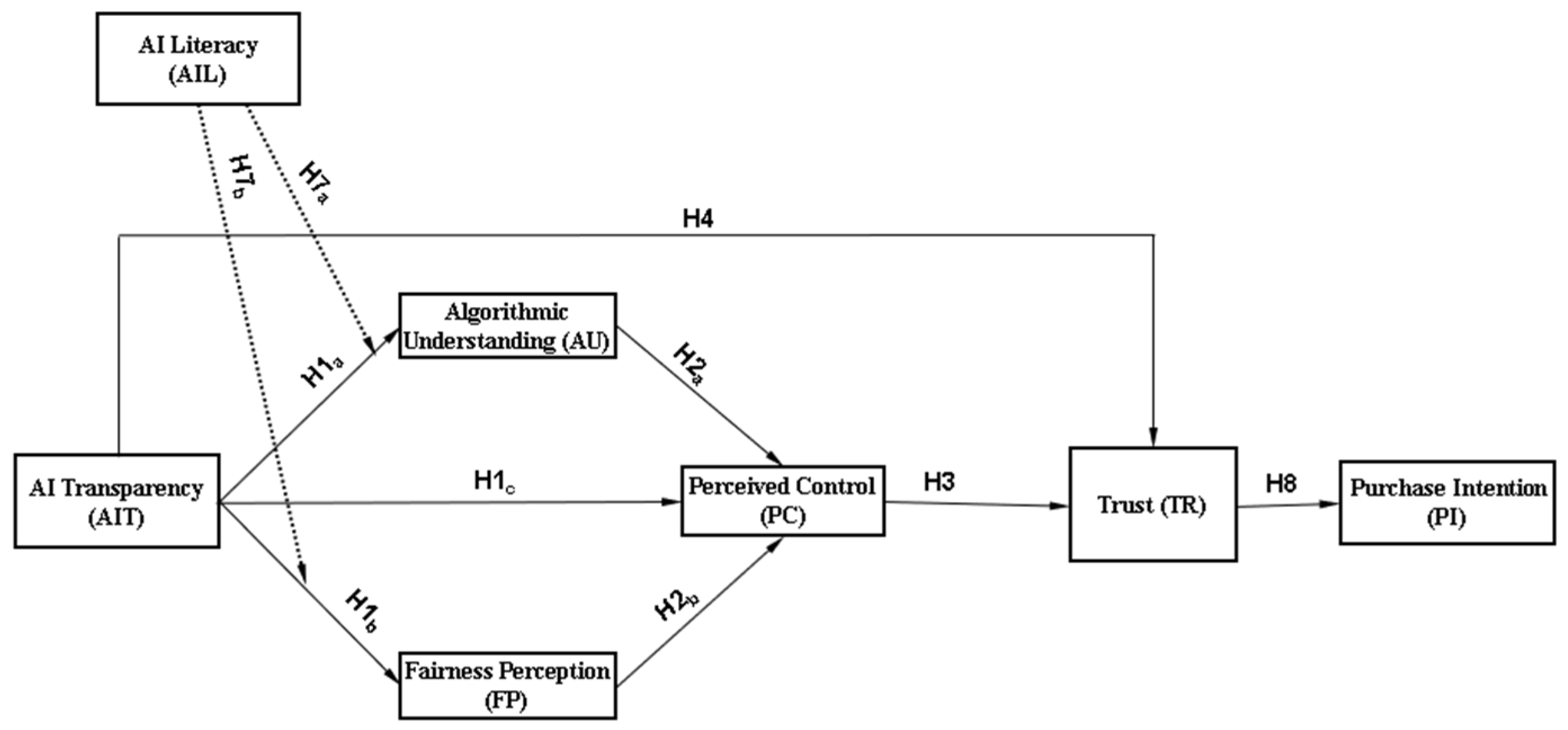
The conceptual model proposed in this study (see
Figure 1) develops an integrative framework combining informational, cognitive, and behavioral perspectives to explain how AI transparency influences consumer behavior in human–AI collaborative contexts. Specifically, the model builds on the literature on informational transparency, which provides a relevant framework for understanding how features of AI systems reduce uncertainty and enhance the predictability of algorithmic decisions [
4,
16]. It also incorporates a cognitive (sensemaking) perspective to explain how users interpret the information provided by recommender systems and build mental representations of their functioning, reflected in the level of algorithmic understanding [
25,
27].
Furthermore, the model integrates insights from the literature on fairness perception, highlighting how users evaluate the legitimacy and impartiality of AI-generated results, thereby influencing the acceptance of recommendations [
11,
16]. Finally, it draws on user-centered approaches and human–technology interaction research, emphasizing perceived control as a key mechanism through which cognitive evaluations are translated into behavioral responses [
7,
9].
Taken together, these perspectives provide a coherent, process-based framework that explains how AI transparency is translated into behavioral outcomes through cognitive and control-related mechanisms.
2.1.1. Trust and Purchase Intention in Human–AI Collaboration Contexts
In the e-commerce literature, trust and purchase intention are recognized as central variables that explain consumer behavior in digital environments [
2,
16,
28]. Trust is frequently conceptualized as a user’s belief in the reliability, integrity, and competence of a digital system or platform, while purchase intention reflects the user’s willingness to adopt the system’s recommendations and make actual transactions [
27,
29].
In the context of AI-based recommendation systems, these variables take on an expanded meaning, as users’ decisions are influenced by direct interaction with algorithms that mediate access to information and structure the available options [
16,
30]. Thus, trust is no longer exclusively oriented towards the platform or merchant but also towards the algorithmic system that generates the recommendations, and purchase intention becomes an outcome of the collaboration between the user and the AI.
This perspective reflects the transition from traditional models of consumer behavior to conceptual frameworks centered on human–AI collaboration, in which users interact with semi-autonomous systems that influence the evaluation and choice processes [
9,
31]. In this context, trust and purchase intention can be interpreted as outcomes of cognitive alignment between the user and the intelligent system.
Nevertheless, prior research has predominantly examined direct associations between the characteristics of digital systems and behavioral outcomes, while allocating comparatively limited attention to the cognitive mechanisms through which these effects emerge [
25,
27]. Moreover, insufficient emphasis has been placed on understanding how AI transparency shapes the development of trust and purchase intention through users’ cognitive evaluations [
6,
32].
Therefore, the present study aims to examine the mechanisms through which AI transparency is translated into behavioral outcomes, conceptualizing trust and purchase intention as outcomes of an interpretation and evaluation process specific to human–AI collaboration.
2.1.2. Transparency of Artificial Intelligence as an Information Stimulus in the E-Commerce Environment
In the context of e-commerce, the transparency of AI-based systems is increasingly recognized as a factor in shaping user perceptions and behaviors [
33]. Unlike traditional digital environments, where decision logic was relatively visible, AI-based recommendation systems often operate as “black boxes,” limiting users’ ability to understand how recommendations are generated.
AI transparency can be defined as the degree to which systems provide relevant information about the logic, processes, and criteria used in generating recommendations [
24,
34]. In line with the explainable AI literature, such transparency can take multiple forms, including rationale-based explanations (e.g., why a product is recommended), feature-based explanations (e.g., which user attributes influenced the recommendation), data-based explanations (e.g., how user data is used), and social-based explanations (e.g., how other users’ behaviors or preferences relate to the recommendation).
While prior research suggests that these forms of transparency may produce distinct cognitive and behavioral effects [
7,
16,
25], the present study focuses on users’ overall perception of transparency as an integrated informational stimulus. This approach allows capturing how users process transparency holistically in real interaction contexts, while acknowledging that different explanation types may vary in their effectiveness depending on context and user characteristics. Through these mechanisms, transparency helps reduce uncertainty and increase predictability in the interaction between the user and the system.
Different forms of explanations—such as rationale-based, feature-based, data-based, and social-based—represent distinct informational cues through which users interpret algorithmic recommendations. However, existing literature has frequently analyzed transparency from a predominantly technical or functional perspective, with limited attention to how users interpret the information provided and integrate it into their cognitive processes [
14,
18,
35].
The existing limitations are reflected in the inconsistent results on the effects of transparency on users’ trust and behavior. In some situations, transparency can increase trust and acceptance of AI systems, while in other contexts it can generate information overload or skepticism, depending on how the information is processed [
27,
36].
To overcome these limitations, recent research emphasizes the need to adopt a micro-level perspective focused on users’ cognitive processes [
25]. From this perspective, AI transparency does not act as a direct determinant of behavior, but as an informational stimulus that influences how different types of explanations are interpreted and evaluated. Accordingly, the present study integrates cognitive mechanisms—algorithmic understanding and fairness perception—to explain how AI transparency is translated into trust and purchase intention in AI-mediated interaction contexts.
2.1.3. Cognitive Mechanisms in Human–AI Interaction
The ambiguity associated with the functioning of AI-based recommendation systems means that the information provided by them is not directly transmitted into behavioral outcomes without the intervention of users’ cognitive processes [
19,
37]. Interaction with algorithmic systems involves interpreting information, evaluating results, and building mental representations that allow users to understand and use the generated recommendations [
20,
38]. This aspect highlights the mediating role of cognitive mechanisms in transforming system characteristics into observable behaviors.
To explain this process, the literature suggests the use of cognitive frameworks that function as information interpretation filters, allowing users to attribute coherent meanings to the interaction with AI systems [
39]. Specifically, two cognitive mechanisms are relevant in the context of the present study: algorithmic understanding and fairness perception. These are conceptualized as complementary processes through which users evaluate recommendation systems, both from the perspective of their functioning and from the perspective of the correctness of the generated results.
The proposed model suggests that users process information provided by AI systems by simultaneously assessing the degree to which they can understand the algorithmic logic and how they perceive the fairness of the recommendations. Such an approach is aligned with the human–AI interaction literature, which highlights how individual cognitive processes shape users’ perceptions and behaviors in complex digital environments [
25,
27].
Similar to other complex technological contexts, AI-based recommendation systems are characterized by a high degree of opacity, which makes it difficult to understand how the results are generated. Within this setting, algorithmic understanding represents the cognitive process by which users try to interpret the functioning of the system based on the available information.
Algorithmic understanding reflects users’ perceived ability to make sense of how the system operates and to anticipate its outputs [
25,
38]. Depending on these interpretations, users can develop positive or negative evaluations of the system, subsequently influencing the level of trust and decision-making behaviors [
27,
40].
It is important to note that these interpretations are not fixed or objective but dynamic and dependent on the user’s experience, level of familiarity with the technology, and the context of the interaction [
37,
40]. Thus, algorithmic understanding reflects a continuous process of cognitive interpretation, through which users adapt their perceptions according to the available information.
In addition to understanding how the system works, users also evaluate the correctness of the results generated by AI. Fairness perception refers to the degree to which users evaluate the recommendations as unbiased, justified, and aligned with their interests [
41].
In the context of recommender systems, fairness perception can be influenced by factors such as algorithmic transparency, the relevance of recommendations, and the way personal data is used. Fairness evaluations function as cognitive mechanisms through which users judge the legitimacy of the system and decide whether the results can be accepted or rejected [
42].
Yang [
7] indicates that perceptions of fairness facilitate the development of trust and acceptance of technological systems by alleviating uncertainty and perceived risks associated with their interaction. Viewed in this way, fairness perception can be interpreted as an evaluative mechanism through which users appreciate the legitimacy and quality of interaction with artificial intelligence-based systems.
2.1.4. Perceived Control: From Cognitive Assessments to Behavior
Although the cognitive mechanisms discussed above reflect how users interpret and evaluate recommender systems, these processes do not automatically translate into observable behaviors. Prior research suggests that cognitive evaluations must be accompanied by users’ ability to act within the interaction with intelligent systems [
19].
Perceived control captures users’ sense of influence over how the interaction unfolds and how outcomes are shaped during system use [
43]. From the perspective of human–technology interaction, this construct reflects the degree of autonomy and flexibility perceived in managing system responses and integrating recommendations into the decision-making process.
Perceived control is therefore conceptualized as a key mechanism that facilitates the transformation of cognitive evaluations into behavioral outcomes, providing a link between system interpretation and its actual use in decision-making processes [
43,
44].
2.2. Hypotheses Development
2.2.1. AI Transparency, Algorithmic Understanding, Fairness Perception, and Perceived Control
The literature on information processing and human–AI interaction shows that users’ interpretations of digital systems are shaped by their informational characteristics [
26,
31]. In particular, AI transparency reduces the ambiguity associated with algorithmic operations and facilitates the interpretation of generated recommendations [
36]. By providing explanations and cues about system logic, users can build clearer mental representations of how algorithms function.
From an information-processing perspective, AI transparency influences algorithmic understanding by enabling users to explain why certain recommendations are generated and to anticipate system behavior [
34]. Simultaneously, transparency influences fairness perception by providing information that allows users to evaluate the correctness and legitimacy of AI-generated results [
9,
45].
AI transparency also influences perceived control, as a deeper understanding of the system and its operating logic enhances the feeling of control over the interaction [
35,
43]. In the absence of clear information, the system may be perceived as opaque and difficult to manage, which reduces perceived control and affects the user experience. Based on these arguments, the following hypotheses are formulated:
H1a. AI transparency positively influences algorithmic understanding.
H1b. AI transparency positively influences fairness perception.
H1c. AI transparency positively influences perceived control.
2.2.2. Algorithmic Understanding, Fairness Perceptions, and Perceived Control
The human–AI interaction literature highlights that how users interpret and evaluate intelligent systems influences perceptions of their ability to manage the interaction [
26,
43]. Cognitive evaluations influence the perception of control in AI-assisted decision-making [
38,
39].
Accordingly, algorithmic understanding affects perceived control, as users who can interpret or anticipate system behavior are more likely to believe they can influence outcomes [
44,
46]. A deeper understanding of algorithmic logic reduces uncertainty and facilitates the integration of recommendations into decision-making.
Fairness perception influences perceived control because assessments of the fairness and legitimacy of recommendations contribute to system acceptance and reduced risk perceptions [
44,
47]. When outcomes are considered fair, the interaction is perceived as more predictable and easier to manage. Therefore, users’ cognitive evaluations are associated with different levels of perceived control, which reflect the ability to use recommender systems effectively. As a result of the discussion, the following hypotheses are introduced:
H2a. Algorithmic understanding positively influences perceived control.
H2b. Fairness perception positively influences perceived control.
2.2.3. Perceived Control and User Trust
Differences in how users interpret and evaluate recommendation systems lead to variations in perceptions of control over the interaction and, implicitly, in the level of trust given to these systems [
5,
6,
30]. The literature on human–AI interaction shows that users do not respond uniformly to the same technological features but form their evaluations and behaviors based on individual perceptions [
26,
43].
In this context, perceived control is associated with the level of trust in recommendation systems [
24,
44]. Users who believe that they can manage the interaction and influence the generated results are more likely to develop trust in the system. A high level of control reduces uncertainty and facilitates the acceptance of recommendations, while low levels can lead to skepticism and avoidance.
Trust in digital systems is influenced by the ability of users to understand and manage the interaction with them [
29,
35]. From this perspective, perceived control functions as a mechanism through which cognitive evaluations are converted into trust, reflecting how users integrate AI systems into their own decision-making process, and the following hypothesis is developed:
H3. Perceived control positively influences user trust.
2.2.4. AI Transparency and Trust
On the other hand, AI-based recommender systems function as active intermediaries in users’ decision-making processes, influencing the way information is filtered, presented and evaluated [
4,
8]. Building on this logic, AI transparency becomes a central determinant of how users perceive and interpret interactions with intelligent systems [
35,
48].
Providing explanations about the functioning of algorithms reduces uncertainty and increases the predictability of the system, facilitating cognitive evaluations [
38,
40]. When systems are perceived as transparent, users develop a clearer understanding of the algorithmic logic and evaluate recommendations as more accurate and legitimate. The resulting evaluations foster a sense of control over the interaction and reduce perceptions of opacity and excessive autonomy of the system.
AI transparency also contributes to building trust in recommender systems by supporting cognitive alignment between the user and the algorithm [
15,
28]. In human–AI collaboration contexts, such alignment facilitates the acceptance of recommendations and their integration into the decision-making process. Therefore, transparency influences not only cognitive evaluations but also behavioral outcomes of users.
H4. AI transparency positively influences users’ trust in recommender systems.
2.2.5. The Mediating Role of Cognitive Mechanisms and Perceived Control
Cognitive mechanisms are the foundation through which users interpret and evaluate interactions with AI-based systems [
25,
38]. In human–AI collaboration contexts, the effects of transparency do not manifest themselves directly on behavioral outcomes but are filtered through cognitive processes that structure how users attribute meaning to system-generated recommendations [
21,
23].
In particular, algorithmic understanding and fairness perception reflect two complementary dimensions of the cognitive evaluation process [
45,
47]. The first concerns users’ ability to explain and anticipate the functioning of the system, while the second concerns the assessment of the correctness and legitimacy of recommendations. Both contribute to reducing uncertainty and increasing the predictability of the interaction.
Perceived control functions as a mechanism for translating these cognitive evaluations into behavioral responses, expressing users’ ability to manage the interaction and integrate algorithmic suggestions into their decision-making process [
39,
44]. A high level of perceived control favors the development of trust, while low levels can lead to resistance and avoidance.
From this perspective, the relationships between the model variables can be understood as sequential processes, in which transparency influences cognitive evaluations, these shape perceived control, and perceived control contributes to the formation of trust. Considering the discussion, the following hypotheses are established:
H5. Perceived control mediates the relationship between users’ cognitive evaluations (algorithmic understanding and fairness perception) and trust in recommender systems.
H6. The relationship between AI transparency and trust is sequentially mediated by cognitive mechanisms (algorithmic understanding and fairness perception) and perceived control.
2.2.6. The Moderating Role of AI Literacy
The level of AI literacy influences the way users interpret and capitalize on the information provided by recommender systems [
49,
50]. In human–AI collaboration contexts, users do not respond uniformly to the same system features, the differences being determined by their familiarity and skills in relation to intelligent technologies [
22,
31].
Users with a high level of AI literacy are better able to understand algorithmic logic and interpret the explanations provided by the system, developing more consistent assessments of its functioning and correctness [
50,
51]. In contrast, users with a low level of literacy may encounter difficulties in processing information, which limits the impact of transparency on cognitive assessments.
In this regard, AI literacy modulates the impact of transparency on cognitive processes, either enhancing or reducing its effect on users’ comprehension and assessment of intelligent systems [
49,
51]. Based on the theoretical argumentation presented, the following hypotheses are formulated:
H7a. AI literacy moderates the relationship between AI transparency and algorithmic understanding.
H7b. AI literacy moderates the relationship between AI transparency and perceptions of fairness.
2.2.7. Trust and Purchase Intention
Trust is a central determinant of user behavior, influencing how users evaluate and accept recommendations generated by AI-based systems [
26,
36]. In AI-mediated interactions, trust reflects users’ perceptions of the system’s reliability, credibility, and orientation toward their interests [
15,
27].
The literature on e-commerce and recommender systems highlights that trust reduces perceptions of risk and uncertainty associated with purchasing decisions, facilitating the adoption of recommendations and their integration into the decision-making process [
6,
32]. In human–AI collaboration contexts, users who develop a high level of trust in the system are more likely to accept algorithmic suggestions and transform them into concrete purchasing actions.
Therefore, trust functions as a key mechanism through which previous evaluations and interactions with the system are converted into behavioral intentions [
50]. A high level of trust contributes to strengthening the user–system relationship and increasing the probability of purchase.
H8. User trust in recommendation systems positively influences purchase intention.
3. Research Methodology
The methodological framework of the research aims at a rigorous articulation between the theoretical foundations of the conceptual model and its empirical validation. The methodological structure integrates theoretical reasoning with quantitative analysis, allowing for the systematic examination of the relationships between artificial intelligence transparency, cognitive mechanisms (algorithmic understanding and fairness perception), perceived control, user trust, and purchase intention in human–AI collaboration contexts in the e-commerce environment.
The research design reflects an integrative approach, which combines conceptual modeling, operationalization of latent constructs, data collection through a standardized instrument, and statistical validation through the PLS-SEM technique, suitable for the analysis of complex explanatory structural models.
3.1. Methodological Framework and Conceptual Model Development
The central methodological objective is to develop and validate a conceptual model capable of capturing the relationships between the perceived characteristics of AI-based recommendation systems and users’ behavioral outcomes in the e-commerce environment. In the model structure, AI transparency occupies a central position, while cognitive mechanisms and perceived control contribute to explaining how trust and, subsequently, purchase intention are formed.
The analytical procedure is based on users’ direct experiences in interacting with recommendation systems, avoiding the use of simulated scenarios. Interactions such as product exploration, personalized suggestions or algorithmic assistance in the decision-making process provide a sufficiently realistic framework to capture users’ evaluations in an authentic way [
7,
11,
30]. User evaluations reflect not only the functionality of the system, but also the way it is integrated into their own decision-making process.
The choice of the partial least squares structural equation modeling (PLS-SEM) approach is justified by the exploratory and predictive orientation of the research, as well as the complexity of the proposed conceptual model, which includes multiple mediation and moderation effects [
52]. PLS-SEM is particularly suitable for estimating complex models with latent variables and does not impose strict assumptions regarding data normality. In addition, the method is appropriate for studies aiming to maximize explained variance (R
2) and assess predictive relationships between constructs. Given the moderate sample size and the presence of sequential mediation mechanisms, PLS-SEM provides robust and reliable estimates for both measurement and structural models.
Compared to covariance-based approaches, PLS-SEM allows for the simultaneous assessment of the measurement model and structural relationships [
52,
53]. In addition, it facilitates the empirical assessment of indirect effects and provides relevant indicators for assessing the predictive capacity of the model.
The conceptual rationale is based on recent literature in the field of human–AI interaction, which suggests that the evaluation of algorithmic systems involves more complex processes than simply assessing performance [
2,
7,
54]. Users consider the coherence of recommendations, the way the system responds to user inputs, and how it integrates into the decision flow. The methodological framework allows examining the relationships between AI transparency, cognitive processes and behavioral outcomes in a coherent manner, reflecting the real dynamics of human–AI interaction.
The study captures users’ perceived interactions with recommender systems in general rather than responses to a specific platform or algorithmic implementation, which allows for broader conceptual insights but limits system-specific inference. The study does not focus on a specific algorithmic architecture, as the objective is to capture users’ generalized perceptions of AI-based recommendation systems. However, it is important to acknowledge that different recommender system architectures (e.g., collaborative filtering, content-based filtering, or deep learning-based models) may influence how transparency is perceived and interpreted by users. For example, systems that provide explicit rationale-based or feature-based explanations may facilitate higher levels of algorithmic understanding compared to more opaque models. Therefore, the relationships identified in this study should be interpreted as architecture-agnostic, capturing generalizable cognitive mechanisms underlying user interaction with AI systems. Future research could explicitly examine how different algorithmic configurations shape transparency perceptions, perceived control, and trust formation.
3.2. Instrument Construction and Definition of Latent Variables
The theoretical variables included in the proposed framework are defined and operationalized in accordance with the literature in the field of human–AI interaction and digital consumer behavior. The selection of constructs is based on empirical and conceptual contributions from the fields of artificial intelligence, recommender systems, and digitally assisted decision-making processes, highlighting the link between the perceived characteristics of algorithmic systems and the evaluation of the user experience. The theoretical model integrates several latent variables—AI transparency, algorithmic understanding, fairness perception, perceived control, trust, and purchase intention—that capture the main explanatory dimensions of human–AI interaction in e-commerce.
Each variable builds on measurement scales previously validated in the previous research dedicated to human–technology interaction and acceptance of intelligent systems, being adapted to the context of AI-based recommender systems. The measurement items were derived from the literature on technology acceptance, human–computer interaction, and the use of algorithmic systems, and their wording was adjusted to reflect the specificity of transparency and cognitive evaluations in interaction with AI.
The adaptation process includes a semantic review carried out by specialists in human–technology interaction and digital communication, who assessed the conceptual coherence and clarity of each item. Following the feedback obtained, minor wording adjustments were made, aimed at improving readability and contextual relevance, before the pilot testing stage.
AI transparency reflects the extent to which users perceive the availability of information on how the system works and the criteria used in generating recommendations. Algorithmic understanding captures the ability of users to interpret the logic of the system and anticipate the generated results. Fairness perception expresses the assessment of the impartiality and legitimacy of the recommendations provided.
In line with the explainable AI literature, the measurement of AI transparency integrates multiple types of explanations, reflecting its multidimensional conceptualization. However, consistent with prior research on user perceptions, these dimensions are operationalized as a unified reflective construct capturing users’ overall perception of AI transparency.
Table 1 presents the mapping between AI transparency measurement items and explainable AI dimensions.
Specifically, the construct captures rationale-based transparency (i.e., explanations regarding why a recommendation is provided), feature-based transparency (i.e., information about which user attributes or behaviors influenced the recommendation), and data-based transparency (i.e., explanations regarding how user data is collected and used). The measurement items were designed to reflect these complementary dimensions, allowing the construct to capture users’ overall perception of transparency as an informational stimulus in AI-mediated interaction contexts. While individual items reflect different transparency dimensions, the construct captures users’ overall perception rather than distinct sub-dimensions.
Perceived control indicates the degree to which users believe they can influence or manage the outcomes of the interaction with the system. Trust reflects the level of confidence given to the system in terms of competence, reliability, and orientation towards the user’s interests, while purchase intention expresses the willingness to accept recommendations and turn them into concrete actions.
The set of these dimensions provides an integrated perspective on the evaluative processes involved in the interaction with artificial intelligence-based recommendation systems. The conceptual model assumes that AI transparency influences cognitive evaluations, which, in turn, contribute to the formation of perceived control and trust, ultimately leading to purchase intention.
The relationships between variables are analyzed in terms of both direct and indirect effects and mediation mechanisms, highlighting the role of cognitive processes in transforming system characteristics into behavioral outcomes. By structuring these dimensions relationally, the analysis allows understanding how the digital experience is evaluated and internalized by users in human–AI collaboration contexts.
The proposed model provides a coherent explanatory framework regarding the factors shaping the quality of the digital experience in e-commerce, highlighting the interdependence between system transparency, cognitive processes, and users’ behavioral outcomes. The methodological approach adopted supports the testing of the formulated hypotheses and allows the investigation of the relationships between variables in a structured and analytically robust manner.
3.3. Selection Strategy and Participant Profile
The target population consists of active users of digital technologies, familiar with interactions mediated by intelligent systems, such as recommendation systems, virtual assistants, or applications based on artificial intelligence. The selection process aims to ensure diversity according to age, gender, educational level, and field of activity. Given the online nature of data collection, a non-probabilistic convenience sampling strategy was used, suitable for exploratory research and for testing structural models through PLS-SEM.
The minimum sample size was estimated through a statistical power analysis performed using the G*Power 3.1.9.7 software. The calculation was based on a multiple linear regression model, corresponding to the structural relationships in the model. The parameters used include a small effect size (f2 = 0.05), a significance level α = 0.05, and a statistical power of 0.80. The results indicate a minimum threshold of approximately 220–240 respondents. The final sample, consisting of 312 validated participants, exceeds the threshold required for robust estimates within the PLS-SEM framework.
Participants were recruited through the Prolific platform [
55] and completed an online questionnaire administered through Qualtrics [
56]. Data collection took place between January 2026 and February 2026. After the cleaning and validation process, 312 valid responses were retained and used in subsequent analyses.
Participation was voluntary and anonymous, and respondents were informed in advance about the exclusively scientific purpose of the research, the confidentiality of the data, and the right to withdraw at any time, without consequences. The study did not involve the collection of sensitive data and did not involve experimental interventions on the participants.
Data were collected using an online questionnaire specifically designed to capture the latent constructs included in the conceptual model: AI transparency, algorithmic understanding, fairness perception, perceived control, trust, and purchase intention. The instrument also includes demographic items related to age, gender, education level, and professional experience.
All latent constructs were measured through reflective items assessed on a five-point Likert scale (1 = “totally disagree,” 5 = “totally agree”), a method frequently used in research on user behavior and acceptance of digital technologies, allowing for comparable quantification of perceptions and attitudes.
The combination of online recruitment from relevant sources, expert validation of the instrument, and the application of quality control procedures for responses supports the robustness and credibility of the data collected. The research approach does not involve the collection of sensitive data and does not involve experimental interventions on participants. Participation is based on informed consent, respecting generally accepted ethical principles in online behavioral research.
Several procedural remedies were implemented to reduce the potential impact of common method bias. Anonymity and confidentiality were ensured, minimizing evaluation apprehension among respondents. Furthermore, measurement items were carefully designed, pretested, and structured to enhance clarity and reduce ambiguity, thereby limiting method-related biases associated with self-reported data.
Nevertheless, the potential influence of common method bias cannot be entirely ruled out due to the use of single-source, self-reported data. Future research could address this limitation by employing multi-source data, temporal separation of measurement, or experimental designs.
The demographic distribution of the 312 participants is presented in
Table 2, providing an overview of the sample structure according to gender, age, educational level, and professional field. The sample structure reflects a heterogeneous group of digitally active users, with varying levels of experience in interacting with smart technologies, ensuring the variability necessary for testing the structural relationships in the model. The sample also includes participants with diverse educational backgrounds, ranging from secondary education to doctoral studies.
Demographic variables such as age, gender, and field of activity were also examined as control variables. The inclusion of these controls did not significantly alter the magnitude or significance of the structural relationships, indicating that the proposed model remains robust across different respondent profiles.
The evaluation of the measurement model aims to verify the reliability and validity of the latent constructs included in the empirical assessment. Internal consistency is examined by the Cronbach Alpha coefficient and the Composite Reliability (CR) indicator, and convergent validity is assessed by Average Variance Extracted (AVE). To identify possible collinearity problems between indicators and constructs, the variance inflation factor (VIF) is analyzed, in accordance with the methodological recommendations in the PLS-SEM literature.
The structural model is estimated using the PLS-SEM method, implemented by the SmartPLS 4.0 software. The choice of the method derives from the explanatory nature of the research design and the complexity of the relationships between the latent variables. The procedure does not impose restrictions on the normality of the data distribution and is suitable for samples of moderate size.
The significance of the regression coefficients is assessed by the bootstrapping procedure with 5000 re-samplings, and the explanatory power of the proposed framework is analyzed by the coefficient of determination (R2) and predictive relevance (Q2). The effect size (f2) is examined to assess the relative contribution of each predictor construct to the endogenous variables.
4. Results
The analysis examines the internal consistency of the latent constructs and the structural relationships specified in the model. To ensure the rigor of the empirical assessment and the clarity of the interpretation of the results, the estimation process was carried out in two distinct stages, using the PLS-SEM method. The first stage aimed to examine the measurement model, by assessing the internal consistency and validity of the constructs associated with AI transparency, algorithmic understanding, fairness perception, perceived control, trust and purchase intention.
In the second stage, the analytical procedure focused on the structural model, investigating the relationships between the variables and testing the formulated hypotheses. This stepwise approach allows for a clearer separation between the assessment of the quality of the measurement and the estimation of explanatory relationships, contributing to a more robust interpretation of the results and maintaining inferential coherence.
The results of the measurement model assessment are presented in
Table 3. The indicators used—Cronbach Alpha coefficient, composite reliability (CR), average variance extracted (AVE) and variance inflation factor (VIF)—indicate values that support the internal consistency of the constructs and their convergent validity [
57]. Simultaneously, the low levels of VIF confirm the absence of collinearity problems between variables. Therefore, these results validate the adequacy of the measurement model and provide solid premises for the analysis of structural relationships, allowing the testing of hypotheses within a coherent analytical framework.
Among the constructs analyzed, purchase intention (PI) registers the highest level of internal consistency (α = 0.922), reflecting a highly coherent structuring of the investigated behavioral dimension. High levels of consistency are also observed for trust (TR: α = 0.914), AI transparency (AIT: α = 0.897), and algorithmic understanding (AU: α = 0.884), suggesting a solid stability of the operationalization of these constructs. AI literacy (AIL: α = 0.881) and fairness perception (FP: α = 0.872) confirm, in turn, a robust internal consistency. The lowest value is associated with perceived control (PC: α = 0.861), but this comfortably exceeds the recommended threshold of 0.70, supporting the adequacy of the measurement within the model.
To strengthen the internal consistency assessment, the composite reliability (CR) was analyzed, an indicator that reflects the real contribution of each item to the latent construct. All values obtained exceed the recommended threshold of 0.70, ranging between 0.893 and 0.940. This result confirms a stable internal structuring and a balanced contribution of the indicators within the analyzed dimensions. Purchase intention (PI) highlights the highest level of composite reliability (0.940), indicating a remarkable structural coherence in capturing the behavioral dimension. Similarly, trust (0.933), AI transparency (0.919), and algorithmic understanding (0.907) present very high levels of internal consistency. AI literacy (0.906), fairness perception (0.900), and perceived control (0.893) complete a stable and well-defined measurement profile. The distribution of these values supports the robustness of the measurement model and legitimizes the continuation of the structural analysis [
57].
Convergent validity, assessed by AVE, confirms an adequate capacity of the constructs to explain the variation of the associated indicators, with all values exceeding the threshold of 0.50 [
57]. The highest values are observed for trust (0.736) and purchase intention (0.724), indicating a high explanatory power of these dimensions. Algorithmic understanding (0.711), AI literacy (0.707), and AI transparency (0.694) also present solid levels of convergence. Fairness perception (0.692) and perceived control (0.676) complete a coherent picture of convergent validity, supporting the adequacy of the operationalization of the constructs.
Multicollinearity analysis, performed by means of the variance inflation factor (VIF), indicates the absence of significant collinearity problems. The values recorded are in a moderate range, with a maximum of approximately 2.74 and a minimum of 1.76, remaining below the conservative threshold of 5.00. This distribution confirms the relative independence of the indicators and the stability of the measurement model estimates.
To assess the potential common method bias, two complementary procedures were used. The single-factor test indicated that the first component explains less than 50% of the total variation, suggesting the absence of dominance of a single factor. In parallel, the VIF values of complete collinearity were below the threshold of 3.3 for all constructs, which reduces the likelihood of the occurrence of a systematic bias. However, the single-source nature of the data requires a cautious interpretation of these results.
Discriminant validity was assessed by the Heterotrait–Monotrait (HTMT) ratio, an indicator recognized for its sensitivity in detecting conceptual overlaps in PLS-SEM models. This criterion allows for the comparison of the correlations between constructs with the internal ones, providing a rigorous perspective on the conceptual distinctiveness. The importance of the assessment becomes even higher in contexts where the variables are theoretically close but must remain empirically differentiated.
The HTMT values presented in
Table 4 confirm the maintenance below the conservative threshold of 0.90 for all pairs of constructs, supporting the discriminant validity of the model. The highest value is observed between trust and purchase intention, reflecting the conceptual proximity between these dimensions within the analyzed behavioral mechanism. However, the level remains below the limit, which confirms the empirical differentiation of the constructs. The intensity of the relationships indicates a theoretical coherence without suggesting conceptual redundancy.
Similarly, the relationship between algorithmic understanding and perceived control (0.782) indicates a high but acceptable level of conceptual association. The value suggests that users’ ability to interpret algorithmic logic contributes substantially to the formation of a sense of control over the interaction, without compromising the conceptual delimitation of the constructs. The intensity of the relationship reflects a process of cognitive integration in which the interpretation of algorithmic mechanisms supports the structuring of the user experience while maintaining the autonomy of each analytical dimension.
In the same logic, the relationship between AI transparency and trust (0.734) highlights a solid but well-delimited conceptual proximity. The result indicates that transparency contributes to the consolidation of trust by facilitating the processes of interpretation and evaluation, without being confused with the behavioral outcome it supports. Transparency functions as an antecedent factor that structures the cognitive framework of the interaction, while trust reflects the internalization of these evaluations in a stable relationship with the system.
In contrast, the lower values observed between AI literacy and perceived transparency (0.652) confirm a clear conceptual distinction between user skills and system characteristics. The difference indicates that, although the level of knowledge can influence the way information is processed, transparency remains a property of the system, independent of the individual’s ability to interpret. The relationship highlights the complementarity between the user’s cognitive dimension and the information design of the system, without suggesting conceptual overlap.
The distribution of HTMT values supports a well-defined conceptual structure, in which the relations between constructs reflect theoretical proximities without indicating redundancy. High values, but below the threshold, highlight the coherence of the model, while the variations between pairs confirm the functional differentiation of the analyzed dimensions. The configuration supports discriminant validity and strengthens the interpretation of the model as an integrated system of interdependent relations, in which each construct contributes distinctly to explaining user behavior.
Discriminant validity was further examined by the Fornell–Larcker criterion, which compares the square root of the average variance extracted (AVE) for each construct with the inter-construct correlations. The results presented in
Table 5 indicate the complete fulfillment of this condition, as the values on the diagonal (AIL = 0.841; AIT = 0.833; AU = 0.843; FP = 0.832; PC = 0.822; TR = 0.858; PI = 0.851) systematically exceed the corresponding correlations between the constructs. The configuration confirms the conceptual and empirical delimitation of the latent dimensions included in the model, supporting the structural independence of each variable within the analytical architecture.
The relationship between trust and purchase intention (TR–PI = 0.802) highlights a strong positive association between system evaluation and user decision-making behavior. Even in the presence of a high correlation, the value remains below the thresholds defined by the AVE root for both constructs (TR = 0.858; PI = 0.851), confirming the maintenance of discriminant validity. The intensity of the relationship reflects the central role of trust in transforming cognitive evaluations into behavioral intentions, without suggesting conceptual overlap between the two dimensions.
The consistency of the results obtained through the Fornell–Larcker criterion, corroborated the HTMT assessment, provides converging evidence regarding the separation of constructs within the structural model. The combined use of the two procedures strengthens the robustness of the discriminant validation and reduces the risk of conceptual overlap between variables. The highlighted empirical structure supports the adequacy of the model for analyzing the complex relationships between transparency, cognitive mechanisms, perceived control, and behavioral outcomes in human–AI interaction contexts.
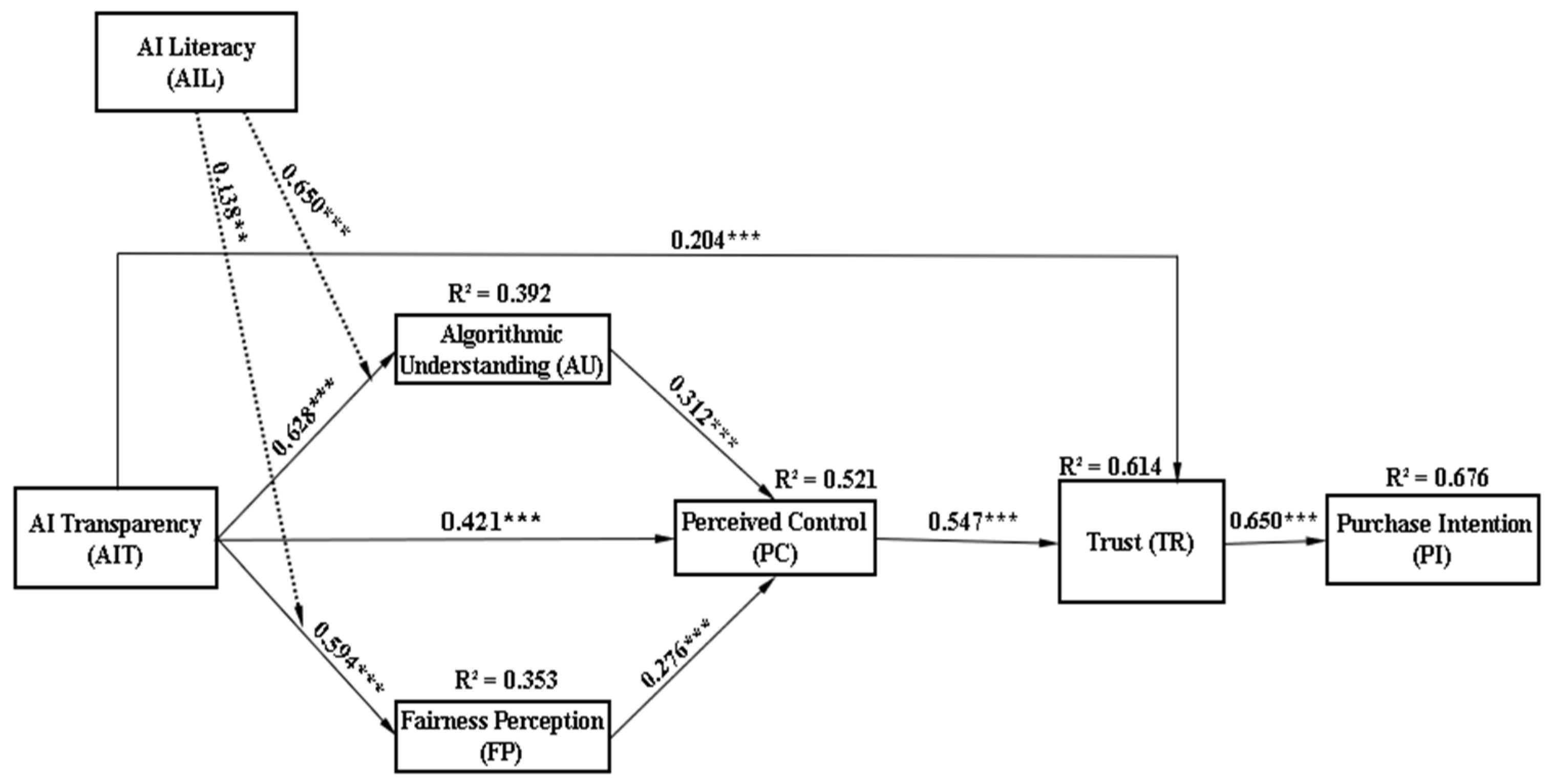
To assess the strength and statistical significance of the hypothesized relationships, the structural model was estimated using the bootstrapping procedure with 5000 re-samplings [
58]. The relationships between constructs are summarized in
Figure 2, which offers an integrated view of the structural paths included in the model.
The standardized regression coefficients (
β),
t-values, and associated significance levels are reported in
Table 6. The overall configuration of the results indicates a coherent explanatory structure in which AI transparency, cognitive mechanisms, and perceived control are articulated as interdependent drivers of user behavior.
The influence of AI transparency on cognitive mechanisms is highlighted by high and statistically significant coefficients, both in relation to algorithmic understanding (AIT → AU: β = 0.628, p < 0.001) and to the perception of fairness (AIT → FP: β = 0.594, p < 0.001). The magnitude of the effects (f2 = 0.395; f2 = 0.352) indicates substantial contributions, suggesting that the availability of relevant information facilitates the processes of interpretation and evaluation. In parallel, the relationship between transparency and perceived control (AIT → PC: β = 0.421, p < 0.001) confirms the role of information in structuring users’ ability to manage the interaction.
Perceived control is shaped by complementary cognitive processes, in which algorithmic understanding (AU → PC: β = 0.312, p < 0.001) and fairness perception (FP → PC: β = 0.276, p < 0.001) contribute significantly to reducing uncertainty and strengthening interaction predictability. The effect sizes (f2 = 0.142; f2 = 0.118) indicate moderate influences, reflecting that the sense of control results from the integration of cognitive evaluations, not from a single explanatory dimension.
The relationship between perceived control and trust (PC → TR: β = 0.547, p < 0.001) highlights one of the strongest structural effects in the model (f2 = 0.421), confirming the central role of interaction management capacity in the formation of trust. Concurrently, the direct influence of transparency on trust (AIT → TR: β = 0.204, p < 0.001) remains significant but of lower intensity, suggesting the existence of mediated mechanisms. At the behavioral level, trust exerts a major impact on purchase intention (TR → PI: β = 0.650, p < 0.001; f2 = 0.502), indicating that the final decision is strongly dependent on the relationship established between the user and the system.
The explanatory capacity of the model is supported by high values of the coefficient of determination. Purchase intention registers an R2 of 0.676, indicating that over two-thirds of the behavioral variation is explained by the level of trust. Similarly, trust presents an R2 of 0.614, reflecting the substantial contribution of perceived control and transparency. The R2 value of 0.521 for perceived control supports the idea that cognitive mechanisms help explain how people can handle the interaction. At the cognitive level, transparency accounts for a significant portion of the variance in algorithmic understanding (R2 = 0.392) and fairness perception (R2 = 0.353), thereby validating the coherence of the explanatory model.
The moderating effects demonstrate the substantial impact of AI literacy on the relationship between transparency and cognitive mechanisms. The AIT × AIL interaction on algorithmic understanding (β = 0.167, p < 0.001) and fairness perception (β = 0.138, p = 0.001) highlights that the impact of information depends on the ability of users to interpret it. Although the effect sizes (f2 = 0.048; f2 = 0.036) are small, the statistical significance confirms the conditional nature of cognitive processes in the interaction with intelligent systems.
To further examine the underlying mechanisms through which AI transparency influences trust, the indirect effects associated with the proposed mediation hypotheses were assessed using bootstrapping procedures. Indirect effects were assessed using bootstrapping procedures, consistent with the estimation of the structural model. The results, presented in
Table 7, indicate that both algorithmic understanding and fairness perception exert significant indirect effects on trust through perceived control.
Specifically, the indirect effect of algorithmic understanding on trust via perceived control is positive and substantial, suggesting that users who are better able to interpret algorithmic processes are more likely to develop a sense of control, which in turn enhances trust. A similar pattern is observed for fairness perception, where evaluations of legitimacy and correctness contribute indirectly to trust formation through increased perceived control.
Furthermore, the sequential mediation effects of AI transparency on trust, operating through cognitive mechanisms and perceived control, are also supported. These findings reinforce the interpretation of user behavior as a processual and layered phenomenon, in which transparency shapes trust not directly, but through a chain of interdependent cognitive and behavioral processes.
To further clarify the nature of the mediation effects, the significance of both direct and indirect paths indicates the presence of partial mediation. Specifically, the direct effect of AI transparency on trust remains significant alongside the indirect effects through cognitive mechanisms and perceived control, suggesting that transparency influences trust both directly and through sequential cognitive–behavioral processes.
The general configuration of the results supports a process dynamic in which AI transparency initiates cognitive processes of interpretation; these contribute to the formation of perceived control, and control facilitates the development of trust and purchase intention. The distribution of coefficients and effect sizes highlights a model in which indirect influences outweigh the importance of isolated direct relationships, confirming the mediated and interdependent nature of user behavior in human–AI collaboration contexts.
To assess the robustness of the results, additional diagnostic checks were conducted. The analysis of collinearity diagnostics confirmed that all variance inflation factor (VIF) values remained below conservative thresholds, indicating no multicollinearity issues. Furthermore, the stability of the structural relationships was supported by the consistency of path coefficients and significance levels across bootstrapping resamples. These findings suggest that the estimated relationships are stable and not driven by statistical artifacts, supporting the robustness of the proposed model.
The results further indicate that AI transparency should be understood less as an isolated system attribute and more as a condition that shapes how interaction unfolds over time. While AI transparency has a direct effect on trust, its influence is primarily explained through indirect cognitive and control-related processes. Specifically, transparency shapes how users interpret, evaluate, and act within the interaction, highlighting the importance of dynamic user–system alignment in explaining behavior in AI-driven environments.
5. Discussion
The findings provide a clearer understanding of how interactions between users and AI systems unfold by showing that AI transparency does not influence behavior primarily through direct effects alone, but rather through a sequence of cognitive and control-related processes. Instead of functioning as independent predictors, AI transparency, algorithmic understanding, and fairness perception converge in an integrated configuration, in which perceived control mediates the influence on behavioral outcomes.
The results indicate that trust in recommender systems is not directly determined by technological characteristics but by the perceived coherence of cognitive processes and control over the interaction. The mere fact that a system is transparent or sophisticated is not enough to generate sustained trust. Trust results from the alignment between users’ ability to understand the system, evaluate the correctness of recommendations, and perceive the possibility to influence the outcomes of the interaction. This perspective is consistent with prior research emphasizing the role of digital interaction and social influence mechanisms in shaping user trust and behavior in online environments [
59].
From a systemic perspective, the results suggest that AI-based recommendation systems may be evaluated not only by performance or accuracy but also by the ability to support coherent cognitive processes and provide users with a sense of control over the interaction. The user experience is not determined exclusively by the technological output but by the integration of interpretation, evaluation, and action within user–AI interaction contexts.
In real-world contexts, users may encounter incomplete information, insufficient explanations, or algorithmic behaviors that are difficult to predict. In such situations, the level of algorithmic understanding and the perception of fairness may be affected, which reduces perceived control and, implicitly, trust in the system. Inconsistencies in recommendations or lack of clarity in the decision-making process can generate uncertainty and resistance. Future research can investigate how informational ambiguity or interpretation errors influence the stability of perceived control and its role in the formation of trust.
The identified mechanism refines and reconfigures classical technology acceptance frameworks, such as the Technology Acceptance Model (TAM) and UTAUT, by explicitly modeling the sequential transformation of transparency into behavioral outcomes through cognitive evaluations and perceived control. While the concepts remain relevant, the results show that in the context of AI-based systems, evaluative processes are cognitively and behaviorally mediated. Transparency becomes relevant through the way information is interpreted, evaluated, and transformed into perceived control over the interaction.
The research questions address a central issue in the contemporary literature on human–AI interaction: how users construct their evaluations and behaviors in a context in which systems become active actors in the decision-making process. In environments characterized by personalized recommendations, algorithmic autonomy, and continuous adaptation, the user experience can no longer be explained solely by functional efficiency. The quality of the interaction results from the alignment between transparency, cognitive processes, and the user’s ability to control the interaction.
Empirically, the validated model shows that AI transparency influences algorithmic understanding and fairness perceptions, which subsequently contribute to the formation of perceived control. Perceived control plays a decisive role in explaining trust, and trust directly influences purchase intention. The results highlight the processual nature of user behavior in AI-mediated interaction contexts, where outcomes are generated by the interaction between variables and not by isolated factors.
Regarding RQ1, the analysis provides a more nuanced understanding of the role of AI transparency in human–AI interaction. Transparency no longer appears only as a technical feature of the system but as an element that structures the way users think and interpret the interaction. The information provided does not automatically generate reactions; what matters is how it is understood and integrated into one’s own decision-making process. In this regard, transparency contributes to the formation of coherent mental representations of how the system works and becomes an integral part of the cognitive mechanisms that underlie consumer behavior.
Regarding RQ2, the results show that the feeling of control does not arise directly from the characteristics of the system but is built gradually through cognitive processing. When users manage to understand the algorithmic logic and perceive the recommendations as correct and justified, uncertainty decreases and the interaction becomes easier to manage. The ability to predict the behavior of the system and the trust in the correctness of the results create a framework in which users feel that they can influence the course of the interaction. Perceived control thus appears as a consequence of the way in which information is interpreted and not as a direct attribute of the technology.
With respect to RQ3, perceived control stands out as the element that transforms cognitive evaluations into concrete behavioral reactions. The impact of algorithmic understanding and the perception of fairness on trust and purchase intention becomes much more pronounced when users feel that they can manage the interaction. Trust is not reduced to an appreciation of the system’s performance but reflects the active relationship between the user and the technology, built on predictability and the ability to intervene. In parallel, purchase intention appears as a natural result of this dynamic, in which users accept recommendations not only because they consider them useful but also because they can integrate them into their own decision-making process in a controlled way.
Regarding RQ4, the results highlight the importance of individual differences in the way the information provided by the system is processed. The level of AI literacy influences the way transparency is interpreted and valued. Users with a higher understanding of AI technologies manage to make sense of the explanations provided more easily and to build more stable assessments regarding the functioning and correctness of the system. In contrast, a low level of familiarity may limit the ability to interpret, diminishing the effects of transparency on cognitive mechanisms. The relationships in the model acquire, in this context, a user-dependent character, being influenced by the way each individual manages to cognitively interact with intelligent systems. This finding further suggests that user responses to AI systems cannot be assumed to be homogeneous, but rather depend on their cognitive capabilities and prior technological familiarity, reinforcing the need for adaptive and user-sensitive transparency design.
From a broader theoretical perspective, the results suggest that trust in AI-mediated interaction contexts can be understood as an emergent outcome of coordinated processes involving interpretation, evaluation, and control. Users may develop trust in systems not only based on their perceived performance, but also on their ability to understand, evaluate, and influence the interaction. This interpretation is aligned with prior findings highlighting the importance of digital engagement and social interaction dynamics in shaping behavioral responses in online environments [
60].
In practical terms, the results indicate that the design of recommender systems should aim not only to increase transparency but also to facilitate user understanding and control over the interaction. Explanations should be relevant and easy to interpret, and interfaces should allow for the adjustment and personalization of recommendations. Systems can support the development of trust and improve business outcomes by providing users with clear explanations of how recommendations are generated and allowing them to customize their preferences.
It is important to note that the study does not aim to provide an exhaustive assessment of all factors influencing user behavior but rather proposes a structural framework that explains how transparency is transformed into behavioral outcomes. The model can be used as a basis for future research investigating other mechanisms or contexts of use.
6. Conclusions
The integration of AI-based systems into e-commerce changes how decisions are formed, turning them into outcomes of interaction between users and intelligent systems rather than purely individual choices. In an environment where algorithmic recommendations become an active part of the decision-making process, there is a clear need to understand the mechanisms through which users interpret, evaluate, and internalize the interaction with these systems. The present analysis responds to this need by developing and empirically validating a structural model that explains how AI transparency translates into trust and purchase intention through cognitive processes and perceived control. The proposed relationships are bounded to consumer-oriented, low-stakes recommendation settings; their extension to high-stakes or regulated AI domains requires dedicated empirical examination.
AI transparency gains relevance not as a technological attribute in itself, but as an informational stimulus that structures users’ interpretation processes. Its impact does not derive from the simple availability of information but from its capacity to support the construction of coherent cognitive representations regarding the logic of the system. Algorithmic understanding and fairness perception do not operate as independent factors but are articulated in an integrated evaluative process, which reduces uncertainty and facilitates the integration of recommendations into the final decision.
Perceived control emerges as a central element in this dynamic, functioning as a mechanism through which cognitive evaluations are transformed into behavioral outcomes. Trust does not exclusively reflect the evaluation of the system’s performance but expresses the degree to which the user manages to maintain a coherent and predictable relationship with it. Purchase intention, in turn, emerges as a result of this alignment, in which recommendations are not only understood but also accepted and integrated into concrete actions.
The results refine the conceptual perspective of the way in which human–AI interaction is approached in the specialized literature [
2,
10,
18,
33]. Models centered on technological characteristics are insufficient to explain behavioral dynamics in advanced digital contexts. Instead, a perspective that privileges cognitive, relational, and interpretive processes becomes necessary, in which the user’s behavior reflects the way in which the system is understood and managed. As these systems become increasingly present in the digital environment, the quality of interaction will depend decisively on how transparency, understanding, and control are integrated into a unitary experiential architecture.
6.1. Managerial and Practical Implications
The findings indicate that the effectiveness of AI-based recommender systems in e-commerce depends not only on algorithmic performance, but on their ability to support users’ cognitive processes and interactional control.
First, the results suggest that transparency should be conceptualized and implemented as a mechanism that supports users’ interpretation of algorithmic outputs, instead of a simple disclosure of information. In this sense, explainability should be designed in forms that facilitate meaning construction, for instance by providing rationale-based explanations that clarify why a recommendation is generated (e.g., “recommended because you viewed similar items”), feature-based explanations that indicate which attributes or past behaviors contributed to the recommendation, or social-based explanations that situate the recommendation within patterns of similar users’ activity. Such configurations enable users to develop coherent mental representations of the system and reduce the ambiguity associated with algorithmic decision-making [
4,
16,
34].
Second, the findings indicate that the effectiveness of recommender systems depends on their capacity to support users’ perceived control over the interaction. This implies the need for interactional structures that allow users to influence and adjust the recommendation process, for example through mechanisms that enable preference calibration (e.g., adjusting categories or interests), relevance feedback (e.g., “not relevant” or “show more like this”), or dynamic filtering of recommendations. For instance, recommender systems may implement interactive features such as “why this recommendation” panels, “show more like this,” or “not relevant” options, which enable users to both understand and directly influence recommendation outputs, thereby enhancing perceived control and trust formation [
7,
9]. Such functionalities transform the interaction from passive reception into an active and manageable process, strengthening users’ sense of agency and facilitating the integration of recommendations into decision-making [
7,
9,
43]. Moreover, these design principles can be directly implemented in commercial recommender systems through interface-level features that operationalize transparency and user control without requiring changes to underlying algorithmic architectures.
Third, the results highlight that transparency is effective only when it is cognitively accessible. Explanations that are excessively complex or misaligned with users’ interpretive capabilities may increase cognitive effort and reduce their practical value. Consequently, user interfaces should ensure that transparency is communicated in a clear and contextually meaningful manner, for instance by presenting concise, progressively disclosed explanations rather than dense technical descriptions, thereby supporting users’ ability to process and evaluate algorithmic outputs.
Fourth, the moderating role of AI literacy suggests that transparency mechanisms should not be uniformly applied, but rather adapted to users’ levels of familiarity with AI systems. In practice, this may involve providing simplified, high-level explanations for less experienced users, while allowing more advanced users to access detailed or customizable explanation layers. Such adaptive configurations enable systems to accommodate heterogeneous user profiles and enhance the overall effectiveness of transparency mechanisms [
49,
50].
The findings further indicate that the effectiveness of recommender systems is not determined solely by their predictive accuracy, but by the extent to which they support users’ ability to understand, evaluate, and engage with the interaction. Designing systems that align transparency mechanisms with cognitive processes and interaction needs can contribute to strengthening trust, supporting sustained engagement, and enhancing the integration of recommendations into decision-making practices in e-commerce environments.
6.2. Implications for System Architecture and Interaction Design
The structural results provide relevant implications for the design and development of AI-based recommendation systems, suggesting a shift in emphasis from isolated optimization of functionalities to coherent integration of user–system interaction. Algorithmic performance or the level of technological sophistication, considered separately, is not sufficient to support trust and intention to use. Experiential value emerges when system components operate in a coordinated manner, supporting interpretive coherence and predictability of interaction.
A first direction aims at designing transparency as a support mechanism for users’ cognitive processes. The explanations provided by the system must facilitate the understanding of algorithmic logic and the evaluation of the correctness of recommendations, not just increase the volume of available information. Efficient interfaces are those that transform algorithmic complexity into intelligible representations, integrated into the user’s decision-making flow.
A second implication refers to the consolidation of perceived control as a central element of interaction. Users develop trust when they perceive that they can influence outcomes and adjust recommendations based on their own preferences. Accordingly, recommender systems should integrate mechanisms that allow for user intervention, refining outcomes, and personalizing decision-making. Control should not be limited to explicit technical choices but should be supported by an interaction architecture that conveys predictability and coherence.
A third direction concerns the integration of system mechanisms in a manner that maintains continuity of experience. Algorithmic adjustments are perceived as relevant when they evolve consistently and are aligned with the history of interaction. In the absence of this continuity, adaptation can generate uncertainty or the perception of arbitrariness. For this reason, system designs should include contextual memory mechanisms and transparent recalibration paths that allow users to anticipate the behavior of the system.
Another important implication is the positioning of recommender systems as integrated elements in broader digital ecosystems. Efficient operation does not depend exclusively on the internal performance of algorithms but on the ability to synchronize information flows, maintain coherence between platforms, and support stable rhythms of interaction. The user experience is directly influenced by the degree of alignment between his actions, the system responses, and the infrastructural processes that support them.
The implementation of these directions involves the development of modular architectures, capable of ensuring interoperability between heterogeneous components and avoiding functional fragmentation of the experience. The integration of context storage mechanisms allows for the continuity of interaction between sessions, supporting the anticipation of preferences and the stability of the system’s behavior. In parallel, feedback mechanisms contribute to the continuous adjustment of algorithmic parameters depending on the evolution of user behavior, maintaining the alignment between the system and the user.
At the same time, the synchronization between the interaction levels—user input, algorithmic processing, and digital infrastructure—becomes a determining factor of experiential coherence. The coordination of these levels transforms the technical response into an experience perceived as stable and predictable. The quality of the interaction no longer depends on the accumulation of functionalities but on the system’s ability to support a unitary and intelligible dynamic.
From an applied perspective, the results indicate that recommender systems should be designed to provide clear, stable, and interpretable interaction mechanisms. The emphasis should be placed on enabling users to understand, evaluate, and influence recommendations, rather than on autonomous system adaptation. Interfaces should support consistent feedback options and transparent logic, ensuring that users can meaningfully engage with the system and integrate recommendations into their decision-making processes.
6.3. Limitations and Future Research
Despite the theoretical and empirical contributions, the analysis highlights a series of limitations that open fertile directions for future research and contribute to more precisely outlining the scope of applicability of the proposed model.
A first limitation is associated with the sampling strategy. The use of a convenience sample reduces the potential for statistical generalization of the results. However, the predictive orientation of the PLS-SEM method supports the investigation of structural relationships even in the absence of complete representativeness at the population level. The profile of the respondents indicates a high degree of familiarity with digital technologies, which may influence the way transparency, cognitive mechanisms, and perceived control are interpreted and evaluated. Extending the research to more heterogeneous samples and to categories of users with different levels of technological experience would allow for a more robust testing of the model and a better understanding of contextual variations.
Although multiple procedural and statistical remedies were applied to mitigate common method bias, the reliance on self-reported and single-source data represents an inherent limitation of the study and may introduce residual perceptual bias. The measures capture users’ subjective evaluations rather than objective interaction outcomes, which may affect the precision of the estimated relationships. Future studies could employ multi-source data, behavioral tracking, or experimental designs to further validate the robustness of the proposed relationships.
A second limitation derives from the cross-sectional nature of the research design. The identified relationships capture the dynamics of the interaction at a specific moment, without allowing for the examination of the evolution over time of perceived trust or control. Repeated interaction with recommendation systems can generate processes of progressive adjustment of users’ perceptions and behaviors. Longitudinal investigations could capture how these processes stabilize, consolidate, or transform over the course of continuous use, providing a more dynamic perspective on the analyzed relationships.
A third limitation is related to the operationalization of variables through perceptual assessments. Although the approach allows capturing the subjective dimension of the interaction, it does not directly reflect actual user behavior in real usage contexts, as no behavioral data (e.g., click-through rates, transaction logs, or interaction traces) were collected. This approach is consistent with prior research in human–AI interaction and technology acceptance, where subjective perceptions such as trust, perceived control, and understanding are well-established antecedents of behavioral intention. Consequently, the model captures perceived rather than observed behavioral responses. As such, the results should be interpreted with caution in terms of external validity, particularly in contexts involving actual behavioral data or platform-level performance metrics. The integration of behavioral data, digital traces, or controlled experiments could refine the understanding of the identified mechanisms and contribute to increasing the ecological validity of the model.
A fourth direction of development seeks to investigate the boundary conditions of the identified relationships. Factors such as AI literacy, general trust in the technology, cultural differences, or domain specificity may influence the strength and direction of relationships between variables. Extending the analysis to diverse contexts—for example, digital health platforms, education, or personalized services—would allow testing the robustness of the model and identifying distinct patterns of interaction.
In particular, the role of fairness perception identified in this study may vary significantly across decision contexts. In low-stakes environments, such as product or media recommendations, users are more likely to rely on heuristic evaluations and convenience-oriented judgments. In contrast, in high-stakes contexts (e.g., financial or health-related recommendations), users may apply stricter evaluative criteria, placing greater emphasis on fairness, accountability, and risk mitigation. As the present study focuses on consumer-oriented recommender systems, the identified mediation mechanisms should be interpreted primarily within low-to-moderate risk contexts. This limits the generalizability of the findings to high-stakes decision environments. Future research could employ multi-group analysis (MGA) or experimental designs to explicitly compare low- and high-stakes decision contexts, allowing for a more precise assessment of how the role of fairness perception and perceived control varies under different levels of perceived risk.
An additional limitation concerns the absence of a specific AI system or algorithmic architecture tested within the study. The research adopts a perceptual approach, focusing on users’ evaluations of AI-based recommender systems in general, rather than examining interactions with a concrete system (e.g., collaborative filtering or deep learning-based models). As a result, the findings do not account for variations in system performance or technical design, and no objective performance metrics are incorporated. Future research could integrate experimental settings or real platform data to examine how different algorithmic architectures influence users’ cognitive evaluations, perceived control, and trust formation. More important, the findings should be interpreted as independent of specific algorithmic architectures, focusing on users’ perceived interaction with AI systems rather than on objective system performance or technical configurations.
Conceptually, while the model highlights the role of cognitive mechanisms and perceived control, the fine-grained dynamics of these processes remain open to exploration. Future research can delve deeper into the internal structure of these mechanisms, analyzing differences between types of algorithmic explanations, distinct forms of perceived control, or varying levels of informational complexity. Such a direction would allow not only conceptual refinement but also the development of more sensitive measurement tools that are better adapted to the complexity of human–AI interaction.
Viewed from an integrative perspective, the outlined directions indicate the need for an expansion of research beyond static assessments towards a dynamic and contextual approach to human–AI interaction, in which cognitive processes, user experience, and system characteristics mutually configure each other in a continuous and interdependent manner.