Article

Enhancing Supply Chain Resilience in Textile SMEs: A Human-Centric Customer-to-Manufacturer Framework Using Public E-Commerce Data


Department of Industrial Engineering and Management, Ming Chi University of Technology, New Taipei City 243303, Taiwan
*
Author to whom correspondence should be addressed.
J. Theor. Appl. Electron. Commer. Res. 2026, 21(4), 123; https://doi.org/10.3390/jtaer21040123
Submission received: 17 February 2026 / Revised: 13 April 2026 / Accepted: 15 April 2026 / Published: 17 April 2026
(This article belongs to the Section Data Science, AI, and e-Commerce Analytics)

Abstract

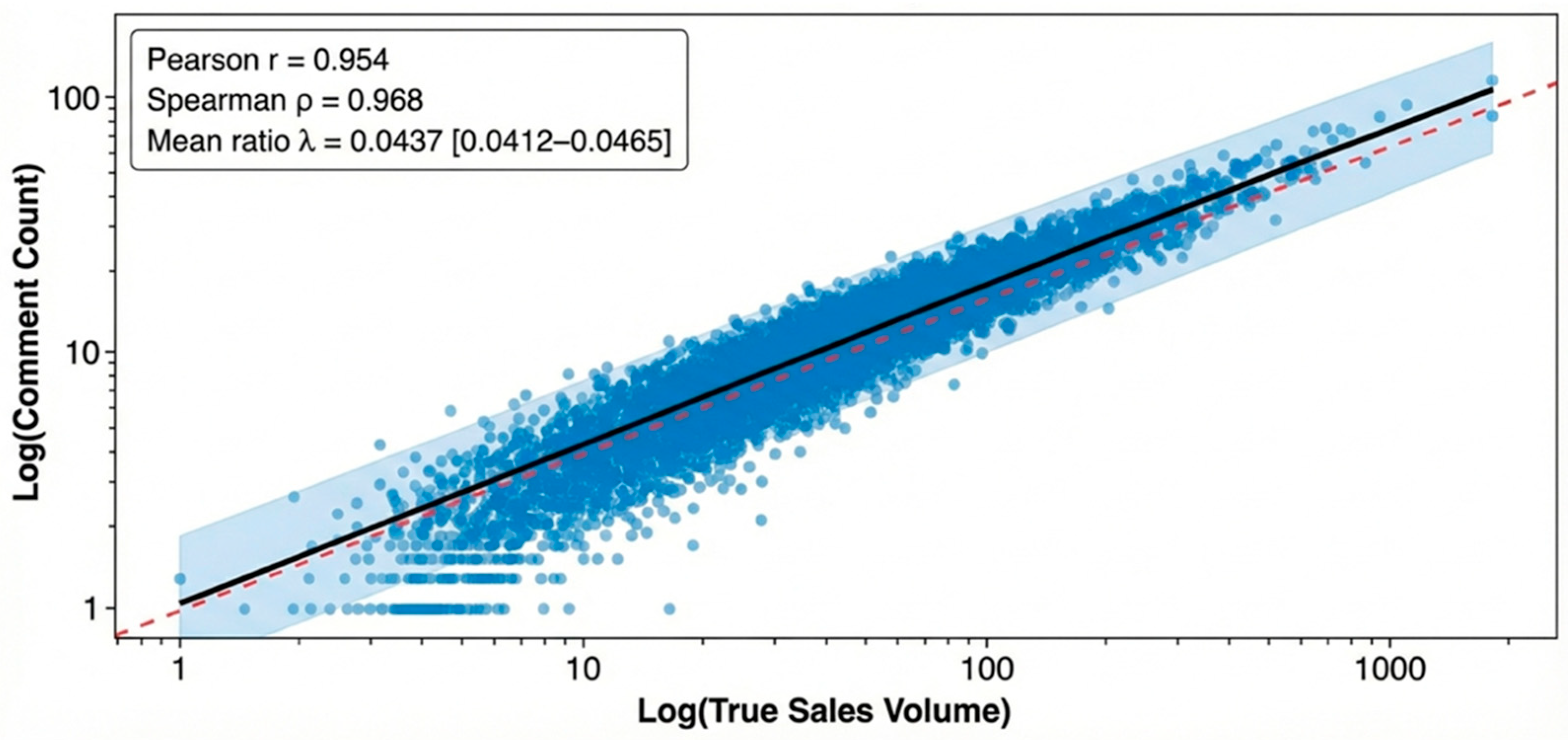
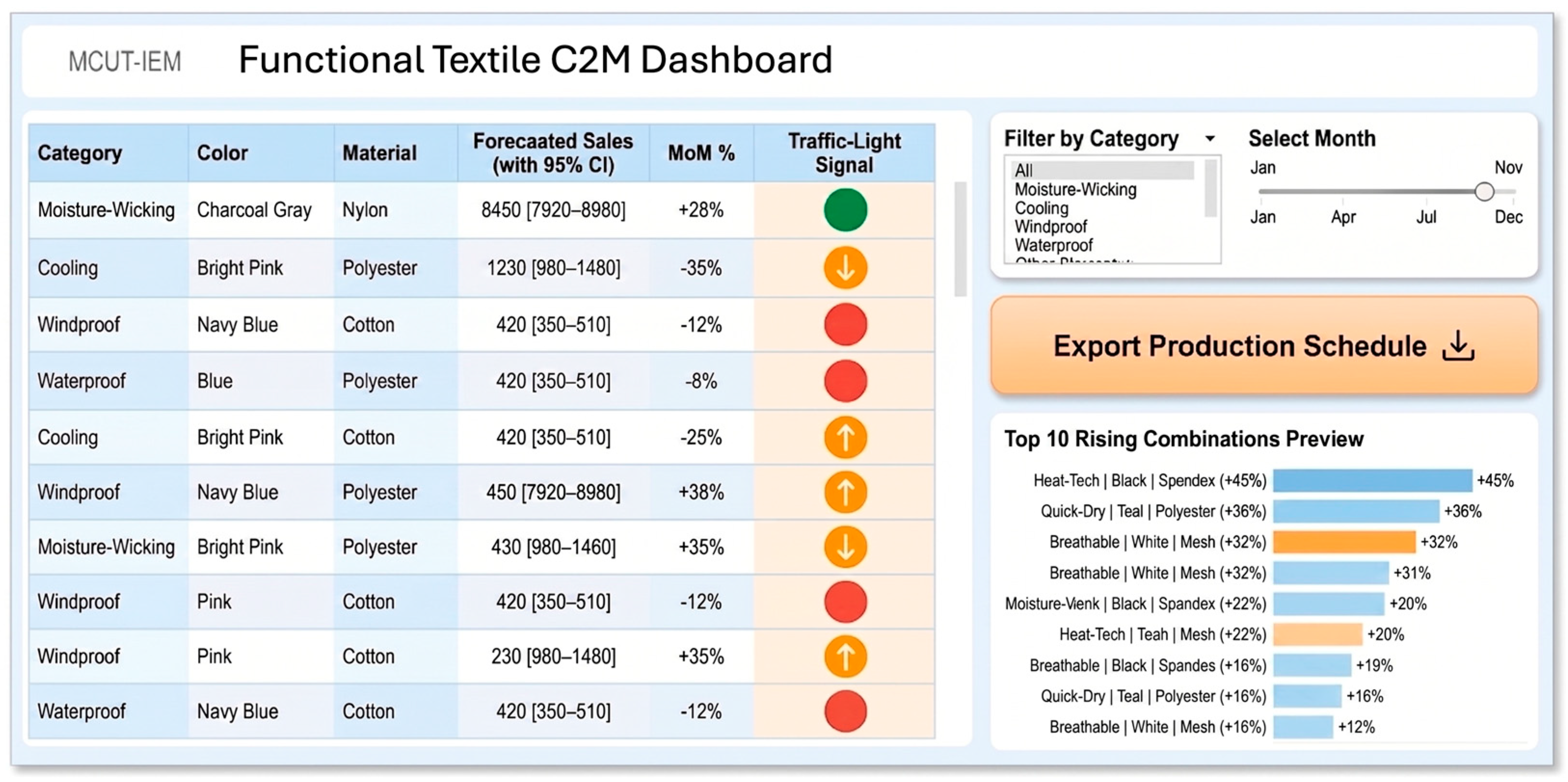
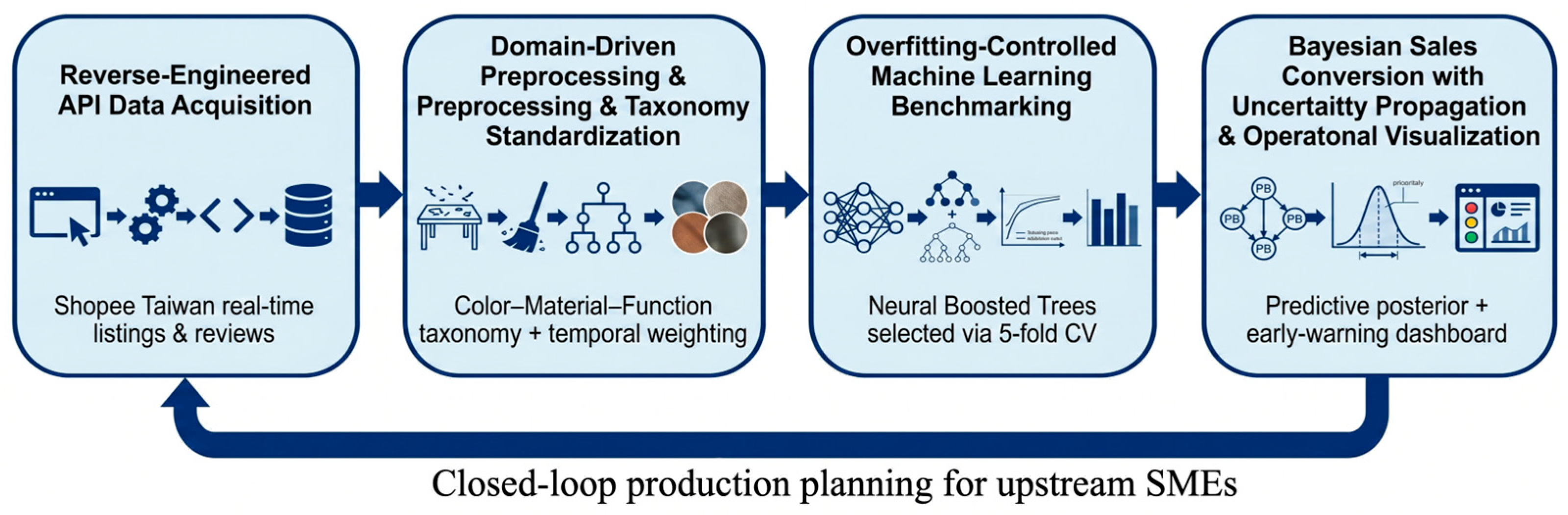
Upstream textile small and medium-sized enterprises (SMEs) frequently exhibit constrained supply chain resilience owing to persistent information latency and structural dependence on downstream orders. To address these challenges, this study develops and validates a customer-to-manufacturer (C2M) intelligence framework that enables data-driven production planning using publicly available e-commerce data. The framework incorporates ethically compliant acquisition of consumer demand signals, semantic translation of unstructured market data into textile engineering attributes, machine-learning-based demand forecasting, and human-centric decision support. Utilizing 3.87 million consumer comments from 127,846 product listings, a Neural Boosted Tree model with entity embeddings for textile attributes was constructed. This model achieved a mean R2 of 0.921 in cross-validation, surpassing benchmark methods. Consumer comment volume was validated as a proxy for sales activity, facilitating demand estimation. Forecasts were translated into production guidance using Monte Carlo simulation and a decision dashboard. In a 12-month field study at a Taiwanese dyeing SME, implementation resulted in a 28% reduction in inventory value, a 31% decrease in dye lot changeovers, and a 16% increase in capacity utilization. This research extends the C2M paradigm from downstream retail contexts to upstream textile SMEs, proposes an integrated and operationally feasible intelligence framework for resource-constrained manufacturers, and demonstrates how digital intelligence can enhance supply chain resilience while supporting, rather than replacing, human decision-making. The results indicate that upstream textile SMEs can leverage publicly visible e-commerce signals to enhance production planning responsiveness, minimize inventory exposure and dye-lot disruptions, and strengthen resilience to demand uncertainty through planner-centered digital decision support.
Keywords: customer-to-manufacturer; supply chain resilience; Industry 5.0; human-centric AI; public data stream analytics; textile SMEs customer-to-manufacturer; supply chain resilience; Industry 5.0; human-centric AI; public data stream analytics; textile SMEs