
Article

Path Analysis of How the Digital Capital of Korean Citizens Leads to Life Satisfaction in the Digital Global Marketing Environment: The Dual Mediating Effects of Digital Self-Efficacy and E-Commerce Utilization Level

Department of Trade & Logistics, Chungwoon University, Incheon Campus, Room 722, Main Building, 113 Suggol-ro, Michuhol-gu, Incheon 22100, Republic of Korea
J. Theor. Appl. Electron. Commer. Res. 2026, 21(3), 77; https://doi.org/10.3390/jtaer21030077
Submission received: 7 January 2026 / Revised: 18 February 2026 / Accepted: 23 February 2026 / Published: 26 February 2026
(This article belongs to the Topic Digital Marketing Dynamics: From Browsing to Buying)

Abstract

This study aims to analyze the effect of individuals’ digital capital on life satisfaction in the digital global marketing environment and to structurally verify the mediating effects of digital self-efficacy and the level of E-commerce utilization in this process. For this purpose, data from the 2023 Digital Divide Survey conducted by Statistics Korea was utilized, and Structural Equation Modeling (SEM) analyses were conducted. The results indicate that the sub-factors of digital capital—digital competence, digital support resources, and social capital—all have significant positive effects on digital self-efficacy. Furthermore, digital self-efficacy exerts a significant positive influence on both the level of E-commerce utilization and life satisfaction. In addition, the level of E-commerce utilization was found to have a modest but statistically significant direct effect on life satisfaction. Mediation analysis based on SEM revealed that digital self-efficacy functions as a key mediating mechanism linking digital capital to life satisfaction. While indirect effects through digital self-efficacy were consistently supported, the sequential mediation pathway involving both digital self-efficacy and E-commerce utilization level appeared relatively weak, suggesting that psychological confidence plays a more central role than behavioral usage alone. Overall, these findings suggest that digital capital extends beyond mere access to technology or frequency of use and forms a structural pathway influencing quality of life primarily through psychological empowerment and, to a lesser extent, digital behavioral engagement. This study contributes to digital divide research by presenting an integrated analytical framework connecting digital capital, digital self-efficacy, E-commerce utilization level, and life satisfaction, and provides empirical evidence supporting the importance of policies and educational interventions that enhance individuals’ digital self-efficacy alongside practical e-commerce-based digital education.

1. Introduction

The acceleration of digital transformation is fundamentally changing the way E-commerce and digital marketing operate, thereby shaping a digital global marketing environment that transcends national boundaries [1,2]. Previous studies have shown that the level of E-commerce use and attitudes toward digital utilization significantly affect digital outcomes and life satisfaction, suggesting that consumers’ digital resources can extend beyond simple usage to impact broader life outcomes [3]. These findings imply that systematically analyzing a specific country’s consumer digital capabilities and E-commerce usage patterns can offer valuable empirical evidence for formulating international marketing strategies.
South Korea has one of the world’s highest levels of digital infrastructure, along with high smartphone penetration rates and active E-commerce use. As a result, the country is regarded as a key target for digital global marketing and a digitally competitive trading partner for global and foreign enterprises [4]. In particular, Korean online shoppers tend to actively engage in online activities such as information searching, consumption of content and goods, and information sharing [5]. These forms of digital participation are likely to lead to successful E-commerce outcomes and further extend into daily life and life satisfaction [3], as has been theoretically discussed in prior research on consumer behavior in digital environments [6]. Nevertheless, existing research has primarily focused on E-commerce utilization levels or purchase behaviors [3], and has been relatively limited in analyzing the pathways through which consumers’ digital resources extend into broader life outcomes.
This study is based on the conceptual framework of Digital Capital proposed by Ragnedda [7], and conceptualizes Digital Capital by integrating Digital Competence, Digital Support Resources, and social networks as its sub-components, which form the core drivers of individual digital outcomes. This approach is based on the academic premise that Digital Capital is not limited to access to technology but is accumulated through the process and experience of use in digital environments and social interactions, ultimately forming a virtuous cycle that expands into life outcomes [7].
These studies thus highlight digital capital as a critical analytical concept that extends beyond mere access to technology to encompass an individual’s ability to comprehend and utilize information and engage with others in digital settings. Furthermore, recent research on online shopping environments has identified digital self-efficacy as a psychological mediator that influences attitudes toward digital devices and, in turn, affects intentions to shop online. This suggests that self-efficacy functions as a key psychological mechanism [8], and that the level of E-commerce utilization can be a crucial variable explaining how digital capital translates into actual behaviors and life outcomes [9]. In digital marketing contexts, consumers’ participation in online information sharing is considered a core form of customer engagement that goes beyond mere consumption of information. It plays a vital role in shaping relationships and the intensity of interaction with firms [2]. This form of engagement not only enhances the E-commerce experience but also implies that it may differentially moderate the process through which digital capital is converted into E-commerce utilization and life satisfaction. These findings suggest that in digital marketing environments, consumers’ information exploration and sharing behaviors are key factors in shaping interactions between firms and consumers. Accordingly, foreign firms seeking to enter the Korean market and build digital global marketing strategies should look beyond price competition or technology adoption, and instead strategically consider the structure of consumers’ digital capital and patterns of information engagement.
However, although the importance of Digital Capital and online participation has been continuously emphasized in the digital marketing environment, existing research has mainly focused on individual behavior or E-Commerce Utilization Level [3], and has not sufficiently clarified how Digital Capital expands into Life Satisfaction through psychological perceptions and behavioral pathways.
Therefore, this study aims to analyze the pathways through which digital capital (i.e., digital competence, digital support resources, and social capital) leads to life satisfaction among Korean citizens in the digital global marketing environment. Specifically, it seeks to empirically examine the dual mediating effects of digital self-efficacy and the level of E-commerce utilization, as well as the moderating effect of online information-sharing participation. By doing so, the study aims to uncover the mechanism through which digital capital translates into individual life outcomes. The findings are expected to provide both theoretical contributions to the literature on E-commerce and digital marketing and practical implications for foreign companies formulating digital global marketing strategies for the Korean market.

2. Theoretical Background and Research Hypotheses

2.1. Digital Capital, Digital Self-Efficacy, and Life Satisfaction

In the rapidly evolving global marketing environment driven by digital transformation, individuals’ digital resources are emerging as key factors that extend beyond mere technological access to broader socio-economic outcomes. Within this context, digital capital is defined as the sum of an individual’s capabilities and resources that enable understanding, utilizing, and interacting with information and others in digital environments [7]. The concept expands traditional notions of human and social capital into the digital realm and serves as a theoretical framework to explain digital inequalities among individuals. Digital capital is broadly composed of Digital Competence and digital technology. Digital Competence refers to the internalized cognitive and technical abilities that enable individuals to understand and use smart devices and digital services for activities such as information search, communication, and content creation. These competencies act as a bridge connecting opportunities across online and offline domains. In contrast, digital technology represents externalized resources, such as physical devices (hardware), software, and network access, which are essential tools for individuals to connect to and function within the digital world [7]. These technological assets are not merely consumables, but resources that can accumulate over time and be transferred into benefits in other social domains, thus embodying the nature of capital [7].
According to self-efficacy theory, an individual’s belief in their ability to successfully carry out a task directly affects actual behavior and outcomes. Digital Competence, therefore, can serve as foundational resources in the formation of digital self-efficacy [10]. The core framework of self-efficacy theory explains how personal resources and environmental factors influence behavior and performance through the mediating role of self-efficacy.
Next, digital support resources refer to external support systems, such as help from family, acquaintances, or experts, that individuals can access when using digital devices or services. According to social cognitive theory, learning and confidence can be enhanced not only through personal experience but also through observation and guidance from others [10]. In digital contexts, such support resources function as important social factors that bolster digital self-efficacy.
Social capital, while not a component of digital capital per se, is considered a crucial connecting resource that interacts with it to maximize outcomes. According to social capital theory, trust, networks, and social relationships are key assets that enhance an individual’s quality of life and life satisfaction [11]. In digital environments, which inherently involve uncertainty, trust becomes a critical antecedent to interaction [6]. Trust and social bonds formed through online networks can promote information sharing and positively affect confidence in digital engagement and overall life satisfaction.
To systematically explain the relationship between Digital Capital and Life Satisfaction, theoretical discussions on individuals’ psychological perceptions and the technology acceptance process are necessary. This study was conducted based on Self-Efficacy Theory and the Technology Acceptance Model (TAM) to explain this relationship. In particular, prior research has empirically demonstrated that digital self-efficacy mediates the relationship between digital attitudes, social capital, and life satisfaction among vulnerable populations [12].According to Self-Efficacy Theory, the more individuals believe they can successfully perform a particular task, the more their capacity to execute goal-directed behaviors improves, and the higher their expectations regarding their abilities become [10]. From this perspective, Digital Capital—comprising Digital Competence, Digital Support Resources, and Social Capital—goes beyond the mere possession of technical skills and can be seen as an antecedent that forms Digital Self-Efficacy, which is the psychological confidence in one’s ability to control and utilize digital environments. In addition, TAM explains that the process of technology acceptance proceeds from perceived usefulness and perceived ease of use to actual usage behavior [13]. Therefore, this study assumes that Digital Self-Efficacy is a core psychological variable influencing the overall process of technology acceptance and that such perception is a key factor promoting concrete digital behaviors such as E-Commerce Utilization Level.
Furthermore, E-commerce Utilization Level represents behavioral engagement in digital environments and contributes to greater convenience in daily life and expanded social participation, which ultimately enhance life satisfaction. Accordingly, this study aims to elucidate the structural pathway through which digital capital is translated into life satisfaction, by proposing a model with a dual mediating effect of digital self-efficacy and E-commerce Utilization Level. Specifically, the hypothesized pathway follows digital capital → digital self-efficacy → E-commerce Utilization Level → life satisfaction. This approach extends prior studies that have primarily focused on the presence or frequency of technology use by explicitly modeling digital self-efficacy and E-commerce Utilization Level as key mediators. Thus, the present study holds theoretical significance in that it provides a more precise explanation of the dual mediating effect through which digital capital influences life satisfaction in digital environments.
Moreover, studies have shown that the level of E-commerce utilization and attitudes toward digital use positively impact digital economic activities, enhance convenience in daily life, and increase overall life satisfaction by facilitating broader social participation [3]. This implies that digital capital is not just an intermediate variable but can have a direct impact on subjective life outcomes such as life satisfaction.
Despite the contributions of prior studies, existing discussions on Digital Capital have primarily focused on observable usage patterns, such as the frequency or intensity of digital tool use. As a result, explanations of the psychological processes through which digital resources are transformed into actual life outcomes have been relatively insufficient. In particular, theoretical and structural discussions on how and why Digital Capital leads to Life Satisfaction remain at a limited level.
To address these limitations, this study integrates Self-Efficacy Theory and the Technology Acceptance Model (TAM) as its core theoretical framework. Through this integration, the study seeks to go beyond simple usage indicators and structurally analyze how Digital Capital fosters psychological confidence—namely, Digital Self-Efficacy—in effectively controlling and utilizing digital environments, and how such efficacy leads to concrete behavioral outcomes, such as E-Commerce Utilization.
This approach offers a more refined explanation of how Digital Capital is transformed into Life Satisfaction, a process that has not been sufficiently explored in previous studies, thereby providing important and distinctive theoretical implications.
It also suggests that digital capital can extend beyond economic achievements to contribute to quality of life. These direct effects assume a foundational relationship between digital capital and life satisfaction, which this study seeks to examine in greater depth by analyzing the psychological and behavioral mechanisms underlying this relationship through mediation analysis. Based on the above discussions, the following hypotheses were proposed:
H1. 
Digital Competence will have a positive effect on digital self-efficacy.
H2. 
Digital support resources will have a positive effect on digital self-efficacy.
H3. 
Social capital will have a positive effect on digital self-efficacy.
H4. 
Digital self-efficacy will have a positive effect on the level of E-commerce utilization.
H5. 
Digital self-efficacy will have a positive effect on life satisfaction.
H6. 
The level of E-commerce utilization will have a positive effect on life satisfaction.
H7. 
Digital Competence will have a positive effect on life satisfaction.
H8. 
Digital support resources will have a positive effect on life satisfaction.
H9. 
Social capital will have a positive effect on life satisfaction.

2.2. Mediating Effects of Digital Self-Efficacy and E-Commerce Utilization Level

According to Self-Efficacy Theory, an individual’s belief in their ability to accomplish a specific task serves as a critical psychological mechanism that influences the choice of action, level of effort, and perseverance in the face of difficulties [10]. Based on this theory, digital self-efficacy refers to the key driver that enables individuals to navigate the complexity and uncertainty of digital environments and actively adopt new technological services. A recent study on people with disabilities highlighted that digital self-efficacy acts as a “psychological bridge” that converts technical attitudes or digital resources into actual life satisfaction and outcomes [12]. That is, even with high levels of digital capital or positive digital attitudes, the absence of self-efficacy can render these resources dormant [12]. This logic is equally applicable in the context of e-commerce. Thus, digital self-efficacy can be regarded as a vital link that mediates between internal competencies and external outcomes. In E-commerce environments, where contactless transactions are the norm, establishing trust and a sense of control over systems is crucial for users. High digital self-efficacy reduces anxiety regarding technical procedures and fosters confidence in navigating the entire transaction process—from information search and comparison to payment and after-sales service. Consequently, digital self-efficacy acts as a core mediating variable that enables Digital Competence to lead to advanced E-commerce usage.
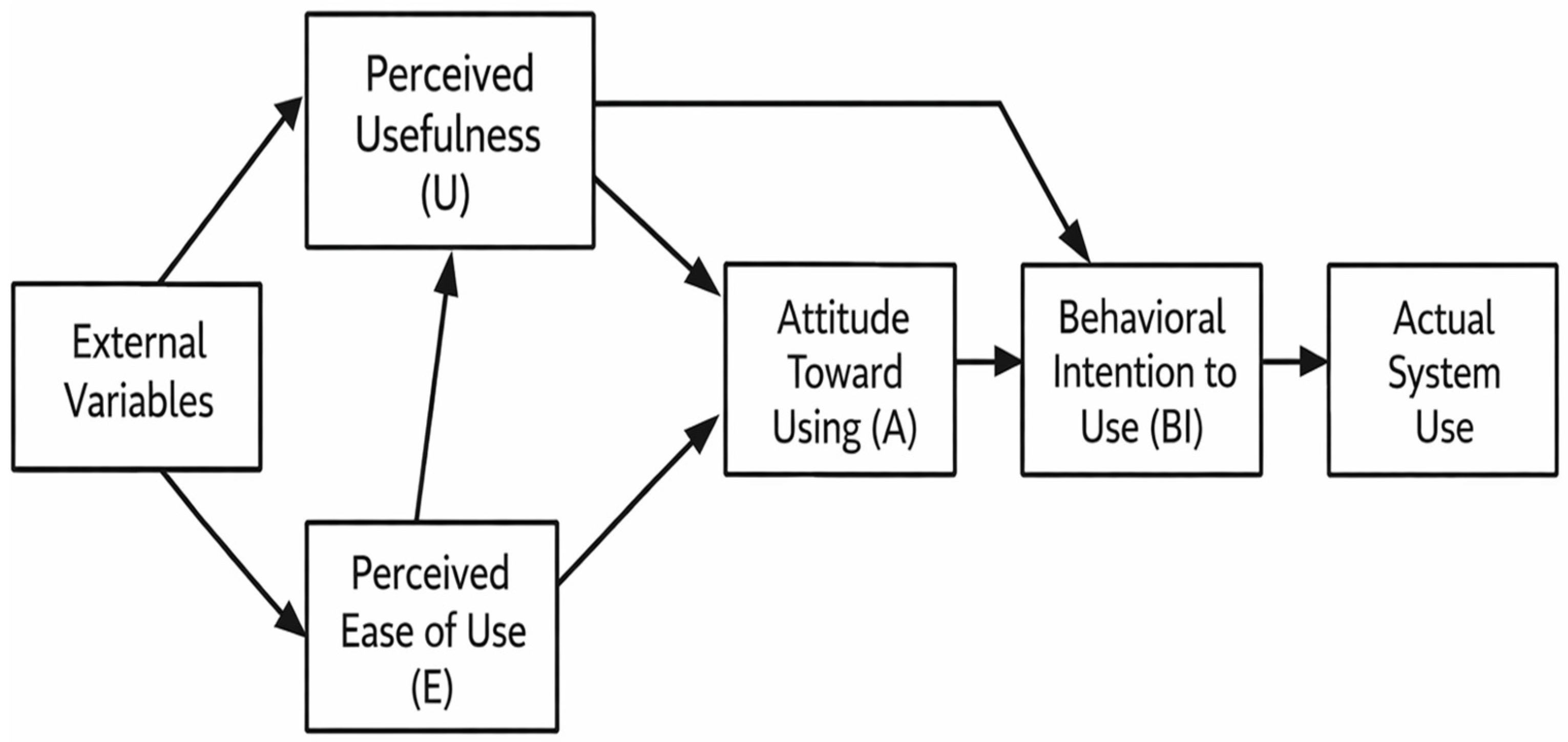
In addition, the Technology Acceptance Model (TAM) explains how individuals’ cognitive beliefs—particularly perceived usefulness and perceived ease of use—lead to intentions to use technology, which then result in actual use behavior [13]. This process is illustrated in the basic structure of TAM, as shown in Figure 1 [13] (p. 985).
The Unified Theory of Acceptance and Use of Technology (UTAUT) later expanded on TAM, revealing that individuals’ acceptance of technology is determined by a combination of performance expectancy, effort expectancy, social influence, and facilitating conditions [14]. UTAUT emphasizes the roles of psychological mechanisms, control over technological environments, and social support in the transition from intention to actual behavior—reinforcing the view that digital self-efficacy supports the manifestation of complex behaviors such as E-commerce participation.
Meanwhile, the level of E-commerce utilization can be interpreted as a representative behavioral outcome variable that embodies how digital capital manifests in specific consumption and lifestyle behaviors. E-commerce encompasses more than just purchasing; it includes searching, comparing, paying, and post-service activities—all of which are closely linked to everyday life. This level of use enhances convenience and efficiency, thereby contributing to life satisfaction [3,6].
Recent research has also confirmed the mediating pathway whereby digital self-efficacy influences attitudes toward digital devices and intentions for online shopping, highlighting the transition from psychological factors to actual E-commerce behaviors [8]. This supports a theoretical justification for a dual mediation structure: Digital Capital → Digital Self-Efficacy → E-Commerce Utilization Level → Life Satisfaction.
Taken together, these discussions suggest that digital capital leads to E-commerce behavior through digital self-efficacy and further extends to life satisfaction, forming a dual mediating structure. This study aims to structurally analyze this pathway and empirically test whether digital self-efficacy and the level of E-commerce utilization mediate the relationship between digital capital and life satisfaction. The following hypotheses were thus formulated:
H10. 
Digital Competence will positively influence life satisfaction through the mediation of digital self-efficacy.
H11. 
Digital support resources will positively influence life satisfaction through the mediation of digital self-efficacy.
H12. 
Social capital will positively influence life satisfaction through the mediation of digital self-efficacy.
H13. 
Digital Competence will positively influence life satisfaction through the sequential mediation of digital self-efficacy and E-commerce utilization level.
H14. 
Digital support resources will positively influence life satisfaction through the sequential mediation of digital self-efficacy and E-commerce utilization level.
H15. 
Social capital will positively influence life satisfaction through the sequential mediation of digital self-efficacy and E-commerce utilization level.

2.3. Conceptual Research Model

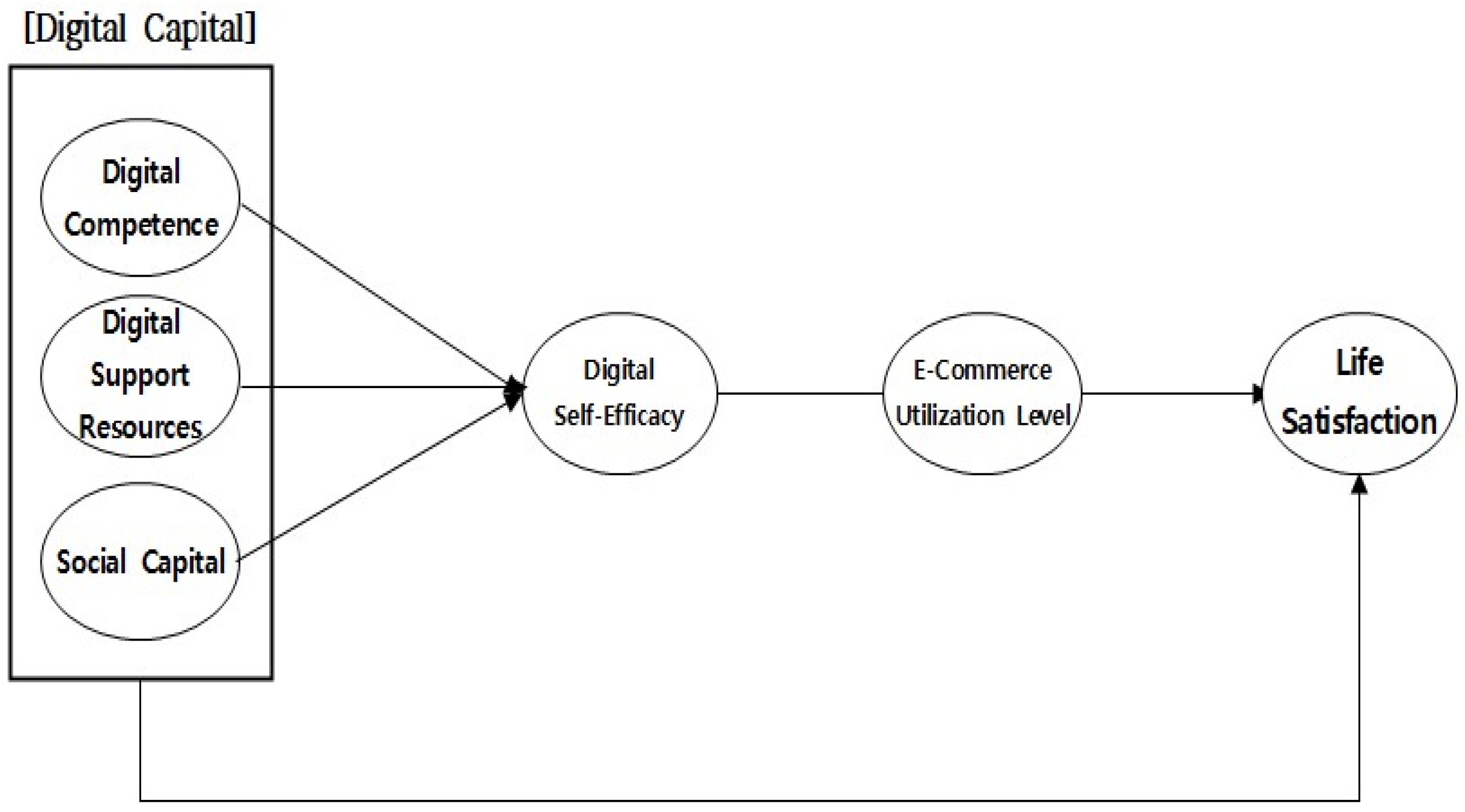
This study aims to identify the structural pathways through which individuals’ digital capital leads to life satisfaction in the digital global marketing environment. To this end, a dual mediation research model was designed, treating digital capital as a multidimensional concept and incorporating digital self-efficacy and E-commerce utilization level as psychological and behavioral mediators, respectively. Specifically, digital capital, the independent variable in this study, refers to the foundational competencies and social conditions that allow individuals to recognize and utilize resources in digital contexts. It is composed of three sub-factors: Digital Competence, digital support resources, and social capital. Based on Ragnedda’s conceptual framework of Digital Capital [7], this study defines Digital Capital as a multidimensional concept composed of Digital Competence, Digital Support Resources, and Social Capital. This structure aligns with the classification system used in Statistics Korea’s “Survey on the Digital Information Gap” [15], thereby ensuring both theoretical and methodological validity. Digital Competence refers to an individual’s technical ability to understand and use smart devices and digital services. Digital support resources refer to external support from family, acquaintances, or peers during the process of digital engagement. Social capital refers to social relationships based on trust and networks that promote access to and utilization of information in digital environments. This study predicts that digital capital not only has a direct effect on life satisfaction but also an indirect effect through digital self-efficacy. Digital self-efficacy, defined as one’s belief in their ability to use digital technologies and services effectively, is expected to function as a key psychological mediator in translating digital capital into actual behavior. In other words, individuals with the same level of digital capital may differ in how they utilize digital technologies, depending on their level of self-efficacy. Additionally, this study proposes a behavioral pathway from digital self-efficacy to E-commerce utilization level, which includes not only online purchase experiences but also the broader use of digital commerce—from information search and comparison to payment and after-sales services. This variable is interpreted as a behavioral outcome that embodies how digital capital and psychological confidence translate into concrete consumer and lifestyle actions. Meanwhile, the measurement of E-Commerce Utilization Level in this study was not arbitrarily constructed by the researcher, but was based on official questionnaire items provided by Statistics Korea’s “Survey on the Digital Information Gap.” This survey is designed to reflect the entire transaction experience comprehensively—including information search, comparison, payment, and after-sales services—rather than merely the act of purchase. Thus, while respecting the structure of the secondary data, this study conceptualized E-Commerce Utilization Level as a multidimensional process to analyze how Digital Capital and psychological variables are connected to actual life experience. In summary, this study establishes a structural path where digital capital sequentially flows through digital self-efficacy and E-commerce utilization to result in life satisfaction. The final dependent variable, life satisfaction, refers to an individual’s subjective evaluation of their overall life status and quality, which can be enhanced through the efficient and proactive accumulation of digital experiences. The research model developed based on the above theoretical discussion and hypotheses is illustrated in Figure 2 below.

3. Research Methodology

3.1. Sample Design and Data Collection

To investigate the structural relationship between individuals’ digital capital and life satisfaction in the digital global marketing environment, this study utilized raw data from the 2023 Digital Divide Survey conducted under the supervision of the Ministry of Science and ICT and the National Information Society Agency (NIA) of Korea. The survey, which aimed to assess the effectiveness of policies addressing digital inequalities, was carried out by Gallup Korea, a professional research institution, from October to December 2023. To ensure nationwide representativeness, a proportionally stratified sampling method was applied based on gender, age, and other demographic factors [15]. From the complete dataset, responses from 7001 general citizens were initially selected, excluding those from policy-vulnerable groups such as individuals with disabilities, low-income populations, and agricultural or fishing households. After a data cleaning process, cases with missing values, particularly for variables such as occupation, were removed, resulting in a final valid sample of 6999 respondents [15]. The demographic characteristics of the final sample are as follows: By gender, the sample was nearly evenly split, with 3492 males (49.9%) and 3508 females (50.1%). By age group, individuals aged 60 and over made up the largest portion at 1947 respondents (27.8%), followed by those in their 50s (1216 respondents, 17.4%), 40s (1127 respondents, 16.1%), 30s (961 respondents, 13.7%), 20s (917 respondents, 13.1%), and under 19 (832 respondents, 11.9%), showing a balanced age distribution. In terms of educational attainment, high school graduates accounted for 2666 respondents (38.1%), and those with a university degree or higher totaled 2675 (38.2%). By occupation, the largest groups were service/sales workers (2041 respondents, 29.2%) and professionals/managers/office workers (1541 respondents, 22.0%). As for residential area, urban residents were more prevalent, which is interpreted as reflecting the general public’s access to digital environments and the population distribution in Korea [15]. Overall, the sample was found to be demographically diverse and representative, supporting the generalizability of the study’s findings.

3.2. Measurement of Variables

The operational definitions of the key variables used in this study are as follows. To analyze the structural pathway through which individuals’ digital capital leads to life satisfaction in the digital global marketing environment, the study constructed independent variables, mediating variables, and a dependent variable in a stepwise manner.
First, the independent variable, digital capital, was defined as the combination of capabilities and conditions that enable individuals to recognize and utilize resources in digital environments. It was measured through three sub-components: Digital Competence, digital support resources, and social capital. Digital Competence refers to the individual’s ability to use mobile smart devices such as smartphones and tablets. Digital support resources indicate the extent of external help available from family or acquaintances when using digital devices. Social capital is composed of trust and relational resources formed through online and offline networks. Next, the mediating variables were digital self-efficacy and the level of E-commerce utilization. Digital self-efficacy was defined as an individual’s belief in their ability to effectively use digital technologies and services. It served as a psychological mediator in the conversion of digital capital into actual behavior. E-commerce utilization level was defined as the extent of engagement in digital transactions, not limited to traditional online shopping but including online financial transactions and public (administrative) service use. This definition reflects recent discussions that E-commerce has expanded into an essential infrastructure for digital daily life, encompassing consumption, administration, and financial services. The dependent variable, life satisfaction, was defined as the degree to which individuals subjectively evaluate their overall life status and quality. It was treated as the outcome variable that reflects how efficiently utilizing digital environments can lead to improvements in life outcomes. Specifically, respondents were asked to answer questions such as “I am generally satisfied with my current life” and “I am satisfied with the quality of life I experience in daily life” using a 4-point Likert scale (1 = Not at all, 4 = Very much so).
Meanwhile, all variables were measured using items from the 2023 Digital Divide Survey, with each item rated on a Likert scale. A summary of the operational definitions is provided in Table 1 below [15].

3.3. Analytical Methods

To test the structural pathway through which digital capital influences life satisfaction, and to verify the dual mediating effects of digital self-efficacy and E-commerce utilization level, this study employed Structural Equation Modeling (SEM). SEM was selected as the most suitable method due to its ability to simultaneously estimate causal relationships among latent variables while controlling for measurement error in mediating effect analysis [16].
The specific analytical procedure was as follows: Descriptive statistics were used to understand the demographic characteristics of the collected data. Pearson’s correlation analysis was conducted to examine relationships among major variables and to check for multicollinearity. To verify the reliability and validity of the constructs, Confirmatory Factor Analysis (CFA) was performed. Convergent validity was assessed based on factor loadings, composite reliability (CR), and average variance extracted (AVE), and discriminant validity was evaluated using the Fornell–Larcker criterion by comparing the square root of the AVE to the inter-variable correlations [17]. After confirming the adequacy of the measurement model, structural model analysis was conducted to test the hypothesized causal relationships between variables. Model fit was evaluated using multiple indices, including χ2 statistics, the Comparative Fit Index (CFI), Tucker–Lewis Index (TLI), and Root Mean Square Error of Approximation (RMSEA) [18]. Through this process, the direct effects of the sub-factors of digital capital—Digital Competence, digital support resources, and social capital—on digital self-efficacy and life satisfaction were analyzed.
Structural equation modeling (SEM) was conducted with IBM AMOS 31.0. To evaluate the dual mediation effects, the standardized indirect effects were calculated based on the Maximum Likelihood (ML) estimation method. The study identified the structural pathways through which digital capital influences life satisfaction by examining the magnitude of these standardized indirect effects.

4. Results and Analysis

4.1. Measurement Model Validation

4.1.1. Descriptive Statistics and Normality Check

Prior to structural model analysis, the normality of the key variables in this study was assessed. The results showed that all variables met the commonly accepted criteria for normality: absolute skewness values below 3 and kurtosis values below 10 [19,20]. Accordingly, all measurement variables used in this study satisfy the assumptions of normality required for structural equation modeling (SEM). The descriptive statistics and normality test results are summarized in Table 2.

4.1.2. Confirmatory Factor Analysis (CFA)

Before conducting SEM, a confirmatory factor analysis (CFA) was performed using IBM AMOS 31.0 to verify the reliability and validity of the measurement instruments. For model fit, absolute fit indices (χ2/CMIN, CMIN/DF, RMSEA) and incremental fit indices (CFI, TLI, NFI) were considered. According to the analysis results, χ2 = 9773.490 (df = 423, p < 0.001), and χ2/df = 23.105. However, since the χ2 statistic is sensitive to sample size, it has limitations as a standalone criterion for evaluating model fit. Therefore, considering other fit indices together, the results showed CFI = 0.922, TLI = 0.908, and NFI = 0.919, all meeting the recommended threshold (≥0.90). RMSEA was also 0.056, indicating a good model fit. Taken together, the refined measurement model—after removing some items with low factor loadings—is deemed to have an acceptable level of model fit to proceed with the structural model analysis. Meanwhile, when the construct reliability (CR) is high, the average variance extracted (AVE) may be somewhat low but still acceptable in terms of convergent validity. Accordingly, the measurement model in this study generally meets acceptable levels in terms of both reliability and convergent validity. The confirmatory factor analysis results are presented in Table 3.
Next, standardized factor loadings, construct reliability (CR), and average variance extracted (AVE) were computed to verify convergent validity. Most items had standardized factor loadings above 0.50 and were statistically significant. Overall, construct reliability across all latent variables ranged from 0.740 to 0.940, and AVE values ranged from 0.330 to 0.700, confirming acceptable levels of reliability and convergent validity. Meanwhile, if the construct reliability (CR) is high, convergent validity can be considered acceptable even if the average variance extracted (AVE) value is somewhat low. Therefore, the measurement model in this study is deemed to meet acceptable levels of reliability and convergent validity overall. The detailed reliability and validity analysis results are presented in Table 4.

4.2. Discriminant Validity Analysis

To verify discriminant validity, the square root of each variable’s AVE was compared with its inter-construct correlations, as per Fornell and Larcker’s criterion [17]. Results showed that for all latent variables, the square root of AVE (diagonal values) exceeded their correlations with other variables. For instance, the highest correlation was observed between digital competence and digital self-efficacy (0.658), which was lower than the square roots of their respective AVE values (0.837 and 0.819). These results indicate that the constructs are conceptually distinct and confirm the discriminant validity of the measurement model. The discriminant validity and correlation analysis results are presented in Table 5.

4.3. Structural Model Testing and Hypothesis Verification (Path Analysis)

Following the confirmation of measurement model validity, a structural model analysis was conducted to examine causal relationships among the latent variables. The structural model showed fit indices similar to those of the measurement model, supporting its suitability for hypothesis testing. Detailed results are provided in Table 6.
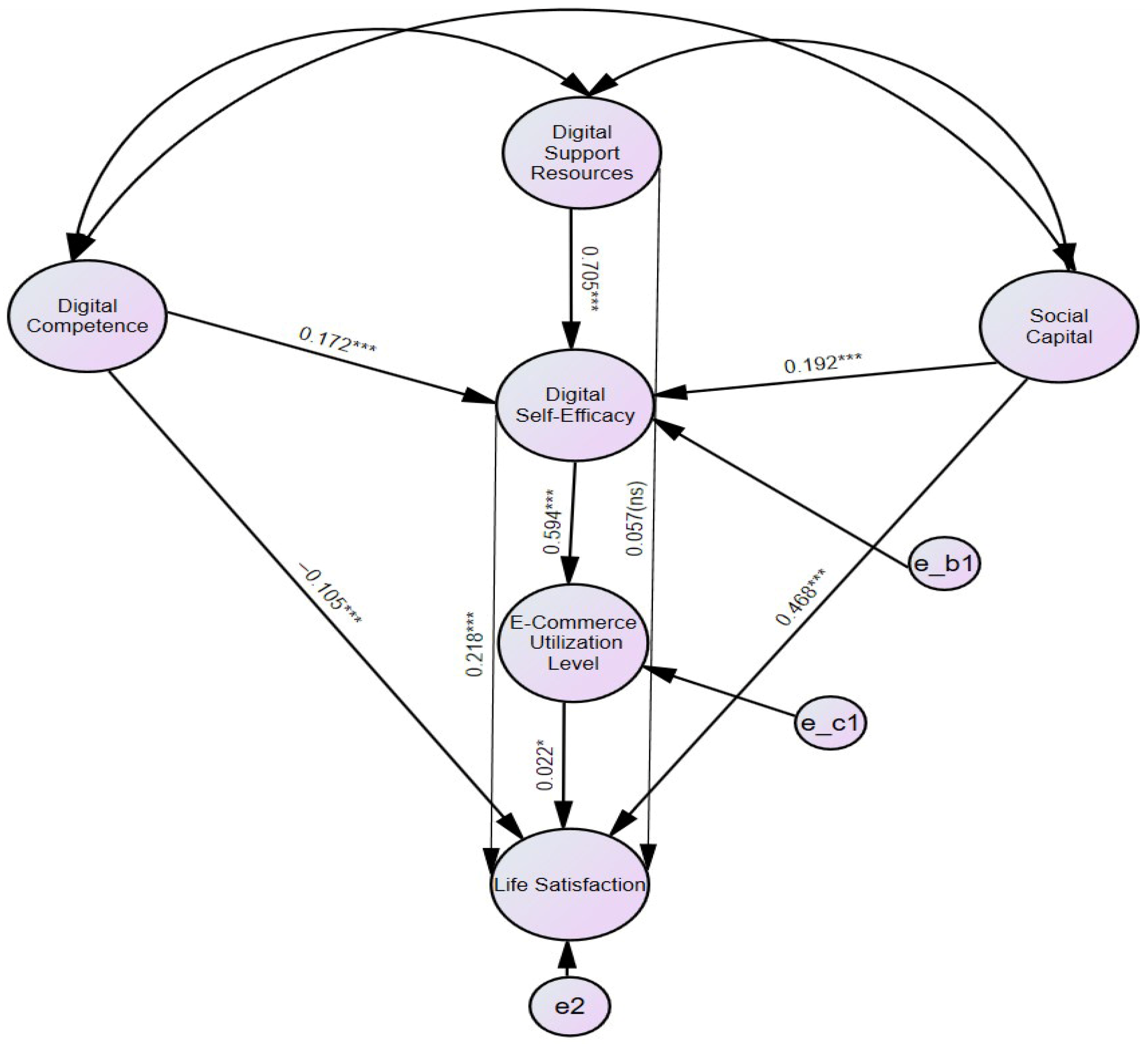
First, H1, H2, and H3 were supported. All three sub-components of digital capital had significant positive effects on digital self-efficacy: Digital competence → Digital self-efficacy (β = 0.172, t = 10.253, p < 0.001), Digital support resources → Digital self-efficacy (β = 0.705, t = 25.297, p < 0.001), Social capital → Digital self-efficacy (β = 0.192, t = 6.222, p < 0.001). These findings indicate that individuals’ digital capital plays a pivotal role in fostering digital self-efficacy.
Second, H4 and H5 were supported. Digital self-efficacy positively influenced both: E-commerce utilization level (β = 0.594, t = 34.947, p < 0.001). Life satisfaction (β = 0.218, t = 9.287, p < 0.001). This highlights the importance of psychological confidence in influencing both digital behavior and subjective life outcomes.
Third, E-commerce utilization level was found to exert a statistically significant positive effect on life satisfaction (β = 0.022, t = 2.278, p = < 0.05). This finding indicates that higher levels of engagement in E-commerce activities are directly associated with increased life satisfaction.
Fourth, the direct effects of the sub-factors of Digital Capital on Life Satisfaction were verified as follows. First, Digital Competence showed a significant negative (−) effect on Life Satisfaction, leading to the rejection of Hypothesis H7 (β = −0.105, t = −8.045, p < 0.001). This suggests that higher Digital Competence may increase sensitivity to information overload or digital fatigue, thereby potentially lowering subjective life satisfaction. In contrast, Digital Support Resources showed a positive direction in its effect on Life Satisfaction but did not reach statistical significance (β = 0.057, t = 1.932, p = 0.053). Therefore, Hypothesis H8 was also rejected. This result suggests that Digital Support Resources may influence Life Satisfaction indirectly through psychological factors such as Digital Self-Efficacy, rather than directly. Meanwhile, Social Capital showed a significant positive effect on Life Satisfaction, leading to the acceptance of Hypothesis H9 (β = 0.468, t = 16.620, p < 0.001). This indicates that social relationships, trust, and network resources in the digital environment are key factors that directly enhance an individual’s subjective life satisfaction.
Next, to test whether the sub-factors of Digital Capital indirectly influence Life Satisfaction through Digital Self- Efficacy and E-Commerce Utilization Level, a structural equation modeling (SEM) analysis using AMOS was conducted. Mediation analysis using SEM has the advantage of controlling measurement errors at the latent variable level, unlike regression-based methods which do not account for measurement error. Accordingly, mediation analysis was conducted based on the standardized indirect effects derived from the structural model analysis. The analysis results revealed that Digital Self-Efficacy serves as a key mediating variable in the relationship between Digital Capital and Life Satisfaction. Specifically, Digital Competence showed a significant positive indirect effect on Life Satisfaction mediated by Digital Self-Efficacy (Digital Competence → Digital Self-Efficacy → Life Satisfaction; β = 0.037). This means that even if Digital Competence does not directly enhance Life Satisfaction, strengthening psychological confidence in the digital environment can still improve life satisfaction. Digital Support Resources also showed a positive indirect effect on Life Satisfaction through Digital Self-Efficacy (Digital Support Resources → Digital Self-Efficacy → Life Satisfaction; β = 0.154). This suggests that Digital Support Resources enhance individuals’ sense of control and confidence in the digital environment by providing access to information, support in problem-solving, and learning opportunities—thereby indirectly contributing to Life Satisfaction. Social Capital likewise showed a significant positive indirect effect on Life Satisfaction through Digital Self-Efficacy (Social Capital → Digital Self-Efficacy → Life Satisfaction; β = 0.042). This indicates that social network and trust resources function as important factors that strengthen psychological competence, thereby improving subjective life satisfaction. On the other hand, the sequential double mediation effect through Digital Self-Efficacy and E-Commerce Utilization Level was generally weak. In the case of Digital Competence, the indirect effect passing through Digital Self-Efficacy and E-Commerce Utilization Level was very weak (Digital Competence → Digital Self-Efficacy → E-Commerce Utilization Level → Life Satisfaction; β = 0.002), and in the case of Digital Support Resources and Social Capital, no statistically significant effects were observed in that pathway. In summary, the results of this study suggest that in the relationship between Digital Capital and Life Satisfaction, psychological competence plays a more critical mediating role than actual behavioral utilization. The detailed mediation analysis results are summarized in Table 7.
Summarizing the above hypothesis testing results, it can be seen that digital self-efficacy and E-commerce utilization play significant mediating roles in the process through which digital capital affects life satisfaction. Figure 3 below presents the final structural model analysis result. The figure includes path coefficients and statistical significance levels for each path.

5. Conclusions

5.1. Summary of Findings and Discussion

Digital transformation and the proliferation of artificial intelligence technologies are fundamentally changing consumers’ digital adoption and E-commerce usage patterns. Recent research has focused on the impact of individual psychological factors and behavioral mechanisms on consumer outcomes in the digital environment. In particular, recent studies have sought to elucidate the structural pathways linking digital self-efficacy, attitudes toward technology adoption, and E-commerce usage to consumer experiences and quality of life. These research efforts are expanding across diverse contexts [21,22,23,24,25,26].
This study aimed to analyze the influence of individual digital capital on life satisfaction within the context of digital transformation, and to structurally verify the mediating roles of digital self-efficacy and the level of E-commerce utilization in this relationship. To this end, digital capital was divided into three sub-components—Digital Competence, digital support resources, and social capital—and both Structural Equation Modeling (SEM) and dual mediation analyses were conducted.
Key findings are summarized as follows: First, all three sub-components of digital capital—Digital Competence, digital support resources, and social capital—had significant positive effects on digital self-efficacy. This suggests that not only technological skills but also support from others and social relationships play crucial roles in fostering self-confidence in digital environments. These results provide empirical support for both Self-Efficacy Theory and the concept of digital capital [7,10]. This study further expands the theoretical scope by structurally verifying that Digital Self-Efficacy can extend not only to behavioral outcomes but also to subjective well-being, such as Life Satisfaction. This implies that individuals’ psychological perceptions in digital environments play a core role in shaping quality of life, beyond simply using digital technologies.
Second, digital self-efficacy was found to have significant positive effects on both E-commerce utilization level and life satisfaction. This indicates that psychological confidence and perceived control in digital settings can extend beyond behavioral outcomes to impact subjective well-being. Especially noteworthy is the finding that digital self-efficacy directly influences life satisfaction—implying that psychological factors may play a more central role than mere possession or frequency of use of digital technologies.
Third, E-Commerce Utilization Level was found to have a significant positive effect on Life Satisfaction. This suggests that consumer and transaction experiences in the digital environment contribute to improving life satisfaction by enhancing convenience and efficiency in everyday life. However, the magnitude of the effect was relatively limited, indicating that E-Commerce Utilization Level plays more of a supplementary role rather than being a primary determinant of Life Satisfaction. This contrasts with earlier studies that focused on the frequency or adoption of E-commerce use and reaffirms the importance of the cognitive evaluation process and psychological factors emphasized by the Technology Acceptance Model (TAM). That is, the effectiveness of digital behavior depends not on how much it is used, but on how much individuals perceive the technology to be controllable and useful.
Fourth, there were clear differences in the direct effects of the sub-components of Digital Capital on Life Satisfaction. The analysis showed that Social Capital had a significant positive direct effect on Life Satisfaction, while Digital Competence had a significant negative direct effect, and Digital Support Resources’ direct effect was not statistically significant. This negative direct effect of Digital Competence can be interpreted as reflecting the “digital well-being paradox.” Technical proficiency is a prerequisite for effective digital engagement, but at the same time, it can increase exposure to constant connectivity, information overload, and decision fatigue. This aligns with the ongoing discussions about the “paradox of happiness in the digital age,” which argue that increasing Digital Competence does not necessarily enhance psychological well-being or subjective life satisfaction. Prior research also noted that high levels of Digital Competence may intensify exposure to excessive information and technology-related stress, ultimately lowering subjective well-being and Life Satisfaction [26,27]. This negative direct path of Digital Competence reflects the “digital well-being paradox.” While technical proficiency is a prerequisite for effective digital participation, it simultaneously increases exposure to constant connectivity, information overload, and decision fatigue [26]. Recent studies have further demonstrated that prolonged and inappropriate use of videoconferencing technologies can lead to Zoom fatigue, cognitive overload, and heightened stress, which negatively affect mental well-being and job-related satisfaction [28]. Moreover, recent research has shown that cognitive overload and mobile app addiction significantly predict perceived technostress, which in turn diminishes subjective well-being [29]. These findings align with the extensive literature on the “paradox of happiness in the digital age,” which suggests that an increase in Digital Competence does not necessarily lead to a linear improvement in subjective well-being. However, the findings of this study further demonstrate that such negative direct effects can be structurally offset when Digital Competence is internalized as Digital Self-Efficacy. This suggests that psychological empowerment plays a critical role in converting technical skills into meaningful Life Satisfaction and in resolving the paradox of digital well-being.
The fact that Digital Support Resources did not show a significant direct effect on Life Satisfaction implies that they operate indirectly through psychological variables like Digital Self-Efficacy, rather than exerting a direct influence. On the other hand, Social Capital appears to function as a key variable that directly influences Life Satisfaction based on emotional support and relational bonds. These findings are meaningful in that they challenge the simplistic assumption in previous studies that Digital Competence always leads to positive outcomes, and instead provide a theoretical argument that the effects of Digital Capital can vary depending on psychological moderating factors.
In conclusion, the results of this study suggest that future digital policies by governments and related institutions should not focus solely on enhancing technical capabilities. Rather, there is a need to expand toward a digital well-being-centered approach that alleviates stress from digital engagement and strengthens social and psychological resources. This offers theoretical value by shedding light on the “qualitative transformation of competence,” which has been overlooked in existing digital divide research.
Finally, the mediation analysis confirmed that Digital Self-Efficacy plays a significant mediating role in the relationship between Digital Capital and Life Satisfaction. In contrast, the sequential double mediation pathway via Digital Self-Efficacy and E-Commerce Utilization Level showed either limited or weak effects. While E-Commerce Utilization Level had a significant direct effect on Life Satisfaction, its explanatory power as a double mediating variable was not substantial. The relatively weak effect of the sequential mediating pathway through Digital Self-Efficacy and E-Commerce Utilization Level suggests that Life Satisfaction may be influenced more strongly by direct psychological and social factors than by specific patterns of online consumption behavior. Although digital self-efficacy enhances individuals’ confidence and perceived control in digital environments, the translation of such confidence into higher life satisfaction through E-commerce use alone appears to be limited. This may be because life satisfaction is a broad and holistic construct, shaped primarily by enduring psychological perceptions and social relationships rather than by discrete transactional activities. In this sense, E-commerce utilization may function as a situational or supplementary behavioral channel, whereas digital self-efficacy and social capital exert more fundamental influences on subjective well-being. This finding also implies that behavioral engagement in digital markets may enhance convenience, yet it does not necessarily alter individuals’ broader evaluative judgments of life quality unless accompanied by sustained psychological empowerment and supportive social structures.
In other words, in the process through which Digital Capital affects Life Satisfaction, perceived digital competence and Digital Self-Efficacy function more as core mediators than actual usage behavior.

5.2. Theoretical, Practical, and Policy Implications

This study extends the theory of digital capital by verifying its impact on life satisfaction, a subjective outcome variable. Unlike previous studies that mainly focused on economic or technology-related outcomes, this research structurally demonstrates how digital capital can influence quality of life primarily through psychological mechanisms, while behavioral factors play a more supplementary role. In particular, the identification of digital self-efficacy as a key mediator highlights the essential role of psychological processes in translating digital capital into subjective life outcomes. From a practical perspective, the findings suggest that digital competency training programs and related policies should go beyond improving technical skills to include components that enhance individuals’ digital self-efficacy. Likewise, strategies to promote E-commerce should not only aim to increase usage frequency but also focus on strengthening users’ confidence in managing and controlling the overall transaction process. For companies, this implies the need for user-friendly interface design, clear guidance systems, and trust-based customer support services. From a policy perspective, digital divide interventions should shift from simply expanding access and device distribution to strengthening digital support resources and social capital in ways that enhance individuals’ psychological empowerment. Especially for older adults and vulnerable populations, policies that foster continuous support networks and social connections—alongside technical training—may be more effective in improving life satisfaction. This underscores the need to evolve from a technology-centered to a more human-centered approach in digital inclusion policies.

5.3. Limitations and Directions for Future Research

This study has several limitations, which suggest directions for future research. First, while E-commerce utilization was employed as a representative indicator of digital behavior, digital behaviors encompass a broader range of activities, including online learning, digital financial services, and social media engagement. Future research should classify and examine diverse types of digital behavior to further extend the scope and applicability of the findings. Second, the finding that digital competence negatively impacts life satisfaction warrants more in-depth investigation. Future studies could incorporate additional psychological variables such as digital stress, information overload, and technology fatigue to more precisely capture the complex and potentially dual effects of digital skills on subjective well-being. Finally, this study was conducted using data from a single country and sample, which may limit the generalizability of the findings. Future research should consider cross-national comparative designs or incorporate cultural and institutional contexts to explore both universal and country-specific dynamics in the relationship between digital capital and life satisfaction.

Funding

This research received no external funding.

Institutional Review Board Statement

Due to the nature of the study, which used publicly available, anonymized microdata from the 2023 Digital Information Gap Survey provided by Statistics Korea (KOSTAT), and the absence of any personal data utilization, in accordance with the laws of the Republic of Korea, the study was deemed exempt from Ethics Committee approval at Chungwoon University.

Informed Consent Statement

Not applicable. The data used in this study were secondary data collected by the National Information Society Agency (NIA) through the 2023 Digital Information Gap Survey.

Data Availability Statement

The data supporting the findings of this study are publicly available from Statistics Korea (KOSTAT). Access may be subject to institutional procedures.

Conflicts of Interest

The author declares no conflict of interest.

References

  1. Verhoef, P.C.; Broekhuizen, T.; Bart, Y.; Bhattacharya, A.; Dong, J.Q.; Fabian, N.; Haenlein, M. Digital transformation: A multidisciplinary reflection and research agenda. J. Bus. Res. 2021, 122, 889–901. [Google Scholar] [CrossRef]
  2. Lim, W.M.; Rasul, T. Customer engagement and social media: Revisiting the past to inform the future. J. Bus. Res. 2022, 148, 325–342. [Google Scholar] [CrossRef]
  3. Kwon, H. The effect of E-commerce use level, social capital, usage attitude on digital utilization performance. Int. Commer. Inf. Rev. 2023, 25, 3–22. [Google Scholar]
  4. Zhao, X. The International Competitiveness of Korea’s Digital Trade-Focusing on Porter’s Diamond Model. Korea World Rev. 2025, 7, 1025–1048. [Google Scholar]
  5. Jeong, S.H.; Chung, J.Y. Relationship among the Pleasure, Trust, Information Sharing, Usage Satisfaction, and Future Consumption Behavior of Sporting Goods Consumer: Online Shopping Mall User. Korean J. Phys. Educ. 2023, 62, 51–67. [Google Scholar]
  6. Pavlou, P.A. Consumer Acceptance of electronic commerce: Integrating trust and risk with the technology acceptance model. Int. J. Electron. Commer. 2003, 7, 101–134. [Google Scholar] [CrossRef]
  7. Ragnedda, M. Conceptualizing digital capital. Telemat. Inform. 2018, 35, 2366–2375. [Google Scholar] [CrossRef]
  8. Kang, Y.-R.; Kim, J.-A.; Kim, M.-Y. Identifying Generational Differences in the Influence of Digital Self-Efficacy, Attitudes Toward Digital Devices, and Online Shopping Intentions: A Comparative Study of Active Seniors and Generation Z. J. Korean Soc. Costume 2025, 75, 106–121. [Google Scholar] [CrossRef]
  9. Kwon, H. The Impact of Artificial Intelligence Service Competency Among Korean Citizens on Digital Utilization Outcomes in the Context of Digital Trade Expansion: The Mediating Role of E-Commerce. J. Theor. Appl. Electron. Commer. Res. 2025, 20, 292. [Google Scholar] [CrossRef]
  10. Bandura, A. Self-Efficacy: The Exercise of Control; WH Freeman: New York, NY, USA, 1997. [Google Scholar]
  11. Putnam, R.D. Bowling Alone: The Collapse and Revival of American Community; Simon & Schuster: New York, NY, USA, 2000. [Google Scholar]
  12. Lee, M.A.; Kim, Y.; Choi, H.C. Structural relationships among digital attitude, social capital, digital self-efficacy, and life satisfaction in people with disabilities. J. Spec. Child. Educ. 2025, 27, 111–133. [Google Scholar]
  13. Davis, F.D.; Bagozzi, R.P.; Warshaw, P.R. User acceptance of computer technology: A comparison of two theoretical models. Manag. Sci. 1989, 35, 982–1003. [Google Scholar] [CrossRef]
  14. Venkatesh, V.; Morris, M.G.; Davis, G.B.; Davis, F.D. User acceptance of information technology: Toward a unified view. MIS Q. 2003, 27, 425–478. [Google Scholar] [CrossRef]
  15. Ministry of Science and ICT; National Information Society Agency (NIA). 2023 Digital Information Gap Survey; National Information Society Agency: Daegu, Republic of Korea, 2023.
  16. Hair, J.F.; Babin, B.J.; Anderson, R.E.; Black, W.C. Multivariate Data Analysis, 8th ed.; Pearson Prentice: London, UK, 2019. [Google Scholar]
  17. Fornell, C.; Larcker, D.F. Evaluating structural equation models with unobservable variables and measurement error. J. Mark. Res. 1981, 18, 39–50. [Google Scholar] [CrossRef]
  18. Hu, L.T.; Bentler, P.M. Cutoff criteria for fit indexes in covariance structure analysis: Conventional criteria versus new alternatives. Struct. Equ. Model. Multidiscip. J. 1999, 6, 1–55. [Google Scholar] [CrossRef]
  19. Kline, R.B. Principles and Practice of Structural Equation Modeling, 4th ed.; Guilford Press: New York, NY, USA, 2016. [Google Scholar]
  20. Avvad, M.; Ramanan, T.R.; Keelath, M.S.; Rijas, B.M. From Multichannel to Omnichannel: Measuring Channel Integration and Digital Adoption Patterns. J. Theor. Appl. Electron. Commer. Res. 2025, 21, 4. [Google Scholar] [CrossRef]
  21. Chen, K.; Du, B.; Zhang, W.; Jiang, H. Inland or Coastal? Neural and Psychological Mechanisms Underlying Consumer Preferences for Seafood Origin in E-Commerce. J. Theor. Appl. Electron. Commer. Res. 2025, 20, 106. [Google Scholar] [CrossRef]
  22. Esmeli, R.; Gokce, A. An Analysis of Consumer Purchase Behavior Following Cart Addition in E-Commerce Utilizing Explainable Artificial Intelligence. J. Theor. Appl. Electron. Commer. Res. 2025, 20, 28. [Google Scholar] [CrossRef]
  23. Figueiredo, N.; Ferreira, B.M.; Abrantes, J.L.; Martinez, L.F. The Role of Digital Marketing in Online Shopping: A Bibliometric Analysis for Decoding Consumer Behavior. J. Theor. Appl. Electron. Commer. Res. 2025, 20, 25. [Google Scholar] [CrossRef]
  24. Liu, H.; Liang, J. A Study on the Factors Influencing Chinese Costume Consumers Utilizing Live Streaming Platforms to Purchase Products: A Case Study of Douyin. J. Theor. Appl. Electron. Commer. Res. 2025, 20, 38. [Google Scholar] [CrossRef]
  25. Xu, J.; Feng, Y.; Li, W.; Huang, Q.; Fan, Z. How AI Brand Endorsers Influence Generation MZ’s Consumer Behavior in Metaverse Marketing Scenarios. J. Theor. Appl. Electron. Commer. Res. 2025, 20, 82. [Google Scholar] [CrossRef]
  26. Ayyagari, R.; Grover, V.; Purvis, R. Technostress: Technological antecedents and implications. MIS Q. 2011, 35, 831–858. [Google Scholar] [CrossRef]
  27. Tarafdar, M.; Pullins, E.B.; Ragu-Nathan, T.S. Technostress: Negative effects on performance and possible mitigations. Inf. Syst. J. 2015, 25, 103–132. [Google Scholar] [CrossRef]
  28. Riedl, R. On the stress potential of videoconferencing: Definition and root causes of Zoom fatigue. Electron. Mark. 2022, 32, 153–177. [Google Scholar] [CrossRef] [PubMed]
  29. Pang, H.; Wang, Y. Deciphering dynamic effects of mobile app addiction, privacy concern and cognitive overload on subjective well-being and academic expectancy: The pivotal function of perceived technostress. Technol. Soc. 2025, 81, 102861. [Google Scholar] [CrossRef]
Figure 1. Technology Acceptance Model (TAM). Source: Reconstructed by the author based on Davis, Bagozzi, and Warshaw [13] (p. 985).
Jtaer 21 00077 g001
Figure 2. Research model.
Jtaer 21 00077 g002
Figure 3. Structural Equation Model Diagram Results. Note: * p < 0.05, *** p < 0.001; ns = not significant.
Jtaer 21 00077 g003
Table 1. Operational Definitions of Variables.
Research VariableMeasurement Content (Survey Item)Item NumberNumber of Items
Digital Competence Device settings, malware control, document creation using smartphone/tablet57
Digital Support ResourcesAvailability of human support when using digital devices152
Social CapitalEmotional support, help-seeking possibility, degree of social exchange (online/offline)1610
Digital Self-EfficacyConfidence in learning and utilizing new digital technologies184
E-commerce Utilization LevelConfidence in learning and utilizing new digital technologies103
Life SatisfactionSubjective evaluation of overall life quality and status205
Table 2. Descriptive Statistics and Normality Check Results.
VariableMeanSDSkewnessKurtosis
Digital Competence3.050.510.13−0.44
Digital Support Resources2.600.51−0.430.51
Social Capital2.920.46−1.173.02
Digital Self-Efficacy2.700.72−0.18−0.38
E-Commerce Utilization Level2.770.76−0.560.02
Life Satisfaction2.750.460.16−0.50
Table 3. Confirmatory Factor Analysis Results.
Fit IndicesRecommended CriteriaResultsEvaluations
χ2 (df)Non-significant (p > 0.05)9773.490
(df = 423)
Sensitive to large sample size
pp > 0.050.000Statistically Significant
χ2/df (CMIN/DF)≤3.00 (acceptable ≤ 5.00)23.105Exceeds criterion (due to large N)
NFI≥0.900.919Acceptable
IFI≥0.900.922Acceptable
TLI≥0.900.908Acceptable
CFI≥0.900.922Acceptable
RMSEA≤0.08 (good), ≤0.050.056Good
HOELTER (0.05)≥200339Acceptable
Table 4. Reliability and Validity Analysis Results.
Latent VariableFactor Loading (λ)t-ValuepCRAVE
Digital Competence 0.872--0.9400.700
0.870101.47***
0.85698.08***
0.83293.01***
0.893106.95***
0.77682.14***
0.84996.67***
Digital Support Resources0.733--0.7400.590
0.68652.10***
Social Capital0.533--0.8300.330
0.57035.72***
0.50432.85***
0.57035.76***
0.64438.56***
0.55835.26***
0.63738.31***
0.61837.63***
0.66739.36***
0.66239.19***
Digital Self-Efficacy0.864--0.8900.670
0.85190.13***
0.83287.03***
0.73171.11***
E-Commerce Utilization Level0.838--0.7600.520
0.81052.61***
0.52639.41***
Life Satisfaction 0.741--0.7900.440
0.73053.46***
0.62846.93***
0.59244.41***
0.66349.25***
Note: CR indicates composite reliability calculated at the latent construct level, and t-values represent the significance of factor loadings. “-” indicates the reference indicator. *** p < 0.001.
Table 5. Discriminant Validity and Correlation Analysis Results.
ConstructsDigital CompetenceDigital Support ResourcesSocial CapitalDigital Self-EfficacyE-Commerce Utilization LevelLife Satisfaction
Digital Competence(0.837)
Digital Support Resources0.388(0.766)
Social Capital0.4110.350(0.592)
Digital Self-Efficacy0.6580.4610.484(0.819)
E-Commerce Utilization Level0.4560.4860.2600.382(0.721)
Life Satisfaction0.2260.2860.3760.3680.198(0.663)
Table 6. Hypothesis Testing Results (Structural Model Analysis).
HypothesisPathEstimateS.E.t-ValuepResult
H1Digital Competence → Digital Self-Efficacy0.1720.01710.253***Supported
H2Digital Support Resources → Digital Self-Efficacy0.7050.02825.297***Supported
H3Social Capital → Digital Self- Efficacy0.1920.0316.222***Supported
H4Digital Self-Efficacy → E-Commerce Utilization Level0.5940.01734.947***Supported
H5Digital Self-Efficacy → Life Satisfaction0.2180.0239.287***Supported
H6E-Commerce Utilization Level → Life Satisfaction0.0220.0102.278*Supported
H7Digital Competence → Life Satisfaction−0.1050.013−8.045***Not supported
H8Digital Support Resources → Life Satisfaction0.0570.0301.9320.053Not supported
H9Social Capital → Life Satisfaction0.4680.02816.620***Supported
Note: * p < 0.05, *** p < 0.001.
Table 7. Mediation Analysis Results (Effect Breakdown).
Independent VariableMediating PathDependent VariableIndirect Effect
Digital Competence Digital Competence → Digital Self-Efficacy → Life SatisfactionLife Satisfaction0.037
Digital Support Resources Digital Support Resources → Digital Self-Efficacy → Life SatisfactionLife Satisfaction0.154
Social Capital Social Capital → Digital Self-Efficacy → Life SatisfactionLife Satisfaction0.042
Digital Competence Digital Competence → Digital Self-Efficacy → E-Commerce Utilization Level → Life SatisfactionLife Satisfaction0.002
Digital Support Resources Digital Support Resources → Digital Self- Efficacy → E-Commerce Utilization Level → Life SatisfactionLife Satisfaction0.009
Social Capital Social Capital → Digital Self- Efficacy → E-Commerce Utilization Level → Life SatisfactionLife Satisfaction0.003
Note: All coefficients are standardized indirect effects obtained from AMOS.
Disclaimer/Publisher’s Note: The statements, opinions and data contained in all publications are solely those of the individual author(s) and contributor(s) and not of MDPI and/or the editor(s). MDPI and/or the editor(s) disclaim responsibility for any injury to people or property resulting from any ideas, methods, instructions or products referred to in the content.