You are currently viewing a new version of our website. To view the old version click .
  • Article
  • Open Access

3 December 2025

Investigating the Role of Logistics Delivery Services in Shaping Customer Satisfaction: LLM-Aspect-Based Sentiment Analysis of Perceived Quality in Indonesian E-Commerce


,
and
1
School of Management, Jiangsu University, Zhenjiang 212013, China
2
STIS Polytechnics of Statistics, Jakarta 13330, Indonesia
*
Author to whom correspondence should be addressed.

Abstract

A significant challenge in e-commerce is the inability of consumers to physically inspect products, forcing them to rely on perceived quality derived from other consumers’ experiences. However, gaps remain in understanding which dimensions of perceived quality are most frequently mentioned and influential for customer satisfaction, particularly in emerging markets like Indonesia. This study investigates these gaps by identifying key perceived quality aspects and examining their impact on satisfaction, with a specific focus on the moderating role of logistics delivery services. Using a large language model (LLM), specifically Google’s Gemma 2, we performed aspect-based sentiment analysis on 5000 smartphone reviews from Indonesian e-commerce. Logistic regression models incorporating interaction variables were employed to evaluate the relationships. The results identify the most frequently mentioned aspects of perceived quality: Logistics delivery services, Functionality, Originality, Responsiveness, and Packaging. While Logistics delivery services was the most mentioned aspect, Packaging had the most significant direct influence on satisfaction. Notably, Logistics delivery services also play a significant moderating role, enhancing the positive effect of other perceived quality aspects on satisfaction. These findings suggest that Logistics delivery services contribute directly to satisfaction and amplify other aspects, resulting in greater customer satisfaction. The study contributes to the literature by demonstrating LLM-driven aspect-based sentiment analysis methods and expanding the concept of perceived quality to include service aspects, thus promoting a more complete consideration of perceived quality in e-commerce.

1. Introduction

The pervasive impact of technology on human behavior is evident in various facets of daily life, particularly within market activities such as buying and selling products. E-commerce is facilitating online purchasing and has rapidly transformed consumer purchasing habits globally, including in Indonesia. Despite its convenience, a significant challenge in e-commerce is the inability of consumers to physically inspect products, unlike in traditional markets [1,2]. This limitation necessitates greater consumer caution in online purchasing, as claims made by brands, sellers, or stores regarding product quality are often insufficient to instill confidence. Consequently, consumers increasingly depend on perceived quality derived from the experiences of other consumers [3]. Indonesia, with its 281.6 million population and approximately USD 1.28 trillion GDP in 2024 [4], represents a rapidly growing e-commerce market with substantial domestic and global potential. Given the large population and increasing demand within the online marketplace, understanding consumer behavior and preferences has become crucial for businesses to maintain competitiveness [5,6].
Perceived quality indicates a subjective customer evaluation of a product or service [7,8]. It is a critical factor influencing both consumer satisfaction and purchase decisions. When evaluating a product, consumers consider not only functional aspects like features and performance but also other attributes such as size, color, and completeness [9,10,11]. In the context of online markets, services including purchasing methods, packaging, shipping, logistics delivery, customer support, return policies, and warranties significantly impact perceived quality [12,13]. However, customer satisfaction and perceived quality relationships, particularly concerning online smartphone purchases in Indonesia and the moderating role of Logistics delivery services, remain underexplored.
E-commerce has rapidly developed, providing a new channel for product purchasing where perceived quality plays a vital role in influencing purchasing decisions and loyalty [14]. Online reviews are a reliable data source aimed at understanding perceived quality [15]. Despite numerous studies, significant gaps persist regarding the most important quality aspects for consumers and their relationship to consumer satisfaction within the online market in Indonesia. While much of the existing literature focuses on established platforms in developed countries (e.g., the United States, China, and the United Kingdom), there is a critical need to understand how these dynamics unfold in emerging markets. Investigating how online reviews influence consumer behavior in diverse cultural and economic environments will provide a more inclusive understanding of worldwide e-commerce trends.
Studies on customer satisfaction, especially those leveraging online reviews, offer comprehensive insights into consumer perceptions of product and service quality. Such findings are invaluable for industries seeking to enhance their product and improve customer satisfaction. Therefore, a detailed analysis of these factors is crucial for determining their impact on customer satisfaction and, by extension, brand competitiveness. This study addresses the following research questions:
  • Which aspects of perceived quality are frequently mentioned in online reviews of smartphone purchases?
  • How does perceived quality affect satisfaction in online smartphone purchases?
  • How does logistics delivery service moderate the perceived quality relationship with customer satisfaction?
To address these research questions, this study is designed with the following objectives: (1) to identify and quantify the key aspects of perceived quality from online consumer reviews in the Indonesian smartphone market; (2) to measure the direct impact of these aspects on customer satisfaction; and (3) to investigate the moderating role of logistics delivery services in the relationship between perceived quality and satisfaction. The primary problem we tackle is the lack of a nuanced, data-driven understanding of how both product-related quality and service-related quality dimensions collectively shape customer satisfaction in a rapidly growing, yet understudied, e-commerce market. To solve this, we employ a novel methodological framework combining an LLM and statistical modeling. Specifically, we utilize Google’s Gemma2 for ABSA to automatically classify aspects and sentiment in Indonesian reviews, followed by logistic regression analysis with interaction effects to test our hypotheses and quantify the moderating influence of logistics delivery.
The study makes significant literature contributions by observing LLM-Aspect-Based Sentiment Analysis methods, enhancing perceived quality understanding, and its influence on consumer satisfaction. The study employs text mining and machine learning by using LLM to analyze perceived quality in smartphone purchasing based on online reviews. It addresses a literature gap by exploring and identifying the aspects of perceived quality that consumers prioritize in online reviews. By identifying the most important quality aspects in consumer reviews, this study offers valued understandings for businesses to optimize their services and marketing strategies. Additionally, the study makes significant literature contributions by understanding the role of logistics delivery services on customer satisfaction in the online market environment.
The remainder of this article is structured as follows: Section 2 Materials and Methods, details the research methodology, beginning with a review of the scientific literature and hypothesis development, followed by an explanation of the data sources, the LLM-based aspect-based sentiment analysis (LLM-ABSA) framework, and the logistic regression model for customer satisfaction. Section 3 Results, presents the empirical findings, including the performance of the LLM-ABSA classification and the results of the customer satisfaction model. Section 4 Discussion, interprets the results, discussing the implications for perceived quality aspects and the customer satisfaction model. Finally, Section 5 Conclusions, summarizes the study’s main findings, outlines theoretical and practical implications, and acknowledges limitations while suggesting valuable avenues for future research.

2. Materials and Methods

2.1. Review of the Scientific Literature

Online reviews are online social interactions where customers share their personal experiences to help others find what they need [16]. It is shaping prospective consumers’ perceptions and buying behavior to be more reasonable because prospective consumers could not physically touch the product before buying, like in traditional markets [6]. Online consumer reviews usually existed on e-commerce platforms, which performed as word-of-mouth in the digital world. Online consumer reviews accurately reflect the caliber of products and services based on actual consumer experiences, which can effectively take consumers’ genuine emotions and products and services assessments [13]. However, online customer reviews were not organized and categorized [17].
Perceived quality represents a consumer’s subjective judgment regarding product or service superiority or excellence [18]. These subjective evaluations depend on consumer expectations, past experiences, and comparisons with alternative products, and they may vary from one consumer to another [19]. In the online market, where physical interaction with products is limited, consumers rely more on product descriptions, images, and feedback from other consumers to form perceptions of quality. This study analyzes online consumer reviews in the Indonesian marketplace to identify aspects of perceived quality on smartphone purchases.
While the Expectancy-Confirmation Theory (ECT) provides a robust framework for understanding satisfaction, its application in digital marketplaces, particularly in Indonesia as an emerging economy, remains underspecified. Traditional models of perceived quality, often developed in offline or Western contexts, have heavily emphasized intrinsic product attributes (e.g., functionality, durability) [20]. However, the e-commerce environment, characterized by physical separation between buyer and seller, necessitates a broader conceptualization.
This study posits that in online retail, perceived quality is a dual-dimensional construct comprising Perceived Product Quality (intrinsic attributes like Functionality and Originality) and Perceived Service Quality (extrinsic attributes related to the transaction and fulfillment, such as Logistics Delivery, Packaging, and Responsiveness). We argue that in emerging markets like Indonesia, where logistical infrastructure and trust in online transactions are still evolving, the service-centric dimension may carry disproportionate weight. Furthermore, we theorize that Logistics Delivery Service is not merely a direct antecedent of satisfaction but acts as a critical moderating gateway. A positive delivery experience validates the entire online transaction, thereby amplifying the perceived value of both the product and other service attributes. By testing this expanded model, we contribute to theory by refining the ECT framework for the digital age and identifying the unique structural relationships between quality dimensions in an emerging market context.
Customer satisfaction is a personal feeling of pleasure or discontent that results from comparing a product and service’s functionality with the customers’ expectations [21]. Consumer satisfaction or dissatisfaction results from how consumers view a brand image in their minds [22]. In a turbulent market, a company’s reputation mostly relies on customer satisfaction [23]. On a scale of 1 to 5, star ratings in online stores allow customers to indicate how satisfied they are [24]. Song et al. (2022) use ratings in hotel reviews to represent customer satisfaction of the hotel industry [25].
However, despite numerous studies having been conducted, there are still significant gaps regarding the quality aspects regarded as the most important concerns for consumers and their relationship to customer satisfaction, specifically in the Indonesian online market. In order to discover the unexplored quality aspects, a comprehensive analysis of online consumer reviews becomes essential. By identifying perceived quality aspects in consumer reviews, a deeper understanding of consumer expectations will be obtained, providing strategic implications for sellers and e-commerce boards to improve satisfaction and loyalty in Indonesia. The existing literature focuses on well-established platforms in developed-country contexts such as China, the United Stated, and the United Kingdom; more must be understood about how these dynamics play out in emerging markets. Investigating how online reviews influence consumer behavior in diverse cultural and economic environments can provide a more inclusive understanding of worldwide e-commerce trends.
This study focuses on perceived product quality aspects in online consumer reviews that are believed to strongly and significantly impact customer satisfaction. The hypotheses assume that customer satisfaction is significantly impacted by perceived quality. Perceived quality plays a vital role in shaping consumers’ responses to a purchase. They are further likely to be pleased with a product when they consider it to be of high quality. When a product consistently meets or surpasses expectations, it builds trust in the brand and increases overall satisfaction.
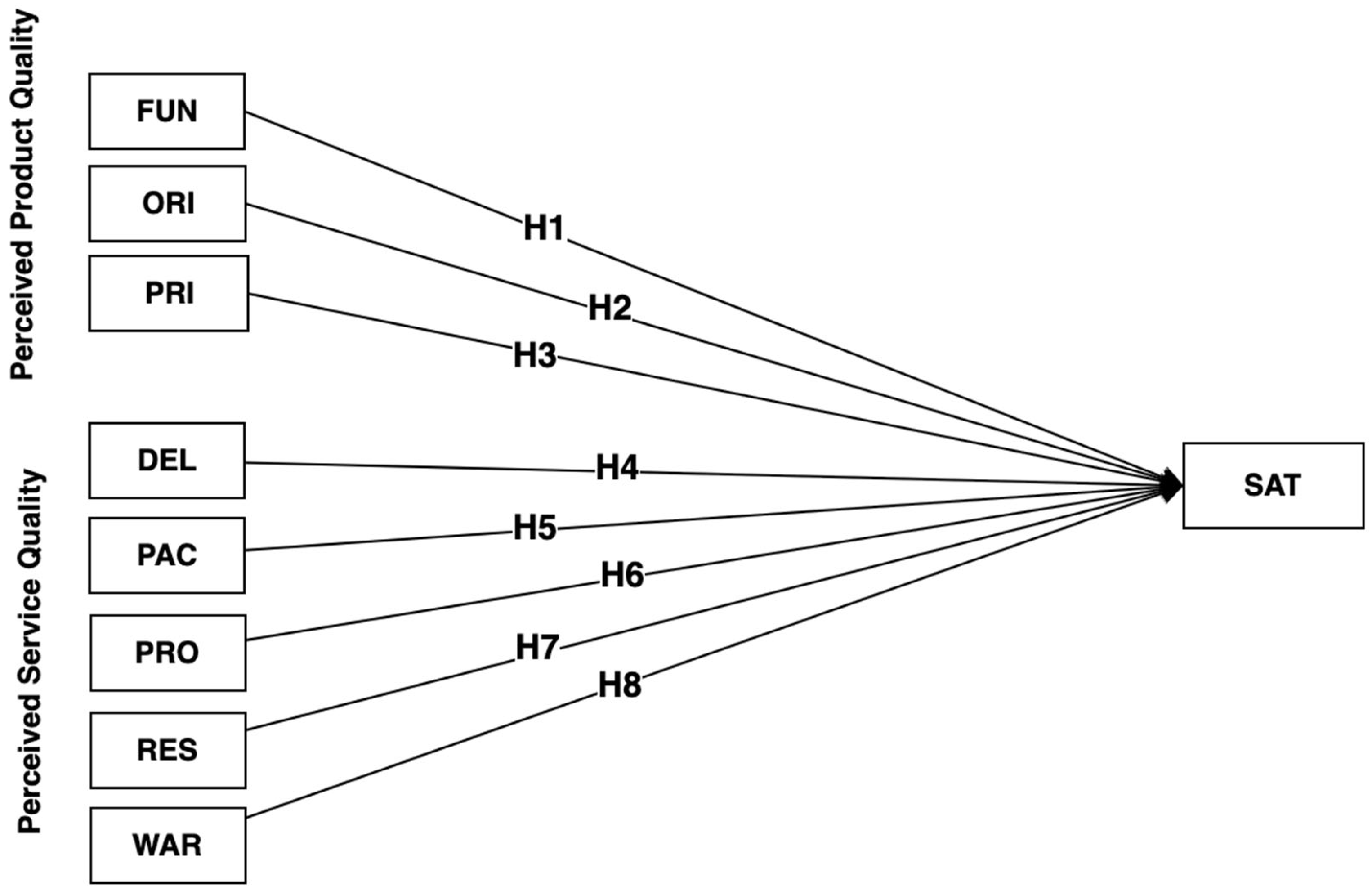
Drawing from a preliminary analysis of Indonesian online review discourse, we identify eight distinct aspects of perceived quality. These are categorized into two groups to provide a clearer theoretical structure:
A.
Perceived Product Quality:
  • Functionality: The core performance and features of the product.
  • Originality: The authenticity and brand assurance are critical in markets with counterfeit concerns.
  • Price: The perceived value and fairness of the cost.
B.
Perceived Service Quality:
  • Logistics Delivery Service: The fulfillment process, including speed, reliability, and condition upon arrival.
  • Packaging: The protective and experiential element of product receipt.
  • Responsiveness: The seller’s communication and customer service pre- and post-purchase.
  • Warranty: The post-purchase security and guarantee.
  • Promotion: The incentives and deals offered at the point of sale.
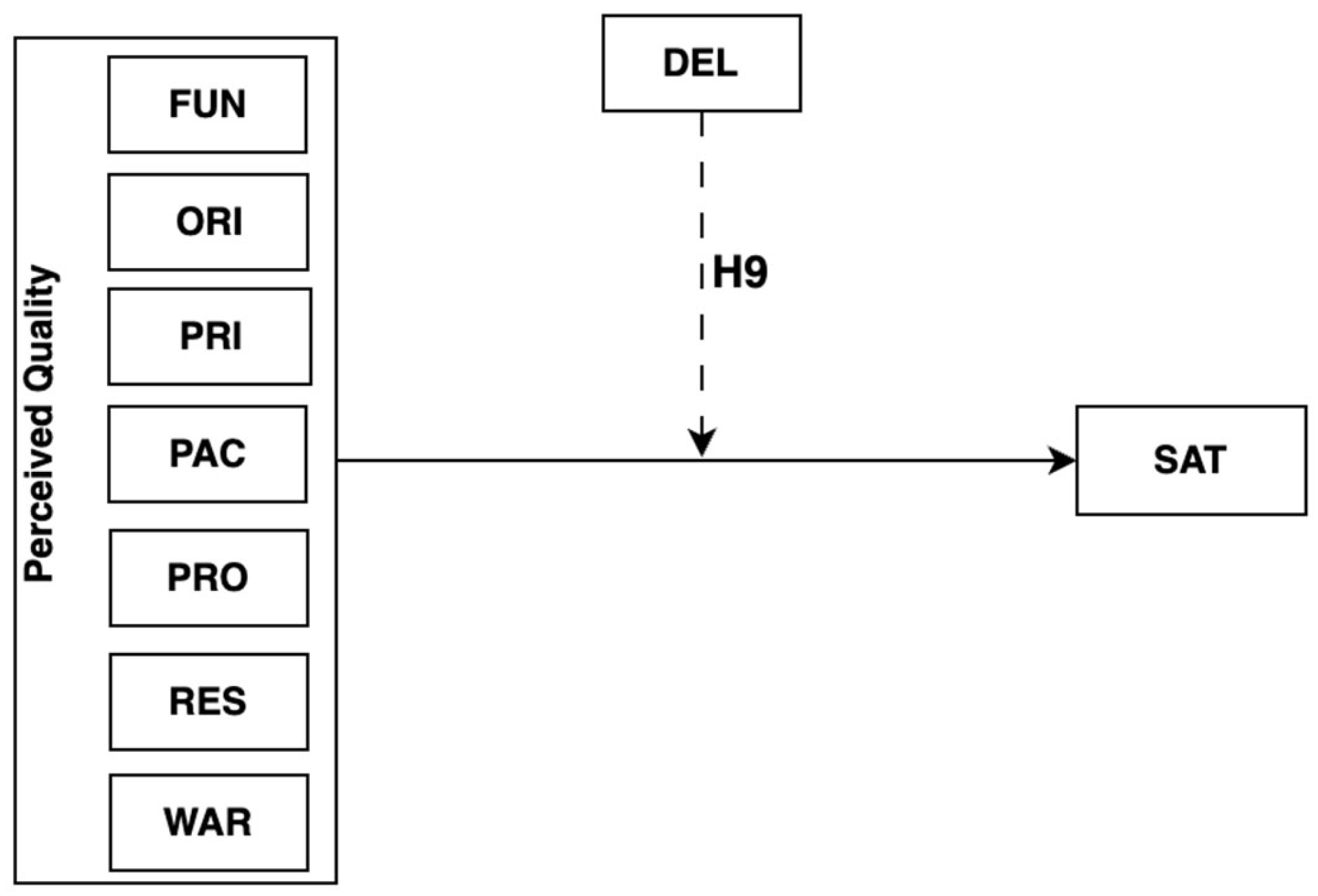
We posit Logistics Delivery Service as a moderator based on its unique position in the customer journey. It is the final and most tangible touchpoint that culminates the online transaction. A positive delivery experience can act as a halo effect, reinforcing the value of the product and other services. Conversely, a negative delivery experience can negate positive perceptions of product functionality or seller responsiveness, as the customer cannot fully enjoy the product until it is successfully delivered. Therefore, we hypothesize that Logistics delivery service moderates the relationship between other perceived quality aspects and satisfaction, serving as a crucial reinforcing or mitigating factor. The proposed conceptual model illustrating the direct effects of perceived product quality and perceived service quality aspects on customer satisfaction is presented in Figure 1, and the hypothesized moderating effects of Logistics Delivery Service presented in Figure 2.
Figure 1. Conceptual Model of Perceived Quality and Customer Satisfaction in E-commerce.
Figure 2. Conceptual Model of Logistics Delivery Service Moderation on Perceived Quality and Customer Satisfaction in E-commerce.
Hypothesis 1:
Functionality significantly influences customer satisfaction.
Product functionality influences customer satisfaction, especially when it matches their preferences. In smartphones, features such as processing speed and capability are critical, emphasizing the importance of specific functionalities in competitive markets. Studies show that products offering more functionalities are perceived as higher in quality [10,11]. Customers are additionally tending to be pleased with purchases when a product meets their expectations or offers improved usability. Reliable functionality also minimizes frustration and reduces the chances of returns or complaints. As a result, well-functioning products create a more positive user experience and strengthen overall satisfaction. To meet consumer demands and remain competitive, businesses must continually invest in improving product functionality.
Hypothesis 2:
Originality significantly influences customer satisfaction.
Originality enhances perceived quality through authenticity [26]. Original products compete successfully with high-quality counterfeit products, improving customer preference and loyalty [27]. Original products enhance consumers’ satisfaction, especially when the product includes distinctive features or design elements that differentiate it from competitors [28]. Originality also improves word-of-mouth communication, leading to better consumer engagement and brand advocacy [29]. Consumers tend to feel more confident discussing experiences with original products, which increases brand reputation and strengthens their satisfaction. This study constructs the hypothesis and explores the originality effect on customer satisfaction.
Hypothesis 3:
Price significantly influences customer satisfaction.
Product price influences customer satisfaction by shaping perceived value and fairness [30,31]. Consumers feel pleased with a purchase when the price accurately reflects the product’s quality and usefulness. Reasonable pricing fosters trust and reduces post-purchase regret, especially in competitive online markets where comparisons are easy [32]. In contrast, high prices often lead to disappointment and lower satisfaction, even when product quality meets expectations [30]. Research shows that consumers link fair pricing with brand integrity and show greater loyalty to brands perceived as offering good value [31]. Therefore, this study constructs the hypothesis and investigates the product price effect on customer satisfaction.
Hypothesis 4:
Logistics delivery significantly influences customer satisfaction.
In online markets, customers feel confident and satisfied when products come on time and safely. Delays or faulty products often lead to dissatisfaction, poor reviews, and reduced trust [33,34]. Research demonstrates that delivery speed and accuracy substantially influence consumers’ purchase intention [35,36]. In emerging markets like Indonesia, where logistical challenges can hinder performance, a dependable delivery system becomes even more essential. Brand-owned delivery optimizes delivery operations, enhances sales and customer satisfaction, and stays competitive in the online market [37]. Therefore, this study constructs the hypothesis and investigates the logistics delivery service effect on customer satisfaction.
Hypothesis 5:
Packaging significantly influences customer satisfaction.
Packaging has an important impact on satisfaction in the online market by protecting the product and enhancing the unboxing experience [38,39]. Secure packaging ensures that products arrive undamaged, boosting the buyer’s confidence in the seller’s dependability. When the products are delivered in good condition, the customer is more likely to feel appreciated. In markets like Indonesia, where deliveries often involve long distances and varied logistics, secure and well-designed packaging becomes even more important. Therefore, this study constructs the hypothesis and investigates the effect of packaging on customer satisfaction.
Hypothesis 6:
Promotion significantly influences customer satisfaction.
Promotions serve as a basis for enhancing satisfaction in the online market by directly improving perceived value and enriching the overall shopping experience. Cashback incentives, rebates, and discounts demonstrate business appreciation for customer patronage while motivating transaction completion, particularly when these promotional offerings align with customer expectations and requests to strengthen both satisfaction levels and company reputation [40,41]. In competitive markets, thoughtfully designed promotional programs enable businesses to differentiate themselves and encourage repeat purchases [42]. It will make businesses developing personalized, customer-focused promotional strategies more likely to achieve sustained satisfaction and cultivate loyalty relationships [41]. Therefore, this study constructs the hypothesis and investigates promotion’s effect on customer satisfaction.
Hypothesis 7:
Responsiveness significantly influences customer satisfaction.
Responsiveness serves critical factors in e-commerce environments by directly influencing perceptions of service quality and brand attentiveness [43,44,45]. When businesses provide prompt responses to customer inquiries, complaints, and service requests, consumers experience a sense of acknowledgment and value that strengthens their connection with the brand [43,46]. Prompt communication reduces transaction uncertainty and establishes customer trust, while delayed responses create frustration and lower satisfaction regardless of product quality [43,46]. Research confirms that superior responsiveness enhances customer experience and increases repeat purchases [47]. Furthermore, consistent responsiveness signals a company’s genuine commitment to customer service excellence, which consumers particularly value when evaluating options in competitive marketplace environments. Brands should maintain reliable standards for quick and effective communication consistently to achieve higher customer satisfaction rates and establish stronger competitive positioning in e-commerce. Therefore, this study constructs the hypothesis and investigates responsiveness’s effect on customer satisfaction.
Hypothesis 8:
Warranty significantly influences customer satisfaction.
Warranty services can impact customer satisfaction in online shopping by reducing purchase anxiety and building buyer confidence [48,49]. Customers feel more secure purchasing products that offer clear and comprehensive warranty coverage, particularly for expensive or technical items where the risk feels higher. Brands that address warranty quickly and fairly are more likely to preserve consumers’ loyalty [50]. Research shows excellent warranty service promotes customer satisfaction and encourages repeat purchases and brand loyalty [49,50]. In competitive online markets, strong warranty service provides both customer confidence and a brand benefit for creating long-term consumer partnerships. Therefore, this study constructs the hypothesis and investigates warranty’s effect on customer satisfaction.
Hypothesis 9:
Perceived quality directly impacts customer satisfaction, with logistics delivery service significantly serving as a moderating variable.
The study not only focuses on investigating how perceived quality aspects directly influence customer satisfaction but also focuses on investigating how certain aspects moderate this relationship. For instance, excellent product functionality, innovation, and durability, coupled with responsiveness, proficient packaging, and fast delivery, can generate strengthened customer satisfaction and purchasing confidence. This study hypothesizes logistics delivery service serves as a crucial moderating component in this relationship. Good product quality with delays or poor handling can affect customer dissatisfaction. Logistics delivery is a crucial touchpoint that completes the buying process and leaves a lasting impression on the customer. Therefore, this study investigates how logistics delivery serves as a moderating role in the perceived quality and satisfaction relationship.
The specific aspects in the hypothesis are presented in Table 1 and used as variables in this study.
Table 1. Summary of Perceived Quality Aspects.

2.2. Research Methodology

2.2.1. Online Reviews Data Sources

The study acquired data through web scraping from the official stores of various smartphone brands on Tokopedia.com. Tokopedia was selected as the data source for several reasons. First, it is one of the largest e-commerce platforms in Indonesia by market share and user base [51], ensuring the data reflects a significant portion of the Indonesian online consumer population. Second, as a local Indonesian platform, it provides a more authentic view of domestic consumer behavior compared to global platforms.
Data collection focused on the top five (market share) smartphone brands in Indonesia: Infinix (Transsion), Oppo, Samsung, Vivo, and Xiaomi [52]. This selection was strategic, aiming to capture a representative spectrum of the market. It includes Samsung as a global premium leader; the dominant Chinese mid-range brands Oppo, Vivo, and Xiaomi, which collectively hold a majority market share in Indonesia; and the budget-oriented brand Infinix, representing the important entry-level segment. This mix ensures our analysis covers the primary price and brand perception tiers relevant to Indonesian consumers, rather than being limited to a single segment. Condition for Apple: there is no official store in Tokopedia, and their own e-commerce store does not collect reviews from consumers.
The raw data was initially filtered by word count. A minimum limit of 5 words was applied to exclude short and non-substantive reviews (e.g., good, thanks, okay) that lack the descriptive content needed for aspect-based sentiment analysis. A maximum limit of 40 words was set to focus the LLM analysis on concise, aspect-specific feedback, avoiding very long, narrative-style reviews that often contain multiple topics and are more complex to classify accurately. This range was chosen to capture reviews with sufficient detail while maintaining a focus on clear, primary customer assertions.
From this filtered population, a final sample of 5000 reviews was selected. To ensure this sample was representative of the underlying review ecosystem and to prevent bias from an overrepresentation of any single group, we employed a stratified random sampling technique. The population was stratified based on three key variables:
  • Brand: To ensure proportional representation from each of the five selected brands.
  • Star Rating: To include a balanced mix of positive (4–5 stars), neutral (3 stars), and negative (1–2 stars) reviews, as an overabundance of positive reviews is common on e-commerce platforms.
The proportional allocation for each stratum (brand/rating combination) was calculated based on its share of the total filtered review population. This method ensures our sample is balanced and enhances the generalizability of our findings within the defined context of Indonesian smartphone purchases on Tokopedia.
Time of Review Submission: To cover a recent and relevant period, specifically reviews posted between August 2023 and November 2024. This one-year window captures contemporary consumer sentiments while minimizing the impact of outdated product models or service practices. Moreover, our data collection and reporting methodology aligns with best practices for scientific research using online review data, as outlined in studies like [53], emphasizing transparency in platform selection, time frames, and sampling procedures.

2.2.2. LLM-ABSA: Text Classification Model for Perceived Quality Aspects

This study utilizes aspect-based sentiment analysis (ABSA) as a text classification method to understand the thematic content of consumer reviews. A LLM is employed for this purpose, specifically the Google Gemma2 model [54]. The Gemma2 is designed for optimal efficiency and superior performance in LLM applications, prioritizing performance and cost-efficiency [55]. In this study, the Gemma2 model is applied using the Scikit-LLM Python package (version 1.4.1), which seamlessly integrates excessive language models with Scikit-learn to improve text classification analysis [56,57].
We employed a structured, zero-shot prompting approach to mitigate the known sensitivity of LLM outputs to prompt framing [58]. The model was instructed to identify all aspects present in a review from our predefined list and to assign a sentiment and a probability score to each. The complete, verbatim prompt is provided in Appendix A to ensure full reproducibility.
The LLM-generated JSON output was parsed programmatically. While the model identified all applicable aspects, we implemented a selection rule to focus on the most salient customer feedback: for each review, we retained only the two aspects with the highest assigned probability scores. This decision is methodologically justified for several reasons:
  • Data-Driven Salience: Our data consists of concise reviews, with an average length of 11 words. In such short texts, customers typically focus on one or two primary concerns. Our rule prioritizes these salient aspects, which are the most likely drivers of their satisfaction.
  • Reduction of Noise: It minimizes the inclusion of minor, tangential, or weakly implied mentions that could add noise to the statistical model, a critical consideration with short-text data.
  • Cognitive Plausibility: It aligns with the finding that consumers, especially in quick online reviews, focus on a limited number of key factors when evaluating a product experience.
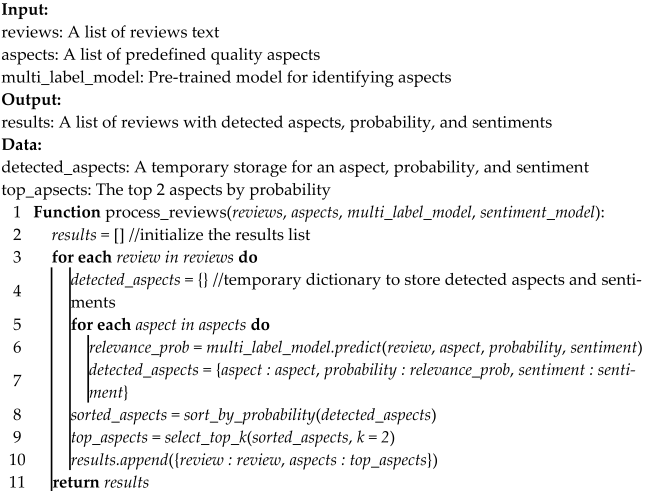
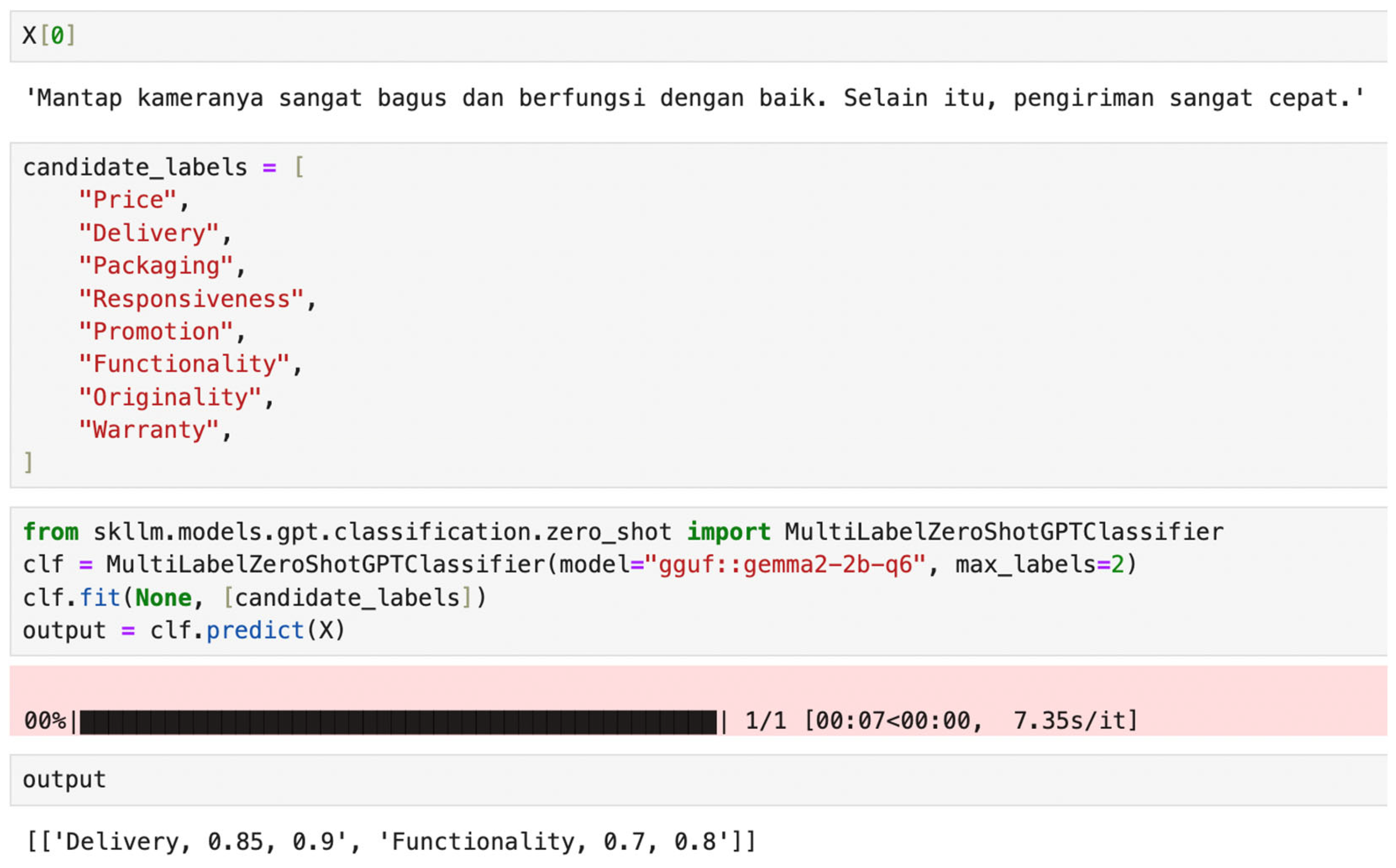
The algorithm for this process is summarized in Algorithm 1 and Figure 3 provides an instance of the model’s output for a sample review.
Algorithm 1: Pseudocode for Aspect-Based Sentiment Analysis on Consumer Review
Jtaer 20 00345 i001
Figure 3. Instance of model performing aspect and sentiment analysis.
Algorithm 1 processes each review through a pre-trained multi-aspect classification model that assesses relevance probabilities and sentiment polarities for a predefined set of quality aspects. For each review, the top most relevant aspects are selected based on their probability scores, ensuring focus on the most salient consumer reviews. Figure 3 presents an instance of process aspect identification. The process begins by defining candidate aspects relevant to the domain, including Delivery, Functionality, Originality, Packaging, Price, Promotion, Responsiveness, and Warranty. Customer reviews are then processed using Google Gemma2 models with a zero-shot classifier, which maps text to predefined aspects without requiring labeled training data. For example, in the review, “Mantap kameranya sangat bagus dan berfungsi dengan baik. Selain itu, pengiriman sangat cepat.” (The camera is excellent and works very well. In addition, the delivery was very fast), the classifier identified Delivery and Functionality as the most relevant aspects, with high probability and strong positive sentiment toward both.

2.2.3. Logistic Regression: Customer Satisfaction Model

Logistic regression is employed to analyze various aspects of the consumers’ perceived quality and overall consumer satisfaction relationship. In this model, satisfaction (SAT) is treated as a binary outcome (satisfied/dissatisfied). The probability of a consumer being satisfied is modeled based on a set of predictor variables derived from the classified review content. Consumer satisfaction is assessed using product ratings: ratings of 4 and 5 are classified as “1 = satisfied”, while ratings of 1, 2, and 3 are classified as “0 = not satisfied”.
The decision to dichotomize the 1–5-star rating scale was based on both theoretical and empirical considerations. Theoretically, it aligns with the fundamental tenet of Expectancy-Confirmation Theory, where the outcome is a binary state of satisfaction (positive disconfirmation) or dissatisfaction (negative disconfirmation). Empirically, the distribution of online ratings is often J-shaped, heavily skewed towards 5 stars, with 1-star and 4-star reviews being the most informative. In such a context, the psychological difference between a 4 (good) and a 5 (excellent) is less critical to our research question than the fundamental distinction between a positive experience (4,5) and a non-positive one (1,2,3). A rating of 3 is frequently considered “neutral” or “met minimum expectations” rather than “satisfied,” and is often used by consumers to express mild disappointment. Therefore, grouping 1–3 as “not satisfied” captures the meaningful threshold between experiences that met or exceeded expectations versus those that did not.
We acknowledge that dichotomization can reduce statistical precision. However, for the purpose of this study, which aims to identify the key drivers that push a consumer across the critical threshold from a non-positive to a positive overall evaluation, a binary logistic model provides clear, interpretable results in the form of odds ratios, which are highly actionable for managers.
Equation (1) presents the basic logistic regression model for smartphone products. The left side of the equation represents the log-odds of consumer satisfaction. The independent variables are Logistics Delivery Services (DEL), Functionality (FUN), Originality (ORI), Packaging (PAC), Price (PRI), Promotion (PRO), Responsiveness (RES), and Warranty (WAR). β 0 is the intercept, β 1 . β 8 are coefficients for each independent variable, while ε is the error term.
l n P S A T = 1 P S A T = 0 = β 0 + β 1 D E L + β 2 F U N + β 3 O R I + β 4 P A C + β 5 P R I + β 6 P R O + β 7 R E S + β 8 W A R + ε
To explore the moderation effects of logistics delivery services, interaction terms can be included in the model and shown in Equation (2). In the expanded model, the coefficient β 1 x indicates the magnitude and direction of the interaction effect between logistics delivery service and other factors.
l n P S A T = 1 P S A T = 0 = β 0 + β 1 D E L + β 2 F U N + β 12 D E L × F U N + β 3 O R I + β 13 D E L × O R I + β 4 P A C + β 14 D E L × P A C + β 5 P R I + β 15 ( D E L × P R I ) +   β 6 P R O + β 16 D E L × P R O + β 7 R E S + β 17 D E L × R E S +   β 8 W A R + β 18 ( D E L × W A R ) + ε

3. Results

3.1. LLM-ABSA Classification Model for Perceived Quality

To evaluate the performance of the LLM-ABSA model, a manually annotated test set was created. The recruited annotator independently labeled a random sample of 500 reviews from the dataset, identifying the aspects and their associated sentiment. The model evaluation matrices in Table 2 demonstrate a strong overall accuracy of 87.60% for the combined (aspect and sentiment pairs) prediction task. The average precision, recall, and F1-score are consistently high, approximately 0.89, 0.88, and 0.87, respectively. This indicates that the model generally performs well across the dataset, with a robust ability to correctly classify the combined aspect and sentiment pairs, particularly for the more frequently occurring categories. The strong performance across these weighted metrics suggests a reliable model for this task.
Table 2. Model Evaluation Matrices.
The model was designed to identify at least one and at most two aspects within each review. Table 3 provides a comprehensive summary of the factors or aspects mentioned by customers. The analysis reveals that Logistics delivery services are the most frequently mentioned primary aspect, appearing in 34.18% of reviews. This is followed by Functionality (28.32%), Originality (17.32%), Responsiveness (7.48%), and Packaging (7.10%). Conversely, Warranty (0.84%), Promotion (0.88%), and Price (2.48%) are the least mentioned factors, suggesting they are not dominant concerns for Indonesian consumers purchasing smartphones online. Other factors beyond product and service quality account for a mere 1.48% of mentions.
Table 3. The Identification of Perceived Quality Aspects.
The 34.18% mention rate for DEL signifies its salient role as the single most discussed theme. The remaining reviews are dominated by discussions of core product attributes, with Functionality and Originality being the next most prominent aspects. The fact that no single aspect dominates a majority of conversations reflects the multifaceted nature of perceived quality; consumers evaluate their experience based on a combination of product-centric and service-centric attributes, with DEL, FUN, and ORI representing the three primary pillars of evaluation in this domain.
Furthermore, in the second aspect mentioned, a significant proportion of reviews (61.24%) do not specify an additional factor, indicating that most Indonesian reviewers tend to focus on a single aspect. Among those reviews that mentioned a second aspect, Functionality is most prominent (10.44%), followed by Packaging (8.32%), Originality (6.40%), Logistics delivery services (6.22%), and Responsiveness (5.24%), underscoring their importance in customer attention. Consistently, the three least factors are Price (0.88%), Warranty (1.26%), and Promotion (0.00%). Promotion was not even found as the second factor in the review.
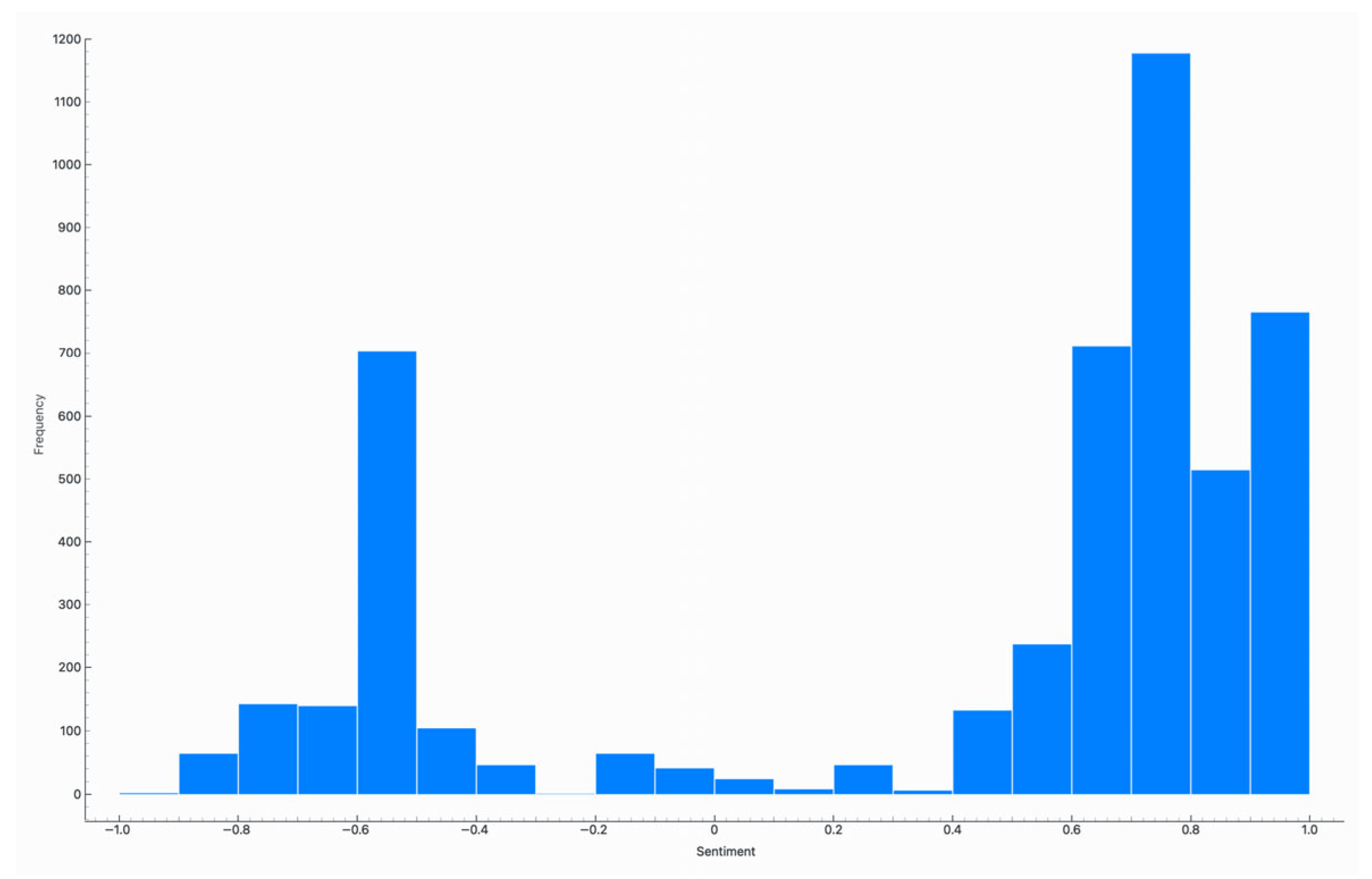
Figure 4 displays the distribution of sentiment in customer reviews for smartphones. These graphical representations show that the proportion of positive sentiment is notably higher than both negative and neutral sentiments across both product categories. Specifically, while some negative sentiment exists around −0.5, the frequency of positive sentiment, particularly between 0.7 and 0.9, is significantly greater. This finding underscores a predominantly favorable customer perception in these domains, warranting further investigation into the specific attributes contributing to such positive experiences. The distinct three-area distributions observed in both figures, particularly the sharp peaks in the negative and positive range and the relatively sparser distribution around the neutral point, suggest that customers tend to have strong opinions rather than a proportion of neutral or indifferent experiences. This is particularly evident in Figure 1, where a significant negative peak and a vast positive peak are present, implying that while some customers have very negative experiences, a far greater number have positive ones.
Figure 4. The Distribution of Customer’s Sentiment on Smartphone Reviews.
Table 4 offers a comprehensive summary of customer sentiment across various perceived quality aspects for smartphone products. The results shown there are six factors (Logistics delivery services, Functionality, Originality, Packaging, Price, and Responsiveness) depict a mix of negative and positive sentiments, while Promotion and Warranty exclusively received positive feedback. Importantly, the mean sentiment values for all perceived quality factors exceeded 0.5, indicating a stronger prevalence of positive reviews compared to negative ones. Warranty emerged with the highest positive sentiment, boasting a mean value of 0.72; conversely, Price emerged with the lowest sentiment among smartphone factors, with a mean of 0.63, highlighting it as an area where customers may have slightly fewer positive perceptions.
Table 4. Summary of Perceived Quality Sentiment.

3.2. Customer Satisfaction Model

Table 5 shows descriptive statistics of perceived quality factors included in the customer satisfaction model for smartphone purchases. All variables are binary categorical, as shown by their minimum and maximum of 0 and 1. The analysis of online consumer reviews found a mean customer satisfaction score of 0.770 for online smartphone purchases. This shows that most consumers were pleased with their experience. This score is much higher than the neutral point of 0.5, indicating a high level of overall customer satisfaction, while the perceived quality aspects of these smartphone purchases are distributed into eight different factors. Among these, Promotion was the least important factor, with a very low mean score of 0.010 and the smallest standard deviation, demonstrating its limited effect on customer perception in this area.
Table 5. Descriptive Statistics of Perceived Quality Factors.
Table 6 summarizes a logistic regression analysis that predicts customer satisfaction with smartphone purchases using seven different models. In this analysis, perceived product quality aspects, including Functionality, Originality, and Price, are included as control variables. Model 1 performs as a baseline model, which includes these control variables in the model. Models 2 through 6 investigate how different perceived quality aspects directly affect customer satisfaction. Finally, Model 7 brings together all factors to give a complete view of this relationship. The significance of each model is examined with the chi-square test, where significant values indicate a good model fit. Further evaluation of fit used deviance, Akaike Information Criterion (AIC), and Bayesian Information Criterion (BIC). Lower values for deviance, AIC, and BIC suggest a better-fitting model.
Table 6. The Direct Impact of Perceived Quality.
Across all models, the analysis showed that perceived quality significantly affects customer satisfaction, supported by the significant chi-square result. Model 1 specifically indicated that perceived product quality greatly impacts customer satisfaction with smartphone purchases. Functionality had an odds ratio of 5.123, meaning consumers who mentioned Functionality as a good quality aspect were 5.123 times more likely to be satisfied with their smartphone purchase compared to those who mentioned Functionality as a poor-quality aspect or did not mention Functionality in the reviews. Then, Originality significantly influenced satisfaction with an odds ratio of 5.340, showing that consumers who mentioned Originality as a good quality aspect in the reviews were 5.340 times more satisfied. For Price, consumers who thought their purchases were at a good price were 3.348 times more likely to be satisfied with their smartphone purchase than those who did not express it as a good price or did not mention price aspects in the reviews.
The analysis in Models 2 through 6 provided important insights into how different perceived service quality factors affect customer satisfaction. Most perceived service quality factors had a significant impact on their own, except for the Promotion factor, where p > 0.1. This finding indicates that Promotion did not affect customer satisfaction when considered alone. Interestingly, although Promotion was not significant by itself, its impact became strong (p = 0.036) when included in the full model.
The finding that Promotion (PRO) was not significant in isolation (Model 5) but became significant in the full model (Model 7) suggests a complex, interdependent relationship with other quality aspects. This pattern is indicative of a suppressor effect. Promotion may be highly correlated with other variables, particularly Price (PRI). When evaluated alone, the variance in satisfaction explained by Promotion is confounded with the effect of price perception. However, when Price and other aspects are controlled for in the full model, the unique, positive effect of receiving a promotional benefit, such as a cashback or voucher, distinct from the product’s base price, is revealed as a significant driver of satisfaction. This implies that consumers value promotions not merely as a price reduction but as a separate positive event that enhances their overall shopping experience.
Additionally, Packaging stood out as the most influential factor among all variables, with an impressive odds ratio of 9.695. This indicates that customers who express Packaging as a good-quality aspect were 9.695 times more likely to be satisfied than those who did not. Following Packaging in significance were Logistics Delivery Services with an odds ratio of 5.418, Warranty with an odds ratio of 4.594, and Responsiveness with an odds ratio of 3.648. It showed a substantial positive relationship to customer satisfaction. In the full model (Model 7), Packaging was consistent with the highest odds ratio at 9.174. This finding highlights how important packaging is in influencing customer quality perception and satisfaction. The findings also support Hypothesis 1 through Hypothesis 8.
Table 7 presents the summary of the logistics delivery service moderating effect on satisfaction with other perceived quality aspects. In Model 1, a set of control variables is included along with an interaction term between Logistics delivery services and Responsiveness. The results show that both Logistics Delivery Service and Responsiveness are important predictors of customer satisfaction, with odds ratios of 6.197 and 5.871, respectively. The interaction term between these two variables (DEL*RES) has a significant positive effect, with an odds ratio of 0.181. This finding shows that Logistics delivery services significantly affect the relationship between Responsiveness and customer satisfaction.
Table 7. The Moderating Effect of Logistics Delivery Services.
In Model 2, there is a notable interaction effect between Logistics Delivery Services and Packaging. The odds ratio for Packaging rises sharply to 12.316 when Logistics delivery services are included in the model. The significant impact of Logistics Delivery Services is consistent in Models 4 through 6 for Warranty, Functionality, and Originality. This effect also continues in the full model shown in Model 8. Overall, these results strongly support Hypothesis 9, the role of Logistics delivery services as a moderating effect in increasing customer satisfaction, except for Promotion and Price, which are shown in Model 3 and Model 7, respectively.
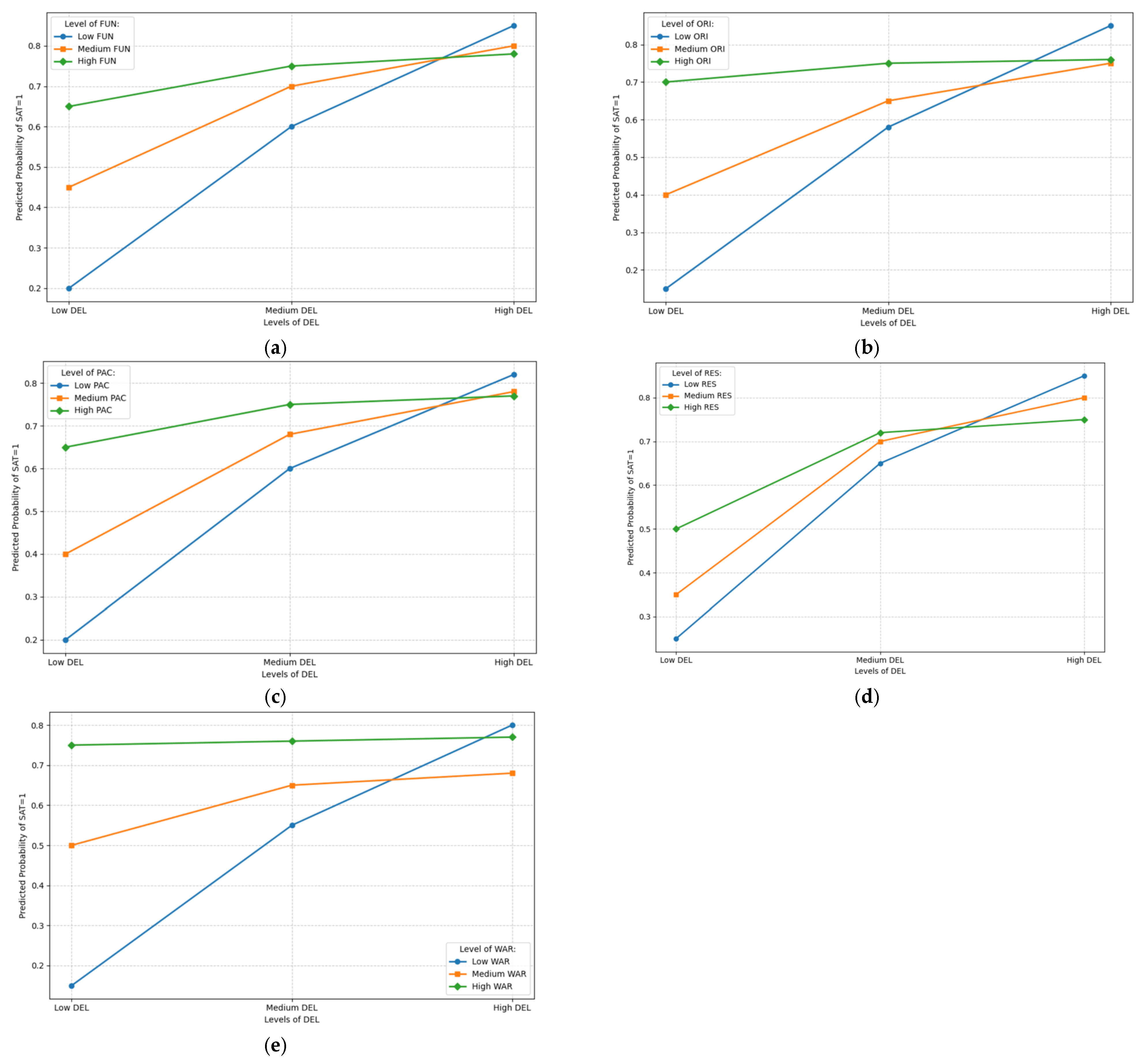
The moderating results are displayed in Figure 5, consistently illustrating the significant moderating role of Logistics Delivery Service (DEL) on the relationship between product factors and customer satisfaction (SAT = 1). A distinct and uniform crossover (dis-ordinal) interaction pattern is evident across all analyzed factors. This crossover pattern leads to a crucial interpretation: Logistics Delivery Service acts primarily as a compensatory factor. Products rated as having low quality in any of the intrinsic areas (Low FUN, Low ORI, Low PAC, Low RES, or Low WAR) experience the most substantial increase in the probability of customer satisfaction when delivery service improves from low to high. Specifically, the line representing the low-quality category is consistently the steepest across all five graphs. Conversely, for products already rated highly, the satisfaction probability is already high even with low DEL, and improvements in DEL yield only minimal marginal gains. Therefore, the data strongly suggests that investing in excellent logistics delivery is the most effective strategy for boosting satisfaction when the product is deficient in other key areas, while the benefit is diminished for already high-quality products.
Figure 5. The Interaction between Logistics Delivery Services and Other Factors. (a) Interaction DEL and FUN; (b) Interaction DEL and ORI; (c) Interaction DEL and PAC; (d) Interaction DEL and RES; (e) Interaction DEL and WAR.

4. Discussion

4.1. Discussion on Perceived Quality Aspects

The dominance of Logistics delivery services as the most frequently mentioned aspect underscores the critical role of the logistical fulfillment process in online purchasing. This finding aligns with existing literature on e-commerce satisfaction by Chotisarn and Phuthong (2025), which highlights the tangible and immediate impact of logistics delivery on the overall consumer experience [59]. The multifaceted nature of logistics delivery, encompassing speed, reliability, and the overall shipment experience, suggests that consumers’ evaluation extends beyond mere transaction completion to include the tangible interaction with the product’s arrival. The subsequent focus on Functionality and Originality reinforces the importance of core product attributes and trust in the authenticity of online purchases, particularly for high-value items like smartphones. The finding brings into line with Nasiri and Shokouhyar (2021), who identified Functionality and Originality as the most frequently mentioned terms in online reviews concerning smartphone products [29].
The moderate attention given to Packaging suggests its relevance as a secondary consideration for consumers, potentially linked to expectations regarding product protection and after-sales support. This finding is in line with Schnurr and Wetzels (2020) and Wang and Zhu (2020); Packaging is important to protect the product and enhance the unboxing experience [38,39]. However, Seifian, Shokouhyar, and Bahrami (2023) underscore the importance of socio-cultural settings in analyzing customer reviews on online markets, implying that the significance of aspects like packaging may vary across different regions [60]. Moreover, the relatively moderate mention of Responsiveness is also notable and could indicate that customer service interactions are less frequently documented in online reviews for smartphones compared to other aspects of the product or transaction. This finding supports the emphasis on seller responsiveness in offline retail highlighted by Sharma et al. (2022) [47]. Moreover, the low salience of Promotion, Price, and Warranty as primary or secondary aspects in smartphone reviews warrants further investigation. This finding suggests that these factors are either considered pre-purchase and, thus, less frequently reiterated in post-purchase reviews, or that other experiential aspects hold greater weight in shaping online customer feedback for this product category. This perspective contrasts with the arguments of Hufnagel, Schwaiger, and Weritz (2022), who posit price as an important aspect in customer reviews [61].
The complex role of Promotion, which only showed a significant impact when considered alongside other aspects, underscores the nuanced nature of consumer decision-making. It appears that promotions are not a primary initial driver but act as a valuable enhancer, contributing to satisfaction after core expectations of product functionality, originality, and fair pricing are met.
The findings contribute to a nuanced understanding of consumer behavior in the Indonesian online market, highlighting the differential priorities and concerns across product categories. This finding has implications for online retailers seeking to optimize their offerings and customer service strategies based on the specific needs and feedback patterns associated with different types of products. Further research could explore the sentiment associated with these mentioned aspects and investigate the relationship between these mentions and overall customer satisfaction scores to provide more comprehensive thoughts about the drivers of online customer experience in the online market.
The results offer several insights for online retailers operating in the Indonesian market. For smartphone retailers, maintaining the current levels of service that lead to high satisfaction is paramount. Focusing on reliable Logistics delivery services, ensuring product Functionality and Originality (as highlighted in the aspect analysis), and providing clear product information likely contribute to this positive perception. However, attention should still be placed on the segments reporting lower satisfaction to identify and address specific pain points. Investing in robust quality control measures and transparent communication with customers regarding delivery timelines and product sourcing could also mitigate negative experiences and enhance overall satisfaction. Furthermore, understanding the specific reasons behind the lower satisfaction ratings through qualitative analysis of reviews could provide valuable insights for targeted improvements.

4.2. Discussion on Customer Satisfaction Model

The analysis provided offers a thorough look at the factors that predict customer satisfaction with smartphone purchases, using a logistic regression approach. This method is ideal for modeling binary outcomes, like customer satisfaction (satisfied or dissatisfied), because it effectively estimates the probability of an event happening [62,63]. The findings indicate that perceived quality factors affect customer satisfaction. Logistics delivery services also influence this relationship in a moderating role. This result supports ECT, that customer satisfaction comes from comparing expectations before the purchase to perceived performance after the purchase. Positive disconfirmation, which leads to customer satisfaction, happens when perceived performance is better than expectations. On the other hand, dissatisfaction occurs with negative disconfirmation. In this case, different aspects of perceived quality (like Functionality, Packaging, and Originality) directly affect the perceived performance part of ECT. So, higher perceived quality results in more positive disconfirmation and, therefore, greater customer satisfaction.
Findings show that almost all perceived quality factors strongly influence customer satisfaction. This agrees with the work of Nasiri and Shokouhyar (2021) [29]. The analysis of individual perceived quality factors reveals varying effects. Most factors are statistically significant, except for Promotion, which points to their direct impact on customer satisfaction. This indicates that consumers base their satisfaction mainly on tangible product attributes and intrinsic qualities rather than just promotional efforts. This conclusion supports Kumar et al. (2025), emphasizing the importance of a product’s or service’s basic performance in meeting its intended purpose [64].
The subsequent strong influence of Originality and Functionality further reinforces the multifaceted nature of perceived quality. Originality, appealing to consumers seeking distinct products, speaks to innovation, uniqueness, and not counterfeit products. Meanwhile, Functionality remains a core driver of utility and performance; both are vital components of customer satisfaction. The consistent hierarchy of influence Packaging, Originality, and Functionality within the full model underscores their robust and enduring importance. This finding aligns with Uysal and Okumuş (2022), who argued that brand authenticity, encompassing Originality and Functionality, significantly and positively affects customer satisfaction [28].
Moreover, the finding that Promotion has no significant direct effect on customer satisfaction is notable. Interestingly, it gains a significant effect within the full model. This phenomenon implies that Promotion might not directly drive initial interest but could indirectly influence customer satisfaction by shaping expectations or enhancing the perceived value of other quality factors when considered collectively. For instance, effective promotion might highlight aspects of Functionality or Originality that consumers then value more, thereby contributing to overall satisfaction. This finding contrasts with the results of Blom, Lange, and Hess (2021) and Yang, Guo, and Wei (2025), who argued that Promotion has a direct effect on customer satisfaction [65,66].
In addition to Originality, the findings indicate a significant effect of service quality on customer satisfaction. This aligns with Gonu et al. (2023), who emphasize the important role of services in customer satisfaction [67]. For this study, service quality comprises Logistics delivery services, Packaging, and Responsiveness. Critically, Packaging emerged as the most influential factor, thereby challenging conventional wisdom that often prioritizes functional over aesthetic attributes. This highlights the substantial contribution of the initial unboxing experience, safe packaging, and aesthetic appeal to customer satisfaction, a finding consistent with Shukla, Singh, and Wang (2022) regarding the effects of varying levels of creativity in packaging on customer response [68]. A premium packaging experience can establish positive expectations and foster a memorable first impression, which significantly contributes to overall satisfaction, particularly within highly competitive markets such as smartphones, where product differentiation may be subtle. Furthermore, Responsiveness also exhibits a significant effect on customer satisfaction, aligning with Negassa and Japee (2023) [69]. Similarly, Logistics delivery services significantly influence customer satisfaction, a conclusion supported by Kawa and Światowiec-Szczepańska (2021), who assert the critical role of logistics in the online market and its impact on satisfaction [70].
The findings indicate that Logistics delivery services contribute to customer satisfaction not merely through a linear additive effect, but also by amplifying the influence of other quality dimensions. Specifically, in instances where product functionality is high, enhanced logistics delivery significantly elevates customer satisfaction to profoundly high levels. This phenomenon suggests that exceptional delivery augments the perceived performance of high-quality products, thereby generating a greater degree of positive disconfirmation than attributable solely to the product’s inherent quality. Complementary to this, research by Chikazhe, Makanyeza, and Chigunhah (2021) established that logistics delivery service strengthens the relationship between customer satisfaction and loyalty [71]. Our present findings demonstrate that, in the context of smartphones, logistics delivery service exerts a moderating effect on the relationship between perceived quality and customer satisfaction.
Our findings, particularly the dominance of Logistics delivery services and Packaging, may be uniquely pronounced within the Indonesian context, an archetypal emerging market. Culturally, the high-context and relationship-oriented nature of Indonesian society (gotong royong) may translate into a heightened expectation for reliable and personal service, even in digital transactions. Economically, challenges in logistics infrastructure across the archipelago make reliable delivery a salient and noteworthy achievement for consumers, unlike in mature markets, where it is often a baseline expectation. Furthermore, the strong influence of Packaging could be linked to the importance of unboxing experiences and gift-giving in social culture, as well as a need for tangible reassurance against product damage during potentially longer and less predictable delivery journeys. While this study does not directly measure these cultural and economic variables, it lays the groundwork for future cross-cultural comparative research to formally test these contextual influences.
While this study provides detailed insights into the Indonesian smartphone market, the generalizability of the specific findings to other product categories or cultural contexts requires careful consideration. The prominence of aspects like Logistics Delivery and Packaging is likely amplified in the smartphone category, which consists of high-value, electronic items that are sensitive to shipping handling and where authenticity is a paramount concern. Conversely, for low-involvement, commoditized products (e.g., office supplies, dry goods), these service aspects may be less salient than price. Furthermore, the consumer priorities identified here are shaped by the Indonesian context, an emerging market with specific logistical infrastructure and cultural norms. The relative importance of aspects might differ in developed economies where next-day delivery is standardized and trust in online transactions is higher. Therefore, we caution against directly extrapolating our results without further validation. The primary contribution of this study is not to present a universal hierarchy of quality aspects but to demonstrate the methodology for uncovering such a hierarchy and to validate the critical, and often underestimated, role of service-centric qualities like logistics within a specific and important market segment.
To facilitate a comprehensive understanding of our results, Table 8 provides a summary of the hypothesis tests and the definitive roles of each perceived quality aspect, both in terms of their direct influence on satisfaction and their interaction with logistics delivery services. As summarized in Table 8, the results strongly support the direct influence of all perceived quality aspects on customer satisfaction, and the moderating role of logistics delivery was significant for most aspects.
Table 8. The Summary of the Hypotheses Results.

5. Conclusions

This study explored consumer perceptions of quality in online smartphone purchases by analyzing online reviews across five major brands in Indonesia. It identified various aspects of perceived quality and examined how these aspects relate to overall customer satisfaction, with a particular focus on the moderating role of Logistics Delivery Services. This study utilized the large language model and logistic regression. The results reveal that consumers associate perceived quality with eight key aspects: Logistics Delivery Services, Functionality, Originality, Responsiveness, Packaging, Price, Promotion, and Warranty. Logistics Delivery Services emerged as the most frequently mentioned aspect. Perceived quality affects customer satisfaction, and then Packaging emerged as the most influential factor in customer satisfaction. Logistics Delivery Services play a significant moderating role in the relationship between perceived quality and customer satisfaction. It amplifies the effect of other quality aspects and significantly boosts customer satisfaction to even higher levels. The findings suggest that customer satisfaction in online smartphone purchases is shaped by a combination of perceived quality of product and service-related factors. Service factors, particularly Logistics Delivery, Packaging, and Responsiveness, play a crucial role and can often outweigh product features.

5.1. Theoretical and Practical Implications

The study findings offer several significant implications. For brands and online retailers, the results underscore the critical role of service-related factors, particularly logistics delivery, in shaping customer satisfaction. While product quality remains important, this study reveals that customers are highly sensitive to the overall service experience in the context of online shopping. Businesses should therefore invest in reliable, timely, and transparent delivery systems, as these not only impact satisfaction directly but also enhance the perceived value of other product features such as functionality and originality. Moreover, the strong influence of packaging and responsiveness suggests that customer experience extends beyond the moment of purchase. From a marketing perspective, the study highlights the need to shift emphasis from solely promoting product features to showcasing the quality-of-service offerings. Campaigns that highlight fast delivery, secure packaging, and responsive customer service may resonate more strongly with online consumers. This study theoretically contributes to literature on perceived quality by broadening its scope beyond intrinsic product attributes to include service dimensions that influence customer satisfaction in an online shopping context. The identification of logistics delivery service as a moderator introduces more nuanced thoughtfulness of the interaction between product and service evaluations. This supports an integrated model of perceived value in e-commerce, where tangible product attributes and intangible service experiences work together to shape outcomes like satisfaction and loyalty.
The findings of this study provide a theoretical foundation and empirical support for optimizing e-commerce service strategies, particularly in the smartphone sector and similar high-involvement product categories within emerging markets. The identified hierarchy of perceived quality aspects, with Packaging, Logistics Delivery, and Functionality being paramount, offers a clear framework for resource allocation. However, the direct application of these findings to other contexts requires careful consideration. The specific weight of each aspect is likely contingent on product type (e.g., the importance of packaging and originality would differ for commodity goods like groceries) and market maturity (e.g., logistics may be a baseline expectation in developed economies). Therefore, while the methodology and the demonstrated importance of a dual-dimensional (product and service) quality framework are universally valuable, the specific strategic priorities identified here should be validated and calibrated in broader scenarios before generalized application.

5.2. Limitations and Future Research

This study focused on reviews from only five smartphone brands in Indonesia, which might limit the findings’ applicability to different product categories or markets. Text classification using artificial intelligence (AI) models offers efficiency, but it may overlook nuanced expressions of context in consumer reviews. Building upon the findings and limitations of this study, we propose a multifaceted agenda for future research to advance the understanding of perceived quality in e-commerce. Future studies should expand the data sample to include a wider variety of product categories (e.g., fashion, groceries, durable goods) and geographic markets, including both emerging and developed economies. This would test the generalizability of our findings and allow for cross-cultural comparisons of perceived quality drivers.
To address the limitations of automated text analysis, researchers should employ hybrid methods. This could involve manual coding to create high-quality datasets for fine-tuning LLMs on domain-specific language or the development of more sophisticated models capable of better detecting nuance, sarcasm, and culture-specific expressions in reviews. A critical next step is to integrate subjective review data with objective performance metrics. Linking reviews to logistics API data (actual delivery times), seller response logs, and product return rates would allow researchers to triangulate findings and explore the crucial gap between perceived quality and actual service performance. Employing non-parametric machine learning models (e.g., Decision Trees, Neural Networks, Random Forests, or Gradient Boosting) could help uncover non-linear relationships and complex interactions between quality aspects that are not captured by linear models, providing a more nuanced predictive framework.
This study focused specifically on the moderating role of Logistics Delivery Services. While this provides a focused and deep insight, it does not exhaust the list of potential moderators in the e-commerce ecosystem. Other important variables, such as consumer demographics (e.g., age, tech-savviness), purchase history, or platform-specific features (e.g., marketplace vs. brand-owned website), could also significantly influence the relationship between perceived quality and satisfaction. Future research could build upon our model by incorporating these variables to develop a more comprehensive understanding of the contextual factors that shape customer satisfaction.
Furthermore, the dichotomization of the satisfaction variable, while theoretically and empirically justified, may have reduced some statistical precision. Future research could employ ordinal logistic regression or sentiment analysis of the review text itself to create a more nuanced continuous measure of satisfaction.

Author Contributions

Conceptualization, A.S. and Y.H.; methodology, A.S., Y.H. and R.S.; software, A.S. and R.S.; validation, A.S., Y.H. and R.S.; formal analysis, A.S. and R.S.; investigation, A.S. and R.S.; resources, A.S.; data curation, A.S. and R.S.; writing—original draft preparation, A.S. and Y.H.; writing—review and editing, A.S., Y.H. and R.S.; visualization, A.S.; supervision, Y.H.; project administration, A.S., Y.H. and R.S.; funding acquisition, Y.H. All authors have read and agreed to the published version of the manuscript.

Funding

The author(s) disclosed receipt of the following financial support for the research, authorship, and/or publication of this article: This study was supported by the National Social Science Foundation of China (16BGL088).

Institutional Review Board Statement

Not applicable.

Data Availability Statement

These data were derived from the following resources available in the public domain: Tokopedia (https://www.tokopedia.com, accessed on 27–29 November 2024).

Conflicts of Interest

The authors declare no conflicts of interest.

Abbreviations

The following abbreviations are used in this manuscript:
ABSAAspect-based Sentiment Analysis
AIArtificial Intelligence
AICAkaike Information Criterion
BICBayesian Information Criterion
DELDelivery
ECTExpectancy-Confirmation Theory
FUNFunctionality
GDPGross Domestic Product
LLMLarge Language Model
ORIOriginality
PACPackaging
PRIPrice
PROPromotion
RESResponsiveness
SATSatisfaction
USDUnited States Dollar
WARWarranty

Appendix A

ZERO_SHOT_LLM_ASBA_PROMPT = “““
You will be provided with the following information:
  • An arbitrary text sample. The sample is delimited with triple backticks.
  • List of categories the text sample can be assigned to. The list is delimited with square brackets. The categories in the list are enclosed in the single quotes and comma separated. The text sample belongs to at least one category but cannot exceed {max_cats}.
  • Range value of sentiment score is in decimal, below 0.00 to −1.00 for negative sentiment, above 0.00 to 1.00 for positive sentiment, and 0.00 for neutral sentiment.
Perform the following tasks:
  • Identify to which categories the provided text belongs to with the highest probability.
  • Assign the text sample to at least 1 but up to {max_cats} categories based on the probabilities.
  • Provide your response in a JSON format containing a single key ‘label’ with the array of three value namely predicted category with key ‘category’, probability value with key ‘probability’, and sentiment score with key ‘sentiment_score’. Do not provide any additional information except the JSON.
List of categories: {labels}
Text sample: ‘‘‘{x}’’’
Your JSON response:
“““

References

  1. Budhiraja, K.; Gupta, N.; Kaur, J.; Gupta, S.; Jain, K.; Aggawal, K. A Study on Challenges Affecting Online Buying Behavior of Consumers. In Proceedings of the 2023 International Conference on Advanced Computing & Communication Technologies (ICACCTech), Banur, India, 23–24 December 2023; IEEE: New York, NY, USA; pp. 566–572. [Google Scholar]
  2. Garg, V.; Kaur, A. Has Physical Retail Lost Its Relevance in E-Commerce World? J. Bus. Manag. Inf. Syst. 2018, 5, 1–8. [Google Scholar] [CrossRef]
  3. Chen, T.; Samaranayake, P.; Cen, X.Y.; Qi, M.; Lan, Y.C. The Impact of Online Reviews on Consumers’ Purchasing Decisions: Evidence From an Eye-Tracking Study. Front. Psychol. 2022, 13, 865702. [Google Scholar] [CrossRef] [PubMed]
  4. BPS. Statistics Yearbook of Indonesia 2024; BPS-Statistics Indonesia: Jakarta, Indonesia, 2024; Volume 52. [Google Scholar]
  5. Edwar, M.; Diansari, R.A.A.; Winawati, N.F. The Factors That Affecting the Product Purchasing Decision Through Online Shopping By Students of Surabaya State University. Int. J. Educ. Res. Rev. 2018, 3, 54–64. [Google Scholar] [CrossRef]
  6. Setiyawan, A.; Wijayanto, A.W.; He, Y. Extracting Consumer Opinion on Indonesian E-Commerce: A Rating Evaluation and Lexicon-Based Sentiment Analysis; Politeknik Statistika STIS: Jakarta, Indonesia, 2021; pp. 2–11. [Google Scholar]
  7. Nikhashemi, S.R.; Valaei, N.; Tarofder, A.K. Does Brand Personality and Perceived Product Quality Play a Major Role in Mobile Phone Consumers’ Switching Behaviour? Glob. Bus. Rev. 2017, 18, S108–S127. [Google Scholar] [CrossRef]
  8. Hanifati, L.N.; Salehudin, I. The Effect of Perceived Product Quality, Brand Personality, and Loyalty on Brand Switching Intention of Technological Products. South East Asian J. Manag. 2021, 15, 169–187. [Google Scholar] [CrossRef]
  9. Alhaddad, A. Perceived Quality, Brand Image and Brand Trust as Determinants of Brand Loyalty. J. Res. Bus. Manag. 2015, 3, 1–8. [Google Scholar]
  10. Anderson, S.P.; Foros, Ø.; Kind, H.J. Product Functionality, Competition, and Multipurchasing. Int. Econ. Rev. 2017, 58, 183–210. [Google Scholar] [CrossRef]
  11. Siringoringo, H.; Thaeras, H.O. Perceived Quality of Mobile Cell Phones: An Initiative to Develop Local Product. Int. J. Bus. Innov. Res. 2018, 15, 320–339. [Google Scholar] [CrossRef]
  12. Moldovan, S.; Goldenberg, J.; Chattopadhyay, A. The Different Roles of Product Originality and Usefulness in Generating Word-of-Mouth. Int. J. Res. Mark. 2011, 28, 109–119. [Google Scholar] [CrossRef]
  13. Han, L.; Han, X. Improving the Service Quality of Cross-Border e-Commerce: How to Understand Online Consumer Reviews from a Cultural Differences Perspective. Front. Psychol. 2023, 14, 1137318. [Google Scholar] [CrossRef]
  14. Rathod, K. Purchasing Decisions in Terms of Perceived Quality and Product Knowledge towards Electrical Products. Int. J. Res. Educ. Sci. Methods 2023, 11, 1732–1736. [Google Scholar] [CrossRef]
  15. Filieri, R.; McLeay, F.; Tsui, B.; Lin, Z. Consumer Perceptions of Information Helpfulness and Determinants of Purchase Intention in Online Consumer Reviews of Services. Inf. Manag. 2018, 55, 956–970. [Google Scholar] [CrossRef]
  16. Kaur, K.; Singh, T. Impact of Online Consumer Reviews on Amazon Books Sales: Empirical Evidence from India. J. Theor. Appl. Electron. Commer. Res. 2021, 16, 2793–2807. [Google Scholar] [CrossRef]
  17. Son, Y.; Kim, W. Development of Methodology for Classification of User Experience (UX) in Online Customer Review. J. Retail. Consum. Serv. 2023, 71, 103210. [Google Scholar] [CrossRef]
  18. Tran, T.; Taylor, D.G.; Wen, C. Value Co-Creation through Branded Apps: Enhancing Perceived Quality and Brand Loyalty. J. Res. Interact. Mark. 2023, 17, 562–580. [Google Scholar] [CrossRef]
  19. Konuk, F.A. The Role of Store Image, Perceived Quality, Trust and Perceived Value in Predicting Consumers’ Purchase Intentions towards Organic Private Label Food. J. Retail. Consum. Serv. 2018, 43, 304–310. [Google Scholar] [CrossRef]
  20. Zeithaml, V.A. Consumer Perceptions of Price, Quality, and Value: A Means-End Model and Synthesis of Evidence. J. Mark. 1988, 62, 2–22. [Google Scholar] [CrossRef]
  21. Hassan, T.H.; Salem, A.E. Impact of Service Quality of Low-Cost Carriers on Airline Image and Consumers’ Satisfaction and Loyalty during the COVID-19 Outbreak. Int. J. Environ. Res. Public. Health 2021, 19, 83. [Google Scholar] [CrossRef]
  22. Chaturvedi, P.; Kulshreshtha, K.; Tripathi, V.; Agnihotri, D. Investigating the Impact of Restaurants’ Sustainable Practices on Consumers’ Satisfaction and Revisit Intentions: A Study on Leading Green Restaurants. Asia-Pac. J. Bus. Adm. 2024, 16, 41–62. [Google Scholar] [CrossRef]
  23. Khan, R.U.; Salamzadeh, Y.; Iqbal, Q.; Yang, S. The Impact of Customer Relationship Management and Company Reputation on Customer Loyalty: The Mediating Role of Customer Satisfaction. J. Relatsh. Mark. 2022, 21, 1–26. [Google Scholar] [CrossRef]
  24. Liu, Y.; Wan, Y.; Shen, X.; Ye, Z.; Wen, J. Product Customer Satisfaction Measurement Based on Multiple Online Consumer Review Features. Information 2021, 12, 234. [Google Scholar] [CrossRef]
  25. Song, Y.; Liu, K.; Guo, L.; Yang, Z.; Jin, M. Does Hotel Customer Satisfaction Change during the COVID-19? A Perspective from Online Reviews. J. Hosp. Tour. Manag. 2022, 51, 132–138. [Google Scholar] [CrossRef]
  26. Fritz, K.; Schoenmueller, V.; Bruhn, M. Authenticity in Branding—Exploring Antecedents and Consequences of Brand Authenticity. Eur. J. Mark. 2017, 51, 324–348. [Google Scholar] [CrossRef]
  27. Nguyen, H.; Gunasti, K. Original Brands in Competition against High Quality Copycats. Eur. J. Mark. 2018, 52, 1574–1597. [Google Scholar] [CrossRef]
  28. Uysal, A.; Okumuş, A. The Effect of Consumer-Based Brand Authenticity on Customer Satisfaction and Brand Loyalty. Asia Pac. J. Mark. Logist. 2022, 34, 1740–1760. [Google Scholar] [CrossRef]
  29. Nasiri, M.S.; Shokouhyar, S. Actual Consumers’ Response to Purchase Refurbished Smartphones: Exploring Perceived Value from Product Reviews in Online Retailing. J. Retail. Consum. Serv. 2021, 62, 102652. [Google Scholar] [CrossRef]
  30. Haq, I.N. Determination of Price and Customer Satisfaction. J. Econ. Stud. 2018, 1, 97–108. [Google Scholar] [CrossRef]
  31. Ahmed, S.; Al Asheq, A.; Ahmed, E.; Chowdhury, U.Y.; Sufi, T.; Mostofa, M.G. The Intricate Relationships of Consumers’ Loyalty and Their Perceptions of Service Quality, Price and Satisfaction in Restaurant Service. TQM J. 2023, 35, 519–539. [Google Scholar] [CrossRef]
  32. Kalyanaram, G.; Saini, G.K.; Mony, S.; Jayasankaran, N. Behavioral Response to Online Pricing: Empirical and Managerial Insights. J. Indian Bus. Res. 2022, 14, 167–185. [Google Scholar] [CrossRef]
  33. Akturk, M.S.; Mallipeddi, R.R.; Jia, X. Estimating Impacts of Logistics Processes on Online Customer Ratings: Consequences of Providing Technology-enabled Order Tracking Data to Customers. J. Oper. Manag. 2022, 68, 775–811. [Google Scholar] [CrossRef]
  34. Ravula, P. Impact of Delivery Performance on Online Review Ratings: The Role of Temporal Distance of Ratings. J. Mark. Anal. 2023, 11, 149–159. [Google Scholar] [CrossRef]
  35. Choi, D.; Chung, C.Y.; Young, J. Sustainable Online Shopping Logistics for Customer Satisfaction and Repeat Purchasing Behavior: Evidence from China. Sustainability 2019, 11, 5626. [Google Scholar] [CrossRef]
  36. Riley, J.M.; Klein, R. How Logistics Capabilities Offered by Retailers Influence Millennials’ Online Purchasing Attitudes and Intentions. Young Consum. 2021, 22, 131–151. [Google Scholar] [CrossRef]
  37. Wu, B.; Chen, Y.; Naik, P.A. How Own Delivery Services Influence Customer Behavior and Sales in Online Retail? Building Trust and Improving Delivery Quality in Digital Economy. J. Mark. 2024, 88, 131–152. [Google Scholar] [CrossRef]
  38. Schnurr, B.; Wetzels, M. The Conditional Enjoyment-Enhancing Effect of Shipping Box Aesthetics. J. Retail. Consum. Serv. 2020, 57, 102213. [Google Scholar] [CrossRef]
  39. Wang, Y.; Zhu, Q. How Do You Manage Online Delivery Package Waste? IEEE Eng. Manag. Rev. 2020, 48, 184–192. [Google Scholar] [CrossRef]
  40. Bakator, M.; Đorđević, D.; Ćoćkalo, D. Promotional Activities and Customer Satisfaction: Long-Term Influence or a Temporary Marketing “Mirage”? Marketing 2018, 49, 113–123. [Google Scholar] [CrossRef]
  41. Alkufahy, A.M.; Al-Alshare, F.; Qawasmeh, F.M.; Aljawarneh, N.M.; Almaslmani, R. The Mediating Role of the Perceived Value on the Relationships between Customer Satisfaction, Customer Loyalty and e-Marketing. Int. J. Data Netw. Sci. 2023, 7, 891–900. [Google Scholar] [CrossRef]
  42. Hasan, M.R.; Daryanto, Y.; Triki, C.; Elomri, A. An Inventory Model of E-Marketplace with a Promotional Program. J. Model. Manag. 2024, 19, 787–808. [Google Scholar] [CrossRef]
  43. Mero, J. The Effects of Two-Way Communication and Chat Service Usage on Consumer Attitudes in the e-Commerce Retailing Sector. Electron. Mark. 2018, 28, 205–217. [Google Scholar] [CrossRef]
  44. Hong, W.; Zheng, C.; Wu, L.; Pu, X. Analyzing the Relationship between Consumer Satisfaction and Fresh E-Commerce Logistics Service Using Text Mining Techniques. Sustainability 2019, 11, 3570. [Google Scholar] [CrossRef]
  45. Tzavlopoulos, Ι.; Gotzamani, K.; Andronikidis, A.; Vassiliadis, C. Determining the Impact of E-Commerce Quality on Customers’ Perceived Risk, Satisfaction, Value and Loyalty. Int. J. Qual. Serv. Sci. 2019, 11, 576–587. [Google Scholar] [CrossRef]
  46. Zhao, Y.; Wen, L.; Feng, X.; Li, R.; Lin, X. How Managerial Responses to Online Reviews Affect Customer Satisfaction: An Empirical Study Based on Additional Reviews. J. Retail. Consum. Serv. 2020, 57, 102205. [Google Scholar] [CrossRef]
  47. Sharma, D.; Paul, J.; Dhir, S.; Taggar, R. Deciphering the Impact of Responsiveness on Customer Satisfaction, Cross-Buying Behaviour, Revisit Intention and Referral Behaviour. Asia Pac. J. Mark. Logist. 2022, 34, 2052–2072. [Google Scholar] [CrossRef]
  48. Sabbagh, O.; Ab Rahman, M.N.; Ismail, W.R.; Wan Hussain, W.M.H. The Moderation Influence of Warranty on Customer Satisfaction’s Antecedents: An Empirical Evidence from Automotive Dealerships. Serv. Ind. J. 2017, 37, 381–407. [Google Scholar] [CrossRef]
  49. Gupta, S.; Aggarwal, A.; Mittal, A.; Chand, P.K. Determinants of Customer Satisfaction with the Online Shopping Environment: Evidence from India. Int. J. Bus. Glob. 2022, 31, 328. [Google Scholar] [CrossRef]
  50. Jack, N. Warranty Servicing Strategies to Improve Customer Satisfaction. IMA J. Manag. Math. 2004, 15, 111–124. [Google Scholar] [CrossRef]
  51. TMO Groups. Biggest E-Commerce Platforms in Indonesia; TMO Groups: Shanghai, China, 2025. [Google Scholar]
  52. Indonesia’s Smartphone Market Posts Strong Recovery with 15.5% Growth in 2024, IDC Reports. Available online: https://web.archive.org/web/20250515190859/https://my.idc.com/getdoc.jsp?containerId=prAP53189225 (accessed on 15 May 2025).
  53. Boegershausen, J.; Datta, H.; Borah, A.; Stephen, A.T. Fields of Gold: Scraping Web Data for Marketing Insights. J. Mark. 2022, 86, 1–20. [Google Scholar] [CrossRef]
  54. Riviere, M.; Pathak, S.; Sessa, P.G.; Hardin, C.; Bhupatiraju, S.; Hussenot, L.; Mesnard, T.; Shahriari, B.; Ramé, A.; Ferret, J.; et al. Gemma 2: Improving Open Language Models at a Practical Size. arXiv 2024, arXiv:2408.00118. [Google Scholar] [CrossRef]
  55. Farabet, C.; Warkentin, T. Google Launches Gemma 2, Its Next Generation of Open Models; Google: Mountain View, CA, USA, 2024. [Google Scholar]
  56. Pedregosa, F.; Varoquaux, G.; Gramfort, A.; Michel, V.; Thirion, B.; Grisel, O.; Blondel, M.; Prettenhofer, P.; Weiss, R.; Dubourg, V.; et al. Scikit-Learn: Machine Learning in Python. J. Mach. Learn. Res. 2011, 12, 2825–2830. [Google Scholar]
  57. Kondrashchenko, I.; Kostromin, O. Scikit-LLM: Scikit-Learn Meets Large Language Models; Beast Byte AI: Linz, Austria, 2023. [Google Scholar]
  58. Hewitt, L.; Ashokkumar, A.; Ghezae, I.; Willer, R. Predicting Results of Social Science Experiments Using Large Language Models. 2024. Available online: https://samim.io/dl/Predicting%20results%20of%20social%20science%20experiments%20using%20large%20language%20models.pdf (accessed on 26 November 2025).
  59. Chotisarn, N.; Phuthong, T. Logistics Service Quality and Customer Behavior in Cross-Border e-Commerce: A Thai Consumer Perspective. Cogent Bus. Manag. 2025, 12, 2486581. [Google Scholar] [CrossRef]
  60. Seifian, A.; Shokouhyar, S.; Bahrami, M. Exploring Customers’ Purchasing Behavior toward Refurbished Mobile Phones: A Cross-Cultural Opinion Mining of Amazon Reviews. Environ. Dev. Sustain. 2023, 26, 28131–28159. [Google Scholar] [CrossRef]
  61. Hufnagel, G.; Schwaiger, M.; Weritz, L. Seeking the Perfect Price: Consumer Responses to Personalized Price Discrimination in e-Commerce. J. Bus. Res. 2022, 143, 346–365. [Google Scholar] [CrossRef]
  62. Kim, H.-Y. Statistical Notes for Clinical Researchers: Logistic Regression. Restor. Dent. Endod. 2017, 42, 342. [Google Scholar] [CrossRef] [PubMed]
  63. Bercu, B.; Godichon, A.; Portier, B. An Efficient Stochastic Newton Algorithm for Parameter Estimation in Logistic Regressions. SIAM J. Control. Optim. 2020, 58, 348–367. [Google Scholar] [CrossRef]
  64. Kumar, R.; Jain, V.; Eastman, J.K.; Ambika, A. The Components of Perceived Quality and Their Influence on Online Re-Purchase Intention. J. Consum. Mark. 2025, 42, 38–55. [Google Scholar] [CrossRef]
  65. Blom, A.; Lange, F.; Hess, R.L. Omnichannel Promotions and Their Effect on Customer Satisfaction. Eur. J. Mark. 2021, 55, 177–201. [Google Scholar] [CrossRef]
  66. Yang, J.; Guo, H.; Wei, S. How Pricing and Promotion Strategies Influence Customer Satisfaction in Sustainable Fashion. Int. J. Electron. Commer. 2025, 29, 210–234. [Google Scholar] [CrossRef]
  67. Gonu, E.; Agyei, P.M.; Richard, O.K.; Asare-Larbi, M. Customer Orientation, Service Quality and Customer Satisfaction Interplay in the Banking Sector: An Emerging Market Perspective. Cogent Bus. Manag. 2023, 10, 2163797. [Google Scholar] [CrossRef]
  68. Shukla, P.; Singh, J.; Wang, W. The Influence of Creative Packaging Design on Customer Motivation to Process and Purchase Decisions. J. Bus. Res. 2022, 147, 338–347. [Google Scholar] [CrossRef]
  69. Negassa, G.J.; Japee, G.P. The Effect of Bonding, Responsiveness and Communication on Customer Retention: The Mediating Role of Customer Satisfaction. J. Relatsh. Mark. 2023, 22, 115–131. [Google Scholar] [CrossRef]
  70. Kawa, A.; Światowiec-Szczepańska, J. Logistics as a Value in E-Commerce and Its Influence on Satisfaction in Industries: A Multilevel Analysis. J. Bus. Ind. Mark. 2021, 36, 220–235. [Google Scholar] [CrossRef]
  71. Chikazhe, L.; Makanyeza, C.; Chigunhah, B. Understanding Mediators and Moderators of the Effect of Customer Satisfaction on Loyalty. Cogent Bus. Manag. 2021, 8, 1922127. [Google Scholar] [CrossRef]
Disclaimer/Publisher’s Note: The statements, opinions and data contained in all publications are solely those of the individual author(s) and contributor(s) and not of MDPI and/or the editor(s). MDPI and/or the editor(s) disclaim responsibility for any injury to people or property resulting from any ideas, methods, instructions or products referred to in the content.

Article Metrics

Citations

Article Access Statistics

Multiple requests from the same IP address are counted as one view.